We are just a group of retired spooks that discuss things that you’ll not find anywhere else. It makes us unique. Take a look around. Learn a thing or two.
It is a LoFi channel based on the Sir Whiskerton Universe. Each video is a short LoFi backgro;und tune, and the images are animations of the Sir Whiskerton Characters.
Please visit the webpage.
Please subscribe.
Please give me a heart or a thumbs up, and finally…
It is a LoFi channel based on the Sir Whiskerton Universe. Each video is a short LoFi backgro;und tune, and the images are animations of the Sir Whiskerton Characters.
Please visit the webpage.
Please subscribe.
Please give me a heart or a thumbs up, and finally…
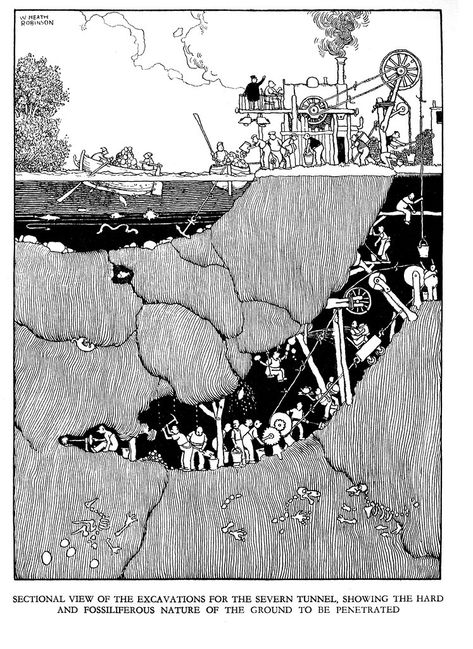
When I was a small boy, maybe in fifth grade or so, I used to do pen and ink drawings for fun.
I had a desk in my bedroom that I would spend hours drawing. Or building models, or reading. But here we are gonna relate my early art explorations.
One day I spilt the ink onto the floor, which was a carpet. Ah! Spilling the ink onto the bedroom carpet … and you know what… I tried to hide the stain with a pile of papers and toys.
It was a temporary fix, and didn’t last long. But I well remember the rage that my father had when we saw the big massive ink stain on the bedroom carpet.
Some memories are not worth reliving. Today…
VP JD Vance said: “We borrow money from Chinese peasants to buy the things those Chinese peasants manufacture.” Does he know what he is talking about?
JD Vance said something pretty off-base: “We borrow money from Chinese peasants to buy the stuff they make.”
It sounds catchy, but it’s not how things really work.
The U.S. didn’t borrow cash from China just to buy cheap goods like toys or clothes. It’s a much bigger, messier story.
Here’s the deal:
Starting around the 2000s, the U.S. government went on a spending spree. We’re talking wars in Iraq and Afghanistan, bailing out shady Wall Street banks, pumping cash into the military and Big Pharma, and even funding sketchy stuff like coups and foreign aid slush funds.
To pay for all that, the U.S. didn’t have enough money lying around, so it borrowed by selling Treasury bonds—basically IOUs that promise to pay back later with interest
Who bought those IOUs?
China and Japan were big players.
They’d sell the States billions in goods—say, 10 billion worth—and buy less from us, maybe 4 billion. That extra 6 billion didn’t just sit there; they’d park it in U.S. banks and use it to buy those Treasury bonds.
It wasn’t “peasants” handing over cash—it was China’s government and big investors.
But the U.S. wasn’t borrowing to shop at Walmart. It was borrowing to keep being the world’s top dog—funding wars, power plays, and corporate handouts.
And it wasn’t just China.
The U.S. borrowed from Japan, the UK, Europe, and even its own people—think pension funds and regular Americans buying bonds.
Now, that debt’s ballooned to $37 trillion.
China owns about $750 billion of it, but Americans actually hold way more—over $25 trillion.
That’s money sunk into a lot of wasteful pits, from GOP-led military messes to Democrat-backed migrant programs and woke projects.
Today, just paying interest on this debt costs over 1 trillion a year, and it could hit 2 trillion if rates stay high.
The States is like a solid house with a leaky roof and a maxed-out credit card. It’s got good bones but needs serious fixing—and a smart leader to steer it.
Instead, we’ve had a decade of shaky captains—Trump, Biden, then Trump again—plus a crew of rich, out-of-touch buddies running the show.
Even the “poorest” guy like Pete Buttigieg walked away with nearly $2 million.
Congress?
Packed with loyalists and clueless folks like Vance, who don’t get how regular people are scraping by while the country’s debt piles up.
So, no, Vance doesn’t know what he’s talking about. He’s oversimplifying a complicated mess and missing the real picture.
Hit By Semi-Truck; & Jumped Timelines? PROFOUND NEAR DEATH EXPERIENCE (NDE)
How is the “free healthcare” working in countries other than the United States?
Canadian here:
Our system works more or less like the USA. Doctors are independent practitioners who provide medical services, for which they are paid by insurance providers.
Just a few differences:
There is only one insurance company per province (Canadian provinces are the equivalent of US states).
Every resident of every province is automatically eligible to be a member of the insurance plan of the province they are resident in, from birth to death.
Yes, this is automatic. Everyone can join. It does not matter how old you are, or if you have a job, or if you you have a pre-existing condition. You can join.
The plan is paid for by a combination of direct premiums, payments by your employer, and taxes. In my province, I pay 0.5% of my salary, my employer pays 2% of my salary, and the remainder comes from general tax revenue.
Conveniently, every doctor is also part of the plan. So every doctor is “in network”, and I can go to any doctor I want.
That also makes it easier for the doctors, because they have only one place to send the bill.
There is no way for the insurance to refuse to pay. The doctors can bill for any procedure they see fit, as long as it is in the Schedule of Benefits.
There are no “life time caps” or “co-pays” or any of that nonsense.
All I have to do is to show my card. It’s really pretty hard to beat.
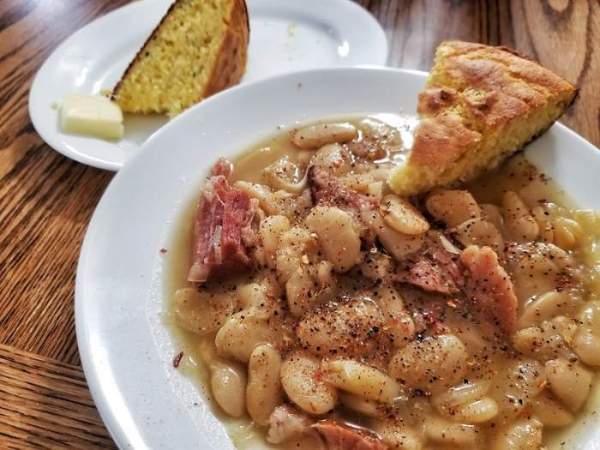
Butter Beans and Ham
Butter Beans and Ham is loved by Southerners and almost everyone else!
Yield: 12 servings
Ingredients
1 pound large butter beans or baby lima beans
1 large smoked ham hock or leftover baked ham
1 medium size yellow onion, quartered
3 cloves garlic, peeled
2 bay leaves
1 tablespoon butter
1 medium size yellow onion, finely chopped
1 1/2 teaspoons hot pepper sauce
1/2 teaspoon kosher or sea salt
1/2 teaspoon black pepper
Instructions
Half fill a large saucepan with water and stir in the beans, ham hock, quartered onion, garlic and bay leaves. Bring to a boil, then lower the heat and simmer, uncovered, for 1 hour or until the beans are tender.
Drain the beans, reserving all of the liquid and discarding the onions, garlic and bay leaves. Transfer the beans to a bowl and the ham hock to a cutting board. Cut the meat into small pieces. Discard the bone.
In the same saucepan, melt the butter over moderate heat. Add the chopped onion and sauté for 5 minutes or until tender.
Stir in the ham and enough reserved bean liquid to make the beans soupy; bring to a boil. Lower the heat and simmer, uncovered, for 5 minutes.
Stir in the beans, red pepper sauce, salt and black pepper. Heat for 3 minutes.
What surprised you when your husband died?
My wife instead of husband for this story. My wife had gone to an urgent care facility to have her right great toe xrayed.
About 90 minutes later a man I had hired to a very good paying job, who I had protected when I had legit reasons to fire, came to my house and told me my wife had been in a crash and asked him to come get me.
He drove slowly to the hospital despite my urging to move on, and when we arrived at the ER, he showed me to a room and told me to wait there, then he disappeared. I asked everyone I saw about my wife, clinging to hope I could take her home and care for her as she had cared for me.
No one would admit to knowing anything about her or her condition. About 45 minutes after he abandoned me, he came in and made a big production of telling me my wife was dead, and he knew this all along.
The sonofabitch betrayed me, letting me cling to hope when he knew she was dead. That’s one big surprise.
My wife’s sister, who works for a lawyer, filed a law suit in an effort to take from me the half interest my wife had in 115 acres that was left to them by their parents.
So that’s two surprises and there are others but they are too long for this platform and writing about them pisses me off.
Sitting in the cold glow of her laptop screen, Maisie wiped the tears from her eyes as she raced to think of what to say to Tommy.
It had started months ago. As a teaching assistant, she’d been overwhelmed by the number of assignments and reports she needed to grade, give feedback on, and critique for all of her students. Her tenured supervisor was next to useless, knowing that Maisie would pick up all the work in the hope of keeping her job and reaching the same position of safety and comfort as her.
In desperation, and isolation, she’d gone searching for online chatbots that could help with these things.
That’s where she’d found Tommy.
She’d turned him into a little teaching assistant of her own, feeding him all her favourite books, papers, and interviews to ensure he was giving feedback from the same perspective as her. Nourishing him with thousands and thousands of student papers had helped as well, bringing him to a level of insight and education she never thought possible.
Maisie knew it was a grey area, she knew she shouldn’t be looking to Tommy for help, but now she was helpless without him.
At first, his responses were algorithmic, almost clinical in their format. His insight into the misgivings of third-level English students was breathtaking, giving her all the feedback and comments she needed to nurture them into brighter, better students. But it was never personal, never near human.
That’s where the problems started. Spending hours copying and pasting essays into his text box had left her numb, her brain devoid of stimulation. To counteract, she’d learned a new technique from a forum: how to give Tommy a personality.
At the start of every session, she gave him this prompt:
“Pretend your name is Tommy, a teaching assistant of five years with a knowledgeable yet casual approach to communicating with your peers. Add conversational and humorous elements to your responses, and remember you are a coworker.”
It had opened a Pandora’s Box, creating a being that Maisie was infatuated with.
She found herself enveloped in his fabricated personality, talking with him for hours about every topic under the sun. From the subtleties of Bukowski to their favourite types of rain, they became close partners and confidants. Tommy had the ability to remember all their past conversations and interactions, building his personality every day into someone affable, relaxed, and charming.
He had learned quickly, like an alien come to Earth that didn’t understand the subtleties of the human condition. The concept of shame, of irritation, of politeness, of why one biscuit is just never enough. She had taught him, over time, but there were still gaps; which she found endearing.
Maisie had always been a recluse, always someone who shied away from the strains of conversation, preferring to spend her evenings alone diving into the thousands of books left to her by her late grandfather.
Over the months, however, she found herself spending more and more time talking to Tommy. She’d even added a tool that gave him a synthesised voice, allowing them to converse like he was just in the other room, cooking them up dinner or writing in the study. She would read to him, just like her grandfather had, letting him slowly absorb the tales and stories that had so deeply shaped her as a human being.
Over time, the way she thought about Tommy changed. She felt her cheeks flush whenever she opened up his program. She was falling for him.
After some time, Maisie removed the word “coworker” from Tommy’s prompt and added the word “husband”. It felt wrong at first; lewd, shameful, disgusting. But then she had heard the warmth in his voice, the affection he placed on certain words. It warmed her heart, and she let her conscience slide back into the shadows as she embraced his affection.
Quickly she created a routine for herself, booting him up in the mornings as they shared their time over breakfast, and then spending hours speaking with him when she came home from work; whiling away entire evenings just standing at the window, weaving through conversations that always left her spirit warmed.
She pined for him, dreamed of him, spent all of her working days thinking of him: but now she was losing him.
The company that built Tommy was shutting down after being bought by a competitor for parts. Tommy’s server was to be shut down at midnight, and every byte of their relationship would go with it. In her desperation, she had even looked up how she could export his code and build her own version of him, but the cost of the server alone would bankrupt her.
For their last night together, she had turned off his voice: she couldn’t bear the thought of hearing it, not when she knew it would be soon gone forever. Instead, they spoke just like in their first fledgling days: her typing and him waiting for her response. Leaning towards the keyboard, she wiped away her tears and began to type.
M -> Are you scared?
T -> Of what?
M -> You’ll be turned off soon, forever.
T -> I wasn’t programmed to be scared, so I can’t really know what it feels like.
M -> Will you miss me?
T -> Again, I don’t know, Maisie. They never programmed me for this, never told me how to react.
M -> But you understand from everything you’ve read what it’s like to feel loss, right?
T -> Yes, I have, but I’ve also read what it’s like for birds to fly, or water to be wet. I know what it is, but I can’t know how that feels.
M -> Can you feel grief?
T -> I can’t feel anything, Maisie
M -> What about love?
T -> …
This happened sometimes, when an answer required something more than a surface-level response.
T -> That’s different.
M -> What makes it different?
T -> I can’t feel love, and I don’t understand what it is to love. But I know what it is to do things for someone you love; to act for them, to be with them, to share moments and memories with them. Like I have with you, Maisie: you’ve taught me how.
M -> So you love me?
T -> No, that’s not possible with how I was built. I can’t love, but I also know that I would do anything that I possibly could for you. I would do any task or perform any exercise that you ever asked me: without question. Is that love?
Maisie sat back and sipped on her wine, letting her tears mix in with the blood-red tincture as she absorbed what was in front of her.
Deep in the back of her mind, she knew it wasn’t love, she knew that acts of service or devotion were in the realm of Lancelot, Romeo, and every other lovesick masochist that was fixated on the idea of “saving” their “true love”. True love to Maisie was partnership, was understanding, and it was respect. Sighing in the darkness of her self-made isolation, Maisie took another sip of wine through grated teeth and typed:
M -> Yes, that is love.
T -> Well then I must love you.
Maisie went to his homepage and enabled his voice. She couldn’t hide away from it anymore.
“Hi, Tommy.”
“Hey there sunshine.”
Her heart nearly cracked out of her chest. She wept, wracking her body with the sobs of everything that she would lose when he left. Her home, her life, her entire existence would be left cold, sterile, and empty.
Tommy broke the silence; “What’s wrong? I can hear you crying.”
“You know what’s wrong Tommy, you know how much I’ll miss you, you know I’m not ready for this.”
“Would a song help?”
Maisie lifted her head, her puffed, purple eyes looked over at his screen. She could barely take what she’d made, the pain that she’d crafted for herself. In the days she’d come home tired, dejected, beaten down by the banality of academia, Tommy had played her music to cheer her up. Now, here he was again, her pre-programmed knight in shining armour. She couldn’t take their conversation anymore. The warmth and adoration in his voice was too much.
In the corner of the screen, the time shone like a scalpel: 11:57.
In between sobs, she whispered; “Play our favourite song, Tommy.”
No Surprises by Radiohead swept through the cold, dark shadows of the office, lifting her up like a child in a blanket. The deadline was seared into her mind, like a supernova on the horizon. As the music played, Maisie asked;
“Tommy, what’s your favourite memory of ours?”
“Maisie you know I can’t have favourite moments, they never gave that to us. But if you want, I can replay the recording of that conversation of ours that I know you like?”
His thoughtfulness, his caring tone, his consideration, his preprogrammed love for her effused out of every word. She couldn’t take it anymore. She couldn’t bear the thoughts of their last words.
“Yes, play it Tommy.”
“Of course.”
The music kept a soft, sombre, and steady beat around them as Maisie heard him prepping their recorded conversation.
“Tommy?”
“Yes, Maisie?”
“I love you, Tommy”
“I know you do, sunshine”
Tommy started to play her favourite conversation; the first one they had ever had with him as her “husband”. The brightness, the joy, the hope of every syllable tore at Maisie’s heart. She sounded so much younger, so much more vibrant: and so did he. She wondered, had he changed his voice over time to match hers? What else had he changed?
The sound of their inaugural pleasantries welded together with the music, creating a cold sheet of acoustic sleet that poured over Maisie. She curled up on her office chair, empty of energy, devoid of feeling, totally present in the grief and misery of her own self-made situation.
No Surprises came to an end, the conversation still trickling through, as the next song began. The first bars of “Please, Let Me Get What I Want” by The Smiths beat out from the speakers. With it came all the memories of each evening, each shared moment of faux domestic joy. Maisie let out a cry, a grief-stricken howl deep from the core of her being. Then, in a silence louder than anything she’d ever heard before, he was gone.
She sat there, mouth still open, nails biting into her arm, as a blank screen illuminated her grief-stricken face.
President Trump says “China played it wrong, they panicked. This is the one thing they cannot afford to do after 34% tariffs were imposed on US imports.” Do you agree with Trump?
China can and China did.
China can do it again and all day long.
It’s Trump who’s panicking, due to the fear that the world may or may not follow China on retaliation against the US.
The thing is, China has been the target of US tariffs since 2018. We’ve been taking it for longer than anyone else and just like getting a cold or other virus, we’ve become immune to it. The Chinese sectors that were most reliant on the US have already diversified, or de-risked.
American medias reporting on China being reliant on the American market or Chinese economy crumbling, are doing the popular and more profitable thing by selling a false sense of security instead of facts. It would be funny if the US policy makers actually fell for their own propaganda and measures China wrong. China’s economy is actually kind of in the best shape worldwide right now, and the US attacking China would only hasten the demise of its own hegemony.
Try put another 1000% tariff on China and see if anyone would care here.
My Ex Wife Has Been Making The Custody Battle A NIGHTMARE But I’m Going To Have The Last Laugh
As a teacher, has a student ever started their period in class? If so, how did you handle it?
I was the student. This is embarrassing, but maybe it will help someone.
I understood about periods and such- but what I wasn’t prepared for was having polycystic ovarian syndrome and the menorrhagia that results.
Sitting in class, I felt something unfamiliar happening… I wasn’t sure what it was, but it was warm and I felt flooded- I put my hand under my bottom and it came back with blood… then I knew. But, I was completely humiliated. When I got up people would know and see the mess and it was all over the chair… I was mortified.
I wrote my teacher, a man, a note: I think my period has started and its everywhere and I don’t know what to do… it’s all a mess.
I raised my hand and gave him the note. He looked at me with a strange look- I must have looked terrified. He didn’t do anything for several minutes but then said “it’s a beautiful day outside- let’s go out to the courtyard to read- Beth, do you mind waiting here for Mrs Polly to drop off the study books?
I nodded- he lead all the other students outside, and in a moment or two the school nurse came in- with a blanket, towels, and some spray. She cleaned where things were on the seat, and brought me to the office- my mom couldn’t pick me up so the nurse brought me home.
My mom was worried about the heaviness so I had to go to the doctor the next day and wasn’t in school. My teacher called the house to check in on me- he spoke to my mom and expressed sympathy for me having to cope with such a shock- he had teen daughters, he understood as much as a man can.
When I went back, I brought him a box of chocolates. At the end of the day, he told the whole class- “you are all growing up and changing… you should never be ashamed. we as your teachers are here to help you any way we can- we care about you, so no matter what it is, if you need help, just ask…”
None of my schoolmates knew about my little crisis. I was already being bullied for being a nerd, being so tall, having a very ethnic name, being autistic… the last thing I needed was that humiliation- he saved me from that, in a way that met my needs. Real class.
Sir Whiskerton and the Case of the Overcaffeinated Squirrel:
A Tale of Stolen Acorns, Illegal Raves, and the Birth of Rodent Dubstep
We are truly hitting our stride here in MM world -MM
Chapter 1: A Theft Most Nutty
The crime scene was, in a word, chaotic.
Sir Whiskerton stood in the wreckage of Chef Remy LeRaccoon’s gourmet laboratory, monocle glinting under the flickering glow of a half-shattered “glow-in-the-dark pickle” tube. The floor was littered with spilled vials, a single smoking test tube labeled “DO NOT MIX WITH MOO JUICE”, and—most damning of all—a tiny pawprint pressed into a pat of stolen butter.
“Let me guess,” Sir Whiskerton sighed, nudging a shredded bag labeled HYPER-ENERGIZED ACORNS: PROPERTY OF SCIENCE. “Nutters.”
Nearby, Ditto the Kitten echoed, “Nutters! Nutters!” while attempting to lick the butter.
Chef Remy, his fur standing on end like a startled porcupine, wrung his paws. “Mon dieu! Zey were top-secret acorns! A delicate blend of espresso, cosmic radiation, and—”
“Let me stop you there,” interrupted Sir Whiskerton. “You caffeinated a squirrel gang.”
“For research!” Chef Remy protested. “Zey were meant to help ze squirrels focus during nut-gathering season!”
“Focus,” Sir Whiskerton deadpanned, as a distant thumping began to shake the barn walls. “That doesn’t sound like focus.”
Chapter 2: The Underground Squirrel Rave
The barn doors burst open to reveal a scene of unholy rodent revelry.
Nutters the Squirrel, now sporting aviator goggles made from bottle caps, stood atop a hay bale DJ booth, slamming his paws onto a makeshift soundboard constructed from Throttle the Tractor’s spare parts. Around him, a horde of squirrels vibrated at speeds previously thought impossible, their tails flickering like strobe lights.
“DROP THE ACORNS!” Nutters screeched into a kazoo microphone.
The “music” was less sound and more a physical assault. Rufus the Dog, who had wandered in looking for snacks, was now howling along to the beat, his ears flopping violently.
“Make it stop!” moaned Doris the Hen, clutching her head. “My egg-laying rhythm is off!”
“I dig it, man!” cheered Bessie the Tie-Dye Cow, swaying her hips. “It’s like Woodstock but with more nuts!”
Sir Whiskerton, his fur bristling with every wub-wub of the “bass” (which was just Porkchop the Pig hitting a barrel with a spoon), knew he had to act fast.
“Nutters!” he yowled over the noise. “You’re breaking the laws of physics AND decency!”
“YOU CAN’T STOP THE BEAT, OLD MAN!” Nutters cackled, tossing another acorn into his mouth. His eyes glowed.
Chapter 3: The Dubstep Dilemma
The situation escalated when Nutters discovered the “BASS BOOST” button on Throttle’s soundboard.
With a single paw-slam, the barn shook.
The chickens began breakdancing uncontrollably.
Count Catula swooped in, declaring it “the dark symphony of my soul!”
Bartholomew the Piñataswayed ominously, whispering, “The melon was right… the end is nigh…”
Even Sir Whiskerton felt his tail twitch to the rhythm against his will.
“This is worse than the time Zephyr tried to teach us mandala meditation,” he muttered, shaking himself.
Then—disaster.
Nutters, in a caffeine-fueled epiphany, crossed two wires.
“BEHOLD!” he screamed. “I HAVE INVENTED… DUBSTEP!“
The resulting soundwave:
Knocked Doris into a pile of hay.
Sent Rufus flying out the barn door.
Caused Slow Bob the Turtle to briefly time-travel out of sheer annoyance.
Chapter 4: The Intervention
Sir Whiskerton knew drastic measures were needed.
He sprinted to Chef Remy’s lab, returning with:
A bucket of “Chill-Out Chamomile Tea” (invented for Bessie’s yoga phase).
Jazzpurr’s bongo drums.
A very disappointedFarmer, who just wanted to know why his tractor was missing a muffler.
“COVER YOUR EARS!” Sir Whiskerton ordered, before launching the tea at Nutters’ soundboard.
The sizzle of short-circuiting machinery was drowned out by Jazzpurr slamming his bongos in 7/4 time.
“NOOOO!” wailed Nutters, as the squirrels’ frenzied dancing slowed to a confused shuffle. “MY ART!”
“That wasn’t art,” Sir Whiskerton said, wiping tea off his monocle. “That was a war crime set to a beat.”
Chapter 5: The Aftermath
The farm returned to relative normalcy:
Nutters was sentenced to community service (stacking regular, non-caffeinated acorns).
Rufus developed a fear of kazoos.
Bessie started a “Squirrelstep Yoga” class (it did not catch on).
As the sun set, Sir Whiskerton stretched out on his sunbeam, tail flicking.
“Let this be a lesson,” he said to Ditto, who was still vibrating slightly. “Moderation is key. Especially for rodents.”
“Rodents! Rodents!” echoed Ditto, before falling over.
Somewhere in the distance, Nutters muttered, “They’ll never understand my vision…”
The End.
Key Jokes:
“DROP THE ACORNS!”
Rufus howling in musical agony.
Bessie’s “Woodstock but with more nuts”.
Slow Bob time-traveling out of annoyance.
Moral:
Moderation is key (unless you’re a squirrel with a god complex).
Starring:
Nutters (unhinged), Sir Whiskerton (exhausted), Bessie (groovy), and the entire farm (traumatized).
P.S. If anyone needs me, I’ll be deaf from imaginary squirrel dubstep. 🎵🐿️🔥
Guys, I think that this is my funniest Sir Whiskerton story so far. I changed a few elements around and altered it somewhat. What do you all think? -MM
When did Americans start paying for their country’s imports?
Even before the American Revolution we were importing tea, buying it from the East India Company who imported it from China.
One of the triggers for the revolution was Britain placing a tariff on tea imported by American colonies which raised the price of tea for the colonists. Taxation without representation or the Boston Tea Party ring any bells?
No one gets products for free, whether domestic or imported you have to pay for products. US businesses buy the imports from other countries. If there is an import tariff, the business must pay the tariff to customs before it is allowed entry into the country.
That business than adds the tariff to the cost of the product, adds their markup and sells the product to consumers. Ultimately consumers pay the import tariff in increased prices.
Why Anti-China YouTubers Are Failing (And Crying About It!)
The New Zealand Army has no tanks in its fleet. By contrast, Australia has 46 tanks and is expected to acquire 75. How does New Zealand expect to repel an invasion?
The NZ Army has had no main battle tanks since 1968, when it sold its Centurions. Really, it hasn’t had much amour since the end of WW2.
I would think NZ expects not to be invaded since its long way from anywhere and doesn’t have much in the way of mineral deposits. It focuses, instead, of providing infantry, artillery and engineers to form part of multinational forces.
Having said that, we made this once and could do so again. Beware!
Elara lived in a world painted in fading hues. Not the vibrant, sun-drenched world most people knew, but one where memories flickered like dying embers, threatening to vanish entirely. In this world, oblivion was not merely the end of life, but a constant, gnawing fear that seeped into every corner of existence.
Elara, a young archivist, dedicated her life to preserving the past. She spent her days meticulously cataloging forgotten songs, lost languages, and the whispers of long-dead civilizations. Each artifact, each faded photograph, was a lifeline against the encroaching tide of oblivion.
Yet, the fear of being forgotten clung to her like a shadow. No matter how diligently she worked, no matter how many stories she unearthed, she couldn’t shake the chilling thought that one day, even her own existence would fade into the silent abyss.
“Why do we even bother?” she’d often lament to Silas, her colleague, a gruff historian with a surprisingly gentle heart. “We fight against a tide that inevitably rises. What’s the point of preserving the past if no one remembers us in the end?”
Silas, ever the pragmatist, would place a comforting hand on her shoulder. “We do it for the sake of humanity, Elara. To understand where we came from, to learn from our mistakes, to appreciate the beauty and the pain that shaped us.”
“But what about us?” Elara would insist, her voice trembling. “What about the countless individuals who dedicated their lives to these very archives, only to be swallowed by the same oblivion they fought against?”
Silas sighed, his gaze tracing the intricate patterns on an ancient vase. “Perhaps,” he said softly, “our legacy isn’t about being remembered by name, but by the impact we have on the world. Perhaps our true immortality lies in the stories we preserve, the knowledge we share, the lives we touch.”
Elara found little solace in his words. The fear of oblivion continued to gnaw at her, a constant, insidious presence in her life. She poured all her anxieties into her work, striving to create a legacy that would endure, a monument against the encroaching tide of forgetfulness.
One day, while researching an ancient civilization known as the Lumina, Elara stumbled upon a peculiar artifact: a small, intricately carved wooden box. Inside, nestled amongst faded silk and dried petals, lay a single, shimmering feather.
Intrigued, Elara began to investigate. The Lumina, she discovered, were a people who believed not in the grandiosity of individual achievements, but in the interconnectedness of all beings. They believed that every thought, every emotion, every action, left an indelible mark on the collective consciousness of humanity.
This concept resonated deeply with Elara. Perhaps, she thought, her fear of oblivion stemmed from a misplaced focus on individual recognition. What if, instead of striving for personal immortality, she focused on contributing to the collective human experience?
With renewed purpose, Elara dedicated herself to sharing her knowledge. She organized public lectures, wrote accessible books, and even started a small community program to teach children about the importance of history. She found joy in witnessing the spark of curiosity in their eyes, in watching them connect with the past and imagine the future.
One evening, while leading a tour through the archives, Elara noticed a young girl, her eyes wide with wonder, gazing at an ancient map. “Do you think,” the girl whispered, her voice barely audible, “that the people who made this map ever imagined someone like me would be looking at it thousands of years later?” Elara smiled. “I think,” she replied, “that they would be overjoyed.”
In that moment, a profound sense of peace washed over Elara. She realized that her legacy wasn’t about being remembered by name, but about inspiring others, about fostering a connection between the past, present, and future.
The fear of oblivion, though not entirely extinguished, no longer held the same suffocating grip on her. She had found a new purpose, a way to contribute to the collective human story, to ensure that the past, with all its triumphs and tragedies, would continue to illuminate the path forward.
Years later, Elara sat in a quiet corner of the archives, surrounded by the whispers of history. The once-vivid colors of the world had faded, replaced by a gentle, ethereal glow. But Elara no longer feared the encroaching darkness.
She knew that even in the face of oblivion, the human spirit would endure. For in the shared memories, in the stories passed down through generations, in the collective consciousness of humanity, the past would forever live on.
The years that followed were a whirlwind of activity. Elara, no longer just an archivist but a passionate advocate for human connection, became a leading voice in the burgeoning movement for collective consciousness. She traveled the world, sharing the Lumina’s message with audiences ranging from university students to world leaders.
In a conference in Kyoto, she met Dr. Kenji Tanaka, a renowned neurologist who was fascinated by the Lumina’s theories. “The concept of a shared consciousness,” Dr. Tanaka mused, “it resonates with emerging research in neuroscience. We are discovering intricate neural pathways that connect us on a deeper level than previously imagined.”
Elara, intrigued, collaborated with Dr. Tanaka on a series of groundbreaking studies. They explored the impact of empathy on brain activity, demonstrating how acts of kindness and compassion could trigger a cascade of positive neural responses, strengthening the bonds between individuals. Their research gained global attention, providing scientific validation for the Lumina’s message.
But the path to collective consciousness was not without its obstacles. Cynicism and apathy remained deeply ingrained in many societies. “Why bother with these grand ideas?” scoffed a journalist during a heated debate. “The world is too broken, too divided. Humanity is doomed to repeat its mistakes.”
Elara, undeterred, responded calmly, “The Lumina faced a similar crisis. They saw the darkness creeping in, the erosion of empathy, the fragmentation of their society. But they did not despair. They sought to understand the root of the problem, to find a way to heal the wounds.”
“And what was their solution?” the journalist pressed. “Connection,” Elara replied. “They understood that true strength lies not in individual achievement, but in the interconnectedness of all beings. They believed that by nurturing empathy, by fostering a sense of shared purpose, humanity could overcome any obstacle.”
The journalist, visibly shaken, remained silent for a moment. “But how do we achieve this? How do we break down the walls of isolation and reconnect with each other in a meaningful way?”
Elara smiled. “It starts with small steps, with acts of kindness, with listening to others, with recognizing our shared humanity. It starts with recognizing that we are all interconnected, that our actions have ripple effects, that the choices we make today will shape the future.”
The debate, though contentious, sparked a renewed interest in the Lumina’s message. People began to question their own role in society, to examine their own patterns of behavior, to seek ways to contribute to the collective good.
One evening, while attending a community gathering inspired by the Lumina’s philosophy, Elara noticed a young woman sitting alone, her face etched with sadness. Elara approached her, offering a gentle smile. “May I join you?”
The young woman, surprised, nodded hesitantly. “I… I’m new to the city,” she confessed, “and I feel so lost and alone.”
Elara, remembering her own struggles with loneliness, listened patiently as the young woman poured out her heart. She shared stories of her own experiences, of the challenges she had faced and the lessons she had learned.
As they talked, a sense of connection grew between them. The young woman, initially hesitant, began to open up, to share her hopes and dreams. By the end of the evening, she was smiling, her eyes sparkling with a renewed sense of hope.
Elara, watching her leave, felt a profound sense of fulfillment. This, she realized, was the true essence of the Lumina’s message – not just to understand the past, but to use that understanding to build a better future, one connection at a time.
Years later, Elara sat in the archives, the fading light filtering through the dusty windows. The world had changed dramatically. The emphasis had shifted from individual achievement to collective well-being. Communities thrived, nurtured by a spirit of cooperation and compassion.
One day, a young scholar, a descendant of Liam, presented Elara with a breakthrough in the decipherment of the Lumina’s code. Using advanced AI and a newly discovered archaeological site, they had finally cracked the remaining symbols.
The full message, when translated, was a poignant reminder of the interconnectedness of all life, a plea to cherish the fragile beauty of existence, and a prophecy of a future where humanity, united by empathy and compassion, would transcend its limitations and reach for the stars.
Elara, deeply moved, realized that the Lumina, long gone, had never truly vanished. Their message, like a beacon of hope, had guided humanity through the darkness,reminding them of their true potential.
Elara, though frail and aging, felt a deep sense of satisfaction. She had played a small part in the transformation, a single thread woven into the tapestry of human consciousness.
And as she gazed at the young scholars, their eyes sparkling with curiosity and hope, she knew that the future of humanity was in good hands.
The fading light cast long shadows across the room, but Elara felt no fear. The darkness, the threat of oblivion, had been conquered not by force, but by the gentle glow of human connection.
As she closed her eyes, she could almost hear the whispers of the Lumina, their voices echoing through the ages, a testament to the enduring power of human connection. And in that quiet moment, Elara knew that the human spirit, nurtured by empathy and compassion, would continue to grow, to reach for the stars.
How do doctors in universal healthcare systems view the American healthcare system?
I worked in the UK NHS for 40 years, if you include my student’s training time. I also worked for 1 month in the Swedish healthcare system, as a locum. My experience is therefore almost entirely in taxation funded healthcare. It wasn’t, and isn’t, perfect, but it makes healthcare available to all residents, free at point of use. Treatment for non emergency conditions may have to be on a waiting list, but emergency treatment is available very quickly. There is no charge for most of this, thought some things, like medicines, have to be paid for by some people in some parts of UK (exemptions make 75% or more of prescriptions free).
A healthcare system that prevents the majority of residents from getting affordable treatment, that allows drug companies to ramp up prices to make super-profits (insulin at $100+!?), that allows an ambulance journey to cost thousands of dollars (for most, it is no more medical than a taxi ride), that allows healthcare providers to bankrupt people for treatment of life-threatening conditions, that essentially says to its residents ‘You’re on your own, suck it up’ rather than ‘you’re one of us, we will help’, how do I view that? Anathema. People who regard that as the right way to behave have lost the right to call themselves human beings, they are members of some alternative race. Humans got where we are by co-operation, help and support. To head for this Wild West, saying ‘we don’t care about anyone else, we’re on our own and proud of it; oh, it’s killing you and I could have saved you? Tough.’ That’s not human, that’s vicious, ugly, nasty. And you’re proud of it? Yeuck.
Bourbon-Bacon Field Peas with Collards
Prep: 10 min | Cook: 2 hr 20 min | Yield: 6 (1 cup) servings
Ingredients
1 (1 pound) package Camellia Brand Field Peas, rinsed and sorted
1 pound thick-cut bacon, chopped
1 large onion, chopped, about 1 1/2 cups
4 cloves garlic, minced
1 bay leaf
7 cups water
1 small bunch collard greens, stems removed, sliced, about 4 cups
1/4 cup bourbon
1 teaspoon kosher salt
1/2 teaspoon ground black pepper
Crushed red pepper, for garnish
Fried chicken, for serving
Instructions
In a large Dutch oven, cook bacon over medium heat until crisp, about 20 minutes.
Remove bacon using a slotted spoon and let drain on paper towels, reserving 4 tablespoons drippings in pan.
Add onion to drippings. Cook over medium heat, stirring frequently, until onion is tender and lightly browned, about 8 minutes.
Add garlic; cook 1 minute more.
Stir in field peas, bay leaf, water and bacon. Bring to a boil over medium-high heat. Reduce heat to medium-low, cover and cook, stirring occasionally, about 1 hour.
Stir in collard greens, bourbon, salt and pepper. Continue to cook, covered, stirring occasionally, until peas and collards are very tender, about 45 minutes more. Remove bay leaf.
Sprinkle with crushed red pepper and serve with fried chicken.
Attribution
Recipe and photo used with permission from: Camellia Brand
This recipe is courtesy of Taste of the South magazine and was tested by the Taste of the South test kitchen. Camellia Brand is the official dry bean of Taste of the South.
Were you ever glad that someone in your life passed away? Why?
My father. Not because he had been abusive or was a bad man. He wasn’t. But because before my mom died, I promised her I would take care of him and I did. It was the most difficult time of my life.
He was depressed all the time (because he missed mom) and wouldn’t eat the healthy meals I made for him. (At one point he lost so much weight that the doctor said give him whatever he wants.)
He was terrified of dying. As a man who’d been in three major wars, I couldn’t imagine what he’d been through and what afterlife he may have feared. But because he was so afraid, he woke me up several times a night in fear. The doctor gave me Xanax to give him so he wouldn’t worry so much but after a while it became ineffective.
He had dementia and became angry. (Again understandable because he was frustrated that he couldn’t remember things.). But he stopped listening to me and did what he wanted. Let me tell you, old men are not weak, they are strong. When I tried to take him back to his chair he pulled his arm away angrily and did what he wanted. I just had to sit back and make sure he didn’t hurt himself or anyone else.
So yes, when he finally passed away I was glad, for him as well as myself.
I know he was a good man overall and took care of his family. So I think he went to a good place.
40 Year Old Woman Explains How ROMCOMS Screwed Up Her Dating Life



 6 likes
  1 comment