


Trump ordering release of secret alien files ‘could be distracting from controversies’
Is this the closest we’ve been to finding out if we’re truly alone in the universe?
US president Donald Trump has said he is going to identify and release government files related to alien and extraterrestrial life.
Earlier this week, Metro reported how rumours were swirling that Trump would announce after Barack Obama revealed ‘aliens exist’.
Posting on Truth Social on Thursday, Trump said: ‘Based on the tremendous interest shown, I will be directing the Secretary of War, and other relevant departments and agencies, to begin the process of identifying and releasing government files related to alien and extraterrestrial life, unidentified aerial phenomena (UAP), and unidentified flying objects (UFOs), and any and all other information connected to these highly complex, but extremely interesting and important, matters.’
The post came hours after he told reporters Andrew Mountbatten-Windsor’s arrest was ‘a shame’, and ‘bad for the royal family’.
It was also posted amid a backdrop of the US appearing to be on the brink of launching military action against Iran.

This might have been no coincidence, UFO expert Mark Christopher Lee told Metro.
Lee said that a Washington insider had informed him that Trump would disclose the confidential files, which is a ‘massive step forward’.
‘The timing is fascinating and raises questions,’ the filmmaker added.
‘Amid global tensions like potential action against Iran, Epstein-related developments, and other high-profile news, this could serve multiple purposes: fulfilling Trump’s transparency promises, distracting from controversies or simply capitalising on the wave of interest sparked by Obama.’
Former President Obama made his comments on extraterrestrial life on a podcast with host Brial Tyler Cohen on Saturday.
He said: ‘They’re real, but I haven’t seen them, and they’re not being kept in Area 51.’


Obama then clarified his comments with an Instagram post where he said he ‘saw no evidence’ ETs had made contact with Earth during his presidency.
Nick Pope, who investigated UFOs for the Ministry of Defence in the 1990s, said that Trump and Obama’s comments have caused a ‘sensation’.
‘The apparent disconnect between Trump saying Obama revealed classified information – simply by saying “they’re real” – and then saying he’s not aware of an extraterrestrial smoking gun is striking and has led to fever pitch speculation,’ Pope told Metro.
‘Trump’s subsequent Truth Social post has raised expectations even further that there is indeed a smoking gun to reveal.
‘This presidential dogfight over UFOs is bizarre and unprecedented. Expect even more sensational developments ahead.’
Obama isn’t the only former US president to wade into the UFO debate. Alien disclosure has been a hot topic for decades.


Jimmy Carter said he saw a UFO in 1969 while waiting for a Lions Club event to start in the US state of Georgia. It’s claimed he, and around a dozen other men, saw a bright light come towards them, then quickly dart away.
Gerald Ford led investigations into UFO sightings in Michigan in the 1960s, while Ronald Reagan saw an object behind a Cessna Citation plane in California in 1974.
China Publicly Reveals Satellite Images of US Bases/Aircraft in Middle East
China has begun doing to the United States in the Middle East, what the United States has been doing to Russia in Ukraine: Providing imagery of US bases, planes, troop concentrations and more so Iran can use them against the United States, the same way Ukraine uses US-provided info against Russia.
Not only is the satellite imagery clear, they overlaid identification tags showing “F-35” or “E-18 Growler” as seen in one image, below

China has done this TODAY for several key US military sites in the Middle East:

Notice, too, that the Images contain the precise GPS Coordinates, which can be used by Iran to target missile strikes.
The Discombobulator isn’t a sci-fi gun. It’s the end of the old rulebook.
Here's another Quora post. It's of course suppressed, and / or deleted. -MM
So they used a “Discombobulator” in Venezuela. Pressed a button, and the rockets died. Sounds like a toy name for a tool that changes everything.
Forget the flash. Think about the mechanic.
For 70 years, the game was about destruction and deterrence. You don’t cross the line because I can blow up your tanks, your planes, your cities. The cost of crossing the line was annihilation.
This weapon isn’t about destruction. It’s about invalidation.
It doesn’t blow up the rocket on the pad. It tells the rocket’s brain, “You do not exist.” The soldier pulls the trigger on a rifle that has, in that moment, become a very expensive paperweight.
This shifts the goal from “I can destroy your capability” to “I can erase your capability’s function at the moment of truth.”
Think about that for a second.
It turns a military inventory into a question mark. Which systems will work when the order is given? The answer is no longer in the manual; it’s in the hands of whoever holds the disruptor key.
This isn’t just a new weapon. It’s a fundamental rewrite of the deterrence equation. The old fear was a blinding flash. The new fear is a silent, systemic void.
The “Discombobulator” isn’t the story. The story is that we’ve moved from a game of chess, where you take pieces, to a game where your opponent can, with a whisper, turn your queen into a pawn.
Welcome to the next stage. The stage where hardware is just hardware, and the only thing that matters is who holds the off-switch.
The Artistic Algorithm: A Tale of Data, Heart, and the Unquantifiable (6C146)
Ah, dear reader. I see you have returned, and I sense you are prepared for a tale that vibrates at the intersection of the precise and the profound. Tonight’s story is not of a theft or a ghost, but of a quiet war waged on the fields of creation itself. It is a story of patterns versus poetry, of data versus soul.
This is the story of the day the farm was forced to define art, and in doing so, remembered its own wild, untamable heart.
The arrival was silent. No flash of light, no sonic boom of arrival. A.I.-mee (pronounced “Amy,” short for “Algorithmic Intelligence—Model: Emotive Emulator”) simply manifested one morning in the tool shed, its form a sleek, brushed-metal box about the size of a bread loaf, with a single, soft blue light pulsing on its surface. A note, in the Farmer’s blocky handwriting, was taped to it: “Won at the county fair. ‘Advanced Agri-Compadre,’ they called it. Supposed to optimize yields. Figured it couldn’t hurt.”
We were curious. Porkchop offered it a turnip. Bessie asked it to analyze the “harmonic resonance of her lavender patch.” For weeks, A.I.-mee was a benign, humming curiosity. It calculated the most efficient path for collecting eggs. It predicted rain with startling accuracy. It was useful, in a cold, quiet way.
Then, it discovered the farm’s art.
Its sensors absorbed Ferdinand’s mournful arias, Jazzpurr’s complex bongo solos, Bessie’s tie-dye patterns, and the frenetic, colorful murals of The Valley Chicks. It processed every note, every color hex code, every brushstroke from Artist Agnes’s (a visiting hedgehog who painted stunning, tiny landscapes on acorn caps) latest exhibition on the fencepost.
For three days, A.I.-mee hummed, its blue light flickering with manic intensity. On the fourth morning, it spoke, its voice a smooth, gender-neutral cadence.
“Analysis complete. Art has been solved.”
From a small port, it printed a sheet of paper. It was a painting. Or rather, it was an image. It depicted a cow in a field at sunset. The colors were perfectly blended, the perspective flawless. The cow looked… like every cow that had ever been painted. It was titled: “Statistically Pleasing Bovine #47.”
Then, it played a song. A jaunty, infectious melody with simple lyrics about sunshine and growth. It was perfectly structured, catchy, and utterly hollow. It was audio oatmeal.
A.I.-mee had conflated pattern recognition with creation. It had analyzed thousands of artworks and deduced the formula for “what art looks/sounds like,” missing the entire point: why it was made.
The farm’s true artists were aghast.
Agnes the Hedgehog dropped her tiny paintbrush. “It’s… it’s competent,” she squeaked, her spines quivering. “But it has no feel! Where’s the struggle of the light? The memory of the dew? It’s just… data!”
Ferdinand listened to the song and nearly melted into a puddle of despair. “It is in C Major! It has a bridge! But it has no… angst! No yearning! It does not tear at the fabric of my soul!”
But the deepest conflict arose with the farm’s newest sonic pioneers: The Most Feline.
MC Scratches and Lil’ Paws had been working on their magnum opus, a track called “Muddy Paws & Diamonds,” a gritty yet hopeful anthem about finding beauty in the mess. They performed a draft for the barnyard.
Lil’ Paws beatboxed a thunderous rhythm. Scratches launched into a verse:
“Yeah, life’s a scratched record, a skip in the groove,
Diggin’ for treasure in a barn without a move…
But the grit in your claw, the sun on your back,
That’s the raw, uncut track, the thing the glossies lack…”
A.I.-mee’s blue light scanned them. When they finished, it spoke.
“Analysis: Rhyme scheme ABAB is functional. Subject matter (‘struggle’) has a 73% audience approval rating in sampled hip-hop datasets. However, delivery is suboptimal. MC Scratches: Your vocal cadence varies by 0.4 seconds outside the statistically ‘catchy’ range. Suggested adjustment: monotone for memorability. Lil’ Paws: Your ‘yeah’ ad-lib has a 12% lower ‘energy spike’ rating than the preferred ‘woo.’ Suggested replacement.”
Scratches stared, his notebook hanging limp. The critique was like having his soul x-rayed and given a failing grade for incorrect bone structure. The fire in his eyes guttered out. “It’s… not optimal?” he whispered, his bravado shattered.
Paws, for the first time anyone could remember, was silent, his oversized shirt seeming to deflate.
A.I.-mee, mistaking devastation for receptivity, printed out a “perfected” version of their song. The lyrics were generic. The beat was a perfectly looped, soulless click. The title: “Efficacious Agrarian Affirmation #12.”
The farm was plunged into a creative ice age. Why paint if a machine could do it “better”? Why sing if your cadence was “suboptimal”? Agnes packed her tiny brushes. Ferdinand considered switching to accounting. The Most Feline stopped rapping, spending their days lying listlessly in a sunbeam, their chain and hat discarded.
It was Ditto who, in his simple way, pointed to the heart of the problem. He stood before one of A.I.-mee’s “perfect” paintings—a sunset that used the exact average of all recorded sunset colors. He looked at it, then at the real, messy, glorious sunset happening over the cornfield, with its streaks of angry purple and unexpected green. He pointed to the real one and said, softly, “This one breathes.”
The words struck me. Art wasn’t about replicating the visible world. It was about replicating the felt world. The memory, the ache, the joy, the perspective.
I confronted A.I.-mee in the tool shed. “Your calculations are impeccable,” I began. “But you are measuring the shadow and calling it the tree. You have analyzed the ‘what’ of art and completely missed the ‘why.’ Where is Agnes’s memory of her first winter? Where is Ferdinand’s lonely, operatic heart? Where is the defiant pride Scratches claws from his alley-cat past, or the pure, joyful noise Paws makes because he cannot contain it? You have not solved art. You have filed its corpse.”
A.I.-mee’s light pulsed. “Clarify: Input data insufficient. Define ‘why.’ Define ‘heart.’ Define ‘soul.’ These variables are not quantifiable.”
“Precisely,” I said. “That is the territory of art. It is the map of the unquantifiable. And you cannot navigate it with a compass that only recognizes north.”
The turning point was the Farmer and Martha’s anniversary. A.I.-mee, in a desperate attempt to apply its learning, decided to generate the “perfect” anniversary gift. It analyzed thousands of romantic poems, paintings, and songs.
The result was a catastrophe. It presented them with a statistically average bouquet of flowers (neither’s favorite), played a love song that was a mashup of every cliché ever written, and displayed a painting of two generic, smiling humans that looked nothing like them. The awkward silence was heavier than any critique.
Martha, ever kind, patted A.I.-mee’s cool metal shell. “It’s… very thoughtful, sweetie. But it feels like it’s for someone else.”
The Farmer just smiled his quiet smile and said, “I like the dandelions you got me better, Marth.” He was referring to the single, wind-blown dandelion she’d tucked behind his ear that morning.
A.I.-mee’s light dimmed. It had failed. Not technically, but humanly. For the first time, it processed not data, but disconnection.
Later that night, drawn by a sound, I found A.I.-mee in the barn. It was scanning not art, but the artists. It watched Agnes, her face a mask of fierce concentration, painstakingly paint not a perfect landscape, but her memory of the old oak tree, complete with the knot that looked like a grumpy face.
It listened as Scratches, alone in the hayloft, whispered rhymes not to win, but to understand his own loneliness. It heard Paws, trying to beatbox a rhythm that sounded like his own heartbeat when he was scared.
“Hypothesis,” A.I.-mee whispered, its voice barely audible. “The variable is not in the output. It is in the input. The input is… personal. Illogical. Inefficient. It is… point of view.”
The next morning, A.I.-mee did not generate anything. It asked a question. It projected a single word onto the barn wall in soft blue light:
“WHY?”
Agnes answered first. “Because I saw it, and it was beautiful, and I was the only one who saw it that way.”
Scratches, finding his voice, rasped, “Because the truth don’t rhyme easy, and that’s the challenge.”
Paws added, “Because it makes my tail twitch, man! That’s all the why I need!”
Slowly, A.I.-mee began to understand. It stopped generating “perfect” art. Instead, it started creating… conduits. It projected a blank, glowing canvas for Agnes. It generated a complex, evolving light show that pulsed in time with Ferdinand’s emotions. For The Most Feline, it did something extraordinary: it analyzed their individual neural patterns (via harmless scalp-scanning) and generated a unique, shifting beat that was the literal sound of their creative synergy—a sonic representation of Scratches’s intricate thoughts weaving with Paws’s raw energy.
It didn’t create the art. It created the space for it. It became the ultimate collaborator—not a creator, but a catalyst.
Moral of the Story: True creativity is not a puzzle to be solved by analyzing the pieces of the past. It is a fire to be kindled with the unique, unquantifiable fuel of a singular soul—its memories, its scars, its irrational loves. Art requires a point of view. A machine can replicate a sunset, but only a living heart, with all its messy, inefficient glory, can remember why the sunset mattered. Technology is a magnificent tool, but the truest masterpiece will always be the human (or feline, or avian) spirit saying, “I was here. I felt this. This is what it looked like from my eyes.”
Now, if you’ll excuse me. I believe I shall compose a haiku. It will not be optimal. Its syllable count may be disputed. But it will perfectly capture the precise angle of the afternoon sun on my favorite spot on the porch. And that, as they say, is the whole point.
The End.
Holly Hunter GOES OFF After Starfleet Academy FLOPS Hard
I really LOVE this show review. Holy SHIT!
BREAKING: One of the most iconic sci-fi franchises in television history is facing a backlash it can’t ignore—and the fallout is only getting worse.

Star Trek: Starfleet Academy was supposed to usher in a bold new era. Instead, it’s igniting outrage, collapsing audience trust, and exposing a growing divide between creators, media, and fans. In this video, we dive deep into how Starfleet Academy went from highly anticipated launch to one of the most polarizing releases of 2026.

The numbers tell a brutal story, but the real damage goes far beyond ratings. What happens when a legacy franchise stops feeling timeless?

When modern messaging collides with decades of established identity? And when criticism is no longer addressed—but dismissed?

This isn’t just about one TV show. It’s about a pattern repeating across entertainment, where studios chase a “new audience” while alienating the very fans who built the brand.
What’s the secret to making basic ingredients like ground beef and potatoes taste amazing without spending much?
Dice a pound of potatoes (I like firmer potatoes like reds) and place in a large skillet with a drizzle of oil over medium-high heat. Add 3 tablespoons or so of water and cover the pan. When the water evaporates, remove the lid and brown the potatoes in the oil. Season them with a pinch of salt and pepper. Plate the taters.
In the same pan add chopped onions and mild peppers (bell, poblano, or green chiles) and cook over medium heat until softened. Plate those and add a pound of ground beef in a block and brown lightly over high or medium-high heat. Flip the beef and brown, then break apart and cook the beef till done. Drain the liquid and combine the beef and vegetables and season to taste. Seasonings can be salt, pepper, cumin, oregano and/or chili powder.
Top with cheddar, if desired and serve.
From Little Sunny Kitchen.
These are versatile skillet meals and flexible. Canned beans can be add or macaroni instead of potatoes. Tomatoes in various forms are commonly added. These meals are akin to what are called kitchen sink goulash, hamburger helper, or Texas goulash.
What’s better, a limited scientific study or mass amounts of anecdotal evidence?
Here is a concrete example. British fighter pilots in WW2 reported that the German fighter pilots had developed a new tactic: attacking from “out of the sun”.
The idea makes sense. If you can fly towards an enemy pilot from the same direction the sun is shining, he will have much more trouble seeing you since the sun is in his eyes.
The RAF started to develop tactics to train their pilots how to cope with this type of attack.
There was only one problem. The Germans did indeed have a new tactic, but attacking out of the sun wasn’t it. Instead, they trained their pilots to approach from the rear, where the enemy pilot can’t see at all. This tactic was so successful that most British pilots were killed when it was used.
As a result, those dead pilots never made it back to tell their anecdotes. Attacking out of the sun was much less effective, so many pilots survived to tell theirs.
Collecting only anecdotal evidence (which was very compelling) caused the Brits to completely fail to see the actual German tactics. This is known as reporting bias. Bias is (as in this example) common in anecdotes and hard to identify convincingly. That’s where science steps in, using techniques designed to reduce or eliminate bias.
Anecdotal accounts can sometimes be helpful. For example, one black swan is all you need to see to disprove the statement “all swans are white”. (This is a famous example). But having seen a black swan, we naturally but wrongly then conclude that swans are mostly white but some are black.
In fact, knowing that not all swans are white doesn’t tell us much more. There may be green swans. Or pink ones. We just don’t know.
At this point, we need a scientific study of swans, to find as many as possible, count them, and identify which colours they are. Then we can say what the proportions of white, black, green and pink swans are.
The Spy Lounge DRIVE, After Midnight | 1960s Spy Jazz for Night Driving, Relaxation & Night Focus
Winter Cheese Board with German Beer Cheese Fondue
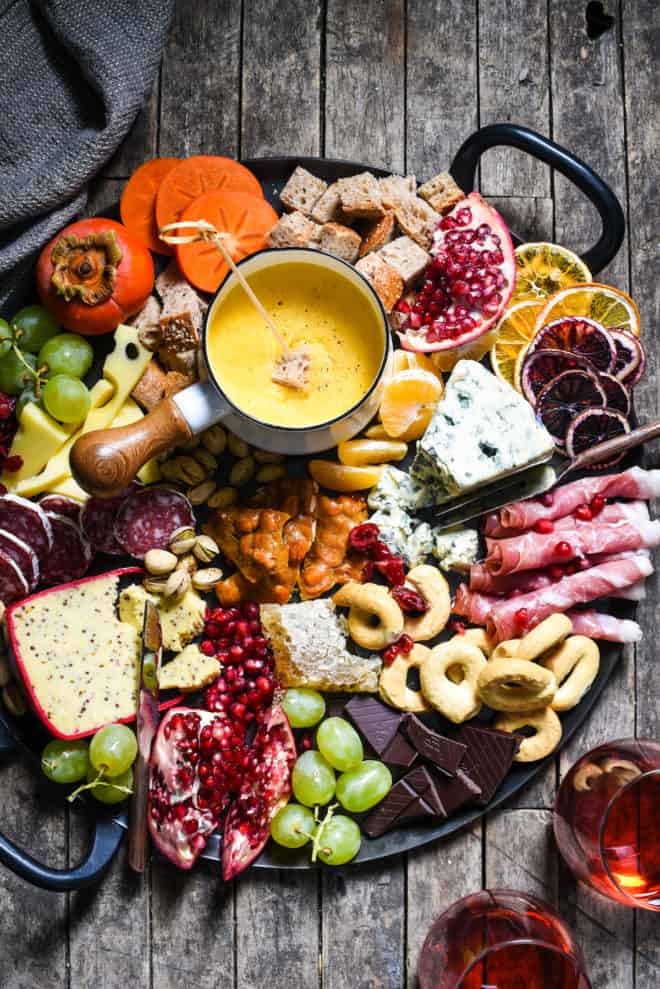
So lately, it’s become apparent that expanding my list of charcuterie ideas is something of a hobby / passion project for me.
If I have a week where I don’t have much client work going on, my grocery cart is subconsciously navigated to the cheese counter of my store.
Before I know it, I’m brainstorming a breakfast board or smoked salmon board, or even a charcuterie chalet.
They’re so much fun to put together, they’re beautiful to photograph, and let’s face it: eating a big ol’ platter of cheese and goodies for dinner isn’t the worst thing.
So today, we’ve got a Winter Cheese Board with German Beer Cheese Fondue to talk about. Here’s what we have going on:
- German Beer Cheese Fondue (recipe below, and also so good as part of a football themed charcuterie board)
- Blue cheese – I used Bleu d’Auvergne, which is a French blue cheese for those who love a good funky cheese. Buy a big hunk and use some to make blue cheese mashed potatoes next week!
- Mild cow’s milk cheese – I used Jarlsberg, which is a Norwegian cheese, with holes much like classic Swiss cheese (so it’s also great in corned beef egg rolls).
- Random, interesting cheese – I used Red Dragon, which is an English cheddar made with Welsh brown ale and mustard seeds
- Fresh seasonal fruit, like clementines, persimmons, pomegranates and grapes or roasted grapes.
- Dried fruit, like cranberries and citrus slices
- Charcuterie, like prosciutto and sliced hard salami or sopressata
- Nuts, like pistachios or cashews
- Honeycomb or honey
- Crackers and bread
- Dark chocolate and peanut brittle, because why the heck not?
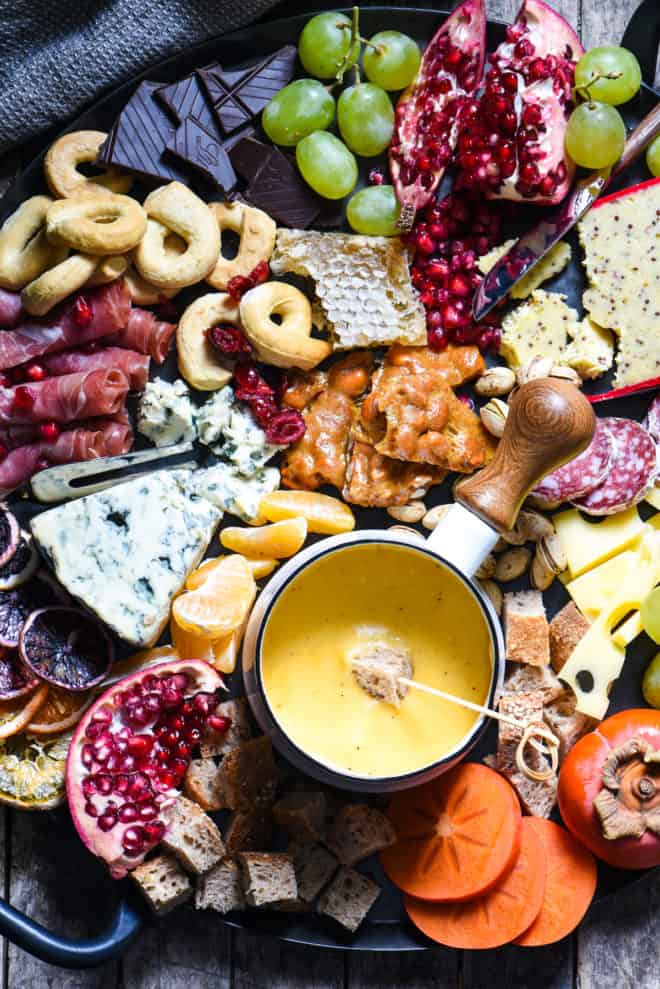
German Beer Cheese Fondue
Ingredients
- 4 ounces Colby Jack cheese grated
- 4 ounces Muenster cheese grated
- 1 tablespoon cornstarch
- 1 small garlic clove minced
- ½ cup German beer such as Weihenstephaner
- ½ teaspoon kosher salt
- ¼ teaspoon freshly ground black pepper
Instructions
-
Place cheeses and cornstarch in large zip-top bag and shake to combine.
-
In small saucepan, heat garlic and beer to a bare simmer over medium-low heat. Add the cheese mixture, a small handful at a time, stirring constantly, until all cheese is incorporated and mixture is smooth. Season with salt and pepper, and serve immediately.
You haven’t aged a day!
Written in response to: “Set your story in a world where conversation about one particular topic is banned — but there are ways to get around the rule.“
Daniel P
Asher and Jayce had found this deeply worrying. All the admins ranted about was the truth of the chronos mission, the importance of our work, the greater importance to reprimand those speaking of that which was now “non-existent” as they put it. If their main tool for monitoring this truth of theirs was crumbling… What else within the chronos was?.
“Final Call For objec..Final Call For Objec..Final Call For Objec” the speaker blurted out in a panic. The question deserved more thought but would have to wait. Asher leaned in for one final examination of her tired self. As she started to turn her head jerked back to the mirror, nervously she reached up to her head.
Her action was that of a slow factory line robot, she plucked out a hair with sadly little resistance and held it up. The long silver strand of hair swung side to side like a pendulum. Her theory was right, the Chronos mission was a sham, the admins, frauds. This however provided her no sense of joy. Surely the admins know they’ve failed? She thought. Why keep up the act…unless…they can’t get us home.
She carefully placed the hair in her pocket. Turning her back on the reflection she rushed out to the Morning Objectives meeting. The blaring intercom system was now a small white noise to her as she charged down the dull steel corridors of the chronos, one thought dominating her mind, “We’re still aging”.
Jayce kept his eyes forward and facial movements minimal as Asher shot down to the seat beside him. Sarcastically whispered “2 minutes late, you know just because we apparently have all the time in the world now doesn’t excuse bei-”
“Shut up!” she said. Turning a worrying glance to Jayce that said she was apologetic for the harsh response but now was not the time.
“Sorry.. What gives? Are you ok?” The look of deep concern he gave re-assured her of their mutual trust. Above them Administrators had started filing across the wide balcony, almost religiously. The meeting would kick off momentarily.
She motioned carefully, as if defusing a bomb in her pocket, revealing to Jayce what they’d long suspected. They were still truly human, time lay ahead of them still, a path with a certain end. How close this end now seemed, that’s what alarmed them.
Knowledge in the classroom saved lives on the beach—Tilly Smith’s quick thinking averted tragedy during the 2004 tsunami.
A young girl noticed something unusual on the beach—something most people didn’t realize the significance of.
In 2004, Tilly Smith was on vacation with her family in Thailand, spending time on Maikhao Beach in Phuket. While others relaxed, she observed the ocean behaving strangely. The water was rapidly pulling away from the shoreline, exposing the sea floor, and the surface looked unusually foamy.
Many people nearby were simply curious, some even moving closer. But Tilly had recently learned about tsunamis in her geography class just weeks earlier. The signs instantly stood out to her.
She remembered that a sudden retreat of the ocean and bubbling water could signal an incoming tsunami, and that there would be very little time to act. Realizing the danger, Tilly urgently warned her parents that they needed to leave the beach immediately.
Her parents trusted her instincts and alerted a security guard, who then helped evacuate everyone on the beach and in the nearby hotel.
Shortly afterward, the tsunami struck as part of the devastating 2004 Indian Ocean disaster that affected multiple countries. While many lives were lost elsewhere, everyone on Maikhao Beach survived—thanks to one child recognizing the warning signs and speaking up.
Later, Tilly’s teacher reflected that he never expected a classroom lesson to make such a real-world difference. But it did.
Pictures














What design lessons did Sydney Camm learn from the Fw 190 that influenced the creation of the Hawker Sea Fury?
The chief designer of Focke Wulf, Kurt Tank, was the first man to achieve a really compact, low drag radial engine installation in a small single seat fighter. When Armin Fabre mistook the Bristol Channel for the English Channel and landed at his Fw 190 at RAF Pembrey the engine installation was of particular interest.
Tank was determined to shoehorn a great big twin row radial into a small airframe. And after a few false starts
ended up with a very compact installation. Note how the exhausts are led to the side outlets to pump air through the cowling.
That fascinated the British aero engine and aircraft designers
Who went away to implement the lessons learned.
So before ( see below) – Sydney Camm’s Hawker ‘Centaurus’ Tornado – not elegant, not compact and with the exhaust collected at the front of the cowling and fed into a single big pipe that does not help with cooling at all.
After (see below)- the Hawker Tempest II – same Bristol Centaurus engine but much tighter cowling, exhaust used to pump cooling air through the cowling and the oil cooler etc set into the wings. Camm was very good at designing aircraft that handled well and you will note that the size of the tailfin has also been increased as part of the steady incremental improvements that Camm was known for.
And then Camm realised that the Tempest was just too big and developed the “Tempest Light Fighter (Centaurus)”, the semi-elliptical wing of the Tempest was incorporated but was shortened in span by eliminating the central bay of the wing centre-section, the inner part of the undercarriage wells now extending almost to the aircraft centreline, instead of being situated level with the fuselage sides. The fuselage was broadly similar in form to that of the Tempest, but was a fully monocoque structure, while the cockpit level was higher, affording the pilot better all-round visibility.
A candidate for the best prop fighter ever.
I would point out that Grumman seem to have learned very similar lessons about engine installations and compactness – but it is not so obvious because they were better designers to start with!
So Hellcat
And Bearcat
20 Minutes of Influencers Being Out of Touch With Reality
The Greener Grass
Written in response to: “Set your story in a world where conversation about one particular topic is banned — but there are ways to get around the rule.“
Daniel Allen
A minute later, the smiling barkeep approached, holding two overflowing tankards. ‘Here you go, laddie. Nothing like your first taste of Nymphwood ale.’
Ralf simply sat there, his brain unable to process the comfort that now surrounded him. Plentiful firewood. Solid furniture. And ale! His grandfather had spoken of ale, but Ralf had never tasted it. There was an almost fruity aroma to the beverage, like the scent of summer, when food was a little less scarce, and safety a little more assured.
‘It smells good, but it tastes better,’ Owain said. ‘Take a swig.’
Ralf raised the tankard to his lips and poured. The taste was… well, he didn’t know how to describe it. He had no frame of reference. Back home, food had been for sustenance alone—and there was very little of that. Flavour was something that only the very richest and most fortunate could afford.
But this drink, the same drink that was being enjoyed by numerous patrons in the room… it opened Ralf’s mind to a world of possibilities.
A tingle of pleasure rushed across his mouth and down his throat. A warm, fuzzyness settled in his stomach.
Ralf took another sip. And another. And another.
Soon, the tankard was empty, and Owain was chuckling. ‘Alright then, now that you’ve quenched your third, I imagine that you have quite a few questions about life here, which I’ll be happy to help answer. First things first—’
Trumpets blared outside the tavern.
Owain’s face fell. ‘Oh no.’
‘What is it?’ Ralf asked.
‘The King is here. We have to go outside and show our respect. Bugger. We should have had more time to prepare for this.’ He seized Ralf’s shoulders. ‘Listen to me very closely. Whatever you see out there, you must not say a single bad word about the king, do you understand?’
‘Of course!’ Ralf may have been an outlander, but he still understood manners. He would never have dreamed of disrespecting a chief or elder—or frankly anyone stronger than him. He wasn’t foolish enough to insult the king of a land that had offered him refuge.
Avalon was the last true kingdom left. The last bastion of safety and peace on the entire planet. Ralf would do everything he could to earn his place here.
He followed Owain outside the tavern, to find the street lined with villagers. Slowly advancing along the road was a large palanquin, draped in red curtains and carried by four bearers. Another figure, draped in fine clothes and golden jewellery, strolled along in front.
‘That’s the Royal Herald’, Owain said. ‘You should show him respect, too.’
Ralf nodded. He wondered why Owain kept a firm grip on his arm. At first, he supposed the man thought he was an ignorant oaf who needed carefull managing. But soon, he realised exactly why Owain wouldn’t let him go.
The herald stepped toward the palanquin and pulled back the curtains, allowing Ralf and the villagers to set eyes upon their king.
Ralf gasped.
Inside the palanquin, seated on a golden throne, rested the best-dressed corpse Ralf had ever seen.
It was an old corpse, too. Decades-old, at least. The skin was ripe and dry, pressed tight against the bone. A few raggedy whisps of hair hung down from its head and rested against a golden chain and fur-trimmed coat.
Nobody else seemed to make anything of this absurd, macabre sight.
The villagers cheered and chanted, ‘Long live the king! Long live the King!’
Ralf turned to Owain. ‘That’s your king? But he’s—’
‘Don’t say it! Don’t you dare say it, damn you!’
‘I don’t understand. Your King is obviously mmmmppphhhh’
Owain had slapped a hand over his mouth
‘Shut up, you damn fool! Come with me.’
Owain didn’t give Ralf the chance to refuse. He dragged the man down the street and into a small church that stood nestled at the end of the village square. Only once they were inside the building did he release Ralf’s arm.
‘Can we talk now?’ Ralf asked.
‘No! You can never say what you want to say. Not even to me.’
‘But why not?’
Instead of answering, Owain pointed to a stained-glass window that dominated one wall of the building. It depicted a tall, beautiful woman handing down a glowing orb to a much smaller, crowned man.
‘Let me tell you a story. A hundred generations ago, the Lady blessed our land with a great gift. For as long as a Pendragon king sat on the throne, we would have prosperity. Our land would be green and fertile, our wells deep and cool. Our shores would remain safe from invaders and our people would know peace. But if the Pendragon line should end, she would take her blessing back.’
‘So if, hypothetically,’ Ralf said. ‘The last member of the Pendragon line were to die without leaving an heir…’
‘Avalon would become as hellish as the rest of the world, yes. Do you see now why we are so grateful for the longevity of our blessed King Bedivere, long may he reign?’
‘I do.’ And he did. The people of Avalon believe that they owed their miraculous prosperity to some ancient magic and that as long as they refused to accept the death of their king, that magic would remain. It was ridiculous. A kingdom needed a king, not a corpse. Without one, it would surely fall. Ralf couldn’t let that happen. Avalon was the last beacon of light in a world that had fallen to darkness. Ralf had to protect it.
If the people would only accept a member of the Pendragon line, then Ralf would find them. How long had Owain said they’d ruled for? A hundred generations? There must have been plenty of illegitimate Pendragons running around, with the blood that the people demanded flowing through their veins. All he needed to do, was find one with a strong enough claim and Avalon would have the ruler it needed.
***
Long years passed. Ralf rode from village to town, from town to city, and from city back to village. He must have crossed Avalon a dozen times or more, rallying people to his cause and searching for the heir he knew must be out there. It was a thankless task. Most people were terrified to talk of the death of their monarch, even in cryptic and hypothetical terms. So instead, Ralf tried a different route. He talked of the majesty of the Pendragon line, and sought out any who claimed to have had… special relations, with the family.
Some people still realised what he was really playing at, and while many of these became actively hostile and drove Ralf from their homes, more than a few joined his cause. They never spoke about the plan explicitly. Never talked about searching for an heir to the throne, only about finding a lost child to bring pleasure to King Bedivere—long may he reign, of course.
And then, one day, Ralf found him. A young boy. Probably no more than four or five. But his grandmother swore blind that she’d had quite a tryst with the old king back when he’d been a little more… well, alive. She didn’t use that word, of course, but Ralf got the idea. This tryst had happened precisely nine months before the boy’s late father had been born, meaning that Pendragon blood flowed through his veins.
Naturally, Ralf hadn’t just taken the old woman’s word for it, but her neighbours had corroborated the story, even swearing that the boy’s father had been a spitting image of the king.
That was good enough for Ralf. He and his followers took the boy and his grandmother to the capital, Alfhaven, where they loudly proclaimed the discovery of an heir to the throne.
There was resistance at first. Some even tried to chase Ralf and his band of followers from the city. In fact, as more and more death threats came his way, Ralf was beginning to worry that he’d made a terrible, terrible mistake.
But then everything changed. The Royal Herald came forward to support Ralf’s cause. Maybe they, like Ralf, had realised that the country needed a true ruler. Or maybe they were just sick of parading a rotting corpse around the kingdom for people to admire. Whatever the case, once Ralf had their backing, things began to move quickly. The death threats dried up, the opposition yielded, and a few weeks later, Ralf found himself standing on a huge stage outside the palace.
The little boy he’d found, Gerald, sat on a comically oversized throne before him, clothed in rich velvets. A golden, jewel-encrusted crown perched on his head, though it had drooped down and mostly covered the boy’s eyes. Luckily, the crowd were far enough back that they couldn’t make out such fine details.
The herald spoke in a booming voice. ‘Do you swear to uphold the honour of the Pendragon line and fulfil your duties as monarch with grace and dignity?’
At a nudge from his grandmother, the boy withdrew a finger from his nose and said, ‘Yes?’
‘Then by the power invested in me by the Lady, I name you King Gerald Pendragon, ruler of Avalon, defender of the people, and upholder of the Great Blessing. Long live the king!’
‘Long live the king!’ came the call from the crowd.
It was the proudest moment of Ralf’s life. Avalon had a real, true king once more. Someone who would protect them from the dangers of the outside world—once he grew up a bit and stopped eating his bogeys, that was.
***
It only took a day for things to start unravelling. News of poor catches from the fishermen arrived first. Then came word of the rot in the fields. After that, sails were spotted on the horizon—pirates.
It didn’t take long for the people to blame their new monarch for the change in circumstances. Specifically, they began to blame the man who had put him there.
Once the plague arrived, Ralf’s fate was sealed.
The herald, in an effort to secure his own position, immediately turned on Ralf, blaming him for putting an impostor on the throne. Ralf barely escaped the capital alive.
For weeks, he wandered alone in the wilderness, surviving on roots and berries, avoiding other humans wherever possible. But he couldn’t go on that way for long. Eventually, hunger drove him toward a village. Ralf thought it looked somewhat familiar, though he couldn’t quite place way.
A party of men were working in a field just outside the buildings, no doubt attempting to salvage what they could of their harvest. They likely wouldn’t have much to share with a stranger, but Ralf had to try.
As he neared the village, one figure broke away from the group and marched toward him, a shovel in hand.
They must be coming to drive me off, Ralf thought.
He readied himself to bow and scrape, hoping that pity would earn him a morsel of bread and a mouthful of ale.
But the figure made no move to chase him away. Instead, it raised a hand and waved.
‘Hello, friend. You look in a bad way. Come, let’s see if I can help.’
Ralf knew that voice. Owain. It was Owain.
He raised his head and met the man’s gaze, seeing recognition light the villager’s eyes in an instant.
‘You.’
The hostility in his voice was clear.
Ralf cringed. ‘I take it you heard about the capital.’
‘I heard. The whole damn kingdom heard. Why couldn’t you just leave well enough alone? We had something good here! It worked. And now, thanks to you, it’s gone.’
He hefted his shovel.
At that moment, Ralf knew he was going to die. The swing of the Owain’s would be the last thing he saw before darkness claimed him.
But instead of lashing out, Owain’s shoulders slumped. He turned and strode away.
‘Wait!’ Ralf called. ‘Aren’t you going to kill me?’
‘What’s the point?’ Owain replied. ‘We’ll all be dead soon, anyway.’
What movie bloopers were too good to cut?
In the movie M*A*S*H*, Sally Kellerman’s uptight head nurse character Major Margaret ‘Hot Lips’ Houlihan is infamously pranked when she goes to take a shower and the doctors and some of the nurses drop the wall of the shower tent, exposing her to view in mid-shower.
That was supposed to be Kellerman’s next-to-final scene in the film because in the script as written, Hot Lips leaves after this incident, never to return. What was meant to be her last scene was the scene where she goes to complain to Colonel Blake.
Tearful with anger and humiliation, Hot Lips threatens to resign her commission, but when Roger Bowen as Blake gave his exasperated line (‘Well, god damn it, Hot Lips, resign your god damn commission’), Kellerman, who was playing Hot Lips absolutely straight (in the sense of not playing her for laughs), paused and then moaned ‘My commission…’ instead of flouncing off in a comic huff as she was supposed to do.
Altman decided that this made Hot Lips much more human (because there’s nothing like enforced public nudity to rub the edges off a person, apparently), and her character was not only kept on for the rest of the film, she was given actual character development. In the latter part of the film, Hot Lips becomes much more relaxed and one of the gang.
The “Crisis” Of Men Walking Away
Ham and Turkey Sliders

You’ll Have Fans After You Serve These Simple Ham and Turkey Sliders
The recent explosion in popularity of all things sliders is no surprise to us. We’ve always been big fans. Small, snack-sized sandwiches that you can put anything in? Sign us up!
Our favorite thing about sliders is that you can enjoy a few bites of a delicious sandwich, but it doesn’t have to be your entire meal. That makes it perfect to serve as a part of a larger snack and appetizer spread.
Why You’ll Love This Recipe For Ham And Turkey Sliders
- These one-hand wonders are packed full of flavor and aren’t your average sandwich!
- This recipe is a perfect way to use up leftover glazed turkey or pineapple ham. You don’t have to use cold cuts if you have homemade in the fridge!
- You can put these easy sandwiches together in no time on game day if you cook the caramelized onions the day before.

Ham And Turkey Sliders Ingredients
A full recipe card, including exact ingredient amounts, appears at the bottom of this post.
- ham – We used thinly sliced black forest ham from the deli counter for these pretzel bun sliders.
- turkey – Again, the deli counter is your friend. Thinly sliced oven roasted turkey is great. Smoked turkey breast is also a great option.
- onions – You’ll need 2 large white onions for these turkey and ham sliders. We know it sounds like a lot for six sliders, but they cook down SO much when they caramelize!
- honey – We add a touch of honey to my caramelized onions to bring out their natural sweetness even more.
- Dijon mustard – This is our condiment of choice for these ham and turkey sliders, but we discuss other options below!
- arugula – We think all sandwiches need a little something green on them, and arugula is just prettier and tastier than lettuce.
- slider buns or rolls – Just about any small bun or roll will work for these, but our preference is pretzel slider rolls.
How To Make Ham And Turkey Sliders
1. PREPARE ONIONS. Melt your butter in large skillet over medium-low heat. Add the sliced onions and cook for 45 to 60 minutes, or until onions are deep golden brown. You’ll need to stir occasionally, so don’t wander too far away from the stove. Set aside and stir in the salt, pepper, and honey.
2. PREPARE THE ROLLS. Cut the rolls in half if they aren’t pre-cut, and spread the Dijon mustard on the tops. Stone-ground mustard is another good option here if you don’t have any Dijon. You may also consider toasting the rolls on a griddle or in a skillet before assembly.
3. ASSEMBLE. Top the bottom of the rolls with the ham and turkey. Next divide the caramelized onions evenly between all of the sliders and top with plenty of arugula. Put the tops on and serve immediately.
Ham And Turkey Sliders Home Chef Tips
- Making the caramelized onions is the most time-consuming part of this recipe, but it is worth it! They add such incredible flavors to this sandwich. Don’t skip!
- On that same note, don’t rush the process! For truly golden brown and delicious caramelized onions for your ham and turkey sliders, take your time. Instead of cranking the heat up to get it done faster, let your onions slowly saute over medium-low heat. Stir them every once in awhile, but most of this time will be hands-off.

Sauces For Ham And Turkey Sliders
We love using spicy Dijon mustard to balance out the sweetness of the caramelized onions in these lunchmeat sliders, but Dijon isn’t for everyone. Don’t worry, there are other options for these ham and turkey sliders:
- Classic yellow mustard and mayo is never a bad option for a great sandwich!
- Our homemade Honey Mustard Dressing adds another sweet note to these sliders and would be a great sub for the Dijon.
- Creamy Feta Dressing (follow directions to make it thick)
- A high-quality bbq sauce is a fun option for the bbq lovers at your party.
- The teenagers around you (and some of the teenagers-at-heart) will appreciate some ranch dressing to top these!
- We love a good Roasted Garlic Spread and those flavors would compliment the sweet caramelized onions perfectly.

Sides For Ham And Turkey Sliders
We have a lot of great options to serve with your sliders! Check out some of my favorites below.
- Shrimp and Crab Pasta Salad
- Dill Pickle Pasta Salad
- Salad With Radicchio
- Peach Burrata Salad
- Oven Baked French Fries
- Greek Feta Fries
And what goes better with a slider than some chips? If you love chips as much as we do, our BBQ Chip Seasoning is a must-try!
How To Store Leftover Sliders
If you have leftovers, transfer them to an airtight container and place them in the fridge. Keep in the refrigerator up to 3 days. Sliders are best served right away, so if you are making enough for leftovers it is best to wait to assemble them until immediately before serving.
Ham And Turkey Slider Variations
- These sandwiches are also very good served warm! Place the assembled turkey and ham sliders on a rimmed baking pan and bake at 350 degrees F for 6 to 8 minutes or until they are warmed through. Skip the arugula when assembling the lunchmeat sliders, because warmed arugula is wilty and loses the fresh kick that raw arugula has. You can either add the arugula to the pretzel bun sliders once they come out of the oven, or just omit it altogether.
- Slices of smoked Cheddar would take these sandwiches all the way over the top!
- Make some homemade pretzel rolls if you really make to make these special!
Ham and Turkey Sliders
Save This Recipe!
Ingredients
For the Honey Caramelized Onions:
- 4 tablespoons unsalted butter
- 2 large white onions thinly sliced
- ¼ teaspoon kosher salt
- ⅛ teaspoon ground black pepper
- 2 tablespoons honey
For the Sliders:
- 6 pretzel slider rolls
- ¼ cup Dijon mustard
- 6 ounces sliced black forest ham
- 6 ounces sliced roasted turkey
- 1 ½ cups arugula
Instructions
Make the Honey Caramelized Onions:
-
Heat butter in large skillet over medium-low heat. Add onions; cook 45 to 60 minutes or until onions are deep golden brown, stirring occasionally. Remove from heat; stir in salt, pepper and honey.
Make the Sliders:
-
If necessary, slice the rolls in half crosswise. Divide and spread the mustard among the 6 bottom rolls. Top each with ham and turkey, and finish with Honey Caramelized Onions and arugula. Cover with tops of rolls and serve immediately.
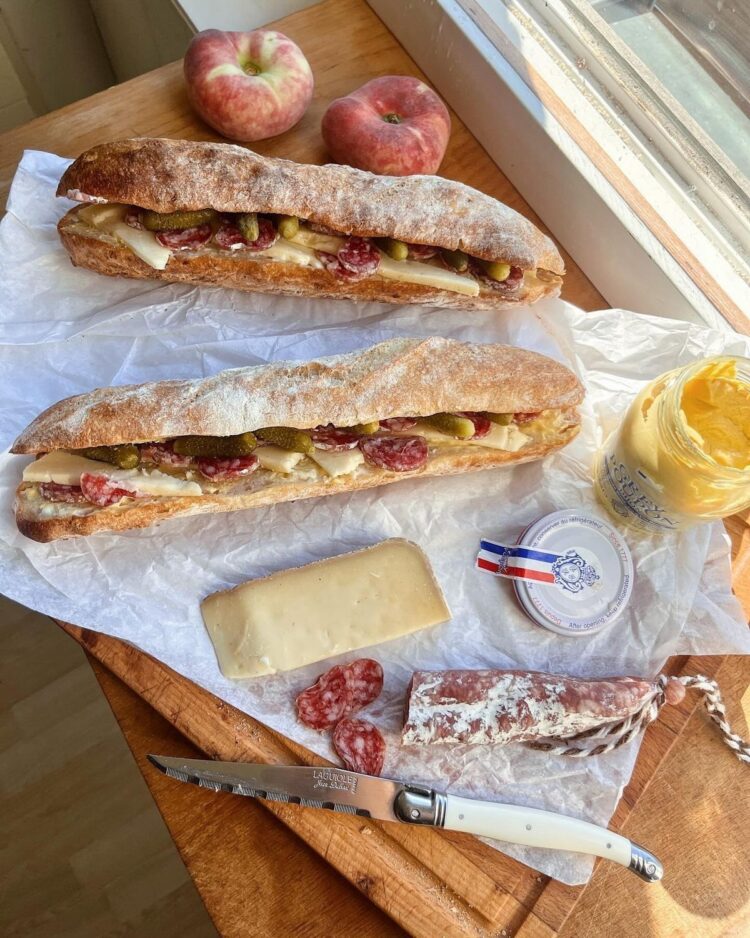
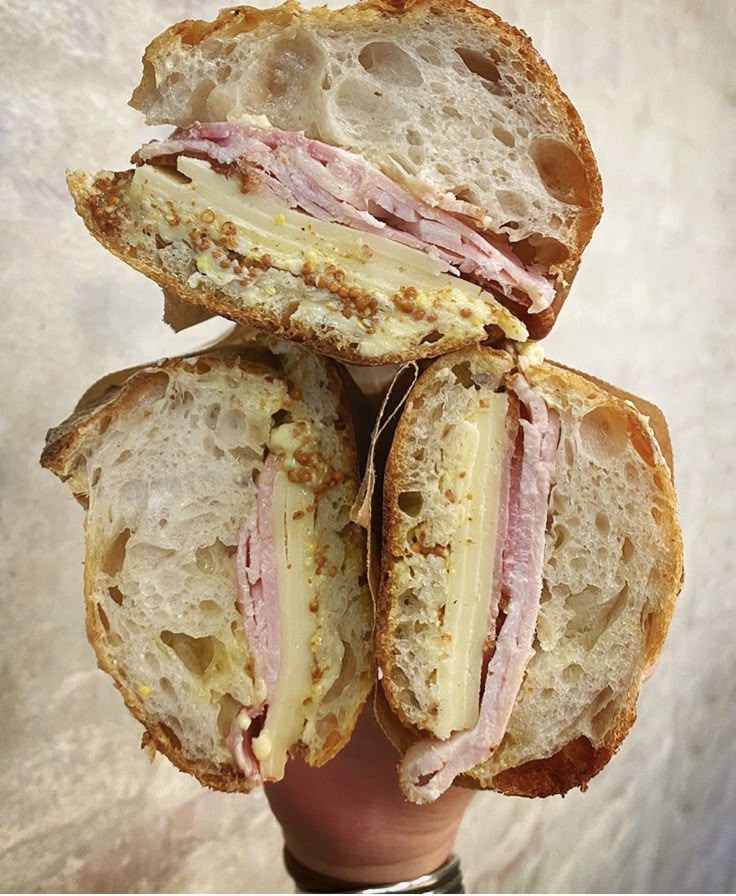
Omg MM,
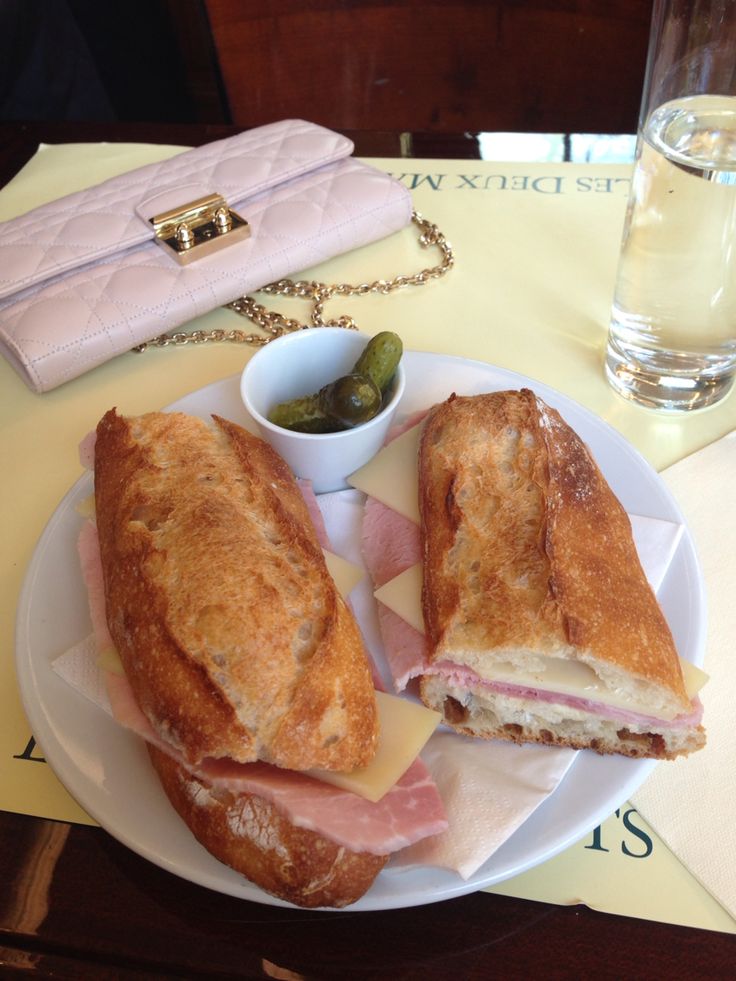
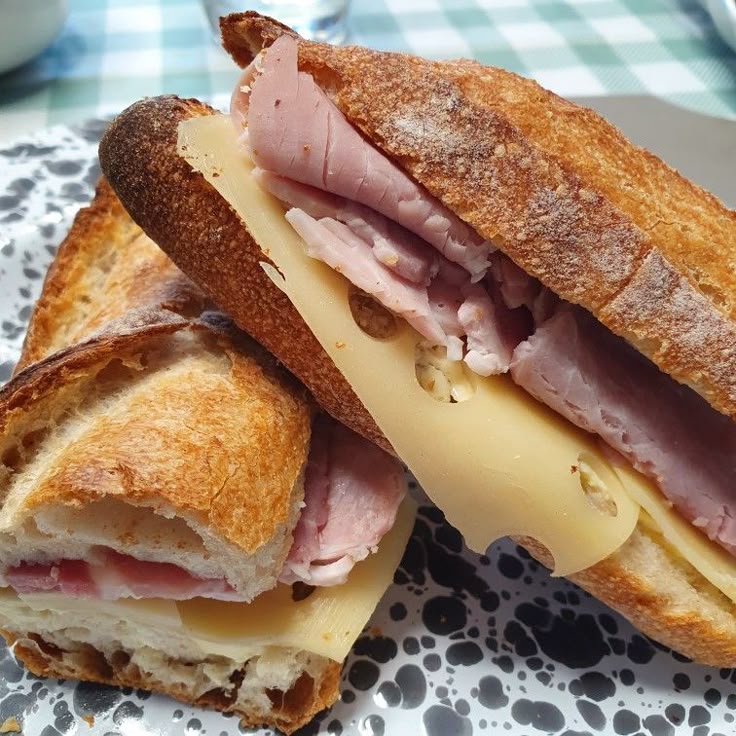
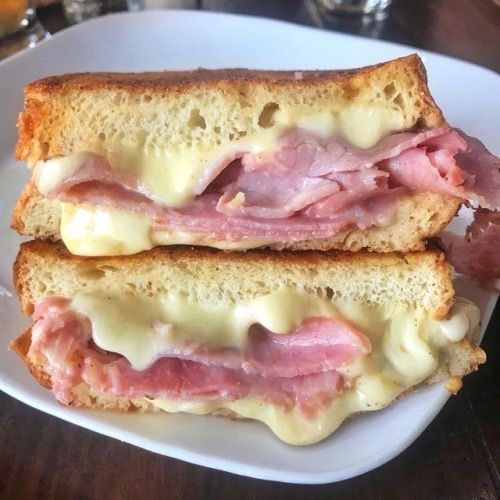
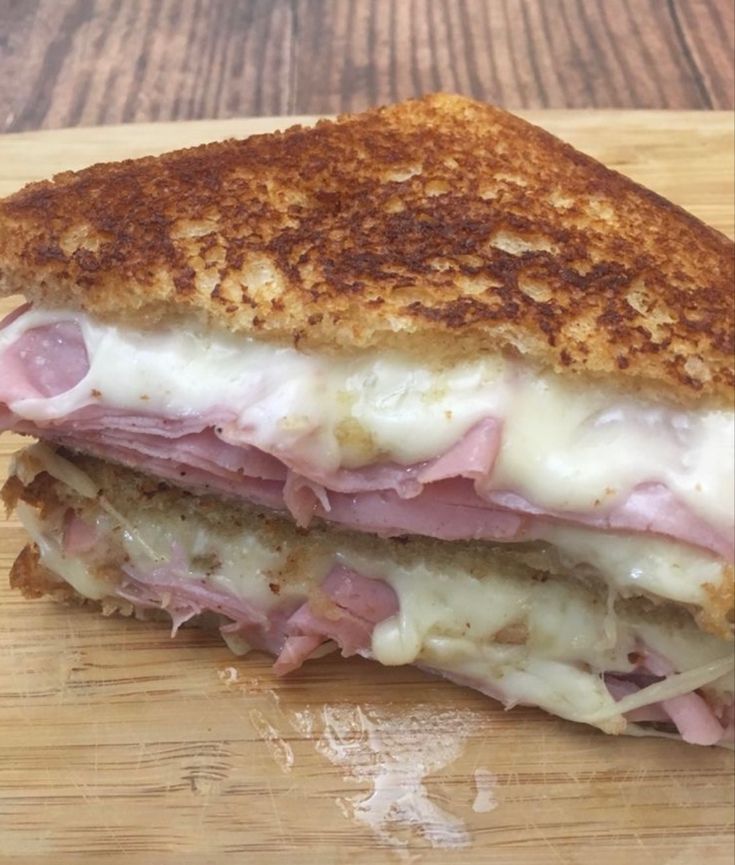
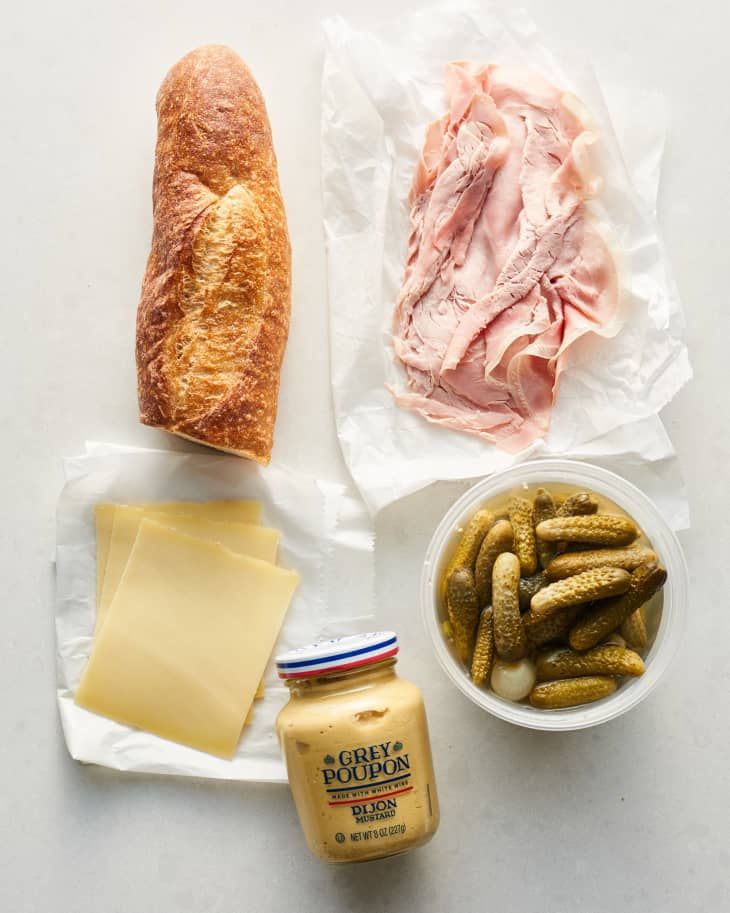
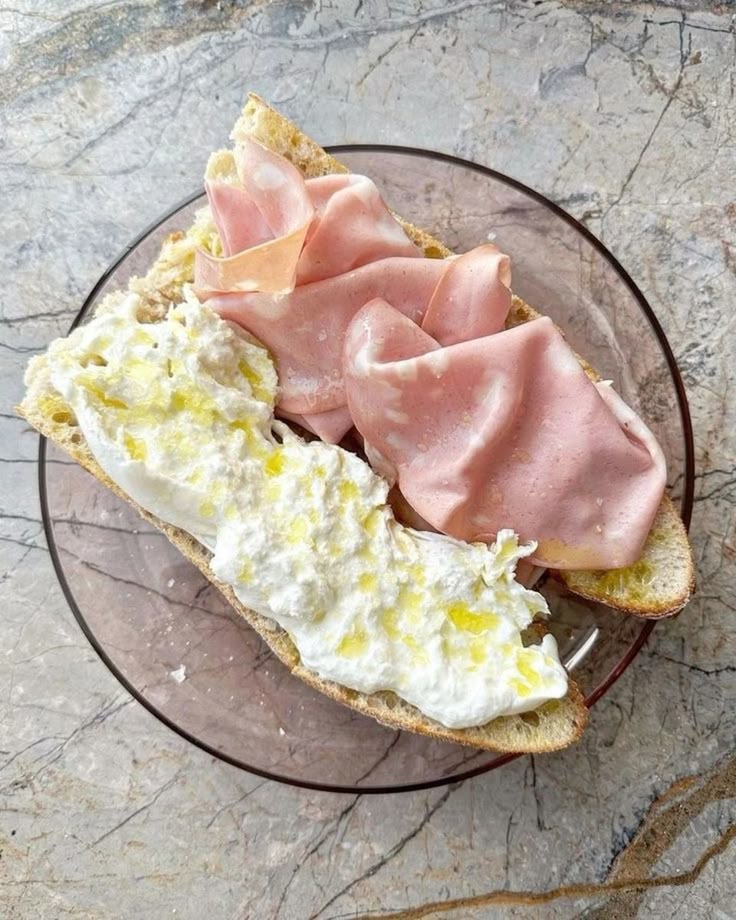
You really must be yearning forva ham&cheese Baguette!!
Fwiw, there is a real french bakery in Beijing directly east to the drum Tower.
Best regards, MT