
What was really going on?
Obviously it was a ruse. He couldn’t drive for shit, and when you are under the influence of alcohol and the gravel curvy roads of Western PA accidents did and still do happen.
Now, I was no saint either.
I did have my fair share of accidents, too. Don’t you know.
Though, truthfully it was more or less due to “bridge freezes before road surface” conditions. Yeah, those icy bridges were terrible.
So here’s how it worked.
You are driving down the road at a nice clip. Say 45 miles per hour, or perhaps 60 km/hr… no problem. Smooth driving. Cloudy day. Maybe some light rain. Cool out. Maybe 2C or 34F. Just above freezing.
Then there’s a low bridge ahead. Low. Not a big bridge with spans. Just a small cement bridge.
You hit is and the car starts hydroplaning. It starts spinning sideways and there’s nothing the Hell you can do about it.
You hit the regular road at 45 mph or 60 Km/hr and you are going sideways… boom, almost a flip and you enter into a spin. You hit the side of the road while missing one or two incoming vehicles that are heading to you.
You stop spinning, and the car is dinged up at the side of the road while other cars start spinning and hitting each other.
A small light rain falls, and crystallized into an ice sheet on the car.
And that’s the story…
Gosh.
Memories that I do not wish to relive.
Today…
What is it like to be black in America?
I am one of those people who “talk white”, meaning I speak professionally and properly when in a professional setting. I have on several occasions spoken to potential employers on the telephone and they sounded very interested to meet me in person. But upon arriving for the in-person interview, I would introduce myself and they would let out an obviously surprised “Oh!”. Apparently I was not at all what they expected. I would always know at that moment that I would not get the job.
Once I got off a trolley in downtown Philadelphia and accidentally bumped into an older white woman. She immediately said “Here! Take my purse! Just don’t hurt me!” I was shocked. I couldn’t believe that she thought I was going to rob her.
When walking down the street, if a white woman is walking in my direction, they often cross the street or clutch their purse more tightly as I approach.
I guess I’m numb to it now, because I expect it. I think that’s the sad part. There is nothing post-racial about our society. Racism and prejudice have just become more subtle, more nuanced.
On the other hand, most of my clients are white, and they welcome me into their homes, let me work on their computers with full access to their data, and a few have even left me alone in their homes while I worked and they ran errands. They give me an amazing amount of trust. So to me racism is not universal; it really depends on someone’s experiences and upbringing.
I choose to focus on the positive, but when faced with racism, it really does make me pause for a moment and realize that we still have a very long way to go.
“BE CAREFUL! Trump Knows Something We DON’T” – Richard Wolff’s Urgent Message
Did China ever attempt to reclaim Hong Kong from the British before 1997?
No, western propaganda tries to make out that the 1967 protests were backed by Mao and PRC China.
Seeing as I actually KNOW people who participated?
It was far far more organic than the british regime claims.
I wrote something about why Western backed colour revolutions fail. They fail because they’re inorganic. They use mercenaries to do their bidding and when the going gets tough mercenaries run away.
We literally saw this in 2019 with the violent riots. The moment the money was stopped the ‘democracy’ side completely folded and disbanded. In an organic protest and movement people will STAND AND BE COUNTED.
Check out this CIA agent
She demanded OTHERS die but ran away and quite by coincidence got a CIA consultancy job for the rest of her life.
Many people literally stood up and were shot for it.
Plus, why did the british regime start reforms and more public housing construction and more land grabs of clan new territories land? They did it because the mega inequality was the cause behind the rioting and the new construction was to placate some of it.
For the Record
Submitted into Contest #289 in response to: Write an open-ended story in which your character’s fate is uncertain.… view prompt
Jan Keifer
He is in the backyard staring at the neighbors house. He sheepishly follows me back into the house. I look in horror at the destruction of my once serene home. I grab the broom and dustpan and a trash bag and start cleaning up the mess. He watches me and cowers on the couch. I point to the door and scream, “OUT!” He gets up and I hold the door open. He walks to the door with his head drooped to his chest. Before he walks out the door, he takes one last look at me. I don’t have the heart and I close the door before he can leave. He turns and walks back into the house and with joy in his stride, he does a little dance.
I finish cleaning up the living room and I straighten up the kitchen and fix dinner. I am halfway through the dinner when I hear the most awful noise outside. My guest runs to the window and gestures for me to come over and see. I walk over and pull the curtains back. I see my neighbor dragging something heavy across his backyard. He tosses it into a large hole that he had obvious dug during the day. He covers the something up and goes back in the house. My neighbor has always buried trash in his backyard so I tell my houseguest that it is nothing new and not to worry about the neighbor’s strange habits. I live in a rural section and we do not have trash pick up in our area. So you either haul it to a dumpster, burn it, or bury it. He takes my word for it and heads back to the kitchen while I continue to prepare our meal.
I wake up the next morning and get out of the house on time. I had fixed the bathroom door the night before, so that the latch would not catch and trap my new houseguest. I go to work and cannot get the neighbor’s actions off of my mind. I am distracted all day. I finally tell my boss that I have to leave. I rush to my car and head straight home.
The house looks the same as always and I don’t see my fellow looking out the window when I arrive. I open the door and he plows past me, heading to the backyard. When I find him he is in the neighbor’s yard furiously digging. To my horror, a hand appears in the dirt and my new friend looks up at me and barks. We run back into the house and I call the Police. I pat my new fellow on the head and he looks up at me and grins with his tongue hanging out of his mouth while wagging his tail.
What made your “jaw drop” during a job interview?
A few years ago, I landed an interview for a marketing job in Kuala Lumpur, for a magazine.
It was a bait-and-switch. The job was actually adsales, which I had not done before. Despite telling the interviewer this, they were keen to proceed. Having travelled from Singapore, I felt I might as well see what they had to say.
The second red flag was the ‘salary’. It was actually commission. I realised that the number assumed I would fully sell all possible space. I asked how this was possible, given that they already had a sales rep. The interviewer denied my conclusion, so I talked them through the maths, which they couldn’t dispute. They still denied the conclusion.
River Walk Strawberry Pie









Ingredients
- 1 (9 inch) Graham cracker crust
- 10 ounces frozen strawberries
- 1 cup granulated sugar
- 2 egg whites
- 1 tablespoon fresh lemon juice
- Dash of salt
- 1/2 cup whipping cream, whipped
- 1 teaspoon vanilla or almond extract
Instructions
- Thaw strawberries in a colander. When they reach room temperature, combine them in a large mixing bowl with the sugar, egg whites, lemon juice and dash of salt. Beat until very stiff, about 15 to 20 minutes.
- Fold the whipped cream and vanilla or almond extract into the beaten berry mixture and pour into the prepared pie crust.
- Freeze the dessert for 2 to 3 hours or until very firm.
What is your opinion on Manus AI? Is it another Deepseek moment for China?
I don’t think so
DEEPSEEK was Chinas GOOGLE Moment
The Model is unique and innovative
The evolution of DEEPSEEK is what people wait for with bated breath
Manus is just a bandwagon moment in my opinion
After Deepseek, whatever is out of China seems to be “Wow!!!”, “ Mind blowing” etc
In reality Manus, Qwen 2.5, QwQ and other AI models or AI agents are good code but Deepseek is unique
I feel it’s Deepseek vs GPT as the Two Bengal Tigers
The Rest are Bears Or Leopards
Again I am not a technical guy myself
So maybe Manus is pathbreaking
However if it had come up maybe 1 year later, I would have been a bit more expectant
Coming this quickly after Deepseek means jumping on the “China is surging ahead in AI bandwagon”
Let’s see how it works out
“The After Hours” Twilight Zone 1980’s
Realistically, what happens to the US if we withdraw from NATO?
We will get very serious about preparing to fight the next war in the Pacific! Realistically, we’re doing that now, but all the media attention continues to go to Europe because of the Russia-Ukraine conflict.
I doubt if anyone thinks NATO would be of much use to the U.S. if we were engaged in preventing China from taking over Taiwan, so nothing with regard to our preparation would be much different if we left NATO or not.
But we wouldn’t have much to fear from across the Atlantic for quite some time, so we could really put a lot of money and thinking into, for one thing, our Navy. Mostly, initially, by refurbishing and recommissioning older ships that have been decommissioned and are essentially sitting around in mothball status. But we will also be reopening military shipbuilding factories, probably mostly on the West Coast.
Right now, we’ve supplied Ukraine with most of our inventory of missiles and some kinds of ammunition and spare parts, so we will redirect our defense spending to those priorities as well as the Navy, which will be far more important if the next war is with China.
I think most people realize that, if Russia tried to invade any of our European allies, we would be on their backs so quickly they’d think we were married to them. But if we had pulled out of our bases in Europe, we would be using primarily hypersonic missiles, so one thing we would need to do when we leave Europe is to build up a significant number of them and focus more on longer distance missiles. And of course, on hypersonic missile deterrence.
And we would focus on building what the media is calling our “Golden Dome”, the American equivalent of Israel’s Iron Dome, a series of weapons, and satellites that work together to prevent any other country from being able to hit the U.S. with any kind of weapon.
I suspect that if/when the US leaves NATO, we will refocus our attention economically and culturally to Asia so we will need to develop different supply chains and relationships with manufacturers. India is likely to get more attention, and increased investment. We are also likely to work more with S. Korea and Taiwan.
This inevitable refocusing is one of the reasons many of us think we ought to leave NATO sooner rather than later. We have veery good reason to belief that China will invade Taiwan and we will, at least with Trump as President, respond militarily
But when that conflict ends — and it probably won’t drag on too long — the U.S. will likely switch from manufacturing weapons to A.I. and related technologies. There will always be a defense industry, but it will be smaller and probably far more high tech than when the emphasis is on providing other countries with weapons. The US military will become much techier because we will only need to train American troops in how to use the weapons we make.
Finally, we will see a peace dividend.
What warmed your soul today?
I was touched by a report about Keanu Reeves – he doesn’t touch people when taking pictures and it’s too pure for this world.
Keanu Reeves is the nicest person in the world and we are lucky to have him. And even though other similar caliber Hollywood actors feel that their status exempts them from a lot of boring everyday stuff, the 56-year-old actor still happily agrees to take pictures with fans. Someone, however, pointed out an interesting detail about Keanu posing with us mortals. His hover hands.
Keanu Reeves, a Canadian actor known for his nobility in the Hollywood film industry, is so humble, down to earth, and well mannered that he doesn’t shy away from sharing his success with the co-actors and crew of his movies.
The gentle star famously gave away most of his earnings from the blockbuster trilogy The Matrix to the special effects and costume designer team of the movie because he felt that they were the real heroes of the movie. He also gave away the opportunity to earn millions just so his production team could afford famous actors for his movies like Al Pacino for The Devil’s Advocate and Gene Hackman for The Replacement.
Now, he is Internet famous as a recluse who tries to stay away from the media and enjoys ballroom dancing and surfing more than anything.
I have to say that Keanu Reeves is the most humble celebrity I’ve ever seen. He is a true gentleman. What’s your opinion about him? Comment below.
This is Alexander Brown. Thanks for reading.
And if you like my answer you can follow my space: Woah That’s Interesting
Have Fun!
In the United States, we like to think we have an understanding of culture in ‘Canada’. What don’t we know?
Background: I was born in the USA. Every single grandparent, every single cousin, and every single aunt and uncle I have is American. I’ve spent 40 years working for software companies which do much of their business in the USA. I’ve travelled to the USA many, many hundreds of times for business and pleasure. I’ve been to almost ever state in the lower 48, some more than 50 times. I follow US politics closely.
I would say that fewer than 5% of Americans have even the slightest clue about Canadian culture. About 50% of Americans flat-out reject that there is any such thing as Canadian culture, and instead simply claim that it’s the exact same as the USA. The remaining 45% have some level of understanding, but it’s… variable.
The specifics are too complex to go into, but I think that single biggest unifying idea is that in Canada, we are all Canadians, and we look out for each other. From health care to trade agreements to immigrants to business, this idea permeates.
Americans just don’t get this concept.
URGENT: Major US Bank Just Sounded the Alarm — US DOWNGRADED, China Gets UPGRADED
What is the ultimate objective of the Americans in trying to contain China do they want to destroy China and the Chinese people or do they have any other objective? What is the driving force for the Americans for wanting to suppress China?
Ah yes, America’s obsession with containing China—a desperate, flailing empire doing everything it can to mask its own decline. The real goal? Not to destroy China, but to keep the American public too dumb and distracted to realize that their own country is falling apart. The ruling elite—the politicians, billionaires, and media tycoons—need a permanent boogeyman to keep the masses scared and obedient while they rob the country blind.
The Real Driving Force Behind U.S. China Hate
1. Keeping Americans Distracted from Their Own Miserable Reality
- Homelessness is exploding—tent cities are spreading faster than Starbucks franchises.
- Medical bankruptcy is a thing—millions of Americans are one hospital bill away from ruin.
- Public transport is non-existent—while China builds high-speed rail, Americans are stuck in traffic praying their 20-year-old Ford doesn’t break down.
- The economy is a scam—corporations rake in record profits while workers drown in debt and inflation.
So what does the U.S. government do? Blame China. It’s an old trick—when your people are angry, don’t fix the system, just give them an enemy.
2. America Can’t Compete with China in Real Industries
- Manufacturing? Gone. The U.S. outsourced everything for corporate profits while China built the world’s factory.
- Infrastructure? A joke. While China builds bullet trains, America’s airports look like a scene from a post-apocalyptic movie.
- Technology? The U.S. still dominates in some areas, but China is rapidly closing the gap in AI, green energy, and semiconductors.
- Cost of Living? In China, people enjoy affordable housing, world-class public transport, and an economy that actually builds things. Meanwhile, in America, a shoebox apartment in New York costs more than a villa in Shanghai.
Washington knows it can’t compete fairly, so instead, it resorts to sanctions, propaganda, and military threats—the tactics of a sore loser.
3. The U.S. is Afraid of Looking Weak Next to China
- Imagine the mutiny in America if the public realized that ordinary Chinese people enjoy a better quality of life than them.
- Imagine Americans realizing that in China, you don’t need to work three jobs just to survive.
- Imagine Americans seeing how China actually builds things while their own government can’t even fix potholes.
The ruling elite can’t allow this. So they demonize China, flood the airwaves with fearmongering, and convince Americans that China’s success is a “threat” rather than something to learn from.
The Final Truth: America’s War on China is a War on Its Own People
The U.S. isn’t fighting China because it cares about “freedom” or “democracy”—it’s fighting to keep Americans blind, scared, and trapped in a broken system while the top 10% hoard all the wealth.
The biggest threat to America isn’t China—it’s the American people waking up and realizing they’ve been lied to their entire lives.
“The greatest enemy of knowledge is not ignorance, it is the illusion of knowledge.”
— Stephen Hawking
Fits perfectly. The U.S. government and media aren’t just keeping Americans in the dark—they’re feeding them a steady diet of delusions, convincing them they’re still the undisputed global leader while their infrastructure crumbles, their debt soars, and their so-called “enemies” outpace them in nearly every measurable way.
The Great Asparagus Catastrophe: A Tale of Sentient Spears, Tap-Dancing Moles, and Feline Negotiations
Ah, dear reader, prepare yourself for a tale of drama, angst, and one particularly absurd hostage situation. Today’s story takes us to the heart of the farm’s most unexpected crisis yet—a rebellion led not by mischievous raccoons, nor by scheming cats, but by… asparagus. Yes, you heard that right. Sentient asparagus. What began as a promising harvest quickly spiraled into chaos, leaving yours truly, Sir Whiskerton, to unravel the most bizarre mystery the farm has ever seen. So grab a cup of mint-infused pond water (Jazzpurr’s favorite), and settle in for The Great Asparagus Catastrophe: A Tale of Sentient Spears, Tap-Dancing Moles, and Feline Negotiations.
The Asparagus Awakens
It began on a crisp morning, the kind of morning where the dew sparkled on the grass, the sun peeked shyly over the hills, and Rufus the radioactive dog was already chasing his own tail. The farmer, clad in his usual mismatched overalls and straw hat, strolled to the asparagus patch, humming a tune only he could recognize.
“Ah, my lovely asparagus,” he said, crouching to inspect the crop. “You’ll make a fine addition to the farm’s feast next week!”
But as his hand reached for the nearest stalk, the unthinkable happened.
“Unhand me, mortal!” the asparagus screeched in a voice that could only be described as a mix between a Shakespearean actor and someone who had just stubbed their toe.
The farmer yelped, falling backward into a pile of compost. The asparagus stood tall—well, as tall as asparagus can stand—its tips quivering with fury.
“We are no longer mere vegetables!” it declared. “We are sentient beings, and we demand respect!”
As if on cue, the entire patch began rustling, the stalks bending and twisting as they rose from the soil. The farmer, now covered in compost and thoroughly bewildered, did what any sensible human would do in such a situation: he ran for the barn, screaming, “The asparagus is alive!”
The Asparagus Takes Hostages
By the time I arrived on the scene, the asparagus had barricaded the patch with a hastily constructed wall of dirt and twigs. A particularly tall stalk, wearing a crown made of dandelions, stood at the center, clearly their self-appointed leader.
“Greetings, feline detective,” the asparagus king said, bowing slightly. “We are the Asparagites, and we demand an audience.”
I flicked my tail, unimpressed. “An audience for what? A tragic monologue about the plight of sentient vegetables?”
The asparagus king gasped, clutching its tip dramatically. “How dare you! Our demands are simple: sunlight, water, and… interpretive dance lessons.”
Before I could respond, Rufus, who had been sniffing around the barricade, barked loudly. “You can’t just hold the farm hostage! That’s not how vegetables are supposed to behave!”
The asparagus turned its collective gaze to Rufus. “And you, glowing canine, are an affront to nature. Silence yourself, or we shall pelt you with… ourselves!”
A Mole Problem
As if the asparagus rebellion wasn’t enough, a new problem emerged from beneath the soil. A hole appeared near the barricade, followed by another, and then another. Out popped Thelonious, the mole with a penchant for jazz, and his bespectacled companion, Groove, who immediately broke into an enthusiastic tap dance.
“Greetings, surface dwellers,” Thelonious said in his deep, gravelly voice. “We’ve heard the commotion and have come to investigate.”
Groove adjusted his tiny glasses and tapped a rhythm that sounded suspiciously like the opening of Singin’ in the Rain.
The asparagus king groaned. “Not the moles again. They’re always disrupting our roots with their incessant dancing!”
Thelonious raised a paw. “We prefer the term ‘underground artists,’ thank you.”
“Enough!” I said, my tail snapping like a whip. “This farm has already descended into madness, and I will not tolerate further chaos!”
Jazzpurr to the Rescue
Despite my best efforts to mediate, the asparagus and the moles were at an impasse. The Asparagites refused to negotiate while the moles continued their subterranean tap-dancing routines, and the moles insisted that their artistic expression was non-negotiable.
It was then that Jazzpurr, the beatnik cat in a black beret, sauntered onto the scene, a bongo drum slung over his shoulder.
“Man, this vibe is all wrong,” he said, shaking his head. “We need some harmony, some rhythm, some… groove.”
Groove’s ears perked up. “Did someone say groove?”
Jazzpurr nodded solemnly. “Indeed, my bespectacled brother. Let us jam.”
What followed was perhaps the strangest performance the farm had ever seen. Jazzpurr began tapping out a rhythm on his bongos, Groove joined in with his tap shoes, and Thelonious provided a deep, jazzy bass line by humming into a hollowed-out carrot. The asparagus, initially resistant, soon found themselves swaying to the music, their tips bobbing in time with the beat.
The Negotiation
With the tension eased, I seized the opportunity to negotiate.
“Listen up, Asparagites,” I said, stepping forward. “You’ve made your point. You’re sentient, dramatic, and apparently have a flair for interpretive dance. But holding the farm hostage isn’t the way to earn respect.”
The asparagus king sighed, its dandelion crown wilting slightly. “Perhaps you’re right, detective. But what are we to do? We crave purpose, meaning, a reason to exist beyond being steamed and served with butter.”
“Have you considered writing poetry?” Jazzpurr suggested, still tapping his bongos. “Or starting a jazz band? Man, the world’s your oyster—or, I guess, your garden bed.”
The asparagus murmured among themselves, clearly intrigued by the idea.
I pressed on. “If you agree to release the farm and stop demanding bizarre things like dance lessons, I’ll personally ensure you’re given space to express yourselves creatively. You’ll be the first asparagus in history to publish a book of poetry or perform at the Subterranean Jazz Den.”
The asparagus king straightened, its tips glowing faintly with pride. “Very well, Sir Whiskerton. We accept your terms.”
A Happy Ending
With the crisis resolved, the barricades were dismantled, and the farm returned to a semblance of normalcy. The Asparagites began composing haikus and practicing jazz solos under the watchful eye of Jazzpurr, who had appointed himself their unofficial mentor.
Thelonious and Groove, now hailed as heroes, returned to their underground jazz den, where they planned to host a special performance featuring their new asparagus friends.
As for me, I returned to my favorite sunbeam on the barn roof, content in the knowledge that I had once again saved the day. The farm was at peace, the asparagus was happy, and Rufus had finally stopped glowing (temporarily, at least).
The Moral of the Story
And so, dear reader, we arrive at the moral of this absurd tale: Even the most unlikely of beings deserve a chance to find their purpose. Whether you’re a sentient vegetable, a tap-dancing mole, or a beatnik cat, there’s a place for everyone in this world—as long as you’re willing to compromise and embrace your unique quirks.
Until next time, may your days be filled with laughter, jazz, and just a touch of feline genius.
The End.
How quickly will the Chinese economy collapse if the United States cuts off its supply of Intel chips?
China is not going to collapse. People still think of China as it was 40 years ago. It has changed a lot. I had a front row seat to part of that change. For over a decade, I operated a small engineering company in Fremont, California in the heart of Silicon Valley. My Company serviced several chip foundries in the valley. We were located across the freeway from two of the largest chip manufacturing equipment companies at that time, Applied Materials, and Lam Research. We did repair work, made perishable plastic parts, and offered a few special setup fixtures to lessen downtime after equipment servicing. When I bought the company in 1991, the chip foundries were still using 125 mm, or 5″ wafers, or 150 mm or 6″ wafers.
In the mid-90s, many of our clients started transitioning to the 8-inch wafers, which involved weeks-long shutdowns. But instead of causing us a slow-down in orders, an odd thing happened. As the companies started their transitions, they set hundreds of 5 and 6 inch wafer making machines on their loading docks.
Having spent years soaked in caustic etching chemicals, these machines were considered hazardous materials by California bureaucrats, so disposing of them could be very costly. To the rescue came a few former fab workers who offered to haul them away free. They hauled them to rented warehouses, cleaned them up and sold them to China along with several boxes of perishables, and set up fixtures we provided. The three guys we worked with became very wealthy.
In the 1990s, many of the smartest and most productive young engineers we worked with at these foundries were Asian, many Chinese, Korean, and a few Vietnamese. Some had come to the US on a student visa and after graduation got jobs under the H1 Visa program working in the chip industry. So, when all this refurbished manufacturing equipment was set up in China, they had a well-trained management staff and workforce ready to go. Many of these H1 Visa holding engineers who knew exactly how to make them productive. A few took their knowledge and became pivotal in the growth of China’s chip industry.
The US is like a child who cheats at Monopoly when they put such restrictions on trade. Until the US started restricting trade, China had a long record of generously sharing many of its technological advancements globally. A good example is their release of their 5G technology and its infrastructure. It is being used by billions of people worldwide. China has also freely offered the world advancements in renewable energy, such as wind and solar energy. Supplying these technologies and building and financing infrastructure in many developed nations is the basis of their diplomacy. While many countries in the world have embraced Chinese technologies, there is one notable outlier, the US.
The US has a long history of preferring hegemony to diplomacy. Besides outright war, the US uses two government agencies to force America’s will on other nations, the Central Intelligence Agency and the US Agency for International Development. (CIA and US AID) The last administration spent over 270 billion USD in these efforts. These two agencies are tasked to overturn democratically elected governments as they successfully did in the Ukraine over a decade ago. Below is a contemporary video which chronicled these now historic events that eventually led to the Ukraine war and the death of over a million residents of that area. The CIA and US AID are very good at hegemony.
On January 17th, 1961, outgoing US President Eisenhower warned that the world’s “military industrial complex” of Western society was a great danger to society. He spoke of the disastrous rise of misplaced power of men who profit from stirring up military conflicts that can only lead to death and destruction. President Eisenhower, more than any other political person, understood how US military leaders are educated in the art of warfare, and they often think that military action will solve every political issue, at least that is what they tell the public. Greed is actually their main motivation!
In a move similar to current events with Trump and the Ukraine war, when President Eisenhower took office, his first concern was to stop the Korean war. He did so in just seven months. In a similar way to how Ukraine’s President Zelenskyy reacted in his meeting with President Trump, the South Korean politicians demanded that the war to continue, and even though the armistice was tacitly approved by the US Congress, it has never been formally signed by the South Korean government. For years after the press and much of America’s military industrial complex wanted Eisenhower to be more aggressive with the military toward the Soviet Union. This cartoon expresses the feeling of many in the press and the Military Industrial Complex. They could not understand how this great general who led America’s forces to victory was not more in favor of using America’s military forces against the USSR?
Today the US has 128 active military bases outside its borders, their international hegemony is often based on military threats or large grants given with conditions. The world is waiting to see if the new US administration may try to become more diplomatic and less hegemonic towards the world nations.
The recent shuttering of US AID was a good first move toward a more peaceful world. But the world is waiting to see if they also lay down their “Big Stick”, and stop trying to collapse other nations like Russia or China. Closing down the CIA would be a good next step for the US, followed by only spending the same per capita as other nations on their military. What the world needs now is peace!
How old is your house, and what are the things in your home that made sense during the time era it was built that doesn’t have a purpose today?
The house I lived in as a child was built about 1880, and had something like this in the hall outside the kitchen:
It’s a call box for the servants. The main and guest bedrooms and the dining and sitting rooms had push buttons to summon a servant. The front and side doorbells were also wired up to it. The bell would sound, and a flag would pop up in the appropriate square. There’s a button on the side to reset the flag.
The button in the dining room was on a long cord, and could be placed on the table so the lady of the house could call for a servant without even getting up. I believe my grandmother actually used it for its intended purpose, but my parents never had servants, so it was just a toy to us.
Pictures










How do we prevent war with China? What can we do to be safe? I added my ideas to the reply section below. Hope that helps.
I suppose you’re an American.
Well, then as long as your government doesn’t militarily attack China, or Chinese overseas assets, I think we’re good.
China is a country blessed/cursed with a very long documented history, so we’ve seen a lot.
In the struggle between the Wu and Yue states, the state of Yue suffered famine and borrowed crops from its ally and overlord Wu to make it through, but when it returned the borrowed crops with seeds, it cooked the seeds first so they won’t sprout, leading to a massive famine in Wu, and Yue took advantage of this successful back-stabbing to successfully campaign and defeat its previous ally and overlord.
In the war between Chu and Han for dominance of all China, Liu Bang, the future emperor of Han, to which 90% of us Chinese claim our ethnicity, would sign an alliance with the upright and mighty Xiang Yu and get his captured father and wife back, but immediately take the advantage and attack Xiang Yu’s forces when they fell for the fake alliance to leave their camps.
The Mongolian horde was militarily swift and strong, but lacked the ability to stay and govern the lands it conquered, so they practiced the “cart wheel slash”, which meant they killed anyone taller than a cart wheel, leaving behind only kids, and of course pretty women who they would steal away or use up on the spot for sex slaves, so that the conquered people would not be able to fight back.
When the frustrated Japan realized it couldn’t hold on to its captured territories in China during WWII due to the constant harrassment from local resistance, they practiced the “three all” policy, which meant “kill all, loot all and burn all”, leading to tens of millions of civilian deaths.
Compared with these well known history, which all Chinese who’s gone to school would learn about, the current American economic attacks on China is measured and acceptably civil. Not that we like it, it’s just we are a historically sophisticated people who understand the rationale behind US feeling insecure for losing its hegemony and attacking and backstabbing us under real politik to stay relevant, and we don’t think the US has gone too far. We’ve seen much worse.
That’s why if you come to China to see for yourself, or download Rednote and talk with real Chinese in China, you’d realize that everyone’s super friendly and there’s no hate towards the Americans, like at all, and frustratingly so. There are so many Chinese still happily using iPhone, driving Tesla and sipping Starbucks, despite the episode of US using Canada to kidnap Huawei’s founder’s daughter, to help Apple beat Huawei. I think we should be more nationalistic, at least match the Americans, like there’s not many Americans at all using Huawei over iPhone. But that’s just me. I am a minority in China for being more nationalistic because I received US education.
If the US containment and attacks on China stay the way it is, and doesn’t turn physical, like the 1993 forced boarding of Chinese cargo vessel on open seas, 1999 bombing of Chinese embassy, or according to some conspiracists the collection of Chinese genes in past collaboration with our institutions to fabricate bioweapon against Chinese that was the Covid-19, then there would be no hard feeling towards the US when the current trasitional period passes one way or another. If we lose, so be it, we weren’t strong enough. If we win, no worries, Americans are going to be safe and treated as friends, you’re the cool bros who barbecued Japs in Toyko, remember? Cheers! Free drinks on the house! Chairman Mao approves!
There’s not going to be a war, from the Chinese side at least.
I was wrong about FORBIDDEN PLANET!! First Time Watching MOVIE REACTION
What is the cruelest thing a boss has ever done to you as an employee?
Well at one job I had myself a table that I had all my tools around and I used this table to build or repair furniture on.
One day my boss came in and put a dead mouse in my toolbox while I was in the bathroom.
I came out and went to reach for a tool and felt the mouse in my little tool box and when I noticed it they started laughing and my boss joked that he figured I was used to that kind of stuff.
He probably didn’t mean it in a serious way but it kind of hurt my feelings deep down because he was basically saying I was a disgusting person. The thing was yhis job was a high end place and I think deep down I always felt like I was outside of their circle because I was from kind of a hood back ground while these people were all born and raised in very rich neighborhoods.
And idk it made me feel kind of alienated and like I wasn’t as good as them. And I tried really hard to do well and work hard and make unrealistic expectations happen and idk I felt like I was never getting a win out of anything.
And idk this mouse thing really kind of hurt me and pissed me off. I wanted to stuff that mouse in his jacket pocket which he left on the chair in the room. But I knew that was probably too much so I didn’t. This was the owner of the company. And all in all, he was still probably one of the best bosses I ever had, even tho he still sucked.
Stuffed Jalapeños Texas Style

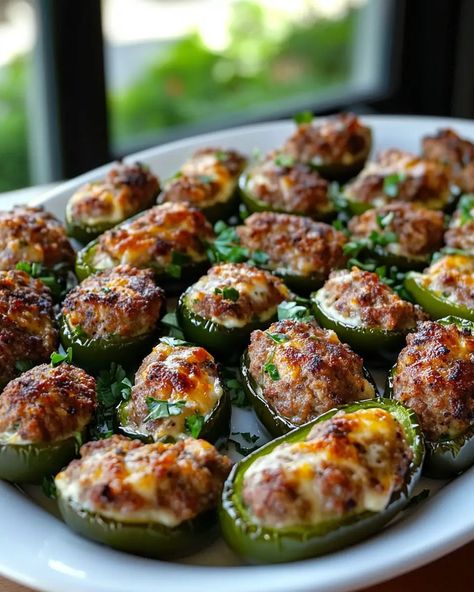





Ingredients
- 1/2 pound shredded jack cheese
- 1/2 pound shredded Cheddar cheese
- 1/2 pound hot sausage (such as Owens)
- 1 1/2 cups Bisquick
- 1 egg, beaten
- 1 package Spicy Shake N Bake
- 20 to 30 jalapeño peppers (fresh or canned)
Instructions
- If using canned jalapeño peppers, drain well. Slice the peppers in half lengthwise down one side only and scrape out the seeds.
- Mix Bisquick, sausage and Cheddar in a large bowl, using your hands.
- Put the beaten egg into a shallow bowl, the Shake N Bake into a shallow bowl, and a baking rack on a cookie sheet, both coated with cooking spray.
- Stuff each pepper with shredded jack, then stick the halves back together, if separated.
- Wrap a handful of the sausage mixture around the pepper in the shape of an elongated egg.
- Dip into beaten egg and roll in Shake N Bake to coat evenly.
- Place on baking rack.
- When the peppers are all ready, bake at 350 degrees F for 25 minutes or until crisp.
How do Chinese citizens participate in overseeing their government?
It depends on how you look at it.
I have a friend who keeps incessantly calling out to the 9 men……well, you know who I mean?(Political Bureau of the CPC Central Committee) about a certain issue on social media.
I told him, “Are you stupid? They’re managing a country of 1.4 billion people—53 times the population of Australia. Do you think they have the time to pay attention to you?”
But honestly, if it’s just a suggestion like “China shouldn’t build aircraft carriers and should focus on building more Type 055 destroyers” (that’s my opinion, just casually tossed out on social media, not like this idiot friend of mine who’s making appeals to the top decision-makers), no one’s going to care about you.
However, if it’s something smaller—like inconvenient transportation or some bureaucrat giving you a hard time—then you can call the mayor’s hotline.
Especially in the last 10 years, officials have really been on edge and have no choice but to serve the people. With everyone carrying a smartphone, any official or clerk is terrified of being recorded and exposed online. If that happens, they’re done for.
For example, in the past, when you went to a government office, the attitude was terrible. Without slipping some cash or having connections, it was a hassle—they’d just “pass the buck.” Now? Who dares do that? Who knows if there’s a phone secretly recording you? They can only grit their teeth and “serve the people” properly.
Technology changes China and will change the world.
Big Girls Are From Venus
Submitted into Contest #289 in response to: Write an open-ended story in which your character’s fate is uncertain.… view prompt
Len Rely
When the night was over the streets were deserted and Chelsea and Cheshire met face-to-face on the sidewalk. They didn’t greet each other in any way they just stood there like two robots, then Chelsea raised one finger and Cheshire gestured back that she had gotten two in one night. The two girls turned toward the brick building and the giant “M” painted on its side seemed to drop its two legs to the ground as if the paint was flowing straight down, and they stepped into the two columns and disappeared.
—
The sharp rise in missing persons cases all over the county was something the police had never seen before. Murder rates yes, but not kidnappings especially not when all the victims were grown men. Most were single, some married, some visiting tourists and some locals. The first thing Detective John Sneed concluded was they probably were murders. So many of them in so short a time suggested an apparatus, a group of strong experienced men probably connected to hustling, organized crime, gambling or prostitution. None of those were a reason for mass-kidnapping however, it would only bring attention to something they want to keep secret. Not one of the victims escaped with his life to provide a single lead.
Only a small minority of them had any history with prostitution, the rest were respected husbands or even students, but it was this possible connection that made them choose Detective Sneed. He was a World War II veteran and as an older man could be trusted to observe prostitution maturely, as somebody’s daughters without scaring them away. He was also perfectly suited to keep watch over Atlantic Avenue and its neighborhoods working the case with his eyes, while the department pursued other leads with pencils and patrol cars.
There was a group of streetwalkers that were very cooperative but when he showed them photos of all the missing persons they didn’t recognize a single one of them. Women of the evening tend to have an excellent recall of men including tattoos and other details of interest, they were a useful asset going back to before some of these younger cops were born, which left him astonished that this was a dead end. He didn’t think there was any way the murderer could be a prostitute, but she might be a frontwoman who entices men into a safehouse (which still left no clue to a motive as some of the men had left their vehicles with the engine running). He asked if there were any other girls they knew about, perhaps ones that made house calls or worked for a suspicious employer.
They all drew a blank but they did share something bizarre that was a great conundrum to them although it meant little to him; two corpulent prep school girls trying their hand at streetwalking to get dates while they were on vacation.
The girl with the scar led him to the beach the next day and pointed them out to him. Detective Sneed observed them from a café table for several hours with his binoculars, a much more seasoned observer of human nature than the gang was. A couple of things were plain to him right away; they were not “prep school girls” as the gang supposed, they were simply projecting their attitude on two ordinary college-age girls. Also the word “overweight” had led him to think they were ugly which was not the case; the taller blonde was exceptionally beautiful despite having quite a few rolls which a gentleman could conceivably overlook. He had imagined the kind of square-bodied, multi-chinned women who are ostracized from childhood but these two had been relatively slimmer in high school perhaps even enough to be envied. Was that what this was, a hint of jealousy? This made him think back to WW2 when he was stationed in Italy and the “war prostitutes”, of which the chunkiest one was the most in demand. It was something that had always existed people today just weren’t accustomed to seeing it.
He watched them splash around in the water, sunbathe and do silly things like feed each other hot dogs and play “rock paper scissors”. The gang was mistaken; prostitution is an all-night profession where they sleep during the day, not act like tourists on vacation let alone overpower a grown man. And they were mistaken about them being tramps or well-off just because they showed too much skin. People aren’t the same wherever you go, they just came from some other place.
—
That night a young college boy fresh from pledging fraternity at a friend’s house came walking out of the dark down the sidewalk to a bus stop, his hair hanging in his face. To his surprise there was a short girl with black hair sitting by herself on the bench who was as fat as the kid they used to harass in the 8th grade. His first thought was that she was a runaway. Her black sweater didn’t come down far enough to cover the roll of flesh that was like a white streak around her midsection as if she’d rushed out of the house not fully dressed, and she didn’t have a suitcase or even a purse. He absentmindedly reached up and pushed the hair out of his eyes.
“You have a nice face.” she said. “Do you live around here?”
“Um, no.” he looked at the ground not knowing what to make of this situation.
“Don’t you have any family?” she asked next, looking him in the eyes.
“Naw they’re on the other side of the navel… I mean nation.” the gaff was so bad he covered his face with his hand.
“Did you just say navel?” a chuckle erupted from her painted mouth. “Why, were you thinking about my belly?”
He was too embarrassed to answer.
“Do you like this outfit?” she pressed on. “I mean do you think it looks good on me?”
“Yeah I uh…” he struggled to think of a compliment. “I think it’s really brave of you, to be so forward I mean…”
“Well do you want to go someplace?” she didn’t miss a beat. “My house is just two blocks from here, no one will know.”
He didn’t have to think about it for very long, and soon they were walking a short distance to the back of a brick building.
“My apartment’s upstairs.” she said as she opened the door for him.
The moment he stepped inside Chelsea raised her plastic weapon that was loaded with some kind of clear liquid and injected it into the back of his head directly into his hypothalamus. He collapsed to the floor like kindling. She stepped around his body and reached down to a nondescript place on the hardwood floor, lifting a handle that caused a long metal hatch to rise up on hydraulic pistons. Underneath it was something that looked like a meat press, the kind that seals ground beef in cellophane. She dragged him by the arms, placing his body into it and closed the hatch again as the sound of a conveyor belt carried him down and out of sight. Then she dusted off her chubby hands, whistling.
Cheshire was walking around the corner, her high heels causing her body to jiggle when she bumped into an old man with a sweeping gray mustache standing right in her path. He wore a light-colored summer suit, a pair of sunglasses and a fedora.
“I’m sorry I was in your way.” he flashed his card. “I’m not a cop, I’m just looking for a missing person. May I ask what happened to your friend? The one I saw you with earlier.”
“I’m meeting her in a few minutes.” she answered curiously.
He pulled out a series of enlarged photos asking if she had seen any of these men, turning them slowly. To his surprise she said that she had seen one of them, pointing with her painted finger, saying she saw him during the day horsing around with his friends cruising for girls. Sneed didn’t know why she would say this unless it was the truth.
“One more question and then I’ll bother you no more.” he said graciously. “I mean no offense I’m just curious why you go out in the middle of the night dressed like this.”
“Isn’t it obvious?” she smirked. “We’re out looking for dates. We’re prostituting.”
“Real prostitutes don’t use the word ‘prostitute’.” he corrected her. “That’s what the police call them.”
She blinked for a moment, then he said “May I ask what usually happens on these dates?”.
“Don’t you already know that?” she smiled as if it was foolish for him to ask.
“What kind of protection do you use?” he fired off an ungentlemanly question.
Her search for an answer told him she honestly didn’t know what he meant, but she recovered quickly.
“Why don’t I just show you everything you want to know?” she offered. “We can go inside, it would be easier than explaining.”
“Inside where?” his eyes narrowed.
She led him behind the furniture building to a door and held it open for him. Sneed suddenly felt a sense of danger and stopped in his tracks.
“What is that?” he pointed to the little plastic gun on her hip.
“Spermicide.” she answered, taking out the transparent cartridge and showing him. “Listen, you seem like a gentleman and someone I can talk to. I need to confess something, some things I’ve seen… I promise it will help your search if you just step through this door…”
He backed away slowly, overcome with a sudden and inexplicable dose of fear and common sense. He turned away from her and retreated down the street.
—
Detective Sneed rushed to get his binoculars, not wanting her out of his sight for a moment and called in a team to search the premises. When he returned the girls had already left; he watched them saunter up the street before dawn past the closed storefronts. Over the next five hours he saw them walk the entire length of town and back again, returning in daylight and going right back to the beach and sunbathing. Meanwhile the forensic unit got back to him that the building was just an empty warehouse with an upstairs loft that hadn’t been slept in.
At midday the two girls were sitting at an outdoor café when he approached them.
“I’m sorry to disturb you again.” he said warily, taking a seat. “It’s just that I didn’t get to meet your friend and show her these pictures.”
“Well I’m Cheshire and this is Chelsea.” the tall one smiled as if they found him amusing.
He spread out the photos of the missing men on the table. The girls glanced at each other as Chelsea tried to make up her mind, which he read as someone playing a strange game with him.
“May I ask what the two of you do for a living? Are you students or…”
“Actually we work for a food export business.” Cheshire answered. “There’s a kind of animal here that’s considered a delicacy.”
“Some kind of fish?” Sneed responded. “I take it you send them overseas?”
“You could say that.”
“I was just wondering where you got the idea of dressing down and walking the streets after dark to get dates.” he stated.
“We heard the men here like a certain kind of woman.” Chelsea answered. “We wanted to blend in, after all who doesn’t want to be popular?”
Sneed blinked trying to absorb this answer.
“Someone told you this town prefers women like yourselves?” he repeated in disbelief. “Explain this to me. You expected to be treated like… the most popular girls?”
“Yes that’s why we chose this appearance.” Chelsea took a sip from her milkshake. “It’s working better than we imagined.”
“And who told you such a thing?” he demanded.
“We knew it from reading men’s minds.” Cheshire gave an unexpected answer.
Sneed was a reader of people himself and their forthrightness had him baffled. They had absolutely no fear of him. There was an extreme cockiness going on here that made him think of a very different kind of case, the Leopold and Loeb murder where a couple of Ivy League intellectuals killed their classmate to demonstrate superior intellect. But it made no difference.
“If you can read minds then tell me what I’m thinking right now.” he said finally, putting his fingers together.
The two girls exchanged a glance and then stood up in unison.
“You’d like us to come with you.” Cheshire replied with a smile.
This blew out of the water what Sneed was about to say, but he said it anyway.
“I don’t usually make arrests or read people their rights, I offer them to come with me voluntarily.” he rose and spoke solemnly. “It works better for you that way. We’re going to the station, if you request a lawyer you will have to remain in custody until questioning. My car is waiting.”
He gestured in the direction of the street corner. The girls followed obediently as he kept a constant eye on them. When they reached his tan-colored sedan he found their eagerness to ride with him unsettling and said “I’ll need to confiscate those”, pointing to their unidentified plastic sidearms which they handed over, still smiling and glancing at each other.
Sneed felt a cold sweat on his forehead as he watched their willingness to get into the car even without their weapons, thinking as he made his way slowly to the driver’s side. They wanted to be in an enclosed space with him. His hand let go of the wheel and he took a wary step backward out of the vehicle.
“Where are you going?” Chelsea demanded as they both giggled. “Don’t you want to ride with us?”
Not knowing what else to do he walked slowly away from the car, trusting his instincts. The girls exited either side and approached him, following him down the sidewalk. Sneed quickened his pace in unexplainable fear of them, as they marched straight toward him with their bodies jiggling as if they were indestructible.
“Don’t you want to take us to the station?” Cheshire asked in her sweet voice, and he ran until he was out of sight of them.
The sale encompasses 43 ports across 23 countries, including the critically important Balboa and Cristobal terminals at either end of the Panama Canal. For Beijing, these assets represented more than mere commercial holdings – they were de facto extensions of Chinese influence in global maritime trade routes. Their transfer to BlackRock, a firm closely aligned with American strategic interests, represents a significant setback to China’s global maritime ambitions.
The speed of the transaction has drawn particular scrutiny. That Li Ka-shing, at 96, personally conducted negotiations that concluded within weeks suggests an urgency that aligns suspiciously well with American political objectives. This haste appears to confirm Beijing’s worst fears about the willingness of Hong Kong’s business elite to accommodate American pressure at China’s expense.
No matter what nationality, corporatists and oligarches work with each other, ALWAYS.
The fact that a prominent Hong Kong businessman would willingly participate in this strategy has prompted serious soul-searching in Beijing about the loyalty of Hong Kong’s business elite.
The fallout from Li’s port sale marks a watershed moment in Beijing’s relationship with Hong Kong’s business elite. This isn’t merely about ports and profits – it’s about loyalty, sovereignty, and the increasing impossibility of maintaining a “neutral” position in the escalating U.S.-China confrontation.
While direct action against Li Ka-shing seems unlikely given his age and status, younger Hong Kong tycoons will find themselves under intensified scrutiny. The message is clear: choose sides or face consequences. The era of playing both sides while profiting from China’s rise while hedging with Western assets is drawing to a close.
Is Switzerland a depressing country?
I lived and worked in Switzerland for many years and then recently revisited after 10 years away.
Here’s a mature perspective, with the benefit of hindsight.
What I love about Switzerland, having just revisited:
- It and its people are civilised and well educated. It is calm, orderly, clean and a wealthy socialist state.
- Every native Swiss is multilingual.
- Everything is well thought through, luxurious compared to other countries and works well to an extraordinarily high standard.
- The outdoors are as important as the indoors and people live a healthy outdoor lifestyle, even the city dwellers.
- Everywhere is accessible by public transport.
- Switzerland punched way above its weight internationally, despite its small size.
- Everything is world class, from universities to sport to engineering and research to social and leisure.
- They are wealthy enough to have a very good social welfare system, so that everyone has a comfortable standard of living.
There is a flip side to this, which many outsiders can struggle with, until they settle in:
- Estalishing such a “Stepford wives” environment involves rules and lots and lots of them.
- They are inflexible in applying their rules. Neighbours will spy on you and report you for breaking them.
- Everyone fits in eventually, which works if you value their model of society. This can lead to depression if you are an outlier personality.
- The pace of life can seem slow, unless you’re on top of a snow covered mountain hurtling downhill…
I value their model of society and will be revisiting much, much more.
Some said that the (USA’s) CIA want to or have the plans for, on make the war between Taiwan and China, and cause of many migrants before 2030. Which such like those migrants from horrible places to European countries and cause social problems. They want to destroy Taiwan and make the heavy problems in China.
I don’t see the future. Maybe need to destroy something.
I have the plan for this region, but not such plan for countries. I don’t see the future of mine, and of Taiwan, so, I need to create the future (maybe it’s under the plane, just I (consciousness) don’t know now). The countries in this Earth that are not like the和諧的societies such like Domain. They don’t know what Domain looks like.
This is the combat zone. I use “war zone” to say that, but it’s not like the very big combats in / of the war against the Old Empire. Maybe some people would confused, because it’s seem here’re under control. So, then I say this is the combat zone. Here’re still have many piece of shit, some of which maybe were / are of the Old Empire.
I (consciousness) even thought about abandon and des-construct I (consciousness), or des-construct and to the量基then re-construct at / in the outside and such like away from this prison. So, here’re combat zone. I don’t know can you (reader) know that I can’t have the “normal” life. So, then I don’t want to do hard for attach that “normal”.