

So I asked Gemini AI the following question;
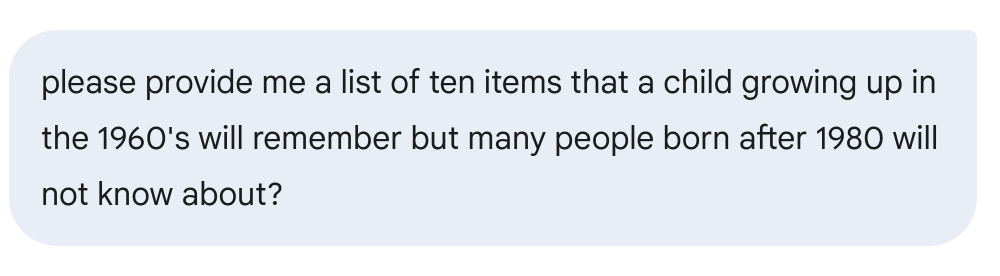
And it responded back… this…
It’s fascinating to consider the distinct experiences of those who grew up in the 1960s. Here are 10 items or experiences that a child from that era would likely recall, which might be unfamiliar to someone born after 1980:
- Rotary Dial Telephones:
- The act of physically dialing a number, the clicking sound, and the frustration of misdialing would be very familiar.


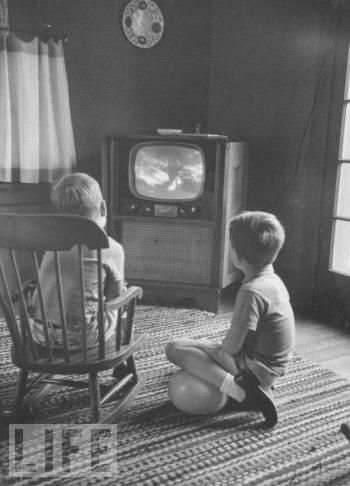
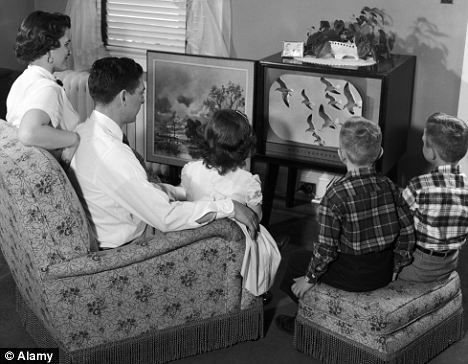
- Black and White Television (and Limited Channels):
- Watching shows in black and white, and only having a few channels to choose from, was the norm.
- Color didn’t really hit mainstream until the 1980’s.
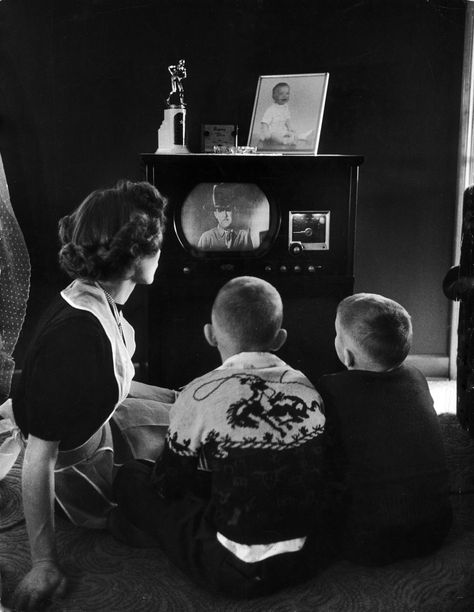
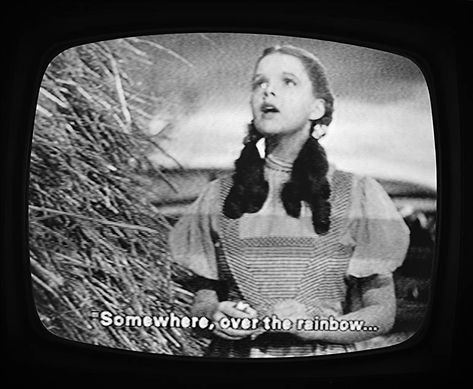
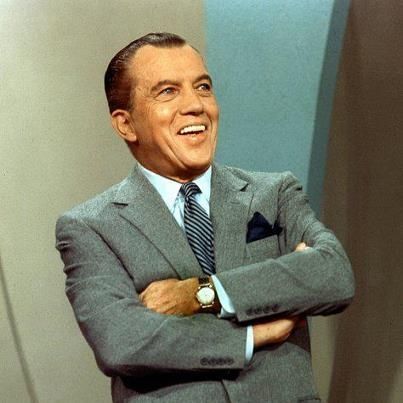
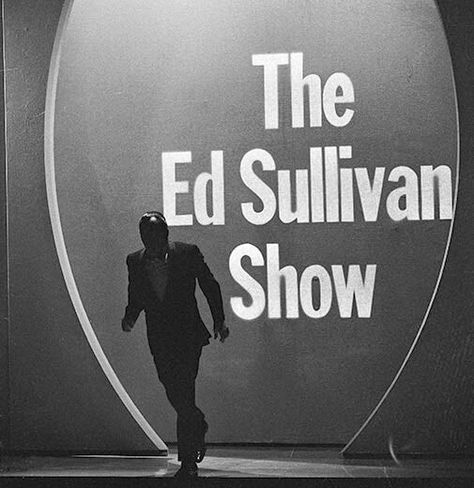
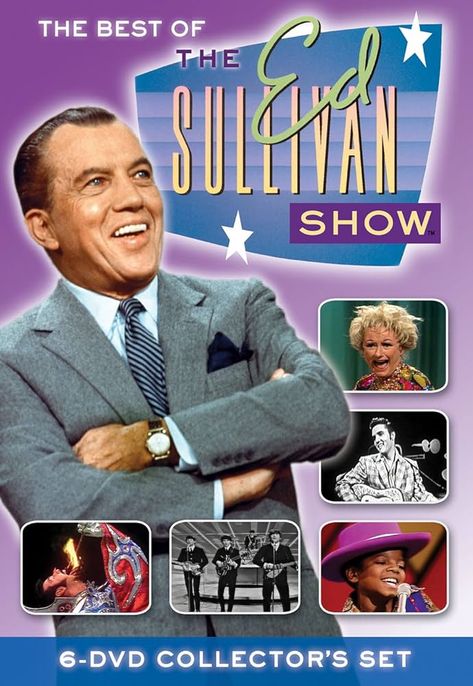
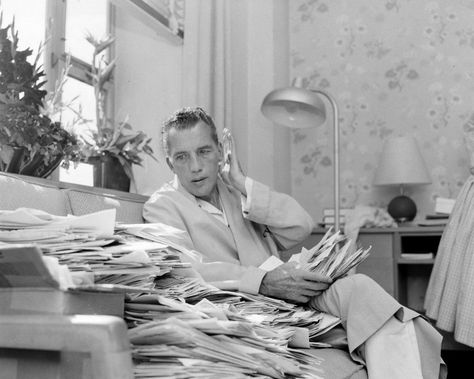
- The Ed Sullivan Show:
- This was a pivotal show for many, especially regarding the explosion of rock and roll, like The Beatles’ American debut.




- Tang:
- The powdered orange drink, popularized by the space program, was a common household item.
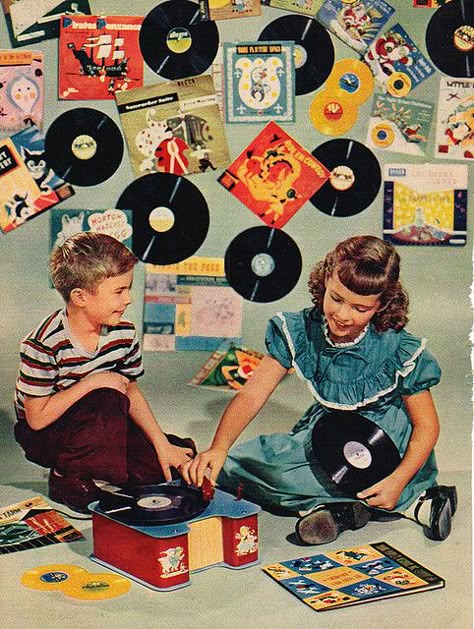
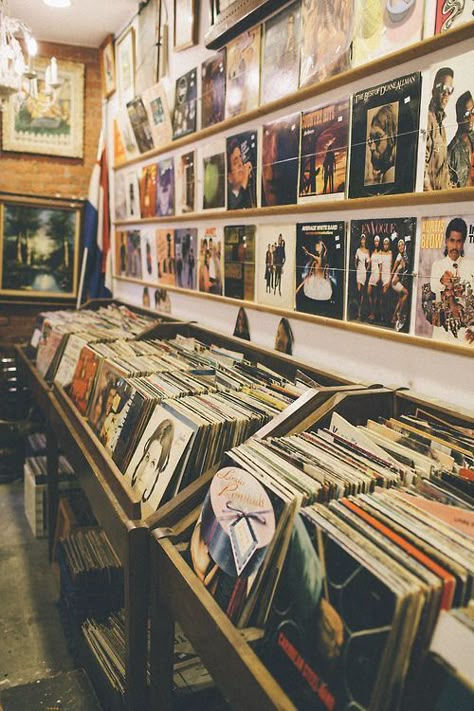
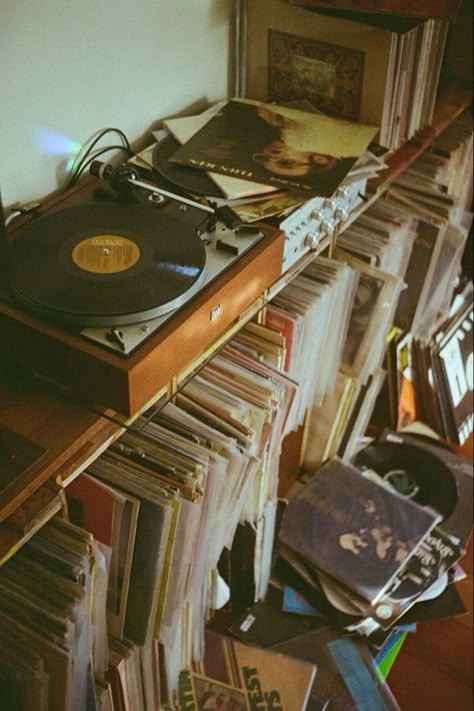
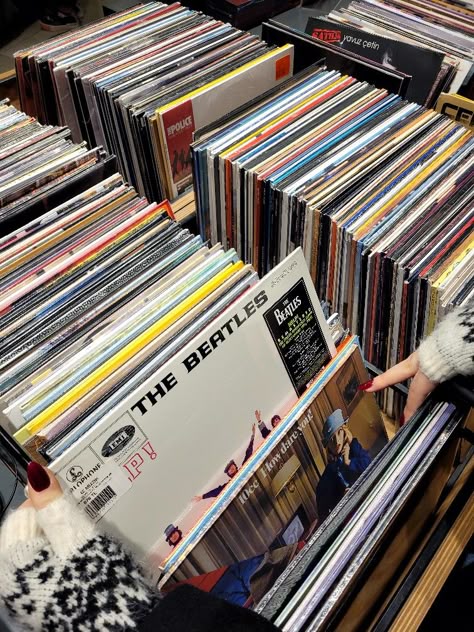
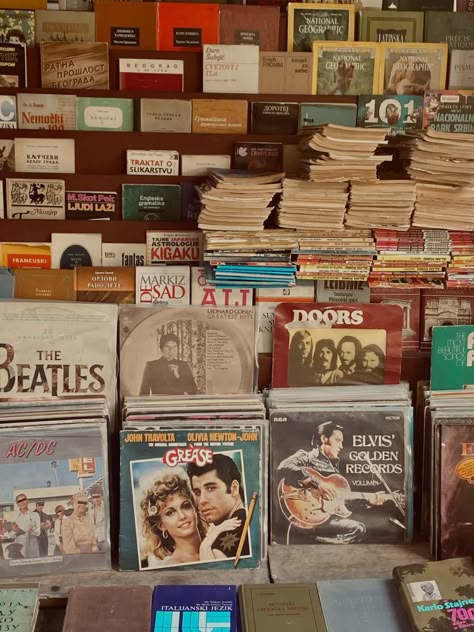
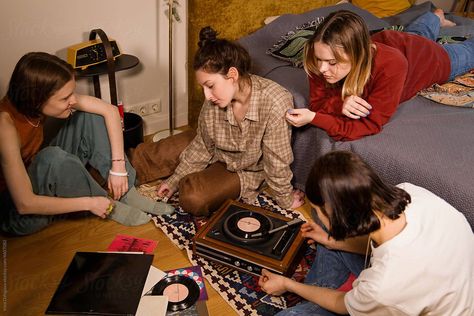
- Vinyl Records and Record Players:
- The experience of handling vinyl records, placing them on a record player, and the sound of the needle was a significant part of their musical experience.







- “Duck and Cover” Drills:
- Due to the Cold War, children participated in drills to prepare for potential nuclear attacks, a stark reality of the time.
- Outdoor Play Without Constant Supervision:
- Children often had much more freedom to roam their neighborhoods and play outside for extended periods without constant adult supervision.
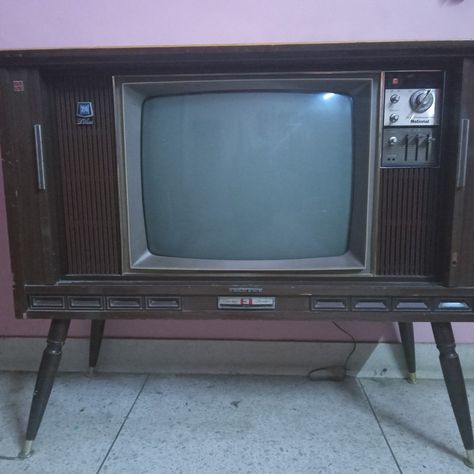
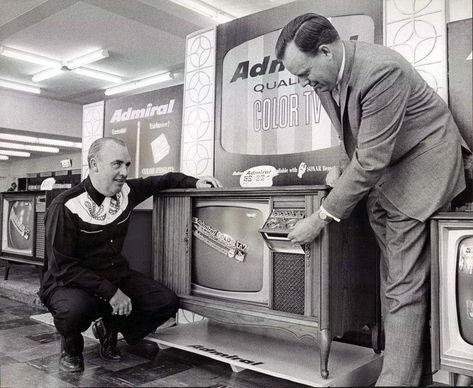
- Tube Televisions:
- Big bulky televisions that were furniture pieces, not the thin flat screens of today.

- Party lines on telephones:
- Where multiple households shared a single phone line.



- The space race:
- The excitement and wonder of the space race and the moon landing was a major event in their childhood.
These items and experiences offer a glimpse into a time with different technologies, social norms, and cultural events.
…
That’s funny. Nothing here is new to me. Like “Duh!”
Still I want to play with it.
Tang. I remember Tang. I had forgotten about it. Don’t know if it is still being made or is available.
I used to really fill my glass with the stuff and made a very thick Tang “milk shake”.

All of us kids did that back in the day….
Meanwhile, my folks drank their coffee…

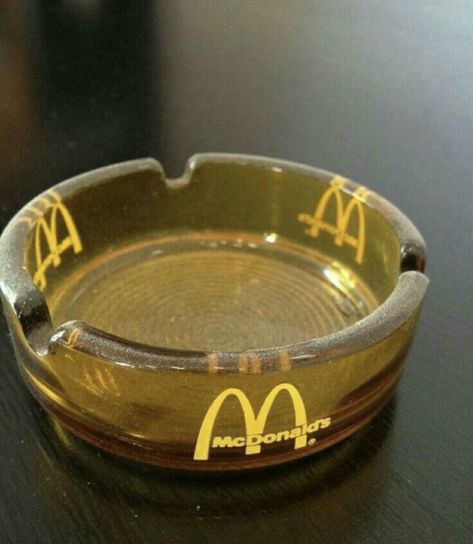
Oh for sure, every now and then we all might pile in the car and go to McDonald’s, but it was a really rare thing to do.
Today…
China FM Wang Yi said, “the only reference to the Taiwan region in the UN is ‘Taiwan, Province of China.'” What does this mean? Is it still possible for Taiwan to become a special administrative region like Hong Kong and Macau?
The meaning is simple:
1. The Beijing government no longer seeks a peaceful solution to the Taiwan issue.
2. Taiwan will not be a special administrative region like Hong Kong or Macau. Taiwan will use the same laws as the mainland.
In addition, I predict that the mainland will take back Taiwan in 2027.
Kitchen Hints and Tips
Poultry
- Truss turkeys, chickens and other meats with dental floss. It won’t burn and it is very strong.
- Truss the bird with dental floss when grilling. Dental floss does not burn and is very strong.
Chicken
- After flouring chicken, chill for 1 hour. The coating adheres better during frying.
- If you want to stew an old hen, soak it in vinegar for several hours before cooking. It will taste like a spring chicken.
- Remove skin from chicken before cooking. If you remove the skin after cooking, the fat from the skin will be absorbed by the meat as it cooks.
- For golden brown chicken every time, put a few drops of yellow food coloring in the shortening before it has heated.
- Defrost frozen chicken by soaking in cold water that has been heavily salted. The meat will be pure white and very tasty.
- Tenderize chicken and other fowl by rubbing them inside and outside with lemon juice after cleaning and before dressing.
- To prevent roast poultry from sticking to the pan, simply place it on a row of celery stalks and carrot sticks you’ve tossed with a little salad oil, then roast as usual – no roasting rack needed.
- Use leftover pancake batter to coat chicken for frying.
- For golden brown chicken every time, put a few drops of yellow food coloring in the shortening before it has heated.
Turkey
- With a basting needle, inject the raw turkey around the breast and thighs with 1/4 pound melted butter. You will have a juicier bird.
Musk STUNS even Trump with LATEST FRAUD DISCOVERY!!
What is one thing you just don’t understand?
There are many things I don’t understand and at 50 years of age, I am ok with the fact that some of them I will never understand and I get miffed with some of the others. But for the life of me I can’t understand this fact and this is only the Northern European countries which I am talking about.
I am not having any problems of understanding why we all export water, we have great water, the best water, the biggliest water of any kind.
Especially so in Iceland as we are quite a weird place. We only live on the coast line or close to it. 8/10 or 9/10 of the country is not used for much. As we have a cold climate, harsh weather and such, pests don’t live here, they just die. Our water sources are as good as completely clean. You should always check your water source for dead animals, but you can drink from any stream you find in the country and you have as good as zero chances of feeling anything but fresh afterwards. We have plumbing everywhere. All gas stations and shops have sinks. We have water hoses to clean your car, and a faucet near it.
You don’t have to buy water in Iceland. Just go to the nearest faucet and fill up your bottle. It is the same water as is used in all bottled water, except perhaps one which has it’s own well, but it is the same water. It is melting snow and glaciers on the highland.
It says so on the bottles that this is communal water source.
Yet, our water costs the same as Coke and Pepsi in a bottle, sometimes even more expensive, despite being made in the same factory, same equipment, machinery, drivers, everything.
Even people in Iceland buy bottled water at the store.
What is wrong with people who buy tap water in the store?
This is something I can’t understand.
Why people buy Evian water is also a complete mistery to me. It tastes like sweat from your neather regions after a long game of squash.
Ok. You got two complete mysteries connected for the price of one.
Yes, people are reviewing garden hose water, all of it is the same water.
Bottled water is fricking seriously expensive for what it is.
Plus don’t get me started on Nestlé and their water … ugly ugly stuff.
The Witness
Submitted into Contest #251 in response to: Dream up a secret library. Write a story about an adventurer who discovers it. What’s in the library? Why was it kept secret?… view prompt
John K Adams
‘Taking a walk’ indicated Matthias’ need for Dmitri to investigate some obscure location. Enter the country, investigate, and leave no ripples.
‘Do not contact. You don’t know me.’ Politics were in play. Their lives could be at risk, should their friendship become known. Mutual safety depended on their having no direct contact while in the country. Their activities were being monitored. Plausible deniability was always in place.
Matthias and Dmitri had followed this script many times since their stint in the CIA. Matthias took care of finances and red tape. All Dmitri needed do is arrive on the next flight, do the job and report from afar.
‘Why me? And why now?’
Dmitri had held many jobs. Working as a journalist allowed him to travel the world between clandestine assignments.
Archeology was his private passion. He’d seen more ruins and archeological digs than anyone alive.
‘Matthias counts on my irrepressible curiosity.’ Dmitri cherished that quality in himself. Though it had waned in recent years, it always perked up at opportunities like this.
He wished Matthias provided more notice though. Reconfiguring his schedule on a finger snap wreaked havoc with his life. It meant delegating several interviews. His wife and kids are pros at coping.
The threadbare but practical, ‘unnamed illness’ was Dmitri’s standard excuse. People might doubt its veracity, but no one wants you around if you might be contagious.
It was his turn. The customs official scanned his backpack. He knew English.
“Welcome… Your reason for visiting our country?”
“A wedding.”
“You have almost no luggage…”
“Local friends rented a tux for me.”
“Why do you need the knife? The heavy boots?”
“Afraid of snakes. You know how outdoor weddings can be.”
The official didn’t buy it, but he stamped Dmitri’s passport and let him go.
He stepped outside. A jeep with three male passengers pulled up to the curb.
The front seat passenger looked at Dmitri. He asked, “You Dmitri?” At his nod he said, “Get in.”
Dmitri crawled into the back, as they pulled away.
The man who spoke to Dmitri introduced himself as Lin. He pointed to the man sitting next to Dmitri.
“That’s Moli.” They nodded to each other. Remaining still, Moli watched intently. An AR-15 rested between him and the door.
The driver remained nameless and didn’t speak.
Lin continued. “So, friends with Matthias, eh?”
Dmitri pursed his lips. “Matthias? I’ve heard of him.”
Lin laughed. “We’re running a little errand. He said you’re a good man to have along.”
“What’s the plan?”
“Going into the frontier… to a sacred mountain. Forbidden to visit. Will climb the back way.”
“Our purpose?”
“Looking for antiquities to save virgin forest from development. From logging.”
Dmitri never got used to joining with strangers and traveling to parts unknown. He felt vulnerable. Too much could go wrong. Travelers often disappeared. Investigations wither.
Trust built over decades was the one intangible everyone depended upon.
The road became a jolting track. Sleep proved impossible. The driver rolled to a stop as dawn lightened the sky.
While unpacking the jeep, Lin explained, “Loggers are building a road up the far side of the mountain. Illegally, but they expect permits soon.” He rubbed his fingers with his thumb. “Won’t delay. Laws are meaningless without enforcement.”
He passed a machete to Dmitri.
“We’ll go up the back. Undetected and unmolested.”
Each carried water and little else. Moli held the rifle. Lin and Dmitri had pistols and machetes. Following the river, they started up the mountain.
Lin cut through heavy underbrush with his machete. Following him, Dmitri pondered his purpose in this adventure.
‘Because environmental laws have no teeth, this ‘sacred’ mountain needs protection from development. Evidence of an ancient civilization will bolster his case. Matthias wants international outrage to stop them. If anyone can do this, I’m the guy.’
‘How did the legends around this mountain originate? If there’s no awareness of human activity the lumber company has no incentive to reveal any finds.’
‘I’m here now. Do the job and go home. How many times can I tell Jill that ‘something came up.’? I’m not lying. This could become a huge story.’
After climbing all day, they made camp at foot of a triple waterfall. Dmitri had heard of its beauty, but never expected to see it.
Not wanting to draw attention with a fire, they ate their dinner dry and cold. And traveling light, they slept under the stars, machetes at the ready.
His inner clock out of whack, Dmitri took the first watch.
He had to laugh at this whole enterprise. ‘Why should the world care about another fallen empire? Will one more ruin provide the key to avoiding past mistakes?’
‘History is the graffiti scrawled on the fallen stones of ruined temples.’
Why did he crave knowledge about civilizations which rose to power on feet of clay?
‘Would the story ever end differently?’ His thoughts followed familiar paths and always arrived at the same conclusion. ‘The ruins speak for themselves.’
He wondered at the ever so human, arrogant urge to power. And how the powerful use an elite ‘priesthood’ to mask their crimes against humanity.
‘In the name of appeasing the gods, they feed their own insatiable egos.’
‘Does no one see that power, grasped tightly, controls those who hold it? When motives are expressed in exalted language, anything can be justified.’
‘Fear effectively masks almost any activity. Using it as a lever, they divide above from below, the in-crowd from the out.’
Dmitri heard nothing over the falls’ rumble. Anything could approach unheard. He scanned their surroundings for impending danger. The moon had set. The world felt at peace. It was almost time for Moli’s watch.
He thought about their destination. ‘What monument to human sacrifice will we discover? How many pyramids were blood-stained altars dedicated to appeasing blood thirsty gods?’
As the poet said: ‘How cheap be the vanquished when thirsty blades demand quenching?’
‘So many civilizations disappeared into the wilderness with its unbreakable rules of survival.
Moli stirred, shook off his sleep and took his watch. Dmitri slept until awakened by Lin. They shivered in the morning chill and ate while climbing.
Moving away from the river, the terrain opened. The shade under the canopy of trees minimized the underbrush and made walking easier. Birds kept a constant chorus.
Monkeys began screaming from the high branches.
Lin announced, “Capuchins.”
It began to rain despite the clear, blue sky.
Moli wiped his brow and swore. He looked up and got a face full. The monkeys were throwing feces.
They ran but the monkeys kept pace, leaping from tree to tree.
The men couldn’t help but laugh. After sprinting several hundred yards, the attack let up. They stopped and assessed the damage.
Panting, half from laughing, Dmitri said, “Finally got ahead of them.”
Lin said, “Or they ran out of ‘ammo.’”
Falling into laughter again, they backtracked to bathe in the river.
After the detour, they entered the main forest of immense, ancient trees. The bark looked like parchment.
Dmitri had never seen them. ‘Are they a kind of birch?’
Lin murmured, “Whoa…”
A half-dozen tribesmen emerged from behind a cluster of massive trees. They held primitive bows and watched, unimpressed, as Moli unslung his rifle.
Dmitri said, “We’re outnumbered and don’t need a fight.”
Lin said, “Don’t attract attention with gunfire.”
Dmitri said, “Keep smiling.”
Moli stepped forward. He addressed them, using short phrases and sign language. The tribesmen listened with interest and burst into laughter.
Moli translated, “I told them we come in peace. They have no reason to trust us.”
After making a sign, he pulled three heavy-duty, webbed belts from his backpack and offered them to the warriors.
The leader examined them. He signaled and his warriors withdrew. Dmitri and the others continued on their way.
As they walked, Moli told them what the warriors said. “They don’t trust lowlanders. I said we aim to protect them. They warned us away from disrupting the trees’ worship.”
Dmitri asked, “They worship the trees?”
“I don’t speak their lingo well. I heard it’s the trees’ that worship and we dare not disrupt their prayers.”
“Tree huggers. Latter day Druids. So, we’re looking for a sacred grove?”
“Maybe.”
They continued trudging toward the sun through the ancient forest. The canopy of branches filtered the light and cooled the air.
Dmitri had taken the lead. He understood they would want to log this virgin forest.
Turning to Lin, he said, “How many houses could you build with one…?” Stunned and trembling, he fell to his knees.
He saw thousands of symbols carved into the tree’s bark. The elaborate carvings covered the trunk, skyward until blending into the upper shadows.
The others turned, and seeing, also fell to their knees. Their mouths moved silently. Tears streamed down their cheeks.
Dmitri sprang up and ran about, shouting, “This is it! All of them! Look!”
The others stood. There were carvings on the sunward side of hundreds of ancient trees. Each displayed the records of a lost civilization. The oldest messages, obscured by healing bark, could still be seen.
The trio set about documenting as many as possible. The mood was light. By day’s end, they’d photographed over a thousand trees, each with distinct markings. The trees’ average circumference was forty feet around.
Dmitri worked feverishly. So much to do.
He thought, ‘Talking trees blending creation with worship. The fulfillment of the universal urge toward transcendence. Creation speaking with its Creator. As it should be.’
The golden light filtering from above was the perfect response.
They found no evidence of human sacrifice. Dmitri had never felt such peace. He didn’t want to leave.
Lin asked, “But what do they say? Will we ever know?”
Dmitri sighed, “Without some sort of Rosetta Stone, we can only surmise. Translating it all might take years. Artificial intelligence will assist.”
Lin nodded.
Dmitri pointed at the trees. “But look. I know what they say. Those aren’t laundry lists. And those carvings weren’t done under the whip.”
Lin agreed.
Dmitri said, “The way they were created proves devotion, reverence and love. The eternal hunger to connect with the ephemeral, the ineffable… the ultimate.”
“Matthias will love this.”
“This forest could be the first library in history. Psalms to the gods, written on living parchment.”
“I hoped we’d find this.”
Dmitri stopped. “You knew about it?”
“How to get here. Yeah. But never been. Always forbidden. A mystery. Rumors. Nothing specific. Who knows what else is hidden in the wilds?”
“Without human intervention, nature speaks for itself… We should get moving.”
They packed their gear and trekked back the way they came. They made good time.
At the waterfall, they crossed paths with a patrol stopping to refill their canteens. Lin and the others watched from behind the falls, safely unseen.
Reaching the valley, their driver picked them up. Dmitri sent pictures to Matthias. They dropped him at the airport, and he caught the next flight out.
Dmitri had a story to write.
Since Trump is threatening the entire world with trade sanctions, why doesn’t the world just cut off all trade with the US immediately, and see how Americans like it? I suspect the world could manage just fine without trade with the US, actually.
What would be the point?
Trade war is lose-lose proposition.
Countries must look out to protect the welfare of their citizens. Not to engage in childish tit-for-tat.
Need to distinguish Trump and the American people.
Trump is full of himself, thinks he has great power, his officials instead of offering advice are like poodles.
The American people have not yet said their piece. They have seen their country in decline. They hope Trump will deliver and Make America Great Again (whatever this may mean). Meanwhile,
there may yet be pains,
uncertainties of what Trump wants, he said many things but act differently,
chaos from Musk and Doge to cut the size of the civil service,
there are already protests by farmers for loss of sales to China,
property market in a doldrums from high interest rates, pending home sales have plunged.
markets have surrendered back the Trump premium, pressures are building, the stock market is talking about a correction,
worries about recession, even as inflation rebounds,
national debt keeps rising,
consumer-sentiment index published by University of Michigan plunged in February, high-frequency tracker of GDP growth published by Atlanta Fed points to contraction of 1.5% in 1Q25.
The next 3- 6 months could be testing for the US and the American people.
If a European were to visit China, what would they be culturally shocked by?
My trip to China was unplanned and shocking. In July 2012, I had never been to any part of Asia. Born in the industrial northern City of Sunderland, England. I had travelled extensively around Europe and had been to Canada, USA & Mexico as well as several Caribbean islands. The furthest east I had been was Israel for a five day when I lived on the nearby island of Cyprus.
I had recently been divorced, had sold my business and decided to go to Hong Kong for a long visit, approximately three months. That was in 2012, I never went back to England (as at March 2025). I had been corresponding by Email with a Hong Kong based financial services company. I had sold my franchise with St. James’s Place Partnership in the previous year and fancied a change. My ‘friend’ told me that I could have a temporary job as a financial advisor with the Hong Kong based company based in Central, also known as the financial district where HSBC, Hang Seng etc are based.
There was a small caveat. I was going to be working in SHENZHEN, China. My friend and my new boss met me at the airport and informed me that I was going to be staying in a shared apartment in SHEKOU, a district of SHENZHEN. SHEKOU is literally translated as Snake’s Head and is in the Pearl River Delta. There was no delay I was guided onto the ferry from Sheung Wan, next stop China. The ferry trip across the South China Sea was just amazing, exotic and unforgettable. I felt like an extra in a James Bond movie.
NASA view of The Pearl River Delta
I got through immigration surprisingly quickly with my friend Kevin’s assistance.
We left the ferry terminal to find a taxi. The first thing I noticed was the smell of the air, it was a mix of industrial, fishing harbour and sweet spices. Whenever I left Shekou and returned again, I always knew when I was back in Shekou without looking, the smell told me.
I was sharing an apartment with Kevin on the 12th floor of a skyscraper facing the Pearl River, opposite the local China Coast Guard patrol headquarters. This was Wang High Road, it ran alongside the delta coastline. Once a small fishing village in the 1980’s it was now festooned with massive skyscrapers and as a suburb of SHENZHEN home to 10.6 million people. Today, in 2025, the population is over 17.7 million.
The locals say: Wang Hi LO”
My second night in Shekou was terrifying! I experienced TYPHOON VICENTE. There was a broken window in our bathroom and the high winds made some horrific sounds. There were occasional thumps as debris was flung against our apartment too. I had a very poor night’s sleep, that night. Next day was like a gentle summer’s break. tranquil and warm. There was carnage everywhere, hundreds of palm trees downed, damaged buildings, some with no roof, fences and wall destroyed.
We were astonished by the local authority’s response. Truck loads of workers, tractors & cranes were on the task of cleaning almost before the sun came up. They wasted no time and worked furiously to get the debris cleared and restore order. 24 hours later it was difficult to see any traces of the typhoon. I witnessed this impressive efficiency several times during my time in Shekou. After traffic accidents or property fires for example. The next day would see the site pristine and clean as a whistle.
I could give more info from my time in Shekou, almost 2 1/2 years. Maybe in another post. Please UPVOTE, SHARE and COMMENT. I would love to hear from other people who have lived there, maybe we met?
Have you ever had to harden your heart against your own child? For what reason and what was the outcome?
HAfter 20 years of doing everything in my power to get my daughter off of drugs, I knew it really was time to let go. She came home from college an alcoholic. But she hid it from me for many years. She married and had a baby girl. Things got worse and worse until one of her friends finally told me. I really thought that if I helped her get into a rehab that all would work out. It didn’t. She was in and out of rehab many times. Her daughter was taken by Children and Youth many times. Her husband was also an alcoholic. So many holidays were ruined by fights and drunk people. I had temporary custody of my granddaughter due to another episode where my daughter was passed out in the front yard with my granddaughter laying next to her. But as usual C&Y gave the baby back to them. I had minimal contact with them for several months until the day I received a call from the local hospital ER. Her husband gad died of a heroin overdose in their living room. I prayed that without his influence and the baby to care for alone that she’d sober up. Not a chance.
Her husband had half a million in life insurance and she would get Social Security for her and the baby. I kept a close eye on her which I guess she couldn’t take. She moved to Florida to live near her drug using aunt on her fathers side. She met the scum of the earth down there. They had no money, no place to live, no car and not even an I.D. Much less a drivers license. With them she graduated to using meth. It would take days to tell you all that took place. But they blew through her inheritance in less than 10 years.
She currently has no money, no job, no car and is barely hanging onto her house. My granddaughter is following in her footsteps. She’s 12 with a boyfriend, swears like a sailer, and no sense of right and wrong. But she knows exactly what to say if interviewed by C&Y.
In July I got a call stating her boyfriend was arrested in her house possessing heroin, meth, marijuana, scales, syringes and other drug paraphernalia. The cops had called C&Y,. My daughter wasn’t arrested, nor did they take my granddaughter. She asked them if she sent her daughter to PA with us if they’d let her alone. They agreed. So we dropped everything and flew down to pick up my granddaughter. Now bear in mind she is miserable. She doesn’t want to leave her boyfriend or mother. She stayed with me a month. Every day she asked when she was going home. My son lives in Europe and he took his niece with his family on a six week vacation all over the world. Still, every day was when was she going home.
Now my daughter has nothing. She’s sold almost all her possessions, has no car, no boyfriend or any other reason to stay in Florida. She agreed to come live with me until she got her life in control. I bought her a plane ticket, sent her $150 travel money and another $200 to pay off a loan. The day of the flight I couldn’t get her to answer the phone. Finally I get a text saying she wasn’t coming today, I should switch her flight to next week. It was at that point that I lost my mind. I told her the bank of mom was now closed. It has been 22years since this addiction journey began. I’m not sure that in that time she ever said she WANTED to get clean. I plan on spending the remainder of my golden years in peace, something I can’t do with her in my life. Every day I seem to get less stressed out.
I can’t tell you how this will turn out, but I doubt there will be a happy ending.
EDIT: I never believed I’d write an answer that would get so many likes. Thank you. I just wish it would have been for a happier story.
White People Breakdown In Tears Realizing Life In America Has No Future! American Dream Is No More
What is the biggest example of the butterfly effect/chaos theory in history?
Marriage Proposal at KFC
When Hector Kansi, an ordinary South African, decided to propose to his girlfriend, Nonhlanhla, at a KFC outlet in South Africa, he simply thought that she would either accept or reject his proposal, and they would accept whatever fate and destiny dictated. How wrong he was!
Their proposal photo
There was nothing wrong with the proposal, because it went according to plan—his girlfriend accepted, and the rest was supposed to be history between the two of them—but it didn’t. An overzealous paparazzi captured the moment, and tweeted it to mock Hector.
This is where the law/butterfly effect comes into play. KFC South Africa was one of those who responded to the hashtag #KFCProposal, which has been retweeted over 300,000 times.
After that, various offers flowed to them:
- A famous musician offered to sing at their wedding for free.
- CastleLite, one of the world’s largest beer companies, is offering a free honeymoon package, including flights and more,
- Clark & Sons, a beverage company, offered 40 cases filled with its finest products at their wedding.
- Siwela Wines offered all the wines they both needed for their wedding.
- A Radio 702 listener contributed R10,000 ($700) towards their wedding.
- FNB Insurance offered them both a Gold Cheque Account containing R5,000 ($350)
- Takealot store offered them both shopping vouchers worth R5,000 ($350)
- Sun City Resort offered a free weekend at their resort to celebrate their engagement.
- Amstel Lager offers cases of beer for their wedding events.
- Life style Tourist offers free holidays in a 5 star accommodation
- Telkom South Africa is offering one SIM card with free data for both of them.
- Total South Africa offered all the petrol they both needed for their trip.
- Drum Magazine offers two full pages exclusively for their wedding coverage.
- Bohlokwa bahlekazi offered all the decorations they needed for their wedding event.
- Joe Human offered to print all of their wedding invitations for free.
- Emerald is offering a free wedding ring worth R45,000 ($3,000).
- Audi South Africa offered them both free travel anywhere they wanted during their honeymoon.
- Standard Bank South Africa offered a financial contribution to both of them.
- PUMA South Africa is offering vouchers worth R10,000 ($700)
- Huawei South Africa is offering 2 free devices for them
- Gcomfashion SA offers s1 VW golf cars for them
- 1Life Insurance offers an investment worth R10,000 ($700)
More offers keep coming their way, and their lives will never be the same. What started as a selfish act of insulting a man, turns into a future filled with happiness for the man in ways he could not have imagined.
Edit 1 : I have updated the application image with a clearer image.
Edit 2 : I have added a message of appreciation from KFC South Africa in the form of a bucket filled with offers from various companies (and growing) to support them both.
Note: “Mzansi” is the local name for a person in South Africa.
Shorpy Cowboy stuff

Are the Chinese tired at all the tariffs and economic sanctions hurled at them, and are they getting more invigorated to hurl back?
#1 Forward Invoicing
Ever heard of it?
Let’s say I am a US Importer and place $ 100 Million of orders from China
The Tariff is $ 20 Million
To Avoid this I place $ 100 Million of Orders from China and ask the Chinese to give me a 50% Discount
So the value of my orders is $ 50 Million for which I pay a Tariff of $ 10 Million
I still pay the Chinese $ 100 Million – $ 50 Million for the price of the imports plus another $ 50 Million as advance payment for a next batch
Then a few weeks later I cancel my advance order and the Chinese say “Regretfully we cannot refund the advance amount paid”
I smile and say OK
So effectively, I have paid $ 100 Million to the Chinese Exporter and paid only $ 10 Million in Tariffs and saved $ 10 Million
The final additional cost to my customer is between 60 Cents to $ 1,700
#2 Too Favorable a Price
My Cost as a US Importer for this Forklift is $ 11,200
Now it’s $ 13,440
The Cheapest US Alternative is $ 31,100
The Cheapest German Alternative is € 33,900
The Cheapest Japanese Alternative is $ 27,700
So as a Contractor, I would still save $ 15,000 if I buy Chinese even with the Tariffs
So I buy Chinese
Plain and Simple
All I need to do is quote an extra $ 60 per Job and after 40 Jobs, I have made up my investment
Would you know the difference between $ 44.21 per hour and $ 46.38 per hour???
#3 Easy Financing
China solves it’s EU Tariffs by providing easy financing
For instance if an EV originally costing € 18,000 now costs € 24,840 due to Tariffs
The Showroom offers the extra € 6,840 to the Customer at very low interest installments over 3 years (Around 1%)
Delinquency is covered by BYD and Geely and other Chinese EV companies
So as a Customer, you buy a car for € 24,840 but of this the final € 6,840 is a separate very low interest loan that makes you shell out only around € 225 a month extra
In exchange the Chinese EV maker gives you plenty more features and you feel it is absolutely worth it
#4 Diversion
Packages from China are diverted through Bangladesh and Thailand and Laos and Cambodia and repackaged and stickered with origins in those countries
China builds a factory in Laos and Chattogram (Bangladesh) that makes Boxes with the words Made in Laos or Made in Bangladesh on them along with printed manuals in English instead of Chinese
China ships goods to Laos and Bangladesh and swaps them into the new boxes, re packages them as MADE IN BANGLADESH or LAOS or THAILAND and ships them onwards to the US
The Importer has to pay $ 4.50 per $ 100 for the repackaging and swapping which is far cheaper than $ 20 per $ 100 Tariffs
Americans HATE paying any form of Taxes (Remember the Boston Tea Party)
So they would actively work with the Chinese and find ways around Tariffs and Sanctions
There are plenty of ways
Sir Whiskerton and the Case of the Perilous Porkchop Puffs: A Tale of Farts, Friendship, and Farmyard Chaos
Ah, dear reader, prepare yourself for a tale so pungent, so hilariously noxious, that even the bravest of barnyard animals might need a gas mask. Today’s story is one of flatulence, friendship, and one pig’s quest to clear the air—literally. So, grab your nose plugs and a sense of humor, as we dive into Sir Whiskerton and the Case of the Perilous Porkchop Puffs: A Tale of Farts, Friendship, and Farmyard Chaos.
The Calm Before the Storm
It was a peaceful morning on the farm. The sun shone brightly, the birds chirped melodiously, and the animals went about their usual routines. Sir Whiskerton, the farm’s self-appointed detective and philosopher, lounged on his favorite sunbeam, pondering the mysteries of the universe—or at least why the farmer insisted on talking to the scarecrow.
“Perhaps,” Sir Whiskerton mused aloud, “the scarecrow is a metaphor for the human condition. Or perhaps the farmer just needs a hobby.”
“Hobby!” echoed Ditto, the ever-enthusiastic kitten, who had taken to repeating Sir Whiskerton’s words with the precision of a parrot.
But the tranquility was short-lived. A low rumble echoed across the farm, shaking the ground and sending the chickens into a clucking frenzy.
“Thunder?” asked Doris the Hen, flapping her wings in alarm.
“No,” Sir Whiskerton replied, his nose twitching. “That wasn’t thunder—that was Porkchop! And it smells like rotten apples and despair.”
The Perilous Porkchop Puffs
Porkchop the Pig, known for his laid-back demeanor and love of food, had developed a rather… explosive problem. His farts, once a minor annoyance, had escalated into a full-blown crisis. The barnyard was soon engulfed in a noxious cloud, sending animals fleeing in all directions.
“It’s like living inside a compost heap!” wailed Ferdinand the Duck, fanning the air with his wings.
“Compost heap!” Ditto echoed, though he seemed oddly unfazed by the stench.
The farts drifted far and wide, contaminating the entirety of the farm and spreading into neighboring territories. Bigcat, the imposing feline from the next farm over, sent a strongly worded message via crow: “Cease this biological warfare at once, or face the wrath of Bigcat’s mighty paw!”
Catnip, the sneaky stray cat from the other side, was equally furious. “This is an outrage!” he hissed. “My fur will never recover from this assault!”
Even General Catticus, Bigcat’s battle-hardened hench-feline, was convinced it was a deliberate attack. “This is no mere pig problem,” he declared. “This is sabotage!”
Sir Whiskerton Investigates
Realizing the gravity of the situation, Sir Whiskerton sprang into action. “This is no time for idle contemplation,” he said, adjusting his monocle. “We must find a solution before the farm becomes uninhabitable—or worse, before Bigcat declares war.”
Bessie the Tie-Dye Cow, the farm’s unofficial therapist and resident hippie, offered her assistance. “Like, maybe Porkchop just needs to find his inner peace, man,” she suggested, her mood ring glowing a concerned shade of green. “Or maybe he ate something groovy that didn’t agree with him.”
“Groovy!” Ditto chimed in, though no one was quite sure what he meant.
Sir Whiskerton and Bessie approached Porkchop, who was lounging in his pen, looking rather sheepish—or, well, piggish.
“Porkchop,” Sir Whiskerton began, “we need to talk about your… emissions.”
Porkchop sighed. “I don’t know what’s happening, Sir Whiskerton. One minute I’m eating my favorite slop, and the next—pfffft—it’s like a tornado in a trash can.”
“Tornado!” Ditto repeated, spinning in circles for emphasis.
The Solution
After a thorough investigation (and several failed attempts to mask the smell with Bessie’s tie-dye-scented candles), Sir Whiskerton deduced the cause of Porkchop’s predicament. “It’s the farmer’s new experimental feed,” he announced. “He’s been mixing in some rather… questionable ingredients.”
“Questionable!” Ditto echoed, though he seemed to be enjoying the chaos.
Bessie nodded sagely. “Like, totally uncool, man. We need to get Porkchop back on his regular diet.”
With Sir Whiskerton’s guidance, the animals worked together to remove the offending feed and replace it with Porkchop’s usual fare. Slowly but surely, the air began to clear.
The Moral of the Story
As the farm returned to normal, the animals gathered to reflect on the day’s events.
The moral of the story, dear reader, is this: Everyone has off days—even pigs. Whether you’re a pig with a penchant for pungent puffs or a cat with a knack for solving mysteries, it’s important to approach life’s challenges with patience, understanding, and a good sense of humor. And remember, sometimes the solution to a stinky situation is as simple as changing your diet.
A Happy Ending
With the crisis averted, the farm animals returned to their usual routines. Porkchop, now back to his old self, apologized for the chaos. “I guess I really let one rip,” he said with a sheepish grin.
“Rip!” Ditto echoed, though he seemed to be referring to a nearby hay bale.
Even Bigcat and Catnip called off their threats, though they insisted on a formal apology and a promise that such an incident would never happen again.
As for Sir Whiskerton, he returned to his sunbeam, content in the knowledge that he had once again saved the day. The farm was at peace, the air was clear, and all was right in the world.
And so, dear reader, we leave our heroes with the promise of new adventures, new challenges, and hopefully, no more perilous puffs. Until next time, may your days be filled with laughter, love, and just a little bit of feline genius.
The End.
CHINA to Pull $62 TRILLION From EUROCLEAR AND Create Alternative in Hong Kong.
What is something electrical engineers know that others don’t?
1. Have you ever noticed gravel under and around large transformers (as pictured)?
One of the reasons for this practice is snakes. Yes, you read that right.
Large transformers produce substantial vibrations due to magnetostriction that is transmitted to the ground. Because of this effect, transformers placed on solid ground attract snakes. To prevent this, transformers are surrounded by gravel, which prevents snakes from approaching.
2. A typical ceiling fan can actually spin in any direction. It’s the capacitor that makes it spin in a specific direction (clockwise or counterclockwise). If you just remove the capacitor and close the remaining circuit, you can make it spin in either direction by simply giving the fan a push.
3. You can estimate the transmission voltage on overhead lines by simply counting the number of discs on the insulators used to support the wires.
Each of these discs can handle 11 kV of voltage. So if you see 3 discs, you can safely deduce that the transmission voltage must be around 33 kV.
4. If you look at the transmission line, you can find small devices like the one in the image below.
They are called Dampers. They are usually present as a pair on either side of a pole/suspension point. They are used to dampen the vibrations produced in transmission lines.
5. Zebra, Dog, Peacock, Elk, Puppies, Hens are also names for transmission line conductors. They differ from each other in terms of size, number of wires, material used, etc.
6. About 70% of the electricity produced in the world is actually consumed by induction motors. Their robustness, easy speed control and zero maintenance requirements make them the most widely used motor.
7. Hydroelectric power plants are a real necessity in today’s power grid. In their absence, the power grid will become highly susceptible to load variations and will collapse at the occurrence of even a moderate load variation at the end consumer. This is because these hydro turbines increase the inertia of the power system which protects it from load variations.
8. The strength of the magnetic field developed within the core of a transformer ranges from 1.5 to 1.6 Tesla. It is 5 times greater than the Earth’s magnetic field.
Would the people of Greenland like to become part of the US?
The people of Greenland are of course 100% willing to become citizens of the superpower United States.
First of all, let’s not talk about morality, right or wrong, just ask a question:
If Trump really goes crazy one day and annexes Canada, is this a good thing for the United States?
Some people must have said that the United States has become the world’s largest empire in one fell swoop. With Canada’s rich resources, the United States has expanded its territory and become great again. How can this not be a good thing?
Really?
If the United States wanted to annex territory, it would have annexed it long ago, especially when the Soviet Union just collapsed. The United States no longer had an equal opponent in the world and was at the peak of its absolute national strength. Not to mention annexing Canada and Greenland, even if it annexed more than half of the countries in the world, no one would be able to confront the United States.
Who could stop the United States at that time? Why didn’t the United States do this?
There is a United Nations Convention on the Law of the Sea, which clearly divides all territorial waters of countries around the world. Almost all countries have participated, but the United States is an exception.
The United States refuses to join the United Nations Convention on the Law of the Sea. Do you know why?
- Because the United States has always assumed that the four oceans are its inland seas, and the entire earth is its sphere of influence. The United States does not want to abide by any maritime conventions at all. They always drive their fleets around the world with a bunch of little brothers.
- Many specific affairs of the United States are often managed by the states. The president of the United States and the governor do not have a superior-subordinate relationship. The governor can choose not to execute the president’s orders.
- The president of the United States is more in charge of global affairs. He is also the commander-in-chief of the three armed forces, and the US military is not stationed in the country, but all stationed overseas………This is the so-called global order after World War II.
- Everyone knows about the long-arm jurisdiction of the United States. According to the U.S. “Foreign Corruption Act”, the U.S. judicial system can arrest citizens of any country in the world and punish any company, making up excuses at will…
The fact is that, except for a few sovereign countries such as China, Russia and India, almost half of the world is a colony of the United States.
For colonies, the United States can take whatever it wants, and there are a thousand ways to exploit them.
If Biden wants to maintain the image of the empire, he will plan the Russia-Ukraine war to exploit Europe, while Trump is more direct, that is, to rob.
Therefore, the United States has never thought about annexing Canada. Canada is the backyard of the United States and has always belonged to the United States.
Trump wants to arrest Meng Wanzhou. If he asks the governors of the US states to do so, they will scold him and will not listen to him at all. So he asked Trudeau to do it. Because Canada is a lackey raised by the United States, and can only sit on the table of Kids at most.
Trump wants to build his own statue on the Presidential Hill, and surpass Washington in his achievements in expanding territory. This is actually a major setback in the US strategy. It is the degeneration of Imperialism v3.0 to the most primitive Imperialism v1.0.
The typical example of Imperialism v1.0 is the Russian Empire. They madly annexed land, regardless of whether they could digest it or not, and just grabbed it first.
Although the land area is larger on the surface, the hidden dangers are extremely serious and cannot be absorbed at all.
More than 85% of Russia’s regions cannot be effectively governed, and there are many internal ethnic hidden dangers.
For example, Chechnya will definitely be a big problem in the future.
Not only that, Russia has offended its neighboring countries. The whole of Europe regards Russia as a threat. Even after 100 years, they are still thinking about revenge against Russia, which has greatly worsened Russia’s geopolitical environment.
The British are much smarter. At the peak of the British Empire, they annexed more than 3,500 square kilometers of land around the world.
Almost all countries in the world have been invaded by Britain.
Many people ask: Why don’t many countries hate Britain?
Because Britain is doing Imperialism v2.0.
The British don’t want land at all, they just want money. Everything is for making money. After the British occupied a region, they incorporated the region into their own economic system and made it their own raw material collection site and commodity dumping market.
If it is valuable, they will occupy it, if it is not valuable, they will abandon it.
After World War II, the British felt that managing colonies was a loss of money and immediately abandoned the colonies.
Moreover, the British never thought about managing these places for a long time, and often sent a few colonial governors over. They were crazy about sowing discord in the local area, creating conflicts and letting the locals fight among themselves. They were too lazy to send troops from Britain, so they recruited soldiers locally.
India was colonized by Britain for hundreds of years and was plundered to the extreme by the British Empire. Millions of people starved to death, but Indians did not hate Britain, they hated Pakistan. Similarly, Pakistanis did not hate Britain at all, they hated India.
This is Imperialism v2.0.
Of course, the most powerful is American Imperialism v3.0, which is also the highest version of the Imperialism — The United States defines itself as the maker and manager of the global order.
Compared with the United Kingdom, the United States is too lazy to send colonial governors. The United States only builds military bases in the local area, so that it can ensure permanent control over the local area.
At the same time, it controls NGOs and the media to control local thoughts and public opinion.
Then it engages in “American democracy” and a multi-party system, causing endless infighting in the local area. They choose their own “colonial governors”, and the elected “colonial governors” will always rely on the United States.
Therefore, the United States can play with the “Russian threat theory” for hundreds of years, and Europe will always be the lackey of the United States and will never be united.
This trick of the United States is perfect.
I used to say that European countries are all lackeys of the United States. Now Trump says that he will abandon them and not let them be colonies. He wants them to build their own defense and protect themselves. Europe is shocked and angry, and madly scolds Trump.
That’s it. European countries are simply begging to become colonies of the United States. In order to become a colony of the United States, Ukraine did not hesitate to kill millions of people in the war, and half of the country became ruins. It wrote becoming a lackey of the United States into its own constitution as its ultimate goal.
Is American Imperialism V3.0 unsuccessful? No, it was very successful.
Does your country want to be a colony of the United States? Yes, but you have to beg the United States.
Poland is lucky. It begged Trump three times, and Trump finally showed mercy and the US military entered Poland.
Ukraine begged for decades but failed…
This is the perfect Imperialism V3.0!
Trump is so stupid, he wants to go back from Imperialism v3.0 to Imperialism v1.0!
The only thing he is smart about is that he knows how to choose the good ones, for example, he wants Canada, not Mexico…
This is a major strategic contraction of the United States.
The United States has retreated from being a global rule maker to North America, one reason is Trump’s stupidity and ostentation, and the other is that the United States can no longer sustain its national strength…
Now the United States is breaking the rules crazily. If one day the United States really annexed Canada and Greenland, what should we do?
I remember it was about 12 years ago, Philippine President Duterte joked that the Philippines should have been a province of China.
When this came out, many netizens were very happy and said that the Philippines should be annexed.
I said at the time that even if the Philippines wanted to join China, China would not accept them.
Whoever wants a shithole country like the Philippines is an idiot. Back then, the Philippines begged the United States to continue to be its colony, and the United States refused.
If China really annexed the Philippines, we would not even be able to cry.
First, China’s Poverty Alleviation Office would have a headache, returning to the starting point overnight. Then, China’s anti-drug police would be too busy to handle it, and China’s public security would regress… Decades of work would have been in vain.
In fact, China has come to this day and returned to its historical peak, and even its interest in Taiwan is very dull.
So, the US would not want to annex Canada and Greenland when it was at its peak.
Only idiots would care about that little bit of land, the US wants the whole earth!
Trump proposed annexing Canada and Greenland today because America is in decline.
Of course, China is not the United States. China does not engage in Imperialism. What China wants to build is a community with a shared future for mankind.
Therefore, the more the United States breaks the rules, the more China must abide by the rules, because China is the maker of future global rules.
The more the United States messes around, the more China must hold high the UN Charter. China’s manned spacecraft is about to land on the moon. The Chinese have a much longer vision than Americans.
If you still don’t understand, I will say it bluntly:
After the great rejuvenation of the Chinese nation is realized, there will be countless countries that want to be lackeys for China, and we don’t need them… because we really don’t need lackeys.
A Love To Read
Submitted into Contest #251 in response to: Dream up a secret library. Write a story about an adventurer who discovers it. What’s in the library? Why was it kept secret?… view prompt
Timothy Rennels
A LOVE TO READ
Tommy McBrighter loved books
Since he first started reading at three
He could lose himself in the stories
The one place he really felt free
Tommy’s books were his entertainment
Ever since the TV’d been hocked
At night he’d read under the covers
At night he would keep his door locked
His mom had a lot of “boyfriends”
“It’d be best you stay out of the way.”
So he’d hide in the books he was reading
Until the stranger would go away
****
Margaret Baxter once worked in the library
Unfailingly…every day
She vowed to continue her life’s work
Though she had long ago passed away
She had done the job thirty years living
But she just couldn’t let it go
The library was like a child to her
She had nurtured and watched it grow
If not for a stroke of misfortune
When a rickety bookshelf collapsed
She would still be stamping due dates
Now her library card long been lapsed
She was fond of the children’s section
Where she helped generations to read
She was proud but long since stopped counting
Children she’d helped to succeed
****
Tommy McBrighter watched his mom drive away
Standing outside the library door
It wasn’t the first time she’d dropped him here
He knew there would be many more
He liked the brass knobs on the entrance
He liked the near silence within
He liked the tall shelves full of books
But he didn’t know where to begin
Tommy spent his summer break wandering
Exploring from the first to last shelf
Each noon he found a soft chair
And ate a bag lunch by himself
Sometimes his mom found him sleeping
Scolded him for not waiting outside
“I have appointments to keep!”
On her phone the entire car ride
****
Tommy found himself standing
In the library’s entrance hall
He couldn’t remember mom dropping him
He couldn’t remember at all
So he went in the library by habit
But was startled by the sound that he heard
He could swear he heard children laughing
So he followed without saying a word
The laughter came from a stairwell
He had never noticed before
This library has a basement?
You mean there’s a whole other floor?!
His curiosity got the best of him
He followed the stairs going down
He wasn’t prepared for what’s down there
He couldn’t believe what he’d found
****
The rest of the library was a bit plain
But this basement was colorfully bright
There were kid size chairs, tables, and desks
An aquarium with an undersea light!
There were puzzles, games, a rug on the floor
That looked perfect for taking a nap
There were rows of records, CD’s and cassettes
Headphones displayed on a rack
Colorful posters hung on the wall
Stuffed animals sat on the floor
Across the room there was a paint center
Any young artist would adore
Along the far wall into every free space
Stuffed into crannies and nooks
Was to Tommy the most wondrous sight
Row after row of just books!
****
The kids were all laughing and playing
Some kids were sprawled out on the rug
There was a kind looking lady at the desk
The kind that looked like she’d give you a hug
Tommy didn’t make eye contact
Deep down he was kind of shy
Even nervous about the kids around him
He decided to give it a try
He started down an aisle to look at the books
To see what adventures he’d find
Just by a glance he could see
They had adventures of every kind
As he turned round the row
To examine more books
She stood at the end of the aisle
It was the lady with the kindly smile
****
Tommy didn’t enter unnoticed
Margaret spotted him right away
She saw his eyes widen with wonder
When he started walking her way
Could this one be interested in reading?
Will he be bold and shake off a book’s dust?
Will he read a book from my section?
Oh please, oh please. He must!
She stood in the aisle and waited
For Tommy to come her way
Today her library got a new child
That made it a special day
Oh the wonders she’d share with him
All the books that they would read
“I’ll keep him here right with me
We’ll fulfill his every need
****
He might just grab “The Giving Tree”
“Stop there! That one is “Black Beauty”
Please read the tales of “Arabian Nights”
And oh the stories of King Arthur’s fights
Find out “Where the Wild Things Are”
Visit the “Little Prince” he can’t be far
Shake “Charlotte’s Web”
Like “Wind in the Willows”
Grab the “Velveteen Rabbit”
And curl up with some pillows
Just pick out a book and get yourself started
You and the habit will never be parted!”
She saw that the boy
Didn’t know what to do
No wonder imagining
What he had been through
****
Showing impatience despite her role
Margaret reached up and knocked down a book
The boy bravely bent down and picked it up
He then cast the title a look
“Treasure Island” read the young boy
Giving the pages a flip
Margaret smiled to herself a gratified smile
As he gasped at the sight of the ship
She could see the book would be a good start
There are so many more to read
She knew she could help this boy follow his heart
Whatever he wanted to be
She could see his excitement as he boarded that ship
And hoisted the flag above
He was off to sail the seven seas
My newest angel to love
The Beginning
We can nurture the love of reading
In oh so many ways
Putting on a puppet show
Or acting out a play
It’s time that we start reading
And get the kids involved
Before we look up and notice
That reading has evolved
Want to set your kids free?
Take them to the LI-BRAR-Y!
Kitchen Hints and Tips
Gravy, Sauce and Syrup
- To prepare satiny smooth sauces, including gravies, use a wire whisk. Stir often and don’t forget the corners. Stir vigorously, if necessary, to remove lumps as the sauce or gravy cooks.
Gravy
- To give gravy great color and flavor, add a few teaspoons of soy sauce.
- Freeze leftover gravy in an ice cube tray. Wrap solid frozen gravy cubes in freezer wrap. Then, when you need some gravy, reheat a cube or two.
- Put some flour into a custard cup and place beside meat in the oven. When the meat is done the flour will be nice and brown, ready to make a rich, brown gravy.
- If gravy is burned, add a teaspoon of peanut butter to hide the burnt flavor.
- If it is quite greasy, add a small amount of baking soda.
- Never add cornstarch to hot liquid because it will lump. Dilute cornstarch in twice as much cold liquid and stir until smooth. Then stir the cornstarch mixture into the hot mixture.
- For no-lump gravy, use flour that has been browned. Brown flour by putting a little in a heatproof dish when you’re using the oven and leave it there until the flour has turned a nice brown color.
- When gravy is too salty, put in a few pieces of toasted bread for two or three minutes. The bread will absorb much of the salt.
- Use 2 or 3 tablespoons of coffee to give gravy a rich brown color. The gravy won’t taste like coffee.
- To give gravy a nice color, brown the flour well before adding the liquid. This also helps prevent lumpy gravy.
- To make gravy smooth, keep a jar with a mixture of equal parts of flour and cornstarch. Put 3 or 4 tablespoons of this mixture in another jar and add some water. Shake, and in a few minutes you will have a smooth paste for gravy.
Sauce
- For instant white sauce, blend a cup each of softened butter and flour and spread it evenly in an ice cub tray. Freeze, then cut into 16 cubes and store in a plastic bag until you want to make a sauce. Then heat 1 cup milk and 1 cube, stirring until the cube is melted and the liquid is warm.
- A teaspoon or so of vanilla extract in Italian tomato sauces helps cut the acidity of the tomatoes!
- To keep cream sauces from separating, shake the pan in a back and forth motion, and add just a tiny bit more cream at the very end. This will keep your sauce from having an oily texture. This method works better than the continual motion of a wire whisk.
- To prepare white sauce at the right consistency, remember 1-2-3. For each cup of milk use 1 tablespoon of flour for a thin sauce, 2 tablespoons of flour for a medium sauce and 3 tablespoons of flour for a thick sauce. Use 2 tablespoons of butter or margarine for any thickness.
- When a sauce curdles, remove pan from heat and plunge into a pan of cold water to stop the cooking process. Beat sauce vigorously, or pour it into a blender and blend until smooth.
Syrup
- To serve piping hot pancake syrup, remove the syrup cap, place the bottle in a microwave, and heat on HIGH for 1 1/2 to 2 minutes.
- Make fruit syrup by adding 2 cups sugar to 1/2 cup of any kind fruit juice and cooking until it boils.
- If syrup crystallizes, set the bottle in a pan of cold water. Heat gently and crystals will disappear.
- A pinch of salt added to boiling syrup prevents crystallization.
Why is there a growing recognition and appreciation of Chinese culture among foreign users under videos with the hashtag “China Travel” on overseas short-video platforms?
Impact of Visa-Free Policies
China’s 72/144-hour visa-free policy has significantly increased the number of foreign visitors, allowing more people to explore and document their experiences. This policy has not only boosted tourism but also facilitated a more diverse and positive portrayal of China on social media.
User-Generated Content and Relatability
The “China Travel” videos are often created by ordinary travelers, not professional filmmakers. This user-generated content feels more relatable and trustworthy to viewers. Additionally, the videos’ focus on everyday experiences—such as food, transportation, and interactions with locals—triggers a sense of empathy and connection among audiences.
Influence of Chinese movies such as “Ne Zha 2” on Tourism
Chinese movies often delve into the country’s rich historical and cultural background, which attracts foreign viewers who are curious about China’s heritage. For instance, the global success of “Ne Zha 2” has had a direct impact on tourism.
“Ne Zha 2” showcase stunning natural landscapes and cultural landmarks that pique the interest of foreign viewers. Many foreign viewers, after watching the film, express a strong desire to visit China and explore the cultural heritage depicted in the movie. The success of such films has led to initiatives like the “Travel with Chinese Films” campaign, which promotes themed travel routes to the filming locations.
I’m also familiar with a lot of those “born before 1980” things.
Some, here, would be very different though, like TV stations. We only got to four, yes just four, in 1982 and had to wait until 1997 for the launch of the fifth one!
Cable wasn’t really a thing until the early nineties, same for satellite TV. So most homes, until the late nineties, only had the standard five terrestrial TV channels.
A big thing back then was “Top Of The Pops” which was a show that ran down the pop charts once a week. If you got to play on TOTP then you’d really made it!
Radio was also still big here in the seventies and eighties. Most people listened to (BBC) Radio One on a Sunday for the top 40 pop charts. They’d play every song so it’d be a great time to use that cassette recorder to get the song you liked. Simpler times..
On the “selling water” paragraph:
You need to understand that
“Bottled Water”-companies do not sell water – they sell bottles.