


I used to chew tobacco. But stopped.
I also used to chew chewing gum. But I stopped. Too sweet.
I used to chew on tree bark. Usually birch. But stopped when I no longer hiked in birch woods.

I always did like to chew on bones; particularly pork chop bones and T-steak bones. But haven’t done that in a while. Mostly gnawing on Chinese pork chops.

Looking back, I used to chew a lot.
I chewed on pencils. All of my yellow pencils had chew marks and teeth marks on them.
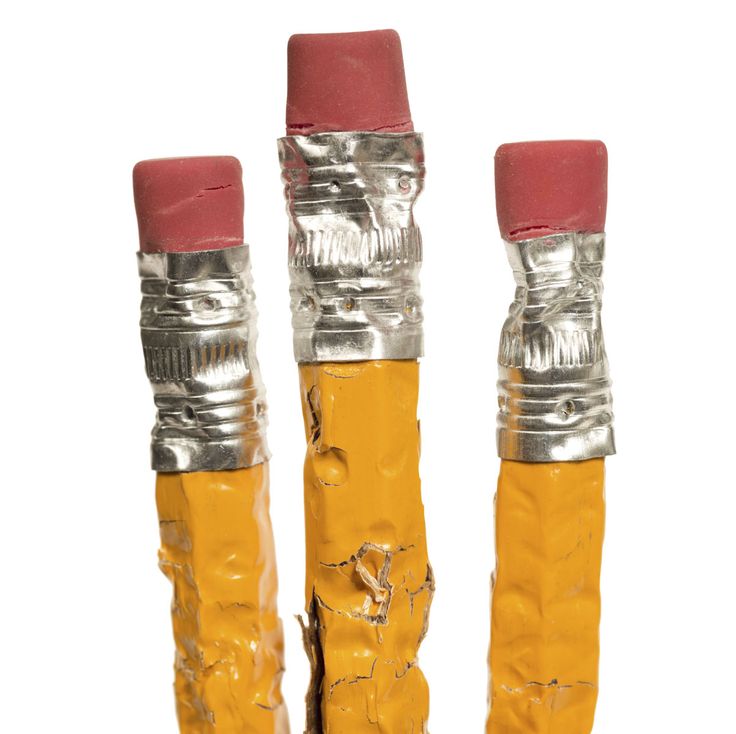
And my pens also. The Bic Banana caps all had teeth marks on them.
Gosh…
Maybe I am a reincarnated beaver. Eh?
Today…
Has the USA already lost to China, but just hasn’t realized it yet?
Yes it is in reality trailing by a huge length is it dares to confront reality. It is in delusion and China is happy that the US is living in dreams and in denial. China don’t need to gloat. Keeping its 1 trillion a year trade surplus beats being in debt 37 trillion and growing a trillion every 90 days!
China is in reality a much more humongous economy than the USA! It does not have a single homeless in a nation of 1.4 billion people while the US has at least 2.5 million homeless! It is the leading trade partner of 175 out of 195 nations on earth! It has a bigger military force, planes and ships with a million drones and powerful sonars to blind the US submarines! It has hypersonic missiles ready to wipe off the entire US fleet if it comes to that!
But China prefers to let the US boast and do meaningless chest beating while it keeps them guessing! The Chinese manufacturing capacity is 4–5 times that if the US and very competitive and according to Australian Strategic Planning Institution, it leads tge US in 37 out of the 44 most crucial technology and industry now and into the future!
It doesn’t fight wars and waste money and manpowers fighting forever wars and costly interference! US do it all the time and it is getting costlier and not even winnable!
Richard D. Wolff and Michael Hudson on the US Empire COLLAPSING – Europe Trapped, BRICS Emerging!
Blueberry Snack Bars

Ingredients
- 1 (18.25 ounce) yellow cake mix*
- 1/2 cup butter, melted
- 8 ounces cream cheese
- 3 eggs
- 2 1/2 cups confectioners’ sugar
- 1 (21 ounce) can blueberry pie filling
- 3/4 cup coconut
- 3/4 cup chopped walnuts
Instructions
- Heat oven to 325 degrees F.
- In a large bowl combine cake mix, butter and 1 egg; blend well. Pat mixture into bottom of a well greased 15 x 10 x 1 inch jellyroll pan.
- In a mixing bowl, beat cream cheese until fluffy. Beat in 2 eggs and confectioners sugar. Pour over cake mixture in pan. Spread blueberry pie filling on top and sprinkle with coconut and nuts.
- Bake for 45 minutes or until lightly browned.
- Cool and cut into bars.
Notes
* 18.25 ounce boxes of cake mix have been replaced by 16.5 ounce and 15.25 ounce boxes. To compensate for the volume loss in a 16 ounce box, whisk 6 tablespoons all-purpose flour into the dry cake mix before proceeding with the recipe. To compensate for the volume loss in a 15.25 ounce box, add 1/2 cup + 3 tablespoons all-purpose flour and 1/4 teaspoon baking powder.
I’ll See You Soon
Submitted into Contest #210 in response to: Make a mysterious message an important part of your story.… view prompt
Victoria Hillis
Thirteen letters. Four words. Waiting in the mailbox. No name. Just her address on an envelope holding a thin piece of paper. Small, curly black letters scratched into the middle of the whiteness. While many curiosities of the letter fought for attention in her mind, one, perhaps not so important, stood out. Who writes letters by hand?
Who wrote this? Why is this in my mailbox? Or even, What the heck? Would have been better questions asked than the one Lily chose. But alas, being still young and somewhat unconcerned about matters not directly related to her, Lily took only a half moment to examine the writing. When it was decided she did not recognize the hand in which it was written, it was placed on the kitchen table along with her keys and the other junk mail to be forgotten.
I’ll see you soon.
Johnathan exercised more caution when his letter arrived, but not by much. He was confused. Understandably so. His first question — “What?”— was a good one. Quite logical given the circumstances. Johnathan, being ex-military, stared at the loop of the letters, the slight bleeding of black ink. He was becoming distraught. Alarm bells started to sound. Past missions came to the forefront of his mind. Everyone he wronged. Everyone who could have a vendetta against him. “Who sent this?” would have been his next question but it never fully formed as the laughter of Sean Dawson, the punk kid from two doors down, hit his ears. “Figures,” he mumbled. Alarms bells went silence, and Johnathan walked back into his house and laid down; an effort to calm his too-fast beating heart.
I’ll see you soon.
The last letter arrived at 776 Harrison Street. The mailman slid it through the letter hole. It landed on top of what seemed to be weeks’ worth of mail. The letter teetered at the top a second, not sure if it was going to stay put. Then ever so slowly, it fell forward. It slid down the mail pile, gaining enough momentum to push it all the way across a dark wooden floor to where it came to a stop at the heel of the third recipient’s foot. Never to be read.
The last letter was sent first. But due to an unforeseen error in the separating room of the post office, the letter was sorted into the wrong bin and thus sent to the wrong address. The letter traveled about for several weeks; all the while Miriam continued on in her normal life routine. She went to work, she went out with friends, and she went home. Over and over again. She had no cause for worry. But of course, she never received her letter. For by the time it had arrived it was three days too late. He had already come.
Lily and Johnathan were mirrors of each other the night Miriam’s death was covered on the news. “Local High School Teacher, Miriam Tyler, Found Dead in Her Home.” Oh my God, they both thought. Hands pressed over their mouths, eyes wide in shock. The report took place outside of Miriam’s house. Yellow caution tape blocked off the entrance. Police cars dressed the reporter in red and blue lights. “Please note that the following video footage may be disturbing to some viewers.”
Body now removed; the camera crew showed the crime scene. They roamed the house as they thought the killer did. Starting outside, half a footprint in the dirt. “No signs of forced entry.” The killer had come in through the back door. Through the kitchen, a knife missing from the set. It happened by the stairs.
Lily and Johnathan had both stood up by then, turned away from their television screens to find their phones in different rooms. They missed when the camera crew zoomed out to show the room in full. Mail piling up by the front door, a pool of blood blurred out for viewers, and there in the corner of the screen, the small white envelope with black, swirly letters that had come to rest by the victim’s heel.
If only Lily or Johnathan saw it. Perhaps it would have raised suspicion. Lily might have rummaged through the mail on her table, searching for the letter so similar to the one on the news. Johnathan might have dug through his trash, hoping that to God the size and the scribe was just a coincidence. But Lily was busy calling Johnathan and Johnathan was busy calling Miriam’s parents.
Lily got a busy signal. She tried again. And then again. Each time she was greeted by the beeping of a line in use. She hung up the phone, a loud sigh of frustration coming out of her. She understood of course. His ex-girlfriend had been murdered. He had other people to call besides her. She set her phone back down. She’d wait for him to call back. And he did call back, but Lily wasn’t able to answer. For in the moment when she sighed so loudly, the lock on her front door broke. She didn’t hear him come in.
Johnathan tried to call Lily again. The phone rang and rang, but she did not answer. He too sighed loudly, but death would not find him tonight. He reasoned she had probably gone to bed. It was late after all. He would see her soon enough.
Johnathan knocked on the front door. He prepared himself for this on the drive. He’d express how sorry he was for their loss. Tell them what a wonderful person Miriam was. When the door opened, Miriam’s father, pulled him into a hug and then welcomed him inside.
The kitchen housed the only family Miriam had. Her mother, Deb, her father, Frank, and her husband, Caleb, made ex by Johnathan.
“Caleb, I—” Caleb held up a hand. “Not here, Johnathan. Not now.”
Johnathan nodded.
“I have to get going though,” Caleb said standing up. “Deb, I am truly sorry.”
“Thank you, Caleb.”
“Frank, it was nice to see you again. I wish the circumstances were different.”
“Me too, son. Me too.”
“And Johnathan… I’ll see you soon.”
“I’m sorry?”
Johnathan knew there was something familiar about the words. Only he thought it was because he had heard them somewhere recently, not read them on a small, white letter.
He tried to think back. Who was it that said that? Was it someone from work? A show, maybe? Lily?
“At the funeral.” Caleb said.
“Oh, right. Of course. I’ll see you there,” he said still trying to figure out why the words were so familiar, but he couldn’t recall and therefore, let the thought drop.
It wasn’t Johnathan who found Lily dead, rather, it was her mother. She wanted to stop by; see her daughter. Take her to lunch, possibly plan a day to go shopping. She wanted to pick out clothes with her daughter in a few days time, but instead she had to pick out her casket.
The funeral was in session. Everyone dressed in their best shade of black. The preacher droned on about Lily as if he knew her personally. It took all of Johnathan’s strength to stay seated with his mouth shut, but what he wanted to do was stand up and shout at the preacher. Pull him by the collar of his shirt demand he tell him something about Lily that wasn’t written down in his notes.
“Lillian Evangeline Carter was a beautiful soul tragically taken from us,” he said.
Us.
Johnathan wanted to hit him.
He hated it all. He hated the preacher, he hated the black everyone wore, he hated the sniffling and the weeping and the crying, and most of all he hated that Lily was dead. Murdered in her own living room.
“Do not shed tears for me, for I am in a better place—”
Johnathan couldn’t take it anymore. He would lose his mind if he stayed any longer. He stood up from his place in the front row and as calmly as he could, he walked out.
He sat on the bottom steps outside of the church. No tears fell from his eyes. He was lost in thought. Thoughts of Lily; thoughts of who killed her. He only knew he was no longer alone when he felt someone sit down beside him.
“You okay?”
Caleb.
It took a moment for Johnathan to answer, but eventually he said, “Yeah. Yes. I just needed some air.”
“Ah.”
They were both silent for a moment and then— “You know, I used to come sit on these very steps after Miriam told me she was leaving me for you.”
Johnathan didn’t say anything. What could he say?
Caleb continued. “I liked it here. It was quiet, never anyone around. I could think clearly. Rationally.”
The last word was strained. Like it was caught in Caleb’s throat. Johnathan shifted.
“I wanted to get at back you. At Miriam. I wanted to make you suffer how I suffered. You took the love of my life away from me.” His words were unhinged.
Johnathan looked at Caleb, slightly weary. He looked as if his mind was far away. “How could I do anything but the same to you?”
The realization hit Johnathan a little too late. For by the time he had stood up a knife was already wedged deep into his abdomen. He looked at Caleb, at his blank expression, at his too clear eyes.
“You—” Johnathan struggled for the words. “You killed—” He couldn’t comprehend it. He grabbed hold of Caleb’s shoulder to steady himself. “You killed her.”
“I did warn you. All three of you. Didn’t you get my letter?”
It was then that Johnathan finally understood the familiarity of Caleb’s words. I’ll see you soon. They were the curly, black words written on the letter. Four words; thirteen letters that he blamed too quickly on Sean Dawson.
Caleb pulled the knife out and slowly helped Johnathan lay down.
“Why Mir—” blood was coming from Johnathan’s mouth now. He coughed. It sprayed onto the steps. “Why Miriam?”
“Why Miriam?” he repeated. “Is it not obvious? She started it all. And in turn had to be the first to go.”
Caleb crouched down next to Johnathan. “And Lily was after Miriam. It was all planned so that you could sit in the grief of losing something you love.”
“And then came you.” Caleb looked Johnathan over. From his head to his bloodied dress shirt to his toes. He looked him over as one would an insect—irrelevant and small.
Johnathan wanted to curse at him. He had several curses forming in his mind. He tried to move his lips, form the correct shapes with his mouth, but life was almost completely drained out of him.
Caleb smiled. “If you’ll excuse me,” he said standing back up. “I have a funeral to get back to.”
Johnathan watched as Caleb walked into the church. He waited until his frame could no longer be seen from where he lay on the bottom of the steps. And then he closed his eyes forever.
Do people who lift weights lose their muscle the older they get?
I’m 65. I’ve been working out for years.
Im lifting as much as the guys in their 30s that are looking like the cover of Muscle and Fitness magazine.
Same number of reps. Same number of sets. Same weight.
Somehow I’m strong as ever. Lifting my own body weight or higher.
I look like hell. Gone are the days of chiseled definition. Six pack abs.
The reason Im going is I feel great. Everything is working. I’m on no meds. No prescriptions.
To quote my doctor after my last physical?
“Neil! I’m happy when I get numbers like this off of a 25 year old. “
Blood pressure, cholesterol, CBC, BMI. All excellent.
I’m retired. When I go to the gym at 10am I’m usually the youngest guy in the gym.
People in their 70s and 80s all over the place.
They are limber. Everything working. No medical problems. Nobody is buffed or ripped.
My friend John is 85. He does 45 minutes on the rowing machine. Then treadmill.
Start out slow. Get a trainer if need be. Check with your doctor first.
It would seem working out isn’t only good for strength. All my organs are working normally. My bone density is great. I sleep like a rock. My joints are all really good. No arthritis.
So yeah. I can’t get muscle mass anymore. People keep offering me steroids but I’m not going that route.
I’m just in it for the health benefits. Social reasons. Eat up all this extra time I have.
i joked about his performance at girls night, he was recording everything…
https://youtu.be/JPcQmXT3iow
Have you ever seen a life ruined by an apparently insignificant mistake?
I heard about this woman and her misfortunes from my husband’s family. She got married to the love of her life and was ecstatic when she found out she was pregnant. About a month before delivery, her husband was scheduled for tonsillectomy. He died on the operating table due to an error in calculating the right amount of anesthetics. The baby was born and she raised her on her own for a few years.
She met another guy through a mutual friend and got married to him shortly thereafter. It was apparent that the main reason that he had married her was for her first husband’s insurance pay out due to his wrongful death during the procedure.
She had the money in her child’s account so she could use it for college or any other future needs. Her second husband would beat her up regularly for the insurance money but she refused to hand it over. Her parents found out about the abuse when their granddaughter phoned them to let them know that Mama was being beat up by Step Dad.
Her friends and family got involved and took her in along with the daughter. She has sworn off men since then even though it’s been several decades since the second husband’s abuse. She had always been a very attractive woman but she lost a lot of weight and aged almost overnight after him. She had premature gray hair in her late 20s.
When I think about how this woman might’ve been if her first husband who adored her had survived the tonsillectomy without the medication error, my heart goes out to her. Poor woman!
Title: Sir Whiskerton and the Case of the Disappearing Racer: A Bugged-Out Mystery
Ah, dear reader, welcome back to the ever-eventful world of Sir Whiskerton, the farm’s most brilliant (and undeniably modest) detective. Today’s tale is one of absurdity, greed, and a pickle masquerading as a cockroach. Yes, you read that correctly—a pickle. But before you roll your eyes (as the farm animals so often do), let me assure you, this is a story worth savoring. So grab your magnifying glass and a sense of humor, because this is Sir Whiskerton and the Case of the Disappearing Racer.
The Arrival of Mr. Ducky
It began on an otherwise uneventful morning. The cows were chewing cud, the chickens were gossiping, and I, as usual, was basking in a sunbeam on the barn roof. Peace reigned—until it didn’t.
“Step right up, ladies and gentlemen!” came a loud, quacking voice from the farm’s entrance. “Prepare to be dazzled, amazed, and utterly blown away by the greatest spectacle this farm has ever seen!”
I groaned. There was only one duck in the world who could cause this much noise and chaos before breakfast—Mr. Ducky.
The traveling duck waddled into the yard, his feathers slicked back and his trademark plaid vest looking as garish as ever. Under one wing, he carried a small wooden crate, which he waved dramatically in the air.
“Friends! Neighbors! Fellow farm dwellers!” Mr. Ducky quacked, addressing the gathering crowd. “I come bearing an opportunity so grand, so unique, that you’d be a fool to pass it up!”
“Oh, great,” Doris the hen muttered, rolling her eyes. “What ridiculous scheme is it this time? Last time he tried selling us ‘self-milking buckets.’”
“And don’t forget the ‘automatic feather fluffers,’” Harriet added with a cluck. “They were just hair dryers with stickers on them.”
“Quiet, everyone!” Mr. Ducky said, puffing up his chest. “This is no ordinary scheme. Today, I present to you… the world of competitive cockroach racing!”
The Cockroach Race is Announced
The farm animals stared at Mr. Ducky in stunned silence. Finally, Porkchop the pig broke the awkward pause. “Cockroach… racing?” he said, snorting. “You want us to watch bugs run around?”
“Not just ANY bugs, my dear swine,” Mr. Ducky said with a flourish, opening the crate. Inside, a single shiny cockroach sat on a tiny cushion. “This is Mr. Golden, the fastest, most talented cockroach this side of the compost heap!”
The animals leaned in for a closer look. Mr. Golden was, admittedly, quite an impressive bug. His shell gleamed in the sunlight, and he twitched his antennae with an air of confidence.
“And here’s the deal,” Mr. Ducky continued. “For a small entry fee of, say, two corn kernels per animal, you can place your bets on which cockroach will win! I’ll even provide some ‘racing’ bugs for the rest of you amateurs to compete with—but I warn you, no one can beat Mr. Golden!”
“Two kernels?!” Ferdinand the duck quacked indignantly. “That’s robbery!”
“Don’t be so cheap, Ferdinand,” Mr. Ducky replied with a grin. “Think of the prestige of being part of such a historic event! Plus, the winner gets a grand prize—this beautiful, one-of-a-kind golden horseshoe!” He held up a tarnished, slightly bent horseshoe that had clearly seen better days.
The farm animals sighed. They all knew Mr. Ducky’s schemes were ridiculous, but, as usual, curiosity got the better of them.
The Farm Prepares for the Race
By mid-afternoon, the “cockroach racecourse” was set up in the barn. Mr. Ducky had drawn a series of lanes on the floor with chalk, each labeled with a number. The animals gathered around, some excited, others skeptical.
“I can’t believe we’re doing this,” Doris muttered, fluffing her feathers.
“It’s so undignified,” Gertrude the goose agreed, though she couldn’t help but peek over the shoulders of the crowd.
Porkchop waddled up to me, munching on an apple as usual. “What do you think, Whiskerton? Gonna place a bet on Mr. Golden?”
“I’m here strictly as an observer,” I said, adjusting my monocle. “Though I must admit, I’m curious to see how this plays out. Mr. Ducky’s schemes have a way of… unraveling.”
“Oh, I can’t bear it!” Lillian the hen screeched from the back of the crowd, fainting for no discernible reason.
The Disappearance of Mr. Golden
The race was about to begin when disaster struck.
“Ladies and gentlemen!” Mr. Ducky quacked, gesturing to the crate. “Prepare to witness history as Mr. Golden—” He froze mid-sentence. The crate was empty. Mr. Golden, the star of the show, had vanished.
“WHAT?!” Mr. Ducky squawked, frantically searching the barn. “Where is he?! WHERE IS HE?!”
The farm animals erupted into chaos.
“Maybe he ran away!”
“Or maybe he was kidnapped!”
“Or maybe he’s just smarter than all of us for leaving!”
“Calm down, everyone!” I called out, leaping onto a hay bale. “This is clearly a case for a professional detective. And luckily for you, I happen to be one.”
“Thank whiskers you’re here, Whiskerton,” Mr. Ducky said, wringing his wings. “If we don’t find Mr. Golden, the whole race will be ruined—and I’ll be ruined!”
The Investigation
I began by examining the crate. There were no signs of forced entry, which meant Mr. Golden had escaped on his own—or with help. I sniffed the air and detected a faint trail leading toward the barn door.
“Rufus!” I called. “Follow that scent!”
Rufus wagged his tail and bounded out the door, with Porkchop and me close behind. We followed the trail to the edge of the farm, where it abruptly stopped near the pickle barrel.
“Hmm,” I said, stroking my whiskers. “Interesting. The trail ends here, but there’s no sign of Mr. Golden.”
“Oh, Whiskerton!” Rufus barked, wagging his tail. “Look! A pickle!”
Sure enough, an old, shriveled pickle lay on the ground near the barrel. I picked it up with a paw and examined it closely. It was roughly cockroach-shaped, if you squinted.
“Perfect!” Mr. Ducky quacked, snatching the pickle from my paw. “We’ll use this as a substitute!”
“Wait, what?!” I said, stunned. “You’re going to race a PICKLE?”
“It’s all about showmanship, Whiskerton,” Mr. Ducky said, winking. “Besides, these rubes won’t know the difference!”
The Pickle Race
The race resumed, with the pickle—now dubbed “Mr. Pickleworth”—taking Mr. Golden’s place. Mr. Ducky rolled the pickle down the lane, while the other animals raced their cockroaches beside it.
The sight of a pickle tumbling along the floor was so ridiculous that the entire barn erupted into laughter. Even I couldn’t help but chuckle.
“Go, Mr. Pickleworth!” Ferdinand quacked, tears streaming from his eyes. “You’re a natural!”
In the end, the pickle lost (unsurprisingly), and the grand prize went to a particularly speedy cockroach named “Turbo Tim.”
The Moral of the Story
After the race, Mr. Ducky tried to sneak off with his entry fees, but the farm animals weren’t having it.
“Hand over the corn, Ducky,” Doris said, narrowing her eyes. “You didn’t even race a real cockroach!”
Under pressure, Mr. Ducky reluctantly returned the kernels, grumbling under his breath. “Fine, fine. You’re all a bunch of cheapskates anyway.”
As the crowd dispersed, I settled back into my sunbeam, pleased with how things had turned out.
The moral of the story, dear reader, is this: Greed and trickery will always lead to embarrassment. And while it’s fine to dream big, it’s better to do so with honesty and integrity.
Until next time, my friends.
The End.
Buy American Made (And Go Broke) Or You Are A Traitor! Why We REALLY Buy From China!
What was the most surprising thing you witnessed at your high school reunion?
I went to my 10-year and my 50-year reunions.
At the 10-year, the people hung with and caught up with the people they were closest to in high school. They mostly looked the same or better.
At the 50-year, it was hard to recognize anyone. People generally looked good, though. Nobody had anything to prove and chatted with a wide range of people. Most were there without a significant other. The SOs were either at home, unwell, dead, or an ex. I talked with friends and acquaintances from high school and some from back in elementary school. Had a great time. I sought out a guy from elementary school to tell him that I had never forgotten that he had been hit by a car in first grade and that a little voice had told be to look both ways while crossing the street ever since then! I said that he had saved my life more than once. I told a woman that I had always remembered the dress she had worn to the prom. It was made of blue terry cloth, designed by her sister. It was magnificent and she was magnificent in it. I wanted her to know how memorable it was.
if you have the chance, go to your 50th. Go without preconceptions or expectations. Go and have a good time. Tell people the good memories you have of them. Just do it!
Why does China build many high-speed rails, why doesn’t China spend this sum of money in developing air travel like USA?
To answer? Let’s start with a question. Which costs less: ground transport or airmail? Right.
So. Why does anyone fly cross country or send freight by air? Answer: because flying takes less time.
A traditional American train travels at an average of +/- 60 mph. That means a non-stop (2800 mile) trip from New York to LA takes would take about 48 hours. But there’s no practical way a freight train (especially America’s antiquated fossil fuel powered ones) can afford to go that distance without stopping multiple times for a total of a few additional days.
A commercial jet aircraft travels at an average of +/- 550 mph. Crossing those 2800 miles in about 5 hours. With no economics dictated stops along the way.
The typical commercial freight aircraft can carry (as long as it’s relatively light weight cargo) about 4 standard 20′ TEU of cargo. But not conveniently containerized. A lot of (polluting) fuel is burned hefting those 23 tons cross country. Just four containers’ worth. That’s what a single train-car carries (with far less concern re cargo weight).
Air cartage is fast but inefficient – in terms of energy required, of atmospheric damage done, and of possible cargo volume and/or mass.
Rail (American ‘snail rail’) is painfully slow but can, in a single 73 car train (that being the US average), carry 292 TEU (20′ containers). With weight a very minor issue.
Wouldn’t it be great to have something that’ll carry a train-load of cargo at a speed closer to that of air transport? China agrees with you on that. Hence its High Speed Rail network that serves every corner of China. (Equal in size to the US but with triple (and growing) the cargo shipment demand. High Speed Rail. Average speed? 180mph.
China’s HSR networks typical trains can speed along at up to 240 mph. That’s mainly when the train bears very light cargo – human passengers. Cargo, on the main network, could roll at up to 180 mph. Cutting that NYC-LA cargo time to about 16 hours. With stop-offs perhaps 2 days (compared to +/- a week for snail rail).
China’s current HSR freight trains run to 16 cars. That means up to 64 containers. About 1/5th of a snail rail train-load.
And China’s High Speed Rail is electric. Energy efficient. No emissions.
Even crude math confirms the superior business savvy of electric HSR over diesel snail rail. And? Less crude math confirms that not only does the PRC HSR out-perform snail rail by every metric – it beats air freight too. Often even in total time elapsed factory loading dock dispatch through to receiver.
And China’s new HSR track is engineered to be able to handle even greater traffic volumes at even greater speed. Cargo trains with speeds reaching 250mph are past working prototype stage. That’s cargo going NYC to LA in little as 11 hours. On the ground. Electrically-powered.
Except, of course, there are no (nor expected to be any) NYC to LA high speed cargo trains. No. Those trains are speeding goods and people to and fro Beijing and Ürümqi.
Travel. Passengers. That’s the cargo you focus upon. Let’s compare the PRC’s HSR with airline travel between several well-known PRC cities. Beijing. And Shanghai. 1200 miles.
Travel time by air (flight time only) 2 hr. 15 min. Add the 36 min. (mid-town Beijing to airport) + 63 min. (Shanghai airport to mid-town) transits and the total mid-town to mid-town trip will take 4 hrs. By train the same mid-town to mid-town by fast train will predictably take 4 hrs. 18 min. An 18 minute difference in exchange for rail-car comforts and no connections to stress over? That’s a win in my book. If the price is right.
So… Price? Fast train $200 – $276 (depending upon seating class and seat or sleeper choice). Air? Averages $350 – if you book at least days ahead. Train? Most days require no lead time. High Speed Rail wins both in terms of cost and comforts. And rail ties with air mid-town to mid-town (and anyone who frequent flies curses the way travel to and from the airport can eat a day.)
Oh, by the by? About air travel in China? China’s commercial airliners fleet (closing on 8000) out-numbers the US commercial fleet (under 6000). American inventory grow has stagnated while China’s commercial aircraft inventory is growing — the number projected to be nearly 16,000 by 2043. A delightful factoid . . . Bowing coulda woulda has the lion’s share of those aircraft sales. Even splitting the 8800 new aircraft with Airbus Boeing stood to rake in several trillion dollars. Trump-America’s crass a**-hattery flew that golden egg laying goose into a mountain of utter bs. America’s artless ‘art of the deal’ idiocy caused China’s management to sigh, shake their heads in disappointment, and double down on making many its own commercial aircraft (and perhaps some for export). So now the mix will likely be 50/50 Airbus/Comac (China’s aircraft).
So. China is ‘fast-tracking’ both high speed rail and commercial aircraft passenger capacity. China’s a century ahead of America in rail tech – and surging ahead in commercial air capacity.
Do you think that Americans would take the jobs left vacant if all illegal immigrants were to return to their countries?
I was born in the USA. Nearly 70 years ago.
When I was in my 20s and out of work I picked fruit for a couple weeks near Vacaville, California.
I was hired by a labor contractor. Al [AL, not AI], a friend of mine, and I showed up to the pickup point in Sacramento at 5:30am and got on a bus. When that bus left it was full of about 30 “American boys” ranging in age, as best I can recall, from 17 to late 20s.
We were picking apricots that day along side seasoned Mexican pickers. We were being paid by the box and, despite stopping to teach us more efficient ways to pick, those men and women still out picked us about 4 to one. By the 10am lunch break it was about 90 degrees in that orchard. When lunch break ended, nearly half the guys who’d been on the bus with us did not return to the field (I have no idea how they got back to Sacramento).
The next morning Al and I, sore as we were, were the only ones on the bus and when we arrived those same Mexican pickers were already in the orchard working.
Higher pay might attract more “Americans” to try, but in my opinion agricultural work requires a level of intelligence, skill, strength, and stamina that is greater than nearly all of us “Americans” are willing to provide.
ADDENDUM (8/23/19): I want to thank everyone who has upvoted my little anecdote and also say that I am pleased that it prompted so many others to relate their own experiences and insights and otherwise express their thoughts on this subject. The overwhelming majority of the comments have, in my opinion, broadened and deepened the discussion and, I hope, increased understanding. Even the very few comments that have been surly and fault-finding have been interesting. Thanks again to you all.
ADDITIONAL ADDENDUM: Upon reflection it has occurred to me that I have implied that all farm workers, including the ones I worked with, are undocumented. This implication is false. I do not know how many, if any, of my coworkers were undocumented. I apologize to you and to them.
Shorpy






Girl Dies And Is Shown The Room Of Knowledge During Fascinating NDE
Giving Back
Submitted into Contest #210 in response to: Make a mysterious message an important part of your story.… view prompt
Karen McDermott
Eileen peered over the top of her glasses and put down the receipt she had been puzzling over. Janice, her eccentric boss at the Rewild Life Charity shop was holding the straps of a dazzling white ball gown up to her shoulders, doing twirls in the back room that barely had space for the staff lockers, let alone such activity.
It was January 8th and they’d been inundated, as usual for the time of year, with unwanted Christmas presents. Piles of DVDs still in their cellophane wrappers. Perfumes from women perplexed by why their husbands wanted them to smell like Parma Violets. Confusing board games families had decided they had had their mileage from already, lengthy instruction booklets not lending themselves well to post-roast slumps.
“Price it up at 20 quid?” suggested Eileen.
Janice checked the label and Eileen heard her gulp that followed inspection even over radio softly crooning on the shelf behind her. “Reckon we’d get £40 for this one.”
“Reckon we’d actually stand a chance of selling it this decade if we stuck to £20.”
Janice shrugged in grudging agreement. She hung the beautiful dress on the rail ready to be steamed and took her trusty scissors into slicing open the next bag of goodies, or not-so-goodies.
Eileen, satisfied she had solved the mystery of the receipt – someone had punched an extra ‘0’ on a sale – and which volunteer to quietly reprimand about it, moved on to the bric-a-brac shelf. She started checking the week numbers stamped on the labels to decide whether it was finally time to cast the eyesore of the souvenir novelty ashtrays in the recycling bin. Janice had been so sure they would sell. But then Janice struggled to see why every prospective customer who walked in to their little shop did not share her somewhat unique taste. Today this was represented by pink elephant earrings and a cartoonishly gaudy combination of a lemon yellow belt and green pumps.
The bell over the top of the door tinkled, its instigator chiming in with “Morning Janice, Morning Eileen.”
“Hi Grace,” Janice and Eileen chorused in return, Eileen uttering a small sigh of relief after. An extra pair of hands was direly needed to sort through donated stock and unwrap the new goods Head Office insisted on sending through, even though the staff barely had the space to hang their own coats up. Janice had once wondered aloud what market research it was that resulted in pre-packaged measuring spoons and shoehorns being sent their way when most customers wanted to try on clothes, root through boxes of old costume jewellery and pick a book to take to the beach.
Janice had also voiced her usual misgivings when considering the 20-year-old Grace’s application to volunteer. “Students…,” she’d begun. “…they go home in the holidays and they’re lumbered with too many essays, then realise they’ve bitten off more than they can chew.” But Eileen had just ignored her and had called Grace in to interview. The young woman had nodded enthusiastically, saying she could come in for four hours a week and so far had stuck to her word. Except for an extended field trip to an art gallery in Edinburgh; but then she’d come back laden with so much shortbread to divvy up amongst the staff that the managers, with bellies straining, told her she would have to do it more often.
“Lovely to see you, Grace,” said Janice. “Did you have good hols?”
“Yes thank you Janice,” replied Grace, tucking a lock of strawberry blond hair back under from where it was escaping her hat. “And you? How are the boys?”
Eileen let the pair catch up while she made a list of everything she wanted to get done that day. ‘Nothing’s impossible if you simply break it down to smaller tasks’ was her oft-quoted motto. Janice was forever threatening to print it on a tie-dyed t-shirt for her.
“Grace,” said Eileen, “would you be willing to nip over to Scribbles over the road and see if they can change up these tenners?” They were forever running low on £5 notes.
“The girl’s only just got here, give her a break!” protested Janice, theatrically rolling her eyes and puffing at her fringe, which was purple that week.
Grace laughed. “I’m here to work. Of course I will – I’ll do it now while I’ve still got my coat on.”
“Grand. Cuppa tea’ll be waiting for you when you get back,” assured Eileen, handing over a sheath of tenners to their new charge. “Don’t worry if they can’t change up all of them. Just whatever they can spare.”
Grace returned triumphant, and the three fell back into their usual rhythm: Janice sorting donations, Eileen on banking, Grace on till when it was busy, neatening displays when it wasn’t.
The bell went again and Grace looked up from the vase she had decided to fill with plastic flowers to greet a tall, rather pasty-faced gentleman who looked to be in his thirties. He raised his eyebrows in acknowledgement of her chirpy greeting, then decided to add a nod in lieu of words. Grace thought perhaps he was shy like many of their customers, lovers of nature and peace, seemed to be. The man made a beeline for the books. And continued the metaphor when he started humming along to a pop song on the radio (which Grace had subtly changed the station of when she deemed it safe to do so). Perhaps he wasn’t so shy.
Grace started running a cloth over some of the china ornaments, wondering for about the eighteenth time whether she should adopt the porcelain cat with the whiskers covered in splashes of cream. A sculptor herself, she was forever marvelling at how the tiny white drops had been formed. She had the skill for bold designs, but lacked the patience required for smaller embellishments. She was still waiting to find out if patience was a subject taught on her course.
A clicking noise took her out of her reverie and she looked up just in time to catch the mysterious man quickly putting something in his jacket pocket and striding out of the shop. Curious, Grace went over to see what had made him run off – surely he hadn’t stolen something? Who would be so heartless as to steal from a charity?
The only thing she noticed was the spine of a science fiction book standing out a little further from its line of brothers, which she had fastidiously straightened earlier. She loved the painter Piet Mondrian and hence loved a clean line. Grace looked at the cover of the book – strange ships floating in unnaturally coloured skies. Curiosity told her to open the book and to her horror she found someone had scribbled a mysterious illegible message in it. Whenever she opened a textbook from the university library if she found underlinings or highlighting added by a previous borrower she was driven to distraction and would have to return the book.
“It can’t be sold in this condition,” she thought, and so left it on the checkout desk with a sticky note on for her bosses explaining why it had been pulled out.
Nothing further untoward happened that day. When Eileen cashed up at the end of the day – it had been another slow one and she was dreading justifying the takings to Janice, whose responsibility it was to sign off on reports to Head Office – she caught sight of the pulp paperback Grace had left on the desk. She read the note, deciding to peep to assess the damage herself. Grace could overreact at times, which both Eileen and Janice agreed was due to her generation’s time spent in such sterile environments. “Afraid of getting her hands dirty,” Janice had said. She’d offered once for Grace to have a go at sorting. The girl had only lasted half an hour before saying the smelly socks and smudged picture frames were pushing it but finding someone had donated a used toothbrush sealed the deal for her, and back to tidying and dusting she went.
Eileen quickly identified the ‘scribble’ as the author’s signature, wondering what they were teaching in higher education if Grace hadn’t been able to see that. She laughed to herself while unlocking the cabinet they put the more valuable items on display in and finding a nook for the book in amongst the exquisitely beautiful rings and old cameras.
The funny-looking, slightly dog-eared book sold three days later, to a buyer saying they should have been asking for more. He’d slipped an extra fiver into the box on the till.
A fortnight later, the now less mysterious man (now identified as award-winning author, John Glass) came back to the shop, entering with more of a stride than a shuffle this time. Grace, recognising him (she read a lot of crime books and was attuned to registering distinguishing features in case she was ever called to give a statement), assumed he was now feeling more confident in his surroundings, having scoped out the scene and left his mark. After a time spent flicking through an aeronautical tome, John cleared his throat and approached Grace at the desk, where she was pricing up bags of buttons.
“Hello,” she said, with a shy closed lipped smile. She had dazzlingly white teeth and usually afraid to let people know it, so what was happening to her? Had she become a little star-struck? Over this man she hadn’t know from Adam until a mere couple of weeks ago? “If it’s buttons you’ve come for, you’re in luck,” she announced, waving a little plastic bag of them.
Grace mentally kicked herself. Who says such things? If they had been chocolate buttons, it might have been a touch more understandable. She tested one by bending it. Definitely plastic.
Fortunately John smiled back at her instead of running for the hills.
“Bit old for her, isn’t he?” commented Janice, from where she was hiding out the back with Eileen. Both occupied, but keeping one eye on the proceedings. It wasn’t every day they had visits from esteemed writers.
“Oi, weren’t there fifteen years between you and your Paul?” queried Eileen, who was trying to untangle a bunch of necklaces and only succeeding in making it worse. Defeated, she put them in a basket and decided to sell them as a job lot.
“Fourteen, actually,” said Janice, her hand automatically drifting to the locket she wore. Eileen knew it contained a picture of Janice’s husband and an ultrasound scan photo of her son, Peter.
Eileen looked back at the counter, where some sort of information exchange was in process. Grace had brought out the notepad they used for when the till was playing up, and Mr Glass was brandishing his controversial pen again.
“Is he signing her a personal poem do you think?” asked Janice, in what she considered to be a whisper.
Eileen was fretting. What if somehow he hadn’t meant for the book to be sold? Was he registering a complaint? Well if so, Janice would have to step up and deal with it. The assistant manager may have a dutiful nature, but she drew the line at –
Grace had rushed over even before the shop’s bell had finished its goodbye serenade.
“You’ll never guess!” she squealed, flapping the bit of paper around like a bird that had alighted upon her hand and wouldn’t get the hint to leave.
“Dinner reservation/complaint”, said Janice and Eileen in unison, which threw Grace for a moment, who ceased her pirouetting.
“I got chatting to the man who signs his own books…”
Janice nodded impatiently, causing her laser blue frames to almost bounce off the tip of her nose.
“…and he was telling me all about his new book. It’s set in the head office of a nature reserve, he says…”
“That’s quite a change of scene for him, isn’t it?” Eileen interrupted.
“I expect something peculiarly wild happens in it, but I said ‘no spoilers’ please. Anyway – he’s offering to do a signing here. He said his agent could take care of the marketing and it would bring a load of new people into the shop.” The famed white teeth were flashing now.
“What about refreshments?” asked Eileen.
“You’re too practical for your own good at times,” remarked Janice. “Continue, Grace.”
“He said the agent would sort all of that as well. Oh, I could get my housemates involved too – Sara makes her own elderflower cordial and Angelique bakes a scrumptious carrot cake.”
Eileen was showing signs of warming to the idea; her forehead displaying fewer crinkles.
Janice was almost bouncing off the walls. “We could certainly use the custom. Let’s ring him up and say yes, shall we? C’mon Eileen.”
“Now don’t you start singing that song at me again, you know it makes me –”
“Agree to anything I say? Yes, that’s why I do it.”
Eileen scowled as she watched as her colleagues crumpled into heaps of laughter at her expense. “Fine, but you’ll be the one calling.” Eileen took the scrap of paper from Grace’s quivering hands and passed it to Janice, who pinned it to her noticeboard. Grace was called away by the door again and the three once again returned to their usual routine, only all lighter in heart in that moment.
*
The book signing event seemed to roll around in no time. It was to start at 6:30pm, giving the women time after closing to clear what space they could and to lay out rows of chairs (some of which were kindly on loan from Ari’s, the Greek café down the street). The publisher’s team were busy pouring out cups of wine and orange juice that completely covered a trestle table that was normally reserved for housing stationery in the back office. Janice had covered it beforehand with a large shawl that was woven with glinting gold thread.
“Looks fit for a king,” remarked Grace’s housemate Angelique, who was cutting a large cake into dainty slices. She had been hearing a lot about the author over the past few weeks. She had to hide a smile when her comment resulted in Grace going over to the table to flatten down a wrinkle.
Eileen was occupied in pinning donated curtains over the wall displays, to give the evening a clearer backdrop. The agent from the book company looked particularly relieved when the novels by other authors had been hidden from view. Janice had wanted to hang up a string of fairy lights shaped like flying saucers in the area from which John Glass would be doing his reading, until Eileen pointed out they had not been tested by a qualified electrician, as was business practice. Janice clucked, but complied. The agent sounded relieved by this also, saying it wasn’t in keeping with the new image they were trying to project for the author. The agent spotted a spinning display of nature-related birthday cards and wheeled it towards where John’s chair awaited him.
“Who does she think she is, coming in here and rearranging the furniture,” hissed Janice.
“Hush, will you,” said Eileen. “We might end up selling some cards tonight.”
“I thought you’d already cashed up for the night?”
But Eileen was two steps ahead. She turned around and dove into a box, bringing out a donation tin patterned with bees and their hives. “I’m giving these out to the volunteers, with instructions to mingle after the Q&A.”
Janice squeezed Eileen’s arm. “You’re brilliant, you are.”
Eileen blushed under the extra make up she had treated herself to for the evening. She noticed Grace’s eyelashes also appeared to have doubled in size, plus she was wearing an elegant blue dress spotted with tiny white butterflies she hadn’t seen on her before, which fitted her lean form like a glove.
By 6:45, all the seats were occupied, a few other interested parties even standing at the back.
“If only we could always be this busy,” murmured Eileen.
“Be careful what you wish for,” warned Janice. “We wouldn’t even be able to get to the stock to replenish it.”
“Shush, it’s starting!”
Sure enough, John’s agent had become the welcoming intro. Everybody listened enraptured after the introduction while John read extracts from his new book, aware they were the first members of the public to be hearing the words. John began quietly and some struggled to hear. He was clearly more accustomed to writing instead of talking, but the applause he received bolstered both his confidence and the volume of his speech.
When the evening drew to a close, Eileen and Janice collected the tins from the volunteers, joyful at finding them all a lot heavier than when they had initially been distributed.
Many customers, clutching freshly signed first editions, remarked that they would be returning soon to see the mysteries that lay behind all the curtains. Soon, all who were left were the managers, the agent, the star volunteer, and the author. All were tired, but happy.
John was signing the last book of the batch to Grace, after waving her money away.
“Perhaps he’ll include dinner details this time,” Eileen said hopefully.
“No. He’s probably writing a complaint.”
Eileen looked at Janice.
Janice look at Eileen.
Then exploded into cackles, causing the agent to almost upset her orange juice.
“Only kidding,” said Janice. “Oh, you should see your face. Priceless.” Then she nodded toward Grace and John. “I bet their story has only just begun.”
Is it true that the British newspaper The Economist says that “China is writing the world’s technological rules”?
First movers have their advantages.
China couldn’t make any move in ICE cars because the legacy automakers own all the IPs.
China instead started pioneering the industries nobody’d been to – EVs and green energy. They own the new technologies through their IPs and the scale of the lead means they set industry protocols and standards. Late comers must follow.
Beware that China is way ahead in 6G. Huawei is the manufacturer of 5G equipment and implementation and within a few years, no chip restriction can restrict Huawei from controlling the IoT market. Huawei owns most of 5G and 6G IPs.
So yes, China is writing the world’s technological rules. The table’s turned. This is why the Germans and the Japanese must double down and manufacture in China for their EVs.
Banana Fudge Cookies

Yield: 3 1/2 dozen
Ingredients
- 1 (18.25 ounce) box chocolate cake mix*
- 1/3 cup mashed bananas, ripe
- 1 egg
- 2 tablespoons water
- 6 ounces semisweet chocolate pieces
Instructions
- Combine cake mix, bananas, egg, and water in a bowl. Beat with electric mixer at medium speed until smooth.
- Stir in chocolate pieces.
- Drop by rounded teaspoonsful, about 2 inches apart, on greased baking sheets.
- Bake in a 350 degrees F oven for 8 minutes or until done.
- Remove from baking sheets; cool on racks.
Notes
* 18.25 ounce boxes of cake mix have been replaced by 16.5 ounce and 15.25 ounce boxes. To compensate for the volume loss in a 16 ounce box, whisk 6 tablespoons all-purpose flour into the dry cake mix before proceeding with the recipe. To compensate for the volume loss in a 15.25 ounce box, add 1/2 cup + 3 tablespoons all-purpose flour and 1/4 teaspoon baking powder.
What is the one in a million coincidence you have ever had?
I was seated on a flight from Acapulco to Toronto next to an older retired couple.
I commented “ it smells like we’re having spaghetti on this flight”
The man mockingly said to me “ What kind of spaghetti sauce do you eat?”
I felt talkative so I went on to describe how my family makes spaghetti sauce and he replied “ That’s exactly how we make our sauce!”
I went on to say that although my father was born in Canada Our family was from a small town in Italy called Francavilla al mare.
Both the man and the woman exclaimed “ We both from Francavilla al mare! “
So what were the odds? 200 people on the flight, random conversation about spaghetti sauce, and we both make the same sauce because we’re from the same place, and I was right we did have pasta on the flight.