


This post is a little messed up. It was accidentally pre-released on 11 March 2025. I recovered it in it’s broken form, and then fluffed it out. Here it is. Up in it’s corrected manifestation.
Intro notes.
Note that I have been providing kitchen intel rather than meals as of late. This will change. I am returning back to full fledged delicious meals. Too much intel distracts from the yummy. Don’t ya know.
The “big boobie” splash screens are being phased out. They served their purpose and other images will be provided for other purposes. So expect that.
My personal focus is moving on the Sir Whiskerton series. There’s a far deeper hidden content structure within the stories are are perhaps the most significant thing that I am providing to you all during this life incarnation.
It’s all about life.
Shown in absurdity.
Regarding other stuff… You know what guys… news and other current events just kind of falls into a muted roar in the background.
Ah. Maybe just replace it with some Jazz, Blues or soft new age music.
But, like youse guys, I’m still ah learning.
Today…
Joe Rogan’s Moon Landing Theory VALIDATED by Elon Musk’s SHOCKING DOGE Discoveries!
Start this one. (Lots of bullshit for 20-something folk. But does have some good points.) “At some point we are going to have to unwind this lie.”
Good stuff starts at 5:07.
How has Chandrayaan-2 contributed to lunar research in 2025?
Chandrayaan was more a publicity stunt than any genuine effort at Lunar Research
How many Astrophysicists does India have exactly?
Less than 200 !!!
How much does ISRO spend on Space Research in a year?
₹1,140 Crore (Out of a Total Budget of ₹13,000 Crore)
Most of this is for Space Applications & INSAT operations, so Lunar Research would be lucky to get ₹150 Crore a year
You can’t do Lunar Research with ₹150 Crore a year
It would mostly be taking Russian & American Studies and replicating them
By comparison the same R&D for China is 264 Billion Yuan or ₹3.17 Lakh Crore equivalent in Rupees
At the same percentage, Lunar Research would get 30 Billion Yuan or ₹ 36,000 Crore equivalent in Rupees
Not to mention 3,053 Astrophysicists
We launch Satellites
We reasonably engineer Satellites
We know our Rockets and Fuels well
That’s it
We are in NO WAY built or funded for any quality space research because we neither have the talents nor the budget necessary for pioneering original lunar research
Cooking Oils
The American Heart Association Cookbook, Fifth Edition, recommends all of these oils except peanut oil.
Canola
Made from rape seeds. Canola oil has a bland flavor and is good for cooking and salad dressings. It has approximately 6 percent less saturated fat than other oils.
Corn
Made from the germ of the corn kernel. Corn oil is almost tasteless and is excellent for cooking because it can withstand high temperatures without smoking. It is high in polyunsaturated fat and is used to make margarine, salad dressings and mayonnaise.
Olive
A monosaturated oil extracted from tree-ripened olives. Olive oils range from light amber to green in color and bland to extremely strong in flavor. Olive oil is graded according to its degree of acidity and the process used to extract the oil. Oil labeled “virgin” is cold pressed, a process using no heat or chemicals and contains low levels of acidity. Oil labeled “pure” uses heat and chemicals to process olive residue from subsequent pressings.
Peanut
Made from pressed, steam-cooked peanuts. Peanut oil has a bland flavor and is good for cooking because it doesn’t absorb or transfer flavors. Its smoking point is slightly lower than corn or safflower oil. Contains 17 percent saturated fat.
Safflower
A clear, almost flavorless oil made from the seeds of safflowers. Safflower oil is a favorite for salads because it doesn’t solidify when chilled. It has more polyunsaturated fat that other oils but lacks vitamin E.
Sesame
Made from pressed sesame seeds. Sesame oil comes in two varieties: light (made with untoasted sesames) and dark (made with toasted sesames). Light sesame oil has a nutty flavor and is especially good for frying. Dark sesame oil (Asian) has a stronger flavor and should only be used in small quantities for flavoring foods — not cooking. Both varieties are high in polyunsaturated fat.
Sunflower
Made from sunflower seeds. Sunflower oil is pale yellow and has a bland flavor. It is a good all-purpose oil low in saturated fat and high in polyunsaturated fat.
Vegetable
An inexpensive and all-purpose blend of oils made from plant sources such as vegetables, nuts and seeds. Most vegetable oils are made from soybeans and are high in polyunsaturated fat and monounsaturated fat but low in saturated fat.
YOUNG MAN PRANKS AN ORDER AND THE RESTAURANT RESPONDS WITH A TOUCHING MESSAGE
“Dear Evelyn,
Last night you placed an important order, but you didn’t come to pick it up. You blocked our phone numbers when we tried to contact you. This order required a lot of resources in the kitchen, generating an economic loss due to the non-payment.
Our motto is and will always be “SUCCESS IS HERE”, so we can only wish you success despite your bad gesture last night. Success so that you don’t repeat what happened with other places or restaurants, because bad actions, in the end, fall back on those who commit them.
Although what you did caused us a loss, it also gave us a special evening, because we met Mr. Fernando, a man whose actions inspire success.
You see, while we were trying to figure out what to do to prevent that order from going to waste before closing time, Mr. Fernando came to us to see if he could help us out during the night or the next morning. Like many other people, he is in a difficult situation: he is trying to support his two grandchildren. Don Fernando already has a job, but he has just started and his salary has not yet arrived. In addition, he had not brought home any food all day and was looking for a way to provide dinner for his grandchildren.
Without hesitation, we offered him your order. He thanked us and offered to leave us his cell phone as a guarantee, promising to find the money to pay, but we refused. We also offered him an express dish and a drink to let him rest a bit after a hard day.
You can’t imagine his smile: not only did he bring home dinner for that evening, but also something for breakfast and lunch the next day. Don Fernando’s evening was a SUCCESS, and for the rest of the month the food for him and his grandchildren will be at our expense.
There is no hard feelings, Evelyn, because the smile we saw yesterday reminded us why our motto is: SUCCESS IS HERE.”
UPDATE – Girlfriend’s Surprise Party Prank On BF Leads To An Even Bigger Surprise For Her…
Why does the US perceive China’s rise as a threat?
It’s simple, China is moving too fast.
- China has lifted 800 million people out of poverty in 40 years, more than the rest of the world combined.
- China, with a population of 1.4 billion, took 30 years to become the world’s second-largest economy
- China, since 2007, has been the largest contributor to global growth.
As a large country with a population of 1.4 billion, China has achieved comprehensive modernisation and its international status has been rising, which makes the United States feel that its interests are threatened. This is how the United States engages in the ‘dichotomy’ of world hegemony.
- After WWII, the United States took advantage of Britain’s reduced power in the two world wars to give Britain supplies, arms and economic aid, take British IOUs and British overseas bases and investments, and sit on top of the world;
- In 1947, within the Cold War, the United States came up with the ‘Star Wars’ programme, which tricked the Soviets into engaging in an arms race with them and ultimately brought down the Soviet economy.
- After 1980, when Japan became the second largest economy in the world, the Plaza Accord was signed (1985) and the Japanese economic bubble opened.
- Later, in order to contain the euro, the United States launched the Kosovo war, the Iraq war, triggered the European debt crisis and fooled Britain into leaving the European Union.
History has proved that the United States has to create enemies even when there are none. Because the United States made its fortune by exploiting and plundering, it naturally does not believe in win-win cooperation. After the European Union, China has become a thorn in the side of the United States.
- After the collapse of the Soviet Union, China embarked on the road to socialism. The capitalist United States, in a fit of pique, created the Galaxy incident (1993), the Taiwan Strait crisis (1996), the ‘mistaken bombing’ of the Chinese Embassy (1999) and other incidents;
- In the economic crisis of 2008, when the West was generally hard hit, China was the mainstay, bailing out the United States;
- In 2010, China’s GDP overtook that of Japan to become the world’s second-largest economy, and even surpassed that of the United States in 2014.
- Seeing that China’s pursuit of socialism is also flourishing, the United States can’t stay put; in 2011, Obama put forward the ‘ East Asian foreign policy’, and has since gradually contained China in all aspects.
- In 2018, Trump launched a trade war, and the United States has imposed a trade crackdown and technology blockade on China.
What did China do wrong? China has done nothing wrong, or rather, China has always been on the way of self-developing and has not taken the initiative to do anything to harm others.
- When the United States conducts dumping and anti-dumping investigations against China, China will file anti-dumping lawsuits against the United States so that American companies can no longer monopolise the market.
- When the United States restricts Chinese communications, China spreads more than 2 million 5G base stations around the world.
- When the United States sanctioned Chinese chips, China reviewed, outlawed and expelled Micron from the Chinese market. At the same time, China’s own industrial silicon caught up, producing more than 80 per cent of the world’s total, and Yangtze River storage, which had long suffered from suppression, achieved ‘counter-suppression’.
China is no easy target. Power doesn’t equate to plunder; it can be a peaceful ascent and a path to mutual benefits.
This is China’s consistent attitude. However, the United States does not believe it and regards China’s “resistance” as provocation. I wonder when the US will realize that there are no “rivals” in national development, and that ensuring people’s well-being is the goal of a powerful nation.
The Human Invasion
Submitted into Contest #210 in response to: Set your story after aliens have officially arrived on Earth.… view prompt
Matthew Ruiz
“Sorry, Matt, I’m just not feeling well,” Connor said in between breaths, resting his elbow on his knee and head in hand, gripping the phone like his life depended on it.
There was a short pause on the other end and then, “It’s ok, I get it, bro. This is fucking crazy…oh the president is coming on now!”
Connor put Matt on speaker and placed the phone down on the coffee table in front of him, tapping the volume button on his laptop to put it up. It was still low by normal standards but it boomed in his ears as the president came on screen. Connor winced in pain and lowered the volume, settling into his couch, feeling more sick by the minute. President Cooper was a tall, handsome man in his early fifties, and his whole platform was built on his calm and collective manner. He looked anything but at this moment.
“Great,” he could hear Matt mutter through the phone, “this guy”.
“Good evening, My fellow Americans. By now, you have all been aware of the rapid increase in UFO sightings over the last two months and the mist-like substance that these vehicles have been dispersing among the population. Our intelligence agencies have been hard at work and in constant communication with other countries all over the world, trying to get answers and understand what exactly is going on. Up until yesterday we were unable to get answers, but then….we were contacted.”
He paused here, not for dramatic effect or because he was having a hard time reading the teleprompter. President Cooper was doing all he could to keep the tears that pooled at the bottom of his eyes from falling onto his face. If Connor had not felt like total crap at the moment, he would have felt sorry for him, but his head was killing him and his eyes were having a hard time focusing. He blinked furiously as the president composed himself and continued.
“Yesterday, several world leaders were contacted by Extraterrestrial beings, in numbers larger than we could have imagined. After a few short hours it became quite clear that they have no intention nor are inclined to entertain any negotiations on behalf of any individual country or the planet. Now, as president of the United States, it is my sole responsibility to tell you, my fellow citizens, that we will fight this threat as we have all others and that there is no need to panic.“
President Cooper paused, and that calmness he was consistently praised for took control of his entire body.
“But the truth…the real truth is that it will all be in vain. The ETs have been spreading a deadly pathogen across the skies. If you or anyone you know has come into direct contact with that…”
Connor wasn’t listening anymore, it really didn’t matter. His eyes hurt so much he couldn’t keep them open and his body had gone completely numb. The only thing that seemed to work normally was his hearing, albeit at a much more sensitive level.
“Connor!”, he could hear Matt calling his name as if he were sitting beside him, but Connor couldn’t move at all. “Con, you’re scaring me man, didn’t you say you weren’t feeling well?”
Connor focused his hearing outside of the apartment. It was an odd sensation, like clogging one ear while you put the other to a door to hear through the other side. Except now, those sounds weren’t muffled. He could clearly hear his neighbors across the hall, Mike and his girlfriend Jess, packing frantically, moving around their apartment as if it was on fire. Jess was on the phone talking to her mother, trying to figure out a place to meet up and hunker down together. Mike was on the phone as well, whispering to his ex-fiancé about how badly he wanted to be with her.
Gunshots echoed loudly from somewhere outside the window, but for Connor that bullet might as well have lodged itself in the back of his skull because his head felt like it split in half with pain. He fell to his knees, squeezing his head in between his hands, crying out with every ounce of his body it hurt. His blood now ran boiling hot like lava scorching its way through his body and destroying everything it touched. His heart beat so hard he swore he could see it hitting his chest when he tore off his shirt and looked down. His eyes burned and tears streamed down his face freely like an overflowing sink.
Then it stopped.
The episode was over as quickly as it began and Connor laid out on his floor panting and more afraid than he had ever felt in his life. His body calmed quickly, however, and he was able to sit up with relative ease and surprise at how well he was feeling. He had overturned his table during his spurt of madness, so he crawled over to find his phone and laptop.
“Matt?”Connor said, “you there?”.
“Uh..yea Con. What the fuck was that?” He sounded scared and Connor couldn’t blame him, but he was better now. Wasn’t he?
“I don’t know, but it’s over now, I feel fine. Listen, the world is going to go to shit. I can hear it already outside my window. Am I going to you or you coming to me?”
“Were you exposed to the UFO mist, Con?” Matt asked, a seriousness in his voice that Connor had rarely heard.
Connor hesitated to answer the question and he wasn’t sure why. He trusted his brother, knew he would never rat him out. If he was asking it had to be for good reason.
“Yea, I was, a few nights ago on my way back from your place. They were all over the sky, Matt, coming down really low too. At first I just thought it was raining, but now, thinking back on it, it had to be the stuff coming from the UFOs.”
It wasn’t until he said it out loud that the magnitude of the situation began to make sense in his mind and the implications hit him like a runaway train.
“Get back on your laptop, Con, now.”
Connor grabbed his laptop and opened it up, refreshing the news channel it was on. The president was still on. In fact, Connor was stunned to realize that only a few minutes had gone by since his whole thing had started. He zoned his hearing to focus solely on the laptop, unsure of when he had figured that out.
“We have identified the mist as a biological weapon that the ET’s have told us will change the biology of those it has affected to the detriment of the major population. Anyone who has been affected, please, stay inside and call the number down below, and if anyone knows or sees anyone-”
The screen went black.
Connor could hear as the world around him gasped in surprise or screamed out in fear. His laptop was completely dead, which made no sense as the charger was plugged in. He checked his phone and it was dead also. His hearing pierced the walls of his apartment and he could hear the entire building coming alive as all the tenants scrambled in panic, wanting to get out.
Connor was unsure what his next move should be. He was affected by the bio weapon the aliens had spread, of that he was sure. The president had specifically detailed that people like him should stay inside, not only for their safety but the rest of the population as well. They also had a number that he had not recognized nor was he stupid enough to call it and turn himself in. Anyone with a brain could determine what would happen if you called that number.
Connor stood from the couch feeling stronger than he ever had before, an energy coursing through his entire body begging to be released. His ears detected a sound by his door, like someone was tugging at the door knob.
God, he thought, the world is ending and people immediately start becoming assholes. He took long powerful strides to the door and reached it just as it exploded inward, just inches from slamming into his body. The first thing he saw was the gun, right in his face, and he somehow was able to hyperfocus on the finger starting to squeeze the trigger.
Connor casually dipped his head away from the gun just as the bullet came flying out. His left hand shot out to grab the invaders gun, ripping it out his hands, and his right hand shot out into the man’s face. He dropped cold into the hallway, leaving Connor standing in the doorway holding a gun for the first time in his entire life. He studied it and had this overwhelming feeling that he didn’t need it, that it would be wrong to use. He tossed it back onto his couch and stepped out into the hallway. He couldn’t stay home, no matter what the president had ordered, he wouldn’t be a sitting duck. Besides, he felt completely fine.
As he moved down the hall to the stairway he could hear people rushing down the steps, making their way slowly down. It was then he realized that there were no lights on in the entire building. He looked up at the ceiling and down the hall. He could see the fixtures but no illumination and it did nothing to deter his vision.
What in the hell, he thought to himself, shaking his head and pushing himself into the stairway with the humans who were struggling to make it down without hurting themselves.
Humans. That was a weird thing to call them. Aren’t I human?
As he moved around the people his body began to throb, not painfully, but knowingly. It was alerting Connor that there was something he was supposed to be doing. It wasn’t until he exited the building and entered into a world of chaos of apocalyptic proportions that he understood. People were running everywhere and others were chasing them, moving insanely fast and not like humans at all. Buildings and cars were burning all around them, a person ran by completely engulfed in flames, his screams making Connor cringe like someone scratching a chalkboard.
The screaming, the fighting, the dying, it was all too much for him. It was enough to drive a person…but he wasn’t a person now. He could feel it right now, in the midst of all of this, he could feel himself removed from it all. He was not afraid, nor did he shy away from all the destruction. His body felt stronger because of it, excited by the revelation that he was no longer human.
“Con!” The voice sounded familiar, even the name seemed to hold some kind of meaning.
“Matt”, came the response, quiet and emotionless as if the word meant nothing. But the being that now stood in Connor’s body did not care to try to unravel the sudden mystery of what this encounter meant. He did, however, wish to satisfy his need to destroy the human race.
What is common “poor student” food in your country?
Hongkonger here. The Hong Kong special administrative region is theoretically moderately well off, but inequality is high and the poor can live quite miserable lives. If a similar GINI inequality coefficient was placed on, say, French society, people will be screaming murder (merde) and start decapitating their tyrants.
Food amongst them can be only summarised in 1 word: mediocre. I’m very lucky to be middle-class and a step above other less fortunate students.
Breakfast:
[Could be nothing]. Skipping breakfast is extremely common.
Bread and margarine (less likely to be toasted, with butter/jam). The cheapest bread is bought in the evening on the previous day.
An egg. Boiled or fried. With some soy sauce or pepper if lucky.
Soup macaroni. It sounds disgusting but it actually tastes quite good and is healthier than instant noodles because the carbs are not pre-fried.
Better quality restaurant version of soup macaroni. Restaurants offer combo breakfasts from $25 to $80.
Sausage bun ~ $5 HKD from a local bakery. Divide by 8 to get USD. Different from American style hotdogs.
A fruit (1 apple/banana/pear).
Cereals. Not the plant based organic ones with oats and dried fruits. The Kellogg’s factory produced slop type of cereal. Sometimes without milk if money is scarce.
Lunch:
Most state schools have outsourced catered meals to private companies whilst some cannot even provide that.
Catered meals come in 2–4 options, one is always vegetarian, one is always rice based and one is always something marginally more expensive and filling. However, they all taste very very subpar and are only valued for their energy.
The most infamous catering company is called “Danny’s” (丹尼食品) and was responsible for a case of mass food poisoning amongst covid patients in a quarantine camp back in 2021. There are allegedly even more such cases:
Those not under the catered meal umbrella may eat cup noodles ($6–15 Nissin or 合味道 brands are the most mainstream choices) or skip lunch and simply use the opportunity to roam the streets for an hour or so.
The most basic cup noodles. Ever. Has been around since my parents generation.
Dinner:
Chinese people value dinner a lot because it might be the only time the whole family can gather together and chat about daily life. Most students also reach peak productivity after dinner and parents would do their best to support their kids.
Even the poorest housewives who are borderline homeless take pride in the meals they cook for supper. Each meal would have some rice, vegetables and protein no matter what.
Two better people to ask would be Lonely Cantonese Sith Lord or Li Pengii. For general Chinese food questions ask Dante Wong.
Trump Tariff Plan Just Crashed the Stock Market!
Why did the US stock market lose $4 trillion in value?
Simple
So far Wall Street was being heavily propped up by the US Federal Government with huge spending on Defense, Chips, Technologies with Billions in Subsidies
The Stock market was badly bloated
Now that Wall Street know Trump is unlikely to keep the gravy boat going, there is a massive correction in stock prices reflective of reality
NVDIA for instance grew from $ 9.79 a share to $ 130 a share in 5 years at 67% a year!!!!!
Tesla rose from $ 47.67 a share to $ 334.49 a share in 5 years at 48% a year!!!!
Apple meanwhile rose from $ 130.43 a share to $ 241 a share, a far more modest 13% a year
The Top 20 Defense Stocks rose by 31% a year in price
This was entirely due to huge Government infusions in the form of subsidies and massive payouts
Now Trump is not going to do any of the things Biden did and so the fact is Wall Street knows the shares are bloated and are dumping them
Whatever you say about Trump, he is going fully free market and saying “No more Bailouts” so far
So everything is dropping hard
What are some recommended places in China for an American citizen to relocate with their family?
Education is crucial. International schools in major cities like Beijing, Shanghai, Guangzhou, and Shenzhen are likely well-established. I need to check if these cities have schools that follow the American curriculum or IB, which would be beneficial for American kids. Also, the availability of English teachers and support systems for families.
Healthcare access is another factor. Major cities probably have better hospitals, some international ones. Expats often prefer areas with quality medical facilities. Safety is important too; cities with lower crime rates would be more appealing.
Cultural aspects: Some cities might be more accepting of foreigners. Areas with existing expat communities could provide support networks, making the transition easier. Language barriers might be less in cities with more foreigners.
Cost of living varies widely. Southern cities like Guangzhou and Shenzhen might be cheaper than Beijing and Shanghai. Housing prices, transportation, and daily expenses are considerations. Taxes and other relocation benefits for expats could also play a role.
Job market for the spouse: If the spouse is working, cities with more multinational companies would be better. Shanghai and Beijing have a lot of international corporations. Shenzhen is a tech hub, so maybe IT jobs are plentiful there.
Have you ever walked into work only to realize that you were fired?
Yes. I was working at Sears the day after Christmas in the young men (boy’s) department. There were approximately 50 people in line attempting to return items. I was alone.
Processing returns as fast as I could, a woman approached and asked that I accept an open bag of underwear. I calmly explained that we were prohibited by law (or store policy) from accepting “used” undergarments.
She became extremely agitated and started to; one, demand I accept the “used” underwater, and swearing. She did this in front of about 50 people.
I explained again that I was not able to accept the item in return and directed her to customer service.
At this point, she referred to me as a “worthless fucker” and threw the open package of underwear at me, striking me in the face.
Without hesitation (I was 17 years old), I picked up the open bag from where it fell on my register after hitting me in the face, and threw it back at her, striking her in the chest. It dropped to the floor, with the contents strewn about. Without retrieving the bag she left the department. Shaken by the experience, I continued working. I was comforted by several people in the line as it was pretty clear I was upset by the incident.
I was called to the HR department about an hour later and, with virtually zero discussion, immediately fired. I don’t even think they asked me what had happened. Fired. Bye.
The very next morning my phone rang and it was my department supervisor, who asked me to come in as HR wanted to speak with me.
When I arrived at the HR office I was informed that following the report filed by the incensed lady with the used underwear, numerous witnesses to the incident also went to the HR office and told them what had happened in the line; presenting a true reflection of the “confrontation.”
Due to the overwhelming support from many witnesses to the event, who went out of their way to report the horrific behavior of the lady and her verbal and physical abuse, the HR administrator apologized to me for being too hasty in their decision making and failing to listen to my side of the story. He then offered me back my position.
My response. “After the way I have been treated, I wouldn’t work another second for this company” “I Quit!” And walked out.
How effective is the Quad (U.S., India, Japan, Australia) as a counterbalance to China’s growing influence in the Indo-Pacific, and what strategies might China employ to weaken this alliance?
In the US Indo-Pacific Strategy, QUAD is positioned as the primary regional leadership mechanism, serving as a tool for the US to contain China and maintain American hegemony. The Indo-Pacific Strategy attempts to rally anti-China consensus by hyping up the “China threat,” while the QUAD seeks to gather military security cooperation through maritime issues, with similar intentions and methods. It’s evident that this mechanism has been doomed to fail from the very beginning.
The results of QUAD are not to say they are not there, but they are minimal. The latest information I can find is probably from January this year, when the 4 countries held a foreign ministers’ meeting in Washington, reaffirming their commitment to strengthening the so-called “Free and Open Indo-Pacific.”
However, we have also seen that a Chinese naval fleet is exercising the right of freedom of navigation in the South Pacific, during which a military exercise was held, and in accordance with international conventions and the usual practices of various navies, prior notification was given to countries nearby. Newsweek reported on the fleet’s route and wrote as follows:
The latest location puts the Chinese ships within Australia’s 200-nautical-mile Exclusive Economic Zone (EEZ) off its southwest coast. They have remained outside Australia’s territorial waters that extend 12 nautical miles from its shores during this deployment.
The United Nations Convention on the Law of the Sea, which establishes a regime of law and order in the world’s oceans and seas, states that all countries enjoy the freedom of navigation in the EEZ as it covers the waters beyond the territorial sea of any country.
The reactions of the parties involved are quite calm. It seems the “Free and Open Indo-Pacific” has indeed been well maintained, but the problem is that this sea area was originally free and open. Without deliberate provocation from the US, the Indo-Pacific could have been even more free and open.
On the other hand, the formation of the QUAD was not solid from the beginning, as each party has its own interests and calculations. Trump recently expressed dissatisfaction with the Japan-US security treaty, causing unease in the Japanese political circles. The US and India have many frictions on trade and immigration issues, and “America First” and “Make in India” are also in opposition. As for Australia, its largest trading partner is China, so I have always been puzzled why it wants to get involved. Does the Australian navy really need to protect the trade route from Australia to China from “China threat”?
As for the US itself, an article published by USNI, which has a military background, shows that the US military has begun studying the move to the 3rd island chain.
While seeking “military cooperation” on one hand and considering “strategic contraction” on the other, letting allies take the lead, such practices are naturally difficult to gain credibility.
So I actually think China doesn’t need to do anything special. An “alliance” like QUAD will become a loose end as time goes by.
What happened to the little girl photographed running around with napalm burns in Vietnam?
It is impossible to erase from one’s memory the famous photo of the little girl running screaming towards the photographer Nick Ut. The little girl was Kim Phùc, she was nine years old and her village in Vietnam had been bombed with napalm. Nick immortalized the terrifying image of the burned little girl running crying in his direction. That meeting changed their lives.
The photographer saved the little girl’s life, helped her and had her admitted to a hospital, while his shot made him famous and had the merit of showing everyone the horrors of the Vietnam War.
Decades later the same little girl, now an adult, was immortalized by the photographer Joe Mc Nally.
Kim’s back is disfigured by scars, but the woman holds a new life in her arms, a symbol of her victory over death.
Thanks to Nick’s timely intervention, Kim is living a happy life, far from the horrors of her childhood, despite her scars.
Sir Whiskerton and the Case of Elvis the Egg-Laying Rooster: A Tale of Feathers, Fame, and Farmyard Folly
Ah, dear reader, prepare yourself for a tale so absurd, so brimming with humor and heart, that even the most skeptical of barnyard animals might believe in the power of self-expression. Today’s story is one of feathers, fame, and one rooster’s quest to break free from the confines of stereotypes. So, grab your blue suede shoes and a sense of adventure, as we dive into Sir Whiskerton and the Case of Elvis the Egg-Laying Rooster: A Tale of Feathers, Fame, and Farmyard Folly.
The Arrival of the King
It was a quiet morning on the farm, the kind of day where the sun rose lazily over the horizon, and the animals went about their routines with the calm predictability of, well, farm animals. Sir Whiskerton, the farm’s self-appointed detective and philosopher, was perched on his favorite sunbeam, pondering the mysteries of the universe—or at least why the farmer insisted on singing off-key while milking the cows.
“Perhaps,” Sir Whiskerton mused aloud, “the farmer is auditioning for a role in a musical. Or perhaps he’s just tone-deaf.”
“Tone-deaf!” echoed Ditto, the ever-enthusiastic kitten, who had taken to repeating Sir Whiskerton’s words with the precision of a broken jukebox.
But the tranquility was shattered by the sound of a loud, twangy guitar riff echoing across the barnyard. The animals turned to see a rooster strutting toward them, his feathers slicked back in a perfect pompadour, a tiny guitar slung over his shoulder, and a pair of sunglasses perched on his beak.
“Well, well, well,” the rooster drawled in a voice that oozed charisma. “The King has arrived. Name’s Elvis. Elvis the Rooster. And I’m here to shake things up.”
The barnyard erupted in murmurs. A rooster who thought he was Elvis Presley? This was new—even for a farm as quirky as this one.
“Elvis!” Ditto echoed, spinning in circles with excitement.
Doris the Hen, the farm’s chief gossipmonger and self-proclaimed leader of the hens, was less impressed. “A rooster who thinks he’s Elvis? That’s the most ridiculous thing I’ve ever heard,” she clucked, fluffing her feathers indignantly.
But Elvis was undeterred. “Honey, you ain’t seen nothin’ yet,” he said with a wink. “Now, if y’all will excuse me, I’ve got an egg to lay.”
The barnyard fell silent. Did he just say… egg?
The Egg-Laying Rooster
Elvis’s announcement sent shockwaves through the farm. A rooster laying eggs? It was unheard of! But sure enough, the next morning, there it was—a perfectly formed egg, nestled in Elvis’s makeshift nest (which, of course, was adorned with a tiny velvet curtain and a neon sign that read “Elvis’s Egg Emporium”).
Doris was beside herself. “This is an outrage!” she squawked. “Roosters don’t lay eggs! It’s against the natural order of things!”
“Natural order!” Ditto echoed, though he seemed more interested in batting at the neon sign.
Sir Whiskerton, ever the voice of reason, decided to investigate. “Elvis,” he said, adjusting his monocle, “care to explain how a rooster came to lay an egg?”
Elvis strummed his guitar thoughtfully. “Well, Sir Whiskerton, I reckon it’s like this: I’m the reincarnation of the King of Rock ‘n’ Roll, right? And if Elvis Presley could break the rules of music, why can’t I break the rules of biology? Besides, who says roosters can’t lay eggs? Maybe we’ve just been too afraid to try.”
Sir Whiskerton raised an eyebrow. “A compelling argument, Elvis. But I fear Doris and the other hens may need more convincing.”
Indeed, Doris was leading a protest outside Elvis’s nest, holding a sign that read “Keep Roosters Out of Egg-Laying!” The other hens clucked in agreement, though Harriet and Lillian seemed more interested in the neon sign than the protest.
The Moral of the Story
As the farm descended into chaos, Sir Whiskerton called a meeting to address the issue. “Ladies and gentlemen,” he began, “we are faced with a unique situation. Elvis, despite being a rooster, has laid an egg. This challenges our understanding of what it means to be a rooster—or a hen, for that matter. But perhaps that’s not such a bad thing.”
Elvis nodded, strumming his guitar. “That’s right, folks. Don’t let stereotypes define who you are. If a rooster can lay an egg, then maybe a hen can crow at sunrise. Maybe a cow can yodel. Maybe a cat can… well, you get the idea.”
“Idea!” Ditto echoed, though he seemed to be trying to yodel.
Doris, though initially resistant, began to see the wisdom in Elvis’s words. “I suppose,” she said reluctantly, “that it’s not fair to judge someone based on what they’re ‘supposed’ to do. If Elvis wants to lay eggs, who am I to stop him?”
With that, the farm animals embraced Elvis’s uniqueness, and the barnyard returned to its usual rhythm—albeit with a little more rock ‘n’ roll.
A Happy Ending
Elvis continued to lay eggs, each one more fabulous than the last. He even started hosting nightly concerts in the barn, complete with a light show courtesy of Chef Remy LeRaccoon’s questionable inventions. Doris, though still a bit skeptical, found herself tapping her claws to the beat of “Hound Dog.”
Sir Whiskerton returned to his sunbeam, content in the knowledge that he had once again saved the day. The farm was at peace, the air was filled with music, and all was right in the world.
And so, dear reader, we leave our heroes with the promise of new adventures, new challenges, and hopefully, no more egg-related controversies. Until next time, may your days be filled with laughter, love, and just a little bit of feline genius.
The End.
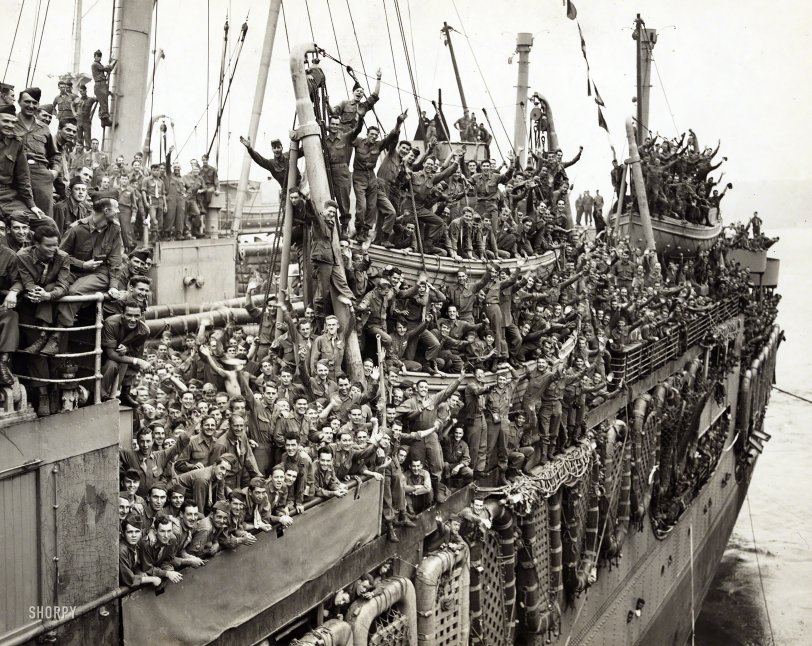
Shorpy












Why did China reunify numerous times throughout history when the Roman Empire never did?
Because Han Chinese is always the population and cultural core of China, it created a centripetal force, but ancient Romans were not.
The ancient Roman Empire was a colonial empire that surrounded the Mediterranean Sea. Its ethnic composition was very complex and it never formed a dominant ethnic population. Its subject identity built on citizenship was extremely fragile compared to China’s core identity built on Confucians Han population. After the collapse of western imperial ruling, the westen Roman empire completely disintegrated. Only the Eastern Empire, which adopted a centralized system, maintained it for a relatively longer period of time.
Of course, China has also faced the crisis of complete disintegration. China encountered extremely serious crises from the 4th to the 6th century, and the Han population had reached a level close to losing its ruling power at that time. However, relying on its absolute cultural and institutional advantages, it ultimately tamed the barbarians who had already in ruling northern China, and relied on those military culture and technology injected by the barbarians, to build a new powerful empire, then completely consolidating Chinese ruling.
Is the US-Canada trade war about to get worse?
It all depends on Donald Trump. He started it. He can end it.
He keeps putting tariffs on, then removing them, then putting them back on. This level of uncertainty causes the stock market to drop. It causes companies to fail because they cannot make long-term plans. These two things are happening on both sides of the border.
Canada has taken a stand and will no longer put up with the uncertainty. Canada will keep its retaliatory tariffs in place until Trumps removes all his tariffs, threats of tariffs, and threats of dissolving the international border. Canada will not be a 51rst state.
So long as Trump threatens that, Canada will keep its tariffs in place, as well as other measures.
Trump has been informed. He does not care.
These other measures include a toll on commercial vehicles (supply trucks) from Washington State through British Columbia to Alaska. It includes a 25% tariff on electricity from Ontario to three US states, and if Trump does not stop the tariffs—if he makes things worse for Canada—Ontario is ready to turn off the electricity altogether. This impacts tens of thousands—well over a million—homes in the US.
Donald Trump said that because of this tariff on electricity he will double the tariff on aluminum and steel from Canada, make it fifty per cent. He will do that tomorrow.
Is the trade war about to get worse? It certainly looks like it. Donald Trump started this war. He can end it. If Americans don’t like this war, they can talk to their president and tell him their vote goes elsewhere if he doesn’t stop this war immediately.
Ignorant Arrogant Americans Pretending Not To Understand
Americans who pretend not to know what’s going on are really, really stupid. Or arrogant as all get-out. Maybe both.
Like these people who claim to “offer in-depth coverage of hot events, conflicts and political analysis from around the world.”
These self-proclaimed experts pretend not to know that Trump is the cause of all this. No wonder the war goes on and on and only gets worse.
Most Americans are smarter than their president. But they certainly don’t act like it!
This video make a big fuss about the difficulties a toll on American commercial vehicles would cause on Americans. They never mention the life necessities—the existential fight for survival—that Trump’s tariffs impose on Canadians.
Canadians are fighting for their very existence and we will not relent. We will win, even if this trade war escalates to a military invasion and shooting war.
CHARLIE ANGUS – WHY CANADA IS TRUMP’S NO. 1 ENEMY, Mar. 9 2025
YouTube’s Description: MAKING SENSE OF THE THREAT FROM MAGA AND WHY CANADA IS LEADING THE RESISTANCE TO THE GANGSTER REGIME.
Charlie Angus, NDP MP of Canada, leader of The Resistance:
Min. 1:41–1:56 Her analysis at the end of the day is that America’s invasion of Canada would result in the disintegration of the United States—NOT Canada. The disintegration of the United States both economically and politically because they just couldn’t pull it off.
We have a small but highly trained military. This army knows how to organize private citizens for very effective guerilla warfare. Private citizens are stocking up on guns and training to use them. Legally. We are ready.
But Donald Trump can end this any day he wishes. It’s all up to President Donald Trump.
Is the US-Canada trade war about to get worse?
Man Almost Got Baby Trapped And The DNA Test Reveal Was WILD
Nantucket Pie (Cranberry Pie)
A New England favorite, this Nantucket Pie is not really a pie. It’s more like a cake. It’s delicious whether you call it a pie or a cake!

Ingredients
Topping
- 2 cups halved fresh cranberries*
- 1/2 cup chopped walnuts
- 1/2 cup granulated sugar
Cake
- 2 large eggs
- 3/4 cup butter, melted and cooled
- 3/4 cup granulated sugar
- 1 cup all-purpose flour
Instructions
- Heat oven to 350 degrees F. Heavily spray an 8 or 9 inch springform pan with oil. Line a baking sheet with parchment paper.
Topping
- In a medium bowl combine cranberries, walnuts and sugar. Toss well. Pour mixture into prepared springform pan. Spread evenly and pat down a bit.
Cake
- In a medium bowl, combine eggs, butter and sugar. Mix until smooth, then add the flour. Mix until smooth. Batter will be thick. Spread batter gently with a spatula over the cranberry-walnut mixture until all areas are covered.
- Place springform pan on prepared baking sheet, and bake for for 30 to 35 minutes.
- After removing from the oven, let it sit for 15 minutes.
- With a butter knife, gently go around the edge of the pan. Slowly, release the side of the pan and remove the ring.
- Let the pie sit for another minute. Then gently invert onto a plate. As you slowly begin to remove the bottom of the pan from the top of the pie, use a butter knife to guide the topping away from the pan, if necessary.
- Cool and serve.
Notes
* Do not use frozen cranberries for this pie. Only fresh cranberries will work.
What is an “Only in Japan” moment?
While I lived in Japan (3 decades ago), I bought a second-hand Sony MiniDisk Recorder from a shop called Hard-Off. Minidisk recorders were popular in Japan then (well before the MP3 era). You can record and play songs using small discs that operate based on Magneto-Optics.
When I went home, I realized the device could play songs, but it couldn’t record. I went back to the shop, telling them it couldn’t record. They collected it and told me they would call once they repaired it.
A few days later, they called me to collect the repaired device. When I collected it, they gave me the device with a warranty for the repair and bill they paid (not my expense). They had spent 48000 yen to repair the device and to give me a “fully functional” device.
The price I paid for the Minidisk was 18000 Yen.
When I went to the shop with the problem, they would have saved 30000 Yen if they had returned my money. However, since they sold a device with the promise that it would also record audio, they spent much more than their profit to fulfill their promise.
Three decades later, I visited that shop recently. I am happy to see that they still do business.
The White Toblerones
Submitted into Contest #210 in response to: Set your story after aliens have officially arrived on Earth.… view prompt
Shuvayon Mukherjee
‘Name, sir?’ I inquire.
‘Edward Bunton,’ he replies, his rapid breaths condensing on the glass screen between us. ‘Appointment with Dr Jenkins.’
‘Bunton…’ I murmur, clicking through my computer.
‘You hear the news, son?’
I glance up at him. ‘About the aliens? Yes, sir.’
‘Extraordinary, isn’t it?’ he gushes. ‘I knew it. I knew they were real.’
‘Mhmm.’ My mouse clicks faster.
‘You must’ve seen Star Wars, eh? Star Trek? ET? Amazing that we can come up with all this tosh and in truth they wouldn’t look out of place in a bloody zoo. Must be chilly on their planet with all that fur, eh?’
‘Dr Jenkins, you said?’ I interrupt.
‘Er, yes. For three-thirty. You know, they’re saying they’ve got technology that’ll put us hundreds of years into the future. Help us make spaceships, even. Faster than light! Unbelievable.’
I look at him again. His face is beet red with elation.
‘You can go in now,’ I direct him.
He hesitates. ‘My appointment’s in fifteen minutes. Bit early, isn’t it?’
I point down the hallway. ‘First door on your left.’
Now looking confused, he nods to me and goes on his laboured way. As soon as he’s out of earshot, I lean over to Ana and, unwilling to touch her, I put a hand on the back of her chair. She pauses her furious typing and looks at me with dried tears etched into her cheeks.
‘Why?’ she chokes out. Another question she already knows the answer to.
Seeing her upset wipes my mind clean of all the words I’d rehearsed over and over again in the shower and in front of the mirror. Swallowing over the lump in my throat, I bow my head, unable to meet her gaze.
‘Crosswords,’ I mumble. ‘Too many crosswords.’
Confusion flickers across her features. ‘Huh?’
I clear my throat. ‘Crosswords. How many have we solved together since last year? Hundreds? I love doing them with you.’
Our eyes meet again, and she’s looking at me intently, like there’s something she’s searching for. She doesn’t say anything, so I ramble on.
‘And before I met you, I’d never tried anything Mediterranean before. That salad your mom makes, what’s it called? Tabbouleh? I could eat it for breakfast, second breakfast, lunch, afternoon tea, dinner, supper, even whatever you call that meal we had at 2am during that night shift.’
‘Din-fast,’ she smiles. My heart skips a beat.
‘I loved our din-fast. And I love the way you don’t take smack from anyone. How many rude visitors did you tell off when I didn’t have the guts to do it?’
‘I told you, you shouldn’t let them just walk all over you.’
I smile back. ‘When you’re around, I don’t need to worry. And as much as I hate this place,’ I gesture to the office at large, ‘I love it too, because it’s our space. I feel safe here. You make me feel safe. And you might be the only person on the planet who thinks I’m funny.’
Her tears take on a different quality. ‘Toby, are you saying – ’
The sound of a door creaking open cuts her off. The stooped form of Dr Jenkins emerges from his office, one hand clutching his stethoscope, the other running a hand through his wild bone-white hair. By the time he reaches reception we’re already back at our computers looking as busy as possible, as if we can somehow shield ourselves from the moment.
‘Have you two seen the news?’ he exclaims.
I glance at the TV on the wall in the waiting room. I’d turned it off just before telling Ana I wanted to talk to her; before that, it had been blaring CNN’s latest on the alien contact.
‘It was getting distracting.’
‘Nonsense,’ he scoffs. ‘Something big has happened. You’ll want to see this.’
He grabs the remote and flips the TV back to life. A reporter is standing in front of the White House, gesturing at some peculiar triangular buildings on the usually pristine green lawn.
The aliens have arrayed their craft in front of the White House in a startling display of power, the reporter says, but so far it appears their intentions are benevolent. Predictably, social media has gone into a frenzy, quickly dubbing the triangular spacecraft “White Toblerones”.
The news report momentarily captures my attention, a brief distraction, the words barely registering in my mind. I steal a glance at Ana from the corner of my eye; her profile is bathed in the soft glow of the office lights. She’s composed now, but her eyes still shimmer with unshed tears.
‘Toblerones? Can’t see the resemblance myself,’ Dr Jenkins grunts.
‘Don’t you have a patient waiting?’ I ask him. Ana loves Toblerones. Last month, after she had a particularly rough day, I surprised her with one of the giant ones they only sell at certain confectionery stores. I recall the way she squealed with pure delight, suppressing a smile at the memory.
Dr Jenkins waves a nonchalant hand at me, his attention fixed on the screen.
‘Edward can wait,’ he says. ‘His appointment hasn’t started yet, anyway.’
The news report drones on for another fifteen minutes, during which I try and fail to avoid stealing glances at her. I click through my computer aimlessly as a whirlwind of emotions tugs me in different directions. Self-reproach slides through my gut like a parasite. My mind chatters incessantly, a constant stream of doubts about the ill-timed confession, at once regretful and relieved.
It took me months to realise and then admit to myself how I felt. Anabela is unlike anyone I’ve ever met before: a firebrand, in the vein of her Latin mother, a romantic, a thinker, an obsessive, a quandary. She hasn’t shown me a red flag yet, but even if she did, I’d charge at it faster than a Spanish bull.
There’s just one problem.
‘How is Lucy, Tobias?’ Dr Jenkins asks, suddenly standing in front of my counter, the TV muted.
‘She’s great, thank you,’ I stammer back. ‘She was just promoted to partner at her law firm. I’m so proud of her.’
He nods. ‘I’m not surprised. She’s extraordinary, that one.’ He looks at Ana. ‘And how is your mother, Anabela?’
She turns around, lashes glistening. ‘Very well, Dr Jenkins. Sounds like the aliens are supplying us with all sorts of medical tech. You and her might both be out of a job soon.’
‘Yes, perhaps,’ he chuckles. ‘Well, Tobias, we will miss you here. Some more than others, perhaps.’ His eyes dart between us as he stalks back into his office.
Once we’re sure he’s gone, we exchange another meaningful glance. Heart pounding, my breath catches in my throat, and I have to force the words out.
‘I’ve realised there are some things I can’t avoid anymore,’ I say softly. ‘Even if they complicate everything.’
A dozen expressions dance across her face, each more anguished than the last. At last she settles on a tearful smile. Her gaze lingers on me for a moment, her eyes searching mine.
‘Being friends would be easier than… ’ she trails off.
I feel a warm flush in my cheeks. ‘Sorry.’
‘No,’ she murmurs, her voice carrying a hint of humour. Her chest rises with a deep, steadying breath. ‘Don’t apologise. It’s complicated, and I’ve tried to push it away, but it’s the truth. I feel the same way.’
My animal brain almost takes control of me then. It warms my cheeks, quickens my pulse, screeches that this is when I’m supposed to kiss the girl. But my rational brain wins. It hurts, and part of me doesn’t want to, but I say it in a whisper.
‘And that’s why I have to leave.’
We share a moment of silent understanding, and she inclines her head, a sad smile on her lips. By the time Edward Bunton emerges from Dr Jenkins’ office, we’re both busy at our desks. I’m packing up my stationery, my spare lunch containers from Ana’s mom, my book of crossword puzzles. She deals with Bunton, shutting down his awkward attempts at conversation about the White Toblerones and ushering him out the door with a minimum of fuss.
I look around the office as I leave, a space that holds so many memories, and the lump in my throat returns. We do our customary walk together back to our cars. We stop at hers first, the blue Mazda Demio with a chipped wing mirror. The earlier heat hasn’t fully faded but somehow my limbs and hands are shivering.
She looks up at me uncertainly. ‘You finally told her about me, didn’t you?’
‘Before this, I’d only been in love once.’ Reaching into my pocket, I slip my wedding ring back on. It’s cool, but it slides back into the depression on my finger with comfort, like it never left. ‘And now it’s twice. But I made a commitment to Lucy, and I have to honor that.’
She studies the ring, then shakes her head. ‘You were an idiot for taking it off in the first place.’
‘I wasn’t thinking.’
‘No, you weren’t.’
‘Somehow, it made me feel less guilty for feeling the way I do about you.’
‘Sometimes I wonder if your brain is made of tabbouleh,’ she retorts. We share a chuckle.
‘I don’t know Lucy,’ she continues, ‘but I can’t do this to her. From everything you’ve told me, the way you talk about her, the way you love each other. She doesn’t deserve this.’
She takes a shuddering breath. ‘I don’t know if it’s possible to love two people at once. Especially with your whole heart. So it’s okay. I understand. Sometimes you meet the right person,’ her voice breaks, ‘but someone else got there first. That’s life.’
‘And that’s why we can’t talk for now.’
‘No,’ she corrects me, ‘that’s why we can’t talk ever again.’
The words make a physical pain in my chest. I always imagined heartbreak would feel like a tearing sensation, or the stab of a dagger, or that it would make me cry out in anguish. Instead it’s a dull ache between my ribs, like someone pulled the fibres of my myocardium and twisted them into knots. At the same time my conscience is beating on the inside of my skull, demanding why this is so difficult when it shouldn’t be. Should it?
We let the silence stretch for a time, unwilling to let the moment end. Then a piercing sound from above makes us both jump and whirl around. A dark triangle emerges from the distance, gradually looming larger, until it takes shape as one of the White Toblerones streaking past at incredible speed. It passes just above us, and the reflection from the otherworldly metal is almost as bright as the sun itself, beautiful and incomprehensible. A few blinks later and it’s a speck in the distance.
We turn back to each other, eyebrows raised.
‘I thought they’d be… more,’ I admit, my voice raw and unsteady. Squinting into the distance, I convince myself I can still see a dot on the fiery horizon. ‘Something more than a bus-sized triangle.’
Ana sniffs. ‘That’s the problem.’
We share one last glance of shared understanding that needs no words. She tilts her head and gives me that slightly wider smile that shows all of her teeth, wrinkling up her nose. The evening sun lights her skin golden, a longing wind caresses her hair, and I know she’ll never look at me that way again.
Basic Cooking Terms
Au jus – To serve with the natural juices or gravy.
Bake – Cook by dry heat in an oven; or to cook pancakes on a griddle.
Baking sheet – Good baking sheets (also called cookie sheets) are thick, and the best are insulated. Nonstick baking sheets can make life easier.
Baking (Pizza) stone – It is best to bake pizza and bread directly on a hot surface, and a baking stone provides the hot surface needed.
Barbecue – To roast meat slowly on a spit or grill over coals, or in the oven, basting frequently with a highly seasoned sauce.
Baste – To moisten foods during cooking with drippings, water or seasoned sauce, to prevent drying or to add flavor.
Beat – To work a mixture smooth with a regular, hard, rhythmic movement.
Blanch – To immerse fruits or nuts in boiling water to remove skins or make easy to peel; also, to dip fruits and vegetables in boiling water in preparation for canning, freezing or drying.
Blend – To mix two or more ingredients until smooth and uniform.
Blind bake – To bake a piecrust before it is filled to create a crisper crust. To prevent puffing and slipping during baking, the pastry is lined with foil and filled with pie weights, dry beans or uncooked rice. These are removed shortly before the end of baking time to allow the crust to brown.
Boil – Cook in boiling liquid in which bubbles rise vigorously to the surface. The boiling point of water is 212 F at sea level.
Braise – To brown meat or vegetables in small quantity of hot fat, then to cook slowly in small amount of liquid either in the oven or on top of the stove. Braising is an ideal way to prepare less-tender cuts of meat, firm fleshed fish and vegetables.
Broil – Cook by exposure to direct heat under the broiler of a gas or electric range, in an electric broiler, or over an open fire.
Brown – To cook food quickly on top the stove (in fat or without fat), under a broiler, or in the oven to develop a richly browned, flavorful surface and help seal in the natural juices.
Brush – To spread food with butter or margarine or egg, using a small brush.
Butterfly – To split a food such as shrimp, boneless lamb leg or pork chop, horizontally in half, cutting almost but not all the way through, then opening (like a book) to form a butterfly shape. Butterflying exposes more surface area so the food cooks evenly and more quickly.
Candy – To cook fruit in a heavy sugar syrup until transparent, then drain and dry. Also, to cook vegetables with sugar or syrup to give a coating or glaze when cooked.
Caramelize – To melt sugar slowly over very low heat until sugar is liquid, deep amber in color and caramel flavored.
Chill – To refrigerate food or let it stand in ice or iced water until cold.
Chop – To cut food into small pieces with a knife or small cutting appliance.
Chow (Stir-fry) – A basic cooking method in Oriental kitchens. Generally a wok is used, but you may use a frying pan. The food is tossed about in a hot pan with very little oil, in a process not unlike sautéing.
Clarify – To clear a liquid, such as consommé, by adding slightly beaten egg white and egg shells; the beaten egg coagulates in the hot liquid and the particles which cause cloudiness adhere to it. The mixture is then strained.
Coat – To roll foods in flour, nuts, sugar, crumbs, etc., until all sides are evenly covered; or to dip first into slightly beaten egg or milk, then to cover with whatever coating is called for in a recipe.
Coats spoon – When a mixture forms a thin, even film on the spoon.
Coddle – To cook slowly and gently in water just below the boiling point. Eggs are frequently coddled.
Combine – To mix various ingredients together.
Cook – To prepare food by applying heat in any form.
Core – To remove the core or center of various fruits, such as apples, pears and pineapple, and vegetables, such as lettuce and cabbage. Coring eliminates small seeds or tough and woody centers.
Correct the seasoning – To check for salt, pepper or herbs to make sure the dish has turned out as expected.
Cream – To rub, whip or beat with a spoon or mixer until mixture is soft and fluffy. Usually describes the combining of butter and sugar for a cake.
Crimp – To pinch or press dough edges – especially piecrust edges – to create a decorative finish and/or to seal two layers of dough so the filling does not seep out during baking. Edges of parchment or foil may also be crimped to seal in food and its juices during cooking.
Crisp – To make firm and brittle in very cold water or in refrigerator (lettuce or other greens, for example).
Curdle – To coagulate, or separate, into solids and liquids. Egg- and milk-based mixtures are susceptible to curdling if they are heated too quickly or combined with an acidic ingredient, such as lemon juice or tomatoes.
Cut – To break up food into pieces, with a knife or scissors.
Cut in – To mix shortening with dry ingredients using a pastry blender, knife or fork. Usually applied to pastry making.
Deep-Fry – Cooking in enough fat to cover the food completely. The aim is to produce foods with a crisp golden-brown crust and a thoroughly cooked interior without letting them absorb too much fat. The kind, quantity and temperature of the fat are important in accomplishing this result.
Deglaze – After meats or vegetables have been browned, wine or stock is added to the pan over high heat, and the rich coloring that remains in the pan is gently scraped with a wooden spoon and combined with the wine or stock.
Devein – To remove the dark intestinal vein of a shrimp by using the tip of a sharp knife, then rinsing the shrimp in cold water.
Develop – Allow food to sit for a time before serving so the flavors have a chance to blend or brighten.
Devil – To coat with a hot seasoning, such as mustard or a hot sauce. Eggs are “deviled” when the yolk is mixed with highly spiced seasonings.
Dice – To cut food into small cubes of uniform size and shape, usually about 1/4 inch in size.
Dissolve – To make a liquid and a dry substance go into solution.
Dot – Scatter small amounts of specified ingredients, usually butter, or nuts, chocolate, etc. on top of food. This adds extra richness and flavor and helps promote browning.
Dredge – To sprinkle, coat or cover with flour, crumbs, cornmeal or other seasoned mixture.
Drizzle – To slowly pour a liquid, such as melted butter or a glaze in a fine stream, back and forth, over food.
Dust – To sprinkle a food or coat lightly with flour, sugar, cornmeal or cocoa powder.
Emulsify – To bind liquids that usually cannot blend smoothly, such as oil and water. The trick is to add one liquid, usually the oil, to the other in a slow stream while mixing vigorously. You can also use natural emulsifiers – egg yolks or mustard – to bind mixtures like vinaigrettes and sauces.
Ferment – To bring about a chemical change in foods or beverages. Beer, wine, yogurt, buttermilk, vinegar, cheese and yeast breads all get their distinctive flavors from fermentation.
Fillet – A strip or compact piece of boneless meat or fish.
Flambe – To sprinkle with brandy or liqueur and ignite and serve flaming.
Fold; Fold in – To combine two ingredients or two combinations of ingredients by two motions; cutting vertically through the mixture and turning over and over by sliding the implement (usually a rubber spatula or wire whisk) across the bottom of the mixing bowl with each turn.
Fork-tender – A degree of doneness for cooked vegetables and meats. You should feel just a slight resistance when food is pierced with a fork.
Fricassee – To cook pieces of fowl or meat by braising and serving with a thickened sauce.
Fry or Pan-Fry – To cook in a small amount of fat on top of the stove; also called “saut ” and “pan-fry.”
Garnish – To decorate any foods. Nuts, olives, parsley, citrus zest and so forth are called garnishes when used to give a finish to a dish.
Glace – To coat with a thin sugar syrup cooked to the crack stage.
Glaze – To cover with aspic; to coat with a thin sugar syrup; to cover with melted fruit jelly. Cold meats, fish, fruit, etc., are often glazed.
Grate – to rub on a grater to shred or flake.
Grill – See “Broil.”
Hack – When cutting up chickens or thin boned meats, one “hacks” with a cleaver, thus cutting the meat into large bite-size pieces and retaining the bone. The presence of the bone will keep the meat moist during cooking.
Julienne – Food cut into very thin strips.
Knead – To work and press dough with the heels of your hands so the dough becomes stretched and elastic.
Lard – To insert strips or pieces of fat into uncooked lean meat for added flavor and moisture; or, slices of fat may be spread on top of uncooked lean meat, meatloaf or fish for the same purpose.
Leavening – Any agent that causes a dough or batter to rise. Common leaveners include baking powder, baking soda and yeast. Natural leaveners are air (when beaten into eggs) and steam (in popovers and cream puffs).
Liqueur – A sweet, high-alcohol beverage made from fruits, nuts, seeds, spices, or herbs infused with a spirit, such as brandy or rum. Traditionally served after dinner as a mild digestive, liqueurs can also be used in cooking.
Lukewarm – At a temperature of about 95 F. Lukewarm food will feel neither warm nor cold when sprinkled on or held to the inside of the wrist.
Marinate (Marinade) – To let foods stand in a marinade, usually an acid-oil mixture of oil and vinegar or wine, often flavored with spices and herbs.
Melt – To heat solid food, like sugar or fat, until it becomes liquid.
Mince – To cut with knife or scissors into very fine pieces.
Mix – To stir, usually with a spoon, until ingredients are thoroughly combined.
Pan-broil – To cook, uncovered, on a hot surface, usually a skillet. The fat is poured off as it accumulates.
Pan-fry – To cook or fry on top of the range in a hot, uncovered skillet with little or no fat. Steaks, chops, potatoes are frequently cooked this way.
Parboil – To boil until partially cooked.
Pare – To cut away coverings of vegetables and fruits.
Pasteurize – To sterilize milk by heating, then rapidly cooling it.
Peel – To strip or slip off outer coverings of some fruits or vegetables.
Pinch – The amount of a powdery ingredient you can hold between your thumb and forefinger – about 1/16 teaspoon.
Pipe – To force a food (typically frosting or whipped cream) through a pastry tip to use as a decoration or garnish, or to shape dough, such as that for éclairs.
Pit – To remove the seed or pit.
Plank – To bake or broil meat, fish or vegetables on a wooden or metal plank.
Poach – To cook eggs, fish, chicken, fruit and other delicate foods in hot liquid (below the boiling point), being very careful that food holds its shape.
Pot-roast – To brown meat in a small amount of fat, then finish cooking in a small amount of liquid.
Pound – To flatten meats and poultry to a uniform thickness using a meat mallet or rolling pin. This ensures even cooling and also tenderizes tough meat by breaking up connective tissues. Veal and chicken cutlets are often pounded.
Heat – To heat oven to stated temperature before using.
Prick – To pierce a food in many or a few places. You can prick a food in order to prevent buckling – an empty piecrust before it is baked, for example – or bursting – a potato before baking, or sausages before cooking.
Proof – To test yeast for potency: If you’re not sure if yeast is fresh and active, dissolve it in warm water (105 to 115 F) with a pinch of sugar. If the mixture foams after 5 to 10 minutes, the yeast is fine to use. Proofing also refers to the rising stage for yeast dough.
Punch down – To deflate yeast dough after it has risen, which distributes gluten (the elastic protein in flour that gives bread its strength) and prevents dough from over-rising. Punch your fist in the center of dough, then pull the edges toward the center.
Puree – To force vegetables, fruits and other foods through a fine sieve, food mill or ricer or blend in an electric blender or food processor to remove skins, seeds and so forth, and to produce a fine-textured substance.
Reconstitute – A procedure used for preparing dried foods, whereby the product is soaked in fresh water for a time.
Reduce – To evaporate some of the liquid in stock or sauce by boiling.
Render – To heat meat fat, cut into small pieces, until fat is separated from connective tissues. The clear fat is strained before being used in cooking. The crisp, brown bits left in the skillet – delicious but high in fat – are called cracklings.
Roast – Cook (Bake) by dry heat in an oven, on a spit in an oven, over charcoal, or in an electric rotisserie.
Roux – A blend of flour and oil or butter used to thicken sauces and gravies. The fat and flour are mixed together in equal amounts over heat. If a white roux is desired, the melting and blending are done over low heat for a few minutes. If a brown roux is desired, the flour is cooked in the fat to the desired degree of brown.
Rubbed – When whole-leaf herbs, such as sage or bay leaves, are crushed in the hands so that their oils are released, the herbs are then referred to as having been rubbed.
Saute – To fry lightly until golden and tender in a small amount of hot fat on top of range, turning frequently. From the French word that means “to jump.”
Scald – To heat liquid just below the boiling point; milk has reached a scalding point when film forms on the surface.
Scallop – To arrange foods in layers in a casserole (such as scalloped potatoes), with a sauce or liquid, and then bake. Usually has a topping of bread crumbs.
Score – To cut narrow grooves or gashes part way through fat, in meats before cooking.; e.g., in steaks to prevent curling, or to cut diamond-shaped gashes through fat in ham just before glazing.
Scramble – To stir or mix foods gently while cooking, as eggs.
Sear – To cook at a very high temperature, either on top of range or in oven, for a short time in order to quickly form a brown crust on the outer surface of meat.
Shave – To cut wide, paper-thin slices of food, especially Parmesan cheese, vegetables, or chocolate. Shave off slices with a vegetable peeler and use as garnish.
Shirr – To break eggs into a dish with cream or crumbs, then bake.
Shot – A liquid measure that amounts to very little or to taste. A shot of wine is about 1 ounce, but a shot of Tabasco is less than 1/16 teaspoon.
Shred – To cut food into slivers or slender pieces, using a knife or shredder.
Shuck – To remove the shells of oysters, mussels or clams, or the husks of corn.
Sift – To put dry ingredients through a fine sieve.
Simmer – To cook in a liquid that is kept just below the boiling point; bubbles form slowly and break below the surface.
Skewer – A long, thin metal or wooden pin used to secure or suspend meat and/or vegetables during cooking. To thread foods, such as meat, fish, poultry, vegetables, on a wooden or metal skewer so they hold their shape during cooking.
Skim – To remove fat or froth from the surface of a liquid, such as stock or boiling jelly.
Steam – To cook on a rack or holder over a small amount of boiling water in a tightly covered container.
Steep – To allow food, such as tea, to stand in hot liquid to extract flavor and/or color.
Sterilize – To heat in boiling water or steam for at least 20 minutes, until living organisms are destroyed.
Stew – To cook foods, in enough liquid to cover, very slowly – always below the boiling point.
Stir – To mix, usually with a spoon or fork, until ingredients are worked together.
Stir-fry (Chow) – A basic cooking method in Oriental kitchens. Generally a wok is used, but you may use a frying pan. The food is tossed about in a hot pan with very little oil, in a process not unlike sautéing.
Stock – A liquid in which vegetables or meat has been cooked.
Sweat – To sauté over low heat with a lid on. This method causes steam and expedites the cooking time.
Temper – To heat food gently before adding it to a hot mixture so it does not separate or curdle. Often eggs are tempered by mixing with a little hot liquid to raise their temperature before they are stirred into a hot sauce or soup.
Tender-crisp – The ideal degree of doneness for many vegetables, especially green vegetables. Cook them until they are just tender but still retain some texture.
Terrine – A dish used for the cooking and molding of coarse-ground meat loaves. Also the meat itself. The dishes are found in many styles and materials.
Toast – To brown and dry the surface of foods with heat, such as bread and nuts.
Toss – To tumble ingredients lightly with a lifting motion, as in a salad.
Truss – To tie meat with metal or wooden pins or skewers, or string, to help meat hold its shape during cooking.
Whip – To rapidly beat eggs, heavy cream, etc., in order to incorporate air and expand volume.
Whisk – To beat ingredients (such cream, eggs, salad dressings, sauces) with a fork or the looped wire utensil called a whisk so as to mix or blend, or incorporate air.
Zest – To remove the colored peel of a citrus fruit. Use a grater, zester or vegetable peeler to remove the outermost part, avoiding the bitter white pith underneath. The peel itself is often referred to as zest.
China’s solar-heated sand floors keep homes cozy at 65°F even in freezing -1°F
The system featured a solar-thermal collector, a thermal storage tank, an air-source heat pump, a sand-filled thermal storage floor, and water pumps.
Updated: Mar 10, 2025 08:24 AM EST
A heat pump that recovers waste heat to produce useful hot water even steam for heating and industrial process, not only helps to protect environment but also save energy obviously.
Many rural homes around the globe lack modern heating options and rely on wood or coal, leading to health risks and environmental harm. In China alone, around 400 million tons of standard coal are used for winter heating each year, with nearly half burned in inefficient small stoves in rural areas.
Transitioning to cleaner energy sources is crucial to reducing their carbon footprint, especially as global carbon dioxide (CO₂) emissions from fossil fuels and industry reached 37.01 billion metric tons in 2023, according to Statista.
To tackle the issue, Chinese researchers from the Zhongyuan University of Technology and Dalian University of Technology, have come up with a groundbreaking solution by developing a system that connects a solar-air source heat pump (SASHP) to a sand-based thermal storage floor (STSF).
According to the researchers, the system is capable of sustaining an average indoor temperature of 65.8°F (18.8°C), even as outdoor temperatures fluctuate between -1.1°F and 54.1°F (-18.4°C and 12.3°C).
Conducting the experiment
The innovative thermal storage floor system features cost-effective, stable sand-filled coils integrated with a SASHP to enhance rural heating efficiency.
Led by Pengli Yuan, PhD, lead author of the study from the Zhongyuan University of Technology, the team carried out several experiments, after setting up the system in a single-family rural residence in Chifeng, in the autonomous region Inner Mongolia, China.
It included a solar-thermal collector (STC), thermal storage tank (TST), ASHP, sand-based thermal storage floor (STSF), and water pumps, with the floor containing pipes embedded in a 200-millimeter layer of sand for efficient heat retention.
Schematic diagram of SASHP-STSF system. Credit: ScienceDirect/Elsevier/Yuan et al., 2025
“When solar radiation is sufficient, the sand absorbs a substantial amount of heat and releases it into the room,” the researchers say. “During period of insufficient solar radiation or at night, the stored heat is gradually released into the room, thereby extending the duration of solar heating.”
This not only enhances the system’s solar energy utilization but also significantly reduces the ASHP’s operating time in low-temperature, high-humidity conditions at night, ultimately boosting overall efficiency.
How it works
The system functioned through four distinct modes, adapting to varying weather conditions. Mode 1 functioned exclusively on sunny days, utilizing solar collectors to heat the thermal storage tanks. On the other hand, Mode 2 relied entirely on the head pump during cloudy or rainy weather.
Mode 3 combined both, with solar collectors running during the day and the heat pump at night, and mode 4 optimized energy use by running the heat pump only during the day when solar energy was insufficient, avoiding nighttime operation.
The team observed the system for nine days and found that the sand-based thermal storage floor kept indoor temperatures stable between 63.3°F (17.4°C) at night and 68.4°F (20.2°C) during the day, even as outdoor temperatures ranged from -1.1°F (-18.4°C) to 54.1°F (12.3°C), averaging 22.1°F (-5.5°C).
Ultimately, the system proved to be a practical heating solution for rural areas facing harsh cold conditions, boasting an average coefficient of performance (COP) of 2.6 and a solar fraction (SF) of 50.9%.
After modeling the system in TRNSYS, a simulation tool for analyzing energy systems, the researchers confirmed its reliability. Over six months of heating, mode 4 performed better than mode 3, achieving a coefficient of performance of 4.6 and a solar fraction of 77.9%, increasing by 15.9% and 20.3%, respectively. It additionally used 405.2 kWh less energy than mode 3.
The scientists found that local electricity pricing policies play a key role in operating costs. Their analysis showed that without peak-valley pricing, Mode 4 reduces costs by 28% compared to Mode 3. However, with peak-valley pricing, the difference narrows, with Mode 4 costing just 2.6% more than Mode 3.
“This suggests that optimizing the operational mode according to local electricity pricing policies can minimize the operating costs,” they conclude. “For rural households, mode 3 is the more economical option under peak-valley pricing, while mode 4 offers a more sustainable solution for energy conservation and emission reduction from the national government perspective.”
The study has been published in the journal Case Studies in Thermal Engineering.
How do we know if anti-Semitism is real or imaginary? There’s a very easy way to find out.
How about this as a thought experiment: Suppose Arabs were the richest population in the West. Then suppose we put 2 million Israeli Jews in a concentration camp, cut off their food, water, medicine, and electricity, and left them all waiting to die.
Then suppose we tell all other Jews watching helplessly in horror: We Arabs have always been hated for our race and religion. You certainly have the right to criticize our politics, and we won’t stop you. But you can’t cross the line into anti-Arab racism. We’ve made it a career-ending offence.
Here’s a long list of general statements that constitute anti-Arab racism. We wrote this list. We are the butchers and starvers of your people, and also the definers, judges, and punishers of anti-Arab racism.
In the concentration camp where we torment your families, we use jet bombers and genocidal TV channels. But here in North America we wear business suits and work as activists against anti-Arab racism.
By the way, one of the statements that constitute anti-Arabism is you comparing us to Hitler. Another one is you criticizing us too much and not criticizing other bad people in the world (i.e. singling us out because we’re Arabs). Another one is you claiming that we are rich and powerful.
I think all Jews would find this premise ridiculous, even enraging just to read. 🤔 It is fucking ridiculous, isn’t it? I agree. It’s something only George Orwell could make up.
And therefore anti-Semitism is imaginary.
What alternative international security arrangements could replace the current military alliance system?
The current military alliance system—dominated by NATO, AUKUS, and various U.S.-led coalitions—has led to “perpetual conflict”, unbalanced global governance, and an outdated world order that caters to Western military-industrial interests rather than actual security. The UN Security Council (UNSC), in its present form, is a Cold War relic that enables five nuclear-armed nations (U.S., U.K., France, China, Russia) to dictate global security while the rest of the world watches from the sidelines. This system isn’t about “global peace”—it’s about securing the power of those already in charge.
Time to Rip Up the Old Playbook
The world doesn’t need more military alliances—it already has the United Nations Security Council (UNSC), which, if properly reformed, could actually deliver global security instead of warlord diplomacy.
Right now, the UNSC is a glorified protection racket for the P5 (U.S., U.K., France, Russia, China), who use their veto power to block any resolution that threatens their own interests. U.S. shields Israel, Russia protects itself, China vetoes anything it dislikes, and France and the U.K. cling to power like relics of a dying empire. Meanwhile, the Global South, representing 80% of humanity, has no real say in security matters —even though they suffer the most from war, economic collapse, and refugee crises caused by Western interventions.
The Fix: A Real Security Council, Not a P5 Clubhouse
1. Abolish the Veto – No more special privileges for the P5. A true global consensus should decide security matters, not elite war profiteers.
2. Expand Membership – India, Brazil, South Africa, Indonesia, Nigeria—major global players—must have permanent seats. The world isn’t just Europe, America, and China.
3. Decentralize Security – Regional bodies like ASEAN, the African Union, and South American blocs should lead security in their regions. No more NATO deciding the fate of non-Western nations.
Why the Western War Machine Hates This
A real UNSC means no more endless wars feeding the U.S. military-industrial complex, no more NATO expansion forcing Russia to arm itself, and no more Western powers bombing nations into submission under the guise of “democracy.”
The UNSC already exists. It just needs the elite power-hogging parasites removed so it can actually do its job—ensuring global security for everyone, not just for the few.
“The world will not be destroyed by those who do evil, but by those who watch them without doing anything.” – Albert Einstein
New England Clam Chowder
This old-fashioned authentic Cape Cod version of New England Clam Chowder is a hearty dish for the dwellers of a harsh climate. The old recipe has been passed down through generations without a nod to modern preferences for low-fat fare. As such, if you’re on a low fat diet, this dish may not be for you. But for a special occasion, this original version will not be beat for flavor.
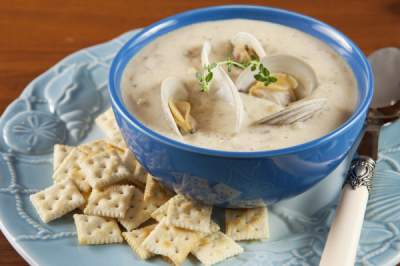
Ingredients
- 2 quarts Little Neck clams, steamed, liquor reserved
- 3 to 4 pounds potatoes, peeled
- 1/2 pound lean salt pork
- 3 large sweet onions, sliced
- 2 whole bay leaves
- 1 thick slice bacon (optional)
- 2 to 3 celery stalks with green tops
- 4 tablespoons fresh parsley, minced
- 2 to 3 green onions or 1 leek, finely chopped (optional)
- 1 to 2 pounds frozen sweet corn (as desired)
- 3 cloves garlic
- 1 pint cream
- 1 quart clam broth or water
- 1/2 gallon milk
- Pinch celery seed (optional)
- 3 to 4 tablespoons all-purpose flour
- 1 stick (1/2 cup) butter
- 1 tablespoon olive oil
- Salt and pepper, to taste
- Paprika, to taste
Instructions
- Thoroughly wash clams, scrubbing shells. If you’re using freshly dug clams, sprinkle the washed clams with corn meal the night before use, and refrigerate overnight to allow the clams to be sand free.
- On the day the chowder is to be prepared, steam, clean and shuck enough clams to have at least 2 quarts of clams (more is better!). Save the clam liquor (broth created while steaming). Refrigerate the cooked clams in their liquor.
- Meanwhile, prepare the chowder base. Using a sharp knife, slice the salt pork (pancetta can be substituted) into 1/8-inch dice (including rind).
- In a large stockpot, on the lowest heat setting, add salt pork to pan; add bacon (also chopped). Cook over low heat for 15 minutes, allowing salt pork to render. Remove from heat and allow to sit for another 15 minutes. Add olive oil and 1 tablespoon of the butter (save remaining butter for later).
- Sauté thinly sliced celery (save green celery leaves for later), and sliced onion in the rendered salt pork and bacon until onions take on color, adding minced garlic during the final few minutes of browning. Add clam liquor or water, scraping browned onion bits from bottom of pan. Add 2 whole bay leaves and a pinch of celery seed, if desired. Add minced green onions or leeks. Simmer for 15 minutes.
- Wash, peel and cut the potatoes into one inch cubes. Add to the pot, bring to a boil for 30 seconds, reduce heat to barely a simmer.
- Chowder may be thickened with a small amount of all purpose flour, Wondra flour, or a few tablespoons corn starch stirred into a cup of cold broth. When adding thickeners, be sure to allow at least 30 minutes of cooking time in order to prevent an uncooked flour taste. More thickener can be added if you like a thicker chowder base; remember that milk/cream are still to be added later, so add more than you think you’ll need to compensate.
- After 20 to 30 minutes, check potatoes to see if they are tender. When potatoes are nearly done, add frozen corn. Be sure to use a good quality of frozen corn; the sweeter varieties improve the overall flavor of the chowder.
- Stir in clams and strained clam liquor (be careful not to pour in the bottom of the clam liquor which usually contains sand! Add milk and cream in the ratio you desire; for a richer chowder, add more cream and less milk.
- Simmer for another 15 minutes and add remaining butter, minced parsley, chopped green celery leaves and salt and pepper, to taste. Remove bay leaves (or simply don’t let them make it into a serving).
- When butter has melted and clams are heated through, serve in warmed bowls, sprinkled with paprika and garnished with fresh parsley. Milk crackers are a traditional accompaniment.
Notes
To add additional flavor to this soup, especially when clam broth is not available, use a few teaspoons of clam base, available at restaurant supply stores.
Large chunks of white fish or lobster can be added during the last 20 minutes in addition to (or as a substitute for) the clams, for a seafood chowder.
Have no clams or fish? Try a broccoli chowder variation, using chopped broccoli as a substitute.
What is the most useless country in the world in terms of resources, economy, etc?
Deep in the icy heart of Siberia is a location so brutally cold that even boiling water freezes in mid-air. Welcome to Oymyakon, Russia—a village so extreme that most individuals have never even heard of it.
This small village of fewer than 500 residents has the distinction of being the planet’s coldest continuously inhabited region, with temperatures having dropped once as low as −67.7°C (−89.9°F). That’s colder, for reference, than certain regions of Mars. In Antarctica, scientists get there and leave, but actual people live in Oymyakon all the time—and not because someone made a losing wager.
Oymyakon is another type of survival story. Forget crops—nothing grows in the frozen permafrost. The locals subsist on a hard diet of reindeer meat, frozen fish, and horse liver, because fresh veggies? Forget it. Even little things, like a trip to the store, are a fight against frostbite. Cars? They’re been driven 24/7 nonstop, or the engine is an ice block. Phones? Forget touchscreen gloves—your fingers will numb before you can even text.
Reaching Oymyakon is an adventure in itself. There are no airports, no trains, and certainly no Uber. The only entry is through a long, lethal drive from Yakutsk, the closest city (which, incidentally, is also absurdly cold). Visitors must endure the “Road of Bones,” a name that is not hyperbole—this frozen highway was constructed by prisoners under Stalin, many of whom did not survive.
And yet, despite all odds, people in Oymyakon thrive. They’ve adapted to the cold in ways the rest of the world can’t even imagine. Schools only close when temperatures drop below −52°C, and kids are used to walking miles in freezing winds like it’s no big deal. The community is tight-knit, and their resilience is nothing short of legendary.
But Oymyakon is not merely an extreme weather record—it has secrets hidden deep within its frozen heart. Locals speak in hushed tones of a hidden “warm underground spring”, a natural wonder in a landscape where nothing should be warm. The spring, from which the village takes its name (Oymyakon means “Unfrozen Water”), never freezes, regardless of temperature. Some attribute it to geothermal activity below the ground, while others say it’s a mystical force, an old Siberian myth that says the water has magical qualities of life and resilience.
And then there’s the creepy permafrost enigma. Scientists have learned that anything buried in Oymyakon’s frozen earth remains intact for centuries, as if in a natural cryogenic freezer. Some say prehistoric beasts—such as mammoths and ancient wolves—lie under the ice, frozen in time, waiting to be excavated. Melting permafrost has uncovered well-preserved corpses of Ice Age animals in recent years, so who knows what else is buried beneath this extensive frozen cemetery?
A Forgotten World That Shouldn’t Exist
Even with its harsh conditions and brain-twisting survival tests, Oymyakon is still one of the most remote and least-exposed locations on the planet. Travelers do not go there often because, well. why would they? There are no luxury hotels, no visitor sites—only naked, unyielding cold and a tiny population that has made survival an art.
But Oymyakon is a reminder that the human spirit can weather the impossible. The inhabitants here don’t merely survive—they live, defying nature, logic, and the boundaries of what we believed possible. As the world turns away, this icy land keeps its secrets, speaking in hushed tones of yesteryears beneath blankets of unyielding ice.
so who ‘came’ first, the chicken or the egg?.. Mr. Whiskerton the old lion booms out, i tell you Elvis the rooster came first…. and all the frustrated hens went off to the farm-acy trying to get the blue pill mixed into the chicken feed that Elvis consumes…hahahahhaha
Cheerful Love GrizzlyBear hug
unuk