


Wow. Things are changing so fast.
We have Geo-political landscapes changing and the demise of the American-led world order. We have massive breakthroughs in technology, and a changing warfare landscape. We have a complete breakdown of WHAT WAS, and the emergence of WHAT WILL BE.
It’s all pretty amazing.
AI… Artificial Intelligence. Robots. Green energy. Self-driving cars. Self-parking cars. Cars with massages, refrigerators, and mood light and custom interiors on the fly.
Displacement of Google for AI-centric search.
Face, and palm scanning.
Lunar and Mars settlement planning. Breakthroughs in atomic energy, and all sorts of new technologies.
Meanwhile, the West is being run by a Trump and his team of media personalities. Who, of course, displaced the propped up figurehead with severe dementia.
Marriage is changing as is relationships between the sexes. Maybe a population decline is not a bad thing. Maybe. I’m still out on that conclusion.
Meanwhile the cat stretches and yawns.
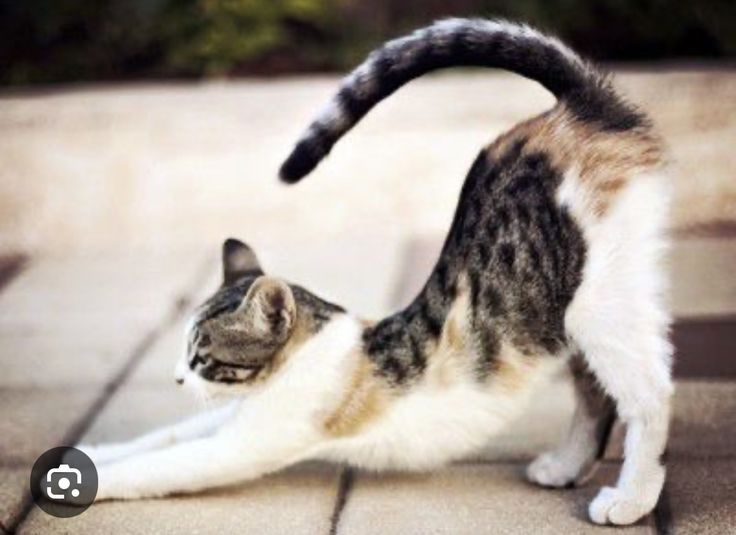
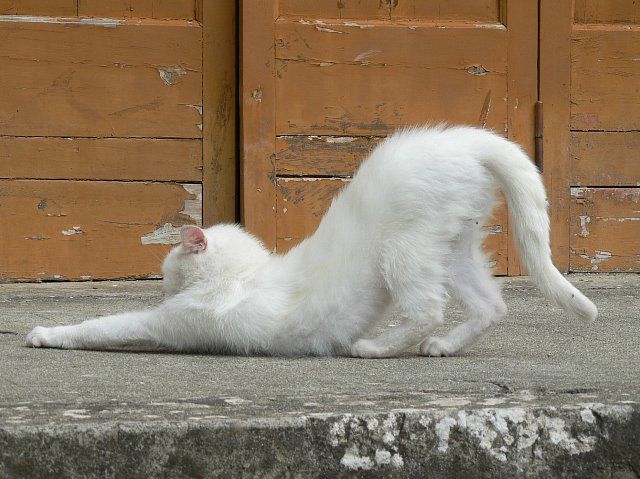


Don’t get too caught up. Just enjoy the ride.
Today…
What was your experience like being away from your family during military training (boot camp)? What surprised you about it, good or bad?
My basic training & AIT were combined into one long, continuous training experience, so it was almost 4 months of time. I left 2 days after Christmas, which really sucked. I hated being in basic for New Years.
The first day I immediately regretted it and wished I never joined. The first 2 or 3 weeks are tough. We had no cell phones then. You had to write letters home and wait what seemed like ages for replies. Some Sundays we were allowed to use the phone to call home for 3 minutes. Other times if people in the platoon had screwed up, there were no calls allowed.
But like everything else, you start to get used to it and it becomes routine. It sucks being away from your family, or after just turning 19, for me it was being away from my friends and girls that hurt the most.
Now that I’m 48 years old, I consider that the most important thing I’ve done in my life. It teaches you how to interact with people of all walks of life.
Quality development in China
China’s tech advancement was announced in the last Two Sessions meeting in March 2024. This is the new quality productive forces, viz. (1) advancement in new technologies like 5G communications and in green technologies, areas where it is already the leader, and (2) deployment of new tech, green tech, and digitalisation, to transform the traditional sectors from manufacturing, construction and infrastructure, through agriculture and mining.
Economic growth in the last 2 years had been stable at the sustainable 5%, driven more and more by high tech industries, prominently the green tech industries. The worst of the problems of the property sector appears to be subsiding.
I imagine this year’s Two Sessions which will start next week will devote considerable time to review the progress in the last year, the progress of MIC 2025, and the progress of FYP 2021–25. As is the normal practice for China, much of the review will be on the difficulties and weaknesses, and the steps that have been taken to overcome them.
Another area that will be focused is likely to take off from President Xi Jinping’s meeting with the leaders of the high tech companies in Beijing on 17 February. The main takeaways were:
The government will protect the legitimate rights and interest of private businesses.
The prospects for the development of the private economy are broad and promising.
He instills confidence in the leaders, telling them it is prime time for them to show their talents and to give full play to their capacities.
He urged them to focus on high-quality development, invest in their main businesses, strengthen their capacities for innovation, increase their core competitiveness, and help to advance China’s broader goals of technological innovation, promote rural revitalization, and improve the people’s welfare.
We will hear more of this in the coming Two Sessions, as well as, indications of the direction of FYP 2026–30, which is under preparation, and whether there will be MIC 2030.
As a customer service employee, what was the most unusual tip you ever received for good service?
I was a young single mother and was waiting tables at Waffle House. I found out I was pregnant with my second son within a month of getting the job. I worked until two days before I had him. I was riding the bus to and from work every day and walking half a mile each way from my house to the bus stop.
There was an older couple who came into the restaurant regularly. One night I noticed that they came in a brand new car. I asked them what they were going to do with their old one. They asked if I was in need of a car; I told them how I ride the bus. They didn’t say much more about it, I didn’t think twice on it after this conversation.
Just so you know by this time I was about 8 months pregnant. So, about a week later the couple came in at their regular time and sat in my section. At the end of their meal they told me they couldn’t tip me. I said that was okay because they always tipped me 100% of their bill. At that point they handed me the keys to their old car! I fell out! I was crying and thanking them. They gave me my first car! They had no idea of the struggles I had been having getting to the doctor and work and caring for my two-year-old while pregnant.
So, the most unusual tip I have received is a 1989 Mercury Grand Marquis!
Brie Soup
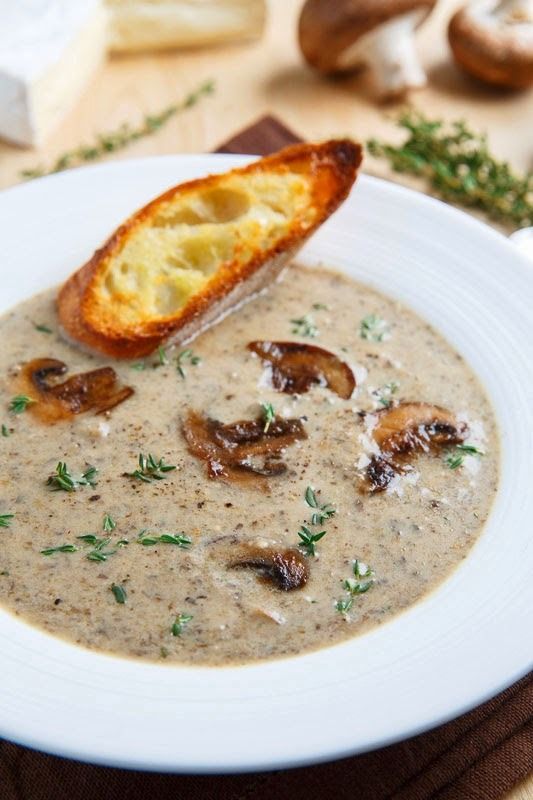
Ingredients
- 1 medium onion, diced
- 1 1/2 cups sliced mushrooms
- 1 cup white wine
- 1 pound Velveeta cheese
- 1/4 cup sherry
- Cornstarch (to thicken)
- 1 1/2 cups julienne carrots
- 1/2 cup butter
- 5 cups heavy cream
- 4 1/2 ounces very ripe brie
- White pepper, to taste
- Cayenne, to taste
Instructions
- Sauté carrot, onions and mushrooms in butter until tender.
- Add wine and cook over medium heat for 10 minutes.
- Work cheeses with fork, moistening with sherry; add to vegetables and cook over low heat for 2 minutes, stirring constantly.
- Add pepper and cayenne to taste.
- Add cream and heat to the boiling point.
- If you use cornstarch to thicken, mix it with a small amount of water and add it while the mixture is boiling.
- You can also cook the moisture out of the vegetables, then add wine and puree in blender and use as a thickener.
Where did China get its supply of ball bearings for ballpoint pens prior to the normalization of relations with the West, Japan, and the USSR?
China has been able to manufacture ballpoint pen refills for a long time, but they are not as precise and hard as those in Europe, America and Japan. When writing, the refills of ballpoint pens are easily worn out, and ink leaks or the refills do not rotate frequently, mainly because of the lack of special tungsten carbide suitable for ballpoint pen refills.
I can’t find the actual picture now, but I remember that the ballpoint pen nibs in the past used brass balls. I’m not sure if my memory is correct.
In 1948, China’s first domestic ballpoint pen was born in Shanghai Fenghua Ballpoint Pen Factory. Today, this old factory building has become a scenic spot on the Bund in Shanghai.
After the reform and opening up, driven by the huge export demand, pen factories emerged like a spring. However, the scattered and weak enterprises, the lack of scientific research platforms, and the insufficient protection of intellectual property rights have led to the lack of development momentum for the growth of the industry.
In January 2017, China’s Taiyuan Iron and Steel Plant successfully developed and manufactured special tungsten carbide for ballpoint pen ball bearings, and Xinhua News Agency made a special report on it.
After nearly a thousand times of extreme testing, with Taiyuan Iron and Steel Works production out of ballpoint pen ball bearings used in special tungsten carbide, product quality and foreign products are comparable.
Ballpoint pen ball bearings used in the special tungsten carbide market is very small, only a few small companies in the world in the production.
Europe, the United States and Japan, many small companies are relying on these cracks in the small field of market survival, they specialize in a product, the product to the extreme, in order to survive the crush of large companies. The whole of Europe, America and Japan, in addition to the giant companies, the rest are such small companies.
The batches of ballpoint pen ball bearings produced by Taiyuan Iron and Steel Plant in 2017 are so large that China can use them for decades.
“RedNote Exposes the Truth: Is China Doing Better Than the U.S.?”
Is it financially feasible for us to continue our tariff war with China?
There isn’t as yet a US-China tariff war.
What it is is one-sided. Trump’s term 1 and 2 add up to tariffs of 30% to 35% on China’s goods. Plus Biden’s 25% to 100% tariffs on green tech goods.
China’s retaliation was 10% to 15% on a few US items of US goods. Pundits opined that this was nuanced. An estimate put the annual volume of trade on these goods at only about $1 billion.
More significant is China put more minerals on its export control list, put 2 more US companies on its unreliable entity list, and put 2 US companies under investigations for monopoly practices. These are sanction instruments.
What China wants to convey is that it too can play rough.
We have to see what gives on the US side. Trump in his campaign talked of 60% tariff on China, and 100% on BRICS country that does not use the dollar in its trade.
Tariffs are inflationary and therefore painful for the public in general.
You ask about financial feasibility.
If you mean the consumers or the public in general, they will pay higher prices and bear the most pain. US consumers have already experienced this for 5+ years.
But it should have no effect on the government’s financial feasibility. What you should be worried about would be the rising fiscal deficit and the large national debt which already exceeded $36 trillion, and the annual interest cost pushing $1 trillion. These will test the government’s financial feasibility.
An Encounter
Submitted into Contest #210 in response to: Write a story that includes someone saying, “We’re not alone.”… view prompt
Kylie Rae
“But that would take us through the city.”
Her face fell. “Oh. So… what’s the way around?”
I reached a hand across the space between our sleeping bags to find her hand. “Going around will be three times as far. And we’ll have to find new places to camp on our own each night since I don’t know any other refugees past this point.”
She squeezed my hand and sighed. “Okay.”
“But we’re so close.” I wanted to cheer her up. We’d been on the road for so long, having to hide and run and hide again. “Once we’re on the other side of the city, it’s the last alien stronghold until you hit Colorado. We’ll be able to settle down somewhere and relax.”
“Yeah.” But she didn’t sound convinced.
The next morning, we ate our meager breakfast of stale granola bars and washed it down with instant coffee that tasted more like dirt than anything else. But we were running low on supplies. Another reason we needed to move camp.
Our contact here had only been able to secure the place to stay while we were here. They were already living on scraps and couldn’t afford to share with us.
“Okay, so what’s the plan?” June seemed a little more determined in the light of day, but the weight of this journey still dragged down her shoulders and her smile.
“We wait for the morning call. All the troops will return to the city center and we’ll have exactly thirty minutes to get out and on the other side of the wall.” I unfolded the map again and traced along our path with my finger. “Then we get to the woods. And we’ll be able to travel without worrying about being spotted from overhead.”
June nodded and followed my hand, but I noticed her eyes dart in the other direction, towards the city.
“What if we… go through the city? How dangerous could it be?”
I sighed. “June… we’ve been through this. The aliens have completely taken it over. They kill humans on sight in there. It’s too dangerous.”
She nodded. “But what if… what if they don’t see us?”
I resisted the urge to roll my eyes. “How do you think we’d manage that?”
“Sewers? We could travel under the city.”
She said it so fast; I knew she’d been considering it for a long time. And I had to admit, it wasn’t the worst idea I’d ever heard.
She took my silence as at least the beginnings of agreement and pointed towards another path on the map. “There’s an entrance over here. It empties out into the river. I think there’s a metal grate over the entrance, but I have those bolt cutters, so it shouldn’t give us too much of a problem.”
“How long have you been making this plan?” I couldn’t help the smile spreading over my face.
She shrugged, but grinned back. “A couple days, I guess. I heard Sam and Lilly talking about the sewer systems and it gave me the idea. They told me about the entrance. I was just waiting for the right time to tell you.”
I nodded. “Well… I think we should try it.”
“Really?” Her eyes lit up. She flung her arms around me and squeezed me tight.
“I think it’s a good plan. And one day trooping through the sewers sounds a whole lot better than three days of woods and questionable camping locations.”
We finished our packing and crawled out from under the house. In the shadowy cover of the porch, we waited for the morning call. It would ring and all the aliens in the area would teleport back to the city. Every morning, we were clear to do as we pleased for thirty minutes before the next round of troops showed up. Anyone who lived here took that time to gather more supplies or change locations. It happened again before sundown and since the takeover, they’d become the only time people could come out in the open if they were near an alien stronghold.
The human race wasn’t sure what we’d done to offend the aliens so badly. According to them, they’d been living among us for years and years. But one day, they shed their human suits and changed everything. Humans went into hiding. Because if we didn’t hide, the aliens made us slaves. Or killed us. Or ate us. Depended solely on their mood.
The chime filled the air, and my skin tingled in anticipation. Once the last bell rang, we’d be off. There was plenty of time to get outside the wall and to the sewer tunnels, but we would run the entire way just to be safe. Outside the wall, the aliens were less likely to bother with us. But there was always a chance.
Silence fell and June kicked the lattice frame away so we could crawl the rest of the way out. I was careful to put it back the way we’d found it, and then we took off.
The others knew we’d be leaving today, and a few waved as we passed them, but they had their own business to attend to in the free window so no one tried to stop us for a chat or a long goodbye.
Up ahead, someone already had the door in the wall open. There was a small hold-up as a crowd bottlenecked at the single door, but then we were through and in an open field.
“Which way?” I asked, not wanting to take the map back out to look again.
June glanced back and forth and then pointed to the left. “Over here.”
We sprinted again until we were under the cover of trees. The woods came right up to the town’s limit. Once we were out of sight of the skies, we slowed to a walk.
June opened her water bottle and took a small sip. I copied her. Even though we were running painfully low on water, no way was I going into a sewer thirsty.
I saw the grate before June did, and then we rushed forward.
“How much longer do we have?” She asked as she dug out her bolt cutters.
I checked my watch. “Fifteen minutes.”
“Plenty of time.”
The bolt cutters snapped right through the metal rods and she opened a space large enough for us to crawl through. Once we were inside the tunnel, the light dimmed and we had to turn on our flashlights after only a few feet.
My watch beeped once to let me know our grace period was up, and I pressed a finger to my lips.
“We’re not going to be able to talk once we’re under the city,” I said.
June nodded. She took a deep breath, and we were off.
I lost track of time in the sewer tunnel. June had her flashlight pointed down at the water and small ledge we’d been following to dry our shoes out a little. We knew we were under the heart of the city now. I heard cars rumble overhead and there was strange music and talking in their language. At least we didn’t have to worry about them hearing us walk through the water over all that racket.
I chanced a light to see the time and was surprised to see we’d been walking for half the time already. And it was still daylight above us, the small shafts of light stabbing through the holes in sewer grates every few feet.
June slowed to a stop and sank down into a crouch. I saw we’d reached the end of our ledge and we’d be back in the water with our next few steps.
“Break?” She mouthed the word at me and I nodded.
I sat next to her and found my nearly empty water bottle.
We had to get out of here before nightfall. I wasn’t going to sleep in the sewer. But my feet were aching and stiff since they’d gone back and forth, being drenched and then dry. And I was worried our progress wouldn’t be smooth the whole way through. It would be too easy.
June opened her bag and looked for her pack of gum. She offered it to me, but I shook my head. The idea of eating something, even gum, while down in the sewers turned my stomach. I was barely handling the stench as it was.
We sat in silence for a few more minutes. We’d have to get back to walking soon if we wanted to get out of here in time. But it had been a few weeks since we’d travelled so much in one day. My feet throbbed and June was massaging her calves.
But then she froze, and I saw her gaze lock on to something across the tunnel. I grabbed my flashlight, but she stopped my hand with both of hers.
She leaned closer and whispered in a voice shaking with terror, “We’re not alone.”
She’d spoken out loud, and I knew that was a mistake. But it was too late now.
A second passed, and then another, and then the entire tunnel filled with a green light as the alien watching us opened its palm. We were able to see the twisted expression of glee and hunger for a solid second before it flung its body across the tunnel and was on us.
Did Zelensky learn from Trump that you should never bite the hands that feed you?
Together with the entire world, Zelensky learned that trump — and by the extension the United States — cannot be trusted.
He learned that the US has, incredibly, aligned itself with the Axis of Evil.
He learned that trump is so completely owned by Putin that he is blaming Ukraine for getting elected.
He learned that he was invited to the Oval — as was Russian state media (TASS) — in order to perform a stunt for the benefit of the mental midgets in the trump base, preparing the way trump to abandon America’s interests in service to his master in Moscow.
This is one of the most shameful days in American history. And equally shameful is the fact the Kool-Aid Krowd refuses to see they’ve been played for fools.
How did the Han Dynasty Chinese defeat the Huns (Xiongnu) (Turks)?
The Han Dynasty’s ability to defeat the Xiongnu was not only due to strategic, economic, and diplomatic advantages but also relied heavily on technological advancements. Below are several key aspects of the technological superiority that the Han Dynasty achieved:
1. Advancements in Military Technology
Popularization of Iron Weapons:
During the Han Dynasty, iron smelting technology significantly advanced, and iron weapons (such as swords, spears, and halberds) and armor gradually replaced bronze weapons. Iron weapons were sharper and more durable, greatly enhancing the combat effectiveness of the Han army.
Widespread Use of Crossbows:
The Han army was extensively equipped with crossbows, particularly powerful ones. Crossbows had long range, high lethality, and were easy to operate, making them suitable for large-scale military use. Crossbowmen played a crucial role in countering Xiongnu cavalry, effectively inflicting damage from a distance.
Improvements in Stirrups:
Although stirrups were not fully developed during the Han Dynasty, early versions of stirrups or saddle improvements were already in use. This made cavalry more stable on horseback, allowing them to fight more effectively.
2. Development of Cavalry Tactics
Formation of Cavalry Units:
Through prolonged conflicts with the Xiongnu, the Han Dynasty gradually recognized the importance of cavalry. During Emperor Wu’s reign, the Han Dynasty vigorously developed cavalry forces, recruiting and training a large number of elite cavalry. Under the command of generals like Wei Qing and Huo Qubing, these cavalry units were able to penetrate deep into Xiongnu territory and conduct mobile warfare.
Flexible Use of Tactics:
The Han army gradually mastered tactics to counter nomadic cavalry. For example, they adopted the strategy of “using cavalry to fight cavalry,” leveraging the mobility of their own cavalry to engage the Xiongnu directly. At the same time, they combined the strengths of infantry and crossbowmen to form a multi-unit coordinated combat system.
3. Improvements in Logistics and Engineering Technology
Enhancements in Supply Transport:
During expeditions against the Xiongnu, the Han Dynasty established a robust logistical support system. By constructing roads, setting up relay stations, and improving transportation tools (such as carts and pack animals), the Han army was able to deliver provisions and supplies to the front lines, sustaining prolonged military campaigns.
Perfection of the Great Wall Defense System:
Building on the Qin Dynasty’s Great Wall, the Han Dynasty further expanded and reinforced it, establishing beacon towers, fortresses, and garrisons along its length. This defensive system not only effectively blocked Xiongnu incursions but also provided bases for Han military offensives.
4. Advancements in Intelligence and Communication Technology
Beacon Fire Communication System:
The Han Dynasty established a comprehensive beacon fire communication system along the northern border, enabling the rapid transmission of military intelligence and timely responses to Xiongnu invasions.
Use of Envoys and Spies:
The Han Dynasty sent envoys like Zhang Qian to the Western Regions, not only opening the Silk Road but also gathering significant intelligence about the Xiongnu and their allies. This intelligence provided critical support for the Han Dynasty’s military decision-making.
5. Support from Agriculture and Economy
Advancements in Agricultural Technology:
The Han Dynasty promoted the use of iron farming tools and ox-drawn plows, significantly increasing agricultural productivity and ensuring ample food and supplies for warfare.
State Monopoly on Salt and Iron:
During Emperor Wu’s reign, the state monopoly on salt and iron increased national revenue, providing economic support for large-scale military operations.
6. Relative Technological Backwardness of the Xiongnu
As a nomadic people, the Xiongnu, despite their strong cavalry mobility, lagged behind in weapon manufacturing, siege technology, and logistical support. They lacked large-scale metallurgical technology and siege equipment, making it difficult to threaten the Han Dynasty’s fortified defenses.
————
The wars against the Xiongnu began even before the Han Dynasty, during the era of its predecessor states, the various feudal kingdoms. At that time, the steppe was also inhabited by the ancestors of the Xiongnu. These feudal kingdoms successfully resisted invasions from the steppe tribes and tenaciously survived.
Following this, during the Qin Dynasty, after unifying China, the Qin Empire sent an army of 300,000 troops to the north and successfully defeated the Xiongnu in 215 BCE, gaining control of the Hetao region, which is part of modern-day Inner Mongolia.
However, the process of the Han Dynasty defeating the Xiongnu was more prolonged, yet it ultimately led to the complete disappearance of the Xiongnu from history. The Han Dynasty left a nightmarish shadow of terror over the steppe peoples. Even after the Western Han Dynasty collapsed and descended into internal chaos, no steppe tribe dared to attack the fragmented warlords of the Western Han. Later, when the Eastern Han Dynasty reunified China, and even after its fall, no steppe tribe dared to venture south. At that time, any divided faction of the Han Dynasty could suppress the steppe tribes.
Finally, the connection between the Xiongnu and the ancestors of modern Turkic peoples is minimal. This is largely a result of modern pan-Turkism’s transnational nationalism, which distorts history to serve its purposes. Among Turkic states, many countries seek to trace and attach their ancestry to Chinese historical records, aiming to make their ancestors appear more ancient and powerful. This serves to provide a sense of national pride and maintain their ethnic self-identity.
Political movement advocating the unity of Turkic peoples Flag of the Organization of Turkic States Flag misattributed to the Turkic Khaganate [ a ] Pan-Turkism ( Turkish : Pan-Türkizm ) or Turkism (Turkish: Türkçülük or Türkizm ) is a political movement that emerged during the 1880s among Turkic intellectuals who lived in the Russian region of Kazan ( Tatarstan ), South Caucasus (modern-day Azerbaijan ) and the Ottoman Empire (modern-day Turkey ), with its aim being the cultural and political unification of all Turkic peoples . [ 5 ] [ 6 ] [ 7 ] [ 8 ] [ 9 ] Turanism is a closely related movement but it is a more general term, because Turkism only applies to Turkic peoples. However, researchers and politicians who are steeped in the pan-Turkic ideology have used these terms interchangeably in many sources and works of literature. [ 10 ] Although many of the Turkic peoples share historical, cultural and linguistic roots, the rise of a pan-Turkic political movement is a phenomenon of the 19th and 20th centuries. [ 11 ] Ottoman poet Ziya Gökalp defined pan-Turkism as a cultural, academic, and philosophical [ 12 ] and political [ 13 ] concept advocating the unity of Turkic peoples. Ideologically, it was premised on social Darwinism . [ 14 ] [ 15 ] [ 16 ] Pan-Turkism has been characterized by pseudoscientific theories known as Pseudo-Turkology . In research literature, "pan-Turkism" is used to describe the political, cultural and ethnic unity of all Turkic people . "Turkism" began to be used with the prefix "pan-" (from the Greek πᾶν, pan = all). [ 17 ] Proponents use the latter as a point of comparison, since "Turkic" is a linguistic, ethnic and cultural distinction rather than a citizenship description. This differentiates it from "Turkish", which is the term which is officially used in reference to citizens of Turkey. Pan-Turkic ideas and reunification movements have become popular since the collapse of the Soviet Union in Central Asian and other Turkic countries. Pan-Turkic rally in Istanbul , March 2009 Development and spread [ edit ] In 1804, the Tatar theologian Ghabdennasir Qursawi wrote a treatise calling for the modernization of Islam. Qursawi was a Jadid (from the Arabic word jadid , "new"). The Jadids encouraged critical thinking, supported education and advocated the equality of the sexes, advocated tolerance of other faiths, advocated Turkic cultural unity, and advocated openness to Europe’s cultural legacy. [ 18 ] The Jadid movement was founded in 1843 in Kazan . Its aim was the implementation of a semi-secular modernization program and the implementation of an educational reform program, both programs would emphasize the national (rather than the religious) identity of the Turks. Before they founded their movement in 1843, the Jadids considered themselves Muslim subjects of the Russian Empire , a belief which they held until the Jadid movement disbanded. [ 19 ] After they joined the Wäisi movement , the Jadids advocated national libera
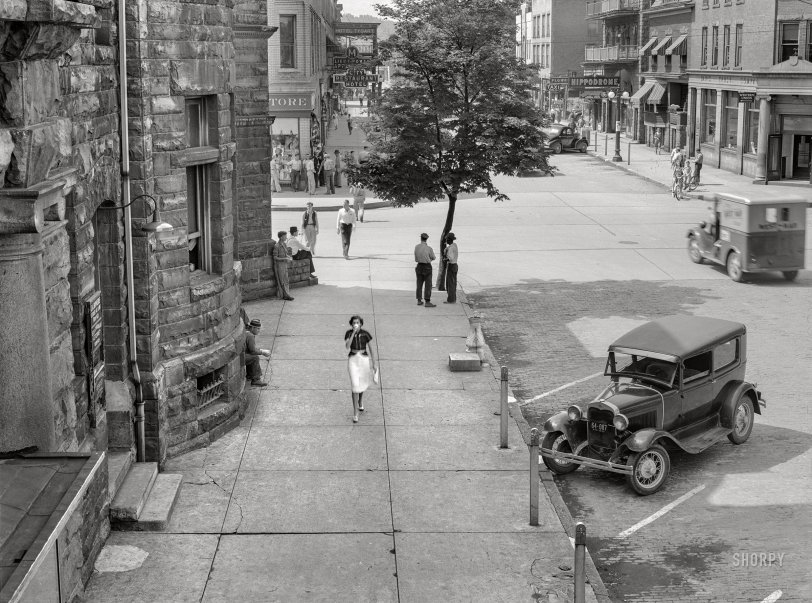
Shorpy



Ne Zha 2: The Greatest ‘Anti-America’ Movie Ever
I have learned so much by watching this video. Whoa!
Wow.
Creamy Green Onion Soup
This simple soup is easy to make and a pleasure to eat. A handful of mushrooms and a touch of cream give it body and character, while the green onions add plenty of springtime zip.

Ingredients
- 4 tablespoons butter
- 6 bunches scallions
- Salt and freshly-ground black pepper, to taste
- 5 cups vegetable broth
- 2 cups small mushrooms, sliced
- 1/3 cup heavy cream
Instructions
- In a heavy bottom soup pot, melt the butter and add the green onions, along with salt and pepper to taste. Sauté for a few minutes, until the onions are softened, then add broth and bring the mixture to a boil. Reduce heat, cover, and allow to simmer for 10 minutes.
- Add 1 cup of the mushrooms.
- Puree everything in a food processor or blender until smooth, then put the soup back into the pot, add the cream and the remaining mushrooms, and heat gently (do not boil) until the mushrooms are tender.
Title: Sir Whiskerton and the Shoe of Destiny: A Sole-ful Adventure
Ah, dear reader, welcome back to the ever-chaotic and delightfully absurd world of the farm, where mysteries abound, and even the most mundane objects can spark a full-scale barnyard spectacle. Today’s tale features a lost shoe, a pig with a mischievous streak, a tie-dye cow, and a piñata with surprisingly sage advice. So slip into something comfortable (preferably not a single shoe) and prepare for a story that’s toe-tally ridiculous, yet filled with heart and humor.
The Case of the Missing Shoe
It all began on a crisp morning when the sun peeked over the horizon, and the farm was just waking up. The farmer was out in the barn, muttering to himself while rummaging through a pile of hay.
“Where is it?” he grumbled, tossing hay left and right. “I just had it yesterday!”
From my perch on the barn roof, I flicked my tail and sighed. “Let me guess,” I said aloud to no one in particular. “He’s lost his shoe again.”
Sure enough, the farmer emerged from the barn wearing one boot and one very holey sock. “Whiskerton!” he called, looking up at me. “Have you seen my shoe?”
“Why is it,” I replied with a yawn, “that you’re capable of operating heavy machinery but can’t seem to keep track of your footwear?”
The farmer didn’t answer. He never does. Instead, he wandered off toward the chicken coop, still searching for his elusive shoe.
Porkchop’s Discovery
Meanwhile, in the pasture, Porkchop the pig was snuffling around for something to eat when he stumbled upon an object half-buried in the dirt. He nudged it with his snout and let out a delighted oink.
“Well, well, well,” Porkchop said, his eyes gleaming. “What do we have here?”
Bessie, the tie-dye cow, ambled over, her mood ring jingling softly against her bell. “What’s got you so excited, Porkchop?”
“It’s the farmer’s shoe!” Porkchop proclaimed, holding it up triumphantly. “I just found it lying here like some discarded treasure!”
Bessie tilted her head, her love beads swaying gently. “A shoe, huh? What are you gonna do with it?”
Porkchop grinned mischievously. “Hide it, of course! Let’s stash it in the bamboo grove and see what happens.”
“Groovy idea,” Bessie said, nodding. “Let’s do it.”
And so, the two unlikely partners in crime carried the shoe to the bamboo grove, giggling like schoolkids the whole way.
The Shoe Cults Are Born
The next morning, chaos erupted on the farm when the animals discovered the shoe in the bamboo grove. For reasons no one could quite explain, the sight of the lone shoe filled them with awe and wonder.
“The Shoe of Destiny!” Doris the hen declared, her feathers puffed up dramatically. “It’s a sign!”
“A sign of what?” Harriet asked, her beady eyes wide.
“Of greatness! Of power! Of… of… something really important!” Doris replied, flapping her wings.
The geese were the first to act. Led by Gertrude, they gathered around the shoe and began to dance in wild, uncoordinated gyrations. Wings flapped, necks bobbed, and honks echoed through the farm.
“We’re channeling the shoe’s energy!” Gertrude honked. “Feel the rhythm! Let the shoe guide you!”
Not to be outdone, the chickens started marching in formation, their movements precise and synchronized. They clucked a strange chant as they paraded around the farm, their eyes fixed on the shoe.
Ferdinand the duck, ever the dramatic one, composed a song inspired by the shoe. It was a hauntingly beautiful melody that left the entire farm spellbound. As he sang, the animals swayed in a trance, their eyes glazed over with reverence.
“Oh, I can’t bear it!” Lillian screeched from the sidelines, fainting into a pile of straw.
Bigcat Strikes
The shoe’s newfound fame didn’t go unnoticed. Word of the Shoe of Destiny reached Bigcat, the enormous feline who ruled the neighboring farm with an iron paw. Bigcat, accompanied by his hench-felines Putter and Goliath, decided to claim the shoe for himself.
Under the cover of night, the trio snuck onto the farm and stole the shoe, leaving behind only a trail of pawprints and a tuft of fur.
By morning, the shoe was gone, and the farm was in an uproar.
“The shoe has been taken!” Doris wailed. “This is a catastrophe!”
“Who would do such a thing?” Gertrude honked, her feathers ruffled with indignation.
“I bet it was Bigcat,” I said, narrowing my eyes. “This has his pawprints all over it.”
The Farmer Consults Bartholomew
While the animals panicked, the farmer sat in the barn, staring forlornly at the ground. He had searched high and low for his shoe, but it was nowhere to be found. Finally, he turned to Bartholomew, the piñata who stood silently in the middle of the barnyard.
“Bartholomew,” the farmer said, his voice heavy with despair, “what do I do? I’ve lost my shoe, and now the animals are acting like lunatics.”
For a long moment, Bartholomew said nothing. Then, in a soft, papery voice, he spoke.
“Sometimes,” Bartholomew said, “we lose things not because we’re careless, but because we’re meant to find something else.”
The farmer blinked. “Like what?”
“Perspective,” Bartholomew replied. “You’re upset about a shoe, but look around. Your animals are happy, united, and—dare I say—creative. Perhaps the shoe was never the problem.”
The farmer scratched his head. “Huh. I never thought of it that way.”
The Great Shoe Rescue
Meanwhile, I was busy organizing a rescue mission. With the help of Rufus, Porkchop, and Ferdinand, I infiltrated Bigcat’s farm under the cover of darkness. We found the shoe hidden in a haystack, guarded by Goliath, who was fast asleep.
“Quick, grab it!” I whispered to Rufus.
The dog carefully retrieved the shoe, and we made our escape without waking the sleeping giant.
By dawn, the shoe was back on our farm, and the animals cheered as I returned it to the bamboo grove. But instead of reigniting their frenzy, the animals seemed content to leave the shoe where it was, as a symbol of the strange and wonderful adventure it had sparked.
A Happy Ending
The farmer, now at peace thanks to Bartholomew’s wisdom, didn’t bother retrieving the shoe. Instead, he let the animals keep it, and life on the farm returned to its usual, chaotic rhythm.
As for me, Sir Whiskerton? I returned to my sunbeam, satisfied that I had once again brought order to the farm. The moral of the story, dear reader, is this: Sometimes, the things we lose lead us to something greater—whether it’s perspective, unity, or just a good laugh.
Until next time, my friends.
The End.
War party meets in Paris
Nature’s Call
Submitted into Contest #210 in response to: Write a story that includes someone saying, “We’re not alone.”… view prompt
Michael Martin
She prayed that he wouldn’t think to check the van, desperately clinging to irrational hope. She tried to convince herself that he was just looking for deer and saw one behind the van. Or that even if he’d seen the van, its grimy windows would offer no visibility to the decorated interior, and he might move on without opening the doors. She pushed the sliding door’s lock, just in case.
The squirrels’ chittering moved down the branch, from the tip to the base where the van sat immobile. She listened, following their voices to track his location. He was definitely walking towards her; she could no longer hold out hope that he’d ignore the van. Hope was draining with each passing second; she was down to the inane notion that he might not try the van door – even though her footprints led directly to it. She began to hear the squelch of his steps, slow and measured, as he neared her, the sounds shattered her last vestiges of false hope. The initial burst of a sob escaped past her hand before she muffled it and whined quietly. The layer of sweat covering her face now mixed with free-flowing tears.
She was well aware of what bandits would do to a young woman alone in the woods. Even if she’d previously had any doubts, the other bandits who found her six months prior taught her better. Luckily they’d let her live, just leaving behind a parting gift that she’d only discovered recently.
She’d spent considerable time during scavenging runs to Valdosta look for additional protection, something more than her dull knife or the baseball bat her scrawny arms could hardly swing. She’d found it in the basement of a one-story rambler, a rusted revolver with a box of rounds next to it. She’d shoved both into her backpack and taken them back to the van, but she’d never fired a gun before. She wasn’t even sure it would fire. More so than that, she couldn’t bring herself to kill; she never understood how men could do it so easily, as if it were nothing more than an afternoon stroll.
She reached under the driver’s seat and grabbed the the black grip of the revolver. She’d always known that she couldn’t fire the gun; like the baseball bat that she couldn’t swing with enough force to do anything, the gun was never meant as a weapon – only a deterrent. The bat may not have worked last time, but she hoped the threat of being shot combined with her insistence that she had nothing of value would be enough to prevent what she knew he’d want. She knew it had little chance of working, but she tried to lie to herself – in vain. The icy terror continued to creep outward from her chest, eventually reaching the pit of her stomach. The baby seemed to sense her despair and responded by kicking the left side of her bulging belly.
“We’re not alone,” she whispered with a wavering voice, her hand instinctively covered her belly. The barrel of the revolver shook wildly as she lifted it to face the direction of the approaching footsteps. If she could just bring herself to fire, if the gun would actually shoot, she could end this now. She could fire the six rounds she’d long had loaded into the chamber. The danger would pass. She knew she should, but she knew she wouldn’t. There wasn’t a single violent bone in her body.
The sound of the sliding door’s handle caused her to jump; she’d heard the steps approaching, but she expected him to say something first. Knock possibly. The handle jiggled for a moment then stopped as the lock showed that it still worked. She couldn’t hold back her sobs any longer as fear overwhelmed her. She tried to muffle them. His voice told her she didn’t silence them enough.
“Oh sweetie, there’s no need to be scared.” His voice, raspy and deep, had a strong, Southern twang to it. “Why don’t you come on out and let ol’ Uncle Walter get a good look at you?” His laugh was slow with a devious edge as he moved to the passenger door. Her heart sunk as the handle rattled, the sudden realization hitting her that she didn’t know if that door was locked. The handle creaked as he lifted it, silence lasting an eternity before the handle creaked again as he lowered it. Three more times, he lifted and dropped the handle before giving up. Locked.
She let out a deep sigh as she realized none of the doors would open for the bandit. The driver’s side door had never opened since she’d moved in: it was rusted shut. Same with the rear cargo door. Perhaps he’ll give up, she told herself. But he knew she was in there, and like a predator digging into a tunnel with trapped prey, he’d find a way in eventually.
“Come on sweetheart, let’s stop playing these silly games. Let me in so we can enjoy this fine afternoon weather together.” His voice trailed as it moved around the front of the van. He tried the driver’s door, finding it unmoving as well. “You’re really sealed up tight in there, huh?” He turned back, stopping outside the sliding door once again.
She held the revolver in front of her face, the iron sights jumping around as she struggled to keep her aim steady. She could see his silhouette through the grime on the window but knew he couldn’t see her. Just shoot, she implored herself. Why couldn’t she do it?
A loud thud sent her scuffling back, pressing her back against the opposite wall. Another followed, then another, before the final blow ended with the sound of glass shattering. She recoiled, throwing her hands in front of her face. After the last of the shards clinked on the floor, she looked up to see Walter’s leathery face, stretched thin with a big smile that displayed only half the number of teeth it should have.
“Nice to finally meet you. You gon’ invite me in or not?” His face disappeared, replaced a moment later by his hand reaching through the newly opened window. He felt around for the lock, pressing the lever. Without the lock to prevent it, the door slid open when he pulled the handle this time. His smile was laced with anticipation and confidence.
“Aww honey, don’t be scared.” He spun the rifle on its strap until it was resting on his back. “I ain’t gon’ hurt you. Well, not as long as you play nice.”
Annie raised the revolver, her hand still shaking wildly. She wanted to speak, tell him that there was nothing there for him to take and that she’d shoot if he tried anything. She could hardly breathe, though. The words never formed.
“Oh! What you got there, missy? An ol’ snubnose? That’s cute. You ever even fired one of them things before?” His tone was playful, yet sinister. She’d heard the other bandits use that same tone. There wasn’t an ounce of fear anywhere in it.
The gun dropped as the fight left her body. She knew what was coming; she could only hope he would show the same mercy as the others did. She openly sobbed, deep sobs that started in her chest and convulsed over her entire body.
As she sobbed, she felt the van shift as it took on Walter’s weight.
She heard the sound of the rifle dropping to the ground as he began removing what he had on.
She felt the sensation of helplessness.
She smelled the sickening stench of sweat and filth as he drew closer.
She tasted iron as she bit her lip.
Then, she felt another kick.
She felt the weight of responsibility, her child relying on her.
She saw the situation for what it was.
She felt cool resolution wash her fear away and steady her hand.
She saw a smile cross his face when she raised the gun again.
She heard the blast echo in the van’s interior.
Which country in Southeast Asia has a stronger Chinese influence: Thailand or Vietnam?
Responding to China Daily in Beijing on February 6, Thai Prime Minister Paetongtarn Shinawatra said she has “Chinese blood flowing in her veins.”
King of Thailand and ….. a lot of Chinese influence
How bad do u think China is? Or how good do u think China is? What’s your take on China compared to other countries?
How bad? That question already starts with a negative assumption.
I was born in the UK. I was born with UK citizenship only. I did not have Chinese citizenship at birth. I had to jump through all sorts of fiery hoops to get it to work.
What’s my take on China compared to other countries? This will sound weird to brainwashed westerners but, China is the greatest true results based democracy in the world.
I’ll tell you a story. I first went to Mainland China in the 1990s with my parents. I did not see much except the inside of hotels and buses. I don’t remember much other than lots of bicycles. I went by MYSELF a few years later, my parents warned me about it.
One of the places I visited was this.
That’s the Beijing military museum the main hall at the bottom. On other floors they had chariots and small arms. As a 20 year old it was confusing, it was confusing because the dual language signs said Democracy. Remember I was born in the UK and associated elections = democracy. It didn’t make sense in that they didn’t have elections like we did in the UK (or so I thought).
At this time the one child policy thing was debunked by me simply seeing people in China with brothers and sisters. It made me started questioning things what I’d been TOLD by the BBC and that’s where years later of confusion as above I realised
China is the greatest true results based democracy in the world.
What are the results?
- 18 eggs are $2.05USD
- Beer is 35cents (US) per 500ml can for Nanjiang beer in convenience stores you can buy even cheaper.
- General food costs are stable/falling
- Energy costs are stable/falling
- Healthcare is affordable and accessible
- University is affordable at $1000USD per year.
- There’s low crime, and crimes that happen are solved.
- Living standards increase incrementally
- Stuff gets done, stuff gets built, stuff gets repaired when it is broken.
All those things in my list above? Those things affect me directly and are mostly a part of my life (University – indirectly I don’t have some gigantic trust fund for university for my children).
Politically? The woman goes to regular CPC meetings and they are FIERY. Local people stand up shout and scream at local CPC reps. There’s no ejections…
In the UK in Bexley in the USA you go off the agreed script? You get ejected, Bexley is Bonkers when an activist revealed the open corruption for instance.
Right now westerners are saying but China isn’t a democracy and talk about elections. Apparently putting a cross in a box every 4 years then being ignored for the next 3.5 years means everything is perfect.
Democracy is:
- Of the people.
- For the people.
I break it down here:
I saw this answer, you can find it as it’s one of the other answers on this thread. What the fuck do I think that was? It was an electoral process, which he mistakes for democracy. Yes, every 4 years go tick a box and you have a perfect democracy. Nah.

Democracy is far more complex than this. Democracy means: * For the people * Of the people * A bonus third definition is majority rule. While the UK has elections, which are largely meaningless because there’s no real choice.

The UK fails on all three of the above.

There’s overlap of all of the above. Let’s address no real choice first So they have elections, ok then but the vast majority of the population cannot afford to run for office or even participate in selecting the candidates who can afford to stand, excluding them from participation other than to vote for a local ‘representative’ who is from a relatively wealthy layer of the population.

So not everybody can stand meaning there’s no real choice AND it’s not OF the people when it excludes such a large proportion of the population. Of the people The vast majority of the population in the UK are excluded from policy-making, which is decided by their ‘representatives’ in parliament, remember the last paragraph? These representatives are not the common man or woman. They’re a relatively wealthy slice of society.

These representatives once they are in power, are people who earn at least four times the average wage; they also work additionally for private companies, or accept bribes from corporate lobbyists, putting them at odds with the needs of the average worker.

So it’s not for the people either For the people Gordon Brown”Election promises and pledges are not subject to legitimate expectation.” Ruling class Members of Parliament, often trained at Eton, are usually parachuted into the most important and influential ministerial positions – only one in six prime ministers has been state-educated.

Anybody who doesn’t toe the regime line? There’s literally a whip whose job is bullying MPs into toeing the line. The odd public referendum (like on membership to the European Union) is only granted when the ruling class is irreconcilably divided.

What else?

Party donors and media barons have a massive influence on which party wins an election. And those same donors have significant influence on policy. So labour is given £4 million as a ‘donation’ before the election and you’re going to tell me with a straight face that £4 million has no influence whatsoever?

For the people 2 Politics and policy-making is pretty much influenced by the needs of capital accumulation.

When profit rates are falling or low, attacks on wages and living standards etc intensify in order to rewiden profit margins. This starts not with governments but with privately-owned companies, whose owners have near and increasingly dictatorial power over their workforces.

Remember how Starmer promised to end ZHC, so did his predecessors? Pepperidge farm remembers. For the people 3 Capital tends to flow upwards and is centralised into fewer hands, as such workers, particularly young workers, are increasingly compelled to move to large towns and cities.

I literally grew up in pretty much an industrial wasteland. There were three options. Go on the dole, for girls it was to get knocked up and get government subsidy until the baby grew up.

I literally admit I very likely have some bastards in the UK. They’re likely around 20–23 these days. Join the army or to leave to go to one of the big cities. What does this do?

It leaves the votes of business people in deindustrialised and depopulated constituencies with an outsized impact on the overall vote. With the first-past-the-post system, such places along with affluent constituencies with small populations can win many more seats than they would in a popular vote. For the people 4

This wouldn’t be a thing if it were for the people. Majority Labour got 9.7 million votes.

Basic maths means 1 in 6 of the population or 1 in 4 of the voting population. So they can’t even get this. So what about you? Living in totally non democracy Hong Kong/China.

Lets use the same metrics. * For the people * Of the people * A bonus third definition is majority rule. For the people. In Hong Kong in 1997 50–60% of people lived in Shanty towns.

Talk to anybody from Generation X and those born in the 1980s and many lived in Shanty towns. By 2010 many of these people lived in government rent controlled housing £200 a month rents.

In PRC China?

Living standards have increased enormously. I write about the woman and her experience accessing healthcare. It was bad, today it’s cheap and affordable.

My father chose cancer treatment in China instead of the UK. My mother had cancer in the 1990s, treatment was fairly fast and effective. By 2023 the situation had reversed when my father got cancer.

This doesn’t mean China is perfect as there’s still many many gaps. Of the people. 140 million CPC members 1 in 10, how many members are there of the Labour party? 300,000 in 64 million?
Western countries as broken down in the above post are none of those things. They can’t even get simple majorities. You can even read the comments how you break it down You can even see in the comments how they insist western nations are democracies even though they satisfy none of the criteria for democracy. It’s almost like a cargo cult where if they go through the motions then good things have to happen.
Yet here we are 2025, UK economy has been in the toilet for 17 years now. USA economy not much better. Japanese economy in the toilet for 40 years.
China? It’s not perfect and there’s plenty of flaws
What devastated you at the time, but you now attribute to your current success?
My parents let me know just as I was graduating from high school they weren’t going to pay for my university. I had applied to a number of schools and got into all but one. I was at a loss though as I certainly didn’t have the money sitting in my account to pay for tuition and living expenses. Living at home whilst going to school was not an option either. What to do?
I took a year off after high school and moved to the mountains where I worked full time, lived cheaply and socked away 50% of my earnings. I applied for about 100 scholarships and bursaries and was awarded five of them. This was enough money to pay my tuition and my living expenses.
I was 19 years old, I got a bunch of my ya-yas out before starting school, where I could socialize, go to parties and not have to worry about maintaining a course load. I was able to figure out the basics of living on my own without doing school at the same time.
I was highly motivated to go to school and do well because I didn’t want to spend the rest of my life working a low paying job, like I had been. I also chose a practical degree, versus an Arts degree because I wanted something which made me immediately employable when I graduated.
My parents didn’t want to pay for my uni because they were convinced I would blow it and waste their money. Maybe they were right, maybe not. What I did know is that when I was awarded my degree four years later I did take a good deal of comfort in the knowledge that I had done it on my own and I was ready for the world of work and general adulting…mostly.
What would life be like for Americans today if the US government had invested in manufacturing and infrastructure the way the Chinese government has for China?
There is 1 Chinese idiom: no family can stay wealthy after the 3rd generation (富不过三代)
Why? Grandpa works hard to become successful & accumulate wealth. Brought up by a hardworking father, Dad continues to work hard but lacks Grandpa’s wisdom to achieve success. Born with a silver spoon, Grandson never needs to work. Grandson only spends all the wealth earned by Grandpa & Dad. … at the end, the family went broke. The 4th gen starts from bottom.
The USA before independence was Grandpa. Before WW2, USA was Dad working hard to eliminate the then superpowers UK & France. Shortly after WW2 after UK & France were practically “gone”, USA is Grandson who inherits the mentality of colonisers UK & France to live comfortably simply by robbing others. It is neo-colonisation by controlling other’s gov, economy & natural resources without occupying other’s land.
That is why Grandson USA never thought of manufacturing & infrastructure etc. Grandson USA lacks this vision for the future. And it is too much of hard work & sweat also. Running a financial country thru monetary & financial hegemony is more comfortable in an air-conditioned office.
Some like late US pres Jimmy Carter had vision for clean energy eg solar panel. But the oligarch in the deep state saw it as a threat to their already established business empire. At the end, USA’s clean energy cannot move forward & now is behind China.
So, there is no such thing as “what if USA …” because there is always a Grandson gen.
I thought I’d mention a little thing relating to our feline friends that happened in my life recently.
A few weeks ago my mother finally relented and adopted the two cats that have basically moved in to her back garden. A black female short hair, and her daughter a long hair tabby. There are also two black kittens, a male and a female which we assume are Bella’s. Last year, when Bella first arrived, we couldn’t even get close to her. She’d hiss and try to cut anyone up who got too close, Totally feral!
It took some weeks for mom to get them registered with the vet. Mainly because of a new law here which requires all cats to be microchipped. Bella, the black mom, has a collar but we’ve no idea if there is actually an owner around. It doesn’t seem like it as mom has been feeding her and her daughter since the daughter was a kitten last year. That can’t be proved though, which was a complication.
Anyway, by the time they were registered with a vet and had been taken in both were pregnant. It was too late to do anything for Missy, the daughter, but Bella wasn’t too far along. Missy will be fixed after she’s had her kittens. Bella went in for surgery last week, to be fixed and lose those poor unborn kittens. Aww. She’s been living in her own room upstairs at mom’s while she heals. Mom sits with her all day and says that she stared into her soul as she explained that it’s all for the best and she’ll be fine soon.
Bella is a totally different cat than the one we first met last year. Earlier, my mother told me that she thinks Bella is her favourite previous cat Figaro. There’s that wonderful calm love between then now and I think that’s the magic of a cat’s power.
I passed on what the DC told us about cats years ago and mom took it all in and accepted it without effort. She’s done that with everything I’ve passed on from you, which kinda shows that we agreed on all this stuff pre-birth. Mom does not want to reincarnate, and thanks to your information from the DC, she surely won’t have to. She volunteered for Domain but didn’t have the usual bad dreams afterwards. My Mantid told me that’s because she, like me, had the alterations years ago. I love it when a plan comes together!
Wonderful. -MM