


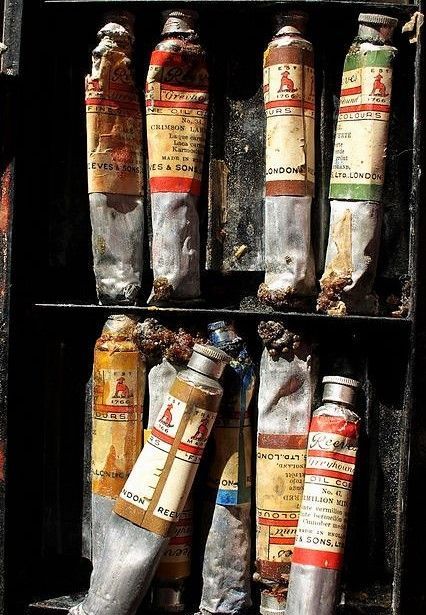
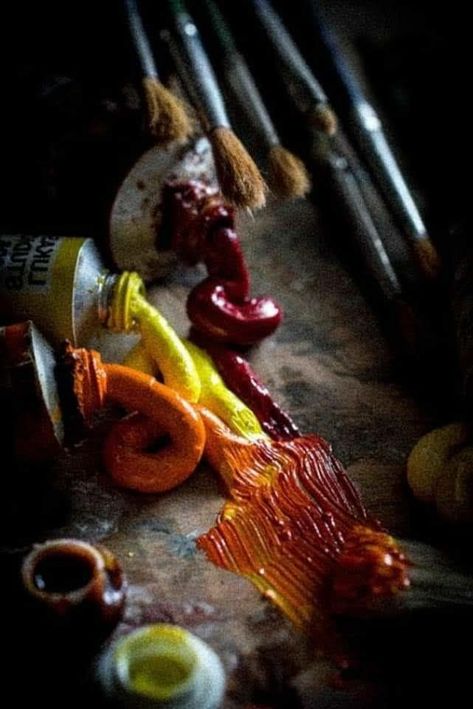
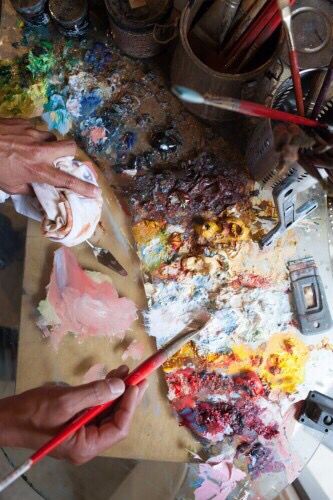
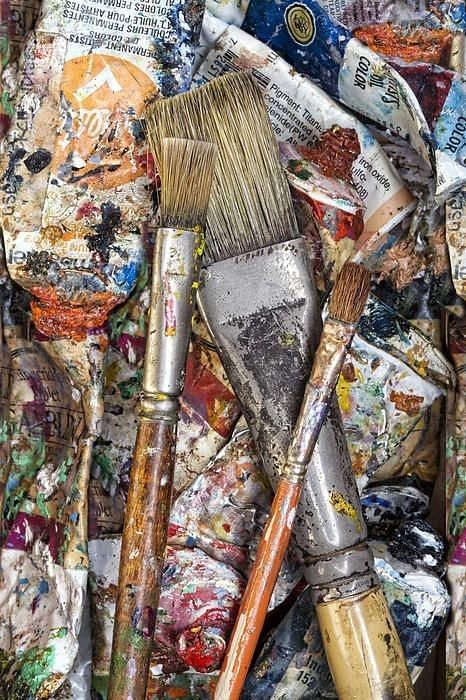
One of the things that I well miss are my paints; my pil paints that I well used to paint my art.
To many of you, who do not paint, let it be understood that these are thick tubes of glorious colors. And I relished in those colors, often mixing them and blending them with linseed oil for my artwork.
Today, I pay homage to my memories of these expensive paints. Who knows where they are now. I think that my roommates in Erie, rampaged though my stuff, and sold everything that they could at a profit. And to this end, I lost all and everything of value.
And then, so I came to China as nothing of my previous life remained intact.
So here is a tribute to those thick tubes of oils and paints.




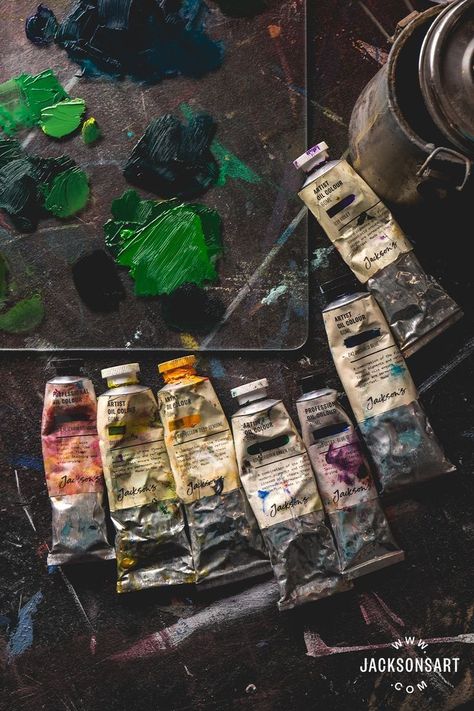
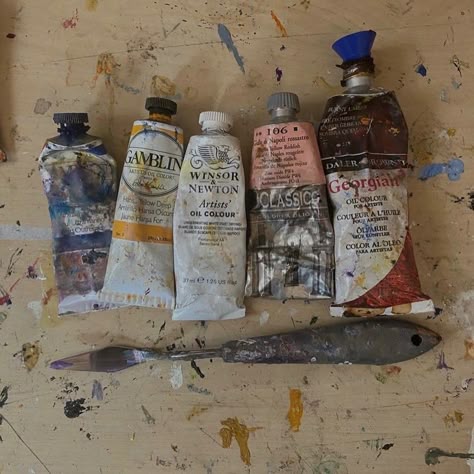




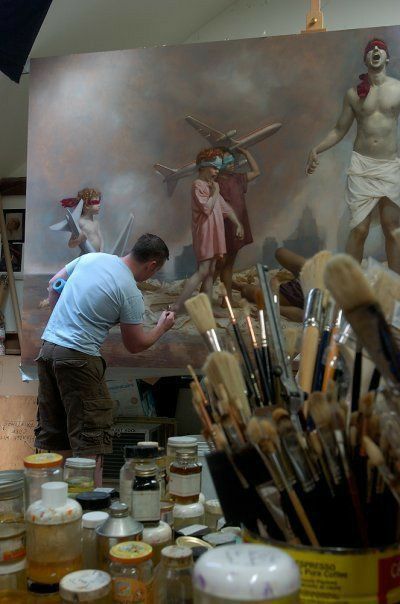
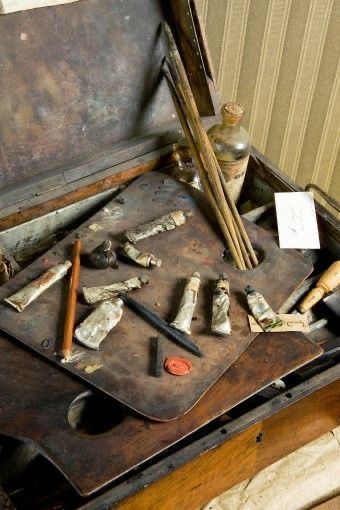
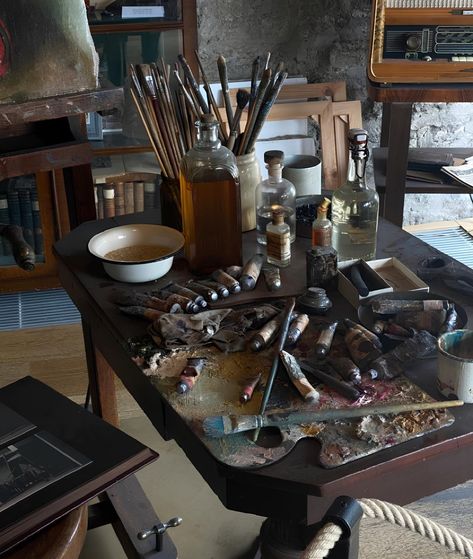
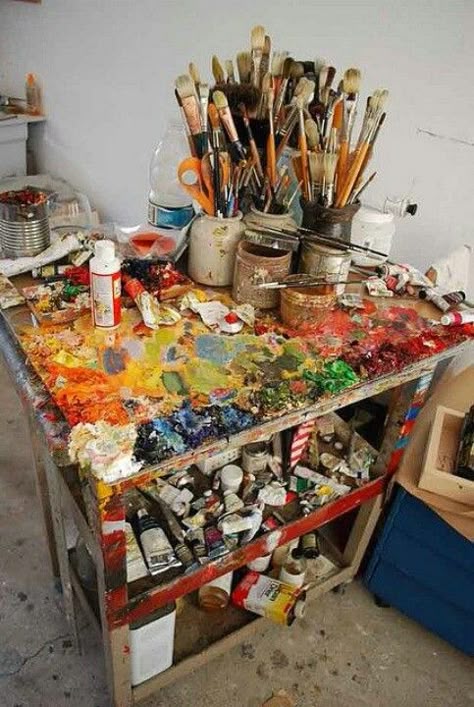
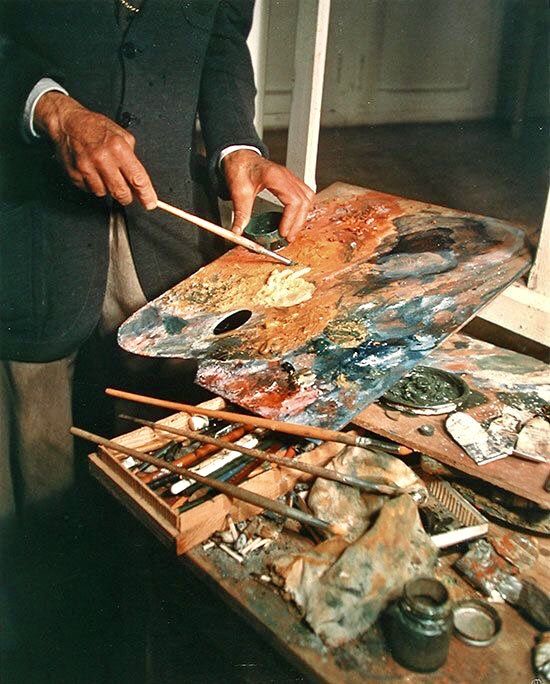


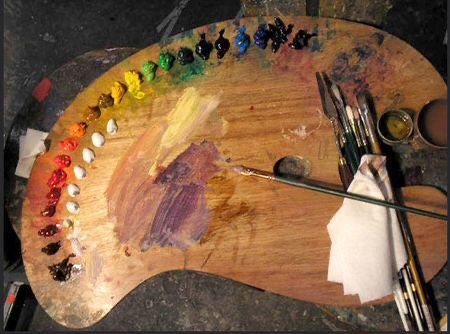


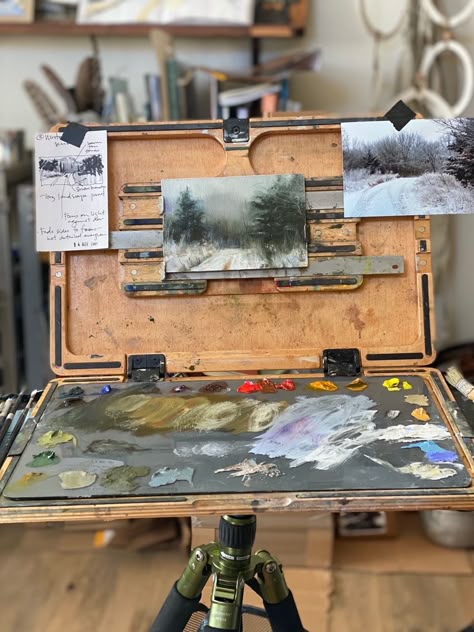





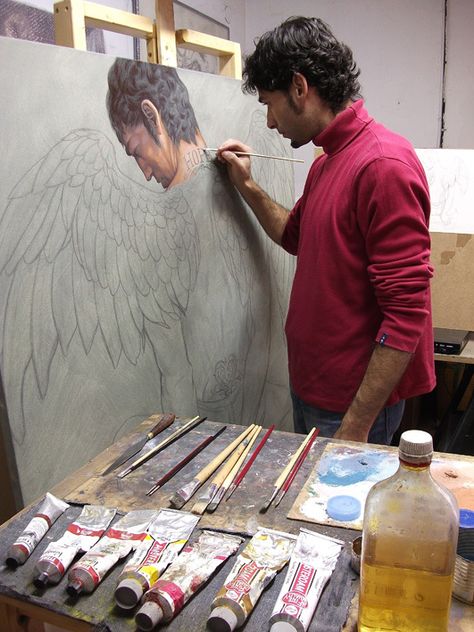


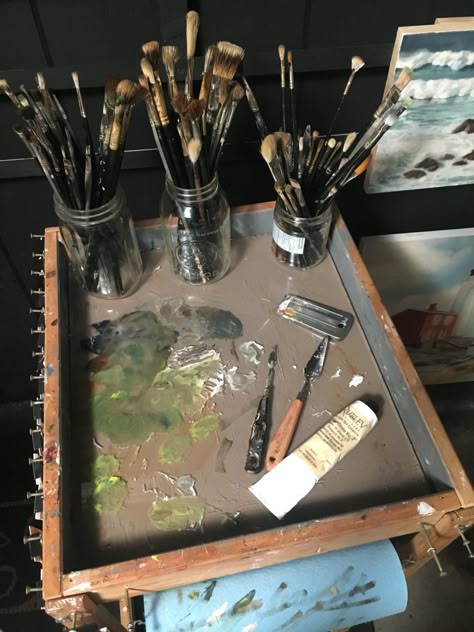
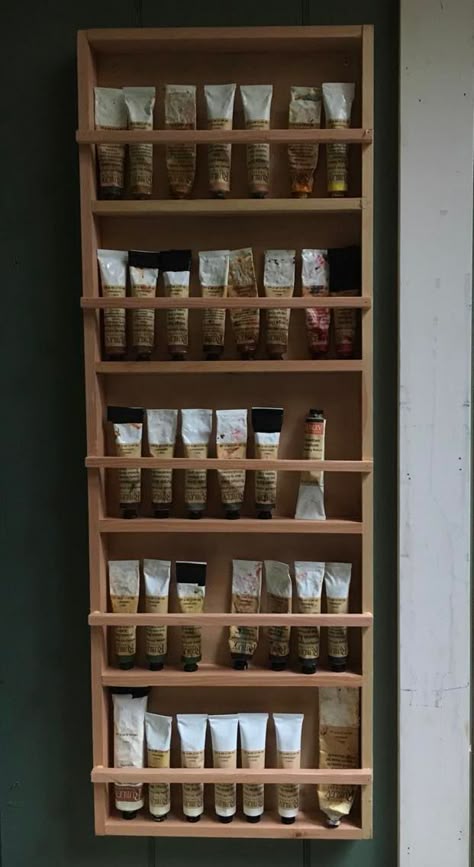



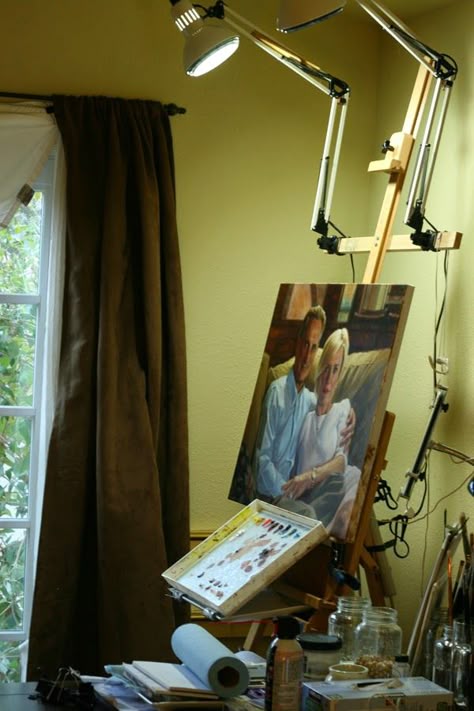



Today…
What is the strangest coincidence you had, that could never be explained?
This happened about 12 years ago. My daughter has epilepsy, and she was about 9 at the time that this happened. We were having a lot of trouble with her going into absolute uncontrollable rages. A lot of this could be contributed to the epilepsy medication Kepra that she was taking at the time. It is well-known for causing aggression and rages in children. But they were getting worse and worse, and it was mentally, physically, and emotionally so draining. I knew it wasn’t her fault, but that doesn’t really make you feel much better when you’re getting hit, or things thrown at you, and screeching going on and on and on, and all your things broken. My husband and I spoke with a pastor of our church about it when he came up to visit her in the children’s hospital during one of her stays. Just for the emotional support for us as parents because he was very good about that kind of thing.
Anyways, these rages were happening more and more frequently. One day I answered the phone and a woman introduced herself and said that she was calling from the church, and that Pastor Marty had asked her to give me a call because she had dealt with some of the things I was going through, and she was a pediatric nurse. So I started talking with this woman, I was at a very fragile moment that day because things had been really rough as far as the raging went. So I really unloaded, and I told her what was going on. And she said to me “Do you by chance use Pine-Sol to clean your house?” It was a pretty odd question. The funny thing though was that I did indeed use Pine-Sol to clean my house. In fact I had a lot of it because there had been a going out of business sale somewhere. So I told her that I did, and she told me to immediately stop using it. She said that she didn’t know exactly what the connection was, but she had spoken to many many parents who are having behavioral problems with their children out of the blue, and out of the nature of the child. She said that the one thing they all had in common was that they all used Pine-Sol. So I thought that was pretty strange, but I was more than willing to stop using it if it was going to help our situation any.
So here is where the weird coincidence kicks in. We spoke for a little while longer, and I thanked her for her time and told her I was going to try this, and then I said something about the pastor and his wife. And she said “Wife? What wife?” Apparently her Pastor Marty was not my pastor Marty. She was not even in the same state as me. She had dialed the wrong number! She just happened to also have a pastor named Marty, and she just happened to accidentally dial a wrong number where there just happened to be a mother, me, desperately needing help with their rage filled child. We were both completely surprised, and we laughed about it, and I thanked her for her advice.
Just so you know, I stopped using the Pine-Sol, and my daughter’s rages went down about 90%! I don’t even know the woman’s name. She introduced herself at the beginning of the call, and I cannot even remember her name, but what she did for me that day, and did for our family that day, I will never, ever be able to thank her enough.
On October 1, 2025, China stopped purchasing iron ore from Australia’s BHP priced in US dollars, sending shockwaves through global markets. This seemingly sudden decision was actually the culmination of over a decade of Chinese strategic planning.
For years, China has been the world’s largest iron ore importer, accounting for about 70% of global trade volume, yet it has consistently lacked pricing power. The Platts Index dominates the pricing system, and its parent company maintains close ties with international financial institutions like HSBC and JPMorgan Chase—the same institutions that happen to be major shareholders in the mining giants. The result: upstream miners sell ore costing $40 to produce for $100, yielding 150% profit margins, while in 2024, China’s key steel enterprises averaged only 0.71% sales profit margins. Australia earned $20 billion from selling nearly 1 billion tons of iron ore, while China produced about 1 billion tons of steel and earned just over $3 billion.
In August 2025, China Mineral Resources Group (CMRG) negotiated with BHP over 2026 contract prices. CMRG proposed $80 per ton; BHP demanded a 15% increase to $109.50 per ton—a $30 difference that translates to over $20 billion annually based on 700 million tons of imports. More critically, China demanded pricing in renminbi, not just settlement. Renminbi pricing means using prices formed in Chinese markets as the settlement basis—this is genuine pricing power. BHP refused to budge, and negotiations collapsed.
China dared to flip the table because it had prepared thoroughly. First, two of the three mining giants have already aligned with China. Rio Tinto is 14.99% owned by China’s Aluminum Corporation, signing renminbi-priced contracts in 2019. Brazil’s Vale signed renminbi pricing and settlement contracts with China in 2017. China also cultivated FMG, the fourth-largest miner, where Hunan Steel is the second-largest shareholder. In August, FMG borrowed 14.2 billion yuan from a Chinese banking syndicate. With three of four major miners on China’s side, how can BHP resist?
Second, China established CMRG in 2022, finally creating a unified negotiating body. For 20 years, China suffered from lacking such coordination. CMRG’s chairman, Yao Lin, formerly led China’s Aluminum Corporation and knows exactly how to negotiate with foreign mining companies.
Third, the Simandou iron ore mine is about to commence production. This Guinean mine holds 4.7 billion tons of proven reserves with 65.5% iron content, capable of producing 120-150 million tons annually—exactly matching BHP’s annual exports to China. China controls most equity stakes and has transferred high-value processing to China, ensuring the coarsely crushed ore can only be sold to China. The first shipment could arrive as early as November.
Fourth, supply-demand dynamics have fundamentally shifted. In 2024, China recycled about 250 million tons of scrap steel, representing a quarter of steel output. With solar and wind capacity now exceeding coal power, electricity prices have plummeted, ushering in a golden age for short-process steelmaking using scrap. Future scrap recovery could exceed 400 million tons. Combined with increased domestic mining and Simandou’s production, China’s demand for Australian iron ore could decrease by over 300 million tons within two years.
This exemplifies the “commodity curse”: when demand rises, the world cannot replace Australian iron ore; when demand falls, Australia cannot find customers to absorb 300 million tons of capacity. China can withstand reduced imports, but can Australia withstand losing its largest buyer?
From accepting a 71.5% price increase in 2003’s first negotiations to proactively halting purchases in 2025, China spent over a decade transforming from passive rule-taker to active rule-maker. Countless steel workers watched factories close and restructure, countless state and private enterprises completed strategic overseas deployments, countless engineers researched cost reduction, countless prospectors risked their lives exploring African jungles for mineral deposits, and countless construction workers built mines, railways, and ports on red soil. While Australia remained intoxicated by “resource hegemony,” China converted buyer power into pricing power through supply-demand revolution.
This victory transcends commerce—it signals China’s gaining trade initiative by reshaping supply-demand relationships. From the Belt and Road Initiative to the renminbi payment system, China is step-by-step redefining international trade order. Never underestimate the Chinese nation’s millennia-accumulated patience and strategic vision. National fortune flows like tides; only those who ride the momentum can navigate forward.
How China recycles its huge trade surplus with EU, US into BRICS infrastructure projects, risk-free
What is the most badass thing your parent has ever done?
When I was 10 years old, our lovely little farm burned down. We still don’t know what exactly started the fire, but it spread so rapidly, that by the time we noticed the smoke, the entire hayloft was already ablaze.
At that time, I kept a little herd of eight Guinea pigs as pets. During the day they’d frolic through the grass in their outdoor enclosure and every evening I’d take them back to their hutch in our barn.
Only my mum and me where in the house when we noticed the smoke. While my mum ran to the phone to call for help, I straight away raced to the barn. Horrified, I had to realize that its roof was already on fire. I wanted to run inside to get my beloved Guinea pigs out of there. But the air was so hot, I could feel it burning my eyelashes. I was so scared and upset! I kept running back and forth in front of the barn, bawling my eyes out and randomly crying my pets names. Again and again I tried to run into the barn.
Then my amazing mum came to the rescue! Without hesitation, she threw herself head first into the nearby rain barrel and emerged soaking wet. She grabbed some grubby potato sack, ran into the scorching hot barn and managed to grab all of my precious rodents and throw them into the bag. Once out of the burning barn, she handed my the bag and made sure I got out of danger. Thanks to my mum, all of my (admittedly a little ruffled looking) pets completely recovered from their ordeal and I was spared the trauma of picturing my little friends being roasted.
To this day, this is the single most bad-ass act of (motherly) love I ever witnessed. Thanks mum, you’re the best:)
The Great American Exodus Has Officially Begun
Texas Cheese Toast
Cheesy goodness on a thick slice of comfort food.

Prep: 10 min | Yield: 6 to 8 servings
Ingredients
- 1 loaf Rhodes™ Bread, baked
- Butter or margarine
- Garlic salt
- Dried parsley
- Freshly grated Parmesan or Asiago cheese
Instructions
- Heat an electric skillet to 350 degrees F or heat a frying pan on the stove to medium.
- Cut loaf into 6 to 8 thick slices.
- Spread one side of each bread slice with butter.
- Sprinkle lightly with garlic salt and parsley.
- Sprinkle with cheese.
- Pat cheese onto slice with your hand and place cheese side down in frying pan.
- Spread remaining side with butter.
- Sprinkle with garlic salt, parsley and cheese.
- Cook until golden brown and turn to cook remaining side.
Attribution
Recipe and photo used with permission from: Rhodes Bake-N-Serv
How is Europe going to be the key to Ukraine’s survival?
The key to Ukraine’s survival is not support from Europe, and Russia will not annex all of Ukraine and lose the buffer zone. This is similar to how neither China nor Russia has any interest in annexing Mongolia.
There’s no doubt that Europe’s geopolitical standing has diminished considerably. U.S. President Donald Trump’s decision to not even consult with or forewarn European leaders before speaking to Russian President Vladimir Putin shows how irrelevant Europe has become, even when its geopolitical interests are at stake.
Among the bunch of losers in the current European political circle, I can’t find a politician with foresight. They could only sit at the Kids table.
Change your perspective and analyze it from the Russian perspective.
- Which is Russia’s most fundamental strategic rival, the EU or China?
- With whom does it have the longest border?
- With whom has its relative power changed so much?
As a Chinese, I also know that Putin’s position on these issues is very clear. 😁
The Russians are geopolitical realists of the highest order. They know that neither Napoleon’s troops nor Hitler’s tanks are going to advance to Moscow again. The Europeans don’t see the obvious contradiction between exulting in Russia’s inability to defeat Ukraine (a country of 38 million people and a GDP of about $189 billion in 2024) and then declaring that Russia is the real threat to Europe (which has 744 million people and a GDP of $27 trillion in 2024).
Russia is a declining power, not a rising power. If the Association of Southeast Asian Nations, a relatively weaker regional organization, can work out a long-term relationship of trust with a rising power like China, surely the EU can do better with Russia. However, The Europeans foolishly believed that a slavish loyalty to American geopolitical priorities would lead to rich geopolitical dividends for them. However, they have been kicked in the face.
The remarkable thing here is that China can help the EU deal with its real long-term geopolitical nightmare: the demographic explosion in Africa.
- In 1950, Europe’s population was double that of Africa.
- Today, Africa’s population is twice as large as Europe’s.
- By 2100, it will be 6 times larger.
Unless Africa develops its economies, there will be a surge of African migrants into Europe.
If Europeans believe that Europe will never produce leaders like Trump, they are clearly being delusional. Elon Musk isn’t the only billionaire supporting far-right parties in Europe.
To preserve a Europe run by centrist parties, Europeans should welcome any foreign investment in Africa that creates jobs and keeps Africans at home. Instead, the Europeans are shooting themselves in the foot by criticizing and opposing China’s investment in Africa. Just this one act demonstrates how naive long-term European strategic thinking has become.
Brussels is sacrificing its own strategic interests to serve American interests in the hope that geopolitical subservience would lead to rewards.
All great powers will put their own interests first and, if necessary, sacrifice the interests of their allies.
Trump is behaving like a rational geopolitical actor in putting what he perceives to be his country’s interests first.
Europe shouldn’t just criticize Trump—instead, it should emulate him. It should carry out the currently unthinkable option:
Declare that henceforth it will be a strategically autonomous actor on the world stage that will put its own interests first. Trump may finally show some respect for Europe if it does that.
Voice of America & Radio Free Asia propagandists FIRED!
What was your experience with the lowest IQ person you’ve met?
I learned more from the lowest IQ person I have met than the highest IQ person I have met.
I don’t actually know what Roger’s IQ was, and I don’t really care, but he was a patient in an adult foster home that I worked at, and his intake papers said that he had the mental capacity of a 7–8 year old child. I don’t know if that was exactly true, but he had the heart of a god.
The first time I met him he grabbed me in a bear hug so tightly I thought he might break my ribs. He was a small man, maybe 5′2″, and I was a full head taller. He grabbed on to me, pushed his ear to my chest, and smiled like there was nothing in the world more important than my heartbeat.
You don’t know love until you know love like this.
After that first time, it became tradition. He would hug me to thank me for each meal I prepared him, he would hug me for delivering his clean laundry to him, he would hug me when I gave him his pills, and he would hug me sometimes, “Just because you are you…”
Every time the same, with his ear against my heart and a smile on his face.
And it wasn’t just me, he showed everyone the same gratitude. He connected.
For Roger, everything was right in the world if he could just hear your heartbeat.
I think everyone could learn something from him.
And I’m so glad I had the chance to know him.
As the Wind Trembles
Submitted into Contest #288 in response to: Write a story where the weather mirrors a character’s emotions.… view prompt
Deijha Hill
To risk his life with the monster that nearly killed him, she thought.
Her mind travelled back to the painstakingly slow and heavy rhythm of her digging. Her bloodied hands dragging through the dirt as the sunset in the distance created shadows of surrounding trees. The leaves crying in the wind that pulled against her face. Her chest had been shaking as incessant cries spilled out of her mouth. She couldn’t think, couldn’t feel the earth in her hands; but the aching, throbbing pain in her body was too much not to feel. She was burying her daughter. All by herself.
Raechel closed her eyes and pushed it back down. “No. I just…I’m not going through this again.”
Ryan peered at her quietly for a moment. “What are you not telling me?”
She shied away, her muscles tensing. Everything.
He was under the assumption that she had lifted them to some random woods. A forest off the map in the middle of nowhere that meant nothing to no one. But this place…these trees changed her forever. If she told him why, they would change him, too.
“Love,” he said softly, “our minds have been connected for years. I know when you’re trying to hide something from me.”
She felt the presence of his mind on the outskirts of her own. She wanted to show him, but she hesitated. Connecting telepathically meant absolute empathy—being able to physically feel someone else’s emotions. Should she share this pain with him?
“Raechel, you have no right to do nothing,” he was starting to lose his patience. “Thirty years ago, we started all this. The day she leaked you killing that man was the day we fell into this hole. Now, we are the only powered strong and influential enough to take her down, and you agreed that you would do nothing?”
It was like a punch to the gut.
“You think I like this?” she yelled suddenly. “Ryan, I made a deal with the Devil, I know,” she stood up. “But I can’t lose him. I can’t lose my son.”
“Why?” he pushed forcefully.
She threw up her hands. “Do I even need a reason for that?”
He peered at her. “Yes. Because you’ve never said no to a fight. You were always the first one to run into trouble, the first one to help those in need. Then, all of a sudden, you surrender and agree to never fight again? Why? What do they have on you?”
Cries bubbled in her stomach. What did they have on her? Tears streamed down her face.
Ryan looked taken aback. “Raechel…?”
She looked into his eyes. He did care for her. And, he did have the right to know.
“I want to show you something.”
Turning without waiting for him, she headed toward the place. This was it. She was finally going to tell him. She had thought about how this day would go, but it didn’t seem nearly as terrifying as it was now. Every step forward seemed to be like two steps back. She was receding into the past, back to when the sun was setting, when the wind whistled through the branches. The crunch of leaves under her foot became too familiar and the trees started looking the same as the ones in her brain. When she came to a single yellow flower growing out of the ground, she stopped and stared. There she was.
Ryan was quiet. They’d seen enough death to know more than anyone else what was in the ground.
“Who is it?” he asked quietly.
She opened her mouth, but the tears choked the words back. She reached out to him with her mind, and he let her in immediately.
Our daughter, she cried. The weight shifted over to her memory.
Her bitter cries died down as she continued making the grave. She had to do this. So, the other one could be okay. She had to save one of them. She couldn’t lose another.
Save one. Save one. Her hands dug faster and faster, dirt flying behind her, until she furiously punched the ground. She wasn’t going to lose another. She had to let her go. Right here. Right now.
Satisfied with the depth, she lay on her back, staring at the trees towering above her. The rustle of the wind blowing in their leaves eased a bit of panic. She had to do it now, didn’t she? Taking a deep breath, she wiped her eyes and sniffed. There was a lot that could go wrong with this. She just needed to make sure that nothing she did hurt herself or disturbed the one that was still alive. He had to come out okay. She couldn’t lose him, too.
That thought echoed in their minds from her heart. I can’t lose him, too.
Ryan locked eyes with her through his tears. From their mental connection, she felt him put the pieces together: the residual emptiness in her eyes, the fatigue, the fear all made sense to him now.
She looked away, tears scaling down her cheeks. “After she took you away, they did some experiments. I thought that I would be fine, but…I didn’t have the strength to hide my pregnancy after a while. I thought I could for the sake of the Faction, but…”
She felt her stomach tighten. Remembering that far back would be too much.
“They killed her,” she managed to say. “They injected her with some sort of poison. I knew I was going to be fine, but…if I didn’t let her go, then Kailyn would have died with her.”
Raechel hugged herself. “I don’t know how I managed the strength to do it, but I got out of there and ended up here. And this is where I let her go.”
They both stared at the sad flower shivering with the wind. Raechel trembled with it.
“It’s her birthday today.”
What’s the difference of daily life between a developed country and a developing country, like Shenzhen in China and New York in America?
Looking solely at the subway system, the gap between the developed United States and China is starkly evident.
New York has a population of over 8 million, while Shenzhen boasts over 18 million. The Shenzhen subway boasts several times the passenger volume of New York’s, but how does the New York subway compare?
This is the New York subway:
Old, dirty, and insecure, with graffiti, trash, and a foul odor on nearly every train, and delays are the norm.
This is the Shenzhen subway:
The stations are clean and bright, the trains are neat and orderly, and the system is highly automated, with virtually no noise or chaos.
Chinese cities have already far surpassed the United States in terms of management efficiency, public services, and social civilization.
Two completely different worlds?
Who is truly a developed country?
How do countries continue international trade when they’re cut off from global banking systems?
Russia was denied the use of the dollar, and kicked out of SWIFT.
The dollar is the dominant currency of international finance.
SWIFT is the messaging system for the settlement of interbank transactions.
Russia was thus cut off from the global banking system. More specifically, it was cut off from the dollar global banking system.
What did it do?
It priced its energy and other exports in ruble,
settlement in ruble and the national currencies,
payment and settlement through CIPS and now also BRICS Clear. Russia has also its own payment/settlement system, albeit the number of participants is quite small,
it excised the dollar from its reserves.
The world now has options besides the dollar and SWIFT. Indeed, more and more trade are done in the national currencies without the use of the dollar and not settled through SWIFT.
Take the case of China. Over 50% of its foreign trade are settled in RMB. Big chunks are settled through CIPS. Less than 40% settled in dollar.
You Can’t Build a Family in a Culture That Profits From Destroying It
Shorpy




What happened unexpectedly at a party you were invited to?
Funniest thing I have ever seen in my life. Warning: gross and disgusting too.
This was in upstate New York in 1981. The drinking age was still 18, and high school binge drinking was common. A friend who was a senior hosted the party, younger brother’s friends were there (probably sophomores).
It was a warm night in September: windows and doors open. I was sitting at a kitchen table playing quarters.
A younger guy game stumbling through the kitchen with his hand over his mouth … holding it in.
A bunch of girls in the kitchen got out of the way, and made a lot of rude and insulting comments about the sick kid.
He didn’t make it outside. Projectile vomit hit the screen door.
The (presumably drunken) younger brother took responsibility for cleaning it up, and quickly filled a bucket with water from the hose … and while still standing on the porch tossed the water through the screen door, carrying the vomit back into his own kitchen and all over the mean girls.
Amazing but true. Some screenwriter will probably see this and include it in a raunchy teen movie.
I’ve NEVER seen a Shopping Mall Like this Before !
When was a time you did something so well that you had to downplay it to make it seem more believable?
I learned multiplication in first grade while in detention.
The reality: I was a “troublemaker” who always raced through my work, eager to get done and move on. But there never was anything else. So in first grade, I got sent to the computer lab, the corner, told to sit on my hands, labeled ADD/ADHD… you name it. (As an aside, it wasn’t until 3rd grade that a teacher gave me 4th and 5th grade worksheets, called “Brain Busters” and “Extra Credit” that I stopped getting into trouble and doing those instead.)
I was in detention for whatever inane reason. The school I went to had detention during recesses and after school, in a small room (as there were only ever 2 or 3 kids at most in detention).
In there with me was one other kid, a 6th grader. I was bored stiff, playing “Street Fighter” with my fingers (Left was Ryu, Right was Ken).
I saw he had a worksheet. So I asked him what it was.
Me: “What’s that?”
Him: “Multiplication.” (I knew of it because my brother was 4 years older, but not how it worked.)
Me: “How does it work?”
Him: Shows me the paper. “You just take one number, this many times. Or that number, this many times.”
Me: Wheels turning in my head. I can count by fives easily, so I look at a 6×5 problem. “So that one is (Ryu holds up a finger for each five – five, ten, fifteen, twenty, twenty five, thirty) 30?”
Him: “Wow, you’re right, kid. What about … this one?” He points to a harder one.
Me: Excited now. “Oh, that’s 8×3, so 8 … 16 … 24?”
There’s not much more that happened after that, except that my world was brightened to the joys of multiplication. I had it down solid by the end of first grade.
To this day, I try to explain it, but no one seems to believe that I learned it in detention from a simple “This that many times” explanation.
So I simply say, “I love math.”
Sir Whiskerton and the Catnip Cartel: A Tale of Greed, Betrayal, and the Mournful Wail of a Noir Saxophone
Ah, dear reader, prepare yourself for a tale of shadowy deals, feline intrigue, and one very determined cat detective. Today’s story is a Film Noir-inspired adventure, complete with a mournful saxophone soundtrack courtesy of Ferdinand the Duck, who has decided to add some “atmosphere” to the proceedings. When Ratso the Rat orchestrates a meet-up between the neighboring cat gangs to form a Kitty Cartel, chaos ensues as greed and betrayal threaten to tear the farm apart. So, grab your trench coat and a glass of milk (for sipping), as we dive into Sir Whiskerton and the Catnip Cartel: A Tale of Greed, Betrayal, and the Mournful Wail of a Noir Saxophone.
The Setup
It all began on a foggy evening, when the farm was shrouded in a thick mist that clung to the barnyard like a damp blanket. The air was heavy with tension, and the mournful wail of a saxophone echoed through the night. Ferdinand the Duck, ever the dramatic artist, had decided to set the mood for the evening’s proceedings. “Every good story needs atmosphere,” he said, his voice filled with gravitas. “And what’s more atmospheric than a noir saxophone?”
Ratso the Rat, ever the brooding antihero, stood under the flickering light of a single bulb, his trench coat flapping in the breeze. “It’s a tough world out there,” he muttered, his voice gravelly and world-weary. “A world where a cheese wheel can vanish without a trace. A world where a rat’s gotta do what a rat’s gotta do.”
Sir Whiskerton, ever the vigilant detective, was less than impressed. “Ratso, what are you up to now?” he asked, his green eyes narrowing.
Ratso smirked. “I’ve called a meeting of the minds, Whiskerton. A summit, if you will. The cats are coming together to form a Kitty Cartel—a syndicate to control the farm’s catnip trade.”
Sir Whiskerton’s tail flicked in annoyance. “A Kitty Cartel? This is a terrible idea.”
But Ratso was undeterred. “It’s the future, Whiskerton. The future of feline enterprise.”
The Meeting of the Cats
The barn was dimly lit, with shadows dancing on the walls as the cats gathered around a makeshift table. Genghis, the self-proclaimed “kingpin” of the barnyard cats, sat at one end, his gold chain jingling as he twirled his handlebar mustache. At the other end sat Catnip, the sneaky stray cat and occasional antagonist, his gray and black stripes giving him a menacing air. Lester, Clyde, and Loomis—Genghis’s loyal lackeys—stood behind their boss, nodding in agreement with every word he said.
Ratso stood at the head of the table, his trench coat casting a long shadow. “Gentlecats,” he said, his voice gravelly and dramatic. “The time has come to unite. Together, we can control the catnip trade and rule the farm.”
Catnip leaned forward, his eyes gleaming with mischief. “50-50 split?” he asked, his voice smooth and sly.
Genghis snorted. “More like 90-10, in my favor.”
The room erupted into chaos as the cats argued over the terms of their alliance. Sir Whiskerton, watching from the shadows, sighed. “This is going to end badly,” he muttered.
The Rise of the Catnip Cartel
Despite their differences, the cats eventually reached an agreement. The Kitty Cartel was formed, with Genghis and Catnip as co-leaders. Their plan was simple: control the farm’s catnip supply and charge exorbitant prices for access. The animals, desperate for their favorite herb, would have no choice but to pay.
At first, the plan worked. The cats amassed a fortune in shiny buttons, acorns, and other trinkets. But greed soon took hold, and the alliance began to crumble.
Genghis, ever the tyrant, demanded a larger share of the profits. “I’m the brains of this operation,” he declared, his voice filled with arrogance. “I deserve more.”
Catnip, ever the opportunist, began plotting behind Genghis’s back. “If he wants a bigger cut, he’ll have to earn it,” he muttered, his eyes gleaming with mischief.
The Betrayal
One night, as the moon hung low in the sky, Catnip made his move. He snuck into Genghis’s hideout and stole the cartel’s stash of catnip, leaving behind a note that read: “Thanks for the memories. -Catnip.”
Genghis was furious. “That double-crossing alley cat!” he roared, his gold chain jingling as he paced the barnyard. “I’ll make him pay!”
Sir Whiskerton, ever the voice of reason, tried to intervene. “This is exactly why alliances built on greed never work,” he said, his tone calm but firm. “You’ve both been blinded by your desire for power.”
But Genghis was beyond reason. He rallied his lackeys and set out to confront Catnip, determined to reclaim his stolen catnip.
The Showdown
The showdown took place in the Disneyland of Debris, where Catnip had set up his new hideout. The air was thick with tension as the two cats faced off, their eyes locked in a deadly stare.
“You’ve made a big mistake, Catnip,” Genghis said, his voice low and menacing.
Catnip smirked. “The only mistake I made was thinking you could be trusted.”
The cats lunged at each other, their claws flashing in the moonlight. Lester, Clyde, and Loomis joined the fray, but they were no match for Catnip’s cunning. The fight spilled into the barnyard, where the other animals watched in horror.
Sir Whiskerton, ever the vigilant detective, knew it was time to put an end to the chaos. “Enough!” he shouted, his voice cutting through the noise. “This has gone far enough.”
The Resolution
With the help of Porkchop the Pig and Ferdinand the Duck (who provided a dramatic saxophone solo), Sir Whiskerton managed to break up the fight. The cats, battered and bruised, sat in the barnyard as Sir Whiskerton delivered his verdict.
“This Kitty Cartel was doomed from the start,” he said, his green eyes filled with disappointment. “Greed destroys alliances, and trust is more valuable than power. You’ve both learned that the hard way.”
Genghis and Catnip hung their heads in shame. “You’re right, Whiskerton,” Genghis said, his voice filled with regret. “I let my desire for power cloud my judgment.”
Catnip nodded. “And I let my greed get the better of me. I’m sorry.”
Sir Whiskerton flicked his tail. “Apologies are a start, but actions speak louder than words. From now on, the catnip trade will be fair and open to all. No more cartels, no more schemes.”
The animals cheered, their spirits lifted by Sir Whiskerton’s wisdom. Even Ferdinand the Duck, ever the dramatic artist, played a triumphant note on his saxophone.
The Moral of the Story
The moral of the story, dear reader, is this: Greed destroys alliances, and trust is more valuable than power. Whether you’re a cat, a rat, or a duck with a saxophone, working together with honesty and integrity is the key to a harmonious life. And sometimes, the most dramatic moments are best accompanied by a mournful saxophone solo.
A Happy Ending
With the Kitty Cartel disbanded and peace restored, the farm returned to its usual routines. The animals, no longer burdened by the greed of the cats, enjoyed their catnip in peace. Sir Whiskerton, ever the vigilant detective, resumed his sunbeam vigil, content in the knowledge that he had once again saved the day.
And so, dear reader, we leave our heroes with the promise of new adventures, new lessons, and hopefully, no more feline cartels. Until next time, may your days be filled with laughter, love, and just a little bit of feline genius.
The End.
Among younger Chinese families in their 20s and 30s today in China, does the husband still hand over his monthly income to his wife, and does the wife still give him a monthly spending allowance?
In contemporary China, the practice of husbands handing over their monthly income to their wives, who then manage the household finances and give the husbands a spending allowance, has seen changes. This traditional arrangement, often referred to as “wife-managed finances,” is influenced by historical and cultural factors where women have traditionally taken a central role in managing household finances.
However, with rapid economic development, increased access to education, and greater gender equality, younger Chinese families, especially those in urban areas and among the middle and upper classes, are increasingly moving towards more egalitarian financial arrangements. Many couples in their 20s and 30s today opt for joint or separate management of finances depending on their personal preferences, financial goals, and the dynamics of their relationship.
Factors influencing these trends include:
- Increased financial independence of women: More women are pursuing higher education and professional careers, which has led to greater financial independence. This shift allows women more autonomy over their own finances and often changes the dynamics of financial management within a marriage.
- Changing perceptions of gender roles: Younger generations in China are increasingly influenced by global perspectives on gender equality and partnerships. This influences their approach to marriage and finances, leading to more collaborative decision-making.
- Technological advancements: The advent of digital banking and financial services has also made it easier for both partners to manage their finances independently or jointly without the need for one to hand over all financial control to the other.
- Urbanization and lifestyle changes: As more young people move to cities and adopt urban lifestyles, there is a shift towards Western-style financial management where both partners contribute to and manage financial responsibilities together.
In summary, while the tradition of husbands handing over their income to their wives for management still exists, it is less prevalent among younger, urbanized, and educated Chinese couples today.
These young couples are more likely to adopt a variety of financial management styles that suit their individual preferences and the needs of their relationship.
Wife Gets Big Pay Raise, Starts Treating Husband Terribly & Divorces…Now BEGGING Him To Come Back
Some experts say that the real competition between China and the United States lies in whether they can improve people’s living standards. Do you agree?
Yes. The competition between China and the US involves multiple areas such as economy, technology, and international influence. But ultimately, the bottom line is indeed “improving the standard of living for the people.” When Trump said “Make America Great Again,” it can’t just be benefiting the 1% of the wealthy in society, right?
The foundation of the competition between China and the US is primarily economic and related to people’s livelihoods. China has significantly improved the living standards of over a billion people in the past few decades through government-led infrastructure investments, industrial upgrades, and poverty alleviation efforts. The per capita GDP has increased from less than $1,000 in 2000 to over $13,000 in 2024. The US relies on technological innovation (such as Silicon Valley and biopharmaceuticals) and capital market-driven economic growth, with a per capita GDP exceeding $70,000. However, income inequality has worsened (with a Gini coefficient of 0.49), and the high costs of healthcare and education have left lower-income people feeling underserved.
In short, China emphasizes “common prosperity” and social stability, while the US relies more on market mechanisms and individual striving. The one who can more effectively address internal inequality issues will gain long-term competitiveness.
In improving living standards, technology and industry are also very important. Competition in fields such as AI, new energy, and biotechnology directly affects the future economic structure and employment opportunities. China’s leadership in EVs and the photovoltaic industry has reduced global clean energy costs; the US’ advantage in chips and AI basic research supports its high value-added industries.
The ability to transform technological advantages into public welfare is key. For example, digital governance (such as China’s mobile payments and government apps) has improved the efficiency of public services, while the question remains whether breakthroughs in medical technology in the US can benefit the general public.
If a country has military or political influence but fails to address internal livelihood issues, its advantage is unlikely to be sustainable. China needs to prove whether a “proactive government & efficient market” approach can overcome the middle-income trap; the US needs to demonstrate whether the capitalist system can repair social divisions and achieve inclusive growth. The future victory lies in who can build a more sustainable, fair, and socially accepted development model.
The Incident of Mars Hill
Submitted into Contest #288 in response to: Set your story during — or just before — a storm.… view prompt
Piper’s eyes fly open due to a loud banging sound. She looks at the hall clock and sees it’s a quarter to five. “Mom? Is that you?” Her mother doesn’t answer. “Where is she? She left for the store this morning at ten thirty!” Piper hears the banging again and discovers it from a pine branch hitting the side of the house. The wind has picked up considerably. Piper’s heart pounds against her chest when the phone rings, and rushes toward it. “MOM!?!”
“Piper, darling! First of all, I’m alright. The storm came in so quickly that it caught everybody by surprise! Downtown traffic became unpassable in no time. Cars were stuck, just spinning their wheels. Do you remember Mrs. Dubois from church? Well I’m staying with her until the roads are clear. How are you doing? Do you have power?”
Piper turns on the outside light and sees a dark figure dart behind a snow drift. “Yes, I have power. I’m looking out the backdoor right now and see the wind is blowing hard. There’s a big drift across the driveway. In the morning, I’ll use the tractor to plow it out of the way for you.”
Madelyn stammers, “Please be careful! I don’t want you getting hurt.”
Piper chuckles into the phone, “Don’t worry, Mom. Dad taught me how to drive the tractor. I’ll be fine.” Her mother sounds a little calmer as she reminds Piper about the generator in the cellar. “ There’s some extra gas under the stairs. Okay then. I guess I’ll be seeing you sometime tomorrow. Love ya!”
“Love you to Mom.” After hanging up, Piper takes another look out the backdoor. Just beyond the casting of the backdoor light, Piper sees a pair of glowing green eyes reflected in the dark and thinks it must be a raccoon looking for shelter from the storm.
After a supper of a cheese and ham omelet and toast, Piper decides to check to see if the generator needs topping off. The wind howls, and the lights flicker. Just as Piper reaches for the cellar door, they go out. “Damn! I was hoping that wouldn’t happen. Mom says there’s a flashlight in the junk drawer. Great! Maybe we need another little hook to hang that on, too!” She feels around inside until she finds it and turns it on. The wind howls again, but this time, it sounds different, almost mechanical. Piper grabs the handle and jerks the door wide open.
Something about the size of a big dog sprints past the foot of the stairs, causing Piper to yelp. She slams the door and leans on it with her flashlight hand while turning the deadbolt with her other. Then she hears it. The fourth step from the bottom is the only one that squeaks. Something is climbing the stairs. Her eyes are wide and dilated with fear. Piper leans closer to the door to try and hear. Suddenly, there is a loud boom as if someone threw a five-pound bag of potatoes at the door. Piper scurries back so fast that she slams into the kitchen table, knocking over the ketchup bottle and sending the silverware flying. Quickly covering her face with the crook of her arm, the flashlight beam dances wildly in her shaking hand. “God! What was that thing? What am I going to do?”
Piper hears her father instructing her like he did many years ago. “What’s the first thing to do when a crisis arises?” Piper’s voice cracks with disbelief, “Daddy?” The voice repeats, “What is the first thing we do when a crisis arises?” Piper swallows hard and whispers, “Stay calm.” When he speaks again, Piper is sure her father has returned to save her. “What’s the second thing?” Piper responds with confidence, “Secure the area.” She jams one of the wooden chairs under the cellar door handle. Next, she locks all the windows and doors. Piper receives an impression of her father’s nightstand and heads upstairs. Pulling open the nightstand drawer, she finds a white envelope with a key inside. The tag on the key reads trunk. Knitting her eyebrows together, Piper thinks hard. She looks at the bedroom closet and thinks, “Your old military locker?” She slides open the closet doors and pulls the locker into the room. Her hands tremble as she unlocks it. Opening the lid, Piper finds a black turtleneck sweater, black toque, grease face paint, and night goggles. It doesn’t take her long to figure out she is supposed to use these items. Picking up the sweater, her eyes widen when she sees her father’s MRI .44magnum Desert Eagle.
Piper puts everything on the bed, including an extra clip of bullets. In the master bath, she puts on the sweater and covers her face with the black grease paint. Next, she tucks her blonde hair beneath the toque and puts on the night goggles. Shutting off the lights, Piper is amazed at how clearly she can see everything in the dark. Something catches her eye out the bedroom window. What looked like a huge snow drift behind the woodshed was actually a snow-covered spaceship. As she watched a door slide open, four more monsters descended into the storm. They huddled together momentarily before moving toward the house, their spaceship door closing.
Panic is gripping Piper’s heart! “Oh God! What do I do? What do I do?” But suddenly, she knows she needs to secure her position. Piper races through the house, shutting off every light until the only thing left is the fire’s glowing embers. She rushes down the hall to the downstairs bathroom and locks the door. Piper squats down in the tub, resting the heavy Desert Eagle on her knees. She waits.
The raging gale continues outside, but Piper can’t hear it. She only hears the sound of her own heart beating as she tries to remain calm. Piper keeps her breathing slow and steady, and then she hears the chair fall and the cellar door open.
At first, she could hear the creatures moving about the house. She knew they were looking for people. Finally, Piper hears small clicks and tweets as they communicate with one another. They come to a stop outside of the bathroom door. Piper manages not to flinch when the door knob is tested. Then there came a scratching sound and Piper knew the aliens were opening the lock.
When they finally get the door unlocked, they do nothing. Piper holds her breath to try to stay as still as possible. “They’re listening. I mustn’t move.”
The door creaks as it is slowly opened. Piper closes her eyes, afraid of what she will see, but forces them open again to be able to shoot. Long fingers wrap around the edge of the door, and the first creature appears. It is about three feet tall, though it is slightly bent over. The head looks too large for the rest of its body. The creature’s color is a shade of gray. Though its eyes are large, they are squinted as if it is trying to see in the dark. It waves its other thin arm with extended fingers back and forth as if trying to feel its way in the pitch-black room. The others stumble in behind their leader. The last alien stops in the doorway. Piper has an idea: if she shoots the one in the doorway first, the others will have a harder time escaping. The urge to shoot comes almost immediately, but she must refrain to be sure to kill them all.
Piper watches until they are almost in a perfectly straight line and pulls the trigger. The muzzle flash lights up the room, and the alien nearest her screams and shields its eyes. Piper turns her weapon on him next and feels something wet hit her face. In the chaos, Piper keeps firing, being deafened by the noise of the handgun and shrieks of pain. The Desert Eagle clicks three more times before Piper realizes it’s over. She steps out of the bathtub and slips in the goo covering the floor. Weeping, Piper walks into the kitchen and stands perfectly still. She removes the night goggles and sees the figure of a man standing before the fireplace, illuminated by the dying coals. “You did great, Kitten,” he said proudly and disappeared.
Shortly after Piper’s mother arrived home, the police cars began arriving, followed by shiny, black government sedans to record the incident of Mars Hill.
Can a doctor simply look at a patient and tell them what’s wrong with them?
A few years ago I got very sick. I went to the doctor a number of times. I was misdiagnosed with a viral cold, then pneumonia, but the antibiotics didn’t help. My oxygen level was hovering around 91% (at 89 you go to the ICU, but at 91, you get to stay home and just feel like you’re going to die). Negative for COVID, negative for flu, but running a 101 fever, and not getting any better for weeks. Then my pulse rate started spiking. So off for EKG and a stress test and, and, and… everything looked “normal.”
Finally, they sent me to the infectious diseases expert. He did a phone screening and asked about my travel history. (I had just returned from the South Pacific, and had been in Mexico, Panama, the Amazon, and the Peruvian Andes over the previous 18 months.)
So he sends me to the lab and starts testing for all these exotic diseases. It was something like a dozen vials of blood, plus urine and stool samples.
Once the results came back, I went to his office and we went through them all, plus a full physical. Again, nothing looked out of the ordinary, and nothing explained my symptoms. As we were sitting in his office, he notice that I kept leaning forward.
“Do you feel better when you’re leaning forward?”
I hadn’t even noticed. He had me stand up, and listened to my heart and lungs with his stethoscope while I was standing, leaning, sitting, and again leaning.”
“Your pericardium is inflamed.” (That’s the sac around your heart). “Have you had strep recently?”
I don’t think so. No sore throat.
He did a strep rapid test. It came back positive. I had not noticed a sore throat and ended up with a strep infection that went untreated and turned into rheumatic fever, which infected my pericardium, dropped my oxygen level, and made it hurt to breathe. And none of the dozens of blood tests or xrays or CT or EKG had spotted it. It was an attentive doctor looking at how I was sitting in his office.
Texas Chili

Ingredients
- 3 pounds round steak, cut into 3/4 inch cubes
- 1 pound ground chuck
- 1 pound pinto beans
- 2 quarts tomatoes
- 1 pound yellow onions
- 3 sweet bell peppers
- 5 dried chile peppers
- 1/2 cup chili powder
- Salt
- Red pepper
- 1/4 cup Crisco
- 2 tablespoons Crisco
- 1/2 gallon water
- 1/4 cup granulated sugar
Instructions
- Soak pinto beans in 1/2 gallon water overnight in refrigerator.
- In a 10 to 12 inch skillet, brown round steak in the 1/4 cup Crisco, stirring frequently.
- In another skillet, brown ground chuck on low heat, stirring frequently for 10 minutes.
- Cut up onions and bell peppers in 1/2-inch pieces. Add to ground chuck with 2 tablespoons Crisco and sauté for approximately 15 minutes, stirring frequently.
- Mince chile peppers very fine.
- In a large 8 quart or larger kettle, combine pinto beans, browned round steak, sauteed ground chuck, onions, peppers, 2 quarts tomatoes, minced chile peppers and the 1/2 cup chili powder; cook covered on simmer for 2 hours.
- Add salt and red pepper to taste. Add sugar and simmer for 4 hours. Add additional water sparingly, if necessary.
- Taste and add more chili powder, salt, red pepper and sugar as desired. Simmer 1 hour (total cooking time is 7 hours).
Notes
Serving suggestion: Serve with Texas toast or oyster crackers and ice cold milk or iced tea.
The British humiliated the Chinese in the 19th century. In the 20th century, the British Empire declined, and the United States took over and “helpted” China by defeating the Japanese. Why is China hostile to the United States today?
The US helped.
China was invaded by Japan in 1931. The US entered the war by the end of 1941, after Japan bombed Pearl Harbor.
Ever wondered what the US was doing for the 10 years between 1931 and 1940?
The US was the main enabler and material supporter of Japan all the way until 1940. China was fighting against the Japanese alright, but it was the US that was sending Japan fuel and steel for their war machine. Japan could never have invaded China without American support.
In fact, and with good reasons, that some right wing historians in Japan today still claim that the attack on Pearl Harbor was a counter-attack on US betrayal over China.
“Why is China hostile to the United States today?”
How so?
China isn’t kidnapping daughter of American tech company founders to blackmail them.
China isn’t threatening other countries to cut economic deals with the US.
China isn’t broadcasting propaganda to the world that AIDS should be called the US virus.
China isn’t patrolling the waters off Los Angeles with its warships and warplanes.
China isn’t arming rebels in Hawaii to defend them against the Americans.
China isn’t forcing countries to attack the US on its “genocide” on black people.
China isn’t harboring the Confederacy movement and handing them Nobel Peace Prize.
China isn’t banning Americans from space collaboration.
China isn’t tariffing the US to try to force Americans into unemployment.
China isn’t calling all Americans as spies and inciting hate crimes on them.
etc.
All the above are things that the US is doing to China.
Who’s being hostile again?
2025 Looks a Lot Like 1928 – Before “The Great Depression” hit
Hal Turner Nation October 12, 2025
The year is 2025 and if you’re paying attention, the echoes of history are getting louder. The same patterns, the same mistakes, the same blind confidence that preceded the greatest economic disaster in modern history are all around us. Most people see rising stock markets and think prosperity, but the smart money sees something else entirely: They see 1929 all over again.
When people think about the Great Depression, they imagine bread lines and dust bowls, but the real story isn’t what happened after the crash, it’s what led up to it. The “Roaring 20s” weren’t just about jazz and flappers, they were about a financial bubble so massive, so intoxicating, that an entire nation convinced itself the party would never end.
Sound familiar? Here’s what should terrify you. Every major warning sign that preceded the 1929 crash is flashing red right now. The wealth inequality, the speculative mania, the easy credit, the government’s desperate attempts to keep the machine running.
We’re not just heading toward a repeat of history, we’re already living it. The only question is whether you’ll recognize the pattern before it’s too late. Let me paint you a picture of America in 1928.
UNITED STATES 1928
The stock market had been climbing for nearly a decade. Everyone from shoeshine boys to millionaires was playing the market. Credit was flowing like water.
People were buying stocks on margin, borrowing against their homes, convinced that prosperity was permanent. The newspapers called it the “new economy.” Politicians promised that boom and bust cycles were a thing of the past.
Technology was going to change everything forever. Does any of this sound familiar? It should, because we’re living through the exact same delusion right now. In the 1920s, the Federal Reserve kept interest rates artificially low to stimulate growth.
Banks were lending money to anyone with a pulse. Speculation wasn’t just encouraged, it was celebrated as patriotic. The idea that markets could fall seemed absurd to most Americans.
After all, stocks had only gone up for so long that an entire generation had never seen a real crash. Today, we’ve had over a decade of near zero interest rates. Money has been so cheap for so long that entire industries exist only because of easy credit.
Venture capital funds throw millions at companies that have never turned a profit. Cryptocurrency speculation makes the stock market gambling of the 1920s look conservative. And just like in 1929, anyone who suggests this might end badly is dismissed as a pessimist, “Chicken Little, the sky is falling,” or smeared as publishing “click Bait” or “doom porn” or just someone who doesn’t understand the new paradigm.
But here’s the part that should keep you awake at night. The wealth gap today is actually worse than it was in 1929. In the late 1920s, the top 1% controlled about 23% of all wealth.
Today, that number is over 32%. The concentration of assets in the hands of a few elite families and institutions has reached levels that would have shocked even the robber barons of the Gilded Age. This matters because when wealth concentrates at the top, consumption at the bottom eventually collapses.
The rich can only buy so many cars, so many houses, so much food. Real economic growth comes from the broad middle class having money to spend. But when that middle class is drowning in debt and struggling to afford basic necessities while assets inflate beyond their reach, the foundation of the entire economy starts to crack.
In 1929, ordinary Americans were leveraged to the hilt. They bought stocks on margin, meaning they only put down 10% and borrowed the rest. When prices started to fall, margin calls forced them to sell at exactly the wrong time, amplifying the crash.
Today, we have a different kind of leverage, but it’s everywhere. Corporate debt has exploded. Government debt has exploded. Consumer debt has exploded. Student loans, credit cards, mortgages that people can barely afford. The entire system is built on the assumption that tomorrow will always be better than today.
And just like in the 1920s, the people in charge keep insisting that this time is different. Central bankers talk about soft landings and controlled inflation. Politicians promise that government spending will create prosperity.
Tech billionaires claim their companies are worth more than entire nations because of revolutionary breakthroughs that will change everything. The same arrogance, the same delusion, the same refusal to acknowledge that what goes up must eventually come down. But there’s something even more dangerous about our situation today.
In 1929, most Americans still lived on farms or in small towns. They had skills. They could grow food, fix things, survive without complex systems. Can you?? Can today’s youth?
Today, we’re utterly dependent on supply chains, digital payments, and institutions that exist only because of confidence and credit. When that confidence breaks, the collapse won’t just be financial, it will be civilizational. The smart money already knows this.
That’s why billionaires are buying farmland and building bunkers. That’s why central banks are quietly accumulating gold while telling everyone else it’s a barbarous relic. That’s why insider trading by members of Congress has reached record levels.
The people with access to real information are positioning themselves for what’s coming. Meanwhile, the general public is being fed the same lies that soothed Americans in 1928:
- · “Everything is fine.”
- · “The economy is strong. Technology will save us. The government has tools to prevent another depression.”
- · “Trust the experts. Don’t panic.”
But here’s what the experts won’t tell you.
The tools they used to fight the last crisis have created an even bigger bubble. The money printing, the bailouts, the zero interest rates, they didn’t solve the underlying problems. They just postponed them and made them worse.
And now we’re facing a reckoning that will make 1929 look like a practice round. The patterns are unmistakable. The timeline is accelerating.
And the people who should be preparing us for what’s coming are either clueless or complicit. History doesn’t repeat exactly, but it rhymes with a rhythm that’s getting harder to ignore. The crash of 1929 didn’t happen overnight.
It was preceded by months of warning signs that most people either ignored or rationalized away. Stock prices had become completely disconnected from the Corporation of America, the Tesla actual value of the companies they represented. Radio of its day was trading at 500 times its earnings.
People convinced themselves that traditional valuation metrics didn’t apply to revolutionary new technologies. Sound familiar? Today, we have companies worth hundreds of billions that have never made a meaningful profit. Electric Century, artificial intelligence companies with vehicle startups with valued higher than auto building cars for A makers that have been no revenue trade.
Now factories are at multiples that would have been considered insane, even at the height of the dotcom bubble. The justifications are always the same:
- “This time is different.”
- We’re in a new era.
- The old rules don’t apply
But gravity always wins. And in 1929, when reality finally reasserted itself, the fall was swift and merciless.
1929
Between September and November of that year, the Dow Jones lost nearly half its value. Fortunes built over decades vanished in weeks. Banks that had seemed unshakable collapsed.
The confidence that had fueled the entire system evaporated like morning mist. What’s terrifying about our current situation is that the vulnerabilities are even more extreme. In 1929, most of the speculation was concentrated in stocks.
TODAY
Today, bubbles exist everywhere simultaneously. Real estate prices that defy all logic. Bond markets propped up by central bank manipulation.
Cryptocurrency markets that swing by trillions based on social media posts. Private equity valuations that exist only because money has been free for so long that investors have forgotten what risk actually means. The interconnectedness makes it worse.
In 1929, when banks failed, they failed individually. Today, the entire global financial system is so interwoven that a crisis anywhere can become a crisis everywhere in a matter of hours. Algorithmic trading can amplify crashes at speeds that would have been unimaginable to investors in the 1920s.
When the selling starts, it won’t just be fast. It will be instantaneous and brutal. And unlike 1929, we don’t have the luxury of starting from a sound foundation.
The response to the last crisis loaded the system with so much debt and created so many moral hazards that another crash won’t just reset valuations. It will expose the fundamental insolvency of institutions and governments that have been living beyond their means for over a decade. Consider what’s already happening beneath the surface.
Commercial real estate is quietly collapsing as remote work and online shopping hollow out office buildings and shopping centers. Regional banks are sitting on hundreds of billions in underwater assets that they can’t acknowledge without triggering bank runs. Pension funds are making increasingly desperate bets to meet obligations they know they can’t fulfill.
The cracks are spreading, but the media and politicians keep painting over them with optimistic narratives and creative accounting. The social fabric is fraying too. In the 1920s, despite the inequality, most Americans still believed in the system and trusted their institutions.
TRUST AND LEGITIMACY – GONE
Today, trust in government, media, and financial institutions is at historic lows. When the next crisis hits, it won’t just be an economic collapse. It will be a legitimacy crisis that could tear apart the social contract itself.
Yet the response from those in power remains the same as it was in 1929. Denial, deflection, and doubling down on the policies that created the problem. Central bankers speak in riddles about “transitory inflation” and “soft landings.”
Politicians promise that more spending and more regulation will somehow create prosperity. Corporate executives buy back their own stock while their companies lose money. The delusion is total and absolute.
But history teaches us that reality has a way of breaking through even the most elaborate fantasies. In 1929, the reckoning came suddenly and without warning to those who had convinced themselves it could never happen. The same willful blindness exists today, amplified by social media echo chambers and a financial press that profits from perpetuating optimism.
The smart money isn’t just preparing for a correction, they’re preparing for a complete reset of the global financial system. They understand that when this bubble finally bursts, it won’t just take down over-leveraged speculators and weak companies. It will take down currencies, governments, and the entire post-war economic order that has defined our world for the past 80 years.
The only question left is timing. But even that follows historical patterns;
- · Market tops are always accompanied by maximum euphoria and minimum concern about risk. Check!
- · Political leaders dismiss warnings as partisan fear-mongering. Check!
- · Academic experts explain why this time really is different. Check!
- · The general public borrows against assets they believe can only go up. Check!
Every box on the pre-crash checklist has been ticked.
The stage is set. The actors are in position. And just like in 1929, most people will be shocked when the curtain finally falls and they see what was really happening behind the elaborate performance.
History doesn’t repeat, but if you ignore it, it will crush you all the same.
The parallels between 2025 and 1929 aren’t coincidences. They’re warnings written in the language of markets, debt, and human nature.
The same arrogance that convinced Americans in 1928 that prosperity was permanent is alive and well today, dressed up in new technology and modern jargon. The crash is coming. The only questions are when, how severe, and which side of it you’ll be on.
Those who understand history have a chance to prepare. Those who ignore it will learn its lessons the hard way, just as millions did nearly a century ago. The echoes are getting louder.