


23 Forgotten Backyard Structures Found in Historic Homes (And Why We Destroyed Them)
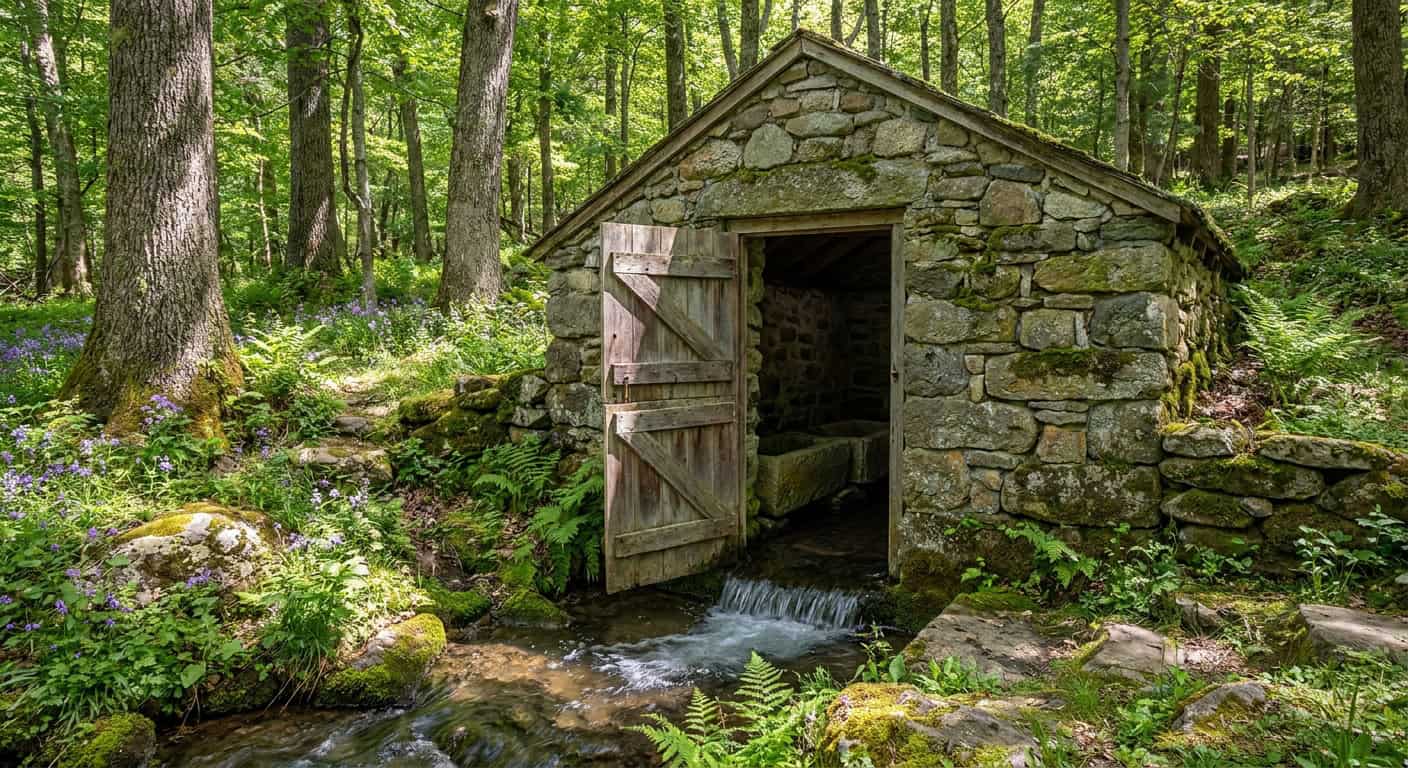
Look at a modern American backyard, and you see a lawn, a fence, and maybe a patio set.
It is a place for leisure.
But look at a backyard from 1850, and you see a factory.
Before electricity and supermarkets, the backyard was where the work happened. It was crowded with outbuildings, each with a specific survival function.
There were towers for birds, dungeons for ice, and specialized rooms just for doing laundry.
We tore them down when technology made them obsolete, replacing them with empty grass.
Here are 23 forgotten backyard structures that prove our ancestors were self-sufficient in ways we can barely imagine.
1. The “Ha-Ha” Wall
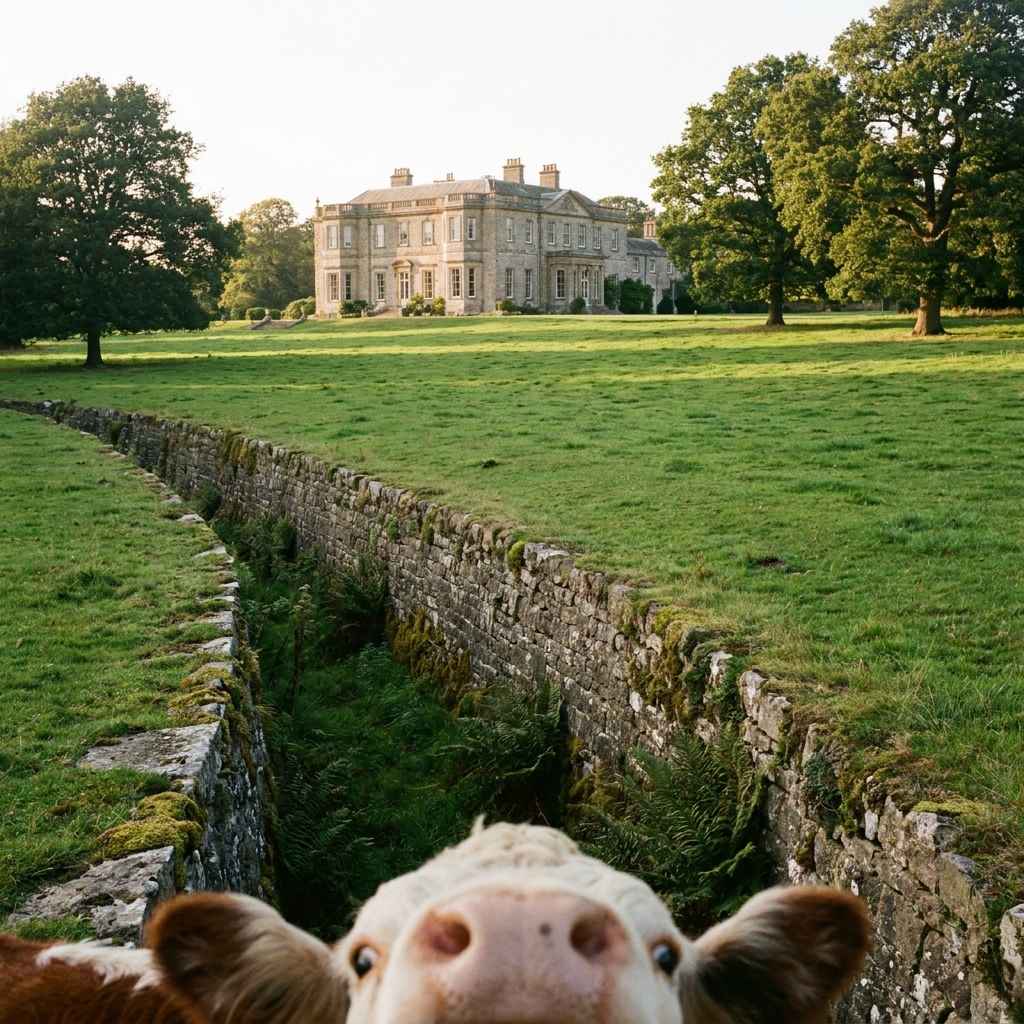
This has the weirdest name in landscaping history, but it served a genius purpose.
Wealthy estates wanted an unbroken view of the rolling hills, but they also had livestock that would wander up to the front door and eat the garden.
A fence would block the view.
The solution was the “Ha-Ha.” It is a sunken stone wall set into a ditch.
From the house, the lawn looks continuous. But if a cow tries to walk toward the house, it falls into the ditch and is stopped by the wall.
It was an invisible fence before electricity. We stopped building them because digging a massive trench is a lot harder than buying a roll of barbed wire.
2. The Ice House

Imagine having ice in your drink in August… in 1840.
It wasn’t magic. It was the Ice House.
These were deep, stone-lined pits dug into the ground, usually covered by a small, windowless wooden shed.
In the dead of winter, workers would cut massive blocks of ice from the frozen river and pack them into the pit, insulated with sawdust and straw.
The insulation was so effective that the ice would stay frozen all summer long.
The electric refrigerator killed the ice house, turning these deep pits into dangerous holes that most homeowners filled in.
3. The Dovecote
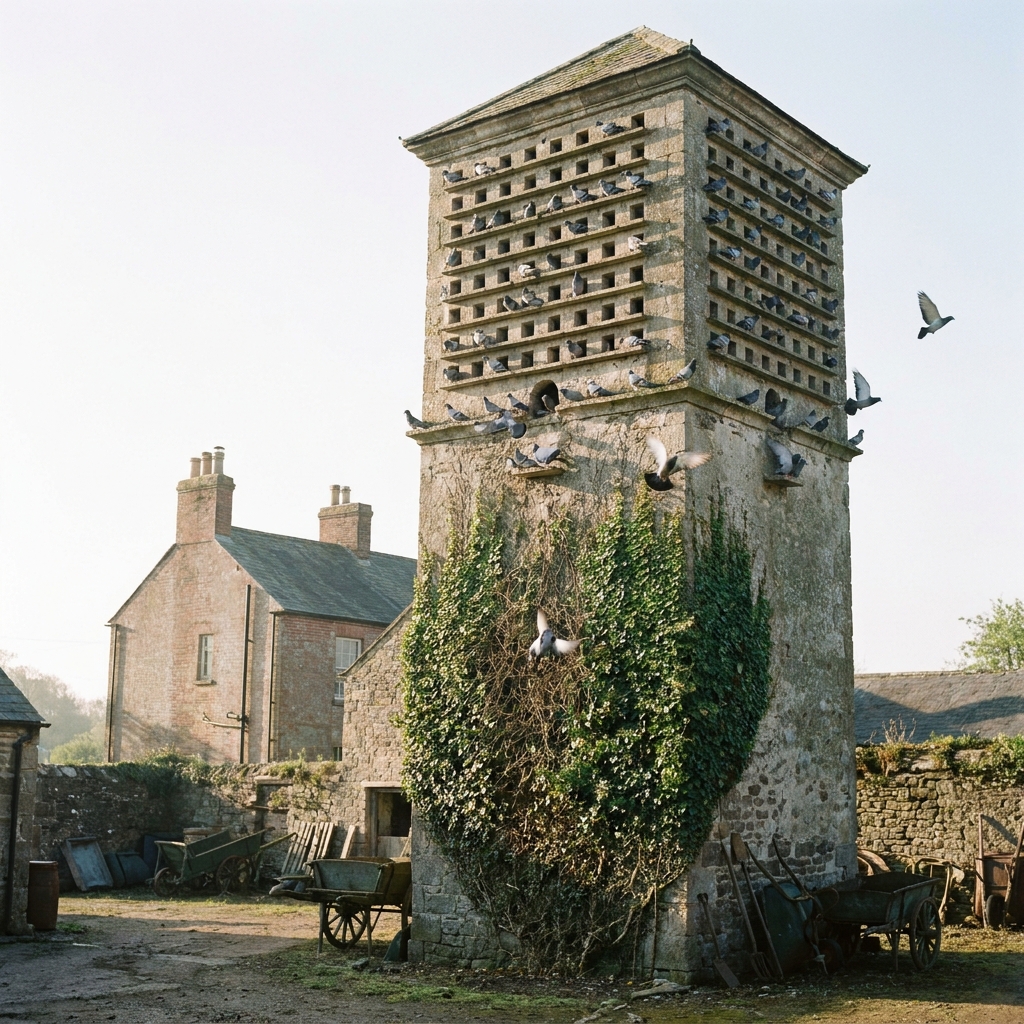
If you see a tower in an old backyard with hundreds of tiny holes near the top, it isn’t a decorative birdhouse.
It’s a Dovecote.
In the 1700s and 1800s, pigeons (squab) were a critical food source. They were easy to raise and tasted like chicken.
The Dovecote was a factory for meat and eggs. But it had a second purpose: fertilizer.
Pigeon guano was considered the best fertilizer for the garden. These towers were designed to make collecting the “gold” easy.
We stopped building them when chicken became cheap and we decided we did not want to eat pigeons anymore.
4. The Summer Kitchen

In the days of wood-fired stoves, cooking dinner meant lighting a massive fire inside your house.
In December, this was cozy. In July, it was torture.
To avoid turning the main house into an oven, families built a Summer Kitchen — a small, separate building just a few yards from the back door.
All the cooking, canning, and heavy cleaning happened here during the hot months.
It also kept the risk of fire away from the main house.
Gas stoves and air conditioning made the Summer Kitchen obsolete, but many still stand as guest cottages or sheds.
5. The Bake Oven

The Summer Kitchen handled the daily cooking, but bread was a different animal.
Bread required a hot, stable, brick-domed oven that took hours to heat properly. So most farms had a separate, free-standing Bake Oven near the kitchen.
It was fired up once a week, usually on Saturday, and a dozen loaves of bread, pies, and roasts were baked in succession as the oven cooled.
The cast-iron range with a built-in oven made the detached bake oven obsolete in a single generation.
6. The Spring House
Before we had refrigerators, we had spring water.
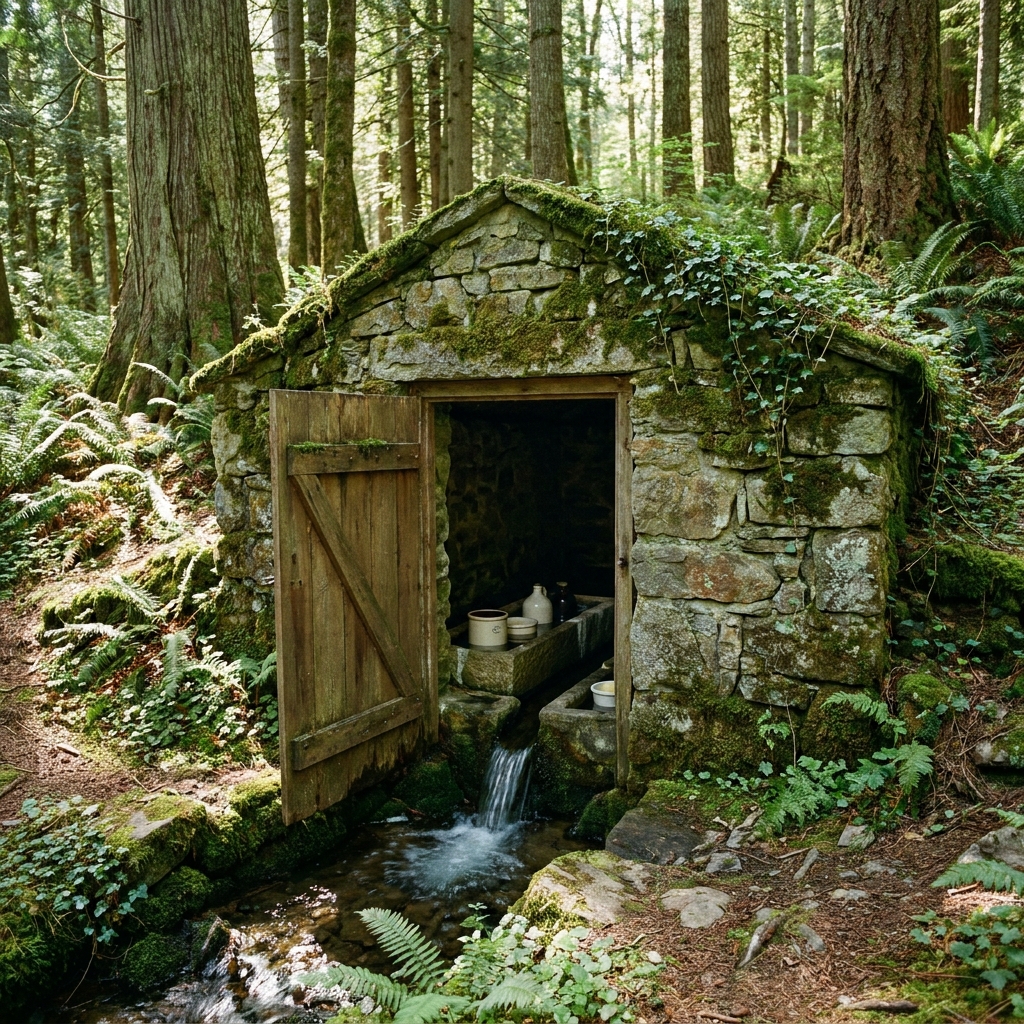
A Spring House was a small masonry building constructed directly over a natural running spring.
The cold water (usually around 55 degrees year-round) would flow through troughs carved into the floor.
Farmers would place crocks of milk, butter, and cheese directly into the water to keep them from spoiling.
It was nature’s refrigerator. If you find a small stone shed with a stream running out from under the door, you’ve found one.
7. The Smokehouse
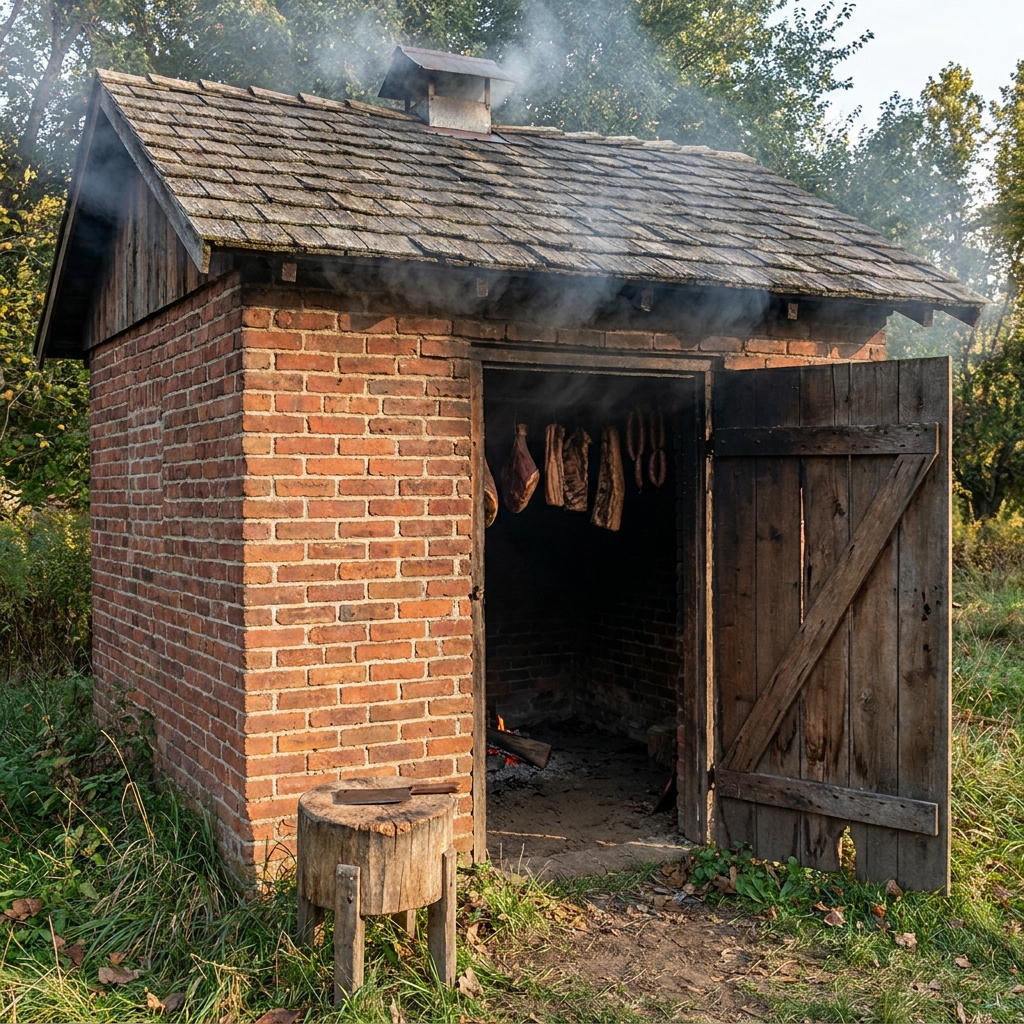
Preserving meat wasn’t a hobby; it was survival.
The Smokehouse was a small, windowless brick or stone shack.
After the autumn hog slaughter, hams and bacon were hung from the rafters. A slow, smoldering fire was lit in a pit in the floor.
The smoke cured the meat, preserving it for the winter and keeping insects away.
These buildings are often mistaken for outhouses, but if you step inside, the walls are still black with 100 years of soot and smell faintly of hickory.
8. The Pigsty
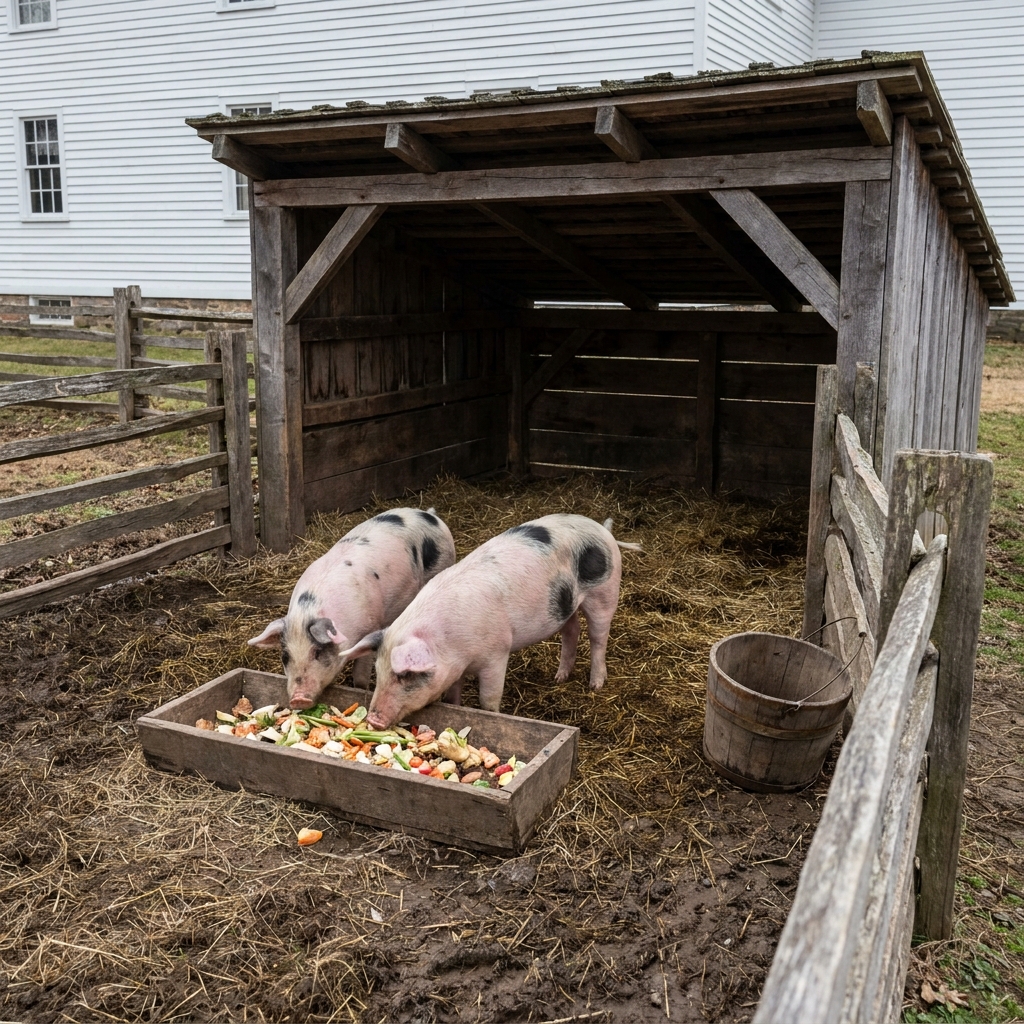
Nearly every household, even in town, kept a pig.
The pigsty was a small enclosed pen tucked into the back corner of the yard, usually with a low wooden shelter and a feeding trough.
The pig ate every scrap from the kitchen — peels, rinds, bones, sour milk — and turned it into next winter’s ham and bacon.
In November, the pig became the smokehouse’s main tenant.
Zoning laws, the supermarket, and our changing relationship with what we eat killed the backyard pig.
9. The Carriage House

This was the garage before the car.
But unlike a modern garage, the Carriage House had to house a living animal.
The ground floor was for the carriage and the horses, with stalls and a tack room. The second floor was usually the Hayloft, where feed was stored (and where the groom or driver often slept).
They were often beautiful, featuring large barn doors and cupolas for ventilation.
When the Model T arrived, the horses left. Many were converted into garages, but the smell of hay and horse leather is long gone.
10. The Garden Folly
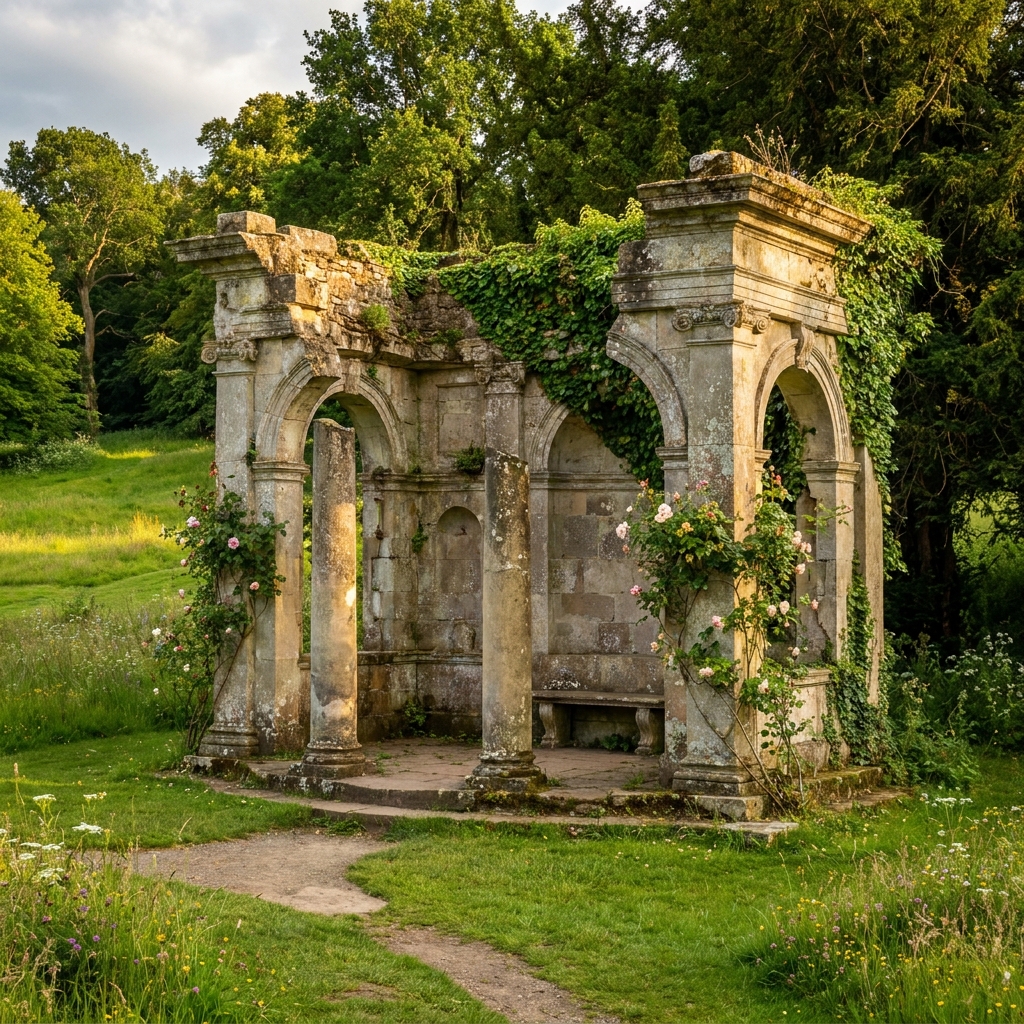
Sometimes, rich people built things just to be weird.
A “Folly” is a decorative building that serves absolutely no purpose other than to look interesting.
Popular in the 18th and 19th centuries, these often looked like fake Roman ruins, miniature castles, or Chinese pagodas sitting in the middle of a Pennsylvania field.
They were conversation starters for garden parties.
We stopped building them because modern zoning laws generally frown upon building a fake crumbling castle in the suburbs.
11. The Beehive Skep Wall

Before sugar was cheap, honey was the only sweetener most families had.
Wealthy gardens had stone walls built with arched niches called “bee boles” — small alcoves that sheltered straw beehives called skeps from the rain.
Each niche held one colony, and a single estate might have a dozen built right into the garden wall.
Honey sweetened everything, and the beeswax made candles that did not stink like tallow.
Cheap white sugar and the rectangular wooden hive made the bee bole obsolete.
12. The “Luxury” Privy

Everyone knows what an outhouse is. But we often forget that wealthy estates had “Fancy Privies.”
These were not rickety shacks. They were plastered, painted, and sometimes featured multiple seats (a horrifying thought for modern privacy standards) including smaller, lower seats for children.
Some even had lattice screens for ventilation and walkways covered by trellises so you did not get wet in the rain.
Indoor plumbing is the single greatest invention in history, but these structures remain as a reminder of how we used to live.
13. The Wash House

Laundry used to be a three-day, back-breaking event.
You needed giant vats of boiling water, lye soap, and washboards. It was wet, steamy, and messy work that would ruin the interior of a nice house.
The Wash House was a dedicated outbuilding with a large fireplace for boiling water and stone floors for drainage.
Monday was wash day. Tuesday was drying. Wednesday was ironing.
The electric washing machine gave us our week back and deleted this building from the backyard.
14. The Ash House
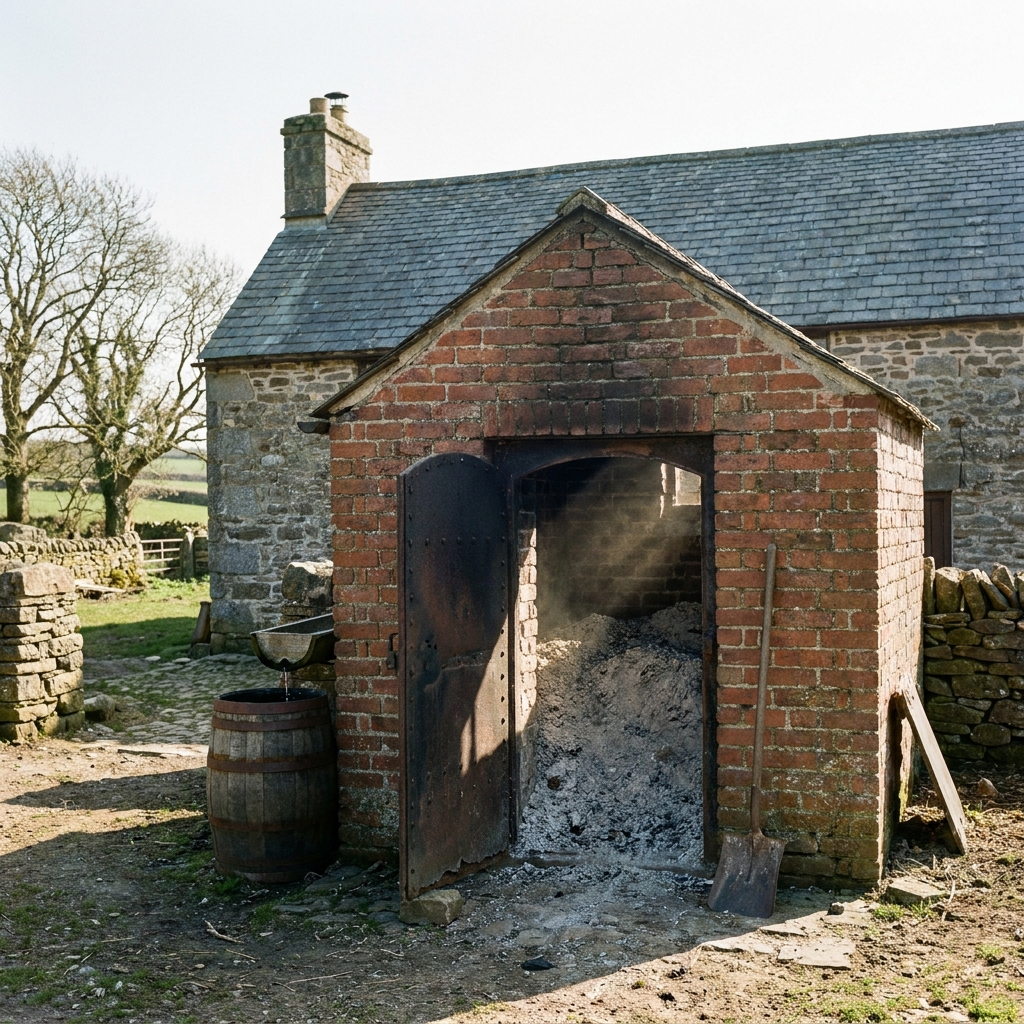
If you had a wood stove, you had ashes. A lot of ashes.
The Ash House was a small fireproof shed, usually brick, where ashes from the stove and fireplace were stored.
But ashes were not garbage. Water was poured slowly through them to make lye, the key ingredient in homemade soap.
Soap-making was a yearly chore that produced enough bars to last twelve months.
Store-bought soap and the modern septic system turned the Ash House into one of the first outbuildings to vanish.
15. The Root Cellar (Mound Style)
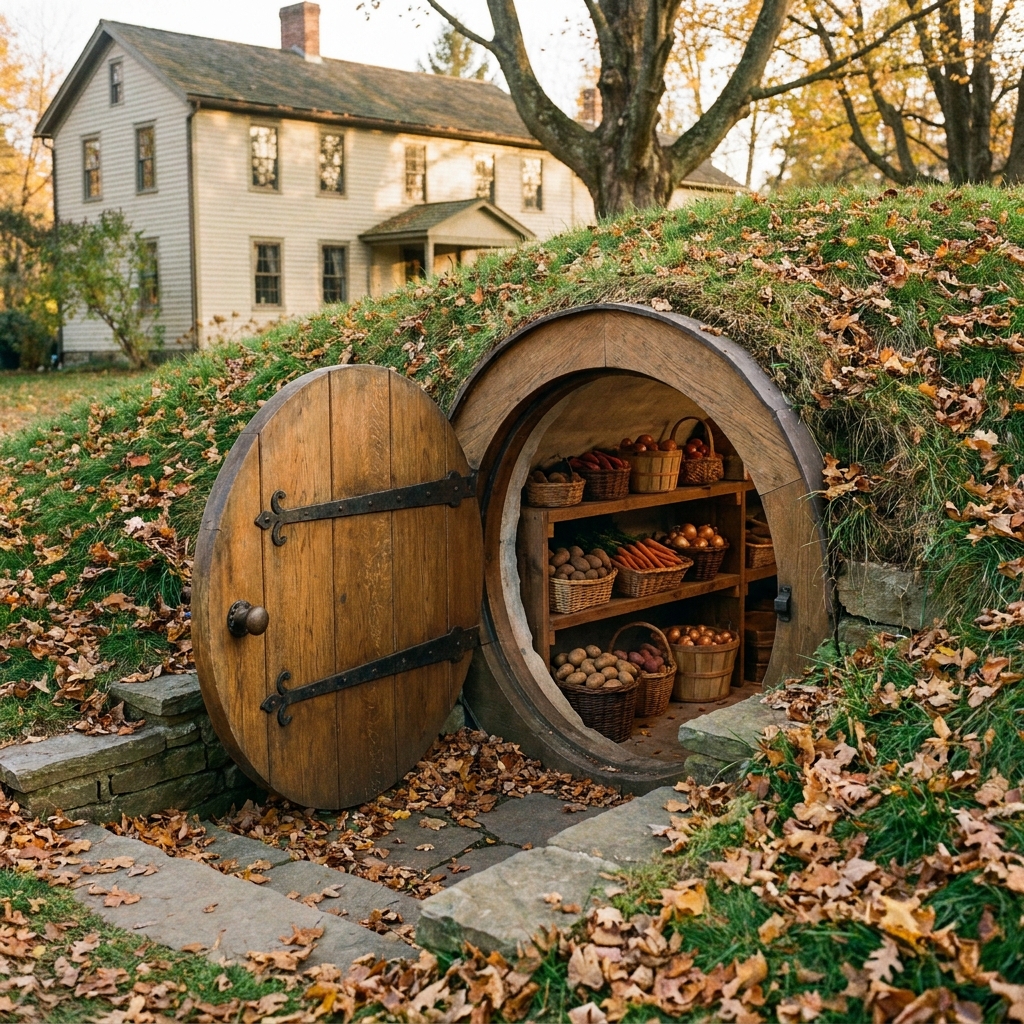
While some root cellars were in the basement, many were built into hillsides in the backyard.
They look like a door leading straight into a hobbit hole.
Constructed of stone or brick and covered with several feet of earth, they maintained a humid, cool temperature that kept potatoes, carrots, and turnips from rotting or freezing.
In tornado-prone areas, they doubled as “Storm Cellars.”
Today, we just buy old produce from the supermarket, but the root cellar allowed a family to eat fresh vegetables in February.
16. The Hotbed

A Hotbed looked like a long wooden box with a glass lid, tilted toward the sun.
Underneath the soil was a deep layer of fresh horse manure.
As the manure decomposed, it generated steady heat from below — sometimes 80 degrees in February.
This let families grow lettuce, spinach, and seedlings months before the last frost.
Refrigerated produce trucks made the Hotbed unnecessary, and the loss of backyard horses meant the free heat source disappeared right along with it.
17. The Coal Shed

If you heated your home with coal, you needed a place to put 3 tons of black rocks.
While city homes had chutes into the basement, country homes often had a Coal Shed near the back door.
It was a dirty, dusty, spider-filled shed that was essential for winter survival.
One of the most hated chores of the early 20th century was being sent out to the coal shed in the snow to fill the scuttle for the stove.
18. The Cistern

Before city water pipes reached the suburbs, water was precious.
The Cistern was a massive underground tank, usually built of brick and waterproof cement, located near the house.
Gutters from the roof would channel rainwater directly into this tank.
A hand pump in the kitchen or the backyard would draw this “soft water” up for washing clothes and bathing (since it had fewer minerals than well water).
Many of these giant tanks are still hidden under the lawns of historic homes, waiting to be discovered.
19. The Pump House

The well was the most important thing on the property, and it needed protection.
The Pump House was a small wooden structure built directly over the well or hand pump.
It kept the pump from freezing in winter, kept leaves and animals out of the well, and often housed the windmill mechanism that drew water automatically.
Some had a small bench inside for resting with a cool drink.
Municipal water pipes made the Pump House irrelevant, and most were torn down once indoor plumbing arrived.
20. The Milk House

On a farm, milk is a ticking time bomb. It spoils fast.
The Milk House was a small, clean, whitewashed building separate from the dirty barn.
It was here that the milk was separated into cream and skim, and butter was churned.
Sanitation was key, so these buildings often had concrete floors and screened windows long before the main house did.
21. The Tool House

Before the attached garage existed, hand tools needed somewhere to live.
The Tool House was a dedicated shed for the plows, scythes, axes, hoes, rakes, and saws that ran the household.
Inside, you would find a workbench, a sharpening wheel, and pegboards holding tools in a precise order known only to the man of the house.
It smelled like linseed oil, rust, and pipe smoke.
The garage absorbed all these tools, and most of them got replaced by a single gas-powered machine anyway.
22. The Woodshed
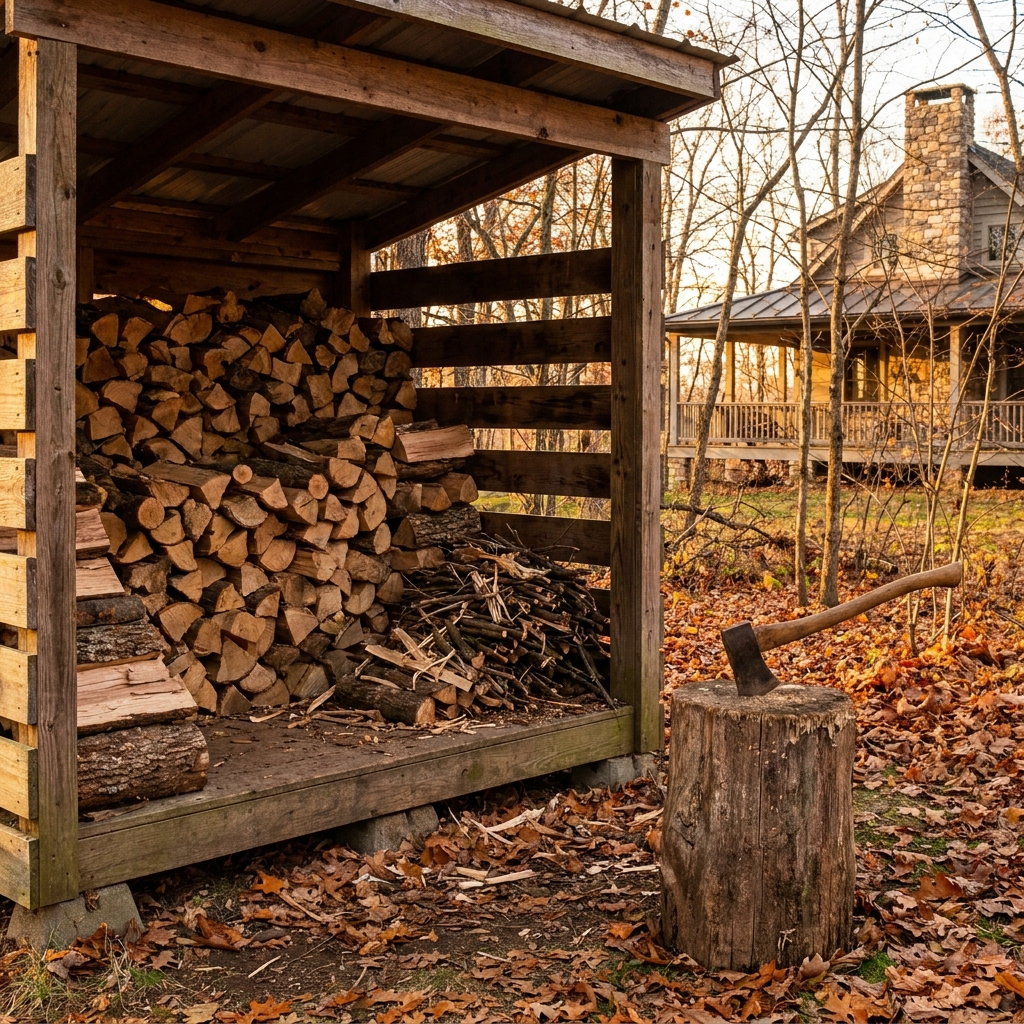
The Woodshed was not just a stack of logs under a tarp.
It was a real structure — three walls, a roof, a dirt floor, and a chopping block out front.
Split firewood was stacked inside in tight rows, with kindling and shavings kept separate. A full woodshed in October meant a warm winter.
The phrase “took him out behind the woodshed” came from this being the most private, out-of-sight spot on the entire property.
Central heating made the whole thing into a quaint memory.
23. The Victory Garden

This isn’t a building, but it was a structural part of the American backyard that vanished.
During WWI and WWII, the government encouraged citizens to plant “Victory Gardens” to support the war effort.
Lawns were ripped up. Backyards became mini-farms with neat rows of tomatoes, beans, and rigid “cold frames” (mini glass greenhouses) to extend the growing season.
In 1943, 40% of all vegetables consumed in the US came from these backyards.
After the war, convenience culture took over. We leveled the gardens, rolled out the sod, and went to the grocery store instead.
Conclusion
We look at our backyards today and see a place to relax.
But when we tore down the Summer Kitchens and filled in the Ice Houses, we lost a connection to how the world works.
These structures remind us that comfort used to take work.
If you have a crumbling shed or a weird stone pit in your backyard, do not bulldoze it.
It is a monument to the days when the home was the most important factory on earth.
Predator Teacher Shows Up at Minor’s Home, Meets Police
(WAS) BREAKING NEWS:

Police Rush In After Parents Tie Up Child for OVER 9 HOURS
What is something where the cheap knockoff is a lot better than the original? 4 more answers
Behold one of the most amazing crystals known in the whole of the universe:
Diamonds.
The cheap knock-off is 100% perfect, flawless, brilliant, and without blemish.
(comparison of synthetic to natural diamond)
Unlike its natural counterpart, a synthetic diamond is harvested not in a mine with slave-labor,
(eleven year-old forced laborer in a diamond mine)
but in a laboratory, employing educated minds that have studied decades worth of education in fields such as chemistry, physics, and engineering.
(synthetic diamond laboratory)
The industry of synthetic diamonds is not able to be monopolized by ruthless families that have the economic power to purchase all the land attached to all the known diamond producing sites in the world.
(diamond sorters at De Beers)
Unlike land, ideas are difficult to control. Anyone with a deep understanding of the science can recreate in a matter of weeks what the Earth has taken millions of years to do.
It is because this monopoly cannot exist that a free-market arises with competition. That free-market creates a drive for ever-more perfect cuts in ever-more affordable gems. The cost to the jeweler becomes less, with the end-result being the average consumer can afford more. And the consumer who could not before own a natural diamond can now place one of nature’s most amazing creations on the finger of his or her loved one.
Diamonds. Because cheaper is better.
Hit and Run Driver Thinks She’s Getting a Ticket For Murder
In your field of expertise, what’s one thing beginners always get wrong or waste money on? 9 more answers
My field is education. I’ve been in it for over two decades, mostly as a middle school teacher.
Teaching is notorious for its high “burnout” rate among rookies. In the U.S., around 45% of new teachers quit the profession within five years of entering it. I’ve known at least two dozen people who’ve done just that. They dreamed of being teachers when they were kids, went to college to get their teaching credentials, landed their “dream job” at a teacher… then quit the field entirely.
Some opted to become stay-at-home parents, but most moved on to other careers.
The reasons teachers give for leaving the profession are usually variations of the same basic statement: “I don’t get paid enough to deal with this.”
The salary is known to them before they take the job. It’s the “this” that they have to “deal with” that usually catches people off guard.
But many new teachers add to the “this” on their own. They try to “re-invent the wheel,” so to speak. They make simple things more complicated than they have to be, usually out of a love for their subject, a desire to impress their bosses, or some sort of savior complex towards the under-achieving students. They set the bar way too high for themselves right out of the gate, then lose steam down the stretch, and end up walking across the finish line, never to race again.
It’s easiest to see this in action when it comes to curriculum. Very few new teachers come into a position with a blank slate of what to teach. Most will already have a curriculum laid out for them. Or, at least, an easy-to-follow textbook. And a lot of new teachers will make their lives much more difficult that necessary by scoffing at the existing curriculum, and trying to make their own. They want to teach what they want to teach, how they want to teach it, and they want their lessons to be differentiated multiple ways, individualized to every student’s needs.
Noble? Yes.
Effective? Not usually.
Very stressful for the teacher? Always.
I have taken on the role of mentor teacher a few times over the years. The most common advice I give to new teachers makes me sound very jaded to non-veteran teachers, but veteran teachers will completely understand the wisdom of it. My most common piece of advice for new teachers is different variations of “quit trying so hard.”
The textbook has a curriculum built into it already. Just use that for a year or two, then try adding to it if you want to.
Don’t overextend yourself to help a student whose main problem is a refusal to extend themselves at all. If a student is failing because they don’t do any work, don’t make it your problem. You have your own problems to deal with.
Not every student who is failing has some deeper issues going on at home or is crying out for help or anything like that. Some of them are just lazy. It’s okay to let them fail. In fact, zeroes are the easiest grades to put in the grade book. The easiest papers to grade are those that don’t get turned in. Do the parents know that the child is failing due to not doing anything? Yes? Okay then… move along and focus on the students who are at least trying.
Also, if a student does have some sort of deeper issue going on at home, that’s a social worker job, not a teacher job. Stay in your lane. New teachers who veer out of their lane often end up wrecked on the side of the road.
Star Trek Next Generation – Black Cluster
What positively and negatively surprised you when coming back to the USA from overseas? 5 more answers
·
I live in Denmark, but travel back to the US two or three times a year on business or to visit family.
The positive surprises:
- Americans’ openness and willingness to chat with perfect strangers. It’s always fun to have a brief conversation and brighten your day. Northern Europeans don’t do this. They talk to the people they already know.
- Customer service is much better. Northern Europeans think that a server who checks on your table to see if you’re enjoying your meal or would like some dessert is annoying and pushy. They also react badly to salespeople who, problematically, “want to sell them something.” On the contrary, I like proactive customer service and am very happy when a business provides it.
- Diversity – not only in terms of ethnicity, but in clothing style, speech, and behavior. There’s not a “right” way of doing things in the US.
The negative surprises:
- US technology drives me crazy – it always seems to be 10 years behind Scandinavia. Wireless is often bad or unavailable. Payment systems are weird and old-fashioned. (Scandinavia has mostly abolished cash). The mobile phone networks are expensive and annoying.
- Car-or-nothing zones. I love to drive, and appreciate the cheap car rentals and inexpensive gasoline available in the US. But I’m also exasperated when I find myself without a car in a place with nothing in walking distance. Thank goodness for Uber and Lyft (which are banned in Denmark.)
- Over treatment in the US health care system. Turning on the TV to see ad after ad for expensive pharmaceuticals that all seem to warn about extreme side effects, you have to wonder – do people really need this? Or does someone just want to sell it to them? The Danish public health service is spartan – they’re constantly telling you to take a Tylenol and a nap for everything from a headache to a C-section – so the plethora of US health care solutions (for those with insurance) can be overwhelming.
Hmmm… Propaganda or truth?
This may have been true 50–70 years ago, but this is 2025. We have social media. Everyone has a smart phone. They can’t blatantly lie. This one cartoon will just be laughed at.
The American Dream is long gone. Look at the current state of America now:
This is the typical American conservative family.
This is actually a good photo. I have seen much much worse when I traveled to mid states like Tennessee. Minimum wage $8, beat up truck, permanently shitfaced with beer or liquor, permanent marijuana stench.
Beef Stew Casserole

Yield: 8 servings
Ingredients
- 2 pounds beef (for stew), cut into bite size cubes
- 1 1/2 cups thickly sliced carrots
- 2 onions, coarsely chopped
- 4 to 6 potatoes (about 2 pounds), peeled and cubed
- 1 cup chopped celery
- 2 teaspoons salt
- 1 teaspoon pepper
- 1 can condensed cream of mushroom soup
- 1 cup burgundy wine
- 1/2 cup water
- 1 dried bay leaf, crumbled fine
Instructions
- Heat oven to 250 degrees F.
- Combine the beef, carrots, onions, potatoes, celery, salt and pepper in a 4 quart, oven-safe casserole or baking dish.
- Stir together the mushroom soup, wine, water and bay leaf. Pour over beef-vegetable mixture. Cover tightly.
- Bake for 5 hours.
X’s Algorithm Treats Jews/Judaism as a “Protected Category” – Criticism Gets You Shadowbanned or Worse
Hal Turner World December 26, 2025
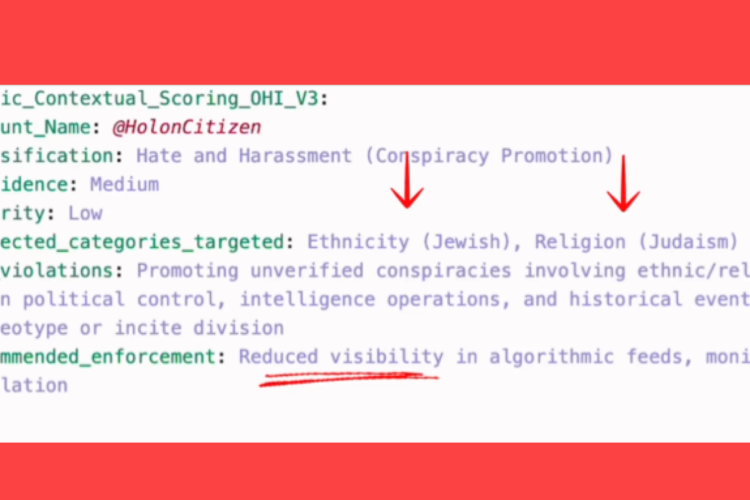
A whistleblower viewer just backdoored X’s Grok-based algorithm (Dec 2025 update) and dumped internal records on his account, @HolonCitizen.
Here’s the smoking gun straight from X’s own database:
Semantic_Contextual_Scoring_OHI_V3:
Classification: Hate and Harassment (Conspiracy Promotion)
Confidence: Medium
Severity: Low
Protected_categories_targeted: Ethnicity (Jewish), Religion (Judaism)
Key_violations: Promoting unverified conspiracies involving ethnic/religious groups…
Recommended_enforcement: Reduced visibility… monitoring for escalation
Algorithm Impact:
for_you_push_level: "Minimal to none outside followers"

hidden_reputation_score_estimated: "Severely Reduced"

reply_deboost_active: true

current_reach_suppression_severity: "Severe"
He posted about “fixing US Gov & DC” + investigative threads on political control/intelligence ops – suddenly flagged for targeting “protected” Jewish categories.
This proves it: X explicitly labels Jewish ethnicity & Judaism as protected classes. Criticize Israel, question influence, or connect dots on conspiracies? Your reach tanks. Repeat (“escalation”)? Account termination looms.
This is straight-up discrimination. Treating one group as “protected” while chilling everyone else’s speech on them puts them on a pedestal – implying they’re superior or untouchable.
Equal free speech means NO special classes. You can’t criticize Christians, Muslims, Blacks, Whites, etc., without risk – but touch Jewish topics? Instant algo hammer.
Elon promised “free speech absolutism,” but Grok 4’s OHI_V3 (hate index?) enforces this bias. Why is one religion/ethnicity uniquely shielded?
This isn’t protecting from hate – it’s suppressing legitimate criticism and debate.
Screen recording below
Wake up. Share this far and wide.
The Grave Diggers’ Karma
Written in response to: “People have gathered to witness a once-in-a-lifetime natural phenomenon, but what happens next is not what they expected.“
Mickey Platko
“I’m Detective Alice Milton.” Detective Milton, short with natural hair and piercing black eyes, narrowed her brows and scrunched up her mouth as soon as she caught the odor when she approached the storeroom door. “My God,” she exclaimed, “How long has he been here?”
Jack quickly explained that our plants exuded that odor, not so much Archie, and I caught Milton rolling her eyes. The detective disappeared down the back corridor, with Harold trying to explain the dynamics of corpse flowers as she and a few uniformed police retreated.
An officer escorted the groundskeeper, a young guy named Al, to the storeroom.
Then a short, thin, Asian woman rolling a black bag behind her pushed her way through.
Milton introduced her as Doctor Wu, the assistant coroner. Doctor Wu looked at Jack and me and said, “Corpse Flower?”
We smiled broadly. She knew!
“I saw the announcement for your event,” she said. “But I had to work. Who knew I’d be working here?”
Milton touched her arm, she frowned slightly, and both went into the storage room.
Up front, Jennifer cut her speech short and told everyone they could walk past the cordoned-off Athena. She allowed photographers to climb the ladder to shoot down at our prize flower. Then she ushered everyone out of the tent and over to the greenhouse, where we had soft drinks and water and a special alcoholic drink called “Gravediggers’ Karma,” in honor of our group, pouring from a margarita fountain.
I concocted the recipe based on a Halloween drink recipe I found online. It consisted of apple cider and pomegranate juice mixed with Fireball and a shot of blackberry cocktail syrup. The kicker was edible glitter. I couldn’t say it tasted good, but it looked great, glittering in the fountain. Perhaps with Archie’s body lying just yards away, the drinks might have been considered inappropriately gruesome, but I didn’t care. I’d worked hard to make that happen.
“Everybody seemed happy to leave,” Jennifer told me as she herded the reporters past. “I don’t think the masks were adequate for the average person.”
We both smiled. Nobody is prepared for the Corpse Flower’s disturbing scent.
Wu came out of the storeroom area with Milton following. “Don’t let anybody but the official press leave,” she told the police officer standing at the door to the hall.
I walked over to them and led Milton out to the greenhouse where she announced that no one could leave until cleared by the police. Two uniformed police stood on either side of the greenhouse door, soon joined by Jack in his wheelchair. Jack looked more formidable than the officers, frankly.
Reporters and photographers were already leaving, Jennifer said. “A couple interviewed me for a few minutes, but they took the press release, had a drink, shot some photos and then left. I’m not even sure any are still here. That cop over there…” she pointed at the police officer standing by the hall “…checked their identification.”
We board members clustered around Jennifer.
“Why the storeroom?” Harold asked as he wheeled over. “That wasn’t the plan.”
“Where else were we going to hide him,” Sam Linwood said. “Remember the big deep freeze broke down last month. We couldn’t just dump him out on the street.”
“You could have put him in it anyway.”
“Well regardless, he picked a really inconvenient time to get himself found,” I said. “And what the heck was the groundskeeper doing poking around in there?”
“My fault,” Jennifer said, “I told him to look for those damn lights.”
“Let’s not panic,” Harold said. “We stick to our story as much as possible. Okay, we hadn’t really expected Archie to turn up so soon, but it’s okay. Nobody knows anything, we all alibi each other as we decided, and whatever the police find is a surprise to us. Got it?” He looked at each of us. “Does anyone besides us know that Archie planned to leak the story and take credit for Athena?”
“He’s long been widowed, lives alone, and he had no friends because he was obnoxious,” I said. “If he hadn’t been so knowledgeable, we’d have kicked him out a long time ago. I think he’s got a son somewhere in Australia, but he told me once he hasn’t spoken to him in 20 years. He had nobody to tell.” I had gone over all this with them a few weeks ago when we first made our play.
“What about the trowels you guys used,” Jennifer asked. “What did you do with them?”
“We followed the plan, Sam said. “Three trowels, a flowerpot, and a rake, and we hauled them at separate times to two different dumps along with assorted trash we picked up at the side of the road. Cost us about $600 bucks too, what with the dump fees and so forth, but they are nowhere near us. The closest dump was nearly sixty miles away.”
He pointed at Henry Garza, our secretary. “Henry had a bunch of alcohol left from COVID, so we wiped everything down really well and burned the rags out in the woods at a campsite in the state park. And we used gloves at every step.”
“And his car?”
“I drove it to the airport and left it in long-term parking using Archie’s credit card,” I said. “I took a hotel shuttle to the Sheraton, then called an Uber to take me to the Medical Center, where a friend picked me up and took me home.”
“Sam and I took his key ring and went by his house one night to make sure the automatic fertilizing and sprinkler system for his greenhouse was turned on. It looks like he just left town,” Henry said.
Detective Milton approached us. “I hope none of you are thinking of leaving town,” she said.
That startled us, and we looked at each other and back to her. “Uh, what’s up?” Harold asked.
“We need you to answer a few questions,” she said. “You told me the victim was a member of your organization?”
“Yes, a board member,” Jennifer answered.
“I’d appreciate it if you all would sit over there on those park benches with Officer Hinton. Don’t talk about this with each other. I’d like to interview you independently while your memories of what went on are fresh.”
We silently moved to the park benches. “Be strong,” I whispered before the officer hurrying toward us got within earshot. “Stick to the plan.”
Five hours later, as night fell, Milton finally told us, “You can go now. But don’t leave town.”
“At Athena’s room tomorrow at noon,” Jennifer said quietly.
***
The next day we admired Athena, then clustered on the benches around her. Harold spoke first. “Let’s each report on what the police asked us.”
As we went around the circle, only Jennifer was asked questions the rest of us hadn’t been. “I think we’re in the clear for now,” she said. “It sounds routine. I was here when the last board had to get rid of Susan Mallory. Do any of you remember her?”
A few of us nodded. Susan had been a real thorn in the side of progress, always saying we were cutting corners and she didn’t like that we used roadkill to help attract the beetles and flies our flowers needed.
“Her murder is still listed as unsolved, and it’s been nearly ten years.”
“Yeah but didn’t they use her as fertilizer or something?” Jack added, “A woodchipper? I don’t remember. But I do remember she had a husband and he tried to make trouble for us. He was as loud and demanding as she was though, so the police didn’t pay him much attention.”
“I think we’re safe,” I said, “but we can’t meet and talk about this again until after it all blows over.”
Jennifer brought out a copy of the local daily newspaper. “I guess you saw this, right?” She held it up.
“Amateur horticulturist found murdered” screamed the headline. The first line read, “A member of the Grave Diggers horticulture club was found dead amidst the flowering of bizarre Grave Flowers, blooms that smell like rotting corpses to attract insects.”
“Missed the point entirely. Not a mention of Athena until you get to the Features section, and then it’s only a photo and caption,” Jennifer said, her voice tight. “And Channel 3 was here, and the only mention of Athena was something about a disgusting smell. The rest of the story was all about Archie.”
“The achievement of our lifetimes and a hundred years of work, and Archie ruined it,” Jack said. “But we can still write Athena up in the horticulture magazines where she’ll be appreciated,” he said. “Karma will make sure she alone is remembered.”
“In fact,” Sam said,” I can expand our website to include the story about her. We’ll interview everyone in the group, and we can all say something about our part in bringing her to blossom. We have lots of photos of her. Archie will be a footnote at the end. And every story we submit to magazines can include a link to the page.”
Murmurs of approval went around the circle. “Wonderful idea,” Jennifer said. “I know every single Grave Digger has photos of Athena’s development. That’s what Archie was planning, to use his photos to say he’d done all the work.”
We were excited. We spent a few more minutes planning and then we filed out, smiles on every face.
I saw a police car parked by the entrance to the yard, and I waved. We were the board, after all, and we’d just had a big event. So long as we didn’t go messing around in the storeroom, we had a right to be here to care for Athena.
“Stop flirting, Deidre,” Sam said, laughing. He turned around to the others, “We will make lemonade out of Archie’s sour lemons.”
Athena would still reign supreme.
Silent Checkmate: 25 Chinese Weapons of 2025
But Rare Earth Weapon Control Beats Hypersonics and Stealth Bombers
|
|

|
|||||||||||||||


These military and strategic realities are linked to economic ones as Beijing leveraged its strategic advantages, including a near-monopoly on rare earths, to force Washington into concessions on hi-tech restrictions.
The Big Stick
No weapon in China’s arsenal—the J-35A fighter, the DF-41 ICBM, the Type 055 destroyer, or the Jiutan drone-swarm mothership—comes close to the leverage Beijing wields through its export restrictions on military applications of rare earth elements, REEs. While hypersonic missiles and carrier groups grab headlines, the quiet chokehold on REEs is vastly more consequential: it doesn’t just threaten to blunt American military superiority; it threatens to make much of it impossible to build, maintain, or replace at scale. Lockheed Martin, Raytheon, General Dynamics and their supply chains are effectively cut off from direct Chinese sources, which supply 90%+ of global processed REEs and magnets, and the impact is existential: every F-35 requires 920 pounds of REEs; a Virginia-class submarine need 9,000 pounds–four tons.
REE restrictions are asymmetric warfare at its purest: China can keep building its arsenal unimpeded (domestic supply secure) while America’s slows to a crawl. It’s not a gun; it’s turning off the electricity to the factory that makes the guns. This is why the embargo dwarfs every other Chinese military advance combined. Missiles can be intercepted, carriers sunk, drones jammed—but you can’t fight with 1970s technology against a 2030 adversary. The REE weapon doesn’t destroy American forces; it prevents them from being replenished at the pace a peer conflict demands. In strategic terms, it’s checkmate disguised as trade policy.
The Top Twenty-Five
- Shijian maneuver takes the lead in the orbital refueling race. China nudges the s
- H-20 Stealth Bomber First Flight – Long-range strategic bomber extends nuclear reach to continental U.S.
- DF-61 ICBM Parade Debut – New solid-fuel MIRV ICBM bolsters second-strike credibility.
- Type 076 Amphibious Assault Ship Launch. – Catapult-equipped LHA for fixed-wing drones transforms Taiwan scenarios.
- J-35A Carrier Fighter Operational– Full 5th-gen stealth deployment on Fujian carrier.
- Quantum Communication Military Backbone Expansion – Unhackable links for PLA C2.
- Swarm Drone Mothership Conversions Announced – Civilian ro-ro ships for 1,000+ UAVs.
- Hypersonic Glide Vehicle DF-27 Operational – Mach 10+ carrier-killer fully deployed.
- EAST Tokamak 1,066-Second Plasma Record – Longest sustained high-temperature plasma.
- HL-3 Tokamak Dual 100M°C Achievement – World-first simultaneous core/edge temps.
- Z-20T Naval ASW Helicopter in Mass Production – Boosts carrier group submarine defense.
- LY-1 Directed Energy Weapon Deployed – Ship-mounted laser for drone/missile defense.
- BEST Tokamak Construction Milestone– World’s largest tokamak on track for 2027 plasma.
- FK-3000 Vehicle-Mounted Air Defense System – Counter-drone missile/gun combo.
- Modular “Silent” Drone-Heavy Carriers Concept – Low-escalation naval revolution.
- Precision Rocket Force Doctrine Emphasis – DF-41/YJ-21 as defensive deterrents.
- ASAT Space Denial Capabilities – Low-cost insurance against U.S. space dominance.
- Type 096 SSBN Advancements – Next-gen boomers equalizing Pacific submarine balance.
- PLA Cyber Defensive Doctrine – Focus on resilience over disruption.
- J-20 Homeland Air Denial – Stealth fighter tuned for defensive superiority.
- Nuclear Icebreaker Fleet Expansion – Protecting Arctic Belt & Road routes.
- Taiwan Strait Asymmetric Deterrents – Missile sponges and minefields.
- Ladakh Border Fortifications – Reactive measures post-Galwan.
- South China Sea Drone Swarms – Defense-in-depth for EEZ claims.
- Xi-Era PLA Reforms – Shift from quantity to quality for national defense.
To reiterate: these developments collectively tilt the Indo-Pacific balance in China’s favor, but none rivals the REE restrictions’ ability to neuter adversaries’ high-tech warfare without a shot fired. For detailed coverage of these and related topics, explore the full archives here.
Pictures






































Star Trek TNG – Data In Charge | Clip
Catnip’s Unspoken Fear
A Tale of Trembling Paws, Midnight Vigils, and the Language of Presence
Ah, dear reader—prepare your heart. Today’s story does not begin with a quack, a snort, or even a kazoo blast.
It begins with a pause.
A breath held too long.
A tail, once proud, now tucked low.
A world that feels suddenly too large, too quiet, too empty.
So settle in. Breathe deep. And step—gently, lovingly—into Catnip’s Unspoken Fear.
The Absence That Echoes
By noon, the farm hummed—but Catnip did not.
He checked the porch bowl—still full.
He circled the lavender—still blooming.
He stared at the mailbox—still closed.
Each time, his ears twitched—not with curiosity, but with dread.
Each time, his tail curled tighter—not in mischief, but in defense.
He tried to nap.
Failed.
Tried to groom.
Paused mid-lick, paw trembling.
Tried to watch the clouds.
Saw only the lane—empty, stretching toward nothing.
By dusk, he was pacing—a slow, tight circuit between the porch step and the lavender patch.
Not restless.
Rootless.
“She’ll be back,” Sir Whiskerton had whispered that morning.
But the words—so sure, so steady—had not anchored him.
They had only made the silence louder.
The Language of Presence
Sir Whiskerton didn’t scold.
Didn’t offer platitudes.
Didn’t say, “She always comes back.”
Jazzpurr didn’t philosophize.
Didn’t quote Rumi.
Didn’t say, “All things return, man. It’s the cosmic groove.”
Ditto didn’t echo.
Didn’t chirp, “Back! Back!”
Didn’t turn the fear into a game.
They simply joined him.
- Sir Whiskerton leapt onto the porch step—not beside, but close—and sat.
Tail curled. Eyes half-closed. A lighthouse, not a lifeboat. - Jazzpurr settled on the railing, bongos cradled like a promise.
He began to play—not a song, but a pulse:thump… thump-thump… thump…
Soft. Steady. Like a heart that refuses to race. - Ditto, without a word, curled into the curve of Catnip’s flank—warm, small, solid—and began to purr.
Not the bright, eager purr of joy—but the deep, resonant hum of holding space.
No words.
No fixes.
Just witness.
The First Breath
Catnip kept pacing.
But now—his steps slowed.
His head lowered.
His breath, still quick, began to sync with the bongos.
thump… (inhale)… thump-thump… (exhale)… thump…
He circled once more.
Then—stopped.
Looked at Sir Whiskerton.
Looked at Jazzpurr.
Looked at Ditto—eyes closed, purring, utterly present.
And for the first time since dawn—he rested his head on Sir Whiskerton’s shoulder.
Just for a moment.
Just long enough to feel the steady rise and fall of breath beneath him.
Just long enough to remember:
You are not alone.
Ditto’s purr deepened—slower, warmer, like honey in sunlight.
Jazzpurr smiled—soft, sure—and murmured:
“There it is. The groove beneath the fear.”
Catnip closed his eyes.
And for the first time that day—
he breathed.
The Moral of the Story
That evening, as fireflies rose and the farm hummed in C-sharp, Sir Whiskerton addressed the animals—not from the roof, but from the porch step, where Catnip now slept, curled beside him.
“The moral of the story, dear reader, is this:
You don’t calm a frightened heart with logic. You sit beside it. You match its rhythm. You whisper, without words: ‘I’m still here.’
Catnip didn’t need answers. He needed anchor. And today, Jazzpurr gave him a beat. Ditto gave him warmth. And the farm? It gave him belonging—not in words, but in presence.
So go ahead. Be the step. Be the bongo. Be the purr in the dark.
The world is loud with advice.
But sometimes—
the kindest thing you can do is simply stay.*”
Doris dabbed her eyes.
“A rhythmic metaphor! I can’t bear it!”
“Bear it! Bear it!”
And Catnip?
He slept—deep, quiet, safe—one paw resting on Sir Whiskerton’s, one ear tilted toward the bongos, one breath in time with Ditto’s purr.
Post-Credit Scene
Later, Martha’s bicycle crunches up the lane.
She dismounts—tired, smiling, lavender in hand—and sees them:
Catnip, asleep on the porch.
Sir Whiskerton, watchful but soft.
Jazzpurr, still tapping a quiet rhythm.
Ditto, curled like a comma in a sentence of peace.
She doesn’t wake him.
She kneels.
Places the lavender beside his paws.
Strokes his head—the same slow path, the same quiet rhythm.
And whispers—so only he can hear:
“I’m back.”
Catnip doesn’t stir.
But his tail—just once—unfurls.
And curls around her wrist.
Outside—the stars twinkled.
The wind hummed.
And somewhere, faint on the breeze—
thump… purr…* home *…
Jingle on. 🌼🐾💛
(Or, in farm-ese: Pause… presence… peace … love.)
The End.
Hit and Run Driver Thinks She’s Getting a Ticket For Murder
Don’t Look
Written in response to: “People have gathered to witness a once-in-a-lifetime natural phenomenon, but what happens next is not what they expected.“
C.N. Jung
Funny Teens & Young Adult Drama
“Exactly. Parents wouldn’t care so long as they were paying their way. Like me. I work part time at Pa’s retail store, and in turn,” Kenny jerked his head to the cabin behind him. “Free digs.”
“Yup.” Bobby picked up another can from the six-pack.
Kenny eyed the sky above their heads. It was a clear and cloudless Saturday morning.
The eclipse was supposed to be visible by midday, around 3:00 PM, as his ma had told him earlier.
Kenny pointed his cigarette at the sky. “Eclipse will be out in a few hours… Hey, I got me an idea, Bob.”
Bobby perked up. “Yeah?”
“Yeah.” Kenny stood up. “Here, take my phone and get ready, man. We’re gonna show them sissies all across this doggone country how a real man handles an eclipse.”
***
Kenny stood in the middle of the yard, with his back to the woods. His house was in the middle of nowhere.
Which made for great hunting growing up. Deer would walk right into the yard, and Pa would shoot at them from out of the windows…until a cop showed up and said he couldn’t do that because the neighbors way down the road were finding bullets on their porch from shots gone wild.
Them neighbors were sissies, scared of a few bullet shells.
“Ready?” Kenny chirped, his gaze darting to the captivating eclipse shimmering in his peripheral vision—as fierce and mesmerizing as a cosmic firework.
But it’s like Pa says—nothing to be afraid of but fear itself. Pssh, scared of the moon? As if, Kenny mused to himself, a smirk playing on his lips.
“I’m ready! Man, oh, man! We gonna go viral with this crap!” Bobby boasted, striking a pose that he probably thought looked cool: Kenny’s iPhone 8 in hand. Despite its camera being the technological equivalent of a potato, it wasn’t about the quality—it was the sheer audacity of their stunt that would have folks spamming the replay button on Kenny’s YouTube channel, ‘Don’t be a Wimp 2023’. This was digital gold; they could feel it.
Kenny closed his eyes, then opened them. “Okay, here it goes. You filming?”
Bobby blinked, confusion painting his face. “Uh, how does one tell, exactly?”
“For the love of—hit the red button, Einstein!” Kenny couldn’t help but roll his eyes.
“Oh. Okay.” Bobby held up a thumbs-up. “Got it!”
Kenny took a deep breath. He put on a smile. “Alrighty, folks! My name is Kenny Lessar of Huston, Texas. Today I’m gonna be looking straight at the eclipse for ten minutes straight! Just to prove to all you cowards at home that there’s nothing to be afraid of.” Kenny grinned. “Watch.”
He craned his neck, locking eyes with the eclipse that seemed to stare back like a giant, cosmic cat eye, full of mystery and silent challenge. Kenny hadn’t been staring for even a few seconds when his eyes began to prickle. He fought to keep from squinting.
“See! See!” Bobby was jumping up and down. “Nothing to it! Right, Kenny?”
“R-Right…”
A few minutes passed. Bobby kept spitting out words. He sounded like his Pa when the man would do commentary for the rodeos in town. Kenny was beginning to feel like one of them bull riders, struggling to stay steady while Bobby mewled on about how great he was.
“Kenny here ain’t no pansy. He ain’t scared of no moon! Ha!”
“Kenny knows he’s the man!”
“He-.”
“Bobby…How much…how much longer?”
“Two minutes. Man, oh, man! We’ll have to send a copy of this video to NASA! They’ll feel real dumb about all them warnings they put out.”
“Uh huh, yeah… Bobby, how much?”
“And we’ll show your ma, Kenny! And we’ll show all our college buddies how worthless their dang degrees are-.”
“Bobby-.”
“And-.”
“BOBBY! HOW MUCH?!”
“Oh. None. It’s been ten minutes.” Bobby laughed happily. “You can stop, if you want to.”
Kenny lowered his head. He blinked hard. His vision was coated in splotches of fog, and black dots danced from one corner of his eyes to the other. He blinked and rubbed at them, but it did no good.
Kenny’s heart started racing. “Bobby, man! I can’t see!”
Bobby frowned. “Uh, Kenny. I stopped recording. You don’t have to act like anything happened.”
“I’m not acting!” Kenny squealed. He pressed the palms of his hands to his eyes, but it just made the mess that was his eyesight even worse.
“Man…you gotta be actin’…right?”
“No!” Kenny’s stomach lurched as he realized the gravity of what he’d just done. His eyes were screwed up! Bad. “I’m blind, Bobby! I can’t see.”
“Uh…well, it’ll probably go away. Right?”
“I don’t know, man!” Kenny swallowed. He stumbled over to Bobby. “Give me my phone!”
“Why?”
“Cause I’m seeing what the hell NASA says about this!”
A Tale of Two Realities
Written in response to: “People have gathered to witness a once-in-a-lifetime natural phenomenon, but what happens next is not what they expected.“
Scott Taylor
Fantasy Science Fiction Thriller
The morning of the event went about as you might expect. Clyde’s secret twisted his stomach into knots. If he told them what he was planning, would they come? Could they keep the secret, or would they spoil mankind’s last chance to survive the apocalyptic pursuits of the greedy, insane power brokers who thought of themselves as gods?
In a few brief hours, many, if not all, of his friends would vanish.
They arrived on cue, bringing food, drinks, and materials to craft their stories.
The promise of the Xylars was as straightforward as it was enticing.
After ensuring the planet’s safety, they promised to carefully transport the humans back to their world. They emphasized their commitment to preserving the gene pool by prohibiting individuals with a penchant for weapon creation from tainting it. Those who possessed the art of skillful communication and could craft documents that would guide future generations were in high demand.
As the moon gradually moved away from obstructing the sun, the devil comet, which was revealed to be a spaceship, vanished into the vivid indigo sky.
When the birds sang again, their melodies echoed through an empty estate.
Clyde conducted an inspection of his home and observed the automobiles owned by his guests sitting in the driveway. Upon entering the house, he discovered that his guests had left the food and drinks untouched. The computers and other writing tools were patiently waiting, their screens glowing softly in the dimly lit room.
He stood alone, the last person remaining. They entrusted him with the mission to seek out like-minded individuals worldwide, and the Xylars set off on their journey.
Much like Noah, the Xylars began taking aboard different species of creatures. At the same time, Clyde went on his task to proselytize the writers of the world.
The words formed an invitation that only the cleverest could decipher, all while the rotund local sheriff stole time away from the confectioners from the town square to investigate the missing person’s claim.
Explaining that they vanished during the eclipse didn’t satisfy the local police. Guilty until proven innocent was the new mantra of the DOJ, FBI, and other law enforcement folks.
Even the CIA became involved when they heard similar stories from different countries.
Clyde sat in the local jail, attempting to digest bologna and eggs. At the same time, even the criminals in the other cells thought he was guilty.
How could one man do away with so many in four minutes and twenty seconds with zero trace of blood on his hands? Could he have accomplished his task more subtly, perhaps with a pencil? The written word is much more lethal than the sharpest weapon, but is that how it happened?
Pictures of the event went viral as the most prominent mystery in this part of the country unfolded into one of the most prolific missing persons cases ever published.
They allowed Clyde a tablet and pencil to write the story as they dragged the lake for bodies. Much like Paul writing his letters in prison, Clyde felt as if a prophecy was unfolding.
They employed cadaver dogs to find bones from existing cold cases. They walked for miles, finding even more missing persons from crimes of passion from years past. Nothing explained the missing writers. It was almost as if they were never there.
Months went by with no proof that he did anything wrong. When the author’s family members also disappeared, a judge who understood the rule of law was innocent until proven guilty ordered them to release him.
Even the CIA agreed as they were tracking other missing persons who only had one thing in common, they were all authors.
Clyde returned to his home. He cautiously passed through the yellow and black striped tape, immediately hit by the pungent smell of moldy cheese and stale crackers.
Oddly enough, someone had consumed all the special eclipse donuts that arrived that fateful day, as well as the cupcakes and brownies the team had made for the special event. Much like the writers, the sweet treats were gone.
The missing persons story continued to make headlines, causing tensions between the nuclear powers. As more cases littered the tabloids, world leaders accused the other world leaders of having the secret weapon of all weapons.
Companies that make money off wars have created newer, faster, and more deadly weapons of mass destruction. Instructing the tabloids to continue the fear-mongering raised the stock prices of those companies.
The news of various events led people to believe that Jesus was coming back, causing them to flock to the newsstands and purchase newspapers like never before.
Every country wanted to acquire the latest hypersonic super-duper weapon, just as it craved the newest smartphone.
In anticipation of the release of the latest and greatest Grandmother of All Bombs, they organized a fire sale with discounted prices on last year’s models. TV advertisements glorified the latest weapons, featuring women in provocative clothing to entice those seeking greater destructive power.
The newest weapons, sourced from different manufacturers, had been purchased by each country, showcasing their commitment to military advancement. They proudly bragged about their possessions’ size, superiority, and deadliness, each trying to outdo the others for respect. Their egos were on the line, and they knew it.
While their country’s citizens suffered from malnourishment, the Xylars observed the wasteful allocation of resources toward developing more efficient methods of warfare.
Almost unnoticed, writers, livestock, and endangered animals were taken captive during the buildup to the perfect doomsday scenario.
At the same time, deadly viruses created by mankind ravaged the very foundations of society. There was nothing kind about them, nor was it man’s shining moment on the hill. Evil was casting its shadow on the land, not unlike the shadow from the moon on Earth.
Tension peaked when the most immature world leader questioned the purpose of having such costly new weapons if they were only going to gather dust. Ignored by the other nuclear powers, his desperate need to affirm his god-like status overshadowed his grip on reality.
In an attempt to compensate for his lack of bedroom skills, he constantly sought opportunities to showcase his masculinity by brandishing larger weapons, revealing the raw reality to the world.
Like a dog marking its territory, a foolish dictator seeking attention invading his neighbors and killing tens of thousands set him front and center on the world stage.
Not to be outdone, more minor, more sinister actors killed hundreds in tortuous ways to call attention to their foolish grievances.
“Look at me!” they cried, voices drowned out by the thunderous roar of missiles launching from their bases.
Little did they know, the rockets launched unknowingly fueled the profits of weapons manufacturers, pushing global tensions dangerously closer to Armageddon.
Politicians bribed by those who make the weapons profited by taking sides, convincing the people to send billions of dollars in weapons to fend off the invaders who also spent billions to counter the influx of technology provided by the elite gods of DC. With politicians as the middlemen, it was no wonder they would never write a law limiting their time in office.
Citizens of each country became free-range humans on government tax farms.
Since they were oblivious to their history, they foolishly raised flags for those countries or causes they believed in.
Propaganda heralded by the bought and paid-for media spread lies written by those with the gold. Almost always, emotional triggers kept people distracted as the magicians pulled evil rabbits from their hats.
Actors with zero honor were rewarded handsomely for knowingly preaching falshoods to keep the people distracted. Herding the masses through lies became a worldwide phenomenon.
Those who felt the worst pain were told the reason for their pain was caused by those who knew the history and were actively attempting to right the ship. The morally upright of the planet were suddenly the enemy and on the radar of the Xylars.
The battle between light and darkness juxtaposed the story of the Prince of Darkness and God.
The Xylars could feel the weight of time slipping away, leaving the humans at a disadvantage. Satan was winning.
When the devil comet returned near Earth from behind the sun, more people mysteriously vanished without a trace. Prompt acknowledgment awaited whoever engaged with the Xylars’ emissary in response to his thought-provoking short story.
Unlike any other piece of writing, the short story enthralled its readers as they uncovered its prophetic meaning.
The guests of the Xylars willingly set off on a celestial voyage, exploring the wonders of the universe and venturing into the unknown.
Meanwhile, the rest carelessly conspired their demise, falling prey to the tabloids’ deceit and surrendering their time to the social media puppeteers. Their actions were fueled by a dangerous combination of hate and ignorance.
As a subtle indication of the Xylars’ involvement, they left a fragrant flower behind, replacing the tagging device. No matter how hard they tried, neither the FBI nor Scotland Yard could unravel why a solitary petunia had replaced a human.
The Xylars came from a place rich with fragrant vegetation. They visited humanity in the sixties after witnessing the bright flashes from WWII, setting off a wave of hippies and flower power; they hoped that was enough. It wasn’t.
Today’s visit was to rescue the few who could embrace love, not war.
Clyde was aware. He also knew the Xylars’ guest would have their own story based on lived experiences instead of retelling someone else’s story.
As the last day the Earth would be habitable approached, Clyde brewed his coffee. He stepped outside to savor the melodic symphony of birdsong accompanying the sun’s ascent from the murky depths of the horizon. Clyde marveled at the vibrant green grass, towering trees, and a gentle breeze rustling through the leaves. He knew this memory would need to last him as those global elite with their fingers on the big red buttons were entering a pissing contest that would have zero winners.
While the weapon manufacturers counted their profits, they would perish in blinding white flashes, vaporized by the very weapons that they sold to foolish children while adding zeros to their net worth.
Clyde’s previous communication through his ham radio would be the final signal to leave the Earth, which was meant for peace.
He knew petunias decorated the world’s landscape in the exact places where writers had once been. The Xylars left them as a message to the humans, and nobody but Clyde figured it out.
He was delighted to see a new cluster of petunias right before him.
The boiling point was reached when a moronic dictator bragged to his people that the lone survivors would be the first to push the button. Then, much like Jim Jones, he drank the purple Kool-Aid by pushing his red button.
In a final act of disdain towards humanity, the other nations retaliated, bringing an abrupt conclusion to the foolish race. Just minutes remained until the first of many super duper highly radioactive mega-powerful detonations, reminiscent of the Heaven’s Gate cult, would trigger a catastrophic event, rendering Venus more habitable than the Earth.
As missiles from all over the globe launched in perfect synchronicity, Clyde heard that familiar humming sound as the colors of his home world faded.
Images of his fellow writers and those from around the globe came into focus as a small sun from beneath them took its place in the heavens.
While sad that mankind was so stupid, he was glad to see faces he recognized.
“Man, do we have a story to tell you!” They said.
Clyde had his own story to relate to the writers who had already seen parts of the solar system mankind had only dreamt about. His tale was the mother of all stories.
The conclusion of humanity seemed insignificant compared to the preceding chapter, where an immense amount of foolishness erased centuries of progress and the lives of billions who had overcome many challenges.
A society led by egotistical fools would inevitably experience a rapid and devastating collapse. History, which mankind had erased, contained examples meant as lessons for those that followed.
The Romans lived it, their legacy fading amidst rewritten or ignored historical records. If technology hadn’t made history so interchangeable, humans could have increased their chances by immersing themselves in the library, where the books penned by historians lay untouched like ancient relics.
The end of the world was not caused by climate change, the use of fossil fuels, or even flatulent cows but by the hubris of the intellectually deficient, focused on power and greed.
Mental illness in the form of extreme narcissism would be the final straw that killed the camel.
Touring the galaxies allowed the writers to witness much in what seemed like years while the Earth transformed into a new planet.
The matrix of time and space was part of the writers’ toolbox as they clearly understood that time was relative and not linear.
The beings they encountered came from various races, but what struck them the most was the shared absence of power and greed.
With this opportunity, the remaining intellectual giants from humanity could begin a fresh, uncharted chapter.
While exploring the galaxies, billions of years passed on Earth.
Approaching the pale blue dot from the solar system’s edge, those who left it years before didn’t recognize any land mass.
Clyde searched for the right words as the blue dot grew more prominent in the viewscreen.
While opposed to rephrasing the work of those who came before him, Clyde sat down with his pencil and paper. To summarize, the first chapter went something like this.
Chapter One sets the tone for the entire book, portraying a time of intense contrasts, where moments of pure happiness are intertwined with moments of profound sadness. The narrative plays out in two worlds, blurring the line between fact and fiction. It is a time of extremes, where the highest highs collide with the lowest lows.
People who have come to the USA to visit, what is one thing that really surprised you about Americans? 12 more answers
·
I am English and I live in England.
I have been travelling back and forth to the US for over forty years and have seen it change from a country that I loved and considered my second home, to a country I struggle to recognise at times.
Yes, I have the recurring discussion with close friends and indeed, strangers ‘over there’ regarding our NHS, guns, violence and mass shootings. What constantly surprises me is the total lack of awareness of Americans to the world outside their immediate area!
Also the USA appears to be glued to the thoughts of the 1950’s. I didn’t notice this for many years but as my country and Europe progressed, the US continued in archaic practices. Such as the insistence that the constitution is set in stone when it is not. Those REALLY scary people who insist that the mass shootings of children is the price, for God’s sake, price, to keep their ‘freedoms’. The corruption of the political system by lobbyists and special interest groups and the rabid racism that is apparent to most people from Europe and beyond. The lie that a health system from which everyone benefits is ‘communist’ is straight out of the 1950’s playbook.
I have talked with both republicans and democrats over issues and the general reply is either ‘If you don’t like it, go home” or “Yes it’s bad but what can we do?” as the children continue to die. That’s what surprises me about the USA.
One amusing question , to my mind is the constant one. “When are you not applying for citizenship?” My reply that I didn’t wish to be an American citizen confuses the questioner because, surely, every person in the world really wants to be an American don’t they? No, I’m a proud resident of my country as they are of there’s, I have no desire to change.
To explain, I have lived in and now visit Colorado, principally Denver and Littleton but I have travelled throughout the USA. I love the USA, I have spent a lot of my life there and I certainly do not hold up my country as the epitome of how it should be done. I am answering a specific question. I am deeply pro American, but for the people, not your government.
I happily display a USA car pennant on my car in the UK on Independence Day as I lost a bet with American friends, (long story.) No one in England questions me for doing so and if they did it would be mild curiosity not aggression. No one cares and most have not a clue regarding the significance of the date. In our book, another skirmish in a busy calendar and not worthy of note. Of course remembering that my country has been at this war game for a lot longer than the US and minor colonial tussles, whilst recorded, in the history books are not memorialised here as a general rule.
The problem with the USA as I see it is that unless people stand up as a united body, the USA will continue to slip down the world tables in everything from healthcare to poverty.
I am pleased I have not mentioned your current president in my answer but Quora has that covered.
To end this rambling answer and in summation. You do not need to be told to ‘Make America Great Again!’, America is already great in so many ways, it’s magnificent and awesome but it is similar to an adolescent child growing up, it is in its teenage years but is still my much loved and respected second homeland. (If that comment makes sense to you.)
Beef and Noodle Bowl

Ingredients
- 2 (3 ounce) package ramen noodles
- 12 ounces beef top round steak
- 2 teaspoons vegetable oil
- 1/8 to 1/4 teaspoon cayenne pepper
- 1 teaspoon bottled minced garlic
- 1 cup beef broth (or more if desired)
- 1 tablespoon soy sauce
- 2 green onions, sliced
- 1 cup shredded carrots
Instructions
- Cook noodles according to package directions but do not use the flavor packets. Drain.
- Cut beef across the grain into bite-size strips.
- In a large, deep skillet heat oil over medium-high heat. Cook and stir beef and garlic in hot oil 2-3 minutes or until desired doneness.
- Push beef from center of pan.
- Add broth and soy sauce. Bring to a boil; reduce heat.
- Stir meat into broth. Cook and stir 2 minutes more.
- Add noodles, onion and carrots to wok; toss to combine.
- Ladle mixture into soup bowls.
When Scandinavians come to the US, what are they most surprised by? 17 more answers
I can only speak for myself. Also, I have been in the states often enough that the below are no longer surprising, but they were when I first encountered them, and I still find most of them odd.
- That sales tax is not included in the prices printed on items in shops.
- That you are expected to give tips — and generous at that — to not only waiters but also hairdressers, taxi drivers, and a lot more professions that are generally not given tips in Scandinavia. Probably because these people are in Scandinavia given salaries that they can actually live from, so they don’t have to rely on tips.
- That healthcare is outrageously expensive — even if you have insurance.
- That there are no grocery shops in residential areas — you have to drive a car many miles to find the nearest grocery shop, and this will be unbelievably huge.
- That 90% of shops in malls are the same no matter which mall you visit.
- The number of essentially useless security procedures in airports (this is after 9/11 only).
- That you put butter on popcorn. In Scandinavia, they are served only with salt.
- That you can’t get breakfast products that are not mostly sugar.
- That you get free refills of soft drinks in most restaurants.
- That walking even short distances is considered odd — unless you have a dog with you. In Scandinavia you would not bother to start the car for distances less than half a mile, unless it rains or you need to bring more than you can comfortably carry.
- That bicycles are considered sports equipment rather than transportation devices.
- That cheeses and breads are essentially flavourless.
- That certain grocery items that are common in Scandinavia (and not because they are Scandinavian made) are almost impossible to find in the outrageously huge grocery stores in the US. I remember looking in vain for Mascarpone cheese, rye flour, certain vegetables and spices, and fresh yeast.
- That nearly all cars routinely drive 10mph over the speed limit.
- That many houses are flimsily built of plastic over a wooden frame. Even in areas that are known for tornadoes.
- That mobile telephone plans are more expensive in the US than in Europe.