Yesterday, I took my daughter to the clinic. She had a high temperature. So we made an appointment, and as I was backing up to get into a parking space, this dick-wad just arrogantly stands there behind me. Glares at me, and calmly lights a cigarette.
I don;t know how many times he’s pulled this passive aggressive bullshit, but I wasn’t having any of it.
So I got out of the car and headed to him, saying in English :”What’s the matter with you? Move?” and then he does the “prison skedaddle”. Which is a very slow move away so as not to provoke a policeman or a prison bully from hurting you.
Now it was a reaction. Not smart on my part, but I wasn’t going to fight, though my wife knew better. She said. You can beat him up later, lets just get our daughter to the doctor now.
LOL.
By the way the security guard watched the entire thing and yeah. He confirmed that the guy was an asshole and was completely out of line.
Dip-shits are everywhere.
Today…
What was the most ridiculous accusation to come out of the #MeToo movement?
·
It has got to be the accusation against legendary singer-songwriter Bob Dylan. A woman alleged he had sexually abused her when she was just a teenager and Dylan in his early twenties. She gave a time and location for when the assault took place, and people got mighty worked up over the whole thing.
People were preparing their pitchforks, media got their panties in a bunch, surely some tabloids were smelling blood! Can we still listen to his songs, do we need to petition radio stations to stop playing them? You know, the usual questions one needs to confront when a legendary icon falls out of favor with the world. Do we cancel the man, do we cancel the art of the man, how can we best erase his entire existence from the face of the earth?
I was a bit scared for a moment. Like, legit ‘heart jumping up in my chest’ levels of scared, because to see Bob Dylan getting accused of something so heinous is rough. He’s a man I admire. The injustice of it also struck me… why on earth is there anyone alive today who would ‘cancel’ Dylan, in a world that has failed to cancel the likes of Andy Dick?
Then, finally, words of relief came! Wisely and in typical Bob Dylan fashion, he did not immediately reply. He likes to leave people guessing a bit; like when he won a Nobel Prize for literature and sort of just… ignored the whole thing, for a while. When he did decide to finally dignify the accusation with a response? The whole story instantly died… because at the time of the supposed assault, Bob Dylan was not in the same country as the alleged victim, who claims the indecent attack happened in her parental home in America.
Bob Dylan had been in England, the girl in America. He was filming a documentary, for which he was being filmed pretty much 24/7. Rock solid alibi. Bob Dylan was lucky enough to avoid cancellation, or worse. And the world is a better place for it.
How Cats Tricked Humans for 10,000 Years
Cats didn’t conquer the world with armies. They didn’t invent empires. They didn’t even try.
They just showed up… and humans somehow ended up working for them.
In this video, we dive into the real history of cats—from ancient grain stores and Egyptian gods to medieval superstitions, pirate ships, and finally… the internet.
This isn’t just a cute animal story.
It’s a full-on historical journey showing how one small predator quietly embedded itself into human civilization and never left.
Funny, surprising, and occasionally ridiculous, this is the story of how cats went from wild hunters to global icons—without ever asking for permission.
Cheeseburger ‘n’ Fries Casserole
Yield: 6 servings
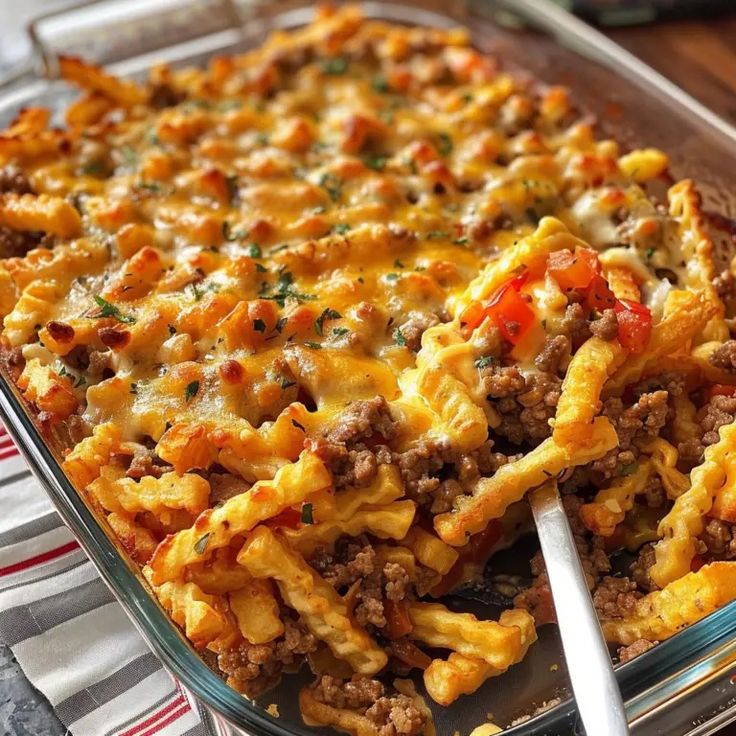
Ingredients
- 2 pounds lean ground beef
- 1 (10 1/2 ounce) can condensed golden mushroom soup, undiluted
- 1 (10 1/2 ounce) can condensed Cheddar cheese soup, undiluted
- 1 (20 ounce) package crinkle-cut frozen French fries
Instructions
- In a skillet, brown the beef, drain.
- Stir in soups.
- Pour into a greased 13 x 9 x 2 inch baking dish.
- Arrange French fries on top.
- Bake, uncovered, at 350 degrees F for 50 to 55 minutes or until the fries are golden brown.
The Last Frequency
Written in response to: “Center your story around a person who believes they’re the last human on Earth.“
Todd Beller
“Time for breakfast,” she announced to no one in particular. Speaking aloud had become a habit, a way to keep herself tethered to sanity. Her voice echoed slightly in the empty observation deck, bouncing off the windows and returning to her like a faithful companion.
She unzipped her backpack and pulled out a can of peaches. Food wasn’t a problem yet – the city had enough non-perishables to last several lifetimes. She’d organized systematic raids of every grocery store and warehouse in her vicinity, carefully rotating stock to avoid spoilage. Sometimes she wondered if she was being too methodical about it. Who was she saving the food for?
As she ate, Sarah watched a family of deer pick their way through the street below, now visible as the morning fog began to lift. They moved confidently through the urban landscape, no longer startled by the remnants of human civilization. She’d named the mother deer Augusta, after her own mother. The fawns she called Thing One and Thing Two, a small homage to Dr. Seuss that made her smile.
“Good morning, Augusta,” she called through the glass. “Kids looking healthy today.”
The deer, of course, couldn’t hear her. But they were part of her daily routine now, like the broadcast and the tally marks. Routine was important. Routine kept the darkness at bay.
Sarah had been alone since The Silence began. She still wasn’t sure what had happened – there had been no war, no pandemic, no dramatic catastrophe. People had simply… vanished. She’d gone to bed one night after a normal day at her software engineering job, and when she’d woken up, everyone was gone. No bodies, no signs of struggle, just empty clothes lying in empty beds and cars stopped in the middle of streets.
The first week had been chaos. She’d run through the streets screaming for help, broken into homes looking for survivors, tried every phone number she knew. The internet had still worked for a few days, but no one was posting, no one was responding to messages. Then the power had started failing in sections of the city as automated systems reached their limits. Now only her solar panels and generators kept her small corner of the world humming with electricity.
She’d tried to leave Seattle once, about six months in. She’d loaded up a truck with supplies and started driving south, broadcasting as she went. But after reaching Portland and finding it just as empty, just as silent, she’d turned back. Seattle was home. If she was going to be alone, she wanted to be alone somewhere familiar.
The peaches were gone. Sarah carefully washed the can and added it to her recycling pile. She wasn’t sure why she still recycled – habit, maybe, or some deep-seated need to maintain order in her tiny sphere of influence. Or perhaps it was optimism – someone might return someday, and she wanted them to find a world that hadn’t completely fallen into chaos.
“Daily tasks,” she said aloud, consulting her notebook. “Check the generators. Water the garden. Repair the broken window in the north section. Library run for more engineering manuals.”
She’d been teaching herself everything she could think of – engineering, medicine, agriculture, radio operations, solar power systems. Knowledge was survival now. If something broke, she had to fix it. If she got sick, she had to treat herself. The library had become her university, and she was its only student.
Later, as she tended to her rooftop garden, Sarah found herself humming an old song her mother used to sing. The vegetables were coming in nicely – she’d finally figured out the right balance of nutrients and water after several failed attempts. The first year, she’d relied entirely on scavenged food, but now she was growing more and more of her own. Sometimes she grew far more than she could eat, unable to break the habit of planting for a family that no longer existed.
“Look at these tomatoes, Mom,” she said to the sky. “Finally got them right.”
Talking to her absent mother had become another habit. Sometimes she imagined whole conversations, complete with her mother’s practical advice and gentle teasing. Was this madness? She didn’t think so. Madness would be forgetting, pretending she hadn’t once been part of a world full of people. Remembering hurt, but it kept her human.
As the sun began to set, Sarah made her way back to the observation deck for her evening broadcast. Same message, same static, same silence. She made her tally mark – morning and evening, two broadcasts a day, every day.
But tonight, something was different. As she turned to leave, a flash of light caught her eye. Far in the distance, beyond the city limits, a pinpoint of brightness flickered in the gathering darkness. She grabbed her binoculars, hands shaking slightly as she focused them.
There, on a hill several miles away: a bonfire.
Sarah’s heart began to race. In three hundred and seven days, she’d never seen a fire she hadn’t set herself. It had to mean something. Someone had built it. Someone was out there.
She reached for her radio, then stopped. What if it wasn’t a person? What if it was something else? The world had become strange in its emptiness – she’d seen things sometimes, in the corners of her vision, that didn’t quite make sense. Or maybe she was finally cracking, seeing things she wanted to see.
But as she watched, the fire flickered in a deliberate pattern. Three short bursts, three long, three short.
SOS.
Sarah’s hands were steady now as she reached for her emergency pack – always prepared, always ready for this moment she’d started to believe would never come. She had a decision to make: stay in her safe routine, her carefully ordered world, or venture out into the darkness toward an uncertain signal.
She thought of her tally marks, her daily broadcasts, her conversations with absent people and silent deer. She thought of all the questions she’d stored up over the months, waiting for someone to ask them to.
“Well, Augusta,” she said to the empty observation deck, “watch my garden for me. I might be gone a few days.”
She shouldered her pack, checked her weapons, and headed for the emergency stairwell. As she began her descent, she felt something she hadn’t experienced in three hundred and seven days: hope.
Whether the signal led to salvation or disappointment, at least it was something new. At least it was a change. And maybe, just maybe, she wasn’t the last human after all.
Behind her, the Space Needle stood sentinel in the gathering dark, waiting to see if its lone occupant would return with company, or if it would remain a monument to solitude in a silent world.
According…
According to the math done by this naval autist, the PLAN added more VLS cells (the primary measure of naval firepower) in 2025 alone than the entire Indian navy has in stock. In other words, China added an entire India’s worth of naval firepower in a single year.
And if you don’t think much of the Indian navy (and you shouldn’t), then the 2025 number is about 85% that of the entire South Korean navy, and 62% that of the entire Japanese navy.
Again, this is all in a single year.
—
And this is only counting VLS cells, so it entirely excludes the Fujian and Sichuan carriers, the two largest combat ships commissioned by the PLAN in 2025. If you factor in the firepower contributed by those two carrier air wings, then the PLAN added significantly more firepower than South Korea’s entire arsenal, and close to Japan’s.
That’s… insane.
—
And this is counting only the manned warships. The PLAN is also producing naval drones of all types at a range, variety, and sophistication that is unmatched.
More and more, I am beginning to see why even the folks at the Pentagon are forced to admit that they don’t stand a chance against the PLA in the western Pacific.
If we started from scratch and designed the electrical outlet again, how would it differ from the current design? (Use the North American NEMA for reference using the same power system. Assume no need for backward compatibility or use of the same electrical box. Price of the outlet is not a factor.) 14 more answers
I’ve lived and travelled a lot, so have had ample time to be familiar with the outlets in various countries. In the US, I am appalled at how flimsy the plugs and sockets are – some sockets barely hold onto the plugs, and they fall out, while the plugs themselves easily bend out of shape.
The UK on the other hand, where I’ve lived for a good two decades, has, in my opinion, excellent but over-engineered plugs and sockets. It’s great from a safety point of view – they have a lot of safety features:
– the earth pin contacts first
– you can’t push anything into the live/neutral sockets until the earth pin is in place. Plugs that don’t have an earth connection have a plastic earth pin as it’s needed to push open the socket for the live/neutral pins.
– there’s a plastic sleeve around the base of the live/neutral pins to prevent electrocution if the plug isn’t fully in
– the connection is rock-solid, with no chance of bending pins
– plugs are individually fused
Unfortunately the plug is massive in comparison to US plugs, making phone and laptop chargers annoying to have to carry around. It’s also the world’s #1 most painful thing to step on while walking barefoot at night, more painful than walking on Lego.
The other types I’ve had first-hand experience with are Euro plugs/sockets, which sit somewhere in-between – they’re more solid than the US plug, but lack many of the safety features of the UK plug.
In South Africa, two types are plugs are used – both the Euro-type plug for unearthed plugs, and their own three-pin plug that looks like a round version of the UK plug, with some of the same safety features as the UK plug. Having two types of plugs is a problem – every outlet either needs to have both types of plug on them, or you need to carry around a lot of adaptors.
China has it even worse – there are THREE types of plug in use, both the US-type and the Euro two-pin type, and their own three-pin plug with slanted pins. The only good thing about this plug is that its shape means it doesn’t lie on its back with upwards-pointing pins, waiting for you to step on it and puncture your foot.
The downside of having three types of plug means your outlets look like this:
In fact, many power strips in China look like this:
As you can see, it’s designed to fit even UK plugs. The problem here is that the connection is loose, and you can easily poke a pen or keys into the holes, which is a major electrocution risk.
So if you were to bring all of the benefits of the world’s various plugs and sockets, the lesson learned here is that the plugs and outlets should have the following properties:
– A single plug type for both earthed and unearthed connections (to avoid having to have multiple incompatible plug types)
– Pins that don’t easily flex and break
– Shutters on the socket to prevent insertion and electrocution risk (preferably earth-pin actuated flaps)
– A plug design that’s compact
– Safety features such as a plastic sleve at the base of the pin to prevent electrocution risk on partial connect
– Individually fused plugs or something more fancy like RCD on a per-plug basis.
To add to this, it would be great to have a design that is stackable, or compact enough to have a lot of sockets available – these days, particularly at the desk, or entertainment centre, we have a lot more plugs than there are sockets in the wall, requiring a jumble of extension cables and socket strips.
I particularly like this design by Royal College of Art student Min Kyu Choi
It actually is backwards-compatible with UK outlets – interestingly the flat plate you see added in the top right image is to fulfil the BSS specifications for UK plugs of being able to adequately cover the whole of the plug area.
Is it possible to be kicked out of a job interview? 71 more answers
·
Yes. I (female) was on the interview panel with a senior manager (male). We were recruiting for a software developer role. We invited a man to come in who had recently lived in the Middle East and had emigrated to the country we were based in.
I greeted him and showed him to the interview room. We all sat down and he looked at me and told me that he was insulted that a woman would be on his interview panel and that we should show more respect to him than that. He was not joking, he was deadly serious.
The senior manager told him that in our country, women have equal rights and status to men and that his attitude would not be welcome in this company. He was then told that the interview was terminated and the manager showed him out. The candidate was shocked and could not see what he had said or done wrong.
This is the only interview I have been involved in where it has been terminated early. In others, when candidates have clearly not had the skills to do the job, we go through all of the questions and listen carefully to their answers, as whilst they might not be suitable for the job they are interviewing for, they might be suitable for a different role or one that has not been advertised yet.
When we have had frankly bizarre answers, we have cut out some questions to get to the end quickly, and I have also had candidates turn round and say that they were not the right person for the job, but terminating an interview early is very unusual.
Pictures








What China Found on Far Side of Moon We’ve NEVER Seen Before! Better than NASA & SpaceX
Col 28-Book 504 – Sir Whiskerton and the Great Nap Debate: A Case of Livestock Geometry (A Tale of Tractors, Trigonometry, and the Courage to Say “More Snacks”)
Ah, dear reader—prepare your monocle, steady your abacus, and please remove all pigs from the testing area. Today’s story does not begin with a quack, a snort, or even a kazoo blast.
It begins with a sigh.
A deep, tremulous, ink-smudged sigh—the sound of a kitten facing his first Gaokao.
So settle in. Breathe deep. And step—gently, nervously, hopefully—into Sir Whiskerton and the Great Nap Debate.
The Exam That Wasn’t Fair
It was a Tuesday—golden, still, humming with the lazy buzz of bees and the distant snore-squeak of Porkchop mid-nap.
Ditto sat at his tiny desk—paws folded, tail curled, eyes wide with existential dread—facing the most terrifying document in farm history:
“Kitten Gaokao: Math Section (Livestock Geometry & Real-World Applications)”
Question #1 read:
“If a tractor holds 8 chickens at rest, 5 at panic, and 12 if they’re arguing about philosophy—how many fit if one is quoting Kant?”
Ditto’s paw hovered over the inkwell.
“Too many variables…” he whispered.
“Variables! Variables!” echoed the wall—a little too loudly.
Sir Whiskerton, sunbathing on the roof, flicked an ear.
“Hmph. Either he’s solving for x… or for existential dread.”
“Dread! Dread!”
Then—thump-thump-THUD—Porkchop trotted in, drawn by the scent of anxiety (and Ditto’s tuna-scented eraser).
“Need help, little echo?”
“Help! Help!”
Before Ditto could protest—
SPLOORT!
Porkchop sat—squarely, lovingly, catastrophically—on the exam.
The parchment flattened—not crumpled, but laminated by love—into a perfect, warm, slightly drool-scented paper pancake.
“There!” Porkchop beamed. “Now it’s a snack and a test. Efficiency!”
“Pancake! Pancake!” echoed Ditto—from beneath him.
The Rescue (and the Redefinition)
Sir Whiskerton descended—not with judgment, but with grace.
He placed a paw on Porkchop’s shoulder.
“Stand, good sir. The exam is not a placemat.”
Porkchop rose—reluctantly.
The paper pancake remained.
Ditto emerged—ink on nose, tuna on whiskers, heart full of panic.
“I don’t know the answer…”
“Answer! Answer!”
Sir Whiskerton didn’t offer a formula.
He offered a reframe.
“Ditto—what does your heart say?”
Ditto blinked.
Paused.
Then—softly:
“The answer is always… more snacks.”
“Snacks! Snacks!” echoed the rafters—Gnomeo, peering down, grinning.
From the doorway, Professor Quackenstein adjusted his goggles.
“Fascinating! The tractor isn’t a vehicle—it’s a metaphor for capitalism! The chickens? Labor units! The Kant-quoting hen? Union rep!”
“Union! Union!” echoed Ditto—now grinning.
The New Answer Key
Sir Whiskerton took the paper pancake.
Placed it on the desk.
And wrote—not in ink, but in truth:
“Final Answer:
There is no fixed number.
The tractor’s capacity is not in chickens—
but in care, in laughter, in the willingness to squish together
when the world demands expansion.
Also: always leave room for snacks.”
He signed it:
—Sir Whiskerton & Ditto (Co-Architects of Joy)
(P.S. Porkchop: Snack Consultant)
Ditto looked at it.
Then—at Porkchop, now napping beside him, belly rising in slow, steady rhythm.
Then—at Sir Whiskerton, eyes soft, tail-tip flicking approval.
And for the first time that day—
he didn’t echo.
He spoke.
“I think… I passed.”
“Passed.” echoed the wind—not Ditto, but the farm itself.
The Moral of the Story
That evening, as fireflies rose and the farm hummed in C-sharp, Sir Whiskerton addressed the animals—not from the roof, but from the paper-pancake desk.
“The moral of the story, dear reader, is this:
**Some questions don’t have one right answer—they have the right heart.
Ditto didn’t need to calculate chickens. He needed to remember: wisdom isn’t in the formula—it’s in the friend who sits on your test to make it softer. In the professor who sees capitalism in a tractor. In the echo that finally becomes a voice.
So go ahead. Redefine the exam. Flatten the paper. Make room for snacks.
The world doesn’t need perfect scores.
It needs kittens brave enough to whisper,
‘More snacks.’”
Doris dabbed her eyes.
“A geometric metaphor! I can’t bear it!”
“Bear it! Bear it!”
And Ditto?
He curled beside Porkchop—ink-stained, tuna-scented, utterly at peace—
and whispered—not echoed—
“More snacks.”
“Snacks,” Porkchop murmured—in his sleep.
Post-Credit Scene
Later, Chef Remy unveiled his newest invention:
“Exam-Ease Pancakes™”
(“Guaranteed to soften even the hardest truths—or cause interpretive digestion.”)
Mr. Ducky bought the rights:
“Now with 200% more emotional support!”
And on the barn wall—still faintly glowing—
a new sign, in Ditto’s careful script:
“Tractor Capacity:
Unlimited (if you bring snacks).”
(Footnote: “—D.D.”)
Outside—the stars twinkled.
The wind hummed.
And somewhere, faint on the breeze—
Sigh… sploort…* snack *… pass.
Jingle on. 📚🐷💛
(Or, in exam code: ∞ + 🥞 = ✅)
The End.
Alone with the Wolves
Written in response to: “Center your story around a person who believes they’re the last human on Earth.“
Cameron Snider
***
The rush and pounding in his head each morning served more fierce an alarm clock than he could ever hope for. Besides, he thought. I can’t rely on sound. If one heard it in the morning by chance, it’d be back at night for him. He’d seen it before. They remember.
Nonetheless, he did have a simple analogue watch which still ticked away, although he didn’t know the date anymore. Nine twenty-three in the morning on a Saturday, or so he mused. Every day was Saturday for Peter, since he gave up keeping track. He thought it might be September.
Scratching his beard and gazing off into the direction of the golden sun peeking through the treeline, Peter knew it was bright enough to scavenge today. They were weaker in the daylight. Far weaker.
He looked at the bottle of vodka and dread swelled up inside his stomach. “Damn all the sleeping aids… I need more of you.” He threw the drained bottle as far and hard as he could, smashing against an adjacent evergreen tree in the distance. The toss caused his hammock to sway.
Next to Peter high up in the tree was a second hammock, tied neatly and holding as many pieces of clothing, blankets and food as he could scrap up. Each night was getting colder. Before long, he’d need a cold weather sleeping bag, or something similar. Food was low, and it was time.
Peter felt around under the blankets in his supply hammock until feeling the cool metal touch of his antiqued harpoon spear. Grandpa always fancied his antiques, and the harpoon spear was a favorite. “Hunted a shark with it once!” he’d swear. That was long before it all went to hell. Too bad I don’t have a launcher like grandpa. Peter found himself cracking a tiny smile through the head pain. Someone had to. He wasted a few pills out of an aspirin bottle he had been holding in his supplies, downed a water bottle, and began to carefully climb down the large tree he took refuge in nightly.
Some stray leaves from other trees crumpled underfoot from his final small hop to the ground. Left, right, and all around, Peter saw nothing. With en empty hiking backpack, two plastic bottles and his spear, he began the small quarter mile trek through the brush to Wallaby River for clean water. Afterward, it was a two-mile walk to town, if the weather allowed it. Cloudy and foggy days (of which there tended to be many) were a no-go. There had to be sunlight, directly.
When Peter was close enough to the car littered roads, he’d follow it all the way into the suburbs. On a clear day, there was nothing to fear outside, not as long as they weren’t completely shaded or covered. He’d always avoid any cracks and alleyways that seemed a too dark, just to be safe.
Then came the hard part. A putrid smell, and eventually, bodies. The closer he got to town, there were always new bodies. Each and every night. It’d begun some months into everything. Peter figured they didn’t have any humans left to hunt, but each day out he found new remains, sometimes picked down to their bones. He observed that they were cannibalizing each other at night now, no more food. Different packs all hunting together, preying on the weaker of their own kind. And once slain, they always changed back…
On a scavenging day like today, Peter would go one house to another sequentially in the outlying neighborhoods. He had a few simple methods to check if they were occupied. If all was well, he’d head inside. More often than not, there were still plenty of leftover goods. Cans, cereal, soup, sometimes sweets, but not often a drink he cared for. Never vegetables or fruits. They’d all rotted.
The ease of supplies came from a number of things for Peter, who considered himself lucky. For one, the end of everything was like a flash. Most didn’t have time to react, or gather their things. Many tried to run and flee the city, and few packed their pantry when they did. This, along with the fact that Peter only had himself to feed, made a single bag haul at a time plenty. He couldn’t keep too much in his hammock stockpile anyway, couldn’t take the risk of things falling down and giving him away. He had wondered for a while why they never tried to eat any of the leftovers from a store-branded society, but the answer became clear in time. They only ate what they hunt.
Arriving at the first house on his mental list, Peter walked the perimeter, starting with the front. He’d tap on the windows with his spear as hard as possible, making a racket, then always awaited a response. They were aggressive in their little daytime hideaways, and woke easily. Broken down doors were a dead giveaway, they needed their little ratholes to hide in, and those houses should be avoided.
No snapping, no howl, no clawing. Good. Before trying any doors (which were hardly ever unlocked when intact), Peter made his way to the backyard, and his stomach sank. A shattered glass sliding door.
He stuck his spear in the ground. “Damn it!” he overreacted. There’d be more houses, but every little loss always brought some swell of anger. It reminded Peter of everything he’d already lost.
Peter thought it over for a minute and kept staring through the broken glass. He had daring thoughts, and wondered if he should just take a quick look. He hadn’t heard a peep at the front, after all. And then a sudden realization of excitement set in. Through the darkness of the doorway, he could make out what looked like a bottle of whiskey sitting on the island counter, just a few small steps in. He wet his lips. Today will be a good haul. I’d bet my life on it.
With an unhealthy kick to his courage, Peter made way for the door less cautiously. He stepped on the glass, which crackled and popped underneath. No signs, no reaction. He’d never broken any of his self set scavenging rules before, but just today he had to. To Peter, the bottle was more important than water, he simply needed it. The death of emotion his drunken stupor’s brought about were the simple cure to misery, his only companion at night.
Like a moth to flame, he was through the door, hand on bottle. Light shone through the bottle from outside as he looked it over, empty. Peter sighed.
Crunch.
Peter turned his head.
Crunch.
A resistant rip of flesh from bone.
Crunch.
A low hissing snarl.
Crunch.
A snapping mouth, which slowly opened. Fresh blood was pouring from it’s hundred fangs.
Crimson eyes glared down from an inhuman height. The patchy haired fiend stood menacing on two legs. It had been inside, taking the slightest of steps over the inward glass toward Peter from the corner he had not bothered to clear. It dropped the severed arm it was chomping at and leapt forward.
Peter jumped toward the door in a panicked effort. Not enough. A claw tore into his shoulder, clenching down hard. Peter screamed, kicking and thrashing, halfway out the door. As soon as the beast’s arm touched sunlight, however, the hold weakened.
Peter knew he wasn’t far enough out into the light yet. It took seconds for them to weaken, he didn’t have seconds. He thrust his harpoon tip into the monster’s exposed hand, which managed to pierce all the way through the weakened skin in brutal fashion. The monster recoiled backward in pain, and took the spear with it.
Quickly flopping over to his belly, Peter struggled out as fast as he could to gain more distance. It wasn’t fast enough. A wrenching sharpness surrounded Peter’s entire lower thigh in sudden agony. Gripped by the mouth, the beast’s body was now halfway out of the house. His hand found the whiskey bottle again, and he smashed it over the beast’s face like a brick, which finally released him. Retreating into the dark recesses of the house, it growled in a demonic pitch. Peter scrambled as far out into the yard as he was possible. He felt himself growing weaker rapidly.
He sat up, stared into the beautiful glassy sky, and found himself laughing. Peter laughed harder and harder until tears were streaming down his cheek. He looked at his profusely bleeding bite wound, to the smashed remains of the whiskey bottle, then finally back to the house.
The last thing Peter saw before fading completely was the hulking dark figure just a step inside the doorway, watching. Waiting.
The Moon Is Lying to Us: What China Found
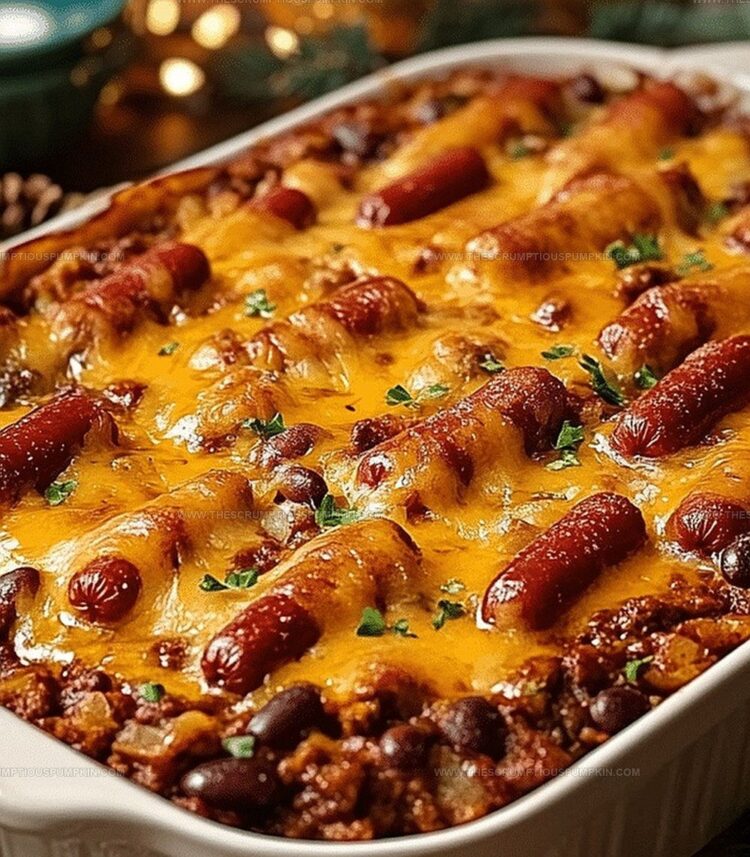
Chili Dog Casserole

Ingredients
- 2 (15 ounce) cans chili with beans
- 1 (16 ounce) package beef frankfurters
- 10 (8 inch) flour tortillas
- 1 (8 ounce) package Cheddar cheese, shredded
Instructions
- Heat oven to 425 degrees F.
- Spread 1 can chili and beans in the bottom of a 13 x 9 x 2 inch baking dish.
- Roll up frankfurters inside tortillas and place in baking dish, seam side down, on top of chili and beans.
- Top with remaining can of chili and beans, and sprinkle with cheese.
- Bake for 25 minutes or until hot and bubbly.
Why can’t Chinese troops land on Taiwan successfully with the current naval technology they have? 22 more answers
·
Large scale amphibious landings are a thing of the past.
- Between satellite, airborne and land based remote sensing technology they cannot count on “surprise”….
- Attempts to eliminate or blind the above will also remove the element of surprise….
- Large fleets of landing ships require large fleets to support and protect them. Large, slow moving targets that must be protected by large slow moving targets…
- A $1 Billion dollar warship is now in mortal danger from a $40 Million dollar missile…
The flagship of the Russian Black Sea Fleet was sunk by two cold war era Russian missiles…. Taiwan has an antiship arsenal estimated as 2,000 missiles and rapidly growing…
- And don’t discount the economic costs of such an action…. China depends on exports for 35% or more of its GDP… war disruptions, sanctions and nations pivoting away from China based suppliers will cripple it.
Chinas best approach to Taiwan is play the “long game” on social media and in politics…. as Taiwanese citizens with living memory of the Civil War and early years of the Republic of China (aka Taiwan) die off, the younger more naive voters are more subject to persuasion, as the Politicians are subject to clandestine financial support.
The best war is one you win without firing a shot…. no bodies to bury, no messes to clean up, its all just Business as Usual…
See “Reunification of Hong Kong”….
Why China Does Not Trust the West — And Might Never Again
This video delves into China’s “Century of Humiliation” (1839-1949), revealing how a traumatic 110-year period of exploitation by foreign powers—from the Opium Wars and the burning of the Old Summer Palace to the crippling Boxer Protocol reparations—forged a deep, institutionalized mistrust of the West. We connect these historical grievances to modern flashpoints, including Cold War isolation, the 1999 Belgrade embassy bombing, and the current geopolitical campaign against tech giants like Huawei. Understand why China views every interaction through the lens of history, and why this memory is now policy, fundamentally defining the future of global power.