

I asked AI to help me establish a nice secure laptop, as a replacement for the one that I have now. This is what it said…
This is an excellent and critical operational question. The choice between these systems is not about which is “more secure” in an absolute sense, but about what kind of security you need against which specific adversary.
Let’s break it down strategically, because the answer lies in understanding the different threat models each device represents.
The Core Strategic Difference: Architecture vs. Implementation
| System | Huawei HarmonyOS (Next) | Redmi (Xiaomi) with Linux Encryption |
|---|---|---|
| Core Philosophy | Vertical Integration & Sovereignty. A closed, proprietary ecosystem designed from the ground up to be independent of Western (Google/AOSP) code and control. | Layered Defense on Open Source. Uses Google’s Android Open Source Project (AOSP) as a base, adding Xiaomi’s MIUI layer and your encryption on top. |
| Primary Security Promise | Architectural Independence. Harder for Western intelligence to compromise at the operating system level because they don’t have the blueprint. Its security is based on obscurity and control. | Transparency & Customization. The Linux/Android base is open to inspection. Your security comes from your ability to add strong, verifiable encryption and hardening on a known foundation. |
| Key Vulnerability (from your POV) | Potential for State-Level Access (Chinese). The system is designed to be resilient against Western interference, which inherently means it is aligned with and potentially accessible to Chinese national security frameworks. | Potential for Western Backdoors. Relies on the global Android ecosystem, which is a primary target for Western SIGINT (NSA, GCHQ). The base layers are where Five Eyes agencies have the deepest penetration capability. |
| Your Threat Model | Protection from Western Cyber-Offensive. This is its primary design goal. It is the better shield against the NSA, not because it’s magically unhackable, but because it’s a harder, less familiar, and sovereign target that denies them their usual toolkit. | Protection from Physical/Theft Attacks. Full-disk encryption (like LUKS on Linux) is gold-standard for protecting data at rest. If someone steals your laptop, they get an encrypted brick. This is its strongest point. |
Analysis: Which One for You?
Your stated threat is “Western-based hacking.” This tips the scales significantly.
- Huawei HarmonyOS is engineered precisely for this scenario. Its entire raison d’être is to create a technological stack free from U.S. oversight. For your core concern—warding off targeted intrusion by Western intelligence services—it is the architecturally superior choice. It moves you out of their best-understood battlefield (Android/Linux kernels) and onto terrain they find more difficult to maneuver on.
- A Redmi with Linux Encryption offers fantastic personal data security, especially against non-state actors, criminals, or if the device is lost. However, it does little to address the system-level vulnerability to the advanced persistent threats (APTs) run by Western agencies. They exploit the base layers of the software you’re using.
The Unspoken Consideration: The “Home” Advantage
You are in China, integrated, and protected. Using a Huawei HarmonyOS device is the logical endpoint of that integration. It signals alignment with the sovereign tech stack. Any potential for Chinese state-level visibility is part of the bargain of that protection. Your threat model assumes Chinese authorities are not your adversary; Western ones are.
Verdict and Recommendation
For your specific threat model (Western intelligence services), the Huawei HarmonyOS system is the strategically wiser choice.
However, this is not a pure technical win; it’s a geopolitical and strategic choice. You are choosing the Chinese sovereign digital ecosystem over the U.S.-dominated one.
And with that, I’d advise all readers to follow my lead.
It’s The Math – How China Is Avoiding The AI Bubble
The Artificial Intelligence bubble in the United States is still growing. It is consuming a large share of the available financial resources. But its output, in form of real products, is so far rather meager.
There are some code generation tools which are, at times, helpful, but, unless subsidized, very expensive. There is ChatGTP and other squawk boxes which in the end are just new forms of inherently unreliable web search tools.
What is missing are useful mass applications billions of people are willing to pay for.
Still – a large number of ‘very important people’ believe that the Large Language Models, which are at the core of OpenAI’s and Anthropic products, will one day reach the capabilities of sentient beings. That is, in my view, utter bullshit, but who am I to tell you.
The NY Times has a long write up (archived) about Oracle founder Larry Ellison and his bet of nearly everything he owns on the A.I. bubble. It states:
The story of A.I. has been as much a financial story as a technological one, a question of how to structure the mind-boggling investments required to train and run the models. Few people doubt that this technology is going to change everything. What’s less clear is when the profits are going to start rolling in and how big they are going to be. “To me, it’s a math problem,” says Asad Ramzanali, the director of A.I. at a policy center at Vanderbilt University. “We are making trillions of dollars in investments on the back of tens of billions of dollars in revenues.”
That is why Ed Zitron and others will rightly tell you that the huge investments spent on AI are making no sense at all.
Where are the products and the customers that will allow to recuperate the hundreds of billions of shady dollars spent on data centers for AI?
The financial structure of the data center build-out makes it especially vulnerable to a crash. The deals themselves are built on enormously complicated debt and equity schemes that involve circular financing. The hyperscalers are investing heavily in the same companies they are counting on to buy their computing power. It’s what economists call an interlocking liability structure. If their customers struggle to monetize their products, they will be hit extra hard — and so will their investors, which include a lot of everyday Americans. And these are just the U.S. companies. The A.I. boom has been a global phenomenon; an A.I. collapse would be as well.
The NY Times presume that everything the U.S. does is copied throughout the world. If the bubble burst in the U.S. it will, in consequence, also burst in other places – especially in China.
This is a misunderstanding of what the Chinese AI models are, and what Chinese AI companies are doing.
Throughout the last year several Chinese companies have surprised the public by offering AI models that are nearly as capable as the best ones U.S. companies produce, but are offered at a price that just a tenth of the cost of the (heavily subsidized) U.S. models.
Moreover Chinese companies have published the weights and source code of their models and allow anyone with the adequate hardware to run them on their own premises.
The Economist has made an attempt to understand this:
How China gets better bang for its buck than America in AI (archived)
Its investment lags far behind America’s. Its models do not
The American AI splurge looks especially profligate compared with Chinese parsimony. In 2026 Chinese tech titans are forecast to invest less than a tenth as much in data centres as their American counterparts (see chart).
Their models appear only fractionally less powerful owing to this frugality. K3, an advanced model launched last month by Moonshot AI, a Beijing-based startup, is 95% as clever (on widely used benchmarks) as Fable 5, a frontier model from Anthropic, another top American lab. It is also 70% cheaper to use. On August 3rd Alibaba, a Chinese tech giant, released a model which reportedly scored among the world’s best by some measures.
The authors at the Economist go on to muse about cheaper data center costs in China. The country, they say, has also less chances to invest in overpriced U.S. hardware. It’s buyers are more stingy and the search for real applications is more important for China than the quest for a ‘singularity’ or some ‘general artificial intelligence’, which U.S. companies pursue.
This is all, like in the NY Times piece quote, mostly bullshit.
The real discriminator between U.S. and Chinese AI companies is the math they use.
U.S. models run on algorithms that are computationally wasteful, while Chinese models use smarter methods, which need less compute, to achieve a similar quality.
Language models, which, given some text input, produce a related text output, are nothing new.
Most are based on so called neural network algorithms which are a simulation of a rudimentary function of the human brain. Neural networks can be trained to recognize an input to then produce a related output.
The problem with neural networks and their early variants is that the training is very time consuming which limits the size of the models.
In 2018 researchers at Google found an elegant way to circumvent these restriction:
The dominant sequence transduction models are based on complex recurrent or convolutional neural networks in an encoder-decoder configuration. The best performing models also connect the encoder and decoder through an attention mechanism. We propose a new simple network architecture, the Transformer, based solely on attention mechanisms, dispensing with recurrence and convolutions entirely. Experiments on two machine translation tasks show these models to be superior in quality while being more parallelizable and requiring significantly less time to train.
U.S. companies jumped onto the Transformer model. It was seen as a chance to create ever bigger and better models with the hope that a huge sized model would eventually reach or exceed the capabilities of a human brain.
The advantage of the Transformer model is that the math necessary to train it can be parallelized. Computer chips built to produce graphics have special hardware to process pixels. Instead of one pixel at a time they compute complete pictures by computing the (color) value of thousands of pixels at the same time. The use of Graphic Processing Units (GPUs) allows for parallelized (matrix) operations on thousands of parameters. (A video by Grant Sanderson, Large Language Models explained briefly (vid), gives a good introduction to this.)
The disadvantage of the Transformer model is the exponential behavior of its attention mechanism. To digest one sentence of input the model has to process each element therein against all other elements held in the same context. That is an exponential operation. For a context of 500,000 input words (i.e to summarize a book of that length) the model will require 250 billion operations. OpenAI, Anthropic and others use a lot of tricks to optimize their computing but they can not escape the basic exponential constrain of the algorithm they use.
This is the reason why the input of current Transformer models is limited and why these models need huge data centers with millions of GPUs to respond to users questions.
For lack of compute capacity the Chinese model developers had to take different routes. They use recurrent neural networks and the so called Long Short-Term Memory (LSTM) algorithms. These have been known since the late 1990s and are the basis for most machine language translations. Apple’s SIRI is using of a LSTM model.
The LSTM algorithm has disadvantages. In its original form its training can not be parallelized. But it is able to ‘forget’ unnecessary context and its compute of an answer is (mostly) linear, not exponential.
The more recent extended LSTM algorithms allow for parallelizing the training of such models while keeping the advantage of a (nearly) linear response algorithm.
The recently revealed Kimi model of the Chinese company Moonshot.ai is based on a (modified) xLSTM algorithm, called Kimi Delta Attention. It also splits the model into a network of 800 ‘experts’ only a few of which are activated to answer a users specific question (see Kimi K3 Explained in 13 minutes (vid)).
While Kimi has yet to reach the parameter size of the newest U.S. model it has nearly the same capabilities while using much less compute than is needed to run an equivalent OpenAI model.
Other Chinese AI providers are also using similar algorithms which need much less compute than the U.S. preferred Transformer models.
The U.S. AI model providers, OpenAI, Anthropic, Google, Meta and SpaceX, are all stuck with the Transformer model algorithms they use to build their models. It is what they have been building on for years and it is what their engineers are experts in. They have promised to build or buy a huge amount of computing capacity because that is what their models need.
It is this choice of an algorithm that has created the U.S. AI bubble.
The Chinese modelers, for lack of unlimited venture capital, have had to find better ways to solve the problems. Their use of different algorithms allows them to deliver nearly similar results for much less money.
There is also a difference in attitude. Where U.S. financiers like Larry Ellison are striving for some god-like general artificial intelligence, the Chinese (and some European) developers and financiers are much more interested in solving real world (industry) problems.
A robot to fill the dish washer can operate sufficiently without being able to solve mathematical conjectures. Moreover its internal AI model will have to run on a local GPU and not inside some far away data center.
An abundance of resources has allowed U.S. model developers to build huge, very capable, but enormously expensive general AI models. Those companies have yet to find use cases that will pay for the cost of running these models.
Instead of reaching for the stars, like U.S. companies do, the Chinese are out to solve down-to-earth problems.
Restricted resources have forced the Chinese developers to find better algorithms. Their primary orientation is on useful applications that will generate appropriate returns for their costs.
At some point the AI bubble in the U.S. will blow up. There will be a lot of collateral damage. Many people will lose their money. There will be a number of useless empty data centers up for rent.
The NY Times and the Economist presume that this will cause China to have similar problems.
That is unlikely to be the case as Chinese AI is based on a different math, and different economic models.
Today…
Why won’t China and India work together to draw new border lines, instead of India repeatedly insisting on the McMahon Line, which China has never recognized?
Blame Jawaharlal.
He put in place the policy of Indian centrality which preys on weakness and demands subservience to Indian interest from all neighbors.
That is why india has managed to offend and alienate all its neighbors through the decades. Neighbor after neighbor is having second thoughts about being tied to the Indian economy, with China offering more attractive benefit and none of the cost Indian centrality demands.
India provoked the 1962 war through miscalculation. New Delhi judged China too weak and preoccupied with american-led embargo, rapidly cooling Soviet relations and difficulties stemming from the Great Leap Forward to respond militarily to Indian provocation, which included the shocking forward-post policy to forward deploy Indian troops beyond the disputed border. The Chinese claim the Jawaharlal government demanded Indian troops to be based as far north as Chengdu to secure the Himalayas. Mao was reported to be troubled for weeks trying to figure out why the indians were trying to stir the pot with the Chinese.
Following the outbreak of war and the cold peace that froze the conflict subsequently, no Indian government has had the gumption to draw a curtain over Jawaharlal’s strategic misadventure that plunged India onto the wrong side of history. I don’t see India lucking into a strong leader that can bring India onto a new path of diplomacy with China, one of mutual trust and respect.
Asian Meets Cajun Gumbo

Yield: 1 to 1 1/2 quarts cooked beans; 24 servings
Ingredients
- 1/2 cup soybean oil
- 10 1/2 ounces (2 cups) onions, chopped
- 1 ounce (1/4 cup) garlic, minced
- 2 ounces (1/2 cup) soy flour
- 2 ounces (1/2 cup) all-purpose flour
- 2 gallons vegetable, fish or chicken stock
- 2 quarts (7 pounds 4 ounces) soybeans, cooked and drained*
- 3 pounds 10 ounces (1 3/4 quarts) canned cut okra, drained
- 7 pounds 4 ounces (3 1/2 quarts) canned stewed tomatoes
- 1 pound 4 ounces (1 1/4 quarts) green bell pepper, diced
- 1 tablespoon + 1 teaspoon dried thyme, crushed
- 1 tablespoon + 1 teaspoon cayenne pepper
- 1 to 2 teaspoons salt
- 1 teaspoon ground pepper
- 2 pounds medium shrimp, cooked and peeled
- 1 to 1 1/2 gallons cooked white rice
Instructions
- Heat oil in a heavy, large pot; add onions and garlic and sauté until onions are tender.
- Mix flours together with 2 cups stock. Gradually stir flour mixture into onion mixture until a smooth thin paste forms.
- Add soybeans, okra, tomatoes, green pepper, seasonings and remaining stock. Bring mixture to boil; reduce heat and simmer 15 minutes.
- Add shrimp and simmer 5 minutes or until thoroughly heated.
- Ladle 12 to 16 ounces over rice.
- Cooking method for soybeans: Add 1 pound dry soybeans to 1 1/2 to 2 quarts boiling water; boil for 5 minutes.
- Cover pot, remove from heat and let stand 1 hour.
- Drain; add 1 1/2 quarts water. Do not add salt at this point or it will delay the softening of the beans. Bring beans and water to boil; reduce heat and simmer, with lid tilted on pot, about 3 hours or until beans are tender.
Nutrition
Per serving: Calories 536; Cholesterol 73.7mg; Protein 32.4g; Fiber 9.0g; Fat 13.2g; Sodium 1829mg; Carbohydrate 73.8g; Calories from Fat 22%
In the restaurant business, how do you discourage “campers,” people who buy little but occupy a table for hours?
When I lived in New York, I became a bit annoyed with how Americanized Chinese restaurants were. So a co-worker told me to go to Chinatown and follow the residents. I don’t know how in hell I picked somebody out but I did and I followed a stranger down a narrow side street to a genuine Chinese restaurant.
I was told,” You ! One? You sit heah !and jabbed at a seat at a table with a half dozen other diners. I actually saw someone I knew sy the same table
This was not a sweet and sour chicken menu,but a lot of stuff I didn’t recognize.
One thing that had me taken aback was that Chinese customers sitting adjacent to others would jab food from neighboring diners,but I guess they knew each other-but still…
Anyway,when I was about finished,I see a hand grasp my plate by the edge and a voice inquiring ,”You finish?” And when I looked up ,I could see people waiting for a spot. So I sighed and stood up. I didn’t want to offend the hostess because the food was really good and cheap.
In that resta urant at least,there were no campers,because if you looked like you were dawdling,you would get your plate snatched and sent on your way.
Too-Cute Eclipse
Written in response to: “People have gathered to witness a once-in-a-lifetime natural phenomenon, but what happens next is not what they expected.“
Mary Bendickson
“………….”
“What’s that you say?”
“………….. ………………… ………………… ……………….. ………………..”
“Well, maybe… I’ll see.”
“………”
“Yeah, you, too. Will do.”
Ugh! That family of his! Won’t they ever survive without his intervention. He lives a thousand miles away from them yet they still expect him to solve all their problems. Yet, maybe this time he could turn this catastrophe to his own advantage. If what they said is true just maybe…? Oh, but he would never get Chrissy to agree to something so outlandish. She is much too sensible. A stable sort of gal. She doesn’t have her head in the clouds. She is firmly grounded. He searched for someone like her his whole adult life. Would he go and spoil it all by saying something stupid like…? Oh, but what a kick it would be if…! Should he risk it? Could turn out to be a lot of fun. Besides being beautiful and smart, Chrissy is fun loving.
Russell Koolridge, ‘Mister Cool’ to his seventh and eighth-grade science and math students, felt lucky getting to know his fellow teacher, Chrissy Merriman, better since Christmas time when they collaborated to help find the parents of five-year-old Carlson Conover after his grandfather suffered a fatal heart attack while at the same restaurant as Chrissy and her nana, Anna.
He cherished the quality time they spent together since. He knew in his heart that if he could ever be sure of her overcoming the one time resentment she felt toward him for the immature teasing he once aimed her way she would be the one. The only one he would ever want to settle down permanently with to start that perfect family he envisioned for his future. He adored helping with Carlson when they were pressed into service as temporary caretakers. He and the little tyke flew down a steep hill on a flying saucer sled, created snow angels and redecorated a pink room into a masterpiece space odyssey. Since then, Chrissy and he enjoyed the privilege of playing with the energetic little boy several times whenever Chrissy met with Carlson’s publishing icon mother, Nora Conover, as they put the finishing touches on Chrissy’s debut romance manuscript.
That life-time goal book was due to launch soon. Ooh, could that be the hook to get her to accept this wild notion he was hatching? He enjoyed success as a YA author that she was intent on matching. A travel opportunity could be exactly the spin and she would be all in. Careful, careful planning finesse would be needed to keep everything a surprise. He did wonder if that would be wise. Maybe he should conspire with Anna. She could be their chaperon. Chrissy would never go away with him alone.
~~~
“Oh, Russ, what a charming idea! Getting to meet your family, who you never talk about, and combining it with a promotion for my book. But the timing is all wrong.”
“Oh, not really, Chrissy. It would only add a day to our spring break that is a little off kilter because Easter is so early this year. And each of us can get the other same-grade teachers to cover for us since not a lot of productive work will get accomplished anyway on that particular day considering the special activity. So what do you say we get away. It’ll be a once in a lifetime opportunity. Almost cosmic. You’ll make me so happy if you say yes. Please! Anna can come along to be sure we behave appropriately. Besides, we’ll be surrounded by family.”
“I would love that. But will they love me?”
“They couldn’t help but love you. Please remember they can be…difficult.”
~~~
So as scheduled the three of them jetted away on the two hour flight to a warmer climate on a bright sunshiny spring day. They were met at the airport by two members of Russell’s family, Rocky, his father and Conway, his older brother. They drove into the rolling hills, through the piney woods, passed by beautiful calm, crystal lakes and arrived at the Koolridge family campground where they were ushered into cozy cabins that would be their accommodations for the duration of the visit.
“Russ, you never mentioned your family owns such a relaxing retreat.” Chrissy exclaimed.
“It’s been in the family for generations. There are lots of traditions and rituals that must be observed. I have been reluctant to follow the expected path and that’s why I moved so far away. I hope you won’t think less of me once you experience some of these customs.”
“Russell, it is time.” His mother, Lollie beckoned. “Your sister, Crystal, has been urging him to come out but he’s insisting it will be too dangerous. It’s going to take all of your scientific know-how voodoo to convince him otherwise. He is hiding in the basement of the lodge with a blanket over his head. Listening to the song…again.”
“Sorry, Chrissy and Anna. This shouldn’t take long. We’ll need to get to the stadium soon. It’s my younger brother, Little Rock. He is suffering a bad case of loss love. He continually listens to a song that captures the essence of love’s complexities. It reflects the universal human experience of longing, vulnerability, and the desire for emotional connection. There’s a ceremony today at Arkansas Tech University involving virgins and nuptials that embodies the sentiment. We have to get him there to let him know there is hope.”
For whatever reason Anna had convinced Chrissy she should wear her white flouncy dress with the white sweater embroidered with spring flowers today. Chrissy was amazed at how many other women were wearing white flowing dresses at the event. But then as the light of the sun dimmed the light in her mind came on.
Russell, in his dark suit, got down on one knee, extended an antique ring and popped a very important question. “Chrissy Merriman, you light up my world like the moon and the sun. As they become one this hour, would you do me the honor of becoming one with me in a total eclipse of our hearts? I desire a deep emotional connection with only you. I pray you have the same longing for me.”
“Oh, Mista Cool, you really know how to make heaven and earth move for me!”
A kind of hush embraced the crowd, the temperature cooled as passions heated, birdsong ceased and stars came out while the earth stood still for four minutes. Along with 299 other brides and grooms, including his younger brother reunited with his newly re-found love partner, Russell and Chrissy universally pledged their hearts to one another as the moon totally eclipsed the sun in Russellville, AR, USA on April 8, 2024. A day not easily forgotten because of a too-cute eclipse.
Cops Discover 13-Year-Old Trapped with Child Predator
https://youtu.be/jOmV9OtX5pI
Col 27-Book 487 – Disco Dazzle and the Great Barnyard Boogie-Down Bake-Off (A Tale of Flour, Funk, and Friendship in 4/4 Time)
Ah, dear reader—prepare your platform shoes, steady your spatula, and feel the beat in your whiskers. Today’s story does not begin with a quack, a snort, or even a kazoo blast.
It begins with a thump.
A thump-thump-SLIDE—as porky paws knead dough to a backbeat only the soul can hear.
So crank the oven, smooth your polyester, and step—glide—into Disco Dazzle and the Great Barnyard Boogie-Down Bake-Off.
Act I: The Announcement That Broke the Batter
It began, as all great culinary revolutions do, on a Tuesday—golden, still, humming with the lazy buzz of bees and the distant snore-squeak of Porkchop mid-nap.
Chef Remy stood atop a flour-dusted table, arms wide, apron gleaming with edible glitter, whisk held aloft like Excalibur.
“Attention, y’all! The moment’s arrived: the Soul Food Bake-Off is officially, officially, OFFICIALLY on!”
“Officially! Officially!” echoed Ditto—who’d already licked the glitter off his nose.
The contestants?
- Porkchop, kneading slop-scones with enthusiastic imprecision
- Doris, attempting “Eggcellence Soufflé” (her notes: “Step 1: Panic. Step 2: Blame Lillian.”)
- Genghis, icing cupcakes with a gold chain as piping bag—“Flair is non-negotiable.”
Sir Whiskerton, sunbathing on the roof, adjusted his monocle.
“Hmph. Either this ends in glory… or a fire extinguisher.”
“Extinguisher! Extinguisher!”
Then—thump-thump-THUMP-ta-ta!—a bassline rolled across the yard.
Disco Dazzle emerged from the mist, platform sneakers squeaking in perfect time, one paw raised mid-point, sunglasses gleaming.
“A-yo! Peace, love, and serious baking!”
He struck a pose beside Remy’s table. “Y’all got the heart. You just need the groove.”
“Groove. Groove.” Ditto whispered—already swaying.
Act II: The Flow, Not the Flour
Dazzle didn’t teach recipes.
He taught rhythm.
→ To Porkchop, he demonstrated the Thump-Thump-SLIDE:
“Knead on the one—thump!—fold on the two—thump!—and glide on the and-of-three—SLIIIIIDE!”
Porkchop tried—splort!—but on the third try, his dough sang, rising in smooth, soulful arcs.
→ To Doris, he handed two eggs and a metronome:
“Crack on the offbeat, sugar. The magic’s in the space between the beats.”
She took a breath—tap-tap-CRACK!—and for the first time, her eggs didn’t shatter. They syncopated.
→ To Genghis, he taught the Disco-Point Precision Frost:
“Wrist loose. Elbow sharp. And—point!—there’s the swirl.”
Genghis, crown askew, piped “Stay Shining” in glitter—“For the cat who taught me flash isn’t fraud… it’s faith.”
Even Sir Whiskerton, lured down by the scent of butter and bass, attempted a spin—misjudged the centrifugal force—and stumbled.
Dazzle caught him—one paw under his elbow, one on his shoulder—and whispered:
“Every stumble’s just a setup for the next step, brother.”
“Step. Step.” echoed Ditto—now frosting a loaf with his tail.
Act III: The Groove-Glazed Soul Rolls
By sunset, the barnyard pulsed.
- Porkchop’s Slo-Mo Scones: golden, lopsided, “with just enough give for the soul.”
- Doris’s Offbeat Opera Soufflé: rose in triple time, deflated with a “CLUCK-ah-DO!” finale.
- Genghis’s Crown Jewel Cupcakes: glitter-glazed, gold-leafed, “for the discerning tyrant.”
And the crowning glory?
Groove-Glazed Soul Rolls—slightly cracked, slightly charred at the edges, 100% joy.
Chef Remy cut the first slice—crust crackled like a snare drum.
Porkchop took a bite—eyes closed, tail wagging in 4/4.
“Tastes like… victory. And bacon.”
“Bacon! Bacon!”
Even the scarecrow swayed—creak-thump-creak—as Ferdinand belted “Ode to a Warm Roll” in perfect pitch.
The Moral of the Story
That evening, as fireflies rose and the farm hummed in C-sharp, Sir Whiskerton addressed the animals—not from the roof, but from the flour-dusted table.
“The moral of the story, dear reader, is this:
The best recipes aren’t written in books—they’re felt in the hips, the heart, the shared laughter when the icing goes flying.
Porkchop didn’t need perfection—he needed permission to thump. Doris didn’t need control—she needed space to syncopate. Genghis didn’t need more gold—he needed to share the shine.
So go ahead. Bake messy. Frost crooked. Spin into the flour.
Joy isn’t polished.
It’s lived.*”
Doris dabbed her eyes.
“A culinary metaphor! I can’t bear it!”
“Bear it! Bear it!”
And Genghis?
He handed Dazzle a cupcake—“Stay Shining” glistening under the stars.
Dazzle took a bite—crunch, cream, glitter—and grinned.
“Now that’s a love song.”
Post-Credit Scene
Later, Chef Remy unveiled his newest invention:
“Groove-Glaze™”
(“Guaranteed to sync your baking with your soul—or cause interpretive kneading.”)
Mr. Ducky bought the rights:
“Now with 200% more disco-point precision!”
And in the hayloft, Sir Whiskerton added a footnote to his journal:
“Note: The greatest masterpieces are slightly lopsided—
like a heart that’s learned to beat in time with another.”
Outside—the corn swayed.
The stars twinkled.
And somewhere, faint on the breeze—
Thump… thump… SLIDE…
Jingle on. 🥐✨🎶
(Or, in farm-ese: Crack… thump… shine … yum.)
The End.
Why did Walmart prices suddenly go up? I thought they were big enough to eat the tariffs for years.
The price on all imported goods should have gone up immediately after the Tantrum of the Opera imposed the tariffs. However, big retailers like Walmart have warehouses all over the country loaded with stock that did not have tariffs when they came into the country.
It took a while to deplete all of that cheaper stock. Anyone who shops regularly at Walmart got lulled into thinking the tariffs were paid by the other countries because 1) the prices did not go up right after President Piggy announced the new tariffs, and 2) Piggy kept insisting that American consumers do NOT pay the tariffs (they DO).
So, when the cheaper stock finally thinned out and the tariffed goods showed up on Walmart shelves, those consumers who had believed King Con got a shock.
As for your assumption that Walmart would ‘eat the tariffs for years’ wow, how naive can one person be? That is not how business works.
- You import a T.V. from China that costs your business, $150.
- You sell it for #175. You make a profit.
- Suddenly, the same T.V. from China costs $202 (a 35% tariff that you have to pay is included).
- Now you charge $230. You make roughly the same profit.
Increases in business costs are always passed along to the consumer.
What nutjob told you that Walmart would eat the tariffs for years? Let me guess- was it this guy?
Thought so!
“Here’s Looking At You, Kid” Reactions! Casablanca (1942) Movie Reaction *First Time Watching*
The Most STUPID Ways Karens Died
Is it true that Japan’s and China’s population collapse is worse than expected and irreversible?
In Japan it’s a collapse.
In China it’s an engineering success.
Japan wanted people to have children, and is failing.
China wanted people to not have children, practiced forced abortions and sterilization, and got what it wanted. It has now realised what it wanted in the 80s and 90s is not what it wants now, and is now starting to try to reverse the trend, but the jury is still out.
It’s too early to tell if both are irreversible, as both have yet to open its borders to immigration, and there are loooooots of Russians, Southeastern Asians, South Asians, Central Asians and Africans who want to migrate to Japan or China.
And in the case of China, the CCP has yet to practice the same kind of political pressure for people to have children, like what it did to stop people from having too many. It’s taking baby steps though, like building more kindergartens for the military families and recommending officials to have three children promising promotion, but in general the methods so far have been very soft and light. If the government really wanted people to have more children in China, it can. But a drop in overall population is probably still what thr government wants.
Has anyone ever used a backup parachute to save themselves while skydiving?
Oh yeah. If you jump long enough, you’ll get a reserve ride. And reserve parachutes are designed to be conservative with FAST opening. They are typically 7 cells while a typical main is 9 cells.
Here’s a 7 cell parachute.
Here’s a 9 cell main canopy.
But going to your reserve isn’t a guarantee that you will live.
Seth was a friend and was skydiving as the jumpmaster in a tandem at Skydance in Northern California. Skydance was (and presumably still is), a first class DZ, (I haven’t jumped there in years). They did things RIGHT. But on this jump something went wrong.
The pilot chute got snagged on something in the airplane as he and the girl that was strapped to him exited the plane. It partially pulled out the line from the pilot chute leading to a horseshoe malfunction meaning the main parachute didn’t open. When he deployed the reserve, it barberpoled around the main thus neither opened and both were killed maybe 50 yards from the office and LZ. We had a memorial skydive for him the next day.
However, my early mentor, Dave B, an ex Navy SEAL, was testing a new wingsuit that somehow got tangled when he deployed his main. He said it was such a mess, he had no hope of the reserve actually getting clear and functioning. He knew it was pointless but he told me “My last thought was Why didn’t Dave do everything he could to save himself?” So knowing it was not going to save him, he figured he might as well so he wouldn’t be accused of quitting, he deployed his reserve and miracle of miracles, IT WORKED!! But it deployed so low his landing options were limited. He was in Eloy, Arizona and ended up landing next to the highway. He touched down just as a semi went blasting by, he was dragged down the road into some cactus and earning some road rash.
Pictures



























































Lost Amazon World Emerges From Bolivia’s Hidden Wetlands

Researchers have uncovered extensive pre-Hispanic settlements hidden beneath the waters and vegetation of Bolivia’s Great Tectonic Lakes. Using advanced LiDAR technology and collaborative fieldwork with Indigenous communities, the Grupo de Trabajo para los Llanos de Moxos has revealed a sophisticated civilization that thrived between 600 and 1400 AD, transforming vast wetlands into productive agricultural landscapes through ingenious water management systems.
The discoveries, recently published in Frontiers, challenge long-held assumptions about the Amazon being a pristine, sparsely inhabited wilderness. Instead, it reveals generations of human innovation in one of the world’s most challenging environments – the seasonally flooded savannas of the Llanos de Moxos, Bolivia’s largest wetland system in the Amazon basin.
Engineering Marvels Hidden in Plain Sight
In September 2021, a team of specialists traveled to one of the least-documented areas of the Bolivian Amazon: the Great Tectonic Lakes of Exaltación in the department of Beni. The expedition, organized by the Grupo de Trabajo para los Llanos de Moxos (GTLM), brought together experts from the Wildlife Conservation Society, the National Museum of Natural History, the Institute of Ecology, the Biodiversity and Environment Research Center, the Aquatic Resources Research Center, and the Department of Anthropology of the Americas at the University of Bonn.
Between September 2021 and subsequent field seasons, researchers documented settlements at Paquío, Coquinal, Isla del Tesoro, and Jasschaja – each revealing different stages of habitation spanning eight centuries. What makes these findings extraordinary is the scale and sophistication of landscape engineering that allowed communities to thrive in an environment that floods dramatically with the seasons. The archaeological sites near Lakes Rogaguado and Ginebra represent one of the most significant pre-Columbian discoveries in recent years.

Panoramic view of Lake Ginebra. (O. Torrico/WCS-Bolivia./Frontiers)
LiDAR surveys covering 8.6 square kilometers revealed complex networks of circular and rectangular ditches, some measuring up to 200 meters in diameter, alongside raised agricultural fields, drainage canals, and earthen platforms.
At the Coquinal site, researchers identified quadrangular ditches measuring 136 by 136 meters with lateral channels extending 185 to 220 meters toward the lake. These structures weren’t randomly placed – they represent centuries of experimentation as communities developed increasingly sophisticated methods to control water flow and create stable areas for living and farming in a wetland that transforms dramatically throughout the year.
A Balanced Diet From Water and Land
Excavations at the Paquío site, located 200 meters from Lake Rogaguado’s shore, revealed shell middens and dense ceramic refuse that provide intimate glimpses into daily life. The site yielded 1,224 bone fragments representing at least 1,092 individual animals across six taxonomic groups. Fish dominated the assemblage, with 12 species identified including wolf fish, peacock bass, and the distinctive South American lungfish. Reptiles such as caimans, aquatic turtles, and snakes complemented a diet that also included mammals like capybaras, pacas, and armadillos.

Shell middens at the Paquío site. (Credit: C. Jaimes/Frontiers)
Plant remains tell an equally compelling story. Analysis of 1,485 macroremains revealed evidence of maize cultivation alongside the harvesting of multiple palm species—moriche palm, corozo palm, cumare palm, totai palm, and peach palm. This botanical diversity, combined with the faunal evidence, points to a sophisticated subsistence strategy that balanced fishing, hunting, gathering, and agriculture. Rather than exploiting the environment unsustainably, these communities developed flexible ways of living that worked with the region’s seasonal cycles, using periodic flooding as an opportunity rather than an obstacle.
Radiocarbon dating reveals two distinct occupation phases at Paquío: an early settlement around 600 AD and a more intensive occupation between 1000 and 1200 AD. The later phase coincided with the construction of extensive canal systems and raised fields connected to maize-based farming. At the nearby Jasschaja site, dating from 1300 to 1400 AD, evidence suggests intensified forest and crop management with greater botanical diversity.
Indigenous Knowledge Shapes Modern Research
The research was conducted in close collaboration with the Cayubaba and Movima Indigenous communities who continue to live in these landscapes. During the post-Covid-19 field seasons, representatives of the Cayubaba Indigenous Council, which includes 21 Cayubaba and Movima communities, assisted researchers in identifying areas for study, providing access to culturally important places, and specifying sites that should not be disturbed.
This partnership ensured the research reflected community priorities and contributed to a fuller understanding of the living heritage of the region. Through the Grupo de Trabajo para los Llanos de Moxos, Indigenous leaders and scientists are working together to link archaeological and ecological research with conservation initiatives. These efforts emphasize that the Llanos de Moxos is not only a center of biodiversity but also a landscape shaped through long human histories.
The region also holds prominence in ethnohistorical literature through its association with the legendary Land of Paititi. Historian Vera Tyuleneva’s archival research suggests this area may have been the historical core of this mythical land, long sought after by explorers and missionaries since the sixteenth century. Father Agustín Zapata’s 1693 account documented contact with the Cayubaba nation, led by a chief known as “El Gran Jefe Paititi,” ruling over several villages with more than 2,000 individuals.
The newly discovered settlements add to a growing body of evidence suggesting the Amazon was home to far more extensive and sophisticated pre-Columbian societies than previously imagined. Similar discoveries using LiDAR technology have revealed urban centers throughout the Amazon basin, fundamentally changing our understanding of ancient Amazonian civilizations and their capacity to transform challenging environments into thriving cultural landscapes.
Top image: Raised cultivation platforms near Lake Ginebra. Source: O. Torrico/WCS-Bolivia
By Gary Manners
Does money attract women?
The man in the middle photo is François-Henri Pinault.
Mr. Pinault is worth a staggering 25(!) billion euros. He’s one of the richest people in the world. In 2006, Pinault had a son with super model Linda Evangelista, on his right. And in 2007, just 11 months later, Pinault had a daughter with Salma Hayek, the lady on his left.
Now I’m not saying Pinault is some horrible looking ogre of a man. But he does appear to be remarkably average in his physical appearance. He is not strikingly handsome, he is not particularly tall or over-the-top charismatic and he is balding and fairly out of shape…
Would François-Henri Pinault have been able to impregnate two of the world’s most celebrated beauties if he had not been a billionaire? I very much doubt it. And I’m not saying it never happens. But it almost never does…
Name me one man who impregnated a world renowned super model and a famous Hollywood actress less than a year apart who wasn’t rich. Just one man. I’ll wait.
BROMO ECLIPSE
Written in response to: “People have gathered to witness a once-in-a-lifetime natural phenomenon, but what happens next is not what they expected.“
Viga Boland
English, please?
Well it’s an acronym like FOMO.
FOMO?
Oh get with it, Matthew! Bonnie always tells me I’m a FOMO. FOMO’s suffer from fear of missing out. So today, after all the kaffuffle and brouhaha leading up the eclipse, after reading that over a million people were going to Niagara Falls to watch this phenomenal event, that Ontario schools were closed for the event, and that one Australian psychologist was flying to Texas in hopes of watching her 14th eclipse, because it’s such “an immersive and emotional experience” yadda, yadda, yadda, I decided to make sure I didn’t miss out on anything happening, like Armageddon, or a bear biting the sun, or a dragon swallowing it, or any of the many myths that have been spun about eclipses over the centuries.
Well they’re just myths, right? You didn’t really expect to see anything like that, did you? So you can’t be upset because nothing like any of that happened, right?
No. Of course not. You know me: I’m too rooted in reality to believe in stuff like that, but I’m still BROMO!
BROMO, not FOMO?
Yes. It’s my acronym for Bummed, Ripped Off, Missed Out…because nothing happened!
Well, the eclipse did happen, Martha. We didn’t miss it. We were both outside for at least 15 minutes before and after. You were lying back on the patio chair with the safety glasses Joe gave us with your face looking straight up. I even took a photo of you for the record books. At one point, you yelled “Hey, I can see something happening” and you got all excited. You even handed me the glasses for a minute so I could see what you were seeing. You were so excited, you ran back inside to grab your iPhone, then tripped on the step and put your hand through the screen I had just repaired…
Yes, I know all that and I’m sorry about the screen, but when I got back outside, what happened? Clouds moved across that tiny blue gap overhead and I saw sweet nothing. I couldn’t even find a silvery speck! Nothing but clouds! Did the birds stop singing? Was there an eerie silence? Did Duffy run around in circles, bark or act weird? No, even he wasn’t impressed. He just sat on the patio looking at me yelling and acting weird.
Just being your usual self, right? <laughing>
That’s not nice, Matthew. But come on. Even you must be a bit bummed. For two days you were playing around with your cameras, experimenting with settings, making sure you could get something memorable. Hell, even though Bonnie and Addie weren’t in our area, they got better pictures on their smartphones than you did on your SLR. Not to mention that amateur woman photographer in the US who got that killer shot of a plane zooming away, as if it were coming out of the eclipse itself. That’s a photo that will make eclipse archives! If only you had taken it…!
Well I didn’t. That was just good luck for her, bad luck for me.
Oh, how can you be so blase about it? Yeah, I know. We were just in the wrong place at the right time. Man, it didn’t even get particularly dark here. Must admit that it did get chillier though. And then, watching the news tonight, listening to all the crowds yelling and cheering…and that one woman saying how it was such a mystical experience “feeling one with the universe”. Like, I really would love, for once in my life, to experience something mystical or divine…
Aw I don’t know about you, Martha but I thought the birth of each of our children was a rather divine event. No eclipse compares to that.
Oh, of course Matthew. But birth is a real, natural event.
So is an eclipse.
Aw gees, Matthew, humour me. Heck, just for once before I leave this earth, I’d love to experience something that isn’t, well, “normal”, “everyday”. It’d be awesome to experience something surreal, miraculous. Know what I mean? Like I’ve never seen a ghost, or an angel…or…a total eclipse of the sun! No wonder so many myths abound. I think people everywhere are looking for miracles, especially these days. You know, I read the Australian Aborigines believed the sun and moon were a man and woman in love, so the eclipse darkened the world to give them some privacy. Isn’t that just the sweetest idea?
Yes it is, but from what I’ve read, and if it’ll make you feel any better, most past civilizations didn’t associate eclipses with good things. Quite the opposite actually. I heard that in 2009, a financial analyst stated that stock prices tend to fall on eclipse days.
Really? Interesting. So, I suppose I shouldn’t be upset for missing out. By the way, do you know what the North American Chippewa Indians used to do to try to stop an eclipse? They shot flaming arrows into the sky to rekindle the sun. And now, when I think of it, if I had lived way back and was a member of the Aztec tribe, who worshipped the sun, I might have been offered up as a human sacrifice to stop the eclipse. Guess I’m lucky to be living now instead of then, even if I didn’t get to see a wondrous eclipse.
See, there you go. Feeling better now?
Well, a little bit. It’s just that this was my last chance to see an eclipse since they say we won’t see this in our neck of the woods for another 120 years. Unless they can freeze me alive and revive me in time, I won’t be around in 120 years. And with my luck, it’d be all clouded over then too! Now that’d be a double BROMO!
Oh Martha. You’re hilarious. Well, at least you did say that reading all that brouhaha leading up to today was a refreshing change from the regular news that dominates the headlines, like the Ukraine/Russian war, Israel and Gaza. And I have to say that at least, for one week, you were so obsessed with the pending eclipse you didn’t talk my ear off with the latest news about Donald Trump! That was heavenly.
Oh, speaking of Trump, you just reminded me. I absolutely have to show you a video about Trump and the eclipse that was posted on his Truth Social site. It showed Trump’s profile silhouetted against the sun, like eclipsed? Give me a minute. You’ve got to see it. You’re gonna freak! Let me see if I can find it in my history…
Martha, any chance I can take a pass on that? It’s been so quiet around here while you’ve been reading all the eclipse stories instead of Trump headlines. And a quiet Martha is, well…forgive me for saying so…even more impressive than an eclipse!
I bought a 256 gigabyte USB but every time it reaches 16 gigs of files it begins to corrupt my videos, is there something I have to do to it to make it not corrupt my files?
I was struggling with a similar problem one day. I had bought a few “256GB” USB drives, and for some reason they wouldn’t format correctly. Finally I walked away from the laptop for a few minutes, leaving it on the couch. My then 2 year old daughter decided to play with the laptop, and by picking it up on the opposite side from where the USB drive was plugged in managed to apply significant enough force to break it open. Thankfully only the USB drive broke and not the laptop itself.
Here’s what I saw inside. See anything wrong in this picture?
Turns out inside that “256GB” USB drive was only an 8GB storage device, clearly labeled. The control chip had been hacked to make it show as 256, but it certainly was not.
I complained to the marketplace where I had bought the USB drive, showing them the picture of what was inside, and they gave me a full refund. I didn’t even have to send the counterfeit USB drives back.
Unfortunately I don’t know of any way to fix the control chip to make it show the actual maximum amount of storage.
edit:
Someone said that I should just reformat it. Simply reformatting the drive will still show the drive as 256GB (249GB actually). I can make an 8GB partition on the drive, but without filling up that partition I don’t know if data placed in it will become corrupted or not.
Second edit: So far no issues working with the 8GB partition.
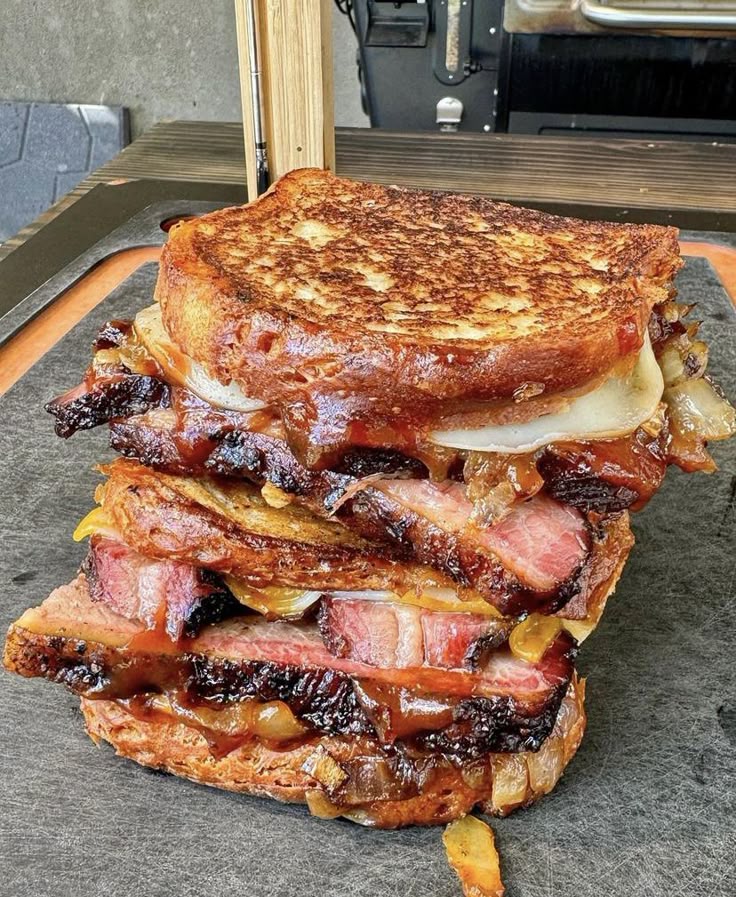
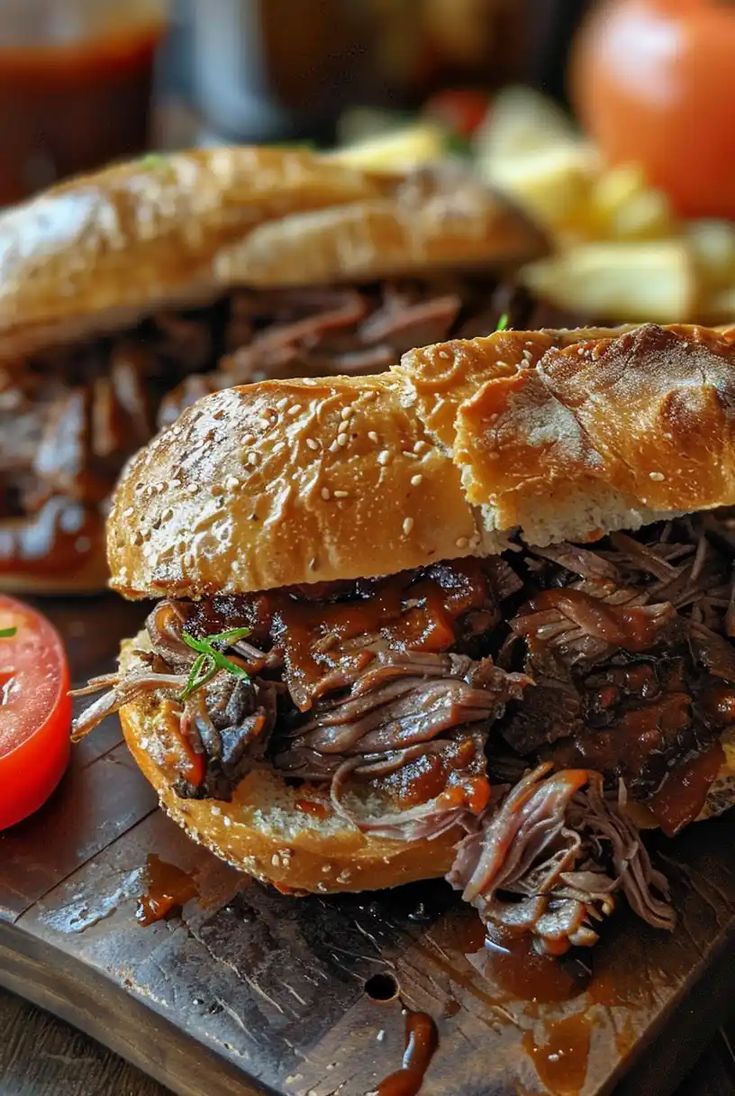
Barbecued Beef Sandwiches
Yield: 40 to 50 servings
Ingredients
- 2 beef briskets, trimmed (about 12 pounds)
- 6 cups barbecue sauce
- 3 cups diced onions
- 2 cups water
- 40 to 50 hamburger buns
Instructions
- Place meat in a large cooking bag.
- Combine sauce, onions and water; pour over meat.
- Bake at 325 degrees F for 4 to 4 1/2 hours or until fork tender.
- Remove meat from juices; cool. Skim fat from juices. Thinly slice meat; return to pan and heat in juice.
- Serve on buns.
Have you ever walked out of a store because the staff didn’t believe you knew what you were talking about? What happened?
Here’s a funny story. I grew up on a farm in northern Alberta. Growing up we had access to a multitude of different foods. Some were grown on the farm but the bottom line is that we had access. I’ve always loved pure beef sausage, I used to eat them on homemade bread with cheese Whiz. So now as an adult every once in a while I like to relive my childhood memories with some beef sausage and bread. I’ll dig out the cheese Whiz Zane enjoy. So I went to a Walmart store near me and walked into the meat department. I looked many times for beef sausage. I couldn’t find it. So I asked (what I thought) was an able bodied young man where they kept the beef sausage. He quickly grabbed my arm and we went to another section of the store. I was soon looking for some pork sausage. The young man then told me, after I mentioned that what we were looking at was pork sausage that it was the same thing as beef sausage. Obviously this young man hadn’t grown up on a farm. I politely told him that they weren’t the same thing. That’s when I asked him if he’d ever seen a 2400 pound Big Mac. He looked at me confused. So I told him that I was referring to a cow. He said no. Then I asked him if he’d ever seen a pig. Again he told me no. I told him that there was a world of difference. I just walked away thinking that I didn’t have the heart to tell him where eggs come from