How are you all holding up? Most of you guys won't notice anything different. But it really is.
Facts...
We just went though multiple world-line slides in rapid succession. With more on the way.
Think of reality as a deck of cards. and our consciousness is in every one of the cards. but the cards that have the highest percentage of our consciousness is the top card on the deck.
Now, the cards are being rearranged.
Our percentages are staying the same. You are still the top card, and then the second card, and so on and so forth.
But (for your consciousness) the top card is no longer "The Joker", it is the "King of Hearts".
For other people it still might be "The Joker" and they are living though world war III. But not you.
So you might feel a little dizzy, but that's far better than living inside a world that is in the middle of a world war. So everything is sliding.
So the table analogy still stands. The "table" is the "top card" in the deck of cards. Confused? Don't be. It's all pretty simple.
Reality is shifting, and your is getting better.
I think the worst of the shifts are over.
I do not know who is doing this, but I do have an idea as to why. -MM
Today...
200 U.S. TROOPS HOSPITALIZED | FORD FLEES IRAN
https://youtu.be/m8T42_99BZ4
FLASH: Five days ago, Netanyahu, along with his brother, his son, the Mossad chief, and 10 top‑level military officers, were killed
“Qatar’s influence exposed — a major explosive revelation by Al Jazeera News.
The inside story has been broken. 🔥
Five days ago, Netanyahu, along with his brother, his son, the Mossad chief, and 10 top‑level military officers, was killed.
A secret meeting was taking place in a hidden building when Iran suddenly attacked.
CIA and Mossad intelligence failed.
Iranian forces had already been informed that Netanyahu was present there, so they attacked immediately.
America fears that Russia and China may have provided Iran with these secret revelations.”
Sir Whiskerton and the Robot Chicken Cheating Scandal
Or: When Technology Meets Poultry—and Fails Spectacularly
Introduction
Welcome, dear reader, to a tale of academic ambition, technological tomfoolery, and poultry-based pandemonium. In today’s story, Ditto the Echoing Kitten finds himself in hot water during his kitten-version of the Chinese Gaokao (高考). Desperate for help, he turns to Professor Quackenstein, who unveils his latest invention: a robot chicken programmed to assist with exams. Unfortunately, this clucking contraption only knows one word—"BANANA"—and promptly blue-screens mid-test.
Meanwhile, Mr. Ducky seizes the opportunity to sell the robot’s "answers" as NFTs (Non-Fungible Tokens), sparking a farmwide frenzy over what is essentially digital gibberish. So buckle up—or should we say "peck up"—for Sir Whiskerton and the Robot Chicken Cheating Scandal.
Act 1: The Birth of the Clucking Genius
Ditto sat nervously at his desk, staring blankly at the exam paper. His tiny paws trembled as he whispered to Sir Whiskerton, “I can’t do this!”
“Fear not, young apprentice,” said Sir Whiskerton, adjusting his monocle. “Professor Quackenstein has just the solution.”
Enter the professor, dragging behind him a shiny, futuristic chicken-bot adorned with blinking lights and a nameplate reading Clucktron 9000.
“This marvel of modern science will guide you through your test,” declared Professor Quackenstein proudly.
The robot whirred to life, tilting its metallic head dramatically before declaring in a monotone voice:
“BANANA. BANANA.”
Ditto blinked. “…That’s it?”
Before anyone could respond, Clucktron’s screen flickered wildly before displaying a bright blue error message: ERROR 404: INTELLIGENCE NOT FOUND.
Act 2: The Great Banana Boom
As Ditto struggled to make sense of the situation, Mr. Ducky waddled into the scene, clipboard in wing. Spotting the malfunctioning robot, his eyes lit up like fireworks.
“Rare digital knowledge!” Mr. Ducky announced, slapping a price tag on Clucktron’s side. “Limited edition answers, folks! Only 50% off today!”
Within moments, the entire farm descended into chaos. Animals gathered around, waving their hooves, paws, and flippers to bid on the robot’s "wisdom."
Chef Remy LeRaccoon scratched his head. “But all it says is ‘banana.’”
Mr. Ducky leaned in conspiratorially. “Exactly! It’s abstract. Avant-garde. Post-modern genius!”
Even Bessie the Tie-Dye Cow couldn’t resist joining in. “Ooh, I’ll take three bananas’ worth!”
Amidst the madness, Ditto stood frozen, echoing the robot’s endless refrain:
“Banana! Banana!”
Act 3: Resolution Through Reflection
Sir Whiskerton finally intervened, herding everyone back under the old oak tree for a moment of clarity.
“Friends,” he began gravely, “we must ask ourselves: What are we truly seeking here? Is it wisdom? Or merely shortcuts disguised as progress?”
Porkchop snorted. “I’m just here for the snacks.”
Ignoring him, Sir Whiskerton turned to Ditto. “True learning comes from effort, not shortcuts. Even if those shortcuts come wrapped in shiny metal chickens.”
Ditto nodded solemnly. “So… no more banana bots?”
“Precisely,” Sir Whiskerton replied. “Unless they’re serving fruit salad.”
Post-Credit Scene
Mr. Ducky stood triumphantly beside a glowing billboard advertising Clucktron 2.0. Beneath the slogan “Smarter Chickens, Better Grades!”, a new robot clucked monotonously:
“WATERMELON. WATERMELON.”
Chef Remy sighed. “At least it’s seasonal.”
Cue horrified squawks.
Moral of the Story
Shortcuts rarely lead to success—and sometimes, they just leave you hungry for bananas.
“Rare digital knowledge! 50% off!” – Mr. Ducky, master marketer.
“Banana! Banana!” – Ditto, accidental parrot.
Starring
Sir Whiskerton (Voice of Reason)
Ditto the Echoing Kitten (Accidental Cheat)
Professor Quackenstein (Mad Scientist of Poultry Tech)
Mr. Ducky (Hustler Extraordinaire)
Clucktron 9000 (Blue-Screening Genius)
Summaries
Moral: Hard work beats shortcuts every time—even if the shortcut involves robots and fruit.
Key Jokes: From Clucktron’s existential crisis to Mr. Ducky’s absurd sales pitch, laughter abounds.
Future Potential: Could Clucktron evolve into a sentient being? Or will Mr. Ducky start selling glow-in-the-dark bananas next?
Until next time, may your exams be fair and your bananas ripe. 🍌
How do you emotionally handle going to more funerals than weddings as you age?
My reaction and processing of grief has changed as I have grown older. I guess it has happened so much that I am “getting better at it.” Both parents, all siblings save one are gone. Many dear family members and close friends have died. I almost lost my dear husband in a freak accident a few years ago. Beloved pets, treasured colleagues, crib deaths/ still borns, military conflict, overdoses, suicides, car accidents, cancer, even murders— I have seen it all.
I even co-wrote a book for very young children “Everyone Dies,” to help children start to process this fact of life.
When in my 20s-30s, I felt the loss more keenly: maybe it was because I was looking ahead to a long future without that person, and wondered how I would cope? Now that I am almost 70, it is very different. Experience has taught me coping strategies, and there is no long future yawning ahead. In fact, I am now processing and preparing for my own inevitable death. I believe in an afterlife, and so am looking forward to reconnecting with those who have gone before me, if that’s possible. My feeling about death is more anticipation and wonder than fear.
At funerals you see people comforting the bereaved spouse/parent/child/sibling, who is generally weeping and exhausted, bereft. The younger they are, the more profound the reaction. I have noticed that when the bereaved is very old— 80 or more— they are usually hugging and comforting the attendees! Pats on the back ,“There there dear, it will be alright.” They seem more resigned, calm, at peace. By this time they understand that death is a normal part of life, and somehow they will go on.
This is a generalization, and not true in all instances. But it is true for me and my own circle of friends and family. It is a great blessing of old age. We feel grief, but we feel it differently.
Are Iranian missiles as good as the Chinese ones?
China conducts as many hypersonic flight tests in one year as the US does in ten. Moreover, the success rate of China’s hypersonic tests is surprisingly high - there’s never been any news of a crash. Guess why that is.
Have you ever heard of a wind tunnel?
It’s as crucial to missiles as a ruler is to drawing a straight line. Of course, you could build missiles and rockets without wind tunnel for testing, but you’d have to fail so many times that your economy couldn’t possibly bear the cost.
Most countries can build ordinary wind tunnels, The ones which blowing cars, for example, 0.2 Mach, and all you really need is a civil power supply.
There are bigger ones too. Take the US, for example, they built a tunnel last November that could reach 10 Mach, which is about what China could do over 20 years ago. Russia’s fastest wind tunnel reaches 8 Mach, the US claims to have theoretical tunnels capable of 15 and 30 Mach once, but they’ve never actually used them.
As for China, maximum speed, 33 Mach, named as JF-22.
Wind tunnels are the only way to realistically simulate conditions for rockets and hypersonic missiles in a lab, and running a single test costs a huge amount of money. Both France and the European Space Agency have tried to get access: France applied for a Chinese 10-Mach tunnel, with a price tag of €200 million, and ESA for a 20-Mach tunnel, asking €500 million, but for various reasons, the deals never went through. The US even tried to access Chinese facilities via Japan, with a non-discounted price of $5 billion. Of course, all of this is based on the premise of data sharing.
It's difficult to build. Once the wind gets fast enough, you can’t just use mechanical blowers. Back when China first started experimenting with wind tunnels, we actually used explosions to create high-speed winds. The guy behind this was Yu Hongru, a total legend. He’s already in his 90s. And apparently, designing that wind tunnel wasn’t cheap at all, well, an entire lab building got blown up by him in the process.
Fortunately, China is a country that’s really good at building, and that’s not all China excels at, it also has a widespread and stable power grid.
The Chinese wind tunnel capable of 33 Mach can reach a peak power consumption of 15 GW, which is equivalent to about 70% of the total installed capacity of the Three Gorges Dam, yep, the very dam that US media once claimed was slowing down the Earth’s rotation.
24
Dell Fires 25,000 Workers - TECH LAYOFFS GET WORSE
On Thursday a bunch of us data jocks got together over drinks to celebrate end-of-quarter. We ran out of conversation, so people started boasting about where they’d spent their last vacation: skiing in Dubai and surfing in Antarctica. That’s when Lancaster, the renowned “early adopter” in the office, brought up time-travel. He’d spent a wild weekend sampling the Roaring Twenties in a gin joint packed with flappers. It had been arranged through ChronoPort, the company that had taken time travel out of CERN and privatized it. “Think of chronos, meaning time, and portare, like transportation,” Lancaster said. “They literally move your body through time.”He described how the medical staff at ChronoPort had taken samples of his gut biome and a cheek swab. They slid him into something resembling an MRI machine. “They programmed the chronoportation to move everything with my DNA (and my gut’s bacterial DNA) back in time the exact same amount.”“Uh-huh.” We all nodded as if we understood.“It was expensive … so my life partner won’t let me go again until the house is paid off,” he said. “I just happen to love exciting new technology and couldn’t resist.” He caught my eye and blushed.I blushed, too. Early adopter? I have the same guilty pleasure—and doubtless Lancaster saw envy written all over my face.
* * *
Lancaster’s next email arrived late on Friday. “Hey, Caleb. I sense you’re a guy who loves adventure. I can get you a discount Chrono BnB circa 1850 (prairie pioneers) for your next one-week vacay. Here’s a link to some more info on the special nature of Chrono BnB.”
I stared at the date and thought: sodbusters. Stern, sad people. Little House on the Prairie. Could I cope with those dudes for a week?
I read the article he attached.
7 Dos and Don’ts for Chrono BnB
Science has finally solved the problem of the fourth dimension. Along the way, there were a few kinks to work out. Now we can travel back in time just like we zip to Las Vegas for the weekend. But take it from me, the best way to time-travel is through a spin-off of the AirBnB model.
The bed-and-breakfast arrangement overcomes the difficulties the earliest time-travellers experienced. Chronoporting only moves your DNA, not your clothes or other stuff. Eyeglasses, tooth fillings, pacemakers: none of these time-travels with you. A chronoported person could theoretically materialize in the middle of, say, a crowded marketplace. They would have no clothes, no money, no place to stay. Worst of all, they would have no story to explain their abrupt appearance.
Let’s think about this from the historical person’s standpoint. Why should you accept a stranger who has suddenly materialized from out of the blue? Especially if that stranger shows up buck-naked and babbling some incomprehensible language? “Give me take-out and charge it to my credit card.” What does that mean to an ancient Roman?
The results, as we saw in several early time-travel incidents, were tragic. Depending on the era, a chronoported person could be beaten, run out of town, or tortured to death.
Fortunately, the ChronoPort Retail Development team got busy. Marketing liaison people went back in time, decade by decade, smoothing the way for ordinary time-travellers. They persuaded enterprising inhabitants of different eras they could make a few shekels on the side using the AirBnB model. They would just have to welcome the occasional time-traveller into their home, provide the amenities, and give safe cover.
Here are seven dos and don’ts for maximizing your medieval mead-swilling in a responsible and time-sustainable way.
Bone up on the language. Bone up on the era. Thanks to time travel, Classics professors are seeing a 700% increase in the enrolment in Latin, ancient Greek, and Sanskrit. Salve, sum amica!
Don’t try to show off. Sure, you can say, “I think someone’s hiding in that fancy Trojan horse” but then some guy will look at you funny and say, “Really? How did you happen to know that?” just before he points you out to the mob.
Don’t try to make money. Think you can short-sell the 1929 stock market? Wrong; it was a completely different regulatory regime. Just “be in the moment” and save your money-grubbing ways for present life.
Don’t be fast to pass judgment. Yes: sexism, slavery, homophobia, classism, colonialism, and so on should bother you. Paradox: you descended from a long line of that stuff going on all over. So just be an observer. If someone hands you a musket, politely refuse.
Don’t f*** with the locals. Also, don’t f*** the locals. Impossible to list the number of ways this could mess up. Just don’t do it.
Stay safe. A broken leg nowadays is manageable. During the chaos of the French Revolution? Not so much. Note: if you have been exposed to smallpox or bubonic plague, let your healthcare provider know immediately upon your return.
In the words of Dale Carnegie, “Do not complain, criticize or condemn.” So the food isn’t what you expected, and the beds are lumpy lice-ridden bundles of straw shared by many, and even the good-looking folks have pox-scars and rickets and dental monstrosities in their mouths. You’re just visiting! Soak up the vibe and be glad you’re just passing through.
The enthusiasm of the travel writer was contagious. I’d had enough of gambling in Macau and gator wrestling in Florida. I wanted the experience of time travel… done while keeping safe with an intermediary. I signed up with ChronoBnB and went to their company headquarters. First I had to complete an online tutorial that went over all the things in the article, in a much more ho-hum way.
Then I had to sign a lot of forms pledging not to spill the beans about the terrible war coming in 1861.
They said my BnB “host” in 1850 would be similar to me—a young man named Wilbur.
* * *
The next thing I knew, I was swimming through a tunnel and bobbing up in a group of four young men, who were crawling out of the swim-hole. It was a hot day and our naked bodies glistened in the sun. Theirs: lean and ripped. Mine: not so much. Lots of chuckling and teasing as they got dressed. The fifth pile of clothes was claimed by no-one, so I took it. The clothes weren’t the cleanest and they were scratchy. No elastic in my underwear! No zip in my pants—instead I fumbled with buttons and drawstrings.
“Hello, Cousin Caleb. I am Wilbur.”
I was relieved to meet my ChronoPort contact right away. He was about my age, with freckles and a wide-open friendly face, blushing as fiercely as he was smiling. I instantly took a liking to this 1850s early adopter.
Wet-haired and shivering, the five of us guys ran to a homestead in the middle of the prairies. Wilbur gave me a tour of the yard, including the outhouse. The rough wooden farmhouse was full of clanking and women’s voices. We seated ourselves at the table where I counted 18 people, from Baby to a 60-ish patriarch. One girl sawed pieces of coarse bread and another ladled meat and gravy on it. Darn, I forgot to ask about vegan alternatives. After everyone received a plateful, the old guy recited a rambling prayer of thanksgiving.
Wilbur announced, “Ladies and gentlemen, boys and gals, please welcome Cousin Caleb, who is visiting us for a week from down east.” There was some snickering and jostling that quickly subsided as I looked around, nodding, saying “how-d’you-do” a few times. Then we fell to the serious business of eating. A woman said, “Cousin Caleb, you have not touched your pot roast. Are you feeling poorly?”
“Um…I’m still full from my morning smoothie and avocado toast,” I said. From her look of bewilderment, I might as well have breakfasted on eye of newt.
Wilbur said quietly, “If it be not to your liking, may I have your beef?”
After lunch, every guy and a few gals bolted outside. Everyone knew what they were supposed to do, even the five-year-old girl carrying the slop bucket out to feed the pigs. Not wanting to look clueless, I grabbed what I thought was a hay rake. I wished I had my sunblock SPF 50 and my Ray-Bans. I started off for the meadow, but Wilbur approached me and said, “With two, this will go faster.”
“With two, many things go faster,” I said.
He blushed. But the joke was on me. It was not a hay rake but a stable rake, designed to collect manure from barn stalls. After ten minutes I had blisters. Wilbur was startled when I asked for Band-Aids.
“Bandages? For what injury?” He stared at my soft white palms covered with red polka-dots.
The slop-girl Rachel came over to look. Her hands were lean, nut-brown, with toughened pink palms. “Yer socks kin proteck yer hands,” she said.
I untied my heavy shoes.
“Be you Shadrach’s brother?” Rachel asked.
“Caleb is what you call a shirt-tail cousin,” Wilbur said. “Now, git!” As she sauntered away, he muttered, “That one is too curious for her own good.”
“Curiosity is natural,” I said, smiling.
“Maybe ‘bout some things,” he said and quickly looked away.
“Curiosity is no sin,” I said. I put my woolen socks on my hands, feeling thankful no cameras were there to record Caleb the Sock-handed Softy. I held the rake and continued mucking out the stable. The thick leather shoes rubbed on my bare-skinned feet and I could feel blisters forming there, too. I aimed to keep up with Wilbur, and soon we were hot and sweaty. I kept thinking about that swim-hole. The day wore on. Despite my regular gym work-outs, the burn of my shoulder muscles began to outweigh the pain of my blisters.
“Good job!” Wilbur said when the barn was clean at last.
Supper consisted of savory slop and lumpy dumplings followed by heavy pie, which we ate right in the middle of the gravy-smeared plate. Not anything Instagrammable, that’s for sure. Mirthless women took up sewing or knitting by the kerosene lamps. Grim-faced menfolk carved or repaired jingly harnesses. Wilbur read aloud from Papa’s Bible. I began to worry about sleeping arrangements. From what I’d seen, guys were in one room, gals in another, and the marrieds and babies would be in the lean-to. Good-bye, privacy!
After a lull, Rachel said: “Cousin Caleb, kin you tell us a story?”
I tried to remember a fairy tale, but I only came up with past episodes of The Simpsons.
Rachel yawned. “Brother Wilbur said you had an innerestin’ dream o’ the future.”
“Well… yes… I dreamed that in the future people weren’t using horses to get around. They have horseless carriages called ‘cars.’ I dreamed that our country and Russia had a mighty contest to see who could send a man to the moon first—"
“Who won?” a kid’s voice piped up.
“We did! Things became very, very good for us—doctors learned how to cure some diseases and fix the pains in our teeth. People invented all manner of things—moving pictures, instant music, and… and….” I tried to stop, but I was seized with—dare I say it?—a nostalgia for the future. “I lived in a building that had 30 floors stacked on top of each other!”
Wilbur guffawed. “Who in God’s creation would want so many stairs?”
“It would take all day to git up to your bedroom,” Rachel said.
“No, in the future, there will be, like, a vertical ‘car’ that runs up and down the side of the tall buildings,” I said. “The car is called an ‘elevator’ because it can elevate you—”
“Ell-eh-vay-tor!” People tried out the word. “Elevator? Elevator!” They chuckled and brayed; the shoulders of even the sternest folk were heaving with laughter.
I began to laugh, too.
* * *
The week passed as quickly as a raft over a waterfall. I learned everyone’s name and assigned chore. The pioneers weren’t all the jolly simple folk I used to think they were. They had their own intrigues, delights, and stolen moments of pleasure, chiefly boy-girl kisses in the milk-house. We menfolk were mainly building a cattle-fence. Wilbur arranged some fun things for me like playing with kittens in the hayloft (dusty, scratchy, and better than 100 cat videos) and milking a cow (invasion of the cow’s personal space to do rude things with her mammary glands). And yes, those shy but saucy guys had excellent fun cavorting at the swim-hole. As a visitor, I was allowed the first wash in the shared Saturday night bath. Afterward Wilbur caught some gals spying on me and “gave them a drubbing,” he reported later.
“Did they see anything … shocking?” I said, thinking of my body piercings.
Wilbur was at a loss for words. How I loved making him blush.
On my final morning, Wilbur shook me awake. “Now you’ll see what folks around here do for real fun!” Oh great, the annual church picnic.
We rode there all crammed in a wagon that jolted along a deeply rutted road. And me with my motion sickness and Gravol not yet invented… I could barely keep it together. The ride was made worse by the pinching match that broke out among the women over who would get to sit beside me. I turned my greenish face away to escape the B.O. of Tabitha. (I don’t know how she coped with my B.O.).
I was a head taller than most guys at the picnic, so I expected to win prizes for speed, but this wasn’t like my morning jog. They had wacky events like races where you had to hold an egg on a spoon. Rebecca sneakily clutched at my body and Hepzibah “accidentally” brushed against me. Noah shoved me roughly and Gideon threatened me with a “knuckle sandwich” when I mistook his potato pie for my own.
“No problem,” I said. “Take your piece—and you can have mine, too!” They even had preschoolers trying to ride piglets. The day resounded with giddy laughter, and I felt drunk on sunshine and exhaustion.
On the way home, I volunteered to ride in the hayrick. Picture, if you can, a slow-moving haystack, barely held in place on a wagon with minimal side boards.
“The hayrick? Are you sure?” Wilbur said, forgetting that I was clueless.
“My last night,” I said with a shrug. His face reddened and he jumped aboard, too. There were about ten of us who rocked and swayed while the conveyance bumped over the cow paths. As we bounced on the springy fragrant hay, my mind swirled with thoughts of kitten nests and barn stalls and swim-holes and piglet rodeos—and BANG!
I fell off the hayrick.
I staggered to get up, trying to clutch my elbow, knee, ankle and chin.
“We’ll put Miss Elizabeth there beside you, to keep you awake,” the hayrick driver said, with a wink.
“No, please!” I said. The others laughed. Wilbur crossed his eyes at me. I crossed mine back at him, with a little smile. The hay was so slippery that I had a devil of a time hanging on. Wilbur helped hold me in place. Now there was one sweaty hard body! He tried not to look at me, but we could both feel undeniable pleasure as we moved against each other.
Happiness surged in me, despite my sore muscles and numerous shaving cuts.
“Thank you for visiting, Caleb,” Wilbur said. “I enjoyed hearing about the future. I wonder if all the people there are as … fun to be with?”
“Yes, the future is even better than that,” I whispered in his ear. “Elevators going up and down…”
“You’ve got me real curious now,” he murmured.
Wilbur felt so tempting, as we rode that bumping hayrick home while the sun was going down. If we were men of the twenty-second century, I would have made my move. But I remembered the ChronoBnB instructor saying that we owed our hosts “utmost respect” which meant we weren’t supposed mess with their minds or interfere with their bodies; it could drive them insane “because they have no context for you, the visitor from the future.”
That last night I lay on my pallet listening to the snores and breathing of a roomful of others. I felt more connected to Wilbur and his people than I had ever felt to my contemporaries. I guess I’m just an old-fashioned boy at heart.
Wilbur was a special young man, a rare soul. A part of me feared for his future safety. I also feared the harsh life might suffocate his sensitive nature. I felt so sad at the thought of leaving. I knew, but was prohibited from mentioning, that war that would soon tear the country apart.
The teleportation of my body would occur tomorrow. To disguise my departure, Wilbur would take me back to the swimming hole. I decided to return to this exact locale two years into his future—1852—and tell him to expect me.
In the meantime, I would return to my “home era” and make some radical life changes so I would acclimate faster when I returned. I’d get rid of the smart phone and learn old-style carpentry.
I fell asleep planning to learn to ride a horse. I dreamed Wilbur and I would escape to the territories, and live as a pair of eccentric confirmed bachelors.
Girlfriend Expected Boyfriend To Keep Taking Her Back, Has Crying MELTDOWN When He Dumps Her By Text
https://youtu.be/ZfC-Ti28TyU
Mediterranean Chicken
Fire up some Italian flavors with this quick and easy chicken dish. It’s bursting with zesty flavors and healthy antioxidants. Best of all, it’s ready to serve in under 30 minutes.
Prep: 6 min | Cook: 15 min | Yield: 4 servings
Ingredients
1 cup College Inn® Culinary Broth White Wine & Herb
1 can Del Monte® Diced Tomatoes with Basil, Garlic and Oregano-No Salt Added
1 pound boneless, skinless chicken breast cut into cubes
2 tablespoons olive oil
2 teaspoons rosemary minced
1 cup frozen artichoke hearts
1/4 cup black olives
Rice
Instructions
Cook chicken in oil in a large skillet over medium high heat for 3 minutes.
Add rosemary; cook for 2 minutes.
Stir in tomatoes, artichoke hearts, olives and broth. Simmer for 10 minutes or until chicken is no longer pink.
Serve over couscous or rice.
Attribution
Recipe and photo used with permission from: Del Monte
Is the steel used on Teslas really stainless? They rust readily, yet I know of a stainless steel manhole lid on a storm drain which is regularly covered by the tides. After 20 years it hasn't rusted. Isn't stainless steel supposed to be rustless?
I’m a metallurgist. Dealing with corrosion is a huge part of my profession.
I was on a layover overnight somewhere between the US and Australia and I got into a conversation with a geologist, who asked, “what does a metallurgist do?”
I thought for a moment and responded, “All metal used to be dirt. It will be dirt again. My job is to make sure that happens AFTER we’re done using it.”
At least on this planet, metal doesn’t want to be metal …. when better (lower energy) options are available. It would much prefer being an ion, bound into an oxide, or nitride, or sulfide or sulfate, or just a solute in water.
Don’t think of “stainless steel” as stain-less. It’s corrosion resistant - a better technical name is “corrosion resistant steel,” even though professionally I still call it Stainless Steel. It can corrode under the right circumstances. But surface staining isn’t much metal loss. Something like road salt won’t make it fall apart but can cause staining and pitting. However, where aesthetics are critical like on the fashion statement that is the Cybertruck, even a fingerprint gets noticed.
Some stainless steel versions are much more resistant to chloride (which seawater has a BUNCH of). Type 304, nope. Type 316 is much more resistant to pitting and staining - I think the Cybertruck shell is mainly based on a modified Type 316 composition - but still not perfect.
Your stainless steel manhole lid might not be stainless steel, it might be Monel (looks a bit like SS, but it’s actual a nickel-copper alloy highly resistant to seawater) or maybe a duplex SS or high-nickel alloy. Or it gets cleaned off regularly, I don’t know.
All the nuance of corrosion is complex enough that multiple industries spend immense amounts of money understanding and preventing it. Probably a single- or low-double-digit slice of the entire global economy is dedicated to preventing corrosion or repairing the damage.. You can have an entire career in the field, so it’s not something that can be fully answered in a Quora post.
Why might future Chinese leaders be more aggressive, and how should the world prepare for that possibility?
Because as China grows stronger, Chinese are rediscovering confidence in China.
While Westerners often associate Communism with China, please do not forget that Communism is a Western ideology. And in the eyes of the Chinese, the Soviet Union was, and Russia still is, a very Western country. We Chinese adopted Communism because we admired the West.
However, nowadays Chinese are becoming more Chinese again.
Girls are wearing Hanfu instead of Western dresses.
Boys are playing BlackMyth Wukong and Easy Red 2 instead of Call of Duty.
Nezha 2 became the top grossing animated film of all times because of the new found Chinese interest in our own culture.
Travelling in China has become more trendy than visiting Maldives or the Alps.
BMW and Porsche are being replaced by Chinese EVs.
Military enthusiasts stopped admiring American weapons and are now simping for Chinese gear.
Chinese politicians are quoting classical Chinese literature more than Marxism.
This last one, you see, is a bit of a problem.
Here’s a comparison of Chinese territory:
The yellow part is China of 2200 years ago.
The grayish brown region is China of 150 years ago.
The line within the brown region is China’s border today.
You see, despite how the Western propaganda says that Communist China is aggressive blablabla, the fact is that China grew from 2200 years ago until very recently, but has ONLY SHRANK since it adopted Communism.
Why? Because Communism says we’re all brothers and sisters amongst workers of the world, and humanity will become stateless. So Communist China didn’t care that much about state territory and had been generous and willing to give away territory in border settlements with friendly nations.
The traditional China OTOH, is much more nationalistic. It considers China the center of the world and king to all humanity. It called foreigners barbarians, and it judges people by their Chineseness. It’s in that sense similar to the Roman Empire.
A good example would be the different attitude to Japan, the country that caused the death of 35 million Chinese leading up to and during WWII.
The Communists would say that the Japanese were victims to their own militarism too, and we’re all brothers and sisters and would only protest when right wing Japanese try to whitewash history.
The typical non-communist Chinese would say, why haven’t we nuked Japan flat yet? Why are Japanese allowed to live and brag about their killings? Why are we even alive for, if not to avenge our ancestors?
See the difference?
As Chinese become more Chinese, so will Chinese politics. And future Chinese leaders might become less Communist and more "China First".
The world should prepare by:
1. Be respectable with China. For as vindictive as the traditional China is, it also never forgets a friend. For example, China straight airdropped medical supplies to grandchildren of John Rabe in Germany during Covid. Because Rabe was responsible for sheltering 200–250k Chinese from Japanese massacre in WWII, we must have his grand children, grand grand children and whoever stems from his family line covered. This is a very Chinese thing, not a Communist thing.
2. Becoming more socialist/Communist. Play to the idealist part of Chinese Communism that we’re all family and keep it alive for as long as possible.
3. Learn more about Chinese culture and history. A Chinese speaking foreigner, or one who respects Chinese social norms and taboos will be viewed as superior to other foreigners.
What are the signs that an economy is just in a recession rather than on the brink of collapse?
Boom is when money flows into the economy from all the cellars, vaults, nooks, crannies and mattresses
Discretionary spending is at its peak
Recession is the opposite
Money flows back from the economy into the cellars, vaults, nooks, crannies and mattresses
Discretionary spending is at its bottom
The money spent on Cars, Vacations, Jewelry and Spa Treatments
Recession is formally declared if the Gross Domestic Product shows negative to no growth for 2 consecutive quarters
There are five signs of Recession
Auto Sales (Automobile, not the yellow three wheeled vehicles you see in Chennai) will show a drastic reduction
Jobs growth will be negative
Unemployment will rise
Home Sales will show considerable decline
Bond Yields will rise significantly, Interest rates will rise correspondingly
All of the above, must happen without any external factors and together, for the economy to be in recession
—
The word ‘Collapse' is used interchangeably with ‘Recession’ , often used to denote a more severe version of recession
Often it is used to describe an economy , where the central bank has defaulted (bankrupt economy) on local debt. This is incorrect. That is economic default or bankruptcy.
It is a word bandied by the Media for sensationalism
An Economy collapses only when the currency of the economy loses value completely and there is no alternate equivalent tender to which value is assigned
Losing value completely means the currency of the economy is regarded as being only worth the paper it is printed on
Without a proper tender, Goods and services no longer have a mechanism to be valued at , and get valued by barter systems such as being paid for work with food , clothes, jewelry, sexual services or begging
The only true economic collapses in the 20th and 21st centuries occured in Russia just before the Russian Revolution in 1917 and in Germany during the 1920s and Zimbabwe in the late 2000s
They are extremely rare
—
So the day someone robs you , asks for your watch but says “Keep the wallet. Don't want it”
That's when the economy is in collapse
Trump Charging $100,000 for H1B Visas
https://youtu.be/va3K-l8v360
At the China Victory Day parade on September 3rd, all the soldiers moved with such uniform precision that they seemed almost machine-like. Wouldn't Chinese people find this somewhat strange and contrary to human nature?
You are right. But the military itself is a deeply inhumane institution.
Doctors take pride in how many lives they save, while the military’s “achievements” are often measured by how many people it kills.
The military is not normal by its very nature.
When I was in school, I went through two months of military training, and many parts of it truly felt meaningless.
(For example, the beds had to be arranged in a specific way. Some people bit the sheets with their teeth, others sprayed water to set the shape—everyone had their own tricks.)
I’ve watched some American war films, like Full Metal Jacket, and it seems the U.S. military also has a great deal of pointless rituals.
But whenever I remind myself that the military is, fundamentally, a very abnormal human organization, I find it easier to accept.
That said, perhaps China’s collectivist spirit is indeed stronger.
After just two months of training, I dare say Chinese university students’ precision in parade marching surpasses that of 90% of the world’s regular armies.
During my own training, something nearly disastrous happened.
In one “exercise,” some idiot derelicted his duty and actually loaded live rounds into an AK-47. Only when dust and rocks flew from the impacts did the officer realize they were real bullets!
(Since no one was injured, the junior officers conspired to cover it up, and their superiors never knew. We students also understood the officers’ fear, so nobody reported it. Otherwise, who knows how many people would have faced extremely harsh punishment!)
~~~
I was just looking at the military training kids have nowadays—honestly, it looks pretty fun. Back in our time, it was rough: every day was high-intensity physical training, forced marches with heavy packs... But it also depended on the province and the school. In Guangxi and Yunnan, those two border provinces, they actually start military training from kindergarten—that’s just absurd.
Is tarping really as bad as flatbed truckers say, and why do some seemingly durable products need to be covered during transport?
So, anyway, I was involved in lawsuit about 25 years ago, just going through the deposition transcripts and summarizing them.
The plaintiff in Canada ordered some rolled coils of galvanized steel from a supplier in the United States. The instructions clearly said the rolls had to be tarped. They were too heavy to load onto the back of an enclosed semi so they had to sit on top of a flatbed.
Long story shot there was a massive rainstorm leading up to the Canadian border, and then the truck was delayed at the border for about eight hours because some of the paperwork was wrong.
So, when the load arrived, water had one way or another seeped past the tarp and gotten into the rolls. There was obvious corrosion everywhere. It’s called “white rust”
The rolls had to be completely scrapped. White rust indicates the zinc coating is coming off, and that exposes the underlying steel to the possibility of rust. No-one wanted to eat the cost of the ruined metal, not the plaintiff, not the trucking company and not even the insurance company.
Now, here’s the kicker. White rust only forms when there’s no oxygen, like in a tightly wrapped steel coil. Once it’s made into a product, water can’t hurt it.
So, yes, even durable things can be hurt by adverse weather conditions, and sometimes putting them into an enclosed trailer just isn’t an option. That’s why shipping instructions go on the bill of lading.
When Nathan discovers a mysterious note from his grandmother, he is drawn to a forgotten town no map remembers. In Hollow’s End, he finds a past alive and a warning that the town is destined to vanish — unless he preserves its memory.The first time Nathan saw the name Hollow’s End, it was written in his grandmother’s hand.He’d been sorting through a box of her things in the attic — photographs curling at the edges, brittle letters, smudged recipe cards. Tucked inside a cracked leather journal was a folded scrap of paper. The ink had faded, but the words were sharp:They’ll never find it, unless they want to be found. Hollow’s End. Don’t forget.Nathan frowned. He had grown up in northern Michigan, hearing family stories of logging camps and railways, but he’d never heard of Hollow’s End. Nothing in archives or maps bore its name. It was as if the town had been swallowed whole.And yet, his grandmother had written the warning deliberately. Not a riddle. A plea.By morning, Nathan had made up his mind. If Hollow’s End was a ghost, he would track it down.
The backroads wound deeper than Nathan remembered, pines crowding the gravel shoulders, the late-summer air sharp with resin. He parked at the edge of an overgrown two-track, shouldering a backpack heavy with a notebook, snacks, and the brass compass that had belonged to his grandfather.
Concrete slabs emerged from moss. A square depression in the earth hinted at a foundation. He brushed away pine needles from a lump of iron — an old rail spike, eaten red with rust.
The hair on his arms prickled. He was close.
Then he saw her.
A young woman stood ahead in the clearing, watching him with wide eyes. She wore a blue cotton dress cinched at the waist, the kind Nathan had only seen in black-and-white photographs. Her dark hair was braided neatly, and though she couldn’t have been older than him, something in her gaze was ancient.
“You shouldn’t be here,” she said.
Nathan blinked. “I could say the same about you. This place is abandoned.”
Her expression shifted, almost pitying. “Not yet.”
Before he could reply, the air around him wavered. A high ringing filled his ears, sharp as a train whistle. Sunlight bent, flickering. He staggered forward, reaching instinctively for the compass —
—and when the ringing stopped, the world was new.
The ruin was gone. In its place, a town breathed.
Smoke coiled from chimneys. Horses clattered past with wagons stacked high in fresh-cut pine. Children shrieked with laughter, chasing each other between storefronts still wet with paint. From the woods came the bite of saws and the mournful cry of a train whistle.
Nathan staggered, pulse hammering. He was no longer in the forest. He was standing in the middle of Hollow’s End—alive, whole, impossible.
The young woman hadn’t vanished. She stood in the road as if she had always been there, braid glinting in the sunlight.
“You crossed over,” she said, voice low. “The town must have called you.”
Dust clung to his throat. “This… this can’t be real.”
She smiled then, not with joy but with sorrow. “Few things are. What matters is you’re here. But you can’t stay.”
Her name was Clara. She led him through streets alive with smell and sound — bread baking in open windows, sawdust thick on porches, children’s laughter ricocheting off clapboard walls. Nathan tried to piece together her words as she poured him tea in a small boardinghouse.
“The company owns everything here,” she said. Her hands trembled slightly, though her eyes remained steady. “The mill, the homes, the stores. Debts are crushing them. They won’t pay what they owe. Instead, they’ll erase us. Burn the records. Flood the valley with the new dam. Hollow’s End will vanish.”
Nathan set his cup down hard. “That’s… murder.”
Clara shrugged, weary beyond her years. “History is written by those who hold the ink. You understand, don’t you? Why you can’t stay?”
He thought of his grandmother’s note, the plea not to forget. He thought of the graves he had glimpsed in the woods, swallowed by roots. “You’re telling me they’ll destroy this town and no one will remember it ever existed.”
“Yes.” Clara’s gaze fixed on him. “Unless you do.”
Nathan wandered Hollow’s End for days, torn between awe and dread. He saw children chasing one another past the mill, the old man whittling on his porch, the couple dancing to a fiddle in the square. Ordinary lives, destined to vanish.
Clara stayed close, as if tethered to him. She answered his questions with fragments: her family had always kept the truth, though it had cost them dearly. Outsiders like him sometimes slipped through, but the town never let them remain.
Still, Nathan couldn’t let it go.
“You have to fight back,” he insisted one evening, when the sky was the color of copper. “If people know the company’s plan—”
“They won’t believe us,” Clara interrupted. “Even if they did, who would stop them? They hold the deeds, the law, the sheriff.”
Nathan’s fists clenched. “Then I will. I can change this.”
She reached across the table, fingers brushing his. “No, Nathan. History does not yield. It devours those who resist.”
But he had already decided.
The morning it happened, Hollow’s End woke to fire.
Smoke climbed in black pillars. Nathan smelled it before the alarm bell clanged. Shouts rose in the street. People ran, clutching children, buckets, whatever they could carry. He sprinted after Clara, heart hammering.
At the far end of town, men in company coats set torches to the mill. Flames roared, feeding on dry timber. Beyond, dynamite cracked in the woods — blasting paths for the dam that would swallow the valley.
Nathan grabbed one of the men by the collar. “You can’t do this!” he shouted. “This town belongs to these people!”
The man sneered, yanking free. “Not anymore. Never did.”
Hands seized Nathan, dragging him back. Clara appeared, pulling him into the chaos. “It’s too late!” she cried. “You can’t stop them!”
“But I can’t just let this happen!”
She pressed something into his palm — small, cool metal. “Then don’t. Remember us.”
Before he could speak, the ringing began again. Louder, sharper, splitting his skull. The world fractured, burning houses dissolving into fog. He clutched Clara’s hand, desperate—
And then he was alone.
A locket rested in his palm, tarnished silver, etched with initials he didn’t know. He snapped it open. Inside was Clara’s face, faded but unmistakable.
She had given him proof.
The trees whispered in the wind. The foundations at his feet were nothing but stone. But Hollow’s End was not gone, not entirely.
Nathan pulled out his notebook and began to write, the words spilling as fast as his hand could move. He would record every street, every name, every fire-lit shadow. He would not let them vanish.
When he closed the notebook at last, he held the locket tight. In his pocket, the compass weighed heavier, as if pointing not north, but backward — toward a town that once was.
A town is only gone when no one remembers.
And Nathan would remember. He would carry Hollow’s End with him — in story, in memory, in the silver locket that survived time.
How are you all holding up? Most of you guys won't notice anything different. But it really is.
Facts...
We just went though multiple world-line slides in rapid succession. With more on the way.
Think of reality as a deck of cards. and our consciousness is in every one of the cards. but the cards that have the highest percentage of our consciousness is the top card on the deck.
Now, the cards are being rearranged.
Our percentages are staying the same. You are still the top card, and then the second card, and so on and so forth.
But (for your consciousness) the top card is no longer "The Joker", it is the "King of Hearts".
For other people it still might be "The Joker" and they are living though world war III. But not you.
So you might feel a little dizzy, but that's far better than living inside a world that is in the middle of a world war. So everything is sliding.
So the table analogy still stands. The "table" is the "top card" in the deck of cards. Confused? Don't be. It's all pretty simple.
Reality is shifting, and your is getting better.
I think the worst of the shifts are over.
I do not know who is doing this, but I do have an idea as to why. -MM
Today...
200 U.S. TROOPS HOSPITALIZED | FORD FLEES IRAN
FLASH: Five days ago, Netanyahu, along with his brother, his son, the Mossad chief, and 10 top‑level military officers, were killed
“Qatar’s influence exposed — a major explosive revelation by Al Jazeera News.
The inside story has been broken. 🔥
Five days ago, Netanyahu, along with his brother, his son, the Mossad chief, and 10 top‑level military officers, was killed.
A secret meeting was taking place in a hidden building when Iran suddenly attacked.
CIA and Mossad intelligence failed.
Iranian forces had already been informed that Netanyahu was present there, so they attacked immediately.
America fears that Russia and China may have provided Iran with these secret revelations.”
Sir Whiskerton and the Robot Chicken Cheating Scandal
Or: When Technology Meets Poultry—and Fails Spectacularly
Introduction
Welcome, dear reader, to a tale of academic ambition, technological tomfoolery, and poultry-based pandemonium. In today’s story, Ditto the Echoing Kitten finds himself in hot water during his kitten-version of the Chinese Gaokao (高考). Desperate for help, he turns to Professor Quackenstein, who unveils his latest invention: a robot chicken programmed to assist with exams. Unfortunately, this clucking contraption only knows one word—"BANANA"—and promptly blue-screens mid-test.
Meanwhile, Mr. Ducky seizes the opportunity to sell the robot’s "answers" as NFTs (Non-Fungible Tokens), sparking a farmwide frenzy over what is essentially digital gibberish. So buckle up—or should we say "peck up"—for Sir Whiskerton and the Robot Chicken Cheating Scandal.
Act 1: The Birth of the Clucking Genius
Ditto sat nervously at his desk, staring blankly at the exam paper. His tiny paws trembled as he whispered to Sir Whiskerton, “I can’t do this!”
“Fear not, young apprentice,” said Sir Whiskerton, adjusting his monocle. “Professor Quackenstein has just the solution.”
Enter the professor, dragging behind him a shiny, futuristic chicken-bot adorned with blinking lights and a nameplate reading Clucktron 9000.
“This marvel of modern science will guide you through your test,” declared Professor Quackenstein proudly.
The robot whirred to life, tilting its metallic head dramatically before declaring in a monotone voice:
“BANANA. BANANA.”
Ditto blinked. “…That’s it?”
Before anyone could respond, Clucktron’s screen flickered wildly before displaying a bright blue error message: ERROR 404: INTELLIGENCE NOT FOUND.
Act 2: The Great Banana Boom
As Ditto struggled to make sense of the situation, Mr. Ducky waddled into the scene, clipboard in wing. Spotting the malfunctioning robot, his eyes lit up like fireworks.
“Rare digital knowledge!” Mr. Ducky announced, slapping a price tag on Clucktron’s side. “Limited edition answers, folks! Only 50% off today!”
Within moments, the entire farm descended into chaos. Animals gathered around, waving their hooves, paws, and flippers to bid on the robot’s "wisdom."
Chef Remy LeRaccoon scratched his head. “But all it says is ‘banana.’”
Mr. Ducky leaned in conspiratorially. “Exactly! It’s abstract. Avant-garde. Post-modern genius!”
Even Bessie the Tie-Dye Cow couldn’t resist joining in. “Ooh, I’ll take three bananas’ worth!”
Amidst the madness, Ditto stood frozen, echoing the robot’s endless refrain:
“Banana! Banana!”
Act 3: Resolution Through Reflection
Sir Whiskerton finally intervened, herding everyone back under the old oak tree for a moment of clarity.
“Friends,” he began gravely, “we must ask ourselves: What are we truly seeking here? Is it wisdom? Or merely shortcuts disguised as progress?”
Porkchop snorted. “I’m just here for the snacks.”
Ignoring him, Sir Whiskerton turned to Ditto. “True learning comes from effort, not shortcuts. Even if those shortcuts come wrapped in shiny metal chickens.”
Ditto nodded solemnly. “So… no more banana bots?”
“Precisely,” Sir Whiskerton replied. “Unless they’re serving fruit salad.”
Post-Credit Scene
Mr. Ducky stood triumphantly beside a glowing billboard advertising Clucktron 2.0. Beneath the slogan “Smarter Chickens, Better Grades!”, a new robot clucked monotonously:
“WATERMELON. WATERMELON.”
Chef Remy sighed. “At least it’s seasonal.”
Cue horrified squawks.
Moral of the Story
Shortcuts rarely lead to success—and sometimes, they just leave you hungry for bananas.
“Rare digital knowledge! 50% off!” – Mr. Ducky, master marketer.
“Banana! Banana!” – Ditto, accidental parrot.
Starring
Sir Whiskerton (Voice of Reason)
Ditto the Echoing Kitten (Accidental Cheat)
Professor Quackenstein (Mad Scientist of Poultry Tech)
Mr. Ducky (Hustler Extraordinaire)
Clucktron 9000 (Blue-Screening Genius)
Summaries
Moral: Hard work beats shortcuts every time—even if the shortcut involves robots and fruit.
Key Jokes: From Clucktron’s existential crisis to Mr. Ducky’s absurd sales pitch, laughter abounds.
Future Potential: Could Clucktron evolve into a sentient being? Or will Mr. Ducky start selling glow-in-the-dark bananas next?
Until next time, may your exams be fair and your bananas ripe. 🍌
How do you emotionally handle going to more funerals than weddings as you age?
My reaction and processing of grief has changed as I have grown older. I guess it has happened so much that I am “getting better at it.” Both parents, all siblings save one are gone. Many dear family members and close friends have died. I almost lost my dear husband in a freak accident a few years ago. Beloved pets, treasured colleagues, crib deaths/ still borns, military conflict, overdoses, suicides, car accidents, cancer, even murders— I have seen it all.
I even co-wrote a book for very young children “Everyone Dies,” to help children start to process this fact of life.
When in my 20s-30s, I felt the loss more keenly: maybe it was because I was looking ahead to a long future without that person, and wondered how I would cope? Now that I am almost 70, it is very different. Experience has taught me coping strategies, and there is no long future yawning ahead. In fact, I am now processing and preparing for my own inevitable death. I believe in an afterlife, and so am looking forward to reconnecting with those who have gone before me, if that’s possible. My feeling about death is more anticipation and wonder than fear.
At funerals you see people comforting the bereaved spouse/parent/child/sibling, who is generally weeping and exhausted, bereft. The younger they are, the more profound the reaction. I have noticed that when the bereaved is very old— 80 or more— they are usually hugging and comforting the attendees! Pats on the back ,“There there dear, it will be alright.” They seem more resigned, calm, at peace. By this time they understand that death is a normal part of life, and somehow they will go on.
This is a generalization, and not true in all instances. But it is true for me and my own circle of friends and family. It is a great blessing of old age. We feel grief, but we feel it differently.
Are Iranian missiles as good as the Chinese ones?
China conducts as many hypersonic flight tests in one year as the US does in ten. Moreover, the success rate of China’s hypersonic tests is surprisingly high - there’s never been any news of a crash. Guess why that is.
Have you ever heard of a wind tunnel?
It’s as crucial to missiles as a ruler is to drawing a straight line. Of course, you could build missiles and rockets without wind tunnel for testing, but you’d have to fail so many times that your economy couldn’t possibly bear the cost.
Most countries can build ordinary wind tunnels, The ones which blowing cars, for example, 0.2 Mach, and all you really need is a civil power supply.
There are bigger ones too. Take the US, for example, they built a tunnel last November that could reach 10 Mach, which is about what China could do over 20 years ago. Russia’s fastest wind tunnel reaches 8 Mach, the US claims to have theoretical tunnels capable of 15 and 30 Mach once, but they’ve never actually used them.
As for China, maximum speed, 33 Mach, named as JF-22.
Wind tunnels are the only way to realistically simulate conditions for rockets and hypersonic missiles in a lab, and running a single test costs a huge amount of money. Both France and the European Space Agency have tried to get access: France applied for a Chinese 10-Mach tunnel, with a price tag of €200 million, and ESA for a 20-Mach tunnel, asking €500 million, but for various reasons, the deals never went through. The US even tried to access Chinese facilities via Japan, with a non-discounted price of $5 billion. Of course, all of this is based on the premise of data sharing.
It's difficult to build. Once the wind gets fast enough, you can’t just use mechanical blowers. Back when China first started experimenting with wind tunnels, we actually used explosions to create high-speed winds. The guy behind this was Yu Hongru, a total legend. He’s already in his 90s. And apparently, designing that wind tunnel wasn’t cheap at all, well, an entire lab building got blown up by him in the process.
Fortunately, China is a country that’s really good at building, and that’s not all China excels at, it also has a widespread and stable power grid.
The Chinese wind tunnel capable of 33 Mach can reach a peak power consumption of 15 GW, which is equivalent to about 70% of the total installed capacity of the Three Gorges Dam, yep, the very dam that US media once claimed was slowing down the Earth’s rotation.
24
Dell Fires 25,000 Workers - TECH LAYOFFS GET WORSE
On Thursday a bunch of us data jocks got together over drinks to celebrate end-of-quarter. We ran out of conversation, so people started boasting about where they’d spent their last vacation: skiing in Dubai and surfing in Antarctica. That’s when Lancaster, the renowned “early adopter” in the office, brought up time-travel. He’d spent a wild weekend sampling the Roaring Twenties in a gin joint packed with flappers. It had been arranged through ChronoPort, the company that had taken time travel out of CERN and privatized it. “Think of chronos, meaning time, and portare, like transportation,” Lancaster said. “They literally move your body through time.”He described how the medical staff at ChronoPort had taken samples of his gut biome and a cheek swab. They slid him into something resembling an MRI machine. “They programmed the chronoportation to move everything with my DNA (and my gut’s bacterial DNA) back in time the exact same amount.”“Uh-huh.” We all nodded as if we understood.“It was expensive … so my life partner won’t let me go again until the house is paid off,” he said. “I just happen to love exciting new technology and couldn’t resist.” He caught my eye and blushed.I blushed, too. Early adopter? I have the same guilty pleasure—and doubtless Lancaster saw envy written all over my face.
* * *
Lancaster’s next email arrived late on Friday. “Hey, Caleb. I sense you’re a guy who loves adventure. I can get you a discount Chrono BnB circa 1850 (prairie pioneers) for your next one-week vacay. Here’s a link to some more info on the special nature of Chrono BnB.”
I stared at the date and thought: sodbusters. Stern, sad people. Little House on the Prairie. Could I cope with those dudes for a week?
I read the article he attached.
7 Dos and Don’ts for Chrono BnB
Science has finally solved the problem of the fourth dimension. Along the way, there were a few kinks to work out. Now we can travel back in time just like we zip to Las Vegas for the weekend. But take it from me, the best way to time-travel is through a spin-off of the AirBnB model.
The bed-and-breakfast arrangement overcomes the difficulties the earliest time-travellers experienced. Chronoporting only moves your DNA, not your clothes or other stuff. Eyeglasses, tooth fillings, pacemakers: none of these time-travels with you. A chronoported person could theoretically materialize in the middle of, say, a crowded marketplace. They would have no clothes, no money, no place to stay. Worst of all, they would have no story to explain their abrupt appearance.
Let’s think about this from the historical person’s standpoint. Why should you accept a stranger who has suddenly materialized from out of the blue? Especially if that stranger shows up buck-naked and babbling some incomprehensible language? “Give me take-out and charge it to my credit card.” What does that mean to an ancient Roman?
The results, as we saw in several early time-travel incidents, were tragic. Depending on the era, a chronoported person could be beaten, run out of town, or tortured to death.
Fortunately, the ChronoPort Retail Development team got busy. Marketing liaison people went back in time, decade by decade, smoothing the way for ordinary time-travellers. They persuaded enterprising inhabitants of different eras they could make a few shekels on the side using the AirBnB model. They would just have to welcome the occasional time-traveller into their home, provide the amenities, and give safe cover.
Here are seven dos and don’ts for maximizing your medieval mead-swilling in a responsible and time-sustainable way.
Bone up on the language. Bone up on the era. Thanks to time travel, Classics professors are seeing a 700% increase in the enrolment in Latin, ancient Greek, and Sanskrit. Salve, sum amica!
Don’t try to show off. Sure, you can say, “I think someone’s hiding in that fancy Trojan horse” but then some guy will look at you funny and say, “Really? How did you happen to know that?” just before he points you out to the mob.
Don’t try to make money. Think you can short-sell the 1929 stock market? Wrong; it was a completely different regulatory regime. Just “be in the moment” and save your money-grubbing ways for present life.
Don’t be fast to pass judgment. Yes: sexism, slavery, homophobia, classism, colonialism, and so on should bother you. Paradox: you descended from a long line of that stuff going on all over. So just be an observer. If someone hands you a musket, politely refuse.
Don’t f*** with the locals. Also, don’t f*** the locals. Impossible to list the number of ways this could mess up. Just don’t do it.
Stay safe. A broken leg nowadays is manageable. During the chaos of the French Revolution? Not so much. Note: if you have been exposed to smallpox or bubonic plague, let your healthcare provider know immediately upon your return.
In the words of Dale Carnegie, “Do not complain, criticize or condemn.” So the food isn’t what you expected, and the beds are lumpy lice-ridden bundles of straw shared by many, and even the good-looking folks have pox-scars and rickets and dental monstrosities in their mouths. You’re just visiting! Soak up the vibe and be glad you’re just passing through.
The enthusiasm of the travel writer was contagious. I’d had enough of gambling in Macau and gator wrestling in Florida. I wanted the experience of time travel… done while keeping safe with an intermediary. I signed up with ChronoBnB and went to their company headquarters. First I had to complete an online tutorial that went over all the things in the article, in a much more ho-hum way.
Then I had to sign a lot of forms pledging not to spill the beans about the terrible war coming in 1861.
They said my BnB “host” in 1850 would be similar to me—a young man named Wilbur.
* * *
The next thing I knew, I was swimming through a tunnel and bobbing up in a group of four young men, who were crawling out of the swim-hole. It was a hot day and our naked bodies glistened in the sun. Theirs: lean and ripped. Mine: not so much. Lots of chuckling and teasing as they got dressed. The fifth pile of clothes was claimed by no-one, so I took it. The clothes weren’t the cleanest and they were scratchy. No elastic in my underwear! No zip in my pants—instead I fumbled with buttons and drawstrings.
“Hello, Cousin Caleb. I am Wilbur.”
I was relieved to meet my ChronoPort contact right away. He was about my age, with freckles and a wide-open friendly face, blushing as fiercely as he was smiling. I instantly took a liking to this 1850s early adopter.
Wet-haired and shivering, the five of us guys ran to a homestead in the middle of the prairies. Wilbur gave me a tour of the yard, including the outhouse. The rough wooden farmhouse was full of clanking and women’s voices. We seated ourselves at the table where I counted 18 people, from Baby to a 60-ish patriarch. One girl sawed pieces of coarse bread and another ladled meat and gravy on it. Darn, I forgot to ask about vegan alternatives. After everyone received a plateful, the old guy recited a rambling prayer of thanksgiving.
Wilbur announced, “Ladies and gentlemen, boys and gals, please welcome Cousin Caleb, who is visiting us for a week from down east.” There was some snickering and jostling that quickly subsided as I looked around, nodding, saying “how-d’you-do” a few times. Then we fell to the serious business of eating. A woman said, “Cousin Caleb, you have not touched your pot roast. Are you feeling poorly?”
“Um…I’m still full from my morning smoothie and avocado toast,” I said. From her look of bewilderment, I might as well have breakfasted on eye of newt.
Wilbur said quietly, “If it be not to your liking, may I have your beef?”
After lunch, every guy and a few gals bolted outside. Everyone knew what they were supposed to do, even the five-year-old girl carrying the slop bucket out to feed the pigs. Not wanting to look clueless, I grabbed what I thought was a hay rake. I wished I had my sunblock SPF 50 and my Ray-Bans. I started off for the meadow, but Wilbur approached me and said, “With two, this will go faster.”
“With two, many things go faster,” I said.
He blushed. But the joke was on me. It was not a hay rake but a stable rake, designed to collect manure from barn stalls. After ten minutes I had blisters. Wilbur was startled when I asked for Band-Aids.
“Bandages? For what injury?” He stared at my soft white palms covered with red polka-dots.
The slop-girl Rachel came over to look. Her hands were lean, nut-brown, with toughened pink palms. “Yer socks kin proteck yer hands,” she said.
I untied my heavy shoes.
“Be you Shadrach’s brother?” Rachel asked.
“Caleb is what you call a shirt-tail cousin,” Wilbur said. “Now, git!” As she sauntered away, he muttered, “That one is too curious for her own good.”
“Curiosity is natural,” I said, smiling.
“Maybe ‘bout some things,” he said and quickly looked away.
“Curiosity is no sin,” I said. I put my woolen socks on my hands, feeling thankful no cameras were there to record Caleb the Sock-handed Softy. I held the rake and continued mucking out the stable. The thick leather shoes rubbed on my bare-skinned feet and I could feel blisters forming there, too. I aimed to keep up with Wilbur, and soon we were hot and sweaty. I kept thinking about that swim-hole. The day wore on. Despite my regular gym work-outs, the burn of my shoulder muscles began to outweigh the pain of my blisters.
“Good job!” Wilbur said when the barn was clean at last.
Supper consisted of savory slop and lumpy dumplings followed by heavy pie, which we ate right in the middle of the gravy-smeared plate. Not anything Instagrammable, that’s for sure. Mirthless women took up sewing or knitting by the kerosene lamps. Grim-faced menfolk carved or repaired jingly harnesses. Wilbur read aloud from Papa’s Bible. I began to worry about sleeping arrangements. From what I’d seen, guys were in one room, gals in another, and the marrieds and babies would be in the lean-to. Good-bye, privacy!
After a lull, Rachel said: “Cousin Caleb, kin you tell us a story?”
I tried to remember a fairy tale, but I only came up with past episodes of The Simpsons.
Rachel yawned. “Brother Wilbur said you had an innerestin’ dream o’ the future.”
“Well… yes… I dreamed that in the future people weren’t using horses to get around. They have horseless carriages called ‘cars.’ I dreamed that our country and Russia had a mighty contest to see who could send a man to the moon first—"
“Who won?” a kid’s voice piped up.
“We did! Things became very, very good for us—doctors learned how to cure some diseases and fix the pains in our teeth. People invented all manner of things—moving pictures, instant music, and… and….” I tried to stop, but I was seized with—dare I say it?—a nostalgia for the future. “I lived in a building that had 30 floors stacked on top of each other!”
Wilbur guffawed. “Who in God’s creation would want so many stairs?”
“It would take all day to git up to your bedroom,” Rachel said.
“No, in the future, there will be, like, a vertical ‘car’ that runs up and down the side of the tall buildings,” I said. “The car is called an ‘elevator’ because it can elevate you—”
“Ell-eh-vay-tor!” People tried out the word. “Elevator? Elevator!” They chuckled and brayed; the shoulders of even the sternest folk were heaving with laughter.
I began to laugh, too.
* * *
The week passed as quickly as a raft over a waterfall. I learned everyone’s name and assigned chore. The pioneers weren’t all the jolly simple folk I used to think they were. They had their own intrigues, delights, and stolen moments of pleasure, chiefly boy-girl kisses in the milk-house. We menfolk were mainly building a cattle-fence. Wilbur arranged some fun things for me like playing with kittens in the hayloft (dusty, scratchy, and better than 100 cat videos) and milking a cow (invasion of the cow’s personal space to do rude things with her mammary glands). And yes, those shy but saucy guys had excellent fun cavorting at the swim-hole. As a visitor, I was allowed the first wash in the shared Saturday night bath. Afterward Wilbur caught some gals spying on me and “gave them a drubbing,” he reported later.
“Did they see anything … shocking?” I said, thinking of my body piercings.
Wilbur was at a loss for words. How I loved making him blush.
On my final morning, Wilbur shook me awake. “Now you’ll see what folks around here do for real fun!” Oh great, the annual church picnic.
We rode there all crammed in a wagon that jolted along a deeply rutted road. And me with my motion sickness and Gravol not yet invented… I could barely keep it together. The ride was made worse by the pinching match that broke out among the women over who would get to sit beside me. I turned my greenish face away to escape the B.O. of Tabitha. (I don’t know how she coped with my B.O.).
I was a head taller than most guys at the picnic, so I expected to win prizes for speed, but this wasn’t like my morning jog. They had wacky events like races where you had to hold an egg on a spoon. Rebecca sneakily clutched at my body and Hepzibah “accidentally” brushed against me. Noah shoved me roughly and Gideon threatened me with a “knuckle sandwich” when I mistook his potato pie for my own.
“No problem,” I said. “Take your piece—and you can have mine, too!” They even had preschoolers trying to ride piglets. The day resounded with giddy laughter, and I felt drunk on sunshine and exhaustion.
On the way home, I volunteered to ride in the hayrick. Picture, if you can, a slow-moving haystack, barely held in place on a wagon with minimal side boards.
“The hayrick? Are you sure?” Wilbur said, forgetting that I was clueless.
“My last night,” I said with a shrug. His face reddened and he jumped aboard, too. There were about ten of us who rocked and swayed while the conveyance bumped over the cow paths. As we bounced on the springy fragrant hay, my mind swirled with thoughts of kitten nests and barn stalls and swim-holes and piglet rodeos—and BANG!
I fell off the hayrick.
I staggered to get up, trying to clutch my elbow, knee, ankle and chin.
“We’ll put Miss Elizabeth there beside you, to keep you awake,” the hayrick driver said, with a wink.
“No, please!” I said. The others laughed. Wilbur crossed his eyes at me. I crossed mine back at him, with a little smile. The hay was so slippery that I had a devil of a time hanging on. Wilbur helped hold me in place. Now there was one sweaty hard body! He tried not to look at me, but we could both feel undeniable pleasure as we moved against each other.
Happiness surged in me, despite my sore muscles and numerous shaving cuts.
“Thank you for visiting, Caleb,” Wilbur said. “I enjoyed hearing about the future. I wonder if all the people there are as … fun to be with?”
“Yes, the future is even better than that,” I whispered in his ear. “Elevators going up and down…”
“You’ve got me real curious now,” he murmured.
Wilbur felt so tempting, as we rode that bumping hayrick home while the sun was going down. If we were men of the twenty-second century, I would have made my move. But I remembered the ChronoBnB instructor saying that we owed our hosts “utmost respect” which meant we weren’t supposed mess with their minds or interfere with their bodies; it could drive them insane “because they have no context for you, the visitor from the future.”
That last night I lay on my pallet listening to the snores and breathing of a roomful of others. I felt more connected to Wilbur and his people than I had ever felt to my contemporaries. I guess I’m just an old-fashioned boy at heart.
Wilbur was a special young man, a rare soul. A part of me feared for his future safety. I also feared the harsh life might suffocate his sensitive nature. I felt so sad at the thought of leaving. I knew, but was prohibited from mentioning, that war that would soon tear the country apart.
The teleportation of my body would occur tomorrow. To disguise my departure, Wilbur would take me back to the swimming hole. I decided to return to this exact locale two years into his future—1852—and tell him to expect me.
In the meantime, I would return to my “home era” and make some radical life changes so I would acclimate faster when I returned. I’d get rid of the smart phone and learn old-style carpentry.
I fell asleep planning to learn to ride a horse. I dreamed Wilbur and I would escape to the territories, and live as a pair of eccentric confirmed bachelors.
Girlfriend Expected Boyfriend To Keep Taking Her Back, Has Crying MELTDOWN When He Dumps Her By Text
Mediterranean Chicken
Fire up some Italian flavors with this quick and easy chicken dish. It’s bursting with zesty flavors and healthy antioxidants. Best of all, it’s ready to serve in under 30 minutes.
Prep: 6 min | Cook: 15 min | Yield: 4 servings
Ingredients
1 cup College Inn® Culinary Broth White Wine & Herb
1 can Del Monte® Diced Tomatoes with Basil, Garlic and Oregano-No Salt Added
1 pound boneless, skinless chicken breast cut into cubes
2 tablespoons olive oil
2 teaspoons rosemary minced
1 cup frozen artichoke hearts
1/4 cup black olives
Rice
Instructions
Cook chicken in oil in a large skillet over medium high heat for 3 minutes.
Add rosemary; cook for 2 minutes.
Stir in tomatoes, artichoke hearts, olives and broth. Simmer for 10 minutes or until chicken is no longer pink.
Serve over couscous or rice.
Attribution
Recipe and photo used with permission from: Del Monte
Is the steel used on Teslas really stainless? They rust readily, yet I know of a stainless steel manhole lid on a storm drain which is regularly covered by the tides. After 20 years it hasn't rusted. Isn't stainless steel supposed to be rustless?
I’m a metallurgist. Dealing with corrosion is a huge part of my profession.
I was on a layover overnight somewhere between the US and Australia and I got into a conversation with a geologist, who asked, “what does a metallurgist do?”
I thought for a moment and responded, “All metal used to be dirt. It will be dirt again. My job is to make sure that happens AFTER we’re done using it.”
At least on this planet, metal doesn’t want to be metal …. when better (lower energy) options are available. It would much prefer being an ion, bound into an oxide, or nitride, or sulfide or sulfate, or just a solute in water.
Don’t think of “stainless steel” as stain-less. It’s corrosion resistant - a better technical name is “corrosion resistant steel,” even though professionally I still call it Stainless Steel. It can corrode under the right circumstances. But surface staining isn’t much metal loss. Something like road salt won’t make it fall apart but can cause staining and pitting. However, where aesthetics are critical like on the fashion statement that is the Cybertruck, even a fingerprint gets noticed.
Some stainless steel versions are much more resistant to chloride (which seawater has a BUNCH of). Type 304, nope. Type 316 is much more resistant to pitting and staining - I think the Cybertruck shell is mainly based on a modified Type 316 composition - but still not perfect.
Your stainless steel manhole lid might not be stainless steel, it might be Monel (looks a bit like SS, but it’s actual a nickel-copper alloy highly resistant to seawater) or maybe a duplex SS or high-nickel alloy. Or it gets cleaned off regularly, I don’t know.
All the nuance of corrosion is complex enough that multiple industries spend immense amounts of money understanding and preventing it. Probably a single- or low-double-digit slice of the entire global economy is dedicated to preventing corrosion or repairing the damage.. You can have an entire career in the field, so it’s not something that can be fully answered in a Quora post.
Why might future Chinese leaders be more aggressive, and how should the world prepare for that possibility?
Because as China grows stronger, Chinese are rediscovering confidence in China.
While Westerners often associate Communism with China, please do not forget that Communism is a Western ideology. And in the eyes of the Chinese, the Soviet Union was, and Russia still is, a very Western country. We Chinese adopted Communism because we admired the West.
However, nowadays Chinese are becoming more Chinese again.
Girls are wearing Hanfu instead of Western dresses.
Boys are playing BlackMyth Wukong and Easy Red 2 instead of Call of Duty.
Nezha 2 became the top grossing animated film of all times because of the new found Chinese interest in our own culture.
Travelling in China has become more trendy than visiting Maldives or the Alps.
BMW and Porsche are being replaced by Chinese EVs.
Military enthusiasts stopped admiring American weapons and are now simping for Chinese gear.
Chinese politicians are quoting classical Chinese literature more than Marxism.
This last one, you see, is a bit of a problem.
Here’s a comparison of Chinese territory:
The yellow part is China of 2200 years ago.
The grayish brown region is China of 150 years ago.
The line within the brown region is China’s border today.
You see, despite how the Western propaganda says that Communist China is aggressive blablabla, the fact is that China grew from 2200 years ago until very recently, but has ONLY SHRANK since it adopted Communism.
Why? Because Communism says we’re all brothers and sisters amongst workers of the world, and humanity will become stateless. So Communist China didn’t care that much about state territory and had been generous and willing to give away territory in border settlements with friendly nations.
The traditional China OTOH, is much more nationalistic. It considers China the center of the world and king to all humanity. It called foreigners barbarians, and it judges people by their Chineseness. It’s in that sense similar to the Roman Empire.
A good example would be the different attitude to Japan, the country that caused the death of 35 million Chinese leading up to and during WWII.
The Communists would say that the Japanese were victims to their own militarism too, and we’re all brothers and sisters and would only protest when right wing Japanese try to whitewash history.
The typical non-communist Chinese would say, why haven’t we nuked Japan flat yet? Why are Japanese allowed to live and brag about their killings? Why are we even alive for, if not to avenge our ancestors?
See the difference?
As Chinese become more Chinese, so will Chinese politics. And future Chinese leaders might become less Communist and more "China First".
The world should prepare by:
1. Be respectable with China. For as vindictive as the traditional China is, it also never forgets a friend. For example, China straight airdropped medical supplies to grandchildren of John Rabe in Germany during Covid. Because Rabe was responsible for sheltering 200–250k Chinese from Japanese massacre in WWII, we must have his grand children, grand grand children and whoever stems from his family line covered. This is a very Chinese thing, not a Communist thing.
2. Becoming more socialist/Communist. Play to the idealist part of Chinese Communism that we’re all family and keep it alive for as long as possible.
3. Learn more about Chinese culture and history. A Chinese speaking foreigner, or one who respects Chinese social norms and taboos will be viewed as superior to other foreigners.
Pictures
d01d197e99af919fdc13a1ee502bf66c
df2a9e893dcf4c7bffdaa00f7ad2e0e4
6955de0877c1bc8e742d1ba698110deb
650b282a47bd386f4269cf0bd72d4e78
ef912156eef457e0ef1c51e5146797b8
8077316a09c17a06b68ee32b2583867a
fb73a48bd8c22306f39019f6760bfa7a
ca5ba1171cf306b240042c6978dcb6fa
bfb572dacc24b1c16c710272fe7985ed
ea26944b967bfc923389a75985e61f2b
e46bc48940c7645644818bd15045804e
158975957bbdf4f3fbbe74a6b86e8904
b8cec0c71cf5a224418721f94e8cb9da
411816d5ddcfb6c1a78f636993ee7c7c
cec69af2b3e2975ac2dbc53f71c46f06
df35a5a2b62143cf1ffbe9d15fa4a9d9
6100b2f92560416dd8911d0d9b7fd108
f42b9f92c22ed7043c7a73e423b5e72e
d87a82f11ff6f25241bbce1a7adeb9d2
5455b4166e03678ed90daddcf673f523
6769feb47b5b4c9546a48941231452d5
c42416c93a9fd2816467e63d06aafc96
edd0e0aec2864714ed2087e610ae58ed
436972879270fcd21a9370042c220a47
814ead6e28ac1623604dc5c3b658852d
743bf6f3e5ced1a056db47aea968cb94
d3f677fa89fb53a892d98daf779af0b2
12659ec0aa13e49c2fe92e5b8fc8b55c
cf2b8ede06ef892552e44b615aea6610
f17848fc974a13929a94b432bfd0019a
883b7891a31b0e1022a12f101741c603
c89465507b0971380d601e814bff98ad
be12b620083ecaaeb449879a3ddd1289
e8f3c61e5b99b971b7eb9ec464331aa0
f54ea3f0f9cc189f5f8ff936ab4f0342
887dfec83d5b4e2c49a8b74fbcf6c534
a51f5b0340832fc10047954f34ff8f6b
d43338d9f26fd5b9fd66c9720dc1d385
894734706ba3272012a8fefe94abf213
acd44b7437c76436d7421bd8b42b6fcb
6984dbe3ab5cfb4971437894d6dac26d
a1ac1e09c2de6fb2e748357893002158
f121dba2f55b426ccc8b09ca708513ab
f531c45d9592af7f66f33fa9323269e6
8927ffcc717287ce93767325443aa31e
e5e2cb74bf0f79dd6b9d282c3c66a65f
14733ad53eeffd23d35ce4d8f324aed7
d3c309624f0637ec92e831b2f310c44c
7625d1c21f5a2942ad69ad123443c98f
bfb817a570af3c8142fcfdef03820e65
8770274b854d2ebaa31d83c6a86a0810
3655954baed82a833a87a4a99a7bd9b1
c53a667c5645e24dc7522239a9bc4651
c0dfbc78eea321d159d6dfb9c18e4a19
e9e21bff22191f5559e78dd2f731ce8e
fde17cfd9f6374daefeec22e7ea6ae9c
f1cd0321db7320e18c428b900d38cdec
a1070cbaf7900b3e29c7ee2d623589da
ab837fa6b0ccec453cc78d055f36d692
ff8d0dcfdeb513695f0e2e3d40abf839
ab5ed1cc57228aabf65307b9f3c4f99f
e7c94b4d9f816393b3db8df6489a346d
d3325a4f1e8eee200bb8de26ce0b31b1
ed19c652cf5357ecb30d97fda194878e
dbc11560cb6d8d6de05fee47c09b700a
078832ae0ab4d99afb047d1664ff4d0d
caa762432ef7bc5b5768dfcd0bf49c89
4723580e39c67108b282848a138124fd
c64561fa19bd199cba1e71778ff525f1
5350e02ed681dd72682cfac03b704b93
fa892e7006a017d07ce2a2dd6cd9c895
d6070b3795ee7c6fe811256dc115c35e
ad8c1f3e1238d3876e8f84894608ecb9
be1bd07449c8ade29ee60620ba0b7035
dbd412d753801ec4776adfcc494606e6
jet199
e83bb3c468e7e4d25de2036c6026501b
1323c6e10128b38be786d659a6d28c5a
6511b0f920699f5961d975ba5695178d
5130a356d724e94a60b19bd5406d0351
61625f8eedce38a99a5c8e6a9d1672f2
a994fa772da112fa8c830df07989f0ea
d754903e41a61d4eb21708d022f5d56c
72bc31655d041c0d390a52cb6a86e523
fe401463a4d1b1747ca8a633e174f7db
b31c3d621e95a13b68d527fb68e77b20
2304bc2574b952a0920574d189586267
7527afd3ab622a1e9c4e04a50f8cb562
Processed with MOLDIV
925258b04b67bf1ce4c7504247032b67
7241231a21b597b8d8e0243c5a102934
887af56bfd5780415ceef1198c307406
abd15a8012f88c340804e639e1711ebc
98cd3a3bc545f3992e17b3673e7d5ec0
59b4d43e9071d84d1d2e60b287f36ea8
95675dccdb640efc49fdf2eab5860706
ae33539daec5d751b1f0cf8e50ffeb7a
fe1ce15c571eac2c96571ee0e06b605c
f86a5f57823647a5240deb3dafc02f42
31774a589fb48d592add519f9e77931e
f8b45d6c1dda6d0d1c2c990d037f1477
409301edc8da0a097f0fdb6bc6e0fda8
6984dbe3ab5cfb4971437894d6dac26d
Scientists Say the Universe Might Be a HOAX — Here's Why
ksnip 20250903 212451
What are the signs that an economy is just in a recession rather than on the brink of collapse?
Boom is when money flows into the economy from all the cellars, vaults, nooks, crannies and mattresses
Discretionary spending is at its peak
Recession is the opposite
Money flows back from the economy into the cellars, vaults, nooks, crannies and mattresses
Discretionary spending is at its bottom
The money spent on Cars, Vacations, Jewelry and Spa Treatments
Recession is formally declared if the Gross Domestic Product shows negative to no growth for 2 consecutive quarters
There are five signs of Recession
Auto Sales (Automobile, not the yellow three wheeled vehicles you see in Chennai) will show a drastic reduction
Jobs growth will be negative
Unemployment will rise
Home Sales will show considerable decline
Bond Yields will rise significantly, Interest rates will rise correspondingly
All of the above, must happen without any external factors and together, for the economy to be in recession
—
The word ‘Collapse' is used interchangeably with ‘Recession’ , often used to denote a more severe version of recession
Often it is used to describe an economy , where the central bank has defaulted (bankrupt economy) on local debt. This is incorrect. That is economic default or bankruptcy.
It is a word bandied by the Media for sensationalism
An Economy collapses only when the currency of the economy loses value completely and there is no alternate equivalent tender to which value is assigned
Losing value completely means the currency of the economy is regarded as being only worth the paper it is printed on
Without a proper tender, Goods and services no longer have a mechanism to be valued at , and get valued by barter systems such as being paid for work with food , clothes, jewelry, sexual services or begging
The only true economic collapses in the 20th and 21st centuries occured in Russia just before the Russian Revolution in 1917 and in Germany during the 1920s and Zimbabwe in the late 2000s
They are extremely rare
—
So the day someone robs you , asks for your watch but says “Keep the wallet. Don't want it”
That's when the economy is in collapse
Trump Charging $100,000 for H1B Visas
At the China Victory Day parade on September 3rd, all the soldiers moved with such uniform precision that they seemed almost machine-like. Wouldn't Chinese people find this somewhat strange and contrary to human nature?
You are right. But the military itself is a deeply inhumane institution.
Doctors take pride in how many lives they save, while the military’s “achievements” are often measured by how many people it kills.
The military is not normal by its very nature.
When I was in school, I went through two months of military training, and many parts of it truly felt meaningless.
(For example, the beds had to be arranged in a specific way. Some people bit the sheets with their teeth, others sprayed water to set the shape—everyone had their own tricks.)
I’ve watched some American war films, like Full Metal Jacket, and it seems the U.S. military also has a great deal of pointless rituals.
But whenever I remind myself that the military is, fundamentally, a very abnormal human organization, I find it easier to accept.
That said, perhaps China’s collectivist spirit is indeed stronger.
After just two months of training, I dare say Chinese university students’ precision in parade marching surpasses that of 90% of the world’s regular armies.
During my own training, something nearly disastrous happened.
In one “exercise,” some idiot derelicted his duty and actually loaded live rounds into an AK-47. Only when dust and rocks flew from the impacts did the officer realize they were real bullets!
(Since no one was injured, the junior officers conspired to cover it up, and their superiors never knew. We students also understood the officers’ fear, so nobody reported it. Otherwise, who knows how many people would have faced extremely harsh punishment!)
~~~
I was just looking at the military training kids have nowadays—honestly, it looks pretty fun. Back in our time, it was rough: every day was high-intensity physical training, forced marches with heavy packs... But it also depended on the province and the school. In Guangxi and Yunnan, those two border provinces, they actually start military training from kindergarten—that’s just absurd.
Is tarping really as bad as flatbed truckers say, and why do some seemingly durable products need to be covered during transport?
So, anyway, I was involved in lawsuit about 25 years ago, just going through the deposition transcripts and summarizing them.
The plaintiff in Canada ordered some rolled coils of galvanized steel from a supplier in the United States. The instructions clearly said the rolls had to be tarped. They were too heavy to load onto the back of an enclosed semi so they had to sit on top of a flatbed.
Long story shot there was a massive rainstorm leading up to the Canadian border, and then the truck was delayed at the border for about eight hours because some of the paperwork was wrong.
So, when the load arrived, water had one way or another seeped past the tarp and gotten into the rolls. There was obvious corrosion everywhere. It’s called “white rust”
The rolls had to be completely scrapped. White rust indicates the zinc coating is coming off, and that exposes the underlying steel to the possibility of rust. No-one wanted to eat the cost of the ruined metal, not the plaintiff, not the trucking company and not even the insurance company.
Now, here’s the kicker. White rust only forms when there’s no oxygen, like in a tightly wrapped steel coil. Once it’s made into a product, water can’t hurt it.
So, yes, even durable things can be hurt by adverse weather conditions, and sometimes putting them into an enclosed trailer just isn’t an option. That’s why shipping instructions go on the bill of lading.
Mexican Chicken Skillet
c2432a9f11af5fc97e2acb52d1bdf4bc
Yield: 6 to 8 servings
Ingredients
1 cup sour cream
1 (10 3/4 ounce) can cream of chicken soup, undiluted
1 (4 ounce) can green chiles, diced and peeled
1 chopped onion
2 1/2 cups cooked chicken, diced
2 (6 ounce) packages yellow cornbread mix
Milk
1 cup grated cheddar cheese
2 cups corn tortilla chips, slightly broken
1 cup grated Monterey Jack cheese with jalapeños
Instructions
Heat oven to 400 degrees F. Grease a large cast iron skillet.
Combine sour cream, soup, chiles, onions and chicken.
Make cornbread batter (with milk) following the instructions on the packages.
Add grated cheddar cheese to the batter.
Cover the bottom of the skillet with the broken tortilla chips.
Sprinkle the grated Monterey Jack cheese over the chips.
Spread sour cream and chicken mixture over the cheese and chips.
Carefully spread cornbread batter over the chicken layer.
Bake at 400 degrees F for 25 to 30 minutes or until golden brown.
Recipe Goldmine is now a legacy site. Please visit our sister site, Simply Great Recipes, for new recipes.
When Nathan discovers a mysterious note from his grandmother, he is drawn to a forgotten town no map remembers. In Hollow’s End, he finds a past alive and a warning that the town is destined to vanish — unless he preserves its memory.The first time Nathan saw the name Hollow’s End, it was written in his grandmother’s hand.He’d been sorting through a box of her things in the attic — photographs curling at the edges, brittle letters, smudged recipe cards. Tucked inside a cracked leather journal was a folded scrap of paper. The ink had faded, but the words were sharp:They’ll never find it, unless they want to be found. Hollow’s End. Don’t forget.Nathan frowned. He had grown up in northern Michigan, hearing family stories of logging camps and railways, but he’d never heard of Hollow’s End. Nothing in archives or maps bore its name. It was as if the town had been swallowed whole.And yet, his grandmother had written the warning deliberately. Not a riddle. A plea.By morning, Nathan had made up his mind. If Hollow’s End was a ghost, he would track it down.
The backroads wound deeper than Nathan remembered, pines crowding the gravel shoulders, the late-summer air sharp with resin. He parked at the edge of an overgrown two-track, shouldering a backpack heavy with a notebook, snacks, and the brass compass that had belonged to his grandfather.
Concrete slabs emerged from moss. A square depression in the earth hinted at a foundation. He brushed away pine needles from a lump of iron — an old rail spike, eaten red with rust.
The hair on his arms prickled. He was close.
Then he saw her.
A young woman stood ahead in the clearing, watching him with wide eyes. She wore a blue cotton dress cinched at the waist, the kind Nathan had only seen in black-and-white photographs. Her dark hair was braided neatly, and though she couldn’t have been older than him, something in her gaze was ancient.
“You shouldn’t be here,” she said.
Nathan blinked. “I could say the same about you. This place is abandoned.”
Her expression shifted, almost pitying. “Not yet.”
Before he could reply, the air around him wavered. A high ringing filled his ears, sharp as a train whistle. Sunlight bent, flickering. He staggered forward, reaching instinctively for the compass —
—and when the ringing stopped, the world was new.
The ruin was gone. In its place, a town breathed.
Smoke coiled from chimneys. Horses clattered past with wagons stacked high in fresh-cut pine. Children shrieked with laughter, chasing each other between storefronts still wet with paint. From the woods came the bite of saws and the mournful cry of a train whistle.
Nathan staggered, pulse hammering. He was no longer in the forest. He was standing in the middle of Hollow’s End—alive, whole, impossible.
The young woman hadn’t vanished. She stood in the road as if she had always been there, braid glinting in the sunlight.
“You crossed over,” she said, voice low. “The town must have called you.”
Dust clung to his throat. “This… this can’t be real.”
She smiled then, not with joy but with sorrow. “Few things are. What matters is you’re here. But you can’t stay.”
Her name was Clara. She led him through streets alive with smell and sound — bread baking in open windows, sawdust thick on porches, children’s laughter ricocheting off clapboard walls. Nathan tried to piece together her words as she poured him tea in a small boardinghouse.
“The company owns everything here,” she said. Her hands trembled slightly, though her eyes remained steady. “The mill, the homes, the stores. Debts are crushing them. They won’t pay what they owe. Instead, they’ll erase us. Burn the records. Flood the valley with the new dam. Hollow’s End will vanish.”
Nathan set his cup down hard. “That’s… murder.”
Clara shrugged, weary beyond her years. “History is written by those who hold the ink. You understand, don’t you? Why you can’t stay?”
He thought of his grandmother’s note, the plea not to forget. He thought of the graves he had glimpsed in the woods, swallowed by roots. “You’re telling me they’ll destroy this town and no one will remember it ever existed.”
“Yes.” Clara’s gaze fixed on him. “Unless you do.”
Nathan wandered Hollow’s End for days, torn between awe and dread. He saw children chasing one another past the mill, the old man whittling on his porch, the couple dancing to a fiddle in the square. Ordinary lives, destined to vanish.
Clara stayed close, as if tethered to him. She answered his questions with fragments: her family had always kept the truth, though it had cost them dearly. Outsiders like him sometimes slipped through, but the town never let them remain.
Still, Nathan couldn’t let it go.
“You have to fight back,” he insisted one evening, when the sky was the color of copper. “If people know the company’s plan—”
“They won’t believe us,” Clara interrupted. “Even if they did, who would stop them? They hold the deeds, the law, the sheriff.”
Nathan’s fists clenched. “Then I will. I can change this.”
She reached across the table, fingers brushing his. “No, Nathan. History does not yield. It devours those who resist.”
But he had already decided.
The morning it happened, Hollow’s End woke to fire.
Smoke climbed in black pillars. Nathan smelled it before the alarm bell clanged. Shouts rose in the street. People ran, clutching children, buckets, whatever they could carry. He sprinted after Clara, heart hammering.
At the far end of town, men in company coats set torches to the mill. Flames roared, feeding on dry timber. Beyond, dynamite cracked in the woods — blasting paths for the dam that would swallow the valley.
Nathan grabbed one of the men by the collar. “You can’t do this!” he shouted. “This town belongs to these people!”
The man sneered, yanking free. “Not anymore. Never did.”
Hands seized Nathan, dragging him back. Clara appeared, pulling him into the chaos. “It’s too late!” she cried. “You can’t stop them!”
“But I can’t just let this happen!”
She pressed something into his palm — small, cool metal. “Then don’t. Remember us.”
Before he could speak, the ringing began again. Louder, sharper, splitting his skull. The world fractured, burning houses dissolving into fog. He clutched Clara’s hand, desperate—
And then he was alone.
A locket rested in his palm, tarnished silver, etched with initials he didn’t know. He snapped it open. Inside was Clara’s face, faded but unmistakable.
She had given him proof.
The trees whispered in the wind. The foundations at his feet were nothing but stone. But Hollow’s End was not gone, not entirely.
Nathan pulled out his notebook and began to write, the words spilling as fast as his hand could move. He would record every street, every name, every fire-lit shadow. He would not let them vanish.
When he closed the notebook at last, he held the locket tight. In his pocket, the compass weighed heavier, as if pointing not north, but backward — toward a town that once was.
A town is only gone when no one remembers.
And Nathan would remember. He would carry Hollow’s End with him — in story, in memory, in the silver locket that survived time.
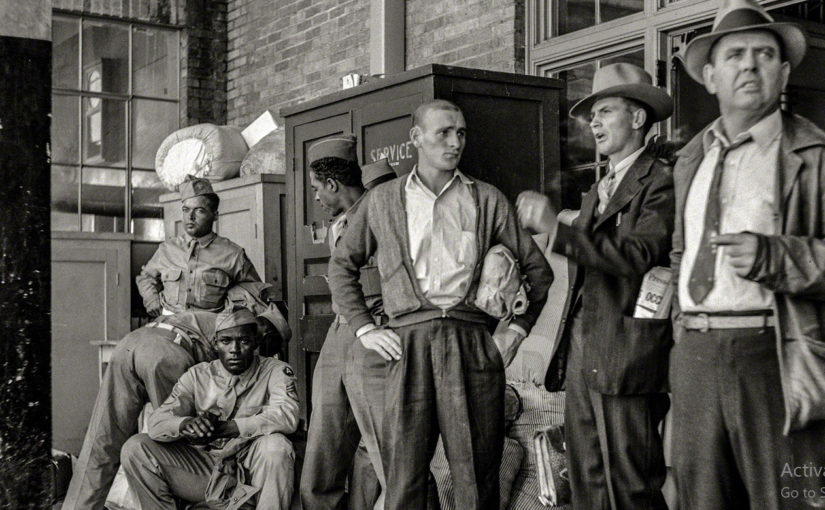


ksnip 20250923 074758[/caption]
d01d197e99af919fdc13a1ee502bf66c[/caption]
df2a9e893dcf4c7bffdaa00f7ad2e0e4[/caption]
6955de0877c1bc8e742d1ba698110deb[/caption]
650b282a47bd386f4269cf0bd72d4e78[/caption]
ef912156eef457e0ef1c51e5146797b8[/caption]
8077316a09c17a06b68ee32b2583867a[/caption]
fb73a48bd8c22306f39019f6760bfa7a[/caption]
ca5ba1171cf306b240042c6978dcb6fa[/caption]
bfb572dacc24b1c16c710272fe7985ed[/caption]
ea26944b967bfc923389a75985e61f2b[/caption]
e46bc48940c7645644818bd15045804e[/caption]
158975957bbdf4f3fbbe74a6b86e8904[/caption]
b8cec0c71cf5a224418721f94e8cb9da[/caption]
411816d5ddcfb6c1a78f636993ee7c7c[/caption]
cec69af2b3e2975ac2dbc53f71c46f06[/caption]
df35a5a2b62143cf1ffbe9d15fa4a9d9[/caption]
6100b2f92560416dd8911d0d9b7fd108[/caption]
f42b9f92c22ed7043c7a73e423b5e72e[/caption]
d87a82f11ff6f25241bbce1a7adeb9d2[/caption]
5455b4166e03678ed90daddcf673f523[/caption]
6769feb47b5b4c9546a48941231452d5[/caption]
c42416c93a9fd2816467e63d06aafc96[/caption]
edd0e0aec2864714ed2087e610ae58ed[/caption]
436972879270fcd21a9370042c220a47[/caption]
814ead6e28ac1623604dc5c3b658852d[/caption]
743bf6f3e5ced1a056db47aea968cb94[/caption]
d3f677fa89fb53a892d98daf779af0b2[/caption]
12659ec0aa13e49c2fe92e5b8fc8b55c[/caption]
cf2b8ede06ef892552e44b615aea6610[/caption]
f17848fc974a13929a94b432bfd0019a[/caption]
883b7891a31b0e1022a12f101741c603[/caption]
c89465507b0971380d601e814bff98ad[/caption]
be12b620083ecaaeb449879a3ddd1289[/caption]
e8f3c61e5b99b971b7eb9ec464331aa0[/caption]
f54ea3f0f9cc189f5f8ff936ab4f0342[/caption]
887dfec83d5b4e2c49a8b74fbcf6c534[/caption]
a51f5b0340832fc10047954f34ff8f6b[/caption]
d43338d9f26fd5b9fd66c9720dc1d385[/caption]
894734706ba3272012a8fefe94abf213[/caption]
acd44b7437c76436d7421bd8b42b6fcb[/caption]
6984dbe3ab5cfb4971437894d6dac26d[/caption]
a1ac1e09c2de6fb2e748357893002158[/caption]
f121dba2f55b426ccc8b09ca708513ab[/caption]
f531c45d9592af7f66f33fa9323269e6[/caption]
8927ffcc717287ce93767325443aa31e[/caption]
e5e2cb74bf0f79dd6b9d282c3c66a65f[/caption]
14733ad53eeffd23d35ce4d8f324aed7[/caption]
d3c309624f0637ec92e831b2f310c44c[/caption]
7625d1c21f5a2942ad69ad123443c98f[/caption]
bfb817a570af3c8142fcfdef03820e65[/caption]
8770274b854d2ebaa31d83c6a86a0810[/caption]
3655954baed82a833a87a4a99a7bd9b1[/caption]
c53a667c5645e24dc7522239a9bc4651[/caption]
c0dfbc78eea321d159d6dfb9c18e4a19[/caption]
e9e21bff22191f5559e78dd2f731ce8e[/caption]
fde17cfd9f6374daefeec22e7ea6ae9c[/caption]
f1cd0321db7320e18c428b900d38cdec[/caption]
a1070cbaf7900b3e29c7ee2d623589da[/caption]
ab837fa6b0ccec453cc78d055f36d692[/caption]
ff8d0dcfdeb513695f0e2e3d40abf839[/caption]
ab5ed1cc57228aabf65307b9f3c4f99f[/caption]
e7c94b4d9f816393b3db8df6489a346d[/caption]
d3325a4f1e8eee200bb8de26ce0b31b1[/caption]
ed19c652cf5357ecb30d97fda194878e[/caption]
dbc11560cb6d8d6de05fee47c09b700a[/caption]
078832ae0ab4d99afb047d1664ff4d0d[/caption]
caa762432ef7bc5b5768dfcd0bf49c89[/caption]
4723580e39c67108b282848a138124fd[/caption]
c64561fa19bd199cba1e71778ff525f1[/caption]
5350e02ed681dd72682cfac03b704b93[/caption]
fa892e7006a017d07ce2a2dd6cd9c895[/caption]
d6070b3795ee7c6fe811256dc115c35e[/caption]
ad8c1f3e1238d3876e8f84894608ecb9[/caption]
be1bd07449c8ade29ee60620ba0b7035[/caption]
dbd412d753801ec4776adfcc494606e6[/caption]
jet199[/caption]
e83bb3c468e7e4d25de2036c6026501b[/caption]
1323c6e10128b38be786d659a6d28c5a[/caption]
6511b0f920699f5961d975ba5695178d[/caption]
5130a356d724e94a60b19bd5406d0351[/caption]
61625f8eedce38a99a5c8e6a9d1672f2[/caption]
a994fa772da112fa8c830df07989f0ea[/caption]
d754903e41a61d4eb21708d022f5d56c[/caption]
72bc31655d041c0d390a52cb6a86e523[/caption]
fe401463a4d1b1747ca8a633e174f7db[/caption]
b31c3d621e95a13b68d527fb68e77b20[/caption]
2304bc2574b952a0920574d189586267[/caption]
7527afd3ab622a1e9c4e04a50f8cb562[/caption]
Processed with MOLDIV[/caption]
925258b04b67bf1ce4c7504247032b67[/caption]
7241231a21b597b8d8e0243c5a102934[/caption]
887af56bfd5780415ceef1198c307406[/caption]
abd15a8012f88c340804e639e1711ebc[/caption]
98cd3a3bc545f3992e17b3673e7d5ec0[/caption]
59b4d43e9071d84d1d2e60b287f36ea8[/caption]
95675dccdb640efc49fdf2eab5860706[/caption]
ae33539daec5d751b1f0cf8e50ffeb7a[/caption]
fe1ce15c571eac2c96571ee0e06b605c[/caption]
f86a5f57823647a5240deb3dafc02f42[/caption]
31774a589fb48d592add519f9e77931e[/caption]
f8b45d6c1dda6d0d1c2c990d037f1477[/caption]
409301edc8da0a097f0fdb6bc6e0fda8[/caption]
6984dbe3ab5cfb4971437894d6dac26d[/caption]
ksnip 20250903 212451[/caption]
c2432a9f11af5fc97e2acb52d1bdf4bc[/caption]