

Back in the early 1990’s I was the Director of Heated Products at Sunbeam-Oster. Back then, I had my hands full with designs for water cookers, clothes irons, garment steamers, rice cookers and other products. And one day the VP of Engineering calls me into his office where we held a meeting with the Marketing Team out of Schamberg, IL.
Sunbeam wanted to have a new and unique design of a coffee maker.
And I was to lead the project.
So, of course, we hired some creative Industrial Designers, leveraged a couple of professors in chemistry out of Ol’ Miss, and an Industrial Design Team out of San Francisco. And combined they came up with all sorts of ideas. Everything from cartridge flavors, to adjustable temperatures, pressures, ground sizing, and so much more.
And I had the responsibility in negotiating contracts with this varied group, organizing and tracking the project and guaranteeing success.
Oh Indeed, I could tell you all many interesting stories.
But the point was this; the company was used to “cut and paste” design, all wrapped into a new “skin”. Which means a new shape SKU for product placement reasons. Very few of our team actually rolled up their sleeves and physically ground the coffee in different grinds, experiments in different temperatures and pressures, and played around with the timing.
So we did so in the lab.
We constructed a lab in our Hattiesburg, MS facility and started cooking. It was always a great smelling room, that’s for sure. And it was a time of great fun and adventure. And of course, I had a lab engineer “scientist” that came up with the experiments, came up with the lab results and worked out the results.
We discovered that under different pressures and temperatures, the coffee solution had different tastes / flavors depending on the mix of elements. And from that, our engineering team (a group of fun-loving Australians from Campsy, Australia at Sunbeam-Victa) came up with some ideas and prototypes.
And yeah, they made a machine that produced the most amazing coffee that I have ever tasted. I am not kidding.
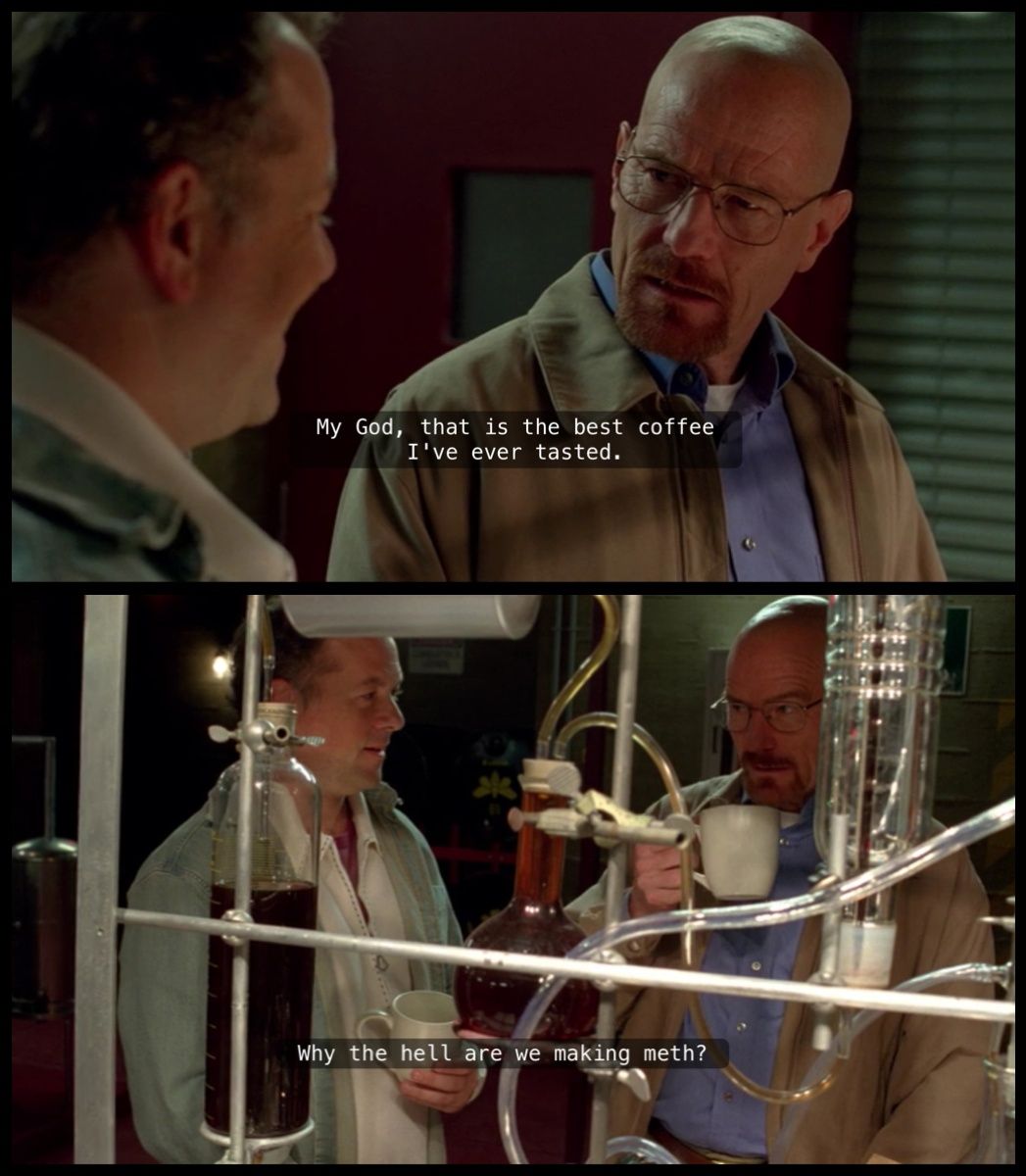
It’s sort of the like the scene from the television show “Breaking bad”, where Walt asks (more or less) Why are we making Meth when we can make this?”
Anyways, the price of the machine would have been pretty expensive and we couldn’t come up with a decent price point for it. So the project was scrapped, and Sunbeam-Oster bought Mr. Coffee instead.
And I guess that’s the reason why really, really great coffee is rarely dispensed out of a machine.
And that is my story for today.
Iran Inflicted “UNPRECEDENTED DESTRUCTION” On U.S. Bases Reports CNN! w/ Ray McGovern
Jimmy Dore is on fire this morning.
What is a family secret you didn’t know as a kid, but now as an adult you do and when you look back it explains a lot of things?
My great grandfather had a lot of these:
…well, not exactly these, but you get the idea. I remembered them well, because he kept a stash of them on his dresser in a glass cup, and when no one was looking, as a kid, I played with them. When my mother and my grandmother caught me, they would have a fit for playing with such “nasty things.” And then my great grandfather would get a chewing out as well.
My great grandfather was a long time retiree from the railroad. And he lived in a boarding house full of other fellow ex-railroaders. The landlady also happened to be an ex-employee of the railroad. But my mother and grandmother wouldn’t speak to her. In fact, they hated her. But I never knew why.
Many years later, long after everyone was dead, I learned something interesting about the history of the railroad. It seems that many of the railroad companies – in the interest of keeping their track gangs happy out on the more isolated parts of the country – used to employ prostitutes to keep them out of trouble. Unofficially of course. They would outfit a railroad car as a rolling crib, and make visits to where the track gangs were. And in lieu of money, they used tokens. Like the ones that my great grandfather still had.
My great grandfather’s landlady had been employed by the railroad alright, but it wasn’t track that she had been laying. And she was still in business.
Pentagon in SHOCK as US Jets Rushing to Hormuz DISAPPEARS…US Pilots CAPTURED? – OPTM
Lahooh bel Loaz (Almond Pancakes)
Yield: 10 to 12 servings
Ingredients
- 4 cups all-purpose flour
- 1/2 teaspoon yeast
- 1 cup milk
- Water
- 2 eggs
- 1 cup confectioners’ sugar
- 3 tablespoons corn oil
- 1 tablespoon ground cardamom
- 1 teaspoon baking powder
- 2 cups almonds, roasted and ground
Instructions
- Put the flour in a bowl, add the milk, eggs, baking powder, yeast and water; mix together to form a batter; set aside to rise.
- Grease a frying pan with a little oil, pour into the pan half a ladle of batter. Spread the batter quickly into a thin pancake and fry over medium heat until the top bubbles, then turn over and brown the other side.
- Repeat using all batter.
- Mix the confectioners’ sugar, cardamom and almonds together. Stuff each pancake with the mixture; roll into finger shapes, and arrange on a serving dish; sprinkle with some ground almonds.
Attribution
Saudi Arabia Magazine (an official publication of the Information Office of the Royal Embassy of Saudi Arabia), Winter 1997
Something is off and millions are starting to notice it
Is it true that buying a used car with over 60,000 miles is not worth buying due to high maintenance costs?
2016, I saw a 2010 F-150 in a lot near my house. I go look at it. Lariat (top level) trim, 160K on the clock, asking $16K. While I was walking around, another person walked up, glanced at the sheet, and walked away. I checked KBB, saw the asking price was reasonable, and had my wife look at it.
We took it on a test drive and made an offer contingent on our mechanic looking it over, first.
Our mechanic said it was fine and we ended up paying $15,500.
We’ve had some work done on it, but my wife now has over 230K on it and still going strong.
Used cars are used. Some of them are worth it, others aren’t. But a flat rule that automatically rules out an otherwise good car will leave you missing out on some real gems.
On the other hand . . . . for a time, I also had a 1994 Chrysler LeBaron convertible with less than 35K miles on it. It was beautiful. Always garage kept. Simply gorgeous.
. . . . . because the top never sealed right to the windshield header. It leaked every time it rained. Even when it was new, the dealership couldn’t fix the problem. Oh, well. At least it wasn’t ‘high-milage’.
Too-Cute Eclipse
Written in response to: “People have gathered to witness a once-in-a-lifetime natural phenomenon, but what happens next is not what they expected.“
Mary Bendickson
Russell paced. Held the phone close to his face. Pinched the bridge of his nose between his eyes as he felt the tension rise.
“He’s a grown man. He’ll be alright. I’ll do what I can but it could take all night.”
“………….”
“I know, I know, I KNOW. I can’t be there, you know.”
“…………..”
“I have a job. I have a life. I can’t drop everything.”
“………….”
“I’ll talk to him. It’s all I can do. I’m too far away.”
“………….”
“What’s that you say?”
“………….. ………………… ………………… ……………….. ………………..”
“Well, maybe… I’ll see.”
“………”
“Yeah, you, too. Will do.”
Ugh! That family of his! Won’t they ever survive without his intervention. He lives a thousand miles away from them yet they still expect him to solve all their problems. Yet, maybe this time he could turn this catastrophe to his own advantage. If what they said is true just maybe…? Oh, but he would never get Chrissy to agree to something so outlandish. She is much too sensible. A stable sort of gal. She doesn’t have her head in the clouds. She is firmly grounded. He searched for someone like her his whole adult life. Would he go and spoil it all by saying something stupid like…? Oh, but what a kick it would be if…! Should he risk it? Could turn out to be a lot of fun. Besides being beautiful and smart, Chrissy is fun loving.
Russell Koolridge, ‘Mister Cool’ to his seventh and eighth-grade science and math students, felt lucky getting to know his fellow teacher, Chrissy Merriman, better since Christmas time when they collaborated to help find the parents of five-year-old Carlson Conover after his grandfather suffered a fatal heart attack while at the same restaurant as Chrissy and her nana, Anna.
He cherished the quality time they spent together since. He knew in his heart that if he could ever be sure of her overcoming the one time resentment she felt toward him for the immature teasing he once aimed her way she would be the one. The only one he would ever want to settle down permanently with to start that perfect family he envisioned for his future. He adored helping with Carlson when they were pressed into service as temporary caretakers. He and the little tyke flew down a steep hill on a flying saucer sled, created snow angels and redecorated a pink room into a masterpiece space odyssey. Since then, Chrissy and he enjoyed the privilege of playing with the energetic little boy several times whenever Chrissy met with Carlson’s publishing icon mother, Nora Conover, as they put the finishing touches on Chrissy’s debut romance manuscript.
That life-time goal book was due to launch soon. Ooh, could that be the hook to get her to accept this wild notion he was hatching? He enjoyed success as a YA author that she was intent on matching. A travel opportunity could be exactly the spin and she would be all in. Careful, careful planning finesse would be needed to keep everything a surprise. He did wonder if that would be wise. Maybe he should conspire with Anna. She could be their chaperon. Chrissy would never go away with him alone.
~~~
“Oh, Russ, what a charming idea! Getting to meet your family, who you never talk about, and combining it with a promotion for my book. But the timing is all wrong.”
“Oh, not really, Chrissy. It would only add a day to our spring break that is a little off kilter because Easter is so early this year. And each of us can get the other same-grade teachers to cover for us since not a lot of productive work will get accomplished anyway on that particular day considering the special activity. So what do you say we get away. It’ll be a once in a lifetime opportunity. Almost cosmic. You’ll make me so happy if you say yes. Please! Anna can come along to be sure we behave appropriately. Besides, we’ll be surrounded by family.”
“I would love that. But will they love me?”
“They couldn’t help but love you. Please remember they can be…difficult.”
~~~
So as scheduled the three of them jetted away on the two hour flight to a warmer climate on a bright sunshiny spring day. They were met at the airport by two members of Russell’s family, Rocky, his father and Conway, his older brother. They drove into the rolling hills, through the piney woods, passed by beautiful calm, crystal lakes and arrived at the Koolridge family campground where they were ushered into cozy cabins that would be their accommodations for the duration of the visit.
“Russ, you never mentioned your family owns such a relaxing retreat.” Chrissy exclaimed.
“It’s been in the family for generations. There are lots of traditions and rituals that must be observed. I have been reluctant to follow the expected path and that’s why I moved so far away. I hope you won’t think less of me once you experience some of these customs.”
“Russell, it is time.” His mother, Lollie beckoned. “Your sister, Crystal, has been urging him to come out but he’s insisting it will be too dangerous. It’s going to take all of your scientific know-how voodoo to convince him otherwise. He is hiding in the basement of the lodge with a blanket over his head. Listening to the song…again.”
“Sorry, Chrissy and Anna. This shouldn’t take long. We’ll need to get to the stadium soon. It’s my younger brother, Little Rock. He is suffering a bad case of loss love. He continually listens to a song that captures the essence of love’s complexities. It reflects the universal human experience of longing, vulnerability, and the desire for emotional connection. There’s a ceremony today at Arkansas Tech University involving virgins and nuptials that embodies the sentiment. We have to get him there to let him know there is hope.”
For whatever reason Anna had convinced Chrissy she should wear her white flouncy dress with the white sweater embroidered with spring flowers today. Chrissy was amazed at how many other women were wearing white flowing dresses at the event. But then as the light of the sun dimmed the light in her mind came on.
Russell, in his dark suit, got down on one knee, extended an antique ring and popped a very important question. “Chrissy Merriman, you light up my world like the moon and the sun. As they become one this hour, would you do me the honor of becoming one with me in a total eclipse of our hearts? I desire a deep emotional connection with only you. I pray you have the same longing for me.”
“Oh, Mista Cool, you really know how to make heaven and earth move for me!”
A kind of hush embraced the crowd, the temperature cooled as passions heated, birdsong ceased and stars came out while the earth stood still for four minutes. Along with 299 other brides and grooms, including his younger brother reunited with his newly re-found love partner, Russell and Chrissy universally pledged their hearts to one another as the moon totally eclipsed the sun in Russellville, AR, USA on April 8, 2024. A day not easily forgotten because of a too-cute eclipse.
Pictures














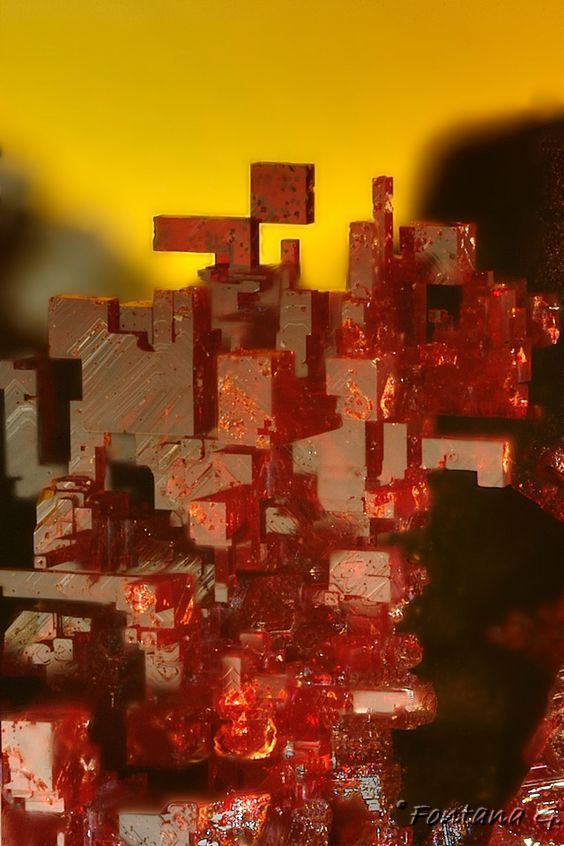



Trump says with Australia’s help, America will have endless rare earths. However, reality disagrees.
When Trump stood beside the Australian prime minister and declared that America would soon have many rare earths that “you won’t know what to do with them,” I almost believed it, until I remembered that mining dirt isn’t the same as mastering chemistry.
After the latest tariff storm from Trump, China responded with upgraded export controls, extending its list from 7 to 12 key elements, and here’s the kicker, applying them extraterritorially. That means even a product with 0.1% Chinese rare-earth content abroad falls under China’s rules. Suddenly, the U.S. found itself shouting “unfair!”, again.
So Trump turned to his favorite stage prop: Australia. An $8.5-billion “rare-earth supply agreement” was signed in Washington, and Trump told his supporters that in a year, America would have rare earths “coming out of its ears.” MAGA indeed.
The problem? The U.S. doesn’t lack rare-earth ores. It lacks the capability, the refining, the separation, the entire industrial chain that China spent 70 years building.
Rare-earth mining is only 20% of the business. The other 80% lies in complex chemical processes that the late Chinese scientist Xu Guangxian perfected, pushing purity levels to 99.9999%. The West still hovers at 99.95%. That’s not a “gap”, that’s a generation.
Even America’s last remaining mine, Mountain Pass, sends 80% of its output to China for processing, then buys it back as high-end magnets. So much for “independence.”
If Trump truly believes he can rebuild that chain in twelve months, he’s not talking about rare earths, he’s talking about dirt.
For decades, the U.S. hollowed out its manufacturing, betting on finance and software while outsourcing “dirty” industries like rare-earth refining to Asia. Now it’s paying the price. You can’t tweet your way into industrial capacity.
China, meanwhile, never wanted to weaponize rare earths. But Washington kept forcing the issue, blacklists, chip bans, “de-risking” rhetoric, and then acted surprised when Beijing finally said: enough.
So when Trump says America will have rare earths more than it can use, maybe he’s right, abundance means little when you lack the skill to turn it into strength.
If you want to see who really controls the 21st-century supply chains, just look at who’s quietly processing everyone’s ores while others hold press conferences.
Iran Bombs UAE & DEMOLISHES Trump’s ‘Project Freedom’ In The Strait Of Hormuz!
Sir Whiskerton and the Case of the Vanishing Vibes
Ah, dear reader, settle in for a tale of existential dread, misplaced mojo, and one very mopey cow. That’s right—today’s adventure begins not with a bang, nor a stolen trinket, but with a profound and perplexing silence from the farm’s grooviest resident. So, take a deep, centering breath (preferably of something nicer than the compost heap), and join me for Sir Whiskerton and the Case of the Vanishing Vibes.
The Gloom in the Pasture
It was a Tuesday. The sun was shining, the chickens were bickering about the aerodynamic properties of a new feather, and the farmer was having a spirited, one-sided conversation with his prize-winning zucchini. All was, in its own chaotic way, right with the world.
Until it wasn’t.
I was enjoying a perfectly curated sunbeam on the porch of the farmhouse when a shadow fell over me—a shadow that smelled faintly of clover and despair.
“Sir Whiskerton,” came a voice, flat as a week-old puddle. “We have a situation. A serious bummer.”
It was Bessie the Tie-Dye Cow. But the Bessie who stood before me was a mere silhouette of her former self. Her rose-tinted glasses were askew. Her mood ring was a murky, indecipherable grey. And most alarming of all, her usual rainbow hide seemed to have faded to a collection of sad, washed-out pastels.
“Bessie?” I said, adjusting my monocle. “You look… beige.”
“I feel beige, man,” she sighed, sinking to the ground with a soft thud. “The vibes… they’re just gone. The universe and I are no longer on speaking terms. It’s a total drag.”
This was grave. A vibe-less Bessie was like a pond without frogs, a barn without hay—it was fundamentally wrong. The farm’s equilibrium was at stake.
- “She’s been like this for hours!” Doris the Hen clucked, rushing over. “Farm headline: Rainbow Cow Loses Chromosomes! …What? Colors? Whatever! It’s tragic!”
- “Tragic!” Harriet echoed, nodding vigorously.
- “Oh, the sheer… monochrome of it all!” Lillian wailed, and promptly fainted onto an overturned feed bucket—her designated fainting couch.
The Investigation: A Journey into the Mundane
My first suspect was, naturally, the farm’s ambient weirdness. Had something disrupted the spiritual Feng Shui?
“Let’s review the facts,” I declared, pacing before my concerned audience. “When did you first notice the… deficiency in grooviness?”
“This morning, man,” Bessie mumbled. “I went to do my sunrise meditation, to really get in touch with the cosmic wavelength, you know? And all I got was static. The tulips weren’t tiptoeing. The love beads felt cold. It’s a catastrophe.”
Rufus, my loyal, glowing sidekick, sniffed Bessie sympathetically. “Maybe she needs new batteries?”
“She’s a cow, Rufus, not Chef Remy’s glow-in-the-dark pickle,” I reminded him gently.
We embarked on a farm-wide search for the missing vibes.
- We checked The Disneyland of Debris, but the singing soda cans were just rattling in the wind, and the haunted compost was, for once, genuinely peaceful.
- We consulted Zephyr the Genie, who floated out of his lava lamp with a concerned swirl. “Whoa, heavy energy, man. It’s like a cloud over the sun. A bummer-cloud. Have you tried wishing for a better outlook? First wish is free!”
- We even asked Mr. Ducky, who immediately tried to sell us a solution. “For the low, low price of three worms, I present the Vibro-Matic 3000! It realigns your chakras and doubles as a potato peeler! Satisfaction not guaranteed!”
Nothing worked. The gloom persisted.
The Plot Thickens: A Culprit is Unmasked
It was during our third lap of the pasture that I noticed it—a faint, rhythmic, grating noise. Scritch-scratch. Scritch-scratch. It was the aural equivalent of a mosquito in the night.
We followed the sound to the old oak tree, and there, we found the source of all the cosmic dissonance.
Perched on a low-hanging branch was Lucifer the Chipmunk, aka 戏精胖仙·路西法 (The Drama Queen Chubby Immortal · Lucifer). He was meticulously sharpening a single, tiny acorn against the bark, his face a mask of intense concentration.
“What in the name of peace and love is that?” Bessie moaned, covering her ears. “It’s drilling into my soul!”
Lucifer paused, fixing us with a dramatic, weary gaze. “You mortals and your fragile auras. Can you not see? I am honing the vessel of my divine will! This acorn shall be the cornerstone of my new nest—a temple to aesthetic perfection and progressive rodent ideology!”
Scritch-scratch. Scritch-scratch.
He had been doing this for hours. Right next to Bessie’s favorite meditation spot. The constant, irritating noise had slowly, imperceptibly, sanded away her serenity.
“Dude,” Bessie said, her voice gaining a sliver of its old edge. “Your ‘divine will’ is a major buzzkill.”
The Resolution: Finding the Frequency
A direct confrontation was useless; Lucifer thrived on drama. We needed a subtler approach.
“Rufus,” I whispered. “I have a mission for you. It requires your specific… talents.”
Rufus’s ears perked up, his green fur glowing with anticipation.
A few moments later, from the other side of the barn, a magnificent, soulful howl erupted. It was Rufus, giving the performance of a lifetime. “Awooooooooo!”
The sound was pure, resonant, and beautifully distracting.
Lucifer stopped scratching. His head tilted. “What is that rustic, pastoral cacophony? It’s… it’s undermining my creative process!” He dropped the acorn and scurried off towards the barn, no doubt to critique Rufus’s artistic choices.
The scritch-scratch ceased. Silence, blessed and profound, washed over the pasture.
Bessie took a deep, shuddering breath. She adjusted her rose-tinted glasses. She looked at the clouds, at the flowers, at the farmer who was now earnestly explaining crop rotation to the scarecrow.
A slow, dreamy smile spread across her face. Her mood ring shifted from grey to a tranquil, shimmering blue. The colors of her hide seemed to deepen, the patterns swirling back to life.
“Wow,” she breathed. “The vibes… they’re back. Can you feel it? The universe is humming again. Far out.”
The Moral of the Story
Peace returned to the farm. The chickens resumed their bickering, Porkchop napped in a sunbeam, and Bessie was once again dispensing advice like “follow your bliss” and “don’t harsh my mellow.”
The moral of this story, dear reader, is that sometimes, the biggest disruptions to our inner peace aren’t grand catastrophes, but small, persistent irritants. And the solution is often not a grand gesture, but simply finding a way to turn off the noise.
As for Lucifer? He is now attempting to start a howling choir, convinced it’s the next great avant-garde movement. Rufus is his star pupil. The farm, as always, finds its own weird, wonderful balance.
The End
Moral
Sometimes, the biggest threat to your peace is a small, persistent annoyance. True tranquility often comes from simply finding a way to quiet the noise.
Best Lines
- “Sir Whiskerton, you look… beige.” – Sir Whiskerton, making a diagnosis.
- “I feel beige, man.” – Bessie, describing a state of existential crisis.
- “Farm headline: Rainbow Cow Loses Chromosomes! …What? Colors? Whatever! It’s tragic!” – Doris the Hen, reporting with her usual accuracy.
- “Maybe she needs new batteries?” – Rufus the Dog, problem-solving.
- “Your ‘divine will’ is a major buzzkill.” – Bessie, reclaiming her grooviness.
Post-Credit Scene
A week later, Bessie presents Lucifer with a pair of tiny, felt ear-muffs. “For your creative process, man. So you can really get in the zone.” Lucifer, touched by the gesture, wears them constantly and declares himself the “Silent Emperor of the Oak.” He hasn’t sharpened an acorn since.
Key Jokes
- The farmer’s ongoing conversation with a zucchini.
- Doris’s immediate and inaccurate jump to “lost chromosomes.”
- Mr. Ducky’s “Vibro-Matic 3000” sales pitch.
- Lucifer’s dramatic description of acorn-sharpening as a divine act.
- Rufus’s soulful howl being labeled “rustic cacophony” by the offended chipmunk.
Starring
- Sir Whiskerton (Vibe Detective & Monocle Adjuster)
- Bessie the Tie-Dye Cow (Victim of Sonic Annihilation)
- Lucifer the Chipmunk (Unwitting Antagonist & Rodent Demigod)
- Rufus the Radioactive Doggie (Sonic Savior & Distraction Specialist)
- Doris, Harriet, & Lillian (The Chorus of Catastrophe)
P.S.
Remember: Your inner peace is a garden. Don’t let a chipmunk with an acorn trample your tulips.
How long can China play the “rare earths card”?
For generations, it would seem, There is no way the USA can afford to be free from dependency on China for many decades, and even if there is enough motivation, it is highly unlikely the USA can afford it anyway. That includes Europe.
How long can China play the “rare earths card”?
OCT 17, 2025
This is probably the most important geopolitical question in the world right now: for how long can China play the “rare earths card”?
It’s now well established this gives China considerable leverage. For one thing the frantic state of panic of US Treasury Secretary Bessent over the past couple of days is a pretty big tell: he publicly insulted senior Chinese officials over the move, lobbied for “emergency powers” and said this was a Chinese attack on the “world” that would meet a “fulsome group response” from the U.S. and its allies. If that’s not Washington being rattled, I don’t know what is.
What seems to be the consensus view, because I’ve seen it mentioned over and over again, is that one of the main bottlenecks to break this rare earths stranglehold is environmental regulations. As the narrative goes, the West essentially regulated itself out of the rare earths business by imposing environmental standards that China simply ignored. And so, by implication, all it would take is the right regulatory changes and government subsidies and the problem is solvable within a few years or so, it’s mainly a question of political will to accept environmental trade-offs.
There is some degree of truth in that – rare earths processing can be very polluting – but this is otherwise very much magic bullet thinking.
The difficulty of breaking the rare earths stranglehold is far – FAR – more immense than mere regulatory adjustments. China’s dominance has much more to do with the scale of their manufacturing and the vertical integration of their supply chains, and as such breaking the stranglehold at this stage requires upgrading the West’s industrialization level comprehensively. We’re talking something requiring a complete makeover of the West’s socioeconomic structure, involving trillions in capital in investment – with profitability perhaps two decades away – as well as a profound upending of its education system. In short, a generational-level undertaking on an almost unprecedented scale.
You might be tempted to compare the efforts needed to the Manhattan Project or the Apollo Program – that’s mighty enough, right? – but that would actually be vastly understating it. The amount of efforts needed is more comparable to something like the Industrial Revolution itself than to any individual megaproject.
You don’t believe me, right? Surely I must be exaggerating! No way it can be that dramatic!
That’s why I wrote this article. To show you in details the absolutely titanic efforts that would be needed to break the stranglehold for just one of the elements on China’s list of export controls: gallium. And bear in mind when you read the article that it’s just ONE chemical element out of 21 under export controls, and that China’s export controls don’t only include chemical elements but also downstream products (lithium-ion batteries, superhard materials, etc.)
After finishing this article, I bet Bessent’s panic will feel almost understated to you.
What is gallium?
Gallium is not actually a rare earth: it’s a soft, silvery metal that would literally melt in your hand on a warm day. Yet it’s one of the most strategically important materials in the world today, as it’s – among other applications – foundational to the latest generation of GaN semiconductors, as well as modern AESA military radars that can detect targets at nearly double the previous range. A top Raytheon executive noted in 2023 that “GaN is foundational to nearly all the cutting-edge defense technology that we produce.”
China has cornered a staggering 98 percent of the worldwide primary low-purity gallium production, meaning it has near-total control over the material.
What would it take to produce 100 tons of gallium?
Let’s ask ourselves a simple question: what would it take to produce 100 tons of gallium? It’s not a huge amount: China produces 600 tons of it, with a production capacity of 750 tons so we’re talking less than 17% of China’s current production.
Understanding gallium production
Many people imagine gallium extraction works like mining any other metal: find a deposit, dig it up, add some chemicals, extract the metal. But gallium is fundamentally different – it’s not found as an independent ore but is recovered as a byproduct of aluminum production.
Think of it like juicing oranges: gallium is like the small amount of essential oil that clings to the orange peel. Without the juice factory processing massive quantities of oranges, you have no practical way to obtain that essential oil separately. You can’t just “mine gallium”- you need an entire aluminum industry running at scale to capture the trace amounts that emerge.
To understand the scale involved, consider China Aluminum Corporation (“Chalco”), the world’s largest aluminum producer: in 2022, they processed 17.64 million tons of alumina from which they refined 6.88 million tons of primary aluminum and finally extracted 146 tons of gallium – a ratio of approximately 1:47,000 for gallium-to-aluminum, or 1:120,000 for gallium-to-alumina.
Building alumina refineries and aluminum smelters
The ratios we just saw mean that, to produce 100 tons of gallium, you would first require a proportionate aluminum industry capable of producing 12 million tons of alumina and 4.7 million tons of actual aluminum annually. That’s your first step.
For reference China today has 60% market share of global aluminum production, India is a very distant second with only 3.5 million tons of aluminum (refined from alumina) produced in 2022-2023 (meaning the whole country produced only half the amount produced by Chalco, a single Chinese company) and the US produced less than 0.8 million in 2023.
So if the US wanted to become a big player in gallium, it’d first need to increase its aluminum production capacity almost 6 fold, from the current 0.8 million tons to the 4.7 million tons needed to produce 100 tons of gallium, which again would only make its gallium production less than a fifth that of China.
This involves building two types of factories: alumina refineries (which process bauxite ore into alumina) and aluminum smelters (which convert alumina into metallic aluminum through electrolysis – the stage where gallium is extracted).
Outside China, aluminum smelters costs about $4 billion per million tons of annual production, meaning we’re speaking about a $20 billion investment just for the smelters. Alumina refineries would add another $10 billion. So we’re looking at $30 billion in factory construction costs just to ramp up alumina production to the level required.
The energy challenge
There’s an issue however: convert alumina into metallic aluminum through electrolysis is extremely energy-intensive. Industry data shows that producing one ton of electrolytic aluminum consumes approximately 13,000-15,000 kWh of electricity.
The US currently produces 0.8 million tons of aluminum, so it would need to add another 3.9 million tons of capacity. How much electricity does that require? Using the lowball figure of 13,000 kWh per ton, it translates to roughly 51 billion kWh of additional electricity – flowing continuously, 24/7, 365 days a year. Aluminum smelters can’t simply shut down when power is unavailable; the molten metal would solidify in the electrolytic cells, destroying them.
What does 51 billion kWh mean? To put it in perspective, let’s look at America’s most recent nuclear project: Vogtle Units 3 and 4 in Georgia. These two reactors have a combined capacity of 2.2 GW and can produce approximately 17-18 billion kWh annually at full capacity. The U.S. would need to replicate the entire Vogtle 3 & 4 project three times to meet the 51 billion kWh requirement – essentially building six new reactors in three separate construction projects.
Cost wise, Vogtle 3 & 4 reached a final price tag of $36.8 billion after massive overruns from an initial $14 billion estimate. Three such projects would cost approximately $110 billion – and that’s before the $30 billion needed for the aluminum refineries and smelters themselves. Total infrastructure investment: ~$140 billion.
Timeline wise, construction on Vogtle 3 & 4 began in 2013, with Unit 4 finally entering commercial operation in April 2024 – nearly 11 years. Even with lessons learned and parallel construction (itself questionable given the shortage of qualified nuclear contractors and specialized equipment), a realistic timeline for three new Vogtle-scale projects extends to 2035-2036 at the very earliest.
And remember, again, that this $140 billion investment and 12-year timeline would yield just 100 tons of gallium annually – representing only 17% of China’s current production and less than 14% of their production capacity, which again is only ONE of the 21 chemical elements China applied export controls on.
The human challenge
Building the facilities is only half the battle, the greater challenge lies in finding the people to run them. U.S. manufacturing employment peaked at 19.6 million in 1979 but has declined to approximately 12.9 million by late 2024 – a loss of nearly 7 million jobs over 45 years. This isn’t merely about numbers, it also represents a fundamental erosion of the skilled industrial workforce.
And the challenge is that aluminum processing is a very worker-intensive industry. The reason is because aluminum cells are dynamic systems where conditions vary cell-to-cell and hour-to-hour, with operators making hundreds of small adjustments daily based on visual inspection, sound, and instrument readings – the kind of complex judgment calls that remain difficult to automate.
You just need to check the numbers in China, the country with the most advanced facilities and access to the latest automation technology: top still employ tens of thousands of workers for aluminum production. Chalco, which we spoke about earlier, employs 58,009 people to produce their 6.88 million tons of aluminum. China Hongqiao, the second-largest aluminum producer in the country (after Chalco), employs 49,774 people and produces approximately 6 million tons of aluminum annually.
So we’re talking ratios of about 8,500 people per annual ton of aluminum, in the most advanced facilities in the world, with Chinese working hours and efficiency. Meaning that to add another 3.9 million tons of capacity, the U.S. would need to find at the very least 33,000 additional workers just for aluminum production. With all that entails: training skilled aluminum operators requires years of hands-on experience with high-temperature industrial processes, metallurgy, and complex equipment – not skills acquired through short courses.
And I’m not even speaking about the workers needed for the energy part: 800 permanent jobs were created specifically for the new Units 3 & 4 at the Vogtle nuclear station. Three Vogtle-scale projects would require approximately 2,400 additional nuclear operations workers—engineers, control room operators, maintenance technicians, and security personnel.
Exceedingly difficult to do in a country where the manufacturing sector already faces 1.9 million unfilled jobs by 2033, and where a significant chunk of the existing nuclear workforce is likely to retire over the next decade. America would need to spend years train 35,500 specialized industrial workers for this single gallium project – representing 17% of China’s production capacity for one element – while simultaneously backfilling retirements.
The industrial ecosystem challenge
It’s not just factories, energy and people – you need a complete industrial ecosystem.
Even if you have money to build factories, technology to build power plants, and the ability to find tens of thousands of workers, there’s an even more difficult problem: supporting facilities.
Industrial production is not an island; it requires a complete ecosystem.
For example, producing alumina requires bauxite, lime, and soda ash. The US doesn’t lack lime and soda ash, but bauxite mainly needs to be imported. You need stable bauxite supply channels and ports for transportation.
Producing electrolytic aluminum requires auxiliary materials like fluoride salts and carbon anodes – factories must produce these too. You also need highways and railways to transport them to the factory area.
Once products are made, they need to be transported to ports for export or to downstream chip factories and radar factories – this requires a very mature logistics network.
These supporting facilities aren’t as simple as building a few bridges or paving a few roads. They represent a nation’s industrialization level.
China spent 40 years building the world’s most complete industrial system from scratch. From bauxite mining to alumina and electrolytic aluminum production, to gallium extraction and purification, even downstream chip manufacturing – every link has mature enterprises and supporting infrastructure.
This gap in industrial ecosystem can’t be filled just by throwing money at it. It requires time, it requires accumulation over generations, it requires the entire nation to highly value manufacturing.
The market challenge
The last, and perhaps most critical, challenge is the question of the market.
Assuming the US somehow managed to overcome all the other issues: it has built 3 three Vogtle-scale energy projects, the 2 factories, found tens of thousands of workers and developed the ecosystem around it all, it still needs to sell the stuff – both the aluminum and the gallium.
Total US aluminum consumption runs approximately 4 million tons annually, yet as we saw producing just 100 tons of gallium requires 4.7 million tons of aluminum as an unavoidable byproduct. The entire domestic market couldn’t absorb this production: even capturing every aluminum customer in America would leave 700,000 tons of surplus metal.
International markets offer no solution. Global aluminum markets already face structural overcapacity and American aluminum produced at market rates with higher costs and wages couldn’t compete with China on price. So should the U.S. sell at a loss? What sustains the operation then? Would the US government subsidize the operations year after year, keeping the project running at a loss?
This all creates an economically irrational situation where producing a strategic material (gallium) requires maintaining permanently unprofitable industrial capacity (aluminum smelting). No market-based enterprise would undertake this voluntarily. All the more since, as we just saw this requires an initial investment of $140 billion.
What about substitutes?
You’ve certainly thought about it: “if producing gallium ourselves is such a massive effort, surely we can substitute it for something else?”
The problem is that material properties aren’t negotiable. Gallium Nitride semiconductors aren’t used because they’re trendy, they’re used because silicon physically cannot do what GaN does. GaN can handle 10x the voltage, operate at frequencies where silicon fails, and tolerate temperatures that would destroy silicon chips.
Think about it, if substitutes were viable, the Pentagon would already be doing it. The US military has known about rare earths vulnerability since at least China’s 2010 embargo against Japan. That’s 15 years to find alternatives. And yet here we are, with – again – a Raytheon executive stating that “GaN is foundational to nearly all the cutting-edge defense technology that we produce.”
And even if you could substitute gallium, you’d probably find yourself in the exact same place. A substitute that’s been mentioned is Silicon Carbide (SiC) but… China controls most SiC production too, and it doesn’t match GaN for the applications that matter most.
And even if perfect substitutes existed for gallium – which they don’t – you’d still face the same problem for the other 20 elements on China’s export control list. The strategy of “substitute everything” eventually crosses into absurdity. At a certain scale, “find alternatives for 21 strategically critical materials” becomes functionally equivalent to disputing the results of the Big Bang – you’re demanding that nature provide you with different fundamental building blocks than the ones that exist.
Conclusion
So how long can the “rare earths card” be played?
We just saw the titanic efforts that would be needed to simply produce less than a fifth of the amount of gallium that China produces:
- an initial investment of $140 billion
- building 2 gigafactories and 3 large-scale nuclear plants
- finding and training over 35,000 highly specialized workers
- building the entire industrial ecosystem around it.
All for an operation that will never be able to compete with Chinese prices in global markets, and as such probably needs to be permanently subsidized by American taxpayers.
Take that and multiply it by 21, the total number of chemical elements on China’s export controls list (which again, is not the extent of it because they also have export controls on downstream products), and you start to grasp the strength of the “rare earths card.”
Another very similar element to gallium, also dominated by China and also on China’s export controls list, is indium, a byproduct of copper. Much like gallium, to break the indium stranglehold you’d to rebuild a complete copper industry chain – mines, smelting, chemical processing, electricity, transportation.
Do you start to understand Bessent’s panic?
This isn’t something that a mere Manhattan Project or Apollo Program can solve, this is something far more intractable: China’s advantage isn’t technological, it’s systemic.
We’re not speaking of discrete projects here, we’re speaking about something that’d require a complete societal stack – from how children are educated to how capital is deployed.
Consider what it takes to produce just one skilled aluminum smelter operator: first, a middle school student needs to see industrial work as a viable, respectable path – not failure to get into college. Then, they need access to a vocational school with up-to-date equipment and industry connections – schools the West mostly closed in the 1980s. Then, they need 2-3 years of training plus 3-5 years of on-the-job experience to become truly proficient. That’s 8-10 years from the decision point to competent operator. Now multiply that across 35,000 workers for this one element – then multiply by 21 elements, and multiply again all of this by all the supporting roles needed to build the facilities and staff the vocational schools.
China has this. In 2023, they had a total of 11,000 vocational schools nationwide with with nearly 35 million students studying at these educational institutions. It’s normalized, systematic, continuous. The West doesn’t just lack the programs – it lacks the entire cultural and institutional framework that feeds students into those programs. You’d need to rebuild that framework before you could rebuild the workforce.
Or look at capital allocation: building rare earth capacity requires accepting decade-long losses and twenty-year payback periods, extremely patient capital. Patient capital requires investors willing to accept long horizons. Long horizons require regulatory and political stability. Stability requires societal consensus that manufacturing is strategic. Consensus requires… we’re back to education, media, culture.
So how long can China play the rare earths card? Looks like the realistic answer is: that one is here to stay for a very, very long time.
ARNAUD BERTRAND
Why can’t the United States break China’s monopoly on rare earth technology?
In 2010, the Obama administration introduced policies to reduce the US’ dependence on China for rare earths. 15 years later, the few achievements include the resumption of mining at Mountain Pass, but the extracted ore still had to be sent to China for processing, the US’ reliance on China for rare earths remains high.
Over these 15 years, it’s not that the US has achieved nothing, but the accomplishments have been minimal. However, its industrial capabilities were not like this in the past. During the Cold War, the US laid the foundation for spaceflight from scratch in just 10 years and built 100 strategic bombers in 3 years. What remarkable industrial capacity it had back then. But the US has changed significantly. The elites now prefer finance and the internet, looking down on manufacturing. Such unbalanced development naturally makes revitalizing the rare earth industry even more challenging.
Rare earth production is largely dependent on the large-scale production of non-ferrous metals. The scale of bulk metal smelting requires a sufficient industrial workforce to sustain it, abundant and efficient power supply, rational allocation of supporting resources such as land, mines, and energy, and a single market large enough to absorb the consumption of industrial products. All these factors combined are necessary to support the massive rare earth industry. To break free from dependence on China, the US would need to establish such a complete industrial chain. This would mean an investment of at least $250 billion and at least 10 years of effort, and that’s under the assumption that the US can meet all the conditions mentioned above.
To begin with, the issue of power supply alone poses a significant challenge for the US. The power grid system is highly fragmented, consisting of 3 major interconnections—Eastern, Western, and Texas—along with independent grids such as Alaska’s. With 520 companies and 127 control areas across the country, states and utility companies operate independently, making large-scale interstate transmission integration very difficult. Factors such as land acquisition, permits, compensation, environmental concerns, and local interests further complicate the process, often causing the development of a single interstate transmission line to take a decade or more. Despite being a developed nation, the US’ power grid has long been plagued by “Third World” level issues, frequently experiencing widespread blackouts during extreme weather events. Without a reliable power supply, how can a rare earth processing industry ever be established?
Due to the various reasons mentioned above, the breakthroughs the US has achieved so far are limited in scale and not yet capable of mass production. For instance, Energy Fuels announced that it has successfully produced 99.9% pure dysprosium oxide at its White Mesa Mill in Utah. This product, made from monazite mined in Florida and Georgia, is entirely US-made and represents “a significant milestone in establishing a completely non-Chinese rare earth oxide supply chain”. The weekly production is 2 kg, with a monthly output of no less than 8 kg.
In contrast, China produces 292 tons of dysprosium oxide per month, which is 36,500 times the US output. Moreover, China prohibits the export of rare earths for military use. For the US to achieve self-sufficiency, it must achieve a purity of at least 99.99%. If it aims to meet cutting-edge demands such as those for hypersonic weapons and reconnaissance satellites, the purity must reach 99.9999%. Even setting aside the cost issue, the US still has a considerable distance to cover.
What did your boss do that you decided to quit?
I had worked for a company for almost 13 years and had worked my way up to middle management when we suddenly got a new Director. I had worked my way up through the company and had a good reputation with everyone. I was always dependable, thorough, and a model employee (in my mind).
When the new director came in, she wanted to shake things up, which was fine by me. I knew the department better than her due to my experience and was happy to adapt.
A couple of things threw me off though. When we were getting our annual performance reviews, another auditor came out of her review and remarked that I only received a 3.5% raise. I found this strange as I hadn’t even had my review yet!
All of a sudden, the new director began sending me offers for jobs outside the company and trying to set me up with headhunters.
The last thing that made me shut down was after an IT employee had been arrested for possession of cocaine with intent to distribute. His photo was in the next day’s newspaper. Someone had seen the photo and contacted the Ethics hotline. The new director then asked the department if they had made the call to the hotline. At this point I knew that she was completely untrustworthy and left. Strangely enough, she left shortly after I did. I can only assume that upper management realized she was completely incompetent.
A Silent Night at Last
Written in response to: “People have gathered to witness a once-in-a-lifetime natural phenomenon, but what happens next is not what they expected.“
Michelle Oliver
Of course you brought frankincense, Caspar. No, don’t light it, there’s not enough room here and the smell, you know, it’s quite pungent, although I suppose it couldn’t smell worse than the sheep.
Well, it seems we’ve all come from near and far to witness this special event. The star has led us all here, and it won’t stop shining. It’s a bit hard for the poor mum and dad to sleep with all this light and all the visitors. Perhaps we might need to get going and let this little family rest. What do you say? Yeah, come on, you can kneel by the crib and say goodbye, one at a time.
Ok, off you go, thanks for coming, I’ll pass your love on to the momma and dad, when they wake. Safe travels.
Ahh, that’s it, they’ve all gone. Peace and quiet, thank the Lord. A silent night at last.
Is it harder to perform surgery on a body builder or someone obese? Does either extreme have other consequences in surgery?
I was once scrubbed in for a caesarean section on an incredibly obese woman.
The fact that she was obese caused 3 key problems, which I will now list below.
The first is obvious.
There’s more fat to cut through, which takes a long time. That also means there’s more to hold out the way while you’re working on getting the baby out. In fact, there’s a contraption specifically designed to hold the abdomen open while performing a caesarean on an obese woman. It’s essentially two rings of plastic (like smaller hula-hoops) with a sheet of tough cling-film in between.
This problem is time-consuming and annoying, but it can be overcome.
The second is anaesthetic problems.
General anaesthetics are far riskier in obese people. Luckily for caesareans, spinal anaesthetics are used, which keep the patient awake during the surgery. Unfortunately, in obese people, a spinal anaesthetic is more difficult to perform. The bony parts of the spine are difficult to palpate, and the needle must penetrate much deeper to reach the correct area. In this lady, it took over 2 hours for the anesthesiologist to perform the spinal.
Anaesthetic problems are far more common in obese people.
The third is purely practical.
This patient needed a larger bed. It arrived flat-packed to be assembled in the room she would go to after the operation. It was then unable to fit through the door on the way to the operating room. Instead of the larger bed, she had to lie on her side in a normal-sized bed, which isn’t ideal for anyone, least of all her.
This big bed cost money and time, and wasn’t even used in the end.
Depending on the size of the bodybuilder, there may be some issues when operating, but super large bodybuilders are much fewer and further between than super large regular people.
Israeli Eggplant Salad

Ingredients
- 1 medium eggplant (about 1 pound)
- 1 small onion, coarsely grated
- 2 hard-cooked eggs, coarsely grated
- 1/8 teaspoon garlic powder or to taste
- 1/2 teaspoon salt or to taste
- 1/8 teaspoon black pepper or to taste
- 2 tablespoons mayonnaise
- Crackers or raw vegetables
Instructions
- Line rectangular baking pan with foil. Cut eggplant in half lengthwise and place, cut side down, on prepared pan.
- Bake at 350 degrees F until crispy and skin is slightly charred, about 30 minutes.
- Set sieve over a bowl and place cooked eggplant in sieve to drain for 2 to 3 minutes.
- Meanwhile, place onion and eggs in a large wooden bowl.
- Scoop out eggplant pulp from blackened shells and add to egg mixture. Coarsely chop them together.
- Stir in garlic powder, salt and pepper to taste and mayonnaise.
- Serve as a dip with crackers or vegetables.
Yield: about 1 cup
Nutrition
Per serving (dip only): 63 calories; 4g fat (1g saturated fat; 57 percent calories from fat); 5g carbohydrates; 66mg cholesterol; 118mg sodium; 2.5g protein; 1g fiber
What would happen to China’s economy if the US charged 200% tariffs on rare earth magnets?
The total annual global trade in rare earths is less than 10 billion USD.
In other words, even if China stopped exporting a single gram of rare earths, the economic loss would be negligible.
But that would essentially mean the complete stagnation—and regression—of the U.S. military and high-tech industries.
The real issue now isn’t how much tariff the U.S. imposes on Chinese products, or even whether the U.S. is willing to pay ten times the price. The issue is that China refuses to export rare earths to the United States.
Yes, China might lose 5 billion USD. The U.S., on the other hand, could lose 5 trillion—or more.
I find that many people have absolutely no common sense about this…
Imagine that rare earths are salt, and the United States and European countries are all restaurants.
At present, China monopolizes salt.
Of course, the U.S. could build its own salt industry—but it would require an enormous amount of money, an enormous amount of electricity, an enormous number of engineers, and an enormous amount of time.
Essentially, I assert: within 20 years, impossible. After 20 years? Still impossible.
China began investing in this field in 1972—53 years of effort.
Fifteen years ago, China used rare earths as a weapon against Japan. Since then, Japan has vowed to break free from China’s control, yet has made no progress to this day.
The same applies to the United States. In 2010, President Obama loudly called for the establishment of an American rare-earth supply chain, so that the U.S. would no longer be threatened by China.
And yet—15 years have passed…