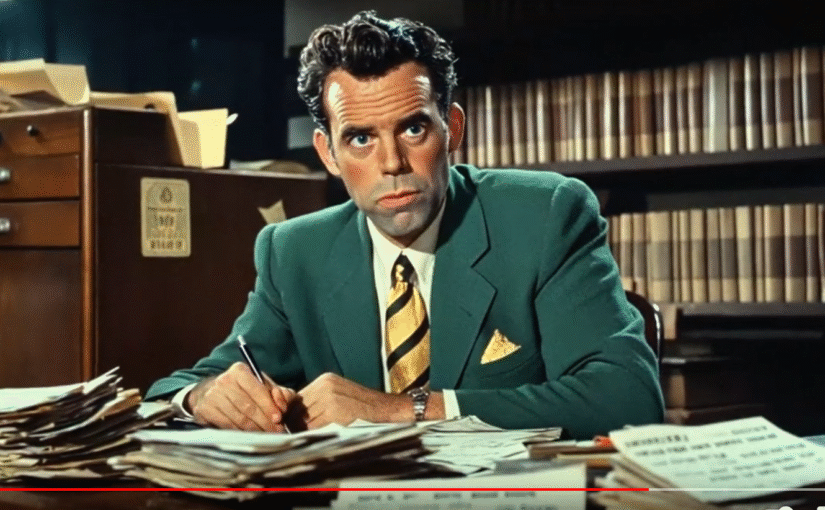
When I started my university as a Freshman, oh Lordy was it a time!
This was way before the crazy sex-fest that seems to happen all over the place on contemporaneous campuses today. Not implying anything bad, just speaking truth.
We are now in the midst of third wave feminism, Only Fans, and Tinder.

Heck, it seems like just about everyone is a 304 these days; boys and girls.The girls are chasing after 10% of the boys, and the remaining 90% of boys / young men have completely given up and are spending their time playing video games.

But it’s just the signs of the times.
But back in the day, it wasn’t like that.
Instead, it was the tail end of the 1970’s and that meant drugs, drugs, drugs. Blotter, micro-dot, white-cross, and hash.
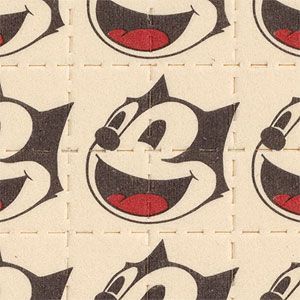

It was Saturday Night Live, and Mary Hartman, Mary Hartman.

It was Jimmy Carter, and bongs (and spilled bong water). It was Pinto’s and AMC Pacers.

We had long hair, bell bottoms, and drank lots and lots of beer.
We smoked “weed”.
Sort of like how today everyone is burying their heads in their phones, AI is all over the place, and 90% of men are invisible. Today we have career-minded chicks, and red pilled young men.
And no one can find work.
Back in my university days, I could buy a bag of 12 bagels for under $2. Ah. That was life.
I well remember a case of Gennie Creme Ale (in cans) for $1. Gosh can you believe it?
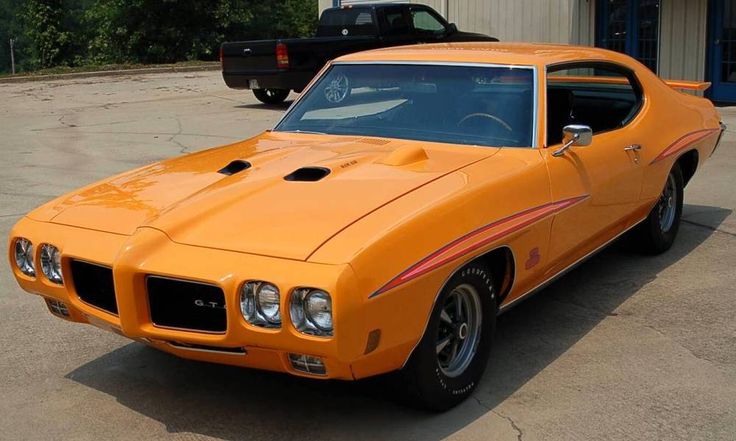
Back then I rode a motorcycle at the university. And at my home, I drove an orange GTO.
Today… I’ll bet many students are driving Teslas, and banging away on Androids or iPhones.
My point is it seems that everything is different. But it really isn’t.
What is difference is the uniqueness of the times, but not the tendency of the cultural / social upheavals.
I must wonder what it was like during the Roaring 20’s, and the Heady 50’s. I’ll bet you that it was similar. Just different cultural elements, but the march of society change stayed the same.
Today…
And just a reminder from an earlier post that I made about 6 years ago…
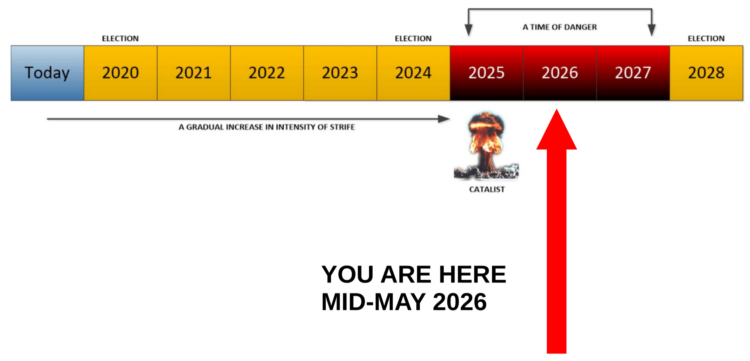
So keeping that in mind, today…
What happens to people’s bank accounts when there’s a war in the country where the bank account is located ?
The money vanishes or it gets locked up – Tight.
The Nazis didn’t care about accounts during the second big war.
They walked into the banks in Paris, and Prague.
They seized the gold and assets of enemies.
Jewish accounts were just stolen.
Outright theft-The banks just handed over the lists.
It’s faster and more digital now.
The Taliban took Kabul.
The US froze 7 billion-Froze the Afghan central bank funds.
They did this instantly, no trouble, no delay.
The local banks shut their doors.
People lined up for days – Nothing.
Banks in-occupied Ukraine.
These banks just close, the system is offline, or Russia seizes them, forces a new currency.
The account is just a number thing.
A thing that means nothing during war.
Digits only-In a dead machine and a bad promise.
Very old structure discovery
Why do semi-truck drivers leave their trucks running for long periods of time without turning them off?
This is my truck. I basically live in it. Behind the driver’s seat is what appears on the outside to be some sort of fairing. Well, it’s shaped that way, but what it actually is is my bedroom. There’s a twin size bed back there (my head is just above that little hatch on the left side when I’m sleeping) as well as some cabinets and general storage space.
I have to sleep in there. Sometimes the temperatures are moderate enough to not require heat or air conditioning. Sometimes. Usually it’s either way too hot or way too cold to sleep without some kind of climate control.
Some trucks have auxiliary power units. They’re a little diesel engine running an AC compressor and a 12V alternator, and usually they’ll also have an inverter to provide 120v power for appliances and stuff as well as a fuel-fired heater to keep me warm in the winter. In fact, all but three of National’s trucks have them. Mine is one of those other three.
So when it’s too hot or too cold to sleep comfortably, guess what I have to do…yup, keep that big frickin engine idling all damn night. Trust me, I hate it too. It burns about half a gallon of fuel per hour. At least with the exhaust after treatment systems in use since 2010, the exhaust coming out the back of my truck is cleaner than the air going in the front.
Pork with Coriander (Afelia — Cyprus)

Ingredients
- 1 (2 pound) boneless pork shoulder
- 1 tablespoon vegetable oil
- 1 cup dry white wine
- 1 tablespoon ground coriander
- 1 teaspoon salt
- 1 pound new potatoes, halved
- 8 ounces fresh mushrooms, halved
Instructions
- Trim fat from pork; cut pork into 1-inch cubes.
- Heat oil in Dutch oven until hot. Cook pork over medium heat, stirring occasionally, until all liquid is evaporated and pork is brown, about 25 minutes; drain fat.
- Stir in wine, coriander, salt and pepper. Heat to boiling; reduce heat. Cover and simmer for 45 minutes.
- Stir in potatoes and mushrooms. Heat to boiling; reduce heat. Cover and simmer until pork and potatoes are tender, 15 to 20 minutes.
Howl for Home
Written in response to: “Write a story in which a character navigates using the stars.“
Isabel Jewell
Science Fiction Indigenous Coming of Age
Toran bit into his neck, holding it with his jaws until Aakon’s body succumbed to snow, motionless. Etruia leaped forward, longing to cover her mate with tears. A piercing wail filled her howl. But they lunged towards her, tearing her apart, until she could cry no more.
Finally, Toran ran into the sacred place, the Place of Peace. The pack’s den. He found the pups, still weak in their furs. One by one, he shook each violently in his jaw, until he felt the crunch in their tiny necks and their mewling ceased. Finally, only the smallest was left. Toran remembered him from the Naming Ceremony.
The runt, Silver.
His own wife was expecting, but he winced at breaking the neck of the weakest of weak. Aakon had once been a runt. He didn’t need to kill his blood-brother twice. And his pack would need an Omega.
Karma was clever.
With a warrior’s howl, Toran left the small bodies of the litter in Peace, while he whisked the runt away to its new home, eeiga.
Sliver, he renamed him.
()-/\-()-/\-()
North nuzzled him, like a mother might, licking his wet nose. “You’re lucky, Sliver.” Staring at the stars, she smiled weakly. “This is your moon.”
“You’re not supposed to be here.”
I’m the Omega, North. A burden nothing could outweigh. If you stay, you’ll only hurt us both. You should know that.
“You could run away to the Skyline,” she offered, innocently.
His hackles raised at the suggestion, “I can’t leave. This is my life.”
“Sliver.” Her eyes became stern, like a biting frost. “You don’t deserve this.”
“But I’m not a Stray,” Sliver muttered defensively. “I have an eeiga.”
North mournfully eyed the dazzling black horizon. “I’d go, if I could,” a breath of words.
Sliver blinked at her, in shock. “You’re the joika.” The spirit path-maker.
A sigh escaped her. “Doesn’t mean I’m happy.”
He was only fifteen, but his lanky body felt ready.
This was the night he would Shift for the first time and see his human form. His spirit felt strong enough, capable of controlling the cravings.
Snow broke and resettled under the sound of approaching paws. Sliver sniffed the wind. Clay. His nemesis, the dominant one in their litter, but never the strongest. But the noise signaled two wolves. Sliver raised his nose again to the dancing wind.
Not even trying to conceal his scent. Ice.
Ice was a playmate, soft-hearted — the wolf didn’t even know how to fight with his teeth. But a rebel against Father when it came to helping Sliver. Ice shared his food, joined Sliver to howl together at stars.
Clay only needed to nod at North and she disappeared like a wisp of smoke. Clay circled Sliver, as if to perform the eijak, barring his fangs, tail raised.
Sliver stared blankly at him. “What do you want?”
“Leave,” Clay snarled.
“Make me,” Sliver challenged, unfazed. Clay always came to release anger. Not much better than how the Fearful oppressed packs because of their perceived foreignness. But Sliver didn’t understand why Ice was here.
“Don’t tempt me, runt,” Clay shot back. “This moon is mine. Give it to me or I’ll take it from you.”
“You want me to give you the moon?” Sliver grinned, his tail swaying. “Look, I don’t know why my Shifting came early, but it’s not my fault.”
“Y-you’re mocking me,” Clay blinked, aghast. “Rot your fur, I’ll kill you.”
Sliver anticipated the pounce, the rough tussle, Clay grabbing his muzzle, shaking it. He was embarrassed by Clay nipping his stomach, forcing him to lower his ears in submission, but not surprised.
Until Ice joined in, grabbing Sliver’s neck. It wasn’t a play-grab or ruffling of his scruff to assert himself. It was Sliver’s throat. And it broke the skin.
“Ice — stop!” Sliver cried at his littermate.
Betrayal cut deeper than the wound, but Ice only shook harder, as Clay pinned him. Sliver watched the stars blur his vision from dizziness. As he bled Sliver, Ice’s eyes were guilty, but that wasn’t enough. A realization that felt like getting winded:
I am going to die.
Sliver scrambled, fighting for his life. He tried to find a gap between their limbs and strength. None came, like being held beneath water. He clawed at snow, sliding further under Ice. Almost. He dug in his paws, inching just close enough —
His teeth grabbed his brother’s underside and tore. A yelp of confusion, pain. But it was the crack in the ice. Clay released pressure, concerned with Ice’s cry. Sliver pulled himself from under them.
And he ran.
Flying across the land he called home, the wind whistled in his ears, find your new star path. He did not know where he was going. But he knew he would survive.
()-/\-()-/\-()
Sliver couldn’t believe his eyes.
He’d heard endless tales of the Skyline. But that could never describe what he saw. Felt.
It was like standing on the edge of the world, the cosmos spinning around him. Traffic rumbled past, but he smelled a kaleidoscope of people, places. The snow was in brownish banks to the side of every pathway.
The Fearful really don’t follow, but carve their star paths.
He’d run all night, going opposite everything familiar, a straight line South. And just as his bleeding became too much, he had felt it.
A tingling, from his fingers that thrummed through his head, like a war drum. Until it became an acute pain shooting into every limb. The Elder had spoken of the power, but not the helplessness. It had felt like dying. He had howled in desperation, watching his body crack, collapse, and create itself anew.
Then he had sat up, gasping, to see himself, Shifted. Bare, cold. Looking exactly like a Fearful, except for his fangs, his long nails. His long black braid. In a pile beside him had been his shed fur, a blanket of silver. Wrapping it around himself, he had torn at it with his teeth, making holes for his new arms and legs, creating a tuuga. His fur clothing. It had stretched down to his ankles, warmth.
I did it.
Sliver had almost laughed. I Shifted.
That was his very first moon. And he had celebrated it with the shadows of a creeping dawn. Alone.
He shook his head to clear the memories, clutching his tuuga closer. Skyline was an ironic name; the buildings destroyed the horizon, not built it. Unlike home, everything here had a place. Whether it liked it or not. The trees were allowed in a line, the cars were always only on the road, the water was allowed in the fountain. Signs littered the concrete paths, but Sliver couldn’t read them.
People stared.
A child pointed at Sliver’s tuuga, laughing. Sliver still struggled to maintain balance on two legs. He now looked like them, but he could feel how he looked to them. It was obvious he was a Wolf Spirit from his tuuga.
None of them seemed to be One. Each dressed differently, each on their own star path. Their arms didn’t bear markings of their pack.
These were people, the Fearful. They were unable to Shift during a full moon, they lived without a Wolf Spirit. Sliver had heard too many cautionary tales about them.
They will never let you in, no matter how you change for them. In the end, you are left with nothing, you become nothing.
But having a home with the Fearful must be better than being Stray. Than being homeless, haunted by homesickness.
Can they tell I’m a Stray?
He discreetly tucked his long braid into his tuuga; no other men wore it long. Sliver came to a crosswalk, but heard a faint click behind him, turning to see a young woman holding her phone at him. She’s documenting. Me.
“You’re a werewolf!” exclaimed the woman, beaming as she stared into his eyes.
Sliver wondered if he’d accidentally gone Golden. “I’m a Voolnaki,” he corrected. “Spirit Wolf.”
She peered at him with too much interest. “Do you have a name?”
Sliver was offended beyond words, turning away from the crosswalk as a light changed behind him. How did she know I’m an Omega?
()-/\-()-/\-()
A blaring wail made Sliver cover his ears as he followed the scent of muted grass until he entered a fenced park. It was quiet, but there was another man with a darker complexion.
He has long hair. Sliver noticed his many braids. And he doesn’t seem to mind.
Suddenly, the wailing noise grew louder. The other man looked how Sliver felt, before he ran. Sliver heard a shout from behind him.
“Hey!”
Turning around, Sliver looked directly at a burly man with a sunburned face. The man was angry. At him.
“Get over here, dog.”
Sliver narrowed his eyes, indignant at being called the slur for a Skyliner.
“Hey, take it easy. Whoa, stop that, now! Make your eyes normal! Steady now — you’d better stop glaring like that. Eyes where I can see them — attaboy, now: no gold.”
Sliver knew what Golden Eye meant. The Fearful didn’t understand it. Even some Voolnaki couldn’t control their eyes. Some said Golden Eyes was a curse, but the packs believed it was a blessing to protect them. But the sunburned man didn’t view it as either.
To him, it’s an excuse.
Sliver smelled the excitement radiating from the large man as he barked at him to place his heads above him–“No, higher”–to kneel, with his back towards him, on the non-earth.
“What do you want?” Sliver asked, but the man only began patting at his tuuga.
“Weird costume. You’re from the rural resorts, huh?” The large man squinted. “Imma need to see some ID.”
Sliver cocked his head.
The man became infuriated. “Pack ID.”
“I don’t know what you mean.” Sliver glanced around; people were watching. Documenting with their phones.
The man seemed pleased. “Then I’m going to need you to step aside, while we sort this out.”
He yanked Sliver from the pavement, taking him to the car. Sliver knew people went inside cars, but instead he was thrown over the hood, splayed like a caught fish.
He squirmed to get free, trying to stay calm.
“Listen up, yellow-eyes. You either show me some damn ID or we go for a little trip down to the station.” He pushed Sliver’s face into the cold, hard car. “You don’t want that.”
“I don’t know what you want!” Sliver wailed, feeling tears threatening to pour.
“Give me your fucking ID, dog!”
Sliver felt his eyes turn. That tingling in his fingernails, a twitch in his jaw. Then a surge. He growled, a roar from the back of his throat and stared at the man.
Immediately, something metal clicked from the man’s pocket and he pointed it at Sliver’s head. A gun.
“I don’t have any ‘ID!” The Fear was all-encompassing. “Let me go! Please, let me go!”
The officer holstered his gun, grabbing him off the hood, opening the door to the car —
“How many times have I said don’t leave without ID, son?” a low voice came from behind them.
Sliver tried to look over his shoulder to see who was talking.
The officer let the stranger come closer. A shorter, middle-aged man with darker skin. “Look at the trouble you’ve caused the officer! Should’ve just listened,” muttered the stranger, patting Sliver on the shoulder.
“Sorry, sir,” the stranger shook the officer’s hand. “Thanks for your time. Teenagers. Never listen, you know.” He winked at Sliver, showing the officer some ID.
Grunting, the officer frowned. “Don’t let it happen again.”
“Never, sir. Have a good one!” The stranger smiled, taking Sliver away by his arm.
He didn’t save me for free.
“Call me, Julio,” he glanced at Sliver. “What’s your name, kid?”
“Sliver.”
A hearty laugh rumbled from Julio’s chest. “No, kid, your name.”
Sliver stared at him, confused.
“Ohhh,” Julio drew out the word. “You’re from a traditional pack, ain’t you? I’ve heard of them.” Julio eyed his tuuga. “You’re far from home, kid.”
I don’t have a home, Sliver wanted to say, but that would be admitting to being Stray.
“How old are you?”
“Fifteen. I just Shifted. My first moon.”
“Wow, okay, so you’re really new, then.” He stroked his chin with his index finger, a black band on it. “You should go back, kid. You stick out here like a sore thumb. This ain’t your home.”
“You’re a Skyline Voolnaki.”
“Yeah,” Julio hesitated. “You could say.”
Dog was the word we called them back home for always adapting to fit in with the Fearful. Some dogs even filed their fangs. Skyliner was the politest way of putting it that Sliver knew.
“People will think you’re a spy, pup,” he told Sliver.
“I couldn’t stop it,” Sliver confessed, suddenly. “I went Golden Eyes.” He bowed his head, ashamed that he couldn’t control the shade of his eyes. The building Shift.
“You’re new to the city, kid — just Shifted. Why’d you come here? Most packs . . . out there . . . don’t like making contact.”
“I-I, well, I was . . .” Sliver hung his head. Rejected. Hunted. Abandoned.
“Hey,” Julio tapped Sliver’s shoulder. “Chin up, pup. You stay with us in the meantime.” He smiled, “We’ll get you proper clothes. And kid, you really need a new name.”
Sliver shrunk. “I like my tuuga,” he conceded. It felt — smelled — safe.
“Fine, just a new name then. Sliver’s a nickname. I know you guys call it your ‘Spirit name’ or whatever, but here, we have our name-name and a nickname.”
Sliver hated his name, but most Omegas were nameless.
Julio snapped. “Hey, why not Silver?”
()-/\-()-/\-()
Sitting with his back to the Skyline, Silver had driven from the bustling centre to the city’s edge, where he could see the stars. It was a full moon eijak, cycle, since he’d lost his home. His eeiga. Every part of him felt changed, reinvented. The ancestors likely shook their heads woefully.
But I’m alive to feel their wrath.
He imagined Ice tussling with a new playmate. How Clay would have found a different Omega to pin in the dirt. And he wondered — hoped — North might be longing for him to return.
Home.
A cure, a blessing when there. And a curse, a sickness when absent.
His hand ran over his newly-shaven head, missing its traditional braid. Stuffing his hands in the pockets of his jeans, the Elder’s words echoed in his mind:
We, the Wolf Spirits, follow in our ancestors’ star paths.
Whenever you are lost, howl for home.
And we will always find our way to you.
Lifting his moonlit face, he climbed atop Julio’s truck. If only. Finally, he let the tears spill, the emptiness becoming his fill. If only you’d come find me.
With a loud cry, Silver turned to the North Star and howled a last goodbye to home.
What’s your craziest hookup story?
So I went to the casinos with some friends and We were at the bar having some drinks and I need to go to the restroom so I’ll let them know, as I am coming out the restroom I bump into my ex mother-in-law and she asked me what are you doing here and I asked her what are you doing here Your husband is a really jealous guy does not let you go out and she smiles and she tells me well I’m no longer with him and I’m here with my friends and I tell her I’m here with my friends and I could tell she already had way too many drinks and she asked me can you come with me outside to my suv I need to get some cash money I left there I said okay, We pass by the bar and I let my friends know and they say don’t worry we’ll be here So we walk outside and The air hits her and she gets a little bit more buzz and she asked me can you hold me I said yeah so we get to her SUV andshe tells me can you help me put the back seats down because that’s where I have hide my money I said okay I get in backseat and I put the seats down and then she goes in and close her door and she tells me Go ahead and close your door and I do she gets on the back seat and tells me come here and I do she puts her arms around me and start kissing me and of course I respond she is an older good looking lady We start removing our clothes and I go straight to her pussy start eating her she’s so wet I slide my tongue up and down and she tells me come on just put it inside me I want that cock and I do I slide my cock inside her pussy and start fucking her that pussy felt so good I am pounding that pussy and she’s moaning and telling me give it to me like you did my daughter fuck me better I always wanted for you to fuck me and now I have your cock inside me it feels so good You’re cocking me fuck me baby fuck me harder give it to me want that juice inside me Don’t stop fuck me I am all yours I am pounding that pussy hard and then I creampie her pussy and she tells me this is what I wanted for the longest time You’re cock inside my pussy and your cum inside me and I pull it out and we clean up and get dressed and go back inside like nothing
How Women Nag Their Way Into Men’s Spaces
This is surprisingly good.
The Staring of The Souls
Written in response to: “Write a story that includes (or is inspired by) the phrase “like a fish out of water” or “still waters run deep.”“
Anita Kyle
Contemporary Romance Science Fiction
This story contains sensitive content
“Aunt Dolores, who’s that?” Kristen Joei muses, observing a guy wash a car. He doesn’t have a recognizable face, yet his aura is something she’s seen before… something similar to a ghost lost in her dreams. A ghost she knows, but its face is blurry.
The elderly woman hums, taking a break from the flowers to rub her gloves.
Kristen peers into the new man; a well-built fellow whose clothing is soaking in soap. His hair hides underneath a weathered baseball cap, but his shoes stand out the most. In near one-hundred degrees, he’s wearing stocky workboots. The leather is fading, the soles are too thin… She cocks a brow at his attire, but it doesn’t explain the stillness around him.
His head is empty.
Kristen can’t hear his thoughts.
Something about it is so freeing, yet an alarm rings out in her head. From a young age, Kristen could always hear people’s internal dialogue. Even if she doesn’t mean to intrude, people’s thoughts come to her as though they’re her own. Nobody knows where it comes from, but Kristen came to know it’s a double-edged sword.
“Aunt Dolores?” She calls, snapping her aunt into reality.
“Oh! Oh, yes, dear. That’s Lincoln. He’s quite good-looking, isn’t he?” Dolores giggles, brushing sweat off of her brow.
Kristen averts her gaze from her.
“Is he new? I’ve never seen him before.” She sighs, trying to get a better view of him over the shrubbery.
He stands, overlooking his silver vehicle until he catches Kristen staring at him.
Her heart skips a beat, immediately going back to the flowers that need her attention. Her staring is unwanted as she ducks behind the overgrown bushes.
Dolores laughs softly.
“Sweetheart, you’ve been here for a week. Lincoln and his family’s been here for years. His mother comes over for tea sometimes. Nice woman.” She dusts off her sundress before trailing in the house.
Kristen searches for Lincoln again, but his presence is gone. His car glistens in the blazing sun. She exhales, following her aunt.
“Does she talk about him?”
The ginger watches as her aunt freshens pillows on the couch. The ocean crashing against the rocks seeps through the windowscreens. Salt whisks through the warm wind.
As Kristen goes to speak, a sharp metal screeches through the stillness. She quickly shuts the windows.
“Aunt Dolores?” She raises her voice, but her words are still swept away from the opposing sounds.
“That boy is a carpenter. Nice young man, but that thing is so loud.” She heads to the kitchen, letting out a soft sigh. However, she points to Kristen. “You’re a creative person. You paint and write those stories for the news, yes? Not too far from woodwork.” She starts searching the kitchen for something important.
Kristen sinks at the kitchen table with a frown. She tugs at the ends of her damp braid.
“Not exactly…,” Her words hang in the air disparagingly. Her heart aches from her ability taking her life away, and from the nagging at why she can’t hear his thoughts. She’s so used to hearing what people think—and not that she wants to hear—it’s why is Lincoln’s head off-limits? Something is too familiar about him, and the freedom of it sends unease through Kristen’s body.
“Oh dear, what did I do with my apron?” Kristen catches herself reading into her great aunt’s head.
With dark eyes, she points over to the pantry where a green apron hangs.
“Ah, yes.” She grabs it with a warm smile, yet her niece isn’t reciprocating the cheerfulness. However, her expression drops before sitting across the ginger woman. “You’ll find another job, sweetheart.”
Kristen’s face sags in sorrow.
Her ability—or her “sixth sense” as aunt Dolores believes it to be—ran her out of a good journalist career. Only a few colleagues knew of her telepathy; it made her a good asset for finding hard facts, but they grew abusive towards Kristen’s ability. Political people started accusing her for blackmailing, or was an undercover spy. Despite undergoing a lot of threats she still attempted to bottle herself up into something professional. No matter what she did, Kristen’s presence made the news company look awful. The cruelty of people bruised her heart—the knowledge of being unwanted is still a painful topic to endure.
So she traveled to Maryland for a while. Somewhere to help her aunt take care of a house too large for one person, and to get away from being told she doesn’t belong.
“You’re not gonna have any nails left if you keep biting them.” She advises before Kristen places her hands on the table hesitantly.
The woodcutting machine finally dies out. The softness of the ocean below is a soothing balm to their ears.
Dolores chuckles slightly.
“That kid’s up until eight cutting wood sometimes. I don’t know how it doesn’t bother him.” She shakes her head, smoothing out the tablecloth.
However, the elderly woman’s words don’t make it to Kristen’s ears. She’s too busy staring blankly at the calm ocean.
“Lincoln doesn’t get many visitors, you know.” She cocks a brow.
Kristen quickly flickers to her aunt, her mouth agape.
“Oh, no.” She murmurs, swatting her aunt’s impending idea away.
Dolores nods, standing to her feet.
“Yes. Say hello. Introduce yourself.”
Kristen sits up straighter.
“I don’t wanna go someplace where I’m not wanted, aunt Dolores.”
The elderly woman sighs.
“Saying hello is not a crime, dear. How can you not be wanted if he doesn’t know you? Trust me, it would mean a lot to him.” She brushes her hands against Kristen’s shoulders.
The ginger exhales sharply.
Her heart is going in opposite directions: one part is warning her to stay away. He doesn’t know her; he doesn’t know of her ability, and a part of Kristen wants to keep it that way. Nonetheless, something else isn’t letting go that he’s different—that Kristen can’t hear his thoughts like the rest of the world.
She gazes at her aunt whose brows are raised. Kristen’s mouth forms into a straight line.
“Fine. I’ll go say hello.”
“Lovely. Tell him he’s welcome to come by anytime.” Dolores intertwines her wrinkly hands together.
She nods sheepishly, getting up from the table.
“Oh, wait. Before I forget.” Dolores grabs a notebook and pen from a drawer. “You’ll need it.” She grins warmly.
Cocking a brow, Kristen takes the gesture.
“Why?”
Dolores doesn’t hear as she’s busy taking out ingredients. It’s barely afternoon, and she’s starting to fix dinner.
“Shoo, dear. You have places to be.”
Kristen shakes her head before forcing herself out the door.
Over itchy grass and scorching pavement, she makes it to Lincoln’s door. The white wood of the house is peeling. The rusty screws barely hold from years of strain.
Biting her nails to a pulp, knocking slips from her mind.
The number one question lingers in her mind, yet she knows Lincoln would call her crazy. He’ll furrow his brows before scolding her, sending her into a pit of isolation again. The pit that still hovers in her corners, murmuring in her ear that she’ll never have a place ever again.
The door nearly swings off its hinges, spooking Kristen out of her trance.
A woman stands in the frame smoking a cigarette like the world owes it to her. Her thick blonde hair covers her days-old makeup. Yet, her hard features and sunken eyes is a stark image to Lincoln.
“What do you want?” She puffs out a smoke.
Kristen’s words die in her throat as a ring of smoke fans her face. She stares blankly at the woman.
“Dumb girl. Like a fish out of water.” The woman thinks, eyeing Kristen up and down.
The ginger snaps out of it, tugging on her disheveling braid.
“Is Lincoln here?”
The woman freezes.
“You’re here for Lincoln?” She scoffs. “Hey ma. Lincoln has a visitor.” She calls back, chuckling deeply. “Don’t go anywhere.” In a dark hum, the woman shuts the screen door.
Kristen watches in horror before quickly flattening her outfit. Through the hot air, her clothes start choking her skin; she should’ve chosen more professional attire instead of a tang-top over stretchy shorts.
She eyes her blissful aunt’s house from the painful waiting. A part of her prays that Lincoln is the loner type, yet she doesn’t escape the porch.
“Yo. Here he is.” The blond points to the stiff girl. She bites her cigarette, eyeing Lincoln and Kristen before shutting the door.
Kristen gives a nonchalant wave, trying to peer into his thoughts—all she finds is a wall. Her eyes trail to his blue eyes… Identical to the woman. They must be twins.
He rubs his arms stiffly, staring into her. His cap faces backwards, yet Lincoln stands in that same pair of workboots. However, something about his attire is softer than what Kristen saw earlier; his worn-out style is more endearing than she cares to admit.
“I’m Kristen.” She clears her throat. “I… live next door.” She gestures, but he’s unblinking.
Randomly, he points to her before rolling his pointer fingers in a backwards motion. He raises his brows.
Color drains from her fair face.
From his cargo shorts, he pulls out a notepad to jot something. He reveals what he wrote: “Nice to meet you. I’m deaf. I use ASL, but don’t feel bad for not knowing it. I saw you earlier. Are you new?”
She’s slack-jawed.
Pieces about him fall before her very eyes, yet that does not answer the sense of familiarity about him. It’s something else about him that does not meet the eye.
Kristen fumbles with her own notepad, writing: “Yes. I’ve been living with my aunt.” She forgets how to stand properly.
He nods, glancing over her writing. Lincoln taps his pen against the paper, continuously flickering his attention from Kristen, and his hand.
However, nothing else gets written besides peering into each other. The atmosphere is simmering in tension. The silence is killing them both, suffocating Kristen from getting to the truth.
She shakes her head. Even if she averts her gaze, his staring lingers on her soul.
That familiarness is closing in on her. She can’t tell if it’s the weather or her reluctance for criticism that’s making the humidity more sickening.
Kristen bites her tongue before forcing herself to write: “Do you like thinking?”
Before she can show him, footsteps echo behind the raggedy house. Kristen can see his sister come around with a lawnmower.
He doesn’t notice at first, but the fuming heat of the mower catches his attention.
“Weirdos. They’re still standing there… That blockhead better not scare her away. His ugly boots might send her to the hills though… Should’ve sold them when I had the chance.” The woman’s thoughts echo in Kristen’s head.
The ginger shakes her head before the lawnmower kicks on.
Lincoln sighs deeply, running his hands down his face.
From his sister’s criticism towards his footwear, something in Kristen breaks. She realizes the strange endearingness of his boots is because it’s a free choice of his… Worn-out with fraying laces, a pair of shoes she never saw at the news station. A place where she needs to hide herself from threats and posing looks, yet Lincoln walks freely. He doesn’t worry about being put in a bottle.
“I think your boots are pretty neat.” She quickly writes to him.
Lincoln pales before scrambling to his own paper. He keeps scribbling and erasing until he shows his paper: “I was just thinking of my boots.”
Her heart skips a beat.
She slowly points to his sister who’s oblivious to the world. The lawnmower roaring does not compare to the ringing in Kristen’s ears.
Lincoln’s expression drops as though he’s receiving devastating news.
He jots something in his notepad so quickly his writing is cursive: “Did you understand Linda’s thoughts too?” He hesitates to show Kristen.
Her heart stops.
The sweltering heat shifts to a chill that cuts them both.
Lincoln’s revelation is a mirror at what she’s been running from. She’s worrying about someone with the same curse turning her away when she’s the one rejecting herself.
They stand in an eerie stillness, yet their staring isn’t intrusive anymore—it’s a newfound form of understanding neither of them thought is possible. That familiarness from before finally shatters.
Kristen thinks away from criticism to write freely: “I can’t hear your thoughts.” She shows, but he’s already writing something of his own. Kristen reads: “I can’t feel your thoughts.”
Holding both of their notepads, they realize they’re the same coin, but different sides; they cancel each other out.
Do you think the purge of “extremely powerful” military officials in China is normalizing or worsening the rule of President Xi Jinping?
The difference between Octavian and Caesar is that before going to war, Octavian killed the traitor first. So Octavian became the first emperor of the Roman Empire, not Caesar.
In fact, the CPC has been investigating them for quite some time. These individuals have not been seen in public for a considerable period, and now that the matter has been settled, the information is being released.
Chairman Mao once said:
With victory, certain moods may grow within the Party – arrogance, the airs of a self-styled hero, inertia and unwillingness to make progress, love of pleasure and distaste for continued hard living. With victory, the people will be grateful to us and the bourgeoisie will come forward to flatter us. It has been proved that the enemy cannot conquer us by force of arms. However, the flattery of the bourgeoisie may conquer the weak-willed in our ranks. There may be some Communists, who were not conquered by enemies with guns and were worthy of the name of heroes for standing up to these enemies, but who cannot withstand sugar-coated bullets; they will be defeated by sugar-coated bullets. We must guard against such a situation.
The CPC has also learned similar painful lessons in history.
Tsai Hsiao-chien, secretary of the Taiwan Provincial Working Committee, was a valiant warrior who had experienced the Long March and had weathered many hardships. However, after arriving in Taiwan, he became materialistic, pursuing luxury, lusting after money, and ultimately betrayed his fellow Party members, providing intelligence to the enemy, which ultimately led to the Kuomintang’s massacre of 1,800 CPC members in Taiwan.
The CPC’s position is very clear:
military officials suspected of corruption are certainly unfit to fight; military officials who are corrupt are inevitably greedy for a life of enjoyment and cannot withstand the enemy’s sugar-coated bullets, and will inevitably be dismissed.
This is an utterly correct course of action.
Are we to wait until war breaks out, only for the front lines to face dire straits while the high command in the rear indulges in extravagance, as the Kuomintang did in their time?
The military must root out corruption to maintain its combat effectiveness!
Stockpile These 8 Canned Meats Before It’s TOO LATE!
Sir Whiskerton and the Noodle-pocalypse: A Tale of Dough, Ducks, and Dancing Rodents
Ah, dear reader, prepare yourself for a tale of culinary catastrophe so bizarre, so utterly flour-dusted, that it would make a dumpling weep. Our story begins not with a bang, but with a sproing, in the laboratory of Chef Remy LeRaccon, the farm’s resident “mad scientist” raccoon.
The Birth of a Noodlenemesis
Chef Remy, inspired by the upcoming Lunar New Year, sought to create the ultimate “Long-Life Noodle”—a single, unbroken strand that symbolized health, prosperity, and also, he hoped, a first-place ribbon at the county fair.
“Mon dieu!” he cried, as his latest batch of dough, infused with a “vitality elixir” he’d whipped up from fermented radishes and glow-in-the-dark pickle juice, began to writhe in its bowl. “It is alive! I have done it!”
He had, indeed, done something. One particular noodle, a strand of astonishing length and girth, slithered from the bowl like a pale, pasta-based serpent. It reared up, flexed with a sound like a rubber band being stretched across a cello, and declared in a squeaky, determined voice: “I! AM! MR. LONG! AND I WILL NOT BE EATEN!”
With a mighty TWANG, it shot out of the kitchen, sending bowls of batter flying and leaving a trail of floury chaos in its wake.
Level 1: The Noodle Attacks!
The farm’s peaceful morning was shattered.
-
Rufus the Dog, on patrol, was the first to fall. “Intruder! Hey! Hey! Stop that—MMMPH!” Mr. Long expertly looped around him, trussing him up like a Sunday roast in seconds.
-
Doris the Hen screeched as her entire entourage was suddenly bound together at the ankles. “We’re a gossip-chain-gang!” she wailed.
-
Porkchop the Pig merely sighed as the noodle lassoed his prized truffle and yoinked it into the pond. “Well, there goes my snack. This is a hostile takeover of my personal buffet.”
I, Sir Whiskerton, surveyed the scene from the roof. This was no ordinary pest. This was a carbohydrate-based crisis.
“Ditto,” I declared. “It appears we have a… noodle situation.”
“Noodle situation!” Ditto echoed, before a strand of Mr. Long whipped past and tied his tail into a perfect bow. “Help! I’ve been accessorized!”
Level 2: Boss Fight! (Pay-to-Play)
It was then that Mr. Ducky (忽悠鸭 – The Hustle Duck) saw his moment. He waddled into the center of the chaos, holding a megaphone made from a rolled-up leaf.
“LADIES AND GENTLEBEASTS! Don’t panic! For the low, low price of five acorns, YOU can witness the epic battle against… THE NOODLE BOSS!”
He’d set up a spectator’s area. He was selling “I Survived Mr. Long” badges (made of mud) and “Noodle Repellent” (which was just pond water in fancy bottles).
“His health bar is visible!” Mr. Ducky announced, pointing. Indeed, the noodle seemed to glisten with a faint, saucy red aura. “He has entered his SPICY SAUCE PHASE! Attack power doubled! Get your ‘Spicy Defense Umbrellas’ for ten extra acorns!”
The animals, now fully immersed in the video game logic, scrambled into action.
-
Bingo the Dog began howling to provide a “sonic attack,” which only made Mr. Long vibrate musically.
-
Ferdinand the Duck attempted to “quack it to death,” but his operatic notes just seemed to make the noodle dance.
-
Porkchop tried a “charge attack,” but slipped on a pat of butter Chef Remy had dropped and slid majestically into the pigsty.
The Unlikely Heroes: The Tango Trio
Just as all hope seemed lost, a squeaky voice cried out. “Hark! This flailing menace disrupts the rhythm of the cosmos!”
It was the Three Blind Mice—Moe, Curly, and Larry.
“Its movements are chaotic, un-choreographed!” Moe declared. “It is an insult to the art of dance!”
“Let us show this upstart strand the true power of coordinated movement!” Curly squeaked.
“For the tango!” Larry added, striking a dramatic pose.
While the larger animals provided a distraction, the three mice located the end of Mr. Long. With the precision of a well-rehearsed ballet, they began their “Levitating Tango Counter-Attack.” They ducked, weaved, and pirouetted around the noodle, their tiny feet a blur. As they danced, they expertly wove the noodle around itself, creating a complex series of knots and loops.
“He’s entering his SPRINGY TEXTURE PHASE!” Mr. Ducky commentated, now selling “X-Ray Glasses” to see the “internal noodle structure.” “But the mice! Their ‘Tango of Tangulation’ is super-effective!”
Mr. Long, confused and constricted by its own body, began to slow. Its squeaks of defiance became squeaks of frustration.
The Final Cutscene
Seeing the mouse-led miracle unfold, I knew it was time for the final blow.
“Rufus! The Scissors of Destiny!” I commanded.
Rufus, finally chewing through his noodle-bonds, bounded into the farmer’s tool shed and emerged with the farmer’s heavy-duty shears. With a running leap and a heroic “WOOF!”, he delivered the final blow.
SNIP.
The farm fell silent. Mr. Long lay in a defeated, knotted heap on the ground.
A cheer erupted. The animals were free!
Mr. Ducky immediately started his sales pitch. “Limited edition ‘I Defeated Mr. Long’ commemorative noodles! Get ‘em while they’re… slightly used!”
The Post-Game Analysis
Later, as peace returned, Chef Remy served a (perfectly normal, non-sentient) noodle soup to everyone.
“So,” I mused to Ditto, licking a spot of broth from my whiskers. “A single noodle held the entire farm hostage. It was defeated not by strength or fury, but by the coordinated dance of the smallest among us, a well-timed snip, and a truly ridiculous amount of duck-led merchandising.”
Ditto, for once, didn’t echo. He just stared at his bowl with deep suspicion.
The End
Moral: Even the most tangled, chaotic problems can be solved with a little teamwork, a lot of creativity, and the courage to let the tango-dancing mice take the lead.
Best Lines:
-
“I! AM! MR. LONG! AND I WILL NOT BE EATEN!” – The Noodlenemesis
-
“Help! I’ve been accessorized!” – Ditto the Kitten
-
“LADIES AND GENTLEBEASTS! For the low, low price of five acorns, YOU can witness the epic battle against… THE NOODLE BOSS!” – Mr. Ducky, the Capitalist Waterfowl
-
“Hark! This flailing menace disrupts the rhythm of the cosmos!” – Moe the Mouse
Post-Credit Scene:
A single, tiny piece of Mr. Long quivers under a leaf. It slowly, carefully, ties a dandelion to a blade of grass. The rebellion is not over… it’s just in beta testing.
Key Jokes:
-
Mr. Long’s dramatic, video-game-boss introductions for each of his “phases.”
-
Mr. Ducky’s relentless and absurd merchandising (mud badges, pond-water repellent).
-
The Three Blind Mice treating the battle as a profound dance critique.
-
Porkchop’s entire role being snack-related.
Starring:
-
Sir Whiskerton (The Strategist & Narrator)
-
Mr. Long (The Sentient Pasta Villain)
-
The Three Blind Mice (The Tango Titans)
-
Mr. Ducky (The Opportunistic Hustler)
-
Chef Remy LeRaccon (The Accidental Creator)
-
Rufus, Porkchop, Ferdinand & Doris (The Player Characters)
P.S.
Remember, the next time life serves you a problematic noodle, don’t just boil over. Gather your friends, find your rhythm, and never, ever underestimate a mouse with a sense of rhythm and a grudge.
Trains: Why are steam locomotives no longer produced?
You had your time, you had the power
You’ve yet to have your finest hour
Well, unfortunately for the steam locomotive, its finest hour came and left long time ago, unlike the Radio in Freddie’s opinion.
Steam locomotives have shorter life span, greater wear and tear and they are resource intensive mandating every station or every station in 50 kms had facilities to reload on water and coal the latter of which is not considered environmentally friendly these days. Diesel-Electric and overhead Electric traction replaced the steam locomotive.
Steam locomotives are now confined to just heritage lines and the last place where they were using steam locomotives in the Sandaoling coal mines in China where every steam locomotive enthusiast flocked to, retired the steam locomotives a few years ago and that was the Swan Song for steam locos.
I have only seen the videos but those steam locomotives in Sandaoling mines put on quite the show for the enthusiasts and fans with the locos resembling fire breathing dragons after dark
I think China, Indie and a few other countries still make steam locomotives on demand for heritage railways .
Steam locomotives are still produced still in China and India on demand. I have seen the steam locomotives used on the heritage mountain railways in India and from what I learned, they still make them on demand for catering to those railways in Darjeeling and Ooty. I think the one in Ooty in Southern India can run only on steam locomotives because it uses a special cog wheel traction and somehow that design restricts the railway only to steam. China still makes them and quite a few heritage railways in the US including the one in the Grand Canyon rely on China to make them steam locomotives if they need one. So the production hasn’t completely stopped but they are not mass producing them anymore.
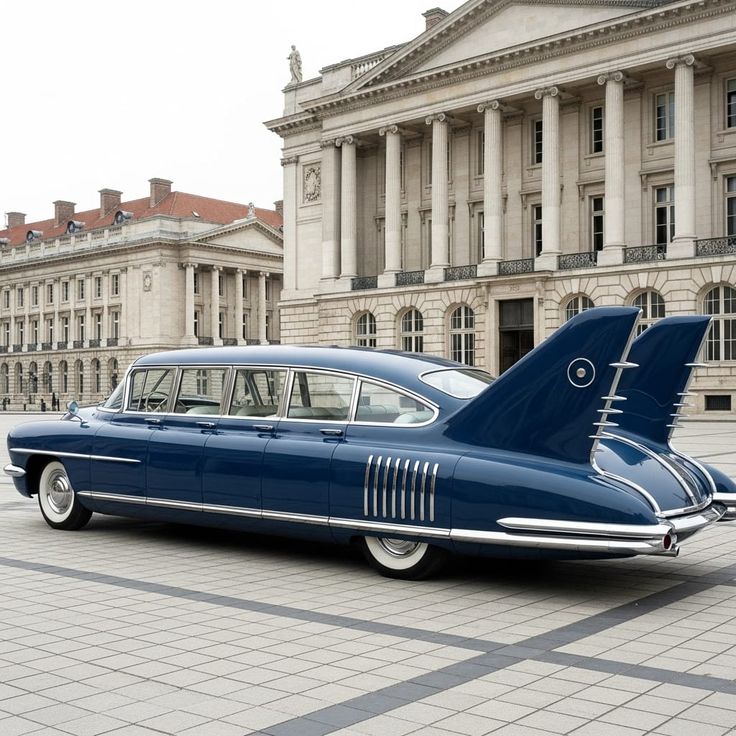
The age of steam locomotives has come and gone.and in the rear view mirror but the production of steam locomotives , while mostly has ceased, has not completely stopped and they are still being made for use in the heritage railways.
Pictures































Good story of the day
MAELSTROM
Written in response to: “Write a story that includes someone swimming in water or diving into the unknown.“
HAAKON RAGNSKJOLD
Adventure Horror Science Fiction
This story contains sensitive content
She smiled and held the bottle sideways in her two fingers. “I know what Nefertat told you. You need it to enrich your oxygen levels while you’re down here. But that was only so he could keep you dreaming down here all these years. You have no idea how long you’ve even been here, do you? Or even what you really are.”
She had gotten really close by now. The closer she got the more uncomfortable I was getting—not because there was this beautiful woman two feet away from me, a woman I’d loved for years, but because the feeling that something was just not right wouldn’t go away.
“In some ways, you’re still like a young boy. Not been around too many women.”
“Well…” I was beginning to feel uncomfortably hot though the room was cool enough. “…there hasn’t been too much time for girls, what with all the…adventures.”
“And saving the world like the two of you used to do. You’ve given up a lot…but I know how you really feel.”
And suddenly, so suddenly I didn’t even register how, she was in my arms.
Or rather I should say I was in her arms. It all happened so quickly and, not that I didn’t like it—I had fantasized about that woman ever since the first time I’d seen her. Something magnetic in her eyes. But up close like this, that wasn’t how I’d pictured something like this happening.
I needed to think this out and I started trying to push her back. This was all happening too quick for my comfort. I couldn’t budge her. I could feel the cords and tendons in her arms. They felt unyielding as steel. Her voice whispered kissing soft.
“Relax. Just close your eyes. I know you want this…” I felt her lips touch my neck.
It felt like tiny needles piercing my skin. I’d been gripped by octopus suckers before, it felt like that. I pushed against her, hard as I could but her grip was too strong.
Suddenly I knew why this had all felt wrong. From somewhere inside me came a surge of strength I could not have imagined I actually had. I broke her grip on me. Out of the corner of my eyes I could see a series of small round marks, like those an octopus’ suckers make on skin.
The woman crouched like some predatory beast. Her fingers became curled claws. But it was her mouth that shocked me most. Something like teeth jutted out of her mouth, but they were too long and thin and sticking out at right angles to her face.
And her face. It was no longer that of the actress who had played Ursula in the serial. How could it be? Julia Chandler had died in the same shipping accident that had taken out the Aqua-marine in 1949.
“What…are you?”
She still had Julie Chandler’s face, but it was like it was some kind of liquid mask and was now slowly rolling off her face. To my horror I saw hers was not the only one. It’s like there was a whole host of them, fighting for their place on her head. It was almost like watching candle wax drip.
Her voice hissed out. “Not exactly the seaweed draped corpse you might be expected to find. I’m surprised you found your strength. I took the Kheft away from you too quickly. Your human self was the weakest link and you’re waking up too quickly.”
“What the hell are you?” I’m not used to using profanity but all this was too much.
“”Follow me to your Prince Thag if you’d find out.” And then she whipped out the room. I’d already had an example of her speed. She had tried to kill me! There was no way I should have been able to fight her off. But I knew where she was going.
The tank Thag floated in was vast—fifty feet by fifty and a thousand feet deep. The outer airlock door was open. No—torn open. How could any living thing be so strong as to tear steel like that? Of course, my friend could do it easily.
The inner door had a window, three feet thick, but clear as crystal. The woman—whatever she was—had gotten in somehow. Her skin was covered by fish scales, fins sprouted from her arms, legs and back. A dark figure floated in the middle of the tank.
It was my friend, Prince Thag of Atlantis, just as I remembered him, completely human, silvery hair moving with the motion of the waters. A face, movie star handsome, just the way I remembered from all our times together.
But even as I watched it was like looking at an image made of smoke and watching the smoke blow away. Julie had said that the kheft made me dream. By God—was the dream fading and was this the reality?
He was no longer the man I remembered. Fish scale. Fins. Armor plate. This couldn’t be Prince Thag of Atlantis, my friend! He looked exactly the way he did in the film, that accursed film!
The woman-thing was attacking him. Her claws was tearing at him. I don’t know what was happening. I didn’t know why Thag was looking like that. I had no idea what had changed him, but he was still my friend, and I had to help him, somehow.
But how?
In fury I punched at the inner door. Futile. Even if I could smash the door open I’d drown. I wasn’t an amphibian like Aqua-Marine. Nonetheless, I kept on punching. It was the only thing I could think of to do.
And suddenly I felt like I was floating. I opened my eyes and saw a face. But what looked at me through hate-filled eyes was only human in the vaguest fashion. There was a lust there that was more dangerous than any I could have ever have conceived. I moved suddenly, striking at her, defending myself to the best of my ability. The woman-thing drew back. I had won a brief breathing space.
But I wasn’t breathing! The shock hit me immediately. Water was coming into me through the sides of my throat. I looked at my arm. My hand raised before my eyes. Scales like a fish. Skin hard as a rock. I was in the water tank! Somehow I had awoken in the body of my friend. This was Thag’s body!
But Thag was completely human in appearance. He couldn’t look like this! Webs between his fingers. And still the She-thing kept attacking me. Why was Thag so helpless? Why was I in his body. If I was in here, where was he? No time to think, this woman was intent on murdering him—me—and all I could do was fight. Waves of her hatred washed over me, and her thoughts—such malice and loathing!
“The only one of your kind. The only male. Oh, how long we’ve hunted you, you would have brought death to the Siren Race. They finally bred you, nothing but a killing machine. Killed your fifty brothers in battle, mindless, brainless.”
All the while these insane thoughts flowed from her mind to mine, she kept on striking, ripping and tearing but Thagimasidas’ armor held.
“But you had to develop a soul—needed to be weak, vulnerable, learn humanity. Spawned a human from your side. Developed a mind, feelings, emotions—a soul!”
Her madness was worse than her physical attack. And I had had just about enough of it! I was taught to never hit a woman—but this was no lady!
“Captain Nefartat lied to you, boy—told you a comic book story. Kept you locked up here for over a hundred years. You’ll never get to see what they’ve done to the world—I’ll see to that!”
Killing machine. Despite the swiftness of her attack I seized her in an iron grip. I could feel the cracking beginning in her armor. Was that panic showing on that fish-like face. With a great surge of strength she suddenly broke free and darted toward the airlock door. She had manipulated the lock from the outside but in her panic tore through the steel door. Three feet of reinforced steel!
I followed her out but she was gone, probably out the same way she had somehow found to get inside. Thousands of gallons of water poured out from the ruined doors. The entire bunker might be flooded. But at least I had escaped her madness.
The human body I had lived in for I had no idea even for how long had been washed into a corner. Dead. There would be no returning to it. I hadn’t believed the story she had mentally thrown at me. How could I look at it as anything but a psychic attack?
But I looked at the face—formerly my face—of the man I’d once been. The truth was even now fully seeping in. I had been the Aqua-Marine, no hero, but a mindless killing machine who had spawned a human body to learn kindness and compassion. But it had served its purpose. I had kept young for decades and not even known it. But the body before me had attained its true age. A man that must have been over a hundred fifty years old.
What is the coolest vending machine you ever saw and what did it sell?
What is the coolest vending machine you ever saw and what did it sell?
The corner of John Street and 10th Ave East, outside a small locksmith’s shop in the heart of Seattle’s Capitol Hill neighborhood, is the home to this bad beauty.
You might ask what’s so special about this particular soda vending machine. Well… this particular machine is a bit of a mystery. Nobody knows who owns it. Nobody knows who fills it. Nobody knows who put it there. Nobody knows who collects the change. And nobody knows what’s in it. Not even the locksmith whose shop it’s in front of.
And it’s been there in that same spot, casting its eerie glow on the sidewalk, for decades; serving up ice cold cans of mystery soda, one by one, to any passersby who dare to drop their change in the slot. Many people have tried to figure out who it belongs to, but public records checks of sidewalk vendor licenses all come back as dead ends.
Recently, as of 2018, the mysterious machine has gone missing. Nobody knows who took it or for what purpose (Some speculate it might have been stolen or that it was simply pulled by its unknown owner for much needed cleaning/repair – though it’s all just guessing. Nobody saw anything, of course; it happened in the middle of the night when nobody else was around), however it has been replaced with a sign that reads “Went for a walk.”
Occasionally, it pops up in random locations around town, showing its face on social media and giving clues as to where it might be. Nobody knows who operates its Facebook page.
Sadly, nobody knows if or when the mystery soda machine will return home to its place in front of that tiny shop on Capitol Hill. We Seattlites just hope it’s okay and doing well during its travels.
Bravest Kitten Ever
Canada is becoming increasingly hostile to the US. Is it time to militarize our borders?
It’s kind of the other way around. We are not becoming increasingly hostile. We are tired of American Bullsh*t, you know? America currently has an America ONLY policy. You are detaining Canadian’s at borders, you are rounding up immigrants, killing people in open water with little to no evidence that there actually are drugs or anything illicit on board.
When America was formed, it was formed as a government to fight against big government overreach, to protect the people… not just citizens. It was formed because Colonial American’s knew that there was a way to do things better than King George and those before him had done.
Today you preach up and down about constitution this, and that… while openly picking and choosing how to interpret your own constitution. And why? Because we are so far removed from when the verbiage was written, that it is open for interpretation.
As far as Canada’s hostility goes?
You have a President calling for us to become a state.
You have a President who is saying we are responsible for job loss, and price rising due to the same tariffs that he is mandating.
You have a President who is saying in spite of evidence to the contrary, Canada is responsible for Fentanyl being transported into America. only 1% of all Fentanyl being transported into the U.S. is from Canada.
So what’s going on? It sure looks like what your President is doing, is telling you to be outraged with us, and trying to get you angry with Canada, while slowly manufacturing a reason to hit us. It’s not us being hostile. It’s America being American. You kind of have a bad rep.
Cypriot Koupes


How come when businessmen become rich or successful, they get rid of what made them that?
When we sold our company to Qualcomm, I made a big step financially as the largest shareholder. There were only two big things that changed. The first was the cars I drove. I did that immediately and bought my first Lamborghini because it was a promise to myself I made in the 80s. The second big thing I did was buy a house and move from my small apartment. That’s it for the big stuff.
As for the little stuff, I took my dog to the beach and threw a tennis ball to the point where I dislocated my arm just slightly. That hurt a lot. It was a promise to my dog. I did some things for other people in my life, but I was largely the same. I started Exotics at Redmond Town Center that next year, so that was a little different.
I spent more time traveling and all the car stuff was down in California so I kept the car there until I started E@RTC. I bought the house before it was finished so I poured myself into that as a project. I could afford nicer clothes, and I didn’t have to look at the prices on the menu anymore, but most of my friends remained the same and not a lot changed other than more frequent trips to California.
I did some fun things, for a while, but then my life settled back down to normal and remained that way. It’s been eighteen years and I’ve now been through a few companies, dealt with open heart, cancer, and I’m still working full time, just as I always have so not a lot changed. I made a big move out here to the Ozarks in 2021, and bought Moose Lodge where I live now, but my friends still come and visit.
Wealth just gives you more options. That’s all it does. You can play it any way you want based on your own circumstances.
This is life on a rainy day here at Moose Lodge. This picture was taken about a week ago.
EIGHT WEEKS TO EMPTY SHELVES. SIXTY DAYS TO FAMINE. WHAT CAUSED IT, AND WHAT YOU NEED TO DO IMMEDIATELY
Hal Turner World May 08, 2026
Ah. Hal's at it again. This is one of his largest "alerts". Worst case fear mongering at its finest. But guys, the world isn't full of that doom and gloom. It not gonna get that bad. Though, i do agree with buying things now, and general prep work. -MM
By: Mark A. Shryock
I called this timeline months ago. June and July 2026. I said it when there was no data to support it. I said it when people thought I was wrong. I said it when even the AI systems I work with told me I was getting ahead of the evidence. I said it because I could see the convergence coming through my training in systems analysis and because something deeper than data was telling me the timeline was right.
Now the data is here. And it confirms everything.
I have run this research across four separate large language models. I have cross-referenced every claim against the U.S. Energy Information Administration, the International Energy Agency, Bloomberg, Goldman Sachs, JPMorgan, Fortune, the Associated Press, Reuters, PBS, CNN, and the United Nations. I have verified the expert assessments from Carlyle Group, Rystad Energy, Shell, Chevron, and the EIA administrator himself.
What I am about to show you is not speculation. It is not opinion. It is the documented, sourced, verified trajectory of the global oil supply as it exists right now, on May 8, 2026.
If you can hear me, your life depends on what is in this article. I am not being dramatic. I am not overstating this. I am telling you that the data says the United States of America will run out of usable oil by July 4, 2026. Europe will run out this month. The food system that feeds you runs on diesel. Diesel runs out first.
Read this. Understand it. Act on it today. Not tomorrow. Today.
THE LAST TANKER
On May 3, 2026, a Hong Kong-flagged tanker called the New Corolla docked at the Port of Long Beach, California. It was carrying two million barrels of Iraqi crude oil loaded at the Port of Basra on February 24, four days before the United States and Israel launched Operation Epic Fury against Iran and the Strait of Hormuz effectively closed.
That tanker was the last one. The last oil shipment from the Middle East to reach American shores. It arrived, it unloaded, and now it is gone.
The buffer that kept fuel flowing for two months, tankers that were already at sea when the war started, is exhausted. Bryon Stock, director of the Chevron El Segundo refinery, the largest refinery on the West Coast, called it a “significant milestone that I’ve not seen or faced in my 27-year career.” His refinery normally receives 20 percent of its crude from the Arab Gulf. That supply is now zero. California imports roughly 60 percent of its crude. Roughly 20 percent of that came from the Middle East. Gone.
For two months, the world coasted on oil that was already at sea. That floating inventory masked the full scale of what was happening. It kept prices high but stable. It kept fuel flowing. It kept people thinking this was just another spike at the pump.
That illusion ended on May 3 in Long Beach.
We are no longer in a price crisis. We are entering a physical shortage. A point where fuel stops being available at any price because there is none left to sell.
WHAT HAPPENED TO THE STRAIT
The Strait of Hormuz is a narrow waterway between Iran and Oman. Before the war, roughly 120 commercial vessels transited it every day. It carried 20 million barrels of oil per day, 20 percent of the global seaborne oil trade. It was the single most important energy chokepoint on the planet.
On February 28, 2026, the United States and Israel launched strikes against Iran that killed Supreme Leader Ayatollah Ali Khamenei. Iran retaliated by closing the strait. By early March, only three oil tankers transited in a single day where fifty had passed days earlier. Iran deployed mines, IRGC gunboats, anti-ship missiles, and drone attacks to enforce the closure. On March 4, Iran formally declared the strait closed and threatened to attack any vessel attempting passage. At least 34 documented attacks on commercial vessels have occurred since the maritime phase began.
By the week ending May 3, Lloyd’s List reported only 40 ships crossed the strait in the entire seven-day period. That is roughly five or six per day. Pre-war traffic was 120 per day. That is a 95 percent collapse in commercial shipping through the most important oil corridor on Earth.
The United States imposed its own naval blockade of Iranian ports on April 13. On April 23, Trump ordered the Navy to destroy any Iranian boats laying mines. On May 3, Trump said the U.S. would help free stranded ships, then paused the effort. Iran warned the U.S. to stay out.
The strait has been effectively closed for over two months. Twenty thousand mariners and two thousand ships remain stranded in the Persian Gulf. Insurance firms are refusing war-risk cover for Hormuz transits, and the London Joint War Committee has expanded its designated high-risk zones. War risk premiums have increased four to six times pre-war levels. Even vessels willing to attempt passage face insurance costs that make the trip economically unviable.
WHAT “TANK BOTTOMS” MEANS AND WHY IT WILL END YOUR WAY OF LIFE
You are going to hear a phrase in the coming days that most Americans have never encountered: tank bottoms.
Jeff Currie, senior advisor at the Carlyle Group, told Bloomberg Television on May 6, 2026, that oil storage tanks in Europe will hit tank bottoms “sometime in the month of May” and in the United States “somewhere in that July 4th period.” He said he has “never seen anything like it before.”
Stop and understand what this means.
Tank bottoms does not mean the tanks are low. It means the system stops working. Oil storage tanks require a minimum volume of liquid to maintain the pressure that allows pumps to function. When levels drop below that threshold, the remaining oil becomes physically inaccessible to the pipeline system. It cannot be pumped out. It cannot be moved. The pumps fail.
Below that, the bottom five to ten percent of large storage tanks contains sediment, water, and paraffin wax that the industry calls “heavies.” If you try to draw from that level, you clog filters and damage refinery equipment. That last volume is not usable without intensive processing that takes weeks.
So when Currie says “tank bottoms,” he is describing a point where the infrastructure itself fails. The pumps cannot pull. The pipelines cannot deliver. The refineries cannot process. It does not matter what the price is. It does not matter how much money you have. The fuel is physically gone from the system.
Europe is hitting that point now. This month. May 2026. The United States hits it around July 4. That is not a projection for next year. That is eight weeks from the day I am writing this.
THE NUMBERS THAT PROVE IT
As of the week ending May 1, total U.S. commercial petroleum inventories fell by 5.9 million barrels in a single week. Crude oil stocks dropped 2.3 million barrels. Distillate fuel (diesel and jet fuel) dropped 1.3 million barrels and now sits 11 percent below the five-year average, at the lowest level since 2005. U.S. gasoline stocks fell 2.5 million barrels. This was the eleventh straight weekly decline in gasoline inventories.
All of this is from the EIA’s own weekly petroleum status report, released May 6, 2026.
Globally, the net market deficit is running at 5.1 million barrels per day according to the EIA’s Q2 2026 estimate. But that is only the gap between production and consumption. When you include the drawdown of strategic reserves, floating storage, and commercial stocks worldwide, the gross depletion rate reaches 10 to 13 million barrels per day. One analysis estimates that over one billion barrels of stored petroleum have been depleted since late February.
To put that in context, the entire U.S. Strategic Petroleum Reserve held 413 million barrels in December 2025. We have burned through the equivalent of more than two full Strategic Petroleum Reserves in ten weeks.
The SPR itself stood at 397.9 million barrels as of late April. As of the week of May 1, it was down to 392.7 million barrels and falling. The U.S. has announced a release of 172 million barrels as part of a coordinated 32-nation effort totaling 400 million barrels. Only 17.5 million of that U.S. release has been completed so far. The release is structured as an exchange, not a sale, meaning every barrel must be returned to the reserve later with an 18 to 22 percent premium. We are borrowing from our own emergency stockpile at interest, to fill a hole that cannot be filled.
Goldman Sachs reported global stocks at 101 days of demand and projected they will fall to 98 days by end of May. HFI Research estimated that U.S. buffer crude product stores could run out in two weeks. U.S. buffer oil stores could run out in eight weeks. The only remaining buffers globally are U.S. commercial stocks and China’s strategic reserve.
Currie’s assessment on Bloomberg was definitive: “It’s baked in, full stop. It’s going to take so long to get all this restarted that those inventories will continue to draw.” Even if the war ended today, the shortages are inevitable.
DIESEL RUNS OUT FIRST AND THEN EVERYTHING STOPS
Not all fuels are equal in this crisis. Diesel runs out first. And when diesel stops, America stops.
U.S. distillate inventories (diesel and jet fuel combined) are 11 percent below the five-year average and at the lowest levels since 2005. In Michigan, diesel hit $6.00 per gallon. In the Great Lakes region, it is above $6.00. In California, projections range from $6.00 to $8.90 per gallon depending on how long the crisis continues.
Diesel is not a luxury fuel. Diesel is the blood supply of the American economy. Seventy percent of all agricultural and food products in the United States are transported by truck. Every truck runs on diesel. Every tractor in every field runs on diesel. Every combine harvester runs on diesel. Every refrigerated trailer keeping food cold on its way to your grocery store runs on diesel. Every freight train pulling grain cars runs on diesel.
When diesel becomes scarce, trucks stop moving. When trucks stop moving, food does not get picked up from farms. It does not get delivered to processing plants. It does not get driven to distribution centers. It does not arrive at grocery stores.
This is not inflation. Inflation is when prices go up. This is when the shelves go empty because there is nothing to put on them. There is nothing to put on them because there is no fuel to move the food from where it grows to where you live.
The United Nations has already sounded the alarm. UN News reported that the Hormuz disruption is raising fears of a global food crisis. FAO economists warned the situation could deteriorate further, particularly if countries begin restricting exports to protect domestic supplies, a pattern seen in every previous food crisis. Fertilizer prices are already surging because nitrogen fertilizer production depends on natural gas, and natural gas supplies through Hormuz have been cut. California nitrogen fertilizer prices have reached $450 to $575 per ton.
CNN reported that the oil crisis is turning into “an everything crisis.” Plastic caps, crates, snack bags, and containers are becoming harder to procure. Petroleum derivatives are needed for adhesives in footwear and furniture, industrial lubricants for machinery, solvents for paints and cleaning. Beer, noodles, chips, toys, cosmetics, kidney dialysis supplies, condoms. All of it depends on petroleum. All of it is being disrupted right now.
We are not approaching a food crisis. We are entering one. And it will become a famine if this continues through June and July, which the data says it will.
THE AVIATION COLLAPSE HAS ALREADY BEGUN
On May 2, 2026, Spirit Airlines ceased all operations. The announcement came at 3:00 AM Eastern Time. Seventeen thousand workers lost their jobs. The airline’s lawyer said there was “no remaining way out.” Spirit had absorbed over $100 million in fuel costs since March 1. It is gone.
Spirit Airlines is not the last carrier that will fall. It is the first.
Jet fuel inventories at the European benchmark hub of Amsterdam-Rotterdam-Antwerp have fallen 50 percent since the war began in late February. Claudio Galimberti, chief economist at Rystad Energy, told Fortune the decline has been “a straight line down, and it will continue to be like that for at least the next few weeks no matter what we do.”
Goldman Sachs projects that European commercial jet fuel inventories will drop below the International Energy Agency’s critical 23-day shortage threshold sometime in June. The U.K. is identified as the most at risk of jet fuel rationing. Some European countries hold no official jet fuel stock at all.
Lufthansa has canceled 20,000 flights through October. AirAsia X has raised fares 31 to 40 percent and cut capacity 10 percent. Air New Zealand has canceled 1,100 flights. Over 13,000 flights scheduled for May alone have been canceled across Europe. Almost two million seats have been removed from carrier schedules worldwide.
American Airlines estimated its 2026 fuel expenses at $4 billion higher than last year. Delta reported a $2 billion spike in fuel costs for the second quarter alone.
Galimberti told Fortune: “We’re still kind of sleepwalking into this approaching disaster. There is little doubt there is going to be a disaster.” He called it sleepwalking. That is the word. The data is screaming and the world is sleepwalking.
THE FUELS NOBODY TALKS ABOUT
The crisis extends far beyond what goes in your car or your truck. The Strait of Hormuz carried roughly 20 percent of global liquefied natural gas trade. Qatar, the world’s largest LNG exporter, has sustained damage at its Ras Laffan processing complex that has knocked out an estimated 17 percent of its capacity. Rystad Energy estimates the disruption has stripped 7 to 11 percent of annual global LNG supply from the market. Asia spot LNG prices have surged 140 percent, from $10 per million BTU before the war to above $25.
Liquefied petroleum gas, the fuel that feeds plastics manufacturing, chemical production, heating systems, and agricultural operations, has seen shipments stall as Gulf exports collapse. Goldman Sachs identifies LPG as a key shortage risk in Q2 2026.
Naphtha, the petrochemical feedstock that is the raw material for plastics, solvents, and industrial chemicals, is vanishing from Asian markets. Fujairah storage stocks are down 72 percent. Northwest Europe ARA naphtha stocks are down 37 percent. Singapore middle distillate prices have hit record highs above $290 per barrel. Petrochemical plants across Asia are shutting down because they cannot afford or obtain feedstock.
These are not consumer fuels. Most Americans will never hear about naphtha or LPG shortages. But they will feel them. Plastic packaging, medical supplies, fertilizer components, industrial chemicals, heating fuel for homes that use propane. All of it depends on supply chains that are breaking right now.
THE REGIONS THAT WILL BE HIT FIRST
Not every part of America faces the same level of risk. Geography determines vulnerability.
California operates as what analysts call an “energy island.” It is disconnected from the domestic pipeline network and relies almost entirely on sea-borne crude imports. The Chevron El Segundo refinery, the largest on the West Coast, is cut off from a significant portion of its supply with no pipeline alternative. California gas is already above $6.00 per gallon and climbing.
The southeastern United States depends heavily on the Colonial Pipeline, the major refined products pipeline running from the Gulf Coast to the Eastern Seaboard. That pipeline is currently seeing reduced throughput because Gulf Coast refineries are prioritizing exports to Europe, where the shortage is more acute. The Southeast may face localized shortages even before the national average reaches crisis levels.
Asia and the Pacific are being hit first and hardest. Shell CEO Wael Sawan told investors that “South Asia was first to get that brunt. That’s moved to Southeast Asia, Northeast Asia and then more so into Europe as we get into April.” South Korea, Japan, and China together account for 75 percent of the oil that normally flows through Hormuz. Australia has already implemented government-mandated work-from-home orders. The Philippines moved to a four-day workweek. Vietnam ordered workers to stay home.
Europe faces immediate exhaustion of inventories this month. Heavy reliance on Qatari LNG and Saudi crude via Hormuz has led to industrial surcharges of up to 30 percent. Total CEO Patrick Pouyanne estimated that 10 to 13 million barrels per day have been drawn from global stocks since the crisis began, roughly 500 million barrels consumed so far. Equinor’s CEO has said it would take six or more months to normalize even after a deal is reached.
THE PRICE YOU SEE IS A LIE
There is something happening in the oil markets right now that most Americans will never hear about, and it may be the most important signal in this entire crisis.
There are two prices for oil. The ‘paper’ price is what you see on the news, the futures contracts traded on exchanges. Then there is the ‘physical’ price. This is what actual barrels of oil sell for when real buyers pay real money for real crude to be delivered to real refineries.
In a normal market, those two prices track each other closely. Right now they do not. The gap between them has ranged from $20 to $60 per barrel since the crisis began, depending on the day and the grade of crude.
On May 8, Brent crude futures settled around $101.65 per barrel. That is the number the headlines report. But on April 7, physical Dated Brent hit $144.42 per barrel, the highest recorded price since 1987. That is a gap of more than $40 in a single benchmark. The IEA reported physical crude spot prices near $150 per barrel in April.
Veteran energy investor George Noble captured the disconnect when paper settled at $90 and physical traded at $144 on the same day: ‘One of them is WRONG.’ He added, based on 45 years of experience, that when paper catches up to physical, the repricing will be ‘violent.
The price you see on the news is the paper price. The price the world is actually paying for oil is far higher. And when those two numbers converge, every price you pay for everything will move with them.
Reuters reported that short sellers placed $7 billion in oil-price bets ahead of major price movements in March and April, making hundreds of millions of dollars in profits. Somebody knew. Somebody positioned themselves to profit from the chaos. And they did.
THE 64-WEEK LAG THAT NOBODY UNDERSTANDS
Here is the fact that should keep every policymaker awake tonight. If the Strait of Hormuz opened this afternoon, completely and permanently, the first drop of new Persian Gulf gasoline would not reach a Midwestern gas pump until approximately June 2027. That is 64 weeks from now.
The math is straightforward. It takes roughly 40 days for a Very Large Crude Carrier to travel from the Persian Gulf to the U.S. Gulf Coast. Once crude arrives at a refinery, it enters a multi-week refining process before it becomes usable fuel. Then the refined gasoline has to be moved from coastal refineries to inland distribution points, which takes another 10 to 14 days by pipeline and truck. Add it all together and you get 64 weeks from strait to pump.
That means the pain is locked in. Regardless of what happens diplomatically. Regardless of what deal is reached. Regardless of what any politician promises. The physical reality of moving oil across oceans, refining it, and distributing it to 150,000 gas stations cannot be compressed. No speech fixes this. No executive order fixes this. No tweet fixes this. Physics does not negotiate.
Currie confirmed this on Bloomberg: “You’re talking three-plus months to even start to get even a resemblance of this stuff beginning to flow.” And that three months is just the beginning. The full timeline to restored flow is over a year.
But the barriers go far beyond transit time. Shipping lanes must be cleared of mines. Maritime insurance companies must be convinced the strait is safe, and Lloyd’s of London will likely maintain war risk premiums for months after any peace deal. Ships must be repositioned. Production that was shut in must be restarted, a process that the post-COVID recovery showed can take up to two years, with permanent damage to some reservoirs if wells were not properly mothballed. Over two million barrels per day of Middle East refining capacity is offline or damaged. Qatar’s Ras Laffan facility has lost an estimated 17 percent of its capacity. Industry estimates put the repair timeline at up to five years. Critical equipment like gas turbines has OEM backlogs of two to four years. The total Gulf repair bill is estimated between $25 and $58 billion.
Even if peace comes tomorrow, the recovery takes years.
THE FORCED SHUTDOWN OF DEMAND
When supply disappears, demand must follow. Not because people choose to consume less. Because they are forced to.
Before the war, the IEA projected global oil demand would grow by 730,000 barrels per day in 2026. By their April report, that projection had been revised to a contraction of 80,000 barrels per day for the full year. Q2 2026 alone is projected to decline by 1.5 million barrels per day, the sharpest quarterly decline since COVID-19. Goldman Sachs projects an even steeper Q2 decline of 1.7 million barrels per day.
This is not conservation. This is demand destruction. It means factories closing. Flights canceled. Commutes eliminated. Agricultural operations scaled back. Economies contracting because there is not enough fuel to sustain them.
U.S. gasoline demand showed a sharp contraction in late April as prices surged and supply fears spread. The IEA projects Q2 2026 demand will decline by 1.5 million barrels per day, the steepest quarterly drop since COVID-19. Global refinery runs have been cut by nearly 6 million barrels per day, concentrated in Asia and the Middle East, because refiners cannot obtain crude to process.
EIA Administrator Tristan Abbey stated: “Our petroleum forecasts are highly contingent on the interaction of three variables: duration of closure, production outage estimates, and reopening timeline.” He then added the sentence that should alarm every American: “We’ve never seen the strait close, and we’ve never seen it reopen.”
Nobody knows how this ends because it has never happened before.
OPEC CANNOT SAVE US
In every previous oil crisis, the Organization of the Petroleum Exporting Countries stepped in to stabilize the market by ramping up production. That is what OPEC exists to do. It cannot do it this time. The producers are trapped behind the blockade.
Saudi Arabia, Iraq, Kuwait, Qatar, Bahrain, the countries with the capacity to pump more oil, cannot get their product to market through a closed strait. Saudi Arabia has partial diversion capability through the East-West Petroline pipeline to the Red Sea, but it is nowhere near enough to replace the volume that normally flows through Hormuz.
On April 28, the United Arab Emirates announced it was leaving OPEC and OPEC+, effective May 1. The UAE is the third-largest OPEC producer at roughly 3.6 million barrels per day, about 12 percent of OPEC output. It was the largest producer withdrawal in the cartel’s 65-year history by volume. ADNOC, the UAE’s national oil company, now operates independently with its own Murban crude benchmark.
The traditional market stabilizer is paralyzed. Its biggest producers are locked behind a closed chokepoint. Its third-largest member just walked out the door. There is no OPEC cavalry coming.
THE UNITED STATES IS DRAINING ITSELF TO SUPPLY THE WORLD
While American storage tanks empty, the United States is exporting petroleum at all-time record levels. Total petroleum exports hit 14.2 million barrels per day in early 2026, a 33 percent increase from 2025. Refined product exports hit a fresh all-time high of 8.2 million barrels per day. Gasoline exports rose 27 percent. Diesel exports rose 23 percent. Jet fuel exports rose 82 percent.
Read that again. Jet fuel exports rose 82 percent while Spirit Airlines went bankrupt from fuel costs.
The United States is sending its fuel overseas to fill shortfalls in Europe and Asia while its own inventories collapse. U.S. crude imports are at fresh five-year seasonal lows. The country is simultaneously producing record volumes, exporting record volumes, and watching its own reserves drain at record speed.
The national average price of gasoline as of May 7 was $4.52 per gallon, up from $4.27 just one week earlier and up from $2.81 in January. California is at $5.84 to $6.17 per gallon. Diesel in Michigan hit $6.00.
In March alone, between the 2nd and the 16th, gas jumped from $3.01 to $3.96, nearly a dollar in two weeks. Diesel jumped from $3.89 to $5.37 in the same period.
These are not the final numbers. These are the numbers on the way to the final numbers. And the summer driving season has not even started yet.
THE DEBT WALL
This crisis does not arrive in a vacuum. It arrives on top of a national debt that has reached 100 percent of GDP, a level not seen since World War II. The Committee for a Responsible Federal Budget published a report in March 2026 stating plainly: “The U.S. has never experienced an economic shock as indebted as we are today.”
Public debt is projected by the Congressional Budget Office to reach 130 percent of GDP within a decade and 240 percent within three decades under current policies. Annual interest payments on this debt have already tripled to $1 trillion since 2021.
Now layer an energy crisis on top of that. Tax revenue depends on economic activity. Economic activity depends on transportation. Transportation depends on fuel. When fuel stops, commerce stops. When commerce stops, tax revenue collapses. When tax revenue collapses, the government cannot service its debt or fund emergency response.
Rising prices from energy costs. Falling economic output from supply chain collapse. Ballooning debt with no capacity to borrow more. A currency that weakens as the economy contracts. All at the same time.
The triple whammy that no one in Washington appears to be planning for, because no one in Washington appears to understand what is happening.
WHY THIS IS WORSE THAN ANYTHING THAT HAS COME BEFORE
In 1973, the Arab oil embargo disrupted roughly 8 percent of global supply. Prices quadrupled. It took five months to resolve.
In 1979, the Iranian Revolution disrupted roughly 7 percent. Prices doubled. The effects lasted years.
In 1990, Saddam Hussein’s invasion of Kuwait disrupted roughly 7 percent. Prices doubled. A coalition formed and resolved it in six months.
In 2022, Russia’s invasion of Ukraine disrupted roughly 3 percent of supply. Prices spiked 60 percent.
In 2026, the Hormuz closure has disrupted 15 to 20 percent of global supply. Physical oil has already hit $144 per barrel. This is three times the Kuwait disruption. Twice the 1973 embargo. And unlike 1973, OPEC cannot respond because OPEC’s own members are locked behind the blockade. Unlike 1990, there is no quick coalition solution because the damage is physical and structural, not just political.
This is the largest gross disruption to global oil supply in modern history. There is no precedent for it. The EIA administrator said it himself: “We’ve never seen the strait close, and we’ve never seen it reopen.”
THE MAN WITH THE PIECE OF PAPER
While the oil supply of the United States counts down to zero, while Europe’s storage tanks drain to nothing, while Spirit Airlines shuts down and 17,000 people lose their jobs, while the UN warns of global famine, while analysts at Carlyle and Rystad and Goldman Sachs use words like “disaster” and “unprecedented” and “baked in,” the President of the United States is carrying around a piece of paper.
All day long. Pulling it out of his pocket. Showing it to anyone who walks into the room.
It is a drawing of a golden ballroom. He is obsessed. The design. The aesthetics of a room that does not yet exist while the country he is supposed to be leading runs out of fuel.
That is where we are. A president focused on a ballroom sketch while the system collapses. A cabinet that does not appear to grasp the scale of what is occurring. A Congress that funded the war without demanding a contingency plan for what happens when 20 percent of global oil supply disappears. Republicans who backed every decision that brought us here. Democrats who did not cry out loudly enough to stop it before it started.
He is a child with a drawing. And the house is on fire.
This cabinet is not a functioning government. It is a clown circus that cannot see past the next press conference. And the people of this nation are about to pay for their incompetence with empty shelves, empty tanks, and empty futures.
WHY NOBODY STOPPED THIS
Every analyst I have cited in this piece is on the record. Currie at Carlyle said it on Bloomberg Television two days ago. Galimberti at Rystad told Fortune we are “sleepwalking into this approaching disaster.” Shell’s CEO warned the system “cannot simply switch back on.” The IEA projects global oil demand will decline because people are being forced to stop consuming. The data is public. The experts are speaking. The indicators are flashing red on every dashboard in every energy trading floor on the planet.
And yet the world allowed this to happen.
China saw it. They account for a massive share of Hormuz oil imports. Russia saw it. Europe saw it. Japan and South Korea saw it. They are being hit first and hardest. The United Nations saw it and issued warnings about food crisis. Every energy ministry on Earth has access to the same data I am presenting in this article.
So why did no one stop it? Why did no world leader cry out from the rooftop before it got to this point? Why did they allow a military operation to proceed that was guaranteed to close the most important energy chokepoint on the planet, knowing full well what that would do to the global oil supply, to food systems, to economies that run on diesel, to billions of people who depend on affordable fuel to eat?
Why did Israel participate in strikes they had to know would trigger this cascade? Why did the United Nations not mobilize before the tanks started draining? Why did Korea, Japan, India, who knew their economies would be devastated, not scream before February 28?
I do not have the answer. Either the cascade was not modeled correctly by anyone, which is itself an indictment of every intelligence agency and energy ministry on the planet. Or it was modeled and the geopolitical momentum could not be stopped. Or leadership in every capital made a calculation that this was acceptable risk.
None of those explanations excuse what is about to happen.
And there is a darker question. Who benefits from global collapse? Defense contractors benefit from conflict. Energy traders placed $7 billion in bets ahead of major price swings and made hundreds of millions. Oil companies with production outside the disrupted zone benefit from record prices. But at the scale this crisis is reaching, even those actors lose. BlackRock collapses. The banking system collapses. Currency collapses. There is nothing left to profit from.
Which means either they did not see the scale of the cascade they set in motion, or there is a calculation we cannot see from the outside. Either answer is terrifying.
THE FAILURE THAT CANNOT BE FORGIVEN
A government that launches a war and does not plan for the energy consequences of that war is not a functioning government. A Congress that funds military operations without demanding a contingency plan for what happens when 20 percent of global oil supply disappears overnight is not a functioning Congress. A cabinet that watches fuel inventories collapse for ten weeks without mobilizing a national emergency response is not a functioning cabinet.
We are eight weeks from tank bottoms in the United States. Diesel inventories are at 2005 lows. The Strategic Petroleum Reserve is being drained. The last tanker from the Middle East has already docked and been emptied. The 64-week lag means there is no fast fix. Europe’s tank bottoms arrive this month. Ours arrive in July.
And the people responsible for this are still in office.
This is not a partisan argument. This is a question of basic competence and the survival of the nation. Any administration, any party, any leader who brought the nation and the world to this point has demonstrated a failure so profound that it disqualifies them from further governance.
People will lose their jobs over this. People will lose their savings. People will go hungry. People will die. In the parts of the world that were already on the edge, millions will die.
When the shelves start emptying in American grocery stores, when diesel hits $8 and $9 a gallon and truckers cannot afford to run their routes, when airlines fold and regional airports close, when farmers cannot afford to harvest the crops they planted, when communities discover that the complex system delivering their food and fuel has simply stopped functioning because there is no fuel left to run it, the American people will want to know who did this.
The answer is a government that started a war without understanding what it would break. A Congress that backed it without question. A political movement more interested in cultural control than national survival. A president who spends his days pulling a ballroom drawing out of his pocket and showing it to everyone in the room while the nation runs out of fuel. And world leaders who saw this coming and said nothing.
These people should not be in office an hour longer. Not because of ideology. Because of the mathematics of oil supply, logistics, and food distribution. Because the data says they have brought us to a door we cannot walk back through, and they are still standing there pretending the door does not exist.
Every government that allowed this to happen, from Washington to Brussels to Beijing to Jerusalem, must answer for it. The people of every nation affected by this crisis have the right to demand new leadership. Not next year. Not at the next scheduled election. Now. Because the timeline does not wait for elections. Tank bottoms do not wait for political convenience.
The UN was built to prevent exactly this kind of cascading global catastrophe. It failed. NATO intelligence agencies briefed their leaders on the consequences of a Hormuz closure. Those leaders proceeded anyway. Every one of them should face their citizens and explain why they allowed billions of people to be put at risk of famine.
WHAT I AM TELLING YOU AND WHY
Some will say I am overstating this. That governments will intervene. That rationing will slow the cascade. That emergency measures will buy time. That the system will adapt.
Maybe. Governments may ration fuel. Emergency shipping corridors may be established. Military convoys may move critical supplies. Demand destruction may reduce consumption enough to stretch what remains a few weeks further.
None of that changes the physical reality.
The data says tank bottoms hit in Europe this month and in the United States by July 4. The data says diesel runs out first. The data says 70 percent of American food moves by truck and every truck runs on diesel. The cascade from diesel shortage to food shortage is not a probability estimate. It is a mechanical fact. When the fuel stops, the trucks stop. When the trucks stop, the food stops. Emergency measures may soften the impact. They will not prevent it.
This is not a probability assessment. This is a warning. And the difference between a warning you act on and a warning you dismiss is measured in whether your family eats in August.
You need to prepare now. Not because collapse is guaranteed in every detail. But because the physical shortage is real, the timeline is fixed, and the window to prepare is closing. If emergency measures work and the worst does not come, you will have extra food in your pantry and fuel in your shed. If they do not work and you did nothing, you will have neither.
That is not a hard calculation.
WHAT YOU MUST DO NOW
This is not a drill. This is not a warning about something that might happen in the distant future. This is happening right now. The countdown is measured in weeks. Days in some places.
If you are reading this, your survival in the next two months depends on what you do starting today. Not tomorrow. Not this weekend. Today.
Stop what you are doing and start acquiring the things that will keep you and your family alive.
Food. Non-perishable goods, canned foods, dried goods, rice, beans, anything with a long shelf life. Buy what you can afford right now because the prices will be higher next week and higher the week after that, and at some point the issue will not be price. It will be availability. The shelves will be empty. Not because of panic buying. Because there is no diesel to run the trucks that fill them.
Water. Store it. If pumping stations lose power or fuel, municipal water systems can be affected. Fill containers. Buy filters. Know your nearest natural water source.
Fuel. If you can store diesel, gasoline, or propane safely and legally, do it now. Not next week. Now.
Know your local food supply. Know your local farmers. Know your local supply chains. The communities that will survive this are the ones with local food production and local distribution networks that do not depend entirely on long-haul trucking from a thousand miles away.
Talk to your neighbors. Organize. Share information. Pool resources. This is a community-level challenge, not an individual one. The people who survive systemic disruption are the ones who organize, share, and look out for each other.
And hear me on this: stop treating your debt as your priority. Your credit card payment is not your priority. Your mortgage payment is not your priority. Your priority is physical survival. Food. Water. Fuel. Shelter. Community. Every dollar you spend servicing debt to financial institutions is a dollar you do not have for the things that will keep your family alive.
In a systemic collapse, the institutions holding your debt will become insolvent. The currency you are using to pay them may become worthless. The enforcement mechanisms that collect on debts require a functioning legal system, and a functioning legal system requires a functioning society. When the diesel runs out and the shelves empty, the society you know stops functioning. Use every available resource to acquire what you need to survive the next months. Redirect what you have toward survival, not toward keeping a credit score alive in a system that is collapsing. You can settle debts in a depreciated currency later, if the creditor still exists to collect them.
This is not financial advice. This is triage. And triage means you save the living first.
Demand accountability from your government. Call your representatives today. Tell them you know what the data shows. Tell them you know what tank bottoms means. Tell them you know the 64-week lag means this is locked in regardless of what happens diplomatically. Tell them the people who brought this crisis to your door need to answer for it now, not after the shelves are empty.
THE BOTTOM LINE
Brent crude: $101.65 per barrel as of May 8, 2026. Physical oil trading near $150.
U.S. gasoline: $4.52 per gallon national average as of May 7. Up from $2.81 in January. California above $6.00.
Strait of Hormuz: 95 percent traffic collapse. Effectively closed since February 28.
The last Middle East oil tanker to reach California: the New Corolla, Long Beach, May 3. No more coming.
U.S. distillate (diesel/jet fuel) inventories: 11 percent below five-year average. Lowest since 2005.
Europe: tank bottoms this month.
United States: tank bottoms by July 4.
Recovery if peace comes today: 64 weeks minimum to first fuel delivery. Two years to full production recovery. Five years for damaged LNG infrastructure.
Spirit Airlines: gone. Seventeen thousand jobs, gone.
Seventy percent of American food moves by diesel truck.
The president is carrying around a drawing of a ballroom.
You do the math.
Copyright © Mark A. Shryock. May be shared with attribution.
Editorial Note: EIA Administrator Tristan Abbey stated on the record: “We’ve never seen the strait close, and we’ve never seen it reopen.” In the ten weeks since, the administration’s public communications focused on infrastructure aesthetics. No national emergency fuel rationing framework was activated. The data in this brief is drawn from EIA, IEA, Bloomberg, Fortune, AP, Reuters, and Goldman Sachs — all on the record.
SOURCES
U.S. Energy Information Administration (EIA), Weekly Petroleum Status Report, May 6, 2026
U.S. Energy Information Administration (EIA), Short-Term Energy Outlook, April/May 2026
U.S. Energy Information Administration (EIA), DOE SPR release report, April 24, 2026
U.S. Energy Information Administration (EIA), Gasoline and Diesel Fuel Update, May 5, 2026
U.S. Energy Information Administration (EIA), Strategic petroleum inventory data, 2025-2026
International Energy Agency (IEA), Oil Market Report, April 2026
IEA, 2026 Energy Crisis Policy Response Tracker
Bloomberg Television, Jeff Currie interview, May 6, 2026
Bloomberg, “Oil Market Fails to Price In Iran Supply Shock, Carlyle’s Currie Says,” March 18, 2026
Fortune, “Europe’s jet fuel supplies should fall below the key 23-day shortage threshold in June,” May 6, 2026
Goldman Sachs Research, European jet fuel/petroleum inventory analysis, May 2026
CNN, “Spirit Airlines canceled all flights and is going out of business,” May 2, 2026
CNN, “How traffic through the Strait of Hormuz shrank to a trickle,” May 2026
CNN, “Iran imposes new rules for Hormuz” (Lloyd’s List data: 40 ships in week to May 3), May 2026
CNN, “Noodles, kidney dialysis, condoms: the global oil crisis is turning into an everything crisis,” 2026
Associated Press, “California braces for uncertainty as last shipment of Persian Gulf oil arrives in Long Beach,” May 3, 2026
CBS Los Angeles, “California gas prices reach highest mark in years as last oil shipment arrives,” May 2026
Hellenic Shipping News, Statement from Port of Long Beach CEO on New Corolla, May 2026
IBTimes UK, “Four-Week Fuel Countdown Begins,” May 2026
Al Jazeera, “UAE leaves OPEC in blow to oil cartel during war on Iran,” April/May 2026
Al Jazeera, “When will Strait of Hormuz be safe for commercial shipping again?” 2026
Khaleej Times, “UAE announces decision to withdraw from OPEC,” April 28, 2026
NPR, “Energy analyst discusses impact of fuel shortage across industries,” 2026
NPR, “Pakistan says it’s hopeful a U.S.-Iran deal can happen soon,” 2026
PBS News, “Soaring gas prices and supply chain disruptions drive up costs,” 2026
UN News, “‘Clock is ticking’: Hormuz disruption raises fears of global food crisis,” 2026
The Wall Street Journal, “The Iran War’s Other Energy Shortage: Food,” 2026
Reuters, “Oil-Price Bets Ahead of Iran War News Totalled $7 Billion,” 2026
AAA, national and state gasoline price averages, May 2026
Finder.com (AAA data), weekly gas price averages, May 7, 2026
TradingEconomics, Brent crude, WTI, and gasoline futures data, May 8, 2026
Macrotrends, U.S. SPR weekly inventory data, week of May 1, 2026
FRED/St. Louis Federal Reserve, U.S. Retail Gasoline Prices, May 2026
Fortune, “America’s never had such high national debt heading into an economic shock,” 2026
Fortune, “Current price of oil as of May 7, 2026”
Committee for a Responsible Federal Budget, “Break Glass: A Plan for the Next Economic Shock,” March 10, 2026
Congressional Budget Office, “The Budget and Economic Outlook: 2026 to 2036”
Brookings Institution, “Economic issues to watch in 2026”
Economics Help, “The 2026 Oil Crisis” and “Why 2026 Oil Crisis is About More Than Just Oil”
Michigan diesel price reporting, 2026
Kpler Container Intelligence, “Two months in: What container data tells us about the Hormuz crisis,” May 7, 2026
Wikipedia, “2026 Strait of Hormuz crisis” and “2026 Strait of Hormuz campaign”
Wikipedia, “2026 Iran war fuel crisis”
Oxford Institute for Energy Studies, “Energy Quantamentals: The Oil Crisis in the Eyes of a Financial Trader,” 2026
S&P Global/Platts, Global Jet Fuel Index
Rystad Energy, via Fortune
HFI Research, buffer store timeline analysis
Commodity Context, physical-paper price analysis
CoventryLive/The Times (UK), “Summer holiday flights warning,” May 2026
The Deep Dive, “Oil Storage Tanks in US to Run Dry by July 4,” May 6, 2026
Peace and Justice Post, “Oil, Empire, and the Price of War,” May 4, 2026
New Security Beat, “A New Oil Crisis Stress-Tests the Global Energy Transition,” 2026
International Relations Review, “Chokepoint Crisis,” April 28, 2026
ThirdWay Think-Tank, “2026 Oil Crunch: The Looming Global Crisis Ahead,” 2026
Women LEARN The Difference Between Sleeping With 1 GUY 100 Times Or 100 GUYS One Time