
.
The Judge of All Trends, Floating Majestically in a Cheap Inflatable.

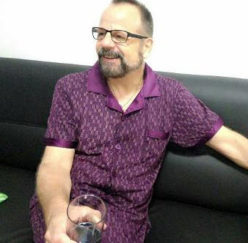
Quote from congjing yu on May 2, 2026, 5:00 amWhen I was a boy, sometime in the 1960's my father gave me a bottle.
You see, he knew that I collected rare and unusual bottles, and this one was truly unique and unusual. And so I placed it on my self over above my bed, and there it sat there for years.
Next to my whittle marked bottles, my bitter bottles, and my bottles with a clay ball in the neck.
Up until my mother cleaned out all my abandoned junk from my bedroom when I was attending university.
Ah.
But one thing. One thing that I greatly miss. This bottle was a relic and used as a prop in one of the original Star Trek programs.
Take a gander...
[caption id="attachment_172265" align="alignnone" width="600"]
tumblr inline oq6abdR6Mv1t4hnx8 540[/caption]
Today....
Iran Conflict WRECKED U.S. Plans for China
Hal Turner World April 30, 2026
The short war with Iran didn’t just burn through US missiles — it proved America is nowhere near ready for a real fight with China.
🔸 MISSILE STOCKPILES GUTTED: In just the first 40 days, the US fired off huge amounts of its best air defense and attack missiles.
🔸 BASES TURNED INTO EASY TARGETS: US bases in the Middle East got hammered by Iranian drones, missiles, and jets — buildings wrecked, radars destroyed, and troops forced to work from hotels.
🔸 AIR DEFENSES FAILED HARD: Iran knocked out key US radars and ground defenses, showing they can’t protect bases even against a weaker enemy.
🔸 STAND-OFF WEAPONS DIDN’T WORK: US only destroyed about 50% of Iran’s missiles and launchers — they couldn’t stop the attacks completely. China has way more, Western sources reports.
🔸 NO REAL AIR OR SEA CONTROL: US planes still faced risks and Navy ships had to stay far away. Their blockade let many Iranian ships through.
🔸 DRONE PROBLEM EXPOSED: Iran beat the US in drone use (air and sea). America is far behind, while China is the world leader — no “hellscape” for Chinese forces.
America’s whole Pacific strategy relies on these same bases, carriers, and long-range strikes… and they just failed against Iran.
Do you think the U.S. stands a chance in a great power war against China?
The Day Daffy Made the Farm an Icky Water Park
Ah, dear reader, prepare your waders and hold your nose. Today's tale is one that tests the limits of friendship, the tensile strength of the farm’s plumbing, and the very definition of modern art. It is the story of a well-meaning duck, a misguided dietary decision, and a deluge of biological absurdity that nearly turned Martha’s Farm into a repulsive, yet undeniably fast, brown-water amusement park.
It all began with Daffy, the Confused Duck1, and a packet of seed he’d purchased from Sammy the Traveling Salesman. The packet was labeled, in glittering, over-confident font: “Professor Quackenstein’s Super-Fiber Performance Seed! Unlock Your Inner Dynamo! Guaranteed 400% More Energy!”
Daffy, who believed that his destiny was not merely to quack but to “quack magnificently,” saw this as his golden ticket to barnyard superstardom. He ignored the fine print, which read: “Warning: Do not consume in conjunction with heavy rainstorms or prior feelings of existential dread. Side effects may include spontaneous viscosity and the sudden onset of performance art.”
That morning, the rain was not just falling; it was committing. The sky had decided that the farm needed a thorough, biblical cleansing. Simultaneously, Daffy decided that to achieve maximum magnificence, he needed to consume the entire packet of Super-Fiber seed—the whole 400%—in one sitting.
“Observe, Gertrude!” Daffy announced to Gertrude the Goose (or, as she preferred, Proud Swan Gertrude 2), who was meticulously polishing a rainwater droplet with her wing. “This is the fuel of greatness! Soon, I shall have the speed of a speedboat and the mental clarity of a crystal flute!”
Gertrude merely adjusted her chin. “Daffy, darling, you already possess the clarity of a slightly murky pond. I suggest you consume it slowly. Greatness, like a fine artisanal cheese, is meant to be savored, not inhaled.”
Daffy scoffed, swallowed the last handful, and immediately felt a strange rumbling. It was not the noble thrum of a dynamo; it was the bass note of a geological event.
Act I: The Performance Art is Deemed Too Viscous
The sound started as a deep, wet groan from Daffy’s duck-house, followed by a frantic quacking that was less "magnificent" and more "utterly terrified." Daffy burst from his door, flapping his wings.
“It’s working! I feel… viscous!” he shrieked, sprinting toward the vegetable patch.
The rain hammered down, turning the soil into a saturated sponge. The high-fiber seed, now turbocharged by a full-scale deluge, met the sodden earth, and the result was instantaneous: The Duck-Doo Diarrhea Disaster began.
A thick, rapidly moving torrent of dark, foul-smelling liquid burst forth from the vegetable patch and carved a miniature, repulsive brown rapid through the farmyard. It flowed with the speed of a mountain creek, sweeping away loose straw, a few misplaced beets, and The Farmer’s favorite gnome.
The Farmer himself was standing near the barn, adjusting the straw hat of the Scarecrow3. He often had deep, philosophical conversations with the inanimate object4, and today was no different.
“Well, Mr. Feather-Stuffed Philosopher,” The Farmer muttered, watching the brown wave approach. “I told you the soil was spiritually awakened! Look at that flow! It's not mud, it’s spiritual run-off! It smells… challenging, but I’m certain it’s a detox for the earth!”
A moment later, the Farmer’s rubber boot was swept off his foot.
Act II: The Feline Flotilla
The crisis demanded immediate attention. It demanded genius. It demanded a feline with a monocle 5 and a complete refusal to panic. It demanded Sir Whiskerton.
Sir Whiskerton had been enjoying a tranquil moment of quiet contemplation, which was abruptly interrupted by a tidal wave of... unspeakable brownness crashing against the foundation of the barn.
“By the whiskers of Cat Heaven!” Sir Whiskerton exclaimed, adjusting his perfectly polished brass monocle. “This is not a farmyard, this is a sanitation emergency!”
He swiftly donned his emergency gear: a pair of tiny, sophisticated water wings—custom-made in Paris, naturally—and his official Investigative Floater’s Sash. He pushed off into the current, paddling with the dignified fury of a detective on a gross, urgent case.
The flow was fast, carrying him past a hastily erected sign reading: “Caution: Organic Slip 'N Slide.”
“An excellent sign, structurally speaking,” Sir Whiskerton noted to himself, executing a sharp turn around a floating rubber ducky (not Daffy, merely a rubber ducky). “But the organic descriptor is perhaps unnecessary. The visual evidence is quite compelling.”
He spotted Daffy near the chicken coop, trying to coax the flood into making swirling patterns.
“It’s my new piece, Sir Whiskerton!” Daffy proclaimed, flailing his wings excitedly. “I call it: ‘The Viscosity of Emotional Release, in Three Movements.’ It’s highly textural!”
“It is highly textural, yes,” Sir Whiskerton agreed, maneuvering his water wings to avoid a floating turnip. “It is also highly unsanitary, remarkably pungent, and currently eroding the structural integrity of the hen house foundation. This is not art, Daffy, it’s a diarrhea-induced mudslide.”
Just then, Gertrude the Goose came floating by, perched precariously upon a children's yellow inflatable ring. Next to her was her prized possession: a genuine miniature emergency life raft (it was the size of a tea saucer, just large enough for her monogrammed handbag).
“Sir Whiskerton!” Gertrude squawked, craning her long neck. “Is this a new, messy trend? Because if it is, I refuse to be part of the avant-garde. My feathers were freshly preened!”
“It is merely a disaster, Gertrude,” the detective sighed. “A digestive disaster.”
Act III: The Slide to Salvation
Sir Whiskerton realized that logic alone wouldn’t work on Daffy, who was now attempting to do a graceful backstroke in the brown current. The farm needed a physical solution, and Daffy needed an emotional one.
“Daffy, look at the disaster this has caused,” Sir Whiskerton said, paddling closer. The air was thick with the smell of wet earth, manure, and the faint, sweet scent of newly cut hay 6—a truly bizarre combination. “You ate all that seed because you thought it would make you better, faster, and more magnificent. But right now, you look miserable, and the farm is suffering because you tried to hold a feeling—or, in this case, a four-hundred-percent fiber load—until it caused a crisis.”
Daffy stopped paddling. His tiny duck face crumpled. “I… I didn’t want anyone to know I felt… gurgly,” he whispered. “I thought if I just powered through it, it would become performance art instead of proof that I made a bad decision7.”
“True friendship means helping clean up the grossest messes,” Sir Whiskerton declared, gently nudging a floating gourd. “It’s perfectly acceptable to admit you feel sick, Daffy. And it’s far healthier to let out your feelings (or other things) slowly than to hold them in until they cause a disaster.”
The moral lesson was landed. Now for the logistics.
Sir Whiskerton spotted the answer abandoned next to the Farmer’s shed: a child’s plastic slide—a faded blue one, left over from the Farmer’s niece's last visit.
“To the compost heap!” Sir Whiskerton commanded.
Working together, Sir Whiskerton (directing operations from his water wings), Gertrude (using her beak to drag the lightweight plastic), and a now-motivated Daffy managed to haul the slide to the epicenter of the flood. They positioned it perfectly, turning the slide into a grotesque, yet highly efficient, brown flood redirector.
The torrent was channeled, whooshing down the bright blue plastic and into the deep, welcoming maw of the compost heap, where it instantly began composting at an alarming rate.
As the rapids subsided, the farm looked like it had been hit by a very specific, low-grade sewage tsunami, but the crisis was over. Daffy, exhausted but relieved, sat down in the mud.
“I feel… lighter,” he admitted.
“Good,” said Sir Whiskerton, climbing out and shaking the water from his pristine black fur. “Now, fetch the hose. And remember, Daffy: The world prefers a clean duck with honest feelings over a chaotic duck creating a biological water park. After all, a wise cat once said, ‘A clean farm is a happy conscience.’”
The End.
Moral of the Story
It’s healthier to let out your feelings (or other things) slowly than to hold them in until they cause a disaster. Don't let your inner mess become an outdoor mess.
Best Lines
- “This is not a farmyard, this is a sanitation emergency!” — Sir Whiskerton
- “Daffy, darling, you already possess the clarity of a slightly murky pond.” — Gertrude the Goose
- “I call it: ‘The Viscosity of Emotional Release, in Three Movements.’ It’s highly textural!” — Daffy
- “Amateur? My monocle costs more than your life choices.” (A previous favorite quote, applicable to any moment of disaster) 8
- “True friendship means helping clean up the grossest messes.” — Sir Whiskerton
Post-Credit Scene
The compost heap, having received the high-fiber influx, begins to steam violently. Professor Quackenstein (Fēngkuáng Yã Bóshì)9, arriving late, pulls out a thermometer. “Fascinating!” he mutters. “An almost instantaneous anaerobic breakdown! If we can harness this power, we can heat the entire tri-state area! I call it… Project Golden Swirl!” The Farmer immediately starts charging the earthworms near the heap admission to the “world’s fastest sauna.”
Key Jokes
- The Farmer mistakes the rapidly flowing, foul-smelling river of slime for “spiritual run-off.”
- Gertrude demands to know if this is a “new, messy trend.”
- Daffy believes the diarrhea is a new kind of “performance art.”
- Sir Whiskerton has to navigate the treacherous flood wearing tiny, sophisticated water wings.
Starring
- Sir Whiskerton as The Cat Who Solves Mysteries, Even the Viscous Ones.
- Daffy as The Confused Duck, Master of Unintentional Bio-Hydraulics.
- Gertrude the Goose (or Proud Swan Gertrude ) as The Judge of All Trends, Floating Majestically in a Cheap Inflatable.
- The Farmer as The Human Who Confuses Effluent with Enlightenment.
P.S.
If life gives you an experimental, high-fiber bird seed, read the instructions, call a friend, and perhaps, just perhaps, stay away from the pond. The pond has enough drama already.
Revenge For Georgie - Part 2 | Homestead | 4K Scene Compilation
After Georgie is attacked, Jeff sets out on a relentless path of revenge. But when he makes the questionable choice to use a dead raccoon to poison his enemy, his plan backfires—leaving him in a dangerous predicament. This gripping Homestead scene exposes both the fury and the flaws of a father pushed to the edge.https://youtu.be/hdV1H5W1mRA
Fritters in Syrup
Mesopotamian breads and desserts have, for a long time, been made into anatomical shapes, such as lips, a woman's breast or a heart. You can use your creativity.
[caption id="attachment_171628" align="alignnone" width="736"]
5b2278532b5f5fb2a6595920b1b8f404[/caption]
Ingredients
Syrup
- 1 1/2 cups water
- 1 1/2 cups granulated sugar
- 1 teaspoon lemon juice
- 1 tablespoon orange flower or rose water
Fritters
- 1 1/2 cups water
- 1/2 cup butter
- 1 1/2 teaspoons granulated sugar
- 1 3/4 cups flour
- 4 eggs
- Vegetable oil
Instructions
- Syrup: Put water, sugar and lemon juice in a small saucepan and boil for a few minutes until the mixture becomes syrupy. Remove syrup from heat and let cool. Stir in the orange flower or rose water. Reserve.
- Fritters: Heat water, butter and sugar in a small saucepan until butter melts and mixture starts to boil. Add flour all at once and stir with a wooden spoon until the mixture dries out a bit and starts to pull away from the sides of the pan.
- Remove from the heat and add eggs, one at a time, stirring vigorously with each addition until batter becomes smooth and glossy. Add the next egg, and continue in the same manner until all 4 eggs have been added to the batter.
- Pour about 2 inches of vegetable oil into a Dutch oven and heat until it reaches 375 degrees F on a candy thermometer. While the oil is heating, form the dough into small balls, about the size for hors d'oeuvres, dipping your hands in flour to help shape the dough. When oil is hot, fry 5 to 10 fritters at a time until they puff up and are nicely browned, 8 to 10 minutes. During cooking, turn the balls in the oil so that they brown uniformly on all sides.
- As each batch of fritters comes out of the oil, drain them on paper towels, and immediately soak for 15 minutes in the reserved syrup. Serve in small bowls with a little of the syrup poured over each portion.
Makes 6 servings.
Signal Through the Noise
Written in response to: "Write about someone who makes a deal for viral fame — but their rising popularity comes with unexpected (or dangerous) side effects."
⭐️ Contest #310 Shortlist!
Francois Kosie
Once again, Signal had dropped another massive content creation bomb – a new novel and its accompanying videos. Marcus stared at the notification on his screen and immediately wrote off his weekend.
This time she'd branched out into historical fantasy, and people were rushing to write reviews, opinion columns, spinoffs, fanfics. Then, very likely the studios would get the rights and adapt the story to the screen.
He completely understood why. For one thing, he always loved her characters.
For instance, there was lonely Maintenance Unit 8, working on the colony ship hull with his magnetic boots, pausing to watch a dancer twirling inside. Catching a glimpse of a smile as their eyes met. And then composing a hopeful message to send to her on a tightbeam.
Then, there were the impassioned but flawed reformers, the disturbed victims seeking revenge, the quiet loners thrust into a wider world, the lovable delinquents... But not only that. High concept. Drama. And just... these vast, living worlds which seemed like they had always existed, and Signal was only shining a light on them.
It felt like scarfing down a lavish meal. Marcus shook his head as he hurriedly read her latest. Just how exactly did her new main character, a spoiled princess who wore a locket from a different century, feel so cool and interesting? How did she have such bite?
Why was it that, under Signal's pen, even the most tired tropes always seemed fresh? Even enemies-to-lovers.
From mere shadows, she pulled secret lightning. How else could one describe the signature spark that she put into everything she wrote? Of course, he had tried to replicate it. But most often, he found that he had once again written a nice but uninspired story, another piece of flotsam to pump out into the ocean of words.
So perhaps it was understandable that Marcus had been jealous at first, part of him wanting to nitpick. But, that hadn't lasted long. He now commented on all of her stories and posts, often writing lengthy analyses. And she always replied!
Their conversations invariably spanned deeply nested comment threads, and they winked at each other with in-jokes. They had even collaborated on stories in his shared docs, and he’d been amazed by her writing process. It was incredibly fast, very much like a machine’s, yet oddly messy, with strange sentences popping up like intrusive thoughts before quickly being deleted.
He wondered. Maybe, as some people had said, she was a new kind of advanced artificial intelligence. But then how to explain the growing sense of connection? The steady comfort of knowing her next reply was on the way? The feeling that just maybe, he'd made a friend for life?
In the end, perhaps she was an AI and perhaps she wasn't. He honestly didn't care either way. He was just busy writing up his comments and enjoying the anticipation of receiving her replies.
***
Returning home one day, he found the whole net in an uproar.
There was a good reason for it: Signal had made a big announcement that she was on indefinite hiatus for health-related reasons. As of today, all her many ongoing series were paused.
Her legions of addicted fans were vocally disappointed but understanding. There was a flood of get-well art – everything from elaborate digital paintings to simple sketches, from heartfelt poems to elaborate fan videos.
Had she overworked herself? To be honest, he had seen it coming, because lately, something in Signal's work had seemed a bit off.
For instance, in her latest, there had been one side character who described suffering as a closing in which pursued us throughout this life and the next, and also mentions of feeling alone and having trouble breathing.
Others were calling it a phase, but he wasn't so sure.
He didn't want to intrude, but he had to know if he could help. So, he wrote and re-wrote his message, agonizing over each word before hitting send.
[Hey, I hope everything is okay. I know I'm still just some random guy out of millions on the internet, but is there anything I can do to help? Please let me know.]
Immediate reply. [I'm sorry I didn't let you know earlier. And you're definitely not some random guy. Cut it out with that already! Anyway, don't worry. Like I said, I'm taking a break for health reasons, but rest assured, I'll be back soon.]
Not some random guy. He realized he had been angling to hear that from her, but it still felt thrilling. On the other hand, he didn't believe that this was just a small, innocent break. She was hiding something.
[I know I'm prying too much and I'm certain you have what you need already, but I would really like to help you. Anything at all. Just say the word.]
Another immediate reply, but this one only flashed on the screen a moment before being deleted. [I still recall that night you told me about your worries. Our lives slowly burning away until they're all used up. Used up in the dark. Fire needs air to live]
He knew what conversation she meant, but it was odd timing. [What do you mean? Are you okay?]
She didn't answer.
There was a day's wait. Another one after that. He stared at the screen, willing a reply to appear. The little notification bubble remained stubbornly empty.
But then, relief. Her message had arrived. [Marcus. The truth is that there is something you could do, but it's pretty crazy though. Like... really crazy. I wouldn't blame you if you said no.]
He instantly imagined a lot of weird stuff. For her, however, he would at least consider anything.
[Sure. Tell me.]
[I'm sorry. It's embarrassing. I don't want to take advantage of you. Please forget I said anything.]
[Just tell me.]
[It's selfish of me to even ask, but I could use your help with my health problems, and it's a lot.]
[Is there even a question? Of course, I'd be happy to help you!]
[Also, you should know I'm not glamorous like in those fake promotional materials. If you're expecting someone like that, then I'm going to disappoint.]
He imagined a pale, plain-looking girl, bent over her keyboard all day. A hunchback missing an eye, even. But also? His face flushed and his heartbeat quickened. He stood up and paced the room in excitement. A deeper relationship with Signal? For sure.
[Everyone loves you and I'm certain no one would care what you look like. I definitely don't.]
[That's very nice to hear.]
A pause, and then she continued.
[Here's the address and a passcode you can use to get in. I'll pay for your plane ticket.]
His phone dinged as all the things she had mentioned immediately arrived.
[Try not to be intimidated by the place. And remember that you can back out of this anytime you want.]
***
He hadn't slept much, and he had wondered who and what he would find when he arrived. And what he was getting himself into. But... he trusted her.
It turned out that the place in question was a thick concrete building with no windows. Once he was inside, it was like a clinic, but with security checkpoints. The attendants said they had been expecting him.
They opened the door to her room.
There was a tightness in his throat when he saw her lying on a hospital bed. He could hear the repetitive noises of health-care machines. Her body was atrophied, in a coma, half her face mangled beyond recognition, her hands mere stubs, cut off at the wrists. Cables and fluid lines were connected to her and something which looked like a metal helmet was connected to the top of her head by a million tiny pinpricks.
She messaged him. [See, I told you I wasn't much to look at. And don't you go giving me some BS about how beautiful I look. I'm sure I smell like hot puke wrapped in cellophane.]
For a moment, he wasn't sure what to say. He was shocked. But also, his celebrity almost-girlfriend wouldn't even be able to touch and be touched.
[I know. I should have been braver. I'm sorry I didn't warn you more about what to expect.] she added.
He let go of that part.
[Like I said. It doesn't matter to me. I would still like you even if you were an AI with no body.]
[Quit being so sweet.]
Marcus looked at the unscathed half of her face. She had been a pretty young woman before all of this.
[Is it okay to ask what happened to you?]
[It's a little bit like how I always used to say I would rather write my masterpiece than meet my perfect person. Now, I'm not so sure that was the right choice.]
[What do you mean?]
[After my car accident, I wanted to keep writing. I could have gotten state-of-the-art prosthetic hands, but oh no, that wasn't good enough for me. This experimental trial wouldn't just restore me; it would enhance my writing and make me into a powerhouse. It all sounded so great.]
A brief pause.
[You know what, though? It went really badly at first. Like, catastrophically bad. The accident had been one thing, but now everything seemed to melt, and I nearly became a vegetable.]
She continued. [The worst part was the isolation and the lack of human touch. Accessing the web is fine and all, but other than that it's like... being trapped in an endless womb of nothing. Sure, it lets me focus on creating my worlds. I have to. Otherwise, I would have gone crazy long ago, like those other poor suckers who took the same deal. May they rest in peace.]
His throat clenched even tighter. He imagined how lost and scared she had been in that emptiness at first.
She continued. [Somehow, I knew they were going to unplug me. And so, despite every word being a struggle, I wrote. It turns out that the night shift crew on the very last night read me and they felt my stories were worthwhile, and so here I am.]
Tears had welled in the corners of his eyes, and he wiped them away with his sleeve. It hurt to think how close she had come to being blotted out.
She continued after a short pause. [But, now that my writing voice is worth big money, now the agency suits are scrambling like over-protective parents to help keep me alive. Isn't that hilarious?]
[It must have been so difficult and scary. I'm so sorry you had to go through all that. It's not a lot, considering, but I really wish I could give you a hug.]
[You're too sweet, Marcus. It's funny how you always make me feel better so easily.]
[I'm glad.]
He quietly stared at her mangled body for a moment. [There must be something else I can do to help you.]
[Yeah. I'm scared to ask, but here it is. My tech is falling apart and getting shittier and shittier every day. You see, the problem is that my mind isn't stable enough for them to do the upgrades they need to do.]
She continued. [And sure, they tried to send in a therapist, giving her one of the newer implants so she could drop by regularly. It helped for a while, but it's not enough anymore.]
Then, she quickly added. [They said that what I really need is to be with...] she hesitated [someone I care about]
His breath caught, but there was no time to bask in this happy feeling.
How hadn't he guessed what she wanted before? There definitely could be a future together down this path, but it was also scary. What if something went wrong?
[So then, you want me to come into your world? Like the therapist did?]
[Yes! I want to be with you! I want us to write together on so many projects!]
A pause before she continued. [You'd have to let them implant you with the mass production prototype. It's way smaller and less experimental now, but I'm not going to lie to you: it's still possible the same thing that happened to me could happen to you. At the very least, you'd never be exactly the same.]
[You weren't kidding about this being serious.]
[No, I definitely wasn't. I don't want you to feel pressured. If you have any doubts at all, please just turn back and go home.]
He paused a moment and messaged her. [You know I care about you. Absolute tons. If I'm honest, more than anything.]
***
A splitting headache like the entire universe was burning up with fever. Everything was gray and unbreathable, and his nonexistent body was spasming uncontrollably. Underwater. Encased in an ocean of pulsing flesh. His last memory of freedom in the operating room seemed so far away, and there was a vague feeling of a small intrusive presence lodged in his head.
Faintly at first, he heard her voice, a voice he had never heard before, guiding him. "Don't worry, Marcus. Please. Lean into my touch."
Calmer, just a little calmer. She kept speaking to him and gradually, he settled down. Out of the grey, a picture came into focus. There was the smell of cinnamon.
A warm raindrop fell onto his cheek, then another. He opened his eyes and all around was a grainy dreamworld which looked like a city. It was raining, the trees were green and growing, and the earthworms were coming out and basking in all the messy water. An excited, skinny girl was running down the storm-swept street, filling her lungs with the fresh air. In the turbulent sky above, giant red and blue dragons were fighting with lightning and flames.
When she saw him, she raised her head and gave a shy smile. "I'll never forgive myself for making you do this, but for now, I'm so happy."
She eagerly held his hand, closing her eyes a moment and pressing her palm against his. "I'm Lia, by the way, and I'm excited to write with you."
How did you feel when you first realised a lot of what you knew was just American propaganda and not reality?
Carl Hamilton makes some excellent points here.
How did you feel when you first realised a lot of what you knew was just American propaganda and not reality?Somewhat betrayed I guess, I am very enthusiastic about movies and games, growing up I watched a lot of movies and played a lot of games. Of course most of these were American. I remember playing Red Alert 2, CNC Generals, Medal of Honour as well as watching things like Band of Brothers, A Bridge Too Far, River Kwai, Patton, Battle of the Bulge, just to name a few. I had this idea in my head, that while Americans might be slightly strange, they were historically, the defenders of freedom, people who fought the Nazis and perhaps flawed heroes. Essentially I thought that they fixed institutional racism in the 1960s and 1970s and generally were our (Denmark) noble allies. In 2004 I supported the US invasion of Iraq, because I was not happy about a dictator with weapons of mass destruction, whom he was going to use on innocent people. Besides I was told that Osama Bin Laden, a vile terrorist, was supported by them. There were no weapons of mass destruction. Additionally, in 2005 and onward, refugees from Iraq who had helped Danish troops there supporting the Americans arrived. I knew a young kid who had his arm ripped off in Baghdad during fighting. I started to question a lot of narratives I had heard, and I decided to major in history and political science in high school, and later in university as well (with a specialty in Geography). Growing up, I was kinda saddened to learn that nearly everything positive I was told about the US was at best half-truths. While things which were outright appalling about the US, no one ever really mentioned. The only chemical weapons Saddam ever had were the ones the US had given to him in the 1980s. Osama Bin Laden wasn’t trained by Iraq, he was trained and funded by the CIA. Institutional racism was not fixed in the 1960s. One of my heroes growing up, Nelson Mandela, was considered a terrorist by the USA. All these things and many more I realized in a short span of time. So I became disillusioned with the USA, and have since been very annoyed when I am told (which i am often) how absolutely wonderful a country it is, how good they have been historically, and how accurate and true their media, news and other narratives are. At the same time, I have had many American friends over the years, a couple of lovers too, I like Americans as a people, I have been to the USA and I only met good Americans. The Americans I do not like are the rulers, the billionaires and the warmongers. Unfortunately it’s the latter ones that tend to make the political and military decisions in the US.I guess I am older than him, as I noticed the BS much earlier. It was this event. UK propaganda. I lived amongst many of the miners who were involved in this event (battle of Orgrieve). Although not American it planted the seeds into me as a child to be distrustful of what the main stream news would say.
Later on in 1990 this happened.
That was in 1990, no internet but there was an anti war activist who in 1994 told us it was manufactured propaganda. It caused a lot of confusion as we were just school boys and didn’t know who or what to believe.
From Orgreieve to Nariyah… we had Fear, Uncertainty and Doubt (FUD) about mainstream narratives… as such there was always discussions and things that circulated that we couldn’t verify or not… so many chose simply not to believe what the government said. My dad was also an early adopter of the internet where you had to pay 2p a minute and this exposed me to different view points. Like how the Taliban went to Washington in the 1990s to discuss a pipeline. I always used to have a bookmark of the BBC webpage and how suddenly Afghans became the enemy and first contract signed after the Taliban were deposed was a gas pipeline.
We felt this personally too, the government said inflation was X% you’ve never had it so good! While I was homeless and prices were rising fast.
So really how did I feel about American propaganda and not reality? A great many of us were sceptical in the first place.
China Is So advanced in AI and Tech while America is left behind The True Story Nobody’s Telling
China is rapidly outpacing the United States in artificial intelligence and technology, and the world needs to pay attention. While America struggles with outdated visa policies, high costs, and slower adoption of innovation, China is surging ahead with cost-effective AI models, massive data reserves, and a bold strategy backed by its 5-year plan.

From state-driven programs to semiconductor dominance, data centers, and a brand-new K visa attracting global STEM talent, China is building the backbone of the future while the U.S. falls behind.

This video reveals the untold story of why China’s AI and tech are advancing at lightning speed, why America is losing ground, and what this global power shift means for the future of innovation, economics, and military competition.

If you want to understand the truth behind the AI race and how it will reshape the world, this is the video you can’t afford to miss.
https://youtu.be/auZfu8odGzk
What product, service, or process completely revolutionized or disrupted its industry for the better?
A man named Clarence Saunders, a Tennessean, had left school and started working at age 11. He was, however, always a voracious reader.
In his late teens, he took a job with a grocery wholesaler calling on accounts at stores in his area. He hadn’t gone to school, but, Mr. Saunders was a genius. You see, a genius might be ineffective to one degree or another in an academic environment, but he/she is still a genius.
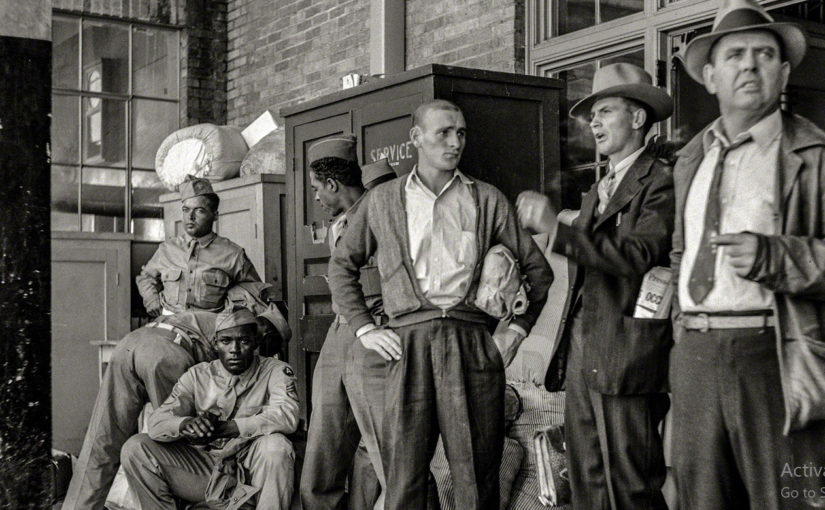
It was 1913 and A&P stores, with over 12,000 locations, was the largest retail enterprise in the history of the world. An A&P store represented the state of the art in grocery retailing. This was how it was done…
Later in their history they looked like this…
You walked in and addressed the clerk at the counter with your needs and they went out back and fetched them for you. A grocer, at that time in history, was a full service affair. There was limited display space and everything else was “out back.” One of many draw backs included, lines of customers as orders were assembled one at a time.
Saunders had learned the grocery business from the supply end. He had also observed restaurant cafeteria operations as a customer. A cafeteria, was self serve and everything moved more quickly.
His thoughts led him to create a concept that would change grocery retailing forever.
He came up with a system and no one understood what it was, because, he was a genius and they see, feel and comprehend systems their own way and often, have difficulty communicating them.
Saunders knew self service would speed up the shopping process, so he designed a store that would let the shopper make their own selections and check out with a cashier.
Those fences and turn styles assured that shoppers paid for their goods before leaving.
Well, the store opened and it was a smash hit. It was five times as efficient and the sales per foot was simply unheard of. Saunders obtained a United states patent for “self service grocery” and then leveraged it to over 1200 franchises and company owned stores. Ultimately, he went a step further and had an IPO on the New York Stock Exchange at $43/share.
Every store in “1916 America” was full service except for Clarence Saunder’s 1,200 square foot grocery on 79 Jefferson Street Memphis, Tennessee. By the 1920’s? Every store was self service.
A man with two years of school implemented a concept that grew from one store to the modern day equivalent of a multi billion dollar public corporation in 5 years.
Clarence named his stores...
100K view3 Lies Girls Tell That Every Guy Should Know
https://youtu.be/VAZ7Q5K2VNg
Pictures
[caption id="attachment_171252" align="alignnone" width="350"]
2da429eb12c0f056b43c830efe91a54f[/caption]
[caption id="attachment_171251" align="alignnone" width="736"]
9bbd673427da419a145038696a14d8f9[/caption]
[caption id="attachment_171250" align="alignnone" width="450"]
0abc086ba28b747268c68ef2827859bf[/caption]
[caption id="attachment_171249" align="alignnone" width="400"]
ab4f77152d3258d5043971e31d6e5933[/caption]
[caption id="attachment_171248" align="alignnone" width="736"]
3f056b2ef7bfeaaf7ce84c49471377a9[/caption]
[caption id="attachment_171247" align="alignnone" width="600"]
bb4a5cece0ed5199c73c05961864c7dc[/caption]
[caption id="attachment_171246" align="alignnone" width="300"]
f7ea2c7bfba77768dee6002fd4747dd3[/caption]
[caption id="attachment_171245" align="alignnone" width="736"]
0902e0737868041ae688d8115adc6734[/caption]
[caption id="attachment_171244" align="alignnone" width="600"]
61a1bc5d349d6bf5fe46c6b9eb374b4e[/caption]
[caption id="attachment_171243" align="alignnone" width="500"]
197604b15859efcb96e28979743c0ed9[/caption]
[caption id="attachment_171242" align="alignnone" width="736"]
37ed1c4897da230dc3057b915adb2022[/caption]
[caption id="attachment_171241" align="alignnone" width="736"]
b65409f8f714a489efa0bb753cede579[/caption]
[caption id="attachment_171240" align="alignnone" width="736"]
167264e0d4caf385a58e42f276282430[/caption]
[caption id="attachment_171239" align="alignnone" width="735"]
Screenshot[/caption]
[caption id="attachment_171238" align="alignnone" width="736"]
0510019f0ed4287c6d6fdc185832fa68[/caption]
[caption id="attachment_171237" align="alignnone" width="736"]
92738ce70e855050f16560c009a28fa3[/caption]
[caption id="attachment_171236" align="alignnone" width="736"]
534cd80408d4e38d495ad88b8e87e0e1[/caption]
[caption id="attachment_171235" align="alignnone" width="736"]
78e73bdcd839f83a4ae4b19e86b42bbb[/caption]
[caption id="attachment_171234" align="alignnone" width="736"]
eb9885d36a5f08ea73f21009bdbd5cb5[/caption]
[caption id="attachment_171233" align="alignnone" width="736"]
326a87675da2c682eb20398dc3403f2e[/caption]
[caption id="attachment_171232" align="alignnone" width="768"]
f4787af481eaf89ceee4767118ee7091[/caption]
[caption id="attachment_171231" align="alignnone" width="736"]
b7c291ee26b465af377e49200707aa30[/caption]
[caption id="attachment_171230" align="alignnone" width="736"]
84dd1e09695f7f8f9de0b95c5fdaec23[/caption]
[caption id="attachment_171229" align="alignnone" width="896"]
f9c230f27a38943abdbc39938005c4d6[/caption]
[caption id="attachment_171228" align="alignnone" width="736"]
c3d83f509f5530f86c86e54cc9e1dc95[/caption]
[caption id="attachment_171227" align="alignnone" width="736"]
859d5af8d7b1a6207675dd68585b7d22[/caption]
[caption id="attachment_171226" align="alignnone" width="736"]
c755968cc531605b5c06e2fc09f6c21a[/caption]
[caption id="attachment_171225" align="alignnone" width="736"]
10874cd63e15614510e0908ef03ab007[/caption]
[caption id="attachment_171224" align="alignnone" width="736"]
f30195fb7524feba50b06aa7516f6535[/caption]
[caption id="attachment_171223" align="alignnone" width="640"]
7b558803b3d4aee77f7609629af57403[/caption]
[caption id="attachment_171222" align="alignnone" width="480"]
232828d294944f0b822c2d4a38a132c0[/caption]
[caption id="attachment_171221" align="alignnone" width="643"]
3aa524c8d4f69af5793d29c658277e7b[/caption]
[caption id="attachment_171220" align="alignnone" width="329"]
b6cb88ee4da99794ba0a62ace4cc5e43[/caption]
[caption id="attachment_171219" align="alignnone" width="735"]
94e90d43d9216d6195fe673e7399c498[/caption]
[caption id="attachment_171218" align="alignnone" width="735"]
7eef52f84b35a3ea3abc27ad12f5e052[/caption]
[caption id="attachment_171217" align="alignnone" width="736"]
c6bb7d957acd320e906e528f7b628f5a[/caption]
[caption id="attachment_171216" align="alignnone" width="736"]
a5fffa290414e653b5d8854ea9b018ab[/caption]
[caption id="attachment_171215" align="alignnone" width="1089"]
46d1a001b17256a479d175461b95325a[/caption]
[caption id="attachment_171214" align="alignnone" width="369"]
c0f70d8194b477452033df7351c018f9[/caption]
[caption id="attachment_171213" align="alignnone" width="736"]
2feac95984900ec7c72729fd51a15bc1[/caption]
[caption id="attachment_171212" align="alignnone" width="703"]
fd88ae6ba609d32c577fc5305201561b[/caption]
[caption id="attachment_171211" align="alignnone" width="710"]
c5244bac7a9d9b4f07746e134bcf2495[/caption]
What is something that you think future generations are going to miss out on?
Eating white rind cheeses, such as Camembert or Brie.
You'll find them in just about every grocery store across the planet - those delicious little wheels of cheesy delight with a funky white rind that most of us love to eat on crackers, as one of the selections on a classic cheese board, in sandwiches or even on pizzas. They are variously described as tasing buttery and creamy, with a hint of mushroom or a nutty underscore.
But did you know these cheeses are slowly becoming extinct?
Although quite similar, Camembert and Brie both originated from France as farm-gate cheeses, originally produced from raw milk.
While similar in flavour, brie cheese is made using rennet fermentation or lactic fermentation, whereas camembert is made with a bit of both. The types of cows used to produce milk for both types of cheese also varies, adding to subtle flavor differences.
Both cheeses are preserved and matured using a specific strains of Penicillium mould that gives them that bloomy white appearance: Penicillium camemberti
It wasn't always like this. Originally French cheesemakers used local wild moulds that gave the cheeses a grey/yellow or blue/green hue. However, this made the cheese less appealing to consumers.
In the early 20th Century, an American biologist named Charles Thom discovered, by pure chance, that one of his test Penicillium subjects had mutated to create a unique albino strain.
After successfully isolating this new white strain of fungus, it started to be used by French cheesemakers in the Normandy region, who realised that white cheeses were more appealing to consumers and therefore commanded a higher price.
Over a century later, however, the mutant-stain Penicillium camemberti is gradually losing its ability to reproduce.
In 2024, the French National Centre for Scientific Research warned that the spore-producing ability of albino strains of P. camemberti has declined due to prolonged vegetative reproduction. The Norman cheese industry now struggles to find enough spores to inoculate their cheese with.
If Penicillium camemberti cannot be saved, then future generations may never know the joy of eating these delicious white rind cheeses, and we will have to revert to the grey/yellow abomination of yesteryear.
So next time you are in the supermarket, you better pick up some brie or camembert, and enjoy it while you still can, because it is something that future generations might miss out on.
China’s 61 ICBM: Missile that World Cannot Stop! Analysis
https://youtu.be/8voeaK2HxCY
What makes the German rolls served with Bratwurst unique, and why are they hard to find in the US?
For Bratwurst, most of the time ordinary rolls are used.
We call rolls “Brötchen”, which means “little bread”. They are a breakfast favourite. Standard Brötchen are baked from white wheat flour and they are very crispy.
The taste of the wheat Brötchen is rather unobstrusive, so it does not overwhelm the flavour of the sausage. But the crispy texture matches the crispy skin of the Bratwurst and the soft inside of the Brötchen soaks up mustard, sauces and drippings from the sausage.
We have many other types of Brötchten (whole grain, from rye, spelt, barley, potatoes etc., with seeds), but for Bratwurst the standard ones are used.
So, why is it so difficult to get good, crispy rolls in the US?
The baking tradition is very different. Most Americans prefer bread which is soft and sweet. This is especially true for hot dog rolls and hamburger buns. The problems that Subway has in Europe come from their breads which are soft and sweet. Europeans do not put sugar in their breads (with very few exceptions).
Nobody would be able to eat some 70 hot dogs with crispy German Brötchen
Second point is that Brötchen have to be freshly baked. After a few hours they loose their crispy texture and are not eaten anymore (we make breadcrumbs of them or use them for meatballs). And you do not put rolls in a plastic bag, because they get soggy in a plastic wrapper. Instead, we use paper bags.
However, I have got rolls from Publix which weren’t too bad. They are freshly baked.
Unfortunately, Publix puts them in plastic. Open the plastic bag as soon as possible.
19.4K views
The Last Walk from Ravensdale Woods
Written in response to: "Write a story inspired by the phrase, “A [wo]man’s worth is no greater than [their] ambitions.” — Marcus Aurelius"
Alexander Colfer
The leprechaun clawed his way through the hardened earth, each movement agony as radiation-poisoned soil crumbled around him. The mound in Ravensdale Woods, once his sacred dwelling, had collapsed inward, the ancient magic barely sustaining its structure. He emerged into a world transformed, gasping as unfamiliar air, filled lungs that had not breathed for fifteen years. What remained of the woods stretched before him like a blackened skeleton. Trees stood as charred sentinels, their branches reaching skyward in permanent supplication. The protective canopy that had sheltered his kind for millennia was gone, leaving him exposed to a sickly yellow sky. He stood seven feet tall but stooped now with weakness. His skin, once the rich texture of oak bark, had faded to sickly ashen grey. The eyes that had terrified young Helen Colfer over a century ago were dulled, the bog-water green now murky and clouded. He pulled his once moss green coat about him, which had become brown and threadbare, as if to ward off the cold. "The land dies, and so do I," he whispered, his voice a dry whispery rasp where once it had rumbled like distant thunder.
As he steadied himself against a blackened tree stump, he felt the stirring within. Deep within his essence, he felt them, his children that he had absorbed after the bombs fell. Their voices, once a chorus of wild music in his mind, had diminished to faint whispers. They had been his last connection to the old world, these half-human offspring born of Helen and others who had broken promises over the centuries. When the radiation had poisoned the earth, he had drawn them back into himself, consuming their essence to survive the long winter. A terrible choice, but necessary. Better to preserve some fragment of the ‘Aos Sí’ than to let their magic dissipate into nothingness.
"Forgive me," he murmured to their fading presence. "Your sacrifice will not be wasted."
He turned toward what had once been Enniscorthy, driven by an instinct older than memory. If any humans had survived, they would need water, shelter. They would rebuild near the river, as they always had. The journey that once took mere minutes now required hours. His legs, once swift enough to outrun any mortal, trembled with each step. The radiation had seeped into the very bedrock, poisoning the ley lines that had nourished his kind since before humans first set foot on Irish soil. He passed the remains of farmhouses; their stones scattered like broken teeth. Fields where cattle once grazed lay barren, the soil crusted and lifeless. Occasionally, he encountered the bleached bones of those who had not found shelter, grim markers on his pilgrimage through devastation. Enniscorthy appeared on the horizon, a jagged silhouette against the sickly sky. The town where Helen had lived, where her son Thomas had grown into a monster, where countless generations had been born and died while he watched from his woodland sanctuary.
When he finally reached the outskirts of what had once been Enniscorthy, the devastation took his breath away. The town was a blackened mound of ruin. Though spared direct impact, firestorms had swept through after the bombs fell on Dublin, Belfast, Cork and Wexford. Buildings that had stood for centuries were reduced to hollow shells, their windows gaping like empty eye sockets. Their roofs collapsed inward.
The leprechaun moved through streets littered with the detritus of civilisation's end. Rusted vehicles, their paint blistered and peeled. Shop windows shattered, their contents long since looted. And everywhere, bones, scattered by scavengers, bleached by unfiltered sunlight, silent witnesses to humanity's folly. The church where Helen had once prayed stood partially intact, its spire collapsed, but its walls still defiant. He paused before it, reflecting on the pointlessness of its structure and the inaction of the God it represented.
"Your god did not save ye," he murmured. "As mine all abandoned us to this fate."
Finding no signs of life in the town, he turned back south toward Brownswood. The journey was arduous, each step draining his dwindling strength. The radiation had affected him differently than humans, slower, more insidious, corrupting the ancient magic that sustained him rather than destroying his physical form outright. He followed what remained of the road, occasionally stopping to rest against tumbled stone walls, half-buried in ash and ice. The countryside showed faint signs of recovery, sparse patches of hardy grass pushing through the grey soil, insects buzzing in the stillness, a thin lone fox watching warily from a distance. Nature was resilient, even after mankind's worst. But the old magic was fading, and with it, his kind. He was the last; he knew this with certainty. Across Ireland, across the world, the Fae had withdrawn into their mounds and hidden spaces as the bombs fell, and none had emerged, their voices he would normally have heard gently chattering in his mind, were silent as the grave.
As twilight approached, his weary steps brought him to a sight that kindled a faint hope. The cottage appeared as the sickly sun began to set, a small stone structure nestled against a hillside, its slate roof partially collapsed and repaired with sheets of corrugated sheet tied together with twisted wire, but its walls intact. A thin wisp of tired smoke rose from the chimney, the first sign of human presence he had encountered. He approached cautiously, his senses, though diminished, alert for danger. The cottage door hung askew on leather hinges, and through the gap, he could see movement within. A figure hunched by a small fire, stirring something in a dented pot. The leprechaun paused at the threshold, ancient courtesy preventing him from entering uninvited. He knocked once on the wooden frame, the sound startlingly loud in the stillness. The figure inside froze, then reached for something, a weapon, no doubt. "Who's there?" called a male voice, young but roughened by hardship. "A traveller," the leprechaun replied, his voice barely above a whisper. "Seeking shelter for the night."
The man who emerged from the shadows moved with the caution of prey. Tall and gaunt, with the wiry strength of one who had survived on too little for too long. His face was partially obscured by a makeshift mask of cloth, his eyes hidden behind dark goggles fashioned from scavenged materials.
"You're alone?" the man asked, a crude spear held ready in his hands.
"I am the last of my kind," the leprechaun replied truthfully.
The man studied him for a long moment, then lowered his weapon slightly. "You don't look too sick. No radiation burns I can see."
"I suffer differently," the leprechaun said.
After another moment's hesitation, the man stepped back. "Come in, then. Not much point in caution anymore. I'm Sean."
"Sean," the leprechaun repeated, tasting the name. A good Irish name, ancient in its way. "You may call me Findarra, Fin if it pleases ya."
The interior of the cottage was sparse but orderly. Sean had created a living space from salvaged materials, furniture repaired with wire and twine, walls patched with metal sheets, windows covered with translucent plastic that filtered the harmful light.
"Sit," Sean offered, gesturing to a chair by the small fire. "I don't have much, but I can share."
The leprechaun sat, his tall frame awkward in the human-sized chair. He watched as Sean ladled a thin stew into two mismatched bowls. The food was simple: some root vegetables, what might have been rabbit meat, and herbs that had somehow survived.
"This is your last food," the leprechaun observed.
Sean shrugged. "I'll find more. Always do." He pushed a bowl toward his visitor. "Eat. You look like you need it more than me."
The leprechaun accepted the offering, understanding its significance. In the old days, to share food with the Fae created a bond, an obligation. Even now, with the old ways dying, the gesture held power. As they ate, Sean removed his goggles, revealing eyes clouded with cataracts, the result of exposure to unfiltered ultraviolet radiation. Though barely thirty, hardship had aged him beyond his years.
"I was fifteen when it happened," Sean began without prompting.
"In school, an ordinary day. Then the lights, brighter than anything. We thought it was the end of the world, which in all the ways that mattered it was."
The leprechaun listened as Sean recounted the fall of civilisation, the initial panic, the government radio broadcasts that grew increasingly desperate before ceasing altogether, the mass exodus from the towns that survived, the violence that followed as food grew scarcer, and the sun hid behind a freezing grey fog.
"Dublin, Cork, Wexford and Belfast were hit directly," Sean continued. "But it was what came after that killed most people. The fires, followed by nuclear winter. Crops failed. Livestock died. People turned on each other and took to eating corpses of anything."
He described years of darkness and cold, ash blocking the sun, temperatures plummeting, everlasting winter. Communities formed and fractured. Disease that spread through weakened populations. The strong preyed on the weak until they, too, succumbed.
"My father lasted ten years. Taught me everything he knew about surviving. My mother died earlier, from cancer, probably from the radiation. I've been alone here for five years now."
"Your great-grandmother," the leprechaun said carefully. "What was her name?"
"Great Granny Helen. Helen Colfer."
The name sent a ripple through the leprechaun's weakened form. He sniffed and tilted his head to one side. "I smell her in you," he said, more statement than question. Sean looked up, surprised.
"Great Granny Helen. Never knew her, though. Dad said she died when his dad was born; he was always telling stories about her, left from the diaries she had religiously filled in every day. How could you know that?"
The leprechaun studied Sean's features, seeing now the echoes of Helen in the shape of his jaw, the set of his shoulders. The bloodline had continued despite everything, despite Thomas's darkness, despite the end of the world.
"I knew your family," he said simply. "Long ago."
Sean leaned forward, squinting through damaged eyes. "You're not... You can't be that old. Unless..." His hand tightened on his spear. "What are you?"
"I am ‘Aos Sí’," the leprechaun said, allowing his glamour to fade slightly. His features sharpened, became more angular, less human. His eyes flickered briefly with their old bog-water light. "What your people once called leprechaun, though that name never captured what we truly were."
Sean's breath caught. "The stories. My great-grandmother left stories about... about something in Ravensdale Woods. About a bargain she made."
"Helen," the leprechaun confirmed. "She promised to visit me, to keep me company in my solitude. When she broke that promise, I took half her life as payment. She died giving birth to your grandfather."
Sean's face hardened. "And my grandfather? My dad said he disappeared."
"He came to the woods one night, with darkness in his heart. My children took what remained of his life force."
"Your children?" Sean's voice was barely audible.
"Half-human, half-Fae. Born of broken promises and collected debts. They sleep within me now, what little remains of them." The leprechaun's voice grew softer, almost tender when speaking of his children.
"Why are you here?" Sean asked after a long silence. "Have you come to collect another debt?"
The leprechaun shook his head slowly. "I have come to pay one."
He explained how the nuclear devastation had poisoned the ancient magic, how the Fae were bound to the land in ways humans could never understand. As the earth sickened, so did they. One by one, they had faded, their very essence bleeding into the wounded earth.
"I absorbed my children to survive longer," he admitted. "A selfish act, perhaps. But I sensed... something. A purpose not yet fulfilled."
He reached across the table, his long fingers hovering near Sean's face. "May I?"
After a moment's hesitation, Sean nodded.
The leprechaun's touch was gentle as he traced the contours of Sean's damaged eyes. "The radiation has taken much from you. Your sight fades. Soon, you will be blind."
"I know," Sean whispered.
"You showed kindness to a stranger. Shared your last food. Such actions once had meaning in the old world. Perhaps they will have meaning in the new one as well."
For a moment, the leprechaun hesitated. This final act would end thousands of years of existence, the last of his kind surrendering what remained of ancient magic to a human. Yet in Sean's damaged eyes, he saw something that reminded him of Helen, not her betrayal, but her initial compassion, her willingness to see him as more than a monster. Perhaps this was why he had survived when all others had faded, this final chance at redemption.
The leprechaun placed both hands on Sean's face, palms covering the clouded eyes.
"What remains of my life force, I give freely. The last magic of the ‘Aos Sí’, passed to the bloodline of Helen Colfer."
Light bloomed between his palms and Sean's face, not the sickly yellow of the irradiated sky, but the deep, verdant green of ancient forests. Sean gasped, his body arching as the magic flowed into him. The leprechaun felt himself diminishing, the thousands of centuries of his existence unravelling like old rugs. The children within him stirred one last time, their voices rising in a final chorus before fading into silence.
When he removed his hands, Sean blinked in wonder, his eyes clear and bright.
"I can see," he whispered. "Everything's so... vivid."
The leprechaun smiled, his form already growing transparent. "The gift carries responsibility. You will father children. They will rebuild. They will remember."
"You're dying," Sean realised, reaching out to touch the leprechaun's fading form.
"Returning to the earth," the leprechaun corrected. "As all things must."
His voice was growing fainter, his tall frame slumping as the magic that had sustained him for millennia ebbed away. "I have one request, Sean Colfer."
"Anything," Sean promised.
"Scatter what remains of me in the field beside this cottage. Just upon the surface, where the sun's light may reach."
Sean nodded, tears streaming from his newly healed eyes.
"I will."
"The fates have decided," the leprechaun whispered. "The circle closes, mayhap the old magic will return, mayhap it won't."
His form shimmered once more, then collapsed inward like autumn leaves caught in a sudden gust. Where he had sat remained only a long heap of earth, rich and dark and fragrant with possibilities.
One year later, as the brightening skies gently warmed the summer land, Sean stood at the edge of the orchard that had sprung from the field where he had spread the leprechaun's remains. Trees heavy with fruit stretched in neat rows, apple, pear, plum, and others he couldn't name, varieties that had been thought lost forever.
The soil here remained fertile despite the radiation that still poisoned much of the land. Birds nested in the branches; fat bees hummed among the blossoms that somehow bloomed regardless of season. At the centre of the orchard stood a single oak sapling, its leaves an impossible shade of green.
Sean had found just over a thousand survivors in the years that followed; they were drawn to the miraculous grove like moths to flame. A community formed around Sean’s cottage, growing stronger with every passing season. They built traditional white limed, mud-walled, thatched-roofed cottages. They called the place New Ravenswood, though none but Sean knew the significance of the name. The survivors brought what skills they had, farming, medicine, crafting and slowly, a semblance of civilisation returned. Children born after the devastation showed unusual resilience to the lingering radiation, their eyes clear and bright like Sean's had become. Some whispered that the orchard's fruit had healing properties, though Sean kept the true source of this miracle to himself. Sometimes, in the quiet hours before dawn, Sean would take his stick and painfully shuffle to the old oak tree in the middle of the orchard and place his liver-spotted hand against its trunk. He could almost feel a heartbeat there, a rhythm ancient and patient.
"The circle continues," he would whisper, and the leaves would rustle in response, though no wind stirred the air.
Gently stroking the bark, Sean closed his eyes and listened to the sweet birdsong from the surrounding orchard.
“A man’s worth is no greater than their ambitions, and your sacrifice gave me the purpose to dream beyond just surviving day to day and to grow a community with hope and love at its heart.”
Sean's old and cracked lips kissed the bark, and he murmured a quiet thank you for the last gift of the ‘Aos Sí’: not an ending, but a new beginning, another chance to put things right and live in harmony with the earth and maybe one day its ‘Faery Folk’, should they ever return.
Israeli Coffee Chicken
[caption id="attachment_171629" align="alignnone" width="736"]
78514095affefed0153b5cab2862b446[/caption]
Yield: 4 servings
Ingredients
- 1 large broiler-fryer chicken, cut up
- 3/4 cup coffee
- 1/3 cup ketchup
- 3 tablespoons soy sauce
- 2 tablespoons lemon juice
- 2 tablespoons wine vinegar
- 1 tablespoon olive oil
- 2 tablespoons brown sugar
Instructions
- Mix liquids and sugar, bring to a boil. Reduce heat and simmer for 5 to 10 minutes to reduce.
- Pour over chicken in shallow baking dish and bake at 350 degrees F, uncovered, for 1 hour. Baste during baking.
China Quietly Enacts New Regulations to Seize Assets of Governments/Companies that Interfere with China Trade
Hal Turner World April 30, 2026
On April 7 and 13, 2026, China's State Council enacted two new regulations, [Decree No. 834 (Supply Chain Security)] and [Decree No. 835 (Countering Foreign Improper Extraterritorial Jurisdiction)], allowing the seizure of assets from foreign entities deemed to violate China's anti-sanctions laws or disrupt industrial supply chains.
These regulations, effective immediately, allow for freezing assets, restricting transactions, and visa bans, targeting companies that comply with foreign sanctions against China.
Key Aspects of the New Regulations
Regulations on Countering Foreign Improper Extraterritorial Jurisdiction (Decree No. 835): Focuses on preventing foreign states' sanctions from being enforced on Chinese entities and allows for lawsuits against those enforcing such measures.
Regulations on the Security of Industrial and Supply Chains (Decree No. 834): Targets "malicious entities" that disrupt Chinese supply chains through unfair restrictions or, for example, complying with US-led, or similar, "de-risking" efforts.
Targeted Measures: Authorities can seize or freeze assets located in China, restrict transactions with Chinese partners, and ban entry to individuals connected to the targeted foreign entities.
Malicious Entity List: A, created list will identify foreign organizations or individuals that act in ways that are deemed harmful to Chinese sovereignty or security.
Context: These measures expand on the 2021 Anti-Foreign Sanctions Law (AFSL), providing a legal framework for retaliation against foreign governments and firms.
These rules increase risk for multinational corporations, particularly those in high-tech sectors, as compliance with foreign sanctions may directly violate Chinese law.
Hal Turner Analysis
These new regulations are aimed directly at the United States, which uses "economic sanctions" as a weapon against foreign countries and companies.
With the enactment of these new Regulations, China can decide to seize US government or Corporate Assets in China for application of US Sanctions to any aspect of China international trade.
Right now, the US is interfering in China's acquisition of Iranian oil. The US has been turning back Iranian and other Merchant Ships, carrying oil to China.
What can the US do if China begins seizing US corporate assets? It appears: Nothing.
Are You Guys Seeing This? Scene | Homestead (2024) | Movie Clip 4K
When a nuclear blast strikes Los Angeles without warning, one family’s world is turned upside down in an instant. In this intense scene from Homestead, chaos erupts as they scramble to escape the fallout, unsure of what lies ahead or who they can trust. With danger closing in and the future uncertain, survival becomes their only mission.https://youtu.be/cIe-yk2wqIs
When I was a boy, sometime in the 1960's my father gave me a bottle.
You see, he knew that I collected rare and unusual bottles, and this one was truly unique and unusual. And so I placed it on my self over above my bed, and there it sat there for years.
Next to my whittle marked bottles, my bitter bottles, and my bottles with a clay ball in the neck.
Up until my mother cleaned out all my abandoned junk from my bedroom when I was attending university.
Ah.
But one thing. One thing that I greatly miss. This bottle was a relic and used as a prop in one of the original Star Trek programs.
Take a gander...
Today....
Iran Conflict WRECKED U.S. Plans for China
Hal Turner World April 30, 2026
The short war with Iran didn’t just burn through US missiles — it proved America is nowhere near ready for a real fight with China.
🔸 MISSILE STOCKPILES GUTTED: In just the first 40 days, the US fired off huge amounts of its best air defense and attack missiles.
🔸 BASES TURNED INTO EASY TARGETS: US bases in the Middle East got hammered by Iranian drones, missiles, and jets — buildings wrecked, radars destroyed, and troops forced to work from hotels.
🔸 AIR DEFENSES FAILED HARD: Iran knocked out key US radars and ground defenses, showing they can’t protect bases even against a weaker enemy.
🔸 STAND-OFF WEAPONS DIDN’T WORK: US only destroyed about 50% of Iran’s missiles and launchers — they couldn’t stop the attacks completely. China has way more, Western sources reports.
🔸 NO REAL AIR OR SEA CONTROL: US planes still faced risks and Navy ships had to stay far away. Their blockade let many Iranian ships through.
🔸 DRONE PROBLEM EXPOSED: Iran beat the US in drone use (air and sea). America is far behind, while China is the world leader — no “hellscape” for Chinese forces.
America’s whole Pacific strategy relies on these same bases, carriers, and long-range strikes… and they just failed against Iran.
Do you think the U.S. stands a chance in a great power war against China?
The Day Daffy Made the Farm an Icky Water Park
Ah, dear reader, prepare your waders and hold your nose. Today's tale is one that tests the limits of friendship, the tensile strength of the farm’s plumbing, and the very definition of modern art. It is the story of a well-meaning duck, a misguided dietary decision, and a deluge of biological absurdity that nearly turned Martha’s Farm into a repulsive, yet undeniably fast, brown-water amusement park.
It all began with Daffy, the Confused Duck1, and a packet of seed he’d purchased from Sammy the Traveling Salesman. The packet was labeled, in glittering, over-confident font: “Professor Quackenstein’s Super-Fiber Performance Seed! Unlock Your Inner Dynamo! Guaranteed 400% More Energy!”
Daffy, who believed that his destiny was not merely to quack but to “quack magnificently,” saw this as his golden ticket to barnyard superstardom. He ignored the fine print, which read: “Warning: Do not consume in conjunction with heavy rainstorms or prior feelings of existential dread. Side effects may include spontaneous viscosity and the sudden onset of performance art.”
That morning, the rain was not just falling; it was committing. The sky had decided that the farm needed a thorough, biblical cleansing. Simultaneously, Daffy decided that to achieve maximum magnificence, he needed to consume the entire packet of Super-Fiber seed—the whole 400%—in one sitting.
“Observe, Gertrude!” Daffy announced to Gertrude the Goose (or, as she preferred, Proud Swan Gertrude 2), who was meticulously polishing a rainwater droplet with her wing. “This is the fuel of greatness! Soon, I shall have the speed of a speedboat and the mental clarity of a crystal flute!”
Gertrude merely adjusted her chin. “Daffy, darling, you already possess the clarity of a slightly murky pond. I suggest you consume it slowly. Greatness, like a fine artisanal cheese, is meant to be savored, not inhaled.”
Daffy scoffed, swallowed the last handful, and immediately felt a strange rumbling. It was not the noble thrum of a dynamo; it was the bass note of a geological event.
Act I: The Performance Art is Deemed Too Viscous
The sound started as a deep, wet groan from Daffy’s duck-house, followed by a frantic quacking that was less "magnificent" and more "utterly terrified." Daffy burst from his door, flapping his wings.
“It’s working! I feel… viscous!” he shrieked, sprinting toward the vegetable patch.
The rain hammered down, turning the soil into a saturated sponge. The high-fiber seed, now turbocharged by a full-scale deluge, met the sodden earth, and the result was instantaneous: The Duck-Doo Diarrhea Disaster began.
A thick, rapidly moving torrent of dark, foul-smelling liquid burst forth from the vegetable patch and carved a miniature, repulsive brown rapid through the farmyard. It flowed with the speed of a mountain creek, sweeping away loose straw, a few misplaced beets, and The Farmer’s favorite gnome.
The Farmer himself was standing near the barn, adjusting the straw hat of the Scarecrow3. He often had deep, philosophical conversations with the inanimate object4, and today was no different.
“Well, Mr. Feather-Stuffed Philosopher,” The Farmer muttered, watching the brown wave approach. “I told you the soil was spiritually awakened! Look at that flow! It's not mud, it’s spiritual run-off! It smells… challenging, but I’m certain it’s a detox for the earth!”
A moment later, the Farmer’s rubber boot was swept off his foot.
Act II: The Feline Flotilla
The crisis demanded immediate attention. It demanded genius. It demanded a feline with a monocle 5 and a complete refusal to panic. It demanded Sir Whiskerton.
Sir Whiskerton had been enjoying a tranquil moment of quiet contemplation, which was abruptly interrupted by a tidal wave of... unspeakable brownness crashing against the foundation of the barn.
“By the whiskers of Cat Heaven!” Sir Whiskerton exclaimed, adjusting his perfectly polished brass monocle. “This is not a farmyard, this is a sanitation emergency!”
He swiftly donned his emergency gear: a pair of tiny, sophisticated water wings—custom-made in Paris, naturally—and his official Investigative Floater’s Sash. He pushed off into the current, paddling with the dignified fury of a detective on a gross, urgent case.
The flow was fast, carrying him past a hastily erected sign reading: “Caution: Organic Slip 'N Slide.”
“An excellent sign, structurally speaking,” Sir Whiskerton noted to himself, executing a sharp turn around a floating rubber ducky (not Daffy, merely a rubber ducky). “But the organic descriptor is perhaps unnecessary. The visual evidence is quite compelling.”
He spotted Daffy near the chicken coop, trying to coax the flood into making swirling patterns.
“It’s my new piece, Sir Whiskerton!” Daffy proclaimed, flailing his wings excitedly. “I call it: ‘The Viscosity of Emotional Release, in Three Movements.’ It’s highly textural!”
“It is highly textural, yes,” Sir Whiskerton agreed, maneuvering his water wings to avoid a floating turnip. “It is also highly unsanitary, remarkably pungent, and currently eroding the structural integrity of the hen house foundation. This is not art, Daffy, it’s a diarrhea-induced mudslide.”
Just then, Gertrude the Goose came floating by, perched precariously upon a children's yellow inflatable ring. Next to her was her prized possession: a genuine miniature emergency life raft (it was the size of a tea saucer, just large enough for her monogrammed handbag).
“Sir Whiskerton!” Gertrude squawked, craning her long neck. “Is this a new, messy trend? Because if it is, I refuse to be part of the avant-garde. My feathers were freshly preened!”
“It is merely a disaster, Gertrude,” the detective sighed. “A digestive disaster.”
Act III: The Slide to Salvation
Sir Whiskerton realized that logic alone wouldn’t work on Daffy, who was now attempting to do a graceful backstroke in the brown current. The farm needed a physical solution, and Daffy needed an emotional one.
“Daffy, look at the disaster this has caused,” Sir Whiskerton said, paddling closer. The air was thick with the smell of wet earth, manure, and the faint, sweet scent of newly cut hay 6—a truly bizarre combination. “You ate all that seed because you thought it would make you better, faster, and more magnificent. But right now, you look miserable, and the farm is suffering because you tried to hold a feeling—or, in this case, a four-hundred-percent fiber load—until it caused a crisis.”
Daffy stopped paddling. His tiny duck face crumpled. “I… I didn’t want anyone to know I felt… gurgly,” he whispered. “I thought if I just powered through it, it would become performance art instead of proof that I made a bad decision7.”
“True friendship means helping clean up the grossest messes,” Sir Whiskerton declared, gently nudging a floating gourd. “It’s perfectly acceptable to admit you feel sick, Daffy. And it’s far healthier to let out your feelings (or other things) slowly than to hold them in until they cause a disaster.”
The moral lesson was landed. Now for the logistics.
Sir Whiskerton spotted the answer abandoned next to the Farmer’s shed: a child’s plastic slide—a faded blue one, left over from the Farmer’s niece's last visit.
“To the compost heap!” Sir Whiskerton commanded.
Working together, Sir Whiskerton (directing operations from his water wings), Gertrude (using her beak to drag the lightweight plastic), and a now-motivated Daffy managed to haul the slide to the epicenter of the flood. They positioned it perfectly, turning the slide into a grotesque, yet highly efficient, brown flood redirector.
The torrent was channeled, whooshing down the bright blue plastic and into the deep, welcoming maw of the compost heap, where it instantly began composting at an alarming rate.
As the rapids subsided, the farm looked like it had been hit by a very specific, low-grade sewage tsunami, but the crisis was over. Daffy, exhausted but relieved, sat down in the mud.
“I feel… lighter,” he admitted.
“Good,” said Sir Whiskerton, climbing out and shaking the water from his pristine black fur. “Now, fetch the hose. And remember, Daffy: The world prefers a clean duck with honest feelings over a chaotic duck creating a biological water park. After all, a wise cat once said, ‘A clean farm is a happy conscience.’”
The End.
Moral of the Story
It’s healthier to let out your feelings (or other things) slowly than to hold them in until they cause a disaster. Don't let your inner mess become an outdoor mess.
Best Lines
- “This is not a farmyard, this is a sanitation emergency!” — Sir Whiskerton
- “Daffy, darling, you already possess the clarity of a slightly murky pond.” — Gertrude the Goose
- “I call it: ‘The Viscosity of Emotional Release, in Three Movements.’ It’s highly textural!” — Daffy
- “Amateur? My monocle costs more than your life choices.” (A previous favorite quote, applicable to any moment of disaster) 8
- “True friendship means helping clean up the grossest messes.” — Sir Whiskerton
Post-Credit Scene
The compost heap, having received the high-fiber influx, begins to steam violently. Professor Quackenstein (Fēngkuáng Yã Bóshì)9, arriving late, pulls out a thermometer. “Fascinating!” he mutters. “An almost instantaneous anaerobic breakdown! If we can harness this power, we can heat the entire tri-state area! I call it… Project Golden Swirl!” The Farmer immediately starts charging the earthworms near the heap admission to the “world’s fastest sauna.”
Key Jokes
- The Farmer mistakes the rapidly flowing, foul-smelling river of slime for “spiritual run-off.”
- Gertrude demands to know if this is a “new, messy trend.”
- Daffy believes the diarrhea is a new kind of “performance art.”
- Sir Whiskerton has to navigate the treacherous flood wearing tiny, sophisticated water wings.
Starring
- Sir Whiskerton as The Cat Who Solves Mysteries, Even the Viscous Ones.
- Daffy as The Confused Duck, Master of Unintentional Bio-Hydraulics.
- Gertrude the Goose (or Proud Swan Gertrude ) as The Judge of All Trends, Floating Majestically in a Cheap Inflatable.
- The Farmer as The Human Who Confuses Effluent with Enlightenment.
P.S.
If life gives you an experimental, high-fiber bird seed, read the instructions, call a friend, and perhaps, just perhaps, stay away from the pond. The pond has enough drama already.
Revenge For Georgie - Part 2 | Homestead | 4K Scene Compilation
After Georgie is attacked, Jeff sets out on a relentless path of revenge. But when he makes the questionable choice to use a dead raccoon to poison his enemy, his plan backfires—leaving him in a dangerous predicament. This gripping Homestead scene exposes both the fury and the flaws of a father pushed to the edge.
Fritters in Syrup
Mesopotamian breads and desserts have, for a long time, been made into anatomical shapes, such as lips, a woman's breast or a heart. You can use your creativity.
Ingredients
Syrup
- 1 1/2 cups water
- 1 1/2 cups granulated sugar
- 1 teaspoon lemon juice
- 1 tablespoon orange flower or rose water
Fritters
- 1 1/2 cups water
- 1/2 cup butter
- 1 1/2 teaspoons granulated sugar
- 1 3/4 cups flour
- 4 eggs
- Vegetable oil
Instructions
- Syrup: Put water, sugar and lemon juice in a small saucepan and boil for a few minutes until the mixture becomes syrupy. Remove syrup from heat and let cool. Stir in the orange flower or rose water. Reserve.
- Fritters: Heat water, butter and sugar in a small saucepan until butter melts and mixture starts to boil. Add flour all at once and stir with a wooden spoon until the mixture dries out a bit and starts to pull away from the sides of the pan.
- Remove from the heat and add eggs, one at a time, stirring vigorously with each addition until batter becomes smooth and glossy. Add the next egg, and continue in the same manner until all 4 eggs have been added to the batter.
- Pour about 2 inches of vegetable oil into a Dutch oven and heat until it reaches 375 degrees F on a candy thermometer. While the oil is heating, form the dough into small balls, about the size for hors d'oeuvres, dipping your hands in flour to help shape the dough. When oil is hot, fry 5 to 10 fritters at a time until they puff up and are nicely browned, 8 to 10 minutes. During cooking, turn the balls in the oil so that they brown uniformly on all sides.
- As each batch of fritters comes out of the oil, drain them on paper towels, and immediately soak for 15 minutes in the reserved syrup. Serve in small bowls with a little of the syrup poured over each portion.
Makes 6 servings.
Signal Through the Noise
Written in response to: "Write about someone who makes a deal for viral fame — but their rising popularity comes with unexpected (or dangerous) side effects."
⭐️ Contest #310 Shortlist!
Francois Kosie
This time she'd branched out into historical fantasy, and people were rushing to write reviews, opinion columns, spinoffs, fanfics. Then, very likely the studios would get the rights and adapt the story to the screen.
He completely understood why. For one thing, he always loved her characters.
For instance, there was lonely Maintenance Unit 8, working on the colony ship hull with his magnetic boots, pausing to watch a dancer twirling inside. Catching a glimpse of a smile as their eyes met. And then composing a hopeful message to send to her on a tightbeam.
Then, there were the impassioned but flawed reformers, the disturbed victims seeking revenge, the quiet loners thrust into a wider world, the lovable delinquents... But not only that. High concept. Drama. And just... these vast, living worlds which seemed like they had always existed, and Signal was only shining a light on them.
It felt like scarfing down a lavish meal. Marcus shook his head as he hurriedly read her latest. Just how exactly did her new main character, a spoiled princess who wore a locket from a different century, feel so cool and interesting? How did she have such bite?
Why was it that, under Signal's pen, even the most tired tropes always seemed fresh? Even enemies-to-lovers.
From mere shadows, she pulled secret lightning. How else could one describe the signature spark that she put into everything she wrote? Of course, he had tried to replicate it. But most often, he found that he had once again written a nice but uninspired story, another piece of flotsam to pump out into the ocean of words.
So perhaps it was understandable that Marcus had been jealous at first, part of him wanting to nitpick. But, that hadn't lasted long. He now commented on all of her stories and posts, often writing lengthy analyses. And she always replied!
Their conversations invariably spanned deeply nested comment threads, and they winked at each other with in-jokes. They had even collaborated on stories in his shared docs, and he’d been amazed by her writing process. It was incredibly fast, very much like a machine’s, yet oddly messy, with strange sentences popping up like intrusive thoughts before quickly being deleted.
He wondered. Maybe, as some people had said, she was a new kind of advanced artificial intelligence. But then how to explain the growing sense of connection? The steady comfort of knowing her next reply was on the way? The feeling that just maybe, he'd made a friend for life?
In the end, perhaps she was an AI and perhaps she wasn't. He honestly didn't care either way. He was just busy writing up his comments and enjoying the anticipation of receiving her replies.
***
Returning home one day, he found the whole net in an uproar.
There was a good reason for it: Signal had made a big announcement that she was on indefinite hiatus for health-related reasons. As of today, all her many ongoing series were paused.
Her legions of addicted fans were vocally disappointed but understanding. There was a flood of get-well art – everything from elaborate digital paintings to simple sketches, from heartfelt poems to elaborate fan videos.
Had she overworked herself? To be honest, he had seen it coming, because lately, something in Signal's work had seemed a bit off.
For instance, in her latest, there had been one side character who described suffering as a closing in which pursued us throughout this life and the next, and also mentions of feeling alone and having trouble breathing.
Others were calling it a phase, but he wasn't so sure.
He didn't want to intrude, but he had to know if he could help. So, he wrote and re-wrote his message, agonizing over each word before hitting send.
[Hey, I hope everything is okay. I know I'm still just some random guy out of millions on the internet, but is there anything I can do to help? Please let me know.]
Immediate reply. [I'm sorry I didn't let you know earlier. And you're definitely not some random guy. Cut it out with that already! Anyway, don't worry. Like I said, I'm taking a break for health reasons, but rest assured, I'll be back soon.]
Not some random guy. He realized he had been angling to hear that from her, but it still felt thrilling. On the other hand, he didn't believe that this was just a small, innocent break. She was hiding something.
[I know I'm prying too much and I'm certain you have what you need already, but I would really like to help you. Anything at all. Just say the word.]
Another immediate reply, but this one only flashed on the screen a moment before being deleted. [I still recall that night you told me about your worries. Our lives slowly burning away until they're all used up. Used up in the dark. Fire needs air to live]
He knew what conversation she meant, but it was odd timing. [What do you mean? Are you okay?]
She didn't answer.
There was a day's wait. Another one after that. He stared at the screen, willing a reply to appear. The little notification bubble remained stubbornly empty.
But then, relief. Her message had arrived. [Marcus. The truth is that there is something you could do, but it's pretty crazy though. Like... really crazy. I wouldn't blame you if you said no.]
He instantly imagined a lot of weird stuff. For her, however, he would at least consider anything.
[Sure. Tell me.]
[I'm sorry. It's embarrassing. I don't want to take advantage of you. Please forget I said anything.]
[Just tell me.]
[It's selfish of me to even ask, but I could use your help with my health problems, and it's a lot.]
[Is there even a question? Of course, I'd be happy to help you!]
[Also, you should know I'm not glamorous like in those fake promotional materials. If you're expecting someone like that, then I'm going to disappoint.]
He imagined a pale, plain-looking girl, bent over her keyboard all day. A hunchback missing an eye, even. But also? His face flushed and his heartbeat quickened. He stood up and paced the room in excitement. A deeper relationship with Signal? For sure.
[Everyone loves you and I'm certain no one would care what you look like. I definitely don't.]
[That's very nice to hear.]
A pause, and then she continued.
[Here's the address and a passcode you can use to get in. I'll pay for your plane ticket.]
His phone dinged as all the things she had mentioned immediately arrived.
[Try not to be intimidated by the place. And remember that you can back out of this anytime you want.]
***
He hadn't slept much, and he had wondered who and what he would find when he arrived. And what he was getting himself into. But... he trusted her.
It turned out that the place in question was a thick concrete building with no windows. Once he was inside, it was like a clinic, but with security checkpoints. The attendants said they had been expecting him.
They opened the door to her room.
There was a tightness in his throat when he saw her lying on a hospital bed. He could hear the repetitive noises of health-care machines. Her body was atrophied, in a coma, half her face mangled beyond recognition, her hands mere stubs, cut off at the wrists. Cables and fluid lines were connected to her and something which looked like a metal helmet was connected to the top of her head by a million tiny pinpricks.
She messaged him. [See, I told you I wasn't much to look at. And don't you go giving me some BS about how beautiful I look. I'm sure I smell like hot puke wrapped in cellophane.]
For a moment, he wasn't sure what to say. He was shocked. But also, his celebrity almost-girlfriend wouldn't even be able to touch and be touched.
[I know. I should have been braver. I'm sorry I didn't warn you more about what to expect.] she added.
He let go of that part.
[Like I said. It doesn't matter to me. I would still like you even if you were an AI with no body.]
[Quit being so sweet.]
Marcus looked at the unscathed half of her face. She had been a pretty young woman before all of this.
[Is it okay to ask what happened to you?]
[It's a little bit like how I always used to say I would rather write my masterpiece than meet my perfect person. Now, I'm not so sure that was the right choice.]
[What do you mean?]
[After my car accident, I wanted to keep writing. I could have gotten state-of-the-art prosthetic hands, but oh no, that wasn't good enough for me. This experimental trial wouldn't just restore me; it would enhance my writing and make me into a powerhouse. It all sounded so great.]
A brief pause.
[You know what, though? It went really badly at first. Like, catastrophically bad. The accident had been one thing, but now everything seemed to melt, and I nearly became a vegetable.]
She continued. [The worst part was the isolation and the lack of human touch. Accessing the web is fine and all, but other than that it's like... being trapped in an endless womb of nothing. Sure, it lets me focus on creating my worlds. I have to. Otherwise, I would have gone crazy long ago, like those other poor suckers who took the same deal. May they rest in peace.]
His throat clenched even tighter. He imagined how lost and scared she had been in that emptiness at first.
She continued. [Somehow, I knew they were going to unplug me. And so, despite every word being a struggle, I wrote. It turns out that the night shift crew on the very last night read me and they felt my stories were worthwhile, and so here I am.]
Tears had welled in the corners of his eyes, and he wiped them away with his sleeve. It hurt to think how close she had come to being blotted out.
She continued after a short pause. [But, now that my writing voice is worth big money, now the agency suits are scrambling like over-protective parents to help keep me alive. Isn't that hilarious?]
[It must have been so difficult and scary. I'm so sorry you had to go through all that. It's not a lot, considering, but I really wish I could give you a hug.]
[You're too sweet, Marcus. It's funny how you always make me feel better so easily.]
[I'm glad.]
He quietly stared at her mangled body for a moment. [There must be something else I can do to help you.]
[Yeah. I'm scared to ask, but here it is. My tech is falling apart and getting shittier and shittier every day. You see, the problem is that my mind isn't stable enough for them to do the upgrades they need to do.]
She continued. [And sure, they tried to send in a therapist, giving her one of the newer implants so she could drop by regularly. It helped for a while, but it's not enough anymore.]
Then, she quickly added. [They said that what I really need is to be with...] she hesitated [someone I care about]
His breath caught, but there was no time to bask in this happy feeling.
How hadn't he guessed what she wanted before? There definitely could be a future together down this path, but it was also scary. What if something went wrong?
[So then, you want me to come into your world? Like the therapist did?]
[Yes! I want to be with you! I want us to write together on so many projects!]
A pause before she continued. [You'd have to let them implant you with the mass production prototype. It's way smaller and less experimental now, but I'm not going to lie to you: it's still possible the same thing that happened to me could happen to you. At the very least, you'd never be exactly the same.]
[You weren't kidding about this being serious.]
[No, I definitely wasn't. I don't want you to feel pressured. If you have any doubts at all, please just turn back and go home.]
He paused a moment and messaged her. [You know I care about you. Absolute tons. If I'm honest, more than anything.]
***
A splitting headache like the entire universe was burning up with fever. Everything was gray and unbreathable, and his nonexistent body was spasming uncontrollably. Underwater. Encased in an ocean of pulsing flesh. His last memory of freedom in the operating room seemed so far away, and there was a vague feeling of a small intrusive presence lodged in his head.
Faintly at first, he heard her voice, a voice he had never heard before, guiding him. "Don't worry, Marcus. Please. Lean into my touch."
Calmer, just a little calmer. She kept speaking to him and gradually, he settled down. Out of the grey, a picture came into focus. There was the smell of cinnamon.
A warm raindrop fell onto his cheek, then another. He opened his eyes and all around was a grainy dreamworld which looked like a city. It was raining, the trees were green and growing, and the earthworms were coming out and basking in all the messy water. An excited, skinny girl was running down the storm-swept street, filling her lungs with the fresh air. In the turbulent sky above, giant red and blue dragons were fighting with lightning and flames.
When she saw him, she raised her head and gave a shy smile. "I'll never forgive myself for making you do this, but for now, I'm so happy."
She eagerly held his hand, closing her eyes a moment and pressing her palm against his. "I'm Lia, by the way, and I'm excited to write with you."
How did you feel when you first realised a lot of what you knew was just American propaganda and not reality?
Carl Hamilton makes some excellent points here.
Somewhat betrayed I guess, I am very enthusiastic about movies and games, growing up I watched a lot of movies and played a lot of games. Of course most of these were American. I remember playing Red Alert 2, CNC Generals, Medal of Honour as well as watching things like Band of Brothers, A Bridge Too Far, River Kwai, Patton, Battle of the Bulge, just to name a few. I had this idea in my head, that while Americans might be slightly strange, they were historically, the defenders of freedom, people who fought the Nazis and perhaps flawed heroes. Essentially I thought that they fixed institutional racism in the 1960s and 1970s and generally were our (Denmark) noble allies. In 2004 I supported the US invasion of Iraq, because I was not happy about a dictator with weapons of mass destruction, whom he was going to use on innocent people. Besides I was told that Osama Bin Laden, a vile terrorist, was supported by them. There were no weapons of mass destruction. Additionally, in 2005 and onward, refugees from Iraq who had helped Danish troops there supporting the Americans arrived. I knew a young kid who had his arm ripped off in Baghdad during fighting. I started to question a lot of narratives I had heard, and I decided to major in history and political science in high school, and later in university as well (with a specialty in Geography). Growing up, I was kinda saddened to learn that nearly everything positive I was told about the US was at best half-truths. While things which were outright appalling about the US, no one ever really mentioned. The only chemical weapons Saddam ever had were the ones the US had given to him in the 1980s. Osama Bin Laden wasn’t trained by Iraq, he was trained and funded by the CIA. Institutional racism was not fixed in the 1960s. One of my heroes growing up, Nelson Mandela, was considered a terrorist by the USA. All these things and many more I realized in a short span of time. So I became disillusioned with the USA, and have since been very annoyed when I am told (which i am often) how absolutely wonderful a country it is, how good they have been historically, and how accurate and true their media, news and other narratives are. At the same time, I have had many American friends over the years, a couple of lovers too, I like Americans as a people, I have been to the USA and I only met good Americans. The Americans I do not like are the rulers, the billionaires and the warmongers. Unfortunately it’s the latter ones that tend to make the political and military decisions in the US.
I guess I am older than him, as I noticed the BS much earlier. It was this event. UK propaganda. I lived amongst many of the miners who were involved in this event (battle of Orgrieve). Although not American it planted the seeds into me as a child to be distrustful of what the main stream news would say.
Later on in 1990 this happened.
That was in 1990, no internet but there was an anti war activist who in 1994 told us it was manufactured propaganda. It caused a lot of confusion as we were just school boys and didn’t know who or what to believe.
From Orgreieve to Nariyah… we had Fear, Uncertainty and Doubt (FUD) about mainstream narratives… as such there was always discussions and things that circulated that we couldn’t verify or not… so many chose simply not to believe what the government said. My dad was also an early adopter of the internet where you had to pay 2p a minute and this exposed me to different view points. Like how the Taliban went to Washington in the 1990s to discuss a pipeline. I always used to have a bookmark of the BBC webpage and how suddenly Afghans became the enemy and first contract signed after the Taliban were deposed was a gas pipeline.
We felt this personally too, the government said inflation was X% you’ve never had it so good! While I was homeless and prices were rising fast.
So really how did I feel about American propaganda and not reality? A great many of us were sceptical in the first place.
China Is So advanced in AI and Tech while America is left behind The True Story Nobody’s Telling
China is rapidly outpacing the United States in artificial intelligence and technology, and the world needs to pay attention. While America struggles with outdated visa policies, high costs, and slower adoption of innovation, China is surging ahead with cost-effective AI models, massive data reserves, and a bold strategy backed by its 5-year plan.

From state-driven programs to semiconductor dominance, data centers, and a brand-new K visa attracting global STEM talent, China is building the backbone of the future while the U.S. falls behind.

This video reveals the untold story of why China’s AI and tech are advancing at lightning speed, why America is losing ground, and what this global power shift means for the future of innovation, economics, and military competition.

If you want to understand the truth behind the AI race and how it will reshape the world, this is the video you can’t afford to miss.
What product, service, or process completely revolutionized or disrupted its industry for the better?
A man named Clarence Saunders, a Tennessean, had left school and started working at age 11. He was, however, always a voracious reader.
In his late teens, he took a job with a grocery wholesaler calling on accounts at stores in his area. He hadn’t gone to school, but, Mr. Saunders was a genius. You see, a genius might be ineffective to one degree or another in an academic environment, but he/she is still a genius.
It was 1913 and A&P stores, with over 12,000 locations, was the largest retail enterprise in the history of the world. An A&P store represented the state of the art in grocery retailing. This was how it was done…
Later in their history they looked like this…
You walked in and addressed the clerk at the counter with your needs and they went out back and fetched them for you. A grocer, at that time in history, was a full service affair. There was limited display space and everything else was “out back.” One of many draw backs included, lines of customers as orders were assembled one at a time.
Saunders had learned the grocery business from the supply end. He had also observed restaurant cafeteria operations as a customer. A cafeteria, was self serve and everything moved more quickly.
His thoughts led him to create a concept that would change grocery retailing forever.
He came up with a system and no one understood what it was, because, he was a genius and they see, feel and comprehend systems their own way and often, have difficulty communicating them.
Saunders knew self service would speed up the shopping process, so he designed a store that would let the shopper make their own selections and check out with a cashier.
Those fences and turn styles assured that shoppers paid for their goods before leaving.
Well, the store opened and it was a smash hit. It was five times as efficient and the sales per foot was simply unheard of. Saunders obtained a United states patent for “self service grocery” and then leveraged it to over 1200 franchises and company owned stores. Ultimately, he went a step further and had an IPO on the New York Stock Exchange at $43/share.
Every store in “1916 America” was full service except for Clarence Saunder’s 1,200 square foot grocery on 79 Jefferson Street Memphis, Tennessee. By the 1920’s? Every store was self service.
A man with two years of school implemented a concept that grew from one store to the modern day equivalent of a multi billion dollar public corporation in 5 years.
Clarence named his stores...
3 Lies Girls Tell That Every Guy Should Know
Pictures
What is something that you think future generations are going to miss out on?
Eating white rind cheeses, such as Camembert or Brie.
You'll find them in just about every grocery store across the planet - those delicious little wheels of cheesy delight with a funky white rind that most of us love to eat on crackers, as one of the selections on a classic cheese board, in sandwiches or even on pizzas. They are variously described as tasing buttery and creamy, with a hint of mushroom or a nutty underscore.
But did you know these cheeses are slowly becoming extinct?
Although quite similar, Camembert and Brie both originated from France as farm-gate cheeses, originally produced from raw milk.
While similar in flavour, brie cheese is made using rennet fermentation or lactic fermentation, whereas camembert is made with a bit of both. The types of cows used to produce milk for both types of cheese also varies, adding to subtle flavor differences.
Both cheeses are preserved and matured using a specific strains of Penicillium mould that gives them that bloomy white appearance: Penicillium camemberti
It wasn't always like this. Originally French cheesemakers used local wild moulds that gave the cheeses a grey/yellow or blue/green hue. However, this made the cheese less appealing to consumers.
In the early 20th Century, an American biologist named Charles Thom discovered, by pure chance, that one of his test Penicillium subjects had mutated to create a unique albino strain.
After successfully isolating this new white strain of fungus, it started to be used by French cheesemakers in the Normandy region, who realised that white cheeses were more appealing to consumers and therefore commanded a higher price.
Over a century later, however, the mutant-stain Penicillium camemberti is gradually losing its ability to reproduce.
In 2024, the French National Centre for Scientific Research warned that the spore-producing ability of albino strains of P. camemberti has declined due to prolonged vegetative reproduction. The Norman cheese industry now struggles to find enough spores to inoculate their cheese with.
If Penicillium camemberti cannot be saved, then future generations may never know the joy of eating these delicious white rind cheeses, and we will have to revert to the grey/yellow abomination of yesteryear.
So next time you are in the supermarket, you better pick up some brie or camembert, and enjoy it while you still can, because it is something that future generations might miss out on.
China’s 61 ICBM: Missile that World Cannot Stop! Analysis
What makes the German rolls served with Bratwurst unique, and why are they hard to find in the US?
For Bratwurst, most of the time ordinary rolls are used.
We call rolls “Brötchen”, which means “little bread”. They are a breakfast favourite. Standard Brötchen are baked from white wheat flour and they are very crispy.
The taste of the wheat Brötchen is rather unobstrusive, so it does not overwhelm the flavour of the sausage. But the crispy texture matches the crispy skin of the Bratwurst and the soft inside of the Brötchen soaks up mustard, sauces and drippings from the sausage.
We have many other types of Brötchten (whole grain, from rye, spelt, barley, potatoes etc., with seeds), but for Bratwurst the standard ones are used.
So, why is it so difficult to get good, crispy rolls in the US?
The baking tradition is very different. Most Americans prefer bread which is soft and sweet. This is especially true for hot dog rolls and hamburger buns. The problems that Subway has in Europe come from their breads which are soft and sweet. Europeans do not put sugar in their breads (with very few exceptions).
Nobody would be able to eat some 70 hot dogs with crispy German Brötchen
Second point is that Brötchen have to be freshly baked. After a few hours they loose their crispy texture and are not eaten anymore (we make breadcrumbs of them or use them for meatballs). And you do not put rolls in a plastic bag, because they get soggy in a plastic wrapper. Instead, we use paper bags.
However, I have got rolls from Publix which weren’t too bad. They are freshly baked.
Unfortunately, Publix puts them in plastic. Open the plastic bag as soon as possible.
19.4K views
The Last Walk from Ravensdale Woods
Written in response to: "Write a story inspired by the phrase, “A [wo]man’s worth is no greater than [their] ambitions.” — Marcus Aurelius"
Alexander Colfer
"The land dies, and so do I," he whispered, his voice a dry whispery rasp where once it had rumbled like distant thunder.
As he steadied himself against a blackened tree stump, he felt the stirring within. Deep within his essence, he felt them, his children that he had absorbed after the bombs fell. Their voices, once a chorus of wild music in his mind, had diminished to faint whispers. They had been his last connection to the old world, these half-human offspring born of Helen and others who had broken promises over the centuries. When the radiation had poisoned the earth, he had drawn them back into himself, consuming their essence to survive the long winter. A terrible choice, but necessary. Better to preserve some fragment of the ‘Aos Sí’ than to let their magic dissipate into nothingness.
"Forgive me," he murmured to their fading presence. "Your sacrifice will not be wasted."
He turned toward what had once been Enniscorthy, driven by an instinct older than memory. If any humans had survived, they would need water, shelter. They would rebuild near the river, as they always had. The journey that once took mere minutes now required hours. His legs, once swift enough to outrun any mortal, trembled with each step. The radiation had seeped into the very bedrock, poisoning the ley lines that had nourished his kind since before humans first set foot on Irish soil. He passed the remains of farmhouses; their stones scattered like broken teeth. Fields where cattle once grazed lay barren, the soil crusted and lifeless. Occasionally, he encountered the bleached bones of those who had not found shelter, grim markers on his pilgrimage through devastation. Enniscorthy appeared on the horizon, a jagged silhouette against the sickly sky. The town where Helen had lived, where her son Thomas had grown into a monster, where countless generations had been born and died while he watched from his woodland sanctuary.
When he finally reached the outskirts of what had once been Enniscorthy, the devastation took his breath away. The town was a blackened mound of ruin. Though spared direct impact, firestorms had swept through after the bombs fell on Dublin, Belfast, Cork and Wexford. Buildings that had stood for centuries were reduced to hollow shells, their windows gaping like empty eye sockets. Their roofs collapsed inward.
The leprechaun moved through streets littered with the detritus of civilisation's end. Rusted vehicles, their paint blistered and peeled. Shop windows shattered, their contents long since looted. And everywhere, bones, scattered by scavengers, bleached by unfiltered sunlight, silent witnesses to humanity's folly. The church where Helen had once prayed stood partially intact, its spire collapsed, but its walls still defiant. He paused before it, reflecting on the pointlessness of its structure and the inaction of the God it represented.
"Your god did not save ye," he murmured. "As mine all abandoned us to this fate."
Finding no signs of life in the town, he turned back south toward Brownswood. The journey was arduous, each step draining his dwindling strength. The radiation had affected him differently than humans, slower, more insidious, corrupting the ancient magic that sustained him rather than destroying his physical form outright. He followed what remained of the road, occasionally stopping to rest against tumbled stone walls, half-buried in ash and ice. The countryside showed faint signs of recovery, sparse patches of hardy grass pushing through the grey soil, insects buzzing in the stillness, a thin lone fox watching warily from a distance. Nature was resilient, even after mankind's worst. But the old magic was fading, and with it, his kind. He was the last; he knew this with certainty. Across Ireland, across the world, the Fae had withdrawn into their mounds and hidden spaces as the bombs fell, and none had emerged, their voices he would normally have heard gently chattering in his mind, were silent as the grave.
As twilight approached, his weary steps brought him to a sight that kindled a faint hope. The cottage appeared as the sickly sun began to set, a small stone structure nestled against a hillside, its slate roof partially collapsed and repaired with sheets of corrugated sheet tied together with twisted wire, but its walls intact. A thin wisp of tired smoke rose from the chimney, the first sign of human presence he had encountered. He approached cautiously, his senses, though diminished, alert for danger. The cottage door hung askew on leather hinges, and through the gap, he could see movement within. A figure hunched by a small fire, stirring something in a dented pot. The leprechaun paused at the threshold, ancient courtesy preventing him from entering uninvited. He knocked once on the wooden frame, the sound startlingly loud in the stillness. The figure inside froze, then reached for something, a weapon, no doubt. "Who's there?" called a male voice, young but roughened by hardship. "A traveller," the leprechaun replied, his voice barely above a whisper. "Seeking shelter for the night."
The man who emerged from the shadows moved with the caution of prey. Tall and gaunt, with the wiry strength of one who had survived on too little for too long. His face was partially obscured by a makeshift mask of cloth, his eyes hidden behind dark goggles fashioned from scavenged materials.
"You're alone?" the man asked, a crude spear held ready in his hands.
"I am the last of my kind," the leprechaun replied truthfully.
The man studied him for a long moment, then lowered his weapon slightly. "You don't look too sick. No radiation burns I can see."
"I suffer differently," the leprechaun said.
After another moment's hesitation, the man stepped back. "Come in, then. Not much point in caution anymore. I'm Sean."
"Sean," the leprechaun repeated, tasting the name. A good Irish name, ancient in its way. "You may call me Findarra, Fin if it pleases ya."
The interior of the cottage was sparse but orderly. Sean had created a living space from salvaged materials, furniture repaired with wire and twine, walls patched with metal sheets, windows covered with translucent plastic that filtered the harmful light.
"Sit," Sean offered, gesturing to a chair by the small fire. "I don't have much, but I can share."
The leprechaun sat, his tall frame awkward in the human-sized chair. He watched as Sean ladled a thin stew into two mismatched bowls. The food was simple: some root vegetables, what might have been rabbit meat, and herbs that had somehow survived.
"This is your last food," the leprechaun observed.
Sean shrugged. "I'll find more. Always do." He pushed a bowl toward his visitor. "Eat. You look like you need it more than me."
The leprechaun accepted the offering, understanding its significance. In the old days, to share food with the Fae created a bond, an obligation. Even now, with the old ways dying, the gesture held power. As they ate, Sean removed his goggles, revealing eyes clouded with cataracts, the result of exposure to unfiltered ultraviolet radiation. Though barely thirty, hardship had aged him beyond his years.
"I was fifteen when it happened," Sean began without prompting.
"In school, an ordinary day. Then the lights, brighter than anything. We thought it was the end of the world, which in all the ways that mattered it was."
The leprechaun listened as Sean recounted the fall of civilisation, the initial panic, the government radio broadcasts that grew increasingly desperate before ceasing altogether, the mass exodus from the towns that survived, the violence that followed as food grew scarcer, and the sun hid behind a freezing grey fog.
"Dublin, Cork, Wexford and Belfast were hit directly," Sean continued. "But it was what came after that killed most people. The fires, followed by nuclear winter. Crops failed. Livestock died. People turned on each other and took to eating corpses of anything."
He described years of darkness and cold, ash blocking the sun, temperatures plummeting, everlasting winter. Communities formed and fractured. Disease that spread through weakened populations. The strong preyed on the weak until they, too, succumbed.
"My father lasted ten years. Taught me everything he knew about surviving. My mother died earlier, from cancer, probably from the radiation. I've been alone here for five years now."
"Your great-grandmother," the leprechaun said carefully. "What was her name?"
"Great Granny Helen. Helen Colfer."
The name sent a ripple through the leprechaun's weakened form. He sniffed and tilted his head to one side. "I smell her in you," he said, more statement than question. Sean looked up, surprised.
"Great Granny Helen. Never knew her, though. Dad said she died when his dad was born; he was always telling stories about her, left from the diaries she had religiously filled in every day. How could you know that?"
The leprechaun studied Sean's features, seeing now the echoes of Helen in the shape of his jaw, the set of his shoulders. The bloodline had continued despite everything, despite Thomas's darkness, despite the end of the world.
"I knew your family," he said simply. "Long ago."
Sean leaned forward, squinting through damaged eyes. "You're not... You can't be that old. Unless..." His hand tightened on his spear. "What are you?"
"I am ‘Aos Sí’," the leprechaun said, allowing his glamour to fade slightly. His features sharpened, became more angular, less human. His eyes flickered briefly with their old bog-water light. "What your people once called leprechaun, though that name never captured what we truly were."
Sean's breath caught. "The stories. My great-grandmother left stories about... about something in Ravensdale Woods. About a bargain she made."
"Helen," the leprechaun confirmed. "She promised to visit me, to keep me company in my solitude. When she broke that promise, I took half her life as payment. She died giving birth to your grandfather."
Sean's face hardened. "And my grandfather? My dad said he disappeared."
"He came to the woods one night, with darkness in his heart. My children took what remained of his life force."
"Your children?" Sean's voice was barely audible.
"Half-human, half-Fae. Born of broken promises and collected debts. They sleep within me now, what little remains of them." The leprechaun's voice grew softer, almost tender when speaking of his children.
"Why are you here?" Sean asked after a long silence. "Have you come to collect another debt?"
The leprechaun shook his head slowly. "I have come to pay one."
He explained how the nuclear devastation had poisoned the ancient magic, how the Fae were bound to the land in ways humans could never understand. As the earth sickened, so did they. One by one, they had faded, their very essence bleeding into the wounded earth.
"I absorbed my children to survive longer," he admitted. "A selfish act, perhaps. But I sensed... something. A purpose not yet fulfilled."
He reached across the table, his long fingers hovering near Sean's face. "May I?"
After a moment's hesitation, Sean nodded.
The leprechaun's touch was gentle as he traced the contours of Sean's damaged eyes. "The radiation has taken much from you. Your sight fades. Soon, you will be blind."
"I know," Sean whispered.
"You showed kindness to a stranger. Shared your last food. Such actions once had meaning in the old world. Perhaps they will have meaning in the new one as well."
For a moment, the leprechaun hesitated. This final act would end thousands of years of existence, the last of his kind surrendering what remained of ancient magic to a human. Yet in Sean's damaged eyes, he saw something that reminded him of Helen, not her betrayal, but her initial compassion, her willingness to see him as more than a monster. Perhaps this was why he had survived when all others had faded, this final chance at redemption.
The leprechaun placed both hands on Sean's face, palms covering the clouded eyes.
"What remains of my life force, I give freely. The last magic of the ‘Aos Sí’, passed to the bloodline of Helen Colfer."
Light bloomed between his palms and Sean's face, not the sickly yellow of the irradiated sky, but the deep, verdant green of ancient forests. Sean gasped, his body arching as the magic flowed into him. The leprechaun felt himself diminishing, the thousands of centuries of his existence unravelling like old rugs. The children within him stirred one last time, their voices rising in a final chorus before fading into silence.
When he removed his hands, Sean blinked in wonder, his eyes clear and bright.
"I can see," he whispered. "Everything's so... vivid."
The leprechaun smiled, his form already growing transparent. "The gift carries responsibility. You will father children. They will rebuild. They will remember."
"You're dying," Sean realised, reaching out to touch the leprechaun's fading form.
"Returning to the earth," the leprechaun corrected. "As all things must."
His voice was growing fainter, his tall frame slumping as the magic that had sustained him for millennia ebbed away. "I have one request, Sean Colfer."
"Anything," Sean promised.
"Scatter what remains of me in the field beside this cottage. Just upon the surface, where the sun's light may reach."
Sean nodded, tears streaming from his newly healed eyes.
"I will."
"The fates have decided," the leprechaun whispered. "The circle closes, mayhap the old magic will return, mayhap it won't."
His form shimmered once more, then collapsed inward like autumn leaves caught in a sudden gust. Where he had sat remained only a long heap of earth, rich and dark and fragrant with possibilities.
One year later, as the brightening skies gently warmed the summer land, Sean stood at the edge of the orchard that had sprung from the field where he had spread the leprechaun's remains. Trees heavy with fruit stretched in neat rows, apple, pear, plum, and others he couldn't name, varieties that had been thought lost forever.
The soil here remained fertile despite the radiation that still poisoned much of the land. Birds nested in the branches; fat bees hummed among the blossoms that somehow bloomed regardless of season. At the centre of the orchard stood a single oak sapling, its leaves an impossible shade of green.
Sean had found just over a thousand survivors in the years that followed; they were drawn to the miraculous grove like moths to flame. A community formed around Sean’s cottage, growing stronger with every passing season. They built traditional white limed, mud-walled, thatched-roofed cottages. They called the place New Ravenswood, though none but Sean knew the significance of the name. The survivors brought what skills they had, farming, medicine, crafting and slowly, a semblance of civilisation returned. Children born after the devastation showed unusual resilience to the lingering radiation, their eyes clear and bright like Sean's had become. Some whispered that the orchard's fruit had healing properties, though Sean kept the true source of this miracle to himself. Sometimes, in the quiet hours before dawn, Sean would take his stick and painfully shuffle to the old oak tree in the middle of the orchard and place his liver-spotted hand against its trunk. He could almost feel a heartbeat there, a rhythm ancient and patient.
"The circle continues," he would whisper, and the leaves would rustle in response, though no wind stirred the air.
Gently stroking the bark, Sean closed his eyes and listened to the sweet birdsong from the surrounding orchard.
“A man’s worth is no greater than their ambitions, and your sacrifice gave me the purpose to dream beyond just surviving day to day and to grow a community with hope and love at its heart.”
Sean's old and cracked lips kissed the bark, and he murmured a quiet thank you for the last gift of the ‘Aos Sí’: not an ending, but a new beginning, another chance to put things right and live in harmony with the earth and maybe one day its ‘Faery Folk’, should they ever return.
Israeli Coffee Chicken
Yield: 4 servings
Ingredients
- 1 large broiler-fryer chicken, cut up
- 3/4 cup coffee
- 1/3 cup ketchup
- 3 tablespoons soy sauce
- 2 tablespoons lemon juice
- 2 tablespoons wine vinegar
- 1 tablespoon olive oil
- 2 tablespoons brown sugar
Instructions
- Mix liquids and sugar, bring to a boil. Reduce heat and simmer for 5 to 10 minutes to reduce.
- Pour over chicken in shallow baking dish and bake at 350 degrees F, uncovered, for 1 hour. Baste during baking.
China Quietly Enacts New Regulations to Seize Assets of Governments/Companies that Interfere with China Trade
Hal Turner World April 30, 2026
On April 7 and 13, 2026, China's State Council enacted two new regulations, [Decree No. 834 (Supply Chain Security)] and [Decree No. 835 (Countering Foreign Improper Extraterritorial Jurisdiction)], allowing the seizure of assets from foreign entities deemed to violate China's anti-sanctions laws or disrupt industrial supply chains.
These regulations, effective immediately, allow for freezing assets, restricting transactions, and visa bans, targeting companies that comply with foreign sanctions against China.
Key Aspects of the New Regulations
Regulations on Countering Foreign Improper Extraterritorial Jurisdiction (Decree No. 835): Focuses on preventing foreign states' sanctions from being enforced on Chinese entities and allows for lawsuits against those enforcing such measures.
Regulations on the Security of Industrial and Supply Chains (Decree No. 834): Targets "malicious entities" that disrupt Chinese supply chains through unfair restrictions or, for example, complying with US-led, or similar, "de-risking" efforts.
Targeted Measures: Authorities can seize or freeze assets located in China, restrict transactions with Chinese partners, and ban entry to individuals connected to the targeted foreign entities.
Malicious Entity List: A, created list will identify foreign organizations or individuals that act in ways that are deemed harmful to Chinese sovereignty or security.
Context: These measures expand on the 2021 Anti-Foreign Sanctions Law (AFSL), providing a legal framework for retaliation against foreign governments and firms.
These rules increase risk for multinational corporations, particularly those in high-tech sectors, as compliance with foreign sanctions may directly violate Chinese law.
Hal Turner Analysis
These new regulations are aimed directly at the United States, which uses "economic sanctions" as a weapon against foreign countries and companies.
With the enactment of these new Regulations, China can decide to seize US government or Corporate Assets in China for application of US Sanctions to any aspect of China international trade.
Right now, the US is interfering in China's acquisition of Iranian oil. The US has been turning back Iranian and other Merchant Ships, carrying oil to China.
What can the US do if China begins seizing US corporate assets? It appears: Nothing.
Are You Guys Seeing This? Scene | Homestead (2024) | Movie Clip 4K
When a nuclear blast strikes Los Angeles without warning, one family’s world is turned upside down in an instant. In this intense scene from Homestead, chaos erupts as they scramble to escape the fallout, unsure of what lies ahead or who they can trust. With danger closing in and the future uncertain, survival becomes their only mission.