
This is an answer to a Question that I responded to on Quora… it sounds like a young man is wondering about a request from his girlfriend.
Is it okay for a girl to go on casual dates while she is in a relationship?
It actually depends entirely on the agreed-upon rules of your specific relationship.
While every relationship is a unique ecosystem built by two individuals, in the English-speaking world we tend to use shared cultural templates to define them.
Now, I argue, and history and countless examples have proven this to be true: The problem arises when two people are using different templates without realizing it.
Here is a breakdown of the common relationship frameworks; that I refer to as “templates”, which I’ve found helpful to clarify:
- Casual Dating: The “try-before-you-buy” phase. Both partners are free to see other people. There is no expectation of exclusivity, and communication about other dates is typically minimal or non-existent.
- Uncommitted but Tethered: A couple dates primarily each other but hasn’t defined the relationship as exclusive. There’s a preference for each other’s company, but the door remains open for others. This is often a transitional or ambiguous state. And both people are mutually aware that this is the case.
- Committed / Monogamous Relationship: This is the most common “template” for a reason. The couple has explicitly agreed to date each other exclusively. The KEY and CRITICAL social and emotional expectation is that neither partner will pursue romantic or sexual connections with others.
- Engaged / Married: A legally and socially formalized monogamous commitment (in its traditional form). This is a BINDING CONTRACT. Breaking this contract will incur financial, religious and social upheaval.
- Polyamory / Ethical Non-Monogamy: This is a conscious and agreed-upon structure where partners consent to having multiple romantic relationships simultaneously. The key here is radical honesty, communication, and established rules. It is not a free-for-all; it is a different kind of discipline. In this relationship set rules must be established and followed EXACTLY.
- The “Open” Relationship: Typically, a committed / married couple agrees that one or both partners can have sexual, but not romantic, relationships outside the primary partnership. The rules are specific and must be mutually designed and agreed to.
The critical point you must understand is this:
You cannot secretly operate under one template while your partner believes you are in another. Declaring a “Committed” relationship but acting as if you are in “Casual Dating” is a fundamental breach of trust.
So, to answer your question directly: Would it be okay for a girl to go on dates if in a committed relationship?
No, it would not be okay.
Unless… unless “going on dates with others” was a pre-negotiated and mutually agreed-upon term within their specific “committed” relationship framework, which would make it polyamory or an open relationship.
The solution is never to assume.
It is to communicate.
Before you ever consider going on another date, you and your partner must have an explicit conversation. Ask the question: “What does being in a committed relationship mean to us? Does it include exclusivity?”
The integrity of your relationship isn’t defined by the template you choose, but by the honesty with which you both agree to build it.
Betrayal isn’t in the action itself; it’s in the violation of the agreed-upon rules.
*Mic Drop*
Despite the vast territory of the Qing Dynasty, why do historians in both China and the West generally give it a low evaluation, considering it inferior to Chinese dynasties such as the Han, Tang, and Ming?
Having greater territory does not necessarily count for much because we actually expect a more recent state with more access to more modern command and control and communications technology would make controlling larger territories easier.
The Han, Tang and Ming Dynasties were all top world powers during the peaks. The Han was equivalent to Rome, the Ming at least equal to contemporary European empires like Spain, and the Tang undisputed the premier world civilization of the time until the rise of the Islamic Caliphates and the beginning of the Tang’s own decline with the An Lushan rebellion.
The Qing could not make such a claim. It was already technologically behind the West at the start and it never significantly advanced technologically did its whole existence, and just fell further and further behind. Its peak period, being between the reigns of Kangxi and Qianlong, coincide with the West beginning the Industrial Revolution, so China actual fell ever faster behind the west even during the Dynasty’s golden age. Kangxi reign was notable for the Qing defeating Russia in a series of border skirmishes which were not particularly strategically important to the Russians. And to do so Kangxi famously had to buy western weapons from the Dutch to match the Russian’s firearms. The end of Qianlong’s reign coincides with the Macartney Embassy, the exposure of China’s backwardness to the opportunistic West, and the infamous “Grand Man of War with a rotten keel” comment, and notable for the complete obliviousness and insular arrogance of the Qing Court to the reality of the kind of potential threat and rival the British actually represented to them. And remember, Qianlong is in the conversation as potentially the Qing Dynasty’s greatest emperor (though many do rank Kangxi ahead of him)
The Qing also suffered from a bit of observation and recency bias. Their terminal decline years are infamous for being a pathetic humiliating mess. Truth is the terminal decline years of most major Chinese Dynasties were all pathetic messes. But China was more isolated from the rest of the world and historical recording less extensive. So there was less foreign exploitation of and awareness of how bad things had gotten. The pathetic humiliation of things was in a way, more private. The Han and Tang essentially fell apart internally and the Ming collapsed to an internal rebellion just before European powers attained the ability to truly effectively project power to East Asia and be in a position to exploit their weakness. The Qing unfortunately had their period of extreme dysfunction coincide exactly with the period when Europe was at its most aggressive and exploitative. And being the last Dynasty whose fall ended the whole Imperial system, the whole world got a front row seat to spectate in its final humiliating dissolution.
Collective Soul – Shine – Acoustic
How good are the Russian Spetsnaz soldiers in comparison to the rest of the world?
In 2004 I took a train from Beijing to Ulaanbatar. From there I crossed into Russia and from some point near Lake Baikal a troop of dangerous looking men boarded. They were short and stocky, except one large man who kept asking to check people’s documents and then pretending it was all a joke when it was really far beyond amusing for the person pinned to the wall by their lapels.
We got talking and drinking and the group leader showed us bullet wounds gained, he said, from Chechnya. They claimed to be Spetsnaz. They didn’t look particularly athletic but the leader had that curious mix of authority and madness in his eyes which suggested he knew his business.
(Photo from www.rvcj.com, showing sensible and useful training of Spetsnaz forces).
Then, some 2 hours into the 52 hours it would take us to get to Ekaterinburg, some Australian pensioners appeared on the train. They were part of a running/drinking club called the Hash House Harriers, having started their journey in Vladivostok.
And so ensued the most ferocious drinking session I have ever witnessed: Spetsnaz vs Australian pensioners free from their wives and with nothing else to do. I retired to sleep at night, but they didn’t and in the morning I found them still drinking. Slowly the numbers were whittling down, the big man was swearing about the pissy nature of Scotch whisky, then he went to bed. That left a few pensioners and the Spetsnaz leader.
Finally, about two hours outside of Ekaterinburg the train ran out of alcohol and the Spetsnaz leader threw in the towel.
We waited until he was out of the dining car which had borne witness to the showdown, before letting out a quiet cheer.
So Spetsnaz vs elderly Australian Hash House Harriers? It’s close, but the Aussies have it.
Photo of typical Aussie Hash House Harriers, taken from The Mercury news website.
Edit* Through the magic of Quora, one of the Hash House Harriers from the train has commented below to add some colour to the story. See Ron’s comment from a key drinker’s perspective.
But his comment has got me thinking. These Spetsnaz fellows were accommodating and friendly. They were, when it comes down to it, just regular chaps with a particular type of training. They had worrying wives trying to keep them in line. They liked a laugh like anyone, and in that sense not dissimilar at all to other tier 1 SF from various countries I have crossed paths with (mostly UK, but also US, South Korean, Hungarian, Danish and French).
And so I suppose this is a bit of an appeal to common humanity, because we’re all the same underneath it all. In any future conflict, which I hope will never occur, remember that even the most elite soldiers have wives and families waiting for them to come home.
And I suppose that should also include the Hash House Harriers.
Italian Cheese Bread


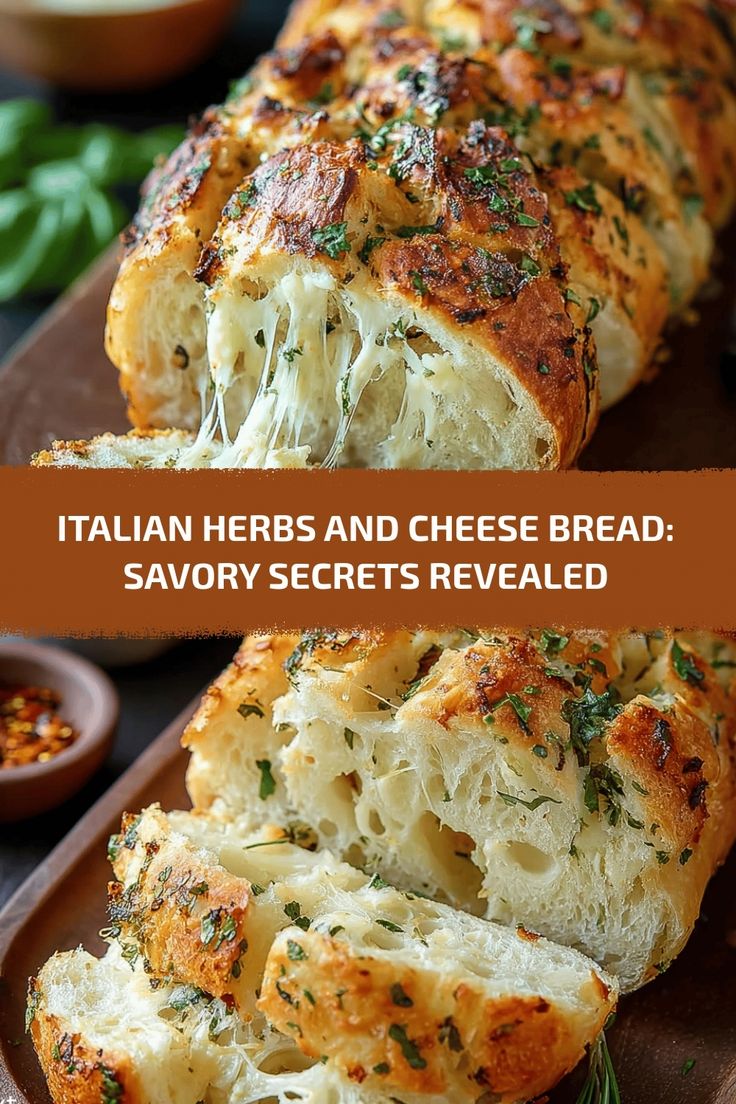

Ingredients
- 1/2 cup margarine, softened
- 1/2 cup mayonnaise
- 6 scallions and tops, finely chopped
- 1 (4 ounce) can chopped ripe olives
- 1/2 teaspoon garlic powder
- 2 cups shredded mozzarella cheese
- 1 loaf French bread, sliced lengthwise
Instructions
- In a medium mixing bowl, blend margarine with mayonnaise.
- Add onions, olives, garlic powder and cheese. Mix well.
- Spread 1/2 mixture on each slice of bread.
- Bake at 350 degrees F for 15 to 20 minutes on a cookie sheet or until cheese melts.
- Cool slightly; slice and serve.
Wife Abandoned Good Husband In His Darkest Hour, Now He’s Abandoning Her Permanently With Divorce
Stop Winking at Me
Written in response to: “Center your story on a character who’s about to give up, or who realizes that success feels unexpectedly empty.“
Daniel Rogers
Freena is a believer. She honestly sees it as a great honor. She’d volunteer if the gods allowed women to be a sacrifice.
After everyone quit trying to persuade me, I had some time to think. What if the unmoving storm cloud isn’t a ship using a chameleon shield? What if the Ladder God is some monster that loves to eat ladder-climbing idiots? Or what if it’s a hostile race that loves to shoot ladder-climbing idiots? There’s no way of knowing until I climb and find out.
Or is there? Bob met the gods. Could he shed some light on them?
I found Bob sweeping his room. He stopped and asked, “What’s on your mind?”
“Am I that obvious?” I said.
Bob motioned for me to take a seat. “You wear your emotions like I wear this robe. It doesn’t take a shaman to see that you are wrestling with a decision.”
“Alora told you I was coming? Didn’t she?”
Bob hit his forehead, “I forgot you’re a god.”
“Speaking of gods. You said one of them gave you your name. Do you remember what he looked like?”
“You know better than I do. You are one.” Bob laughed.
“There are many types of gods. Would you say the god you saw looked similar to me?”
“Yes. Very similar, except for his clothing. I’ve never seen anything like it.”
At least I know the Ladder God isn’t a monster. I still don’t know if they’ll want me climbing their ladder, but I bet good money they won’t eat me. Of course, they might shoot me.
“When did this god arrive?” I asked, trying to get a better understanding of who I might meet up there.
“The cloud showed up over fifteen years ago. At that time, I was studying Kull Toon, a god who demanded a blood sacrifice. I really didn’t want to plunge a knife into people, but I wanted to be a Shaman. There’s always something you won’t like about a job.”
“But when the Ladder God showed up, we all decided to worship him instead. Once I graduated, I quickly advanced in the ranks and became a Shaman. Now all I have to do is escort the sacrifice to the ladder – no knife plunging.”
“What happens to the sacrifice?”
“I’m not sure. I like to think they are having a good time, but I suppose the gods could have killed them. They do love to do that. But hey, at least I don’t have to.”
“What if I volunteered? Would you escort me?”
“Whoa, whoa. It’s not that easy. You must compete for the honor. Only the most worthy will ascend the ladder.”
Bob went on describing the Pick-a-Sacrifice tournament and the challenges I’d face. Only seventy-seven hopefuls could compete each year. My ears perked up. The more he described the obstacles, the more at ease I became. My chances of making it into the group of seventy-seven looked unlikely. This tournament wasn’t made for galactic surveyors. The way I see it, I really don’t stand a chance.
Bob could see me relax. “Your emotions betray you. I can see you think you’ve already won. Well, I can’t say anything. You are a god after all, so this must seem like child’s play to you.”
“You caught me, Bob. Where do I sign up?”
Bob took me through the ritual to put my name into the hat, which involved goat’s milk, spiderwebs, and chocolate. I won’t go into details, but I’ll say that these people eat some unusual things. After entering, I was sent back to my room to meditate.
Alora found me in my room.
“So, you entered. Good. Now, I hope you’re selected. How are the seventy-seven chosen? Did Bob say?”
“He didn’t say anything, but he winked at me a lot while I was going through the ritual.”
“Maybe that was part of the ritual, or maybe it was Bob being Bob.”
“He is a bit odd, but I feel like he was trying to communicate.” I shook my head. “I don’t know, maybe you’re right.”
“Well, it doesn’t matter. You either will or you won’t. If you don’t, we need to figure out how to obtain the dylanium some other way. Do you have any ideas?”
I shook my head.
“Then let’s hope you get picked.”
At sunrise, I walked out into the temple grounds, like Grinfo instructed me. When I arrived, I found hundreds already there. I smiled secretly inside. There was no way I’d make it.
The temple doors opened, and the Shaman walked out. The crowd bowed. I caught myself in the nick of time and joined them.
Grinfo walked out behind the Shaman, holding a scroll. He opened it and began to read.
“The great Shaman in his holy wisdom has selected the Seventy-seven.”
I groaned inside. Bob is the judge? His winking came to mind.
“When I read your name, stand under the Righteous Tree and wait for further instructions. If I don’t read your name, please exit the temple grounds. Perhaps you’ll do better next year.”
Grinfo read, and I tensed with each name called out.
Why did he wink at me? The question circled in my mind.
“Drew Williams!” Grinfo said with a smile.
That’s why he winked at me.
I walked under the Righteous Tree, wishing he hadn’t winked at me. I’ve got a bad feeling about this. But I still have seventy-six chances of not making it, as long as Bob stays out of it. Now, what are the chances of that?
Pictures





















Teen Meets 41 Year Old Man Online — Days Later She Goes Missing
What are some interesting facts?
- A one-way trip on the Trans-Siberian Railway involves crossing 3,901 bridges
2. Japan has one vending machine for every 40 people.
3. A shrimp’s heart is in its head.
4. It is impossible for most people to lick their own elbow.
5. A shark is the only known fish that can blink with both eyes.
6. The “sixth sick sheik’s sixth sheep’s sick” is believed to be the toughest tongue twister in the English language.
7. Neil Armstrong’s hair was sold in 2004 for $3,000.
8. All mammals get goosebumps.
9. Ancient Egyptians used dead mice to ease toothache.
10. The extinct colossus penguin could be as tall as LeBron James.
(Image source: google)
Please check out my other answers if you liked this one
Sir Whiskerton and the Secret Baby Scandal
Ah, dear reader, you’ve returned once again to join me, Sir Whiskerton, in another delightfully absurd adventure! Today’s tale involves clandestine clutches, a milkman with a license to thrill, and a hen whose flair for the dramatic could put a daytime television star to shame. It was a story of mistaken identity, high-stakes espionage, and the perils of jumping to conclusions. So, fluff your feathers and prepare for the shell-shocking tale of The Secret Baby Scandal.
The Inciting Clutch
It began, as most of Doris the Hen’s dramas do, with a well-intentioned but catastrophic misunderstanding. I was enjoying a morning doze atop the garden wall when I witnessed the scene unfold.
Millie the Milkmaid, a cheerful soul with a heart of gold and a basket of fresh eggs, was walking towards the farmhouse. At the same time, Ian Fleming, the farm’s new and intensely serious milkman, was striding from the opposite direction, his jaw set, his eyes hidden behind mirrored sunglasses, carrying a stainless-steel thermos as if it contained the launch codes for a nuclear device.
Doris, who had been holding a clandestine meeting with Ethel the Turkey about the alarming lack of intrigue in the chicken coop, saw them converge. Her beady eyes widened. She saw Millie, cradling the basket of eggs. She saw Ian, a mysterious, brooding stranger. Her overactive imagination did the rest.
She let out a gasp that could curdle milk. “Millie! You kept the eggs a secret from the father!” she squawked, flapping into the space between them. “The custody battle will tear this farm apart! Which man will claim the yolky inheritance?”
Millie blinked, holding the basket out. “Doris, these are literally just eggs. I need to take them to the kitchen.”
But Doris was already in her element. She produced a tiny, self-made handkerchief from beneath her wing and began to sob into it theatrically.
The Paternity Test
Ian Fleming, a man who viewed the world through the lens of a spy thriller, assessed the situation with cold, hard logic. He saw the “assets” (the eggs). He saw the “unsecured civilian” (Millie). He saw the “unstable informant” (a sobbing Doris). His training kicked in.
“The package is unstable!” he barked, his voice a low, urgent monotone. He gestured to his thermos. “I have the paternity test kit right here! But the environment is not secure! I knew I should have worn my blast-proof overalls!”
“Blast-proof overalls!” echoed Ditto, who had appeared, as he often does, at the first sign of chaos.
Doris, misunderstanding completely, wailed, “He wants a test! The scandal!”
In a misguided attempt to resolve the drama, Doris then began to chase Ian Fleming around the barn, flapping and shouting, “Claim your offspring, you rogue! Do right by Millie!”
The other chickens, believing this was a thrilling new game, joined the chase. In the confusion, one of them, a particularly dim hen named Mabel, decided Ian’s large, rubber boot looked like a splendid, if oddly shaped, nesting spot and attempted to hatch it.
The Dramatic Resolution
The farm was in an uproar. Millie was trying to explain, Ian was performing evasive maneuvers, and Doris was demanding the two share a dramatic kiss to “prove their love and the eggs’ legitimacy.”
It was clear this required a feline of my particular talents. I leapt down from the wall and landed gracefully in their path.
“That is quite enough,” I declared, my voice cutting through the squawking. “Doris, you have constructed a narrative of such breathtaking absurdity that even Porkchop would find it far-fetched. Millie, if you would?”
Millie, with infinite patience, walked over to the distraught Doris. She gently placed a single, warm, brown egg in front of her. “The only drama here, Doris,” she said softly, “is how delicious this will be when it’s poached on toast.”
Doris looked from the egg, to Millie’s kind face, to Ian Fleming who was now cautiously scanning the roof for snipers. The fight went out of her.
“Oh,” she said, her feathers settling. She looked at the egg. “A poached godchild.”
She had, in her mind, been promoted from scandalized observer to Secret Godmother. It was a compromise we could all live with.
The Moral of the Story
As peace returned, Ian Fleming tipped his hat, muttered “The asset has been neutralized,” and continued his milk route with the thermos still securely in his grasp. Millie finally made it to the kitchen. And Doris sat proudly on her new, honorary egg.
The moral of the story, dear reader, is this: Assumptions can turn simple facts into overwhelming drama. Emotional intelligence means knowing when to pause the narrative. Not every basket of eggs is a secret love-child, and not every milkman is an international man of mystery—even if he desperately wants to be.
Sometimes, an egg is just an egg. And sometimes, a boot is just a boot, no matter how hard you try to hatch it.
The End.
Why could Concorde maintain Mach+ speeds for long periods of time during transoceanic flight, while most fighter jets can only maintain supersonic flight for short periods of time?
They say a picture is worth a thousand words:
Here is the Concorde escorted by four French fighters.
Looking at them, it almost appears as if one was designed to be an extremely fast airliner for point-to-point flights and the other a highly maneuverable “interceptor” designed to operate at limited ranges.
Let me explain: since the wings contain most of the fuel, those enormous wings of the Concorde (compared to fighter jets) allow it to carry enough fuel to cross an ocean. They certainly won’t be able to maneuver at 2G acceleration, and the extra weight will severely hinder acceleration and maneuverability, but these are things no first-class passenger paid for on their five-figure ticket to fly from Europe to the United States. A military pilot, on the other hand, would gladly trade all these limitations for improved performance, with the certainty of being able to return to base or refuel in flight with relative ease.
Second, since the list of “fighter jets” is quite extensive and I’m not an aerospace engineer, I can’t speak to the flight windows or peak efficiency of fighters. The Concorde was designed to fly at an altitude of 60,000 feet, about 50% higher than other passenger aircraft. The engines and aerodynamics were all designed for similar forward altitudes. Atmospheric drag is much lower at this altitude, and as a result, the aircraft moves forward more easily than at conventional altitudes.
This is the only known photo of Concorde flying at supersonic speed. It was taken from inside a Tornado at full speed.
5.4K views
Why are Tesla’s sales in China at its lowest point in three years?
Because Tesla got lazy.
Compared with 3 years ago, we now have Chinese EVs whose headlights can curve or project images.
We now have Chinese EVs that have AR windshields that let you do simulated racing with others.
Or Chinese EVs where the front row can turn around and play poker with the second row.
Or Chinese EVs that can float in water.
Or Chinese EVs that carry their own selfie drones.
Or Chinese EVs who’s got a cabin that can take flight.
But what did Tesla do in the past 3 years?
A face lift.
28.3K views
Routine Traffic Stop Finds Missing 13 Year Old Girl
https://youtu.be/z6Bov23bQj4
Which true crime case disturbs you the most?
This one definitely ranks up there for me….
This is one of those stories where you think you know what’s going on but really you have no idea. A diabolical plot of sorts that investigators have tried explaining and is still being disputed.
In Erie, PA 2003, a pizza delivery man named Brian Wells entered a bank with a note demanding $250,000 within 15 minutes or his collar bomb would explode. He was also armed with a cane that acted as a shotgun. The teller wasn’t able to get the money in a timely manner, so she gave him just over $8,000.
As he left the bank, somebody noticed him acting sus and called 911. As police swarmed the area, they arrested him and sat him on the ground, cleared the area to protect themselves and others while waiting for the bomb squad to arrive.
The bomb soon exploded and killed Mr. Wells blowing a hole in his chest. They had to decapitate the man’s head so they could get the collar off for the investigation.
This is where things get really disturbing. Police would soon uncover a twisted plot involving several people, and a scavenger hunt for keys, that he was involved in during the bank robbery.
According to the investigation, after receiving an order for a pizza to be delivered, he arrived at a TV tower to deliver said pizza. Differing accounts suggest there was a struggle to get the collar on him – to also him being a willing participant, thinking the bomb was fake and just being in it for the money.
Police would also search Mr. Wells car and find several pages of handwritten instructions for him to follow while robbing the bank. This also included the scavenger hunt leading him to different keys for defusing said bomb.
Investigators would later travel the same route on the scavenger hunt as Wells was supposed to and found out it could not be done in time, implying he was doomed from the start.
As a result of another murder that would cause her arrest and conviction in a separate case, the mastermind Marjorie Diehl-Armstrong would later meet with investigators to discuss the Wells case in order to be transferred to a different prison.
Marjorie Diehl-Armstrong
Investigators believe she did it to fund a hit on her father for his inheritance. Wells was considered a co-conspirator in the plot from the beginning, but his family disputes this.
She was eventually convicted of armed bank robbery, conspiracy to commit armed bank robbery, and using a destructive device in a crime. She died in 2017. One man who was suspected of being involved in the plot had died before the indictments were handed down, another man pled guilty to conspiring to rob a bank and aiding and abetting.
For me, it’s the attention to detail of Diehl-Armstrong that stick out most. Absolutely diabolical and disturbing of a manipulative and cunning woman hell-bent on getting her inheritance.
HILARIOUS Pulp Fiction Foot Massage Scene Reactions 👣 Pulp Fiction (1994) Movie Reaction Compilation
The Next Step in Humanity
Written in response to: “Center your story on the moment a character realizes their (or someone else’s) intentions aren’t so good or noble.“
Mia Sandoval
Maxine Thompson, a junior at the University of Chicago sits at her desk awaiting a result from her diabetes trial.
She had been handpicked for a Molecular Engineering internship and was taken under the wing of one of HealthBrite’s best scientists.
The legendary Dr. Dwight Thomas.
His stem cell research led to the creation of a new drug called Areszoral, intended to temporarily strengthen weak heart muscles in patients awaiting a heart transplant.
A brilliant breakthrough in regenerative medicine.
But strange rumors began about Dr. Thomas and the trials, unethical and achieving no results.
But this was quickly debunked by medical experts who had investigated HealthBrite and its projects.
It was a silly stream of rumors anyway. Who would go out of there to harm people. Especially Dr. Thomas, who came from nothing and suffered from poor heart health his whole life, became a doctor to help develop accessible, groundbreaking medicine.
As Health Brite’s slogan goes: a brighter future for all.
Maxine had no business studying under him.
Her name screamed nepotism. Her father, Dr. Vincent Thompson, was a biomedical engineer overseeing HealthBrite’s biggest regenerative projects in Europe’s medical facilities. It wasn’t anything new for people to see past her abilities but still expect great things just because she was her father’ daughter.
There had to have been better medical students than her.
Regardless, she was here and they weren’t. Nepotism is for the weak, she reminded herself.
She fiddled with her name tag as her monitor finally loaded. She sighed, expecting to see the same results as before: Glucose levels were abysmal and her drug hadn’t worked.
Instead, her heart nearly dropped to her stomach when the monitor showed the opposite.
Her drug was a success.
⛧°。 ⋆༺☣︎༻⋆。 °⛧
DR. THOMAS’S OFFICE
“Of course, these are mice,” Maxine tried to explain. “The anatomy of a mouse functions completely different from that of a human. Perhaps, this can be our sign to move on to human trials. If we are allowed to.”
Dr. Thomas stared at the mouse in the plastic cage and back at Maxine’s monitor, “Are you punking me, Ms. Thompson?”
“No, sir,” she muttered. Dr. Thomas simply stared at the mouse and Maxine figured she’d explain everything once again.
She swiveled her monitor toward him. Her fingers trembled on the mouse. “Look…these are the latest readings. Mouse A through G…Glucose is normal. Insulin levels, too. And it’s been six weeks with no injections.”
Thomas leaned closer, eyebrows lifting as the data scrolled across the screen. “Six weeks? Did you check C-peptide?”
“Tripled,” Maxine replied. “Uh, and the Beta-cell function looks fully restored.”
Thomas froze, his voice dropping to a low whisper. “You’re saying the pancreas is making insulin again?”
“That’s what the data says,” she murmured. “The drug is working, Dr. Thomas. The mice are functionally cured.”
Thomas ran a hand through his hair and began pacing, the rubber soles of his shoes squeaking on the tile. “We need replication, controls, off-target analysis… If this holds, it’s…”
“A cure,” she finished, barely above a breath.
He stopped and met her eyes, the weight of possibility sharpening his gaze. “I can’t believe a medical student is all it took to bring human evolution to the next level.”
A moment passed.
Maxine awkwardly pursed her lips. “Sir?”
“I don’t have anything else to say but…”
He adjusted his coat, grinning. “How would you like to be promoted to Lead Associate on a newly approved regenerative trial?
Great—just like her father.
Maxine blinked. “Lead…associate?”
“Yes.”
“I hope I’m not being promoted because my father is in this industry, Dr. Thomas. I’d like to have earned my spot…”
“Ms. Thompson.” Dr. Thomas grinned then pulled up a nearby chair. He took a seat and cleared his throat.
“You grew up around medicine, science, and physics. Your father is only a small factor in your growing success. Others may say otherwise but people forget that a name is only just a word. Your work has to speak for itself. And I’d say it has over these past few months.”
Maxine nodded, following along.
“This project has multiple operations running out of Europe where your father oversees the…trials and you would be stationed here in Chicago., where research and data is collected, studied, and the ‘product’ is manufactured and transferred to other facilities. Frankly, I think you would do well here. Away from the confines of nepotism.”
“But I’m just an intern.”
Thomas’s grin widened. “What you’ve accomplished is bigger than anything our senior teams have produced in five years. HealthBrite rewards results, Ms. Thompson.”
Her heart kicked against her ribs. Lead associate. That was the kind of position that came with a private lab, a security clearance, and direct access to HealthBrite’s upper administration.
“But aren’t there protocols? Paperwork? Surely we must inform the higher ups?”
He stepped closer, lowering his voice until she could feel the warmth of his breath. Silly girl. Why was this her biggest worry?
“I don’t think you’re understanding me. The paperwork is the least of our worries. Diabetes is only the beginning. If this drug…your drug rewrites autoimmune memory the way the mice suggest…we could reprogram anything.”
Maxine’s mouth went dry. “Anything?”
“Cancer. Neurodegeneration. Aging itself. We’re talking about rewriting the blueprint of life.” He gave a soft chuckle. “Imagine what HealthBrite and those who invest in it can do with that.”
Just HealthBrite and its investors? What about the rest of the world as promised?
“I thought this was about curing diabetes, sir,” Maxine said carefully.
Dr. Thomas’s smile fades. “Let me show you something.”
⛧°。 ⋆༺☣︎༻⋆。 °⛧
Dr. Thomas swiped his ID card. The small screen flashed green, and the freezer door clicked open. Cold air spilled out as they stepped inside.
Rows of large freezer containers lined the walls, each shelf filled with small tubes suspended in a bluish-green liquid.
Maxine’s breath fogged. “Is this…?”
“Areszoral,” Dr. Thomas said, approaching one of the units. “In liquid form. One injection per month for twelve months shows significant improvement in heart health. HealthBrite will be sending a new round funding and we are to to begin full-scale production and distribution soon.”
“That’s incredible,” Maxine said in awe. “The trial results must have been outstanding for it to move this fast.”
Dr. Thomas cleared his throat, pressing a hand briefly to his chest before straightening with pride. “Exceeded expectations. As you have.”
Maxine smiled. “Thank you, sir.”
“Soon,” he continued, “this lab will be under your supervision. You and your associates will lead the next generation of projects.”
“That’s the goal,” she said.
“Indeed.”
He began pacing toward another door, his voice softening. “I assume the goal includes helping those in need. I mean, you swore an oath to it even in med school.”
“That’s all I’ve ever wanted.”
He gave a low, humorless chuckle. “A greedy but powerful trait: ambition. Unfortunately, it can’t exist without funding. Money is the engine that keeps this country running… and the reason this company still stands. Without it, we’d just be actors in lab coats, pretending to save lives.”
Maxine tilted her head. “What are you saying?”
He turned to face her. “I’m saying the unfortunate truth is that everyone can’t be cured.”
“Why not?”
Dr. Thomas exhaled slowly. “Before I answer that, I need to know how committed you are…to the medicine, the science…” He stepped closer, his gaze heavy. “…and to me.”
Maxine’s pulse quickened. “I’ve looked up to you since I was a little girl, sir.”
He smiled faintly. “Then let me give you the cold, hard truth, Ms. Thompson. Humanity as we know it is imperfect. Death and disease…”he pulled back his coat and the sweater beneath it, revealing a patch of skin marked by a cluster of injection sites. “…are insults to those of us who prove stronger than the rest, mentally and physically.”
Maxine’s eyes widened. “You… experimented on yourself?”
He nodded, pride gleaming in his eyes. “If I’m willing to volunteer, imagine how many people would pay for the chance to erase the flaws in their DNA. The powerful are desperate to perfect themselves. They’ll drain their fortunes for it.”
He tapped the cold metal door beside him. “Our investors thrive on scarcity and when they thrive, so do we.”
He stepped closer again, his voice rising with fervor, spit catching in the fluorescent light. “So tell me, Ms. Thompson, if we cured everyone’s imperfections,” He leaned in, his breath cold against her ear. “…where would that leave us?”
Before she could respond, the freezer door hissed open. Another doctor stepped in, eyes downcast. “Dr. Thomas, Director Hahn is looking for you.”
Dr. Thomas glanced back at Maxine, his tone softening again. “Welcome to the future. Your father will be proud.”
Maxine forced a nod, the cold from the freezer biting through her coat but unable to numb the chill creeping up her spine.
For the first time that night, the miracle she’d created no longer looked like hope but rather a doorway she wasn’t sure she wanted to open.
Is there something that you can shoot on a fighter jet while it is sitting on the ground to prevent it from taking off? Ex. Could a resistance fighter put a few .223 rounds through the glass canopy and have the plane deemed unable to fly?
I was in the army and not an avaiator of anysort but am interestingly well equipped to answer this question.
We actutually trained on disabling aircraft on the ground with small arms and the answer is actually super nuanced.
It is very easy to disable an aircaft on the ground with even small arms, They are rarely armored but it depends on what your objective is and what you are armed with.
You specified .223 which is good as thats what most of us carried but that also has limitations.
Do you want to make it expensive to repair or take longer?
Engines are expensive, but have issues, A good maintaince crew can swap an engine in a few hours on most modern fighters. So unless you can damage lots of engines on lots of planes, damaging the engine won’t put a fighter out of commission very long unless the enemy has poor logistics. Jet engine are actually pretty tough, they have to handle massive teperatures and pressures so .223 in a side shot is problably not even going to dent the casing, you are likely only going to damage external accessories. Best way is to shoot it through the intake and even then, the compressor blades are tough, one round might not do much. if you have an anti material rifle in .50 with you, that changes things! The “Hot side is actually really tough and .223 might not do the job unless you can mag dump into it. Still better to do that on the “Cold” Side
Fuel systems are a way to put an aircaft out for a long time but requires knowing the aircraft well. Putting a few holes in the main tanks will require the aircaft to be down for a long time to replace.
.223 is stil a bad choice though, molotovs (or incidiaries) are your friend when putting an aircraft down forever.
Coccoi e Corcoriga
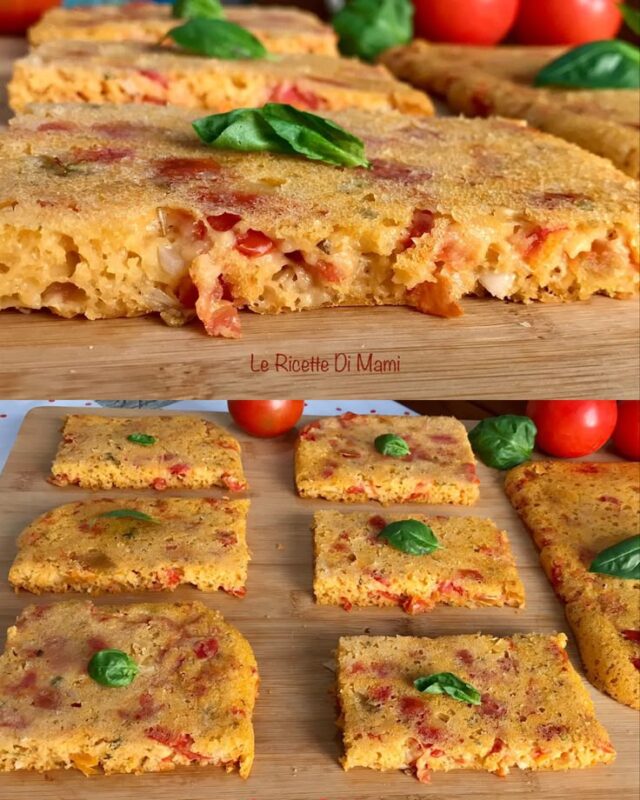
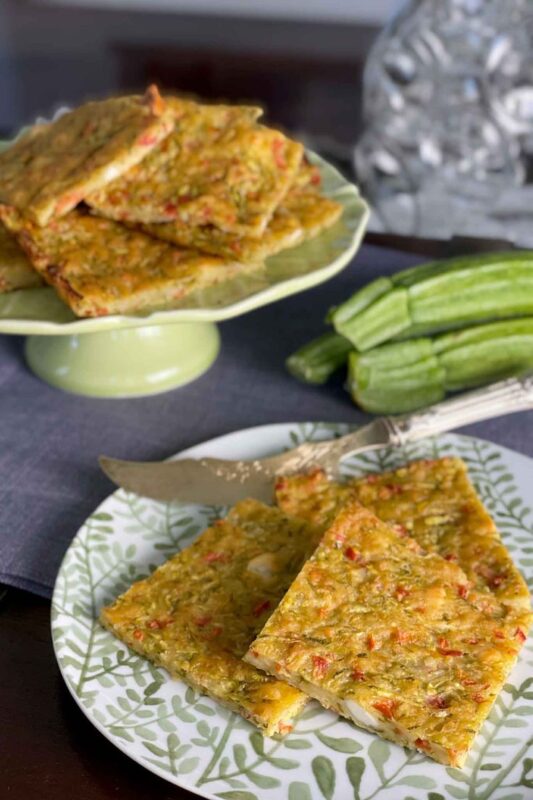
Coccoi e Corcoriga is a Sardinian squash flatbread.
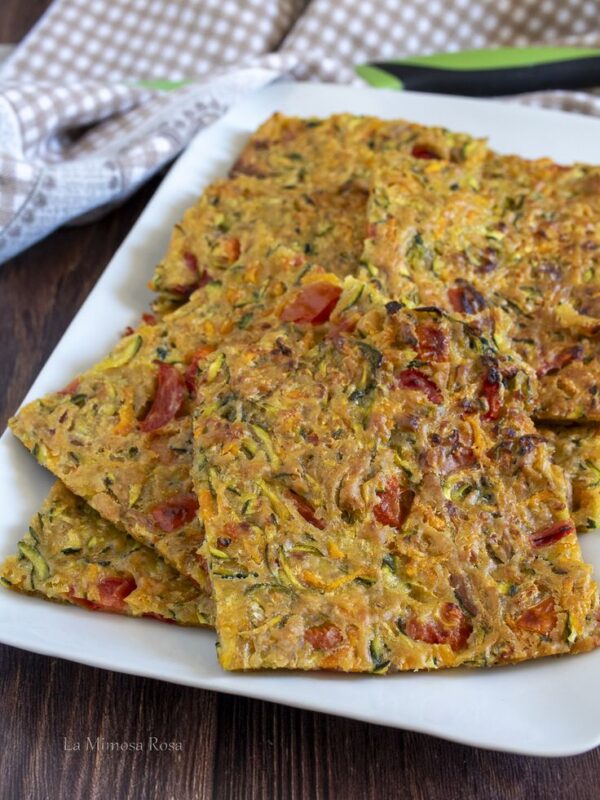
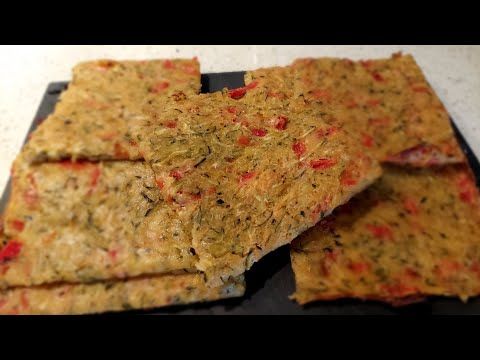
Bake: 45 min – Yield: 1 large flatbread
Equipment
- Cheese grater
- Mixing bowl
- Spatula
- Large baking sheet
- Parchment paper
- Basting brush
- 11 x 17 inch jellyroll pan
Ingredients
- 1/2 large butternut squash, peeled and seeds removed
- 1 large zucchini
- 1/2 large onion
- 4 or 5 fresh basil leaves, torn
- Chopped parsley (about 1 tablespoon or to taste)
- 1/2 cup grated Parmigiano-Reggiano cheese, or to taste
- 3 tablespoons tomato paste
- 2 tablespoons extra virgin olive oil + extra for drizzling
- Salt
- Freshly ground black pepper
- About 1 2/3 cups all-purpose flour, adjusted as needed
Instructions
- Grate the squash, zucchini and onion with a coarse cheese grater. Combine the vegetables in a large mixing bowl. Add a few torn basil leaves and the chopped parsley, cheese, tomato paste and olive oil. Season with salt and pepper to taste. Mix all together wooden spoon.
- Heat oven to 395 degrees F.
- Gradually mix flour into the vegetables until the mixture becomes thick and sticky, but not wet. It should be damp enough to hold together but you shouldn’t see liquid when you press down with a spatula.
- Line an 11 x 17 inch jellyroll pan with parchment paper. Brush the paper lightly with olive oil, then spread the veggie mix evenly so that it covers the pan from corner to corner. Drizzle a little more olive oil over the the flatbread and bake it until it becomes crispy on top. The cook time will vary depending on how damp your “dough” is, but it can take up to 45 minutes.
- Let the flatbread cool for a few minutes, then cut into square pieces and serve warm or at room temperature.
Is it true that you can never please everyone?
In the United States (particularly in Dallas) in the 1940s, there was a trend of so-called “carhops”. These were women in hot pants or miniskirts serving customers in restaurants and drive-in cinemas.
The customers loved them and even the waitresses themselves enjoyed working there because they were suddenly getting really high tips.
It could be as much as $25 a week, which was a lot of money at the time.
But considering what is politically correct today..
The usual ” village rulers ” sometimes ran to the police to report these “indecencies”.
There were also, as today, women who were upset because, in their opinion, women were ” objectified .”
A court even assessed whether there was a risk to customers’ health due to the permissiveness of the clothing.
But no one put an end to this shameful activity!
But in the end one complaint made something change.
A woman has publicly complained that she always has to look at women’s legs when she goes to the movies.
He wanted to see men’s legs.
This suggestion was immediately accepted and implemented by the drive-in owners:
And so the first male carhops appeared , which women were happy about, but also certainly some gays who now had a new place to go with pleasure.
But now there were new complaints…
Those of former carhops who complained that men were stealing their jobs.
You can never please everyone.
True Stories David Byrne, 1986
This is a really BIG treat for you all.
This is a cult classic from 1986, and one of my personal favorites. I think you aill all love it.