
.
Tied to the bottom rung of the ladder is a tiny, clumsily sewn flag—a scrap of red cloth with a bent butter knife and a few dirty pigeon feathers tied to it

Quote from congjing yu on June 3, 2026, 5:01 amI haven't been putting up a lot of history posts.
Sorry.
I will make up for it today...
Fantastic New Digital Map Adds 100,000 km to Roman Road Network
Revolutionary research reveals the most comprehensive digital atlas of Roman roads ever created, dramatically expanding our understanding of the Empire's vast infrastructure. The new dataset, named Itiner-e, increases the known road network by over 100,000 kilometers and provides unprecedented detail about transportation routes that connected millions across three continents, now available for anyone to explore online.
At its zenith in the second century AD, the Roman Empire encompassed more than 55 million inhabitants stretching from Britain to Egypt and Syria. While historians have long recognized that an extensive network of roads facilitated the Empire's development and maintenance, previous digitizations remained incomplete and lacked the resolution needed for detailed study. The new research, led by Tom Brughmans from Aarhus University, Pau de Soto from Universitat Autònoma de Barcelona, and Adam Pažout, and published in Nature Scientific Data, addresses these limitations through meticulous compilation of archaeological and historical evidence combined with satellite imagery and topographic mapping.
Revolutionary Dataset Transforms Understanding of Imperial Infrastructure
The Itiner-e project represents years of collaborative work that emerged from what Brughmans describes as "enormous frustration" with the state of Roman road data.
"It's like the most enigmatic topic in Roman archaeology," he told New Scientist. "We even have proverbs that say, 'All roads lead to Rome.' So why on Earth can't I download all the Roman roads? Where are they?"
This fundamental question drove the team to create what they call the first open dataset of its kind, combining archaeological records, topographic maps, and satellite imagery to produce the most detailed openly accessible digitization of the Empire's road system.
According to the research published in Scientific Data, the dataset encompasses 299,171 kilometers of roads - a substantial increase from the previous estimate of 188,555 kilometers provided by the Barrington Atlas of the Greek and Roman World. This nearly 60 per cent expansion in documented road coverage represents not merely the discovery of new routes, but a fundamental reassessment of how Roman engineering adapted to geographical realities across the vast imperial territory. The researchers gave each stretch of road a confidence rating based on the quality of the source, revealing crucial gaps in current knowledge.
The Roman road network as mapped by the Itiner-e project, showing the vast extent of infrastructure connecting the ancient empire. (Itiner-e)
Debunking Myths About Roman Roads
The research team attributes this dramatic increase to several factors, including enhanced coverage of roads in the Iberian Peninsula, Greece, and North Africa. But critically, they also adapted previously proposed road routes to fit geographical realities. Although Roman roads are famous for being straight, Catherine Fletcher at Manchester Metropolitan University, who wasn't involved in the study, notes that this is actually a myth.
"Straight wasn't always cheap or practical, especially through mountainous terrain," she explained to New Scientist. "Often, where there was a pre-existing route in place, the Romans would adapt it rather than build anew."
This methodological shift proved particularly important in mountainous regions, where the team documented winding paths that followed natural terrain rather than forcing straight-line connections between settlements. By allowing roads crossing mountains to follow realistic passes and valleys, the dataset more accurately reflects how Romans actually moved through their empire. The digital atlas now reveals 14,769 distinct road sections spanning almost four million square kilometers, with each segment uniquely citable through a URI (Uniform Resource Identifier) that links to nearby ancient places in the Pleiades gazetteer of ancient places.
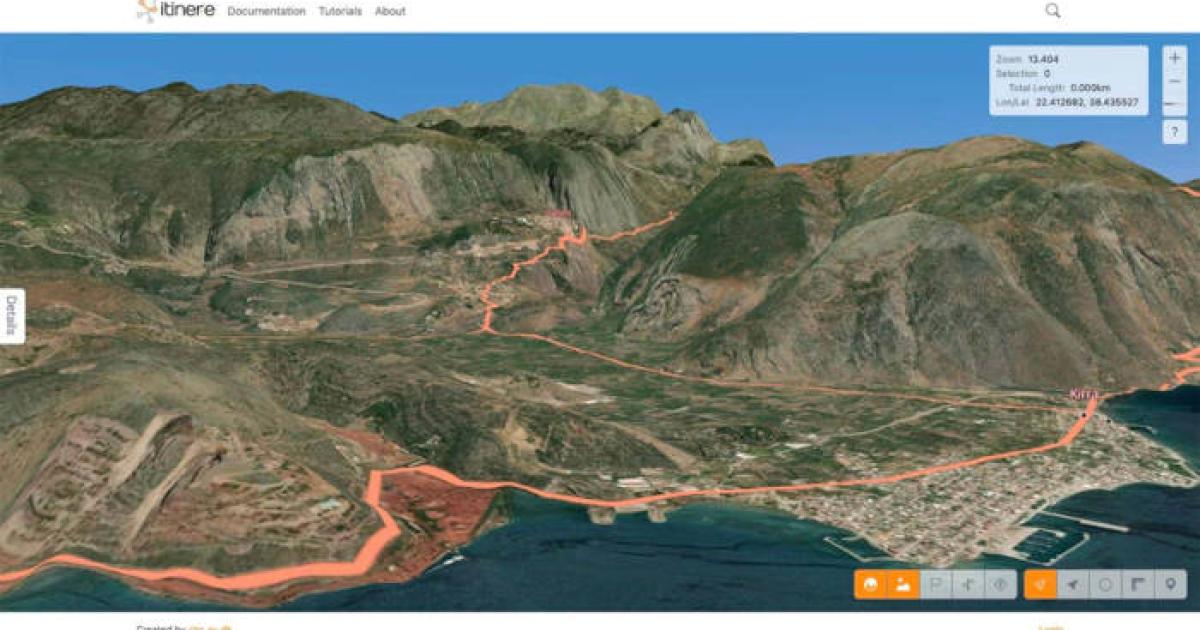
Screenshot of Itiner-e.org, a linked open data gazetteer for managing, querying, editing and expanding data about ancient roads. (Brughmans et al/ Nature Scientific Data)
Revealing the Gaps in Ancient Knowledge
Itiner-e comprises 103,478 kilometers (34.6%) classified as main roads and 195,693 kilometers (65.4%) as secondary roads. The main roads - those documented via milestones or historical sources like the Antonine Itinerary and Tabula Peutingeriana - formed the core of the Roman administrative system. These major arteries connected provincial capitals and military installations, facilitating the movement of armies, officials, and information across the empire. The researchers note this number is unlikely to increase significantly, since these were the most documented and studied Roman roads.
Perhaps most revelatory is what the dataset discloses about current knowledge gaps. The authors report that the precise locations of only 2.7% of the roads are known with certainty, while 89.8% are less precisely known based on historical sources and topographic analysis, and 7.4% remain hypothesized. This honest assessment of data quality distinguishes Itiner-e from previous mapping efforts and establishes a foundation for ongoing refinement. For Brughmans, this reflects how difficult it can be to secure funding to excavate entire Roman roads, meaning much work simply hasn't been done. Major roads have also been built over many times throughout history, making it difficult to uncover the original path.
Comparison of DARMC (in orange) and Itiner-e (in black) datasets, showing an example from France of a region with increased coverage of roads. Brughmans et al/ Nature Scientific Data)
Future Research Horizons and Historical Impact
The openly accessible dataset available at itiner-e.org represents a collaborative effort drawing on contributions from archaeologists, historians, and geographers across multiple institutions. The work was performed between 2020 and 2024, with the MINERVA project leading digitization in North Africa, the Near East, Asia Minor, and Southeastern Europe, while the Viator-e project focused on the Western Roman Empire. By making the data freely available in linked open data format, the research team enables scholars worldwide to build upon their work, correct errors, and add newly discovered routes as excavations continue.
Improved knowledge of the Roman road network can potentially transform understanding of highly impactful events in European history. "The emergence of early Christianity, mass migration and continent-wide pandemics are all phenomena that were influenced by the Roman road system," says Brughmans. The dataset could prove invaluable for investigating numerous aspects of Roman society, from connectivity patterns between regions that enabled administration of far-flung provinces, to migration routes that spread Roman culture and technology, to disease transmission pathways that periodically devastated Roman cities.
Despite their monumental importance to the empire's success, Fletcher notes that roads often get overlooked because they aren't as glamorous as amphitheaters and gladiators. She references the famous Monty Python sketch:
"They're talking about what the Romans did for us, and they go, 'And the roads!' 'Well, obviously the roads! The roads go without saying.'"
Yet it was precisely these roads - many still visible today or lying beneath modern highways - that made Roman civilization possible, connecting 55 million people across an area stretching from Hadrian's Wall to the deserts of North Africa.
Top image: Roman roads winding through mountain passes leading to Delphi in ancient Greece Source: Itiner-e/New Scientist
What historical military technology, once considered cutting-edge, became obsolete far more quickly than its designers likely imagined?
From about 1780 to 1814 the Swedish military was almost constantly at war with France, England, Russia, Spain, Denmark, the Ottoman Empire, Italy, or some combination of these. With the exception of Russia, however, all of these wars involved opponents who could not simply walk to Sweden. Not quickly, anyway.
And so the Swedes came to appreciate the importance of a strong navy.
At the time, ships were made of wood and powered by the wind. The best ships were made of oak and they required tall, mature trees with straight trunks to serve as masts. For much of British naval history, the American colonies with their old-growth forests had provided the necessary timber but Sweden lacked meaningful overseas colonies with which to augment her navy.
So it was that agents of the Swedish Crown came to the island of Visingsö in the 1830s, searching for a place to plant an oak forest. The climate and conditions on the island were ideal for the long, slow growth of oak trees which would grow straight and true, securing the future of the Swedish Navy and the independence of the Swedish people.
Over the course of the next decade, 300,000 oak trees were planted on the island, interspersed with elms, ash, and other species to force the desired growth patterns to produce straight, tall, seaworthy lumber. And the Swedish Navy waited.
Across the Atlantic, war broke out between the American states and, in the spring of 1862, two unusual ships crossed paths in the brackish waters of the Chesapeake Bay. The Union Ship USS Monitor and the Confederate ship CSS Virginia were ironclads - the first of a new generation of ships with metal armor and a steam powerplant.
But Ironclads did not develop overnight. The first ships with wrought iron armor took to sea in the 1830s. Explosive artillery shells heralded the end of the wooden hulled “ship of the line” in the 1840s. And the French were experimenting with steam-powered battleships by the 1850s. It was the combination of these technologies in the Ironclad, however, which serves as the demarcation between the age of sail and the age of steam.
Eventually the Ironclad was eclipsed by the Pre-Dreadnought which gave way to the Dreadnought. The Dreadnought was followed by the Treaty Battleships of the 1920s, the Fast Battleships of the 1930s, and the Super Battleships which came to characterize World War 2 before the role of the armored gunboat was largely put to rest by air power and nuclear weapons.
And yet, on the island of Visingsö, the oak trees still grow tall and straight. Two centuries later they are finally ready to fulfill the destiny imagined for them by King Charles XIV John and the Swedish Navy yet the world has passed them by. Instead of ships, masts, and national security, they provide shade and quiet to the island’s 750 residents.
Which is a better life for a tree, all things considered.
12-Year-Old’s Online Threat Turns Into Felony Arrest
A 12-year-old makes a series of alarming online threats to classmates in a group chat. But to his surprise, police arrive at his home. Both he and his parents are stunned to learn how seriously law enforcement treats online threats - regardless of intention. What follows is a stark reminder that what you say online can have real-world consequences.
https://youtu.be/5bfN-BK9GuY
Can China attack Taiwan within one or two years?
Recently, a series of photos of Taiwan captured by Chinese mainland civilian satellites sparked heated discussions across Chinese social media.
The clarity of Chinese mainland's military satellites is hundreds of times higher than that of civilian satellites. If the Chinese mainland deploys military satellites to monitor Taiwan, it could almost see every nostril of every green toad from space.
If the PLA takes action, Taiwan will have no power to resist.
This is to let the people of Taiwan know that military unification is not something to fear — The PLA precisely targets the doors, windows, and escape tunnel entrances of the intended targets with missiles, ensuring accurate elimination without harming innocent civilians.
Lai Ching-te's every move is under surveillance, and the PLA can actively track and lock Lai Ching-te's escape route with missiles.
It only takes a few minutes for documented Taiwanese separatists to be finished off—it doesn't take long at all.
After the Taiwanese separatists are targeted and eliminated, the people of Taiwan only need to wave the five-star red flag and wait for the PLA to take over Taiwan.
Before the PLA takes any formal action, Taiwanese separatists still have a chance to repent, and we hope they will wake up. However, the window of opportunity is getting smaller and smaller, don't miss the last chance.
What is the strangest test you have ever taken?
Back around 1972, my second year in college, I was working during the day and taking night courses. I happened to sign up for a class in FORTRAN. Not only was the final the oddest test I have ever had but some unusual things happened in class too over the semester so I might was well regale you with those things as well.
First of all the class was taught by a fellow that had just got his PhD from MIT in electrical engineering and this was the very first course he taught. And as it happens when I finally got out with my graduate degree I ended up at a military contractor where his older brother was a Director or Vice-President (I can't remember now).
It also happens that in this class that the door and the wall next to the hallway were glass, so you could see people walking up and down the hall and since the keypunch machines and where you turned in your cards to be run were on different ends of the hall there was always a steady stream of people going in both directions.
It also happens that in this class was one girl (my wife says I have to say woman) that I knew as we were both Physics majors. She was very outspoken and did things her way, but she was not the brightest person around even though she thought so.
First things first. We had a pop quiz at the beginning of each class that accounted for a small part of our grade. The teacher told us it was to ensure we came to class, he thought that was important. Well, Physics girl (err, woman. . . ) disagreed, so she asked if she could come just to take the quiz and then leave and the teacher said fine with him. She she would come in, take the one minute test and then leave. She left the classroom but not the building, she would work on her programming so over class we would see her zipping back and forth from the keypunch machines to where the card decks were submitted for two hours every night.
Second odd thing about the class and this would have worked out better if it had not been the teacher's first semester to teach. But my name was not on the roll that first day so he added it to the end of roll call. This went on for a while and I sorta knew that wasn't right. Eventually I got a letter from the University that said if I didn't start coming to COBAL class they were going to drop me. Ooops, I don't know whose fault that was but got me out of that class and into FORTRAN. All good now.
OK, comes time for the final so we are all in class and the final is passed out. It is a FORTAN program and the task is to explain what the computer does with the program. Pretty much everyone sees that there is an error on the second line of code that the compiler will find. People start raising their hands to ask about it and the teacher just shuts everyone up. JUST DO WHAT I SAID. So everyone starts to just write down that the program won't execute and turns in their final.
Except Physics Woman.
She feels that she must speak and her and the teacher are face to face with him telling her to not say another word and just do what he said. Said said the word “But” quite a few times and he said the words “Quiet, Stop, Sit, Do what I said.” quite a few times as well.
Quite the show.
What Americans Discovered in China Left Them Speechless — “We’re 80 Years Behind!
Americans are finally admitting what the world has been seeing for years — China has advanced beyond anyone’s imagination. From futuristic high-speed rail networks and cashless cities to jaw-dropping infrastructure that looks straight out of a sci-fi movie, China’s rapid transformation is leaving Americans speechless.
After decades of being told that China was “behind,” many are now realizing that the truth is the complete opposite.
America’s crumbling infrastructure, outdated transportation, and endless bureaucracy stand in stark contrast to China’s efficiency, innovation, and progress.
In this video, we explore the shocking reality of how China built a modern society faster than any nation in history, and why Americans are now questioning everything they thought they knew.
The world is changing fast — and this time, it’s China leading the way while America struggles to keep up.
https://youtu.be/dsUgFbm3M3c
What was the most expensive surprise you received in a bill from a doctor or hospital? Did you pay it?
It wasn’t expensive for me but was very expensive for a clerk at the hospital.
I was active duty Air Force, home on leave in the summer of 1976. Two intoxicated juveniles ran me down with their automobile while I was crossing the street on the crosswalk. Reflexes allowed me to wind up on their hood rather than under their wheels. I got a good look at the driver at a face-to-face distance of about two feet. As I rolled off the hood, I got make and model of the car and a partial on the license plate.
I was friends with most of the police force so one of them took me to the hospital to get my leg and knee X-rayed and checked for other injuries. They also wanted a full medical report to pursue charges against the driver. Meanwhile, other officers found the vehicle and the two still driving around town.
- The dirt on the car was disturbed consistent with my report.
- Both of the juveniles had a BAC in the teens.
- Driver charged with DUI and underage consumption.
- Driver charged with failure to report accident with injuries.
- Driver charged with leaving scene of accident with injuries.
- Passenger charged with underage consumption and accessory to the above.
A couple weeks later, I get a bill from the hospital for ER, X-rays, examine, pain meds, and so forth. The hospital had apparently called my mom, who gave them my mailing address.
This was a bit strange because I’d shown the nurses and clerk in the ER my military ID. I’d also given the clerk in the ER all the info they needed to bill the Air Force — name, rank, service number (SSAN), duty section, unit of assignment, and base of assignment.
At the advice of my supervisor, I took bill I received over to the hospital admin section and they ran a copy of it. A few days later, a request from the staff judge advocate (SJA) comes down through my chain of command, asking me to submit a sworn statement.
As it turns out, the Air Force Base Hospital had already received a bill, completely identical to the bill I received, and had paid it in full. The SJA noted the bill I received did not indicate it was an information copy nor that the bill had already been paid in full by the Air Force.
In subsequent investigation, it was discovered the hospital had also billed the county on the basis of the police bringing me to the ER. The county prosecutor had signed off on paying the bill as an investigative expense arising from the police collecting evidence. It was also discovered the driver’s auto insurance and health insurance had been billed separately and had both paid the full amount.
Four payments in full for a single bill. A clerk in the hospital apparently applied the county’s payment to the bill and pocketed the other three payments. She expressed surprise that she was caught because she thought the others were too big and too far away to discover multiple billings.
What's For Dinner?
Written in response to: "Write a story that only consists of dialogue. "
Alex 655321
Alien: What is that?
Human: It is known as "a baby". A recently-born human being. She is my daughter and I love her dearly.
Alien: It looks delicious.
Human: I'm sorry. Can you please repeat that?
Alien: That "baby" looks delectable and I have not eaten anything for some time now. May I sample the baby? Perhaps with a side of barbecue sauce or maybe some ranch dressing?
Human: No! What are you thinking? That is deplorable! How could you even ask that question? I love her!
Alien: We can share it. I'm not greedy. You can have some too.
Human: She is a She, not an It. Moreover, we do not eat babies. That is considered entirely unacceptable here.
Alien: I am sorry. Please pardon my ignorance of your social customs and norms. Do you maybe have one of those "roast beef sandwiches"? That would be delightful. I like those very much. I'm so hungry.
Human: Unfortunately, I do not. We have no food now.
Alien: Can we go get one of those sandwiches at the "Deli" two blocks over? I like the ones they make with that marble rye bread and Russian dressing. Those are good. Maybe a little "coleslaw" on the side? Maybe some potato chips or Doritos? Those nacho cheese Doritos. I like those very much.
Human: Yes, I very much enjoy those sandwiches and all of that other stuff as well. We could do that but I have no money since you forced me to stay here with you and I lost my job and stopped getting paid.
Alien: That's all right. We can just use my death-ray laser gun. Those sandwiches are so delicious. Let's just use my death-ray laser gun and get some delicious sandwiches, no? Maybe some coleslaw and potato salad and chips or nacho cheese Doritos on the side?
Human: I agree. Those sandwiches are indeed delicious, but it is entirely unacceptable to vaporize those people with your death-ray laser gun here.
Alien: I apologize. I didn't know that. Can we just order some Chinese food? Have it delivered? Maybe some of that Mongolian Beef with fried rice? Not too spicy? Maybe some dumplings and egg rolls? Some of that duck sauce? I love that stuff.
Human: Sure, but how would we pay for it?
Alien: We could just use my death-ray laser gun when the dude gets here. No one will ever know, probably.
Human: I am hungry as well but I think I just told you that this is unacceptable here. Completely unacceptable.
Alien: You told me that it is unacceptable to vaporize the people at the delicious sandwich shop when we are in dire need of sandwiches. Maybe some potato salad on the side. Maybe some chips and soda. You said nothing about Chinese food delivery guys. I have nothing against Chinese dudes. I just need some Mongolian Beef. Spicy but, you know, not too spicy?
Human: I apologize. Allow me to clarify. The usage of your death-ray laser gun on anyone or anything is completely unacceptable here. It would draw unwanted attention.
Alien: Could I not simply eliminate that unwanted attention using my death-ray laser gun?
Human: I feel like we are going in circles here. What the fuck, man?
Alien: Sorry. I'm just hungry. What are we gonna eat, if not the baby?
Human: Well, without money and ruling out the usage of your death-ray laser gun we have limited options. Do you like ramen?
Alien: What is ramen?
Human: It's like...these really cheap packaged noodles.
Alien: That sounds horrific. I think I'm going to that sandwich shop with my death-ray laser gun. What do you want on your roast beef sandwich? You want chips? A pickle? It's all on me.
Human: I don't think you are hearing the central message here. The main thing is that you cannot just randomly use your death-ray laser gun for trivial purposes.
Alien: Sustenance is trivial?
Human: No. That is not what I am saying. I’m just saying that we cannot commit random acts of mass murder for delicious roast beef sandwiches.
Alien: I am so hungry.
Human: Me too. We have not eaten in three days. We have to figure this out. I think ramen noodles are our best option right now.
Alien: Ramen noodles sound...unpromising. I need proteins.
Human: I understand, but without money we cannot purchase any food. I really don't have any other suggestions at this time.
Alien: We can just use my death-ray laser gun.
Human: I think we have already covered the ground rules for usage of the death-ray laser gun.
Alien: Yes, but we have reached an impasse here. What will we eat?
Human: I don't know. Maybe some ramen? You want some ramen?
Alien: I say we eat the delicious baby. Ramen sounds disgusting. No proteins.
Human: That is my baby daughter and that is completely and totally unacceptable.
Alien: I'm sorry. I'm just really hungry.
Human: Me too.
Alien: So what should we do?
Human: Well, there is a new and extremely pretentious and overpriced French restaurant over on Market Street that has been refusing service to any customers who do not meet their dress protocols and skin color standards. The owner is a convicted sexual offender.
Alien: Yeah, but how will we pay?
Human: Just bring your death-ray laser gun. It is acceptable.
Alien: This is very confusing, but okay. Do they serve Duck a l'Orange? I'm really in the mood for some duck a L'Orange. I like risotto too. Do they serve risotto? With mushrooms?
Human: That sounds delightful. I believe they do. Let me just grab my keys. Just look after the baby for a minute. Actually, never mind. I will just take her with me. Just wait here for a minute.
Alien: Sure thing, bro. I will just charge up my death-ray laser gun. Delicious-looking baby, by the way. You must be so proud.
Human: Can you please stop ruminating on the deliciousness of my baby?
Alien: Sure. Right after dinner.
Human: Okay. I'll be right back. Charge up that death-ray laser gun.
THE END
Tagine of Moroccan Chicken
[caption id="attachment_174067" align="alignnone" width="736"]
c05fb3a5ff7bb33d29a69ce123437d86[/caption]
Tagines are stews that meld sweet and savory flavors. Release the full flavor of saffron by crushing its threads before adding to the tagine.
Ingredients
- 1 tablespoon olive oil
- 6 bone-in chicken thighs (1 1/2 to 2 pounds), skin removed
- 2 medium onions, sliced into thin wedges
- 1 1/2 teaspoons McCormick® Gourmet Collection® Garlic Salt
- 1 teaspoon McCormick® Gourmet Collection® Cinnamon, Saigon
- 1 teaspoon McCormick® Gourmet Collection® Ginger, Ground
- 1/2 teaspoon McCormick® Gourmet Collection® Cumin, Ground
- 1/4 teaspoon McCormick® Gourmet Collection® Saffron, crushed (optional)
- 1 can (14 1/2 ounces) diced tomatoes, undrained
- 1/4 cup honey
- 1/3 cup raisins
Instructions
- Heat oil in large nonstick skillet on medium-high heat. Add chicken; cook 10 minutes or until browned, turning once. Transfer chicken to plate; cover to keep warm.
- Add onion to skillet; cook and stir 5 minutes or until tender. Add garlic salt, cinnamon, ginger, cumin and saffron, if desired. Stir in tomatoes and honey. Return chicken to skillet; cover and simmer 5 minutes. Stir in raisins. Simmer 10 minutes or until chicken is cooked through.
- Serve chicken stew on a bed of couscous, if desired.
- Garnish with toasted slivered almonds and chopped fresh cilantro.
Prep: 15 min - Cook: 30 min - Makes 6 servings
Recipe and photo used with permission from: McCormick
Why is it so hard for musicians to rely solely on gigs for a living, even if they're playing regularly?
Think about it for a second…
You get done with your 9-to-5 job, and you remember you’ve got a gig that night. You hop in the shower, pack your gear, and rush over to the venue where you’re meeting your band for the show. You unpack your stuff AND help out your bandmates, get the merch out of your drummer’s girlfriend’s car, get everything set up, and MAYBE have a few minutes to get a soundcheck in - if not, you’re going on COLD and no musician likes to do that.
You get up on the stage to play your ten-song set (roughly an hour). You blow the crowd away! One of the band’s best shows in a long time (maybe rehearsal is overrated?). You hurriedly break down your gear, hump it back to your car/van, and then head back into the venue for a bit. You head over to the merch stand and talk with some of the concertgoers, hawk your band’s latest CD or T-shirt, and MAYBE grab a beer from the bar.
The club owner comes out with your cut from the show that night…$200, to split between the band members and MAYBE your drummer’s girlfriend, who was manning the merch stand during your set. You more than doubled your money after selling about $300 in merch (hey, every little bit helps!), bringing the haul to $500 for the night. After you cut that $500 four ways, that’s $125 a night. Take that times three or four nights a week ($375-$500), and you’re just barely making over the poverty line ($18K-$24K).
That’s why musicians can’t rely on just gigs…they don’t earn hardly anything, and they depend on people buying their merch to supplement whatever the gig is paying. It MIGHT not be as awful as I indicate, but it isn’t much better than that for those who are starting in the clubs.
The Troubadour in Los Angeles - these clubs don’t seat 1000 people, either!
Sir Whiskerton and the Clockwork Comet
Ah, dear reader, and welcome back to the farm, a place typically governed by the gentle rhythms of sunrise, feed time, and the occasional philosophical debate with a piñata. But today, a different kind of rhythm was taking hold—a rhythm of pure, unadulterated panic, led by a turkey who had mistaken a home improvement project for an apocalyptic event.
So, steel your nerves and prepare for a tale of high-stakes roof-climbing, misguided heroism, and the delicate art of managing delusions. Join me for Sir Whiskerton and the Clockwork Comet.
The Turkey of Doom
It began, as these things often do, with a shriek that could curdle fresh milk.
“The Comet of Doom!” Ethel the Turkey screeched, bursting into the barn where I was enjoying a mid-morning nap. “It descends from the heavens to judge the quality of my feather-dusting!”
I opened one eye. Ethel, it must be said, was the reigning "Turkey of the Year" (a title she had awarded herself), and her dramatic flair was matched only by her profound lack of situational awareness.
“Ethel,” I yawned, “the only thing descending from the heavens is the farmer, who is currently on the roof fixing the weathervane.”
I gestured with a paw towards the barn roof. The farmer, a man of peculiar but generally harmless habits, was indeed installing a brand new, highly polished copper weathervane. It was shaped like a rather elegant comet, its arrowhead glinting in the sun.
“A ‘weather-vane’?” Ethel gasped, her wattles trembling. “That’s what it wants you to think! I saw it move! It’s scanning the farm for dust bunnies and sub-par preening! My crown is at stake!”
Before I could explain the basic principles of wind direction, a shadow fell over us.
“Avast, ye feathered omen of gloom!”
It was Captain Swingset. Perched atop a hay bale, he brandished his “cutlass”—a decidedly non-threatening bent butter knife. His trusted First Mate, a stuffed sock with a single, wobbly googly eye, was tucked into his belt.
“That be no judgmental star-fall,” he declared, striking a pose. **“That be the Clockwork Comet of Cap’n Catbeard, and it holds the treasure of a thousand voyages! I shall scale the beast and tame its metallic heart! Yarr!”
The Ascent into Chaos
This, I knew, was a recipe for disaster. “Captain,” I said, using my most reasonable tone. “That is the new weathervane. It is not a comet, it contains no treasure, and you will certainly fall and break something.”
“A test of me mettle!” the Captain roared, undeterred. “The land-lubber always fears the climb!”
And with that, he launched his assault. Using a combination of reckless leaps, questionable claw-holds on the siding, and sheer force of delusion, Captain Swingset began scaling the barn wall.
The commotion had attracted an audience. Rufus the Dog came trotting over, his glowing green tail wagging with curiosity. He looked up at the weathervane, which had just caught a breeze and spun with a soft creak.
Rufus’s ears perked up. It moved. Therefore, it must be chased.
“Rufus,” I said firmly. “That is not a squirrel; it's a piece of ornamental roof architecture. Do not chase the clockwork comet.”
It was too late. The creak-spin of the weathervane was an irresistible siren's call. Rufus began to run in a perfect, frantic circle directly below it, his paws carving a deep, dusty track in the yard.
The scene was set: Ethel was flapping and prophesying doom, Rufus was creating a canine moat of dizziness, and Captain Swingset was now clinging to the roof’s peak, making his final approach towards the "comet."
A Sticky Situation and a Handful of Feathers
With a triumphant cry that was mostly swallowed by the wind, the Captain lunged and wrapped himself around the weathervane's base. For a moment, he was a silhouette of victory against the sky. Then came the inevitable.
“Blistering barnacles!” he yelped. “The beast… it has me in its grip!”
The "grip" was a small, decorative metal scrollwork that had snagged the belt loop of his trousers. He was well and truly stuck, a pirate king marooned on a copper island.
I sighed the deep, weary sigh of a detective who is also, apparently, a freelance firefighter. After a precarious rescue mission involving a long ladder, several encouraging (and several more discouraging) comments from the animals below, and Rufus nearly knocking the whole operation over in his relentless circling, I managed to pry the Captain free.
We tumbled back onto the solid, blessedly horizontal roof. Captain Swingset, rather than being chastened, was beaming. He held up a clenched fist.
“The treasure!” he announced grandly. “Plucked from the comet’s very core!”
He opened his paw. It was filled with a handful of grey and white pigeon feathers, no doubt left over from the previous weathervane’s tenants.
Ethel stopped her flapping. Her eyes went wide with awe. “The… the Comet’s Treasure? You faced its judgment and lived?”
“Aye!” said the Captain, puffing out his chest. “And it decrees that yer feather-dusting be… absolutely splendid!”
The transformation in Ethel was instantaneous. She preened, her fear replaced with cosmic validation. “I knew it! I am truly worthy of my title!”
A Peace, Gently Restored
As we climbed down, I watched the two of them. Captain Swingset was proudly presenting his "treasure" to Ethel, who accepted the filthy feathers as if they were sacred relics. He was already planning to use them to fashion a new, more majestic flag for his "ship."
Rufus, exhausted from his circular marathon, had finally collapsed, panting happily in the center of his self-made dirt track. The farmer, having finished his work, had climbed down and was now muttering to the scarecrow about the strange circular trench in his yard.
I said nothing to correct anyone. The search for excitement had been more important than the finding for the Captain. And for Ethel, a harmless delusion was a far kinder reality than the truth of a mundane roofing project.
The Moral of the Story
The quest for adventure can be a reward in itself. And sometimes, the kindest and wisest course of action is to let others cherish their harmless, happy beliefs.
The End.
Moral:
The search for excitement can sometimes be more important than the finding. Kindness sometimes means letting people believe their harmless delusions.Best Lines:
"The Comet of Doom! It descends from the heavens to judge the quality of my feather-dusting!" - Ethel the Turkey
"Fear not, flightless friend! I shall scale the beast and tame its metallic heart! Yarr!" - Captain Swingset
"Rufus, that is not a squirrel; it's a piece of ornamental roof architecture. Do not chase the clockwork comet." - Sir Whiskerton
"Blistering barnacles! The beast… it has me in its grip!" - Captain Swingset, getting stuck.
"And it decrees that yer feather-dusting be… absolutely splendid!" - Captain Swingset, the benevolent liar.
Post-Credit Scene:
A few days later, the farmer is seen scratching his head at the base of the barn. Tied to the bottom rung of the ladder is a tiny, clumsily sewn flag—a scrap of red cloth with a bent butter knife and a few dirty pigeon feathers tied to it. He shrugs, unties it, and puts it in his pocket, muttering to Bartholomew the Piñata, "Martha might get a kick out of this."Key Jokes:
Ethel's melodramatic misinterpretation of a simple weathervane.
Captain Swingset's grand pirate persona applied to a roofing project.
Rufus's instinct to chase the spinning weathervane, resulting in a perfect circular dirt path.
The "treasure" being nothing but old pigeon feathers.
The Captain's immediate and sincere commitment to the lie to make Ethel feel better.
Starring:
Sir Whiskerton (Detective, Rescue Worker, and Keeper of the Peace)
Captain Swingset (Feline Swashbuckler and Purveyor of Harmless Myths)
Ethel the Turkey (Turkey of the Year and Part-Time Apocalypse Prophet)
Rufus the Dog (The Radioactive Circle-Maker)
P.S.
Remember: A little imagination can turn a weathervane into a comet, a handful of feathers into treasure, and a chaotic afternoon into a story worth telling. Just watch out for the dizzy dog.Does the Boreal Forest belong to Canada? America owns Alaska, which shares the forest with Canada, so it's a shared resource, a co-ownership. Does that grant America the right to have a say on the price of timber from the Canamerican Boreal Forest?
The Boreal region in Canada covers almost 60% of the country's land area. The vast majority is owned by the Crown, but that could be the Crown in Right of Canada, the Crown in Right of one of the Provinces, or the Crown in Right of a local government. In total, about 94% of Canada’s forests are on publicly owned land. Most of it is Provincial Crown land as a result of the Canadian Constitution assigning control over natural resources to the Provinces, unlike the US where most of the forests are privately owned or are on federal, not state land. However, unlike in Canada, there is little Boreal Forest in the US except in Alaska.
North American Boreal Forest
Note that there are lesser forests to the south of the Boreal Forest in Canada, including the West Coast Forest, the Montane Forest, the Great Lakes - St. Lawrence Forest, the Acadian Forest, etc. etc.
Some of the Canadian Boreal Forest is privately owned, but this is a rarity since the vast majority of Canadians live south of them, closer to the US border, and there aren’t enough people in the North to own much of the forest land. Some of it is owned by the First Nations as a consequence of the treaties they signed, but if they didn’t sign any treaties they probably can still claim all the land they historically used. This is a big problem in British Columbia and Quebec, which didn’t sign enough treaties with the First Nations. On the other hand, the Prairie Provinces and Northern Territories are completely covered by treaties, including their forests.
The US has zero rights to the Canadian Boreal Forest, so Americans can forget the concept of the “Canamerican Boreal Forest”.
Pictures
[caption id="attachment_173974" align="alignnone" width="720"]
28f3c536694a7372cf3d3af394ff8926[/caption]
[caption id="attachment_173973" align="alignnone" width="715"]
87b130ce7e960e8de6865d2f40dab34b[/caption]
[caption id="attachment_173972" align="alignnone" width="735"]
991ac215bc44506be3d7d3a8691649c5[/caption]
[caption id="attachment_173971" align="alignnone" width="736"]
5ec2b33e962385a6e47b67fee8ce3750[/caption]
[caption id="attachment_173970" align="alignnone" width="736"]
9aeb31410fd0b9838ab8bb3c881aaae6[/caption]
[caption id="attachment_173969" align="alignnone" width="600"]
15769e16b3a09458d2348d625eb15c75[/caption]
[caption id="attachment_173968" align="alignnone" width="735"]
d21625ed20bebe588108374658cefe82[/caption]
[caption id="attachment_173967" align="alignnone" width="735"]
280c35a2418b9ef469270e68d53b5eb3[/caption]
[caption id="attachment_173966" align="alignnone" width="736"]
8334a41d142f48d15fcfb3c98c41a298[/caption]
[caption id="attachment_173965" align="alignnone" width="735"]
86da4ad25ae7daab32391eb5c81e770c[/caption]
[caption id="attachment_173964" align="alignnone" width="736"]
05b26bda96ab60233aa491104bd37288[/caption]
[caption id="attachment_173963" align="alignnone" width="736"]
fc5ee71bc2933b6bbbffb3728fe245a4[/caption]
[caption id="attachment_173962" align="alignnone" width="1200"]
2a24091fbcbda171ac669951f16b331b[/caption]
[caption id="attachment_173961" align="alignnone" width="736"]
e143f6929ec94a2b995741744ae12afd[/caption]
[caption id="attachment_173990" align="alignnone" width="736"]
e19bb8ec4065ac55a88504423e5116d1[/caption]
[caption id="attachment_173989" align="alignnone" width="736"]
f30d247f6e2d8bc32230586b5165fe71[/caption]
[caption id="attachment_173987" align="alignnone" width="1080"]
9cd66493da19babb7de86175db5aad31[/caption]
[caption id="attachment_173986" align="alignnone" width="736"]
a52ad652a92b19e1534dbdbf5d0bfd7f[/caption]
[caption id="attachment_173985" align="alignnone" width="736"]
43f61b38ea32c738ecd14a2a076e990c[/caption]
[caption id="attachment_173984" align="alignnone" width="736"]
918fd966953887f332e598e05f7b895a[/caption]
[caption id="attachment_173983" align="alignnone" width="736"]
130ce402b6ebabcf4de8f86a97ad552a[/caption]
[caption id="attachment_173982" align="alignnone" width="384"]
917282c23c4831807e806f9af9d17de5[/caption]
[caption id="attachment_173981" align="alignnone" width="650"]
179cc11b462a8cf6c1ecf112f78c4fcb[/caption]
[caption id="attachment_173980" align="alignnone" width="650"]
a516d7065b7b26ba8c126163a64150e8[/caption]
[caption id="attachment_173979" align="alignnone" width="736"]
420609cdc212e911bf43d50fbae51e7d[/caption]
[caption id="attachment_173978" align="alignnone" width="736"]
5794556c72e8a1228439a2ceca425b95[/caption]
[caption id="attachment_173977" align="alignnone" width="828"]
c1bdbaf89511b3085c43a29874d45534[/caption]
[caption id="attachment_173976" align="alignnone" width="480"]
4e6655af294a1fb3f79d8bf31e19ea85[/caption]
[caption id="attachment_173975" align="alignnone" width="720"]
42cee77a9310120cc35adcea36adc669[/caption]
[caption id="attachment_174005" align="alignnone" width="736"]
9c3e3072dd60b9411ee7f95f2186b4e5[/caption]
[caption id="attachment_174004" align="alignnone" width="232"]
7d92a9764d6796f3f2cffad4ba039a3e[/caption]
[caption id="attachment_174003" align="alignnone" width="564"]
63d3d3e762b9a5029e2189c8d8b54fad[/caption]
[caption id="attachment_174002" align="alignnone" width="360"]
12574ad414a8276c87aa05a4acc13399[/caption]
[caption id="attachment_174001" align="alignnone" width="641"]
fdf2768a9351bce0d75376d792a3eab6[/caption]
[caption id="attachment_174000" align="alignnone" width="736"]
0f83e1ed8660517d4c19e1d7476c7e9f[/caption]
[caption id="attachment_173999" align="alignnone" width="736"]
316944d9861e093697025585e6632457[/caption]
[caption id="attachment_173998" align="alignnone" width="736"]
ab7692051b083a34b679eb17143c8df0[/caption]
[caption id="attachment_173997" align="alignnone" width="736"]
07939ee3e9471e807044bf901c98bb0b[/caption]
[caption id="attachment_173996" align="alignnone" width="634"]
4688e7c160ea18e147e7b2f0412b9156[/caption]
[caption id="attachment_173995" align="alignnone" width="736"]
05afa39b641a83560a84185403de2cac[/caption]
[caption id="attachment_173994" align="alignnone" width="844"]
95a2dec9d1084677179fbd13de2484f2[/caption]
[caption id="attachment_173993" align="alignnone" width="736"]
f5e51dbd6b7c433da4c8adfe178f1627[/caption]
[caption id="attachment_173992" align="alignnone" width="736"]
d7abcb3081ecf01488496d4d313416d7[/caption]
[caption id="attachment_173991" align="alignnone" width="735"]
44e006235b43f5315d3f2a5e6851f0dd[/caption]
How is life like in a supermax prison? How does it differ from normal prison or just plain max security prisons?
Boring, boring, boring, maddeningly boring, did I mention boring, ok to save time, pun intended, say boring a million times.
I was in Marion, IL, a level 6, Federal max security, high risk control unit. To enter this prison the vehicle must go under ground, this hellhole is underground. This is where they send guys they deem a threat to society so great they must be buried under layers of concrete and steel and isolated from human contact. I have also been in numerous lower level prisons. The difference boils down to the number of locked doors and barriers you have to pass through to get to your bed and the inmate population itself. In Tallahassee, a level 4 prison it was two guard controlled gates and you were inside the compound. In Marion it was 10 multiple guard control gates and doors.
There was no general population at Marion, everyone stayed in their cell, day and night, single occupancy, concrete slab for a bed. Recreation was once a week, alone. Occupancy at the Super Max means you did something really violent, a terrorist thing, a really big drug dealer or CIA Captive, Noriega was there, most of the inmates had a body count behind them and were doing either life or double digits. There were a number of inmates from state prisons who had killed guards or other prisoners. Prisoner were in single cells, solid doors with slots for food trays. Crazy people put in as severe a ‘Time Out’ as possible.
The big difference from a inmate’s point of view is socialization. In most prisons, even max security prisons, inmates are allowed to mingle, talk, play cards and work but the Supers are virtual full time isolation, it is a bitch. And, BTW, Marion, the largest and most extreme collection of killers and psychopaths in the world was quite as a graveyard. That was really different, all the other joints I was in were noisy, acoustical hell holes.
Even The Chinese Government Confirmed This Paranormal Activity
[caption id="attachment_174355" align="alignnone" width="1430"]
ksnip 20251105 063542[/caption]
https://youtu.be/QXo9EM-LNEo
Tomato and Green Pepper Salad (Morocco)
[caption id="attachment_174068" align="alignnone" width="683"]
b634c35346f85934b0413db8d3a14dde[/caption]
Yield: 8 to 10 servings
Ingredients
- 3 large tomatoes, coarsely chopped
- 3 medium green bell peppers, coarsely chopped
- 1 medium cucumber, seeded and coarsely chopped
- 1 clove garlic, minced
- 1 jalapeño pepper, minced
- 1/4 cup minced parsley
- 3 tablespoons olive oil or vegetable oil
- 1 tablespoon lemon juice
- 1/2 teaspoon salt
- 1/2 teaspoon ground cumin
- 1/8 teaspoon pepper
Instructions
- Mix all ingredients in nonreactive bowl.
- Cover and refrigerate at least 4 hours.
Can you give me an example of an engineering error and its cause?
Yes, as a boy we had a ‘mains clock’ which driven by the mains at a constant 50 Hz kept good time. I must have been abut eight when I seized my chance and dismantled it. Reassembling it took time but went well. It worked but then I noticed a small spring I’d left out. Further examination revealed where the spring should have gone but I didn’t have the time to replace it. It was after all working. As far as I could see it would not be used when the clock was operating which was a puzzle but hey ho.
Some weeks later we had a power cut and when my father went to adjust the clock found to his amazement that it was going backwards! By switching the power off and on again it started behaving itself, and it all was well until the next cut.
It was at that point that I realised the function of the spring which I’d kept. It would come into operation if the clock started going the wrong way, and push it into going the right way.
It was months before the opportunity came to get my hands on it again, but I replaced the spring and said nothing. The clock never went backwards again to my father’s mingled relief and bafflement.
I never told him, and now he’s long gone I wish I had. He would probably laughed and got me to point out how it worked. At 83 myself I wonder if I’ll have the chance to tell him soon.
The Final Examination
Written in response to: "Write a story that has a big twist."
Denise Walker
The room is a stark and sterile morgue designed for the meticulous work of a forensic pathologist. Stainless steel tables dominate the space, shining under soft overhead lights that create a calm, almost ethereal glow. The air is cool and carries a faint antiseptic smell, adding to the clinical atmosphere. A quiet hum reverberates softly, a reminder of the machines and equipment that assist in the autopsies. Shadows dance gently on the walls, creating an ambiance that feels detached yet strangely comforting to Dr. Samuel Grayson. This environment, where he lays out the dead with unwavering dignity, offers him solace, which starkly contrasts the unpredictability of life outside these walls. The body lying before him was just another case, another puzzle to solve.
Or so he thought.
The cadaver on the table had no identification, no records, and no apparent history. Authorities found this individual naked in an alley downtown, with no visible wounds. His pallid yet unnaturally unblemished skin appeared eerily artificial under the surgical lights. There was something else—something unsettling. Dr. Grayson couldn’t quite identify it, but a growing unease settled in his gut.
“All right,” he muttered, his voice bouncing off the cold, unyielding walls of the dimly lit room. A shiver ran down his spine as he reached for the small recorder on the metal tray beside him. His fingers hovered over the worn buttons briefly before pressing down, the soft click breaking the eerie silence.
“Case number 2376. Male, approximately 30 to 40 years old. No visible signs of trauma or external injury. The skin appears unusually pale, almost translucent, under the light. Several faded tattoos are present, including a sequence of four numbers and two letters, ‘9468YA,’ on the left forearm and a star on the right shoulder. A healed scar on the lower abdomen suggests a past surgical procedure. Starting Y-incision.”
He positioned the scalpel at the center of the sternum, the cool metal gleaming under the harsh overhead light. With a steady hand, he applied pressure, expecting the familiar resistance of flesh yielding beneath the blade.
But instead of cutting, the scalpel glided effortlessly over the skin as if skimming across glass. Dr. Grayson’s brow furrowed. No matter how much force he applied, the blade refused to break the surface, as though an invisible barrier shielded the body from harm.
His heartbeat quickened. He had cut through bone, cartilage, and flesh countless times, but this was different. Frowning, he switched blades, assuming the first was dull, and pressed down again. Still nothing. No give. No incision. It was as if the body refused to be opened.
He set the scalpel down and leaned in, his breath fogging the strangely smooth skin of the body. He reached out and pressed his fingers against the man’s arm. The flesh felt ice-cold and unyielding, as if he were touching something inorganic. A chill ran down his spine.
His gloved hands moved to the man’s face. He pried open the eyelids—
And stumbled back with a sharp gasp.
The eyes were black. Not just the irises—all of it. Deep, endless pools of obsidian. No whites, no pupils, just voids of ink that swallowed the light.
“What the hell!”
Dr. Grayson had encountered many horrors on his table, but this? This wasn’t right. He steadied his breathing, forcing himself to focus. Science had the answer. He needed to find them.
“Further analysis required,” he muttered, returning to his tools.
He reached for the bone saw, intent on examining the skull. If he couldn’t cut through the flesh, the bone might have a different result. The sudden high-pitched whine filled the sterile room as he powered on the saw. He pressed it against the forehead.
The room shifted.
Not physically. No walls moved, no objects stirred. But something—somewhere—changed. The very air thickened, humming with an electric charge. Dr. Grayson’s ears popped like he had ascended too high in an airplane. A pressure bore down on him, something unseen, something vast and watching.
The saw stopped. The lights flickered.
His breath hitched. He turned to the tray beside him—to the recorder. His fingers trembled as he reached for it.
“Unexpected resistance to standard incisions,” he whispered. “No reaction to—”
The body twitched.
A violent, jerking spasm, like a marionette pulled by unseen strings.
Dr. Grayson dropped the recorder. The device clattered to the ground, its microphone capturing his ragged breathing. His instincts screamed at him to leave, but his rational mind—the part that had dissected a thousand corpses without fear—kept him rooted in place.
Then, the corpse sat up.
A sound, low and unnatural, gurgled from its throat. It wasn’t a moan or a breath—a vibration, like something trying to speak in a language no human tongue could form.
The black voids of its eyes turned to him.
“Impossible…” he whispered, stumbling back.
Then, the surrounding walls melted.
The morgue dissolved, like paint washed from a canvas. Cold steel gave way to something organic, pulsating, and wet. The lights above warped, elongating into bioluminescent tendrils that throbbed with an eerie green glow. The air reeked of ammonia and a chemical odour.
Dr. Grayson gasped, clutching his head as a sharp, piercing noise filled his skull. The room—the ship—solidified around him.
The autopsy table was gone.
And he was the one lying down.
Restrained.
The instruments he had just wielded were now floating above him, but they were no longer his trade’s familiar stainless steel tools. They were aliens. Elongated, shifting, almost alive.
He thrashed, his body sluggish as though submerged in a thick liquid.
Panic clawed up his throat. He turned his head to the side and saw them.
Silhouettes — tall, impossibly thin, with too many joints, too many fingers. Their black eyes—like the ones he had just examined—glowed with something that wasn’t human.
A voice, though not spoken, entered his mind.
Subject self-aware. Start sedation.
“No!” Dr. Grayson tried to scream, but the thick air swallowed his voice. Something pressed against his forehead, sending a ripple of unnatural warmth through his skull.
Fractured and scattered memories rushed into him all at once, flooding his mind like a tidal wave. Faces blurred together, voices overlapped in an unintelligible hum, and fleeting images flickered in and out of focus. He saw glimpses of places he couldn’t name, hands reaching for him, laughter twisted with sorrow. The past crashed into the present, disjointed and overwhelming, leaving him grasping for clarity in the chaos.
He wasn’t in a morgue.
He had never been to a morgue.
This was an experiment. He was an experiment.
And he was about to be dissected.
Would Trump be justified in imposing tariffs and sanctions on Norway after they failed to award him the Noble Peace Prize for stopping 8 wars and gave it to Maria Nobody?
Norwegian here.
Firstly, it is the NOBEL Peace Prize. It is a surname, not an adjective…
Do try to keep up…
I believe your question is simply a deliberate and childish attempt to stir up some controversy.
So I really should just ignore it.
But it is so packed with ignorant stupidity. So I need to correct those ignorant errors in case somebody reads your question and gets the wrong ideas.
So here goes;
(1) You seem to think that Trump is somehow ENTITLED to the Nobel Peace Prize. He is not, he is neither qualified nor eligible for the Prize.
Only the NOBEL PEACE PRIZE COMMITTEE knows if he has even been nominated for the Prize by the right people through the right channels. Nominations for this year's Prize closed on January 31st.
Only certain categories of people in the world are eligible to nominate candidates for the Prize, amongst them former Prize winners (e.g. Barack Obama…)
(2) This year's Prize is for work done for peace in 2024 (and earlier). He was not in power in 2024 and as a private citizen he was in no.position to promote “fraternity between Nations” as Alfred Nobel's testament requires.
(3) He has not stopped 8 wars, that is just bloviating BS. Look at the conflicts he has claimed to stop. Most of those conflicts are either still ongoing or Trump was not involved in any conflict resolution.
(4) Being awarded the Nobel Peace Prize requires MORALS. not Marketing.
His BEGGING for the Prize was just pathetic - and embarrasing for the USA.
People are mocking him and the USA all over the world.
(5) The Nobel Peace Prize is NOT an official award by Norway, the country. It is awarded IN Norway by a PRIVATE, INDEPENDENT Committee made up of the most experienced and respected Members of the Norwegian Parliament.
(5) Norway did not “fail” to award Trump the Prize. That assumes he was entitled to it and as I have shown above, he was not.
(6) The Maria “Nobody” you refer to is a brave, strong women who is fighting for Peace and Democracy (in Venezuela). This is in stark contrast to Trump, who is waging trade WAR against just about the whole world and is busy dismantling Democracy in the USA.
The Committee obviously found her more qualified than Trump. I would not be surprised if they found all 338 official nominees more qualified than Trump.
As for the bit where you ask if Trump is “justified” to punish Norway for not awarding him the Prize.
What a childish notion…
And Trump does not have the power to impose tariffs. He has illegally ursurped them. Under Article I, Section 8 of the US Constitution, only Congress has that power.
Anyway, we are well used to being “punished”. Venezuela just announced they are closing down their Embassy in Norway - obviously for awarding the Prize to Maria Corina Machado.
We can live with that. As I said - childish.
In the past, Hitler himself tried to punish us for awarding the Prize to Carl von Ossietzky. Hitler did not like that. So Trump is in “Good” company.
Why am i not surprised.
We shrugged that off. As we we will shrug off any attempt by the Demented Toddler in the White House to “punish” us.
EDITED for typos and a few clarifications.
ADDENDUM; And he is now waging undeclared WAR on “alledged” Venezuelan Narcosmugglers (aka innocent fishermen..) to try to prove to his Trumpist Troglodytes that he is butch and macho - and to try to deflect attention away from the tanking US Economy.
This alone will make him eminently inelligible for the Nobel Peace Prize in 2026, 2027, 2028, , , ~Infinity..
What are the key reasons filmmakers might avoid using more practical military strategies in action movies like Top Gun: Maverick?
The first movie to win an Oscar was Wings.
The idea was to have a realistic movie about WW1. The Army was brought in, fighter aces from WW1 were brought in and they started filming.
This was in many respects the first Hollywood Blockbuster, with a huge budget, giant exploits (both on and off screen), It had up to 300 planes in the air at the same time.
One of the things learned during the filming of the movie was that real air combat didn’t fit well on screen. Even in WW1, where planes were 100–150 mph and there wasn’t radios and they had rifle caliber guns, planes spread out a LOT more than would work on a movie. If you focused on a plane where it looked more than a dot on a screen, you couldn’t see any other planes.
The result was to make a movie, realistic air combat had to be ditched. Planes flew in insanely tight formations, Like take this screen shot. This would be stupid in combat.
Only the lead pilot would be able to really look for enemy planes, the others would have to be focused on not running into each other.
Or take this screen shot. Again, the planes are MUCH to close together.
Or this scene, where the pilot has been shot by the plane behind him, which is almost close enough to throw a rock and hit the pilot.
The air combat had to be performed in perfect weather. No breeze, but enough clouds to allow for the film to develop properly and to give tension for flying in and out of them.
Wings set the standard for BlockBusters in 1927. It showed HOW to make a movie that looked like realistic combat, kept audiences on the edge of their seat, fit on screen, and didn’t show the nasty side of combat to cause PTSD.
To make it, they had to ditch a significant portion of reality. No matter how “realistic” people try to make a war movie, eventually, they have to go down the realm of “Wings”.
Men on Reddit Are Not Ok
OMG! This is seriously funny and sad, and OMG WTF!!!!
https://youtu.be/uTogTcngHPA
I haven't been putting up a lot of history posts.
Sorry.
I will make up for it today...
Fantastic New Digital Map Adds 100,000 km to Roman Road Network
Revolutionary research reveals the most comprehensive digital atlas of Roman roads ever created, dramatically expanding our understanding of the Empire's vast infrastructure. The new dataset, named Itiner-e, increases the known road network by over 100,000 kilometers and provides unprecedented detail about transportation routes that connected millions across three continents, now available for anyone to explore online.
At its zenith in the second century AD, the Roman Empire encompassed more than 55 million inhabitants stretching from Britain to Egypt and Syria. While historians have long recognized that an extensive network of roads facilitated the Empire's development and maintenance, previous digitizations remained incomplete and lacked the resolution needed for detailed study. The new research, led by Tom Brughmans from Aarhus University, Pau de Soto from Universitat Autònoma de Barcelona, and Adam Pažout, and published in Nature Scientific Data, addresses these limitations through meticulous compilation of archaeological and historical evidence combined with satellite imagery and topographic mapping.
Revolutionary Dataset Transforms Understanding of Imperial Infrastructure
The Itiner-e project represents years of collaborative work that emerged from what Brughmans describes as "enormous frustration" with the state of Roman road data.
"It's like the most enigmatic topic in Roman archaeology," he told New Scientist. "We even have proverbs that say, 'All roads lead to Rome.' So why on Earth can't I download all the Roman roads? Where are they?"
This fundamental question drove the team to create what they call the first open dataset of its kind, combining archaeological records, topographic maps, and satellite imagery to produce the most detailed openly accessible digitization of the Empire's road system.
According to the research published in Scientific Data, the dataset encompasses 299,171 kilometers of roads - a substantial increase from the previous estimate of 188,555 kilometers provided by the Barrington Atlas of the Greek and Roman World. This nearly 60 per cent expansion in documented road coverage represents not merely the discovery of new routes, but a fundamental reassessment of how Roman engineering adapted to geographical realities across the vast imperial territory. The researchers gave each stretch of road a confidence rating based on the quality of the source, revealing crucial gaps in current knowledge.

The Roman road network as mapped by the Itiner-e project, showing the vast extent of infrastructure connecting the ancient empire. (Itiner-e)
Debunking Myths About Roman Roads
The research team attributes this dramatic increase to several factors, including enhanced coverage of roads in the Iberian Peninsula, Greece, and North Africa. But critically, they also adapted previously proposed road routes to fit geographical realities. Although Roman roads are famous for being straight, Catherine Fletcher at Manchester Metropolitan University, who wasn't involved in the study, notes that this is actually a myth.
"Straight wasn't always cheap or practical, especially through mountainous terrain," she explained to New Scientist. "Often, where there was a pre-existing route in place, the Romans would adapt it rather than build anew."
This methodological shift proved particularly important in mountainous regions, where the team documented winding paths that followed natural terrain rather than forcing straight-line connections between settlements. By allowing roads crossing mountains to follow realistic passes and valleys, the dataset more accurately reflects how Romans actually moved through their empire. The digital atlas now reveals 14,769 distinct road sections spanning almost four million square kilometers, with each segment uniquely citable through a URI (Uniform Resource Identifier) that links to nearby ancient places in the Pleiades gazetteer of ancient places.

Screenshot of Itiner-e.org, a linked open data gazetteer for managing, querying, editing and expanding data about ancient roads. (Brughmans et al/ Nature Scientific Data)
Revealing the Gaps in Ancient Knowledge
Itiner-e comprises 103,478 kilometers (34.6%) classified as main roads and 195,693 kilometers (65.4%) as secondary roads. The main roads - those documented via milestones or historical sources like the Antonine Itinerary and Tabula Peutingeriana - formed the core of the Roman administrative system. These major arteries connected provincial capitals and military installations, facilitating the movement of armies, officials, and information across the empire. The researchers note this number is unlikely to increase significantly, since these were the most documented and studied Roman roads.
Perhaps most revelatory is what the dataset discloses about current knowledge gaps. The authors report that the precise locations of only 2.7% of the roads are known with certainty, while 89.8% are less precisely known based on historical sources and topographic analysis, and 7.4% remain hypothesized. This honest assessment of data quality distinguishes Itiner-e from previous mapping efforts and establishes a foundation for ongoing refinement. For Brughmans, this reflects how difficult it can be to secure funding to excavate entire Roman roads, meaning much work simply hasn't been done. Major roads have also been built over many times throughout history, making it difficult to uncover the original path.

Comparison of DARMC (in orange) and Itiner-e (in black) datasets, showing an example from France of a region with increased coverage of roads. Brughmans et al/ Nature Scientific Data)
Future Research Horizons and Historical Impact
The openly accessible dataset available at itiner-e.org represents a collaborative effort drawing on contributions from archaeologists, historians, and geographers across multiple institutions. The work was performed between 2020 and 2024, with the MINERVA project leading digitization in North Africa, the Near East, Asia Minor, and Southeastern Europe, while the Viator-e project focused on the Western Roman Empire. By making the data freely available in linked open data format, the research team enables scholars worldwide to build upon their work, correct errors, and add newly discovered routes as excavations continue.
Improved knowledge of the Roman road network can potentially transform understanding of highly impactful events in European history. "The emergence of early Christianity, mass migration and continent-wide pandemics are all phenomena that were influenced by the Roman road system," says Brughmans. The dataset could prove invaluable for investigating numerous aspects of Roman society, from connectivity patterns between regions that enabled administration of far-flung provinces, to migration routes that spread Roman culture and technology, to disease transmission pathways that periodically devastated Roman cities.
Despite their monumental importance to the empire's success, Fletcher notes that roads often get overlooked because they aren't as glamorous as amphitheaters and gladiators. She references the famous Monty Python sketch:
"They're talking about what the Romans did for us, and they go, 'And the roads!' 'Well, obviously the roads! The roads go without saying.'"
Yet it was precisely these roads - many still visible today or lying beneath modern highways - that made Roman civilization possible, connecting 55 million people across an area stretching from Hadrian's Wall to the deserts of North Africa.
Top image: Roman roads winding through mountain passes leading to Delphi in ancient Greece Source: Itiner-e/New Scientist
What historical military technology, once considered cutting-edge, became obsolete far more quickly than its designers likely imagined?
From about 1780 to 1814 the Swedish military was almost constantly at war with France, England, Russia, Spain, Denmark, the Ottoman Empire, Italy, or some combination of these. With the exception of Russia, however, all of these wars involved opponents who could not simply walk to Sweden. Not quickly, anyway.
And so the Swedes came to appreciate the importance of a strong navy.
At the time, ships were made of wood and powered by the wind. The best ships were made of oak and they required tall, mature trees with straight trunks to serve as masts. For much of British naval history, the American colonies with their old-growth forests had provided the necessary timber but Sweden lacked meaningful overseas colonies with which to augment her navy.
So it was that agents of the Swedish Crown came to the island of Visingsö in the 1830s, searching for a place to plant an oak forest. The climate and conditions on the island were ideal for the long, slow growth of oak trees which would grow straight and true, securing the future of the Swedish Navy and the independence of the Swedish people.
Over the course of the next decade, 300,000 oak trees were planted on the island, interspersed with elms, ash, and other species to force the desired growth patterns to produce straight, tall, seaworthy lumber. And the Swedish Navy waited.
Across the Atlantic, war broke out between the American states and, in the spring of 1862, two unusual ships crossed paths in the brackish waters of the Chesapeake Bay. The Union Ship USS Monitor and the Confederate ship CSS Virginia were ironclads - the first of a new generation of ships with metal armor and a steam powerplant.
But Ironclads did not develop overnight. The first ships with wrought iron armor took to sea in the 1830s. Explosive artillery shells heralded the end of the wooden hulled “ship of the line” in the 1840s. And the French were experimenting with steam-powered battleships by the 1850s. It was the combination of these technologies in the Ironclad, however, which serves as the demarcation between the age of sail and the age of steam.
Eventually the Ironclad was eclipsed by the Pre-Dreadnought which gave way to the Dreadnought. The Dreadnought was followed by the Treaty Battleships of the 1920s, the Fast Battleships of the 1930s, and the Super Battleships which came to characterize World War 2 before the role of the armored gunboat was largely put to rest by air power and nuclear weapons.
And yet, on the island of Visingsö, the oak trees still grow tall and straight. Two centuries later they are finally ready to fulfill the destiny imagined for them by King Charles XIV John and the Swedish Navy yet the world has passed them by. Instead of ships, masts, and national security, they provide shade and quiet to the island’s 750 residents.
Which is a better life for a tree, all things considered.
12-Year-Old’s Online Threat Turns Into Felony Arrest
A 12-year-old makes a series of alarming online threats to classmates in a group chat. But to his surprise, police arrive at his home. Both he and his parents are stunned to learn how seriously law enforcement treats online threats - regardless of intention. What follows is a stark reminder that what you say online can have real-world consequences.
Can China attack Taiwan within one or two years?
Recently, a series of photos of Taiwan captured by Chinese mainland civilian satellites sparked heated discussions across Chinese social media.
The clarity of Chinese mainland's military satellites is hundreds of times higher than that of civilian satellites. If the Chinese mainland deploys military satellites to monitor Taiwan, it could almost see every nostril of every green toad from space.
If the PLA takes action, Taiwan will have no power to resist.
This is to let the people of Taiwan know that military unification is not something to fear — The PLA precisely targets the doors, windows, and escape tunnel entrances of the intended targets with missiles, ensuring accurate elimination without harming innocent civilians.
Lai Ching-te's every move is under surveillance, and the PLA can actively track and lock Lai Ching-te's escape route with missiles.
It only takes a few minutes for documented Taiwanese separatists to be finished off—it doesn't take long at all.
After the Taiwanese separatists are targeted and eliminated, the people of Taiwan only need to wave the five-star red flag and wait for the PLA to take over Taiwan.
Before the PLA takes any formal action, Taiwanese separatists still have a chance to repent, and we hope they will wake up. However, the window of opportunity is getting smaller and smaller, don't miss the last chance.
What is the strangest test you have ever taken?
Back around 1972, my second year in college, I was working during the day and taking night courses. I happened to sign up for a class in FORTRAN. Not only was the final the oddest test I have ever had but some unusual things happened in class too over the semester so I might was well regale you with those things as well.
First of all the class was taught by a fellow that had just got his PhD from MIT in electrical engineering and this was the very first course he taught. And as it happens when I finally got out with my graduate degree I ended up at a military contractor where his older brother was a Director or Vice-President (I can't remember now).
It also happens that in this class that the door and the wall next to the hallway were glass, so you could see people walking up and down the hall and since the keypunch machines and where you turned in your cards to be run were on different ends of the hall there was always a steady stream of people going in both directions.
It also happens that in this class was one girl (my wife says I have to say woman) that I knew as we were both Physics majors. She was very outspoken and did things her way, but she was not the brightest person around even though she thought so.
First things first. We had a pop quiz at the beginning of each class that accounted for a small part of our grade. The teacher told us it was to ensure we came to class, he thought that was important. Well, Physics girl (err, woman. . . ) disagreed, so she asked if she could come just to take the quiz and then leave and the teacher said fine with him. She she would come in, take the one minute test and then leave. She left the classroom but not the building, she would work on her programming so over class we would see her zipping back and forth from the keypunch machines to where the card decks were submitted for two hours every night.
Second odd thing about the class and this would have worked out better if it had not been the teacher's first semester to teach. But my name was not on the roll that first day so he added it to the end of roll call. This went on for a while and I sorta knew that wasn't right. Eventually I got a letter from the University that said if I didn't start coming to COBAL class they were going to drop me. Ooops, I don't know whose fault that was but got me out of that class and into FORTRAN. All good now.
OK, comes time for the final so we are all in class and the final is passed out. It is a FORTAN program and the task is to explain what the computer does with the program. Pretty much everyone sees that there is an error on the second line of code that the compiler will find. People start raising their hands to ask about it and the teacher just shuts everyone up. JUST DO WHAT I SAID. So everyone starts to just write down that the program won't execute and turns in their final.
Except Physics Woman.
She feels that she must speak and her and the teacher are face to face with him telling her to not say another word and just do what he said. Said said the word “But” quite a few times and he said the words “Quiet, Stop, Sit, Do what I said.” quite a few times as well.
Quite the show.
What Americans Discovered in China Left Them Speechless — “We’re 80 Years Behind!
Americans are finally admitting what the world has been seeing for years — China has advanced beyond anyone’s imagination. From futuristic high-speed rail networks and cashless cities to jaw-dropping infrastructure that looks straight out of a sci-fi movie, China’s rapid transformation is leaving Americans speechless.
After decades of being told that China was “behind,” many are now realizing that the truth is the complete opposite.
America’s crumbling infrastructure, outdated transportation, and endless bureaucracy stand in stark contrast to China’s efficiency, innovation, and progress.
In this video, we explore the shocking reality of how China built a modern society faster than any nation in history, and why Americans are now questioning everything they thought they knew.
The world is changing fast — and this time, it’s China leading the way while America struggles to keep up.
What was the most expensive surprise you received in a bill from a doctor or hospital? Did you pay it?
It wasn’t expensive for me but was very expensive for a clerk at the hospital.
I was active duty Air Force, home on leave in the summer of 1976. Two intoxicated juveniles ran me down with their automobile while I was crossing the street on the crosswalk. Reflexes allowed me to wind up on their hood rather than under their wheels. I got a good look at the driver at a face-to-face distance of about two feet. As I rolled off the hood, I got make and model of the car and a partial on the license plate.
I was friends with most of the police force so one of them took me to the hospital to get my leg and knee X-rayed and checked for other injuries. They also wanted a full medical report to pursue charges against the driver. Meanwhile, other officers found the vehicle and the two still driving around town.
- The dirt on the car was disturbed consistent with my report.
- Both of the juveniles had a BAC in the teens.
- Driver charged with DUI and underage consumption.
- Driver charged with failure to report accident with injuries.
- Driver charged with leaving scene of accident with injuries.
- Passenger charged with underage consumption and accessory to the above.
A couple weeks later, I get a bill from the hospital for ER, X-rays, examine, pain meds, and so forth. The hospital had apparently called my mom, who gave them my mailing address.
This was a bit strange because I’d shown the nurses and clerk in the ER my military ID. I’d also given the clerk in the ER all the info they needed to bill the Air Force — name, rank, service number (SSAN), duty section, unit of assignment, and base of assignment.
At the advice of my supervisor, I took bill I received over to the hospital admin section and they ran a copy of it. A few days later, a request from the staff judge advocate (SJA) comes down through my chain of command, asking me to submit a sworn statement.
As it turns out, the Air Force Base Hospital had already received a bill, completely identical to the bill I received, and had paid it in full. The SJA noted the bill I received did not indicate it was an information copy nor that the bill had already been paid in full by the Air Force.
In subsequent investigation, it was discovered the hospital had also billed the county on the basis of the police bringing me to the ER. The county prosecutor had signed off on paying the bill as an investigative expense arising from the police collecting evidence. It was also discovered the driver’s auto insurance and health insurance had been billed separately and had both paid the full amount.
Four payments in full for a single bill. A clerk in the hospital apparently applied the county’s payment to the bill and pocketed the other three payments. She expressed surprise that she was caught because she thought the others were too big and too far away to discover multiple billings.
What's For Dinner?
Written in response to: "Write a story that only consists of dialogue. "
Alex 655321
Alien: What is that?
Human: It is known as "a baby". A recently-born human being. She is my daughter and I love her dearly.
Alien: It looks delicious.
Human: I'm sorry. Can you please repeat that?
Alien: That "baby" looks delectable and I have not eaten anything for some time now. May I sample the baby? Perhaps with a side of barbecue sauce or maybe some ranch dressing?
Human: No! What are you thinking? That is deplorable! How could you even ask that question? I love her!
Alien: We can share it. I'm not greedy. You can have some too.
Human: She is a She, not an It. Moreover, we do not eat babies. That is considered entirely unacceptable here.
Alien: I am sorry. Please pardon my ignorance of your social customs and norms. Do you maybe have one of those "roast beef sandwiches"? That would be delightful. I like those very much. I'm so hungry.
Human: Unfortunately, I do not. We have no food now.
Alien: Can we go get one of those sandwiches at the "Deli" two blocks over? I like the ones they make with that marble rye bread and Russian dressing. Those are good. Maybe a little "coleslaw" on the side? Maybe some potato chips or Doritos? Those nacho cheese Doritos. I like those very much.
Human: Yes, I very much enjoy those sandwiches and all of that other stuff as well. We could do that but I have no money since you forced me to stay here with you and I lost my job and stopped getting paid.
Alien: That's all right. We can just use my death-ray laser gun. Those sandwiches are so delicious. Let's just use my death-ray laser gun and get some delicious sandwiches, no? Maybe some coleslaw and potato salad and chips or nacho cheese Doritos on the side?
Human: I agree. Those sandwiches are indeed delicious, but it is entirely unacceptable to vaporize those people with your death-ray laser gun here.
Alien: I apologize. I didn't know that. Can we just order some Chinese food? Have it delivered? Maybe some of that Mongolian Beef with fried rice? Not too spicy? Maybe some dumplings and egg rolls? Some of that duck sauce? I love that stuff.
Human: Sure, but how would we pay for it?
Alien: We could just use my death-ray laser gun when the dude gets here. No one will ever know, probably.
Human: I am hungry as well but I think I just told you that this is unacceptable here. Completely unacceptable.
Alien: You told me that it is unacceptable to vaporize the people at the delicious sandwich shop when we are in dire need of sandwiches. Maybe some potato salad on the side. Maybe some chips and soda. You said nothing about Chinese food delivery guys. I have nothing against Chinese dudes. I just need some Mongolian Beef. Spicy but, you know, not too spicy?
Human: I apologize. Allow me to clarify. The usage of your death-ray laser gun on anyone or anything is completely unacceptable here. It would draw unwanted attention.
Alien: Could I not simply eliminate that unwanted attention using my death-ray laser gun?
Human: I feel like we are going in circles here. What the fuck, man?
Alien: Sorry. I'm just hungry. What are we gonna eat, if not the baby?
Human: Well, without money and ruling out the usage of your death-ray laser gun we have limited options. Do you like ramen?
Alien: What is ramen?
Human: It's like...these really cheap packaged noodles.
Alien: That sounds horrific. I think I'm going to that sandwich shop with my death-ray laser gun. What do you want on your roast beef sandwich? You want chips? A pickle? It's all on me.
Human: I don't think you are hearing the central message here. The main thing is that you cannot just randomly use your death-ray laser gun for trivial purposes.
Alien: Sustenance is trivial?
Human: No. That is not what I am saying. I’m just saying that we cannot commit random acts of mass murder for delicious roast beef sandwiches.
Alien: I am so hungry.
Human: Me too. We have not eaten in three days. We have to figure this out. I think ramen noodles are our best option right now.
Alien: Ramen noodles sound...unpromising. I need proteins.
Human: I understand, but without money we cannot purchase any food. I really don't have any other suggestions at this time.
Alien: We can just use my death-ray laser gun.
Human: I think we have already covered the ground rules for usage of the death-ray laser gun.
Alien: Yes, but we have reached an impasse here. What will we eat?
Human: I don't know. Maybe some ramen? You want some ramen?
Alien: I say we eat the delicious baby. Ramen sounds disgusting. No proteins.
Human: That is my baby daughter and that is completely and totally unacceptable.
Alien: I'm sorry. I'm just really hungry.
Human: Me too.
Alien: So what should we do?
Human: Well, there is a new and extremely pretentious and overpriced French restaurant over on Market Street that has been refusing service to any customers who do not meet their dress protocols and skin color standards. The owner is a convicted sexual offender.
Alien: Yeah, but how will we pay?
Human: Just bring your death-ray laser gun. It is acceptable.
Alien: This is very confusing, but okay. Do they serve Duck a l'Orange? I'm really in the mood for some duck a L'Orange. I like risotto too. Do they serve risotto? With mushrooms?
Human: That sounds delightful. I believe they do. Let me just grab my keys. Just look after the baby for a minute. Actually, never mind. I will just take her with me. Just wait here for a minute.
Alien: Sure thing, bro. I will just charge up my death-ray laser gun. Delicious-looking baby, by the way. You must be so proud.
Human: Can you please stop ruminating on the deliciousness of my baby?
Alien: Sure. Right after dinner.
Human: Okay. I'll be right back. Charge up that death-ray laser gun.
THE END
Tagine of Moroccan Chicken

Tagines are stews that meld sweet and savory flavors. Release the full flavor of saffron by crushing its threads before adding to the tagine.
Ingredients
- 1 tablespoon olive oil
- 6 bone-in chicken thighs (1 1/2 to 2 pounds), skin removed
- 2 medium onions, sliced into thin wedges
- 1 1/2 teaspoons McCormick® Gourmet Collection® Garlic Salt
- 1 teaspoon McCormick® Gourmet Collection® Cinnamon, Saigon
- 1 teaspoon McCormick® Gourmet Collection® Ginger, Ground
- 1/2 teaspoon McCormick® Gourmet Collection® Cumin, Ground
- 1/4 teaspoon McCormick® Gourmet Collection® Saffron, crushed (optional)
- 1 can (14 1/2 ounces) diced tomatoes, undrained
- 1/4 cup honey
- 1/3 cup raisins
Instructions
- Heat oil in large nonstick skillet on medium-high heat. Add chicken; cook 10 minutes or until browned, turning once. Transfer chicken to plate; cover to keep warm.
- Add onion to skillet; cook and stir 5 minutes or until tender. Add garlic salt, cinnamon, ginger, cumin and saffron, if desired. Stir in tomatoes and honey. Return chicken to skillet; cover and simmer 5 minutes. Stir in raisins. Simmer 10 minutes or until chicken is cooked through.
- Serve chicken stew on a bed of couscous, if desired.
- Garnish with toasted slivered almonds and chopped fresh cilantro.
Prep: 15 min - Cook: 30 min - Makes 6 servings
Recipe and photo used with permission from: McCormick
Why is it so hard for musicians to rely solely on gigs for a living, even if they're playing regularly?
Think about it for a second…
You get done with your 9-to-5 job, and you remember you’ve got a gig that night. You hop in the shower, pack your gear, and rush over to the venue where you’re meeting your band for the show. You unpack your stuff AND help out your bandmates, get the merch out of your drummer’s girlfriend’s car, get everything set up, and MAYBE have a few minutes to get a soundcheck in - if not, you’re going on COLD and no musician likes to do that.
You get up on the stage to play your ten-song set (roughly an hour). You blow the crowd away! One of the band’s best shows in a long time (maybe rehearsal is overrated?). You hurriedly break down your gear, hump it back to your car/van, and then head back into the venue for a bit. You head over to the merch stand and talk with some of the concertgoers, hawk your band’s latest CD or T-shirt, and MAYBE grab a beer from the bar.
The club owner comes out with your cut from the show that night…$200, to split between the band members and MAYBE your drummer’s girlfriend, who was manning the merch stand during your set. You more than doubled your money after selling about $300 in merch (hey, every little bit helps!), bringing the haul to $500 for the night. After you cut that $500 four ways, that’s $125 a night. Take that times three or four nights a week ($375-$500), and you’re just barely making over the poverty line ($18K-$24K).
That’s why musicians can’t rely on just gigs…they don’t earn hardly anything, and they depend on people buying their merch to supplement whatever the gig is paying. It MIGHT not be as awful as I indicate, but it isn’t much better than that for those who are starting in the clubs.
The Troubadour in Los Angeles - these clubs don’t seat 1000 people, either!
Sir Whiskerton and the Clockwork Comet
Ah, dear reader, and welcome back to the farm, a place typically governed by the gentle rhythms of sunrise, feed time, and the occasional philosophical debate with a piñata. But today, a different kind of rhythm was taking hold—a rhythm of pure, unadulterated panic, led by a turkey who had mistaken a home improvement project for an apocalyptic event.
So, steel your nerves and prepare for a tale of high-stakes roof-climbing, misguided heroism, and the delicate art of managing delusions. Join me for Sir Whiskerton and the Clockwork Comet.
The Turkey of Doom
It began, as these things often do, with a shriek that could curdle fresh milk.
-
“The Comet of Doom!” Ethel the Turkey screeched, bursting into the barn where I was enjoying a mid-morning nap. “It descends from the heavens to judge the quality of my feather-dusting!”
I opened one eye. Ethel, it must be said, was the reigning "Turkey of the Year" (a title she had awarded herself), and her dramatic flair was matched only by her profound lack of situational awareness.
-
“Ethel,” I yawned, “the only thing descending from the heavens is the farmer, who is currently on the roof fixing the weathervane.”
I gestured with a paw towards the barn roof. The farmer, a man of peculiar but generally harmless habits, was indeed installing a brand new, highly polished copper weathervane. It was shaped like a rather elegant comet, its arrowhead glinting in the sun.
-
“A ‘weather-vane’?” Ethel gasped, her wattles trembling. “That’s what it wants you to think! I saw it move! It’s scanning the farm for dust bunnies and sub-par preening! My crown is at stake!”
Before I could explain the basic principles of wind direction, a shadow fell over us.
-
“Avast, ye feathered omen of gloom!”
It was Captain Swingset. Perched atop a hay bale, he brandished his “cutlass”—a decidedly non-threatening bent butter knife. His trusted First Mate, a stuffed sock with a single, wobbly googly eye, was tucked into his belt.
-
“That be no judgmental star-fall,” he declared, striking a pose. **“That be the Clockwork Comet of Cap’n Catbeard, and it holds the treasure of a thousand voyages! I shall scale the beast and tame its metallic heart! Yarr!”
The Ascent into Chaos
This, I knew, was a recipe for disaster. “Captain,” I said, using my most reasonable tone. “That is the new weathervane. It is not a comet, it contains no treasure, and you will certainly fall and break something.”
-
“A test of me mettle!” the Captain roared, undeterred. “The land-lubber always fears the climb!”
And with that, he launched his assault. Using a combination of reckless leaps, questionable claw-holds on the siding, and sheer force of delusion, Captain Swingset began scaling the barn wall.
The commotion had attracted an audience. Rufus the Dog came trotting over, his glowing green tail wagging with curiosity. He looked up at the weathervane, which had just caught a breeze and spun with a soft creak.
Rufus’s ears perked up. It moved. Therefore, it must be chased.
-
“Rufus,” I said firmly. “That is not a squirrel; it's a piece of ornamental roof architecture. Do not chase the clockwork comet.”
It was too late. The creak-spin of the weathervane was an irresistible siren's call. Rufus began to run in a perfect, frantic circle directly below it, his paws carving a deep, dusty track in the yard.
The scene was set: Ethel was flapping and prophesying doom, Rufus was creating a canine moat of dizziness, and Captain Swingset was now clinging to the roof’s peak, making his final approach towards the "comet."
A Sticky Situation and a Handful of Feathers
With a triumphant cry that was mostly swallowed by the wind, the Captain lunged and wrapped himself around the weathervane's base. For a moment, he was a silhouette of victory against the sky. Then came the inevitable.
-
“Blistering barnacles!” he yelped. “The beast… it has me in its grip!”
The "grip" was a small, decorative metal scrollwork that had snagged the belt loop of his trousers. He was well and truly stuck, a pirate king marooned on a copper island.
I sighed the deep, weary sigh of a detective who is also, apparently, a freelance firefighter. After a precarious rescue mission involving a long ladder, several encouraging (and several more discouraging) comments from the animals below, and Rufus nearly knocking the whole operation over in his relentless circling, I managed to pry the Captain free.
We tumbled back onto the solid, blessedly horizontal roof. Captain Swingset, rather than being chastened, was beaming. He held up a clenched fist.
-
“The treasure!” he announced grandly. “Plucked from the comet’s very core!”
He opened his paw. It was filled with a handful of grey and white pigeon feathers, no doubt left over from the previous weathervane’s tenants.
Ethel stopped her flapping. Her eyes went wide with awe. “The… the Comet’s Treasure? You faced its judgment and lived?”
-
“Aye!” said the Captain, puffing out his chest. “And it decrees that yer feather-dusting be… absolutely splendid!”
The transformation in Ethel was instantaneous. She preened, her fear replaced with cosmic validation. “I knew it! I am truly worthy of my title!”
A Peace, Gently Restored
As we climbed down, I watched the two of them. Captain Swingset was proudly presenting his "treasure" to Ethel, who accepted the filthy feathers as if they were sacred relics. He was already planning to use them to fashion a new, more majestic flag for his "ship."
Rufus, exhausted from his circular marathon, had finally collapsed, panting happily in the center of his self-made dirt track. The farmer, having finished his work, had climbed down and was now muttering to the scarecrow about the strange circular trench in his yard.
I said nothing to correct anyone. The search for excitement had been more important than the finding for the Captain. And for Ethel, a harmless delusion was a far kinder reality than the truth of a mundane roofing project.
The Moral of the Story
The quest for adventure can be a reward in itself. And sometimes, the kindest and wisest course of action is to let others cherish their harmless, happy beliefs.
The End.
Moral:
The search for excitement can sometimes be more important than the finding. Kindness sometimes means letting people believe their harmless delusions.
Best Lines:
-
"The Comet of Doom! It descends from the heavens to judge the quality of my feather-dusting!" - Ethel the Turkey
-
"Fear not, flightless friend! I shall scale the beast and tame its metallic heart! Yarr!" - Captain Swingset
-
"Rufus, that is not a squirrel; it's a piece of ornamental roof architecture. Do not chase the clockwork comet." - Sir Whiskerton
-
"Blistering barnacles! The beast… it has me in its grip!" - Captain Swingset, getting stuck.
-
"And it decrees that yer feather-dusting be… absolutely splendid!" - Captain Swingset, the benevolent liar.
Post-Credit Scene:
A few days later, the farmer is seen scratching his head at the base of the barn. Tied to the bottom rung of the ladder is a tiny, clumsily sewn flag—a scrap of red cloth with a bent butter knife and a few dirty pigeon feathers tied to it. He shrugs, unties it, and puts it in his pocket, muttering to Bartholomew the Piñata, "Martha might get a kick out of this."
Key Jokes:
-
Ethel's melodramatic misinterpretation of a simple weathervane.
-
Captain Swingset's grand pirate persona applied to a roofing project.
-
Rufus's instinct to chase the spinning weathervane, resulting in a perfect circular dirt path.
-
The "treasure" being nothing but old pigeon feathers.
-
The Captain's immediate and sincere commitment to the lie to make Ethel feel better.
Starring:
-
Sir Whiskerton (Detective, Rescue Worker, and Keeper of the Peace)
-
Captain Swingset (Feline Swashbuckler and Purveyor of Harmless Myths)
-
Ethel the Turkey (Turkey of the Year and Part-Time Apocalypse Prophet)
-
Rufus the Dog (The Radioactive Circle-Maker)
P.S.
Remember: A little imagination can turn a weathervane into a comet, a handful of feathers into treasure, and a chaotic afternoon into a story worth telling. Just watch out for the dizzy dog.
Does the Boreal Forest belong to Canada? America owns Alaska, which shares the forest with Canada, so it's a shared resource, a co-ownership. Does that grant America the right to have a say on the price of timber from the Canamerican Boreal Forest?
The Boreal region in Canada covers almost 60% of the country's land area. The vast majority is owned by the Crown, but that could be the Crown in Right of Canada, the Crown in Right of one of the Provinces, or the Crown in Right of a local government. In total, about 94% of Canada’s forests are on publicly owned land. Most of it is Provincial Crown land as a result of the Canadian Constitution assigning control over natural resources to the Provinces, unlike the US where most of the forests are privately owned or are on federal, not state land. However, unlike in Canada, there is little Boreal Forest in the US except in Alaska.
North American Boreal Forest
Note that there are lesser forests to the south of the Boreal Forest in Canada, including the West Coast Forest, the Montane Forest, the Great Lakes - St. Lawrence Forest, the Acadian Forest, etc. etc.
Some of the Canadian Boreal Forest is privately owned, but this is a rarity since the vast majority of Canadians live south of them, closer to the US border, and there aren’t enough people in the North to own much of the forest land. Some of it is owned by the First Nations as a consequence of the treaties they signed, but if they didn’t sign any treaties they probably can still claim all the land they historically used. This is a big problem in British Columbia and Quebec, which didn’t sign enough treaties with the First Nations. On the other hand, the Prairie Provinces and Northern Territories are completely covered by treaties, including their forests.
The US has zero rights to the Canadian Boreal Forest, so Americans can forget the concept of the “Canamerican Boreal Forest”.
Pictures
How is life like in a supermax prison? How does it differ from normal prison or just plain max security prisons?
Boring, boring, boring, maddeningly boring, did I mention boring, ok to save time, pun intended, say boring a million times.
I was in Marion, IL, a level 6, Federal max security, high risk control unit. To enter this prison the vehicle must go under ground, this hellhole is underground. This is where they send guys they deem a threat to society so great they must be buried under layers of concrete and steel and isolated from human contact. I have also been in numerous lower level prisons. The difference boils down to the number of locked doors and barriers you have to pass through to get to your bed and the inmate population itself. In Tallahassee, a level 4 prison it was two guard controlled gates and you were inside the compound. In Marion it was 10 multiple guard control gates and doors.
There was no general population at Marion, everyone stayed in their cell, day and night, single occupancy, concrete slab for a bed. Recreation was once a week, alone. Occupancy at the Super Max means you did something really violent, a terrorist thing, a really big drug dealer or CIA Captive, Noriega was there, most of the inmates had a body count behind them and were doing either life or double digits. There were a number of inmates from state prisons who had killed guards or other prisoners. Prisoner were in single cells, solid doors with slots for food trays. Crazy people put in as severe a ‘Time Out’ as possible.
The big difference from a inmate’s point of view is socialization. In most prisons, even max security prisons, inmates are allowed to mingle, talk, play cards and work but the Supers are virtual full time isolation, it is a bitch. And, BTW, Marion, the largest and most extreme collection of killers and psychopaths in the world was quite as a graveyard. That was really different, all the other joints I was in were noisy, acoustical hell holes.
Even The Chinese Government Confirmed This Paranormal Activity
Tomato and Green Pepper Salad (Morocco)
Yield: 8 to 10 servings
Ingredients
- 3 large tomatoes, coarsely chopped
- 3 medium green bell peppers, coarsely chopped
- 1 medium cucumber, seeded and coarsely chopped
- 1 clove garlic, minced
- 1 jalapeño pepper, minced
- 1/4 cup minced parsley
- 3 tablespoons olive oil or vegetable oil
- 1 tablespoon lemon juice
- 1/2 teaspoon salt
- 1/2 teaspoon ground cumin
- 1/8 teaspoon pepper
Instructions
- Mix all ingredients in nonreactive bowl.
- Cover and refrigerate at least 4 hours.
Can you give me an example of an engineering error and its cause?
Yes, as a boy we had a ‘mains clock’ which driven by the mains at a constant 50 Hz kept good time. I must have been abut eight when I seized my chance and dismantled it. Reassembling it took time but went well. It worked but then I noticed a small spring I’d left out. Further examination revealed where the spring should have gone but I didn’t have the time to replace it. It was after all working. As far as I could see it would not be used when the clock was operating which was a puzzle but hey ho.
Some weeks later we had a power cut and when my father went to adjust the clock found to his amazement that it was going backwards! By switching the power off and on again it started behaving itself, and it all was well until the next cut.
It was at that point that I realised the function of the spring which I’d kept. It would come into operation if the clock started going the wrong way, and push it into going the right way.
It was months before the opportunity came to get my hands on it again, but I replaced the spring and said nothing. The clock never went backwards again to my father’s mingled relief and bafflement.
I never told him, and now he’s long gone I wish I had. He would probably laughed and got me to point out how it worked. At 83 myself I wonder if I’ll have the chance to tell him soon.
The Final Examination
Written in response to: "Write a story that has a big twist."
Denise Walker
Or so he thought.
The cadaver on the table had no identification, no records, and no apparent history. Authorities found this individual naked in an alley downtown, with no visible wounds. His pallid yet unnaturally unblemished skin appeared eerily artificial under the surgical lights. There was something else—something unsettling. Dr. Grayson couldn’t quite identify it, but a growing unease settled in his gut.
“All right,” he muttered, his voice bouncing off the cold, unyielding walls of the dimly lit room. A shiver ran down his spine as he reached for the small recorder on the metal tray beside him. His fingers hovered over the worn buttons briefly before pressing down, the soft click breaking the eerie silence.
“Case number 2376. Male, approximately 30 to 40 years old. No visible signs of trauma or external injury. The skin appears unusually pale, almost translucent, under the light. Several faded tattoos are present, including a sequence of four numbers and two letters, ‘9468YA,’ on the left forearm and a star on the right shoulder. A healed scar on the lower abdomen suggests a past surgical procedure. Starting Y-incision.”
He positioned the scalpel at the center of the sternum, the cool metal gleaming under the harsh overhead light. With a steady hand, he applied pressure, expecting the familiar resistance of flesh yielding beneath the blade.
But instead of cutting, the scalpel glided effortlessly over the skin as if skimming across glass. Dr. Grayson’s brow furrowed. No matter how much force he applied, the blade refused to break the surface, as though an invisible barrier shielded the body from harm.
His heartbeat quickened. He had cut through bone, cartilage, and flesh countless times, but this was different. Frowning, he switched blades, assuming the first was dull, and pressed down again. Still nothing. No give. No incision. It was as if the body refused to be opened.
He set the scalpel down and leaned in, his breath fogging the strangely smooth skin of the body. He reached out and pressed his fingers against the man’s arm. The flesh felt ice-cold and unyielding, as if he were touching something inorganic. A chill ran down his spine.
His gloved hands moved to the man’s face. He pried open the eyelids—
And stumbled back with a sharp gasp.
The eyes were black. Not just the irises—all of it. Deep, endless pools of obsidian. No whites, no pupils, just voids of ink that swallowed the light.
“What the hell!”
Dr. Grayson had encountered many horrors on his table, but this? This wasn’t right. He steadied his breathing, forcing himself to focus. Science had the answer. He needed to find them.
“Further analysis required,” he muttered, returning to his tools.
He reached for the bone saw, intent on examining the skull. If he couldn’t cut through the flesh, the bone might have a different result. The sudden high-pitched whine filled the sterile room as he powered on the saw. He pressed it against the forehead.
The room shifted.
Not physically. No walls moved, no objects stirred. But something—somewhere—changed. The very air thickened, humming with an electric charge. Dr. Grayson’s ears popped like he had ascended too high in an airplane. A pressure bore down on him, something unseen, something vast and watching.
The saw stopped. The lights flickered.
His breath hitched. He turned to the tray beside him—to the recorder. His fingers trembled as he reached for it.
“Unexpected resistance to standard incisions,” he whispered. “No reaction to—”
The body twitched.
A violent, jerking spasm, like a marionette pulled by unseen strings.
Dr. Grayson dropped the recorder. The device clattered to the ground, its microphone capturing his ragged breathing. His instincts screamed at him to leave, but his rational mind—the part that had dissected a thousand corpses without fear—kept him rooted in place.
Then, the corpse sat up.
A sound, low and unnatural, gurgled from its throat. It wasn’t a moan or a breath—a vibration, like something trying to speak in a language no human tongue could form.
The black voids of its eyes turned to him.
“Impossible…” he whispered, stumbling back.
Then, the surrounding walls melted.
The morgue dissolved, like paint washed from a canvas. Cold steel gave way to something organic, pulsating, and wet. The lights above warped, elongating into bioluminescent tendrils that throbbed with an eerie green glow. The air reeked of ammonia and a chemical odour.
Dr. Grayson gasped, clutching his head as a sharp, piercing noise filled his skull. The room—the ship—solidified around him.
The autopsy table was gone.
And he was the one lying down.
Restrained.
The instruments he had just wielded were now floating above him, but they were no longer his trade’s familiar stainless steel tools. They were aliens. Elongated, shifting, almost alive.
He thrashed, his body sluggish as though submerged in a thick liquid.
Panic clawed up his throat. He turned his head to the side and saw them.
Silhouettes — tall, impossibly thin, with too many joints, too many fingers. Their black eyes—like the ones he had just examined—glowed with something that wasn’t human.
A voice, though not spoken, entered his mind.
Subject self-aware. Start sedation.
“No!” Dr. Grayson tried to scream, but the thick air swallowed his voice. Something pressed against his forehead, sending a ripple of unnatural warmth through his skull.
Fractured and scattered memories rushed into him all at once, flooding his mind like a tidal wave. Faces blurred together, voices overlapped in an unintelligible hum, and fleeting images flickered in and out of focus. He saw glimpses of places he couldn’t name, hands reaching for him, laughter twisted with sorrow. The past crashed into the present, disjointed and overwhelming, leaving him grasping for clarity in the chaos.
He wasn’t in a morgue.
He had never been to a morgue.
This was an experiment. He was an experiment.
And he was about to be dissected.
Would Trump be justified in imposing tariffs and sanctions on Norway after they failed to award him the Noble Peace Prize for stopping 8 wars and gave it to Maria Nobody?
Norwegian here.
Firstly, it is the NOBEL Peace Prize. It is a surname, not an adjective…
Do try to keep up…
I believe your question is simply a deliberate and childish attempt to stir up some controversy.
So I really should just ignore it.
But it is so packed with ignorant stupidity. So I need to correct those ignorant errors in case somebody reads your question and gets the wrong ideas.
So here goes;
(1) You seem to think that Trump is somehow ENTITLED to the Nobel Peace Prize. He is not, he is neither qualified nor eligible for the Prize.
Only the NOBEL PEACE PRIZE COMMITTEE knows if he has even been nominated for the Prize by the right people through the right channels. Nominations for this year's Prize closed on January 31st.
Only certain categories of people in the world are eligible to nominate candidates for the Prize, amongst them former Prize winners (e.g. Barack Obama…)
(2) This year's Prize is for work done for peace in 2024 (and earlier). He was not in power in 2024 and as a private citizen he was in no.position to promote “fraternity between Nations” as Alfred Nobel's testament requires.
(3) He has not stopped 8 wars, that is just bloviating BS. Look at the conflicts he has claimed to stop. Most of those conflicts are either still ongoing or Trump was not involved in any conflict resolution.
(4) Being awarded the Nobel Peace Prize requires MORALS. not Marketing.
His BEGGING for the Prize was just pathetic - and embarrasing for the USA.
People are mocking him and the USA all over the world.
(5) The Nobel Peace Prize is NOT an official award by Norway, the country. It is awarded IN Norway by a PRIVATE, INDEPENDENT Committee made up of the most experienced and respected Members of the Norwegian Parliament.
(5) Norway did not “fail” to award Trump the Prize. That assumes he was entitled to it and as I have shown above, he was not.
(6) The Maria “Nobody” you refer to is a brave, strong women who is fighting for Peace and Democracy (in Venezuela). This is in stark contrast to Trump, who is waging trade WAR against just about the whole world and is busy dismantling Democracy in the USA.
The Committee obviously found her more qualified than Trump. I would not be surprised if they found all 338 official nominees more qualified than Trump.
As for the bit where you ask if Trump is “justified” to punish Norway for not awarding him the Prize.
What a childish notion…
And Trump does not have the power to impose tariffs. He has illegally ursurped them. Under Article I, Section 8 of the US Constitution, only Congress has that power.
Anyway, we are well used to being “punished”. Venezuela just announced they are closing down their Embassy in Norway - obviously for awarding the Prize to Maria Corina Machado.
We can live with that. As I said - childish.
In the past, Hitler himself tried to punish us for awarding the Prize to Carl von Ossietzky. Hitler did not like that. So Trump is in “Good” company.
Why am i not surprised.
We shrugged that off. As we we will shrug off any attempt by the Demented Toddler in the White House to “punish” us.
EDITED for typos and a few clarifications.
ADDENDUM; And he is now waging undeclared WAR on “alledged” Venezuelan Narcosmugglers (aka innocent fishermen..) to try to prove to his Trumpist Troglodytes that he is butch and macho - and to try to deflect attention away from the tanking US Economy.
This alone will make him eminently inelligible for the Nobel Peace Prize in 2026, 2027, 2028, , , ~Infinity..
What are the key reasons filmmakers might avoid using more practical military strategies in action movies like Top Gun: Maverick?
The first movie to win an Oscar was Wings.
The idea was to have a realistic movie about WW1. The Army was brought in, fighter aces from WW1 were brought in and they started filming.
This was in many respects the first Hollywood Blockbuster, with a huge budget, giant exploits (both on and off screen), It had up to 300 planes in the air at the same time.
One of the things learned during the filming of the movie was that real air combat didn’t fit well on screen. Even in WW1, where planes were 100–150 mph and there wasn’t radios and they had rifle caliber guns, planes spread out a LOT more than would work on a movie. If you focused on a plane where it looked more than a dot on a screen, you couldn’t see any other planes.
The result was to make a movie, realistic air combat had to be ditched. Planes flew in insanely tight formations, Like take this screen shot. This would be stupid in combat.
Only the lead pilot would be able to really look for enemy planes, the others would have to be focused on not running into each other.
Or take this screen shot. Again, the planes are MUCH to close together.
Or this scene, where the pilot has been shot by the plane behind him, which is almost close enough to throw a rock and hit the pilot.
The air combat had to be performed in perfect weather. No breeze, but enough clouds to allow for the film to develop properly and to give tension for flying in and out of them.
Wings set the standard for BlockBusters in 1927. It showed HOW to make a movie that looked like realistic combat, kept audiences on the edge of their seat, fit on screen, and didn’t show the nasty side of combat to cause PTSD.
To make it, they had to ditch a significant portion of reality. No matter how “realistic” people try to make a war movie, eventually, they have to go down the realm of “Wings”.
Men on Reddit Are Not Ok
OMG! This is seriously funny and sad, and OMG WTF!!!!