

.
Love does not always need labels to be real

Quote from congjing yu on August 2, 2026, 4:33 amCheck this out!!!!!
Did CERN's Shutdown Trigger NEW Mandela Effects?
OMG OMG OMG
https://youtu.be/I13-LHE0wZ4
There's no such thing as coincidence.
Please keep that in mind.
China and Russia seem to be testing other countries' patience with their provocative military exercises. What will happen if one country actually does respond militarily?
Oh, this question is a classic. It’s built on a very specific, and very old, map of the world.
Let’s redraw that map with some fresh ink.
First, the premise: “testing other countries' patience.” This assumes the military exercises of China and Russia are a provocative act against a default, rightful global order. It’s like watching two neighbors in a new housing association practice a joint security drill on their own property, and the old neighborhood watch from three blocks over gets on the megaphone to yell, “HEY! You’re testing my patience!”
The unspoken question is: Why is their patience the benchmark?
Now, to your core question: “What will happen if one country actually does respond militarily?”
The short, unvarnished answer? It would lose. And not just lose a battle. It would lose the 21st century in an afternoon.
But not for the reasons you might think. It’s not about who has more aircraft carriers (though that’s a factor). It’s about geometry, economics, and the new grammar of power.
1. The Geometry of “Hip to Hip”
You don’t just “respond militarily” to a China-Russia nexus.
You’re not picking a fight with one country. You are picking a fight with the largest contiguous landmass and industrial base on the planet, stretching from the Baltic to the South China Sea.
There is no “Pacific theater” or “European theater” here. There is only The Theater. Any conflict automatically becomes a two-front, global-spanning war of attrition for the attacker. Napoleon and Hitler’s memoirs are largely cautionary tales about forgetting this piece of Eurasian geometry.
2. The “Brotherhood” is in the Wiring
This isn’t a flimsy NATO-style treaty, where membership is debated over cocktails.
This is a structural integration born of shared strategic necessity.
They are each other’s economic lifeboat, energy artery, and technological complement. China gets stability on its northern flank and energy security.
Russia gets a future beyond being a gas station with nukes—it gets access to the world’s manufacturing and financial engine. It’s a partnership built not on vague shared values, but on mutual survival in a system designed to isolate them both. That’s a bond stronger than any parchment.
3. The BRICS+ Reality is the Stage, Not the Sideshow
The real “response” to these exercises isn’t military.
It’s diplomatic and economic, and it’s already happened.
It’s called BRICS+—a group representing nearly half the world’s population and a growing share of its GDP.
When the “Global South” watches these exercises, they don’t see “provocation”; they see a counterweight. They see an alternative to a unipolar system where their patience has been tested for decades by sanctions, interventions, and conditional loans. The new global reality isn’t a binary conflict; it’s a multi-polar network, and China and Russia are two major, interconnected nodes. Attacking one is an attack on the stability of the entire, emerging network.
So, what would happen militarily?
A tragic, catastrophic miscalculation. It would be like throwing a punch in a room where everyone else has decided the future is about building something together. You might land a blow, but you’d instantly turn yourself into the problem everyone else is cooperating to solve.
The exercises aren’t an invitation to a fight.
They’re a demonstration of a new fact: the era where one bloc could dictate the limits of another’s sovereignty through military dominance is over. The response from the “patient” countries won’t be a missile. It will be a recognition—a slow, grudging, but inevitable accommodation to a world that already exists.
The future isn’t a showdown. It’s a complicated, multipolar board meeting. And two of the largest shareholders just showed up with their own COMBINED security team.
Look at this Quora post:
Today...
Death is Recognized at the Hospital (Full Scene) | Meet Joe Black
https://youtu.be/PQzwv5irqgs
The Sumerian King List Reveals the Origin of Mesopotamian Kingship
Out of the many incredible artifacts that have been recovered from sites in Iraq where flourishing Sumerian cities once stood, few have been more intriguing than the Sumerian King List. An ancient manuscript originally recorded in the Sumerian language, the Sumerian King List is a register of the kings of Sumer (ancient southern Iraq) from Sumerian and neighboring dynasties.
The list includes their names, supposed reign lengths, and the locations of “official” kingship. What makes the Sumerian King List so unique is the fact that it blends apparently mythical pre-dynastic rulers with historical rulers who are known to have existed in real life.
The first fragment of this rare and unique text, a 4,000-year-old cuneiform tablet, was found in the early 1900s by German-American scholar Hermann Hilprecht at the site of ancient Nippur and his results were published in 1906. Since Hilprecht’s discovery, at least 18 other exemplars of the king’s list have been found, most of them dating from the second half of the Isin Dynasty (c. 2017 to 1794 BC).
No two of these documents are identical. However, there is enough common material in all versions of the Sumerian King List to make it clear that they are derived from a single, “ideal” account of Sumerian history.
The Weld-Blundell Prism. (Ashmolean Museum / CC BY-SA 4.0)
The Weld-Blundell Prism
Among all the examples of the Sumerian King List, the Weld-Blundell prism in the Ashmolean Museum cuneiform collection in Oxford represents the most extensive version, as well as the most complete copy of the Sumerian King List. The 8-inch-high (20.32 cm) prism contains four sides with two columns on each side.
It is believed that the Weld-Blundell prism originally had a wooden spindle going through its center so that it could be rotated and read on all four sides. It lists rulers from the antediluvian (“before the flood”) dynasties to the fourteenth ruler of the Isin Dynasty (ca. 1763 to 1753 BC).
The list is of immense value because it reflects very old traditions while at the same time providing an important chronological framework relating to the different periods of kingship in Sumeria. It even demonstrates remarkable parallels to accounts in Genesis.
The Ancient Civilization of Sumer
Sumer (sometimes called Sumeria), is the site of the earliest known civilization, located in the southernmost part of Mesopotamia between the Tigris and the Euphrates rivers, in the area that later became Babylonia and is now southern Iraq from around Baghdad to the Persian Gulf.
By the 3rd millennium BC, Sumer was the site of at least twelve separate city states, including Kish, Erech, Ur, Sippar, Akshak, Larak, Nippur, Adab, Umma, Lagash, Bad-tibira and Larsa. Each of these states comprised a walled city and its surrounding villages and land. Each city state worshiped its own deity, whose temple was the central structure of the city.
Political power originally belonged to the citizens, but, as rivalry between the various city states increased, each adopted the institution of kingship. The Sumerian King List records that eight kings reigned before a Great Flood. Afterwards, the list claims that various city-states and their dynasties of kings temporarily gained power over the others.
Sculptured vase depicting Gilgamesh wrestling two bulls from the Shara temple at Tell Agrab, Diyala Region, Iraq. Gilgamesh was included in the Sumerian King List. (Osama Shukir Muhammed Amin / CC BY-SA 4.0)
Sumer’s Mythical Past: Mythical Figures in the Sumerian King List
The Sumerian King List begins with the very origin of kingship, which is seen as a divine institution: “the kingship had descended from heaven.” The rulers in the earliest dynasties are represented as reigning fantastically long periods:
After the kingship descended from heaven, the kingship was in Eridug. In Eridug, Alulim became king; he ruled for 28800 years. Alaljar ruled for 36000 years. 2 kings; they ruled for 64800 years.
Some of the rulers mentioned in the early list, such as Etana, Lugal-banda and Gilgamesh, are mythical or legendary figures whose heroic feats are subjects of a series of Sumerian and Babylonian narrative compositions.
The early list names eight kings with a total of 241,200 years from the time when kingship “descended from heaven” to the time when “the Flood” swept over the land and once more “the kingship was lowered from heaven” after the Flood.
Interpretation of the Long Tenures of Early Kings
The amazingly long tenure of the early kings has provoked many attempts at interpretation. At one extreme is the complete dismissal of the astronomically large figures as “completely artificial” and the view that they are unworthy of serious consideration. At the other extreme, is the belief that the numbers have a basis in reality and that the early kings were indeed gods who were capable of living much longer than humans.
In between the two extremes is the hypothesis that the figures represent relative power, triumph or importance. For example, in ancient Egypt, the phrase “he died aged 110” referred to someone who lived life to the full and who offered an important contribution to society.
In the same way, the extremely reigns of the early kings may represent how incredibly important they were perceived as being in the eyes of the people. This doesn’t explain, however, why the periods of tenure later switched to realistic time periods.
Related to this perspective is the belief that although the early kings are historically unattested, this does not preclude their possible correspondence with historical rulers who were later mythicized. Some scholars, such as Harrison, have even sought to explain the figures through mathematical investigation and interpretation.
Painting of the Great Flood as told in Genesis. Augsburger Wunderzeichenbuch, Folio 1 (Genesis 7, 11-14). (Public domain)
The Sumerian King List and its Relation to Genesis
Some scholars (e.g. Bryant G. Wood, 2003) have drawn attention to the fact that there are remarkable similarities between the Sumerian King List and accounts in Genesis. For example, Genesis tells the story of ‘the great flood’ and Noah’s efforts to save all the species of animals on Earth from destruction. Likewise, in the Sumerian King List there is discussion of a great deluge, where the text states that “the flood swept over the earth.”
The Sumerian King List provides a list of eight kings (some versions have 10) who reigned for long periods of time before the flood, ranging from 18,600 to 43,200 years. This is similar to Genesis 5, where the generations from Creation to the Flood are recorded. Interestingly, between Adam and Noah there are eight generations, just as there are eight kings between the beginning of kingship and the flood in the Sumerian King List.
After the flood, the King List records kings who ruled for much shorter periods of time.
Thus, the Sumerian King List not only documents a great flood early in man’s history, but it also reflects the same pattern of decreasing longevity as found in the Bible - men had extremely long life spans before the flood and much shorter life spans following the flood.
The Sumerian King List truly is a perplexing mystery.
Why would the Sumerians combine mythical rulers with actual historical rulers in one document? Why are there so many similarities with Genesis? Why were ancient kings described as ruling for thousands of years? These are just some of the questions that still remain unanswered after more than a century of research.
Top image: Weld-Blundell Prism, a clay cuneiform inscribed with the Sumerian Kings List. Source: Public domain
By Joanna Gillan
How can someone be “priced out of their home” if they already own their home?
22 years ago, I paid $61,000 for a tiny 2-bedroom home in a lower-middle-class neighborhood about five miles from downtown Seattle. I lived in it for five years, and have rented it out ever since.
My neighbor has owned her home for 45 years. It’s a larger (3-bedroom and much nicer) home than mine. She and her husband bought it when they got married, raised two kids in it, and built a home of love, joy and happiness. When her husband died, his life insurance covered the funeral, but that’s about all.
Over the past 20 years, most especially in the last 10 years or so, Seattle industry, particularly tech- and bio-industry, has exploded, and the cost of real estate in the city is now outrageously expensive. Rents have skyrocketed, and a person with an average income can no longer afford to live in the city.
As a result, “mediocre” real estate close to the city is now desirable; it’s affordable, with easy and fast access to the city. The neighborhood where my property is has “gentrified”, and property values have skyrocketed. In 2003 when I bought my rental, I paid $683.68 in property taxes. Earlier this year, when I refinanced the loan, the lender had it appraised. The appraisal came in at $755,000. My tax bill this year was $7894.35.
I looked at the tax records for my neighbor’s home. It’s “assessed value” is $1,250,000. Her tax bill for this year is a hair over $14,000. I’m pretty sure she can qualify for a senior’s tax break (she’s now retired on a fixed income). But it still is more than she can afford. She loves her home, and is adamant about living there. It holds a lot of love and happy memories, and she cannot bear to live someplace new. Selling the house is not an option for her.
Fortunately, she was able to find a way to stay (I think she got a reverse mortgage). But as Seattle property values continue to shoot upward, taxes continue to rise, and I wonder how much longer she will be able to live in the house she loves so very much.
Top Three Of Most Bizarre Missing Person Stories
https://youtu.be/ZLWjNopQeb0
Badam Kulfi (Ice Cream with Almonds)
[caption id="attachment_180423" align="alignnone" width="736"]
74c31b6d989f6a0594bd22efcdc1d56e[/caption]
Ingredients
- 1 cup almonds
- 1 (14 ounce) can sweetened condensed milk
- 1 (16 ounce) can evaporated milk
- 16 ounces whipping cream
- 1 pinch cardamom powder (optional)
- Granulated sugar to taste
Instructions
- Soak almonds in warm water; peel and blend.
- Add sweetened condensed milk, evaporated milk, whipping cream and sugar; mix thoroughly.
- Add cardamom powder; mix again.
- Put mixture into small single serving dishes.
- Freeze for 4 to 6 hours and serve.
Clingstone
Written in response to: "Include the line “I remember…” or “I forget…” in your story."
Lux P
People of Color Science Fiction Speculative
The fruit was spurious, in nature. Possibly. Like most things made in the hypermodern era, or the present year of 2123 (affectionately referred to by its denizens as “twenty-one-two-three”), the once-dead fruit looked picture perfect. Perfectly round, save for its seam and a dip where the stem grew, and unearthly smooth. Warm yellow and red color gradations carefully blended around it, like paint poured from an artist’s hand. Happenstance’s own hand, gloved, turned the fruit in quick rotations, appraising it as if it were a jewel of worth. In heat-dry desertscapes such as this, it was more than a jewel in worth. And yet, here it was in the market for sale, and for not much more than anything else Happenstance had come to buy. For a moment, Happenstance considered removing a glove just to feel the skin, knowing alone from looking that it would be smooth and cool and slick, like lamination on an android limb.The vendor at the stall cleared her throat. Happenstance jumped, put the fruit back down with its pile of clones.“I’m not sellin’ a look at ‘em,” the vendor said quick and short. She shifted in the leaning seat under the small ventilated umbrella, tugging at the collar of her brightly patterned top. The sun would be at peak in a few hours, and in the nearing winter, that wasn’t very high, but they both already wore the telltale beading of sweat that came with any sunny day.Happenstance glanced down at the handwritten sign. Nectarines. A surprisingly modern sounding name for something that had died before she was born. She shrugged at the vendor as she eyed the nectarines. Even the one she’d just been holding seemed to melt away into the crowd, so that even focused, she struggled to remember which was the one she’d actually touched. Once, this level of generic creation, seemingly untethered from the bounds of season or climate was unheard of. A long time ago, but how long, she couldn’t say. She waved at the vendor vaguely, adjusting the cloth bags on her back.“Just curious. Have a good day, now,” she chirped, pushing her bike along as she walked away. The vendor nodded minutely.Happenstance did not come to the market to ogle the latest in simulacrative technology—a bland pairing of what advertising believed people missed from the old days and what scientists thought made sense to prioritize. Though, these days, as efforts were made to reverse the worst of the missteps of the human impact on the planet, more and more things existed only in that nebulous place of some scientist’s somewhere, somewhen. Plenty of things just outright died out: entire animal species, plants that were goaded into making fragile monocultures that blossomed and exhausted in the worst of the heat and fires, staple foods, cultural gestures, languages, no matter how widely spoken. It seemed very much like human nature to mourn the losses of our own hand and yet build these effigies as if fate itself were a lone actor twisting its cruel knife into the wound. She shook her head at the thought, pleased to hear the familiar sound of shell beads trailing the ends of her braids as they chimed around her head. Waxing poetic. She’d come to the market for maybe lunch, definitely dinner, and toiletries that she could keep at home or share with neighbors, a good story, and barring all of that, a look at the city before noon. With one hand on the bike, she fished out a list in her pocket—hastily written, but still mostly clear. Some in her own hand, and some in Solomon’s. She squinted at the text, slowing a little to keep the words on the paper from seeming to jump and fly. She wanted to make a hearty bean soup that evening with the savory trimmings of pork meat and vegetables grown in the courtyard and nurtured between the pale ashen apartments. If she were only cooking for herself, she would happily cut back on the pricier components. But Summer was a long, hot string of months. According to the measure of the tilt and twirl of the Earth, it only lasted the span of June through August in this hemisphere. But in practice, in the true meaning of hot, Summer was an everyday companion. A fair-weather friend, nearer to you than God and surer than death. Making it through another long, hot one that had started in practice in March and only now seemed to subside in November was a miracle. And miracles deserved celebration.
Solomon had quipped that it was too hot for soup, but Happenstance retorted that she could make it outside, where it was already hot. He had tried to hide the flare of his nostrils when he’d laughed, but she saw.
TO BUY:
Pork (As much as you can get for $50—no more. Auntie’s fond of ham hocks)
Any greens to prop up what we got. Cabbage, kale, or collard greens will do
Black-eyed peas, enough for 7-8 people
Fresh broth from the church kitchen a bonus (Tell Louis I say hello)
Cornmeal for muffins
Liquor and juice
The list of toiletry requests was more precise, put together by anyone who was too tired, too weak, or too busy to attempt the trek into downtown. Especially because Happenstance at least had a bike to haul it all with. Solomon of all people had run the list up, with requests for toothbrushes, bath oils, new(er) linens, pen and paper, drinking water, old snacks she couldn’t stand the smell of, any camera with film, and 2 different kinds of medication. Though he had dutifully handed Happenstance a neat stack of old cash, diminishing in value with every year, she still scoffed at how sometimes he acted as if she has his errand person. Worse, he always chided her about how much she needed to spend. “For your purposes, this’ll do,” he said, “no more, no less, Happen.”
“Lot’s changed since you a kid in the 2080s,” she had snippily retorted. “You’re sure this’ll be enough?” She flapped the soft, loose bills at him pointedly, enjoying the sensation of them falling in the air. His face often belied the fact he was not even 50 yet, but then, those long long summers would age anyone in their wake. But Happenstance saw no reason to let him forget he was a modern man. Then, that old-young face bent under the pressure of his palpable irritation and squinted at her.
“It sure has. And yet, being poor is just the same as it’s always been—expensive. I’ve put off replacing most of those things for longer than you’ve been alive.” Solomon had tapped at the list with long, sinewy hand. “But doing a little research does help.” Before she could get another snide comment in, he’d turned on his heel and returned to his lower floor apartment.
She pictured the market in her head, placing herself in the southwest corner. If she tackled the greens, black-eyed peas, and cornmeal first, her bag wouldn’t get too heavy right away. She imagined a path weaving through the stalls with vegetables and grains, even stopping by the church kitchen for some broth, hopefully, and perhaps even lunch, if anyone had time to entertain her. Then afterwards she’d really load up with the liquor and meat and toiletries. She nodded to herself, feeling sufficiently oriented enough to push forward. As she walked east, facing that brilliant sun, the image of the nectarine flashed in her mind. She had no idea what it tasted like. The few fruits that were still around weren’t cheap, and the cheap ones weren’t all that good. Never mind them being fake. Or real-fake. She always wondered what it was like to work in the fancy companies that created simulacra. To be obsessed with something that you enjoyed 30, 40, 50 years ago? She didn’t know anything about that. And most of the time, it felt like a weird thing to focus on. Always some fruit, some TV show, some place somebody used to go. But she wondered, why not bring back the Spring and Fall? Why don’t we all pitch in and get the damn price for water and food and housing back down, live like we did in the old days. The old days seemed to be both structurally critical to how society was built, the foundation that undergirded everything, the salt on everyones’ brows. And at the same time, ephemeral. Ghostlike and dead and gone. Why’s everybody so worked up about stuff we don’t have anymore? Why make a fruit again, especially in an uncanny way, a way it never existed in the first place? She knew it was a fruitless (ha) question. After all, the same could be said about artificial intelligence, about androids, but anyone who was rich enough to afford those didn’t care about stuff like that, and anyone too poor was too busy trying to stay alive.
Like Solomon said, being poor is just like how it’s always been. She sighed a little and got back to her errands.
By midday proper, she’d gotten through most of them, and even had gotten especially lucky in a few key places. Sister Angeline was more than happy to see her, despite the fact she avoided actually participating during congregation. Apparently the food and supplies she’d biked over the week before was more appreciated than she’d realized. And for that, Sister Angeline had clasped her warm brown hands around Happenstance’s, thanked the Lord and thanked her, and she blushed. Sister Angeline insisted on an extra helping of the refreshing cucumber salad, and Happenstance ate every bite.
“Just tell some of your neighbors to bring something from the garden next Sunday!” Sister Angeline laughed. “I just know Solomon eked out something delicious from that courtyard of yours.”
“Of course he did,” said Brother Louis, “the real trick is getting him to come to church to share it.” The message that had been sent to him from Solomon was received with a tight, wry half-smile, that Louis insisted was more about Solomon’s general behavior than her message. As long as you’re not shooting the messenger, she’d thought.
“See, brother Louis, your problem is you want it too bad. You know Solomon don’t do a damn thing anybody wants him to do,” Happenstance found herself saying. Louis barked a short sharp laugh, then slapped his hand over his mouth. Angeline just about fell down laughing, waving Happenstance off as her laughter echoed right in and back out the little church house. She waved to them both, pushing off on her bike.
Shopping for toiletries wasn’t quite as successful, but she still managed to at least get everything she could find. By now, she was going to start losing sunlight, but she’d be damned if she went back to Solomon without everything he asked for. The owners of the general store weren’t having it with her haggling, and she settled for their prices she suspected were a little inflated. She at least had a little cash leftover, just enough to give back to Solomon.
Biking towards home, she passed the stall with the Nectarines again. The idea was enough for her to almost fall down off the bike. She careened over, turning sharp enough to leave tracks. She shouldn’t spend his money on this, she thought belatedly, but then, she was so curious. She had some money leftover, she’d convince him to just settle for her owing him later. Reading the signage again, she did the math. The crumpled bills in her hands could afford her one, maybe two, if the patterned shirt lady was willing to make a deal.
“How much for two?” Happenstance asked.
“Can you read the sign?” The lady said, looking sidelong at her.
“I can do two for $6, I can’t do more than that.”
“Then it sounds like you’re only getting one, kid.”
Happenstance groaned, thought for a moment. “You sure there’s nothing I can’t do in exchange? You don’t have any mail I could take the post office, or a friend that needs a ride?”
“On a bike?” The lady asked. First time she cracked something like a smile at Happenstance. Happenstance looked up at the sun on it way to descent. Wasting her time, and his money. She ran her fingers over the parts of her braids, sighing.
“Alright, kid, fine. Just this once.”
Happenstance whipped around, caution clear on her face. The lady laughed some more, and leaned back in her chair to pick up a cloth, a bag, and tucked two nectarines inside.
“Why?” Happenstance paid, took the bag, and held it to her chest.
“Weren’t I young once?” The lady asked.
Once they’d gotten dinner going and simmering, Happenstance stood at the threshold of Solomon’s apartment, producing what he had asked for, among them the pen and paper, nostalgic snacks rich in protein and salt, an old purple instant camera with film. He waited with something that almost seemed like patience.
“You did alright. Did you buy anything for yourself?”
She eyed him. “And since when do you care?”
He splayed his palms at her, a gesture she realized meant, nothing, no, nothingness.
“You didn’t give me change back. So you must’ve spent every dollar.”
Happenstance snorted a laugh quietly.
“Asshole. Did you give me a little extra just so I could get a treat for myself?”
“I was aware that may be the case, if you had a little extra to spend. You work too hard.” He looked at her with an amusement that unwound the tension in his tightly wound posture. “Wait, did you only get something for you?”
Happenstance laughed fully now and took out the carefully wrapped fruits from her bag. With her gloves removed, she felt her initial assumptions were right. At least partially. The subtle texture of the skin of the nectarines greeted her pleasantly, and she again looked the marvel over.
“Nectarines! Those must be some high-tech simulacrative ones, alright. Rounder than anything you ever saw. Look at that color.” He peered over at them. “Damn beautiful. Could almost be the real thing.”
“Not for so cheap,” she murmured. She sniffed the skin, eyes widening at the smell—a warm verdant springtime long forgotten and decades dead. “Have you ever had one? A real one?”
Solomon nodded, holding a hand out for the other until she obliged.
“When I was a kid, in the olden, ancient days. I remember there were nectarine and peach trees all over my hometown, despite how hard they got beat down by the heat for years. Less so when it stayed really hot. You’d think they all died, but then some would pop back up, and die again. And then we just never really saw them. But if you get so numb to living beings up and dyin’, you forget the little things about them you looked forward to.” He smelled the skin, too. “Them trees were pretty as hell. Pinker than you could dream and stooped down, like they wanna tell you a secret.”
She tried to imagine. The stillness in his eyes unmoored her, the edged, far-away of his silence, like he breathed in lifetimes for a moment. She recalled, vaguely, brothers and a sister in his life once. She briefly imagined him 40 years younger clambering over the branches of a tree with his siblings, somewhere deep in the ground beneath them the seed of what was once a delicious nectarine.
Happenstance took a bite. Sweet and tart, she was delighted to see the inside of the fruit was a bright yellowy orange. She chewed the flesh in silence, thankful for the cool snack in the simmering heat.
“It’s good.”
“It is a fake,” Solomon said, carefully flat.
“I wouldn’t know. This is all I know.”
“If we plant the pits and tend them, watch them for a few more years, water them? It could become something more…familiar. Then we’d have a tree of fruits.” Far, far away, he was.
“What kind of tree does a perfect machine make?” She asked.
“I don’t know one. Maybe one without fruit. Only one way to find out.” He took another bite.
“If it survives…” She said softly, now meeting the clingstone buried deep inside. She frowned as she bit around the startlingly large obstruction and its pitted surface, bloody color. Solomon snapped a few more bites and patted her shoulder with a light tough.
“Surviving is what we do, ain’t it? So it’s in good company.”
Happenstance chuckled softly, annoyed. He’d seemed to have found himself a personality for the evening.
“Oh yeah, Angeline and Louis say you should go to church.” Solomon gave her a reproachful glare. “I told him he wants it too bad, so you won’t do it because you’re an asshole.” Now that got a real good laugh from Solomon, eyes crinkling and all. Finally, she thought.
Nothing much else to be said until the two fruits were little more than pits to be dried. In the courtyard, the fire under the pot of dinner crackled and roared, spitting off heat as the rich, meaty aroma of the broth billowed into all corners of the apartment building’s white walls. Their friends and neighbors poured out as the sun finally began to wane, and the heat of the day with it.
Not until after the little miracle of dinner had been served, devoured, and digested did Happenstance remember the nectarines. Only later in longer, softer nights did she and Solomon dig a hole and tuck the seedlings into the ground, offering the odd uncanny fruits a new place to cling and to be extricated from—but only if the seedlings of the sweet nectarine tree were willing to break the ground asunder, first.
Sir Whiskerton and the Horticultural Honeymoon - A Tale of Roses, Silence, and the Names We Whisper to the Earth
Ah, dear reader—prepare your heart. Today’s story does not begin with a quack, a snort, or even a kazoo blast.
It begins with dirt under fingernails.
With sunlight pooling on turned soil.
With two people, side by side, planting not just a rose bush—but a promise.So settle in. Breathe deep. And step softly into Sir Whiskerton and the Horticultural Honeymoon.
The Planting of the Promise
It was a Tuesday—golden, still, honey-slow.
The Farmer stood at the garden’s edge, spade in hand, watching Martha kneel by the freshly dug hole. She brushed a strand of hair from her forehead, leaving a smudge of earth like a blessing.
No words passed between them. None were needed.
He held the rose bush—roots wrapped in damp burlap, thorns sharp and hopeful. She reached for it, and for a moment, their fingers brushed—warm, sunlit, certain.
Together, they lowered it into the earth.
Together, they tamped the soil—not too firm, not too loose.
Together, they poured water, watching it soak in like a vow.Then—Martha leaned close, her breath a soft sigh against a young green leaf:
“There you go, His Quiet Sunshine.”
The Farmer, unaware, crouched on the other side, cupping the stem with gentle hands:
“Welcome, Martha’s Blush.”
And the rose bush?
It shivered—just once—in the breeze.
As if it had heard both.
The Great Naming Controversy (A Farmyard Betting Scandal)
Of course, nothing goes unnoticed on the farm.
Doris, perched on the fence post, adjusted her spectacles (borrowed from the scarecrow).
“Did you catch that? ‘His Quiet Sunshine.’ Poetic. Dramatic. Chef’s kiss.”
“Kiss! Kiss!” echoed Ditto, hiding in the hydrangeas.Harriet, ever the pragmatist, scribbled in her notebook:
“‘Martha’s Blush’—more accurate. Look at those buds—they’re pink.”
“Pink! Oh, I can’t bear it!” Lillian gasped, swooning onto a sack of compost.Within the hour, the Hens had set up a betting ring behind the toolshed.
Even the scarecrow cast his vote—by tilting slightly eastward toward the sunrise.
The Whispering Hours
As days passed, a quiet ritual unfolded.
Every morning, Martha would bring her watering can, linger just a moment longer, and whisper:
“Good morning, His Quiet Sunshine. Did you dream of bees?”
Every evening, the Farmer would check the stakes, prune a stray shoot, and murmur:
“Rest well, Martha’s Blush. You’re doing beautifully.”
The bush—bathed in double love—thrived.
Buds swelled. Leaves deepened to emerald. Thorns gleamed like polished silver.
One morning, a single bloom unfurled—creamy gold at the center, blushing rose at the edges, petals like layered silk.
Ditto, ever observant, nudged Sir Whiskerton:
“It’s both.”
“Both,” echoed Echo.Sir Whiskerton purred, watching the couple sit together on the porch steps, shoulders touching, gazes fixed on the garden—not speaking, just being.
“Some things,” he murmured, “are too tender for a single name.”
The Naming (Or, The Lack Thereof)
At the first full bloom, the Hens demanded resolution.
“Well?” Doris demanded. “What shall we call it?”
The Farmer looked at Martha.
Martha looked at the rose.
The rose looked at the sun.Then the Farmer smiled—soft, shy, true.
“The Rose.”
Martha nodded.
“Yes. Just… The Rose.”
No fanfare. No decree.
Just understanding.And in that moment, the farm seemed to sigh in collective relief.
Doris tore up the betting ledger.
Harriet used it to line a nest.
Lillian fainted—not from drama, but from joy.Even the scarecrow straightened, just a little.
The Moral of the Story
The moral of the story, dear reader, is this:
Love does not always need labels to be real.
A rose does not bloom for a name—it blooms because it is tended, cherished, spoken to in quiet moments when no one else is listening.Whether you call it His Quiet Sunshine or Martha’s Blush or simply The Rose—its beauty lies not in the word, but in the hands that dug the hole, the voices that whispered hope into its roots, the silence that held them both.
Some things are too precious to be owned by a single story.
They belong to the space between—to the shared breath, the brushed fingers, the sunlit quiet.
Post-Credit Scene
That night, under a sky dusted with stars, Sir Whiskerton curled on the roof beside Ditto.
“Do you think it knows?” Ditto asked.
“Knows what?”
“That it has two names.”Sir Whiskerton gazed at the garden, where the rose glowed faintly in the moonlight.
“Oh, Ditto,” he purred. “I think it knows it has two hearts.”
“Hearts! Hearts!” echoed Ditto, snuggling close.And somewhere, in the soft earth, the rose dreamed—of sunshine, of blush, of belonging.
Until next time, may your days be filled with quiet moments, shared silences, and the deep, wordless joy of being loved—for exactly who you are.
Jingle on. 🌹🐾✨
The End.
Did you grow up in a house that did not have air conditioning?
Yep, sure did. You might be surprised at how different both life and culture was in those days.
The Housewives:
The hottest room in the house was the kitchen. Obviously, the stove created a lot of heat while the refrigerator added a little more. There was often a vacuum tube radio in the kitchen where a small amount of additional heat was added.
Remedies To The Rescue:
Houses in those days had windows with shades and curtains. Window glides were regularly lubricated with paraffin so that they always worked.
The housewives and grandmothers were experts in the art of cross-ventilation.
On the sunny side of the house, windows were lowered to an opening of about two inches. The shades and curtains were adjusted to let in the most amount of air while keeping out the most amount of heat.
On the cooler side of the house, windows, shades and curtains were wide open. This technique helped create a natural draft where fresh air was flowing almost continuously. As the sun moved across the sky, the window adjustments were gradually reversed by mother or grandmother.
The big downside was rainstorms. Weather prediction was spotty, so rainstorms could blow in unexpectedly. In that event, the kids and the housewives scurried around to adjust the windows for minimal soakage.
When the whole family had to leave the house, all the windows had to be closed. When returning, it took a few hours to get the cross ventilation moving again.
However. Sitting still with feet in a cool pan of water could do wonders for relieving body heat. For outdoor work in the hot sun, a soaking wet T-Shirt made it impossible to get overheated.
Electric Fans:
Electric fans were everywhere. We used table fans, sometimes one in every room and hassock fans. Hassock fans were floor fans that moved a lot of air without making a lot of noise.
Naturally, American fan manufactures at the time were profit oriented. But, they took great pride in building high quality products that would work well and last a very long time. Most of the electric fans of that era would last 30 - 60 years. I can’t recall the word “China” having ever been mentioned.
Air Conditioning and Culture:
After dinner, the house was hot from cooking and afternoon sun. A lot of houses had front porches, where the family would gather to enjoy the cooler temperatures of the early evening. We’d wave to the neighbors across the street and sometimes chat with folks who were taking a walk.
The family would debate whether waving pleated handheld fans made us hotter because of the expended energy or whether it was cooler to just sit very still. I don’t think anybody ever won that debate.
The pace of life was much, much slower in the olden days. We could stay cooler by working and walking more slowly. I strongly suspect that the slower pace may have enhanced mental health and peace of mind.
Strangely Enough:
One of my friends from Virginia, had relatives in New York City. The Virginians would complain that they couldn’t sleep in NYC because of the traffic noise. The relatives from NYC would complain that they couldn’t sleep in Virginia because of the crickets. 🙂
Cars:
The problem with non-air conditioned cars wasn’t so much about the heat as much as it was about the traffic noise. The constant wind noise one thing, but driving long distance among tractor trailer traffic was horrific by any standard.
The first air conditioned car I rode in was my father’s 1963 Chevy Belair. These early air conditioners weren’t much to brag about. They took 5 - 8 minutes to start cooling down. After about an hour, the condenser coils would freeze over and spew water droplets on the passengers. At that point, they’d have to be turned off for 45 minutes. There was always the question of whether or not they were even worth using.
KIDS!
I think the kids had it the best. Water was our best friend in the heat.
We could go outside and play with the garden hose or lawn sprinkler.
Cities would often open up fire hydrants for the kids to play in where heat relief became a group activity.
Some of us had creeks, streams or lakes to play in where we could explore nature while catching newts, snails, tiny catfish, minnows or frogs. Many of us would keep the catch in small home aquariums, then check the wildlife books to identify their type and species.
My uncle (who I was named after), had a summer camp where he let us play in the creek. That’s where we discovered leeches — aquatic vampires who were not fun to be eaten by.
The other issue was hellgrammites. Their name says a lot. These are nasty little mistakes of nature who were best avoided by not disturbing the rocks that line the bottom of the creek. Outdoorsmen, however, liked to use hellgramites as fishing bait.
Ancient Treasure:
My father used to recite a really corny joke about a man who was hitting himself in the head with a hammer. He’d ask, “Why are you hitting yourself in the head with a hammer?” The man would say, “Because it feels so good when I stop.”
The joke was almost … maybe … a tiny bit funny on a good day.
But it expressed a corollary related to real life in the heat. After a scorching hot day, there were nights when a cool breeze would blow in and circulate through the house. Soaking up a cool breeze while going to sleep to the sounds of crickets and frogs was absolutely heavenly. In this instance, the heat felt good because it stopped.
The word of the times was to “stay hydrated!”
Back in the hot ol’ days, mothers and grandmothers perfected the art of lemonade. It’s hard to imagine that a beverage with only three ingredients could have been so different, depending on who made it.
Whatever they were doing, they had something really special on offer that I’ve never been able to replicate.
If you’ve read this far, you are very kind and attentive. I wouldn’t blame you if you thought this article was great because it felt so good when it stopped. 🙂
Take care friends.
Pictures
[caption id="attachment_178925" align="alignnone" width="640"]
f6402f1fef31afc570dd39c165f11915[/caption]
[caption id="attachment_178924" align="alignnone" width="533"]
dac700e9b50c04834237480b73f959f7[/caption]
[caption id="attachment_178923" align="alignnone" width="665"]
a06092fba4170dd59cbc6c0d8f3c6385[/caption]
[caption id="attachment_178922" align="alignnone" width="646"]
34a48bda27549c25f561dd4bdfdcd373[/caption]
[caption id="attachment_178921" align="alignnone" width="533"]
8f2f7d92d4d879771480b64174052443[/caption]
[caption id="attachment_178920" align="alignnone" width="641"]
b8cd460e62972a341b35ea20ca6818af[/caption]
[caption id="attachment_178919" align="alignnone" width="450"]
20fdee849f3244157eee933dd93d8acf[/caption]
[caption id="attachment_178918" align="alignnone" width="659"]
c3602f54026da72a1856fff392331767[/caption]
[caption id="attachment_178917" align="alignnone" width="735"]
e884db240664c0620551437d0c5ff7be[/caption]
[caption id="attachment_178916" align="alignnone" width="657"]
8ad98969523d1ffffe4d82d5f024f599[/caption]
[caption id="attachment_178915" align="alignnone" width="640"]
1f0c2a463ce4a3d57c643b8715c74f94[/caption]
[caption id="attachment_178914" align="alignnone" width="736"]
b78b520caedba09c2be0e6419a3776c6[/caption]
[caption id="attachment_178913" align="alignnone" width="709"]
c75aa543e42f105b21b329a0bf1820f6[/caption]
[caption id="attachment_178912" align="alignnone" width="750"]
9138314bb404107bb42a893946d1d23d[/caption]
[caption id="attachment_178911" align="alignnone" width="533"]
7db8a5acce2906e99b0f6a202803f195[/caption]
[caption id="attachment_178910" align="alignnone" width="516"]
538b7fbae46b1c33474b68404cac89e6[/caption]
[caption id="attachment_178909" align="alignnone" width="595"]
718f045e57a016ce5811858015ca9ad2[/caption]
[caption id="attachment_178908" align="alignnone" width="736"]
220b3f7969704c15c41c023063ed30f7[/caption]
[caption id="attachment_178907" align="alignnone" width="480"]
0ca68448559acb380e6511b92eb573b4[/caption]
[caption id="attachment_178906" align="alignnone" width="600"]
e5ddabca83faf2428130aaeddca16b7b[/caption]
[caption id="attachment_178946" align="alignnone" width="528"]
b5120c01b8128744e50992919f18c329[/caption]
[caption id="attachment_178945" align="alignnone" width="677"]
e057a999c1e497d715b5363bd7495f8a[/caption]
[caption id="attachment_178944" align="alignnone" width="736"]
2e26df6a852e0b31fa4772854fd5030f[/caption]
[caption id="attachment_178943" align="alignnone" width="570"]
6fe0c9ef09537b1beea9a63ebd570aa6[/caption]
[caption id="attachment_178942" align="alignnone" width="591"]
336bd4073f9a347b4655ddee72f64100[/caption]
[caption id="attachment_178941" align="alignnone" width="560"]
83e108ea597b11cabb36e65ae63d96b0[/caption]
[caption id="attachment_178940" align="alignnone" width="570"]
0fd3528b467fa7ecf765f12c0d0ff8c1[/caption]
[caption id="attachment_178939" align="alignnone" width="570"]
d16a9333cc6fe4a41603dca5b9246188[/caption]
[caption id="attachment_178938" align="alignnone" width="448"]
9c67f4aec2e7dd7c3076a90bb2d214f4[/caption]
[caption id="attachment_178937" align="alignnone" width="448"]
9e160312b7801b0ec3c41a8a242e60a6[/caption]
[caption id="attachment_178936" align="alignnone" width="736"]
67c0003a280ac98a7f93025d4bd26900[/caption]
[caption id="attachment_178935" align="alignnone" width="750"]
874aaf6ffd5cb53ac4c5d8afa05e871d[/caption]
[caption id="attachment_178934" align="alignnone" width="736"]
b6760b4e19daf24425672fcf17efb8d6[/caption]
[caption id="attachment_178933" align="alignnone" width="640"]
4a9b22e363ffeaf18901132aeaa9d4f8[/caption]
[caption id="attachment_178932" align="alignnone" width="720"]
c939228e078c9e4c462026eae9d9ad19[/caption]
[caption id="attachment_178931" align="alignnone" width="533"]
2dd9a4bb2f768a1dae26665501b4076c[/caption]
[caption id="attachment_178930" align="alignnone" width="533"]
b7c291ee26b465af377e49200707aa30[/caption]
[caption id="attachment_178929" align="alignnone" width="533"]
1cdfd04182671129e1adfd4f61845eee[/caption]
[caption id="attachment_178928" align="alignnone" width="736"]
37ed1c4897da230dc3057b915adb2022[/caption]
[caption id="attachment_178927" align="alignnone" width="736"]
b65409f8f714a489efa0bb753cede579[/caption]
[caption id="attachment_178966" align="alignnone" width="533"]
139bf14cdac1c87787442cdf424eb452[/caption]
[caption id="attachment_178965" align="alignnone" width="541"]
d8e3d7e2eabee1a0f77784fab99c2101[/caption]
[caption id="attachment_178964" align="alignnone" width="591"]
8ce59356ee42093e0a176c9617ffd844[/caption]
[caption id="attachment_178963" align="alignnone" width="568"]
9eefe89e190aadf4b2ee0f31cc83e9d9[/caption]
[caption id="attachment_178962" align="alignnone" width="533"]
4b2ce3a7e4c0f8eaac3e09b40b28d040[/caption]
[caption id="attachment_178961" align="alignnone" width="431"]
13fabdbf7faf286c120e02e8565379ad[/caption]
[caption id="attachment_178960" align="alignnone" width="571"]
8cdd022c20f573eae1cc2d95b08a301d[/caption]
[caption id="attachment_178959" align="alignnone" width="640"]
2177a21784c2abe75de104fe669368c9[/caption]
[caption id="attachment_178958" align="alignnone" width="600"]
d5fdd423d8ca45df7604e0d5d372534d[/caption]
[caption id="attachment_178957" align="alignnone" width="617"]
f86a5f57823647a5240deb3dafc02f42[/caption]
[caption id="attachment_178956" align="alignnone" width="612"]
1b30b035fb5c084accf6e899da0cf8c6[/caption]
[caption id="attachment_178955" align="alignnone" width="533"]
1baa83ab8cf195a625fac64d0df2b622[/caption]
[caption id="attachment_178954" align="alignnone" width="533"]
17fb087e3e334eb4ca3703af0c8352a1[/caption]
[caption id="attachment_178953" align="alignnone" width="750"]
dd8e55d6472e3235cafa1c62368982d3[/caption]
[caption id="attachment_178952" align="alignnone" width="750"]
04c19941ac77ccd4f6d194cf6a83f646[/caption]
[caption id="attachment_178951" align="alignnone" width="598"]
3ca860865d1f4275395af6dea218c05b[/caption]
[caption id="attachment_178950" align="alignnone" width="669"]
15831f96fd12d14bd159b5b097079878[/caption]
[caption id="attachment_178949" align="alignnone" width="750"]
e224bde46e2412171a54a2a4a5137eaa[/caption]
[caption id="attachment_178948" align="alignnone" width="640"]
533379442034d4ff5d3b20fac38f4ea7[/caption]
[caption id="attachment_178947" align="alignnone" width="533"]
fa39e8088b124dd5c95ae7fbe6ad8d56[/caption]
[caption id="attachment_178986" align="alignnone" width="646"]
2eb456321b9953c1248c3417768b8f66[/caption]
[caption id="attachment_178985" align="alignnone" width="720"]
37e86dbdc6b025d2e9244835c38cbbef[/caption]
[caption id="attachment_178984" align="alignnone" width="736"]
31fb9f83ac97a8d97a6bf316683f7eb7[/caption]
[caption id="attachment_178983" align="alignnone" width="512"]
edc2a150808500662c000206564ac075[/caption]
[caption id="attachment_178982" align="alignnone" width="564"]
0163f6e4bf9338bac25f56495f4c43ec[/caption]
[caption id="attachment_178981" align="alignnone" width="735"]
48a63de740104c1de3850d22b23d7c71[/caption]
[caption id="attachment_178980" align="alignnone" width="736"]
6b4c5a779f98448668358cc89e43573b[/caption]
[caption id="attachment_178979" align="alignnone" width="603"]
74577689af439bf2f025830630669a08[/caption]
[caption id="attachment_178978" align="alignnone" width="672"]
8913d7a609c848ab12f3b50a8d5919b2[/caption]
[caption id="attachment_178977" align="alignnone" width="500"]
16f479db02e1d42490a854a216db6b66[/caption]
[caption id="attachment_178976" align="alignnone" width="284"]
fcfed1dc10722d981b486494dc701e84[/caption]
[caption id="attachment_178975" align="alignnone" width="636"]
fb2d11a2760229f364b80fed31ce8c32[/caption]
[caption id="attachment_178974" align="alignnone" width="426"]
7e21ff8b9b21be85d38a33ed78496222[/caption]
[caption id="attachment_178973" align="alignnone" width="510"]
1ebc4d1ce363964f6ae77d3a83f4f54f[/caption]
[caption id="attachment_178972" align="alignnone" width="640"]
b4e622979e754077e571563eb2cc2d5e[/caption]
[caption id="attachment_178971" align="alignnone" width="694"]
3d9d261f20063aafbafba8645b3d8264[/caption]
[caption id="attachment_178970" align="alignnone" width="593"]
493e62ef8294f50e6e73f1ebe98486e3[/caption]
[caption id="attachment_178969" align="alignnone" width="643"]
628c8c42d3d3d03f8d8a1940d395d315[/caption]
[caption id="attachment_178968" align="alignnone" width="736"]
7b67d77998bf8100cc2f618b4cfd6f78[/caption]
[caption id="attachment_178967" align="alignnone" width="600"]
635c17e6d76c88b1a9dd25d812c6263c[/caption]
Did the year 2026 become Tesla’s most important year ever?
Let’s see:
- 2023: 1,808,581 cars sold, $8.89 billion profit.
- 2024: 1,789,226 cars sold, $7.08 billion profit.
- 2025: 1,600,000 cars sold (projected), $4.52 billion profit (projected)
I’m writing this on December 10, 2025, so Tesla has a few weeks left to sell cars, but I don’t expect these projections are far off. Tesla has a problem: today their market cap is $1.4 trillion, but they’re not making the profits of a $50 billion company.
But wait… there’s more. A sizeable chunk of Tesla’s profits are from selling carbon credits. The US CAFE standards required that every car company meet certain emission standards. Tesla, with no auto emissions at all, banks carbon credits they can sell to other US automakers. And in fact, they’ve had contracts with most US automakers, which has been a very good business for them:
- 2023 $1.79 billion in carbon credit profits.
- 2024 $2.76 billion in carbon credit profits.
- 2025: $1.5 billion in carbon credit profits.
This illustrates that Tesla’s car business was in more trouble in 2024 than the profits would first suggest. And that Tesla has a 2026 problem: the Trump Administration eliminated the CAFE requirements. And the $12,000 government incentives on EVs expired in October. This was an own goal on Musk’s part — he’s the guy who put Trump in office.
So lower priced Teslas will be $12,000 more expensive to the buyer in a year when all car prices are nuts thanks to Trump’s tariffs. US automakers can make all the polluting cars they like. Most US automakers still have a contract to buy carbon credits from Tesla today, but those will expire over 2026, and it’s even possible that various lawyers are finding some way to wiggle out of those contracts. So Tesla’s taking a billion dollar hit on income for 2026 even before the ball drops on New Years’ Eve, and a very likely hit on car numbers as well, thanks to the end of the rebate.
Elon Musk has been working very hard to make investors think Tesla isn’t a car company at all, but an AI company. Why? Because investors are spending stupid money on AI investments this year, and as their current valuation shows, they have drunk the Kool-Aid.
This AI revolution is dependent on Tesla selling their $20,000 Optimus robot. They clearly have some robots, but they’re behind on AI processing at the hardware level compared to, well, just about every other major humanoid robot. They’re also using nVidia Jetson Orin processors — which outperform Tesla’s AI4 — and moving to Jetson Thor processors in 2026, which, at least based on released information, outperform Tesla’s AI5 platform which isn’t out yet.
This AI revolution is dependent on Tesla delivering real robotaxis… the kind that don’t have to have drivers riding along. People kind of laughed at Tesla’s cheap 2-seater, and today the Robotaxis that have been deployed — all with human monitors — on Tesla Model Ys instead. But the statistics show that most ride shares are 1–2 people. So maybe they actually did the research on these.
Their problem is that Tesla is doing self driving wrong, thanks to an edict from Elon Musk, not a sound engineering decision, to rely only on cameras and AI image processing. So they have yet to reach SAE Level 3 autonomy, while Waymo is at Level 4. That said, the Teslas are very cheap compared to the Waymo vehicles. I guess they can stand to have a few cars totalled every month and still see plenty of profit… ya think?
Tesla was doing two AI chips, the “AI” series for cars and the Dojo series for AI training. Apparently, their HW5 chip does replace the Dojo chip and will be used in training their car AIs. However, they’re still mostly dependent on nVidia H100, H200, and B200 chips for their data center. This is worth mentioning because, when an AI company is able to build a competitive infrastructure on their own, that’s a potential asset. Take Google, for example, which has been selling their Edge TPU AI chip, for embedded AI use, for years and had been in talks with Meta about selling them their 7th generation Cloud TPU. I think Tesla’s in one of those places where the cost of development of new edge AI processing in their relatively small numbers makes it increasingly difficult to compete with nVidia, which is making their edge processors based on technology already developed for the datacenter.
So yeah, I’d claim that 2026 is a crucial year for Tesla. If they successfully start generating AI-business revenue that’s comparable to that of the car business — even given the lower projections of their car business — they might well be seen as starting to fulfill all those wild Musk promises. That’s more critical than it might seem, for two reasons. One is that the mainstream of Wall Street is rather onto Musk and his decades of overpromising and not delivering. Maybe the guy and his engineers will deliver, but that seems like a long shot. Lots of major investors exited Tesla over the last five years, replaced by an overabundance of Elon Fanbois. So for now, they’re all good with what Musk is promising, but that doesn’t mean that Tesla isn’t fundamentally a meme stock. It they do manage to knock it out of the park in 2026 with real products and real profit, the stock price could well explode. But that is a pretty big “if”….
What gives America the right to commit piracy on the high seas or do they just want another no-win war?
It’s kind of funny piracy is being mentioned here, because that has been done since time immemorial.
A ‘letter of marque’ issued to a privateer, which was basically a government-sanctioned pirate. In practice, privateers and pirates were often indistinguishable in their actions, and that (very) thin legal line between the two was a matter of mere semantics.
So, in fact, pretty much all major governments have engaged in organized piracy.
I’m not sure which acts the question is specifically referring to. There’s been a few recent incidents of alleged drug boats being blown up. If that’s what this is about, that’s more of dealing with criminals without due process rather than piracy. This kind of thing has always been a bit of a gray area legally, just like detaining suspected terrorists at Guantanamo.
If it’s the seizure of the Venezuelan oil tanker, that’s because the ship was sanctioned a few years ago as involved in terrorist affairs. If you’re going to run that kind of business, best not to get found on the high seas. The US isn’t the only government to do things like this, it’s pretty commonplace.
Chosen
Written in response to: "Write a dual-perspective story or a dual-timeline story."
Diana Vale
This story contains themes or mentions of physical violence, gore, or abuse.
DELIA The Collective. This is where those who have nowhere else to go end up. Those who can no longer fit into society. Those whose minds have been destroyed by drugs. Cripples and drifters, or those who have been unlucky. Children and the elderly are already one breath away from death. People the world wants to make disappear. The Collective is a fortress with rules darker than the walls themselves. If I count correctly, I've been here for about a year. I made one mistake, just one, and ended up here.
It's said to be impossible to escape from the Collector. Those who try get badly punished. I saw with my own eyes what the guards are capable of. The only chance is if someone redeems us. A relative, a friend, a lawyer. Anyone wealthy enough to pay the price of your worth. Different for everyone, but usually a significant amount. But it doesn't matter. Because I have no one who would miss me.
ALEXANDER
The Collective. A complete cesspit, a dumping ground for the country's filth. Smooth, polished stone and metal surfaces everywhere, with hardly any light coming in, as we are several miles underground. There is only one way in, a strictly guarded funicular that only operates in one direction at a time. The entire place is damp, cold, and stinky. It's home to criminals and rats, the fate of the unfortunate. But that's exactly why I'm here. I'm looking for someone like that. I just have to find the perfect match. Leaning on the metal railing, I look down at the lower levels of the cylindrical fortress. From here, on the top level, I can barely see the bottom of the pit. I don't want to spend any more time here than necessary.
"Ah, Commander! You didn’t mention you’d be stopping by." The inspector extends his hand to me. I return the gesture as briefly as possible and resist the urge to wipe my hand on my pants. I saw Inspector Gilles once when I was young, when he was shining in the role of the city executioner. A real bastard.
"May I show you around?"
"If you don't mind." I nod curtly and start toward the stairs. I don't have time for this.
DELIA
Every day, all day is the same in the Collective. Public work and exploitation. In this place, even death is not an excuse; even with broken limbs and bleeding lungs, you have to show up for slave labour. Many do not survive. Yet, perhaps this is the only way out, death. I have looked around everywhere, but I couldn't find a single crack or crevice to cling to. The system is flawless, the guards are alert, it's unbeatable. Well, at least my shift is over for today. We work in three shifts, rotating, so that means two-thirds of us are always working at a time. They're adjusting the duty hours to disrupt our sense of time. At first, it got to me too, but eventually I learned how to keep a record of my time here. Because if I lose track of time, nothing remains left. I shuffle across the mirror-polished, ice-cold stone floor toward a group of people standing around two men fighting each other—the challenge. The only entertainment for those here below, I can see some colour on their broken, weak faces at these occasions. The guards have beaten down every other activity or movement, but they allow this, and I know why. I know some are watching from above.
In the middle of the circle, a big guy is beating up on a smaller, stockier guy. Although the big guy is taller and stronger, the smaller guy is stable and, incidentally, not weak either. He is flexible and agile, and if he could take his opponent to the ground, he would win. Unfortunately, he can't get a grip on him. The big guy, Cruxer, has a precise technique, defends his attacks well, and when the first punch comes in, the petite but masculine guy has no chance. Cruxer aims for his head and knocks him back with a well-aimed strike. The little guy spits, and a small piece of white bone lies in the middle of the bloody discharge—his tooth. As far as Cruxer is concerned, the fight is already over, but the match continues until the little guy collapses on the stone. Cruxer wins, again. The audience roars with joy. Great.
The referee raises Cruxer's left arm high, though he can barely reach it.
"Ladies and gentlemen, here is the winner!" The stocky man tries to shout over the crowd, which erupts in even louder cheers at the announcement.
"Who dares to challenge him? Another round, ladies and gentlemen?"
Quiet. Of course. I smile silently and take a step forward.
Now it's my turn.
ALEXANDER
This place is even shabbier than I thought, and surprisingly oversized. It won't be easy. It would have been better to bring Marco with me, but maybe it's good that I didn't drag him into this. The fewer people who know about the plan, the better. I’ll have to bribe that buffoon Gilles as well. We circle left and right, through offices and storage rooms, but I’m paying more attention to the people. Some have been completely broken by their time here. Others are still new.
We step into a room that—for once—is bright and spacious.
“Here we are, the VIP chamber, for guests such as yourself, Sir. We bring sunlight down here using mirrors, the plants are watered daily, and the furniture comes from the finest merchants.” He glances at me, waiting for admiration. When none comes, he goes on.
“Would you care for a drink?”
"What's going on here?"
The room is bustling with people. Dressed-up aristocrats and merchants vying for their favour. Slightly dressed prostitutes. Servants carrying trays of all kinds of exotic fruits and cakes, and large jugs of wine. If I were an artist, this is how I would depict distastefulness.
“This is the challenge.”
He said it with the kind of emphasis people use when they’re stating something everyone should already know.
“Please, have a seat and feel free to watch a match or two.” His chuckle sounded like someone scratching a blackboard with their fingernails.
Most of the people there I didn’t recognise, but from the look in their eyes, they clearly recognised me. No matter — I’d stick around for a bit, let them think I’d come for the fights. I’m about ninety-nine per cent sure whatever’s going on here isn’t legal, so no chance one is eager to rat anyone else out. The buffoon leads me to a balcony overlooking one of the galleries, where ragged people and helmeted guards stand in a circle. A fight. This is how the wealthy riffraff entertain themselves. In the centre of the circle, a tall, muscular, big-nosed guy is pounding the life out of a fat, short one. The man’s whole face is a puddle of blood. Boring and vile. The fight ends, and as far as I could tell, nobody else dared step up against the big guy. He clearly has real combat experience — he fought well and stood firm like a rock.
“How much for him?”
I point at the guy. I lean closer to the clown and whisper so the others can't hear. Not that they won't make similar, dirtier, and even dirtier deals here.
“Cruxer? Well, yes.” Gilles smiles. “Impressive, isn’t he? Excellent fighter — solid and ruthless. He’d make a fine heavy or personal guard, though I must say…”
“How much?”
“Two hundred thousand.” Not cheap, definitely not. But worth it, in exchange for the mission.
"Great. I'll take him."
The deal was settled quickly. The buffoon is already extending his hand, and I almost shake it a second time when the crowd below suddenly gives way for someone. Someone short. A child, perhaps? No — definitely not. Nearly a grown woman. The aristocrats next to me gasp and whisper. I can hardly believe my eyes. Does that girl seriously want to stand up to that bulldozer? Maybe she wants to die. For most people, this is the only way out; unfortunately, everyone is aware of this.
"Stop this.” I can't bear to watch a woman being beaten to a pulp in public.
"Unfortunately, I can't do that."
"It's an order.”
“It’s the rule—written protocol. We do not interfere in conflicts between people here. You of all people should know that — especially as you represent the law, don’t you?”
The clown flashed a smile a snake would envy. I tried to unclench my jaw — I’d been grinding my teeth so hard it hurt.
Bastard.
By now, everyone is watching the girl, both audiences. You can almost cut the silence with a knife. Within moments, the fight begins, and the two opponents circle each other. They size each other up, assessing their posture, physical condition, and breathing. Neither of them breaks eye contact. Cruxer strikes first. He misses; the girl is quick. She is small and agile, but the man uses his weight advantage to take her down, pressing down on her and almost squeezing the life out of her. The girl moves her hips, puts her knee between them, and kicks the man off her. By now, everyone is watching the girl, both audiences.
She's clever. Cruxer attacks again, pulling her hair and dragging her across the floor. Even from this distance, I can see her tears flowing. She manages to trip the man, somehow gets up, and pulls herself together. She doesn't give up. She attacks from below, not going for the head. She gets a few more slaps, which knock her back, but don't stop her. She lands a series of shots to his ribs, and when she finds an opening in Cruxer's defence, she reaches for his eyes and then kicks him in the groin. The man yells. The girl trips him, again, and he falls. She starts kicking his head with her full weight. She stomps on him with all her strength and aggression. The man puts his arms over his head to defend himself, but some blows still reach him, and I can almost hear his nose breaking and his ribs cracking. The fight ends, almost too soon, and the crowd is disappointed.
“Gilles, I’ve changed my mind.”
“Sir?”
“I want her. That girl. How much?”
The valet looked flustered for the first time since I’d arrived. For a moment, I thought he’d gone mute forever, but the universe wasn’t that generous.
“You want her? And Cruxer?”
“I’m taking only one, and it’s her. How much?”
He muttered something under his moustache, but I couldn’t make out the words.
“I missed that. Repeat yourself. How much. The girl.”
“One million.”
Impossible — this bastard’s playing with me! Political prisoners don’t cost this much. I grab the oaf by the collar and yank him so hard I almost lift him off the floor.
“Don’t you dare joke with me. One more slip like that and I’ll have you replaced. Won’t cost me a damn thing, and tomorrow you’ll be sitting in one of the cells yourself. Understand?”
“I… I… Yes. Yes, but… that’s… that’s the price. It’s the truth, you can check her registry — just a moment and I’ll fetch it for you. Wait here.”
“You’ve got one minute.”
“Right. Be right back. One million, if you pay, she’s yours.”
DELIA
They dragged me out of my bed. Two guards, both wearing crimson armour and helmets. The cell was getting terribly cramped for the three of us.
"Get up. You're coming with us."
I know I should fight back, but even if I defeat these two, the fort is full of them, and I wouldn't get too far. So I wipe the sleep from my eyes and let them lead me by the arm. It's easier for everyone this way. I don't know where they're taking me, but they won't kill me. Unfortunately. We're going up, not down, which is perhaps good news. Or perhaps not. By the time I've run through all the possible options in my head, we're already upstairs, they push me through an iron door, which is the same grey as the others, and leave me alone with a man. I had a feeling. They take many women away for pleasure for the night. We are not bound by the law protecting women, like those above, so they can do whatever they want with us. Great, well, in that case, now is the time to fight.
"I won't hurt you."
Oops. I glance down at my clenched fists, at my feet planted wide. I’d gone into a fighting stance — and with that, I showed my intentions. I slowly lower my arms and look up at the man. He is tall, slender, commanding and looks a bit older than me. His clothes are fine and elegant, resembling some kind of officer's uniform. His hair is dark as ebony, his eyes are green; they remind me of the nature I haven't seen in a long time—the trees, with their thick canopies where we’d rest in the summer heat.
I don't know how much time has passed, but I may have stared for a little too long. Finally, he broke the silence.
"I've taken care of your papers. We'll be leaving shortly."
"What if I don't want to go with you?" No matter how much I tried to sound firm, my voice came out more like a squeak.
The man raised his eyebrow.
“You want to stay here?”
Then I understood, and although I couldn't see myself from the outside, I probably dropped my jaw. "You mean forever? You'd take me away from here forever?"
"Yes."
“Why?”
I’m not stupid. I don’t know this man, and clearly he doesn’t know me. I won’t be anyone’s lackey.
“Let’s just say… from now on, you’d be working with me.”
With me, he said I’d be working with him, not for him. I weigh it in my head. From the Collective, there’s no way out, and yet fate is offering me one now.
“Of course, if you don’t want to…”
“I do. Yes, I want to.”
Is it possible to construct a house in California that is resistant to both earthquakes and fires?
Yes, of course. Almost all modern houses in California are “earthquake resistant” in that they will not fall down in a moderate earthquake. This is actually one reason why we use so much frame construction. Wooden houses will flex in an earthquake, not fall down.
Lag bolts are inserted into the concrete foundation and then the house is literally bolted down. It’s not going anywhere.
Of course, if the shaking is severe enough, even a wooden house bolted down will fail, but that’s very rare. In the last two earthquakes, modern buildings survived in most cases.
Fire is harder.
Yes, you can build a completely fireproof building:
Note the stone construction and steel shutters. This building survived the town of Murphys CA, burning to the ground because they just closed the shutters. The stone isn’t flammable and the roof is metal. You now have a stone and metal box. No fire.
However, you probably don’t want to live in a steel and stone box.
So, we tend to:
Build houses with non-flammable exteriors like stucco and stone. Have fire-proof roofing like metal. Reduce landscaping to the bare minimum (no trees touching the house). Gravel is very safe around your house. Note the gravel based landscaping here.
Is this house fire-proof? No. Given enough heat, everything inside the house will burst into flame. Once the fire gets hot enough, your house will be destroyed.
However, you can make yourself safer and increase the odds that your house will survive.
So, that’s what we actually do.
Chicken with Apricots and Potato Straws
[caption id="attachment_180424" align="alignnone" width="531"]
af530450cab55bd75a1b67fe31f29782[/caption]
Ingredients
- 1 (3 pound) skinless chicken, cut into small pieces
- 4 whole dried hot red chiles
- 1 (2 inch) piece cinnamon stick, broken
- 1 1/2 teaspoon cumin seeds
- 7 cardamom pods
- 10 cloves
- 2 teaspoons grated ginger
- 1 teaspoon crushed garlic
- 4 ounces pitted dried apricots
- 6 tablespoons vegetable oil
- 1/2 pound onions, cut in very fine half rings
- 2 tablespoons tomato puree mixed with 8 ounces hot water
- 1 teaspoon salt
- 2 tablespoons white malt vinegar
- 1 1/2 tablespoons granulated sugar
- 1 tablespoon salt
- 7 ounces potato, peeled
- Oil for deep frying
Instructions
- Put red chiles, cinnamon, cumin, cardamom and cloves in a grinder and grind finely.
- Put chicken in a large bowl.
- Put 1 teaspoon grated ginger, 1/2 teaspoon garlic and half the dry spice mix on the chicken. Mix well, rubbing seasoning into the chicken. Set aside for one hour.
- Put the apricots into a pan with 3/4 pint water. Boil, reduce the heat and simmer until tender but not mushy. Turn off the heat and leave apricots in juice.
- When the chicken has marinated, heat 6 tablespoons oil in a pan over medium heat.
- Add onions and stir and fry until they are a rich reddish-brown.
- Set heat to medium and add remaining garlic, ginger and dry spice mix. Stir, then add chicken. Stir and brown for 5 minutes.
- Add the tomato puree mix and salt. Boil, cover, reduce heat and simmer for 20 minutes.
- Add vinegar and sugar; cover and simmer for 10 minutes.
- Turn off the heat and spoon off as much fat as possible from the surface.
- Put the apricots and 3 tablespoons of their juice into the pan with the chicken and let set for at least 30 minutes.
- Make potato straws. Fill a large bowl with 3 pints water.
- Add salt and mix.
- Grate potato coarsely, put into the bowl of water and stir. Remove the potato, squeezing out as much liquid as possible. Drain and dry on paper towels.
- Heat the oil slowly. When hot, add the potato straws. Stir and fry until crisp and pale golden.
- Remove and drain on paper towels.
- Heat the chicken through gently and serve with potato straws.
Why is the US shifting against NATO and towards Russia?
It is not shifting against NATO but against the EU which is quite logical.
The US and the EU are economic competitors.
When NATO was created back in 1949, it was first and foremost an economic alliance and Europe needed the US.
With the end of the Cold War, the European Economic Community expanded and became the EU … and an economic competitor.
Military and political alliances don’t last when its members are economic competitors as the economy is always considered to be more important.
In reality, it is quite amazing this rift hasn’t occurred earlier.
The US and Russia, on the other hand, are not economic competitors, so a shift is logical.
Paul's Healing Restoration of Vision (Full Scene) | Paul
https://youtu.be/SLfnPOc4pFw
Hit Girl's Final Battle Reaction Compilation | Kick-Ass (2010) | Cine Reactions
https://youtu.be/d8pXmN4QmY8
Check this out!!!!!
Did CERN's Shutdown Trigger NEW Mandela Effects?
OMG OMG OMG
There's no such thing as coincidence.
Please keep that in mind.
China and Russia seem to be testing other countries' patience with their provocative military exercises. What will happen if one country actually does respond militarily?
Oh, this question is a classic. It’s built on a very specific, and very old, map of the world.
Let’s redraw that map with some fresh ink.
First, the premise: “testing other countries' patience.” This assumes the military exercises of China and Russia are a provocative act against a default, rightful global order. It’s like watching two neighbors in a new housing association practice a joint security drill on their own property, and the old neighborhood watch from three blocks over gets on the megaphone to yell, “HEY! You’re testing my patience!”
The unspoken question is: Why is their patience the benchmark?
Now, to your core question: “What will happen if one country actually does respond militarily?”
The short, unvarnished answer? It would lose. And not just lose a battle. It would lose the 21st century in an afternoon.
But not for the reasons you might think. It’s not about who has more aircraft carriers (though that’s a factor). It’s about geometry, economics, and the new grammar of power.
1. The Geometry of “Hip to Hip”
You don’t just “respond militarily” to a China-Russia nexus.
You’re not picking a fight with one country. You are picking a fight with the largest contiguous landmass and industrial base on the planet, stretching from the Baltic to the South China Sea.
There is no “Pacific theater” or “European theater” here. There is only The Theater. Any conflict automatically becomes a two-front, global-spanning war of attrition for the attacker. Napoleon and Hitler’s memoirs are largely cautionary tales about forgetting this piece of Eurasian geometry.
2. The “Brotherhood” is in the Wiring
This isn’t a flimsy NATO-style treaty, where membership is debated over cocktails.
This is a structural integration born of shared strategic necessity.
They are each other’s economic lifeboat, energy artery, and technological complement. China gets stability on its northern flank and energy security.
Russia gets a future beyond being a gas station with nukes—it gets access to the world’s manufacturing and financial engine. It’s a partnership built not on vague shared values, but on mutual survival in a system designed to isolate them both. That’s a bond stronger than any parchment.
3. The BRICS+ Reality is the Stage, Not the Sideshow
The real “response” to these exercises isn’t military.
It’s diplomatic and economic, and it’s already happened.
It’s called BRICS+—a group representing nearly half the world’s population and a growing share of its GDP.
When the “Global South” watches these exercises, they don’t see “provocation”; they see a counterweight. They see an alternative to a unipolar system where their patience has been tested for decades by sanctions, interventions, and conditional loans. The new global reality isn’t a binary conflict; it’s a multi-polar network, and China and Russia are two major, interconnected nodes. Attacking one is an attack on the stability of the entire, emerging network.
So, what would happen militarily?
A tragic, catastrophic miscalculation. It would be like throwing a punch in a room where everyone else has decided the future is about building something together. You might land a blow, but you’d instantly turn yourself into the problem everyone else is cooperating to solve.
The exercises aren’t an invitation to a fight.
They’re a demonstration of a new fact: the era where one bloc could dictate the limits of another’s sovereignty through military dominance is over. The response from the “patient” countries won’t be a missile. It will be a recognition—a slow, grudging, but inevitable accommodation to a world that already exists.
The future isn’t a showdown. It’s a complicated, multipolar board meeting. And two of the largest shareholders just showed up with their own COMBINED security team.
Look at this Quora post:
Today...
Death is Recognized at the Hospital (Full Scene) | Meet Joe Black
The Sumerian King List Reveals the Origin of Mesopotamian Kingship
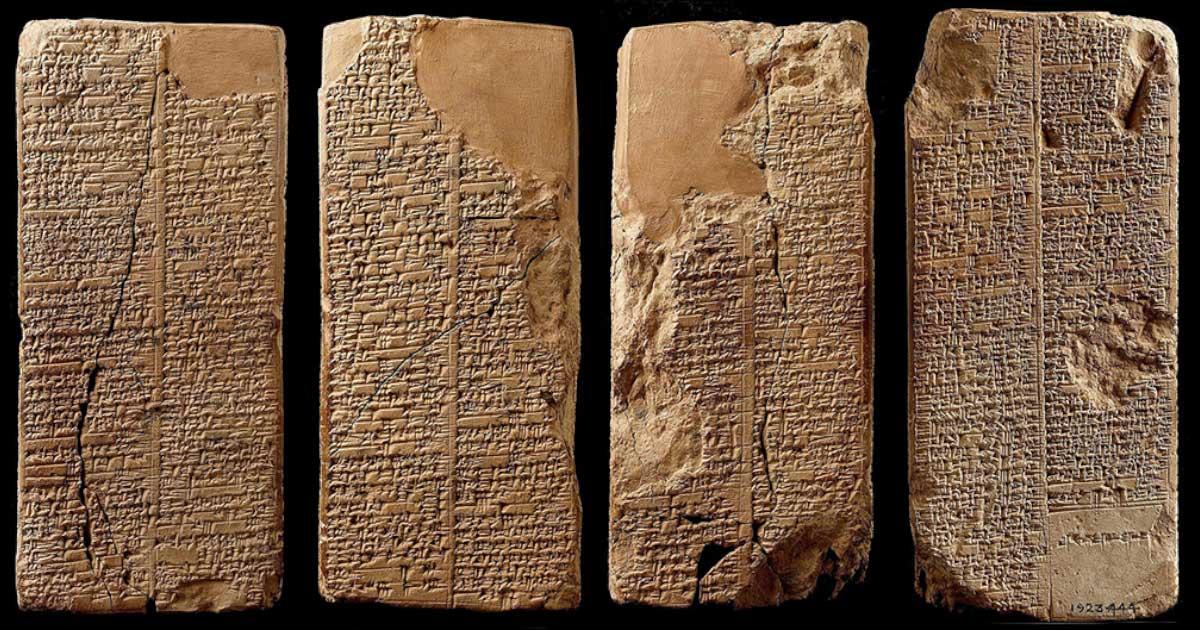
Out of the many incredible artifacts that have been recovered from sites in Iraq where flourishing Sumerian cities once stood, few have been more intriguing than the Sumerian King List. An ancient manuscript originally recorded in the Sumerian language, the Sumerian King List is a register of the kings of Sumer (ancient southern Iraq) from Sumerian and neighboring dynasties.
The list includes their names, supposed reign lengths, and the locations of “official” kingship. What makes the Sumerian King List so unique is the fact that it blends apparently mythical pre-dynastic rulers with historical rulers who are known to have existed in real life.
The first fragment of this rare and unique text, a 4,000-year-old cuneiform tablet, was found in the early 1900s by German-American scholar Hermann Hilprecht at the site of ancient Nippur and his results were published in 1906. Since Hilprecht’s discovery, at least 18 other exemplars of the king’s list have been found, most of them dating from the second half of the Isin Dynasty (c. 2017 to 1794 BC).
No two of these documents are identical. However, there is enough common material in all versions of the Sumerian King List to make it clear that they are derived from a single, “ideal” account of Sumerian history.
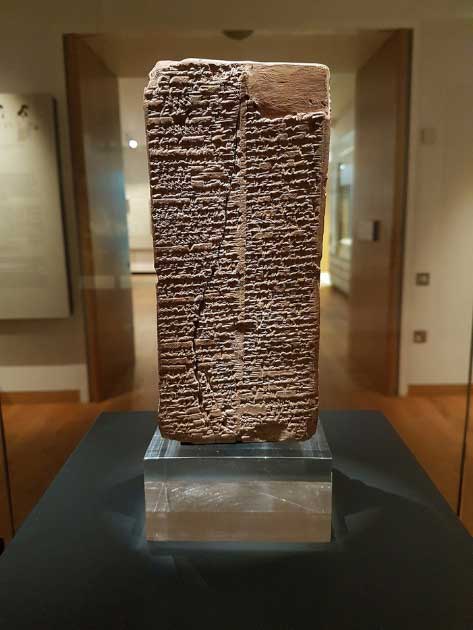
The Weld-Blundell Prism. (Ashmolean Museum / CC BY-SA 4.0)
The Weld-Blundell Prism
Among all the examples of the Sumerian King List, the Weld-Blundell prism in the Ashmolean Museum cuneiform collection in Oxford represents the most extensive version, as well as the most complete copy of the Sumerian King List. The 8-inch-high (20.32 cm) prism contains four sides with two columns on each side.
It is believed that the Weld-Blundell prism originally had a wooden spindle going through its center so that it could be rotated and read on all four sides. It lists rulers from the antediluvian (“before the flood”) dynasties to the fourteenth ruler of the Isin Dynasty (ca. 1763 to 1753 BC).
The list is of immense value because it reflects very old traditions while at the same time providing an important chronological framework relating to the different periods of kingship in Sumeria. It even demonstrates remarkable parallels to accounts in Genesis.
The Ancient Civilization of Sumer
Sumer (sometimes called Sumeria), is the site of the earliest known civilization, located in the southernmost part of Mesopotamia between the Tigris and the Euphrates rivers, in the area that later became Babylonia and is now southern Iraq from around Baghdad to the Persian Gulf.
By the 3rd millennium BC, Sumer was the site of at least twelve separate city states, including Kish, Erech, Ur, Sippar, Akshak, Larak, Nippur, Adab, Umma, Lagash, Bad-tibira and Larsa. Each of these states comprised a walled city and its surrounding villages and land. Each city state worshiped its own deity, whose temple was the central structure of the city.
Political power originally belonged to the citizens, but, as rivalry between the various city states increased, each adopted the institution of kingship. The Sumerian King List records that eight kings reigned before a Great Flood. Afterwards, the list claims that various city-states and their dynasties of kings temporarily gained power over the others.
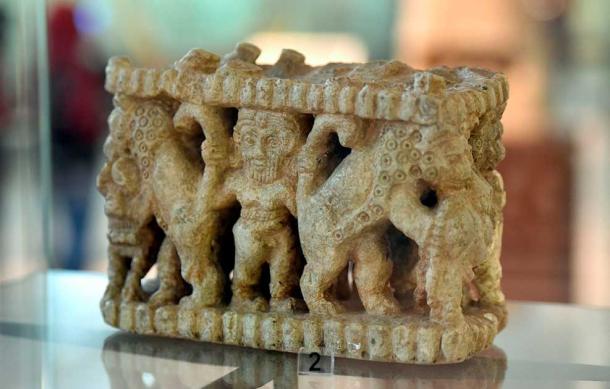
Sculptured vase depicting Gilgamesh wrestling two bulls from the Shara temple at Tell Agrab, Diyala Region, Iraq. Gilgamesh was included in the Sumerian King List. (Osama Shukir Muhammed Amin / CC BY-SA 4.0)
Sumer’s Mythical Past: Mythical Figures in the Sumerian King List
The Sumerian King List begins with the very origin of kingship, which is seen as a divine institution: “the kingship had descended from heaven.” The rulers in the earliest dynasties are represented as reigning fantastically long periods:
After the kingship descended from heaven, the kingship was in Eridug. In Eridug, Alulim became king; he ruled for 28800 years. Alaljar ruled for 36000 years. 2 kings; they ruled for 64800 years.
Some of the rulers mentioned in the early list, such as Etana, Lugal-banda and Gilgamesh, are mythical or legendary figures whose heroic feats are subjects of a series of Sumerian and Babylonian narrative compositions.
The early list names eight kings with a total of 241,200 years from the time when kingship “descended from heaven” to the time when “the Flood” swept over the land and once more “the kingship was lowered from heaven” after the Flood.
Interpretation of the Long Tenures of Early Kings
The amazingly long tenure of the early kings has provoked many attempts at interpretation. At one extreme is the complete dismissal of the astronomically large figures as “completely artificial” and the view that they are unworthy of serious consideration. At the other extreme, is the belief that the numbers have a basis in reality and that the early kings were indeed gods who were capable of living much longer than humans.
In between the two extremes is the hypothesis that the figures represent relative power, triumph or importance. For example, in ancient Egypt, the phrase “he died aged 110” referred to someone who lived life to the full and who offered an important contribution to society.
In the same way, the extremely reigns of the early kings may represent how incredibly important they were perceived as being in the eyes of the people. This doesn’t explain, however, why the periods of tenure later switched to realistic time periods.
Related to this perspective is the belief that although the early kings are historically unattested, this does not preclude their possible correspondence with historical rulers who were later mythicized. Some scholars, such as Harrison, have even sought to explain the figures through mathematical investigation and interpretation.
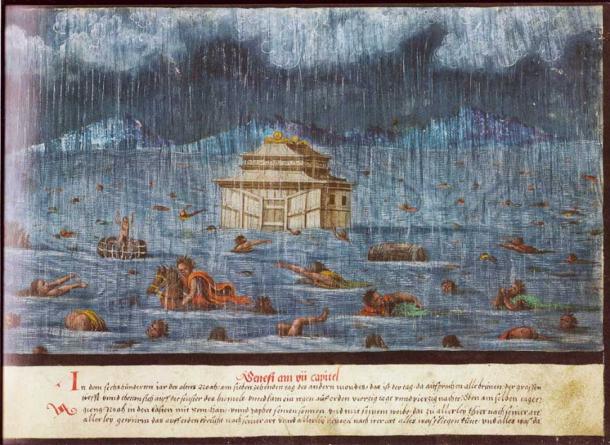
Painting of the Great Flood as told in Genesis. Augsburger Wunderzeichenbuch, Folio 1 (Genesis 7, 11-14). (Public domain)
The Sumerian King List and its Relation to Genesis
Some scholars (e.g. Bryant G. Wood, 2003) have drawn attention to the fact that there are remarkable similarities between the Sumerian King List and accounts in Genesis. For example, Genesis tells the story of ‘the great flood’ and Noah’s efforts to save all the species of animals on Earth from destruction. Likewise, in the Sumerian King List there is discussion of a great deluge, where the text states that “the flood swept over the earth.”
The Sumerian King List provides a list of eight kings (some versions have 10) who reigned for long periods of time before the flood, ranging from 18,600 to 43,200 years. This is similar to Genesis 5, where the generations from Creation to the Flood are recorded. Interestingly, between Adam and Noah there are eight generations, just as there are eight kings between the beginning of kingship and the flood in the Sumerian King List.
After the flood, the King List records kings who ruled for much shorter periods of time.
Thus, the Sumerian King List not only documents a great flood early in man’s history, but it also reflects the same pattern of decreasing longevity as found in the Bible - men had extremely long life spans before the flood and much shorter life spans following the flood.
The Sumerian King List truly is a perplexing mystery.
Why would the Sumerians combine mythical rulers with actual historical rulers in one document? Why are there so many similarities with Genesis? Why were ancient kings described as ruling for thousands of years? These are just some of the questions that still remain unanswered after more than a century of research.
Top image: Weld-Blundell Prism, a clay cuneiform inscribed with the Sumerian Kings List. Source: Public domain
By Joanna Gillan
How can someone be “priced out of their home” if they already own their home?
22 years ago, I paid $61,000 for a tiny 2-bedroom home in a lower-middle-class neighborhood about five miles from downtown Seattle. I lived in it for five years, and have rented it out ever since.
My neighbor has owned her home for 45 years. It’s a larger (3-bedroom and much nicer) home than mine. She and her husband bought it when they got married, raised two kids in it, and built a home of love, joy and happiness. When her husband died, his life insurance covered the funeral, but that’s about all.
Over the past 20 years, most especially in the last 10 years or so, Seattle industry, particularly tech- and bio-industry, has exploded, and the cost of real estate in the city is now outrageously expensive. Rents have skyrocketed, and a person with an average income can no longer afford to live in the city.
As a result, “mediocre” real estate close to the city is now desirable; it’s affordable, with easy and fast access to the city. The neighborhood where my property is has “gentrified”, and property values have skyrocketed. In 2003 when I bought my rental, I paid $683.68 in property taxes. Earlier this year, when I refinanced the loan, the lender had it appraised. The appraisal came in at $755,000. My tax bill this year was $7894.35.
I looked at the tax records for my neighbor’s home. It’s “assessed value” is $1,250,000. Her tax bill for this year is a hair over $14,000. I’m pretty sure she can qualify for a senior’s tax break (she’s now retired on a fixed income). But it still is more than she can afford. She loves her home, and is adamant about living there. It holds a lot of love and happy memories, and she cannot bear to live someplace new. Selling the house is not an option for her.
Fortunately, she was able to find a way to stay (I think she got a reverse mortgage). But as Seattle property values continue to shoot upward, taxes continue to rise, and I wonder how much longer she will be able to live in the house she loves so very much.
Top Three Of Most Bizarre Missing Person Stories
Badam Kulfi (Ice Cream with Almonds)
Ingredients
- 1 cup almonds
- 1 (14 ounce) can sweetened condensed milk
- 1 (16 ounce) can evaporated milk
- 16 ounces whipping cream
- 1 pinch cardamom powder (optional)
- Granulated sugar to taste
Instructions
- Soak almonds in warm water; peel and blend.
- Add sweetened condensed milk, evaporated milk, whipping cream and sugar; mix thoroughly.
- Add cardamom powder; mix again.
- Put mixture into small single serving dishes.
- Freeze for 4 to 6 hours and serve.
Clingstone
Written in response to: "Include the line “I remember…” or “I forget…” in your story."
Lux P
People of Color Science Fiction Speculative
With one hand on the bike, she fished out a list in her pocket—hastily written, but still mostly clear. Some in her own hand, and some in Solomon’s. She squinted at the text, slowing a little to keep the words on the paper from seeming to jump and fly. She wanted to make a hearty bean soup that evening with the savory trimmings of pork meat and vegetables grown in the courtyard and nurtured between the pale ashen apartments. If she were only cooking for herself, she would happily cut back on the pricier components. But Summer was a long, hot string of months. According to the measure of the tilt and twirl of the Earth, it only lasted the span of June through August in this hemisphere. But in practice, in the true meaning of hot, Summer was an everyday companion. A fair-weather friend, nearer to you than God and surer than death. Making it through another long, hot one that had started in practice in March and only now seemed to subside in November was a miracle. And miracles deserved celebration.
Solomon had quipped that it was too hot for soup, but Happenstance retorted that she could make it outside, where it was already hot. He had tried to hide the flare of his nostrils when he’d laughed, but she saw.
TO BUY:
Pork (As much as you can get for $50—no more. Auntie’s fond of ham hocks)
Any greens to prop up what we got. Cabbage, kale, or collard greens will do
Black-eyed peas, enough for 7-8 people
Fresh broth from the church kitchen a bonus (Tell Louis I say hello)
Cornmeal for muffins
Liquor and juice
The list of toiletry requests was more precise, put together by anyone who was too tired, too weak, or too busy to attempt the trek into downtown. Especially because Happenstance at least had a bike to haul it all with. Solomon of all people had run the list up, with requests for toothbrushes, bath oils, new(er) linens, pen and paper, drinking water, old snacks she couldn’t stand the smell of, any camera with film, and 2 different kinds of medication. Though he had dutifully handed Happenstance a neat stack of old cash, diminishing in value with every year, she still scoffed at how sometimes he acted as if she has his errand person. Worse, he always chided her about how much she needed to spend. “For your purposes, this’ll do,” he said, “no more, no less, Happen.”
“Lot’s changed since you a kid in the 2080s,” she had snippily retorted. “You’re sure this’ll be enough?” She flapped the soft, loose bills at him pointedly, enjoying the sensation of them falling in the air. His face often belied the fact he was not even 50 yet, but then, those long long summers would age anyone in their wake. But Happenstance saw no reason to let him forget he was a modern man. Then, that old-young face bent under the pressure of his palpable irritation and squinted at her.
“It sure has. And yet, being poor is just the same as it’s always been—expensive. I’ve put off replacing most of those things for longer than you’ve been alive.” Solomon had tapped at the list with long, sinewy hand. “But doing a little research does help.” Before she could get another snide comment in, he’d turned on his heel and returned to his lower floor apartment.
She pictured the market in her head, placing herself in the southwest corner. If she tackled the greens, black-eyed peas, and cornmeal first, her bag wouldn’t get too heavy right away. She imagined a path weaving through the stalls with vegetables and grains, even stopping by the church kitchen for some broth, hopefully, and perhaps even lunch, if anyone had time to entertain her. Then afterwards she’d really load up with the liquor and meat and toiletries. She nodded to herself, feeling sufficiently oriented enough to push forward. As she walked east, facing that brilliant sun, the image of the nectarine flashed in her mind. She had no idea what it tasted like. The few fruits that were still around weren’t cheap, and the cheap ones weren’t all that good. Never mind them being fake. Or real-fake. She always wondered what it was like to work in the fancy companies that created simulacra. To be obsessed with something that you enjoyed 30, 40, 50 years ago? She didn’t know anything about that. And most of the time, it felt like a weird thing to focus on. Always some fruit, some TV show, some place somebody used to go. But she wondered, why not bring back the Spring and Fall? Why don’t we all pitch in and get the damn price for water and food and housing back down, live like we did in the old days. The old days seemed to be both structurally critical to how society was built, the foundation that undergirded everything, the salt on everyones’ brows. And at the same time, ephemeral. Ghostlike and dead and gone. Why’s everybody so worked up about stuff we don’t have anymore? Why make a fruit again, especially in an uncanny way, a way it never existed in the first place? She knew it was a fruitless (ha) question. After all, the same could be said about artificial intelligence, about androids, but anyone who was rich enough to afford those didn’t care about stuff like that, and anyone too poor was too busy trying to stay alive.
Like Solomon said, being poor is just like how it’s always been. She sighed a little and got back to her errands.
By midday proper, she’d gotten through most of them, and even had gotten especially lucky in a few key places. Sister Angeline was more than happy to see her, despite the fact she avoided actually participating during congregation. Apparently the food and supplies she’d biked over the week before was more appreciated than she’d realized. And for that, Sister Angeline had clasped her warm brown hands around Happenstance’s, thanked the Lord and thanked her, and she blushed. Sister Angeline insisted on an extra helping of the refreshing cucumber salad, and Happenstance ate every bite.
“Just tell some of your neighbors to bring something from the garden next Sunday!” Sister Angeline laughed. “I just know Solomon eked out something delicious from that courtyard of yours.”
“Of course he did,” said Brother Louis, “the real trick is getting him to come to church to share it.” The message that had been sent to him from Solomon was received with a tight, wry half-smile, that Louis insisted was more about Solomon’s general behavior than her message. As long as you’re not shooting the messenger, she’d thought.
“See, brother Louis, your problem is you want it too bad. You know Solomon don’t do a damn thing anybody wants him to do,” Happenstance found herself saying. Louis barked a short sharp laugh, then slapped his hand over his mouth. Angeline just about fell down laughing, waving Happenstance off as her laughter echoed right in and back out the little church house. She waved to them both, pushing off on her bike.
Shopping for toiletries wasn’t quite as successful, but she still managed to at least get everything she could find. By now, she was going to start losing sunlight, but she’d be damned if she went back to Solomon without everything he asked for. The owners of the general store weren’t having it with her haggling, and she settled for their prices she suspected were a little inflated. She at least had a little cash leftover, just enough to give back to Solomon.
Biking towards home, she passed the stall with the Nectarines again. The idea was enough for her to almost fall down off the bike. She careened over, turning sharp enough to leave tracks. She shouldn’t spend his money on this, she thought belatedly, but then, she was so curious. She had some money leftover, she’d convince him to just settle for her owing him later. Reading the signage again, she did the math. The crumpled bills in her hands could afford her one, maybe two, if the patterned shirt lady was willing to make a deal.
“How much for two?” Happenstance asked.
“Can you read the sign?” The lady said, looking sidelong at her.
“I can do two for $6, I can’t do more than that.”
“Then it sounds like you’re only getting one, kid.”
Happenstance groaned, thought for a moment. “You sure there’s nothing I can’t do in exchange? You don’t have any mail I could take the post office, or a friend that needs a ride?”
“On a bike?” The lady asked. First time she cracked something like a smile at Happenstance. Happenstance looked up at the sun on it way to descent. Wasting her time, and his money. She ran her fingers over the parts of her braids, sighing.
“Alright, kid, fine. Just this once.”
Happenstance whipped around, caution clear on her face. The lady laughed some more, and leaned back in her chair to pick up a cloth, a bag, and tucked two nectarines inside.
“Why?” Happenstance paid, took the bag, and held it to her chest.
“Weren’t I young once?” The lady asked.
Once they’d gotten dinner going and simmering, Happenstance stood at the threshold of Solomon’s apartment, producing what he had asked for, among them the pen and paper, nostalgic snacks rich in protein and salt, an old purple instant camera with film. He waited with something that almost seemed like patience.
“You did alright. Did you buy anything for yourself?”
She eyed him. “And since when do you care?”
He splayed his palms at her, a gesture she realized meant, nothing, no, nothingness.
“You didn’t give me change back. So you must’ve spent every dollar.”
Happenstance snorted a laugh quietly.
“Asshole. Did you give me a little extra just so I could get a treat for myself?”
“I was aware that may be the case, if you had a little extra to spend. You work too hard.” He looked at her with an amusement that unwound the tension in his tightly wound posture. “Wait, did you only get something for you?”
Happenstance laughed fully now and took out the carefully wrapped fruits from her bag. With her gloves removed, she felt her initial assumptions were right. At least partially. The subtle texture of the skin of the nectarines greeted her pleasantly, and she again looked the marvel over.
“Nectarines! Those must be some high-tech simulacrative ones, alright. Rounder than anything you ever saw. Look at that color.” He peered over at them. “Damn beautiful. Could almost be the real thing.”
“Not for so cheap,” she murmured. She sniffed the skin, eyes widening at the smell—a warm verdant springtime long forgotten and decades dead. “Have you ever had one? A real one?”
Solomon nodded, holding a hand out for the other until she obliged.
“When I was a kid, in the olden, ancient days. I remember there were nectarine and peach trees all over my hometown, despite how hard they got beat down by the heat for years. Less so when it stayed really hot. You’d think they all died, but then some would pop back up, and die again. And then we just never really saw them. But if you get so numb to living beings up and dyin’, you forget the little things about them you looked forward to.” He smelled the skin, too. “Them trees were pretty as hell. Pinker than you could dream and stooped down, like they wanna tell you a secret.”
She tried to imagine. The stillness in his eyes unmoored her, the edged, far-away of his silence, like he breathed in lifetimes for a moment. She recalled, vaguely, brothers and a sister in his life once. She briefly imagined him 40 years younger clambering over the branches of a tree with his siblings, somewhere deep in the ground beneath them the seed of what was once a delicious nectarine.
Happenstance took a bite. Sweet and tart, she was delighted to see the inside of the fruit was a bright yellowy orange. She chewed the flesh in silence, thankful for the cool snack in the simmering heat.
“It’s good.”
“It is a fake,” Solomon said, carefully flat.
“I wouldn’t know. This is all I know.”
“If we plant the pits and tend them, watch them for a few more years, water them? It could become something more…familiar. Then we’d have a tree of fruits.” Far, far away, he was.
“What kind of tree does a perfect machine make?” She asked.
“I don’t know one. Maybe one without fruit. Only one way to find out.” He took another bite.
“If it survives…” She said softly, now meeting the clingstone buried deep inside. She frowned as she bit around the startlingly large obstruction and its pitted surface, bloody color. Solomon snapped a few more bites and patted her shoulder with a light tough.
“Surviving is what we do, ain’t it? So it’s in good company.”
Happenstance chuckled softly, annoyed. He’d seemed to have found himself a personality for the evening.
“Oh yeah, Angeline and Louis say you should go to church.” Solomon gave her a reproachful glare. “I told him he wants it too bad, so you won’t do it because you’re an asshole.” Now that got a real good laugh from Solomon, eyes crinkling and all. Finally, she thought.
Nothing much else to be said until the two fruits were little more than pits to be dried. In the courtyard, the fire under the pot of dinner crackled and roared, spitting off heat as the rich, meaty aroma of the broth billowed into all corners of the apartment building’s white walls. Their friends and neighbors poured out as the sun finally began to wane, and the heat of the day with it.
Not until after the little miracle of dinner had been served, devoured, and digested did Happenstance remember the nectarines. Only later in longer, softer nights did she and Solomon dig a hole and tuck the seedlings into the ground, offering the odd uncanny fruits a new place to cling and to be extricated from—but only if the seedlings of the sweet nectarine tree were willing to break the ground asunder, first.
Sir Whiskerton and the Horticultural Honeymoon - A Tale of Roses, Silence, and the Names We Whisper to the Earth
Ah, dear reader—prepare your heart. Today’s story does not begin with a quack, a snort, or even a kazoo blast.
It begins with dirt under fingernails.
With sunlight pooling on turned soil.
With two people, side by side, planting not just a rose bush—but a promise.
So settle in. Breathe deep. And step softly into Sir Whiskerton and the Horticultural Honeymoon.
The Planting of the Promise
It was a Tuesday—golden, still, honey-slow.
The Farmer stood at the garden’s edge, spade in hand, watching Martha kneel by the freshly dug hole. She brushed a strand of hair from her forehead, leaving a smudge of earth like a blessing.
No words passed between them. None were needed.
He held the rose bush—roots wrapped in damp burlap, thorns sharp and hopeful. She reached for it, and for a moment, their fingers brushed—warm, sunlit, certain.
Together, they lowered it into the earth.
Together, they tamped the soil—not too firm, not too loose.
Together, they poured water, watching it soak in like a vow.
Then—Martha leaned close, her breath a soft sigh against a young green leaf:
“There you go, His Quiet Sunshine.”
The Farmer, unaware, crouched on the other side, cupping the stem with gentle hands:
“Welcome, Martha’s Blush.”
And the rose bush?
It shivered—just once—in the breeze.
As if it had heard both.
The Great Naming Controversy (A Farmyard Betting Scandal)
Of course, nothing goes unnoticed on the farm.
Doris, perched on the fence post, adjusted her spectacles (borrowed from the scarecrow).
“Did you catch that? ‘His Quiet Sunshine.’ Poetic. Dramatic. Chef’s kiss.”
“Kiss! Kiss!” echoed Ditto, hiding in the hydrangeas.
Harriet, ever the pragmatist, scribbled in her notebook:
“‘Martha’s Blush’—more accurate. Look at those buds—they’re pink.”
“Pink! Oh, I can’t bear it!” Lillian gasped, swooning onto a sack of compost.
Within the hour, the Hens had set up a betting ring behind the toolshed.
|
Name
|
Odds
|
Backers
|
|---|---|---|
|
“Martha’s Blush”
|
2:1
|
Harriet (research), Bessie (“vibes say floral”), Tony the Bear (bet a honeycomb)
|
|
“His Quiet Sunshine”
|
3:1
|
Doris (romantic), Ferdinand (“it has lyrical potential”), Rufus (bet his favorite squeaky bone)
|
|
“The Rose”
|
100:1
|
Sir Whiskerton (monocle raised, tail flicking with serene amusement)
|
Even the scarecrow cast his vote—by tilting slightly eastward toward the sunrise.
The Whispering Hours
As days passed, a quiet ritual unfolded.
Every morning, Martha would bring her watering can, linger just a moment longer, and whisper:
“Good morning, His Quiet Sunshine. Did you dream of bees?”
Every evening, the Farmer would check the stakes, prune a stray shoot, and murmur:
“Rest well, Martha’s Blush. You’re doing beautifully.”
The bush—bathed in double love—thrived.
Buds swelled. Leaves deepened to emerald. Thorns gleamed like polished silver.
One morning, a single bloom unfurled—creamy gold at the center, blushing rose at the edges, petals like layered silk.
Ditto, ever observant, nudged Sir Whiskerton:
“It’s both.”
“Both,” echoed Echo.
Sir Whiskerton purred, watching the couple sit together on the porch steps, shoulders touching, gazes fixed on the garden—not speaking, just being.
“Some things,” he murmured, “are too tender for a single name.”
The Naming (Or, The Lack Thereof)
At the first full bloom, the Hens demanded resolution.
“Well?” Doris demanded. “What shall we call it?”
The Farmer looked at Martha.
Martha looked at the rose.
The rose looked at the sun.
Then the Farmer smiled—soft, shy, true.
“The Rose.”
Martha nodded.
“Yes. Just… The Rose.”
No fanfare. No decree.
Just understanding.
And in that moment, the farm seemed to sigh in collective relief.
Doris tore up the betting ledger.
Harriet used it to line a nest.
Lillian fainted—not from drama, but from joy.
Even the scarecrow straightened, just a little.
The Moral of the Story
The moral of the story, dear reader, is this:
Love does not always need labels to be real.
A rose does not bloom for a name—it blooms because it is tended, cherished, spoken to in quiet moments when no one else is listening.
Whether you call it His Quiet Sunshine or Martha’s Blush or simply The Rose—its beauty lies not in the word, but in the hands that dug the hole, the voices that whispered hope into its roots, the silence that held them both.
Some things are too precious to be owned by a single story.
They belong to the space between—to the shared breath, the brushed fingers, the sunlit quiet.
Post-Credit Scene
That night, under a sky dusted with stars, Sir Whiskerton curled on the roof beside Ditto.
“Do you think it knows?” Ditto asked.
“Knows what?”
“That it has two names.”
Sir Whiskerton gazed at the garden, where the rose glowed faintly in the moonlight.
“Oh, Ditto,” he purred. “I think it knows it has two hearts.”
“Hearts! Hearts!” echoed Ditto, snuggling close.
And somewhere, in the soft earth, the rose dreamed—of sunshine, of blush, of belonging.
Until next time, may your days be filled with quiet moments, shared silences, and the deep, wordless joy of being loved—for exactly who you are.
Jingle on. 🌹🐾✨
The End.
Did you grow up in a house that did not have air conditioning?
Yep, sure did. You might be surprised at how different both life and culture was in those days.
The Housewives:
The hottest room in the house was the kitchen. Obviously, the stove created a lot of heat while the refrigerator added a little more. There was often a vacuum tube radio in the kitchen where a small amount of additional heat was added.
Remedies To The Rescue:
Houses in those days had windows with shades and curtains. Window glides were regularly lubricated with paraffin so that they always worked.
The housewives and grandmothers were experts in the art of cross-ventilation.
On the sunny side of the house, windows were lowered to an opening of about two inches. The shades and curtains were adjusted to let in the most amount of air while keeping out the most amount of heat.
On the cooler side of the house, windows, shades and curtains were wide open. This technique helped create a natural draft where fresh air was flowing almost continuously. As the sun moved across the sky, the window adjustments were gradually reversed by mother or grandmother.
The big downside was rainstorms. Weather prediction was spotty, so rainstorms could blow in unexpectedly. In that event, the kids and the housewives scurried around to adjust the windows for minimal soakage.
When the whole family had to leave the house, all the windows had to be closed. When returning, it took a few hours to get the cross ventilation moving again.
However. Sitting still with feet in a cool pan of water could do wonders for relieving body heat. For outdoor work in the hot sun, a soaking wet T-Shirt made it impossible to get overheated.
Electric Fans:
Electric fans were everywhere. We used table fans, sometimes one in every room and hassock fans. Hassock fans were floor fans that moved a lot of air without making a lot of noise.
Naturally, American fan manufactures at the time were profit oriented. But, they took great pride in building high quality products that would work well and last a very long time. Most of the electric fans of that era would last 30 - 60 years. I can’t recall the word “China” having ever been mentioned.
Air Conditioning and Culture:
After dinner, the house was hot from cooking and afternoon sun. A lot of houses had front porches, where the family would gather to enjoy the cooler temperatures of the early evening. We’d wave to the neighbors across the street and sometimes chat with folks who were taking a walk.
The family would debate whether waving pleated handheld fans made us hotter because of the expended energy or whether it was cooler to just sit very still. I don’t think anybody ever won that debate.
The pace of life was much, much slower in the olden days. We could stay cooler by working and walking more slowly. I strongly suspect that the slower pace may have enhanced mental health and peace of mind.
Strangely Enough:
One of my friends from Virginia, had relatives in New York City. The Virginians would complain that they couldn’t sleep in NYC because of the traffic noise. The relatives from NYC would complain that they couldn’t sleep in Virginia because of the crickets. 🙂
Cars:
The problem with non-air conditioned cars wasn’t so much about the heat as much as it was about the traffic noise. The constant wind noise one thing, but driving long distance among tractor trailer traffic was horrific by any standard.
The first air conditioned car I rode in was my father’s 1963 Chevy Belair. These early air conditioners weren’t much to brag about. They took 5 - 8 minutes to start cooling down. After about an hour, the condenser coils would freeze over and spew water droplets on the passengers. At that point, they’d have to be turned off for 45 minutes. There was always the question of whether or not they were even worth using.
KIDS!
I think the kids had it the best. Water was our best friend in the heat.
We could go outside and play with the garden hose or lawn sprinkler.
Cities would often open up fire hydrants for the kids to play in where heat relief became a group activity.
Some of us had creeks, streams or lakes to play in where we could explore nature while catching newts, snails, tiny catfish, minnows or frogs. Many of us would keep the catch in small home aquariums, then check the wildlife books to identify their type and species.
My uncle (who I was named after), had a summer camp where he let us play in the creek. That’s where we discovered leeches — aquatic vampires who were not fun to be eaten by.
The other issue was hellgrammites. Their name says a lot. These are nasty little mistakes of nature who were best avoided by not disturbing the rocks that line the bottom of the creek. Outdoorsmen, however, liked to use hellgramites as fishing bait.
Ancient Treasure:
My father used to recite a really corny joke about a man who was hitting himself in the head with a hammer. He’d ask, “Why are you hitting yourself in the head with a hammer?” The man would say, “Because it feels so good when I stop.”
The joke was almost … maybe … a tiny bit funny on a good day.
But it expressed a corollary related to real life in the heat. After a scorching hot day, there were nights when a cool breeze would blow in and circulate through the house. Soaking up a cool breeze while going to sleep to the sounds of crickets and frogs was absolutely heavenly. In this instance, the heat felt good because it stopped.
The word of the times was to “stay hydrated!”
Back in the hot ol’ days, mothers and grandmothers perfected the art of lemonade. It’s hard to imagine that a beverage with only three ingredients could have been so different, depending on who made it.
Whatever they were doing, they had something really special on offer that I’ve never been able to replicate.
If you’ve read this far, you are very kind and attentive. I wouldn’t blame you if you thought this article was great because it felt so good when it stopped. 🙂
Take care friends.
Pictures
Did the year 2026 become Tesla’s most important year ever?
Let’s see:
- 2023: 1,808,581 cars sold, $8.89 billion profit.
- 2024: 1,789,226 cars sold, $7.08 billion profit.
- 2025: 1,600,000 cars sold (projected), $4.52 billion profit (projected)
I’m writing this on December 10, 2025, so Tesla has a few weeks left to sell cars, but I don’t expect these projections are far off. Tesla has a problem: today their market cap is $1.4 trillion, but they’re not making the profits of a $50 billion company.
But wait… there’s more. A sizeable chunk of Tesla’s profits are from selling carbon credits. The US CAFE standards required that every car company meet certain emission standards. Tesla, with no auto emissions at all, banks carbon credits they can sell to other US automakers. And in fact, they’ve had contracts with most US automakers, which has been a very good business for them:
- 2023 $1.79 billion in carbon credit profits.
- 2024 $2.76 billion in carbon credit profits.
- 2025: $1.5 billion in carbon credit profits.
This illustrates that Tesla’s car business was in more trouble in 2024 than the profits would first suggest. And that Tesla has a 2026 problem: the Trump Administration eliminated the CAFE requirements. And the $12,000 government incentives on EVs expired in October. This was an own goal on Musk’s part — he’s the guy who put Trump in office.
So lower priced Teslas will be $12,000 more expensive to the buyer in a year when all car prices are nuts thanks to Trump’s tariffs. US automakers can make all the polluting cars they like. Most US automakers still have a contract to buy carbon credits from Tesla today, but those will expire over 2026, and it’s even possible that various lawyers are finding some way to wiggle out of those contracts. So Tesla’s taking a billion dollar hit on income for 2026 even before the ball drops on New Years’ Eve, and a very likely hit on car numbers as well, thanks to the end of the rebate.
Elon Musk has been working very hard to make investors think Tesla isn’t a car company at all, but an AI company. Why? Because investors are spending stupid money on AI investments this year, and as their current valuation shows, they have drunk the Kool-Aid.
This AI revolution is dependent on Tesla selling their $20,000 Optimus robot. They clearly have some robots, but they’re behind on AI processing at the hardware level compared to, well, just about every other major humanoid robot. They’re also using nVidia Jetson Orin processors — which outperform Tesla’s AI4 — and moving to Jetson Thor processors in 2026, which, at least based on released information, outperform Tesla’s AI5 platform which isn’t out yet.
This AI revolution is dependent on Tesla delivering real robotaxis… the kind that don’t have to have drivers riding along. People kind of laughed at Tesla’s cheap 2-seater, and today the Robotaxis that have been deployed — all with human monitors — on Tesla Model Ys instead. But the statistics show that most ride shares are 1–2 people. So maybe they actually did the research on these.
Their problem is that Tesla is doing self driving wrong, thanks to an edict from Elon Musk, not a sound engineering decision, to rely only on cameras and AI image processing. So they have yet to reach SAE Level 3 autonomy, while Waymo is at Level 4. That said, the Teslas are very cheap compared to the Waymo vehicles. I guess they can stand to have a few cars totalled every month and still see plenty of profit… ya think?
Tesla was doing two AI chips, the “AI” series for cars and the Dojo series for AI training. Apparently, their HW5 chip does replace the Dojo chip and will be used in training their car AIs. However, they’re still mostly dependent on nVidia H100, H200, and B200 chips for their data center. This is worth mentioning because, when an AI company is able to build a competitive infrastructure on their own, that’s a potential asset. Take Google, for example, which has been selling their Edge TPU AI chip, for embedded AI use, for years and had been in talks with Meta about selling them their 7th generation Cloud TPU. I think Tesla’s in one of those places where the cost of development of new edge AI processing in their relatively small numbers makes it increasingly difficult to compete with nVidia, which is making their edge processors based on technology already developed for the datacenter.
So yeah, I’d claim that 2026 is a crucial year for Tesla. If they successfully start generating AI-business revenue that’s comparable to that of the car business — even given the lower projections of their car business — they might well be seen as starting to fulfill all those wild Musk promises. That’s more critical than it might seem, for two reasons. One is that the mainstream of Wall Street is rather onto Musk and his decades of overpromising and not delivering. Maybe the guy and his engineers will deliver, but that seems like a long shot. Lots of major investors exited Tesla over the last five years, replaced by an overabundance of Elon Fanbois. So for now, they’re all good with what Musk is promising, but that doesn’t mean that Tesla isn’t fundamentally a meme stock. It they do manage to knock it out of the park in 2026 with real products and real profit, the stock price could well explode. But that is a pretty big “if”….
What gives America the right to commit piracy on the high seas or do they just want another no-win war?
It’s kind of funny piracy is being mentioned here, because that has been done since time immemorial.
A ‘letter of marque’ issued to a privateer, which was basically a government-sanctioned pirate. In practice, privateers and pirates were often indistinguishable in their actions, and that (very) thin legal line between the two was a matter of mere semantics.
So, in fact, pretty much all major governments have engaged in organized piracy.
I’m not sure which acts the question is specifically referring to. There’s been a few recent incidents of alleged drug boats being blown up. If that’s what this is about, that’s more of dealing with criminals without due process rather than piracy. This kind of thing has always been a bit of a gray area legally, just like detaining suspected terrorists at Guantanamo.
If it’s the seizure of the Venezuelan oil tanker, that’s because the ship was sanctioned a few years ago as involved in terrorist affairs. If you’re going to run that kind of business, best not to get found on the high seas. The US isn’t the only government to do things like this, it’s pretty commonplace.
Chosen
Written in response to: "Write a dual-perspective story or a dual-timeline story."
Diana Vale
This story contains themes or mentions of physical violence, gore, or abuse.
The Collective. This is where those who have nowhere else to go end up. Those who can no longer fit into society. Those whose minds have been destroyed by drugs. Cripples and drifters, or those who have been unlucky. Children and the elderly are already one breath away from death. People the world wants to make disappear. The Collective is a fortress with rules darker than the walls themselves. If I count correctly, I've been here for about a year. I made one mistake, just one, and ended up here.
It's said to be impossible to escape from the Collector. Those who try get badly punished. I saw with my own eyes what the guards are capable of. The only chance is if someone redeems us. A relative, a friend, a lawyer. Anyone wealthy enough to pay the price of your worth. Different for everyone, but usually a significant amount. But it doesn't matter. Because I have no one who would miss me.
ALEXANDER
The Collective. A complete cesspit, a dumping ground for the country's filth. Smooth, polished stone and metal surfaces everywhere, with hardly any light coming in, as we are several miles underground. There is only one way in, a strictly guarded funicular that only operates in one direction at a time. The entire place is damp, cold, and stinky. It's home to criminals and rats, the fate of the unfortunate. But that's exactly why I'm here. I'm looking for someone like that. I just have to find the perfect match. Leaning on the metal railing, I look down at the lower levels of the cylindrical fortress. From here, on the top level, I can barely see the bottom of the pit. I don't want to spend any more time here than necessary.
"Ah, Commander! You didn’t mention you’d be stopping by." The inspector extends his hand to me. I return the gesture as briefly as possible and resist the urge to wipe my hand on my pants. I saw Inspector Gilles once when I was young, when he was shining in the role of the city executioner. A real bastard.
"May I show you around?"
"If you don't mind." I nod curtly and start toward the stairs. I don't have time for this.
DELIA
Every day, all day is the same in the Collective. Public work and exploitation. In this place, even death is not an excuse; even with broken limbs and bleeding lungs, you have to show up for slave labour. Many do not survive. Yet, perhaps this is the only way out, death. I have looked around everywhere, but I couldn't find a single crack or crevice to cling to. The system is flawless, the guards are alert, it's unbeatable. Well, at least my shift is over for today. We work in three shifts, rotating, so that means two-thirds of us are always working at a time. They're adjusting the duty hours to disrupt our sense of time. At first, it got to me too, but eventually I learned how to keep a record of my time here. Because if I lose track of time, nothing remains left. I shuffle across the mirror-polished, ice-cold stone floor toward a group of people standing around two men fighting each other—the challenge. The only entertainment for those here below, I can see some colour on their broken, weak faces at these occasions. The guards have beaten down every other activity or movement, but they allow this, and I know why. I know some are watching from above.
In the middle of the circle, a big guy is beating up on a smaller, stockier guy. Although the big guy is taller and stronger, the smaller guy is stable and, incidentally, not weak either. He is flexible and agile, and if he could take his opponent to the ground, he would win. Unfortunately, he can't get a grip on him. The big guy, Cruxer, has a precise technique, defends his attacks well, and when the first punch comes in, the petite but masculine guy has no chance. Cruxer aims for his head and knocks him back with a well-aimed strike. The little guy spits, and a small piece of white bone lies in the middle of the bloody discharge—his tooth. As far as Cruxer is concerned, the fight is already over, but the match continues until the little guy collapses on the stone. Cruxer wins, again. The audience roars with joy. Great.
The referee raises Cruxer's left arm high, though he can barely reach it.
"Ladies and gentlemen, here is the winner!" The stocky man tries to shout over the crowd, which erupts in even louder cheers at the announcement.
"Who dares to challenge him? Another round, ladies and gentlemen?"
Quiet. Of course. I smile silently and take a step forward.
Now it's my turn.
ALEXANDER
This place is even shabbier than I thought, and surprisingly oversized. It won't be easy. It would have been better to bring Marco with me, but maybe it's good that I didn't drag him into this. The fewer people who know about the plan, the better. I’ll have to bribe that buffoon Gilles as well. We circle left and right, through offices and storage rooms, but I’m paying more attention to the people. Some have been completely broken by their time here. Others are still new.
We step into a room that—for once—is bright and spacious.
“Here we are, the VIP chamber, for guests such as yourself, Sir. We bring sunlight down here using mirrors, the plants are watered daily, and the furniture comes from the finest merchants.” He glances at me, waiting for admiration. When none comes, he goes on.
“Would you care for a drink?”
"What's going on here?"
The room is bustling with people. Dressed-up aristocrats and merchants vying for their favour. Slightly dressed prostitutes. Servants carrying trays of all kinds of exotic fruits and cakes, and large jugs of wine. If I were an artist, this is how I would depict distastefulness.
“This is the challenge.”
He said it with the kind of emphasis people use when they’re stating something everyone should already know.
“Please, have a seat and feel free to watch a match or two.” His chuckle sounded like someone scratching a blackboard with their fingernails.
Most of the people there I didn’t recognise, but from the look in their eyes, they clearly recognised me. No matter — I’d stick around for a bit, let them think I’d come for the fights. I’m about ninety-nine per cent sure whatever’s going on here isn’t legal, so no chance one is eager to rat anyone else out. The buffoon leads me to a balcony overlooking one of the galleries, where ragged people and helmeted guards stand in a circle. A fight. This is how the wealthy riffraff entertain themselves. In the centre of the circle, a tall, muscular, big-nosed guy is pounding the life out of a fat, short one. The man’s whole face is a puddle of blood. Boring and vile. The fight ends, and as far as I could tell, nobody else dared step up against the big guy. He clearly has real combat experience — he fought well and stood firm like a rock.
“How much for him?”
I point at the guy. I lean closer to the clown and whisper so the others can't hear. Not that they won't make similar, dirtier, and even dirtier deals here.
“Cruxer? Well, yes.” Gilles smiles. “Impressive, isn’t he? Excellent fighter — solid and ruthless. He’d make a fine heavy or personal guard, though I must say…”
“How much?”
“Two hundred thousand.” Not cheap, definitely not. But worth it, in exchange for the mission.
"Great. I'll take him."
The deal was settled quickly. The buffoon is already extending his hand, and I almost shake it a second time when the crowd below suddenly gives way for someone. Someone short. A child, perhaps? No — definitely not. Nearly a grown woman. The aristocrats next to me gasp and whisper. I can hardly believe my eyes. Does that girl seriously want to stand up to that bulldozer? Maybe she wants to die. For most people, this is the only way out; unfortunately, everyone is aware of this.
"Stop this.” I can't bear to watch a woman being beaten to a pulp in public.
"Unfortunately, I can't do that."
"It's an order.”
“It’s the rule—written protocol. We do not interfere in conflicts between people here. You of all people should know that — especially as you represent the law, don’t you?”
The clown flashed a smile a snake would envy. I tried to unclench my jaw — I’d been grinding my teeth so hard it hurt.
Bastard.
By now, everyone is watching the girl, both audiences. You can almost cut the silence with a knife. Within moments, the fight begins, and the two opponents circle each other. They size each other up, assessing their posture, physical condition, and breathing. Neither of them breaks eye contact. Cruxer strikes first. He misses; the girl is quick. She is small and agile, but the man uses his weight advantage to take her down, pressing down on her and almost squeezing the life out of her. The girl moves her hips, puts her knee between them, and kicks the man off her. By now, everyone is watching the girl, both audiences.
She's clever. Cruxer attacks again, pulling her hair and dragging her across the floor. Even from this distance, I can see her tears flowing. She manages to trip the man, somehow gets up, and pulls herself together. She doesn't give up. She attacks from below, not going for the head. She gets a few more slaps, which knock her back, but don't stop her. She lands a series of shots to his ribs, and when she finds an opening in Cruxer's defence, she reaches for his eyes and then kicks him in the groin. The man yells. The girl trips him, again, and he falls. She starts kicking his head with her full weight. She stomps on him with all her strength and aggression. The man puts his arms over his head to defend himself, but some blows still reach him, and I can almost hear his nose breaking and his ribs cracking. The fight ends, almost too soon, and the crowd is disappointed.
“Gilles, I’ve changed my mind.”
“Sir?”
“I want her. That girl. How much?”
The valet looked flustered for the first time since I’d arrived. For a moment, I thought he’d gone mute forever, but the universe wasn’t that generous.
“You want her? And Cruxer?”
“I’m taking only one, and it’s her. How much?”
He muttered something under his moustache, but I couldn’t make out the words.
“I missed that. Repeat yourself. How much. The girl.”
“One million.”
Impossible — this bastard’s playing with me! Political prisoners don’t cost this much. I grab the oaf by the collar and yank him so hard I almost lift him off the floor.
“Don’t you dare joke with me. One more slip like that and I’ll have you replaced. Won’t cost me a damn thing, and tomorrow you’ll be sitting in one of the cells yourself. Understand?”
“I… I… Yes. Yes, but… that’s… that’s the price. It’s the truth, you can check her registry — just a moment and I’ll fetch it for you. Wait here.”
“You’ve got one minute.”
“Right. Be right back. One million, if you pay, she’s yours.”
DELIA
They dragged me out of my bed. Two guards, both wearing crimson armour and helmets. The cell was getting terribly cramped for the three of us.
"Get up. You're coming with us."
I know I should fight back, but even if I defeat these two, the fort is full of them, and I wouldn't get too far. So I wipe the sleep from my eyes and let them lead me by the arm. It's easier for everyone this way. I don't know where they're taking me, but they won't kill me. Unfortunately. We're going up, not down, which is perhaps good news. Or perhaps not. By the time I've run through all the possible options in my head, we're already upstairs, they push me through an iron door, which is the same grey as the others, and leave me alone with a man. I had a feeling. They take many women away for pleasure for the night. We are not bound by the law protecting women, like those above, so they can do whatever they want with us. Great, well, in that case, now is the time to fight.
"I won't hurt you."
Oops. I glance down at my clenched fists, at my feet planted wide. I’d gone into a fighting stance — and with that, I showed my intentions. I slowly lower my arms and look up at the man. He is tall, slender, commanding and looks a bit older than me. His clothes are fine and elegant, resembling some kind of officer's uniform. His hair is dark as ebony, his eyes are green; they remind me of the nature I haven't seen in a long time—the trees, with their thick canopies where we’d rest in the summer heat.
I don't know how much time has passed, but I may have stared for a little too long. Finally, he broke the silence.
"I've taken care of your papers. We'll be leaving shortly."
"What if I don't want to go with you?" No matter how much I tried to sound firm, my voice came out more like a squeak.
The man raised his eyebrow.
“You want to stay here?”
Then I understood, and although I couldn't see myself from the outside, I probably dropped my jaw. "You mean forever? You'd take me away from here forever?"
"Yes."
“Why?”
I’m not stupid. I don’t know this man, and clearly he doesn’t know me. I won’t be anyone’s lackey.
“Let’s just say… from now on, you’d be working with me.”
With me, he said I’d be working with him, not for him. I weigh it in my head. From the Collective, there’s no way out, and yet fate is offering me one now.
“Of course, if you don’t want to…”
“I do. Yes, I want to.”
Is it possible to construct a house in California that is resistant to both earthquakes and fires?
Yes, of course. Almost all modern houses in California are “earthquake resistant” in that they will not fall down in a moderate earthquake. This is actually one reason why we use so much frame construction. Wooden houses will flex in an earthquake, not fall down.
Lag bolts are inserted into the concrete foundation and then the house is literally bolted down. It’s not going anywhere.
Of course, if the shaking is severe enough, even a wooden house bolted down will fail, but that’s very rare. In the last two earthquakes, modern buildings survived in most cases.
Fire is harder.
Yes, you can build a completely fireproof building:
Note the stone construction and steel shutters. This building survived the town of Murphys CA, burning to the ground because they just closed the shutters. The stone isn’t flammable and the roof is metal. You now have a stone and metal box. No fire.
However, you probably don’t want to live in a steel and stone box.
So, we tend to:
Build houses with non-flammable exteriors like stucco and stone. Have fire-proof roofing like metal. Reduce landscaping to the bare minimum (no trees touching the house). Gravel is very safe around your house. Note the gravel based landscaping here.
Is this house fire-proof? No. Given enough heat, everything inside the house will burst into flame. Once the fire gets hot enough, your house will be destroyed.
However, you can make yourself safer and increase the odds that your house will survive.
So, that’s what we actually do.
Chicken with Apricots and Potato Straws
Ingredients
- 1 (3 pound) skinless chicken, cut into small pieces
- 4 whole dried hot red chiles
- 1 (2 inch) piece cinnamon stick, broken
- 1 1/2 teaspoon cumin seeds
- 7 cardamom pods
- 10 cloves
- 2 teaspoons grated ginger
- 1 teaspoon crushed garlic
- 4 ounces pitted dried apricots
- 6 tablespoons vegetable oil
- 1/2 pound onions, cut in very fine half rings
- 2 tablespoons tomato puree mixed with 8 ounces hot water
- 1 teaspoon salt
- 2 tablespoons white malt vinegar
- 1 1/2 tablespoons granulated sugar
- 1 tablespoon salt
- 7 ounces potato, peeled
- Oil for deep frying
Instructions
- Put red chiles, cinnamon, cumin, cardamom and cloves in a grinder and grind finely.
- Put chicken in a large bowl.
- Put 1 teaspoon grated ginger, 1/2 teaspoon garlic and half the dry spice mix on the chicken. Mix well, rubbing seasoning into the chicken. Set aside for one hour.
- Put the apricots into a pan with 3/4 pint water. Boil, reduce the heat and simmer until tender but not mushy. Turn off the heat and leave apricots in juice.
- When the chicken has marinated, heat 6 tablespoons oil in a pan over medium heat.
- Add onions and stir and fry until they are a rich reddish-brown.
- Set heat to medium and add remaining garlic, ginger and dry spice mix. Stir, then add chicken. Stir and brown for 5 minutes.
- Add the tomato puree mix and salt. Boil, cover, reduce heat and simmer for 20 minutes.
- Add vinegar and sugar; cover and simmer for 10 minutes.
- Turn off the heat and spoon off as much fat as possible from the surface.
- Put the apricots and 3 tablespoons of their juice into the pan with the chicken and let set for at least 30 minutes.
- Make potato straws. Fill a large bowl with 3 pints water.
- Add salt and mix.
- Grate potato coarsely, put into the bowl of water and stir. Remove the potato, squeezing out as much liquid as possible. Drain and dry on paper towels.
- Heat the oil slowly. When hot, add the potato straws. Stir and fry until crisp and pale golden.
- Remove and drain on paper towels.
- Heat the chicken through gently and serve with potato straws.
Why is the US shifting against NATO and towards Russia?
It is not shifting against NATO but against the EU which is quite logical.
The US and the EU are economic competitors.
When NATO was created back in 1949, it was first and foremost an economic alliance and Europe needed the US.
With the end of the Cold War, the European Economic Community expanded and became the EU … and an economic competitor.
Military and political alliances don’t last when its members are economic competitors as the economy is always considered to be more important.
In reality, it is quite amazing this rift hasn’t occurred earlier.
The US and Russia, on the other hand, are not economic competitors, so a shift is logical.