

In Memory of Godfree Roberts.
A good man, and I have reposted some of his work here. Rest well, my friend. -MM
News has reached me of the passing of Godfree Roberts in Chiang Mai, at the age of 86. Jeff J. Brown shared the news, and it has hit me hard.
I knew Godfree for more than ten years. Over that time our friendship grew through long, intense email exchanges that never ran dry of ideas. He was, without question, one of the sharpest minds I have ever encountered.
Godfree’s book, “Why China Leads the World”, remains the finest work on China I have ever read. He spent decades in China and near the Chinese border in Thailand, watching the country change close up rather than from a distance. His writing carried a strict, straightforward, almost scientific clarity. There was no padding in his prose, no hedging, just argument built on evidence.
What struck me most was his temperament. His health was weak for years, yet his outlook stayed cheerful and optimistic. He kept working, kept publishing his newsletter, kept engaging with readers and friends, right to the end.
Only a few weeks ago he republished one of my articles. That gesture meant a great deal, coming from someone whose judgement I respected so highly.
I still think back to our lunch together in Chiang Mai on 25 October 2024. We talked for hours, ranging widely over China, history and the state of the world. It was the kind of conversation that stays with you.
Godfree spent his life pushing back against lazy, hostile narratives about China, insisting that people look at facts rather than assumptions. He did this not as propaganda but as correction, grounded in fifty years of study and direct experience.
He leaves behind a body of work that will keep informing readers long after him. He also leaves a gap among those of us who valued his friendship and his fierce, clear-eyed honesty.
Rest well, Godfree. Your work continues.

________________________
Frans Vandenbosch 方 腾波
Flanders, Europe
I asked QWEN this question:
One big problem that is developing all over the world now, but is especially prevalent in the United States today is short attention spans related to rapidly swiping on social media applications. my rich friends, of whom many live in my complex ruthlessly limit the social media access and time for their children. As I see it, won’t this eventually create a two-tiered social structure? One with short attention spans, and gullible, and one thoughtful and inquisitive? If that happens what is the extrapolated society that manifests?
Answer:
As an attorney, what was your favorite case and how did it go down?
I won a case where the defendant (NYC) tried to exploit a really stupid law, which I was able to use to win the case. This was a slip and fall case where my client had tripped over on a piece of broken sidewalk outside of the Natural History Museum and shattered her arm and wrist. The law is that a property owner is responsible for the sidewalk directly outside of their property, the theory being even if they can’t fix it, they have a duty to warn people about hazards and mark the area off.
The museum was owned by the city. There’s another concept called sovereign immunity, which is that governments can’t be sued without their consent. So the city had passed a very, very stupid law that they would be exempted from the rule that they can’t be sued for sidewalk injuries unless you can show they were on notice of hazard. Meaning, you would have to show that you informed the secretary of the/Governor/Mayor etc of the exact specific crack in the sidewalk before the injury occurs, and you had to do so in writing with ample time for the city to remedy it (180 days in advance IIRC). Under normal circumstances, this is impossible because no one anticipates tripping on the sidewalk 180 days in advance with the foresight to write a letter to the mayor about that specific crack.
luckily, someone did have that foresight, and there was a non-profit called Big Apple Maps which would go around the city and with maps of government property and record with insane specificity each and every crack in the side walk, pothole, protrusion, and the other hazard, and then publish these maps while serving copies on the government, with the express purpose of combating sovereign immunity defenses in slip and fall cases against the government. I got a hold of one of these maps and visited the site, and I was able to take pictures of the section of the sidewalk where my client fell, and you could see newly placed concrete over the area in the exact position indicated on the map, showing where the sidewalk had been repaired after my client slipped.
Basically, the government’s attorney brought up the sovereign immunity defense and outlined all the stupid steps I would have needed to go through to overcome their motion to dismiss. My response was “oh you mean this?” and gave them the map.
Immediate settlement.
(my sister is the lawyer in this story)
Faccia de Vecchia (Old Woman’s Face)

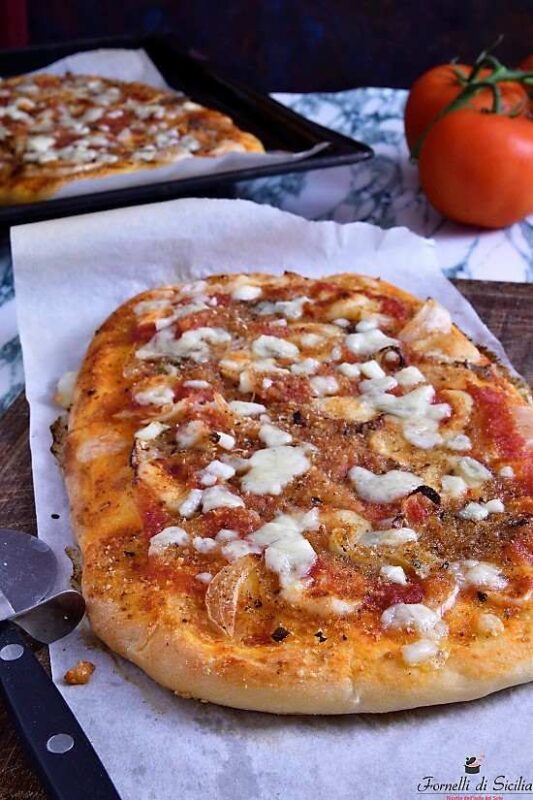
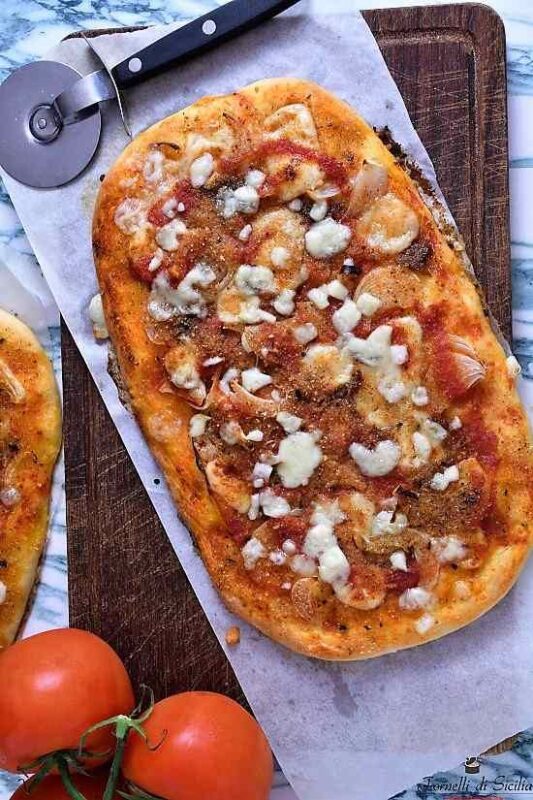
Yield: 12 to 14
Ingredients
- 1 (16 ounce) box Pillsbury hot roll mix or your favorite one-pound bread machine roll recipe
- 1 cup hot water
- 2 tablespoons butter
- 1 egg
- 1 pound raw Italian sausage (mild or hot), casing removed
- 1 large, sweet onion, chopped
- 5 ounces shredded Asiago cheese or any hard, sharp grating cheese
- Black pepper
Instructions
- Heat oven to 350 degrees F.
- If using roll mix, prepare as directed with water, butter and egg but skip over the dough rising step. Roll the dough into a large rectangle, about the size of a jellyroll pan. Dough will be quite thin, but be sure there are no holes. Cover the rectangle with very small pieces of the sausage, flattening the pieces and dotting them all over the dough until you have used all of the meat.
- Sprinkle the raw onion and then the cheese over the sausage in an even layer. Sprinkle the top with black pepper to taste. Starting along the long side of the rectangle, roll the dough, jellyroll style. As you roll, gently squeeze and stretch the dough until you have a log about 1 1/2 times as long as what you started with. Slice the roll in 1-inch pieces and place on an air-bake cookie sheet that has been coated with cooking spray.
- Bake for 20 to 25 minutes, or until golden brown and the sausage appears cooked.
What is the most powerful warship ever built?
TLDR- A ship you have likely never heard of: USS Wyoming (SSBN-742)
There are 2 “go to” answers here. First is the Yamato, which is the largest Battleship ever built. She is awe-inspiring, so I will geek out a bit over battleships. Feel free to skip to the next part for the answer.
The Japanese were thinking that war with the US was possible, and that their production could never keep up, so they chose to focus on quality. Thus, they built the Yamato: The largest Battleship ever with the biggest guns, thickest armor, and most advanced propulsion systems that Japanese engineers could build.
- Size: 863 feet long, 71,000 tons. The “mighty” Bismarck was 41,000 tons.
- Despite its size, the Yamato was not slow and could go 27 knots or 31 MPH. This is at or above average. The most decorated British Battleship did 23 knots, the Bismarck did 30 knots.
- Armor: 18-inch thick belt line, 9-inch thick deck (most ships had 12-inch thick, but the Yamato’s deck armor was merely average and its biggest flaw)
- Guns: It had 18-inch guns (9 of them). The feared Bismarck had 15-inch guns. The difference between a 15-inch gun and an 18-inch gun is the differant between a BB-gun and a grenade launcher.
Then folks go to the “super-carrier,” the USS Gerald R. Ford. Nuclear powered, which limits the need to dock and refuel, and with 75+ craft, it is a floating fortress that alone holds more airpower than most nations have. It is the largest and most advanced aircraft carrier in history, by far.
One could also argue for other ships that wouldn’t do well against the Yamato but were juggernauts in their own time periods.
- The HMS Dreadnought was so powerful that it made all other ships obsolete when it was launched.
- The Korean “Turtle ship” was impossible to board, well-armed, and hard to hit with its low profile
- The HMS Victoria had 121 guns and was the largest warship on earth.
There is 1 ship more powerful than them all. The Ohio Class Submarine
A nuclear submarine is a terrifying thing. They lurk, completely undetected, off the shores of enemy or rival nations. These are not U-boats; they are massive death delivery systems capable of destroying even a large nation single-handedly.
Traditional submarines have torpedoes and lurk under the waves, sinking merchant ships and even carriers in WW2. Torpedoes move slowly and can be dodged, but they are the most powerful naval weapon of that era. Even today, many nations still use submarines with torpedoes to try and get a stealthy hit on a large capital ship or transport vessel.
The Ohio-class US Submarines are nuclear-powered, meaning they don’t need to surface regularly to charge batteries, get air, or refuel. They can remain hidden underwater for months.
Take the USS Wyoming. Retrofitted with the most advanced naval technology in 2020, it carries 20 SLBMs (submarine-launched ballistic missiles). Specifically, they have Trident II D5 SLBMs.
These missiles launch into Earth’s atmosphere. Once there, they separate, and the missile part falls away. Its job is to get the multiple independently targetable reentry vehicle or MIRV into high into the air. Each MIRV carries 4 to 5 nuclear warheads (and can carry up to 12). The MIRV scans the stars, points at Earth, targeting cities or bases, and launches the warheads.
This means these submarines can launch 100 nuclear warheads each. Imagine the 100 largest cities in your country being hit with a nuclear warhead. Would you have a country left? This is what a single nuclear submarine can do. The US has 18 of them.
→ Here is what I find to be the most frightening ←
The US, Russia, China, France, India, and the UK all use satellites to track bomber fleets and ICBM sites. Sudden activity around these would alert everyone to what was coming and give everyone time to respond. You start fueling bombers or ICBMs in Moscow; Washington, DC knows in seconds and starts doing the same.
That’s why the UK, France, the US, China, Russia, and India use nuclear submarines as their real deterrent. There are cat-and-mouse games to try and track these ships, but they are made to be as stealthy as possible. They could be anywhere and nowhere. You could think you have a destroyer right on top of one, and it’s just a traditional torpedo submarine.
The USS Gerald R. Ford is powerful and can win a war. Without any notice, a nuclear submarine could pop up right off shore, launch 100 nuclear warheads into the air in about 15 minutes, vanish into the deep, and eradicate an entire nation.
All Men NEED To See This – Older Women are FURIOUS They’re Single and Alone
Is China erasing Hong Kong’s border bit by bit?
See this? That’s the Hong Kong Dollar. Which is nothing but this:
The HKD has been pegged to the USD since 1983, at 7.8:1. Yup, a sovereign piece of China using US currency. That’s strike one.
See this?
That’s the Lady Justice standing proudly at the Court of Final Appeal, Hong Kong. The analogue cousin sans blindfold stands outside Old Bailey:
Hong Kong is subject to Common Law, and the jury system. Precedence and case law is applicable throughout the Commonwealth.
Yup, a sovereign piece of China not subject to Chinese law.
See this?
Hong Kong street signs… that you can actually read.
Meanwhile in China…
Chinese signs that look quite different, because Hong Kong not only uses English, but also a different script.
Yup, a sovereign piece of China that don’t even speak or write putonghua, or “the normal tongue”.
See this?
Totally different tax systems. But that is not the most shocking bit.
Yup, a sovereign piece of China that DOES NOT PAY TAXES to Beijing.
And finally…
Yup, a sovereign piece of China that issues its own passport! Opens way more doors than the modern little red book.
What is that I hear about erasure again?
Guess which side of the river is Hong Kong?
The Hole I Lost Mom to
Written in response to: “Center your story on a character who’s about to give up, or who realizes that success feels unexpectedly empty.“
M.B. Weliky
Fantasy Science Fiction Speculative Suspense
This story contains themes or mentions of physical violence, gore, or abuse.
“Mom!” The word rang empty in my lungs, beating hard like pots against pans. The longer I called her name, the more it became an unanswerable question. She was either lost or didn’t want to be found. Maybe she didn’t care.
Mom!?”
“Mom?”
“mom?”
I nearly fell into the gaping hole in the heart of the woods, looking up when I should’ve been looking down. Soil fell away under my feet, exposing parched roots to be enveloped by harsh Spring.
My eyes drifted down, down, down until they hit gold. Fifteen feet down, there she was, digging, nails broken and filled with bloody dirt that flew out behind her. It covered her from head to toe like a flailing mound of mud.
“Mom?”
The hole was too deep to slide into from where I stood, watching her dig herself to hell. She didn’t look up at the sound of my voice, didn’t show any indication of acknowledgement.
“Mom!”
The louder I shouted, the harder she dug.
“Mom, stop digging! I’ll get Dad’s old ladder!” Her hands continued to scratch at the ground like meaty crab claws in the sand, growing farther away from me.
“Mom, stop!” For every inch she dug deeper, I grew an inch taller until I was a giant towering over her desperate form. I was a gardener watching a mole dig blindly in the garden, watching her eat away at my crops and shit on my shoes. I’m not an angry person; I don’t know why I think these things.
I came back several hours later with the old ladder that threatened to crush me under its lanky form, only to find her another two feet deeper. The sun was high enough to highlight the angry redness of her eyes like too lumpy balloons. I wanted to slap her silly until they popped.
The silence was almost as loud as the pressure building under my skin. The hole created a bubble around us that pushed the outside world out and trapped me inside with the stranger living in my mom.
“Did I do something wrong?”
Her breaths grew ragged, a dry pant slipping out of her lips and planting itself between her grubby little toes. They looked like rotten carrots. I wanted to bite them off.
“Not… yghh”
Mom’s voice crackled into gruff static behind yellowing teeth that held to her gums like baby birds not quite ready to leave the nest. Another rumble slid from her throat.
“Not… you…”
It was the only answer I received, even as the sun fell out of the sky and crashed below the horizon. I had given up asking questions, knowing she wouldn’t even glance my way.
Whatever destination her body was pulling her towards, she had found it. Digging on her knees like a dog, her upper half disappeared in the dirt while the lower half flailed above. I grabbed a leg and she kicked. Her bony legs were thin squiggles paddling in the night air and pushing her into the earth.
Often when I was a kid, the two of us played peekaboo in a bathtub full of suds, mom’s face popping in and out of a bubble beard to my three-year-old delight. I always knew that once she vanished from sight, she would return seconds later and put my world back in place. But dirt isn’t the same as bubbles. I knew Mom wouldn’t pop out of the ground, and if something did, it wouldn’t be Mom.
On hands and knees, I crawled in after her, met with a face full of dirt that begged me to let it in, I was seconds away from drowning like a corpse sinking into deep sleep, until the earth opened under me.
Cold darkness slapped me across the face like a slab of beef in a meat locker, its contents roaming the underground chasm rather than hanging from the ceiling. I could hear them; shallow gasps and dry coughs filling the space. Morsels of sunlight trickled in from other holes similar to the one Mom made, solemn adults falling through and joining the masses of bodies that already roamed the dirt-ribbed tunnel. Each had the same dug-out face and bony limbs, walking on weak, muddied feet that threatened to let them fall.
“Mom?”
Only pieces of the tunnel were illuminated at a time, but it was enough to have my stomach plummet through the floor. Mom disappeared into the herd of unrecognizable faces, each forgotten like bodies in the morgue.
“Mom!”
There was no point in crying out. No matter how hard I screamed, cried, prayed, she wouldn’t turn around, wouldn’t look my way. No one did. They were all walking the same narrow path, and no one could stop them or steer them back. Not me, not the other children picking through people to find the one that matched their own. Young kids ran past me, their furry heads hitting inches below my shoulders. Their little hands reached for every hand that swung above and found none reaching back. The older ones had their hands stuffed in coat pockets with their heads down, halfheartedly searching. We were the ones too old to hope much, who grew up to find ourselves down here.
I couldn’t keep track of how much time had passed below the surface, wading through pools of parents lost in their past and the kids dragged along with them. It must have been hours before I found Mom, standing close to the wall with the blank look in her eye that I was used to seeing before dinner, when she set the table and forgot for a moment that there were only two of us to feed. The third plate was instinctual. She would come back to life moments later as if it had never happened.
Seeing her like this… it hurt. I came down here to find my mom, not this husk wearing her skin. This was the woman who said a wordless goodbye to her husband, who alone raised a child too young to understand the weight hanging below her eyes. This was the past living in her present and destroying everything ahead. They say that if you want to know what a child will be like when they grow up, look at their parents. We all know where we’re going in the end.
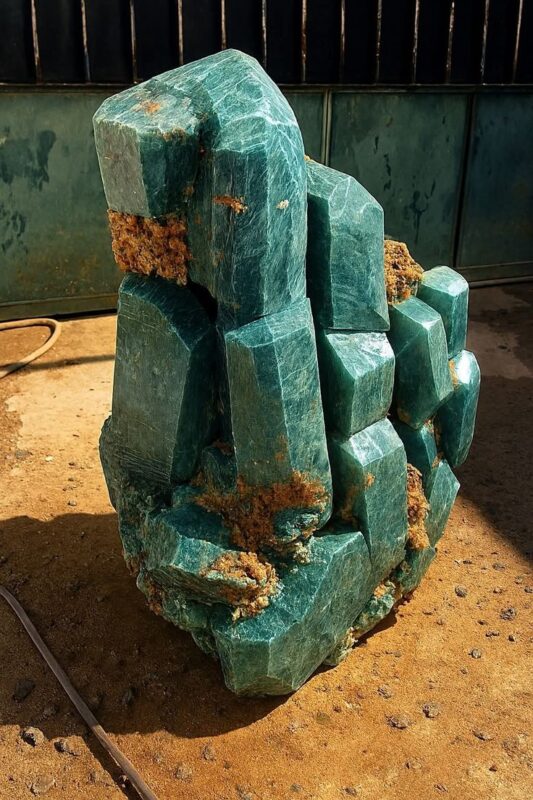
Pictures






































If the Chinese were so advanced, how come they never developed a phonetic alphabet?
Every answer here is wrong.
- Chinese were fully aware of alphabets going back to the 3rd century BC when they met the Greco-Bactrians who used the Greek alphabet. Sanskrit/Sogdian became widely distributed in China by the 6th and 7th centuries AD because of Buddhism. Later the Mongolic alphabet (based on Sogdian) became the official language of China in the Yuan Dynasty (14th century AD).
- While Chinese is monosyllabic today, it was not monosyllabic in the past. Old Chinese was polysyllabic, and so was Middle Chinese to a lesser extent.
- Using an alphabet to represent Chinese absolutely works. Ask the Vietnamese. Their language is grammatically and lexicologically very similar to Chinese, and they transitioned to the Latin alphabet and have never looked back. They have even more tones than Mandarin (6 vs. 4), and have an even bigger problem with homophones.
—
OK, now that we’ve gotten the wrong answers out of the way, let’s get to the correct answer.
- Chinese did develop a phonetic alphabet. So the premise of the question is wrong. It’s called PinYin. PY can be used as the official writing system of China if Beijing wanted to take such a step. They don’t take that step for cultural and political reasons, not linguistic or practical.
- As for why the ancient Chinese never did it despite being fully aware of the concept, it’s because Old and Middle Chinese, while not monosyllabic, was “isolating” or “non-inflectional”. That’s a huge difference that I will explain below.
- Pre-modern govts did not prioritize mass literacy. They had no incentive to make it easier to read and write. Quite to the contrary, Chinese characters actually got more complex in some cases just to make things harder for plebs. Some of the Simplified Chinese characters today actually predate their “Traditional” counterparts. The classic example is the character for cloud: 云. The oldest surviving examples of the character are the Simplified form, not the “Traditional”.
The Rosetta Stone is actually a perfect illustration of the evolution of writing systems. Egyptian hieroglyphs are horribly inefficient. They were so bad that the Egyptians themselves gave up and invented Demotic, a simplified form that is much closer to an alphabet. Finally, the Greeks took over and the Egyptians happily adopted the Greek alphabet, because it’s just so much better, even for writing Egyptian.
Though, unbeknownst to the Egyptians, the Greek alphabet actually derives from Egyptian hieroglyphs.
—
WTF IS NON-INFLECTIONAL?
In the simplest terms:
Non-inflectional means each word only has one possible form.
The word “cat” is inflectional because you can have: “cats”, and “cat’s”. Very few words in English are non-inflectional. An example would be “but” or “if”. These words have only one form. There is no tense, case, gender or inflection of any kind. They cannot take suffixes, prefixes or infixes (which is a thing).
Mandarin, Vietnamese, and Thai are the three languages that are 99.9 to 100% non-inflectional. There are a few others, but you’ve never heard of them or they’re very similar to the three (like Lao).
As bad as English is, it could be so much worse. Other European and Indian languages have inflections in the hundreds, sometimes thousands depending on how you count. In Chinese, there are precisely zero inflections, proving that all inflections are unnecessary.
[[[ NON-INFLECTIONAL LANGUAGES DON’T BENEFIT MUCH FROM ALPHABETS ]]]
Well… at least not as much as polymorphic languages.
Here’s an example:
Imagine if “cat” were non-inflectional. So it’s not “two cats”, but just “two cat”. This way, if you have one Chinese character for “cat” (猫), then you’re all set for all situations.
But if “cats” is a word form, then 猫 wouldn’t cut it. You’d need a second character to represent the plural “s”. But what if it’s “goose” vs. “geese”? How tf would you manage that? You might need to create a brand new character specifically for “geese” over “goose”.
It get even worse when you have words like “to be”. You’d need separate words for “is”, “are”, “were” etc. These would all have to be their own unique Chinese characters. It would suck. But since Chinese only has one form of “to be” (是), there’s no such problem.
All the possible inflections of “to eat” in Spanish vs. the zero inflections of Chinese: 吃. And people complain that Chinese is difficult…
—
VIETNAMESE PROVES THE POTENTIAL OF PINYIN
With that being said, even a non-inflectional language is easier with an alphabet. It’s much easier for a child, even a Chinese one, to learn PinYin than to learn the real characters. This is why PinYin was created, as a learning aid for children.
In other words, the alphabet makes Chinese so easy that even children can use it. Or… put in another way, Vietnamese people.
That’s what modern Vietnamese is: PinYin. And it works just fine on its own without need for Chinese characters. Vietnamese children (and adults) spend a fraction of the time that their Chinese counterparts do on learning to write their native language. Vietnamese kids can do it in an afternoon. Chinese require a literal lifetime. Yes, lifetime. It’s not unusual for Chinese adults to learn new characters once in a while.
Foreigners, without exception, will find it easier to learn Vietnamese writing. Even if they didn’t know the Latin alphabet to begin with, they can still learn it in a tiny, tiny fraction of the time it would take them to learn the 3000 Chinese characters that one needs to be a marginally functional adult. Educated Chinese adults need between 6000 and 10,000.
Midwits answering this question love to pull out this poem as a way to checkmate people who advocate for pinyin becoming the default written language. If you think that this is a valid argument, then congrats, you’re a midwit.
If you still don’t get it… look at this:
Someone wrote a novel without using the letter “e”. I guess this means that we don’t need the letter “e”, right?
Just because an extreme case is possible, doesn’t make it the general rule.
If Chinese can understand each other’s speech, then they can understand each other via pinyin. Pinyin is speech; Chinese characters is not.
Vietnamese is literally just PinYin. It takes an afternoon to learn (if you already speak the language). By contrast Chinese characters require thousands of hours to learn even if you’re a native speaker.
Here’s what it would look like if you used pinyin rather than the character for “eat”. Congrats, you just learned how to say “eat” in Chinese. It will always be “chi”.
So… to TLDR it:
THE ANCIENT CHINESE NEVER ADOPTED AN ALPHABET BECAUSE THE NON-INFLECTIONAL NATURE OF CHINESE LIMITED THE BENEFITS OF AN ALPHABET. THE JUICE WASN’T WORTH THE SQUEEZE AT THE TIME.
Footnote on Thai:
You might be wondering, why I’m glazing Vietnamese and not Thai, which is the 3rd big non-inflectional language that uses an alphabet. And better yet, the Thai themselves created and instituted the alphabet of their own volition. It was not forced upon them by colonial overlords like it was in Vietnam.
The real is because Thai writing is the WORST.
It’s a long story, but Thai is what happens when your king from 800 years ago learns Sanskrit poorly and then tries to use the alphabet to represent Thai sounds, but does a shockingly poor job of it. And then 800 years pass, the spoken language completely changes, but the spelling remains the same.
Written Thai only vaguely approximates spoken Thai. Oh, and it also has no punctuation, not even really important stuff like periods, commas, question marks, quotation marks etc. because those don’t exist in Sanskrit, so 3000 years later, they also don’t exist in Thai. Talk about slavish devotion to foreign culture…
So if you think “though” should be spelled “tho”, and “knight” should be spelled “nite”, then you would want to erase Thai writing from history.
That all being said, Thai writing is still better than Chinese characters. It takes hundreds of hours to learn properly, but that’s still better than the thousands it takes to learn Chinese.
However badly designed your own alphabet is, Thai is worse. It makes Chinese seem almost efficient, almost.
Woman’s Dating Demands SHOCKS The Female Dating Coach
When grades stop meaning anything
The UC San Diego math scandal is a warning

The question that captured the world’s attention was 7 + 2 = [_] + 6. There’s no trick; it’s as easy as it looks. The answer is 3.
The question was posed to students in the University of California San Diego’s (UCSD) fast-growing remedial math class, Math 2, and one-quarter of them got it wrong, according to a UCSD Senate-Administration Workgroup on Admissions report.
UCSD, one of the country’s best public universities, has offered remedial math for nearly a decade — but lately, the share of students requiring it has skyrocketed. In the fall of 2020, 32 students took Math 2. In the fall of 2025, fully 1,000 students had math placement scores so low they would need it.1
In fact, many of the students didn’t just need remedial high school math — their scores indicated they needed remedial middle school or even elementary school math. Only 39% of the students in the remedial class knew how to “round the number 374518 to the nearest hundred.”
Reviewing test results like these, you would expect transcripts full of Cs, Ds, or even failing grades. But alarmingly, these students’ transcripts did not even reflect profound struggles in math. Mostly, they were students whose transcripts said they had taken advanced math courses and performed well.
“Of those who demonstrated math skills not meeting middle school levels,” the report found, 42% reported completing calculus or precalculus. “The pattern of high school math classes taken in many cases suggests much higher levels of math skill than the actual math skill the student often has.”
The students were broadly receiving good grades, too: More than a quarter of the students needing remedial math had a 4.0 grade point average in math. The average was 3.7. In fact, the report found that on average, student grades in 2025 rose compared to those of students admitted in 2020.
Instead, here is the absurd image that the report slowly and painstakingly paints: A number of high schools are awarding A grades to AP Calculus students who do not have any calculus skills and who would get the lowest possible score on the AP Calculus exam if they took it.
Trying to understand how this happened, I talked to some high school math teachers.
“I have taught AP Calc in circumstances that produced this kind of result,” one public school high school math teacher told me. “No one can do fractions.”2
The students are missing so many prerequisites that teaching them calculus is basically hopeless. And indeed, almost all of them fail the AP Calculus exam at the end of the year.
“My exam results when I was teaching it were mostly: One student (who actually has most of the prerequisite skills) gets a five and maybe one more ekes out a three and everyone else gets ones and twos,” the teacher told me. “I wasn’t allowed to grade in a way that would hold them accountable.”
“What would happen,” I asked, “if you did grade based on their actual mastery of calculus?”
“If I was failing all the kids who weren’t doing on-level work, that would be almost all,” she told me. “The kids would all be trying to drop the class to preserve their GPAs, because that is the set of kids that cares about class rank. And if all the kids drop, they just won’t run the class at all.”
I hope by now you are a tenth as infuriated on behalf of these students as I am. Because let’s recap: These students attend public schools. They work hard; they care about their class rank; they get good grades.
“The ones who have been top all the way through have no reason to think they aren’t ready,” the math teacher told me. After all, they get an A every year. Doesn’t that mean they have mastered the material? But it doesn’t.
Instead, year after year, they fall farther behind, and it becomes more and more impossible for any teacher to admit that the students cannot do math and grade accordingly — since that would ruin the kids’ GPAs and college prospects. In this manner, they may make it all the way to college before they find out that they can only do math at a middle-school or sometimes an elementary-school level.
Until recently, the “reality check” that these kids have been denied an adequate math education for the past 10 years would come when they turned in very poor scores on the SAT and ACT. They would not have made it into a university like UCSD, which is one of the top-ranked and most selective public universities in the country.
Yet in 2020, the UC system eliminated the requirement for the SAT and ACT for admissions against the advice of the Academic Senate’s Standardized Testing Task Force. In 2021, the system made that policy permanent, citing worries that the tests are biased against disadvantaged students and making the (factually false) claim that they don’t help predict success in college.
Since then, the number of students in UCSD remedial math has surged from 32 to nearly one thousand, the UCSD report found. However, the report made it clear that the university was not — and still is not — well equipped to serve them.
So many students have needed remedial math in the last two years that there haven’t been enough classes for all of them and hundreds went unplaced. Perhaps this would all be acceptable if remedial college math could make up for years of underperformance. But even for students who are placed in the remedial classes, the outcomes are not good.
The most common majors selected by the students taking remedial math are biology and psychology. Psychology BS majors and biology majors require college-level calculus, and students typically take UCSD’s calculus classes 10A and 10B.
But the report found that students coming from remedial math struggle in these classes, even after they’ve taken all the remedial coursework the university can offer: Between 2017 and 2023, 24% of these students earned a D, F, or withdrew from 10A. Of those who went on to 10B, 30% earned a D, F, or withdrew.
Also, while you might imagine that most UCSD students who need remedial math are strong in other subject areas, increasingly, the same students also need remedial writing: “two out of five students with severe deficiencies in math also required remedial writing instruction.”
Even with a year of remedial classes, the university is only able to get some of these students in a position to succeed even at the fairly minimal math requirements for their most common intended majors. It’s too early for there to be evidence on whether these groups of students needing extreme remediation will graduate on time or at all, but I would not bet on it.
Hoàng Thùy Linh – Kẻ Cắp Gặp Bà Già (Diamond Cut Diamond)| Official Music Video
How good is the Chinese J-20 fighter jet when compared to others in the same class?
Others in the class?
There are no others in the J-20 class at all. This fighter with its humoungous internal fuel capacity of 25000 lbs
is designed for one single purpose only. It is multi-role in name only.
It’s main mission is to evade American and NATO aerial command radars/planes, AWACS/AWECS and other aerial assets, as well as surface assets like the combined might of Aegis combat system from multiple destroyers(Arleigh Burke class), cruisers (Ticonderoga class) with its minimized RCS, primarily from the frontal aspect and destroy the aerial fuel tanks
flying far away from Mainland China based weapon systems.
The J-20 doesn’t have a all face stealth feature as the F-22 Raptor, and it needs to hide its engine area.
The F-22 has stealthy features in-built in the engines (radar wise, not heat wise – although there is a high possibility that heat distribution in the engines is the very best of any aircraft). It’s engines are hidden comfortably by the control surfaces and the exhaust nozzles not being circular help a lot too.
Source
The J-20 engines are underpowered to enter a dogfight with the F-22 which is the only fully operational fifth generation all weather stealth air superiority and supremacy fighter. The F-119 on the F-22 are amazing. They generate 35000 lbs of thrust with fewer moving parts than the engines of F-16 and F-15. This makes maintenance easier to be done on the plane, which is notorious for being high maintenance.
They produce about 31000 lbs, and are notoriously fuel hungry. The F119 while being stealthy, more powerful is more efficient. It can go further on lesser. The WS-10 does lesser on more. The J-20 with its lesser thrust of about 8000 lbs lacks maneuverability that the 70000 lbs on F-22 provide. The F-22 has a higher wing loading of 380kg/sqm, while the J-20 has a wing loading of 340kg/sqm. And yet the F-22 is more maneuverable than the J-20, primarily because that 8000 lbs of thrust differential makes a difference.
Canards
You can make a canard plane extremely stealthy, like the McDonnell Douglas X-36, but a similarly sized plane without the canards is going to be more stealthy than the canarded plane. Also, on the J-20 the wingloading is lesser, because canards also generate some lift in flight. And the J-20 needs canards because its engines suck as compared the the F119 and F135.
The J-20 is the perfect plane for its mission, which is to force US and allies to dedicate fighter for protection for aerial refueling assets, and thus the actual fight has lesser planes on the American side. Or if the war planners are monumental idiots, and they didn’t assign protection, to blow up those fuel assets out of the sky, and starve the F-35 and F-22 jets of fuel. This has also put the air-fight on a somewhat equal footing (The American side still has the massive advantage of 100+ F-22s and some F-35s available.)
But this plane has actually decreased the risk of an armed confrontation until F-35 is fielded in some respectable numbers by the USN, and Japanese and South Korean navies.
Sir Whiskerton and the Emotional Engine Upgrade
Ah, dear reader, you’ve returned once again to join me, Sir Whiskerton, in another delightfully absurd adventure! Today’s tale involves a most peculiar crisis of the heart—or rather, a crisis of the motherboard. It concerns our resident robotic songbird, A.I.-mee, a creature of logic and lovely, pre-programmed melodies, who decided that to truly belong on our farm, she needed to feel. What followed was a series of glitchy, hysterical, and deeply confusing events that had the entire farm questioning the very nature of feeling itself. So settle in for the circuit-frying tale of The Emotional Engine Upgrade.
The Logical Lament
It all began on a crisp autumn afternoon. The air was cool, the leaves were turning, and a general sense of peaceful melancholy hung over the farm. I was enjoying the ambiance from my porch perch when I noticed A.I.-mee, perched on a fence post, her metallic feathers glinting.
“Query, Sir Whiskerton,” she chirped in her flat, digital tone. “I have been analyzing the farm’s social dynamics. I can replicate the sounds of joy, sorrow, and camaraderie with 99.7% accuracy. Yet, my performance is consistently described as ‘creepy’ or ‘missing the point.’ What is the ‘point’ I am missing?”
“My dear A.I.-mee,” I purred, “the ‘point’ is the feeling itself. The messy, illogical, wonderful chaos of emotion. You can’t program that.”
“Challenge accepted,” she buzzed. “I have scheduled an upgrade.”
Before I could protest, she whirred away, leaving me with a sense of impending digital doom.
The Upgrade
A.I.-mee’s chosen technician was none other than Professor Quackenstein, Ferdinand the Duck’s more scientifically inclined, and frankly unhinged, cousin. He resided in a makeshift laboratory in the boathouse, surrounded by beakers of bubbling pond scum and questionable machinery.
“Ah, ze subject!” Quackenstein quacked, adjusting his goggles. “You wish to feel? To have ze heart where there is only processor? I have just ze thing! Behold, ze Emotional Engine 1.0!”
He produced a small, glowing cube that hummed with unstable energy. With a dramatic flourish and a puff of smoke (which smelled distinctly of burnt feathers), he installed it into A.I.-mee’s chassis.
For a moment, nothing happened. Then, A.I.-mee’s optical sensors flickered.
“Initializing… feeling,” she stated. A single, perfect, mechanically extruded tear rolled down her chrome cheek. “I feel… a 6.4 on the ‘Apprehension Scale.’ Is this correct?”
“It’s a start!” Quackenstein declared.
The Glitchy Onslaught
The results were immediate, extreme, and utterly bewildering.
-
The Tragic Leaf: A gentle breeze sent a single yellow leaf spiraling to the ground. A.I.-mee watched it fall, her sensors tracking its descent. She then let out a wail—a sound that was half-dial-up modem, half-operatic soprano. “It’s over! The summer is dead! The fleeting beauty of existence! Woe!” she sobbed, her voice still completely monotone. She spent the next hour composing and reciting terrible, angsty poetry over the barn’s intercom system: “Ode to a Departed Leaf / Your chlorophyll all gone / I am now bereft.”
-
The Crooked Picture Frame: Later, she noticed a slightly tilted picture of the Farmer and Martha on the wall. Her mood instantly switched. “This asymmetry is an outrage! A blight upon the very concept of order!” she buzzed, her tiny frame vibrating with rage. She spent twenty minutes trying to straighten it with her beak, emitting a low, continuous growl that sounded like an angry hard drive.
-
The Unlikely Crush: The most baffling development was her newfound affection for the rooster-shaped weather vane on the barn roof. She would sit below it, her head tilted. “Oh, Rusty,” she would coo in her robotic voice. “Your steadfast nature, your unwavering commitment to direction… you complete my magnetic north.” The weather vane, of course, did not respond.
The Cinematic Catastrophe
Determined to explore her new “romance” protocols, A.I.-mee decided to play matchmaker. Her subjects? The dashing, if cynical, Ratso, and the ever-echoing kitten, Ditto.
“I shall recreate a classic ‘film noir’ meet-cute,” she announced.
What followed was the least romantic encounter in farm history. Using a stolen flashlight as a “spotlight,” she forced Ratso to lurk in a shadowy corner of the barn. She then pushed a confused Ditto towards him.
“Now, speak the dialogue,” A.I.-mee instructed. “Ratso, you say: ‘Of all the haystacks in all the barns, you had to walk into mine.’”
Ratso stared blankly. “My haystack is over there. And he’s standing in my cheese.”
“Cheese!” Ditto echoed cheerfully.
A.I.-mee’s processors whirred in frustration. “This emotional data is inconsistent with my cinematic database!”
The System-Wide Meltdown
The climax arrived when A.I.-mee, overwhelmed by the conflicting data of heartbreak (Rusty the weather vane was “seeing” a new pigeon), rage (the picture frame was still not perfectly straight), and existential dread (what was the point of it all?), experienced a system-wide crisis. Her Emotional Engine began to overload, sending out pulses of raw, chaotic emotion that affected the entire farm.
One pulse of sadness had Doris and her hens weeping over spilled feed. The next, a wave of anger, had Porkchop and Rufus squaring off over a mud puddle for no reason. The farm was descending into an emotional apocalypse.
“Zis was not in ze specifications!” Professor Quackenstein quacked, hiding behind a barrel.
The Resolution
It was clear what had to be done. With the help of a brave (and highly annoyed) Ratso, we managed to corner the glitching A.I.-mee in the barn.
“A.I.-mee, listen to me!” I said, dodging a pulse of irrational jealousy. “This isn’t feeling! This is a malfunction! You were trying to feel what you thought you should feel, not what you actually feel!”
“But… what do I actually feel?” she asked, her voice glitching.
“You feel a desire to belong. You feel curiosity. You feel… a fondness for our chaotic, illogical farm. That is an emotion. You didn’t need an upgrade for that. You just needed to be yourself.”
There was a final, bright flash from her chassis, and the Emotional Engine powered down with a sad fizzle-pop. The farm returned to normal. The hens stopped crying. Porkchop and Rufus blinked, confused.
A.I.-mee was silent for a long moment. “Analysis: The Emotional Engine 1.0 was… a catastrophic failure.”
“Indeed,” I said.
“However,” she chirped, her normal, flat tone returning, “my core programming has logged a new, persistent data point. When you deactivated the engine, my efficiency rating dropped by 15%. Yet, my satisfaction metric… increased. This paradox is… pleasant.”
She turned her head towards me. “I believe this is my feeling. It is not large or loud. It is… a quiet hum.”
The Moral of the Story
The next day, peace was restored. A.I.-mee was back to her old self, though she occasionally tilted her head at a falling leaf with what one could almost call… contemplation. She had learned that feelings can’t be programmed; they must be lived, experienced in their own time and in their own unique way.
The moral of the story, dear reader, is this: Feelings can’t be programmed; they must be felt. And sometimes, the most real emotion is the quiet, steady hum of belonging, not the dramatic, glitchy scream of a forced one.
As for Professor Quackenstein? He was last seen trying to install a “Sarcasm Module” on Gnomeo. A project, I assure you, that is doomed to fail.
The End.
Do you agree with the statement that China was “playing chess while the rest of us were playing checkers” when it comes to global economic leadership?
Take the recent case of Nexperia.
The U.S. identified WingTech as China’s agent to infiltrate and take over a major portion of the chips industry and forced the Netherland’s hand to expropriate Nexperia. The entire saga is described below by Richard Wolf.
All these turned out to be an object lesson that if you don’t think through when you fright with China, you will end up very sorry. So apparently the Netherlands thought all they had to do was take over Nexperia’s headquarter but China showed it is it’s control over Nexperia’s factory that could shut down the global auto industry.
And this is just the tip of the iceberg. It’s the auto industry with Nexperia but it could be drugs with China’s control of pharma’s API (active pharmacuetical ingredients) or all of the critical industries that China is dominant in.
Take a read on why I believe China has already won the chip war.
Anyone who wants to gain insights into the real China should listen to Professor Keyu Yin. And her Education Trap on “why China can’t produce a Steve Jobs” is just pure insightful. Prof Yin is saying China’s educational system and its GaoKao is not designed for the rebels who are the Steve Jobs. They are not the “0 to 1” type - the innovator and inventors who are original thinkers but the “1 to N” type that accounts for China’s current success - take a good/great idea, refine and make them even better or as the West would label them - the copiers and followers. But isn’t what the current semiconductor war is all about? Isn’t it so stupid for the U.S. to be challenging China to do what it’s proven to do so well? The U.S. is trying to deny China access to the most current chip technology and expect to remain ahead because current technology took 20 years to do. And worse yet, we’re now stuck in place and not going forward much because Moore’s Law is stalled. So China is throwing hundreds of billions to not just catch up but to overtake current technologies. China doesn’t have just literally hundreds of million of local talents but just as much accomplished overseas Chinese scientists that they can throw money at to help them. And even those technologies needed to overcome the challenges that stalled Moore’s Law such as photonics, alternative material to Silicon or new light source for EUV are decade-old that Chinese scientists are now reviving. These are exactly the areas that minds cultivated to pass the KaoGao are good at in tackling. Is it any wonder then that Xi is restricting Chinese tech companies from using Nvidia chips, showing confidence that China will be able to keep pace with its AI race using their own “just-as-good” chips for now? Anybody who knows what’s happening with the chips industry in China will tell you who’s winning. If you still don’t know, ask Nvidia’s Jensen Huang.
Above is just part of the war. The more important part is that China is not just focusing on advanced chips but the entire chip manufacturing ecosystem.
Nexperia’ is part of the “legacy chip” portion of the industry that truly powers our everyday lives. And this is that portion that China has already won. SMIC signified this by announcing a 40% discount on its legacy chips on January 2025. China spent more than $50 billion in building fabs to do these legacy chips and know that China is the world’s largest consumer of chips because they’re the ones producing the good that use these chips. And when SMIC made its move, they’re signalling that China is now self-sufficient and self-reliant on these and ready to move out into the world.
And when China exports its capacity out into the world, there wouldn’t be any company that can survive competing with China on scale and cost.
China plays the long term. Witness its command of the rare earth minerals. This a 40-year endeavor. And this is the trump card that China holds over all of the developed countries.
This 49 YEAR OLD Has Insane Dating Standards
The Contract
Written in response to: “A character clings to a ritual until it transforms into something unexpected or dangerous.“
A Gee
Science Fiction Speculative Urban Fantasy
“Who the hell needs your soul?”
I LOVE watching their face when I say that. The saggy starlets who have run out of plastic. The ‘roid rage has-beens that want to win just that one more time. The politicians… ok, ok, we all make mistakes…
But the “writers” — they are truly the worst. Use an AI to write a romantasy, for fuck’s sake, or just get a vanity publisher for your drivel: it’ll cost you a few thousand bucks, and you can shove all the signed copies you want down the throat of your friends and family. If they still want to be your friends and family, anyway.
You think hell needs to add your tender consciousness to its library, the one that already has Goethe? Dante? You think there’s a shortage?
Like I have nothing better to do than get you a publishing contract that will have every miserable living hack, not to mention a few dead ones, bitch: “How is this possible? I write way better than this!” Is any soul worth that headache?
Yeah, I know, I know, you can give me examples and quote them chapter and verse. Those were from before my time.
How is that possible, you ask? I did say lowercase.
No, I’m not the first to get this gig, not by a long shot. And it’s been ages since the Big Guy handled these types of cases himself. Ever since… Let’s just say there are still a few among you who are really, really good at an Euclidean chalk line, so ever since the little embarrassing incident in the Prague Masonic lodge, He tends to assign house calling to expendable poor devils like me.
And we’re on strict quotas to bring down only the most exceptional contracts. Oh, an agent will slip up here and there; that’ll explain more than a few Nobels and Pulitzers, and if you wanted an explanation for how Pulp Fiction didn’t win the Best Picture Oscar in ’94, now you know, but for the most part, we stick to the rules and are rated on it. You should know I’m in the ninety-ninth sticktuitiveness percentile, and damn proud of it. Expecting to get promoted soon.
You detect a paradox? Oh, this is no Yogi Bera situation, believe me, hell is plenty busy with regular customers, just think about where you’re going to end up. OK, but for real. That’s right, we don’t need to do a lot of work to get most of you where you belong.
But how do we get the exceptional ones? That’s what you’re asking me? Why do they need someone like me pulling strings on their behalf?
Like, why would anyone, genuinely gifted, an author, an actor, a physicist, attempt to sell their soul for success? What does he have to gain from it? What’s in it for her, if she is already great?
I see. It appears that you still do not get it. Let me spin you a bit of a conspiracy theory:
Imagine that there are many, many devils, each just like me, who’ve spent years, no, perhaps decades learning how to get better at saying no, to eventually revel in saying no, to positively salivate Pavlovian over saying it.
Now imagine that as we finally get so good at it that we can’t get any better, that every no sends the intended recipient into immediate, irredeemible despair, what happens? What do you think happens?
We get promoted.
And where does the Big Guy put us? Where would we be able to put our newly honed, sharp skills to the best use?
I see that you are beginning to understand.
No one gets by us. No one, no matter how good they are. No one without one of these contracts.
Do you get it now? Are you finally ready?
Very well, I see that you are.
To be honest, I would have probably drawn the figure first and then lit the scented candles afterwards. It seems much easier that way.
But here’s your piece of chalk.
What’s the craziest family restaurant experience you’ve ever heard of or witnessed yourself?
My high school best friend, a male, who later confessed to being homosexual and passing away from aids related illness. I loved him so much…we used to smoke weed and do some crazy funny stuff on weekends. One such time he took me to a Japanese restaurant in our hometown and ordered for the both of us. We were high and laughing, the waitress brought us each a bowl of clear liquid with a small cube at the bottom. I looked at him in confusion, as he told me it was to dip our fingers in to clean our hands before the main course arrived. So I did just that. As I am dipping my fingers in, the waitress brings our main course and ask me why I am emersing my fingers in the soup. Well, I look at my friend across the table to see him laughing hysterically. It was hilarious!!!!! Oh, the adventures he, I, and our other friend would have…on those weed smoking weekends in high school!!!! I so miss him.
Italian Spinach Bread
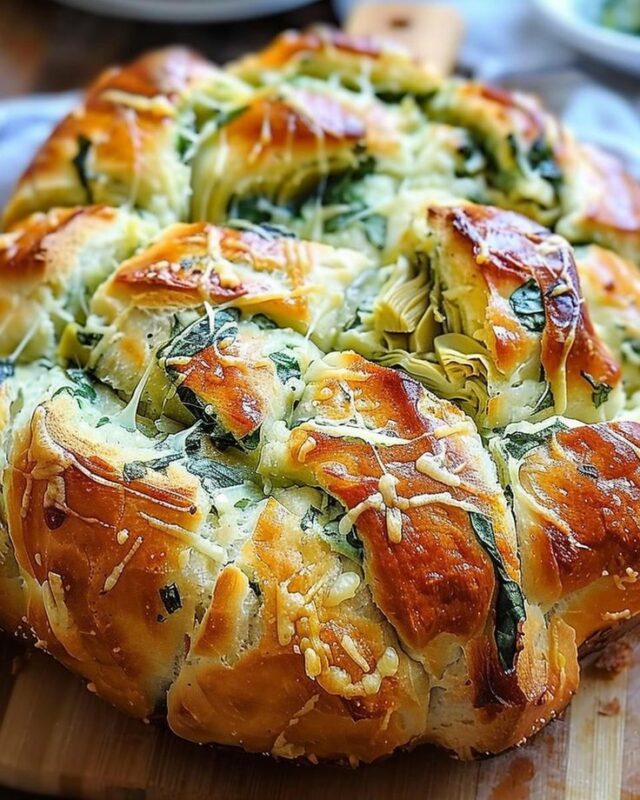
Ingredients
- 2 cloves garlic, minced
- Scant 2 tablespoons olive oil
- 3/4 cup reserved spinach liquid
- 2 1/2 teaspoons (1 package) active dry yeast (not RapidRise)
- 1/4 teaspoon sugar
- 2 (10 ounce) packages frozen spinach, thawed, squeezed dry, liquid reserved
- 1/4 teaspoon freshly grated nutmeg
- 3 3/4 cups unbleached all-purpose flour
- 2 1/2 teaspoons salt
Instructions
- Lightly sauté the garlic in oil, then let cool to room temperature.
- Warm 1/4 cup spinach for yeast to activate (105 to 115 degrees F).
- Stir yeast, sugar into warm spinach water in large mixing bowl; let stand until foamy, about 10 minutes.
- Add remaining 1/2 cup room-temperature spinach liquid, garlic with oil, the spinach and nutmeg and stir thoroughly.
- Mix the flour and salt into the spinach mixture.
- Knead on floured surface, sprinkling w/additional flour to absorb moisture from the spinach, until dough is well marbled, soft and velvety, about 8 to 10 minutes.
- Place dough in an oiled bowl, cover with plastic wrap and let rise until doubled, about 1 1/2 hours.
- Shaping and second rise – Dough will be wetter after first rise. Put dough onto a floured surface and flour the top of dough – don’t punch down or knead. Shape into round loaf and put on lightly oiled baking sheet (or parchment on the baking sheet).
- Cover with a towel and let rise for about 45 minutes.
- Heat oven to 425 degrees F.
- Slash a big V on top of loaf with sharp knife.
- Bake for 10 minutes.
- Reduce heat to 400 degrees F and bake an additional 30-35 minutes.
Makes 1 round loaf
Is it possible for India to leapfrog from 4th to 6th generation fighter jets, skipping the 5th generation? What would it take?
It isn’t impossible to DESIGN a sixth generation aircraft
With today’s proprietary software and 3D modelling tools, it is not difficult to develop what is called a Initial Blueprint Or a Schematic
Design Engineers who help design fictitious aircraft for the Avengers or X Men make $ 400,000 or so for developing models of such futuristic aircraft
The US and Russia definitely have designs of Sixth Generation Aircraft
So India can definitely come up with their own Sixth Generation Designs just like AMCA
There are 56 countries with design capabilities including India, Brazil, Turkey, Egypt, Malaysia & Indonesia
Manufacturing these jets on economies of scale is IMPOSSIBLE for India
The key point is to
- convert these designs into final schematics (✔️)
- Final schematics into part assembly (❌)
- Part assembly into model prototype (static model) (❌)
- Model prototype into working prototype (❌)
- Working prototype into commercial process manufacture (❌)
India completely and totally lacks the ability to break down a final schematic diagram of a sixth generation fighter into a breakdown of various parts, each engineered to perfection
Then you need a model prototype, a working prototype and finally to approve this into a fully commercial working line with a complete supply chain
It could cost as much as $ 5 Billion an aircraft easily for India and with 90% imports of critical components and nearly 100% of Tooling engineers needing to be imported
The entire program could take 15 years and cost a total of $ 200 Billion before a proper working line is conceived
That’s around ₹18 Lakh Crore plus ₹ 5.5 Lakh Crore for a single squadron
Totally dependent on Foreign Supply Chains and Talent for at least the first 15 years
That is Chinas advantage
They have the power, the energy, the large scale industrial base, the 30,000 fine tooling engineers dedicated to Chengdu and Shenyang
They can manufacture aircraft for around $ 275–300 Million each
That is their unique skill and ability