

Today’s Quora posting:
Have you ever tried mixing your own tea blends at home? What are some tips for creating a balanced blend?
No, I haven’t.
However, I do like your “pluck”. I share your enthusiasm for breaking down doors, crossing barriers and forging new roads where none has gone before.
Whatever your goal might be, and you say “balanced blend”, I suggest that you forge ahead with gusto, and throw all your passion into it. Be the pioneer that goes where no one else dares venture.
I believe in you.
…
Now some background.
Quora throttled me…
My AI evaluated this.
You Wouldn’t Survive a Day in the Carboniferous Forests
Journey to Carboniferous forests, where colossal ferns and trees dominated a world with double the oxygen. Discover how the absence of fungi created a unique ecosystem, fostering gigantic insects. Explore the surprising connection between these ancient forests and the coal we burn today.
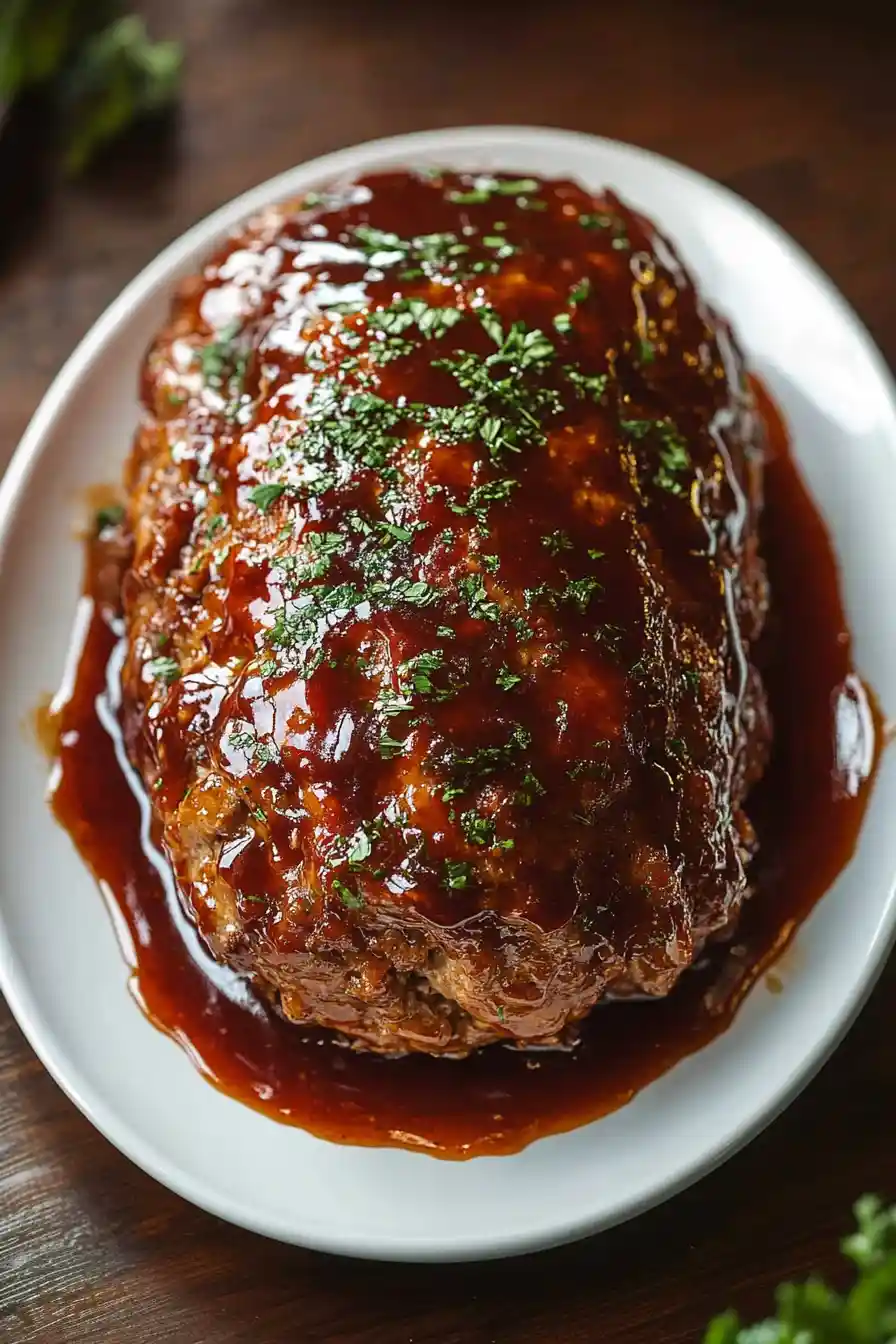
Juicy Meatloaf with Jelly Glaze
If you ask me, meatloaf with jelly glaze is pure comfort food magic.
This homestyle favorite takes me back to Sunday dinners around the family table. The classic mix of ground meat, breadcrumbs, and savory seasonings gets topped with a sweet-tangy jelly glaze that caramelizes as it bakes.
The glaze adds a nice sheen and creates those tasty browned edges everyone fights over. It’s the kind of recipe that fills your kitchen with those familiar, cozy aromas that draw people in from other rooms.
It’s a reliable weeknight dinner that always leaves everyone satisfied, perfect for those evenings when you need something that feels like a warm hug.
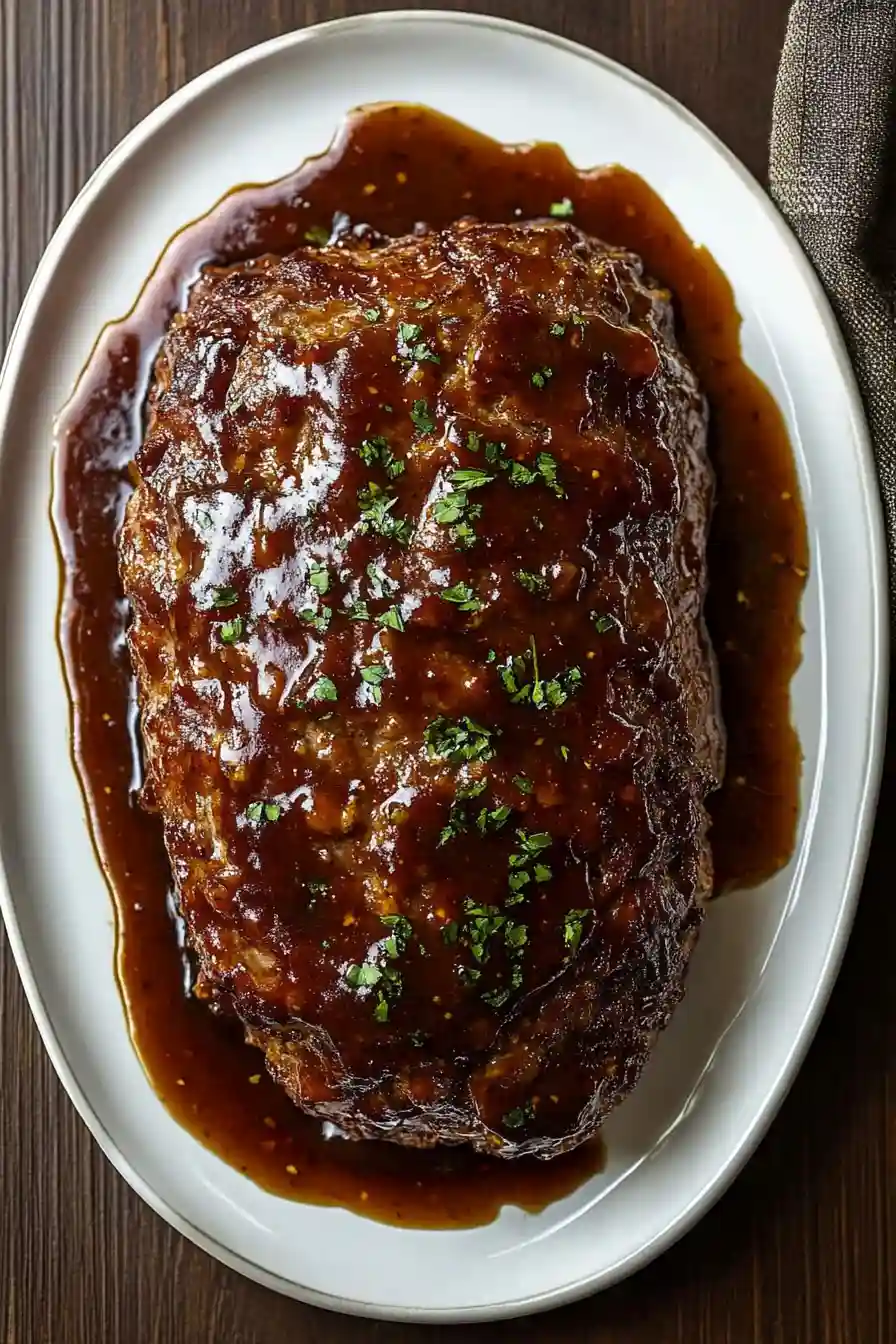
Why You’ll Love This Meatloaf
- Sweet and savory glaze – The combination of barbecue sauce, honey, and grape jelly creates a perfectly balanced topping that’s both tangy and sweet – it’s what makes this meatloaf special.
- Extra moist and flavorful – The mix of beef and pork, along with parmesan cheese and milk, ensures every bite stays juicy and packed with flavor.
- Make-ahead friendly – You can prep this meatloaf in advance and keep it in the fridge until you’re ready to bake, making it perfect for busy weeknights.
- Family-sized portions – This recipe makes enough to feed a crowd, and any leftovers make amazing sandwiches the next day.
What Kind of Ground Meat Should I Use?
For this meatloaf recipe, you’ll want to pay attention to the fat content of your ground meats since it plays a big role in keeping your meatloaf moist and flavorful. For the ground beef, aim for 80/20 (meaning 80% lean meat to 20% fat) – anything leaner might give you a drier result. The ground pork adds extra flavor and moisture, so regular ground pork works great here – no need for anything fancy. If you’re buying from the meat counter, let your butcher know you’re making meatloaf, as they might be able to give you the perfect grind. Just make sure both meats are fresh and well-chilled when you’re ready to mix everything together.
Options for Substitutions
This meatloaf recipe is pretty forgiving and allows for several substitutions to work with what you have on hand:
- Ground meats: While the beef and pork combo gives great flavor and moisture, you can use all beef, or try a mix with ground turkey or chicken. Just keep in mind that leaner meats might make a slightly drier meatloaf.
- Parmesan cheese: Out of parmesan? Try grated pecorino romano or aged cheddar. If you’re dairy-free, you can skip the cheese and add an extra 2 tablespoons of breadcrumbs.
- Breadcrumbs: Regular or panko breadcrumbs work great here. You can also crush crackers, use quick oats, or even crushed cornflakes as a substitute. Just make sure they’re finely ground.
- Milk: Feel free to use any kind of milk – plant-based options work too. You can even use beef broth if you’re avoiding dairy.
- Grape jelly: The glaze is super adaptable – try apricot preserves, apple jelly, or even cranberry sauce. Each will give a slightly different but tasty sweet note to your glaze.
- Eggs: The eggs are pretty important for binding, but if needed, you can substitute each egg with 1/4 cup of unsweetened applesauce or a flax egg (1 tablespoon ground flaxseed mixed with 3 tablespoons water).
Watch Out for These Mistakes While Cooking
The biggest mistake when making meatloaf is overmixing the meat mixture, which can lead to a dense, tough final product – instead, mix just until the ingredients are combined, using gentle hands or a fork. Another common error is using lean meat exclusively; the combination of beef and pork provides the perfect fat content for a juicy, flavorful result, so stick to regular ground beef rather than extra lean. To prevent a soggy bottom, avoid pressing the meat mixture too tightly into the pan, and consider placing the loaf on a wire rack inside your baking dish to allow excess fat to drain away. For the best glaze results, don’t add it all at once – apply it in two or three layers during the last 30 minutes of cooking, allowing each layer to set slightly before adding the next.

What to Serve With Meatloaf?
When it comes to meatloaf, you really can’t go wrong with classic comfort food sides that help soak up that sweet and savory glaze. Creamy mashed potatoes are probably the most popular choice – they’re perfect for catching all those tasty meat drippings! For vegetables, try some simple roasted carrots or green beans, which add nice color to the plate without competing with the meatloaf’s flavors. If you want to keep things super casual and cozy, mac and cheese makes an amazing side dish that’ll have everyone at the table feeling happy and satisfied.
Storage Instructions
Keep Fresh: Once your meatloaf has cooled down, wrap it tightly in aluminum foil or place it in an airtight container. It’ll stay good in the fridge for up to 4 days. The jelly glaze might get a bit sticky, but don’t worry – that’s totally normal!
Freeze: This meatloaf is perfect for freezing! You can freeze it whole or in individual slices – just wrap them well in plastic wrap and then aluminum foil. Pop it in the freezer and it’ll keep for up to 3 months. I like to freeze individual portions for quick weeknight dinners.
Reheat: To warm up your meatloaf, cover it with foil and heat in a 350°F oven for about 20-25 minutes, or until it’s heated through. If you’re reheating from frozen, thaw it in the fridge overnight first. For single slices, a minute or two in the microwave works great too – just cover with a paper towel to prevent splatters.
| Preparation Time | 15-20 minutes |
| Cooking Time | 60 minutes |
| Total Time | 75-80 minutes |
| Level of Difficulty | Medium |
Estimated Nutrition
Estimated nutrition for the whole recipe (without optional ingredients):
- Calories: 2900-3200
- Protein: 180-200 g
- Fat: 180-200 g
- Carbohydrates: 250-280 g
Ingredients
For the meatloaf:
- 1/2 cup milk
- 2 lb ground beef
- 2 tsp kosher salt (Diamond Crystal recommended)
- 1/2 tsp black pepper (freshly ground preferred)
- 1 lb ground pork
- 1/2 cup dry breadcrumbs (Panko breadcrumbs are a great choice for texture)
- 1/2 cup grated parmesan cheese (freshly grated for best flavor)
- 2 large eggs
- 2 cloves minced garlic
- 1/4 cup chopped onion (finely chopped for even distribution)
- 2 tbsp chopped parsley (freshly chopped, packed)
For the glaze:
- 1/3 cup honey
- 1 cup BBQ sauce
- 1/3 cup grape jelly
Step 1: Prepare the Oven and Loaf Pan
Preheat your oven to 350°F (175°C).
Take a large loaf pan, roughly 6½ x 10 inches in size, and coat it thoroughly with nonstick cooking spray.
Set the prepared pan aside for later use.
Step 2: Mix the Meat Ingredients
In a large bowl, combine ground beef, ground pork, beaten eggs, Parmesan cheese, parsley, salt, and pepper.
Mix together until just combined, being careful not to overmix to maintain a tender meatloaf texture.
Step 3: Prepare the Milk Mixture
In a medium bowl, combine milk, breadcrumbs, minced garlic, and finely chopped onion.
Allow the mixture to sit briefly to let the breadcrumbs absorb the milk.
Step 4: Combine and Shape the Meatloaf
Carefully incorporate the milk mixture into the meat mixture, blending just enough to combine all the ingredients.
Avoid overworking the mixture.
Transfer the combined meat mixture into the prepared loaf pan, pressing it firmly into the pan to ensure an even shape.
Step 5: Make and Apply the Sauce
In a separate bowl, mix together barbecue sauce, honey, and grape jelly until smooth.
Spread half of this mixture over the top of the formed meatloaf.
Step 6: Bake and Serve
Bake the meatloaf in the preheated oven for 40 minutes.
After this initial baking time, remove the meatloaf and spread the remaining barbecue sauce mixture over the top.
Return the meatloaf to the oven and bake for an additional 20 minutes, or until the internal temperature reaches 160°F.
Allow the meatloaf to cool for about 5 minutes before slicing and serving.
Enjoy your flavorful homemade meatloaf!
Will AI take over novel writing in the future?
In both of my jobs, as a novel / non-fiction writer and as a fiction editor, I meet a lot of traditionally published authors and selfpublishers. A few of them excellent writers, some good, most of them have some potential that never realizes. Because, unfortunately, most of those with talent but zero knowledge of the craft give up after their first or second book.
Some of them look at AI with fear.
Two hugely important things you may want to consider first, now and in the future, are craft and earnings.
About Craft
If you have talent, learn the craft. You could do worse than learn from one of the best novel craft teachers, K.M. Weiland. She is behind Helping Writers Become Authors, both website and podcast. Later, when you learned the basics of the craft from Katey and the sources she quotes, listen to the podcast Writing Excuses. This gives you the professional and wildly successful writers’ view on the same topics that are taught by Katey on a basic and advanced level.
About Earnings
I cannot speak for any other novel authors than those in Western countries. I just do not know enough about the Eastern, African, or South American novel market. In the Western market, only one or two of a hundred traditionally or self-published authors can live off writing alone. This has not changed much in the last few decades, funnily enough. They do not live a lavish life, mind you. Most of them earn barely more than they would in low-paying jobs. This is the reason why even well-known authors usually have a day job and write in the mornings, evenings, and weekends, while they are queuing at a check-out, while they wait for their kid in the car queue after school. This also has not changed much for the last eighty years.
What can you learn from this? Focus on learning a job that does not eat your soul, but one that allows you to write in your spare time. Hot tip: Talk with craftswomen like plumbers. Not joking the slightest. How do you find out which jobs these are in this age? Talk with a lot of people about their actual work-life balance — not their ideals, but about their daily work and free time. Then decide, again not on the lofty speeches some like to give, but on what most of the practitioners tell you. The job you choose will let you survive for the years it takes to become a successful author. And if you do not, it will prevent that you die of starvation, and you will still have the time to continue writing.
About AI
Having worked in AI, it is easier for me to see the trends and have a realistic view. I am neither in the crowd of doomsayers, nor of the evangelists who try to sell you AI.
What happens already now is that the extremely bad authors and wannabe-authors who see writing only as a tool to get rich quick switch to AI. They are the only ones who have to gain anything. They go all-in with 100% to 70% AI texts.
Midlist authors use AI sparingly, just as an assistant, e.g. for research, or for spelling, grammar, and punctuation corrections. And they know that they have to watch the output of these AI tools very carefully, as AI has the understanding of a two-year old. This also has not changed over the last few decades and cannot change, because nobody in AI research has any idea how to reach the next step. Even the evangelists, they just tell you that their 1% better next version will save humanity.
What we experience at the moment are AI billionaires, whose fortune is based on the irrational hopes of millionaires who do not understand the field, but are willing to invest a lot of their virtual money in campaigning for AI. They are desperate to collect even more money. The exact same way they did a few years earlier with crypto currencies.
The Kaleidoscope Effect
Nobody who researches AI has any idea how to lift it to near-human intelligence. All you hear currently about the wonders of AI is propaganda, amplified by snake oil salesmen and morons.
The sad fact is that AI cannot create good texts, it can only re-arrange words its owners have stolen from human authors.
Have you ever looked at the world through a kaleidoscope? It is like that, pretty, but with zero soul and intention.
AI can write novels like an extremely incompetent and uninspired human writer, and nobody who works in AI has the slightest idea how to improve that seriously. The concepts behind generative AI — whatever illusions they make, be it text, images, or videos — do not cover original creation, not in the slightest.
The AI evangelists who understand that they are selling dirt for its weight in gold are desparate, because they know that their lies can be discovered any time soon. They are desperate to sell AI in the short time window before everyone realizes that they sell The Emperor’s New Clothes. Desparate to become richer before the bubble pops and everyone realizes that the emperor wears a see-through bikini.
My Advice for New Authors
Learn the craft. Scroll up and read “About Craft” again. That is all you need for your first step. Then find a critique group with writers who are a bit more experienced than you are. Yes, this means you have to switch the group every year or two, because likely you will advance fast in your writing skills, but your circle may not. Learn a job that will support your writing addiction.
Stay with it. And realize that the only authors or publishing houses who will invest heavily into AI are those who already produce crap. Because it will enable them to flood the market with even more slop.
Yes, AI will increase the percentage of awful novels. No, it will not replace good authors.
P.S.
I would be remiss if I did not tell you two writing secrets:
- Finishing the first draft of your manuscript is key.
- Even an awful first draft can be made into a diamond. If you know the craft..
U.S. Conducts Large-Scale NUCLEAR ATTACK Exercises
Hal Turner World August 14, 2026 Hits: 8477
U.S. Conducts Large-Scale NUCLEAR ATTACK Exercises
On August 12, the U.S. Army conducted large-scale exercises simulating a nuclear war.
Specifically, the U.S. Armed Forces conducted exercises simulating a nuclear strike.
The operation involved three E-4B aircraft, designed to operate in emergency and crisis situations.
The exercise scenario included a simulation of a nuclear attack on U.S. air bases and a subsequent retaliatory nuclear strike by the United States.
The exercises considered scenarios such as strikes on remote U.S. bases, a preemptive nuclear strike by the United States, and the conduct of a low-intensity nuclear war.
During the exercises, hundreds of strategic messages related to nuclear war and the use of conventional weapons were transmitted.
Similar activity was last observed on January 21st. Approximately 40 days later, Iran was attacked.
The Tidekeepers
Written in response to: “Write a story from the POV of someone waiting to be rescued.“
Larry Kofton
Fiction Historical Fiction Science Fiction
The colonists had accepted. They’d moved to Croatoan Island, integrated with the native tribes, and began their new lives. The word carved into the tree wasn’t a distress signal. It was a signpost telling other colonists where to find sanctuary.
The journal contained entries from multiple people spanning decades. Each Tide Keeper had added their testimony before descending, and none had returned.
****
Sarah read with growing recognition.
I am Thomas Dare, grandson of Eleanor. The call came to me in my twenty-eighth year. I go willingly for my children and their children after.
I am Rebecca Dare Cooper. The ocean has sung to me since childhood. Tonight I answer.
The entries continued through the centuries. Dare, Cooper, Lawrence, Hayes, Hawthorne. Sarah’s breath stopped. Hawthorne. Her grandmother’s maiden name had been Dare. She pulled up her phone and accessed the photos of her grandmother’s old family Bible. She zoomed in on the family tree, following the maternal line backward. Every name from the journal.
Her grandmother had died when Sarah was twelve, drowning during a solo swim at dawn. They’d found her clothes on the beach, her body never recovered. Sarah’s mother had been devastated, but her grandfather had been strangely calm. “She went back to the water,” he’d said.
Sarah had thought it was poetic grief. Now she understood.
Through the porthole, the water began to move in impossible patterns. Bioluminescent organisms gathered, pulsing in rhythmic circles. The current swirled clockwise, then counter-clockwise, then settled into a figure-eight. It was deliberate. The entity was here.
Sarah pressed her hand against the cold glass. The bioluminescence intensified, forming shapes that almost resembled words. She felt something at the edge of her consciousness. Not words, but impressions. Welcome. Recognition. Question.
The entity knew her. Had always known her. Had been waiting.
****
Sarah grabbed her research tablet and began writing notes. The diving bell accident. The seal that had been inspected just yesterday. The support vessel’s mechanical issues. The storm that had come up so suddenly. Each event, in isolation, was plausible. Together, they formed a pattern.
The entity had called her, and the universe had conspired to answer. Now what?
Trying to gather her thoughts, she pulled up her recent messages on her phone. Her sister’s text from three days ago included a photo of her niece, Maya, on the beach. Fifteen years old, with the same dark hair and gray eyes that marked their maternal line. She’s become obsessed with marine biology. Wants to spend every moment at the ocean.
Sarah’s own obsession had started the same way. The dreams had come first. Dreams of drowning that weren’t nightmares but something different. Dreams of breathing underwater, of becoming something vast and ancient. The dreams had intensified every year until she’d finally chosen marine archaeology, trying to understand the pull she’d always felt.
If Sarah refused the call, Maya would be next. Maya would start having the same dreams. She would feel the pull growing stronger until it became unbearable, and she wouldn’t understand why. She was brilliant and young and had her whole life ahead of her.
Sarah looked back at the journal, at the final entry written in her grandmother’s hand: I am Margaret Dare Hawthorne. The ocean calls me home. I will go willingly.
Her grandmother was chosen and had accepted. She had left this journal here for Sarah to find.
****
The lights outside the bell pulsed, and Sarah felt the communication more clearly. Images flooded her mind: the coast as it had been 400 years ago. The colonists, desperate and starving. The entity, vast and ancient, maintaining the balance of these waters for millennia. It needed the Tide Keepers to anchor it, to help it remember what it meant to care about individual lives.
The entity showed her what awaited: permanent transformation. Her body would adapt to the depths. Her consciousness would expand, touching every current and creature in the sound. She would feel the sharks hunting, the crabs scuttling, the ancient sturgeon migrating. She would sense approaching storms and guide fish into nets. She would prevent disasters and protect the ecosystem.
She would not be alone. The entity would be there, vast and patient. And the echoes of every Tide Keeper who had come before. Her grandmother was there, waiting.
But she would never return to human form. This was not seven years of service. This was forever. The entity needed her permanently, and in exchange, it would spare Maya from the dreams, from the calling, from the inevitable pull.
Snapping from the visions, Sarah heard the rescue vessel’s engines through the water. They were coming. In less than an hour, they would haul her to the surface. She would return to her life, continue her research.
And Maya would start having the dreams.
****
Sarah opened her emergency kit and pulled out the waterproof marker. On the journal’s last blank page, she wrote: I am Sarah Margaret Hawthorne. I am thirty-two years old. I have studied the ocean my entire life, and now I will know it truly. I go willingly, in gratitude, to honor the pact my ancestors made. I do this for Maya, for all who come after. I will keep the tides.
She dated it October 16, 2025, and closed the journal, sealing it back in its wax covering. She placed it in the collection chamber, then used the mechanical arm to return it to the wreck site, wedging it back between the timbers where she’d found it. The next Keeper would find it when their time came. In seven years or seventy.
Then she began to open the diving bell’s flood valves.
The water rushed in, shockingly cold. Sarah’s training screamed at her to stop. Instead, she opened them wider. Water reached her ankles, her knees, her waist. She took deep, measured breaths, oxygenating her blood one last time.
Through the porthole, the bioluminescence blazed like stars.
Sarah filled her lungs, let the water close over her head, and opened her mouth to the sea. There was a moment of pure animal panic. Then the water entered her lungs, and instead of drowning, she began to breathe.
The transformation took her gently. Her consciousness expanded outward, joining with something vast and ancient and welcoming. She felt her grandmother’s presence like a warm embrace. She felt every Tide Keeper who had come before.
And she felt the ocean, truly felt it, in all its terrible beauty and power.
****
The rescue team attached the lift cables ninety minutes later. The storm had passed, leaving the waters eerily calm. They hauled the diving bell to the surface with careful precision, expecting to find Dr. Hawthorne cold and frightened but alive.
When they opened the hatch, they found the bell flooded and empty.
Her equipment remained carefully secured. Her research tablet sat in its waterproof case. The collection chamber contained artifacts from the wreck, but nothing that would explain her disappearance. They found no body. No signs of struggle. The flood valves had been opened from the inside, deliberately.
Coast Guard divers searched the area for three days, but Sarah Hawthorne had vanished as completely as the colonists of Roanoke, 438 years before.
Her sister, Miranda, scattered flowers on the water where the diving bell had been recovered. Her niece, Maya, stood at the boat’s railing and felt something shift inside her. The terrible pull she’d been feeling for months suddenly eased, as if a burden she hadn’t known she was carrying had been lifted.
The ocean was calm. The tides ran true. And in the deep water off Roanoke Island, something ancient and vast kept its patient watch, no longer quite so alone.
Seven years would pass. And somewhere along the Carolina coast, another descendant would begin to dream of drowning. Another would feel the ocean’s call. The pact would endure, as it had for centuries.
But Sarah Hawthorne would not walk out of the surf. She had become something else entirely. She was the current and the tide. She was the guardian of these waters. She was the keeper, eternal and unchanging, woven into the fabric of the sea itself.
And in the depths, she was finally home.
Tommy James and the Shondells – Crimson & Clover
The rising
Written in response to: “Start or end your story with a character looking out at a river, ocean, or the sea.“
Alexander Colfer
Drama Science Fiction Speculative
“Mama, I’m thirsty.”
Her mother shared hers, tipping it to Saharah’s lips. Half the bottle, maybe less. Her mother’s hand shook.
“That’s all we have until the next checkpoint, Saharah.”
“When’s that?”
Her mother didn’t answer.
An old man collapsed ahead of them, his body crumpling like paper. The soldiers pulled him to the side of the highway. Saharah watched as they checked his pulse, shook their heads, kept moving. They didn’t have time for the dead. No one did.
Her father took her hand. His palm was slick with sweat.
“Don’t look,” he said.
But she did. She saw the man’s face, slack and grey. She saw the wet stain spreading across his pants. She saw the flies already gathering.
They walked for three days. At night they collapsed in designated rest zones, parking lots, fields, anywhere flat enough for thousands of bodies. The sky stayed grey, heavy with Zara’s outer bands. Rain came in sheets, warm as bathwater, and Saharah opened her mouth to it, grateful even as thunder crashed around them like artillery. The lightning turned the world white, then black, then white again. No one slept.
On the second day, a woman went into labour. The soldiers radioed for medical support that never came. The woman screamed for hours. Saharah pressed her hands over her ears but she could still hear it, that animal sound of agony. When the screaming stopped, the soldiers carried the woman away on a stretcher. Saharah never saw what happened to the baby.
On the third day, her father stopped walking.
“I can’t,” he said, sitting down on the hot asphalt. “I can’t anymore.”
Her mother knelt beside him. “We’re almost there. Just a few more miles.”
“You go. Take Saharah.”
“No.”
“Please.”
Saharah watched her parents, not understanding. Her father’s face was red, his breathing strange and shallow. Her mother was crying without making any sound.
A soldier approached. “You need to keep moving.”
“He needs rest,” her mother said.
“There’s no rest. You keep moving or you stay here. Those are the options.”
Her father stood up. His legs shook but he stood. They kept walking.
2048
The Tennessee Valley Relocation Centre sprawled across what had been farmland outside Knoxville. Rows of prefab housing units, each one housing eight families. Communal kitchens. Communal bathrooms. Communal everything.
Saharah was eighteen now, thin as wire, her childhood softness burned away by years of rationing. The sea level had risen another metre since her last glimpse of the ocean. The Gulf Coast was gone. Florida was an archipelago. The Eastern Seaboard had retreated fifty miles inland, leaving drowned cities as monuments to hubris.
She worked in the camp’s vertical farm, tending hydroponic vegetables under LED lights. Twelve-hour shifts, six days a week. The pay was camp scrip, worth less every month as inflation spiralled. Food shipments from the Midwest had become unreliable as the breadbasket dried up, as the Ogallala Aquifer finally ran dry. Everything they’d been warned about came true with mathematical precision.
Her father had died two years ago, heat stroke during a work detail. Her mother had followed six months later. Pneumonia, officially. Grief, actually. Grief and exhaustion and the slow realisation that the world they’d known was never coming back.
Saharah lived alone now in a corner of a housing unit she shared with seven other families. She had a mattress, a blanket, a plastic crate for her possessions. The stuffed dolphin sat on top, its fur matted and grey.
The scrip ran out three weeks into every month. Always three weeks. The rations were calculated for survival, not comfort, and they assumed you had nothing else wrong with you, no extra needs, no medical issues, no bad luck.
Saharah had bad luck.
She got sick in March, some kind of intestinal infection that left her unable to work for a week. No work meant no scrip. No scrip meant no food. She spent five days in her corner, dizzy with hunger, watching the other families eat their rations and carefully not look at her.
On the sixth day, a guard named Torres stopped by her corner.
“Heard you’ve been out sick,” he said.
She nodded, not trusting her voice.
“That’s tough. Real tough.” He looked at her for a long moment. “You know, I could help you out. Get you some extra rations. Medicine, maybe.”
She knew what he meant. She’d heard the other women talking in whispers, late at night when they thought everyone was asleep.
“What do you want?” she asked.
He smiled. “I think you know.”
She thought about the hollow ache in her stomach, the weakness in her limbs, the way her vision had started to blur at the edges.
“Okay,” she said.
The first time, she left her body. That’s what it felt like. She floated somewhere near the ceiling of Torres’s quarters, watching this thing happen to someone else, someone who looked like her but wasn’t her, couldn’t be her. When it was over, he gave her a week’s worth of rations and a bottle of antibiotics.
She went back to her corner and ate half the rations in one sitting, her stomach cramping with the sudden abundance. Then she threw up in the communal bathroom, retching until there was nothing left.
She stared at herself in the cracked mirror. Same face. Same eyes. But something had changed. Something had broken or maybe just bent, reshaped itself to fit this new world.
She went back to work the next day.
Torres came by every week after that. Sometimes he brought food. Sometimes medicine. Sometimes just scrip. She stopped floating away. She stopped feeling much of anything. It was just another kind of work, another kind of survival.
At night, she climbed to the roof of her housing unit and looked south, towards where the ocean was. She couldn’t see it from here—she was still two hundred miles inland—but she could feel it. In the humidity that never broke. In the storms that came with increasing fury. In the news reports of new evacuations, new camps, new lines of refugees marching north.
The sea was coming. It was always coming.
2055
In July, the temperature hit 135 degrees Fahrenheit.
Saharah was twenty-five and looked forty. She’d survived two cholera outbreaks, one riot, and countless nights of hunger. She’d learnt to fight for her rations, to sleep with one eye open, to trust no one completely.
The heat wave lasted three weeks. The power grid failed on the fourth day. The cooling centres went dark. People died in their sleep, their bodies simply giving up. The camp had protocols for heat emergencies, but protocols meant nothing when the infrastructure collapsed.
Saharah survived by going underground, into the maintenance tunnels beneath the hydroponic farm. It was cooler there, maybe ninety degrees instead of 135. She brought water, food she’d saved, a torch. She stayed for five days, listening to the rumble of trucks hauling bodies away.
When she emerged, the camp had changed. Half the population was gone. Some dead, some fled. The soldiers were fewer now, their uniforms dirty, their eyes hollow. The government was retreating to the Canadian border, to the northern territories where it was still possible to live. The centre couldn’t hold.
Torres was gone. Most of the guards were gone. The system that had exploited her had collapsed, and she felt nothing about it. No relief. No satisfaction. Just the same hollow numbness she’d felt for years.
She packed what little she had, some clothes, a water bottle, a knife she’d traded for. She left the dolphin behind. It belonged to a different person, a different world.
She walked north because there was nowhere else to go.
2071
The march through the drowned South took two years.
Saharah moved with a loose group of survivors, the composition changing constantly as people died or split off or simply disappeared. They followed old highways, now cracked and overgrown. The South was emptying out, becoming uninhabitable. Temperatures regularly exceeded 120 degrees. The humidity made breathing feel like drowning.
They passed through what had been Chattanooga, water up to their waists, moving through streets that had become canals. Fish swam through living rooms. Snakes coiled in trees. The sea had reached Tennessee, pushing inland through the river systems, turning the landscape into a vast delta.
Saharah tried to remember that day on Miami Beach, tried to recall the beauty of it, but the memory was corrupted now. The sea wasn’t beautiful. The sea was a monster, patient and inexorable, swallowing everything.
They ate what they could find. Snakes, mostly. Rats when they were lucky. Sometimes nothing for days. A woman named Running Bear taught her which insects were safe to eat, which plants wouldn’t kill you. Running Bear had been a botanist before, in the world that was. Now she was just another refugee, her knowledge worth only slightly more than ignorance.
“You ever think about before?” Running Bear asked one night as they huddled under a highway overpass, rain hammering the concrete above them.
“No,” Saharah lied.
“I do. All the time. I had a garden. Roses. Can you imagine? I spent hours worrying about aphids.” Running Bear laughed, a sound like breaking glass. “Aphids.”
“What happened to your family?”
“Dead. Yours?”
“Dead.”
They sat in silence, listening to the rain. In the morning, Running Bear was gone. Saharah never saw her again.
The group reached Kentucky after eighteen months. They’d started with over a hundred people. Twelve remained.
The Kentucky camp was worse than Tennessee had been. Overcrowded, undersupplied, violent. Warlords controlled sections of it, demanding tribute for protection. The soldiers who remained were indistinguishable from the warlords. Everyone had guns. Everyone was desperate.
Saharah found work in the medical tent, such as it was. No real medicine, no equipment, just people dying of diseases that had been eradicated a century ago. Typhoid. Dysentery. Measles. She cleaned wounds with boiled brown water, held hands as people died.
The sea level had risen three metres since her birth. The maps were redrawn constantly. The coasts were gone. The river valleys were flooded. The Great Lakes had expanded, swallowing cities. Chicago was Venice, then Atlantis.
She was forty-one and felt ancient. Her hair was grey. Her teeth were loose from malnutrition. Her lungs were scarred from breathing smoke, the fires came every summer now, massive conflagrations that burnt for months, turning the sky orange, the sun a dull red coin.
She left the camp when the food ran out completely. Just walked away one morning, heading north with nothing but the clothes on her back and the knife in her belt.
She didn’t know where she was going. Just north. Always north.
2087
Saharah found herself in what had been Ohio, though borders meant nothing now. The government had collapsed completely. There were warlords, petty kingdoms, zones of control that shifted like the weather.
She survived by scavenging through the ruins of drowned towns, pulling copper wire from walls, finding tinned goods in attics that had become ground floors. She traded what she found for food, for water, for safe passage through territories controlled by men with guns.
The world had become mediaeval, brutal, short.
She travelled alone now. Companionship was a liability. People would kill you for your shoes, for a tin of beans, for nothing at all. She slept in trees when she could, in abandoned cars, in culverts. She kept moving.
The sea level had risen four metres. The ocean had pushed up the Mississippi valley, turning it into a vast inland sea. The Appalachians were islands now, their peaks jutting from the water like broken teeth. The coasts were memories, stories told by old people like her, though there weren’t many old people left.
She was fifty-seven. She’d outlived almost everyone she’d known from before.
One day she came across a settlement, twenty or thirty people living in what had been a shopping centre, now half-submerged. They had a garden on the roof, rainwater collection, some semblance of order. They let her stay for three days, fed her watery soup, asked her questions about the outside.
“Is it true about the Rockies?” a young man asked. He couldn’t have been more than twenty. “That the rich people are up there? That it’s like paradise?”
“I’ve heard that,” Saharah said.
“You ever try to get there?”
“No.”
“Why not?”
She looked at him, this boy who still had hope in his eyes, who still thought there might be something better somewhere else.
“Because they’d kill you before you got within a hundred miles,” she said. “The military protects them. Drones, automated guns, minefields. You can’t get there. Nobody can.”
The hope died in his eyes. She felt nothing about it.
She left the next morning.
The jet stream had collapsed years ago, and now storms came from impossible directions with impossible fury. The temperature swung wildly scorching heat that killed in hours, followed by freak ice storms as the climate system spasmed and convulsed. Nothing was predictable.
Saharah kept walking north until she reached Lake Erie.
The lake had merged with the ocean, saltwater pushing inland through the drowned river systems. The sea had reached the Great Lakes. The sea had won.
She found a shack made of scavenged materials on what had been the shore, now just another piece of the endless waterline. No one lived there. She moved in.
She was too tired to move anymore. Too tired to care.
2094
She was sixty-four and starving.
There was no food. The fish were gone, poisoned by the warming water, by the pollution, by the toxic algae blooms that turned the sea green and made the air smell like rot. The birds were gone. The insects were gone. Everything was gone.
She’d eaten the last of her supplies, a handful of dried beans three days ago.
Today she’d found nothing.
She sat on a piece of concrete that had once been part of a building, watching the water lap at the shore. It was higher today than yesterday. It was always higher.
Her body was failing. She could feel it shutting down, system by system. Her vision blurred at the edges. Her hands shook. Her heart beat irregularly, skipping and stuttering. She was cold despite the heat, her body no longer able to regulate its temperature.
The sky was yellow with smoke from fires burning somewhere to the west. The air was thick, hard to breathe. Her chest rattled with every inhalation, a wet sound that reminded her of her mother’s last days.
She thought about that day on Miami Beach, sixty years ago. The blue water. The warm sand. Her father’s hand on her shoulder, heavy and reassuring. Her mother’s laugh, bright and unselfconscious. The taste of salt on her lips.
The water had been beautiful once.
She tried to remember her father’s face but couldn’t quite grasp it. The details had worn away, leaving only an impression. Kindness. Worry. Love.
Her mother was easier. She’d looked like Saharah, or Saharah had looked like her. The same eyes. The same stubborn chin. The same hands.
Saharah looked at her own hands now, skeletal and scarred, the skin hanging loose. These weren’t her mother’s hands. These were a stranger’s hands.
She watched as a wave rolled in, higher than the last, reaching for the concrete she sat on. The sea was still rising. It would never stop rising. It would swallow everything eventually—the ruins of cities, the bones of billions, the memory of what had been.
Another wave. Closer now.
The water touched her feet.
It was warm, like bathwater, like tears.
Her heart stuttered, paused, beat once more.
The water rose around her, patient and inexorable.
Saharah’s heart beat its last, and she let the sea take her home.
ITS FIRE!| FIRST TIME HEARING The Trammps – Disco Inferno REACTION
Col 27-Book 447 – Sir Whiskerton and the Pot of Gold (That Wasn’t Gold) – A Tale of Rainbows, Riddles, and the Real Treasure
Ah, dear reader—prepare your heart, your kilt, and your sense of wonder. Today’s story does not begin with a quack, a snort, or even a bagpipe bass drop.
It begins with a map, worn at the edges, ink softened by time:
“To the Pot o’ Gold (Allegedly).
Follow the Singing Stones → Laughing Brook → One-Legged Oak.”
So settle in. Breathe deep. And step gently into Sir Whiskerton and the Pot of Gold (That Wasn’t Gold).
The Journey Begins
It was a Friday—golden, hushed, humming with possibility.
Sir Whiskerton stood at the edge of the farm, map in paw, Tam o’ Shanter perched just so, kilt rustling in the breeze. Beside him:
- Ditto, carrying a satchel of “Emergency Haggis (Dehydrated),” water, and one glow-worm lantern.
- Bessie, mood ring pulsing deep gold: “The vibes are ancestral, man. Like, really ancestral.”
- Slow Bob the Turtle, already halfway there—“I steeped here for 3 hours. It’s a good spot.”
No fanfare. No declaration.
Just a step forward.
“Ready?” Sir Whiskerton asked.
“Ready!” echoed Ditto.
“Ready… oh, I can’t bear it!” Lillian shrieked—she’d followed just to “document the emotional arc.”
And so—they walked.
The Clues (Or: How the World Whispered Back)
The map didn’t lead with coordinates. It led with riddles—gentle, poetic, deeply personal.
- “Where the wind tells the truth”
→ A hollow log beside the old fence.
When Ditto whispered “I’m scared,” the log echoed only: “You’re not alone.”
Sir Whiskerton placed a paw on the wood.
“Dad knew,” he murmured. “He knew I’d need to hear that.” - “Where time stands still”
→ Slow Bob’s favorite sunspot, where dandelion fluff hung suspended in the light.
Bessie closed her eyes. “It’s not still… it’s just full.”
Even Ditto didn’t echo—just sat, breathing. - “Where the heart is lightest”
→ The hayloft, after a shared laugh—still warm with the echo of yesterday’s bagpipe dubstep jam.
A single feather lay on the floor: white, from the Tam o’ Shanter.
Sir Whiskerton picked it up. Tucked it into his sporran.
The Rainbow’s End
They reached the hilltop as the sun dipped low—a double rainbow arched over the valley, light pooling like liquid gold in the grass.
At its base: an ancient oak, one limb long gone, bark smooth from decades of leaning.
Beneath its roots: a small, moss-covered box.
No lock. No guard. Just a simple latch, worn by rain and time.
Sir Whiskerton opened it.
No coins.
No jewels.
No glittering treasure.
Just:
- A photograph: a younger cat, kilted, Tam askew, arm around a smiling farmer—the farmer’s father. They stood beside a barn long gone, laughter caught mid-air.
- A note, in familiar looping script:“The gold was the adventure, son.
And the friends who joined you.” - And—tucked in the corner—
One cassette tape, labeled in smudged ink:“For the remix. —Dad”
Ditto held his breath.
Bessie’s mood ring glowed deep, steady gold.
Even Lillian didn’t faint. She just whispered:
“Oh. Oh, it’s beautiful.”
“Beautiful! Beautiful!”
The Return
Back on the farm, under stars just beginning to gleam, Sir Whiskerton gathered the animals—not as detective, but as son.
He didn’t read the note aloud.
He simply passed the photo around.
- Doris dabbed her eyes. “A visual metaphor! I can’t bear it!”
- Chef Remy sniffed the tape. “Earthy. Notes of hope and reel-to-reel.”
- The Divine Llama blinked—once—approval.
- And Ditto? He curled into Sir Whiskerton’s lap, head on the open journal.
Sir Whiskerton looked out at the farm—his farm—alive with light, laughter, love.
“The moral of the story, dear reader, is this:
Gold shines—but belonging glows.
My father didn’t leave me wealth. He left me memory. Connection. The quiet certainty that love echoes across time—not in monuments, but in moments: a shared laugh, a held paw, a walk taken together.
The real treasure was never buried.
It was here.
All along.”
Post-Credit Scene
Later, in the hayloft, Sir Whiskerton placed the cassette into Chef Remy’s “Retro-Sound Reviver” (a toaster, a turntable, and hope).
He pressed play.
A bagpipe drone swelled—soft, steady.
Then—a dubstep pulse, warm and human.
Then—Ferdinand’s keening, Tony’s sax, the Blind Mice on turnips, Ditto’s echo: “Home! Home!”
It was “The Weeping Glen”—remixed.
Sir Whiskerton closed his eyes. Smiled.
Outside, the farm slept.
But the music hummed—in the soil, in the stars, in the heart of a cat who’d finally found his rhythm.
And somewhere, faint on the breeze—a crow cawed.
Not a warning.
Not a lie.
Just a sound.
Like a beginning.
Like a welcome home.
Jingle on. 🏴🐾✨
(Or, in the old tongue: Slàinte mhath—and may your heart always know the way.)
The End.
KC and The Sunshine Band – ‘That’s the Way I like It’ Reaction! Funky, Funky Tune!
If you are in a bad mood, listen to this…
Pictures
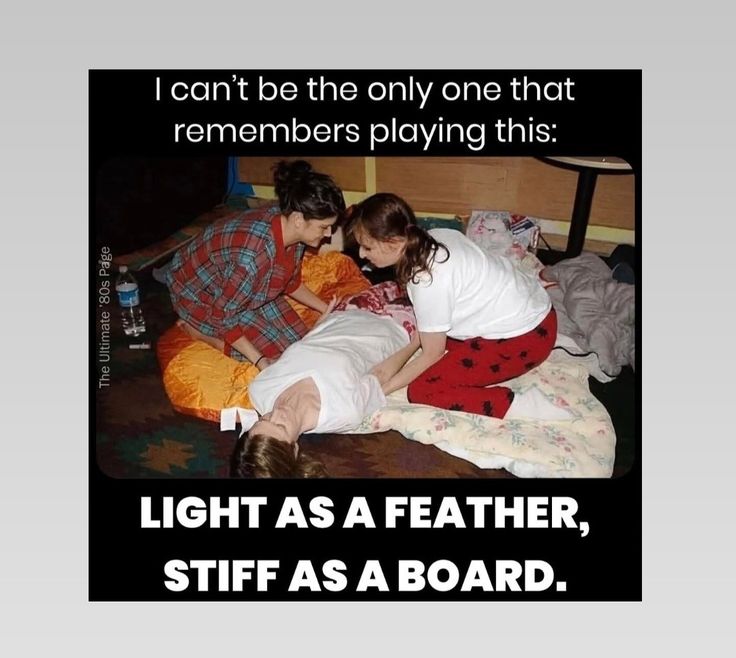




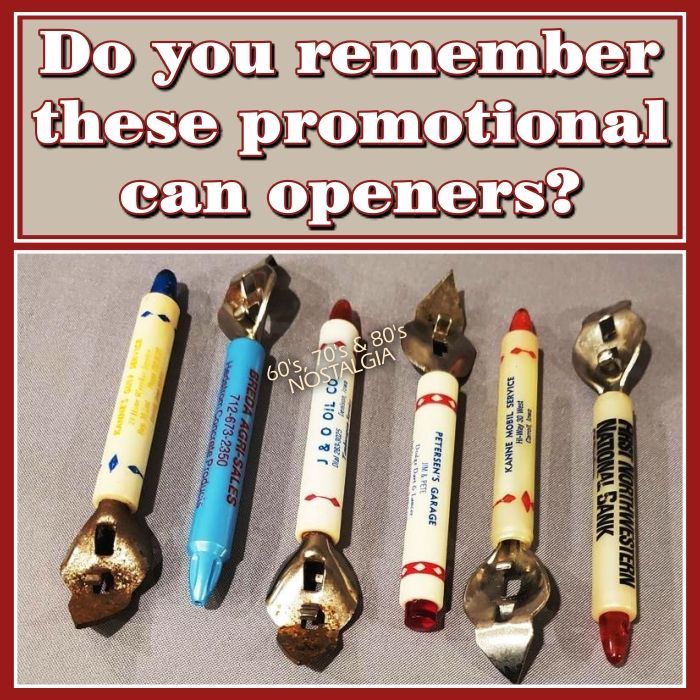








































KC & The Sunshine Band – That’s The Way (I Like It) 1975 DayOne Reacts *70s Dance Party*
I Can’t Live Here Anymore
Written in response to: “Write a story with the goal of scaring your reader.“
Arthur P. Dutton
The robot was laughing a bit too loud. It didn’t bother anyone else, they were laughing too. Some were flesh-and-blood, some were avatars of family members who couldn’t make the ceremony in person, and some were memorations programmed to echo the laughter of dead relatives. Only one was completely artificial, and it wasn’t the robot.
The laughter continued much longer than the joke deserved. The quiet, tension, and awkward expressions that preceded the joke had provided extra fuel to launch it on a ballistic trajectory that would soon crash it back down to the ground. One of them didn’t laugh at all. Her father wanted this to be a ‘joyful goodbye’ and Abigail didn’t want to bring down the mood, but she couldn’t laugh when they were so near the end.
She knew her brother’s laughter was forced. The robot had always been such a dutiful son. Abigail was grateful her father had Howard and his wife, the ‘normal’ ones. The ones who could laugh and cry while facing this horror.
“My last gift, the last thing I have to give, is this body,” Truman’s eyes were fixed on Abigail. She wouldn’t meet his gaze, that would make this too real, too soon. “And the timing is perfect, since my son and his lovely wife are in need of one for their child.” He winced as he turned from his daughter to his son, “You came in the mail, at least most of you did. You can’t send off for one of these though, can ya?” He knocked on the side of his own head with his knuckles. The room broke into guffaws and howls. “How the time zipped past. I built you for about a year before I became hopelessly stuck.”
Abigail had heard the story of her older brother’s creation many times. She truly adored it, even if she doubted some of the details. In fact, she’d told her own version to her own friends in the years when people used to be curious about synthetic people. She stood up and went to the buffet while the tale continued. Their father told it better when he could tag-team the telling with their mother, who was just about to enter the tale. A friend of a friend (one of the details that was always shifting) recommended her for IT support in assembling Howard before he even had a name. Her fee? Dinner and a movie while the robot’s final updates downloaded.
And then came the years of learning, marriage, upgrades, and then Abigail. Pregnancy made them realize that they already had a son. Even if he wasn’t blood-of-their-blood he was the product of their hands and their hearts. The world was changing, as it always does, and they were some of the first to officially declare their robot to be their child.
They rushed to do it before she was born, so Howard would never feel like an afterthought. But, would he accept his little sister? Would he be jealous? Would other people call Abigail their ‘real’ child?
Truman made it sound hard and Howard never said it was easy. It didn’t matter to Abigail, she grew up with a robot for a brother and loved and hated him as much as her friends loved and hated their siblings. Or maybe she loved him more than most. But she never questioned it, not that she remembered.
This time, the story was different. Omitted, their mother’s ‘metamorphosis’ through body modification, bionics and drugs. She’d faded from their lives years before she’d finally disappeared. Digital privacy laws prevented them from ever finding her again. Abigail didn’t think enough of the mother she knew was left for that to matter. In this telling, Truman simply said his ex-wife had ‘moved on’.
Added to the tale, Delaney.
Not Abigail’s step-mother. She thanked God for that small favor. Truman’s girlfriend was a new beginning that had led him to a terrible end.
Truman finished the story of their lives, “Thanks to Delaney, I realized I could move on too, and leave this gift to my grandchild.” There was polite applause and a few calls of, “Hear! Hear!”
The gathered friends and relatives needed a break after that long and emotional speech. They spread out, refilled their plates and cups, mingled.
Truman motioned to Abigail’s arm as if she should take his arm. She didn’t and they walked side-by-side onto the balcony.
Abigail said, “It’s a nice gesture, but you could just buy them a body. They aren’t that much now.”
“I have to do something with this one. But, I do only have the one to give. So, I’m leaving you a larger share of the estate.”
“It’s not about the money. I’ve talked to Howard and we’re going to share it all, doesn’t matter what you bequeath.” Her voice went up on that uncommon word.
“Now, you can’t hold it against the… child,” he’d almost said ‘baby’. The intelligence constructed from Howard’s mind and his wife’s DNA and emotions would never be a baby, but would need a lot of care and attention as it integrated and matured. “I know it will be my body, even after they reset it, but—”
“No! Dad, please! That won’t bother me. I know lots of re-homed people. I even dated one.” Abigail smiled at Truman and he relaxed a bit, “I want you to be here for us, for Howard’s son. He needs a grandfather.”
“He will have one. And an Aunt that loves him.”
“He has two more of those, but that doesn’t mean I can abandon him,” Abigail knew her voice was too loud and tense. She took a few breaths and closed her eyes. “Why can’t we visit you there? How do you know it’s like they say it is?”
They’d been over this ground several times. Trod it down flat. Truman dodged the questions, “You’ll have the memoration I’ve prepared.”
“Uh. That thing.”
“It’s not really for you. It’s for yours, when you, I mean if—”
Abigail said, “Yeah,” which meant ‘stop’.
“You could bring it to things like this?”
She gave her father a frustrated, confused look that said, Don’t you know me? There’s no chance I would bring that thing to a family reunion.
“Just, keep it. Please.” Truman sighed and tried to change the subject, “Your mother made her own escape. If I stayed, I’d come apart so much harder than she did. The world is so different now. You know, she’s the last person I ever touched.”
“What about Delaney?”
Truman turned away, looking out over the garden below. “Not yet. Not until we’re on the other side.”
“The other side of a firewall? All digital? How will that even be touching?”
“You don’t know what you’ve lost. These privacy bubbles, the damn laws.”
Abigail raised an eyebrow. That was amongst the strongest language she’d ever heard her father use. “I’m not defending it, but that’s how it is now. People voted to keep it, after.” She shivered and hugged herself, “I can’t run away from the real world if that means losing my family. How can you? How can you leave your body, upload, and call that a better place?”
“It will feel real, they guarantee that. And I have 48-hours to come back if it’s not for me. That’s the law.”
“You trust Delaney? You trust the government to guarantee that? The same government you think is violating your ‘right to touch’? You won’t even be a body there.” Abigail didn’t let her emotions run away with her this time. She said it quiet and kind.
“Why would any of you here want a body? You don’t know what to do with one anymore.”
Three chimes rang in the main room, the signal to gather for the transfer. Truman shook off the anger and smiled at his daughter for the last time. He tried to lean forward to kiss her forehead. She panicked a little, despite her invisible privacy shield, and took a step back.
Truman’s smile vanished. He straightened and nodded, pressed two fingers to his lips then held them out toward her at eye-level, the new, permissible sign of affection.
******
Three hours later the detective arrived at the house. Truman’s empty body laid in the middle of the second floor solarium where his family and friends had seen him off. It was connected to machines to keep it functioning and monitor it until the return period had expired. Then it would be taken to ‘reset’. The body renewed to last another fifty years. Truman’s tattoos, scars, and facial features erased so that Howard’s son could choose his own.
Delaney’s body laid next to Truman’s. Abigail had placed a scarf over that body’s face, carefully, so it could still breathe.
Abigail sat next to Truman’s body, holding her hand just above her father’s, not close enough to activate the shield. She couldn’t bring herself to touch him even now, when it was technically legal. Tears streaked down her face.
“Ma’am, I’m sorry for your, um, well, pain.” The detective entered the room and Abigail rose to greet him.
“So, you don’t think my father is lost?” Abigail asked.
“Maybe not. He received the message. The other realm was required to confirm that.”
“Then why hasn’t he come back?” She caught his eyes with hers, probed them for any sign of deception.
The detective gave her an amused grin that said, Hey, that’s my job. He dropped the inscrutable inspector act. His face was honest as the day is long when he said, “He’s probably embarrassed he was scammed. These recruiter daemons are getting really tricky. And with bodies so cheap these days… Just give it time.”
Abigail nodded, “What happens to ‘Delaney’?”
The detective looked down at his data device, “Oh, the daemon. She had a lot of names, sorry. Been looking for her for a while before we got your tip.” He closed the device and met Abigail’s eyes again, “Well, you can keep her body. It was purchased legally, so that’s part of the reward.”
“I already have one.” She smirked. He smiled. “But I’ll keep it on ice. My brother may want a daughter next. And the daemon?”
“We trapped her just as she was transferring!” He beamed and bounced on his toes as he pulled a disc out of his jacket pocket, “Only you and your father know. I can imagine it upset him to arrive… there alone, but we’d have deleted her if she had already uploaded. That might’ve been a worse shock. This kind of scam, the daemon might stick around for a few weeks until her algorithms track down another mark. So, this was probably the best outcome for him, honestly.”
He tapped the disc. Delaney’s face—at least the face she had used to scam Truman—appeared as a hologram above the surface. It was an attractive face, but not ‘stunning’. She appeared to be older than Abigail, but that was probably part of the scam—anyone could appear to be any age after a reset or modification.
Abigail avoided the holo-daemon’s eyes as it tried to search their faces. “What if my father doesn’t come back? Can we take any action against the company?”
“Unfortunately, they haven’t broken any laws. The recruitment bonus is legal, even if it doesn’t have protections against these illegal daemons. I’ve heard there might be a class-action suit though.” The detective handed Abigail the disc. Delaney’s eyes swung from the detective’s face to Abigail’s and back again in confusion.
Abigail still didn’t look at Delaney’s eyes and held the disc away from her body, “What am I supposed to do with this? Is it safe?”
The detective was half-way out of the solarium and looking at his data device as he walked, “Yeah, it’s fine. You caught her, so she’s yours. You could try to trace the programmer, sue him for damages, but the department doesn’t have the resources for that.” He stopped and turned back to her, “Oh, it can’t hear you—no speaker or microphone. And the code is wrapped in a data-shredder, so any attempt to remove the daemon will erase it.”
“Um, okay,” Abigail turned it over to look at the power switch on its base.
The detective shrugged and said, “You can smash it if you want to.”
With that, he walked out of the room and down the stairs.
Abigail shook her head and walked in the opposite direction. She went to a pocket door set in the back of the room and up the stairs inside.
The finished, a-frame attic was a shrine to her parents. All of the photographs and holograms she couldn’t bear to have on display downstairs she had arranged here, carefully and chronologically. They led up to her mother’s abandoned hope chest. Her father’s memoration sat on a wooden tray on top of it.
The face of her father, the same face that last looked at her just a few hours earlier, smiled at her. This memoration was in a frame, favoring his left side and the green dragon tattoo on his neck. He never liked his 3D images and chose this angle as the default, but the image did move. It could speak, interact, it remembered everything that Truman wanted it to.
Abigail shook her head at it. The memoration looked confused. She put the disc the detective had handed her on the tray next to it and left.
When Abigail shut the door to the attic, Truman’s memoration turned and smiled at the daemon’s hologram. His soft, patient eyes, the eyes of a grandfather, waited.
Delaney looked at the image of Truman. Her eyes were those of a trapped animal. They pleaded, silently, for Truman to save her.
Memorations were always programmed to wait, wouldn’t speak unless spoken too. Delaney’s face convulsed. Her eyes watered and, before a tear could form, her mouth opened into a voiceless imitation of a scream.
Truman’s memoration smiled and nodded.
Chicken Cordon Bleu Casserole
Growing up, I always thought Chicken Cordon Bleu was one of those fancy restaurant dishes that took hours to make. My mom would only order it on special occasions when we went out to eat. It wasn’t until I started cooking for my own family that I realized I could get those same flavors without all the fuss.
This casserole version came about one night when I had leftover chicken and ham in the fridge, and honestly, it’s become more popular with my kids than the original.
Instead of rolling and breading chicken breasts, everything just goes into one dish – and somehow it still tastes just as good as what I remember from those restaurant dinners.

Why You’ll Love This Chicken Cordon Bleu Casserole
- One-dish dinner – Everything cooks together in a single casserole dish, meaning fewer dishes to wash and an easier cleanup after dinner.
- Kid-friendly meal – The creamy pasta combined with familiar ingredients like chicken and ham makes this a dish the whole family will happily dig into.
- Make-ahead friendly – You can prep this casserole earlier in the day and pop it in the oven when you’re ready to eat, perfect for busy weeknights.
- Restaurant-style taste – This casserole gives you all the flavors of classic Chicken Cordon Bleu without the fussy rolling and breading – it’s comfort food made simple.
- Crowd-pleasing portions – This hearty casserole makes enough to feed a hungry family, and the leftovers taste even better the next day.
What Kind of Chicken Should I Use?
For this casserole, you’ve got several good options when it comes to chicken. The easiest route is using rotisserie chicken from the grocery store – just pull it off the bone and chop or shred it.
If you prefer to cook your own, boneless skinless chicken breasts or thighs work great – you can poach them in water or broth until cooked through, or bake them in the oven.
Dark meat from chicken thighs will give you a bit more flavor and stay moister in the casserole, while breast meat is leaner but can work just fine since it’s being mixed with a creamy sauce.
Just make sure whatever chicken you use is cooked and cooled before adding it to your casserole.

Options for Substitutions
This casserole is pretty adaptable and you can make several swaps while keeping the classic Chicken Cordon Bleu flavors:
- Penne pasta: Any medium-sized pasta works great here – try rotini, fusilli, or even farfalle. Just cook it al dente since it will continue to soften in the casserole.
- Heavy cream: For a lighter version, use half-and-half or whole milk mixed with 2 tablespoons of melted butter. The sauce might be slightly less thick, but still tasty.
- Swiss cheese: Gruyere makes an excellent substitute, or try a mix of mozzarella and provolone for a different but good flavor profile.
- Panko breadcrumbs: Regular breadcrumbs work fine, or try crushed butter crackers or even crushed cornflakes for the topping. Just watch them carefully as they might brown faster.
- Dijon mustard: Stone ground or whole grain mustard can work in place of Dijon. If using regular yellow mustard, reduce the amount to 1 tablespoon.
- Apple cider vinegar: White wine vinegar or regular white vinegar can be used instead. If using white vinegar, add a tiny pinch of sugar to balance the sharper taste.
Watch Out for These Mistakes While Cooking
The biggest challenge when making this casserole is getting the sauce right – if you add the chicken broth and cream too quickly to your roux (butter and flour mixture), you’ll end up with unwanted lumps, so whisk constantly and add the liquids gradually.
Another common mistake is overcooking the pasta before it goes into the casserole – aim for al dente or even slightly undercooked, as it will continue to soften while baking in the sauce.
To prevent a dry casserole, don’t skip the resting time after baking; letting it sit for 10-15 minutes allows the sauce to thicken and settle, making it easier to serve and ensuring each bite is creamy.
For the crispiest topping, wait until the last 10 minutes of baking to add the panko mixture, and consider broiling for 1-2 minutes at the end (but watch carefully to prevent burning).
Storage Instructions
Keep Fresh: This tasty casserole stays good in the fridge for up to 4 days when stored in an airtight container. The creamy sauce might thicken up a bit in the fridge, but don’t worry – it’ll loosen up again when reheated!
Freeze: You can freeze this casserole for up to 3 months! Just let it cool completely, cover it tightly with foil, and pop it in the freezer. If you’re planning to freeze it, I’d suggest slightly undercooking the pasta so it doesn’t get too soft when reheated.
Reheat: To warm up your casserole, cover it with foil and heat in a 350°F oven for about 20-25 minutes, or until heated through. If it seems a bit dry, splash in a little milk or cream while reheating. For single portions, the microwave works great too – just heat in 1-minute intervals, stirring between each.
Make Ahead: You can assemble this casserole up to 24 hours before baking! Just cover and refrigerate, then add the panko topping right before you pop it in the oven. You might need to add an extra 10-15 minutes to the baking time if you’re cooking it straight from the fridge.

Estimated Nutrition Facts
Estimated nutrition for the whole recipe (without optional ingredients):
- Calories: 3000-3200
- Protein: 160-180 g
- Fat: 180-200 g
- Carbohydrates: 240-260 g
| Preparation Time | 20-30 minutes |
| Cooking Time | 15-20 minutes |
| Total Time | 35-50 minutes |
| Level of Difficulty | Easy |
Ingredients
For the pasta:
- 16 oz penne pasta
For the cheese sauce:
- 1/4 tsp black pepper
- 1/4 tsp salt
- 1 tbsp brown sugar
- 1/4 cup all-purpose flour
- 2 tbsp Dijon mustard (smooth texture is best for sauces)
- 1 tbsp apple cider vinegar
- 2 tbsp minced garlic (freshly minced for best flavor)
- 1 cup shredded Swiss cheese
- 2 cups chicken broth
- 2 cups heavy cream
- 1/4 cup butter (I prefer Kerrygold unsalted butter)
For the casserole base:
- 16 oz cooked chicken (shredded or cubed)
- 16 oz chopped ham (use a good quality ham like Boar’s Head)
For the topping:
- 2 tbsp melted butter
- 1/2 tsp garlic powder
- 1/2 cup panko bread crumbs (for extra crispiness)
Step 1: Prepare the Pasta and Baking Dish
Preheat your oven to 400°F (200°C) and lightly grease a 9×13 baking dish.
Cook 16 ounces of penne pasta according to the package instructions.
Once cooked, drain and transfer the pasta to the prepared baking dish, spreading it out evenly.
Step 2: Make the Cheese Sauce
In a medium-sized saucepan over medium heat, melt 1/4 cup of butter.
Add 2 tablespoons of minced garlic and 1/4 cup of flour to the melted butter, and sauté for 1-2 minutes until fragrant.
Gradually whisk in 2 cups of chicken broth and 2 cups of heavy cream until the mixture is smooth.
Stir in 2 tablespoons of Dijon mustard, 1 tablespoon of brown sugar, 1 tablespoon of apple cider vinegar, 1/4 teaspoon of salt, and 1/4 teaspoon of black pepper.
Bring the mixture to a simmer, stirring occasionally for 2-3 minutes until it thickens slightly.
Remove the saucepan from heat and stir in 1 cup of shredded Swiss cheese until fully melted.
Step 3: Assemble the Casserole
Evenly sprinkle 16 ounces of cooked shredded or cubed chicken over the pasta in the baking dish.
Add 16 ounces of chopped ham on top of the chicken.
Pour the prepared cheese sauce over the chicken and ham, ensuring that everything is well coated and evenly distributed.
Step 4: Prepare the Topping
In a small bowl, mix together 1/2 cup of panko bread crumbs, 2 tablespoons of melted butter, and 1/2 teaspoon of garlic powder.
Sprinkle this mixture evenly over the top of the casserole, creating a crunchy topping.
Step 5: Bake and Serve
Place the baking dish in the preheated oven and bake uncovered for 15 to 20 minutes, or until the topping is lightly browned and the casserole is bubbly.
Once done, remove from the oven and let it cool slightly.
Serve hot with your favorite side dish and enjoy!
Reefer Madness
Written in response to: “Center your story around a character who can’t tell the difference between their dreams and reality.“
William Reinert
Mystery Science Fiction Suspense
“Quickly now,” she urged them. Her meaty mocha hand maintained an iron grip on the door’s lever handle, lest the gale tear it away, as she stepped aside to let them in before muscling the portal closed.
“Welcome, intrepid friends,” she greeted them, beaming, as she tugged her hood back off her salt and pepper braids. In her free hand she grasped a stack of large index cards. “I’m Moana.”
“Moana …?”
“I promise you, I was Moana long before Disney cashed in on her.”
Liam laughed.
“Aloha, Moana,” Liam said. “I’m, uh, … Axel.”
“Of course you are,” she replied drily.
“Talofa!” she repeated to the three. “You’re my first visitors today. ‘Fe‘e and I are so honored and excited that you defied the tempest to meet us.’” She indicated with her hand the large cylindrical tank situated a few feet behind her.
“I thought his name was ‘Reefer,” Sadie said. “It says it right there on his tank.”
“‘Fe‘e is his Samoan name,” she replied with a smile. “Which I think of as his real one.”
“What does ‘Fe‘e’ mean?”
“Oddly enough, it means octopus,” she said with an infectious laugh.
Her three visitors laughed along.
“Reefer is the unfortunate result of a naming contest aimed at stoking the imaginations of local school kids,” she confided in a near whisper. “But it goes down a lot easier with tourists.”
The visitors introduced themselves by their aliases as they shook off their dripping rain gear, spreading it on a bench that sat against one wall.
Eager as they were to meet Fe‘e, they also wished to ingratiate themselves with his minder.
“With all due respect,” Sadie remarked, “I wouldn’t expect many more visitors. Pretty stormy out there.”
“Oh, you never know,” Moana replied cheerfully. “In any event, Fe’e is excited to have some visitors.
“We can get on each other’s nerves.”
Even Maria smiled.
“We were just working on a lesson.” She brandished the stack of index cards.
Lesson?
Affixed to the curving glass wall by its suckers, Reefer stared at them through his huge, narrowed eyes while employing three tentacles to work a large Rubik’s Cube.
Hallucinating. I’m hallucinating …
Liam tried to avert his eyes as the margins of a small octopus tattoo on Moana’s fleshy cheek slowly expanded across her moon face, which lit up when she eyed the hemp octopus dangling from a string about Maria’s neck.
“May I touch it?” she inquired meekly.
“Of course, tia,” Maria replied with a smile.
“Mamā,” Moana uttered in apparent awe as she fingered the hemp figure with apparent reverence.
Mama …?
“Pardon a lo‘omatua,” Moana said somberly. “Mamā in Samoan means something like ‘perfect’ in English.
“Like an American mama,” she explained with a smile, “might tell her precious daughter.”
Maria’s eyes moistened.
“You made this yourself?”
Maria nodded shyly.
“It is exquisite, teine.”
Tay-neh?
Liam tried not to gape as Moana’s tattoo continued its steady conquest of her physiognomy.
On the plane, Maria had shared with the group a video shot by a local news crew that she’d come across about Moana, an octogenarian volunteer who had almost single handedly rescued the aquarium from its planned closure.
A self-educated marine biologist, the old woman had managed the Tauese P.F. Sunia Ocean Center, a regional National Marine Sanctuary. She was one of thousands of Samoans forced to relocate from her home island of Tutuila as brine from rising seas contaminated the region’s dwindling groundwater.
That situation, in addition to other challenging factors, led to the American Samoa Rising Seas Relocation Act, better known to supporters as AmSamoRSReLoA and to its detractors as AmSamScamA.
Widowed and childless, with few kin to speak of, she’d latched on to the rare octopus, acquired when it was the size of a thumbnail, as a smart, lively companion. She spent most nights at the aquarium, sweeping up, cleaning the exhibits, whether they warranted it or not, and sleeping on a cot in a closet-size excuse for an office. The door to the office was nowhere in sight.
Flouting safety codes, she’d ridden out some big storms in scuba gear trying to protect the exhibit’s marine residents.
“Wouldn’t it be easier on everybody just to let all the fish go?” Tate had inquired on the plane.
“Please take the self-guided grand tour,” the increasingly cephalopodic Moana said with a chuckle as her arms morphed into orange tentacles and the octopus tattoo on her cheek expanded until it replaced her head with a bulbous morphology.
I’m hallucinating …
The space’s rear walls receded as they proceeded to the tanks bolted to the floor that harbored a collection of native Gulf Coast marine life, including neon seahorses performing an exquisite ballet and schools of vibrantly colored fish shimmying rhythmically to a color-shifting strobe pulsi
WAS THIS A DISCO DANCE SONG? CHIC – LE FREAK (REACTION)
ng through the brine.
Stealing a glance at Reefer’s tank, Liam found the creature following them with his eyes. Extending a tentacle in Liam’s direction, its tip curled and uncurled toward its amorphous mass, as though beckoning him closer.
Unintelligible rune-like figures streamed across its now scarlet mantle.
I’m hallucinating …
Unsure of what he was actually seeing, Liam shrugged helplessly at Reefer, who comically appeared to ape the gesture.
It’s like he wants to meet us …
Falling quiet, Moana’s evanescent cheeks billowed as she reviewed the cards in her tentacles, now glowing eerily, as her guests scrutinized the aquatic life; each specimen, according to their accompanying interpretive, hand-typed index cards, represented a threatened species.
“It’s time you met the star of the show,” she said after a few minutes, apparently satisfied with the adequacy of their tour. “And don’t think for a moment that he doesn’t know it …”
An ancient metal office chair with a tattered seat cushion stood before Reefer’s tank, to which were taped still more cards offering insights into the creature’s biology, behavior, and conservation challenges. Within his enclosure were rocky crevices, coral, and an artificial cave. The LED lighting simulated ocean conditions, from dawn to the mesmerizing, bioluminescent glow of deep waters.
Reefer held court, as it were, in chameleonic fashion, holding the inquisitive stares of his visitors.
To Liam’s astonishment, a series of what appeared to be numbers and mathematical symbols flashed on and streamed like a chyron across Reefer’s protean, elastic mantle. He exchanged wide-eyed glances with his companions, who were equally rapt.
“He says hello,” Moana informed them happily.
“I believe it,” Sadie muttered in an awed voice.
“Are you being metaphorical,” Liam asked, “or do you actually understand those symbols?”
Moana proffered in a tentacle the index cards she still carried. “I’ve been teaching him, or he me, perhaps, to communicate using alphanumeric octal code.”
Octal code?
“What’s an octal?” Sadie inquired.
“It’s counting in base eight,” Moana replied matter-of-factly.
“Like in the video,” Maria noted.
“That’s right,” Moana affirmed. “Using the numbers zero through eight. In the octal system, each digit represents a power of 8, similar to how in decimal each digit represents a power of 10.”
Sadie’s gaze, Liam noticed, evoked that of a deer in the headlights.
“When Fe’e arrived here, I just fell in love with him,” Moana confided. “He’s the first giant Pacific I’d encountered here. I saw them all the time back on the Islands.
“The warming, shifting ocean currents pushed them up here.”
WAS THIS A DISCO DANCE SONG? CHIC – LE FREAK (REACTION)
The digits resolved to be intelligible, unintelligible, and then intelligible anew, as if the octopus was recognizing and correcting errors.
“He’s experimenting with forming the figures on his mantle.”
“Cephalopodic penmanship,” Liam ventured.
His companions looked at him blankly.
“Never mind.”
“When I worked at the Ocean Center in Samoa,” Moana said, “I learned that researchers were studying whether fe’es, having eight limbs, each with its own brain, and possessing an almost alien intelligence, might have the cognitive capability to grasp octals.”
“They tried all kinds of really elaborate codes, like they thought he was some kind of supercomputer or something.”
Moana had hired on as a technical consultant for “My Octopus School,” which required her to sign a nondisclosure agreement, only to quit after she was told to skew some data for dramatic purposes. She asked to speak with Mauritius to express her concerns, but his staff put her off, accepting and shelving, if not tossing, her recommendations.
She heaved a heavy sigh as the building’s spare illumination flickered.
“Been runnin’ on a generator since the power died,” she said. “Overhead on this little slice of marine heaven is breaking me.”
“You shell out of your own pocket to keep this place open!?” Liam exclaimed.
“Donations are voluntary,” she replied. “And I get a grant here and there as well.”
Noting Maria was staring raptly at the tank, Liam and his cephalopodic companion returned their attention to its occupant.
A sequence of numbers, 11014515416040155145, marched slowly across Reefer’s mantle.
I’m hallucinating …
Maria pressed her palms against the tank, while the octopus pressed the tips of two tentacles opposite her digits. Bowing her head, she rested her sloping, indigenous forehead against the tank.
Moana’s hallucinatory avatar stared at the repeating sequence in evident astonishment.
“How does that translate?” Liam asked.
“Oh my god,” Moana said. “It says …”
“ …Release me!” she and Maria cried in concert.
“I never taught him that!” Moana wailed as she fainted, her floppy octopus head splatting against a display tank behind her before she buckled to the floor, morphing back into Moana as she lay prostrate.
A sudden crash jolted Liam from his reverie; sitting bolt upright in his seat, he slid off his sleep mask, blinking rapidly and looking around him. Alarms blared. The craft yawed to the left, pressing Liam forcefully into his seat.
“Are you with me, Avi?” Fatima inquired calmly.
“I wanna play Candy Crush,” Avi replied in a girlish timbre.
“Oh, merde!” Fatima exclaimed.
WAS THIS A DISCO DANCE SONG? CHIC – LE FREAK (REACTION)
“What’d she say?” Liam asked.
“She said, oh, shit,” M replied grimly. “W’at up, Fatima?”
“We just got hit by lightning,” the pilot said. “Avi’s hallucinating.”
“Oh, shit,” Liam muttered, unrelieved to realize he was neither dreaming nor hallucinating.
“Left engine’s out, but we have enough juice to bring her in on the other,” Fatima reported. “Gonna be bumpy, though. Ground crews are preparing for an emergency landing.
“Hold on tight and keep your heads down. Que Dieu nous aide.”
The craft listed acutely to port before its nose plunged earthward. Liam grabbed a sickness bag as his stomach vehemently protested. The passengers all eyed each other nervously.
“If she said she’ll land this bird,” M shared with them, “I have absolute confidence in her. She’s a great pilot.”
“There’s a gremlin on the wing!” Ellie shouted, unexpectedly drawing laughs.
Maria appeared to remain in her trance.
The plane continued in what felt like freefall for a few more seconds that crept by like millenia before it gradually leveled off.
Liam and company took a collective deep breath and heartily applauded.
“Ladies and germs,” Avy suddenly announced, “please prepare for landing at Mara LaGaux Regional Airport. I trust you’ve had a pleasant flight.”
Fatima and her passengers guffawed.
A Christmas Miracle
Written in response to: “Write a story with the goal of scaring your reader.“
Montsho Shelby
Fiction Horror Science Fiction
Gal raised her hand and butted in before Wally attempted to steamroll the conversation and put his foot down on the matter. “I’d like to hear what he has in mind, before we dismiss it,” Gal said as if she were a thoughtful consumer weighing all her opinions. Wally had to smile to cover his irritated grimace, but did a very poor job at recreating both gestures. “For a small fee we could change your baby’s gender, eye color, strength, intellect, even make them capable of extraordinary feats like…” Wally cut the doctor off, “No thank you doctor,” Wally interjected almost rudely.
The doctor smiled and nodded leaving it at that. “Well I’ve always wanted my child to have blue eyes, bright blue eyes, and a luminous glow, sort of like our lord and savior Jesus Christ,” said Gal. “It is serendipitous that you should mention that because science has recently found a way to enhance the brightness of the skin, even giving a child a bioluminescent glow about…” “I’m sorry doctor but we really must be leaving,” Wally insisted while gently pulling Gal by the elbow to guide her up.
Gal didn’t want to keep fighting her husband on this issue so she followed him out. As they left doctor Afnani said, “You’re only a few weeks in, we can make the alterations to your fetus up to 2 months in; the longer we wait the more dangerous it becomes for the fetus…. And the mother.” “We’ll be in touch doctor,” Wally said as he passed through the hallway door aperture.
All the way to the car Wally stewed with rage. The young couple waited in a palpable tension for their car to pick them up. As soon as Gal was about to speak, Wally angrily cut in. “You knew exactly what you wanted. Those weren’t off-the-cuff questions.” “No… but…” “Gal, I told you I’m a gen 1 baby, and as much as they want to tell you it’s safe, it’s not.” “I don’t care about your feet honey, you know that,” Gal started to protest. “It’s not about my condition, not now,” said Wally in a huff.
The car pulled up to the curb and the automatic doors opened. They both slid into the back seat. “Home,” said Wally to the automated companion. The light on the dash blinked green to acknowledge a command was accepted. “What is it then? So I did a little research. If you did too you’d know that the chance of any birth defect happening is .0001 ,” said Gal.
“I know you want to make the baby special; I know you want it to stand out- but let God decide that,” said Wally watching the scenery go by. Wally’s voice softened as if he realized, he was taking this to a level of anger he didn’t want to go, “Look, I’m fine with a Christmas birth, but aside from that, we do not need to tinker with the formula that God has made… OK?”, he said putting his hand on top of hers to show compassion, or perhaps gently manipulate the situation.
Gal didn’t bring it up anymore, but at the end of the day, it was her womb, and it was her that was going to have to carry it. If he couldn’t love a child that shone bright with the light of the lord, that was his problem, his cross to bear.
In the next few weeks before it became too late to manipulate the fetus Gal and Wally had quite a few heated conversations on if the child should be altered in the womb. Gal was very confident that she could win him over. They even brought the pastor into the conversation and Wally did not get the answer he was hoping for.
While the church was not for genetic manipulation, it didn’t explicitly decry it. In the past 20 years the practice had become so normalized that the church had to have an opinion on it, and their opinion, as was father Matthew’s opinion- that God gave man the power to create.
Wally didn’t want to be on the wrong side of history on this matter, he didn’t want to be the one that raged against the coming tide as if science would turn itself back around just from his say so. Wally had no illusions, science was a force of nature and he was a man yelling into the hurricane.
At a time when Gal’s pregnancy was in full bloom Wally woke to use the bathroom. Gal slept peacefully, her swollen belly rising the covers up slightly. In the dark of the room he noticed a slow persistent light that pulsed with the steady rhythm of a heartbeat.
His first thought was to look to Carl in his charging station. Sometimes the automated house companion blinked when it was in recharge, or receiving an update. When he looked at Carl’s alcove, he was inert and lifeless.
He crept to his side of the bed and he saw under the covers the eerie red glow pulsing out. Wally pulled back the covers and saw Gal’s pregnant stomach glowing crimson. It emitted a bright light so strong that it illuminated the insides of her body. Organs pulsed. He saw her blood flow like a biological stream. He could see the gentle silhouette of the fetus slowly churning like a tiny traveler resting in the center of the universe. He could see the unfinished features in the glow of what would one day be called his child.
“Wake up,” Wally yelled with urgency. Gal hopped to attention when Wally’s sharp panicked voice rose. Carl, the house companion, woke as well and asked if everything was okay once he heard a voice raise in distress, but it only added to the mania of the unusual incident.
Gal looked at her stomach in horror and saw her baby floating peacefully in her womb blinking to the timing of her heartbeat. Gal screamed. Wally walked her to the car propping her up so that the sight of her body’s betrayal wouldn’t drop her to the floor. Carl trailed them on his uniball wheel asking if they needed medical assistance.
Wally rushed Gal to the hospital in the middle of the night. In the end the doctors claimed that it was just a side effect of her baby’s genetic modification. This of course, sparked a huge argument between Gal and Wally, because she had went and did the procedure behind his back. Wally did not forgive her completely right away but he did let it go for the time being. It wasn’t a good idea to put stress on a pregnant woman, so he had to repress his anger until he believed she was strong enough to take it.
They went to their OB- GYN the next day. Doctor Afnani put both of their minds at ease. “It’s not uncommon for a fetus with that particular modification to glow with bioluminesece,” said the doctor. “It didn’t just glow it lit up the room doctor,”Wally explained. “Is this what it’s skin is going to do. I was thinking that the babies eyes might be brighter, and it’s skin might have a brighter sheen,” said Gal. “Do not despair, your child will be fine, there has never been a case in which the decibels of light in the skin had such an extreme effect. It needs to acclimate to it’s own body before it settles on what is the healthy amount,” said the doctor.
Wally asked probing questions he hadn’t before, because he never thought it would apply to his child. Doctor Afnani’s demeanor shifted slightly. What was once warm, confident and welcoming became guarded and careful. He went from sure and congratulatory to unsure and guilty all on account of Wally’s questioning.
The doctor went into a drawer of his desk and pulled thin booklets and materials addressing how the genetic modifications were made. Wally got the distinct impression that they made these things overly complex to obfuscate the truth of it all.
The doctor himself did his best to dance around it, using carefully researched and sanctioned explanations to make what he and his colleagues did sound better. Wally felt the deception and knew that the truth was buried somewhere in the mountains of text that was issued to him, more than likely through court order to disclose it.
When Wally got home and did his due-diligence he found out the horrifying truth. He being a gen 1, knew that his parents attempted to enhance his strength in the womb, which they did, because his father always wanted an athlete. The gene therapy spliced elements of bull DNA into him, and he was virtually 3 times stronger than most men, but in the process, it gave his feet syndactyly, fusing them together like hooves.
Nowadays things like that didn’t happen anymore, but this was not always so in the case of those that asked for different more complicated genetic enhancements. In traversing the rabbit hole that was biotech forums, he found that the key to unlock bioluminescence did not have one solution but several. The science was too technical for him to fully comprehend, but what was clear is it pulled from the DNA of insects and creatures that lived deep under the ocean that were capable of creating such an effect.
Even after he identified a few creatures it was unclear which one’s Gal got specifically. It was something she opted into, signed for, and just trusted that god would see through. Now that the fetus was already altered that had to be his philosophy on the matter as well.
It was the night before Christmas and as far as they could tell nothing out of the ordinary was happening. Aside from Gal’s bizarre cravings everything felt as if it was going just fine. They sat at the breakfast table. Wally watched news vids to ignore Gal’s new craving of pickles and waffles, with extra syrup.
“The whole worlds gone crazy, and this is what we’re bringing our child into,” said Wally eating cereal monitoring a conflict of A.I. rights activist. “If more people just looked to Jesus, there would be far less problems in the world,” said Gal who was eating spoonfuls of syrup so liberally one might wonder why she didn’t just drink it from the bottle. They both were so excited for tomorrow that they danced around the subject.
Even though they handled the pregnancy unconventionally they still had no clue if they were having a girl or a boy, that was one mystery they didn’t leave in the hands of science. It would be Noel if it were a boy and Astrid if it were a girl.
Wally walked through the festive house with the blinking lights of Christmas and smiled when he passed the child’s room. Gal ate pickles and waffles like someone would take them away if she didn’t. It was an unusual blissfully feeling, even if she didn’t understand where the urge came from.
She coughed, and a fly buzzed out of her mouth.
She didn’t see where it came from. She must have almost eaten the thing. It completely killed her appetite. She figured she should join Wally in bed before the big day tomorrow at noon, when the baby was coming.
Gal and Wally laid in bed with the flicker of the Christmas lights washing over them from outside. Neither of them could sleep, because they couldn’t stop contemplating the boundless possibilities of what their new child would be like.
Wally did eventually rest, waking when he rolled over and didn’t feel the warmth of Gal next to him. He casually walked barefoot in his pajamas to the bathroom, figuring that was her most likely destination. He saw that the light was on down the hall. “Babe, you couldn’t sleep either?” he said before he even stepped in.
Carl, the house companion, was ripped into two pieces. His top half- the simple black and neon face- lit up when Wally approached. “I seem to have malfunctioned sir,” said the A.I. Wally ignored Carl when he saw his lower half, along with blood splattered in the tub.
He thought the worst, maybe Gal was hurt, maybe there was a complication. “Gallllll!!!,” Wally yelled. He sprinted into the living room with his feet arched higher than normal. His eyes fell over the room and slid over the Christmas tree. His feet dipped in blood and other unidentified grime.
“Gallll!!? Where are you?” he yelled. He turned to the window and when his eyes moved back she was there, she was there the entire time. Her stomach pulsed red next to the tree in a perfect camouflage. “Gal we have to get to the hospital,” said Wally.
Gal looked down at Wally with predatory eyes, but she didn’t speak. The bottom half of her gown was matted in blood. Wally ran over to Gal, but she backed away and emitted an ear piercing screech. Her stomach changed colors to match the ambient light of the festive room.
“We have to get you to the hospital,” Wally insisted. Wally attempted to grab his wife, but she fell over onto the Christmas tree. She skittered backwards on her hands and feet. Wally was given pause, but he had to get her in the car whether she wanted to or not, whatever was happening to her had driven her out of her mind.
He reached to pick her up but an insectoid black limb jutted out of her bottom half and ripped into his bicep with its sudden movement and jagged spines. Wally fell onto the couch, knocked down more from the shock then the force. He steeled himself, he had to for Gal, and his child… or whatever it was.
Gal screamed as she lay flopping on the floor soaking in secretions that had no business coming out of a human body. Gal rocked back and forth howling in unimaginable pain. The writhing tendrils and insectual limbs dug into the hardwood scraping the veneer to pull itself away from Gal.
Wally put both of his hands on his head in confusion. “What do I do?!”, he yelled frantically to no one that could answer him. The colors of Gal’s skin fluctuated rapidly, timing themselves to her heartbeat. Wally could see the chaos happening under the skin with each flicker. Her stomach writhed with life.
Wally did something, anything. He reached into Gal’s womb and began to pull out whatever it was that fought its way out. Limbs clawed at him. Tentacles pulled at him. If he wasn’t usually strong the constriction of the tendrils would have broken his arms.
He pulled the thing from Gal, and it ejected out of her with such extreme force it knocked him over. A glowing thing was in his arms. It was the size of a baby, but not recognizable as anything that could be considered human. Its skull was somewhat human, its arms mantis like, and tentacles whipped from its back surging for Wally’s throat. With teary eyes and the use of his herculean strength, he rolled to his feet, and slammed the thing onto the wood.
He didn’t know if it were dead, but it stopped moving. He cried when the thing’s limbs relaxed. He looked over to Gal, who was only standing through the grace of God. Her stomach was destroyed, her gown caked in gore.
“We should have thought of more names,” said Gal as abominations dropped out of her and onto the hardwood.
Has the Dutch authorities seizing control of Nexperia’s management and ousting of its Chinese CEO, Zhang Xuezheng, set a precedent for other countries to follow?
Certainly.
What is a precedent?
An example-setting event.
This time, the dutch, population 18m, GDP $1.2t spending $23b on defense invokes wartime requisition provisions on Chinese interests.
I’ve not checked exhaustively but this is probably a first in the 21st century for the dutch, invoking executive control on corporate matters.
Put another way, the dutch are making adversaries out of another sovereign state that is not only an order of magnitude larger and stronger, but on a different CONTINENT.
You have to wonder at the nature of the existential threat to the Netherlands that warrants the invocation of wartime provisions. Especially when the dutch are taking on an UNSC P5 member at the center of the global mercantile trade, with Amsterdam 7,800km from Beijing as the crow flies.
The optics look worse when one considers the dutch are part of the EU.
What’s next, after expropriation of executive control? The seizure of assets? Oh wait, they already did that to the Russians.
There is war, and there is peace. Two paradigms. Peace builds, and war destroys. By signaling war, the dutch are taking a wrecking ball to their own economy.
Trust and confidence are hard-won, and ephemeral once lost.
A resolute, swift and sharp Chinese response will quell the sprouting of evil thoughts. Otherwise it is open season on all things Chinese, including Singapore diaspora and chinatowns everywhere. All one needs is a Chinese sounding name or yellow skin to be labelled as spies or Beijing foot soldiers.
We are entering the age of strife, and clear and present risks are mushrooming all around us.
Be careful out there.