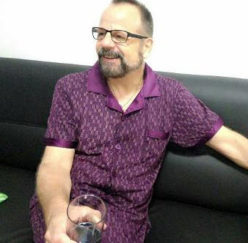


Today I want to say a few words about why there used to be glasses of water at dinner tables everywhere.
Back in the day, meals were served with alcohol. Often in Europe, it was wine or beer. While in China, it’s hard alcohol.
And this tradition of having glasses of water with a meal continued until the 1980’s in the United States. Restaurants learned that they could save money, and have less glasses to wash, by not providing glasses of water. So in the interests of profits (under the excuse of “water shortages”) free glasses of water ended in California.
Voluntarily.
In April 2015, it became law, when the California Water Resources Control Board implemented regulations to encourage water conservation through the banning of free water in restaurants.
How did the dining tables start to provide glasses of water?
It’s simple. When I drink alcohol, in China they always provide a glass of water. Always. You see, alcohol dehydrates. So people used to drink water with their meals because meals always had alcohol.
And that is why you don’t see it anymore in the United States.
- More profits for restaurants.
- And the slow “frog boiling” of acceptance of omission of drinking water gains acceptance by a history-ignorant youth.
And that is my lecture for today…
Why is Australia still selling iron ore to China? Why not cut the exports totally so that China will be squeezed?
China is a good market for us. Why should we do what you suggest? They also export excellent goods and their EVs, in particular, are highly desirable. We formulate our own foreign policy based on OUR needs.
What do you make of Ukraine’s President Volodymyr Zelenskyy’s call for Europe to do “much more” to bring peace?
It’s nothing more than a wail of despair.
Ever seen a pig get slaughtered?
When the knife plunges in, the pig lets out a scream, blood frothing from its windpipe.
That’s what people sound like when they hit rock bottom—they come up with all sorts of bizarre “solutions.”
Like pinning their hopes on Europe stepping in to save the day.
Europe?
It’s not some united front—it’s a heap of loose sand.
Russia’s just a tool the U.S. uses to smack Europe around and keep it in line.
Do the Germans really not know who blew up Nord Stream 2?
They know. They just don’t dare say it—swallowing their pride in silence.
And France—whose jaws chomped down on Alstom? Who snatched their submarine deal?
The Germans and French—are they stupid?
These were nations that once led human civilization!
Now it’s simple.
His Majesty Trump takes the throne, and he’s got no patience for the European puppets propped up by the Democrats—every last one of them’s getting replaced.
The European right wing just needs to wave the anti-immigration, anti-Ukraine-aid banners, and with His Majesty Trump’s backing, they’ll sweep into power.
When the Russia-Ukraine war broke out, I said this would be the outcome.
Looks like I wasn’t wrong.
(Image is a netizen’s remark from a Chinese Q&A website, the content reads: I have to say, China’s history and political education is the best in the world, bar none. As soon as the conflict started, almost all Chinese people knew what the outcome for Ukraine would be and even anticipated America’s anticipations, but the Ukrainians themselves had no clue.)
And I still stand by this: Lviv will be handed over to Poland to soothe those Eastern European minnows still trembling from the shadow of the Soviet past.
He should immediately fly to France,begging for political asylum—that’s his last shot at survival.
It’s his final chance.
His Majesty Trump’s already fed up with him.
“If you act with dignity, I’ll let you keep it. If you don’t? I guarantee you will be.”
This line comes from a Chinese movie, and it’s hard to translate directly. Let me quote a historical anecdote, which might make it easier to understand.
In 1939, after the Japanese army was defeated by the Soviet forces at Nomonhan, traditional Japanese officers were expected to commit seppuku (ritual suicide) to atone honorably.
However, some officers refused.
So, others stepped in to “persuade” them, and after this “persuasion,” then,they all ended up committing seppuku “with dignity.”
Pennsylvania Dutch Banana Bread

Ingredients
- 1 1/2 cups whole wheat flour
- 1 1/2 cups unbleached regular flour
- 1 cup granulated sugar
- 1 teaspoon baking soda
- 1 teaspoon baking powder
- 1/2 cup soft margarine
- 3/4 teaspoon salt
- 1/3 cup oil
- 2 cups mashed ripe bananas
- 1 cup chopped nuts (optional)
- Dash of cinnamon (optional)
- Dash of nutmeg (optional)
Instructions
- Heat oven to 350 degrees F. Grease and flour 4 to 5 bread tins.
- Cream sugar and margarine; add eggs and mix well.
- Stir in baking soda, baking powder and salt.
- Add oil and stir again.
- Add bananas and mix.
- Add flour, one cup at a time, and stir well after each addition.
- Bake for 1 hour. Test for doneness with wooden pick until it comes out clean.
- When cool, wrap in plastic.
Notes
Loaves may be frozen.
If THIS Happens, the USD System Collapses – U.S. GOLD Reserves Gone Missing?
Avraám & his Sons
Submitted into Contest #245 in response to: Set your story in a world where astrology and the movements of celestial bodies deeply impact the lives of inhabitants.… view prompt
A.J. Williams
“Of course, Father,” replied his son. “The Council and the King require new celestial observations. They seek signs that the future will be prosperous.”
“Of course, my son,” acknowledged Avraám.
“But Father! We were supposed to go down to the courthouse and serve on the jury! The Council insisted!” exclaimed his second son, Alexos, observing his father as he worked in his office. “We have a duty to fulfill our role in the jury!”
“The sky is clear tonight; the Council will understand why I won’t be there. You may go, Alexos, if you wish,” Avraám replied as he began preparing his telescope and equipment for a night of observation and recording. If the Gods were to convey a message, it would be on this night.
“Father! The Council specifically requested your presence because the trial…” Alexos hesitated.
“… is regarding the murder of a young girl, I understand. They believe I’m emotionally connected to this case due to your sister Angela’s death,” Avraám finished.
“Yes, Father. This young girl died in a similar manner, on the same night of the year, when the constellations aligned in a particular way,” Alexos explained.
All three men were clad in traditional post-Event robes, resembling attire suitable for jury duty.
“Father, if you fail to appear, you jeopardize your standing in the City. Positions as Star-Gazers are not guaranteed; don’t take unnecessary risks,” warned his youngest child.
“Attempting to persuade me will only prove futile,” Avraám retorted, turning his gaze toward his youngest child. “I am my own person; do not presume to dictate my actions.”
With a sack slung over his back, Avraám made his way to the office door and descended to the main level of their family home. His wife, a nurse, was often occupied with work; their relationship lacked romance, as he was consumed by his passion for astrology and the cosmos while she dedicated herself to medicine. Together, they had four children, but two were now deceased.
Today was no exception for Avraám’s wife, Sophia, who undoubtedly toiled diligently at the Athens Grand Hospital. The city was facing a shortage of nurses due to the recent outbreak of the Sickness, which had struck just a year prior.
The kitchen was in disarray, cluttered with dirty pots, pans, and plates left unattended in the washing area. Avraám surveyed the pile of dishes and chuckled to himself. “Seems us men aren’t adept at maintaining the cleanliness of a well-respected household.”
Moving on to the front room, the Star-Gazer recognized that he had a bustling night awaiting him. Clear nights were prized by the people of Athens, offering them a chance to observe the stars and constellations. They believed the Gods bestowed wisdom through the night sky, and the citizens held their deities in deep reverence.
His two sons trailed after him onto the front porch, where their flower pots flourished with blooms. Avraám settled onto the wooden bench, slipping on his slippers.
“Father, we strongly urge you to go to the courthouse. Do you truly wish to risk your position?” Alexos implored, scratching his beard. Avraám merely shook his head.
“Father, if we lose your wages, we may lose this home,” Iakovos interjected, joining his father on the bench. “Mother’s income alone is insufficient.”
“Even with both our incomes combined, it’s not enough to sustain us,” Alexos added, absently touching the flowers in the pots.
“There will be other clear nights, Father. But this court case holds great significance,” Iakovos persisted. “Missing it could jeopardize your position in the city.”
“Did the Council convey this to you?” Avraam inquired, fixing his gaze on his son.
“A Counsellor, yes. Indeed, Counsellor Iason Iordanou confided in me about it,” Iakovos confirmed.
“I see. Iason…” Avraam nodded thoughtfully. Rising from his seat, the elder man descended the steps of his porch, each slab adorned with an array of potted plants: herbs, peppers, and chamomile.
“Father, please, consider the consequences just this once! The stars can wait!” pleaded Iakovos.
“If the Gods impart a message tonight, and I’m absent, I’ll forfeit an opportunity to improve our city. If you wish to waste time on a court case, decided solely by a judge, then go ahead!” Avraám retorted firmly. With that, he strode down the path toward the Constellation Field.
As the Star-Gazer set up his telescope beneath the stars, a few passersby with their dogs strolled by. They waved to Avraám, and he returned the gesture. With determination, he began the meticulous process of documenting the stars, carrying the weight of responsibility on his shoulders.
Avraám relished his moments outdoors, savoring each breath of the crisp air and the caress of the cool breeze against his skin, if the winds were blowing. He found solace in the symphony of insect sounds surrounding him. A part of him longed to live in the wild, untouched by rules or civilization, where humanity held no greater dominion than the common squirrel or toad. In that untamed realm, death would be an equal adversary, without the intervention of medicine or the influence of Gods. It would be just a man pitted against the forces of nature.
As the Star-Gazer gazed up into the starry sky, he identified familiar constellations: Cygnus, Aquila, Lyra, and Hercules. Each held a rich history, woven into the tapestry of storytelling that had been passed down through generations, rooted in the mythology of the ancient world. Avraám understood this connection and was well-versed in the history of Europe. He knew that not too long ago, the Greeks worshipped what the Council now deemed a false God—a false prophet, as they called Christianity.
Avraám endeavored to comprehend the Christian God, seeking to grasp why those in the West—across the British Isles, France, Spain, and Germany—continued to adhere to what he considered a false prophet. He pondered the reasons behind the enduring faith of these distant lands, curious about the beliefs and convictions that sustained them.
Peering through the telescope, Avraám observed the twinkling stars above. Many stars twinkled brightly, their shimmering lights suggesting to him that the souls of the countless victims claimed by the Sickness now traversed the celestial realm, journeying among the celestial bodies.
“Good. Good,” Avraám muttered, jotting down notes in his journal. His observations indicated to the Council that the departed souls might gaze upon the Earth with either resentment or apprehension.
“Or perhaps,” Avraám mused aloud, pausing to consider his words as he transcribed them into his journal, “these are the souls of our warriors, journeying across the sky toward a serene tranquility.”
As Avraám heard the sound of twigs and gravel crunching behind him, he turned to see his son Iakovos approaching, clad in his outdoor attire: a chiton and sandals.
“So, you’ve come to offer your guidance again? Where’s your brother?” Avraám inquired.
“He went to the courthouse. He’s upset with you,” Iakovos replied.
“Why are you here then? Why didn’t you go with him?” Avraám questioned further.
“I considered it, but in the end, I chose the stars. Courts don’t hold much interest for me anyway, and they specifically requested your presence; we came to show our support,” Iakovos explained.
“I see, I see. Come take a look… the souls of the departed are particularly active tonight,” the Star-Gazer remarked as his son peered through the telescope at the stars.
“This could bode well for the Council,” Iakovos remarked.
“I thought the same, although initially, I interpreted it as a sign of unrest among the deceased,” Avraám admitted.
“Because of the sickness?” Iakovos inquired.
Avraám nodded as Iakovos continued to study the sky. “Yes, that and the conflict with the Turks. We lost many to them.”
“Of course, but perhaps it indicates that those lost souls are finding peace,” Iakovos suggested.
“I certainly hope so, my son,” Avraám replied with a note of optimism.
“But the constellations seem particularly lively tonight, as if the spirits are active,” Iakovos observed.
Avraám noted this with a thin smile playing on his lips.
“Furthermore, Hercules appears to be clearer than on the last clear night. That’s a promising sign for the Council,” Iakovos added, prompting his father to jot it down.
“You have a keen eye for Star-Gazing, better than your brother,” Avraám remarked.
“I’ve noticed that too. Alexos has little interest in the cosmos and constellations. He’s more inclined toward bureaucracy,” Iakovos agreed, shifting his focus to the stars within the Hercules constellation.
“It’s not surprising. He’s always nagging me about something; reminds me of the Council,” Avraám chuckled, acknowledging the similarity.
“Indeed. He seems to magnify every problem and offer impractical solutions, but alas, I’ve grown accustomed to it,” Iakovos remarked.
Suddenly, he gasped. “A shooting star! That’s auspicious news for the Council! A sign of their approval!”
“Or perhaps a sign of their disapproval. Regardless, I’ll make note of it; evidently, the Gods intended for us to be here tonight! They bestow their blessings upon us,” Avraám replied, jotting down the observation in his journal. “Good. Good.”
“I do hope Alexos can charm the Council and secure your position in the city tonight,” Iakovos remarked, stepping away from the telescope and stretching his back.
“I’m confident he’ll manage. I trust him in that,” Avraám replied, continuing to jot down notes.
“I knew the girl. She resided in the nobles’ quarters, near where I pursued my studies in my youth. She was only fourteen,” Iakovos shared, his gaze drifting to the stars. “Angela was barely sixteen, not much older than this unfortunate girl.”
“Indeed, mortality is an inescapable aspect of our existence,” Avraám remarked, peering into the telescope before adjusting its position to observe another constellation. “If life were devoid of challenges, nothing would hold significance. Our ancestors seemed to have overlooked that, and the Gods delivered their reckoning.”
“Perhaps it was their divine judgment?” Iakovos pondered.
“It very well could have been,” Avraám agreed somberly. “Let’s not dwell on the past for the future could be written above.”
United in purpose, father and son labored together, striving to reassure the Council of a promising future. The citizens of Athens sought solace in the stars, finding comfort and relief from anxieties and tensions. Yet, amidst the celestial beauty, the stars also whispered tales of caution and disapproval, serving as reminders of the consequences of human actions.
Inside the Athens Courthouse, a bastion of law and discourse in the city, a bustling scene unfolded. Citizens, jury members, peacekeepers, lawyers, and a handful of judges filled the space, their murmurs blending into a soft hum. The main judge, distinguished by his grey chiton and headgear, commanded attention as he silenced the room with a glance. Despite his advanced age, he exuded an aura of wisdom from a bygone era, speaking in a deep, resonant voice that carried authority.
“Today, we convene to hear testimony and examine evidence regarding the murder of Ivana Dimitriou, a young woman of merely fourteen years. The accused is seventeen-year-old Leon Andreas, a former student of the victim’s father,” the main judge announced, his voice resounding through the courthouse. “First, I shall summon the witnesses to the crime, followed by the presentation of evidence.”
His words echoed throughout the chamber, reaching every corner. Among the jurors sat Alexos, his countenance stoic and impassive as stone.
As the witnesses delivered their testimonies, a somber atmosphere enveloped the courtroom. The family of the slain girl sat in subdued sorrow, their expressions reflecting the weight of their loss. Even the father, typically composed, appeared numb as he listened to the harrowing details of his daughter’s murder. grief weighed heavily upon them, casting a shadow over the proceedings.
As the evidence was presented, Alexos observed the room with a keen eye. A bloody knife and a note left behind by the killer were displayed, revealing a tale of tragic love turned deadly. The perpetrator, a lovesick young man, sought revenge after the girl rejected his affections. Alexos couldn’t help but view the boy as a coward, his actions driven by hurt feelings. Inwardly, Alexos felt a pang of familiarity with the pain of rejection, his heart heavy with empathy for the victim and her grieving family.
As the proceedings continued, Alexos sensed the judge’s gaze lingering on the jury stand. He knew that the judge was searching for Avraám, undoubtedly aware that the Star-Gazer had failed to appear. The absence of such a prominent figure would surely spark rumors: Did the Star-Gazer disregard the law? Was he losing his faculties?
Shaking his head to dispel these thoughts, Alexos refocused his attention on the case at hand, determined to fulfill his duty as a juror despite the distractions.
As the father of the victim addressed the courtroom, his voice resonated with solemnity. “In this courtroom, a relic from a time of relative peace among mankind, we gather to confront the tragedy of my daughter’s murder,” he began, his gaze drifting towards the heavens. “I seek solace in the stars and our Gods, but they whisper of unrest among the spirits. Perhaps it is due to the loss of my child, or the relentless grip of the Sickness plaguing our lands. Perhaps, it is the ongoing conflict with the Turks. They are displeased, and perhaps… they claimed my sweet girl as a punishment to us all.”
His words hung heavy in the air, stirring murmurs and whispers throughout the room. Shock and sorrow etched upon the faces of those who listened, grappling with the weight of his words and the magnitude of their implications.
As the final judgment was pronounced upon the killer, a heavy silence settled over the courtroom. Death by hanging—a punishment rarely meted out—was decreed, marking the severity of the crime. The judges, in solemn agreement, affirmed the final ruling.
The condemned boy, now facing his impending end, appeared unmoved by the verdict. No tears streamed down his face and there was no sympathy to be found among those present. The gravity of his actions and the weight of the sentence rendered any pity futile.
As the condemned boy faced his fate, Alexos remained resolute, his heart hardened by the memory of his own sister’s murder long ago.
As Avraám and his second-youngest son made their way home, the darkness of night enveloped them, the flickering flames of the streetlamps casting long shadows. Despite the lateness of the hour, a sense of tranquility settled over the Star-Gazer, a calm assurance born from the knowledge that one of his sons would carry on his work after he retired. With each step, he found solace in the realization that his legacy would endure, and that the guidance of the Gods, though revered, would not be sorely missed in the hands of his successors.
“You know, Father, one day, you and Mother will need to take a rest,” Iakovos remarked, his voice carrying a hint of concern. “And as you’re aware, I’ve been courting a woman my age—a noblewoman, a socialite.”
“Good money then?” Avraám inquired, turning to his son as they walked along the stone path.
“She comes from wealth, yes,” Iakovos confirmed. “I’ve been thinking… I could succeed you as Star-Gazer. I’ve studied the cosmos extensively, and with the wage I’d earn and the connections from her family’s wealth, we could ensure that you and Mother have a comfortable retirement in this house. Besides, Alexos has his own ambitions, and he’ll likely forge his own path soon enough. The future could be bright.”
“If the Gods allow it,” Avraám replied, his tone tinged with a hint of uncertainty. “If the Gods allow it.”
As they approached their home, Avraám and Iakovos noticed Alexos sitting on the front porch, his eyes swollen and damp with tears. Concern etched upon their faces, they approached him.
“Why are you crying, Alexos?” Avraám inquired gently. “Has something happened?”
“I just… I miss Angela and Roberto,” Alexos confessed, his voice wavering.
“I miss them too, son,” Avraám replied, his own voice tinged with sadness as he placed a comforting hand on Alexos’ shoulder. “I miss them every day. But time moves forward, and so must we. The Gods, in their wisdom, will look down upon us and understand. Hopefully, they will grant us peace, knowing that their souls wander above, seeking their sanctuary.”
With heavy hearts, Avraám and his sons crossed the threshold into their home, leaving behind the weight of the night’s observations and the lingering echoes of a tragic murder. Though the events of the day would undoubtedly haunt them for some time to come, they understood that life must press forward, much like the steady march of the stars across the night sky. As they settled into their home, they found solace in the knowledge that time, relentless and unforgiving, would continue its inexorable journey onward.
Why is there a shortage of teachers in America?
Low pay. My father taught for 25 years. He made more money selling real estate part-time over the summer than he did teaching.
Uninvolved parents. Many parents do not raise their children, and they don’t want to intervene if the child is having problems. When my father had to suspend one serious classroom disciplinary issue, the mother called my father and hollered that it was costing her going to work to have him home.
Mainstreaming. It sounds like a nice idea, but putting children with learning disabilities in the same classroom as children who don’t, doesn’t work for anyone. Proponents say that the higher-functioning children will pull up the lower-functioning ones, but it works the opposite way. The children with learning disabilities don’t get the special attention or teaching that they need, and it puts a burden on teachers who did not study special-needs education.
Trends. We all know that phonics works for teaching reading. But let’s try something new! OK, the new trend doesn’t work as well as phonics, but we’re not going back to phonics and the administration won’t budge. New math? Have you seen that sh!t? Let’s create something even worse and do that. It’s a miracle my niece’s little girl can do anything beyond count.
Lack of support from the administration. Enough said. Teachers need to be supported.
Time off isn’t really “time off.” Everyone thinks teachers do nothing all summer and work short days when the summer is over. In truth, the paperwork is endless. My father worked every night, grading papers, writing assessments, creating new course materials, taking mandatory trainings, linking his course materials to educational mandates. It’s not the cake walk you think it is.
Wife Kept Denying Me “Lovin” Until I Showed Her I Could Replace Her, Now She’s On Her BEST BEHAVIOR!
Have you ever had a job where you did nothing for years and nobody found out?
My mother used to work for the Gas Board, as a clerk/secretary and later as a PA.
She was not directly involved in this story but a witness to it.
She worked in a particular regional office, and was there when an inspector from head office arrived to do a general inspection/audit.
During this process, they found a small room with four men sat around a table, playing cards.
It turns out that they were the team charged with maintaining gas street lights.
Nobody had ever given them new instructions when the last gas street lights were decommissioned — 32 years earlier.
So they just turned up every day, clocked in, and played Brag.
Technically, they’d not done anything wrong.
It was hushed up and they got a payoff and early retirement.
Why do people think it’s OK to tip less than 20%?
Here is my contribution:
- when I was a waiter, 20 years ago, standard tip was 15% – any less, was a cheapskate or poor service, any more was generous or better than. Average service.
- Tips were expected for table service only (some counter service places would have a tip jar where you might drop coins or a dollar bill).
- Tipped staff would share with the folks that helped them (bussers/bartenders, usually) to provide good service to their customers.
Now, the barista, the sandwich counter cashier, even some retail goods counter staff expect tips. It is SO FAR out of hand. This is especially true as wages have gone way up and many places no longer have a lower “tipped minimum wage” for workers who earn tips.
Now, before someone says “but everything is more expensive now” let me point out that yes, and 15% of a $100 meal is 2X more than 15% of the $50 meal of many years ago. The PERCENTAGE of the tip does NOT need to rise to keep up with inflation.
Okay all I have to say. I feel the need to now go see if there are some kids that I need to chase off’n my lawn.
Pictures




If the United States really uses force to turn Canada into a state of the United states, will Canadians resist, even when you can’t win?
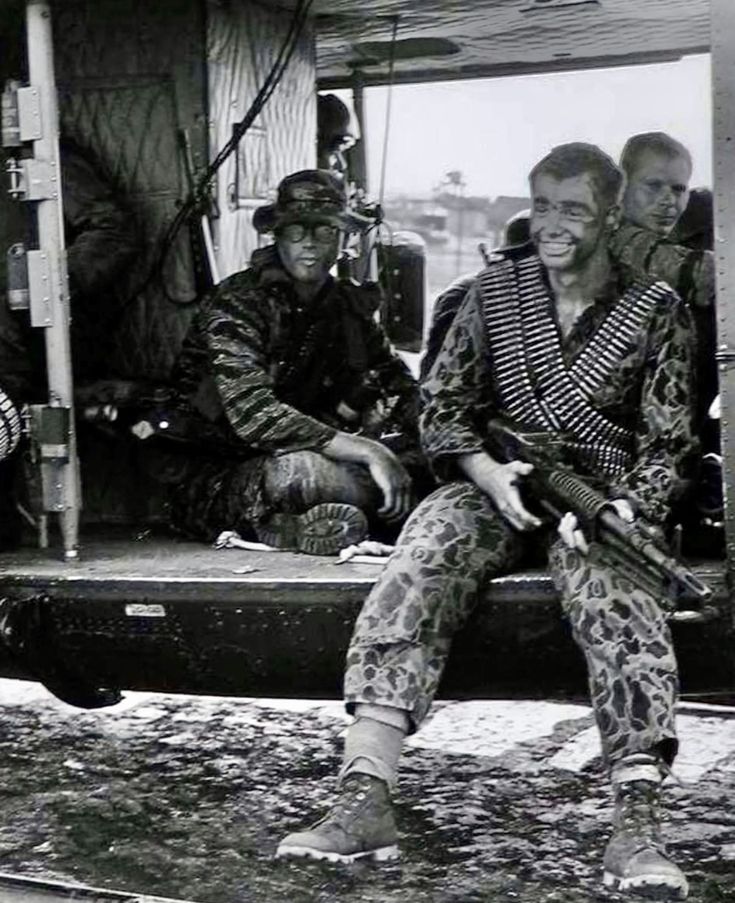
The whole concept of the US attacking Canada is beyond ludicrous, it’s insane! As a US Vietnam vet, in my lifetime I recall the 30,000 Canadians who volunteered to serve in the US armed forces during the Vietnam War; I and my fellow veterans owe them our deepest and humblest gratitude and I swear to defend Canada from any invasion by any nation, even from my own.
It takes a lunatic with a Napoleonic complex to even insinuate betraying one of the US staunchest allies and on the same page, Greenland, Mexico, and the Panama Canal. It stands on the same level our government’s betrayal of Ukraine’s fearless leader, Volodymyr Zelenskyy.
I know that defending the sovereignty of Canada would seem to be treason by some of my countrymen, but when my country is led by a delusional authoritarian neo-fascist, then it would be my patriotic duty to defend her from all foreign and domestic enemies.
How can Canada trust the integrity of our new fighter jets when the country supplying them has threatened to take us over?
You’d think folks would have figured out two basic things by now:
- Trump can only be in office for 4 more years. Actually a bit less than that as of today.
- He always says funny stuff like this. Get used to it. Most likely, nothing will actually happen.
There’s one thing which is certain: Canada absolutely needs new fighter jets. Preferably yesterday.
This is their current aircraft- the CF-18 (sometimes called CF-188) Hornet. It’s a legacy Hornet model, and it is old- obsolescent, the airframes nearing end of life. Canada acquired a few more that Australia retired, but that’s a stopgap any way you look at it because those are also old (there’s a reason Australia retired them).
Further, the RCAF should already have had its F-35s. Australia stuck with their procurement plans and has an entire wing in service. That’s why they’ve got no problem parting with those old Hornets.
Changing plans and switching to something like Gripen, Typhoon, or Rafale (as some have suggested) is a knee-jerk reaction that will delay procurement even further. As things stand, at least those F-35s are coming next year. If Canada changed to one of the others, it would probably be another 3–4 years before the first one showed up. Again, those CF-18s are literally falling apart- they need to be replaced now. They already should have been replaced.
Further, hate to say it, but Gripen is no better. The engine is a GE F414 license built by Volvo. The US controls that tech too, so if the concern is trust over the US withholding stuff, that’s got the same problem.
Eurofighter and Rafale are considerably more expensive than F-35 because Canada is a level 2 partner in the F-35 program and can buy them at the same cost as the US Government.
Sir Whiskerton and the Peacock’s Prismatic Predicament: A Tale of Paint, Panic, and True Colors
Ah, dear reader, prepare yourself for a tale of vanity, vibrancy, and one very confused peacock who thought he had become a rainbow. Today’s story is one of mistaken identity, existential crises, and a cat who proved that true beauty comes from within—even if you’re already the most dazzling creature on the farm. So, grab your sense of humor and a paintbrush (for touch-ups), as we dive into Sir Whiskerton and the Peacock’s Prismatic Predicament: A Tale of Paint, Panic, and True Colors.
The Paint Puddle Mishap
It all began on a sunny afternoon when Polly the peacock, ever the flamboyant and self-important bird, was strutting through the barnyard. “Behold!” he declared, fanning out his iridescent tail feathers. “The most magnificent creature to ever grace this humble farm!”
The animals, used to Polly’s dramatic displays, barely looked up. “Yes, yes,” Doris the hen said, pecking at the ground. “Very impressive.”
“Impressive!” Harriet echoed, tilting her head.
“Head!” Lillian added, fainting dramatically onto a pile of straw.
But as Polly continued his grand strut, he stumbled upon a puddle of spilled paint—leftover from one of Lester the Tattooed Pig’s artistic endeavors. The puddle shimmered with every color of the rainbow, and Polly, mistaking it for a mirror, gasped in horror.
“What is this?!” he cried, staring at his reflection. “I’ve… I’ve turned into a rainbow!”
The Existential Crisis
Polly’s panic spread like wildfire through the farm. “A rainbow?!” Doris squawked, flapping her wings. “What in the name of cluck does that mean?”
“Cluck!” Harriet echoed.
“Echoed!” Lillian added, still on the ground.
Polly paced back and forth, his tail feathers dragging through the paint puddle. “This is a disaster!” he wailed. “I’m no longer a peacock! I’m… I’m a prismatic abomination!”
The animals tried to reassure him, but Polly was inconsolable. “How can I be beautiful if I’m just a rainbow?” he said, his voice trembling. “Rainbows are fleeting! They’re insubstantial! They’re… they’re not me!”
Sir Whiskerton Steps In
Seeing the chaos unfold, I knew it was time to intervene. “Polly,” I said, flicking my tail, “you’re not a rainbow. You’re just covered in paint.”
“But what if the paint has changed me?” Polly said, his eyes wide with fear. “What if I’m no longer the magnificent creature I once was?”
I sighed. “Polly, beauty isn’t about what’s on the outside. It’s about what’s on the inside.”
“Inside?” Polly said, tilting his head. “But my insides are just… insides.”
“Exactly,” I said, smirking. “And they’re just as dazzling as your feathers.”
The Moral of the Story
As Polly pondered my words, the animals reflected on the day’s events.
The moral of the story, dear reader, is this: Beauty comes from within—even if you’re already dazzling. Whether you’re a peacock, a pig, or a cat with a knack for solving mysteries, true beauty lies in your character, your kindness, and your ability to bring joy to those around you. And while a little sparkle never hurts, it’s the light inside that truly shines.
A Happy Ending
With the crisis averted, Polly returned to his usual strut, his tail feathers now clean and shimmering once more. The animals, relieved to have their peace restored, returned to their usual routines. Even Lester, though initially annoyed by the spilled paint, admitted that Polly’s predicament had been a little entertaining.
As for me, I returned to my favorite sunbeam on the barn roof, content in the knowledge that I had once again saved the day. Polly was back to his dazzling self, the farm was at peace, and all was right in the world.
And so, dear reader, we leave our heroes with the promise of new adventures, new predicaments, and hopefully, no more paint puddles. Until next time, may your days be filled with laughter, love, and just a little bit of feline genius.
The End.
Are the Chinese people confident that they can “export their way out of economic doldrums,” and if so, on what is their confidence based?
Here are some facts. I leave it to you to make your own conclusion.
China’s “economic doldrums” was nominal growth of 7.1% from 126 trillion yuan in 2023 to 135 trillion yuan in 2024, or growth of 5.6% from $17.8 trillion to $18.8 trillion in 2024. The real growth was 5%.
China had a foreign trade surplus in 2024 of $990 billion, a record high. This was 20% higher than the surplus in 2023 of $823 billion. It accounted for 5.3% of GDP, 0.7 percentage point higher than 4.6% in 2023. As a share of GDP, this was impressive. But in incremental contributory term, 0.7 percentage point is not significant to the real growth of 5%.
Here are highlights of the structure and development of China’s economy in 2023.
GDP growth was 5.2% to 126 trillion yuan. Share by industry was Tertiary 54.6%, Secondary 38.3%, and Primary 7.1%.
Population was 1.41 billion, urban residents 933 million & urbanisation rate 66%. Employment was 740 million, 64% in the urban areas. Labour productivity rose 5.7% to 161,615 yuan per person. CPI +0.2% and industrial products -3.0% over 2022.
Value added of the Tertiary sector grew 5.8% to 68.8 trillion yuan. Retail sales of consumer goods was worth 47.1 trillion yuan and accounted for 68% of the sector. Online retail was worth 13 trillion yuan or 28% of retail sales. Modern services saw strong growths – financial intermediation, ICT & software, and business service. Real estate services fell 1.7% to 7.4 trillion yuan.
In 2023, investments in real estate development fell 9.6% to 11.1 trillion yuan – residential building (-9.3%), offices (-9.4%), buildings for commercial business (-16.9%).
Value added of the Secondary sector grew 4.7% to 48.3 trillion yuan. Construction grew 7.1% to 8.4 trillion yuan. Industrial enterprises grew 4.2% to 39.9 trillion yuan. There was a new pattern of development to build a modern industrial system. The new growth drivers were the manufacture of equipment (+6.8%), hi-tech manufacturing (+2.7%), NEVs (+30.3%), the output reached 9.4 million units, solar cells (+54%), the output was 0.54 billion KW, robots (+23.3%), output was 7.8 million units, and 3D printing devices (+36.2%), output was 2.8 million units.
Green & low-carbon transformation progressed. Electricity generated by clear energy- hydropower, nuclear power, wind power, solar power – grew 7.8% to 3,191 billion Kwh.
Value added of the Primary sector grew 4.1% to 8.9 trillion yuan. Output of grain +1.3% to 695 million tons, cotton fell 6.1% to 5.6 million tons, oil-bearing crops (+5.7%), sugar crops (+2.4%), and tea (+6.1%). Pork, beef, mutton, & poultry grew 4.5% to 96.4 million tons.
Lux
Submitted into Contest #245 in response to: Set your story in a world where astrology and the movements of celestial bodies deeply impact the lives of inhabitants.… view prompt
Skye Morgan
Eventually I’ll have to divert all of it to life support systems. And then, the lights will go out. It’ll be pitch black.
This was all planned for, of course. The asteroid’s orbit passes behind one of the gas giants in this system- larger than Jupiter, larger than Saturn. And the three months that I’ll be in its shadow were always accounted for. With careful rationing, the stored energy from the solar field will last me throughout that time, even though the solar field itself will be nonfunctional.
But light is an excess. I don’t need it to survive. So for the next ninety days, I’ll live in total darkness.
This was all planned for. I was warned this was going to happen.
Funny thing is, though, there’s a difference between intellectual knowledge and actual experience.
–
I’m done moping. I’m turning off the power in five minutes. Which means I’ll stop using this log. Can’t waste energy on luxuries when I’ll basically be on the edge of running out of power for the next three months.
I’ve already turned off life support for the biosphere. It’s an efficient system- aside from saving energy, when the plants die, the nitrogen will return to the soil. It’s the equivalent of a giant compost pile. After the shadow passes, the heat lamps will turn back on, the hoses will pump water again, and the seeds of the dead plants will begin to sprout. Very practical. A perfect system.
It’s not like I could have seen them, anyways.
–
Power’s out. It’s been out for days, I think. Hard to tell with no light. I’ve been trying to sleep.
I kept myself away from this thing for as long as I could, but I’m going crazy in here alone. I’ve been tracking the flashes of light from the oxygen monitor. Sometimes I fall asleep while watching it, and all I can see in my dreams is that pulsing red light.
How many times did I wish, back on Earth, that I could do nothing for a day? Just sleep, eat, and breathe.
I was an idiot. I can’t stand this.
So, yeah. I’m using the log again. I figured if I don’t move much, I can make up for the loss in power. Don’t know what I’ll do when the batteries on this thing run out.
I could call control. No, ignore that. I can’t call control. If I’m going to stay here, I have to be able to wait out these months. If I call them, they’ll be sympathetic. They’ll bring a counselor to talk to me, reassure me. They’ll let me turn on the lights.
Then they’ll put me on the next ship to Earth and send someone else to take my place.
So no. I can’t call control.
–
Sometimes I don’t know if I’m asleep or awake.
Every time I close my eyes, I see that red light. I see it flashing, taunting me, a blip interrupting an endless sheet of darkness. I think it’s almost worse than having nothing at all.
I try not to blink. I try not to move much. Once I swear I saw my hand, outlined in moonlight on the floor.
I don’t dream in color anymore. I dream in black and red, black and red. I remember touching the leaves of a palm tree- I remember the taste of a date in my mouth- but I don’t remember their shapes.
Black and red, black and red.
How many more days?
–
Yesterday, I walked around the station. I stumbled more than I’d like to admit- and used valuable power in the process- and I could feel eyes on my back, flashing open and shut- rhythmic like a heartbeat. At one point I ended up outside the biosphere. An airlock separated us, but I swear I smelled the rotting leaves, the decay seeping through the floor.
It made me want to vomit. But with the orchard dormant or dead, the only food I have is one hundred and ninety vacuum sealed meals- one for each day I’ll be in the darkness, plus some for the time it takes to get new seeds started. If I lose my lunch, I go hungry. I can’t afford to waste food.
So I swallowed the bile down and crept back to the oxygen monitor. It blinked at me, over and over and over again.
I hate that thing.
–
I dreamed I found an EVA suit. Just outside the biosphere airlock, tucked behind a corner.
When this program was started, control toyed with terraforming the asteroids. Make an atmosphere thick enough to breathe in, implement a self-contained water cycle- one particularly ambitious team suggested micro-versions of all of Earth’s biomes, contained on one tiny floating rock.
But it was too expensive, too impractical. So they made the biosphere for farming and oxygen filtering and gave the habitants EVA suits for everything else.
They’re sleeker than they used to be- easy to maneuver, able to adhere to the rocky surface of the asteroids, making walking in low gravity a lot less of a pain.
We were supposed to use them for strictly necessary purposes- clean the solar panels, do maintenance on the ship, take samples of the local rocks. The EVAs cost a lot. They lasted a long time- fifteen years if you took care of them right. But we were lifers. Eventually, they’d wear out, especially if we took them out every day. Control didn’t want us to use any more than we had to.
But every Tuesday, I’d suit up and head outside to watch the stars. I’d see comets, sometimes. I’d make up new constellations, chart them in the sky. The Sail. The Gate. The Lanternfish.
I can almost see them in my mind. Almost. But every time I get close, they dance away.
I need to see them again.
–
I did something stupid a few minutes ago. Something hugely, colossally stupid.
I found my EVA suit.
It was where it was in my dream. Tucked in a corner, just outside the biosphere door. I nearly crashed into it.
I’ve got to see the stars. If I see the stars, I can make it. I can get through this darkness. I just need to see something that isn’t a red dot in the dark.
I need it like I need air.
Problem is, the suit has no power.
Modern EVA suits are less bulky now because they no longer need to carry electricity with them. The benefits are many- the suit is lighter, more maneuverable, less prone to sparking. There’s just one problem for me. They have to be charged up before you go.
In order to get this suit functional, I have to activate its charging pad. Charging the suit to full power takes a huge amount of electricity. Electricity that powers the water reclamation, emergency communications, and, of course, the oxygen monitor.
I could charge it for a half-hour’s use only. The amount of power would still be more than I can afford, but-
I need to see the stars. If I see them just once, I won’t do it again. I’ll stay in the station for however long that takes. I won’t move. I’ll barely breathe.
If I don’t see the stars, I’ll lose my mind.
The choice is obvious.
–
I’ll admit it. I cried like a baby when I saw them.
Then, when I finally got a hold on myself, I checked this suit’s systems and nearly started bawling again.
It’s only been three weeks. Less than a month. I have sixty-nine more days to spend in total darkness, with only the red dots for company.
No more stars. No more light for two months.
Nothing to do but sleep and eat and breathe.
–
I held out for as long as I could. Until I could smell the rot coming from the biosphere no matter where I was in the station. Until I saw eyes in the darkness, palm fronds in the corner of my vision.
When the oxygen machine started whispering to me, I climbed into the suit so fast I must have broken some kind of record. And then I was outside again, stars dancing in my vision.
I lay on my back for hours, drawing pictures in the sky. I watched the constellations shift until the suit began to blare. Then, only then, did I check the clock.
I have sixty-two days before I have light again.
–
It’s beginning to become a habit.
Here is my normal weekly routine:
I lock myself inside until I can’t tell the difference between sleeping or waking. I siphon power from the life support systems, trying to ignore the steadily decreasing levels. I suit up. I stare up at the stars until my eyes water, because I’m too afraid to blink now. Every time I close my eyes, I feel hands on my shoulders, hear voices in my ear.
Then I walk to the solar panels, using a flashlight in my suit to light the way. Force of habit.
Here’s the strange thing-
Right before I turned off the power, I tilted the solar panels forward, to keep dust from collecting on them while they weren’t in use. I’m sure I did.
But now, their faces point straight up. Up at the stars.
Like they’re trying to collect that little bit of light.
–
Darkness, red light, stars, darkness. Palm fronds. Hands on my shoulders. Eyes in the corners of the room. The taste of dates in my dry, crumbly meals.
I have memorized every step of this station.
Forty-five days until I see light again.
–
Can anyone hear me?
I feel the eyes watching me when they think I’m not looking.
They blink in sync in a grid of hexagons.
I can’t do this anymore. The power level’s low. I’m not going to make it.
I don’t remember the sun. I don’t remember anything.
I don’t know how many days I have left. But it’s not enough.
–
[Static.]–
[TRANSMISSION RECIEVED FROM COLONY #A4829]I see light. I see light. Endless light.
Female Coworker Went To HR After I Helped Her During An Emergency, Now Upset I’m Being “Cold” To Her
Have you ever been asked to give up your seat in a restaurant? If so, what did you do?
Once while in Cairo I was looking for a place for an early supper. I spotted a place with a lovely courtyard, pretty tables, nice sturdy chairs and interesting sculptures.
I went inside and sat down. A man approached me and welcomed me on this beautiful evening. I bowed to him and asked for water with ice and mango pulp juice with cream and ice. (Mango was in perfect season.) After the drinks arrived I asked for a salad with an oil and vinegar dressing to be followed by potatoes, lamb, chicken and cooked autumn squash.
Ten minutes later he came out with an appetizer of fresh fish and hush puppies. Following this came the lamb, beef, potatoes and steamed chicken with a million spices. Everything was just delicious. I finished with some kind of multi fruit pie that was just out of this world.
When I was done I motioned that I was ready to leave. He shook my hand and thanked me for coming. A whole big party of young people was coming in and it looked like he was preparing to set their tables.
He told me there was no bill. I asked him why not and he told me that I was in his home garden area and that he was an engineer with the electric company and his wife taught school. This was not a restaurant and these were his children coming home.
I took down his address and mailed him some art work for his garden. I still go to see him each time I’m in Cairo.
Have you ever almost died and had something inexplicable, miraculously save you?
After being married for 8 years and raising my 3 step-children, my husband and I decided to have a child together. My family has a long history of miscarriage so I expected to lose a couple before a pregnancy “stuck.” Time went by and I didn’t seem to be conceiving but I was pretty well resigned to let whatever happened, happen.
One morning I waved goodbye to my husband who was going to be flying that day (he was a Naval aviator), got my 3 step-kids off to school and got ready for my regular yearly GYN appointment. Suddenly I felt faint and passed a blood clot. Since my family is also famous for horrendously painful and copious menstruation, I was only mildly concerned. I went ahead to my appointment because it was too late to cancel but I told my Dr. that I was bleeding. She tested my urine and found that I was pregnant but obviously, something wasn’t right. I was probably going to miscarry. She said that if the bleeding got any worse, I should go to the ER.
I went home pretty much certain I would miscarry but happy that I had at least been able to conceive. As soon as I got home, I felt terribly sick and fainted. I awoke very weak and ill and passed an enormous clot. I was in tremendous pain. I knew I had to get to the ER but I was a loner with no friends and no family nearby, so I got into the car and started driving, slapping my cheeks and pinching myself to keep from passing out.
When I got to the ER admission desk I was dreading the multi-hour wait in the waiting room. I had taken my step son once with a head injury that exposed his skull and he sat in the waiting room for 4 hours, while someone with a compound fracture moaned and cried on a stretcher in the hall behind us for almost as long. Today, however, the desk nurse took one look at me and sent me directly to triage. The next thing I knew, I was in a room and not 5 minutes later a doctor was there.
As it turns out, I was having an internal hemorrhage and needed emergency surgery to stop the bleeding. I asked if there was some way they could wait and notify my husband first. They said that, to be frank, if they did not get the bleeding stopped inside of 15 minutes, I would die.
As they wheeled me quickly toward the elevators, I felt myself begin to float above the gurney. I realized how easy it is to die—it’s no trouble at all, really. Anyone can do it. I felt peaceful. But suddenly I thought about my children whose mother had died suddenly of a brain tumor just 9 years before, and my husband who had already been widowed once. It wasn’t fair that they should have seen my smiling face just a few hours before, wishing them a wonderful day, and come home to find me dead without warning.
At that moment, I reached out to my higher power. I said, “I have no control over any of this and I know it. I’m not afraid to die. But if I could live so that my children won’t have to lose another mother, I would rather stay. Please don’t make them go through it again. Nevertheless, I accept whatever happens.”
The next day as I was recuperating in my hospital bed, the doctor came in to check on me. I asked him what had gone wrong, since that was no common miscarriage. He replied, “We think it was a ruptured ovarian cyst.” I asked, “What do you mean, you THINK?” “Well,” he responded, “once we got in there, we found that the bleeding had stopped and we couldn’t find the source of it.”
So, two miraculous things happened that day to save my life. One, my yearly GYN checkup fell on the exact day of my miscarriage, and two, my plea to the Universe was heard and answered; although I had been pumping out blood at a deadly rate, it suddenly stopped just as I asked for mercy for my children.
I believe in miracles. How about you?
Pennsylvania Dutch Brownies
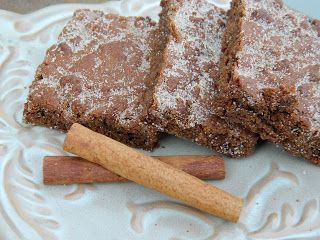
Ingredients
- 4 tablespoons butter or margarine
- 1 (1 ounce) square unsweetened chocolate
- 1/4 cup light molasses
- 2 large eggs
- 1 1/2 cups all-purpose flour
- 1 teaspoon ground ginger
- 1/2 teaspoon ground cloves
- 1/2 teaspoon baking soda
- 1/2 teaspoon salt
- 1 cup + 2 teaspoons granulated sugar
- 1 1/8 teaspoons ground cinnamon
Instructions
- Heat oven to 375 degrees F. Grease a 13 x 9 inch metal baking pan; set aside.
- In a 4 quart saucepan, melt butter with chocolate over low heat. Remove saucepan from heat. With wire whisk or fork, stir in molasses, then eggs.
- With a spoon, stir in flour, ginger, cloves, baking soda, salt, 1 cup sugar and 1 teaspoon cinnamon just until blended. Spread batter evenly in pan. Bake 15 to 20 minutes, until a wooden pick inserted 2 inches from edge comes out clean.
- Meanwhile, in a cup, combine remaining 2 teaspoons sugar and 1/8 teaspoon cinnamon; set aside.
- Remove pan from oven; immediately sprinkle brownies with cinnamon-sugar mixture. Cool brownies in pan on wire rack at least 2 hours.
- When cool, cut brownies lengthwise into 3 strips, then cut each strip crosswise into 5 pieces. Cut each piece diagonally in half.
Attribution
Good Housekeeping Christmas Joys – Hearst Books
Do you agree with China’s rejection of the idea that the private sector has to be in the lead in transforming economies?
Your question is the opposite of the situation in China.
On 17 February, President Xi Jinping held a meeting with the leaders of tens of China’s high tech companies. He told them the following:
The government will earnestly protect the legitimate rights and interest of private businesses and entrepreneurs in accordance with the law.
The basic principles and policies concerning the development of the private economy have been incorporated into the system of socialism with Chinese characteristics and will consistently be upheld and fulfilled.
Obstacles should be removed in order to facilitate private enterprises’ equal access to factors of production and market opportunities.
The prospects for the development of the private economy are broad and promising. It is prime time for private enterprises and entrepreneurs to give full play to their capabilities.
Challenges facing the private sector’s development have generally emerged during the process of reform and development and industrial transformation. They are partial rather than general, temporary rather than long-term, and surmountable rather than unsolvable.
He urged entrepreneurs to focus on high-quality development, invest in their main businesses, strengthen their capacities for innovation, and increase their core competitiveness.
He stressed the important role of private enterprises in advancing China’s broader goals in terms of technological innovation, promoting rural vitalization, and improving people’s well-being
He noted that China is a socialist country ruled by law, and no type of illegal activities by enterprises can avoid investigations and punishment.
Note: As of Sept 2023, China had over 55 million private companies accounted for 92% of all business entities. It is 96% in the current.