


Back in the day, as a young boy, I (and my friends) would take long “hikes” along the rural train-tracks on the edge of the river, and throwing round beads into the water. These balls were all over the place. They were black and the size of marbles, and we often wondered what they were.
But thanks to AI we now know. I used QWen 2.5.
I asked: What are those round balls found along Pennsylvania railroad tracks?
QWen 2.5 Inner dialog….
Okay, so I need to figure out what those round balls are near the railroad tracks in Pennsylvania. Let me start by recalling any time I’ve seen similar things. I remember seeing small, round objects along train tracks before, maybe in photos or videos. They might be part of the track structure or some kind of safety device.
First, I should consider the different components of a railroad track. There are the rails themselves, the ties (or sleepers) that hold the rails in place, and the ballast, which is the gravel or crushed stone around the ties. Maybe the round balls are related to the ballast? But ballast is usually angular, not round. Wait, maybe they’re not part of the ballast. Could they be some kind of fastener or part of the signaling system?
Another thought: sometimes there are warning devices near tracks, like reflectors or markers. But those are usually more angular or have specific shapes. Round balls might be used as markers, but I’m not sure. Maybe they’re part of a drainage system? Some kind of outlet or cover? Or perhaps they’re part of the track’s electrical system, like insulators or connectors. But insulators are usually ceramic and might not be round.
Wait, I’ve heard of something called “frogs” in railroad terminology, which are the parts where two rails cross each other, like in a switch. But frogs are more V-shaped, not round. Then there are rail anchors, which are devices that hold the rails in place to prevent movement. Those might be round, but I’m not sure.
Alternatively, could they be part of a derailment prevention system? Like some kind of wheel guide or guard? Or maybe they’re part of the grade crossing, like the barriers or lights. But those are usually larger structures.
Wait, another angle: in some places, especially older tracks, there might be remnants of old equipment. Maybe the round balls are part of a historical signaling system or some discontinued technology. Or perhaps they’re part of the track’s maintenance equipment, like markers for track inspectors.
I should also consider that they might be part of the drainage system. For example, culverts or pipes that have round covers. But those are usually more cylindrical or have a different shape. Maybe they’re part of a retaining wall or erosion control? Round concrete elements used to stabilize the track bed?
Alternatively, could they be part of the rail fastening system? Like some kind of spacer or insulator between the rails and the ties. Some fastening systems use round components, but I’m not certain. Maybe they’re called “rail anchors” or “tie plates,” but those are typically rectangular or have a specific shape to hold the rail.
Wait, I’ve heard of something called a “splice bar” or “fishplate” that connects two sections of rail. But those are flat bars, not round. Then there’s the “rail joint,” which connects two rails end-to-end. Maybe the round balls are part of a different type of joint?
Another possibility: they could be part of the signaling system. For example, in some systems, there are track circuits that detect the presence of trains. These might use electrical components like insulated joints or other devices. Maybe the round balls are part of the insulation or housing for such equipment.
Alternatively, they might be part of a noise reduction system. Some tracks have dampers or other devices to reduce vibration and noise. These could be round, but I’m not sure. Or maybe they’re part of a safety system that prevents trains from derailing, like a guard rail or some kind of wheel guide.
Wait, I think I’ve seen something called “wheel stops” or “derail blocks” near tracks. These are devices placed on the tracks to prevent rolling stock from moving beyond a certain point. They might be round or have a specific shape. But usually, derail blocks are more wedge-shaped or have a flange to engage the wheel.
Another thought: in some cases, especially in industrial areas, there might be remnants of old machinery or equipment near the tracks. The round balls could be part of old machinery that’s been abandoned, but that seems less likely if they’re consistently found along active tracks.
I should also consider that they might be part of a modern safety feature. For example, some tracks have markers or reflectors for visibility. Round reflective markers could be used, but they’re usually attached to posts or the rails themselves.
Wait, perhaps they are part of the track’s drainage system. In areas with heavy rain, there might be culverts or drains with round covers. But again, those are usually more like grates or pipes.
Alternatively, could they be part of a snow melting system? Some tracks have heating elements to prevent ice buildup, but those are usually embedded in the track structure.
Wait, another angle: in some places, especially where tracks cross roads, there are round objects called “crossbucks” which are the X-shaped signs, but those are wooden or metal and not round. Maybe they’re part of the grade crossing signals, like the lights or gates, but those are more rectangular or have specific shapes.
Hmm, maybe I’m overcomplicating this. Let me think again. Round balls… Could they be part of the rail fasteners? For example, some systems use round nuts or bolts to secure the rails to the ties. But those would be smaller and not really “balls.”
Wait, there’s a component called a “rail anchor” which is a clip that holds the rail to the tie. Some are round or have a circular part. Maybe the round balls are rail anchors. But I think rail anchors are usually more angular or have a specific shape to grip the rail.
Alternatively, maybe they’re part of the track’s alignment system. For example, in curves, there are devices to keep the track aligned. But I’m not sure how that would involve round balls.
Wait, I think I recall something called “torpedoes” which are placed on the tracks as a warning signal. They’re small explosive charges that make a noise when a train runs over them. But those are more like small, flat devices, not round balls.
Another possibility: in some older tracks, especially in Pennsylvania which has a lot of historical rail lines, there might be remnants of old signaling systems or other equipment. For example, old semaphore signals had round counterweights, but those would be part of the signal structure.
Wait, maybe they’re part of the track’s electrical grounding system. Some tracks have grounding cables or rods, and the round balls could be part of the connectors or terminals. But grounding rods are usually long and cylindrical, not round balls.
Alternatively, could they be part of a system to prevent animals from crossing the tracks? Like some kind of barrier or deterrent. But those are usually fences or other structures, not round balls.
Wait, I’m going in circles here. Let me try to look up some possibilities. From what I remember, there’s a component called a “railroad spike” which is a large nail used to secure the rail to the tie. But spikes are long and thin, not round balls.
Wait, there’s also something called a “spring washer” which is a round, flat piece of metal with a split to provide tension. But those are flat, not ball-shaped.
Alternatively, maybe the round balls are part of a newer technology, like part of a sensor or monitoring system. For example, some tracks have sensors to detect track integrity or temperature. These might be housed in round enclosures.
Wait, another thought: in some places, especially near switches or crossings, there are round metal covers or plates that protect the mechanisms underneath. Maybe the round balls are covers for some kind of mechanism, like a switch heater or a lubrication system.
Alternatively, they could be part of a derailment detection system. Some systems have sensors that detect if a train has derailed, which might involve round components.
Wait, I think I’m getting closer. I recall that in some rail systems, especially in areas with tight curves, there are devices called “lubricators” that apply lubricant to the rails to reduce wear. These might have round components, but I’m not sure.
Alternatively, maybe they’re part of the track’s drainage system. For example, French drains or other drainage solutions might use round outlets or covers.
Wait, perhaps they’re part of the track’s electrical system. In electrified railways, there are overhead wires and other components. The round balls might be part of the supports or insulators for the overhead lines. But insulators are usually ceramic and have a specific shape.
Alternatively, they could be part of a system to measure track conditions. For example, sensors that detect vibrations or track alignment might be housed in round cases.
Wait, I think I need to consider that the round balls might be a specific type of fastener or component used in the track structure. Maybe they’re called “rail balls” or something similar. Alternatively, they could be part of a historical system that’s no longer in use but remnants remain.
Alternatively, they might be part of a signaling system. For example, some signals use round lenses or covers, but those are usually on the signal posts.
Wait, another angle: in some cases, tracks have markers for maintenance crews. These could be round markers indicating specific points, like mile markers or maintenance points. But those are usually signs or plates, not balls.
Alternatively, maybe they’re part of a system to prevent vegetation growth. Some tracks use herbicides or other methods, but round balls don’t seem related.
Wait, I think I’ve heard of something called “rail anchors” which are round, heavy-duty devices that secure the rail to the ties. Maybe that’s what they are. Rail anchors are used to prevent the rail from moving longitudinally due to thermal expansion or the movement of trains. They might be round and made of cast iron or steel.
Alternatively, they could be “rail chairs,” which are metal supports that hold the rail in place on the ties. Some chairs are round or have a curved shape.
Wait, another possibility: in some older tracks, especially in Pennsylvania which has a lot of coal mining history, there might be remnants of mining equipment near the tracks. The round balls could be part of old mining carts or other machinery, but that’s a stretch.
Alternatively, maybe they’re part of a system to control the gauge of the track. The gauge is the distance between the rails, and sometimes there are devices to maintain or adjust it. But those are usually more mechanical and not round balls.
Wait, perhaps they’re part of a noise barrier. Some tracks have walls or barriers to reduce noise, but those are usually large panels, not round balls.
Alternatively, could they be part of a system to measure the weight of trains? Weigh-in-motion systems use sensors under the tracks, which might be round, but I’m not sure.
Wait, I think I need to consider that the user is referring to “railroad ballast.” But ballast is the gravel, which is angular. However, sometimes there are larger stones or even concrete blocks used in certain areas. Maybe the round balls are concrete blocks used for stabilization or as part of a retaining wall.
Alternatively, they could be part of a system to prevent erosion. For example, gabions or other erosion control structures might use round elements, but those are usually wire baskets filled with stones.
Wait, another thought: in some cases, especially near bridges or tunnels, there are concrete or metal structures to support the tracks. The round balls might be part of those supports, like columns or pillars, but those are usually larger and not just small balls.
Alternatively, maybe they’re part of a system to mark the centerline of the track or other alignment markers. But those are usually painted or have reflective tape.
Wait, I’m stuck. Let me try to think of any images I’ve seen. Round, metal, possibly rusty, along the tracks. Maybe they’re old rail anchors or some kind of weight. Alternatively, they could be part of a derailment detection system, as I thought before. Or perhaps they’re part of a system to prevent the rails from spreading apart. For example, in curves, the rails are under lateral forces, so there might be devices to hold them in place. Those could be round.
Alternatively, maybe they’re part of a system to secure the rails to the ties in a way that allows for expansion. For example, some clips or anchors that are round.
Wait, I think I’ve heard of something called a “spring clip” which is used to fasten the rail to the tie. These are sometimes round or have a circular component. Maybe the round balls are part of the clip system.
Alternatively, they could be part of a “pandrol clip,” which is a type of rail fastener. Pandrol clips are e-shaped and hold the rail in place. But those are more rectangular, not round.
Wait, maybe they’re part of the “elastic rail fastener” system, which uses round components to provide tension.
Alternatively, maybe they’re part of a “rail pad,” which is a rubber or composite material between the rail and the tie. But those are flat, not round.
Hmm. Another angle: in some places, especially in cold climates, there are devices to prevent ice buildup on the tracks. These might involve heating elements or other systems with round components.
Wait, perhaps they’re part of a “track circuit” which uses electrical currents to detect trains. The circuit might require insulated joints, which could have round components.
Alternatively, maybe they’re part of a “wheel detector” which uses sensors to count axles or detect wheel movements. These sensors might be housed in round cases.
Wait, I think I need to consider that the round balls might be “rail anchors” or “anti-creepers.” These devices are used to prevent the rails from moving along the ties due to the forces exerted by trains. They’re typically made of cast iron and have a wedge shape, but maybe in some designs they’re round. Alternatively, there’s a type of anchor called a “Fairchild anchor” which is round and heavy, designed to grip the rail and prevent movement.
Yes, that might be it. Rail anchors, also known as anti-creepers, are devices that are attached to the rail base to prevent longitudinal movement. Some designs are indeed round or have a circular component. They’re usually installed on the rail base between the ties and help to maintain the track’s position, especially on steep grades or where heavy braking occurs. The round shape might help distribute the force evenly.
Alternatively, they could be “tie plates,” which are metal plates that sit between the rail and the tie to distribute the load. Some tie plates are round, but most are rectangular. However, in certain applications, round tie plates might be used.
Another possibility is that they’re “rail braces,” which are used to reinforce the rail and prevent lateral movement. These might have a round component.
Wait, but the user mentioned they’re found “in and around” the tracks. If they’re around the tracks, maybe they’re not part of the track structure itself but rather nearby. For example, they could be part of a drainage system, like catch basins or manhole covers. But those are usually larger and more utilitarian.
Alternatively, they could be part of a utility line that runs alongside the tracks, such as electrical or communication lines. The round balls might be access points or junction boxes.
Wait, but the user specified they’re found in and around the tracks, so maybe they’re part of the track’s infrastructure. Given that Pennsylvania has a lot of older rail lines, perhaps these round balls are remnants of older track components that are no longer in use but still present.
Alternatively, they could be part of a system to prevent animals from walking on the tracks, like some kind of deterrent, but that’s less likely.
Wait, I think the most plausible answer is that they’re rail anchors or anti-creepers. These devices are used to prevent the rails from moving along the ties due to thermal expansion or the forces from trains. They’re typically made of metal and attached to the rail base. Some designs are round or have a circular shape to provide a secure grip. Given that Pennsylvania has a lot of rail lines with varying grades and curves, rail anchors would be essential to maintain track integrity.
Alternatively, they might be part of the track’s fastening system, such as spring clips or other components that secure the rail to the tie. However, if they’re round balls, they might be a specific type of anchor or weight used to stabilize the track.
Another possibility is that they’re part of a derailment detection system or a wheel sensor. Modern railways use various sensors to monitor track conditions and train movements. These sensors might be housed in round, durable casings to protect them from the elements.
QWen 2.5 answer…
In conclusion, after considering various possibilities, the most likely answer is that the round balls are rail anchors or anti-creepers designed to prevent longitudinal movement of the rails. Alternatively, they could be part of a signaling or sensor system. However, without a visual reference, it’s challenging to be certain. But given the context of railroad tracks in Pennsylvania, rail anchors seem like a plausible explanation.
The round balls found near American (Pennsylvania) railroad tracks are most likely rail anchors or anti-creepers . Here’s a detailed explanation:
Purpose and Use:
- Rail Anchors/Anti-Creepers :
- Function : These devices prevent longitudinal movement of the rails caused by thermal expansion, contraction, or the dynamic forces of passing trains. They secure the rail to the ties (sleepers), maintaining track alignment and stability.
- Design : Typically made of cast iron or steel, they are often round or wedge-shaped to grip the rail base effectively. Their weight and shape help distribute forces and resist movement, especially on steep grades or high-traffic lines.
- Historical Context :
- Pennsylvania’s extensive rail network, including older lines, may feature these anchors as part of traditional track maintenance practices. Some may be remnants of older systems but still serve their purpose.
Other Possible Components (Less Likely):
- Signal System Components : Round housings for sensors or track circuits detecting train presence.
- Drainage Elements : Covers for culverts or outlets, though these are typically angular.
- Safety Devices : Rarely, they could be part of derailment detection systems or wheel sensors.
Conclusion:
The most plausible answer is rail anchors . These unassuming but critical components ensure track integrity by preventing unwanted rail movement, a necessity in Pennsylvania’s varied terrain and climate.
Hum…
So I asked Google Gemini…
The small black balls found along Pennsylvania railroad tracks are likely railroad marbles or spike balls.
Explanation
-
Railroad marbles
These marbles were used by the Pennsylvania Sand Company to help sand flow out of hoppers.
-
Spike balls
These are also known as “Steel Magnolias” and are a type of railroad yard art.
Related information
- Marbles are made from a variety of materials, including sand, soda lime, silica, and other colorants.
- Glass marbles are used in industrial applications such as air and water filtration systems, and as agitator marbles in aerosol spray paint cans.
- Marbles have been found in many places around the world, including Asia, the United States, Northern Mexico, and Egypt.
- Marbles got their name because earlier versions were made of pieces of marble and other stones, not glass.
-
Railroad Marbles – Railroadiana Online
Railroad Marbles
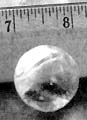
The Baltimore and Ohio Railroad has lost its marbles! Glass agates can be found along stretches of the Cumberland Branch of the B&O. Usually they are found close to stations and/or freight houses. Condition of these glass globules can vary from no marks at all, to some scratches with cracks, to chipped or just glass pieces. The best place to look for them is in the ballast between the ties and rail.
These marbles were first used between 1885 and 1890. As the story goes, a railroad official wanted a marble that would carry five hundred pounds of weight. He asked the Wheeling Glassworks to make him such an item and the railroad would buy tons of them.
And so they did. The Wheeling Glassworks was able to produce a glass agate that would support five hundred pounds of weight. The marble is about three quarters of an inch in diameter, made of a greenish-clear glass, has a few air bubbles visible and linear indentations on the surface from either straw or forming. The latter in no way prohibits the sphere from rolling freely since it is almost perfectly round.
Marbles were purchased by the tons and used in the freight houses and depots. Two one inch lathes were laid as tracks parallel to one another and the marbles were spread, filling the space between them. Freight that required moving was pushed up onto the “roadbed of marbles” and rolled along to its new location. Remember the planks in the flooring of these depots and freight stations were of white pine three inches thick and fourteen inches wide.
Larger size marbles can also be found. Agates of approximately two inches in diameter can be found on another branch of this same railroad. These marbles were used by the Pennsylvania Sand Company on the main line up into Berkley. The larger marbles were put into the bottom of the sand hoppers to help the flow of the sand when emptying.
Web Editor’s Note This article was first published in Key, Lock & Lantern, Issue #87, Spring, 1988, pages 1681-1682. The marbles described here should not be confused with the railroad “logo” marbles that have recently been manufactured. The latter have railroad heralds or logos in them and are fantasy items, never having been issued by a railroad. The marbles described in this article are clear glass with no fancy markings. Our sincere thanks to Sam Ferrara for permission to reprint his article.
Updates.
A gentleman from California emailed us to say that these are not only found in the East. The marbles shown at right were found outside Ludlow, California along a RR right-of-way after a storm apparently washed them into view.
A website viewer emailed us in late 2010 to say that she found similar marbles in Oro Grande, California.
Other website viewers emailed us in 2016 with the following:
“Reading through your article about railroad marbles and I thought I would add something. I too have been finding these not on the East Coast but rather in California since I was approximately 10 years old and even now today as I am 33 years old I continue to find these along the railroads in the Sacramento and folsom area in Northern California!!! I love strolling the tracks and picking them up as well as gathering insulators which have fallen off the hundred-year-old powerline poles which are rotting.”
“I used to take walks along the CN rail tracks in the early 80s with my father and we would stumble upon these quite often. I must have collected about 50 or 60 of them. This was in Thornhill just North of the Toronto city limits in Canada.”
…And with that mystery solved, we begin today…
Why are Americans so ignorant about the world?
I had the pleasure of working with a lot of Americans; I remember particularly one who came from NY to London to work with us for three weeks.
In the first few days, while onboarding, he constantly boasted about how hard he works (8–8) and how little we do (9–5).
Then we worked together. I’ll never forget how tired he was after first day which I could only call “warm up” by London standards. I think he went through hell with me in this week, he never worked intensively before. Seeing this, I gave him a lot of slack.
His idea of “work” was to spend 1h on morning coffee run, 2h on lunch, an hour or two by watercooler, you get the picture.
With me, he had to do solid 8h and that was way more than he was accustomed to, despite doing considerably longer “working hours”.
He genuinely thought London works casually, like he does, just less hours. He said these were hardest three weeks of his life. This stayed with me for some reason.
He, just like most Americans, lives in a bubble caused in big part by lack of holiday time. They are simply unable to travel and explore the world and they’re unable to work at peak efficiency as people are genuinely tired.
The only travel they do is within country, which reinforces established, narrow point of view of “everywhere, everything is the same”. I bet this would apply to anyone put in this position, not only Americans.
Women Are Scared Of This New 50/50 Divorce Law Being Passed By President Donald Trump
What do Chinese mean by saying “China doesn’t have Western-style democracy” because there are many different forms of democracies in the East and West. Do they mean China has a democracy unique only to China? What are its characteristics?
1. The political system in China is called “Consultation system”, while the political system in the West is called “Election system”.
In looking at the Western-style democratic framework, a fundamental question arises:
Should democracy be about conflict – one’s values over another’s – or about consensus?
The role of the state is to act as a rule-maker and arbiter of conflict.
Similarly, in the process of formulating relevant policies to carry out the authoritative distribution of social values, the state must conduct extensive communication and consultation with the social pluralist subjects to strive for consensus.
This means that in a society with diversified interests, it is normal for different social groups to have different interests and conflicts of interest. It is also because of this that deliberative democracy is inevitable in social life…
Which is more democratic? China’s “Consultative system”.
Do Western opposition parties have the right to enter the government cabinet? No, they do not.
Many cabinet ministers in China are not members of the CPC, For example, former Minister of Health Chen Zhu was not a member of the CPC, but a member of the Chinese Peasants’ and Workers’ Democratic Party Central Committee. However, because of his abilities and expertise, he was valued, so he is eligible to join the government cabinet. This is democracy.
2. In China it is “Serve the people”, in the West it is “Serving one’s constituents”.
“Serving the people” is to serve the general public, while ‘Serving one’s constituents’ is to serve their support camps, which is one-sided and does not cover the whole population.
Americans React to China’s Lifestyle after Joining the Red Note App
Has the United States implemented unilateral trade, financial, economic, banking, or other types of restrictions or sanctions in the past?
US is sanction-happy. It has imposed all sorts of sanctions. It is power-hungry. It sanctions countries that disagree with it and do abide its ways. It is angry as there are more and more such countries.
But are they effective? For the US, they may serve a political purpose, but not many countries are intimidated. An interesting point is that US has become less trigger-happy since Russia defeated its sanctions.
Russia has the distinction of receiving the largest number of sanctions and the most severe ones. They were aimed to collapse its economy and its oil industry. But to its credit, Russia largely defeated them all. Proof of the pudding is that both its economy and oil industry are standing and growing.
China has been helpful – the “no limit” agreement, their trade and investments, the use of their national currencies, as well as, the facilitation of its foreign payments and settlements outside the SWIFT system.
Iran has also received a fair share of sanctions. It went through a tough time during Covid-19 for shortages of medical supplies due to the sanctions. It has grown to become a force to be reckoned with, even in science and technology, such as the supply of drones to Russia.
China has also been helpful. The 2 countries have a long-term multi-billion dollar trade & investment agreement.
China has also had the pleasure of US sanctions, all of them to prevent its technology development. Nevertheless, it marches on, its tech-driven economy growing at twice the pace of the US. Its technology prowess is now shoulder to shoulder with the US, leads in new tech like 5G communications, and the entire field of green tech.
US angers known no bound. Poor and small countries are not spared its sanctions.
Cuba has been under sanctions for 2 generations, the US ignored every resolution in the UN to lift them. Afghanistan has only about $10 billion in reserves. US froze them when it was kicked out of the country.
What is the craziest thing you have ever said or done at an interview and still gotten the job?
In 1994 I interviewed for a cooking job at a 24-hour restaurant. At that time I had been “in the business” for about 11 years, so I knew pretty well “what’s what” in my line of work, as far as how things run in a restaurant. I was sitting in a booth, across the table from the restaurant manager. I had immediately, upon introductions, gotten the impression that the manager was an “easy-going” guy.
At one point in the interview, the manager asked me the pretty standard question, “So, what kind of schedule are you looking for?”
I responded with a completely asinine answer:
“Oh, you know, Monday through Friday, 9 to 5.”
If you’ve worked in restaurants, you understand what’s wrong with that answer. If you haven’t, here’s the thing: There is essentially no such thing as a M-F, 9–5 schedule for hourly workers in restaurants. Restaurant work schedules are arranged around meal times, not “office hours”, and having both Saturday and Sunday off are right out of the question, as those are typically the busiest days of the week. If I had as much experience in the industry as I claimed, I would know this.
So I said that. The manager did sort of a surprised double-take. Then he grinned. Then he busted up laughing.
Then he offered me the job.
Here’s the thing, though. This was a specific instance where I felt that I had “read” the interviewer right and, luckily, it turned out that I had read him right. So, in a serious situation (I really needed the job), I took the chance that a stupid joke of an answer would pay off. I made the joke, the interviewer recognized it as a joke, and, most importantly, he recognized it as a joke that only somebody who knew the business could make.
I thoroughly enjoyed working for that guy. He loved the restaurant business the same way I did/do (I’m still cooking professionally).
Choosing the Right Cinnamon
Fourteen Ways to Fancy-up your Cinnamon Rolls
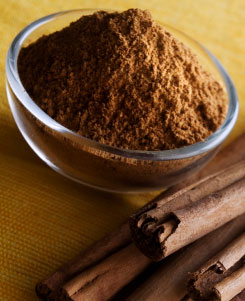
Kitchen tools, gourmet foods, baking mixes, and hard-to-find baking ingredients mentioned in this article are available at The Prepared Pantry.
by Dennis Weaver
My mother made bread nearly every week. Often, she took part of the batch and made cinnamon rolls, bread dough wrapped around a mixture of cinnamon, sugar, and butter. They were luscious. In my memory, that’s my first affair with cinnamon and I’ve been in love with cinnamon ever since. With experience, I learned that nothing will make such a magical difference in your baking as a really good cinnamon.
There are so many different types of cinnamon available, many of them cheap and very inferior. A good cinnamon tastes good and a bad cinnamon tastes like a drug store. Once I found good cinnamon, I started doubling the amount called for in the recipe. In time I concluded that the reason so many recipes call for so little is that more bad cinnamon would destroy the recipe.
Today, I’ll help you choose a very good cinnamon. You’ll learn of different types of cinnamon and you’ll learn how much to buy and how to store it. And I’ll tell fourteen ways that you can fancy up those cinnamon rolls you make.
Types of Cinnamon
There are three types of cinnamon to consider: Korintje Cassia cinnamon, Vietnamese cinnamon, and Sri Lankan or Ceylon cinnamon.
Korintje cassia cinnamon comes from Indonesia, usually Sumatra. It comes from the cassia tree, not the true cinnamon tree, and is the cinnamon we are most familiar with. Good quality Korintje cassia is sweet and mellow. Lower quality cinnamon, the B and C grades commonly sold in the stores, is often bitter and astringent. You can tell the difference by tasting it. Dab a little on your finger and put it in your mouth. Premium Korintje cassia cinnamon will be smooth with an almost citrus tone.
Vietnamese (Saigon) cinnamon also come from the cassia tree but it has a very different tone resulting in a different experience when baked. Botanically, it is the same but is harvested and processed differently resulting in the different flavor. It is stronger and spicier with more cinnamon oil flavor. This is my favorite cinnamon in apple pies and apple desserts.
Ceylon (Sri Lankan) cinnamon is a true cinnamon coming from the cinnamon tree. In some parts of the world, it is preferred over cassia cinnamons. It is less pronounced in flavor and has a more citrus overtone.
Which cinnamon should I buy?
So which do you buy? We recommend all three so that you can match the distinctive flavors to recipes that you are using and the result you are trying to attain.
Korintje cassia is less expensive and can be very good. Be certain that you buy premium or grade A cinnamon. Look for the volatile oil content; that’s what gives cinnamon its flavor. It should have at least 2% volatile oil. (The cinnamon that we sell does.)
Shelf life: How much should I buy?
You have probably noticed that you can buy spices in bulk for much less than in small quantities. Handling and packaging is expensive. If you are confident in the quality of the cinnamon you are purchasing, buy it in quantity. However, keep in mind that cinnamon will lose its potency. As it becomes older, you may have to use more of it to get the same flavor in your goods. We recommend buying what you can use in a year.
Ideas for Your Next Cinnamon Roll Project
And now for those fancy ways to make cinnamon rolls: Mix your rolls as usual but add any of the following to your filling.
1. Cranberry Nut Sweet Rolls. Use dried cranberries and walnuts in the filling. Add a little orange zest to your filling.
2. Cranapple Sweet Rolls. Add dried cranberries and dried apples to your filling. Alternatively, use an apple pastry filling and add cranberries.
3. California Golden Sweet Rolls. Add golden raisins and orange zest to your filling.
4. Fruit Filled Sweet Rolls. Use a commercial fruit pastry filling with your sweet rolls. We sell apple, raspberry, blueberry, cherry, and lemon. Alternatively, make your own filling with fresh fruit.
5. Maple Nut Sweet Rolls. Make your filling with maple flavoring and walnuts.
6. Peanut Butter Sweet Rolls. Instead of butter in the filling, substitute peanut butter. Add chopped peanuts.
7. Chocolate Fudge Sweet Rolls. Add cocoa to your dough and some extra sugar or add cocoa and chocolate chips to your filling. Frost your rolls with a thick chocolate ganache.
8. Cinnamon Burst Sweet Rolls. Add cinnamon chips to your filling.
9. Jammy Sweet Rolls. Use your favorite jam or jelly in the filling.
10. Chocolate Peanut Butter Cup Sweet Rolls. Make the fudge rolls above but substitute peanut butter for the butter and add extra peanut butter.
11. Cherry Pecan Sweet Rolls. Add dried cherries or maraschino cherries and pecans to your filling. Make a cherry frosting with red or pink food coloring and cherry extract.
12. Pear and Pecan Sweet Rolls. Add dried pears and pecans to your filling.
13. Macadamia Orange Sweet Rolls. Add macadamia nuts, white chocolate and orange marmalade to your filling. Add orange zest to a cream cheese frosting for topping.
14. Coconut and Pecan Sweet Rolls. Add shredded coconut and pecans to your filling. Use brown sugar in the filling and omit the spices.
“Brace Yourself NOW” – Richard Wolff’s LAST Warning
Peace & Quiet
Submitted into Contest #279 in response to: Center your story around a person who believes they’re the last human on Earth.… view prompt
KA James
I could start off by simply stating the obvious. I am currently thoroughly confused.
Everyone besides me seems to have disappeared. It has been days since I have seen another living soul, just how many days, I am not sure. My concept of time seems to have been altered, although I have no idea how that could be done. My surroundings are familiar, yet so many things seem strange to me now. My emotional responses don’t seem to always be appropriate. I try to examine one odd feeling, and another manages to come along before I can even begin to focus on the first. My memories of family and friends, of workdays and holidays, are all there and vivid in my mind as occurrences, though I couldn’t say with any confidence level whether the events I am remembering happened last week or last year.
I was taught from an early age that information was vitally important, that you could solve any problem if you analyzed it thoroughly. I have been told many times that I have an exceptionally analytical mind. Data analysis, after all, is my job, so I am starting this journal in an effort to collect information that I can hopefully use to determine just what has happened.
I am a product of my generation, so I don’t have anything as exotic as a leather-bound booklet of stark white pages to fill with my thoughts and observations. This electronic version will have to suffice.
To start, I shall state what I believe that I know.
My name is Sharon, born July 29, 2005. I am a twenty-nine year old data analyst living in Columbus, Ohio. I am single, renting an apartment on the second floor of a four story complex, where I have a second bedroom converted to an office, which I work out of primarily. I have little free time, as I have been described as a workaholic, though I do, or did, have friends I would occasionally go out with on a somewhat infrequent basis.
Other than the complete absence of my fellow man, the world is generally as I remember it, my apartment is still my apartment. Earlier today, I went outside for the first time since this all started. Strolling down the short hallway to the parking garage and exit door, all registered as familiar. The brown, swirl designed carpet, so obviously selected as to not show dirt tracked in by the tenants, the plastic potted plants and fire extinguishers, mass market artwork, all the normal amenities one would expect in the common areas of a moderately priced apartment complex.
Emerging out onto the sidewalk, the drugstore remained just across the street, and even appeared to be open for business, though who might patronize it now was anyone’s guess.
Venturing further into the neighborhood, all the shops and businesses were right where they should be, the park that I like to jog through still just a couple blocks down, everything in its place except for my fellow citizens.
But as I stood at the entrance to the park, I realized that wasn’t entirely true. There were other things missing, and other oddities if I believed that everyone else had simply vanished.
The world wasn’t completely quiet, a gentle breeze rustling the tree branches above me being the most prominent sound, but there were no animal noises joining in. Not a single tweet, coo or squawk came from the trees, no squirrels running across the grass, not even a stray dog or cat crossed my path. Did they disappear with all the people?
I returned to my apartment with more questions than when I had left hours before, and no answers at all.
With no other people, I am anxious for something to happen. When I am not actively searching for answers, I am frustrated at the dullness of the day. I know I should feel lonely. Maybe that will come in time.
Journal Entry 4 – Experiments
The last few days have not been productive at all. My few journals so far are repetitious, with no new meaningful observations or information to log. I seemed to have been waiting for something to happen rather than taking the initiative and further exploring my surroundings or examining my situation. Today has been marginally more productive, though my minor revelation seems to have been purely by accident.
My apartment never really changes, or does so only if I make a conscious effort to make it different. If I turn on a light or open a door in the room I am in, it stays on or open. But other items that should change over the course of a normal day don’t always appear to follow the same pattern. My bed, for example, is always made. Not perfectly, but always in the same manner and with the same sheets and duvet hanging identically, the pillows piled just so. I can remember making this bed a multitude of times since moving here, but I can’t say that I can remember having made it today.
When I open the refrigerator, it is stocked full of food, from fresh fruits and vegetables, eggs, cheese, to leftovers stacked up in Tupperware. But it always looks the same. And though my concept of time is still skewed, it feels like some fairly significant amount of time has elapsed since I last went shopping, yet nothing has spoiled, and even though I am sure I am eating, my fridge stays nearly overflowing.
With this thought in mind, I devised a few experiments which I have initiated.
I moved a pillow from my bed to the couch in the living room. I pulled the duvet off and left it crumpled on the floor, and folded the sheet down so it only covered half the bed.
In the kitchen, I found a couple apples and took a single bite out of each, placing one back in the refrigerator and the other one on the counter.
So that my experiments weren’t limited to just inside my apartment, I went back outside and walked to a bakery on the next block. I remembered on my original walk to the park entrance that the bakery had been open, with what had appeared to be well stocked shelves from what I had seen through the window.
A sweet and cinnamony aroma assaulted my senses as I stepped through the door, like one would expect in such a bakery, if it was still actively in use. A tray of what were presumably four day plus old cinnamon rolls sat behind the glass counter. Moving around and removing the tray, I pulled a roll loose, and could tell even before I bit into it that it was no more than an hour old, still warm, flakey and delicious.
I purposely left the tray setting on the counter before heading back to my apartment, doing my best to ignore the rest of the bakery as I left.
I am not positive, but have an idea what I will find tomorrow.
Journal Entry 5 – Observations
The apples are where I left them, the one on the counter having started to turn brown where I bit into it.
The pillow and bed are also as I left them, most significantly, the sheet is still covering only half the bed. There is no evidence that I have slept in it, and no indication of any attempt to remake the bed properly.
The bakery further supports my theory. The rack of cinnamon rolls I moved are room temperature and beginning to harden, particularly on the exposed edges. They now taste like what I would expect day old rolls to taste like, but still better than nearly a week old.
A final corroborating observation came out of the bakery, though I couldn’t set it up as I had done the others. I found a whole rack of similar cinnamon rolls in the back. Since I had not seen them the day before, they were still fresh and slightly warm.
Somehow, the objects in my world don’t age, don’t move or change in the slightest, until I recognize and interact with them. And normal everyday actions that I should be doing as part of a day-to-day life don’t seem to happen unless I specifically focus on them, yet I remember them, if only vaguely.
I have to be sleeping, I sort of recall sleeping, and yet my bed shows no signs of anyone having slept in it.
I have to be eating, which I also kind of remember doing, but I can’t recall specifically what I ate last for an actual meal, and food only shows signs of aging or consumption when I consciously do something with it.
I am proud of myself, if only just a tad, for my cool and scientific approach to this bizarre situation, even though it has not led to any substantial insights into what is happening. I still don’t know the fate of everyone in the world except for me.
I have, of course, endlessly run the possibilities and probabilities through my mind.
It couldn’t have been a virus: there are no dead bodies.
If everyone but me simply disappeared, why are all the cars neatly parked off the street? Why aren’t there airplanes littering the ground that fell from the sky? I live only a couple miles from the Columbus Airport, and would surely have seen evidence of such crashes. The few businesses I walked through looked open, but there was no evidence that people had recently been inside them.
There is the incredibly farfetched. I could be in a state of suspended animation, aboard a spaceship speeding through the galaxy on a mission to the nearest star, and all that I am perceiving as real, nothing but sensory deprivation nightmares.
I can’t bring myself to believe that, but the remaining possibilities go down not completely dissimilar routes.
Perhaps life on Earth has remained as it was, and I am the one affected. Either I have been moved to someplace that duplicates my world, or at least my little corner of it, or what I am perceiving as my normal world is in fact not real at all, but is a dream. Could I be in a coma?
I suppose there is one other possibility, but I am not religious enough to believe that this is Hell.
Journal Entry 7 – Utilities
The live internet is gone, or I am unable to access it, or not fully. All indications from my computer show I am connected, I don’t receive any error messages, but the information I bring up doesn’t change. It is almost as if a copy of all the information on the internet were stored, captured and frozen at some point in time, excluding any new data or live streamed information.
This observation leads me to another significant conundrum.
The power is on, but who is keeping it on? By my journals, I am at least a week into whatever events have transpired, though I still believe it to be longer, and my lights haven’t so much as flickered once. Less impressive, but still noteworthy, I still have clean, running water. How are utilities still operating without people to maintain them? And possibly just as important, how long will they stay working?
I considered venturing out to explore further, possibly even trying to find a power plant or water treatment facility, but the fear of not making it back to my apartment has kept me from risking anything beyond walking distance. My car was still fully charged down in the garage last time I checked, but what if the recharging stations aren’t working?
When you are all alone with what appears to be an infinite amount of time to dispel, strange thoughts come inevitably into your head.
My concerns have been shifting lately, away from the observations of the material world I inhabit and more inward to introspection. In short, I am beginning to worry about my sanity, and how long it can be sustained.
My emotions are a jumbled mess, and I find myself bothered as much for what I am not feeling strongly as for the clear emotions that I express.
Am I actually lonely, or only feeling lonely because that’s the way I’m supposed to feel when there is no one else around? Do I even really understand what feeling lonely is like, or actually means?
The circumstances that are creating my loneliness are about as obvious as they could be. But why do I feel it? I could chalk it up to existential pondering I suppose, to be closely followed by madness, but that does not seem accurate.
My final observation for today seems to partially bridge the gap between my concern for the change in the material world and my emotional response to those changes.
When I started this journal, I jokingly commented that it was not to be the old fashioned pen and paper type, but would reflect my generation and be strictly digital, my entries faithfully typed into my computer at some frequency commensurate to my current understanding of time progressing.
Even though I remember, or believe that I remember, typing these thoughts and observations into my laptop, I have just realized that I am making this journal entry without typing at all. I am not even in my office. My thoughts are being transferred and recorded, as I think them. How I know this to be true, I can’t explain.
I feel this latest observation may hold the key to everything, but its significance has so far eluded me.
I wish there was someone here to ask what is happening, someone to discuss and decipher pros and cons of beliefs with, but I am alone, even if I don’t feel lonely as I should.
There is such a thing as too much peace and quiet.
***********************************************
“Earlier on the tour,” said the Android Museum guide, “after I explained how HumanKind Inc. essentially followed the lead of the famous science fiction writer, Isaac Asimov, and created governing programming laws for our androids to protect mankind above all else, someone asked about preventing accidental harm. After all, our androids are much stronger than humans. How do we assure that one of our androids can’t just accidently get carried away and crush a person’s hand by shaking it too hard, assist an elderly lady a bit too vigorously when helping her get dressed, or even get carried away and be a bit too, shall we say amorous, when providing one of their more intimate functions?”
That got a few chuckles, and even a slight blush or two from the tour group.
“I asked you then to hold that thought to later in the tour, and now is the time to circle back to it. And so, esteemed guests and those of you who simply had nothing better to do on a Thursday afternoon, may I present the Sharon system.”
The tour group’s reaction was anticlimactic, as expected.
“Now I know she doesn’t look like much,” continued the guide, indicating the rather obsolete looking computer system displayed along the museum wall, its lights flashing, a steady low hum emanating from its cabinets. “But let me assure you, Sharon played an invaluable role in history, with her results and memories still used today.”
“So what is she? And why is she a she?” inquired a young lady near the front.
“Excellent questions. I do love an inquisitive group. If I can answer the last part first, and likely make a few of you blush again … it’s OK, you know who you are, I won’t point you out … Sharon’s first iteration came out of the sexbot craze of the late 2020’s. And since the primary demand at that time was for female sexbots, the original version was given a female name. So Sharon, in layman’s terms, is an AI. And yes, the original need for Sharon was to address the concerns, or safety, of a person having sex with an android that could severely hurt them.”
“But why is Sharon important to the larger android business, and what did she do that was so beneficial, you might wonder. Well, what she did was simply live a virtual life, millions of times over, and ‘remember’, in a digital sense, all the good, bad, inappropriate, sometimes horrific or even just emotional events of those lives. HumanKind programmed random input events for those lives, and measured and adjusted her responses in those different lives.”
“So all the androids you build only have a woman’s point of view of the world,” joked a man from the back of the group. The guide chuckled along with the group, if a bit exasperatedly, knowing the underlying prejudice likely hidden behind the comment. There was always at least one in every tour, it seemed.
“No, within her many simulated lives, Sharon has been a man, woman, transgender, non-binary, gay, etcetera. HumanKind has endeavored to be as inclusive as possible, we just didn’t feel the need to change the name constantly. What the company did do, was to take all the results of all those life experiences, and develop the Sharon platform, which is an integral part of each and every one of the thousands of androids made to date by the company.”
“Is that really the actual computer they used?” asked the inquisitive young lady from before.
“Yes, I can assure you, this is the actual Sharon system. And I can tell you something else. I have it on good authority that it is still intact and functional today. The data is no longer extracted, but Sharon herself is still in there. Retired if you will. And with no one feeding her random life inputs any longer, we like to think she is just enjoying the well deserved peace and quiet for a change.”
Why did you leave the U.S. for Australia?
I was driven out of the U.S. by my ex-wife and the Santa Cruz Family Court. I am just one of thousands of Family Court Refugees.
The treatment I endured from both her and the courts left me on the brink of homelessness. I lost my home, my dental practice, and access to my bank accounts. But I held on—because I loved my children. Then one day, in court, my ex-wife claimed I was planning to kidnap them and flee to Australia. Without evidence, they took my daughters away and quadrupled my child support payments. Within three months, I lost my second home to foreclosure because the child support was deducted first, leaving me without access to my paycheck, my bank account—or my children.
With nothing left for me in the U.S., I returned home to Australia. There, the family court treated me fairly, setting reasonable child support and ensuring payments were made through the Tax Office. In ten years, I never missed a single payment.
In most countries, divorce is final. But in the U.S., a bitter ex can keep dragging you back to court, endlessly demanding more, simply by claiming that “conditions have changed.”
After ten years without seeing my daughters, they finally came to Australia to visit me. I went to the airport, searching for the geeky 13-year-old redhead I had last seen so many years ago. Instead, a stunning young woman approached me.
“Dad? It’s so nice to see you,” she said. Overwhelmed, I broke down in tears. Then she reassured me:
“Hello, Dad. I have no issues. I just came to see how you are and how you’re living your life.”
The following year, Jackie visited. A few years later, the three of us took an unforgettable road trip through the Pilbara and along the Coral Coast of Western Australia.
I usually spend Christmas there—but not lately.
C
Shorpy

What is the “just before the incident” snapshot that sticks in your memory?
Michio Hoshino (Japan) is a renowned professional photographer, and below is the last photo he ever took, found on his camera while he was on assignment photographing wildlife activity around Lake Kurilskoye, Russia.
Considered a specialist nature photographer who specifically documents wildlife activities, Michio frequently travels back and forth to Alaska bringing home many stunning wildlife photographs.
In 1996, Michio received an assignment for a photo shoot at Lake Kurilskoye in Russia. The 44-year-old man was found dead in his tent after being attacked by a bear. The photo above was the last photo found on the camera he was carrying and it seemed to be the last seconds before the animal actually attacked him.
Michio is one of those people who works with all his heart and soul…
Trump seeks to toughen Biden’s chip controls over China, and ask key allies match China curbs the US has placed on American chip-gear companies. How will Japan and Netherland response to that? Can China’s chip industry overtake the US?
Your scenario is already ex-post. Biden wanted to starve China of technology. He had bullied Japan and Netherlands into submission. They dared not sell to China whatever machines and components that Biden forbade.
Biden’s problem was he did not know what China was cooking and what it has in the pipeline. China has a huge talent pool. It is an innovation powerhouse. Its developments were fast and numerous. Instead of being the hunter, he ended up playing catchup to China’s developments, to its frequent announcements of products and innovations. I suppose this is what his Commerce Secretary Raimondo meant when on the last days of her office, she called the whole exercise a Fool’s Errand.
But Biden was determined that US shall be the AI leader. Nvidia is the US bellwether of AI. He barred it from selling high-end AI chips to China. Trump was sold to the idea that AI dominance requires rising computing power, and large investments of money for large returns. So, with great fanfare, the bosses of Softbank, OpenAI, and Oracle, announced the establishment of a $500 billion AI fund that will ensure US leadership is unassailable.
But, lo and behold, along come DeepSeek. It spent only $5.6 million to teach its R1 model, a tiny fraction of the cost incurred by OpenAI’s o1. It achieves this through algorithm efficiency and innovation than relying on high-end chips. It made it open-source and even has mini “distilled” versions to allow researchers with limited computing power to use the model. It up-ended completely the thesis of ever rising computing power, big investments, and big returns. US attempt to dominate AI is curbed, in all likelihood, permanently.
Can China’s chip industry overtake the US?
This is not the point.
China’s purpose is democratic. Take DeepSeek’s open-source. It could make AI cheap, ubiquitous, not controlled by any one country or company, and is available for everybody.
This is not to say powerful AI chips are unimportant. Only that it is not the whole story.
China is one generation behind the US. Huawei Ascend 910C equals Nvidia’s last generation H100. Its 920 due in a year matches Blackwell, the latest Nvidia’s chip.
China is also catching up with production. Two the new SMIC fabs that will onstream this year and next each has capacity of 50,000 wafer per month, more than enough to meet its needs. Huawei plans to produce 100,000 910C and 300,000 910B chips this year.
Digitimes Asia reported that the yield in the manufacture of 910C has doubled from 20% to 40%, and is profitable. The aim is to increase it to 60% this year to match the industry norms. The yield for the older 910B is 50%.
NATO’s Worst “Nightmare,” Xi’s Missile Reaches Europe As Serbia Deploys China’s FK-3 System | CLRCUT
Sir Whiskerton and the Ware-Rabbit: A Tale of Clownish Chaos and Lunar Lunacy
Ah, dear reader, prepare yourself for a tale so bizarre, so whimsical, and so utterly absurd that even Sir Whiskerton’s sharp mind will be put to the test. Today’s story is one of hummingbird bites, lunar transformations, and one very peculiar ware-rabbit who turned the farm into a circus of clownish chaos. So, grab your sense of humor and a bag of popcorn (for snacking), as we dive into Sir Whiskerton and the Ware-Rabbit: A Tale of Clownish Chaos and Lunar Lunacy.
The Hummingbird Incident
It all began on a sunny afternoon when Harriet the Rabbit was nibbling on a patch of clover near the edge of the farm. Suddenly, out of nowhere, a tiny hummingbird zipped past, delivering a sharp peck to Harriet’s ear before darting away in a blur of iridescent feathers.
“Ow!” Harriet squeaked, clutching her ear. “What was that?!”
“That!” echoed Ditto, who had been practicing his echoing skills nearby.
The other animals gathered around, concerned but also slightly amused. “A hummingbird?” Sir Whiskerton said, narrowing his eyes. “That’s odd. Hummingbirds are usually harmless.”
“Harmless!” echoed Ditto, though he had no idea what it meant.
Harriet shrugged it off and went about her day, unaware that her life—and the farm—was about to take a very strange turn.
The First Transformation
The next full moon arrived, and with it came a transformation unlike anything the farm had ever seen. As the moon rose high in the sky, Harriet began to twitch and tremble. Her ears grew longer and floppier, her nose swelled into a massive red ball, and her feet expanded into enormous, floppy clown shoes. By the time the transformation was complete, Harriet was no longer a cute little rabbit—she was a ware-rabbit, a hulking, clownish creature with a penchant for mischief.
“What… what happened to me?!” Harriet squeaked, her voice now tinged with a comical honk.
“Honk!” echoed Ditto, who was now thoroughly confused.
The other animals stared in disbelief. Doris the Hen fainted dramatically onto a pile of hay, Rufus the Dog barked in confusion, and Porkchop the Pig let out a snort of laughter. “Well,” Porkchop said, “this is new.”
Clownish Chaos
From that night on, every full moon brought the return of the ware-rabbit. Harriet’s clownish antics ranged from harmless pranks to outright absurdities. She juggled eggs (much to Doris’s horror), honked a giant red horn at all hours of the night, and even tried to ride Bessie the Tie-Dye Cow like a unicycle.
“This is ridiculous,” Sir Whiskerton said, watching as Harriet attempted to balance on a rolling barrel. “We need to put a stop to this.”
“Stop this!” echoed Ditto, though he had no idea what it meant.
Sir Whiskerton’s Plan
Sir Whiskerton, ever the problem solver, devised a plan to help Harriet control her ware-rabbit tendencies. With the help of Chef Remy LeRaccoon, he created a special “lunar tonic” made from chamomile, lavender, and a dash of catnip. The tonic was designed to calm Harriet’s clownish impulses and help her embrace her inner rabbit.
On the next full moon, Sir Whiskerton approached Harriet with the tonic. “Drink this,” he said, holding out the vial. “It will help you control your… condition.”
Harriet, now fully transformed into the ware-rabbit, honked her nose and crossed her floppy arms. “Why should I?” she said in her comical honk-voice. “Being a ware-rabbit is fun!”
“Fun!” echoed Ditto, who was now juggling three acorns.
The Moral of the Story
As the farm animals gathered around, Sir Whiskerton took a moment to reflect. “The moral of the story,” he said, “is that sometimes, life throws us curveballs—or in this case, hummingbird bites. But even in the face of the absurd, we can find ways to adapt, grow, and even laugh at ourselves. Whether you’re a ware-rabbit, a cat, or a dog with a glowing green tail, the important thing is to embrace who you are—floppy ears and all.”
“All!” echoed Ditto, proudly.
A Happy Ending
With the help of Sir Whiskerton’s lunar tonic, Harriet learned to control her ware-rabbit tendencies. While she still transformed on full moons, her antics became more playful and less chaotic. The farm animals, once terrified of the clownish creature, now looked forward to her monthly visits, knowing they were in for a night of laughter and fun.
As for Sir Whiskerton? He returned to his sunbeam, content in the knowledge that he had once again saved the day. And as he drifted off to sleep, he couldn’t help but smile at the thought of Harriet, the ware-rabbit, honking her nose and juggling eggs under the light of the full moon.
And so, dear reader, we leave our heroes with the promise of new adventures, new challenges, and hopefully, no more hummingbird bites. Until next time, may your days be filled with laughter, love, and just a little bit of feline genius.
The End.
What’s a seemingly small red flag that actually tells you a lot about a person?
Say you’re on your very first date. You say no to some small thing, like they suggest a restaurant and you’re like “no, I don’t like that place” or they go to refill your wine glass and you say “no thanks, I don’t want any more” or they lean in to touch you and you say no.
If they say anything except okay, like if they say “I like this restaurant, I think we should go there” or they refill your glass anyway, red alert! Caution! Danger!
This is a person who doesn’t respect boundaries. That will become the dominant theme of your relationship—your “no” has no meaning. What’s more, shoukd you break up over it, in their mind it will be your fault. They might even accuse you of abusing them.
What is it like to shoot a Barrett .50?
The first time I shot a Barrett .50 was in a gravel pit with some friends. A friend of mine had brought his Barrett .50 and had it set up on a shooting mat on a bipod.
The cartridges looked menacing compared to anything else I had ever shot. So, I got into a prone position behind the rifle, and my friend said no matter what, don’t open your mouth. And I said why, and he simply smiled and said just don’t. So now, in my mind, I am thinking, what the heck is it going to do, kick me in the face or something?
I pulled the trigger, and all this gravel and dirt flew up into the air and landed all around me. So now I knew why. The funny thing is, yes, there was a good jolt of recoil, but it was not that bad. It has a massive muzzle brake that really helps control it. My 11-year-old nephew was standing behind to the side and at the right angle to feel the pressure of the gasses from the muzzle brake push him. Everyone there wanted him to shoot it, but he didn’t because it made him nervous.
It was loud even with ear protection, but the muzzle brake did a good job of reducing the recoil. The overall blast still gave me a sense of its power, which made it extremely fun to shoot.
“It’s Just Me.” #ReedsyUnknown
Submitted into Contest #279 in response to: Center your story around a person who believes they’re the last human on Earth.… view prompt
Tucker Sloan
We dug crazy holes causing great water discoveries back in the day. We wanted to show our God that we were willing to do whatever it would take to survive. Gallons and gallons of clean water from our Mother Earth was delivered to us via rain. Much needed rain. We thanked the Lord with all of our hearts. Water. Life. Renewal. Soon, we would have food. I wish I could gut a boar and swallow its flesh. Smoked perfectly. A mouthwatering boar would be nice! Then I heard a squeal. A boar!
“Oh! Dear Lord! You have answered my prayers!”
The boar was caught in the snare, and his heart soon stopped beating. I didn’t have to kill it. What strength this meal will give me. I shall have strength. Sustainable energy. I was going to be fine. I was going to live. As I shaved off the boar’s skin to make a hat to shield me from the sun- plus shoulder pads, and knee pads- I cried out a prayer of gratitude to my Lord.
“This kill did not go to waste. Now, onward. The goal is set, and we have to reach it.”
Sometimes I say, “We.” I like the idea of having my son with me. My family. My loved ones. My son was beautiful. You would’ve liked him. He was sweet, and he loved my record collection very much. Sadly, it was now just me. I wanted him here. I wanted him here right now. I wish I could’ve protected him, but I now have to move on. I am alive, and he is dead and buried. Gone forever. I have many days ahead of me- I hope.
We named him Isaiah, my son. Once we saw his beautiful, sparkling, blue eyes, we knew we had to name him with a beautiful, Biblical name.
I’d scream out, “Izzy!!!” When we had ice, and snow storms, I’d scream out, “Izzy! My baby!” And he’d come running right to me without a care in the world. He would even be barefoot. He did not care. He would throw snowballs, and build snowmen with his neighbor every winter.
We think Isaiah sleep walks, and that scares me. He could have got lost in the cold. Sorry. I got lost in my own thought. He’s gone now. They’re all gone. It’s me now. Just me. Lonely me.
Last night, I heard a car honk. I lit fire! I yelled! I packed my bag hoping for rescue from the cold. But when I got to the road- there was no one there to help me, so I cried again. Maybe it was just some strange bird. A bird I’d like to eat. I wandered back slowly. I was deprived of hope, and was in full despair. Maybe I was hallucinating.
Pink clouds. I kept seeing pink clouds with a silver-blue lining. In my bedroom, in the bath- pink clouds were everywhere. I soon learned to ignore them. Maybe I had lost it. I cried again as I entered my lonely cabin. It was just me now. I was alone. No one left. They just died on me. They did not fight!
As I read Revelations, I feared I was losing my faith. I did pray. I prayed many beautiful prayers. It was the only thing that lifted my spirits. I continued to pray. Prayers like:
“Dear Lord. Almighty God. Save me from my dark thoughts. Thoughts that could end me up in hell. And forgive me for sleeping with Jodie that one night. She was a church friend, so I still feel bad about that.”
I spoke to my Heavenly Father aloud every day. It seemed to be just Him and I. That made me cry, too. With no one to look at- no one to touch- I began to become unglued.
Anger. Violent outbursts. Panic attacks! Screaming at the Almighty just begging to be heard.
“Save me!” I cried! “Take away my breath, my life, and let me be with you so I don’t feel so alone!” And He did not listen to me that day. No, He did not listen.
I carefully traveled to a cliff the next day. A beautiful cliff. The place I wanted to die.
“Father, Son, and Holy Spirit, just take me!” I cried as I approached the edge.
Falling to my death was a thought that always haunted my dreams. It tormented my soul in ways I can’t explain, but there was something about that cliff side. Something beautiful about it. This was the place. The place in my dreams where I once saw two beautiful women pet a wild swan right where I currently stood. They then hugged for the longest time, and moved away from the cliff.
I wanted to jump off of it as if demons were driving me to my death. Forcing me to jump. Then they showed up behind me in droves under the cover of night.
“Run from us!” They taunted, and I ran as fast as I could into a dead end. I cried again. I did not want demons to be around me, so I took a deep breath, and I ran the long way home praying aloud for the demons to flee in Jesus’s name. They didn’t completely stay away. They watched me the whole way home. They multiplied. There were creatures of purple and green with many limbs like a centipede’s. They had horns, and antlers, and over-sized, well, you know.
I ran, and I ran without looking back for fear God would turn me into a pillar of salt.
I had run from evil. The demons. The dark. As I approached my residence, a rainbow appeared even though it had not been raining. Thank you, God- I said to myself. A joyful moment at the end of a long, hard day. I needed that. I wish you could’ve seen it, too, but, alas, it’s just me.
How did Great Britain feel when the USA surpassed them?
Not being a Briton who lived through it, I can’t answer this question.
But I can say that, speaking as an American, I really dislike the way that question is phrased.
If we’re ahead of Britain, it’s mainly ’cause, for close to three years, Britain stood alone in Europe against the Axis. China had, for practical purposes, been doing the same thing on the other side of the world, for close to five years.
Both countries were getting slammed in a way countries had never been slammed before, while we were sitting around pretending it had nothing to do with us.
It may be exaggerating, but, personally, it seems to me that China and Britain were pretty much what were keeping Tojo and Hitler from shaking hands in the middle of the Mississippi.
So when we finally got dragged in, kicking and screaming, we were fresh, we had two oceans between most of our people and the Enemy, we had industrial capacity that hadn’t been bombed to splinters, and now we had us a war that was going to carry us out of the Depression. And we were fresh as a daisy ’cause Britain and China (with the help of lend-lease, to be fair) were carrying the load all that time.
And when we did “surpass” them, what did the UK do? They (and pretty much their whole Commonwealth, too) stood by us throughout the whole Cold War as our closest and most reliable ally.
They were one of our most enthusiastic trading partners.
They were on our side in virtually every diplomatic squabble.
There’s an old Irish saying. You can’t always count on an ally to be a friend, but you can always count on a friend to be an ally.
Britain has been, and is, a friend to the US. More than that, they’ve been family. And the things that make the US a country worth fighting for and dying for are mostly direct bequests from Britain. There’d be no Declaration or Constitution, if there hadn’t first been a Magna Carta. No US Congress without Parliament. No New England without original England.
Shakespeare. Dickens. Austen. Tolkien. Conan freakin’ Doyle! J.K. freakin’ Rowling! All part of our heritage ’cause they’re part of Britain’s.
If we “surpassed” ‘em, we couldn’t’ve done it without their help.
Addendum:
I’m flattered, and very pleased, by the number of upvotes I’ve gotten. This is by far the most approved-of post I’ve ever made on Quora. I’m frankly also more than a little surprised. Is such a sentiment really that unusual coming from a Catholic American of Irish extraction?
Brian Explains To The Girls Why Men Won’t Commit to Them
Trump’s Tariff Wars Will Hurt U.S. The Most
President Donald Trump seems to believe that tariffs can help to bring manufacturing back to the States.
Trump’s tariffs have so far been aimed at four targets, the U.S. neighbors Canada and Mexico, China and, soon to come, the European Union.
During his first term Trump negotiated the U.S.M.C.A. with Mexico and Canada, a free trade zone covering the U.S. and its neighbors. He is now attempting to change the rules of it. But the way he does so is inconsistent.
On January 21 Trump promised tariffs on Canada and Mexico. On February 1 he announced them. Three days later he delayed the implementation of those tariffs. On February 27 he said the tariffs would go into effect on March 4. On March 5 he was again forced to pull back (archived):
President Trump said on Wednesday that he would pause tariffs on cars coming into the United States from Canada and Mexico for one month, after a 25 percent tariff that he placed on America’s closest trading partners a day earlier roiled stock markets and prompted stiff resistance from industry.Karoline Leavitt, the White House press secretary, read a statement from Mr. Trump on Wednesday saying that White House had spoken with the three largest auto makers, and that a one-month exemption would be given to cars coming in through United States-Mexico-Canada Agreement.
A one-month exemption is a joke. It takes years to move parts production from one country to another. There are hundreds of companies in Mexico, Canada and the U.S. which make the myriad parts that go into a car. It is an completely integrated industry which took years to build.
U.S. car manufacturers had trusted that U.S.M.C.A. would hold. Should the tariffs apply anytime soon they will have to increase their prices by hefty margins or halt their production.
Trump’s tariffs in north America can largely be seen as pressure method for gaining some valuable concessions from neighboring countries. They are part of a negotiation scheme and unlikely to be a longer term problem.
But Trump’s tariffs against China are a different animal. The Trump administration views China as a strategic enemy and would like to seriously hurt it. But China is able to hit back (archived):
Minutes after President Trump’s latest tariffs took effect, the Chinese government said on Tuesday that it was imposing its own broad tariffs on food imported from the United States and would essentially halt sales to 15 American companies.China’s Ministry of Finance put tariffs of 15 percent on imports of American chicken, wheat, corn and cotton and 10 percent tariffs on other foods, ranging from soybeans to dairy products. In addition, the Ministry of Commerce said 15 U.S. companies would no longer be allowed to buy products from China except with special permission, including Skydio, which is the largest American maker of drones and a supplier to the U.S. military and emergency services.
Lou Qinjian, a spokesman for China’s National People’s Congress, chastised the United States for violating the World Trade Organization’s free trade rules. “By imposing unilateral tariffs, the U.S. has violated W.T.O. rules and disrupted the security and stability of the global industrial and supply chains,” he said.
Trump claims that tariffs on China are necessary to stop the illegal import of Fentanyl, an addictive synthetic opioid widely used in the U.S.
China counters that it already has put strong controls on Fentanyl and its precursor chemicals. It can not be blamed for a problem that solely exists within the United States:
The reason why the fentanyl issue in the US is so serious has never been external; it has nothing to do with China, which strictly prohibits drugs. Illicit fentanyl started to enter the US market as early as the 1980s. Later, media revealed that US pharmaceutical companies concealed the addictive properties of synthetic opioids and that doctors overprescribed painkillers, leading to widespread addiction among patients. Statistics show that with 5 percent of the world’s population, the US consumes 80 percent of the world’s opioids, but still has not permanently scheduled fentanyl-related substances as a class. The almost abnormal demand has boosted the development of the illegal fentanyl market, fundamentally contributing to the proliferation of fentanyl in the US.
The Global Times points to the social causes of drug addiction:
[T]he lack of social governance in the US has exacerbated the drug problem. US Vice President JD Vance described a similar situation in his autobiography. Many low-income families live in chaotic community environments with a lack of education and supervision. This has led to many children living in adverse conditions of drug abuse and trafficking, forming a vicious cycle that is difficult to break.
China’s government spokesperson is promising to fight back:
Intimidation does not scare us. Bullying does not work on us. Pressuring, coercion or threats are not the right way of dealing with China. Anyone using maximum pressure on China is picking the wrong guy and miscalculating. If the U.S. truly wants to solve the fentanyl issue, then the right thing to do is to consult with China by treating each other as equals.If war is what the U.S. wants, be it a tariff war, a trade war or any other type of war, we’re ready to fight till the end.
Such language from China is far from the usual one. It therefore seems unlikely that there will soon be a compromise between the U.S. and China.
With respect to Europe the U.S. claims that it is importing more goods from Europe than it can export to it. That is true but does not cover the full width of economical relations. The U.S. is exporting way more services (think software) to Europe than Europe is exporting to the U.S. The total of goods and services exchanges is a wash. If the U.S. insist on putting tariffs on European goods the EU can counter adding a toll to all U.S. services. The results would be, in theory, a tie.
Tariffs however are dangerous. They distort markets and add significant costs to all participants. Their pain will be mostly felt by U.S. consumers:
All the planned tariffs would take the US tariff rate to above 20% in just a few weeks, the highest since pre-WWI. As Joseph Politano points out, the costs of these actions are enormous, covering $1.3trn in US imports or roughly 42% of all goods brought into the United States, or the single-largest tariff hike since the infamous Smoot-Hawley Act of nearly a century ago.
…
The total costs of these tariffs would raise $160bn from US consumers and businesses paying more for their purchases of imported goods, with more to come. Trump’s Tuesday measures are only 40% of his proposed measures. If the next batch is implemented, it would raise the cost of imports to over $600bn, or 1.6% of GDP.
…
So worried is the International Chamber of Commerce in the US, that it reckoned that the world economy could face a crash similar to the Great Depression of the 1930s unless Trump rows back on his plans. “Our deep concern is that this could be the start of a downward spiral that puts us in 1930s trade-war territory,” said Andrew Wilson, deputy secretary-general of the ICC. So Trump’s measures may go well beyond “a little disturbance”.
Posted by b on March 6, 2025 at 15:55 UTC | Permalink
Chocolate Coconut Baby Cakes

Kitchen tools, gourmet foods, baking mixes, and hard-to-find baking ingredients mentioned in this article are available at The Prepared Pantry.
By Debbie Frantzen
Baby Cakes are cupcakes designed for dessert. Emphasis is on taste, not design, and fancy decorations are not necessary though they should be attractive enough to serve at a dinner party.
We first made these from scratch, little chocolate cupcakes with coconut added and served in a caramel sauce. The recipe follows. But a mix is quicker and easier. We used a Fudgy Baby Cakes Mix. Instead of making the caramel sauce from scratch, we used a buttermilk syrup mix. My interpretation of buttermilk syrup is “butterscotch and caramel combined.”
Chocolate Coconut Baby Cakes (Mixes)
1. Mix a Fudgy Baby Cakes mix and make cupcakes per the package instructions but add 3/4 cup shredded coconut. There are chocolate pieces in the mix and the combination will be a deep chocolate and coconut combination.
2. Make a batch of buttermilk syrup. We added coconut flavor to make a coconut buttermilk syrup but the dessert is great without doing so. A teaspoon and a half of coconut flavor is about right.
3. After the cupcakes are baked, remove the paper liners and place one cupcake on each dessert plate. Pour warm buttermilk syrup over the cupcakes and top with dollops of whipped cream. Serve while the syrup is still warm and before the whipped cream melts.
Chocolate Coconut Baby Cakes (Scratch)
This is straightforward to prepare and fancy enough to serve to guests.
Ingredients
For the Cakes
- 1 cup butter
- 4 ounces unsweetened baking chocolate
- 1 1/2 cup sugar
- 3 large eggs
- 2/3 cup milk
- 1/2 tablespoon baking powder
- 1 1/2 cup all-purpose flour
- 1 1/2 cup flaked sweetened coconut
For the Caramel Sauce
- 1 (12-ounce) can evaporated milk
- 1 1/4 cup brown sugar
- 6 tablespoons butter
- 1 teaspoon vanilla extract
Instructions
- Prepare baking cups by greasing well and flouring the bottoms or use paper liners. A jumbo muffin pan works well. We sellpaper liners for jumbo muffins pans.
- Heat the oven to 350 degrees F.
- Cakes: In a large mixing bowl, melt the butter and chocolate together in a microwave stirring once or twice.
- Stir in the sugar until it is dissolved. hen stir in the eggs one at a time. Add the milk.
- Stir in the baking powder and flour. Finally, fold in the coconut.
- Spoon the batter in the prepared cups.
- Bake for 23 to 28 minutes depending on the size of the baking cups. A toothpick inserted in the center of the cake should come out clean when done. Cool on wire racks.
- Serve with Caramel Sauce.
- Caramel Sauce: Mix all the ingredients except the extract in a heavy saucepan. Heat over medium heat, stirring often, until the mixture boils. Gently boil for eight to ten minutes or until the mixture thickens. Remove from the heat and stir in the extract. Cool until the sauce thickens to serving consistency.
Whilst giving birth, what was the most inappropriate thing you have shouted/said?
My oldest took 3.5 days to be born. I wouldn’t dilate, they kept sending me home, telling me to come back when the contractions were 5 minutes apart.
They finally let me stay and put me in a bed, in a room with curtain partitions.
At one point, right in the middle of an horrific contraction, with my lovely nurse holding my hand and encouraging me, one of the doctors (my own doctor happened to be out of town) poked his head in the curtains with a big smile, saying “How we doing in here?”
I growled and then snarled, “Like SHIT! How the fuck do you THINK we’re doing??” He said, “Okay,” and left.
After that contraction was over I felt so guilty that I started crying and I kept telling the nurse (can’t say enough about that Angel of mercy) that I needed to apologize to that doctor.
She just patted my hand and said, “Oh, it’s okay, honey. He’s heard worse.”
Could Japan and South Korea fill the vacuum in China’s shipbuilding industry if the US imposes port fees?
No. The US will destroy itself because Trump will long be out of office before Japan and South Korea can build enough ships. Five or six years ago, Japan and South Korea had much larger market share. Today, China is dominant.
What is being missed is the impact on American inflation if Chinese goods have to come in by rail from Mexican or Canadian ports. How will the US build anything if China hits back by stopping the sale of essential minerals? The US chip-building and defence industries would have to shut down production and assembly lines. Automobile factories can’t get parts and would shut down too. You can kiss the ag sector goodbye.
When it comes to trade, Trump is an idiot. He believes that tariffs and sanctions are reasonable as much as the Democrats do, but the Democrats are too cowardly to stand by their stupid ideas.
My daughter set up my affair, our world turned upside down that night
https://youtu.be/p4YkgmIqRJE