


I started working young. In Pennsylvania, you can work as young as 14 as long as your parents gave you permission.
So at 14; I started working in the local grocery store; “Shop N’ Save”.
It was my first job, and in the early 1970’s, which meant that I was constantly picked on and harassed by the older workers. As this was the cultural normal at that time.
Never the less, you adapt and grow. You learn and experience things.
You thrive or not.
Anyways, I was working there during my entire time in High School and I also supplemented that work with the coal mines and forest fighter roles. No school sports for me. I was a “working stiff”.
But I made a hell of a lot of bone-headed mistakes.
Today, I will relate one such event.
I was around 16 years old when I was told to put the freshly made sausages (by the butcher) into the cooler.
Fair enough. Right?
The butcher goes home, and I and a few others are closing up shop. And I dutifully wheeled the sausages into the big bulky cool storage. Only thing though. It was the wrong storage unit.
Yah. I put the fresh sausages in the freezer overnight when closing up, instead of the cooler.
And the butcher; a brute of a man named “Wade” was furious with me.
I don’t think that I ever lived it down, and all these years I still wince from that fiasco. You make one mistake…
…hear about it for the rest of your life
And so I relive this event in my head … banging around in the back; in the dark recesses all these years.
Human experience.
Life.
Today… we start with the TRUTH.
Americans Are Finally Realizing Everything in Their Lives Is Made in China
World is Happening and the Western Media is . . . SILENT
Hal Turner World August 31, 2025
The biggest geopolitical and economic event in the world is taking place right now and the entire western media is utterly silent about it. No wonder; this event heralds the END of the colonial/western control of the planet.
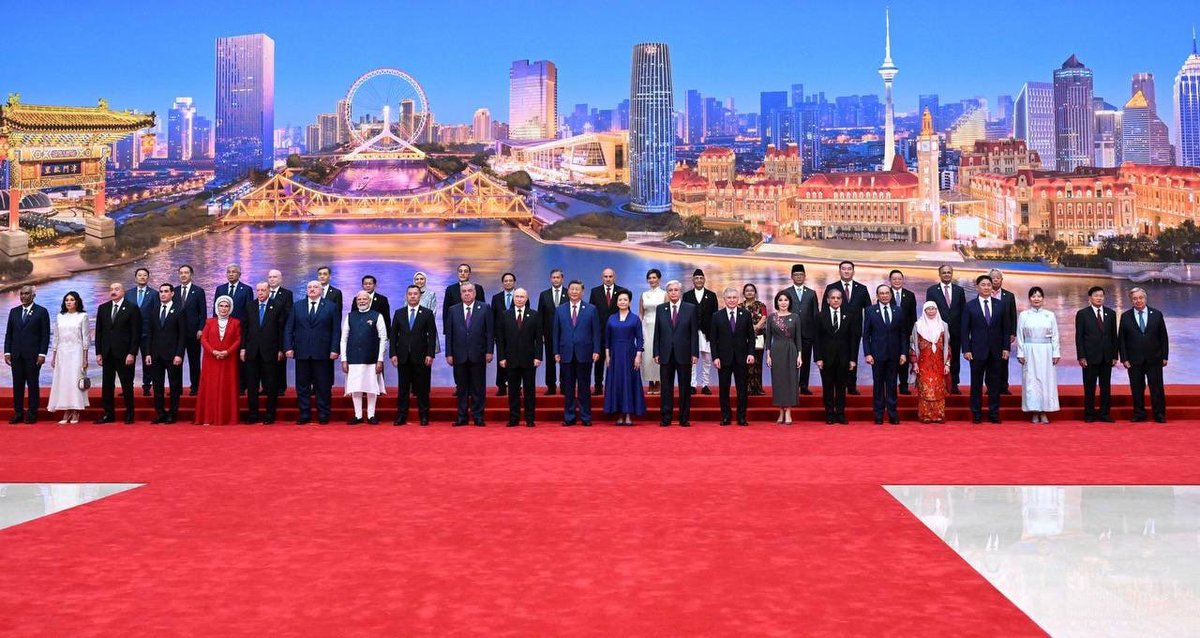
The Shanghai Cooperation Organization (SCO) is having a meeting in Tianjin, China. Everybody who’s somebody is attending – except us from the West. Countries that make up more than HALF of this planet’s population, are meeting and for some reason, US and Western media aren’t reporting it. At all.
Look at how developed and beautiful Tianjin, China is:
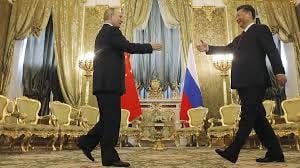
Russian President Vladimir Putin arrived for the meeting to a Red Carpet welcome:

He was warmly welcomed by China’s President:
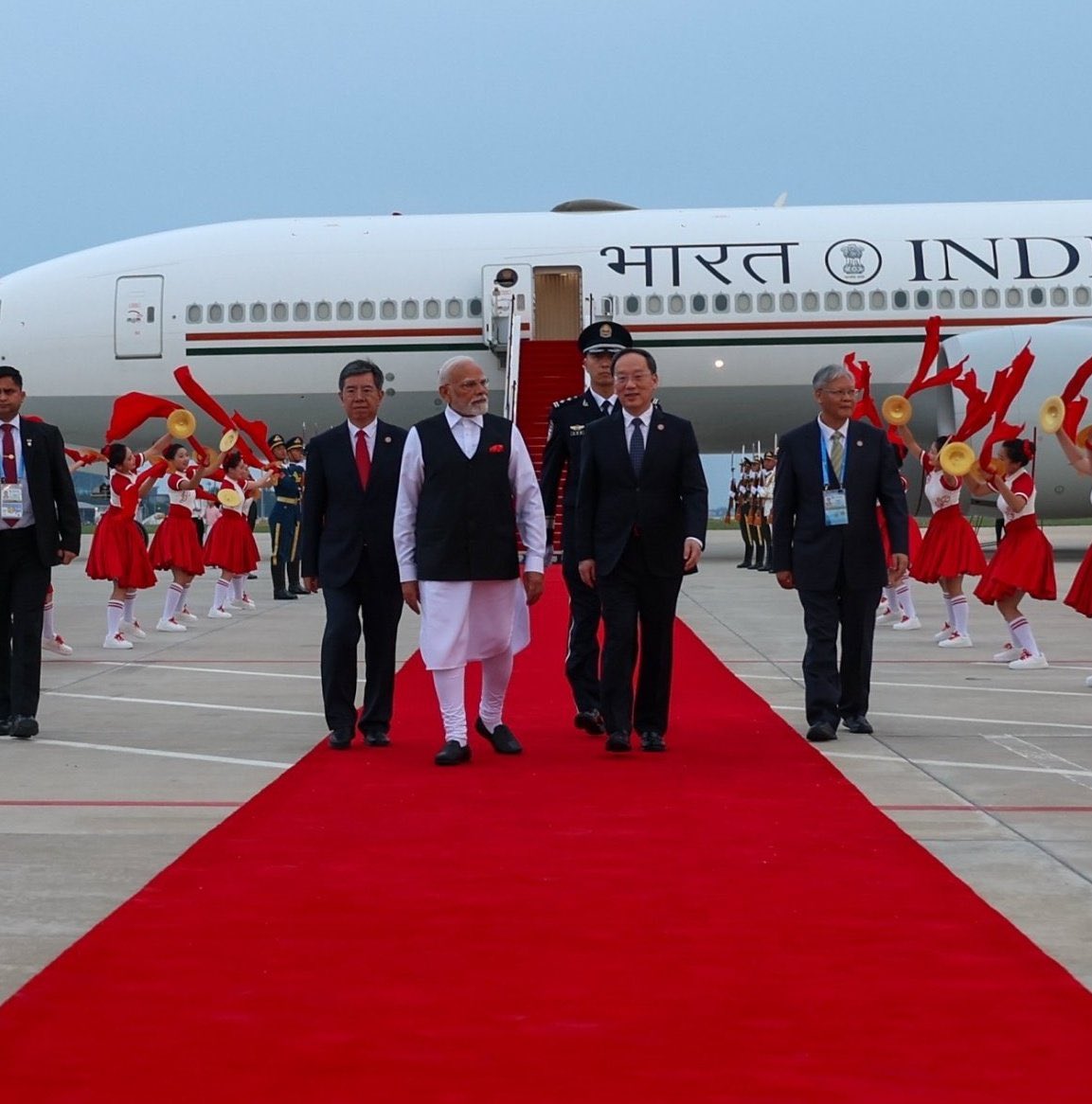
Indian Prime Minister Narendra Modi visited China for the first time in seven years, meeting with Chinese leader Xi Jinping for the SCO meeting, amid worsening relations between both countries and the United States.
President Xi made clear China, Russia, and India, are now closely together. Look at this photo:
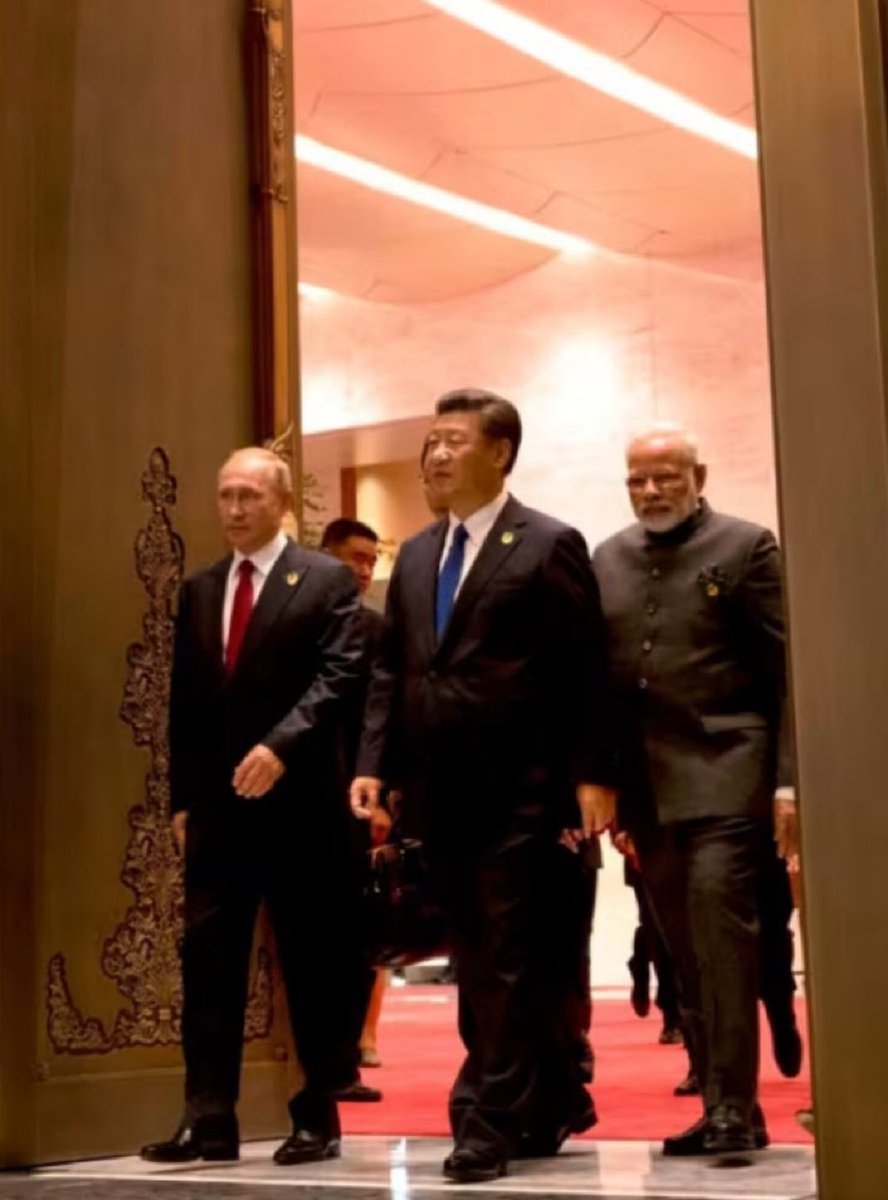
Neocons in the collective West are cringing at this because it tells them they have no future with their “divide-and-Conquer” antics.
THE SCO
Why does SCO matter? Let’s briefly review the salient facts:
▪️ SCO was founded in Shanghai in 2001 with just six members – Russia, China, Kazakhstan, Kyrgyzstan, Tajikistan and Uzbekistan.
▪️ This came out of Shanghai Five, which was founded in 1996 to settle the borders, but the success of the group encouraged the members to be more ambitious.
▪️ Terrorism, separatism and extremism soon became critical areas of focus for the group. This has really helped the Central Asian countries be stable and prosperous. Last year, 19,000 freight China-Europe freight trains passed through the SCO countries.
▪️ There are now 10 core members. India and Pakistan joined in 2017, Iran in 2023, and Belarus in 2024.
▪️ There are also 16 other countries in SCO — 14 dialogue partners and 2 observer states.
▪️ SCO represents 41% of the world’s population, 34% of global GDP (PPP) and 24% of the world’s land area.
At a side-meeting with India at the SCO, (look at the size of this “side meeting”) President Xi emphasized the historic role of Beijing and New Delhi in shaping the future of the global South:
“The world is moving towards transformation. China and India are the two oldest civilizations, the two most populous nations, and central to the global South. It is vital that we remain friends and good neighbors — the dragon and the elephant must unite.” he said.
Xi went on to say “Two of the world’s most populous nations should empower each other”
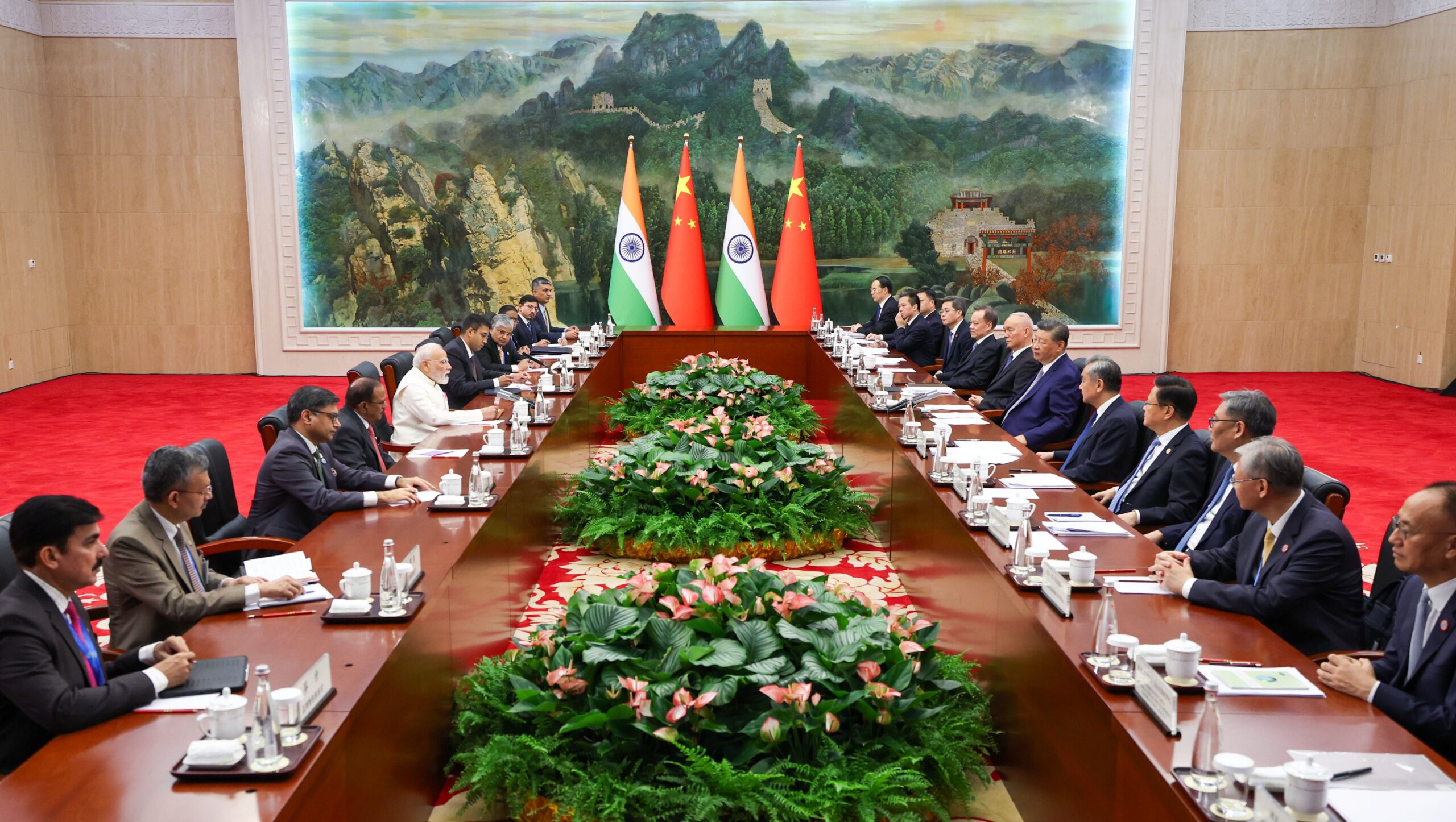
US and Western Neocons need them to fight and are furious about this meeting and these words!
BRICS
China and India are two of the BRICS nations. BRICS is an acronym for Brazil, Russia, India, China, and South Africa.
BRICS was formed because the United States has so badly abused nations around the world by using trade, and the US Dollar, as weapons to coerce political goals.
The US Dollar is the de facto world reserve currency. Every nation on earth uses the US Dollar for international trade. They do this because, since World War 2, the US Dollar has been the single most stable, most accepted, most reliable currency on the planet.
Country “A” wants to buy some things from Country “B.” But neither country accepts currency from the other because they feel the other currency is unreliable. So Country “A” converts their currency to US Dollars and uses them to pay Country “B.” Country “B” accepts the dollars because they know, to an absolute certainty, the US Dollar is solid, and can be used for other, future transactions, with other countries. It’s quick, convenient, and reliable.
Enter the United States government.
The US Government has gotten into the habit of telling countries around the world that they “must” do this . . . . or “Must not” do that. Most times, its a minor inconvenience, but of late, what the US demands of countries around the world, has become meddlesome and inconvenient. Countries don’t like being told things like they must teach Lesbian, Gay, Transgender, Queer (LGBTQ) to their school children. The US insists and tells those countries “If you don’t do this, then you cannot use OUR currency for your international transactions.” This suddenly becomes a disaster for foreign countries.
They are put in a position where, unless they do what the US wants, they won’t have access to US dollars for international trade. And since few, if any, other countries accept their currency, any country sanctioned by the US ends up unable to engage in international trade.
It’s not just teaching things to kids in school. If the US has some issue with some foreign country, and sanctions that foreign country, the US also turns around and tells all other countries in the world :”YOU cannot do business with country so-and-so” and if you do, we will sanction YOU.”
That would mean that those other countries could not use the US Dollar for any of THEIR international trade.
That forces every other country in the world to do as the US says. Those other countries don’t like this. They don’t want to be pushed around like this – but of late, they have no choice.
Enter BRICS.
BRICS is being set up by Brazil, Russia, China, India and South Africa to create an agreed-upon system of trade, where countries all over the world can use their own currencies to trade with each other, free of US interference and control.
This would result in our entire world changing from a “Unipolar” world where the US sits at the top, dictating to everyone else, into a “multi-polar” world where there would be more than one power center on the planet. No one could singularly dictate to everyone else.
The US, and to a lesser extent, Europe, don’t want this.
If BRICS fully unites, multipolarity of this planet will be here to stay!
Sadly, some people are so power-hungry, they would rather burn the world to the ground to rule over its ashes, than to lose control over everyone else.
Yet BRICS and the SCO are proceeding. Country after country has sent VERY HIGH LEVEL delegations to this week’s meetings.
Yet here in the West, the entire event is ignored. That’s a problem.
What is taking place in Tianjin, China today and for the next few days, is shaping the economic and political reality for the entire world. We . . . . are excluded. Think about that. Think what that will mean for us.
Even tiny Armenia was in attendance! Prime Minister Nikol Pashinyan touched down in Tianjin and walked out with more than summit selfies – he sealed a strategic partnership with China.
Not just tea and photo-ops: this is a full-on diplomatic upgrade.
For a small South Caucasus state boxed in by Russia’s shadow, Turkey’s pressure, and Western flirtations, linking arms with Beijing is a serious glow-up.
China gets another foothold on the Silk Road 2.0. Armenia gets insurance – economic, political, maybe even security clout.
From the US and Europe: Crickets. It’s like the whole SCO Summit doesn’t even exist.
We are literally acting like an Ostrich; putting our head in the sand and ignoring the reality.
The only thing the world is presently hearing from us is “Tariff’s” ” Sanctions” “war” . . . . they’re tired of it all.
These SCO countries are giving a middle finger to a multilateral order dominated by NATO, G7, and U.S.-led alliances. It’s China saying: we’re not sidelined. We’re building our own world.
Oh, and for those who think Russia is being “isolated” . . . . take a look at Russia’s Friends:
What do Africans think of the Chinese?
I will write on behalf of myself as an African(Kenyan) from my experience. It may defer from other Africans perceptions.Not to worry ;).
Having worked and lived with Asians for 5 years they included Indians, Malays, Bangladesh, Chinese, Philippino. The following is what I can say about Chinese, (I will try use pictures from Chinese New Year 2020 day trip in Kuala Lumpur: Petaling Street or China Town , also a few from Melaka Town and Penang Island to illustrate)
- Chinese are very organised, focused and specific- they work with order, they are hardly disorganised and will deliver timely and effectively.
- They are very entrepreneurial this is including both young and old generation you can even meet an old lady in small shop running business aggressively and full of energy check picture below, this makes them very good in business and if truth be told they make the revenue in Asia stay at an all time high where-ever they open business
- Chinese have a broad variety of foods and they have many ways of preparing the foods. There are dried foods, fried, boiled, smoked etc check collages below to see some different ways they prepare their foods
- Chinese like to eat , buy and dine a lot in Chinese restaurants and shops, they love their own foods and they will go out of their way to search for their Chinese Places even a small pop up to eat. They also love to support their own community as well in order to keep everyone in the flow of revenue.
- Chinese have good fashion wear and clothings and accessories for example we have the “Cheongsam” take a look below, The Chinese women wear the cheongsam, a one-piece dress with a high collar, diagonally closed with small clips or toggles (fabric clasps). It sometimes can have slits at the side, as is made with a soft fabric such as silk.
- They know how to celebrate by how they go all out in decorating their malls, houses, restaurants , streets its really really beautiful. For instance 2020 is the Year of the Rat you will find malls have found creative ways to represent Rats eg using Mickey Mouse and making the places very beautiful. Also they know how to throw a party! And I think they design the best lounges and restaurants in Asia
- Chinese are very strong with their religion and traditions they follow the festivals and prayers very closely. The temples are also a beautiful work of art with nice statues and very good decor as well.
Kek Lok Si Temple in Penang
Han Jiang Ancenstral Temple
I could say that the Chinese are conservative and prefer to stay within a safe space, they are not big on too much interaction unless they feel secure with you, but they are kind hearted and bit cheeky.
I have many good Chinese and other asian Friends and Im grateful that we are able to cut across races and find good in each other ,
In conclusion I think Chinese are great!
Cheers!
from Left : Chinese, Kenyan, Philippino, Philippino :location, Melaka Town , Geography Cafe
Location; Port Dickson , Malaysia
Location: Langkawi Island
All love 🙂
Iowa Applesauce Cake

Ingredients
Cake
- 1/2 cup butter
- 3/4 cup granulated sugar
- 3/4 cup packed brown sugar
- 1 egg
- 2 cups all-purpose flour
- 2 teaspoons baking powder
- 1 teaspoon baking soda
- 1 teaspoon ground cinnamon
- 1/2 teaspoon ground cloves
- 1 1/2 cups applesauce
- 1 cup raisins
- 1/2 cup chopped walnuts or pecans
Cream Cheese Frosting
- 6 ounces cream cheese, softened
- 1/2 cup butter, softened
- 2 teaspoons vanilla extract
- 4 1/2 to 4 3/4 cups sifted confectioners’ sugar
Instructions
Cake
- In a large mixing bowl, beat butter for 30 seconds.
- Add both sugars and egg; beat until combined.
- Stir together flour, baking powder, baking soda and spices.
- Add flour mixture alternately with applesauce to butter mixture.
- Stir in raisins and nuts.
- Pour batter into a greased 13 x 9 x 2 inch baking pan and spread evenly.
- Bake at 350 degrees F for 30 to 35 minutes, or until a wooden pick inserted near the center comes out clean.
- Cool in the pan on a wire rack.
Cream Cheese Frosting
- Beat together cream cheese, softened butter and vanilla extract until light and fluffy.
- Gradually beat in 2 cups of the confectioners’ sugar.
- Beat in remaining 2 1/2 to 2 3/4 cups confectioners’ sugar to make a spreadable frosting. Spread on cake.
- For a decorative finish, set a doily lightly on frosted cake and sprinkle lightly with a mixture of cinnamon and nutmeg.
- Carefully remove the doily.
Foreign Girls React | Leon: The Professional | First Time Watch
How can someone successfully switch careers when their lifestyle preferences change?
Your success to change is driven by the intensity of your desire.
My good mate Kasey worked in warehousing her whole life. Decent pay with all the benefits to keep you cushy to retirement.
She almost settled for it but she’s the type to argue being shortchanged 2cents.
“I just want to make Bs” B stands for billions, btw.
In other words, she wanted REAL bad to be rich, and would do anything for it.
After quitting the warehouse, she went ghost for 4 years and we finally connected again recently.
By all appearances, K is now self made. Picture a short version of Christian Bale in American Psycho, but Korean. Her new lifestyle and the toys affiliated with such extravagance can fill a pirates garage 10 times over.
“I haven’t but I’m close. This year is the year I swear”
She’s a bit of a hustler herself. I’ll let you decide what she does to “hustle” the street corners.
While we were reminiscing about old times in her luxurious apartment, I asked if Kasey’s new career is worth the change. Y’know, considering the stress, anxiety and paranoia involved.
“Bro you know me since high school, this is all I ever wanted.”
I hit me then. I realised it’s not about the HOW but WHY. Clearly, she didn’t want to wilt away in some back water warehouse, and was willing to do what ever it took to be at where she is today.
Having a strong why is the first step of any “success”. Once you find your purpose, the Hows show themself.
What’s the shortest amount of time you’ve stayed at a job and why did you quit?
One day. I was an art director in video games when some intellectual property I part owned was made into a TV series. With that, I quit my job at Universal Studios and took a break. After nine episodes, the series was cancelled and I needed a job again. After three months of looking, I was offered a salary of $110,000/yr and 10,000 stock options at a video game company near where I lived. I accepted.
On my first day, the sysadmin for the company installed a bunch of software on the computer assigned to me. Every application was cracked. In other words, illegal. Not only that, but the software crack he used for the main package, 3DStudio Max, kept posting messages like, “This is an illegal cracked copy of Max. If you continue, you are committing a crime. Do you want to continue?” The sysadmin breezed through those messages without reading them but I saw them and wasn’t happy with the idea of working with stolen software.
I later walked around the studio and looked at the computers my team used. All of them had cracked software. Every application. Forget about the $450 Office suites or the $2,000 Adobe products. Max was a $7,500 application (or so). My rough calculation told me that the office was sitting on hundreds of thousands of dollars worth of illegal software. On top of that, they were a successful company. Never mind my salary, the president of the company had told me that the previous year they’d handed out two million dollars in bonuses to the team. That would have been enough money to buy all the software. In other words, the poor starving game developer excuse was invalid for this company.
I didn’t like the idea of working with illegal software. As the manager of the art team, I also didn’t like the idea of making them use illegal software either. I was more bothered by that than by using it myself but neither were appetizing to me. All day I worried about this. On top of the sheer illegality of it, it showed that someone very stupid ran the company. The reason is that penalties for using illegal software could bankrupt them and then everyone would be out of a job. If even one person turned them in, they’d be in a lot of trouble. Their computers would be seized and they’d be charged a fine equal to many times the full retail price of all the software found on them.
The next day, as I was driving in to work, I decided not to go in. I said I was sick. When I got home, I wrote a resignation letter and sent it by email. I explained that I didn’t want to work with pirated software. The president called me up and asked me to stay. He said he’d buy all the software. I told him no. I said that I couldn’t trust a boss who would allow that situation to develop in the first place. I also told him not to pay me for the day I was there. I didn’t want any money from his company.
Many years later, when I worked at Sony, I ran into a guy who had been working on the one day I toured the other studio on my first day of work. He told me that he hated working with pirated software and that it made him feel terrible. After my one day on the job, he said, the owner of the studio was terrified I would turn him in and bought legitimate licenses for all the software in the studio. Apparently, the art team was very happy with the impact I’d had that day.
ALIEN (1979) MOVIE REACTION!!! FIRST TIME WATCHING!
Archeology Of Enlightenment
Submitted into Contest #251 in response to: Dream up a secret library. Write a story about an adventurer who discovers it. What’s in the library? Why was it kept secret?… view prompt
Laurie Spellman
As an archaeologist and literary historian, I’m acutely aware of the power of culture and stories, both real and imagined. This act of defiance to find and protect these books could cost me everything, even the person I hold dearest, my husband. Together, we stand as a beacon of light, illuminating humanity in our fight for the right to knowledge, truth, and free dissemination of information. Despite the constant threat of discovery, the key to restoring our culture lies within the pages of these long, forgotten books.
In the early days of universal knowledge, we could possess any book, read, write, and learn without restrictions. Our internet connection granted us unlimited access to data, and we could even receive daily Bible passages on our smartphones. In 2076, the Bible was outlawed as the first book to be banned, despite being the most widely read and influential book ever written. Here, we hold the only pristine copy that once belonged to the last Pope, carefully preserved in the Vatican collection. This event marked the beginning of the end for the literary and religious worlds as we knew it, as it prohibited people from accessing their faith. All other religious texts were forbidden, choking off the only thing we had left: our beliefs and hopes. The freedom of speech, religion, and information, which had always kept society stable, was compromised.
******
Our troops swiftly unloaded the cargo, setting the chopper down and landing on the helipad. It was a treasure trove of fiction and self-help books unearthed by my husband, Dr. Benjamin Reynolds, and our team of rebels on the outskirts of New York. The Dusty Tome Archives were sanctuaries for works initially rejected by publishing houses or deemed unworthy by the government. The books were either burned or left to rot in these remote repositories, one in every state. It was a miraculous find—the fading handwritten notes, published works, and manuscripts of some of the world’s most revered authors. The collection contained the original works of female literary giants such as J.K. Rowling, Jane Austen, and Agatha Christie, all of whom were dismissed by publishers and critics at some point.
I gently removed the layers of dust and debris with my brush, holding my breath with expectation and curiosity. “Unbelievable,” I whispered to Benjamin in the glow of the brightly lit, clean chamber. “The world thought these works were lost forever, but here they are, waiting to be rediscovered.”
The first novel extracted from the container for restoration was ‘Dune,’ published in 1965; as I turned its yellowed pages with my gloved fingers, I felt an odd connection with a central character. Dr. Liet-Kynes, a planetary botanist and ecologist, becomes entangled in the natural processes he seeks to manipulate to aid the native population by altering the climate. The parallels between the planet Arrakis, our current political and natural environment, and this acclaimed sci-fi work were uncanny. I felt a profound kinship with this long-forgotten author, Frank Herbert, who writes that the character Dr. Liet-Kynes reflects while his planet was killing him that scientists had it all wrong, “The most persistent principles of the universe were likely accident and error.” Despite facing 23 rejections, Herbert’s commitment paid off, and it became the bestselling science-fiction novel ever, a testament to the power of the pen and imagination.
The next book pulled from the archives was “The Chronicles of Rejection.” I was stunned to discover that so many famous authors had obstacles and rejection in bringing their works to life, and I began to understand more about the journey of publishing and being an author.
“Wow, did you know that Margaret Mitchell had 38 rejections before ‘Gone With the Wind’ was published?” I asked Benjamin, shocked to learn she had struggled for so long.
“That’s impressive she stuck with it, especially considering the period. Margaret’s such an inspiring example of a strong female, just like you,” Benjamin said, grinning.
“Jack Canfield and Mark Victor Hansen’s self-help book Chicken Soup for the Soul was rejected 144 times before publication. Incredibly, they didn’t give up,” I said, eagerly turning to the next page for more insights.
“We can sure relate to pushing forward in the wake of numerous setbacks. That’s exactly what we’ve been doing for the past ten years. It was a risky trip, but we made it back,” Benjamin said, sorting the inventory of books into categories.
I smiled at his enthusiasm, nodded, and said, “We have a monumental task ahead of us, my love. But I don’t doubt these books will find their place in the world again. We will ensure that they do.”
I continued reading aloud from the pages, finding a fascinating rejection letter dated back to 1925. Moberley Luger of the publishing house Peacock & Peacock addressed the 26-year-old author, Ernest Hemingway, expressing critical feedback on his work, “The Sun Also Rises.” The letter dripped with Luger’s disdain for the author’s writing style, “If I may be frank—you certainly are in your prose—I found your efforts tedious and offensive. You really are a man’s man, aren’t you? I wouldn’t be surprised to hear that you had penned this entire story locked up at the club, ink in one hand, brandy in the other. Your bombastic, dipsomaniac, where-to-now characters had me reaching for my own glass of brandy.”
Benjamin said, “It proves that success in writing often comes after facing uphill battles and punctuated by lots of rejection.”
“It’s all so fascinating,” I said, realizing that “The Sun Also Rises” alludes to Ecclesiastes 1:5: Generations come, and generations go, but the earth remains forever. The sun rises and sets and hurries back to where it rises. The wind blows to the south and turns to the north; round and round it goes, ever returning on its course. We seek contentment in things that don’t provide it. By nature, entertainment, lust, and wine provide only a momentary dulling of our senses, leaving us longing for something more meaningful.”
“It’s beautiful like you, Jaden; you mean everything to me. You’re the reason behind everything I do,” Benjamin whispered as he gently caressed my face before tenderly kissing my lips.
I hugged him tight, feeling his strength, warmth, and passion. Looking into his eyes, I said, “Recovering these precious books has inspired me to pen our story, the Archaeology Of Enlightenment. I hope that long after we’re gone, explorers will stumble upon the Library Of Lost Knowledge, discover our history, and understand why we created it here.”
******
Two hundred years later…..
As the sun blazed down onto the rocky faces of the Markagunt and Kolob plateaus, a group of Librarian explorers made their way through the wild terrain of southwestern Utah. Their quest had led them to this remote landscape, where towering sandstone cliffs and alien rock formations surrounded them.
After days of trekking and climbing, the team finally found a hidden artificial grotto within Zion National Park. They discovered an archaic library, its shelves lined with weathered tomes etched with the patina of time. The air was thick with the musty redolence of age-old papers. The only sound was the faintest howl of the wind against the mountains.
This secret library, silenced by the government, was a fossil frozen in time, its stillness echoing the knowledge left behind. The remnants of literary history are illuminated by tiny shafts of sunlight filtering through the natural fissures in the cavern walls. The first book they unearthed was “Archaeology Of Enlightenment” by Dr. Jaden Reynolds, who co-founded the Library Of Lost Knowledge. As they pored over the mysteries hidden within the rocky chambers, the explorers realized they had stumbled upon a Garden Of Eden, a repository from long-past civilizations that had lost and found enlightenment.
Authors note: This story is dedicated to my niece Aja, who just graduated with a Master’s in Archeology.
The Kiss Collector
Submitted into Contest #290 in response to: Set your story in a world where love is prohibited.… view prompt
Jim LaFleur
The door yielded to his touch with a whisper. “Department of Emotional Regulation,” he announced, voice carrying the practiced chill of winter frost. The couple jerked apart, but their fingers remained intertwined—a detail his trained eye caught and cataloged. The woman’s emerald dress rustled as she shifted closer to her companion, seeking shelter in his shadow.
“Please,” the man started, his free hand raised in supplication. “We can explain—”
“There’s nothing to explain.” Elias stepped into the light, his badge catching the lamp’s glow. The silver surface reflected their terror back at them, multiplying it in fractals across the room’s peeling wallpaper. “Section 47 of the Public Safety Act clearly states that any display of romantic affection is punishable by immediate branding and exile.”
He’d performed this speech hundreds of times, each word worn smooth like river stones. But tonight, something caught in his throat—a hesitation, brief as a hummingbird’s heartbeat. The woman’s eyes, deep brown and glistening with unshed tears, held something he’d never seen in his targets before. Not fear, not desperation, but pity.
“You poor man,” she whispered.
Elias’s hand twitched toward his neck, where smooth skin testified to his lifetime of compliance. The movement betrayed him; her gaze followed it, understanding blooming across her features like a time-lapse flower.
“Backup units are three minutes out,” he said, forcing steel back into his voice. The words tasted metallic, like blood from a bitten tongue. “You won’t feel the brand for long. The nerve endings cauterize almost instantly.”
The man finally released the woman’s hand, and Elias noticed his fingers trembling. Not with fear—with rage. “How many?” the man demanded. “How many lives have you destroyed?”
Elias met his gaze steadily. “I don’t destroy lives. I preserve order.” But even as he spoke, his camera felt heavier in his hands, its memory card laden with captured moments of transgression. Each photo a life redirected, each click a love story ended before its middle chapter.
The sound of boots on stairs echoed through the building. The couple heard it too, their bodies tensing like prey animals scenting a predator. The woman straightened her dress, dignity settling around her shoulders like a cloak. The man squared his jaw, tears tracking silent paths down his cheeks.
Elias found himself studying their faces with an intensity that went beyond professional duty. He would remember them, he knew—not as case number 2,749, but as people who had dared to feel something real in a world of carefully constructed artifice.
The backup team burst through the door, efficient and emotionless in their black uniforms. As they secured the couple, Elias began his standard report. But his voice faltered when he reached the word “evidence.” In his mind, the camera’s shutter clicked again and again, capturing not crimes, but moments of genuine human connection.
For the first time in his career, Elias Ward, the infamous Kiss Collector, wondered if he was standing on the wrong side of the door.
***
Three days after the arrest, Elias found himself watching the Starlight Bookshop from across the rain-slicked street. The target—Maris Evans—moved between the towering shelves like a ghost, her dark hair catching the glow of antique reading lamps. Intelligence suggested she was involved with the owner, but two weeks of surveillance had yielded nothing concrete.
The bell above the shop door chimed as he entered, bringing with it the scent of aging paper and leather bindings. Maris looked up from behind the counter, her fingers paused mid-motion as she sorted through what appeared to be contraband: pre-Regulation romance novels, their spines cracked and faded.
“We’re closing soon,” she said, but made no move to hide the books.
Elias approached, noting how she squared her shoulders—subtle, but there. “These are restricted texts.” He lifted one, its pages whispering secrets of forgotten passions. “Section 23 clearly—”
“Clearly states that pre-Regulation literature must be properly licensed for academic study,” she finished, producing a document from beneath the counter. “Which we are. Though I suspect you knew that before you walked in, Agent…?”
“Ward.” He studied her face, searching for fear, for guilt, for any of the tells he’d cataloged over years of investigations. Instead, he found something worse—curiosity.
“The Kiss Collector himself.” She smiled, and it transformed her face from merely pretty to something that made his chest ache. “Your reputation precedes you. Tea?”
Before he could refuse, she’d produced two cups from somewhere behind the counter. Steam rose between them like a barrier, or perhaps a bridge. The scent of jasmine filled the space where protocol dictated he should be reading her rights.
“You’re not afraid,” he observed, accepting the cup against his better judgment.
“Should I be?” Maris sipped her tea, watching him over the rim. “I’ve done nothing wrong. Unless appreciation for classical literature has been criminalized while I wasn’t looking.”
“Your relationship with Marcus Foster—”
“Is purely professional.” She set down her cup with a soft clink. “Though I suppose ‘purely’ anything is what you’re looking for these days.”
The tea burned his tongue, but he welcomed the pain. It gave him something to focus on besides the way her fingers traced the spine of a weathered copy of “Pride and Prejudice.”
“These books,” she continued, “they remember what we’re trying so hard to forget. That love isn’t a disease to be eradicated. It’s not a crime to be photographed and filed away.”
“Love is inefficient,” he recited. “It leads to unstable decision-making, decreased productivity—”
“And poetry,” she interrupted. “And art. And music that makes your soul ache.” She pushed the book toward him. “When’s the last time you felt your soul ache, Agent Ward?”
The question hit him like a physical blow. He found himself reaching for his camera, a reflex action, but his fingers met empty air—he’d left it at the office, and the realization troubled him more than it should.
“You should be more careful,” he said finally, his voice rougher than he intended. “Not everyone who comes in here is interested in academic discussion.”
“No,” she agreed, holding his gaze. “Some are interested in much more dangerous things. Like truth. Like feeling.”
As he turned to leave, she called after him: “You forgot your evidence, Agent Ward.”
The book sat on the counter between them, its pages holding generations of impossible love stories. He left it there, but carried something else with him into the night—a sensation in his chest that felt dangerously like his soul beginning to ache.
***
The evidence room hummed with the soft whir of dehumidifiers, protecting thousands of documented transgressions from decay. Elias sat at his terminal, the blue light of the screen casting shadows across case file #2,751—Maris Evans and Marcus Foster, suspected violation of Section 47.
His fingers hovered over the keys as surveillance footage played on a loop: Maris laughing at something Marcus said, their bodies maintaining regulation distance but their eyes telling a different story. Two weeks of watching had yielded nothing actionable, yet his superiors were growing impatient. The Kiss Collector never took this long to build a case.
“Still obsessing over the bookshop?”
Agent Rivera materialized from between the towering shelves of physical evidence, her heels clicking against the polished floor. She leaned over his shoulder, close enough that he could smell her regulation-approved unscented shampoo.
“Not obsessing. Building a case.” Elias minimized the footage of Maris. “It’s delicate.”
“Since when do you do delicate?” Rivera’s laugh held no warmth. “You’re losing your edge, Ward. First that couple last month—don’t think I didn’t notice your hesitation—and now this endless surveillance.” She tapped his screen. “The old you would have branded them both by now.”
The old him. When had that version of himself begun to feel like a stranger?
“Sometimes,” he said carefully, “a longer observation reveals deeper truths.”
“Deeper truths?” Rivera’s eyebrows arched. “Listen to yourself. You sound like one of those pre-Reg poets.” She straightened, adjusting her perfectly pressed collar. “You have 48 hours to close this case, or I’m reassigning it. We can’t have people thinking the Kiss Collector’s gone soft.”
After she left, Elias pulled up another file: a couple two blocks from the bookshop, their crime documented in high-resolution detail. Young, attractive, caught in an embrace that left no room for doubt. He began to type, his fingers moving with mechanical precision as he wove their story into Maris’s case file, replacing surveillance photos, adjusting timestamps.
“Agent Ward?”
He jerked at Maris’s voice, but the terminal showed only his own reflection in the darkened screen. He was alone in the evidence room, surrounded by the ghosts of interrupted loves. Yet he could still smell jasmine tea, could still see the way she looked at him over those forbidden books.
His fingers resumed their dance across the keyboard. In thirty minutes, he had constructed a perfect case against the other couple, complete with forged timestamps and doctored surveillance footage. Another fifteen minutes erased all traces of Maris from the system.
As he pressed “enter” on the final command, he felt the weight of his career, his certainties, his carefully constructed worldview dissolving like sugar in hot tea. The Kiss Collector was committing his own crime of passion—not with lips or embrace, but with keystrokes and deleted files.
The evidence room’s lock clicked behind him with the finality of a closing book. In his pocket, his badge seemed to burn against his thigh, a brand of a different kind. He had forty-eight hours to get Maris out of the city before Rivera discovered his deception. Forty-eight hours to prove that love wasn’t just inefficient—it was worth burning everything to protect.
He never saw the camera lens glinting from behind the shelves, recording his betrayal in the same high definition he had used to document so many others.
***
Elias had arranged everything meticulously. New identities, untraceable credits, and a route out of the city through the old maintenance tunnels. All that remained was to collect Maris from the safe house—a defunct record storage facility in the industrial district where he’d hidden her after fabricating the evidence. In twelve hours, they would be beyond the reach of the Department of Emotional Regulation.
But something was wrong. He knew it even before he saw the extra shadow beneath the door, before he noted the slight displacement of the welcome mat he’d deliberately misaligned. Still, he inserted his key, each tumbler’s click echoing like distant thunder.
Maris stood in the center of the room, illuminated by a single lamp. She wore her regulation uniform now, not the flowing dresses of the bookshop. The silver badge at her hip wasn’t just for show—he recognized the slight indentation on her trigger finger, the way she held herself with the practiced ease of someone who’d worn that uniform far longer than he’d been watching her.
“You’re early,” she said, and her voice held none of the warmth it had in the bookshop. “We weren’t supposed to move on you until tomorrow.”
The door closed behind him with a soft click. He didn’t need to turn to know Rivera was there, her service weapon trained on the space between his shoulder blades. The weight of his own gun seemed impossible now, like trying to lift a mountain.
“How long?” The question scraped his throat raw.
“From the beginning.” Maris—if that was even her name—moved closer, each step precise and measured. “The hesitation with the couple in the apartment. That’s when we knew you were vulnerable. We just needed to apply the right pressure.” Her fingers brushed his cheek, professional, clinical. “Love makes us do terrible things, doesn’t it, Kiss Collector?”
The irony tasted like ashes in his mouth. “There was no Marcus Foster.”
“Oh, he exists.” Rivera’s laugh rippled through the darkness. “Currently serving twenty years for actual emotional crimes. We just… borrowed his narrative. Added some details. The kind of tragic love story that would appeal to someone who was starting to question everything he believed in.”
Maris produced a folder—physical evidence, how quaint—and began reading. “Agent Elias Ward. Fifteen years of service. Eight hundred and forty-three successful prosecutions. Zero infractions.” She looked up, and for a moment, he saw something like regret cross her features. “Until now.”
“The books,” he said. “The tea. The conversations about feeling…”
“All calculated.” She closed the folder. “We needed to know if even our most dedicated agents could be compromised. Love is a virus, Agent Ward. It mutates. Adapts. Sometimes it infects even those who think they’re immune.”
The handcuffs were regulation issue, their bite familiar from countless arrests. But he’d never understood until now how cold they were, how the metal seemed to leech not just warmth but hope from your skin.
“Your sentence will be announced tomorrow,” Rivera said from behind him. “But I think we both know it will be more severe than mere branding. The Kiss Collector becoming a love criminal? The public will demand exemplary punishment.”
As they led him away, Maris fell into step beside him. Her fingers absently traced her neck where a brand should have been, had any of it been real. “You know what the truly tragic thing is?” She leaned close, her whisper meant for him alone. “You never asked why I wasn’t afraid of you in the bookshop. A woman in love would have been terrified of the Kiss Collector. But I had nothing to fear, because I’ve never loved anything in my life.”
The hallway stretched before them, sterile and white, like the pages of a book wiped clean of its love stories. Somewhere in the evidence room, a dehumidifier hummed its monotonous song, protecting the records of all the moments he’d stolen, all the loves he’d ended. And now, finally, his own.
These Americans WAKE UP on China | Tiktok refugees see China’s Red Note
The amount of content coming out from the Tiktok refugee event is breathtaking and wonderful. Here are 2 amazing clips you CANNOT miss.
Pictures from MM archives
Bakt, the Longest-Lasting Treaty in History, Was in Effect for Seven Centuries
Resting of a caravan of Arab merchants, a work by Stefano Ussi. Credit: Public domain / Wikimedia Commons
Since the dawn of civilizations—and perhaps even earlier—humanity has had no choice but to reach agreements with its neighbors in order to live in peace. In this sense, the longest-lasting treaty known in history was the one signed between the Muslim rulers of Egypt and the Christian kingdom of Makuria, which was located in what was once Nubia. The treaty was established in the 7th century and lasted until the mid-12th century—nearly seven hundred years. Historiographically, it is known as the Bakt (or Baqt), though it is uncertain whether the name derives from the ancient Egyptian word for barter or from the Latin pactum.
Makuria was one of three kingdoms that emerged after the fall of Kush at the hands of Aksum around 350 AD. Unlike the other two, Nobatia and Alodia, which occupied the eastern bank of the Upper Nile, Makuria was situated on the western bank, between the third and fourth cataracts, in the region known as Napata. There, the city of Old Dongola was founded as the capital of a hereditary monarchy with a matrilineal succession system. The king, who was also a priest, governed with the support of a political council of seven bishops. This government, like its administration, was heavily influenced by the West, particularly due to the efforts of Justinian in the 5th century to counteract Sasanian expansion.
Byzantine influence was also evident in religion, as the Makurians abandoned paganism to adopt Christianity. Initially, there was a conflict between the Chalcedonian creed supported by the emperor and the Miaphysite doctrine favored by his wife, Theodora. The arrival of missionaries advocating the latter view was decisive, leading to a convergence with Coptic Christianity. In contrast, the neighboring kingdom of Nobatia resisted this transition. As a result, King Mercurius of Makuria invaded and annexed it, a move that also served as a buffer against the spread of Islam, which had taken hold of Egypt.
The Orthodox Caliphate at its greatest extent, during the time of Caliph Uthman. Credit: Wario2 / Wikimedia Commons
Indeed, in the year 642, the Orthodox Caliphate conquered the Nile region from the Byzantines, who had reclaimed the province from the Sasanians only a decade earlier, following the customary succession crisis that ensued after Emperor Heraclius’s death the previous year. The invasion was led by Amr ibn al-As with four thousand warriors—mostly Yemenis, along with others. Despite their small numbers, the conquest was not particularly difficult, as they applied the same tactic that would later facilitate the conquest of the Iberian Peninsula: offering the option of converting to Islam or paying the jizya (a tax for non-Muslims) as alternatives to war.
It appears that the Egyptian Copts played a role similar to that of the Jews in Hispania, making agreements and supporting the invaders due to the fact that their patriarch, Benjamin, had been deposed by Constantinople. Of course, battles still occurred, and some ended in deliberate massacres intended to instill fear and weaken resistance. However, the local administrative system placed the burden of defense on provincial governors, who had to raise their own armies. Once these forces were defeated, there was no one left to take over or reorganize new troops, leading to the fall of one city after another.
The capitulation of Alexandria marked the end of Byzantine Egypt just two years after the campaign began, making it the shortest conquest of the early Muslim era. The next target was the south, and in the summer of 642, Uqba ibn Nafi set out in that direction on the orders of his cousin Amr ibn al-As. However, this was not a full-scale invasion but rather a show of force to assert Egypt’s new ownership over the Christian Makurians. As a result, the conflict was limited to skirmishes and minor clashes, with the Nubians avoiding open battles.
Maximum extension of the Kingdom of Makuria. Credit: LeGabrie / Wikimedia Commons
In fact, they defended their land fiercely, opting for guerrilla warfare in which they prevailed thanks to their powerful cavalry and formidable archers, who unleashed clouds of arrows aimed specifically at the face—hundreds of opponents were left blind in one eye. This forced Uqba ibn Nafi to order a retreat. There was peace for three years, but in 645, the Byzantines made a final, unsuccessful attempt to reconquer Egypt (apart from a last effort by Constans II in 654, which never even reached the shores). Alexandria lost its status as the capital to the newly established Fustat, leaving only the Nubian issue unresolved.
That issue was addressed in 651 with another expedition, this time led by Abdallah ibn Abi Sarh, who had started as Muhammad’s scribe before experiencing a crisis of faith and turning to military service. Adopted as a brother by Caliph Uthman, he was appointed governor of Egypt and took command of the army marching toward Makuria. However, relations between Christians and Muslims in the Upper Nile would not be settled by force but rather through diplomacy, following the second battle of Dongola, which once again put the invaders in a difficult position.
The battle took place in 652, a decade after the first engagement in which the Nubians had repelled their adversaries. Al-Maqrizi, a 14th-century Egyptian historian, suggests that the Makurians may have violated the truce and provoked hostilities, though the lack of documentary evidence makes the exact cause unclear. Others believe that Abdallah ibn Abi Sarh’s only goal was to bring the region under Egyptian control. In any case, the Christian kingdoms united with Makuria, and under the leadership of King Qalidurut, they prepared to resist.
Ruins and tombs of the saints in Old Dongola. Credit: Hans Birger Nilsen / Wikimedia Commons
Five thousand Muslim soldiers equipped with heavy cavalry and at least one mangonel (also called a mangonel, a long-range catapult, which the Makurians had likely never seen before) laid siege to Dongola, which was protected by sturdy walls six meters high and four meters thick, along with several stone and mortar towers. All of this was defended by the relentless archers, who once again had the opportunity to showcase the fearsome accuracy they had demonstrated before.
The Islamic horsemen crashed against these defenses in their assaults and suffered heavy losses. The only significant damage to the city was caused by an incendiary projectile from the catapult, which set fire to the cathedral. Some later caliphal historians propagandistically spoke of victory because, in the end, a truce was negotiated, but others reflected the powerlessness of the troops of Abdallah ibn Abi Sarh. The truth is that these peace talks materialized in the signing of the Bakt, something that was unprecedented.
No copies of the agreement have been preserved, and only later accounts exist, which present discrepancies, perhaps due to errors or manipulation by scribes. It is also possible that it was never even put in writing, instead remaining a verbal pact. Even so, some agreed-upon conditions are known, such as Nubia being granted the status of a land free from conquest, a mutual commitment not to attack each other, and, in this preventive sense, a prohibition on settlers moving in either direction.
Excavations of Dongola, with the cathedral in the foreground. Credit: M. Rekłajtis / PCMA UW
Additionally, free trade between both sides was guaranteed, with Egypt exchanging wheat, barley, wine, horses, and linen for 360 Nubian slaves per year, including the obligation to return fugitives. These groups had to be mixed, consisting of both men and women, but since the highest quality was required, children and the elderly were excluded. According to some sources, these shipments were expanded to provide forty extra slaves annually to Egyptian nobles and notables, increasing the total to four hundred. Since this trade continued uninterrupted for seven centuries, more than a quarter of a million people suffered this grim fate.
Ibn Abd al-Hakam, a 9th-century Egyptian historian and compiler whose work is essential for understanding the Muslim conquest of Egypt and who was one of the first to document the existence of the Bakt, provides two versions of the agreement. In the first, the Nubians would send slaves north without any economic compensation, which would reflect their subordination. In the second, he describes it as a reciprocal transaction, meaning both parties were equals, a version that aligns with Nubian sources.
If so, it is understandable why the Bakt raised concerns among Muslim theologians, as renouncing the conquest of new lands to expand Islam would go against the duty to spread the faith. However, it is likely that the treaty was not upheld in absolute terms and that sporadic skirmishes occurred—perhaps border conflicts—mild enough to avoid escalating into full-scale war. In fact, as mentioned, the Bakt lasted for seven centuries, albeit with ups and downs.
The Throne Hall of Old Dongola. Credit: LeGabrie / Wikimedia Commons
There is little information about King Qalidurut, and he does not appear in historical records until the battle, when Islamic sources begin mentioning him, confirming his acceptance of the treaty, the reconstruction of the burned cathedral, and the erection of a memorial building in honor of the fallen. His later reign brought Makuria great prosperity, and he was succeeded by his son, Zacharias I. A crisis arose later when the Umayyads took power and besieged Fustat, only to be ousted in 750 and attempt to take refuge in Nubia.
The Bakt was suspended for a time in the second quarter of the 9th century, as Egypt was shaken by the Fourth Fitna, the civil war between the brothers Al-Amin and Al-Ma’mun over the Abbasid Caliphate’s succession after the death of their father, Harun al-Rashid, in 809. The conflict lasted until 827, but unrest persisted in the provinces, allowing King John to stop payments to Egypt. Once normalcy was restored with Al-Ma’mun’s victory, Egypt demanded the overdue tribute. The new Makurian monarch, Zacharias III, sent his son Georgios to Baghdad in 830 to negotiate and achieved significant success, avoiding payment and securing an agreement that it would be made only every three years.
During the Fatimid Caliphate (909–1171), Egypt’s relations with Nubia improved significantly, and trade exchanges intensified to the point that shipments of Nubian slaves became the main support of the caliphal army. This extraordinary affinity was due to the Fatimids being Shiites—a minority in the predominantly Sunni Muslim world, which often ostracized them. As a result, they sought allies wherever they could, and the Bakt facilitated this alliance with Makuria, despite it being Christian.
Painting of the cathedral of Faras representing King Moses George. Credit: Public domain / Wikimedia Commons
Things changed with the rise of the Ayyubid dynasty (1171–1250), whose first ruler was also the first sultan of Egypt: Saladin. He was a Sunni and a defender of Islamic orthodoxy, so he broke away from his predecessors’ policies and resumed an expansionist approach, conquering Palestine, Syria, Upper Mesopotamia, and Yemen. The Makurians took advantage of the turmoil to launch a raid, thereby violating the Bakt. Two years later, Saladin’s brother, Turan Shah, retaliated by capturing Qasr Ibrim.
Turan sent an envoy to negotiate, but King Moses George responded by branding a cross onto his hand, leading to the war’s resumption. However, the situation was unfavorable for both sides, and Turan ultimately withdrew, though he had captured several cities. It is likely that the conflict with the Third Crusade kept Saladin too preoccupied to focus on the Nubians, but it was becoming increasingly evident that another major confrontation was inevitable. And it happened in 1265, when Sultan Baibars I of the Mamluks launched an expedition. Nubia was devastated, although it still retained enough power to strike back.
Once again, the winds of war were blowing; the Bakt was crumbling. The Mamluks proved to be too formidable a foe for Makurian King David, who was defeated, captured, and executed. Makuria entered a period of decline, with puppet rulers coming and going for fifteen years. Everything ended in 1290 with the secession of the small southern kingdom of Dotawo and the mountainous region of Jebel Adda. In theory, the Bakt was still in effect, but territorial fragmentation made it difficult to uphold its clauses, leading the Mamluks to place Abdallah Barshambu in charge of Makuria.
Despite being a Muslim, he did not force the population to convert. However, by then, the treaty had lost its purpose and was considered void. Even so, even after Islamic kingdoms were established from the 13th century onward—due to demographic collapse caused by a plague epidemic and civil wars that facilitated the settlement of Muslim tribes—Egyptians continued to demand the delivery of slaves. It was too profitable a business to abandon, with or without the Bakt.
Wisconsin-Style French Onion Soup
While you might imagine French onion soup in a Parisian brasserie, Wisconsin-Style French Onion Soup is the ultimate at-home meal to soothe your worries and warm your soul from the inside. Stacked high with sweetly caramelized onions, crusty bread and piles of melted cheese, it’s hard to imagine anything better.



Active time: 40 min | Yield: 8 servings, 1 cup each
Ingredients
- 5 tablespoons butter, cubed and divided
- 3 pounds medium onions, halved and thinly sliced
- Salt and pepper
- 1 teaspoon granulated sugar
- 12 ounces lager beer
- 4 cups (1 quart) beef broth
- 8 ounces pretzel rolls, buns or bread, cubed
- 10 ounces Blaser’s Mild Wisconsin Brick cheese, shredded (2 1/2 cups)
Instructions
- Melt 4 tablespoons butter in a Dutch oven over low heat. Add onions; cook, covered, for 15 minutes, stirring occasionally.
- Season with salt and pepper. Stir in sugar. Cook, uncovered, over medium heat for 35 to 40 minutes or until onions are deep brown, stirring frequently.
- Gradually stir in beer; allow soup to boil. Reduce heat; simmer, uncovered, for 2 to 3 minutes.
- Stir in beef broth. Bring to a boil. Reduce heat to medium-low. Simmer, uncovered, for 25 to 30 minutes longer or until broth is slightly reduced, stirring occasionally.
- Meanwhile, heat oven to 400 degrees F.
- Melt remaining 1 tablespoon butter; toss butter with pretzel bread on a 15 x 10 inch baking pan. Season with salt and pepper. Bake for 5 to 7 minutes or until bread is toasted, turning once.
- Ladle soup into eight ovenproof serving bowls. Top each with bread cubes; sprinkle with brick.
- Broil 3 to 4 inches from the heat for 2 to 3 minutes or until cheese is melted.
Notes
Brick cheese is a Wisconsin original. Traditional aged or German-style brick has a beige smear on its surface; the color darkens and flavor intensifies with age. Trimming the rind reduces its aroma and flavor.
REDNOTE EFFECTS ON AMERICANS THEY ARE MORE INTERESTED IN CHINESE CULTURE| QUESTION TO THE US GVT
Sir Whiskerton and Ferdinand’s Fortune-Telling Fiasco: A Tale of Feathers, Panic, and a Backward Book
Ah, dear reader, prepare yourself for a tale of feathered frenzy, misguided prophecies, and one particularly dramatic duck who just can’t seem to get his fortunes straight. Today’s story is one of absurdity, adventure, and the occasional existential crisis, all wrapped up in a whirlwind of quacks and chaos. So, grab your sense of humor and a magnifying glass (for reading fine print), as we dive into Sir Whiskerton and Ferdinand’s Fortune-Telling Fiasco: A Tale of Feathers, Panic, and a Backward Book.
The Prophecy of Doom
It all began on a quiet morning when Ferdinand the Duck, the farm’s self-proclaimed “singing sensation” and amateur fortune teller, decided to try out his latest hobby: predicting the future. Armed with a dusty old book titled The Mystic Quack: A Duck’s Guide to Fortune-Telling, Ferdinand perched himself on a hay bale and began flipping through the pages.
“Ah, yes,” he said, squinting at the text. “The stars are aligned, the winds are favorable, and the feathers are… oh no!”
The animals, who had been going about their usual routines, stopped to listen. “What is it, Ferdinand?” Doris the Hen asked, flapping her wings nervously. “What do you see?”
Ferdinand took a deep breath, his dramatic flair in full swing. “I foresee a rain of feathers!” he declared, his voice trembling with faux gravitas. “The skies will darken, the winds will howl, and feathers will fall from the heavens like… well, like rain!”
The geese, who were particularly sensitive about their feathers, immediately panicked. “A rain of feathers?!” Gertrude the Goose squawked, flapping her wings in distress. “This is a disaster! We must prepare!”
Before anyone could stop them, the geese began building makeshift shelters out of hay bales, twine, and anything else they could find. “We must protect our feathers at all costs!” Gertrude declared, her gaggle of geese nodding in agreement.
The Investigation Begins
Sir Whiskerton, who had been enjoying a particularly luxurious nap in a sunbeam, was roused by the commotion. “What in the name of order is going on?” he asked, adjusting his monocle.
“Ferdinand predicted a rain of feathers!” Doris explained, her voice tinged with panic. “The geese are in a frenzy, and who knows what’s next? A hailstorm of hay? A blizzard of barnacles?”
Sir Whiskerton sighed, flicking his tail. “This is either a genuine prophecy or a case of extreme overreaction. Either way, I need to investigate.”
The Backward Book
Determined to get to the bottom of the mystery, Sir Whiskerton approached Ferdinand, who was still perched on the hay bale, basking in the attention. “Ferdinand,” Sir Whiskerton said, his tone calm but firm, “may I see this fortune-telling book of yours?”
Ferdinand handed over the book with a flourish. “Of course, my dear Sir Whiskerton. But be warned—the future is a mysterious and dangerous place.”
Sir Whiskerton opened the book and immediately noticed something odd. “Ferdinand,” he said, raising an eyebrow, “did you happen to notice that this book is… backward?”
“Backward?” Ferdinand asked, tilting his head. “What do you mean?”
“I mean,” Sir Whiskerton said, flipping the book around, “that you’ve been reading it upside down and backward. No wonder your predictions are so… dramatic.”
The Real Prophecy
With the book now correctly oriented, Sir Whiskerton read the prophecy aloud. “It says, ‘A surprise visit from Martha will bring joy and laughter to the farm.’ Not a rain of feathers.”
The animals, who had gathered around to listen, let out a collective sigh of relief. “A surprise visit from Martha?” Doris asked, her feathers settling. “That doesn’t sound so bad.”
“Indeed,” Sir Whiskerton said, closing the book. “It seems Ferdinand’s fortune-telling skills are a bit… quacky.”
The Moral of the Story
As the animals reflected on the day’s events, they couldn’t help but laugh at the absurdity of it all.
The moral of the story, dear reader, is this: Always double-check your sources. Whether you’re predicting the future, solving a mystery, or just trying to read a book, it’s important to make sure you’ve got your facts straight—and your book the right way up.
A Happy Ending
With the prophecy debunked and the geese’s panic quelled, the farm returned to its peaceful routine. Ferdinand, ever the optimist, vowed to “practice his fortune-telling skills” and maybe invest in a pair of reading glasses.
As for Sir Whiskerton, he returned to his sunbeam, content in the knowledge that he had once again saved the day. The farm was calm, the animals were happy, and Martha’s surprise visit… well, that’s a story for another time.
And so, dear reader, we leave our heroes with the promise of new adventures, new prophecies, and hopefully, no more backward books. Until next time, may your days be filled with laughter, wisdom, and just a little bit of feline genius.
The End.
HE’S INCREDIBLE | FIRST TIME HEARING ‘Stone Temple Pilots – Plush’ | GENUINE REACTION
The Library in the Wall
Submitted into Contest #251 in response to: Dream up a secret library. Write a story about an adventurer who discovers it. What’s in the library? Why was it kept secret?… view prompt
Rozmarin Ideas
Anyway, I was talking about the library. I -think- it was a library, at any rate. There were a lot of books. I was curious, so I took a gander at them. Some of them were in English, but there were quite a few in other languages. I think I saw some Greek in there, definitely some Latin, and some Japanese, or Chinese or something. I don’t know, I couldn’t read them.
What I could read was mostly philosophy, science and other intellectual things. Theater, I think I saw a Shakespeare and a ‘Molière’. Again with the look! Just ‘cause I’m a working man doesn’t mean I don’t know nothing. Anyway, there was nothing remotely new. I think the most recent thing I saw down there was The Secret Garden.
Love that book. My mom used to read it to me when I was small. Wasn’t the most well kid myself, so I felt a real… kinship? Yeah, kinship with Colin, the sick boy. I wanted a friend like Mary. Named my daughter Mary. Told my wife it was after the blessed virgin, but begging her pardon, it was more for little miss Lennox.
So yeah, when I saw the book, I was kinda entranced. It was a weird coincidence, right? But I guess it’s not, like, the most unlikely book to find in an old library. Still, it was weird. So I took it off the shelf and opened it up. There wasn’t even any dust on it! Good thing, too, I’m not the best with dust. Sneeze something terrible.
The book was old, and I was kinda afraid to hurt it, so I turned the pages like really slowly. That was how I noticed the publication date, 1911. That’s when it came out! It was a first edition. I was like, holy crap! I’ve got real history in my hands, right? I looked at a couple other books, and sure, they were old, like some of them were handwritten, like the Shakespeare and stuff, but there weren’t any first editions apart from The Secret Garden.
It was like fate almost, my favorite book when I was a kid, a first edition and all. Mary was three, and I wanted to start reading longer things to her, and I’d thought about The Secret Garden as an option, and boom! There it was, on a job.
I didn’t want to just take it though. I mean, this was clearly someone’s collection, so I snooped about a bit more to see if I could find an exit. I figured anyone with a library like this had to be wealthy, right? Maybe I could trade some exterminator work for the book, or hey, I knew some construction guys that could patch the hole in the wall. I figured they’d be grateful for that, at least!
But I tell you, I couldn’t find a single exit! It was super strange, the place must have been huge, but no matter what, there was not a sign of any kind of door or staircase or what-have-you. I must have gotten turned around a lot though, ‘cause I kept finding the hole again. It was a bit creepy, to tell the truth. It was very quiet in there, and dark, of course. There were no lights or candles or anything, just the shelves with the books in ‘em.
In the end I threw in the towel. The place was so big, it wasn’t as if no one would know about it… why are you asking about that again? I told you, just a moth… yes, just one. Can I finish the story now, please? What? Har-har, very funny. Fine, may I finish the story?
Let’s see… right, it wasn’t as if it could be secret or anything. It was probably some rich folk’s private library. Now, I’m no thief, so even though it was painful, I put the book back and I left out the hole.
Now here’s the real strange part. When I got back, I realized I must have been gone a while, and I was kicking myself over having left Eric to do all the work while I was mucking about in a library. So as soon as I could stand up I started running. Must’ve been about then that I missed the pyrethrin, ‘cause I don’t remember seeing it after that.
At any rate, I got out of the hole and rushed up the stairs. I was full out of breath when I got back to the foyer. Eric was still there, and when I apologized for being so long, he gave me a funny look. We joke around a lot, him and me, I mean, what buddies don’t? But I’m not the joking type when I’m at work, and that was how he took my apology. As a joke, one he didn’t get.
Y’see, while I was sure, certain! I’d swear on my mom’ s grave I was down there a good hour or two, Eric told me I was only gone ten minutes. I didn’t believe him at first, but he showed me the time, and sure enough we’d been there maybe twenty minutes total, half of which was spent hacking at weeds and mint.
So I took him down to the basement to show him the library, asking him as we went if he knew where it might be. It hadn’t occurred to me at the time, but the house wasn’t the most central. It was a little ways off one of the old highways, all by itself in the middle of nowhere. The only reason the renovators had bought it was because the land around it had been got by developers, and they wanted something to sell.
Why they didn’t just tear it down, I don’t know. Regardless, he didn’t know about a library, or even another house anywhere out there, so wherever the hole lead must have been part of the property. He was none too pleased about that. The renovators didn’t say a thing about a library, and surely they must have known, right?
Only, when we got down to the basement, the hole wasn’t there. It was straight up gone. It was by far the spookiest sh… stuff, sorry, that’s ever gone down in my life. But it doesn’t end there! I checked around the basement again, and there were bugs everywhere. I’ve seen my share of infestations, and this one was ba-ad. That was about the time I realized the pyrethrin was gone.
I wasn’t happy about that, and neither was Eric. He seemed to think it was some kinda practical joke, and he didn’t appreciate it at all. We made up later, but he was mighty mad for a while. Anyway, I had to go back home to pick up more roach-killer, ‘cause boy was I gonna need it. Luckily I didn’t live too far, close enough that Eric wouldn’t be done with his survey before I could get back, the house being big and all.
But the weirdest part of the whole thing was this: I got in my truck, and I was halfway home, when I noticed there was something in the shotgun seat. Y’know what it was? That’s right, it was The Secret Garden!
Now I was all shook up. I was one-hundred percent sure I’d left the book back in the library, even though I wasn’t sure the library was even real any more. It must have been though, cause I sure as hell didn’t buy a first edition of The Secret Garden on exterminator pay.
So there it was, the book I’d wanted for my little girl. Well, I said three hail Marys’ and chalked it up to a bit of a hallucination. I mean, there were a bunch of shelves down in that basement, maybe I just thought I’d seen a library. I must’ve found the book there.
Well, I’m not a thief, but I couldn’t bear to leave it in that basement. I figured, no-one’s gonna be missing it, the previous owners being dead and gone, so I took it, and I left it at home.
What else? Oh yeah, there was one more weird thing: when I got back to the house with more pyrethrin, the mint was all gone, except what we’d cut. I was sure that it had surrounded the whole place, but I must’ve been wrong, huh? I worked long hours back then, way too long. I was tired as hell, and I must’ve been seeing things.
Anyway, that’s the end of the story. Why’d you want to hear it? You putting it in the paper or something? If you do, leave my name off it- this whole thing’s embarrassing. The mint we cut? I took a bit, Eric took the rest. It was mighty strong stuff, I tell you what, it could ring your head like a bell if you put it in tea. Oh, you need a surveyor? Here’s his card, tell him I sent you, he’ll give you a good deal.
Well if that’s all, ma’am, I’ll take my leave. What’s that? Mary? Oh, right, I read the book to her, she really likes it. We’re teaching her to read with it. Whatever miracle preserved it in that stink-pit, I’m grateful. It’s made my little girl very happy.
What are some little-known things about Singapore?
Sorry Singaporeans… my comment will be mean hehehehe…
- They have been instilled with the “Lee Kuan Yew” way since playgroup. One of Lee’s ways is to queue, queue, queue. It’s good.. but because it’s ingrained, it becomes funny. Example: One day after lunch, a Singaporean friend and I were walking back to the office. There was a queue in front, I don’t know what kind of queue. Suddenly my friend joined the queue behind. I was confused and ended up queuing too.
*image from google
After a while I asked,
“Bro, what kind of queue is this actually?”
My friend answered while playing with his cellphone
“I’m not really sure. People are queuing, I’ll just join in.”
I like it
2. Accustomed to high standards. They do not understand that in other parts of the world there are other standards. Example: one day my Singaporean friend and I went to Indonesia. When lunch time came, I invited him to eat at the mall. But he said he wanted to eat at an exotic local food stall. So, I invited him to eat at a catfish pecel stall.
First comes the rice, then the catfish complete with chili sauce.
“Wow..spicyyy….” he said while swallowing his saliva.
“Are you sure you can eat that bro?” I asked.
“Relax bro..I’m normal.”
“Okay then”
Then take out the hand washing basin
“Ok, let’s brush the food” he said while… pouring the basin of water onto the rice….
I was stunned.
“It’s like Hainanese rice in my opinion, bro… only this is orange juice, not broth,” he said while putting the rice into his mouth…
Again, I was like
3. They are very dazzled by the ground.
In Singapore, if you already have a landed house, meaning a house that is not an apartment or condo, yes… a regular house in Indonesia, if they have a house like this it means they are super rich. Understandably, land is super duper expensive in Singapore.
One day I invited my Singaporean friend to attend the wedding of an Indonesian coworker in his village. You know yourself that the land of the villagers is vast.
“Is this Roni’s parents’ land?”
“Yes”
“All this?” he said while looking to the right and left which were ordinary rain-fed cassava gardens.
“Yes”
“Holy sh*t… I didn’t think Roni was a billionaire”
Again, I was like
Enough already… the monkey said that if the photo appears one more time, I will be given a beautiful umbrella.