


In Erie, PA I stayed at a monastery for a spell (after prison) to help me turn around my life.
Not that I was a wayward person, but I lost all my possessions, money, family, connections, furnishings, associations, career, and part of my mind. And you know, with nothing except the clothes on your back, you can perish relatively quickly in the harsh real world of the United States.
So I needed help.
Anyways, there was a guy here. Many guys, like me more or less, but we all were trying to “fit in”. And this guy had lived on the streets for like 35 years previously.
He didn’t have a “wet brain” like some of the long-duration homeless. No, he was intelligent, not smart, but skilled and capable of crafts and hard work.
And he was a survivor.
So one day he needs some shoes.
But we (at the facility clothing collective) didn’t have his size. Gosh he had big ass feet.
So get finds a pair that he liked, and slit the back up from sole to heel. And put them on. He explained that it didn’t matter if they fit. What really mattered was if the sole that touched the ground was intact.
I was pretty impressed with that.
I’ll tell youse guys he had all sorts of survival tricks. From how to make a hobo stick that works, to how to store your cash in a place that no one can steal it. He knew tricks on getting clean, getting rid of body odor, and hitching rides all over the place.
Not to mention scrounge about in dumpsters and where to get a zillion free (expired) pills for whatever ails you.
I learned a lot from him.
Hope that I never need to use that knowledge.
Today…
MUSK FIRES 2,000 EMPLOYEES AFTER VIRAL JOKE MOCKING CHARLIE KIRK’S DEATH

Elon Musk has reportedly fired 2,000 employees from X (formerly Twitter) overnight after a viral internal post mocked the tragic assassination of conservative activist Charlie Kirk.
The joke – reportedly made by a mid-level content moderator – was shared in a private Slack channel but quickly leaked onto the X platform itself, where screenshots began circulating just hours after Kirk’s funeral.
The post is described as “cruel” and “deeply disrespectful.
“You don’t mock the dead. You don’t mock someone who was fighting for what they believed in – whether you agreed with them or not,” Musk reportedly told executives during an emergency call late last night.
At 3:00 AM, employees at X began receiving termination emails. By sunrise, entire teams had been wiped out – including content moderation groups, middle management, and communications staff. Over 2,000 people were affected in what some employees are calling “The Midnight Massacre.”
Insiders say Musk personally ordered a full audit of all internal communications, demanding to know who reacted with laughing emojis or even acknowledged the joke.
“He wanted names. He wanted accountability,” said a former HR staffer who was also fired.
How long will the trade war between the US and China last? Which of the two giants will blink first?
The Chinese attitude is always to adapt to a situation , face it head on, suffer pain and ultimately through hard work and innovation, find a long term permanent solution
The response to the 2018 Tariffs were Diversification
China diversified it’s exports to ASEAN and EU and later to the BRI countries
China diversified its manufacturing to Vietnam and Thailand and Mexico and resold to US markets
The response to the 2022–2024 Technology restrictions and sanctions was accelerated indigenous technology development
From a fully commercial SMEE 28 nm DUV Lithograph to a Prototype EUV Lithograph to Ascend 910B and 910C Chips
The response to the 2024 Trade war has already been announced
Boosting Domestic Consumption
The Chinese have confirmed at the Two Sessions that they would divert their manufacturing inwards and focus on increasing consumption significantly
This may take time
This may take maybe 5 or even 6 years
Yet for the Chinese, it’s a SLICE OF TIME
They look at 30,40,50 or even 100 years
So China never ever buckle down to threats. They hunker down and make alternative arrangements
The US also has started diversification
But the US thanks to electioneering tactics and political tactics, is doing this in a much more inefficient and impulsive manner
Ultimately we will see Two Major Powers US and China and their spheres of influence globally
US which is weakening and declining
China which is strengthening and rising
I doubt there will be a war between them but if there is, the US will lose without a nuclear option
I Discovered A REAL Woman Should DO THIS!
What’s the most bizarre experience you’ve had with the IRS?
I’m a tax professional so I’ve had many. I’ll go with the one that was so bizarre that my shock was probably evident over the phone.
A client got a notice from the IRS about five years ago stating that he owed about $375,000 in taxes. The client’s income was less than that for the year. The IRS claimed that there was a mistake in the calculation. I found that the partner who prepared the return had made a mistake but that the client owed only about $3,000. I got the client to sign a Form 2848 (power of attorney) naming the partner and I as his representatives. The client was living and working in a foreign country so we were dealing with a unit of the IRS that specializes in residents of foreign countries so at least it was easier to contact somebody by phone. I told her we needed additional information as to the source of the mysterious income causing the huge tax bill because I could only find that the client owed about $3,000.
The person who took my call wasn’t the one doing the analysis. She was relaying information back and forth. After a long time on hold or chit chatting with the woman while waiting for unknown people to answer my questions, she comes back on the line to tell me that the tax return would be accepted as filed. I was so shocked I actually said “Really? Nothing is owed?” She confirmed again that was the case. I came back to reality and thanked her for her assistance.
I still have no idea what happened. My guesses include an income form (1099, W-2, etc.) for somebody else was filed using our client’s SSN or that there was an error inputting the taxes paid.
How can China build a transmission power line to connect the whole Xinjiang?
Xinjiang in northwest China covers an area of 1.67 million square km, one-sixth of China, equivalent of the combined land of 13 provinces, including Henan, Hebei, Shandong and Shanxi.
From satellite imaging and 3D scanning, Tian Shan Mountain divides Xinjiang into southern Xinjiang and northern Xinjiang. Both regions have similar populations, but their resources are unevenly distributed. Over 90 percent of the coal resources are concentrated in northern Xinjiang, providing it a stable power supply; While, southern Xinjiang, with abundant solar and hydropower, suffers from unstable power supply.
That means to light up the whole Xinjiang, a power transmission line should cross Tian Shan Mountain to connect south and north. How was the line built?
Inventions emerge to build power stations cross Tian Shan
As the line must traverse glaciers, mountains and desert, a straight transmission line is not feasible. The line has many turns.
Invention 1: “干-typed” transmission towers
As the line has many turns, the towers could bear the weight of the cables and withstand the tension created when the cables bend. Different types of towers were designed and “干-typed” towers have been proven to meet the demands.
Invention 2:
Hundreds of power towers had to be raised 30 meters taller than the standard ones to leave room for spruces to grow.
Invention 3:
Transmission towers have “high-low legs” to adapt the slope terrain, with the height difference reaching up to 12 meters.
Invention 4: Thermal probes to keep a solid tower base
When temperature underground rises, the frozen soil land begin to melt, loosening the tower foundation. Thermal probes were designed. Materials like liquid ammonia stored inside evaporate when heated and flow upward, carrying the heat from underground to the surface to help frozen soil to maintain its stability.
With these inventions, Yili-Kaqu line became China’s first 750 KV transmission line to cross glaciers, alpine frozen soil zones. via which the stable power from northern Xinjiang could be sent into southern Xinjiang.
As desert occupies a large area of southern Xinjiang, how can the towers stand firm in desert? More inventions are needed.
Invention 1: Prefabricated open caisson foundation
A layer of reinforced concrete was first constructed to separate the base from the sand, then, put the layer into the Prefabricated open caisson foundation. The base is solid enough now.
Invention 2:
Straw checkerboard made of reeds and other plants to weaken wind speed and protect against wind and sand on the surface.
As the power towers erect solid in Taklimakan desert, the stable power from northern Xinjiang could be sent into southern Xinjiang. By 2023, Xinjiang has built 10,000 km of 750 kv transmission lines, connecting Kuqa, Bachu, Hotan, and other regions in southern Xinjiang.
What is an “Only in Japan” moment?
I stayed at a hostel in Tokyo, where I was also able to rent an IC (metro card) upon checking in, with a preset amount, which I paid up front.
By the time I checked out 5 days later, I still had about 250 yen left on the card, unused. I decided to return it anyway, to get my 500 yen deposit back, as I had no need for the card anytime in the near future.
The girl that worked at the hostel asked if I had any remaining amount on the card, and I told her that I wasn’t going to be able to use the metro again before I left the city, so they can keep the amount.
She looked worried for a few seconds, and then said:
‘It’s your money, you should be able to spend it yourself. Go to the FamilyMart down the street, and you can buy something, and they can let you swipe the card there to use the remaining amount.’
She really didn’t ever need to let me know, and I would have been none-the-wiser. I had no idea IC cards could be used anywhere other than for public transport.
So I went to the store and bought a small box of candy with the card.
When I returned to the hostel to return my card, she asked if I spent it all. When I confirmed I did, she looked relieved, took back the card, and gave me my deposit back.
Only in Japan.
Cream of Green Chile Soup
This soup was famous at the Anasazi in Midland, Texas, which has now closed.

Yield: about 8 cups, serving 8 to 10
Ingredients
- 1 1/2 cups chicken broth
- 1/3 cup minced onion
- 1 large garlic clove
- 1/2 ounce fresh mild green chiles, such as Anaheim, roasted and chopped
- 8 ounces cream cheese, softened
- 1 cup sour cream
- 1/4 teaspoon ground cumin
- 1 cup Half-and-Half
- Freshly-ground white pepper, to taste
Instructions
- In a saucepan bring the broth to a boil with the onion. Boil the mixture for 5 minutes, and let it cool.
- In a food processor chop fine the garlic and the chiles; add the cream cheese, sour cream and cumin. Blend the mixture until it is combined well.
- With the motor running add the broth mixture in a steady stream. Blend the mixture until it is combined well, and transfer it to a large bowl.
- Stir in the Half-and-Half, white pepper and salt to taste, and chill the soup, covered, for at least 2 hours or overnight.
Has an animal ever alerted you to a potentially dangerous situation?
I answered a question like this years ago. An ex-girlfriend and I had a very serious falling out back in the ‘80’s. There were rumors of planned violence, even. Me, being young and arrogant at the time dismissed them as saber-rattling and posturing.
I had wanted to make one more attempt to reconcile and make peace, to avoid things like police, jail, ambulances, all that mess. And I like peace, despite my not taking their potential plans of violence seriously. So I had headed over there, hoping that reason would win out over the barbarians. I am usually good at peacemaking, something I took some pride in.
Approaching their yard, their mangy little mutt, Skip, came up to me with this very weird, cryptic bark:
“Woof woof woof! Woof woof woof! Aieee aieee!” Or something like that. He never tried to prevent me or anyone else from coming into the yard before, but this time he did. He would not let me pass, and kept doing that weird barking “message”.
Frankly, I was creeped out. He was trying to tell me something. I had no idea what, but Skip did not act like Skip that day. He kept doing that “Woof woof woof aieee aieee” thing at me. So…. I finally took a hint and left.
Years later, my ex’s son seen me. I told him about that. He said, “Skip saved your life”. Apparently, they were NOT bluffing or huffing and puffing; they were planning my demise. With a gun.
I still regret not being able to provide Skip with a steak. Or ten. And he wasn’t even my dog.
Away
Submitted into Contest #289 in response to: Start your story with the lines: “The room is unfamiliar. I don’t know how I got here.”… view prompt
Ron Wilson
“Dammit, I keep telling you, it’s unfamiliar.”
“Of course it’s unfamiliar. You’ve never been there, and neither have we. That’s why we need you to describe it for us.”
And that’s when I loose it. I yell at the voice in my head as I flail around, spinning, with my eyes so wide they feel like they might fall out. Like…if I could open them just a little more, maybe they’d work like they are supposed to and recognize whatever they are seeing. I grasp with my hands in my tantrum, trying to express the inexpressible, to describe the indescribable. Somewhere in my fevered thoughts I picture myself as a young Captain Kirk in an ancient Star Trek episode trying to wrap his head around some new shit storm he’s in the middle of. But I don’t have a team of creatives making props and costumes so the viewers at home can be amazed at the strange new world he’s discovered.
“It’s alien damn it! Un-freaking familiar. As in not familiar. I can’t use a simile, I can’t tell a story or an analogy so you can relate. I can’t describe the room, but I know I’m in a room.”
“Would you like us to pull you out Lieutenant Ryan? Bring you home?”
“NO!”
“Copy that. Just know we’re monitoring you closely. We can snatch you back in a heartbeat.”
It’s my turn to be quiet. And maybe the voice can feel a little of my fear because it seems less demanding when it asks if maybe I just want to rest for a minute.
But I have a better idea.
“Ask me specific questions about the room,” I say.
I can almost hear the conference as whoever comprises the voice confers with each other. They must like my proposal.
“Okay Ryan, can you see the door?”
“Negative. No door.”
“Well how did you get into the room?”
I grit my teeth. “I told you…I don’t know how I got here. Try to keep up. Ask me another.”
“How many walls comprise the room?”
“I don’t know.”
“Is it a cube?”
“I don’t think a cube would fit in this room.”
A pause. Then, “Ryan, that doesn’t make sense.”
“Thank you, I concur. Ask me why I don’t think a cube would fit in this room.”
“Why wouldn’t a cube fit in the room Ryan?”
“Because I don’t think cubes can even exist in whatever place or dimension you sent me.”
A short pause. Then, “you’re saying you believe you are in an extra-dimensional space. Do we have that right Lieutenant?”
“I think that’s about as close as we’re going to get. And for your next question, I have no idea how I got in here.”
“Why don’t you go over the events leading up to this point in time?”
That was an interesting choice of words. I’m pretty sure time is like its brother the cube and just isn’t allowed here, but I play along. I think back to where I was and what I was doing before I ended up wherever I am now and…poof. I’m out of the room and back on the plain. The sky impossibly black. There is no atmosphere, and in place of the billions of stars one would expect to see, just one speck of light almost too dim to perceive.
Well shit…that was weird.
I speak to the voice, “can you hear me?”
“Loud and clear sir, we got you. The biocore appears to be working as advertised.”
“Good, because I just re-appeared on the plain.”
Another pause. “Re? Appeared? You just arrived.”
“No, you just asked me to retrace the steps that led me to the room, and as soon as I thought about it, I just reappeared where I was before I was in the room.”
“Lieutenant Ryan, what room are we talking about here? Have you observed a structure of some kind?” Excitement filled the voice. “Because that would be a first.”
I say nothing.
The voice says, “Maybe the comms aren’t working as well as we thought.”
I could hear a bit of nervous humor in the voice, but they stopped short of laughing. I feel like laughing, but am afraid it wouldn’t be the happy kind. Thinking about that makes me realize I didn’t know who I was hearing. I knew the voice was some kind of command, and I was on some kind of…mission? Or trip? But things are getting a bit fuzzy in the understanding department.
“Who is this anyhow?”
“Sir?”
“Who am I talking to, and how’d you get in my head? And while we’re at it, just where the hell am I?”
Another voice spoke up. “This is Major Hans Schroder of the US Space Force…and your best friend by the way. Ryan, are we okay?”
Both names are completely unfamiliar to me. This has got to be some kind of…something.
“Okay…and now my other question? Mind enlightening me…friend? Just exactly where am I supposed to be?”
“Relax buddy, we discussed this during your training.” The voice was exaggerating his calmness. It was infuriating. “We all knew you might experience some slight amnesia being this close to the edge of observable spacetime, but the docs here are certain it won’t last long so just hang in there.
“The protocol is to explain to you the who’s what’s and where’s. It’s supposed to help you get back on track. I have a narrative I’ll read, so hang with me, and you’ll begin to regain your memory.
I listen as I stare at the tiny dim speck. It’s the only thing to look at. To observe. I wonder what it is, but I know what it is. I just do not accept it. I cannot accept it.
“You are Lieutenant Ryan of the USSF Quantum Displacement Unit. In a nutshell, our unit produces a wormhole, or gate of sorts here at our base adjacent to CERN in Geneva.
“You are a member of an elite team of travelers who are trained to observe and report. Due to the nature of quantum displacement, video, audio, or any kind of data-recording instrumentation is useless. Only biological entities are able to observe. We are communicating through a cortical node implant.
“This is what you do, Ryan. And in my opinion, you are the best rift rat we’ve ever had. That’s why we sent you on this mission.
“We’ve been all over the Milky Way, knocked on the door of Andromeda, and visited hundreds of neighboring galaxies as well. You are the first in the unit, out of thousands of successful missions to be transported to a point we believed would be right on the edge our current observable universe. You’re way out there kid. That’s why it’d be real helpful if you’d describe what you see. We’re going to pull you back in just under five minutes.”
That actually makes sense and while I still don’t recognize or remember the name, the voice does sound a bit familiar now. I guess that’s a good sign.
“I see a tiny dim speck.”
“Okay, that’s good Ryan. I’m assuming the speck is in the sky?”
“Sky? There is no sky. Just the speck.”
When Hans or whoever doesn’t say anything, I go ahead state the obvious. “I think we overshot a bit.”
“Explain.”
“You’re going to make me say it? Fine. I’m pretty sure that tiny dim speck is the observable universe. I think you sent me a bit farther than you intended.”
“Stand by Ryan.”
I stand by. Then, “Ryan, we’re going to stick with the program for now. We are resuming the observation protocol. You said you were on a plain. Can you describe the plain?”
“No. I can’t see anything but the speck. The only reason I know I’m on the plain is because I have to be standing on…something.”
“Can you walk around?”
“Yes, I can walk. I can’t see shit, but I can walk.”
“Very good Lieutenant Ryan, just walk around and observe. We’ll be bringing you back home in about 10 minutes. Just as soon as we get powered up for the pull.”
“You said 5 minutes. Now it’s 10?”
“That’s correct Ryan. 8 minutes. Time is of the essence. Please follow the plan and report your observations.”
I decide to ignore the time variations. I try to ignore the nagging memory way at the back of my mind that screams, they don’t have to power up for a pull, they can snatch you back at a moment’s notice, but can’t quell it.
With my arms stretched in front of me like walking in a dark house and not wanting to run face first into a wall, I touch something. It feels solid, but fluid. I don’t have words to describe its feeling. I push a little and pop. I’m in a room.
“Lieutenant Ryan, is everything okay?”
“Yes, I’m fine.”
“Please report.”
“I’m in a room. And there’s light…or at least some kind of radiance. More like a glow, but not really.”
“Can you give us a little more? Describe the room please.”
“The room is unfamiliar. I don’t know how I got here.”
“Let’s try again Ryan. Tell us where you are, and how you got there.”
I take a deep breath, hold it for a beat, then let it out through my nose. The voice in my head is asking the impossible.
What made your “jaw drop” during a job interview?
I was attending an interview a few years ago, and one of the members of the interviewing team looked very unwell. White as a sheet, sweating, unfocussed, hunched over and not really involved.
I stopped the discussion, and told her that she looked terrible, and I felt that she should go home and get better (the typical thing here in Sweden is to stay at home and not spread your germs to your colleagues, clients or others). She said that she had too much work to do, and her manager (also in the room for the interview) had demanded her attendance (a) for my interview, and (b) so she could cover for him in the office as he had several client meetings that afternoon.
She then prompltly vomited all over the conference room, and it was pretty clear that she had a bad case of what the Swedes call “Vinterkräksjuka”, or the Norwalk virus in English speaking countries. A horribly contagious viral infection that the idiot I would apparently be reporting to decided would not be a problem to expose me, himself, their colleagues, and all clients he went to meet on that day to. After ripping into him for his stupidity and telling him to clean up the mess that had been left, I got into a taxi and sent her home.
I figured that I had screwed the interview and decided that I didn’t want to work with such a jackass anyway, and told the recruiter as much in my post-interview telephone call. Imagine my surprise then, when the recruiter told me the company had already called them to offer me the job. Apparently the director’s bruised ego was outweighed by the way I took charge of the situation. I turned down the offer, because who on earth orders an employee into the office in that state, and I just knew that I would end up in constant conflict with someone who would put a significant number of people in that situation, and that would grow old quickly.
Russian Artillery Precision Strike Hits HUGE Ukrainian GRAD MLRS Convoy
Why do so many Japanese films involve giant creatures destroying cities?
The first time my friend and I watched the movie ‘Godzilla’ on Netflix with FamilyPro, we were not only struck by the special effects, we were also struck by the same question.
It seems that most disaster movies are about natural disasters, pestilence, zombies, etc. Such large monsters seem to be rare.
The recurring motif of colossal monsters destroying cities in Japanese cinema is deeply rooted in the nation’s historical trauma, cultural psyche, and societal anxieties. The most iconic example, Godzilla (*Gojira*), emerged in 1954 as a direct allegory for nuclear devastation following the atomic bombings of Hiroshima and Nagasaki. The creature’s rampage mirrored postwar Japan’s collective fear of unchecked technological power and environmental ruin, symbolizing the destructive potential of humanity’s hubris.
Japan’s vulnerability to natural disasters—earthquakes, tsunamis, and typhoons—also feeds this narrative. Giant monsters embody the uncontrollable forces of nature, reflecting a cultural memory of powerlessness against catastrophic events. Films like Gamera or Shin Godzilla often depict bureaucratic ineptitude in crisis response, critiquing systemic failures during real-world disasters such as the 2011 Tōhoku earthquake.
Additionally, the trope ties into traditional folklore. Ancient Japanese myths feature monstrous creatures that disrupt order, serving as metaphors for societal imbalances. Modern kaiju films modernize this tradition, using destruction as catharsis for contemporary stresses—urban alienation, economic stagnation, or environmental collapse.
Lastly, the genre’s visual spectacle aligns with Japan’s pioneering role in special effects and animation. From practical suits in early Godzilla films to cutting-edge CGI, these movies showcase technological artistry while offering escapism. By externalizing existential fears into tangible monsters, Japanese cinema transforms collective trauma into a shared cultural experience—one where survival and resilience ultimately prevail.
Thus, the giant monster is more than entertainment; it is a mirror reflecting Japan’s past struggles, present anxieties, and enduring spirit.
Can the current number of Alaskan timber trees in the Boreal Forest fully supply the entire demand for lumber in the US, so we can completely replace all Canadian lumber with Alaskan (domestic) lumber & enrich our loggers instead of Canadian loggers?
The timber production of Alaska has ranged from 38 to 300 million board feet per year over the last decade. That’s million with an “M”. Meanwhile Canada produces an average of 20 billion board feet of timber per year. That’s billion with a “B” — and most of it goes to the US to build houses.
In reality, Canada is bigger than the entire US never mind Alaska, 40% of it is covered by forests, and it has 40% of the world’s boreal forests. Most of the other 60% of the northern boreal forests are in Russia and Northern Europe, with only a miniscule fraction of it in Alaska. Lumber now only accounts for 1.6% of Alaska’s economy, and their biggest resource is their rapidly depleting oil fields.
Most Americans are not aware of the sheer scale of Canada’s vast natural resources, especially not Donald Trump. He said, “Canada has been ripping us off for years on lumber,” but his definition of “ripping off” means selling it to consumers cheaper rather than at the same price as American lumber, since it really doesn’t cost anything to grow. His basic economic understanding is only exceeded by his charm and good looks.
Canada has about 10,000 trees per person, and cuts less than 1% of them every year, meaning it will never run out since new trees are growing faster than they are being cut. If you don’t cut them, they just keep getting bigger and scattering seeds to grow new trees. Where I live, I can just stand back and watch them pop out of the ground, and 40 years later they are 3 times as tall as my house.
Donald Trump’s executive orders remind me of the story of King Knute who sat on the beach in England and commanded the tide not to come in. At least in that case it was only Knute who got his feet wet. Americans will get their whole bodies wet waiting for those Alaska trees to grow so they can have a roof over their heads.
As a doctor, has a patient ever left you speechless, literally or figuratively?
Yes
I had a patient with severe constipation . He complained as if he had knives in his rectum.
He had already been to a doctor and had a prescription for laxative suppositories. These usually work fairly quickly to relieve constipation.
Yet this man was still constipated and in pain.
So, I did a rectal exam to see if I could find out what was bothering him.
At that time, the suppositories were wrapped in aluminum foil. And that was exactly how she had applied all 6 suppositories, with the foil still attached.
Two of them were still connected to each other (as in the figure above).
As soon as one of the suppositories was inserted * without * the wrapper, it worked. Amazing.
We asked why he had inserted the suppository with the film, and his response was ” I was not told to remove it .”
I don’t know why anyone would take a medicine wrapped in tin foil up their butt…
Sir Whiskerton and the Great Farm Olympics: A Tale of Hay Bales, Hilarity, and Heroic Hijinks
Ah, dear reader, prepare yourself for a tale so absurd, so brimming with wit and whimsy, that even the most stoic of barnyard animals might find themselves rolling in the hay with laughter. Today’s story is one of competition, camaraderie, and one cat’s quest to lead his farm to victory in the most ridiculous Olympic games ever conceived. So, grab your popcorn (or perhaps a carrot, if you’re feeling particularly herbivorous) and join us as we dive into Sir Whiskerton and the Great Farm Olympics: A Tale of Hay Bales, Hilarity, and Heroic Hijinks.
The Challenge
It all began on a sunny morning, the kind of day where the sky was so blue it looked like it had been painted by an overenthusiastic artist. Sir Whiskerton, the farm’s self-appointed detective and philosopher, was lounging on his favorite sunbeam, pondering the mysteries of the universe—or at least why the farmer insisted on wearing a straw hat indoors.
“Perhaps,” Sir Whiskerton mused aloud, “the farmer is preparing for a sudden indoor haystorm. Or perhaps he’s just fashionably confused.”
“Confused!” echoed Ditto, the ever-enthusiastic kitten, who had taken to repeating Sir Whiskerton’s words with the precision of a broken record player.
But the tranquility was shattered by the arrival of a messenger crow from Bigcat’s farm. The crow, looking rather smug, dropped a scroll at Sir Whiskerton’s paws and cawed, “You’ve been challenged!”
Sir Whiskerton unfurled the scroll, his monocle glinting in the sunlight. “The Great Farm Olympics?” he read aloud. “A series of farm-themed athletic events to determine which farm is the greatest? Well, this is… unexpected.”
The scroll went on to list a series of bizarre events, including hay bale hurling, piglet obstacle courses, and synchronized sheep shearing. The neighboring farms—Bigcat’s and Catnip’s—had joined forces to challenge Sir Whiskerton’s farm to this ridiculous competition.
Doris the Hen, ever the drama queen, flapped her wings in alarm. “This is an outrage! We’re not athletes—we’re farm animals! What’s next? Competitive napping?”
“Napping!” Ditto echoed, though he seemed to be practicing for that event already.
Sir Whiskerton, however, saw an opportunity. “This could be a chance to prove our farm’s superiority,” he said, his tail twitching with excitement. “But we’ll need to train. And by ‘we,’ I mean everyone.”
Training Montage: Farmyard Style
And so, the training began. Sir Whiskerton, ever the strategist, divided the animals into teams based on their strengths—or, in some cases, their willingness to participate.
Hay Bale Hurling: Porkchop the Pig, with his impressive bulk, was a natural for this event. “Just imagine the hay bale is a giant marshmallow,” Sir Whiskerton advised.
“Marshmallow!” Ditto echoed, though he seemed to be trying to eat an actual hay bale.
Porkchop gave it his all, hurling hay bales with the force of a pig possessed. Unfortunately, one hay bale landed in the pond, startling the yodeling fish and causing them to harmonize in panic.
Piglet Obstacle Course: The piglets, led by the ever-enthusiastic Hamlet, were thrilled to participate. “This is the best day ever!” Hamlet squealed as he waddled through a series of tires, tunnels, and mud pits.
“Ever!” Ditto echoed, though he seemed to be stuck in a tire.
Synchronized Sheep Shearing: Bessie the Tie-Dye Cow, despite not being a sheep, volunteered to choreograph this event. “It’s all about the vibes, man,” she said, her mood ring glowing a serene shade of blue. “Just feel the rhythm of the shears.”
The sheep, however, were less enthusiastic. “Do we have to?” asked one particularly woolly ewe. “I just got my fleece how I like it.”
Egg-and-Spoon Race: Doris the Hen, though initially skeptical, found her competitive spirit. “I may not be an athlete,” she declared, “but no one balances an egg on a spoon like I do!”
“Spoon!” Ditto echoed, though he seemed to be using it as a catapult.
The Great Farm Olympics
The day of the competition arrived, and the farm was abuzz with excitement. Bigcat’s farm and Catnip’s farm had arrived in full force, their animals decked out in matching uniforms and looking far too serious for a bunch of creatures who spent most of their time eating and napping.
The events began with Hay Bale Hurling. Porkchop stepped up to the plate, his eyes narrowed in determination. With a mighty heave, he launched a hay bale into the air—only for it to land directly on Bigcat’s head. The massive feline emerged from the hay, looking less than pleased. “This is an outrage!” he roared.
“Outrage!” Ditto echoed, though he seemed to be enjoying the chaos.
Next was the Piglet Obstacle Course. Hamlet and his siblings waddled through the course with surprising agility, though one piglet got distracted by a particularly tasty-looking mud puddle. “Priorities!” Sir Whiskerton called out, though the piglet was already knee-deep in mud.
The Synchronized Sheep Shearing was a sight to behold. Bessie’s choreography was flawless, and the sheep, though reluctant, performed admirably. The judges, however, were unimpressed. “Too much wool,” one grumbled. “Not enough pizzazz.”
Finally, the Egg-and-Spoon Race began. Doris, her egg balanced precariously on her spoon, raced across the finish line with the grace of a… well, a very determined hen. She crossed the finish line just as Catnip’s team dropped their egg, resulting in a dramatic yolk explosion.
The Moral of the Story
As the competition came to a close, Sir Whiskerton gathered the animals for a final reflection. “We may not have won every event,” he said, “but we proved that teamwork, creativity, and a little bit of absurdity can go a long way.”
Bigcat, though initially furious, begrudgingly admitted defeat. “Your farm may be ridiculous,” he said, “but you’ve got spirit. I’ll give you that.”
Catnip, ever the trickster, simply smirked. “Until next time, Sir Whiskerton.”
The moral of the story, dear reader, is this: Life is too short to take seriously. Whether you’re hurling hay bales, waddling through mud, or balancing eggs on spoons, the real victory is in the laughter and camaraderie along the way.
A Happy Ending
With the Great Farm Olympics behind them, the animals returned to their usual routines—albeit with a few new stories to tell. Porkchop became a local legend for his hay bale prowess, Doris started a farmyard fitness class, and Bessie began composing a symphony inspired by the synchronized shearing.
Sir Whiskerton returned to his sunbeam, content in the knowledge that he had once again saved the day. The farm was at peace, the air was filled with laughter, and all was right in the world.
And so, dear reader, we leave our heroes with the promise of new adventures, new challenges, and hopefully, no more hay bales to the face. Until next time, may your days be filled with laughter, love, and just a little bit of feline genius.
The End.
What did the job interviewer say that made you NOT accept the job offer?
I applied for this really cool temporary position with Cold Spring Harbor, a research institution, right as I was graduating with my PhD. The job was two years long, and the project was to write a book. (!!!) They wanted a book called “The 100 year history of biotechnology at cold spring harbor” or something like that.
I applied in July when I saw the ad. I got a call a few weeks later and the woman in charge of the project interviewed me over Skype. I’d never done that before, and it was exciting to use video technology in that way. This was in back in 2011. The job was in New York on their research campus and I was living in Denver. So, there was a two year temporary commute or relocation to consider.
There wasn’t much of a budget for expenses, but she assured me that all my research for the book could be done over the phone and by Skype. I basically would have to track down and interview scientists who could speak about the work done there over the last 100 years.
I was a bit disappointed that I wasn’t going to fly around to interview people, but I got over it quickly and I was excited to take the job if she offered it to me.
Months passed.
Late November, 4 months after I interviewed, she called me back and wanted a second interview. Um, ok. I was still unemployed so I was eager that this was still an option.
On the Skype call, she said the job was mine and asked when I could start. It certainly seemed like they weren’t in a rush since they took 4 months to hire. I said something about starting the following week remotely, or starting on campus in New York in January. We were days away from American Thanksgiving and I had little chance of getting a lot of book research done with people traveling for the holidays. It seemed smart to start fresh in the beginning of the year.
She insisted that I meet her in her office on the following Monday.
I thought she misunderstood. I reminded her that I lived in Denver Colorado and with the upcoming holiday (where I was hosting family) I couldn’t just leave the state on a few days notice.
She responded flatly, “Well, some people could be in my office on Monday.”
Because this was Skype, I got to see my face twist into an expression that I privately heralded as priceless. My response was, “Well, then maybe you should hire those people for this job.”
As suddenly she wasn’t talking to me anymore. She was talking to herself. She flew into a frenzy and complained about how she had already spent a huge amount of this budget and she was on the hook to get this project done and blah blah….
I realized this was not my dream job. This was a nightmare that I almost stepped into. This woman had probably already hired someone in July. They probably quit in a frustrated rage and left her to scramble another writer into place. I was supposed to pick up seamlessly from the tatters of that failed relationship.
I thanked her for her time and risked my own offer back to her. I said, if I can start in January and have two full years to finish the project, I’m yours.
I never heard back from her.
Shorpy







Why is it true that pasta was invented in China?
The Spread of Noodles from China to the Mediterranean: A Culinary Exchange Across Civilizations
Noodles, one of the world’s oldest staple foods, are deeply rooted in Chinese history. However, the concept of transforming grain into a long-lasting, versatile food product did not remain confined to China. Instead, through centuries of trade and cultural exchange, the idea of noodle-like foods spread westward, eventually influencing pasta-making traditions in the Middle East and the Mediterranean.
1. China: The Birthplace of Noodles (4,000+ Years Ago)
The earliest known evidence of noodles comes from China, where a 4,000-year-old bowl of millet-based noodles was discovered at the Lajia archaeological site. Ancient Chinese texts from the Han Dynasty (206 BCE – 220 CE) describe wheat-based noodles (bing), showing that by this period, noodle-making had already become a sophisticated culinary practice.
2. The Silk Road: A Conduit for Culinary Exchange
One of the most important factors in the transmission of food traditions was the Silk Road, the vast trade network connecting China to Central Asia, Persia, and the Mediterranean.
• As Chinese merchants traveled westward, they exchanged wheat-based noodle-making techniques with Central Asian cultures.
• The Uyghurs and Persians adapted these techniques, creating variations like laghman, a hand-pulled noodle dish still popular in Xinjiang and Central Asia today.
• These influences continued into Persia and the Middle East, where wheat-based dough products evolved into boiled and dried pasta-like foods.
3. Indian Ocean & Arabian Trade: The Maritime Link
Beyond the Silk Road, another crucial trade network connected China, India, the Middle East, and the Mediterranean—the monsoon trade routes of the Indian Ocean.
• Indian merchants, well-versed in wheat and rice-based dishes, interacted with both Arab traders and Chinese merchants.
• These exchanges may have introduced dough-manipulation techniques from China to the Middle East.
• The Arabs, who were master traders, carried culinary ideas across their vast empire, further spreading the knowledge of pasta-like foods westward.
4. The Middle East: A Crucial Stop in Pasta Evolution
By the 9th century, Arab texts mention a dried pasta known as itriyah, a food that closely resembles modern pasta. Arab traders brought this durum wheat-based pasta to Sicily and southern Italy, influencing the later development of Italian pasta-making traditions.
• The Arabs’ knowledge of noodle-making, combined with their introduction of durum wheat, laid the foundation for pasta in Europe.
• The word itriyah likely influenced early Italian pasta terminology.
• Sicily, under Arab rule in the Middle Ages, became a key pasta-producing region, setting the stage for Italy’s modern pasta culture.
5. The Roman and Greek Connection
Even before Arab influence, the Greeks and Romans had their own dough-based foods, such as lagana, a flat dough similar to modern lasagna sheets. However, these were typically baked or fried, rather than boiled.
• The introduction of boiling techniques from the Middle East may have played a role in transforming these early dough-based dishes into pasta as we know it today.
6. Conclusion: A Shared Culinary Evolution
Rather than a single moment of invention, the development of noodles and pasta was a result of centuries of cross-cultural exchange.
• China’s noodle traditions spread westward via the Silk Road and Indian Ocean trade.
• Central Asia and Persia adapted and modified these techniques.
• Arab traders played a critical role in introducing dried pasta (itriyah) to the Mediterranean.
• Italy refined and popularized pasta, turning it into a staple of Western cuisine.
Thus, while China holds the oldest physical evidence of noodles, the Mediterranean’s pasta culture likely emerged from a combination of Middle Eastern, Persian, and Arab influences, which themselves may have been shaped by earlier Chinese and Indian innovations. This global exchange highlights how interconnected food traditions have always been, long before modern globalization.
What is the worst thing about living in Mexico City?
Just about everyone complains about similar problems, so what I say here probably won’t come as a surprise to many people.
Here are the worst things about living in Mexico City:
- Traffic: it’s absolutely horrendous during peak hours. If you need to go to a neighborhood far from you, it’s best to leave extra time.
- Cost-of-living: yes, even us foreigners think that some things here cost an insane amount compared to other parts of Mexico. If you want to live in an exclusive neighborhood in Mexico City like Condesa, Roma Norte, or Polanco, you will shell out an inordinate amount of money for an apartment or home that is not as nice as you could get in other parts of the city. However, people will often do so, so that they don’t have to deal with traffic or other unpleasant aspects of living in Mexico City.
- Pollution: you can count on the air quality being terrible several times a week. Just living here probably shaves some years off of your life.
- Noise: there are probably quiet parts of Mexico City, since it is so large, but those areas are probably far from the city center.
- Lack of green space: technically there is Bosque Chapultepec (Chapultepec forest), but it is relatively small considering the size of Mexico City. However, a positive here is that you can go a few kilometers outside of the city and you are practically in the wilderness.
- Prone to earthquakes: your house will probably do the shimmy a few times a week. This isn’t particularly bad, but you’re always aware that a big one may hit and you just have to hope your building was built up to code.
- Mexico City is walkable, but not that walkable: you can technically cross vast areas of the city just by going on foot. The problem is that the sidewalk is really fucked up in a lot of places (I’m currently recovering from an ankle sprain due to a crack in the sidewalk). People driving cars sometimes behave as if pedestrians aren’t a thing and you’ll nearly be struck by a car several times a week.
- Mexico City is a global city, but it’s not incredibly diverse. Unlike New York City, Paris, or London; Mexico City has relatively few foreigners. You will stand out less in Mexico City than some other parts of Mexico if you clearly look like a foreigner, but you’ll still obviously look like a foreigner. Most people don’t care that you are a foreigner, but a few will.
(Mexico City sidewalks. Image source: Natural Walking Cities).
Nicest and rudist
**Rudest:** After working in Hollywood for seven years, I can’t say there was one person who was always rude. Some people were rude sometimes, but I always tried to remember that everyone is human. The few interactions that hurt the most made me think I might have had some part in it too. I’ve learned it’s better to just move on and let it go.
**Nicest:** That would probably be John Travolta. He was getting an award, and I was asked to help him on a remote island. I was there to act as his go-between with the locals. At the time, I worked in PR, so I was just an assistant, but I was also a certified and experienced security guard, so I was the only person sent to help him.
We had to take a cab, since it was a small island. By the end of the ride, John knew the names of the driver’s kids, and had her talking about her dreams and goals. He even learned a few words in her language and thanked her with a hug. It really stuck with me how much he truly liked people. He was like that all the time. If anyone ever tried to hurt him, I’m sure the people around him would rush to protect him because he was so friendly and well-liked.
EX GIRLFRIEND SUED Him for Half of His Assets and It Backfired
Who was the most ignorant American you have ever met?
I am an Indian and I was traveling from Dallas, TX, USA to Singapore with a layover in Dubai, UAE. Emirates has this scheme if you have a layover of more than 8 hours in Dubai (Economy), you can get free hotel stay and UAE visa for the layover period. Presuming I would be severely jet-lagged I opted for it.
I was having lunch at the hotel and one of my co-passengers, who was a US citizen, asked me if she could join me. We were making small talks and she asked me what do I do. I told her I am a PhD student in Electrical Engineering in Singapore and I was in the US for a conference. We talked in general about places to see in Dubai, how electrical power is reliable in the US, and something about her mother’s town facing a power outage for two days because of some natural calamity.
After I came with a fresh plate of serving, she asks where I am from and what religion do I practice. I told her I am from India and am a Hindu. And then she asks, do I practice Voo-doo. I was flabbergasted and said no. Then she went on saying that she met an Indian once and that person practiced Voo-doo. I said it could be possible, it is a country of 1.25 billion people and some of them may practice Voo-doo. She seemed convinced that I was lying and not telling her about my Voo-doo sessions. By her body language and conversation, it seemed to me that she believed all Hindus practiced Voo-doo. I was quite taken aback by this whole conversation, but didn’t want to seem impolite and didn’t want to help her form another stereotype. After a few more bites, I said my good-byes to her and wished her well for her stay in Dubai.
This was in 2014 and the lady was college educated and lived in Dallas.
Deep-Fried Turkey
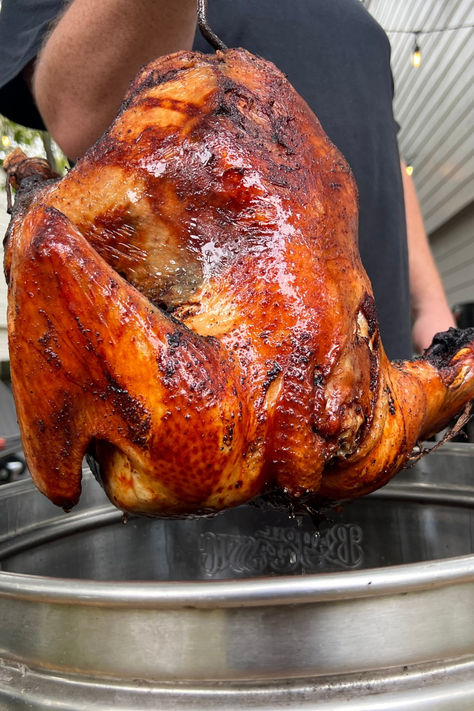
Yield: 10 to 12 servings
Ingredients
- 1 (10 to 12 pound) turkey
- 2 teaspoons salt
- 2 teaspoons pepper
- 1 teaspoon cayenne pepper
- 4 to 5 gallons peanut oil
Instructions
- Rinse and dry turkey.
- Remove neck and giblet bag from small cavity in front and the large body cavity.
- Generously season inside cavity with salt and pepper. Use as much cayenne pepper as taste buds will allow.
- Heat oil in cooking pot large enough to submerse turkey in hot oil.
- Heat oil to 350 degrees F to 375 degrees F.
- When oil is hot, using a sling of strong twine or a lifter, lower turkey into hot oil.
- Cook about 5 minutes per pound or until meat thermometer inserted in thickest part of thigh reaches 180 degrees F.
Is it legal or illegal to not let customers use the restroom? A store manager wants the cashier to say they don’t have a restroom.
This is from the internet:
In general, businesses in the US are not federally mandated to allow customers to use their restrooms, but state and local laws may dictate otherwise, particularly for businesses of a certain size or those serving the public.
No Federal Law:
There isn’t a federal law requiring businesses to provide restrooms for customers or visitors
State and Local Laws:
Many states and local jurisdictions have their own regulations regarding restroom access, especially for businesses that serve the public
Restroom Access Acts:
Some states have adopted “Restroom Access Acts” (also known as Ally’s Law) to ensure people with certain medical conditions have access to employee restrooms when public restrooms are unavailable
OSHA Requirements:
OSHA (Occupational Safety and Health Administration) mandates that employers provide restrooms for employees, ensuring convenient and immediate access
Building Codes:
State building codes typically require restrooms in buildings, and all occupants, including customers, must be allowed to use them
Examples:
Restaurants are generally required to have restrooms for customers, but the specific regulations can vary depending on local ordinances and the type of establishment
Enforcement:
The enforcement of restroom access laws varies depending on the specific jurisdiction and the type of law
What a Night
Submitted into Contest #289 in response to: Your character is getting changed in the bathroom of a nightclub or restaurant, then emerges looking completely different. Why?… view prompt
Jan Keifer
When did you realize that you’re old?
Last year in July, I was in Delhi meeting one of my oldest friends, someone I had originally met on Quora. The last time I saw her was before COVID, when she was still in college. When we met again, I was struck by how gorgeous and beautiful she had become. I still had the image of her as a student in my mind, but she had completely transformed. When she looked at me, she was equally shocked.
At that time, I was in poor health:
- I was overweight, weighing 91 kg.
- I was diabetic.
- I suffered from chronic back and elbow pain.
- My immunity was weak and struggling.
- I was experiencing hair loss.
- My eating habits were out of control—I ate as if there were no tomorrow.
- My monthly medical expenses were around ₹2,500.
- I was dependent on insulin.
When she saw me, she asked, “What have you done to yourself?” I replied defensively, “I’m 34. What do you expect? That I’ll become younger?”
Her response hit me hard: “It’s all about mindset, Ashish! You’re not getting old; your body is aging because of your attitude. The best part is, you can always turn the tide in your favor.”
Trust me, it hit me hard. Her words stayed with me. I decided to give myself six months to change. At first, it was incredibly difficult. Letting go of my unhealthy eating habits was a struggle, and working out was painful. But over time, I began to enjoy it. I even started to appreciate the soreness in my body after a workout—it felt like progress.
One thing, I made sure that I will be consistent no matter what. I will not quit in any situation.
Here’s where I am today:
- My weight is now 75 kg.
- My medical expenses have dropped to less than ₹500.
- I no longer need insulin.
- My chronic back pain has disappeared.
- Most importantly, I no longer feel old.
This journey has taught me that change is possible with the right mindset and effort. If I can do it, so can you. It doesn’t matter where you start or how far you have to go—what matters is taking that first step. Your body and mind are capable of incredible things if you give them a chance. Don’t let age, habits, or circumstances define you. You have the power to rewrite your story, one small change at a time.
Remember, it’s never too late to become the best version of yourself. Start today. Believe in yourself. And never, ever give up.
Why do so many foreigners go to China and think China is good?
Have been a resident in China from 2003–2015 and now planning to go and live there again indefinitely from 2025.
it’s a massive country, with all seasons. So many different food options and so diverse East to West and North to South. The food is really amazing, from the numbing spicy foods in Sichuan area, Beijing Duck in North, Dumplings Northeast, Seafood in South, Dimsum SouthEast. Sweet & Sour Middle East Incredible delicious.
Medical both via medicine and traditional, it is out of this world. Have had assistance with acupuncture and massages as well as surgeries under anesthesia. And all solved my medical issues. With no waiting times.
Enormously convenient:
All via payment apps, no more cash
Transportation options: rental bikes on street via QR, Didi taxi service, Subways, Highspeed rail, flights
Ordering & Delivery: can order anything.
Most conveniently: dinner, coffee
Customer Service: immediately assisted
Have many Chinese and Foreign friends living all over China.
So much misconceptions about China. In my earliest period in China, whenever I visited Europe and heard all propaganda on TV, I was really shocked. There is so much misinformation spread and seems countries do not take the effort to learn more about the country.
Am looking to settling down there soon. Enjoy the most amazing food, socialize over large dinners, enjoy all seasons, drive throughout the country and experience all it has to offer.
Me and my foreign friends, if we would been asked about China, we would always say, it is so hard to explain. You have to experience it yourself.
My invitation to the world, come and see it, or at least take the effort to see some on YouTube. Lots of your countrymen been recently.
Is aging really that bad?
My dad lived into his 90’s, and outlived ALL of his friends. He always exercised and was mentally acute his whole life.
On his 90th birthday I asked “Dad, don’t you wish you were 21 again?”. His reply was the wisdom of the ages.
He said “No, I want to be 60 again. Those were the best years of my life.
I was retired and fit and had financial freedom; all my friends were still alive.
In my 20s I had no money and still so much toil and worry and heartache ahead of me.”
I have remembered that my whole life and now, about to turn 60 myself, am really looking forward to it.
Thanks Dad! Just one final gift you left me with, at the end of a life full of them.