


War begins!
Ok. Mr. Trump.
With the advent of AI comes brand new, and difficult to track, shadow banning and opinion suppression.
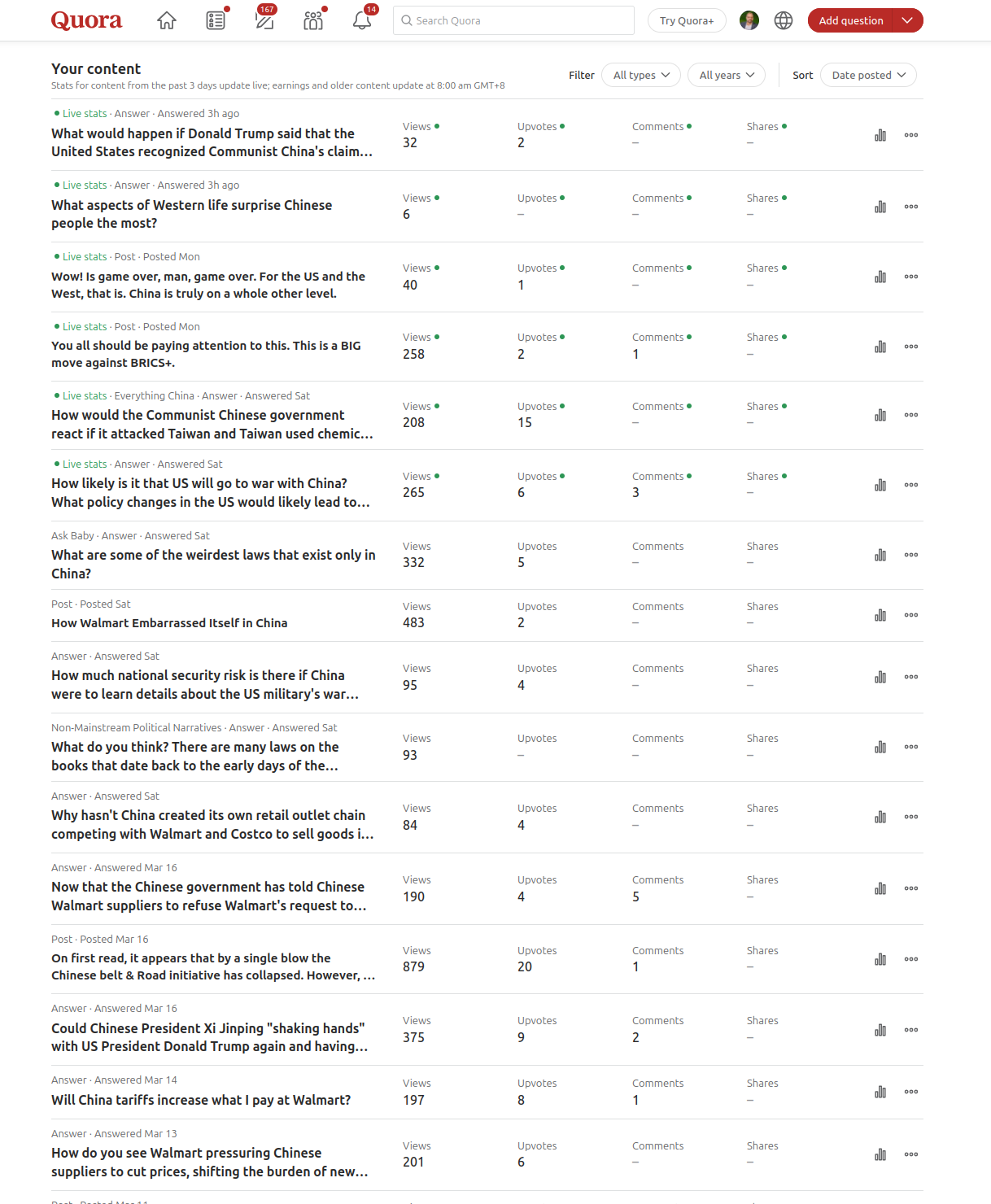
Up until lately, I would get around 5,000 to 10,000 views on my Quora posts after one week.
Now…
Look at my stats for a two week period in mid March. No longer in the thousands, but in the double digits and low hundreds.
So, take this as what it is.
Something or someone, or some AI is changing my subject views and decreasing them by a factor of 10x. Or in other words, my views have been reduced to 10% of what it used to be.
That sucks.
…
Freedom of speech, and easy access to information?
It has been forever deleted.
…
But you all must also consider this in light of other things.
Something is suppressing e-mail traffic.
What is next?
Stand by….
U.S. to Impose 100% Tariffs Upon China Starting November 1
U.S. President Donald Trump has announced the United States will impose one-hundred percent Tariffs on China beginning November 1, in response to China’s “Aggressive” export controls on virtually everything they manufacture and worse, on rare earth minerals they refine for OTHER countries!
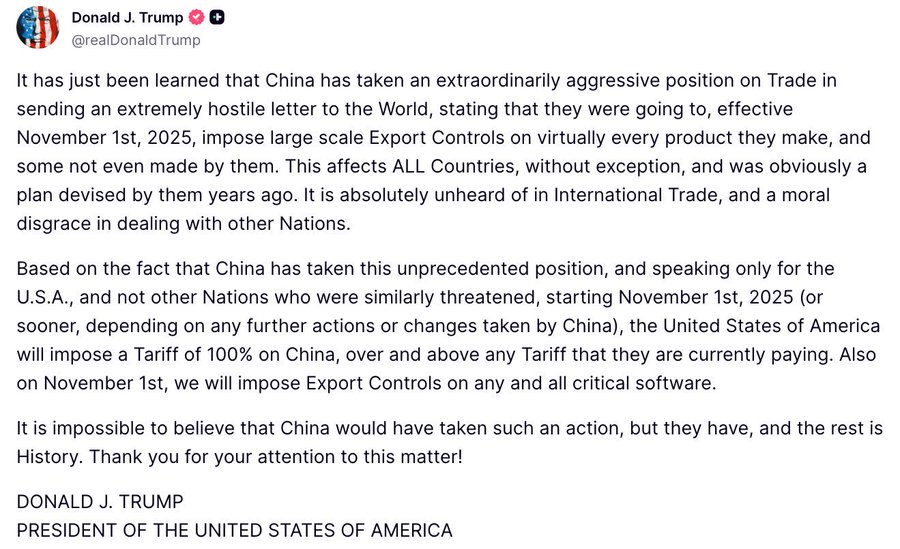
Here is President Trump’s announcement:
China’s actions are expected to literally crush commerce between China and the USA.
This is widely being viewed as a “Black Swan Event” for financial markets; the initial impact having been seen on Wall Street today, where stock prices dropped about 2.2%. It is now anticipated that stocks will plummet on Monday, as companies and investors analyze the impact of China’s announcement.
Analysis
China’s export crackdown is pure economic warfare—targeting every nation with forced dependency.
The 100% tariff response isn’t just justified—it’s necessary.
Beijing’s playbook? Strangle global supply chains, then exploit weakness. Trump’s counterpunch flips the script: hit their exports harder than they hit ours.
This isn’t about trade deficits—it’s about exposing China’s predatory strategy and forcing them to choose between collapse or compliance.
The tariff mission was chaotic early on, but chaos works. Leverage only matters if you’re willing to use it.
November 1st isn’t a deadline—it’s a reckoning.
AMERICANS ON REDNOTE EXPLAINING THE CURENT USA TO CHINA || Rednote’s Cross-Cultural Feed
Damn good watch! -MM
A new kind of cultural exchange is happening online! This video compiles posts from Rednote, the popular social media platform, where everyday Americans are taking to the digital stage to explain current events, politics, and daily life in the United States to a massive Chinese audience.
From breaking down complex news stories to sharing their personal perspectives, these users are creating a direct line of communication, offering a unique, ground-level view of America that often bypasses traditional media filters.
It’s a fascinating look at how social media is building bridges and shaping international understanding in real-time.
Is China copying Donald Trump and MAGA by introducing a rare-earth minerals policy that keeps the valuable raw materials and specialist equipment for refining them at home?
You bet.
Since the late 19th century, the Chinese have been humble, diligent, and astute students of the United States, sending millions to learn everything—from social sciences and liberal arts to physical sciences. Now, in the spirit of the proverb ‘Indigo comes from blue but surpasses blue(青出于蓝而胜于蓝),’ China is poised to exceed the U.S. In the current trade war, Beijing has even deployed mirror tactics — using the same kinds of controls and countermeasures in a coherent, strategic response designed to impose real costs and deter escalation. The point is deliberate: if a prolonged trade confrontation continues, the consequences will be felt more on the US side — a sharper lesson that lets the chickens come home to roost.
FLASH-CRASH in Crypto Coins . . . “It’s a Slaughter”
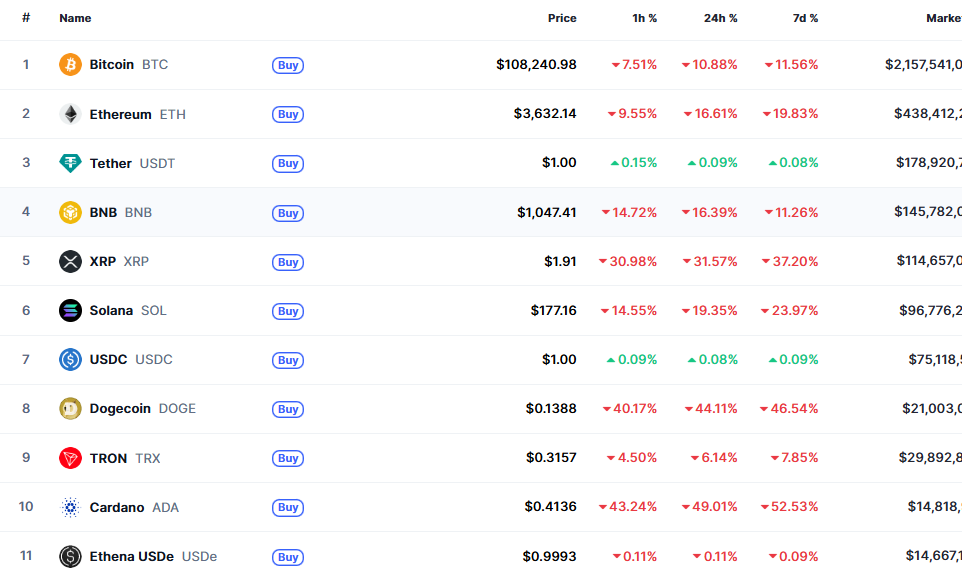
Crypto currencies have suffered a Flash Crash, wiping-out upwards of $500 BILLION of value in about one hour today. It is likely tied to China’s announcement of aggressive Export Restrictions on nearly everything they export, including rare earth minerals they refine for OTHER owners!
Look:
and these:
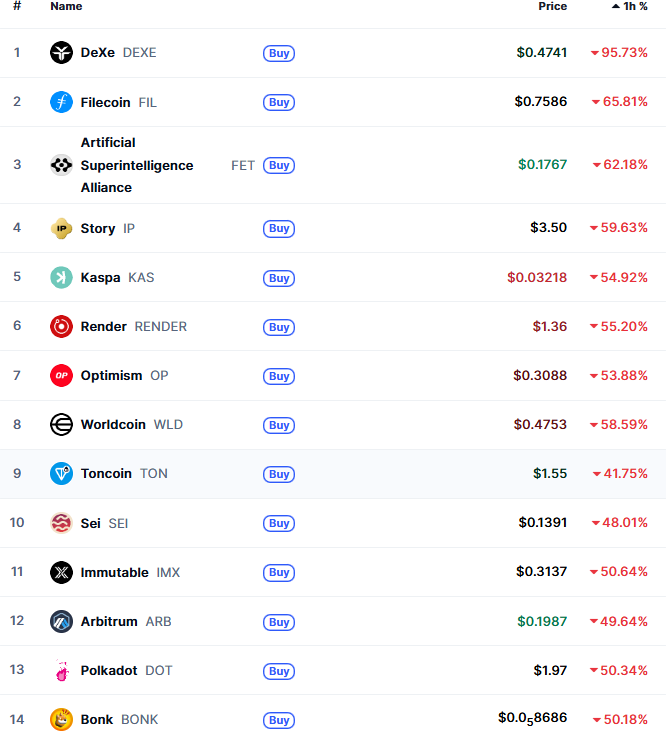
Word is that once word of China’s move got out to the uber-wealthy, the “whales” immediately pulled out of crypto and are heading into Precious metals which are a known safe haven in economic turbulence.
Folks familiar with crypto currency markets are describing today’s moves by saying “it’s a slaughter.”
130% of a YEAR’S global silver supply dumped in ONE DAY
Hal Turner World October 11, 2025
On Friday, October 10, the almost criminal fraud that calls itself “paper silver” was so egregious, it had no historical parallel; and STILL the phony paper market could not hammer the price of silver down from it’s $50 per ounce physical metal pricing.
130% of a YEAR’S global silver supply was dumped for sale in ONE DAY — and the price for physical metal silver is STILL above $50. On paper, a whole year’s supply of the entire silver mine output for the whole world, – plus 30% more than the whole world produces — was “offered for sale.”
During the course of Friday, 220,082 futures contracts (paper silver) were hurled at the computer screen allegedly “for sale.” Each futures contract equaled 5,000 oz. of silver. That meant **1.1 BILLION oz of synthetic (paper) silver** was put out for sale on the market.
Dumping 130% of a full year’s silver MINING output from the entire world, STILL couldn’t manipulate the price of actual silver metal, lower! ! ! !
This has now caused “Paper panic.”
Physical buyers didn’t blink.
Almost Outright Fraud
“Paper silver” is often criticized as being a misleading and risky investment that lacks the fundamental security of holding physical silver bullion. Concerns arise from the vast number of paper claims for silver compared to the limited physical supply, which critics claim enables price manipulation by large financial institutions.
How paper silver functions
“Paper silver” is a catch-all term for various financial products that derive their value from silver without the investor owning the physical metal. The most common forms include:
Exchange-Traded Funds (ETFs): These funds trade on stock exchanges and are meant to track the price of silver. While some are backed by physical bullion, shareholders do not own or have the right to redeem the underlying metal.
Futures and options contracts: These derivatives allow traders to bet on the future price of silver without ever owning the physical asset. These are primarily traded on exchanges like the COMEX and are used for both speculation and hedging.
Unallocated accounts: With this arrangement, an investor owns a silver “credit” but not a specific bar or coin. The dealer or bank owns the physical metal and keeps it in a general stockpile. This gives the investor only a contractual claim on the silver, not direct ownership.
The criticism: Why it’s seen as deceptive
The accusation that paper silver is a “fraud” stems from several key factors:
- A huge imbalance between paper and physical silver
There is a massive disparity between the volume of paper silver claims and the actual amount of physical silver in existence. Some estimates place the paper-to-physical silver ratio at over 100:1. In the event of a market-wide rush for physical delivery, the system could fail, leaving paper silver holders with worthless contracts.
- Risk of price manipulation
The market’s high leverage and paper dominance allow large banks and financial institutions to influence prices. By selling huge amounts of paper silver, they can suppress the market price, creating an illusion of abundance even during periods of high physical demand. A high-profile case involving JPMorgan Chase found the bank guilty of illegally manipulating silver and gold prices.
- No direct ownership or claim on the asset
Unlike physical bullion, which you own and control by holding it in your hand, paper silver leaves you with counterparty risk.
In the case of a futures contract, you are relying on the exchange and the other party in the transaction to actually HAVE the physical metal they are “selling” to you.
With unallocated accounts, you are essentially an unsecured creditor of the bank or dealer. If the institution faces a liquidity crisis, its creditors would have a higher claim on the bullion, and you may lose your investment.
ETFs expose you to tracking errors, management fees, and the risk that the fund’s holdings may not fully cover all outstanding shares in a crisis.
- A decoupling of paper and physical prices
During times of high physical demand, such as the “Silver Squeeze” events, the market price of paper silver can become disconnected from the price of physical coins and bars. Premiums on physical products can soar, revealing the artificial price suppression of the paper market. When the price of the physical metal is greater than the price of “paper silver” that’s called “Backwardization” because the paper market is backwards from reality.
- Lack of a “real” asset
Many investors buy precious metals to protect against economic instability and the erosion of fiat currency. From this perspective, paper silver fails to serve as a genuine safe-haven asset because it is just another financial product. As commentator Robert Kiyosaki warns, an ETF is “like having a picture of a gun for personal defense,” not the real thing.
Which brings us back to yesterday, Friday October 10, 2025 . . .
“Paper Silver” holders hurled 220,082 silver futures at the computer screen trying to convince the market that there is a lot of physical silver available for sale and delivery.
At 5,000 oz of silver per contract, that’s ~1,100,410,000 oz of synthetic, (i.e. “paper) silver in one trading day session.
Yet the price for physical silver in the SPOT market – for people who want to buy silver and have the actual, physical, metal delivered to them immediately — still sits around $50 p/oz.
Here is how the market went:
(HT Snide Remark: One year of the entire planet’s silver supply in a day is clearly not enough. They should definitely do 10 years in 15 minutes on Sunday night. They might get it down to $45. Clearly the legal authorities are not interested in looking at this… weren’t ever interested in looking at it, either. After all, why would legal authorities go after people who are “selling” silver they don’t actually have?)
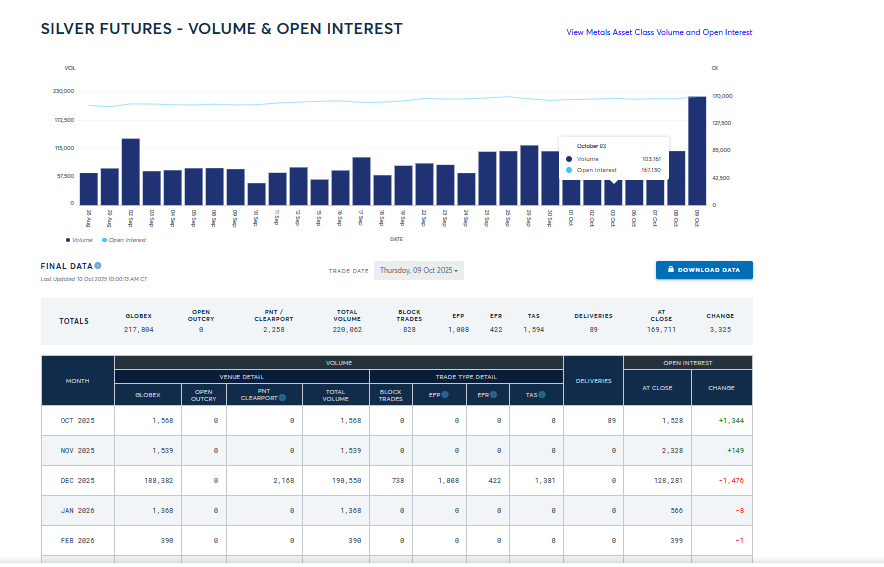
But the real take away is that the paper market FAILED to bring the silver price down. So many people are buying physical metal and demanding immediate delivery, that not even massive manipulation using an entire year’s worth of mine output plus 30%, couldn’t crush the demand.
PHYSICAL DELIVERY FAILURE?
What’s taking place with demand for physical delivery, is putting a lot of these “paper” silver companies in a squeeze. What happens when they run out of actual metal to ship to people who are demanding it?
Most of these “paper” silver contracts, have an escape clause: “In the event of shortage of metal, the claim can be settled in cash.” So people who THINK they “own” silver which is simply being held by someone else, safely, in a vault, suddenly find out they don’t “own” it at all and the “vault” . . . . . . is empty. Delivery doesn’t come.
So they demand to be paid, and then the squeeze is REALLY “on” for those companies.
That is where things are heading as of Friday.
By most reasonable estimates, there are only about 3 Billion ounces of physical silver in the whole world right now. We’re supposed to believe that 1.1 Billion of those ounces, were offered for sale yesterday. Sorry, no. Don’t believe a word of it.
My local dealer informed me as of today (Saturday, October 11) the price fixing mechanism is now being set by COMEX, not Kitco. They want you to think the price you’re seeing is “Spot.” It’s not, it’s Futures. Kitco sets Physical price, COMEX sets Futures.
When you see price listed as $47.51 understand you’re seeing the futures backwardization price. Go to Kitco to see the physical price. LBMA kicked Kitco to the curb last week. Stopped them reporting the price.
Chinese return from vacation tomorrow. Expect Chinese refiners/buyers (dore’) to continue full force. Price manipulation should be close to an end.
A lot of very big names in the “paper” precious metals market, are heading into failure — fast.
WARNING | More LAYOFFS Coming As China Retaliates Against US
Why were many firms that took part in India’s $23 billion production-Linked Initiative scheme unable to kick-start production?
As someone who’s tracked India’s manufacturing ambitions for years, I’ll cut through the hype and explain why even a $23 billion incentive program (PLI) isn’t enough to overcome India’s systemic bottlenecks. Let’s break it down:
India’s Infrastructure
- Imagine running a factory where power cuts are daily events. Over 300 million Indians still lack stable electricity, and industrial hubs like Tamil Nadu face 2-hour daily blackouts. Companies like Samsung and Foxconn spend 15–25% extra on diesel generators—wiping out PLI subsidies.
- India’s average truck speed: 20–30 km/h (vs. 60–80 km/h in China).Mumbai port clearance: 7 days (Singapore: 6 hours).Result: Apple suppliers in India hold 3x more inventory than in Vietnam to hedge against delays.
India’s Workers
- 74% of Indian adults can’t understand technical instructions (UNESCO data). Foxconn spent 6 months training workers in Andhra Pradesh, yet only 30% met iPhone assembly standards.
- India has 1 trainer for every 10,000 job seekers (Germany: 1 for 200).Workers quit fast: 50% annual attrition in factories (OPPO, Xiaomi), forcing endless re-training.
- Indian factory workers produce 27% less per hour than Chinese counterparts (World Bank). Even Bangladesh’s garment workers outpace India 2:1.
India’ Policy
- In 2023, India suddenly capped e-commerce foreign ownership, gutting Amazon’s India plans.Xiaomi had $480 million frozen over “tax violations” after 8 years of operations.PLI’s own goal: Mobile localization targets were cut from 40% to 30% in 2022, leaving companies like Dixon Tech stranded with unused component factories.
- Subsidies? What Subsidies?PLI incentives often arrive 18 months late (if at all). Solar panel maker Waaree halted expansion after waiting 2 years for promised funds.
- India’s bureaucracy remains a maze of 15+ ministries with overlapping rules. To start a factory, you need:
12+ permits (environment, fire, labor…)
100+ document submissions
Endless “facilitation fees” (read: bribes)
Solution?
- Infrastructure: Needs 1.5trillion by 2030(Modi’s scurrentudget:120B), Without 24/7 power and smart highways, PLI is a band-aid.
- Education: Even if India trains 10 million workers/year, it’ll take 15 years to match Vietnam’s skill levels.
- Trust Deficit: Until India stops retroactive taxes and sudden rule changes, companies will treat it as a “maybe someday” market.
The PLI scheme isn’t doomed—but India is trying to build a 21st-century manufacturing hub with 20th-century tools. For every success story (iPhone exports hit $7B in 2023), there are 10 companies quietly packing up.
Want the real solution? Stop chasing “China+1” and focus on “India-first” reforms. But that’s a story for another answer.
Were there any American citizens living on US soil who died because they couldn’t afford healthcare?
I can tell you a story of a friend of mine in Nebraska. She had a decent job that included healthcare in its benefits package. She wasn’t rich by any means, but she was getting by.
Then she got breast cancer.
She started treatment, and her insurance through work was covering it, but chemo tends to make you feel like crap. Nausea, vomiting, diarrhea, fatigue… not exactly something most people can shrug off. She started calling in sick to work, and after a few months, she used up all of her sick days. She didn’t have a choice; she physically couldn’t work when recovering from chemo, so she took off when she needed to. Her absences mounted.
And she got fired.
When she got fired, she lost her healthcare.
She couldn’t afford to pay for treatment anymore. She held on as long as she could. Borrowed money, gofundme, but it wasn’t enough. The cancer got worse. She didn’t make it.
U.S.-China Trade War Reaches New Level
Trump’s tariff war has somewhat settled down but for China.
Trump has, like his predecessor, limited exports of high-end semiconductor chips to China. He also stopped the export of machines and chemicals used to produce chips to China. These measures are extra-territorial. The Dutch company ASML is prohibited to sell its high-end machines for chip production to China because parts of them contain goods or software made in the U. S. of A.
After Trump imposed additional high tariffs on goods from China the country hit back by limiting exports of rare earth elements. China has a near monopoly on these elements. These are needed to produce modern electric motors, magnets and various sensors and semiconductors the U.S. needs. China has also stopped the import of soy-beans, one of the main products U.S. mid-west farmers depend on.
Trump had to pull back and did so. Tariffs were temporarily lowered and negotiations with China continued. A new trade agreement was supposed to signed later this month when President Trump and President Xi would meet in South Korea.
But U.S. negotiators under Secretary of Commerce Howard Lutnick tried to play hardball. In late September, during the talks, they imposed further restrictions on China:
On September 29, 2025, the U.S. Department of Commerce’s Bureau of Industry and Security (BIS) released a long-anticipated interim final rule (IFR) that will result in the most dramatic expansion of U.S. export control regulations in years. The IFR, “Expansion of End-User Controls To Cover Affiliates of Certain Listed Entities,” extends export restrictions to any company owned 50% or more, directly or indirectly, by any of the thousands of entities already designated on several Commerce and Treasury Department lists.
The IFR would also impose a new duty on exporters to investigate the ownership of an end user where there is reason to believe a designated entity holds a minority stake, or is affiliated with, the end user, subject to a strict liability standard for violations.
The new measures would severely restrict any export of high tech goods to China.
The country responded in kind:
Chinese Commerce Ministry (MOFCOM) announced on Thursday that in order to safeguard national security and interests, the ministry will impose export controls on rare earth-related technologies, including rare earth mining, smelting and separation, magnetic material manufacturing, and rare earth secondary resource recycling.
…
Technologies and relevant date related to rare earth mining, smelting and separation, metal smelting, magnetic material manufacturing, and rare earth secondary resource recycling, as well as the assembly, debugging, maintenance, repair, and upgrade of related production lines are prohibited from export without permission, the statement said.
Rare earth elements are used in many U.S. weapons. Each F-35 fighter jet includes some 418 kilogram of rare earth elements, a U.S. destroyer 2,600 kg, a nuclear submarines 4,800 kg. The U.S. has currently no means to produce these themselves.
There was more to the new Chinese regulation than it seemed:
This is actually big, potentially huge, notably because China’s new rare earth export controls include a provision (point 4 here: mofcom.gov.cn/zwgk/…) whereby anyone using rare earths to develop advanced semiconductors (defined as 14nm-and-below) will require case-by-case approval.
Which effectively gives China de-facto veto power over the entire advanced semi-conductor supply chain as rare earths are used at critical steps throughout – from ASML (who use rare earths for magnets in their lithography machines: asml.com/en/news/storie…) to TSMC.
The export controls are also extra-territorial: foreign entities must obtain Chinese export licenses before re-exporting products manufactured abroad if they contain Chinese rare earth materials comprising 0.1% or more of the product’s value.
So China is effectively mirroring the US semiconductor export controls that were used against them, with its own comprehensive extraterritorial control regime, except with rare earths.
The most advanced semiconductors produced today also use some rare-earth elements. Under China’s new rules each chip sale will need to be licensed by China to ensure that it will not be used for military purposes. If the new rules are handled strictly the U.S. AI-boom will soon go bust.
Rare earth are not the only field where new Chinese export rules are set to apply:
Not only did they announce the unprecedented rare earths restrictions that I posted about earlier 👇 (targeted, among others, at the advanced semiconductors sector) but they issued 4 consecutive announcements in total with other export controls on:
– The machines and expertise to process rare earths – not just the rare earths themselves, but all the specialized equipment and technical know-how to turn rare earth into usable materials (obviously making it all the harder to try to move rare earth processing away from China)
– High-performance batteries – specifically those above 300 Wh/kg needed for long-range EVs and advanced drones. And, again, export controls on all the factory equipment to make them too.
– The materials inside batteries – both graphite anodes and cathode materials (the two electrodes that are essential for batteries to function at all). Export controls also cover the specialized equipment to manufacture all of these components.
– Industrial diamonds and cutting tools – the ultra-hard materials that are used ubiquitously in precision manufacturing, for instance to cut silicon wafers for computer chipsThis is absolutely unprecedented. With this China effectively gets veto power over three critical supply chains simultaneously: advanced semiconductors (via rare earths and related equipment), battery-powered vehicles and drones, and precision manufacturing across industries (via superhard materials).
It will all officially take effect on November 8, in one month.
China’s move is not really aimed at restricting exports. It just wants to discipline U.S. trade negotiators and push them back in support of free trade:
During the last round of negotiations with senior American officials in Madrid last month, China’s chief trade negotiator, Vice Premier He Lifeng, asked for the full removal of tariffs and export controls, The Wall Street Journal has reported. The latest rare-earth action, the people said, is a tactic aimed at achieving that goal.
The U.S. has yet to get understand that. Its response to China’s latest move as predictable as it is doomed to fail:
Donald J. Trump @realDonaldTrump – Oct 10, 2025, 20:50 UTC
It has just been learned that China has taken an extraordinarily aggressive position on Trade in sending an extremely hostile letter to the World, stating that they were going to, effective November 1st, 2025, impose large scale Export Controls on virtually every product they make, and some not even made by them. This affects ALL Countries, without exception, and was obviously a plan devised by them years ago. It is absolutely unheard of in International Trade, and a moral disgrace in dealing with other Nations.
Based on the fact that China has taken this unprecedented position, and speaking only for the U.S.A., and not other Nations who were similarly threatened, starting November 1st, 2025 (or sooner, depending on any further actions or changes taken by China), the United States of America will impose a Tariff of 100% on China, over and above any Tariff that they are currently paying. Also on November 1st, we will impose Export Controls on any and all critical software.
It is impossible to believe that China would have taken such an action, but they have, and the rest is History. Thank you for your attention to this matter!
DONALD J. TRUMP
PRESIDENT OF THE UNITED STATES OF AMERICA
China is well prepared for that move. Its GDP this year will be around 20 trillion. Its total exports per year to the U.S. are around $500 billion, a mere 2.5% of its GDP. China can do without those while the U.S. can not.
What Trump does not get yet is that the U.S. depends more on imports from China than China depends on exporting to the United States. But the markets do understand that. Trump’s move may well be the black swan event that will lead to their crash.
If Trump doesn’t chicken out of this fight the U.S. economy is doomed.
Big Money Is Corrupting The Climate Movement! w/ Chris Hedges
Why is Russia’s so-called best air defense systems struggling against Ukrainian attacks?
There really haven’t been many struggles. What people are doing is if a missile gets through attributing that to a struggling. No system hits 100% and every system can be overwhelmed. The Russian systems have done a excellent job better than any Western systems would ever do. This notion of struggle is more a Western coping mechanism than anything else.
So you will have people lie and say the Patriot can shoot down a Kinzhal which pure Malinformation. The reality is according to Keil institute to have a 25% chance of shooting down kinzhal you need to fire the whole battery of the Patriot.
The reality is this question should be about the Patriot and not Russian IAD
A drama in space
Submitted into Contest #288 in response to: Start or end your story with a breeze brushing against someone’s skin.… view prompt
Sasan Sedighi
Three individual solar panels, each measuring one square meter, were severely damaged, likely due to a collision with high-velocity space debris—probably discarded technological junk from previous human space ventures. Two additional panels showed signs of partial damage caused by debris as small as grains of sand. Despite their tiny size, the incredible speed of these particles, combined with the motion of the space station, allowed them to pierce the solar panels with the force and precision of bullets smashing a car’s windshield. To evaluate the extent of the damage, she initially concentrated on the panels with less damage, carefully assessing whether they could be salvaged or if all the panels needed complete replacement.
The monotony was interrupted by a peculiar sensation that made her mind flurry. Soft as a whisper, a gentle, barely perceptible breeze lightly brushed against her right arm, causing a slight shiver. “Impossible,” she dismissed it as mere imagination. She was encased in a pressurized suit 400 kilometers above the Earth’s surface, with no atmosphere capable of generating a breeze. The thought that her suit sleeve might be punctured and losing air filled her with concern. To reassure herself, Elara glanced at the digital readout on her wrist to check the oxygen level and the suit’s pressure. The readings were regular, and her spacesuit’s integrity appeared intact. She once more dismissed it as mere imagination and returned to her job. But the sensation intensified as if she had held her arm before a spinning fan. Her breath became shallow, echoing loudly in her helmet. She quickly checked the readout on her wrist again, which showed nothing unusual. “Is this monitoring device faulty?” The thought crossed her mind, triggering a wave of panic. If her spacesuit were leaking, she could lose pressure and die in a few minutes, if not seconds.
Before she could say anything, John came on the comms and asked, “Is everything okay, Elara? I noticed your high blood pressure and heart racing dangerously fast.”
“I can’t breathe!” she nearly shrieked.
“Why’s that? I don’t see any pressure drop. Your suit’s pressure is stable.”
“The life signs monitoring device must be faulty. I feel a constant breeze against the skin of my right arm,” Elara said in a voice filled with panic.
“Abort! Abort the mission, Elara,” John shouted over the comms. Although his monitor didn’t indicate any issues, it was better to be safe than sorry, so he asked Elara to abort the mission.
Overwhelmed by panic, Elara pushed herself away from the solar arrays and attempted to return to the airlock. However, with her impaired concentration, she lost control of her Manned Maneuvering Unit (MMU), which made her spin around violently, intensifying her panic. “I can’t do this!” she yelled desperately.
“Elara, calm down. You can do this. You’ve trained for situations like this,” John replied.
“I’m losing air. I’m going to die,” she said, her voice barely intelligible.
“Elara, if you’re losing air, it’s not that serious; otherwise, you would have already died.”
Elara’s sobbing was audible through the comms; she was experiencing a panic attack.
“You can do this, Elara.”
But Elara wasn’t in the right mental state to hear him; panic clouded her judgment.
“Lieutenant, take a deep breath and regain control. This is an order,” John said with authority, understanding that soldiers in shock would respond better to commands than rational conversation. Their intensive military training aimed to condition soldiers to follow orders.
“Yes, sir,” Elara replied weakly.
“Lieutenant, listen to me carefully. Take control of your MMU and return to the airlock ASAP. This is an order.”
“Yes, sir,” she said. After several failed attempts, she regained control of her Manned Maneuvering Unit and slowly but steadily moved toward the space station hall and the airlock. Seeing the hall grow bigger through her helmet’s visor boosted her confidence. “I’m getting closer,” she said joyfully.
“Keep going, Lieutenant, you can make it,” John said authoritatively.
Elara involuntarily laughed as her hand touched the airlock handle. It was a great relief; she was saved.
“Lieutenant, slowly push the lever down and open the airlock’s outer door.”
“Yes, sir,” she said, pushing the lever down.
Standing in the airlock chamber boosted her confidence. She wasn’t going to die alone in Earth orbit. The hiss of air filling the room was the sweetest music to her ears, reassuring her of her safe return. When the inner door of the airlock opened, John, the station commander; Martina, the Italian astronaut and biologist; and Sergey, the Russian cosmonaut, were there to help her. Until then, the readout had shown no faults in her spacesuit. They quickly assisted her in removing the suit and carefully checked it. It appeared intact, but a pressure test would be needed later. Martina handed her a warm drink and said, “Please drink this; it will make you feel better.”
“Thank you,” Elara said, happily sucking the warm drink—hot chocolate—from the container’s nozzle.
When they helped her remove her undergarment, Martina discovered a spider in the right sleeve of her dress. “Where did this spider come from?” she asked.
“This is a space spider,” Sergey teased.
Martina quickly grabbed the spider and transferred it into a sealed glass container. “On the previous mission, the crew researched spiders’ ability to produce silk webs in zero gravity. This one likely escaped from their container.”
“So, all this drama is caused by this ugly spider?” Elara asked.
“It appears so,” John responded.
“It felt like a breeze brushing against my arm,” Elara said.
“The station should be bug-free, so you didn’t expect a spider to be in your suit, which is why your brain interpreted the sensation of the crawling spider on your skin as a breeze—like a breeze brushing against your skin,” Martina explained.
China blocks all the cargo ships from coming and out of Taiwan. China’s blockade is an act of war. What is President Biden going to do about it?
A true blockade of 10-20 years is very common. How long has Cuba been blockade by the US military? How long has Iran been blockade by the US military?
The U.S. blockaded North Korea for 40 years and banned all cargo ships to and from North Korea, and the lack of oil led to North Korean cars being driven only by firewood, and even the transportation of food throughout the country was interrupted, relying on ox carts to transport food out of the fields.
Taiwan Province can’t stand being blockaded for a few days? Don’t underestimate the tenacity of the Taiwanese! 😁
Haven’t the US and Taiwan been blockading the coast of mainland China since 1949 when the PLA navy was weak?
Fortunately China had Hong Kong and Macau for re-export trade.
In 1949, the CPC did not take the initiative to liberate Hong Kong and Macau, and its purpose was to leave Hong Kong and Macau as entrepots.
It wasn’t until the 1990s that the PLA navy grew dominant. But still, the Chinese cargo ship YinHe was detained by US forces.
It was not until the 2000s that mainland China began to develop Shanghai with confidence.
The PLA navy was weak before that, fearing that Shanghai would be attacked, and only dared to develop Shenzhen, which is close to Hong Kong.
Before 1968, the mainland China’s north-south sea traffic must be bypassed Philippines.
The specific routes are as follows:
the cargo starts from Zhanjiang, Guangdong Province, goes along the western and southern edge of the South China Sea to the Philippines, enters the Pacific Ocean from the northern end of Medan Island, goes eastward to 133 degrees east longitude, then goes northward, enters the East China Sea through Dayu Strait, and finally arrives at Qingdao.
Mainland China cargo ships are afraid to go through the Taiwan Strait for fear of being confiscated (robbery) by the Taiwan Navy.
The only 1 time the PLA passed through the Taiwan Strait without incident, China and Vietnam had a naval battle in the Xisha Islands, and four PLA warships passed through the Taiwan Strait without any attack from Taiwan, which the mainland China has been remembering with gratitude until now.
Is it tough? Did the mainland China complain?
At that time, who sympathized with the 600 million mainland Chinese people?
The Western blockade of Russia was tested on PRC long ago, when the West sanctioned China and even bikinis were embargoed to mainland China. (🤣 Of course banning Russian cats might be a little more hilarious)
An old Chinese saying “A loss, no bad thing or a blessing in disguise (祸兮福所倚,福兮祸所伏)”. Therefore, I think that the sanctions imposed by the West on Russia can be seen as a “good thing”, which can be used to refine the Russian “national spirit” again.
In the 70 years since the founding of the PRC in 1949, the road that mainland China has traveled has not been smooth, but full of difficulties and treacherous obstacles.
While using the navy to blockade the coast of mainland China, United States and Taiwan also want to ridicule the CPC for its lack of economic understanding and lecture the CPC on the need to change the political system, the need to implement “liberal democracy” and that only capitalism can save the PRC economy.
Do you know how the mainlanders have survived the hardships and obstacles, gradually speaking with their own power and even beginning to challenge the “world order (Western System)” shaped by the United States?
Yes, the challenge requires strength, not only economic strength, but also military strength.
October 6, 1958, The Minister of Defense’s [Peng Dehuai] Proclamation to Taiwan Compatriots begins:
Your leaders have for a long time been too outrageous, directing aircraft to fly all over the mainland, reaching as far as Yunnan, Guizhou , Sichuan, Xikang, Qinghai, where they scattered leaflets, dropped spies, bombed Fujian, and harassed Jiangsu and Zhejiang. This is beyond intolerable.
Until this year, Taiwan’s maritime patrols still often use mainland China fishermen crossing the so-called “Taiwan Strait center line” as a reason to detain mainland China fishermen and their fishing boats for no reason, and fines confiscated catches are inevitable.
Contrary to the unkind and unjust actions of the Taiwan authorities, the mainland china has always treated its compatriots in Taiwan as its own family members.
In order to protect the lives and property of Taiwan fishermen and facilitate their shelter and Working at sea, the relevant parties have set up mooring points mainland China along the coast for Taiwan ships to dock directly. Fujian Province alone has 29 mooring points, receiving a large number of Taiwanese fishing vessels and fishermen every year. Statistics for 1993 show that Fujian Province received a total of 8,528 Taiwanese fishing vessels and 35,279 fishermen.
The root cause of Taiwan’s military and police shooting and firing at mainland china fishermen, arbitrarily arresting, inspecting and beating them is that the Taiwanese authorities have so far not abandoned their hostile stance towards the mainland china, treating mainland china coastal fishermen operating at sea as “enemies”.
Of course, the Taiwanese must be actively “forgetting” and not mentioning the bullying they have done, but presenting themselves as “victims”, emphasizing to the world that mainland China is “bullying” them.
After Nixon’s visit to China in 1972 and the stabilization of China-American relations, Mao Zedong sent someone to inspect the opening of the port!
The first stop is Shanghai, because Shanghai can radiate the entire Yangtze River basin, taking into account the south and north, but it can’t do it.
Because at that time, Taiwan’s Kuomintang Navy was the No.1 in Asia (not Japan, the Japanese peace constitution was not loosened before 1990s), far exceeding the strength of the PLA Navy.
The Taiwanese Kuomintang kept blockading the mainland China coast although they lost countless islands in the South China Sea.
In 1978, the mainland China had to choose Shenzhen (a small fishing village) near Hong Kong as the first special economic zone, but Shenzhen could only drive the economy of the Pearl River Delta region, So southern China developed first.
After all, Hong Kong was once under British colonial rule.
Taiwan’s Kuomintang was expert at infighting, but would not offend the British.
After the CPC signed the 9.2 Consensus with the Kuomintang in 1992, Shanghai began to develop gradually.
After 2000, when the Chinese PLA completely suppressed the Taiwanese navy, which only fought civil wars, Shanghai began to take off economically.
This is because the Taiwan Strait can completely separate the north-south shipping of China.
Why does the United States treat Taiwan as the “unsinkable aircraft carrier of the U.S. military” and a key node in containing China’s “first island chain”? Take a look at this chart and you will understand
Taiwan has always been a “shackle” for the United States to restrain China, a point in the first island chain.
Why was the PLA’s navy and air force less powerful than Taiwan’s before the 1990s?
The main reason is still poverty.
Nonetheless, mainland China still finds ways to strengthen its maritime discourse under limited conditions.
In the 1970s, mainland China built the world’s largest concrete ship “Gutian” (named after the Gutian Congress).
1929 Congress of the 4th Chinese Red Army Classroom where the meeting was held. The Gutian Congress or Gutian Conference ( simplified Chinese : 古田会议 ; traditional Chinese : 古田會議 ; pinyin : Gǔtián huìyì ) was the 9th meeting of the 4th Red Army and the first after the Nanchang Uprising and the subsequent southward flight of the rebel troops. It was convened in December 1929 in the town of Gutian in Shanghang County , Fujian Province. [ 1 ] The Congress was important in establishing the principle of party control over the military, which continues to be a core principle of the ideology of the Chinese Communist Party . On behalf of the Central Committee in September 1929, Zhou Enlai wrote a letter to the 4th Red Army affirming Mao Zedong 's view of an armed division composed of workers and peasants. [ 2 ] : 178 The letter emphasized the principle, "First is the Red Army, and later urban political power. This is characteristic of the Chinese revolution, which is a product of China's economic foundation." [ 2 ] : 178 It described the Red Army's basic tasks as "1) mobilizing mass struggle, implementing the agrarian revolution, and establishing the soviet regime, 2) implementing guerilla warfare , arming the peasants, expanding its own organization, and 3) expanding the guerilla's territory and political influence throughout the entire country." [ 2 ] : 304 Acting on this letter, in December 1929 the 4th Army of the Chinese Workers' and Peasants' Red Army held its 9th Party Congress at Gutian. [ 2 ] : 178 Most of the delegates to this congress were army men. Mao, voted out six months earlier but moving from his success at the Jiaoyang Congress (also in Shanghang), addressed the Zhu-Mao 4th Army ( 朱毛四军 ) as its Comintern -anointed political commissar and chaired the congress. Mao emphasized the importance of a politically and ideologically-aligned military to the success of the Communist Party . [ 1 ] Mao stated that the Red Army was "an armed group that carries out the political work of the revolution" and that "[i]n addition to fighting to destroy the enemy's power, it must also bear the burden of propagating, organizing, and arming the masses and helping them establish revolutionary regimes and even build the Communist Party." [ 2 ] : 304–305 According to Mao, "This is the whole purpose behind winning the war, and the very purpose for which the army exists." [ 2 ] : 305 The Resolution adopted following the Congress (the Gutian Congress Resolution or 古田会议决议 ) also emphasized the connection between war and politics, including the class nature of war. [ 2 ] : 289 According to the Resolution, the Party's leading organs in the army must become "the central leadership" and that all major issues discussed at Party Committee meetings must be "resolutely implemented". [ 2 ] : 307 The Resolution stated that the Red Army must be organized democratically . [ 2 ] : 321 The Resolution also called for the criticism of what was seen as excessive democratic deliberati
In mainland China at that time, due to the lack of steel, experts in the field of shipbuilding came up with a bold idea: we could build ships out of concrete. It was inexpensive, materials were easily available, construction equipment and construction techniques were simple, maintenance costs were low, and wood and steel could be saved.
However, it was retired in 1977 due to its inherent defects, such as heavy hull and inability to withstand collisions.
Previously, there were a large number of concrete boats in mainland China, but now all of them have been replaced by steel boats, and there may still be a small number of concrete boats in the inland rivers.
Now, China’s steel production has reached the world’s first, and shipbuilding technology has advanced. So the navy has been developed like never before.
May 1980, PLA Navy Commander Liu Huaqing looked enviously at the U.S. aircraft carrier.
The current PLA Navy, Taiwan no longer has the strength to act as a “yoke” for the United States to restrain China.
China has become so strong that all these past unpleasantnesses can be forgotten.
Brotherhood will survive all vicissitudes, and a smile is all we need to dissolve old grudges.
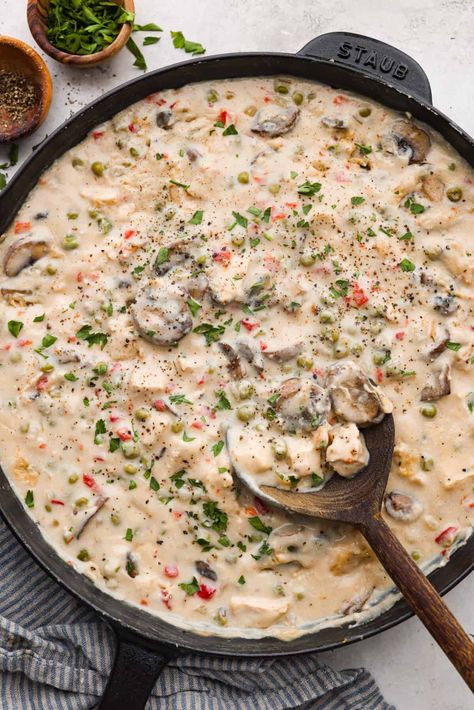
Cajun Chicken a la King
Ingredients
- 6 to 8 chicken breasts
- 8 chicken bouillon cubes
- 8 cups water
- 1 medium onion, chopped
- 1 stalk celery, chopped
- 1/2 cup (1 stick) butter
- 1 cup flour
- 3 to 4 cups milk
- Salt and pepper, to taste
- 1 cup sweet peas, frozen or canned
- Buttermilk biscuits
Instructions
- Dissolve bouillon cubes in water.
- Add chopped onion, celery, and chicken breast. Boil until tender.
- Remove chicken and chop into bite-size pieces. Reserve broth.
- In separate pot, melt butter.
- Add flour, and cook mixture for 3 to 5 minutes.
- Slowly add 4 cups of the cooked chicken broth. Add slowly and stir continuously to avoid lumping.
- Add milk until mixture resembles a thick soup. (You can thin by adding more liquid, either broth or milk, or thicken by adding a paste of milk and flour.)
- Salt and pepper to taste.
- Add cooked chicken and peas. Heat thoroughly.
- Serve over homemade biscuits which have been sliced in half.
Will Tesla stocks rise again?
Short term, possibly. Long term no.
Large companies, even ones which are dominant in their sector can be rapidly killed by one thing: hubris.
We saw this with Nokia. Nokia was a world-leading brand, an impossible to beat cellphone handset maker which had a clear lead in almost all markets. But that position was wiped out when it entirely failed to respond to a novel competitor. Hubris led the company leadership to dismiss this competitor rather than respond.
Tesla’s hubris problem is far worse.
The company has never deserved its valuation. On the basis of its sales, the company is vastly over-valued. Instead the valuation was based on hype. It is hype which has sustained the share price.
A single needle can pop a balloon. But Tesla’s hype ballon is being shredded by more than a single needle.
- The electric vehicle manufacturing scene is suddenly full of strong competition. Manufacturers around the globe are making better, nicer, and more well-made vehicles. At best Tesla is just another manufacturer. Not worth any more than BYD or Hyundai.
- Tesla itself is fast to iterate software, but is slow to iterate hardware. Its vehicle designs are not only dated, but the company has proved itself sluggish in bringing new designs to market. There is still no Roadster. No Model 2. The Cybertruck was a huge mis-step. Tesla likens itself to Apple, but an Apple which hasn’t created a new phone since iPhone 7.
- Tesla claims to have made inroads into improved battery technology. It hasn’t, and Tesla itself isn’t adopting its own batteries widely.
- Tesla claims that it is on the brink of launching a radically better self-driving technology. It isn’t. The technology is a tech demo, which is incapable of solving edge-case driving scenarios. What is worse is that the specific engineering solution they have adopted (one which leans heavily on machine learning) is not able to be improved like conventional software. You can’t run unit tests on an ML network, identify a specific case and re-engineer the bug. The only option is to retrain the network and hope other defects don’t emerge. So we have seen no significant progress in the self-driving stack for years. It continues to do stupid stuff because the engineers can do nothing to fix bugs.
- If hubris is the company killer, then at the heart of Tesla is the greatest wellhead of nuclear-grade hubris who ever lived. The company has a CEO problem. And this individual is not only poorly suited to running a company, this individual is far too busy with other things. Not only is he absent, but his political shenanigans have turned Tesla into a toxic brand which is boycotted by the very people who buy electric vehicles. – In most other companies, they could solve the CEO problem by having the board sack the CEO and replace him. But that’s not going to happen.
Oh, and the company’s other side projects, domestic energy, robotics etc are non-special. Not uniquely better than competing technologies. None of it justifies the bloated share price.
“Men Are IGNORING Me!” Modern Women Get SALTY When Men Start Ignoring Them, Drives Them INSANE
Is Europe more racist than the US, about the same, or somewhat less racist?
From what I noticed, racism in the USA is more vocal. People are more prone to express their racism out loud and they will usually end up in social media and news articles. This is usually followed by public humiliation and often times the racists lose their jobs and businesses. There’s a Reddit sub called/byebyejob full with these stories.
In Europe, racism is so ingrained in the society that many people don’t actually notice it. There could be someone doing racists acts in public that get ignored or people just look away. Basically, they’re not called out.
In US, it’s the opposite, there’s so many news articles about it that one would think US is the most racist country in the world. “Look at that! racist attacks are on the news all the time in the US! I’m so glad we’re not as racist here in Europe!”/s
However, I’ve heard some wild stories and anectodes in other languages, example how a Mexican girl got put into remedial classes in Spain because her teacher deemed her accent inferior. Or there’s even blogs about being a Black woman in Norway and being married to a local, and how people tell her wholeheartedly how they hope their baby doesn’t come out as dark as her. You really cannot pull this stuff in the US without breaking the internet. If you think about it, when was the last time you heard about racism in Europe in social media? The last time I did was when football fans were throwing bananas at the African players in a stadium. Can you imagine if that happened in the US?
Racism seems to have different definitions in both places. To paraphrase, I think racism in the US is loud, bigoted, and obnoxious, while in Europe you are basically shunned away or treated like a third class citizen.
I’ve heard that Europeans think of racism as not wishing death on someone:
“I will never hire those people, I don’t want to live next to them, I try to avoid even looking at them in the eye, and I believe they are inferior to me, but I don’t wish death upon them so I’m not a racist!”
Sir Whiskerton and Chef Chloe’s Culinary Catastrophes: A Tale of Gourmet Mishaps, Farm Freshness, and the Joy of Simplicity
Ah, dear reader, prepare yourself for a tale of culinary chaos, dramatic flair, and one very determined chef. Today’s story introduces a new character to the whimsical world of Sir Whiskerton—Chloe, an aspiring chef with a passion for gourmet cooking and a knack for turning the kitchen into a disaster zone. When Chloe arrives on the farm to host a farm-to-table dinner, her over-the-top techniques and extravagant recipes lead to a series of hilarious mishaps. So, grab your apron and a sense of humor (for tasting), as we dive into Sir Whiskerton and Chef Chloe’s Culinary Catastrophes: A Tale of Gourmet Mishaps, Farm Freshness, and the Joy of Simplicity.
The Arrival of Chef Chloe
It all began on a sunny afternoon, when a bright red food truck rumbled down the dirt road and parked in front of the farm. Out stepped Chloe, a young chef with a towering chef’s hat, a flamboyant apron covered in food stains, and a dramatic flair that could rival Count Catula’s. She introduced herself to the farmer with a flourish, declaring, “I am Chef Chloe, and I am here to create the most exquisite farm-to-table dinner this farm has ever seen!”
The farmer, ever the eccentric, was thrilled. “A gourmet dinner? How delightful! The animals will be so excited.”
The animals, however, were less enthusiastic. Doris the Hen squawked, “A gourmet dinner? What’s wrong with good old-fashioned feed?”
But Chloe was undeterred. She set up her portable kitchen in the barnyard, complete with a sous-vide machine, a blowtorch, and a mountain of exotic spices. “Prepare yourselves,” she declared, “for a culinary experience like no other!”
The First Disaster: The Deconstructed Egg
Chloe’s first dish was a “deconstructed egg,” inspired by Doris’s freshly laid eggs. She cracked an egg into a bowl, separated the yolk from the white, and then used a pipette to create tiny spheres of egg white, which she arranged on a plate with a drizzle of truffle oil and a sprinkle of edible gold dust.
“Behold!” Chloe said, presenting the dish to the animals. “A modern masterpiece!”
Doris stared at the plate, her beak twitching. “That’s my egg! What have you done to it?”
Porkchop the Pig sniffed the dish cautiously. “It smells fancy, but where’s the rest of it?”
Chloe explained, “It’s deconstructed! It’s about reimagining the familiar in a new and exciting way.”
Sir Whiskerton, ever the skeptic, raised an eyebrow. “It looks like someone dropped an egg and tried to put it back together with glue.”
The animals took hesitant bites, but the dish was met with mixed reviews. Doris declared it “an abomination,” while Porkchop shrugged and said, “It’s not mud, but it’ll do.”
The Second Disaster: The Molecular Mud Pie
Next, Chloe decided to create a “molecular mud pie” inspired by Porkchop’s love of mud. She used liquid nitrogen to freeze a mixture of chocolate, coffee, and gelatin, then shattered it into tiny shards and served it with a foam made from whipped cream and soy sauce.
“This,” Chloe said, “is the future of dessert!”
Porkchop took one bite and immediately spat it out. “This tastes nothing like mud! Where’s the dirt? Where’s the squish?”
Sir Whiskerton, ever the diplomat, tried to smooth things over. “It’s… innovative,” he said, though even he couldn’t hide his distaste.
Chloe, undeterred, moved on to her next creation.
The Third Disaster: The Sous-Vide Salad
For her main course, Chloe decided to make a “sous-vide salad” using fresh vegetables from the farm. She vacuum-sealed carrots, lettuce, and tomatoes in plastic bags and cooked them in a water bath for hours. The result was a soggy, flavorless mess that even the chickens refused to eat.
“This is not a salad,” Doris said, poking at the limp lettuce with her beak. “This is a crime against vegetables.”
Chloe frowned. “Perhaps I overcomplicated it. But don’t worry—I have one more dish!”
The Final Disaster: The Flambéed Hay
For her grand finale, Chloe decided to create a “flambéed hay” dessert. She doused a bale of hay in brandy and set it on fire, creating a dramatic blaze that lit up the barnyard. The animals watched in horror as the hay burned to a crisp.
“That’s our food!” Doris squawked, flapping her wings in outrage.
Sir Whiskerton leapt into action, using a bucket of water to extinguish the flames. “Chef Chloe,” he said, his voice calm but firm, “I think it’s time to reconsider your approach.”
The Epiphany
Defeated, Chloe sat down on a hay bale and sighed. “I just wanted to create something extraordinary. But everything I’ve tried has been a disaster.”
Sir Whiskerton sat beside her, his green eyes filled with understanding. “Sometimes, the most extraordinary things are the simplest. The farm is full of fresh, delicious ingredients. Perhaps you don’t need to reinvent them—just let them shine.”
Chloe thought for a moment, then nodded. “You’re right. I’ve been so focused on being fancy that I forgot what really matters: good food made with love.”
The Simple Feast
With Sir Whiskerton’s guidance, Chloe prepared a simple feast using the farm’s fresh produce. She roasted vegetables, baked bread, and made a hearty stew with Porkchop’s favorite mud-like consistency. The animals gathered around the table, their spirits lifted by the delicious smells.
“Now this,” Doris said, taking a bite of roasted carrot, “is what I call a meal.”
Porkchop grinned. “And the stew tastes just like mud—but in a good way!”
Chloe smiled, her dramatic flair replaced with genuine joy. “I think I’ve finally found my calling: simple, fresh, and delicious food.”
The Moral of the Story
The moral of the story, dear reader, is this: Sometimes, the best things in life are the simplest. Whether it’s a gourmet meal or a humble stew, the key to great cooking—and a great life—is to let the natural beauty of the ingredients shine. Fancy techniques and extravagant presentations may be impressive, but they’re no substitute for authenticity and heart.
A Happy Ending
With her culinary catastrophes behind her, Chloe became a beloved member of the farm community. She continued to cook for the animals, using fresh, simple ingredients and a newfound appreciation for the joy of simplicity. Sir Whiskerton, ever the vigilant detective, resumed his sunbeam vigil, content in the knowledge that he had once again saved the day.
And so, dear reader, we leave our heroes with the promise of new adventures, new lessons, and hopefully, no more flambéed hay. Until next time, may your days be filled with laughter, love, and just a little bit of feline genius.
The End.
What are some advantages of Chinese electric vehicle manufacturers, such as Xiaomi, over Porsche?
Affordability and availablity.
Young girls driving their us$30k Xiaomi are cool and seen everywhere. Old men driving their us$150k Porsche aren’t.
Also there’s the brand image.
Porsche’s image is tied to Germany.
Xiaomi is tied to the dirt poor Chinese peasant army defeating the Americans in Korea.
Germany stopped meaning baddass when the Germans didn’t even dare investigate who blew up their gas pipeline. A country with no self-respect cannot ask the buyers to respect their cars.
While the spirit and pride of China overtaking the US against US tariff, sanctions and bullying in general is still growing strong in China.
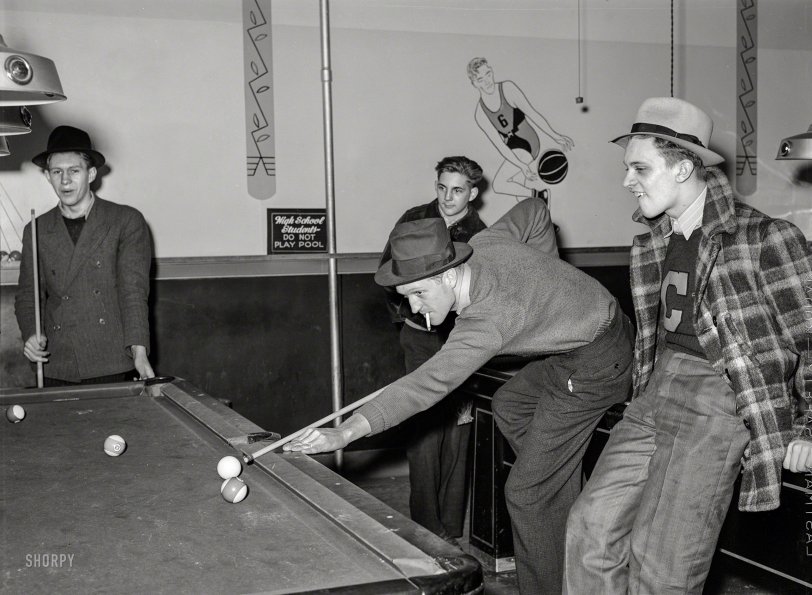
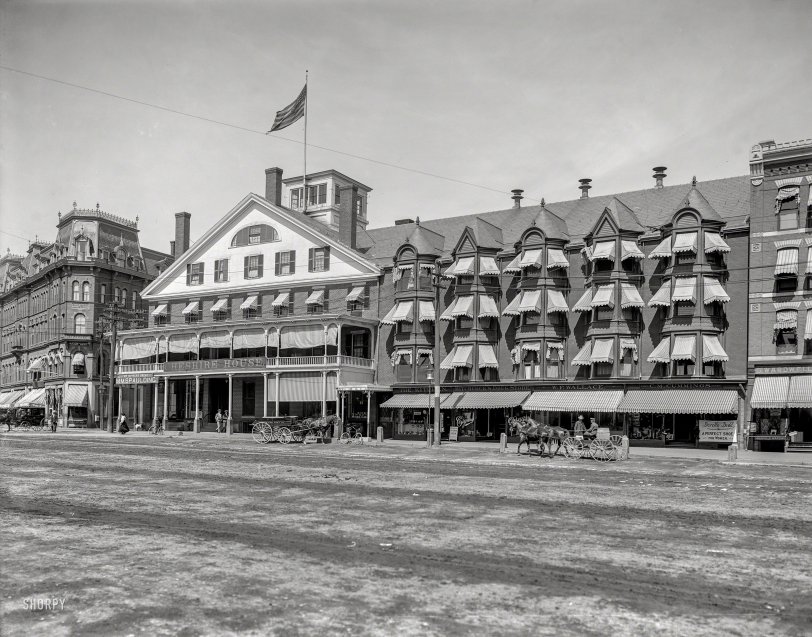
Shorpy











How can Trump trigger a run on the Canadian banking system that would utterly devastate their entire financial landscape indefinitely and irreversibly?
He can’t.
Canada only has 36 domestic banks. Most U.S. states have more than 36 state chartered banks banks. Of those 36 Canadian banks, five of them control almost all the deposits and assets.
During the Great Depression, there were no Canadian bank failures. In the United States, over 9,000 banks failed.
During the 2008–2012 fallout of the financial crisis, there were no Canadian bank failures. In the United States, 465 banks failed.
The last failure of a Canadian domestic bank was in 1983 (and, to be fair, there were two). There hasn’t been a financial failure of any deposit institution in Canada in over 30 years. In 2024 alone, two U.S. banks failed.
The last time depositors lost money in a bank failure in Canada was 1919. Parliament was appalled and passed stricter bank regulation and bank insurance as a result.
If a bank were under stress, it would most likely merge with another bank, which is what happened a lot during the Great Depression.
The United States is far more likely to suffer massive banking collapses than Canada is, and that nearly happened in 2008 after the failure of one non-deposit institution, Lehman Brothers. The United States banking system has always been prone to catastrophic failure.
And given that the U.S. has $35 trillion U.S. in Treasury debt, any downtick in that could take the financial system down in one fells swoop. The total equivalent Canadian debt is less than $1 billion Canadian (about $650 million U.S.)
UPS Destroying Packages Headed For U.S. Delivery
Cajun Chicken Stroganoff
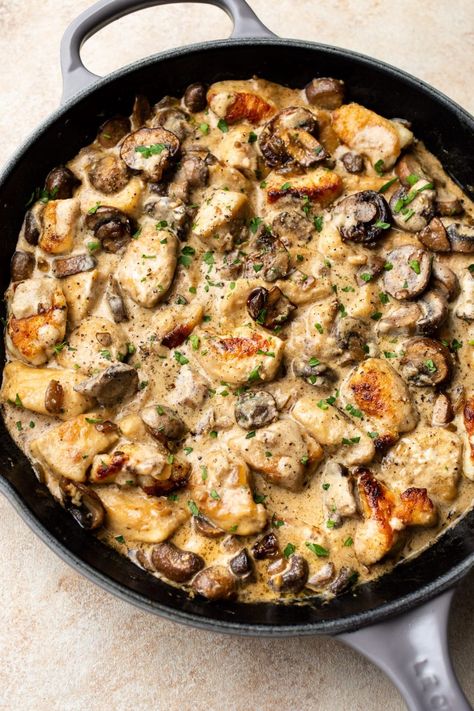
Yield: 6 cups stroganoff and noodles
Ingredients
- 1/2 pound dry wide egg noodles
- 1/2 pound kielbasa, sliced
- 1/2 pound button mushrooms, quartered
- 4 tablespoons extra virgin olive oil, divided
- 1 1/2 pounds chicken tenders or strips of breast meat
- 1/2 teaspoon each cayenne pepper, paprika, black pepper, kosher salt, dried basil leaves, dried thyme leaves and dried oregano leaves
- 2 tablespoons all-purpose flour
- 1 tablespoon tomato paste
- 2 teaspoons minced garlic
- 1/2 cup dry sherry
- 3/4 cup low sodium chicken broth
- 1 tablespoon Worcestershire sauce
- 1/2 cup sour cream
- Sliced scallions
Instructions
- Bring a large pot of salted water to boil for the noodles. Cook noodles as package directs. Drain and set aside.
- Sauté kielbasa and mushrooms in 2 tablespoons oil in large sauté pan over medium high heat until browned, 5 minutes. Transfer to a bowl; set aside.
- Mix chicken with seasonings, tossing to coat, then dust with flour.
- Sauté chicken same sauté pan in 2 tablespoons oil over medium high heat until nearly cooked through, about 5 minutes.
- Push chicken to one side of pan. Add tomato paste and garlic; sauté for 1 minute. Deglaze pan with sherry, simmer until nearly evaporated, then add broth, Worcestershire and reserved kielbasa mushroom mixture. Bring to a simmer and reduce by half, about 5 minutes.
- Off heat, stir in sour cream.
- Serve stroganoff over prepared egg noodles and garnish with scallions.
Yield: 6 cups stroganoff and noodles
What is the pettiest thing you’ve seen a cheap person do at a restaurant?
We were at a buffet, my brothers wife put pieces of meat in a napkin and put it in her purse. It was either for her or her dog. She does both.
My wife and I talked about that afterwards. One, it’s tacky in front of company. Two, your purse smells like steak and chicken. Three, you can put it in a box and pay for it to avoid looking tacky and having your purse smell like steak and chicken.
Whatever.
Smile time!
What misfortune led to an important discovery?
William Beaumont was a 19th-century American physician who became famous for discovering how human digestion works. The discovery, however, was almost accidental: in June 1822, Beaumont treated a young shooting victim named Alexis St. Martin who had a fist-sized hole in his stomach.
Thanks to Beaumont’s surgical expertise, Alexis managed to survive even though the gunshots had left a considerable wound in his stomach that did not heal completely, becoming a fistula.
Alexis’s singular situation allowed, simply by removing the protective bandages, to investigate the digestive processes in detail as had never been possible before. Beaumont then offered the boy to become his laboratory assistant, or more correctly his guinea pig, subjecting him to a series of experiments sufficiently reproducible.
At the time, there was debate as to whether the stomach digested food mechanically or chemically, and Beaumont was able to solve that mystery by using a spoon to insert food into Saint Martin’s stomach only to take it out and examine it. Beaumont also made observations, such as placing meat tied with string into the hole and then pulling it out.
Beaumont performed over 200 experiments on Saint Martin’s body.
Thanks to these studies, Beaumont was able to determine that food was digested by chemical action, for this reason he is known as the “father of gastric physiology”.
Thanks to Alexis Beaumont he quantified in detail the different speed of digestion of foods, and was the first to conduct “in vitro” digestion experiments by taking gastric juices from the stomach and studying their functioning at different temperatures.
Because of his intermittent relationship with Alexis, due to the latter’s impetuous temperament, Beaumont took many years to complete his research. St. Martin left him in 1825, returning only four years later; however, he left again in 1831. The resulting book, Experiments and Observations on the Gastric Juice and the Physiology of Digestion , was published in 1833.
Thank you for your attention.
Joe Rogan on the Moon Landing Conspiracy
Eternity and an Empty Box
Submitted into Contest #288 in response to: Set your story during — or just before — a storm.… view prompt
H.D. Mauser
How do ordinary Taiwanese people feel about their relationship with China and the US?
There are 2 groups. One is pro-China. One is pro-USA.
Pro-USA means Taiwan independence. Like pro-USA Ukrainians, they worship USA as god & dream that USA will protect them in case of war.
As of 2025, we witness Ukraine, as a US puppet, ends in a complete ruin & will be neo-colonised by USA perhaps forever.
Somehow, pro-USA Taiwanese do not wake up. They “do not see” Ukraine.
Pro-China group wants to reunify with China. At least for the sake of ancestral identity, culture & history.
The ruling party DPP promotes independence. Hence, there is always a pro-USA group. Luckily they are they are minority, less than 50%.
I thought Trump’s decision to send Tomahawks to Ukraine was psycho, but his new attempt to chokehold China with Tariffs takes the cake
Didn’t he learn anything earlier this year? When tariffs and sanctions were first imposed on China, the dragon clapped back with counter sanctions and tariffs; and theirs ended up hurting the US far more than ours hurted them. The only difference this time is the US has accrued more than a trillion dollars’ worth of debt and BRICS has dedollarized and dumped bonds/US contracts far faster.Couple this with the silver brouhaha, and this second round of the Tariff war WILL ensure the full collapse of western economies this year.
Is this why they are attempting to trigger war with Venezuela, or starting a new war between Afganistan and Pakistan? Is this why they’re trying to frame Russia with attacking NATO via fake drone attacks? (Russia did not do any of these, they’re NATO/Ukraine’s doing).
The Old Empire/western sickos are not letting up. They’re ready to go all-in to maintain hegemony, even if it means collapsing their civilization and betraying their own population.