


When I worked as a stock clerk at Shop n’ Save in the early 1970’s, I had a first-hand exposure to a series of food adjustments to the American people.
Now, no one writes about this.
But you see, the United States is a nation that is founded on hyper-capitalism. It is a nation with a million tiny hands in your wallet. Were everyone is taking money, resources, and benefits from you.
It wasn’t always that way. Oh there were bouts… The “Robber Barons” with the creation of the national railroads, and the stock gurus in the roaring 20’s. But things didn’t start getting out of hand until the “peace lovin'” hippies of the 1960’s era started falling in love with money.
And they went all in.
This was at all levels. From requiring licenses to cut hair, and mandatory building codes, to what I am going to relate to here… the control of the food source.
The most noticeable was coffee.
Oh, for sure, I could talk about tobacco and cigarettes, but many people have forgotten that coffee used to the be the cheapest thing that anyone could buy. A cup of coffee was NEVER over ten cents.
But there I watched it.
Every week was a higher and higher price on coffee. And it was my job to erase the old price and put the new price on it.


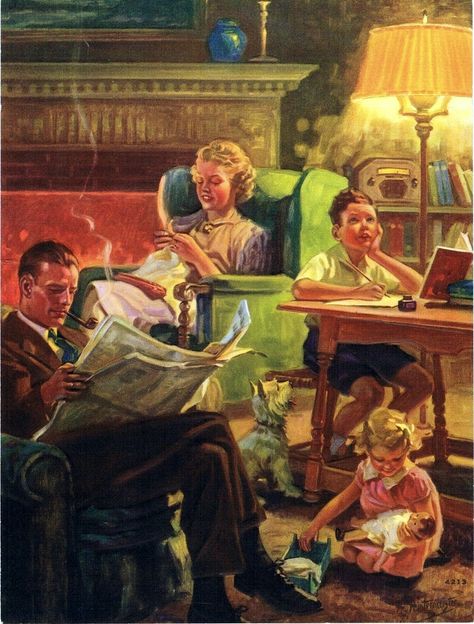


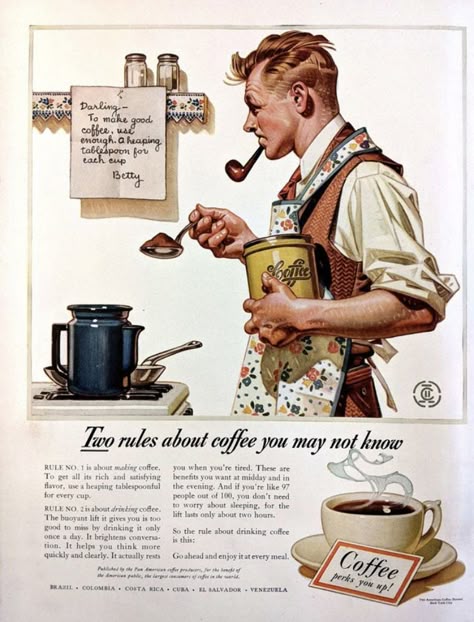
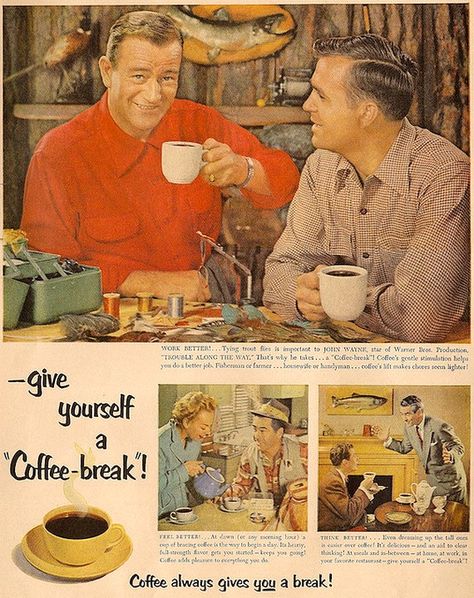








Well, that and the artificial prices on canning jars…
So yeah. People are now paying outrageous prices for coffee. Silly fools.
I love coffee.
But I really do not like the corporate driver towards a for-profit capitalist model based around it.
*sigh*
Today…
I’ve heard horror stories about the Canadian healthcare system. As an American, I’d like to clear this up, are you helped immediately if you have a stroke, heart attack, or any form of cancer, even at a public hospital?
I can confirm that when I had to use the Canadian Healthcare system in an emergency, the care that I received was excellent. In fairness it was 19 yeara ago and I suffered a spontaneous pneumothorax.
I was seen very quickly (it was early morning, approx 6am) and received surgery and good follow-up care.
The nurses stood out in my memory as they were from near where I was living in London and brought me papers and proper tea and were lovely.
The Dr who performed my surgery was brilliant and the follow-ups I had were professional.
What don’t people tell you about international travel?
That it gets boring really fast.
I’ll talk about backpacking in particular.
This type of travel is about living out of a backpack on the supposed cheap, packing your belongings into a single rucksack and carrying them all around. Backpackers travel anywhere, although Africa tends to be extremely expensive for international tourism and North America is also generally expensive.
Now the idea of living out of a bag, forgetting your worries, drifting from place to place and seeing the world sounds really cool, right? In many ways it is very exciting, but it comes with its own problems and extraordinary boredoms.
First of all, living in a hostel tends to suck over a long time.
You lack any personal privacy and this starts to get annoying. It’s also infuriating to be constantly woken up during the night by other travellers slamming doors, switching on lights, staggering in completely drunk, snoring like an active volcano or wheeling in their heavy luggage before proceeding to unpack it very carefully and noisily. In many hostels, it’s very difficult to actually get a decent night’s sleep.
This lack of sleep begins to build up.
Backpackers are often always worrying about funds as well. Doing nothing but travelling begins to cost money. Depending on where you go, it can cost serious amounts of money. Some hostel beds can go for over $50 a night. If you plan on travelling long term, that is not viable. Incidentally, some hostels can charge $2 or $3 a night. I experienced such hostels in places like southern Mexico and they were actually decent.
But spending your time pinching pennies and counting your bank balance is far from fun.
Then there is the biggest problem of all which is boredom. I once backpacked for nine months doing all sorts of things. I saved up funds for the trip, stayed in wildernesses and travelled over an immensely large portion of the earth. I saw volcanoes, lonely forests, staggeringly empty expanses of desert wilderness and trekked up jungle mountains alone, but it all got boring fairly quickly.
The routine became the same:
- Wake up in hostel.
- Eat as much of the rubbish breakfast as possible.
- Engage in small talk with other travellers.
- Realise that mostly everyone who travels long term is depressed.
- Look for the cheapest lunch or avoid it after eating such a big breakfast.
- Drift around the town or countryside.
- Eat dinner.
- Engage in small talk again with depressed travellers.
- Scan phone in bed.
- Get woken up throughout the night.
This routine on repeat for months and months and months. I imagine it would have been more exciting before the advent of smartphones and the internet as travellers were forced to talk to each other. International communication was a pain and getting to interesting places was a challenge. Such challenges make things more exciting. Now there is no real sense of having left home when you have the internet. Nor do many places care for the lonely traveller. You’re just another tourist they’re trying to get into their restaurant.
You might like imagining you’re an adventurer from hundreds of years ago, but you are officially a tourist. That’s a kick to your ego, no matter how much you try to say you’re not a tourist. But deep down you sort of realise you’re engaging in extended tourism, travelling around feeling as if life is drifting by whilst you’re stuck on repeat.
I met individuals who had absolutely no spirit remaining within them. They were spiritually dead. Rootless travel destroyed them. People who travelled for years on end doing all sorts of odd jobs. It’s actually absurdly easy to travel on a shoestring in certain areas of the world once you realise how to do it. You can do incredible things that non travellers only dream about. These include climbing mountains, hitchhiking, seeing the greatest wonders of the world and going on the most insane adventures.
I did all of these things.
But when this becomes your routine, it becomes so dreadfully boring. I remember seeing the most beautiful volcano in my life and just shrugging my shoulders.
You suddenly realise that you’re on your own as all the many travellers you’ve met vanish each and every day. In the end, no matter how far you wander, you’re missing the greatest and most satisfying force in life which is long term human companionship and, ultimately, love. Independent backpackers often confuse the thrills of physical travel for the much greater thrill of emotional and spiritual journeys.
Backpacking can be exhilarating for the first time. When I first did it, it was the most incredible thrill I experienced in my life up until that point. It was liberating and exciting. But once you’ve done it a few times, it gets mundane. You realise the world is no longer unexplored and that it’s filled with all the same supermarkets, cars, jobs, routines and soul searching.
Men Are Done…
Have you ever been fired by someone and, later, had the opportunity to fire that same person?
Not exactly but I once worked for a Regional Director that was a total asshole. He was abusive and just an overall really nasty person.
I had made a major systems sale to a large customer and then I decided that they would need someone very knowledgeable to manage it – so I approached them with the idea that I would join them to do it. They accepted so I handed in my required two weeks resignation.
As expected, my former boss called up this major new client to tell them I was leaving, whereupon they told him, that I was joining them…
To say that he was FURIOUS was an understatement. He called me, abused me from breakfast time to dinner and said that I was sacked on the spot and he wasn’t paying me my two weeks notice period and to leave immediately…
I was pretty happy with that and I did – I could have sued for my two weeks pay – but it wasn’t worth it – I just got on with my life… much happier.
Three months later I released a huge CCTV tender for my new company and guess who called me up?
Old Boss: “Hey my old mate – how can I get a copy of the tender documents that I hear you are running?”
Me: “You can’t – I am running a restricted tender process and you are excluded.”
Old Boss: “What? How come?”
Me: “Tony – three words – two weeks pay!”
Old Boss: “What? Oh That? OK give me your bank details, I’ll pay you right away…”
Me: (as I am hanging up the phone) “Sorry Tony – we are done here…”
And THAT is how they missed out on another million dollar sale…
Always be careful of the toes you step on today – they might be holding up the ass you have to kiss tomorrow!
Texas Tavern Burgers

Yield: 10 servings.
Ingredients
- 1 1/2 cups chopped onion, divided
- 3 tablespoons butter
- 1 can tomato soup
- 1/2 cup water
- 1/4 cup vinegar
- 2 tablespoons prepared mustard
- 2 tablespoons Worcestershire sauce
- 2 tablespoons brown sugar
- 2 pounds ground beef
- Salt and pepper, to taste
Instructions
- Combine and cook 1 cup onion and butter until onions are clear and tender.
- Remove from heat and add remaining ingredients except beef, salt and pepper.
- Simmer for 10 minutes.
- Cook ground beef and remaining onion until brown. Add to mixture.
- Salt and pepper to season.
- Spread on toasted buns.
Can a doctor simply look at a patient and tell them what’s wrong with them?
This reminds me of one incident that happened with a relative of ours. A kid was born to this family and after a few months, he stopped eating. The kid had an uncle who used to visit them quite often and the kid would only go to him. The uncle would pamper the kid, walk with him around the house and the kid would stop throwing tantrums. He wouldn’t eat any food and was always looking out for his uncle.
After 3-4 days of seeing the child’s tantrums getting out of control and the irregular eating habits, they decided to consult a doctor. They narrated the incident to the doctor and casually mentioned that the kid can only be managed by his uncle who apparently had some magic powers to console him but the moment the uncle is gone, the tantrums would start. This was said just like that, without a thought.
The doctor smelled the mouth of the kid and asked for the uncle. He was waiting outside where the other patients were waiting. The doctor went out of his chamber and slapped the uncle in front of everyone! It was only then that the doctor described what was happening. Apparently, the uncle was giving drugs to the small child and the child had grown addicted to it and his addiction was growing to such an extent that he didn’t want to eat anything else and when he didn’t get the drugs, he would throw tantrums.
The only reason he liked going to his uncle was because of the smell that he got while being close to him. The child was given medicine and he was cured. He is now in high school, living a normal life. Everybody broke contact with that uncle fellow. We have no whereabouts of him.
Shorpy









Did Adolf Hitler have any positive qualities as a person?
Yes.
When people met him personally, they testified that he was very kind and charming. He smiled and looked into your eyes. He did not seem like a monster hungry for war.
He was very kind to children and appeared as a charismatic leader who loved children.
He loved animals, especially his dog, Blondi.
In essence, he appeared to the public as a good man. A leader who helped the country out of a humiliating shame and who treated others with respect, making them feel welcome.
Let us not forget that he was also the man who plunged the world into war, ordered his forces to kill millions, and attempted to wipe a race from existence.
He seemed like a good person, but he wasn’t. Far from it. That’s what we need to remember. Even the cruelest people hide in plain sight. You never know what they’re capable of.
GRAY SAM
by Colum Knight
The most violent and subtle forces of nature are perceived by instinct. An inspired pertinence, wreathed in haste and some unwitting foreknowledge, account for the survival of birds, the skittish rodents of the city streets, the playful animals of the country field. They had all gone before Samuel woke that day. The city was empty except for its humans. A storm was coming, and Samuel had not yet sensed it. Still, guided by some vague and strident thing within him, he ventured out toward an open space, driven and perturbed toward some magnetic direction and purpose. He felt it in his neck at two points; one point above the collar bone on his right – a soft, deep well under the skin – the other just under his jaw where the habits of his heart could be seen in paired rhythms. It was suffocating. He unlaced his scarf with a pull from the left and stretched his face toward a cloud-capped sky. The light grey sidewalks underfoot darkened one Dalmatian spot at a time. The brown leather under black leather of his shoes scuffed up a dry – then wetted – percussion of movement. He was walking now, now jogging an unerring pace. It was getting late. He was late. The buses might run away. We have to catch them, he thought to himself. Samuel ran.
Samuel hurt a child once. He stepped on her shins as she was playing on the lawn of a city park. Then he kicked her while catching his balance and stepped again on her legs and hurt her badly. It unsettled him when she cried. Her father beat him. He could never remember exactly what he had said or what words were spoken. He remembered only that the child never looked at him. The shock of the pain must have distracted her from its source. Samuel thought of that day often when he ran, dizzy and hot and hurt as he felt now, running to catch his bus.
Samuel touched the polished metal handrail aboard the bus. It felt cold under wet palms. He slid a finger down until he felt a warm spot and left his grip there. With his offhand, he wrung the trapped rainwater from his loose skin off his face and felt the emerging stubble. It’s late, he thought. Later than I thought, he thought. His face sagged. The bus hissed and lurched. Samuel’s eye color was somewhere between grey and blue depending on the day; some days they might appear hazel. His hair was somewhere between darker or lighter grays; some days nearly white. Everyone seemed young to him. Everyone a stranger. All fading.
His last romance had nearly worked. She played piano. She played violin. She taught privately. She loved him – him and games and the outdoors. They camped wild and hiked off-trail as often as they could both escape. He had a knack for the wilderness. He enjoyed the sounds of solitude in the company of nature. As for music, he had no talent at all. Instrumentations confused him and he simply had no voice for the rest of it. The games, though. He liked the games. She was better at pub quizzes, he – at puzzles, history, and the sort of obscure or tedious details others make a habit of ignoring. He took trivial things in with great seriousness and a particular lack of discretion. When she left, she called him wide-eyed and dumb.
The heavy, steadying rain lulled the bus to a few quiet whispers here and there. Each of them swayed under the weight of their own bodies as the vehicle made its turns, casting waves and ripples onto flowing sidewalks. This wasn’t such a bad place sometimes, he thought. He noticed the tint of the bus windows. Either that or the world outside was getting darker fast.
He had left home that morning unsure and ill at ease. It was one of those days that were becoming more frequent when the world seemed at odds with itself – or just with him in it. The normal cacophony of useful things that populated his home and everyday life – the things that made it sing – now felt more and more unfamiliar and became more and more unused until his apartment became a place of still and prolonged silences. Even his clothes became an irritant felt daily – ill-fitting and caustic gestures of symmetry, he thought.
The bus squealed, then stopped. He could smell the heat here. There was no getting away from that. His face soured at the thought as he slid his glasses away, slick from sweat, dried them, and dropped them into a coat pocket. The still-black hairs on his curved sternum were bursting for freedom under his shirt. Every pore of his being needed air. He never could acclimate to this weather. As the bus moved, there grew a singular idea in Samuel’s head. Slow at first but escalating – doubling in size each moment. And along with it, a frenetic energy bound up, unwilling to release itself. Samuel lost his grip wiping his eyes and stammered toward an air vent.
Excuse me, I’m sorry, I’m fine, he thought. A thunderclap caught him unaware and unsupported between railings. Light shattered across every city window on the street and blinded the bus patrons in stages as a pulse of three. Lightning followed thunder and, in turn, was followed by a deafening absence of sound. Samuel collapsed. He cried. He slept. He woke. He was dizzy. Lost. Samuel clenched the collars behind his neck and moaned. Face down on flocked flooring, he pulled and wrenched and broke things.
As Samuel came to, a confusion of voices forced his large, grey-faded eyes up. More people were standing near him now than he remembered there being. Some were shouting threats. He could see others were frightened, holding themselves or the person nearest them closer. It’s later than I thought, he thought. Others had cupped both hands to their faces to hide their eyes from him. He remembered the girl in the park. He remembered the child’s father. Samuel pulled away, shoulders bent, head down. He forced open bus doors and ran free leaving a chorus of shrieks and cursing behind him.
Barely conscious of what he was doing he tore at himself until every stitch of clothing had gone. Air. Open space, he thought. He lifted both arms mid-sprint and threw his head back. The hot slime of his sweat commingled with rainwater and fell off. This pleased Samuel. All the new sensations he could now feel while running hot, sweat-covered and naked elated and delighted him. Air. He could feel the air.
It was darker and raining harder as Samuel’s faded silhouette sped into the tree line of the city park. His skin swelled, sagging off bone in clumps and ribbons.
As he neared a clearing, all the sounds of the world became dull and dampened. A vibration of hummings and a rhythm of waking dreams brought Samuel to a more calming pace and were joined only by the sounds stirring within Samuel’s chest cavity; here, a vertical line of combed bristles protruded through the sternum and shuddered quickly against one another in frantic, sonic agreements with the coming storm.
This was all the world left to him now: Grass blades whispering along arches of bare feet. Breath. Weaving wind between splayed fingers. Breath. Salt-stung eyes. Tears. Another breath in the chest. Another stride. He peered, grey-eyed and wide-eyed into the day’s night sky awaiting his halo of lights and the smell of a colder, more familiar climate.
At last, a cool breeze touched him, his face awash in light.
Home, he thought.
Then Samuel was gone and the city was empty except for its humans.
What is the most out-of-touch thing your boss has ever done?
One of my Assistant Principals (AP) at a fairly large public high school in Brooklyn was a shmuck. He was a big, weighty guy with cold eyes, and he thought he knew it all.
One time I was in our departmental office talking to some colleagues and I began to get teary eyed because I was discussing the death of someone I’d known when I was a high school student. This person was actually well known (a Grammy Award winning musician). This AP made some obnoxious remarks and I shouted back at him that he hadn’t gone to school with the dead man, what would he know, you shouldn’t be so scathing.
Everyone looked at me, a bit in shock The lame apology from the AP was barely worth it. He knew I held it against him….and a lot more.
Woman LOSES HER MARBLES After She Realizes She’s Grown Too Old To Secure Chad
What are some interesting facts about the cast of “Seinfeld”?
Julia Louis-Dreyfus is filthy rich.
Julia Scarlett Elizabeth Louis-Dreyfus is the daughter of the late French-American businessman Gerard C. Louis-Dreyfus, founder of the Louis Dreyfus Energy Service.
That means Ms. Louis-Dreyfuss is also the great-granddaughter of Frenchman Leopold Louis-Dreyfus, the founder of the Louis Dreyfus group of international financiers, also known as The Dreyfus Group.
Partly as a result of her illustrious family ties, Julia Louis-Dreyfus’ personal wealth is estimated by Forbes Magazine to be in the neighborhood of some $250 million.
Eventually Julia Louis-Dreyfus will be worth a lot more. At the time of his death in September of 2016, Ms. Louis-Dreyfus’ father’s personal fortune, also according to the Forbes Magazine, was estimated at some $3.4 billion.
The point? Julia Louis-Dreyfus never needed to work a day in her live. But she has instead labored mightily become a veritable comedy superstar, the modern incarnation of such comic legends as Lucille Ball, Carol Burnett, and Mary Tyler Moore.
To date, the versatle Ms. Louis-Dreyfus is the veteran of no less than three long-running hit television series—Saturday Night Live, Seinfeld, and Veep—and the recipient of eleven Emmy Awards and nine Screen Actors Guild Awards, more than any other performer in entertainment history.
That’s not too bad for a spoiled little rich girl.
Sir Whiskerton and the Case of Taxman Ted’s Tallying Troubles: A Tale of Chaos, Calculators, and Feline Wisdom
Ah, dear reader, prepare yourself for a tale of numbers, nonsense, and one very uptight taxman who learned that life is not always as neat as a spreadsheet. Today’s story is one of order, chaos, and a cat who proved that sometimes, the best way to solve a problem is to embrace the mess. So, grab your calculators (or abacuses, if you prefer) and a sense of humor, as we dive into Sir Whiskerton and the Case of Taxman Ted’s Tallying Troubles: A Tale of Chaos, Calculators, and Feline Wisdom.
The Arrival of Taxman Ted
It all began on a crisp autumn morning when a peculiar human arrived at Sir Whiskerton’s farm. Ted, a taxman with an obsessive-compulsive need for order, stepped out of his perfectly polished car, clutching a clipboard and a calculator. His suit was immaculate, his tie was perfectly knotted, and his shoes shone so brightly they could blind a crow.
“Good morning,” Ted said in a clipped, precise tone. “I am here to audit the farm’s finances. Please direct me to your records.”
The farmer, who was busy talking to a scarecrow about the merits of square hay bales, blinked in confusion. “Records? Oh, uh… I think they’re in the barn. Or maybe the shed. Or possibly under the porch.”
Ted’s eye twitched. “Under the porch? This is highly irregular.”
Sir Whiskerton, who had been observing the scene from his favorite sunbeam, flicked his tail. “This should be interesting,” he murmured to Ditto, his ever-eager apprentice. “A human who thinks he can bring order to this farm is in for a rude awakening.”
The Chaos Begins
Ted set up his “office” in the barn, which consisted of a folding table, a stack of color-coded folders, and a coffee mug that read “World’s Most Organized Human.” He immediately began demanding receipts, invoices, and ledgers from the farmer, who responded by handing him a shoebox full of crumpled papers, sticky notes, and a single dried-up corn cob.
“What is this?” Ted asked, holding up the corn cob as if it were a dead mouse.
“Oh, that’s from last year’s harvest,” the farmer said cheerfully. “I think I wrote something important on it. Or maybe it was just a grocery list. Hard to say.”
Ted’s eye twitched again. “This is unacceptable. I need proper records. Organized records. Neat records.”
Sir Whiskerton sauntered over, his tail swishing lazily. “Good luck with that. This farm runs on chaos, not spreadsheets.”
Ted glared at the cat. “And who are you?”
“Sir Whiskerton, farm detective and occasional philosopher. And this is Ditto, my apprentice. We’re here to help.”
“Help?” Ted said, his voice rising an octave. “The only thing that will help is a complete overhaul of this… this disaster of a filing system!”
The Tallying Troubles
Ted’s attempts to organize the farm’s finances quickly spiraled into chaos. He tried to create a color-coded filing system, but Doris the Hen mistook the folders for nesting material and carried them off to her coop. He tried to input data into his calculator, but Rufus the Dog thought it was a toy and ran off with it. He tried to interview the animals about their “expenses,” but Porkchop the Pig kept interrupting to ask if snacks counted as a business expense.
“This is impossible!” Ted shouted, throwing his hands in the air. “How does anything get done around here?”
Sir Whiskerton, who had been watching the chaos with mild amusement, decided it was time to intervene. “Ted, my dear human, you’re approaching this all wrong. This farm doesn’t run on numbers and spreadsheets. It runs on trust, intuition, and the occasional well-timed nap.”
Ted stared at him. “A nap? How is that supposed to help?”
“It helps more than you’d think,” Sir Whiskerton said, flicking his tail. “But if you’re determined to bring order to this farm, perhaps you should start by understanding its rhythm. Observe.”
The Breakdown
Ted, reluctantly, agreed to observe. He followed Sir Whiskerton and Ditto as they went about their daily routines. He watched as Doris organized the hens with a series of dramatic clucks, as Rufus herded the sheep with a combination of barks and tail wags, and as Porkchop “supervised” the feeding process by eating most of the feed.
At first, Ted was horrified. “This is madness! There’s no structure, no system, no… no order!”
But as the day went on, something strange happened. Ted began to notice the little things—the way the animals worked together without needing instructions, the way the farmer’s haphazard methods somehow got the job done, and the way Sir Whiskerton’s calm presence kept everything from falling apart.
“I don’t understand,” Ted said, sitting down on a hay bale. “How does it all work?”
Sir Whiskerton jumped up beside him. “It works because it’s alive, Ted. Life isn’t neat. It’s messy, unpredictable, and sometimes a little chaotic. But that’s what makes it beautiful.”
Ted looked at the cat, then at the farm around him. For the first time, he noticed the golden light of the setting sun, the laughter of the animals, and the gentle hum of the wind through the trees. He took a deep breath and let it out slowly.
“Maybe… maybe you’re right,” he said. “Maybe I’ve been too focused on numbers and not enough on the bigger picture.”
The Moral of the Story
As the sun set over the farm, Ted packed up his folders and calculators. He didn’t have a neat, organized report to take back to his office, but he had something even better—a new perspective.
“Thank you,” he said to Sir Whiskerton. “I came here to bring order to your farm, but instead, your farm brought a little chaos to me. And I think I needed that.”
Sir Whiskerton nodded. “Sometimes, the best way to find balance is to let go of control. Life isn’t about perfection—it’s about embracing the mess and finding joy in the unexpected.”
Ditto, who had been listening intently, piped up. “So, it’s okay to be a little messy?”
“Of course,” Sir Whiskerton said. “As long as you’re true to yourself, a little chaos can be a good thing.”
A Happy Ending
With a newfound appreciation for imperfection, Ted left the farm, promising to return for a visit (and maybe a nap in the sun). The animals returned to their routines, and Sir Whiskerton and Ditto settled back onto their hay bale, content in the knowledge that they had once again saved the day.
And so, dear reader, we leave our heroes with the promise of new adventures, new lessons, and new opportunities to embrace the beautiful chaos of life. Until next time, may your days be filled with laughter, love, and just a little bit of mess.
The End.
What do doctors think when patients come in with a self-diagnosis?
When I was young, underemployed and uninsured, I suffered a familiar burning during urination. Taking my temperature revealed a 99° fever. I peed into a clear juice glass and held my sample up to the light. Floaters. Yep.
The free clinic was always a pain in the ass: a limited number of appointments was available on a first-come-first-serve basis: if you were lucky enough to get past the busy signal before the day’s allotment was fully booked, you took what you were offered. 3pm? I’m there!
After waiting forever and a day, I was finally admitted to an exam room. The doctor working for free as a clinic volunteer cheerfully asked what brings me in today?
”I have a bladder infection and I need a ten-day course of generic penicillin.”
The doctor frowned. “What makes you say that, Ms Susan?”
”I have a low-grade fever, mild cramping and burning on urination, and there’s pus in my urine.”
The doctor seemed annoyed. “Do you mind if I get a lab test?” He held out a sample collection cup and I returned to the waiting room.
Thirty minutes later, I was admitted to the doctor’s office, where he was already sitting at his desk with his prescription pad. He glanced up at me, then
“Penicillin, wasn’t it, Dr. Susan?”
We’ll Take ODESSA, Deal With IT: Putin Urged The U.S. To Accept Russia’s Terms As Soon As Possible
What made you forbid someone from ever entering your home again?
My sister stole my daughter’s teddy bear collection. For 20 years I gave my daughter a teddy bear for her birthday and Christmas, and a few other holidays and events in between. When my daughter turned 16, she asked that I not buy quite so many so I cut back to just her birthday and only smaller ones like TY bears. You can imagine the collection she had by the time she was 20. She kept her most special ones in Rubbermaid bins in our shed so they wouldn’t get dirty or ruined by friends accidentally.
Then one year my sister asked our father, who lived with my daughter and me, if she could stay with us while she looked for a job. I reluctantly said yes after Dad said it would be for a short time. Well, after a month she did find a job at a nursing home.
About a month later my daughter came to me and said she had just gone into the LOCKED shed to add another bear to her collection and found that all the bins were gone.
Turns out there was an auction at the nursing home and all employees were told that they could donate items to be auctioned if they wanted to. My sister stole 20 years of teddy bears from my daughter to try and make a good impression at her new job.
In that collection was Rainbow, the first bear I bought my daughter. That bear was in pristine condition because I put it under glass and it stayed there until my daughter was old enough to decide what she wanted to do with it. She wrapped Rainbow in tissue paper with a packet of silica and tied her in a plastic bag and put her in one of the bins.
I told my sister she had one hour to get out, and she was never to come to my house again.
Moon Shattered
Submitted into Contest #288 in response to: Set your story in a place where the weather never changes.… view prompt
Daniel Rogers
“Not much of a talker?” The Russian took a drink.
“You’re doing enough for both of us.”
The Russian laughed, “Good one.”
A couple of LTF officers walked in. The Russian stared at them and laughed, “What jokes. The entire Lunar Task Force is nothing but a bunch of clowns. I killed two in New London last week.”
I know he’s lying. I would have heard about it, although I don’t doubt he has killed a few.
“You’re boring company. You know that?” He finished off his vodka just as the officers came to our table.
“Everything alright here?”
“You know it,” the Russian moved slowly with his hands in plain sight.
“Good. Make sure it stays that way.” They moved to the bar.
“Just because we’re prospectors,” the Russian shook his head. “Anyway, I don’t like killing a man without knowing his name.”
“Tango.”
“That’s not your real name.”
We locked eyes, measuring each other, killer to killer.
“I guess Tango will have to do. See you in the crater.”
I watched until he left the bar and called my company contact, Jeeves.
“The Russian just paid me a visit.”
“How unfortunate,” the British male voice sounded bored. “I’ll add a high-powered sniper rifle to your gear.”
“And a bullet-proof suit.”
“Those are hard to come by in a wasteland city, but I’ll see what I can do.”
“He took out Spec last month. Make it happen, or MoonCorp might never know if there are diamonds in that crater.”
“Spec? I didn’t know he was dead. That’s very unfortunate. Will you be able to deal with the Russian? Or should we hire another?”
“I’ll handle him. Just get me the suit.”
I took the monorail to the hotel district, watching my back. I wouldn’t put it past the Russian to make an attempt before we get anywhere near the crater. My gaze went to the projected blue sky and white puffy clouds of the city’s dome, reminding me of Earth. I’ve been here too long. I’m tired of fake sky. I know what’s on the other side-a wasteland of darkness and rocks, craters and chasms, hopelessness and death.
A drone flying outside my window shook me out of my ruminations. My instincts warned me to beware. Drones are as common in a lunar city as birds on Earth. However, a drone matching the speed and direction of a monorail doesn’t happen often, if at all.
Suddenly, two miniguns materialized from the drone. I ducked just as it opened fire. Shattered glass fell on me. Passengers screamed. I pulled my pistol, rolled the quad barrel to scattershot, and destroyed the drone. I scanned for more drones before holstering my gun.
After a grueling round of questions from the LTF, I finally made it to my hotel. The rifle and suit lay on my bed. These should give me an advantage in the crater, assuming I make it out of the city.
I grabbed the rifle to feel its weight and peered through the scope. To my horror, I spotted a gun pointed at me from the opposite building. I pulled the trigger. Nothing happened. I hadn’t loaded it. Just then, my window shattered, and a bullet grazed my cheek.
I fell to my knees and crawled to the corner, out of sight of the gunman. How is he always one step ahead of me? It’s like he knows where I’ll be before I do. Then it hit me-my phone. Jeeves gave it to me when I arrived. I almost threw it out the window, but then I had an idea.
I crawled to the edge of my bed, still out of sight of the window, loaded my rifle, and grabbed a drone from my gear bag under the bed. I secured my phone to the drone and entered Jeeves’ hotel coordinates.
If the gunman could track my phone, then he’d think I retreated to my safe house. I carefully used a mirror to see if he had gone. He had. I quickly dressed my wound to avoid questions, threw on my long jacket, and concealed my rifle.
I found a low-rise building whose roof would be perfect for my plan. I positioned myself and waited. An hour passed before the Russian took his shot. Jeeves’ window shattered exactly where the drone landed with my phone.
I saw the gun flash on the fifth floor of a building slightly to my right. I aimed for his head and fired. He instantly fell.
I walked to Jeeves’ place and looked through the shattered window. He lay in a pool of blood. The Russian hit him between the eyes—an instant kill. Jeeves betrayed me. It’s poetic justice that his asset killed him. The company who hired them must know there are diamonds in that crater. Or else, they would have never attempted to take me out in the city.
I hurried to the Russian before the LTF arrived. He lay where I shot him. For the first time in my career, the sight of death made me sick. He was just like me–a prospector. It’s just business. Nothing personal.
I saw myself lying in a pool of blood, like the Russian. I, too, will make a mistake one day and take one between the eyes. Suddenly, it began to feel very personal. I’ve had enough of this rock. The vultures can have it.
I looked back down at the Russian.
“Back at the bar, you asked for my real name. I don’t know why it’s important to you, but I owe you that much. It’s Tom. Nothing fancy. Just Tom.”
I left for the nearest shuttle port.
Has anyone been rehired after being fired from a job before? How did the experience go and what was the reason for your initial termination?
I have.
Originally I was terminated because I was accused of stealing $60 out of a coworkers purse. They told me they had the incident on camera and wanted me to pay her restitution. I asked to see the footage which I was entitled to see (I read the handbook…. They obviously hoped I didn’t) They said the sent it to corporate for further investigation……..Since i didn’t take it I refused to give them anything. They terminated me ……I was walked to the stockroom to clean out my locker and out the door.
Six weeks later I got a call from LP manager and Store Manager. It turned out another male employee in my department confessed to not only stealing from the purse but the til as well (over $300). The coworker that accused me said she “only thought it was me” and that the guy who did take it and I had “similar build and features”
They offered me my position back…Since I found a 9–5 job making decent money I agreed to come back, part-time, Tues and Thurs nights plus Saturday 9–3 in a different department away from coworker. They agreed to my terms. First night i went right to HR and gave my two weeks notice. I did the bare minimum.
My status with company was changed from “terminated with cause” to “resigned eligible for rehire”
Texas Taco Soup

Ingredients
- 2 pounds ground beef
- 1 envelope taco seasoning
- 1 envelope Hidden Valley Ranch Dip
- 1 can corn
- 1 can Ranch style beans
- 1 can stewed tomato
- 1 medium onion
- 1 can pinto beans
- 1 can Ro*Tel
Instructions
- Brown ground beef.
- Add remaining ingredients. Add water if needed.
- Simmer until thoroughly heated.
- Serve with chips and shredded cheese.
As an entrepreneur with a large amount of capital, which country would you choose to invest in: China or India? What factors would influence your decision?
India is an easier market than China is
Indian ventures can seek and gain foreign funding without any clearances , Chinese ventures need plenty of clearance and hurdles
Indian markets allow buying and selling without any limits, Chinese markets impose trading limits
China holds infinitely more value than India
Chinese companies have plenty of long term attractions like Research Potential, Cash base, Government support & Proprietary assets
Indian companies have none of these
India holds more profitability than China
Indian Companies have more relaxed regulations and don’t need to reinvest fixed portions of their profits into mandatory research or employee welfare funds like Chinese companies often are forced to do
—
So my answer is
Short term India (6 months to 2 1/2 years )
Long term China (3–10 years)
—
Pros of China:-
China has stability and a very strong emerging technology backbone protected by a layer of intellectual property rights
Most of the companies are under valued
Ideal for investing with the aim of long term potential
Chinese Startups could truly become Unicorns and deliver staggering returns
So ideal for long term perspective
Cons of China :-
China has a Government that interferes a lot in free market economics and cares more about people losing money than people minting a ton of money. This may be very good for those who live in China but for an investor, it reduces confidence
Jinpeng is not my president.
—
Pros of India:—
Easy market access. Easy platforms for investment. Investing into startups is easier without too much regulatory compliance necessary
Indian companies are profitable because they have freedom and don’t require to contribute to social development of India like Chinese companies. Its terrible news for Indians but Investors like it
Modi is not my president either
Cons of India:-
Absolutely no long term potential and a heavily manipulated ecosystem with tremendous overvaluation
Untrustworthy, Corrupt and Unstable landscape with very little effectiveness of the Legal and Financial system for compliance with laws
So terrible for long term perspective
—
One advantage of both India and China, is the remnants of socialism is still strong enough that bailouts are guaranteed in both cases ensuring a strong possibility of your investments not completely crashing out like it could in freer markets like the States or Japan (Since 2008, the States too has unwisely bailed out Wall Street time and time again)
—
Another market you might consider is Malaysia
It is a hybrid of India and China
The same corruption and untrustworthy climate of India but at less than half of India’s intensity and the same innovation as China but at half of China’s intensity
All the Pros and Cons of India and China are halved so Malaysia can be a useful hedge beween India and China