
Today, I want to tell you all the biggest change that occurred to me this year. Well, maybe not the “greatest”, but a significant change, never the less.
I’ve been using AI instead of Google…
And it is far superior to Google, the only time that I still use search engines is to locate specific webpages. Check this out….
Argentina lifts tariffs on EVs, pitting local favorites against cheap Chinese imports
As the country lifts tariffs on EVs, Argentines are likely to buy cheaper Chinese brands, potentially stifling the homegrown industry.
Coradir
By David Feliba
4 April 2025
Buenos Aires, Argentina
- Argentina slashed tariffs on low-cost electric and hybrid vehicles in January.
- Tito, the locally assembled, no-frills city car, will struggle to compete against Chinese EVs.
- BYD is expanding rapidly in Latin America, dominating EV sales in Brazil and Mexico.
In January, Argentina slashed import tariffs on electric vehicles, opening the floodgates for China’s BYDi, Tesla, and other brands in a country that had for decades been synonymous with high import tariffs. But while consumers and foreign brands are set to benefit, local manufacturers won’t.
Backed by Argentina’s libertarian president, Javier Milei, the new regulation allows up to 50,000 electric and hybrid vehicles to be imported into the country per year. The policy, aimed at lowering EV prices, will likely benefit cheaper Chinese brands that are rapidly making inroads elsewhere in the region, while hurting the country’s homegrown EV, Tito.
“The electric car industry needs an incentive, and with a completely open market like the one being proposed now, the Argentine-made car industry will disappear, leaving only imports,” Juan Manuel Baretto, chief executive of Coradir, the company that makes Tito, told Rest of World.
Until now, Argentina had largely resisted the EV wave sweeping across Latin America. While hybrid sales saw modest growth last year, fully electric vehicles are a rare sight because of hefty customs duties and regulations. Argentines, weary after a months-long recession, have also been buffeted by skyrocketing fuel prices and rising vehicle costs since Milei took office in December 2023.
The new measure will allow more affordable EVs into the country, potentially luring more customers.
“This year should finally be the one when electric vehicles take off in Argentina,” Carlos Cristófalo, a director at specialized auto outlet Motor1 Argentina, told Rest of World. “We’ve finally secured a clear regulatory framework, and most of the cars that will benefit from this quota will be imported from China.”
China’s largest automaker, BYD, is set to gain, as it is rapidly expanding across the region. Last year, BYD sold 77,000 vehicles in Brazil, of which more than half were fully electric. It began building a new factory in Brazil, the biggest market for EVs in the region. In Mexico, BYD sold roughly 40,000 units in 2024 — mostly hybrid and electric models — and plans to double that figure in 2025.
“Today, it’s almost exclusively Chinese automakers driving the electrification of [emerging] markets,” Felipe Munoz, an automotive expert at Jato Dynamics, told Rest of World. BYD also has its sights set on Argentina: In late January, it sent a delegation to the country, with stops in Buenos Aires and the lithium-rich northern region, signaling its intent to establish a strong presence.
“Now imagine what will happen once they start producing them there. It’s going to be huge,” said Munoz.
Saul Loeb/AFP/Getty Images
BYD did not respond to a request for comment from Rest of World on its Argentina strategy.
The entry of BYD and other Chinese brands could spell trouble for Argentine EV makers like Volt Motors, the country’s first EV producer; and Coradir, which makes the Tito car and Tita, a small electric van. With a maximum speed of 65 kilometers (40 miles) per hour and limited production capacity, Tito may struggle to compete with the influx of more sophisticated, competitively priced imports, Cristófalo said.
The locally assembled, no-frills city car Tito, which costs roughly $15,000, sold about 100 units last year. Together with Renault’s electric Kwid model, Coradir accounted for nearly 70% of Argentina’s EV sales in 2024, according to data from research firm Siomaa.
Coradir started as a lithium battery supplier and later ventured into vehicle manufacturing. Tito saw a boom in orders during the pandemic, with its vehicles selling out shortly after its launch in 2022. Sales dipped slightly in 2024, partly due to the still-developing EV infrastructure, and what Baretto said is a lack of government incentives. Still, Tito marked a pivotal shift in Argentina’s EV market, and has been the most widely sold EV in the country.
Milei’s new policies are expected to shift the landscape in Argentina’s EV market. The new import regulation applies to EVs that cost under $16,000 at the port of origin before additional taxes and fees apply. The brands that meet these conditions are mostly Chinese.
“With a fully open foreign trade scheme like the one Milei is proposing now, the [Argentine-made] EV market will disappear,” Baretto said.
Milei’s policy is in contrast to regulation in Latin America’s fastest growing EV market, Brazil. After initially exempting EVs and hybrids from a 35% import tax on vehicles to boost the sector, Brazil implemented a progressive import tariff on EVs, starting at 10% in January 2024 to eventually reach 35% by July 2026. The goal is to protect the local auto industry.
Tito is one of a handful of homegrown EVs in the region. In 2019, a Bolivian company launched Quantum, a mini EV that is available in a few countries across South America. Brazil and Mexico are developing their own EVs.
While Tito faces an uncertain future in its home market, not all EV enthusiasts are sold on Chinese brands. Wealthy Argentines are looking forward to the arrival of Tesla, which has yet to crack the market in Latin America. Its plans to build a gigafactory in Mexico have been delayed. In South America, it has only opened one official store in Santiago, Chile. This has forced private car dealerships that import the EVs in the region to navigate laborious paperwork.
Tesla’s cheapest model starts at around $30,000 in the U.S., which means it is unlikely to benefit from Milei’s recent policy change. Still, some have preordered vehicles from Argentesla, a private importer.
While the recent regulations “change everything … we don’t expect Tesla to enter Argentina in the short term,” Argentesla’s founder, Tomás Zoani, told Rest of World. The company plans to begin the import process as soon as the new homologation rules come into effect, he said.
Even loyal fans of Tito are considering a change. Cintia Gargiulo, a sales agent in the Buenos Aires province, was among the first to buy a Tito in 2022, she told Rest of World.
“The car does the job of getting you from point A to point B, and the cost-benefit ratio is positive, but there’s still room for improvement in Argentine manufacturing,” she said.
“If foreign models with better features and, above all, competitive prices enter the market, I’d be willing to consider the switch.”
Scene from Moneyball – What is the problem?
As a doctor, what is the best lie a patient has ever told you?
When I was a medical student I was given the task of doing a preoperative history and physical on an 80-year-old man scheduled for surgery. He was my first patient of the day and I saw him about 08 15 hrs.. I asked the standard questions of past medical history, past surgeries , current medications, allergies etc. I also asked the routine questions about a past history of smoking and drinking alcohol. When I asked this man if he smoked, he said quite clearly “no“. The telltale signs of a smoker were clear: Prominent yellow stains on the fingers, drawn complexion, a sallow tinge to the facial skin. So I asked him “did you ever smoke?“ to which he replied “yes“ and then I asked him “when did you quit?“.
“This morning“ he said
Holding Hands
Written in response to: “Write a story in which someone time-travels 25 years or more into the past.“
M. Darrow
The highest adult hand paintings are consistent with the span of heights common amongst humans in the neolithic era, which means that in order for the child’s hand to have reached its position, an adult member of their social group must have been holding them up above their head.
My daughter’s laughter rings in my ears as the world goes blurry around us, centrifugal force tugging at my center of gravity.
“Higher, higher!”
My own laughter makes it difficult to speak. “This is as high as I can get you, chickadee.”
“Then faster!”
I spin faster, and her shrieks of delight ring out through the apartment, her tiny fingers stretching toward the high ceilings.
I take a step back, forcing myself to shift my attention to the painted wall as a whole and judge the best place to take a photo. I nearly have to plaster myself to the opposite wall of the cavern, but I manage to get a few shots that encompass this little piece of history in its entirety. The rest of the pictures are of individual pieces of the wider mural, close-ups of the individual prints that create the whole. I’ve already documented the pictographic images closer to the mouth of the cavern in much the same way, so this is the last part of the job before I evacuate.
My watch beeps. Thirty minutes left. Just enough time.
With the analog photos taken, I stow the camera and unwrap the strips of linen from around the main tool for this excursion. Getting the copier set up isn’t all that different from setting up for the tripod photography I used to document the topographical features around the site. The only difference is I cannot walk in front of the lens of the machine while it scans the wall, or the safety protocol will kick in and start the whole process over again. Nobody wants an accidentally–or partially, God forbid–duplicated academic on their hands.
Framed by the walls of the cavern system’s time-smoothed mouth, the sunset forms a mural of its own against the sky. The faint blue light from the copier’s scan is just enough to illuminate the cave as the sun travels ever lower toward the horizon and the shadows around me grow steadily longer. I still have to move carefully, but it’s enough that I can begin packing up the copier closer to the cavern entrance. The handprint scan is about two thirds of the way complete when my watch beeps again, letting me know I’m halfway through my remaining time.
I look out to the sunset again, to the massive, empty stretch of rocky coast that reaches up toward where my base camp was just an hour ago. It’s a barren spit of rock–one that no one has bothered to walk in decades, if not centuries.
This cave system won’t be rediscovered by humanity for another three and a half years–and by then it will be too late. The technology to preserve it in the time they have left just won’t be available.
My watch beeps, more insistently.
We technically have five years until the seas rise to reclaim this place, but I only have fifteen more minutes. And the university won’t be able to afford another trip like this for at least a decade. By then, with all the coordination that these preservation missions require inter-departmentally, it’s all but certain that we won’t be able to come back to this exact spot at an appropriate time. We can’t travel further than fifty years–I’m at the far end of the range already.
“How long will you be gone?”
I smile reassuringly in the face of my daughter’s pout. “Just two days. You’re going to stay with Auntie Rina until I get back, remember? I thought you were excited.”
“I am,” she huffs, “but that’s so long! It’s like, forever. And Auntie Rina says we can’t even call.”
“That’s true,” I reply easily, hoping the light tone will help distract her from her melancholy, “but I promise I’ll let you know as soon as I’m back. Will that work?”
“Mmmm…okay. Oh!” She jumps up from the kitchen counter, nearly banging her knee, and scampers over to her school satchel. “Wait, wait! Take this with you.” She reaches for me, beckoning demandingly, and I smile to myself as I approach.
“What is it I’m taking, chickadee?”
“This!” She grabs my hand and presses something smooth and round into my palm, closing my fingers around it. Her smile is wide and missing two teeth as she declares, “We made them in school–it’s good luck!”
The copier chimes cheerily, and a moment later the automated voice informs me, “Scan complete.”
I straighten up from ensuring the first copier is properly stowed to lean over and check the files that the second one has just finished storing. Everything looks clear–should be no problem to build the carbon-print replica once I hand it over to the restoration department.
My watch beeps. Five minutes.
With all my gear back in hand, I make sure to return to my marked entry point and wait.
We call it “shifting”, but it doesn’t really feel like movement at all. More like a swoon: I’m a bit dizzy, my vision flickers, the world starts to tip sideways–and then I’m back.
Back home.
Almost.
The ocean is all around me, where a moment ago–a moment and five decades–it had been a rocky beach. The caves I had just been standing in are under a dozen feet of water.
A soft exhale catches at the edges of my chest as I twist the face of my watch to turn on the beacon. The rest of my team should pick it up in seconds, and send the boat out to our temporary platform within the minute. So much progress…and so much lost.
I look down at the water. My hand moves to my pocket, to the circular plaster disc I’ve kept with me since I left home two days ago. My thumb traces the shape of my daughter’s handprint, frozen in time.
It’s good luck, she told me.
I heft my equipment bag a little higher, starting to smile as I imagine those cave murals restored. That tiny hand reaching high.
People have always been people. With any luck at all, we always will be.
Author’s Note: This story involves a fictional excavation site, but was inspired by real archeological discoveries indicating that young children in the paleolithic and neolithic eras did in fact participate in creating some of the iconic cave images of the Stone Age. Below is one of several sources discussing this:
https://www.history.com/news/prehistoric-children-finger-painted-on-cave-walls
What measures can China take to prevent Taiwan from declaring independence without damaging their reputation? What could be the consequences if their attempts are unsuccessful and how could this situation potentially escalate for China?
Did you know that the United States announced a 32% tariff on Taiwan, which is only 2% lower than the tariffs on the mainland? Since April 7, the Taiwan stock market has fallen for five consecutive days. This is the result of the DPP government’s desperate licking of the United States.
If the mainland announces the abolition of ECFA at this time and follows the US’s example and imposes a 32% tariff on Taiwan, will Taiwan’s economy collapse instantly?
Under the double squeeze of China and the United States, Taiwan has no way out.
Under such circumstances, Taiwanese people will riot and take the initiative to overthrow Lai Ching-te’s government.
For many years, mainland China has unilaterally exempted Taiwan from taxes. Taiwan’s trade surplus with mainland China is rare in the world. Taiwan makes money from mainland China with its left hand and gives it to the United States with its right hand to buy second-hand weapons. We have seen all of this.
- The PRC government has always hoped to reunify Taiwan peacefully. If the livelihoods of the Taiwanese people are harmed, it will bring disadvantages to peaceful reunification. Therefore, the principle that the CPC has always adhered to is that no matter how tense cross-strait relations are, the people’s livelihood in Taiwan must not be harmed. The Taiwanese people are innocent, and we do not want the Taiwanese people to go bankrupt or lose their jobs.
- If the PRC government decides to reunify Taiwan by force, we can do so. This ultimately depends on the CPC’s tolerance towards Taiwan, until it is forced to take military unification measures.
Creamy Red Beans and Rice with Caramelized Onions

Yield: 6 servings
Ingredients
- 2 tablespoons butter
- 1 large onion, sliced
- 3 cups hot cooked rice
- 1 (16 ounce) can red kidney beans, drained
- 1/2 cup sour cream
- 1/2 cup Asiago cheese, grated
- 1/4 teaspoon freshly ground black pepper
Instructions
- Melt butter in large skillet over medium heat.
- Add onions; cook until onions are caramelized (about 12 minutes).
- Add rice, beans, sour cream, cheese and black pepper. Stir until well blended and cheese is melted.
Attribution
Recipe and photo used with permission from: USA Rice
Is it possible to get run over by a large ship? If a person were just bobbing in the water, wouldn’t the ship just push them aside?
If the ship pushes you aside, it means the barnacle-covered hull has touched your body.
If you’ve never encountered a barnacle, it’s a sharp tooth-like projection that houses a tiny barnacle inside it. The hulls of boats that are continually in the water get these aquatic barnacles that attach themselves and live on the hull, pilings, rocks, whatever. They filter the seawater for microscopic life.
If this ship were to come at you at 10 to 20 mph or more, and make contact with your body and push you sideways, it would rip you to death. You don’t have a cushion of water between you; if you fall into the tub, you’ll hit the bottom and push the water aside.
If you survived the barnacles, you have a chance of getting sucked into the 20-foot diameter single or dual propellers. The propellers work by creating a low-pressure zone of water in front of the propeller and a high-pressure zone behind the propeller, and forcing a large amount of water through the propeller blades to do this. You don’t want to get sucked into the low-pressure zone in front of the propeller! Good luck with that.
Brad Pitt’s unbelievable pikey accent deserved an Oscar
How does someone with cptsd open up to their therapist? Its been 6 months and I still can’t go any further then the typical biweekly check in. It feels to personal and hard to put the truama into words. Plus some of it is hard to remember.
Can you write down even just a bit of your story and give it to your therapist to read? I have done that, and it has opened the door to conversations about that part of my trauma experiences. Of course, you need a therapist who is willing to read what you write, probably not in your presence.
I heard from someone who did this and the therapists INSISTED that he read it to her. Well, if he could have done that, he wouldn’t have written it down. The therapist’s logic was completely bizarre.
So be sure your therapist will deal with what you write in a way that works for you.
Also, can you DRAW a bit of the story, either symbolically or more literally to open the conversation? OR bring (or write) a song that expresses SOMETHING about it? Expressive therapies can open doors to verbal processing.
Another thought that you might consider is TALKING about HOW DIFFICULT IT IS TO TALK/VERBALIZE your story. Explore what is so difficult BEFORE you try to open up.
I hope one of these ideas are helpful for you.
Sir Whiskerton and the Curious Case of the Bee-Ridden Box: A Tale of Feline Espionage and Poor Life Choices
Ah, dear reader, prepare yourself for a tale of intrigue, life lessons, and several poor decisions involving insects. Today’s story is one of mystery boxes, questionable snooping, and the eternal truth that curiosity didn’t kill the cat—it just made it sneakier (though it did result in some very stung dignity).
So grab your magnifying glass (and maybe some calamine lotion), and let us dive into Sir Whiskerton and the Curious Case of the Bee-Ridden Box: A Tale of Feline Espionage and Poor Life Choices.
Act 1: The Mysterious Box and a Kitten’s Undoing
It all began on a perfectly ordinary morning—which, as any farm animal will tell you, is never a good sign. The farmer had received a mysterious package, a wooden crate stamped with the ominous words:
“FRAGILE. DO NOT OPEN. (SERIOUSLY. WE MEAN IT.)”
Naturally, this was catnip for Ditto.
- “Ooooh!” Ditto gasped, vibrating with excitement. “What’s in the box? What’s in the box?!“
- “Box!” he echoed, already attempting to pry it open with his tiny claws.
Sir Whiskerton, ever the voice of reason (or at least the voice of mild concern), intervened.
- “Ditto,” he said, tail flicking, “curiosity is a virtue. But snooping? That’s how you end up with a face full of—”
- “FACE FULL OF WHAT?!” Ditto interrupted, now attempting to lift the box with sheer enthusiasm.
Sir Whiskerton sighed. “Regret.”
But Ditto was undeterred.
Ditto’s Investigation Log (So Far):
- Attempt #1: Paws under the lid. (Result: Stuck for 10 minutes.)
- Attempt #2: Nudging it down the barn ramp. (Result: Nearly crushed Porkchop.)
- Attempt #3: Asking Ferdinand the Duck to quack it open. (Result: Ferdinand demanded “artistic compensation” in corn.)
Meanwhile, the box buzzed ominously.
Act 2: The Great Unveiling (And Immediate Regret)
By nightfall, Ditto had assembled a heist team (consisting of himself, a very confused Rufus, and a cricket who was just there for the snacks). Their plan?
- Distract Sir Whiskerton (with a strategically placed sunbeam).
- Leverage the box open (using a stick, a shoelace, and hopes and dreams).
- Discover the treasure inside (or, as it turned out, the bees).
The moment the lid cracked, the air filled with a sound that was distinctly not treasure.
BUZZZZZZ.
- “BEES?!” Ditto yelped, leaping backward.
- “Bees!” Rufus howled, already sprinting in circles.
- “I TOLD YOU,” Sir Whiskerton shouted from a safe distance, “BUT DID YOU LISTEN? NO.”
The farm erupted into chaos.
- Doris the Hen attempted to “shoo” them away, resulting in her temporarily becoming a feathery beehive.
- Porkchop the Pig tried to eat one, which he immediately regretted. (“SPICY SKY RAISIN!”)
- Bartholomew the Piñata, ever helpful, mused: “Perhaps the bees are but metaphors for life’s unexpected stings.”
Sir Whiskerton, realizing that this was somehow his problem now, devised a plan:
- Retreat to the hayloft (tactical regrouping).
- Bribe the bees with sugar water (courtesy of Chef Remy’s questionable pantry).
- Convince Ferdinand to sing them away (“Your voice is a natural repellent!”).
Act 3: The Aftermath (And a Very Stung Lesson)
By dawn, the bees had been relocated (mostly), the farm had calmed (sort of), and Ditto had learned a valuable lesson.
- “So,” Sir Whiskerton said, inspecting Ditto’s slightly swollen nose, “what have we learned?”
- “That bees… don’t like cats?” Ditto mumbled.
- “No,” Sir Whiskerton corrected. “That curiosity is good—but sneaking leads to bees. And regret. And occasionally, Porkchop eating things he shouldn’t.”
Porkchop, still hiccuping, nodded solemnly.
As for the box?
It turned out to be the farmer’s new honeybee starter kit—delivered very prematurely.
- “I was going to tell everyone,” the farmer said, scratching his head.
- “WHEN?!” Doris screeched, plucking a bee from her wing.
Moral of the Story
Curiosity is a good thing—but use it wisely.
Otherwise, you too might end up in a standoff with several hundred very annoyed bees.
Best Lines
- “WHAT’S IN THE BOX?!” — Ditto, seconds before disaster.
- “SPICY SKY RAISIN!” — Porkchop, culinary explorer.
- “Your voice is a natural repellent!” — Sir Whiskerton, master manipulator.
Post-Credit Scene
The bees, now settled in their hive, produce their first batch of honey. Ferdinand immediately claims it as “royalties” for his “performance.”
Starring
- Sir Whiskerton as The Cat Who’s So Done With Bees
- Ditto as The Kitten Who FAFO
- Porkchop as “I Regret My Life Choices”
- The Bees as The Real MVPs
P.S. If life gives you a mysterious box, maybe just… don’t.
The End.
Will the dollar cease being the reserve currency of the world, or is it media hysteria?
The bulk of the foreign-held dollar reserves are US Treasury Bills. They are liquid and are considered low-risk or even risk-free, and therefore, good investment value.
Countries also hold dollar reserves to meet their trade needs. The bulk of the foreign trade are done in dollar.
The investment value is now being questioned, viz the non-stop rising US national debt, and the rising fiscal deficits that are financed by issues of new TBs. Then there are the political risks from the use of the dollar as sanction instrument. The outstanding case was the freeze of Russia’s money, and it was kicked out of SWIFT.
The use for trade has also fallen as more and more trade between other countries are done in the national currencies, and as the multi-currency system gains momentum.
Therefore, the holdings of dollar reserves by central banks have been falling.
Once their share was 80%. This has fallen to 55% in the current. The speed of decline may accelerate due to Trump’s tariffs, which are bound to reduce the amount of US trade with the world, and as more countries move to the use of the national currencies.
China is at the pivot of this latter movement, such as with the countries in BRICS and BRI, many of them tie in with currency swap arrangements. Then there is BRICS Clear which incorporates a stablecoin currency, and which may evolve into BRICS Money.
In the multi-currency system there will be no dominant currency in reserves. Central banks will hold reserves in the currencies that most suit their trade needs. The dollar would be one of them, but its share will fall from 55% to about 30% in approximation to the share of the US in global GDP and global trade.
Let’s Talk About China Retaliates Against Panama Ports Deal | Lee Barrett
What are the differences in freedom between Western and Eastern countries? Is Japan or China considered to be more free?
I am Chinese and have never been abroad.
Recently, after watching two short videos, I realized that Chinese and Western perspectives on freedom might be quite different.
One video introduced China’s facial recognition technology, which improves quality of life. For example, shopping, entering gated communities, riding the subway—all can be done by scanning your face. Even in public restrooms, you can get free toilet paper just by scanning your face.
Face scanning is pretty normal in China. For example, when borrowing money, Banks often require borrowers to scan their faces on their phones.
There’s a dark joke: “Last night, while keeping vigil for my deceased grandpa, I borrowed 100,000 yuan using his identity…”
Of course, it’s just a joke, because when scanning your face for a loan, they usually ask you to blink or move your head.
(Uh, if it’s just moving grandpa’s head… it seems kind of possible?)
I think it’s pretty nice, but many Western netizens left comments saying it’s terrifying, an invasion of privacy, and that there’s no freedom at all. Some even mentioned 1984.
I really like this movie. I’ve seen two versions, and I prefer this one. The male actor’s appearance and temperament very much match my image of Winston Smith.
Is this “Big Brother watching you”?
I honestly don’t think so.
In fact, I’ve visited the public security department’s “Skynet system.” On the screens, every pedestrian’s face, along with their height and gait analysis, is displayed in real time.
But this is only used to catch criminals or find missing children.
No one cares whether you’re pretty or ugly,who cares ?
I genuinely don’t see anything wrong with it.
That said, I personally don’t usually use facial recognition—I prefer scanning my phone or my palm print.
Scanning my palm print is kind of fun. Every time I stretch out my hand firmly, I silently recite a little “mantra” ,such as “大威天龙,世尊地藏,般若诸佛,般若叭嘛吽!” (Mighty Celestial Dragon,By Buddha and Kṣitigarbha’s power,With the wisdom of all enlightened ones -Om Wisdom! Padme Hum!”) in my head.
Despite my age, I still have a bit of a childlike spirit.
By the way, I feel like some Western friends have such terrible biases and stereotypes about China. It’s as if they think every one of us has a stern face, only wears cheap blue or black Mao suits, and is strapped with grenades, ready to shout at any moment: “Comrade Political Commissar, do I need to sacrifice myself for the motherland today?”
(“Comrade Political Commissar!I can’t wait!“)
(Of course, if the scanner is placed too high, I’d rather not use palm scanning. Otherwise, raising my arm at a 45-degree angle might lead to some misunderstandings,just like the man in the picture below, it is easy to be misunderstood.)
The other video was about China starting to use drones for road monitoring. Traffic violations, like occupying the emergency lane, get caught by drones, and you receive a notification. If an accident happens, it’s reported immediately too.
I think that’s pretty great as well.
But looking at the comments, Western netizens found it unfriendly and felt like they were being watched…
Clearly, our views on freedom are indeed very different.
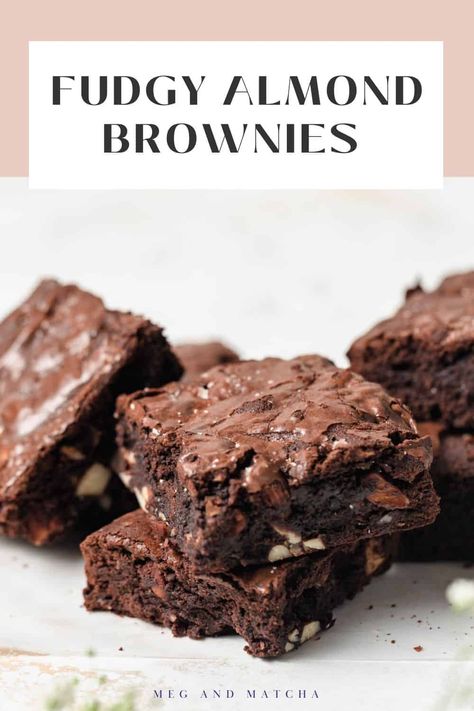
Almond-Fudge Brownies
Candy-coated semisweet chocolate pieces that bake on top of the brownies spare you the need for frosting.
Ingredients
- Nonstick spray coating
- 1/2 cup all-purpose flour
- 1/2 cup ground almonds
- 1/2 teaspoon baking powder
- 1/2 cup butter
- 2 1/2 ounces unsweetened chocolate, cut up
- 1 cup granulated sugar
- 2 slightly beaten eggs
- 1 slightly beaten egg yolk
- 1 teaspoon vanilla extract
- 1/2 cup candy-coated semisweet chocolate pieces
Instructions
- Spray only the bottom of a 2 quart square baking dish with nonstick coating.
- Combine flour, almonds, and baking powder; set aside.
- In a medium saucepan heat and stir butter and unsweetened chocolate over medium heat until melted.
- Stir in sugar, beaten whole eggs, beaten egg yolk and vanilla extract. Beat by hand until just combined. Stir into flour mixture.
- Spread mixture into prepared baking dish.
- Sprinkle with candy-coated pieces.
- Bake in a 350 degrees F oven for 30 minutes.
- Cool in pan on a wire rack.
- Cut into squares.
Do people in countries with universal healthcare get the runaround when they’re sick?
Do people in countries with universal healthcare get the runaround when they’re sick?
Australia, here.
Somebody posted a question in January asking, “What’s the most ironic thing that happened to you last year?” I didn’t have an answer at the time, but by April I could have written, “Avoided Covid-19, developed cancer.”
It was a bit of a panic for a while. X-rays, several blood tests, four CT scans, one PET scan, two MRI scans, two days in hospital, and a biopsy. In a period of about ten days from the first CT scan, I saw my GP, three cardiothoracic surgeons, two radio-oncologists, and two medical-oncologists.
Over the next week I was given five radiotherapy treatments, and was allocated my personal nurse, whose job it is to be my liaison with the cancer clinic. She’s my point of contact when I need information, or when they need input from me.
I had stage-4 lung cancer which had moved into my spine and was threatening to enter the spinal cord (which would have left me paraplegic), so everything was done in a rush.
The surgeon who gave me the results of the MRI said, “See your family, write your will, make peace with your God.” It was all very dramatic, and a bit scary.
Now for the good news. When the pathology on the biopsy came back, I was lucky enough to have an EGFR mutation which, in some circumstances, can be treated. So far, I seem to be responding well to that treatment.
So what has it cost for me to have so much treatment from so many highly qualified specialists (not to mention the technicians who operated the equipment)? Not a brass farthing.
Of course, I do have to pay for my pharmaceuticals. Because they are covered under the Pharmaceutical Benefits Scheme, I’m only out of pocket $6.60 for each prescription. And that’s just as well for me. If you check the prescription label on my Tagrisso tablets, you’ll see the cost to me listed on top, and the actual cost of supplying the drug immediately underneath it.
That’s right! Thirty tablets cost $7,971.16, which works out at almost $96,000 p.a. The doctor expects that, if all goes well, I will be using them for about 18 months before the cancer finds a way to outsmart them. That would be a total cost to the government of about $145,000 but will cost me only about $75.
If I was living in the United States and needed this kind of specialist care, tests, scans, technicians, radiation therapy, and chemotherapy (when the Tagrisso no longer works) I would have to sell my house, and that would probably still not be enough to cover the expenses. I’d still end up dead, and my widow would be destitute.
So did I get the run-around because I’m not personally paying exorbitant fees that are dictated by a crazed, money-hungry health insurance industry? Not a chance. I was treated quickly and with surprising care by everybody, from the oncologists and surgeons, all the way down to the wardsman (who told me the next day that I had been on his “watch list” while they were finding me a bed.)
I guess I really do live in the ‘lucky country’.
But don’t write me off just yet. I’m planning to stay with Quora for some considerable time.
Addendum: As a couple of people have pointed out, the pharmaceutical price is capped at $6.60 for anybody who holds a concession card. That may be obtained by pensioners, social security recipients, or older people who are no longer working full time. Those people who are still working full time pay a higher rate for their pharmaceuticals.
Geoffrey Hoffman supplied the following information:
Here, a person pays (a maximum of) $41.30 for their first 48 prescription refills in a calendar year, and $6.60 thereafter. Pensioners and others entitled to the Concessional Rate pay $6.60 for the first 48 prescription refills, and after that they are completely free.
Thanks, Geoff.
The Great Healing
Written in response to: “Write a story with a character or the narrator saying “I remember…”“
Peter Noygeer
Henry responded dryly, “So, humanity has finally declared itself God.”
Lisa frowned, determined to cut through his cynicism. “Don’t you want to get healthy?”
“I’m not sick anymore,” he insisted. But Lisa remembered all too well how, just ten years prior, he’d needed heart surgery. A lifetime of chain-smoking, boozing, poor diet, and late nights had clogged his arteries. His doctor had practically begged him to change his habits. Without Lisa’s persistent urging, Henry wouldn’t have even agreed to the operation.
“But living like this,” she pressed, “you won’t last much longer!”
After that, the conversation took a quieter turn, drifting into safer topics that neither truly cared about, as the weight of what they had just discussed lingered over them like a dark cloud.
The very next morning, Lisa stepped into the bustling HIC—short for Health Information Center—where she hoped to learn more about what the media called “The Great Healing”. Inside, she discovered a carefully outlined set of conditions. Anyone aged seventy or older must undergo a thorough medical evaluation; only those who passed it were deemed eligible. Younger participants could receive the therapy too, but their pensions would be gradually reduced after five years—dropping to ninety-five percent in the sixth year, then ninety, and so on. If you were already over seventy and failed the evaluation, you could at least keep your full pension without changes.
From the moment the therapy began, alcohol and smoking became strictly forbidden, and participants had to wear a sensor watch nearly around the clock to monitor the treatment’s effects and prevent any “cheating.” Lisa found the explanations unsettling but oddly convincing. She couldn’t help thinking of Henry, fearing how these rules might collide with his stubborn streak—and what might happen if he refused.
The “Apollo Project for the Healing of Age-Related Diseases” was a global undertaking so vast that no single nation could manage it alone. Its origin lay in the crushing national debts of the member countries being driven skyward by health care costs that had soared for decades, largely thanks to aging populations and too few births to finance the older generation’s pensions. Some nations also shouldered massive military expenditures—something Lisa quietly questioned, even if she rarely delved into politics.
Clinical studies, spanning ten years and involving hundreds of thousands of subjects, now deemed the new medication “sufficiently safe.” Media coverage was divided: half the commentators hailed it as a salvation, while the other half warned of potential catastrophes. Lisa sensed the rift tearing society into polarized camps.
At home, she couldn’t shake a lingering unease. Her mind wandered over her own life: family, dreams, a long career behind her, and a handful of goals still unfinished. She thought about all the people she had known—some now deceased, others severely ill—and finally, about her own health.
“What if I come down with one of these so-called age-related diseases?” she murmured, flipping open a brochure she had picked up. The list inside was overwhelming: cancer, cardiovascular issues, dementia, diabetes, arthritis, and age-related muscle loss, plus a host of ailments she’d never heard of. Then, in the fine print:
“In clinical studies, it has been found that most age-related diseases share at the molecular level the same root cause. The Apollo Project provides a cure to the underlying source of these illnesses, rendering the current medications obsolete. Therefore, starting next year, we will begin the process of discontinuing all other medicinal treatments currently being offered. All existing treatments will be reassessed and replaced by the new drug if necessary. The previously stated conditions remain in effect.”
At that moment, Lisa realized society had crossed a critical threshold. If people refused to accept the new therapy’s terms, they might be forced to confront life-threatening illnesses alone. For Lisa, the choice felt like a subtle ultimatum: consent or risk abandonment.
She had never truly smoked—just one ill-fated attempt at seventeen. Her father, himself a habitual smoker, caught her in the act and made her finish an entire pack at his side in a twisted contest of “Who can smoke the most?” The next day, she felt so wretched that she vowed never to light another cigarette.
She’d also quit drinking years ago. Although a glass of wine at dinner was practically tradition in her family, one morning in her early forties she woke up feeling drained and thought of her mother, who had died young. As an experiment, she tried skipping her dinner wine, first for a night, then another. Eventually, it dawned on her that, while she enjoyed the taste, the after-effects weren’t worth it. She never picked up a glass again.
Despite her family doctor’s repeated “You’re perfectly healthy for your age,” she often battled insomnia and fatigue. In a similar spirit of self-care, Lisa began walking to work. The first few one-hour treks—morning and evening —took discipline, but after three weeks, it became second nature. By retirement, her routine included turning in early, rising at the same time, walking two hours each day, hitting the gym twice weekly, and hiking on weekends.
Still, Lisa wondered how long her good health could hold out. Her parents both suffered through torturous deaths: her father, slowly and painfully fighting against lung cancer, and her mother enduring surgery, chemo, radiation to no avail, finally ending her days in hospice care. Lisa’s throat tightened at the memory of losing them both. She had no children to lean on, and while her pension covered the basics, it wasn’t enough to secure a private retirement home. She pictured herself, alone and wheelchair-bound, in a state-run facility—an image that sent a cold dread through her.
That fear crystallized her resolve. She wouldn’t wait passively for her body to betray her. If “The Healing” was her best shot at avoiding her parents’ fate, then she’d do whatever it took.
Lisa rang Henry’s doorbell and then bolted up the stairs to his third-floor flat, her heart pounding with urgency. Normally, he would greet her with an easy smile, but today he stood in the doorway looking somewhat tense.
“Did you know you might not get your medication next year?” Lisa blurted, stepping inside.
Henry shrugged. “What makes you say that? I barely take them, anyway. I just keep lowering the dose so my body adapts.”
Lisa cast a quick glance at the clutter of beer bottles in the corner—an unspoken accusation. The newscaster’s voice droned on from the TV. “If you’d only take better care of yourself,” she pressed, “watch what you eat, cut back on the drinking… you’d feel so much better.”
“Oh, so now you disapprove of my lifestyle?” Henry snapped. “I’ve got everything I need.”
Lisa tried a gentler tack. “We’ve always talked about doing more together. If you went through with The Healing, you’d be as fit as ever, and we could—”
“So you want me to load up on some untested medication, be monitored around the clock, and let the government dictate my diet?” Henry interrupted, frustration flaring in his voice.
“Is that really so terrible? You’re my best friend,” Lisa pleaded. “Now that I’ve retired, I just want us to have more time… together.”
Henry shook his head, his tone turning defensive. “Sounds like you only care about your own agenda. Don’t change the subject—I’m a capable, responsible person, yet the State’s acting like I’m incompetent!”
Desperate, Lisa latched onto a warm memory. “Remember that spring weekend two years ago? We walked in the woods—it felt like summer, birds singing, the sky glowing.” She paused, her voice softer. “We haven’t done that in ages.”
Henry’s posture relaxed, but only slightly. “I remember. But you know I can’t walk that far anymore.”
Lisa’s voice wavered. “But you said you’re healthy…?”
“We’re going in circles,” Henry muttered.
Tears filled Lisa’s eyes. “Please… just think it over?”
Henry crossed his arms. “My decision is final. But if you want, we can still go for a short walk next week.”
Lisa nodded, forcing a small, sad smile. She slipped out the door, the weight of their unspoken fears trailing after her.
Lisa’s plan to pick up groceries was cut short when she spotted a group of people huddled around a bank of TV monitors. Live coverage flashed on the screens:
“We’re reporting on ongoing unrest in the capital. Several HICs have been evacuated. Members of a militant group calling themselves ‘The Saviors of Humanity’ have forced their way into the buildings, pushing occupants to escape while barring entry to outsiders. Initial reports indicate multiple injuries and at least one fatality. From now on, all HIC facilities will be under armed police guard.”
A wave of fear surged through Lisa. Police cars screamed down the street, lights blazing, and she quickened her pace toward home. Once inside, she locked her door and noticed her hands were trembling. Clearly, not everyone shared her hope for The Healing; some, like Henry, questioned it—but this group was intent on outright sabotage.
The unrest made her decision easier. Lisa pulled up the HIC website, found a branch near the city center, and booked a nine a.m. appointment. “At least there’ll be police nearby,” she told herself. For the first time in ages, she ordered a taxi, in case she needed to leave in a hurry. Though she went to bed at her usual time, sleep eluded her as her mind churned with the day’s chaos and the unsettling thoughts of what might happen next.
A shrieking alarm jolted Lisa awake. Or so she initially thought, but it turned out that it was just the traffic below her window. Glancing at the clock (6:30 a.m.), she was reminded it was Saturday, usually a quieter day. Today the streets were anything but quiet.
Checking her phone, she read the latest nightmare headlines: “Police at Full Capacity,” “Politicians Call for State of Emergency,” “Confirmed: 1,200 Injured, 6 Dead!” Her world suddenly felt out of control, and she struggled to grasp how a therapy for age-related diseases could trigger such chaos.
Standing under the shower spray, Lisa wrestled with conflicting thoughts. “If I avoid those dreaded diseases, my pension gets cut in five years. I’ll need to work again—but I still want the peace of mind that I won’t have to worry about getting sick.” By the time she stepped out, she’d resolved to sketch out a plan for the years ahead.
After breakfast and her favorite cup of tea, she hopped into a taxi.
“Normally, this drive takes maybe half an hour, but traffic’s insane today,” the driver remarked.
“I’m just glad it’s only eight,” Lisa replied, eyeing how young he seemed. As she settled in, she spotted a symbol on the rearview mirror, vaguely familiar but something about it was unsettling.
“You’re heading to the HIC, right?” the driver asked bluntly. “Mind if I ask your age?”
“I’m sixty-five,” Lisa answered. “Why do you ask?”
He glanced at her in the rearview. “You look amazing—I’d have guessed early fifties. And you want this Healing—why?”
Lisa offered a bright smile. “Thank you. I feel great, and it can’t hurt. Plus, I can enjoy my pension for a few more years before I figure out what’s next. Who’d have guessed I’d see something like this in my lifetime?”
The driver’s tone sharpened. “Ever think about how the planet suffers, with more people living longer, using up resources? Nature can’t keep up.”
Shifting uncomfortably, Lisa tried to sound calm. “I’ve read that the global population might be peaking—and yes, there’s a crisis with so many older folks, but there’s also progress: recycling, sustainable energy. I’m no expert, though.” She felt scrutinized, as if on trial.
The driver snorted. “The system wants folks like you back at work paying taxes. They’ll recoup their money and then some. What about those who can’t get healed—too sick, or living in countries that aren’t part of the project? Is that fair?” His voice rose, making Lisa’s heart pound. She glanced again at the dangling emblem and finally realized why it was so familiar; it was an abstract human figure the same icon used by the “Saviors of Humanity”.
“Nothing is perfectly fair,” Lisa conceded softly. “But maybe we can each do a little good in the world. Please let me out here—I need to grab something,” she added, telling a small lie to escape the increasingly uncomfortable conversation. After paying and tipping him, she slipped away.
At the HIC, a friendly receptionist welcomed her. “Good morning, Lisa. Have a seat. This therapy could help you avoid age-related diseases and give your life a fresh start. It’ll be administered at a specialized longevity clinic, where they can answer all your questions. Here’s a referral.”
Brimming with cautious excitement, Lisa immediately headed to the clinic, where a doctor greeted her with practiced warmth. “Pleased to meet you, Lisa. My colleague will draw some blood, then we’ll proceed.” Moments later the doctor returned, results in hand, and nodded with satisfaction.
“You’re in excellent health for your age,” he said. “Biologically, you’re about ten years younger than sixty-five—a good sign for the therapy. Think of it like an annual vaccine. We’ve seen no dangerous side effects in this generation of the drug. I even tested the first generation on myself,” he added proudly. “It targets cells at the molecular level to regenerate them. You’ll feel practically reborn.” His eyes gleamed in the sunlit room. “Ready?”
Lisa felt a surge of both nerves and excitement. “Yes, I want this.” She signed the multi-page consent form and received the injection, goosebumps prickling her arms.
“You’ll need to wear this watch at all times,” the doctor continued, handing her a sleek device. “It tracks your biodata, has a calendar, and recharges itself. It’ll also remind you of next year’s follow-up. If you have questions, the brochure can help—or you can call us.”
Lisa slipped on the watch, noticing the doctor wore an identical model. They exchanged a small nod. Minutes later, she was out the door, head buzzing with questions. As soon as she got home, she added “Second Birthday” to her phone calendar. She sensed life would never quite be the same.
Five years later, Lisa steps into the palliative care center, her heart tightening the moment she sees Henry seated by the window. His gaze is fixed on the fading daylight outside.
“You look so young and happy. Thanks for coming,” Henry whispers, his voice frail. A stroke weeks earlier had robbed him of the ability to walk, and his health had spiraled downhill ever since.
Lisa eases into the chair beside him. “Of course. How can I help?”
Henry’s eyes flick to her, then back to the sunset. “I’ve been thinking a lot about my life. When I retired, I felt enormous relief at first—I never had to work again. But truthfully, I lost any real sense of purpose after that. Then they introduced this ‘healing,’ and it felt like someone was snatching away my final reward.”
“You could still apply…” Lisa offers gently.
Henry shakes his head, a weary smile forming. “I always felt more alive when I was around you. But now I’m just… tired, and oddly at peace. Thank you for staying by my side.”
A month later, Lisa begins her new job with a mix of determination and a lingering ache—aware that as her world keeps shifting, she must keep moving forward.
What will future jobs look like?
So, my kid is watching the F1 Japanese Grand Prix with me. Wide-eyed. He suddently asks, “Dad, do the pit crew or the drivers make more money?”
I explained that the drivers usually bank more. Why? Because very few people on this planet can drive like they do. The rarer the talent, the bigger the paycheck. Simple supply and demand, right?
But here’s where it gets interesting…
I then dropped a challenge on him: “What would happen if machines could do their jobs better than them?” I asked.
I could practically see the gears in his head turning.
“Will they lose their jobs?” he asked, all serious.
“That could very well happen,” I admitted.
Ouch. Truth hurts, right?
His next question was the million-dollar one: “So what would they do?”
“If robots handled tire changes or refueling, pit crews could manage and troubleshoot those machines and evolve into high-tech repair roles,” I said.
This made me thik. That’s the question we should all be asking ourselves, isn’t it? How do we stay valuable when tech keeps leveling up?
What will future jobs look like?
Here’s the thing: the future isn’t about humans versus machines — it’s about humans WITH machines.
This flips a scary “what if” into opportunity: How can we use change to our advantage?
It’s about building, not just doing. The future is not about outrunning everybody — it’s about creating something that matters. Tech, ideas, whatever.
Think less “What pays now?” and more “What builds my future?”
The lesson? The world keeps changing, but you keep driving.
For these young kids, this mindset is a superpower. They’re not here to do the work; they’re here to BUILD.
This was a tough one, but here’s what I left him with:
“Don’t ever fear machines — build them and use them to win.”
Curious: What would you have answered? Share below!
Pictures
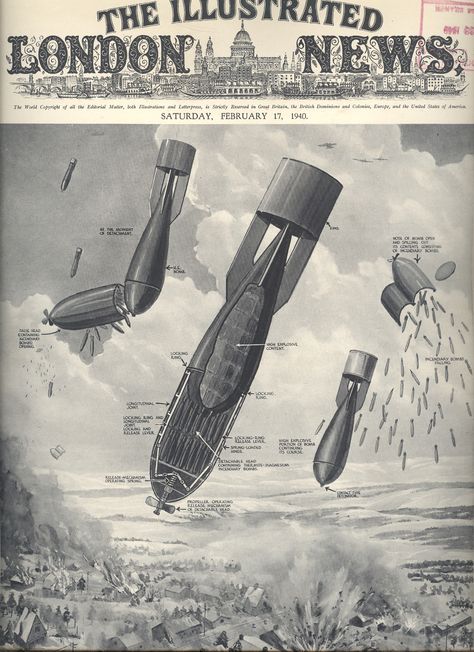
Warning! Some booby pics showed up on my collection feeds…



Now, quick back to planes. Phew!
Def. need to tweek my AI search algo. – MM












We sacrificed for our daughter. I stayed home to raise her, put her in the best schools, paid for college, and more. Now she’s an adult and won’t talk to us. Where did we go wrong?
Same happened to me. I was a divorced parent since my daughter was a freshman. She attended private school. Her weasel father didn’t bother to pay his share. My parents helped out in his absence.
I worked a second job (putting me at 50 hours M-F and another 5–6 hours on Saturday) while she worked to finish her BS, then MS and finally 4 years of med school. She’s now 29 and is finally earning her own way as a resident.
She quit speaking to me her last year of med school. Sure, she can make it on her own now. I did what I could to give her a good life.
In return, she nixed me from her med school graduation. She doesn’t speak to her father either. She prefers my female sibling who has bought her lavish gifts (iPhones, Mac laptops, trips, etc.) while I paid her necessities.
My sibling used this to manipulate her from a young age. My sibling is so twisted, she’s even created a revisionist history with false memories.
It’s a sick tale. She didn’t have children and decided she wanted mine. I didn’t see it coming until it was too late.
The story could be a Lifetime movie! Of course, now my daughter is an adult and you’d think she’d have some appreciation for the opportunity afforded to her by my sacrifices. Nope. Not at all.
I realize she can choose to have whoever she chooses in her life.
And she doesn’t have to speak to me- or her father, that’s on her.
I did what I felt was the right thing to do for my daughter and that was about 13 years more of support than what my parents did for me. That’s a long time for a single parent to continue support beyond child support. I also paid for several semesters of her college.
Of course I also had to carry her health insurance too.
All of this to be ignored and cut out of her life. Her lack of respect for her parents is disheartening. I only hope that one day she is disrespected by someone she puts all of her effort and love into.
She is of the entitled generation but I would’ve never thought she would’ve done this!
The photo above that the white columns there are “a little bit” like the place I’d been and the Old Empire destroyed.
=====
Hello MM, in your video “Historical Reality Constructs”, what specific elements do you want to ask AI?
In my… original thinking, I want to find something out, but the direction seems not such familier with all of us. I thought if this is more from Commander, but I think this time it’s from any of us don’t know. So, the “unsure” will be covered by those from machine, maybe, some.
I’m in belief that here’re (Milky Galaxy is) the part of 和依 but got occupying by the Old Empire, and here’re many things by/from merger with 和依 and the Old Empire elements. And, I believe here’re top secret here, the world’s creater’s top secret.
About 和依, I believe here’re 3 parts(?) – Old 和依; the 和依 as group(s) of 團域; and the 和依 be using, and be changed and constructed by the Old Empire.
Some things wouldn’t be copy, and for the safety that it only can be access by the creater, if he (easy to say) knows the way or proccess to go there. It’s the unique… region(?), it’s private.