
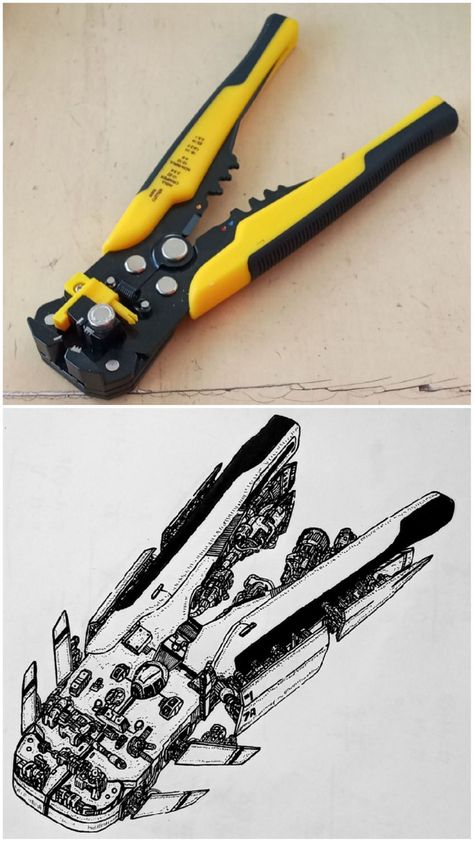
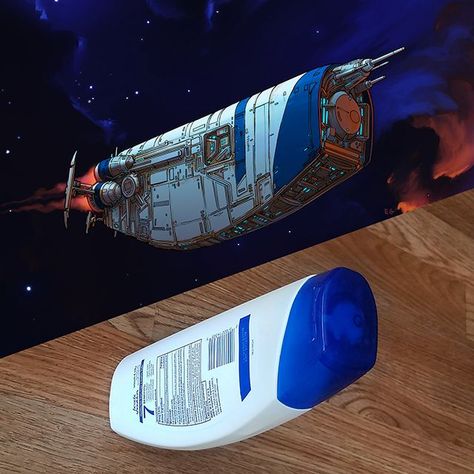
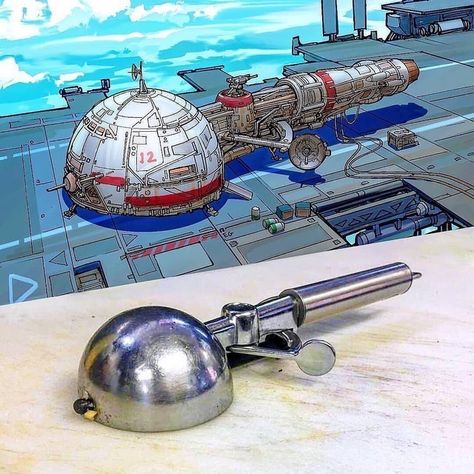
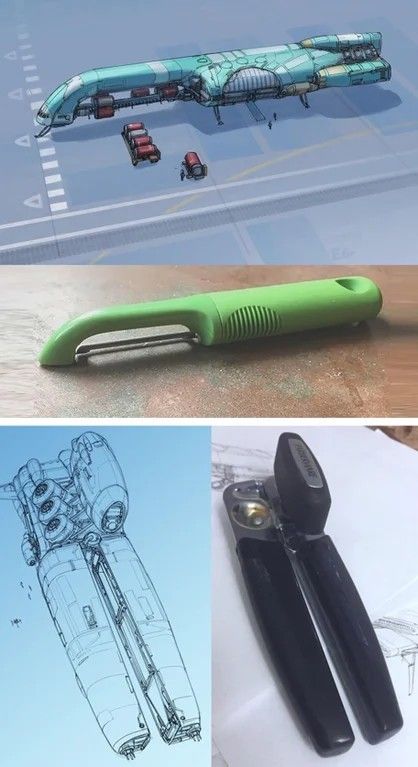
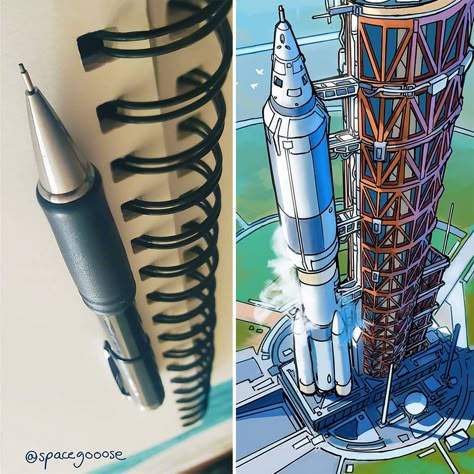
Guys, have you ever done this? Have you ever picked up a pen or a pencil and just imagined them as space ships?
I used to do this all the time from my Elementary school days though to college. Indeed, even now, on occasion, I might just relive this motion for fun.
Ha ha.
Call me crazy, but I know that I just can’t be the only fella who has done this. Oh well…
Enough of my private moments of today.
Today…
What’s the craziest thing you’ve done in life that you don’t regret doing?
Instigate a war for personal gain. No regrets.
When I was in middle school, I started a rubber band war across the entire seventh and eighth grades, and sold ammunition for well above market value. There was a bully in one of my classes, whose name shall remain anonymous. He was held back at least once, likely due to his obvious discipline problem. He slept in class – when he went – sagged his pants, and smoked blunts in the bathroom.
One day, I was inspired by him flicking a kids ear as he walked by, and bought a pack of 200-ish rubber bands for a dollar at Family Dollar.
At school the next day I bet him that he couldn’t hit the same kid’s head from 4 rows back, then handed him a rubber band. He nailed him, was sent to the office, but not before picking up his rubber band on the way out.
Word spread quickly and kids started stealing rubber bands from all over the school.
Several students bought Rubbermaid from me at $0.25 a band. I made out with nearly $50 over 2 days and flipped that into a profitable snack venture.
Best money I ever made.
To those people in the world who have access to universal healthcare, what experiences could you share with Americans in order for us to understand how it affects your life (positively or negatively)?
I went for an eye test. The optician took one look at my eyes and said “oh dear” she came back and said “I shan’t do any more the hospital will ring you this afternoon”
They rang, next day I was being examined and asked to sign consent forms for an eye operation. A week later I had the operation that saved my sight. They did say that it might not be successful. Just had a follow-up and I’m told my eye is stable a year later and they don’t expect any future problems apart from the fact I need medication for the rest of my life. They later did the same thing to my other eye just in case. So no deterioration in that eye at all. Cost zero. My right eye isn’t the best but it’s not getting any worse. Imagine the cost to the nation in care if I had lost my sight. For one thing I would need care and accommodation.
The Electric State (2025) Opening Scene – The Robots Rebel Against The Humans Movie Clip 4K UHD
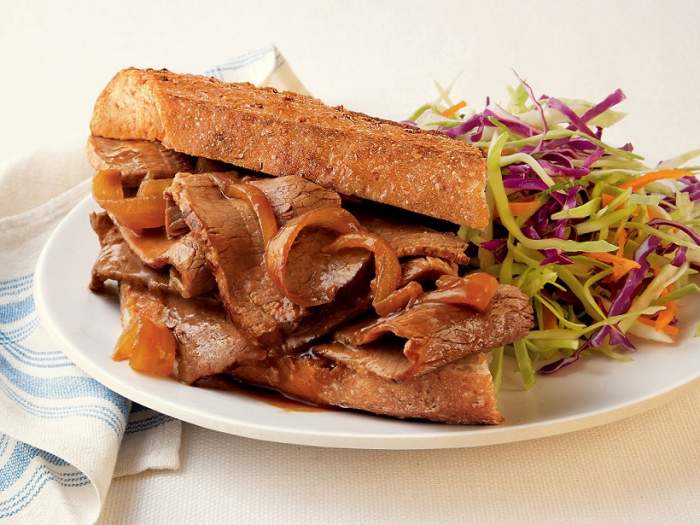
Wasabi-Beer Braised Brisket
Enjoy the heat of wasabi with the complex flavors of beer in this beer-braised brisket, thinly sliced and served on a wheat baguette.
Yield: 12 servings
Ingredients
- 1 beef brisket flat half (4 to 4 1/2 pounds)
- 2 cloves garlic, minced
- 1 tablespoon peanut or vegetable oil
- 1 teaspoon salt
- 1/2 teaspoon pepper
- 2 medium onions, each cut into 12 wedges
- 1 bottle (12 ounces) beer
- 1 bottle (12 ounces) chili sauce
- 2 teaspoons wasabi paste
- Coleslaw (recipe follows)
- 3 whole wheat baguettes, cut into 10 to 12 pieces (4-1/2 to 5 inches each), split
Instructions
- Heat oven to 325 degrees F.
- Press garlic evenly onto all surfaces of beef brisket.
- Heat oil in large skillet over medium heat until hot. Place brisket in skillet; brown evenly. Remove brisket from skillet; season with salt and pepper.
- Add onions to large stockpot or large baking pan. Place brisket over onions. Stir in beer and chili sauce; bring to a boil. Reduce heat; cover tightly. Continue cooking in 325 degrees F oven for 3 1/2 to 4 hours or until beef is fork-tender.
- Meanwhile, prepare coleslaw.
- Remove brisket; keep warm. Skim fat from cooking liquid; bring to boil. Reduce heat and simmer, uncovered, 5 minutes. Stir in wasabi paste.
- Carve brisket diagonally across the grain into thin slices. Return beef to cooking liquid; keep warm. Divide beef and onions evenly over roll bottoms; close sandwiches. Serve remaining sauce for dipping, if desired. Serve with coleslaw.
- Coleslaw: Combine 1/2 cup rice vinegar, 2 tablespoons peanut or vegetable oil, 2 tablespoons toasted sesame oil, 2 teaspoons minced fresh ginger and 2 teaspoons honey in large bowl. Add 1 package (16 ounces) coleslaw mix and 1 package (8 ounces) shredded red cabbage; toss to coat. Season with salt, if desired.
The China National Offshore Oil Corporation (CNOOC) announced on Monday that it has discovered a major oilfield (Huizhou 19-6 oilfield) in the eastern South China Sea, with proven reserves exceeding 100 million tonnes. It marks a significant milestone for China’s offshore energy exploration. Situated approximately 170 kilometers from Shenzhen in Guangdong Province, the field lies at an average water depth of 100 meters. Test drilling has demonstrated promising yields, with daily outputs of 413 barrels of crude oil and 68,000 cubic meters of natural gas.
This discovery is particularly noteworthy as it represents China’s first large-scale integrated clastic oilfield found in deep to ultra-deep layers. Such reservoirs typically present challenges due to their low permeability and the complex conditions associated with high temperatures and pressures. However, the successful identification of Huizhou 19-6 underscores the advancements in exploration technologies and methodologies employed by CNOOC.
The significance of this find extends beyond its immediate economic impact. According to CNOOC’s CEO Zhou Xinhuai, this marks the second consecutive year that oilfields exceeding 100 million tonnes in reserves have been discovered in the eastern South China Sea, highlighting a positive trend in the region’s resource potential. As global energy demands continue to evolve, such discoveries reinforce China’s strategic position in the offshore oil and gas sector and contribute to the nation’s energy security.
Holy! Now They Want Greenland Too – U.S. Economic Panic Worsens
As a person who lives with universal health care, are the taxes and inconveniences worth it?
I live in the UK and I’m 72 years old.
My tax rate, when working, was 20% which I think is comparable to the USA.
No health insurance on top of that.
All treatment free at the point of use.
Prescription charge £9.35 per item ($11.35) until I turned 60, since when they’re free.
No bills. No paperwork. No quibbles. No “pre-existing conditions”. No age limits. No “co-pay” (not sure what that is but I keep hearing Americans talk about it). No “out of network” (ditto). No insurance tied to employer (not sure about how that works either).
I’m sick, I go to the doctor, I’m treated. If it’s worse, I go to hospital. It works the same way as fire and police services.
Waiting times depend on need – urgent conditions take priority.
If I’m not happy, I still have the option to take out private health insurance – same treatment but a better hospital room, choice of hospital food and quicker access to non-urgent or non-vital procedures (eg cosmetic surgery). I’ve never felt the need to use it.
In short, I don’t pay an extra premium purely to fund private insurance companies, I have no bills, paperwork or conditions to fulfil.
Worth it? Hell, yes.
Camel Yellow
Written in response to: “Write a story in which someone time-travels 25 years or more into the past.“
Giulio Coni
I – he – pulled up the hood of my sweatshirt and started walking home. The streets were deserted, illuminated only by a few flickering streetlights. I followed him to his front door, remaining in the shadows. He – I – paused for a moment before entering, raising his gaze to the starry sky. Who knows what he wished for at that moment. Perhaps a simple, happy life, full of those moments that seemed trivial then, but which I now know to be precious. Perhaps he wished to see Giulia again, or maybe simply to never grow up. He entered the house, closing the door behind him, and I remained there, motionless, my heart filled with nostalgia.
And in that moment, I understood something. It wasn’t just nostalgia for what had been. It was gratitude. For those summer evenings, for the laughter, for the first crushes and the first mistakes. For that insecure boy who didn’t yet know how much he would change, but who already had within him everything he would become.
A shrill sound distracted me: it was the time machine’s alarm. The journey was about to end. The coordinates updated, and in an instant I found myself back in my room, in my present. I woke with a start, my heart still gripped by that nostalgia. Had it all been just a dream? Perhaps. But the scent of the sea and the echo of that laughter were still there, vivid, as if they had never left me.
I got out of bed, still dazed from the journey through time – or from the dream, I wasn’t sure. The room was shrouded in darkness, broken only by the bluish light of the alarm clock display. 3:27 in the morning.
I opened the window, letting in the cool night air. The neighborhood slept, silent, but in the distance, I could still hear the sound of the sea. The same sea from twenty-five years ago. I wondered if Giulia was still in Rome, somewhere in the city, if she too remembered that night with the same intensity.
I picked up my phone, hesitating for a moment before opening social media. I searched for her, discovering that she still lived in the area. Her photos showed a smiling woman, with the same bright eyes I remembered. For a moment, I was tempted to write to her. What would I say? “Hey, remember me? We kissed twenty-five years ago.”
I smiled, shaking my head. Some things were better left in the past, guarded like precious treasures in memory.
I went back to bed, but sleep was slow to come. I thought back to that thirteen-year-old boy, how different he was from the man I had become. Yet, somehow, we were still the same person. His dreams, his fears, his hopes… everything was still there, buried beneath layers of experiences and disappointments.
“Perhaps,” I thought, “this is the true power of time travel. Not to change the past, but to remember who we were and rediscover that part of ourselves that we thought we had lost.”
With this thought, I closed my eyes. And for a moment, before falling asleep, I seemed to hear again the distant echo of that summer laughter, the scent of the sea, and the taste of a first kiss.
The next morning, I woke up with a strange feeling of lightness. The memories of the previous night still floated in my mind, mingling with the sounds of the city awakening.
I decided to take a walk along the beach, the same stretch of coast I had walked countless times as a boy. The sun was just rising, painting the sky with shades of pink and orange.
As I walked, I noticed a solitary figure sitting on the sand, gazing at the horizon. My heart skipped a beat when I realized who it was.
“Giulia?” I called, incredulous.
She turned, her eyes widening in surprise. “Antonio? Is it really you?”
We approached each other slowly, as if we feared that the other might vanish at any moment.
“I can’t believe it,” she said, smiling. “I was just thinking about you last night.”
I laughed, shaking my head. “Me too. It’s… strange, isn’t it?”
“A little,” Giulia admitted. “Damn, it’s really strange, isn’t it? As if time has brought us back here…”
We sat down on the sand, talking about the twenty years that had passed, about our lives, our fulfilled dreams and those we had abandoned. And as we talked, I felt something shifting, as if the past and present were merging into a single, perfect moment.
“You know,” Giulia said, playing with the sand between her fingers, “there’s something I never told you.”
Her tone had changed, lower, almost trembling. I looked at her, noticing how the dawn light reflected in her eyes, giving them an almost magical luminosity. She was the same girl I remembered.
“What?” I asked, feeling my heart quicken.
Giulia took a deep breath, as if gathering all the courage in the world. “All these years, I’ve never… I’ve never really stopped thinking about you.”
I remained silent, stunned. The sound of the waves crashing on the shore suddenly seemed deafening.
“I know it sounds crazy,” she continued, her cheeks flushing pink. “But that night, that kiss… it meant more than you can imagine. I always thought it was just a teenage crush, but over the years I realized it was much more.”
Giulia’s words floated in the air like soap bubbles, fragile and precious. I felt a lump in my throat, buried memories resurfacing with overwhelming force.
“I tried to forget you, you know?” she went on, her voice cracking slightly. “I had my relationships, I got married… I tried to convince myself that what I felt for you was just an idealized memory. But every time I met someone, I always ended up comparing them to you. And no one… no one ever measured up to that memory. But never mind, all this makes no sense…”
A seagull flew low over the water, its solitary cry merging with Giulia’s words. The sun had now fully risen, painting the sea with golden reflections.
“I don’t know how to explain it,” she said, finally raising her eyes to meet mine. “But it’s like a part of me has remained anchored to that night, to that kiss. As if, somehow, I always knew we would meet again.”
My heart exploded in my chest. Giulia’s words resonated within me, awakening emotions I thought I had forgotten.
“I… I don’t know what to say,” I admitted, my voice hoarse with emotion.
Giulia smiled, a sweet, slightly sad smile. “Don’t say anything.”
We kissed passionately, a kiss that didn’t have the innocence of the past, weighed down by desire.
We broke away from the kiss, both breathless and with our hearts pounding. It was then that I noticed something out of the corner of my eye. A figure in the distance, motionless on the beach.
I blinked, thinking it was an illusion created by the dawn light. But the figure was still there, and as I stared at it, a shiver ran down my spine. There was something familiar about that silhouette, the way he stood, his hands in his pockets.
“Antonio?” Giulia whispered, noticing my fixed gaze. “What’s wrong?”
I didn’t answer right away. The figure moved slightly, and in that moment I understood. We weren’t alone on the beach. Watching us was me. Me, older.
He – I – was looking at me with a mixture of nostalgia and understanding. His hair was streaked with gray, his face marked by wrinkles that told stories I didn’t yet know. He was wearing a worn leather jacket that I remembered always wanting as a boy.
Giulia followed my gaze, confused. “Who is that?”
“Don’t you see him?” I asked, my voice trembling slightly. “It’s me. Like that time, twenty-five years ago.”
She looked at me as if I were crazy, but before she could say anything, I – he – gave me a knowing nod. A faint smile touched my lips, and in that gesture, I saw all the wisdom that years had given him.
It was a surreal moment, as if the fabric of time had suddenly thinned, allowing us to see through it. He – I – said nothing, didn’t approach. He remained there, a silent witness to a moment that, evidently, had remained etched in his memory all those years.
Giulia squeezed my hand, bringing me back to the present. “Antonio, are you okay?”
I nodded slowly, my eyes still fixed on the figure in the distance. “Yes, I’m fine. It’s just… I think I’ve understood something important.”
He – I – raised a hand in greeting, then turned and began to walk along the beach, moving away, to vanish into thin air.
He woke up suddenly, his heart pounding like a broken drum. The room was immersed in a gray twilight, barely illuminated by the light of the full moon filtering through the half-open blinds. He brought a hand to his chest, as if to calm that irregular beat, then let it slide over the rough blankets. They were heavier than he remembered.
He sat up, with an effort that seemed immense. Every movement brought with it a protest from his muscles, his bones. He felt his body heavy, tired, yet strangely distant. Out of the corner of his eye, he caught his reflection in a mirror on the other side of the room. An elderly figure stared back at him. Him. Me.
“What the hell…” he murmured. His voice was hoarse, trembling, as if he wasn’t used to using it. He stood up, staggering, and approached the mirror. Wrinkled hands, covered with swollen veins, rested on the wooden edge. He looked into his eyes, and that’s when it happened. A flash in his mind: he – I – young, in the same room, wondering if he was dreaming.
The memory hit him like a whip. He saw himself looking in the mirror, but at that moment he wasn’t old. He was in the present, or so he believed. He remembered that feeling of unreality, that subtle fear of not knowing if he was awake or trapped in a dream.
“Was it a dream… or was it real?” he whispered, and his – my – reflection returned the same confused look.
He took a step back, shaken. His eye fell on the alarm clock display. 3:27 in the morning. He flinched. He picked it up, opened it.
Then, like an electric shock, another flash in his mind: him, still young, seeing the clock stop, the hands frozen.
He returned to the mirror, almost pushed by an invisible force. He stared into his eyes, and for a moment he seemed to see the young man he was – that I was – trapped on the other side of the glass, in turn confused, in turn lost in doubt.
“What if I’m his dream?” he thought, and that thought took his breath away. The young man beyond the mirror – me? – seemed to move suddenly, as if he had heard the thought. Then he vanished, leaving only the reflection of the old man.
A shiver ran down his spine. He sank into the chair next to the bed, clutching the clock – the alarm clock – in his hands. The ticking echoed in his ears, hypnotic, almost a murmur.
“I’ll never know…” he said, his voice breaking. He closed his eyes, trying to remember, trying to cling to something concrete. But everything dissolved, like sand between his fingers. That sand from fifty years ago.
The last thing he heard was the ticking slowing down, slowing down, until it stopped. And then silence.
When the room was still again, the mirror reflected only the empty room. But if someone had been there to watch long enough, they could have sworn they saw a young man fleetingly pass in the reflection, then disappear into thin air.
Giulia looked at me, searching for answers I couldn’t give her. “Antonio… who was he really? And what did you understand?”
I smiled, squeezing her hand tighter. “That time doesn’t take anything away from us. It gives everything back to us, one piece at a time, when we’re ready to understand it.”
We stayed there, sitting on the sand, watching the sea continue its eternal coming and going. And in that moment, I felt a peace I hadn’t felt in years. I had rediscovered something I thought I had lost: not just a memory, but a part of myself, the boy I had been and the man I hoped to become.
Giulia rested her head on my shoulder, and together we remained silent, as day took the place of night. There were no more questions, no more answers to seek. Only the present, stretching out before us, like an endless beach to walk on.
Then I woke up.
Why is South Korea China’s biggest market?
Answer:-
Introduction:-
“Trade is the golden girdle of nations.”
This adage aptly encapsulates the profound economic interdependence between South Korea and China. Over the past three decades, China has emerged as South Korea’s largest trading partner, driven by historical ties, economic complementarities, and strategic partnerships. Despite recent fluctuations in trade dynamics, the economic relationship between these two nations remains one of the most significant in the global economy.
👉 Historical Foundations and Diplomatic Evolution:-
The foundation of the South Korea-China trade relationship was laid in 1992, when the two nations established formal diplomatic ties. Before this, economic engagement was minimal—China was only South Korea’s 15th-largest export destination in 1991. However, with diplomatic normalization, trade surged. By 2003, China had overtaken the United States to become South Korea’s largest export market, a position it has maintained ever since.
This shift was fueled by China’s rapid industrialization and its demand for high-tech components, which South Korea excelled at producing. The Free Trade Agreement (FTA) signed in 2015 further strengthened economic ties by reducing trade barriers and fostering deeper cooperation in various sectors.
👉 Explosive Growth in Bilateral Trade:-
The exponential growth in trade between South Korea and China is remarkable. In 1991, South Korean exports to China were valued at just $1 billion. By 2021, they had soared to $162.9 billion, marking a 162-fold increase—far outpacing the ninefold growth in South Korea’s total exports over the same period.
In 2023, China accounted for 19.7% of South Korea’s total exports, marking a decline from previous years when the figure consistently exceeded 20%. Despite this, China remains South Korea’s most crucial trade partner.
👉 Key Export Commodities and Economic Complementarity:-
The composition of South Korea’s exports to China highlights their complementary economic structures. The primary exports include:
📌 Semiconductors (Integrated Circuits):
$65.6 billion
📌 Broadcasting Accessories:
$6.89 billion
📌 Broadcasting Equipment:
$5.68 billion
South Korea dominates in high-tech industries such as semiconductors, while China, as the world’s largest manufacturing hub, relies heavily on South Korean components for its electronic goods and automobile industries. This symbiotic relationship has played a crucial role in China’s global supply chain dominance.
👉 Trade Surpluses and Mutual Benefits:-
For most of the past three decades, South Korea has enjoyed a trade surplus with China, meaning it exports more than it imports. This surplus peaked in 2018 but has since shown signs of fluctuation. In 2023, South Korea even recorded a trade deficit with China for the first time in 31 years, signaling shifts in global trade dynamics.
China benefits from this relationship by securing reliable access to high-quality components essential for its manufacturing industries, which in turn power its massive export economy. Meanwhile, South Korea benefits from a consistent market for its advanced technological products, particularly semiconductors.
👉 Impact of Global Supply Chain Shifts:-
Recent years have witnessed notable disruptions in South Korea-China trade patterns. Several factors have contributed to this shift:
🌑 China’s Push for Self-Sufficiency:
China has aggressively invested in its domestic semiconductor industry to reduce reliance on foreign suppliers, including South Korea.
🌑 U.S.-China Trade War:
The geopolitical tensions between the U.S. and China have caused ripple effects, forcing South Korea to navigate complex trade restrictions.
🌑 Diversification Efforts:
South Korea is expanding trade with the U.S., Japan, and Southeast Asian nations to reduce over-dependence on China.
🌑 Pandemic and Economic Slowdowns:
COVID-19 and subsequent economic downturns have impacted global trade flows.
👉 Challenges and Future Prospects:-
Despite their deep economic ties, South Korea and China face several challenges that could impact future trade:
🌑 Geopolitical Tensions:
South Korea’s alliance with the U.S. and China’s growing assertiveness in the region create potential friction.
🌑 Regulatory Hurdles:
Chinese regulations on foreign businesses can sometimes create obstacles for South Korean companies.
🌑 Economic Slowdowns:
A slowing Chinese economy could reduce demand for South Korean exports.
However, opportunities for continued collaboration remain strong. The expansion of high-tech industries, such as AI, electric vehicles (EVs), and biotechnology, could create new trade avenues. Additionally, strengthening regional economic partnerships, such as ASEAN collaborations, could help South Korea balance its trade portfolio.
Conclusion:-
South Korea’s economic relationship with China has been one of the most significant trade partnerships in the modern era. While historical ties, economic complementarity, and strategic agreements have driven this relationship, global supply chain shifts and geopolitical factors are reshaping its dynamics.
Moving forward, South Korea must strike a delicate balance between maintaining strong trade ties with China while diversifying its economic engagements with other nations. The future of this partnership will depend on strategic diplomacy, technological adaptation, and market diversification, ensuring that both nations continue to benefit from their deep-rooted economic interdependence.
Written by: Soumen Sasmal
Will China Grab Europe’s Olive Branch? WWIII Looms in 2025 Geopolitics!
HK Chatter
I have often lamented about how us Hakka clans men and women are going to die out in a couple of generations and our language will cease to exist.
We as a people will likely be absorbed into the Cantonese and Mandarin speaking groups in the next 100 years… though there’s still lots of us kicking around. I met a brother and sister eating at Jolibee from Huizhou recently. I sat quietly listening the differences in pronunciation and the completely different words they have for some things.
Anyway this has been happening over the past month. University professors from the Mainland are coming to our villages and getting them to look at Chinese characters and to say them in our own Hakka dialect.
It’s a boring tedious process as they need a sample of at least 5,000 preferably 10,000 characters and it usually took 4–5 hours for each person. We even managed to get the granny from the village down the road who nobody understands to participate.
This is a photo of them being ‘interviewed’ a character appears on a screen and they’re asked to say the word and put it into a sentence.
The project started at the end of 2024, and it’s apparently a result of the central government seeking to protect the distinct languages and cultural aspects of the smaller groups of Chinese people.
I suppose, it’s a ray of light in our clan and community. As while we may disappear as a distinct people, generations in the future will be able to see/hear and maybe even get AI to speak our language again so it’s preserved in a much more scientific way than simply the osmosis down to the next generation.
It also debunks the BS narrative of how Mandarin is being forced on everyone and everything else is being wiped out to create a mono culture.
Sir Whiskerton and the Case of the Vanishing Sunbeam: A Tale of Solar Sabotage and Questionable Disco
Ah, dear reader, prepare yourself for a tale so scandalous, so illuminated, that even the scarecrow would demand sunglasses. Today’s story is one of stolen sunlight, mechanical mayhem, and the eternal truth that no one—absolutely no one—messes with a cat’s naptime.
So grab your shades (or at least a colander—desperate times), and let us dive into Sir Whiskerton and the Case of the Vanishing Sunbeam: A Tale of Solar Sabotage and Questionable Disco.
Act 1: A Cat’s Worst Nightmare (Daymare?)
It began, as all catastrophes do, with an unforgivable crime.
Sir Whiskerton awoke at precisely 11:03 AM—his optimal sunbathing hour—only to find his favorite sunbeam missing. In its place? A suspiciously rectangular patch of light that smelled distinctly of… machine oil.
- “This is an OUTRAGE,” Sir Whiskerton declared, squinting at the geometric abomination. “Sunbeams are supposed to be organic! Free-range! Artisanal!”
- “Artisanal!” Ditto echoed, though he’d once mistaken a dust bunny for gourmet cheese.
A quick investigation revealed the culprit: Throttle the Tractor, who had installed a “Sunbeam Redirector 3000” (a dented soup can tied to a rake) to power his new disco ball (a butter dish on a stick).
- “BEHOLD!” Throttle revved, gesturing to his creation. “The future of farm entertainment!”
- The disco ball emitted a weak glint.
- A single cricket chirped.
Sir Whiskerton’s tail puffed to twice its size. “That’s my sunbeam, you metallic menace!”
Act 2: The Great Disco Debacle
What followed was a battle of wits, wills, and questionable engineering.
Throttle’s Defense:
- “You can’t arrest me for innovation!” he sputtered, as Sir Whiskerton pointed out the disco ball wasn’t even spinning.
- “That’s not innovation,” Sir Whiskerton hissed. “That’s grand theft luminescence.”
Meanwhile, Ditto had become obsessed with the disco ball.
- “Disco inferno!” he yowled, spinning in circles until he fell over.
- “Inferno!” he echoed, now stuck in a feed sack.
The farm descended into chaos:
- Doris the Hen tried to line-dance, resulting in a feathery pileup.
- Ferdinand the Duck declared himself the “King of Funk” and demanded a cape.
- Porkchop the Pig ate the “disco ball” (later complaining it “lacked zest”).
Even the Sun itself seemed disappointed, dimming slightly as if to say, “I gave you one job, Throttle.”
Act 3: The Resolution (And a Very Smug Cat)
Sir Whiskerton, realizing that negotiation was futile (and also that Throttle had glued the soup can to his hood), resorted to psychological warfare.
- “Tell me, Throttle,” he purred, “does your manual cover solar misdemeanors?”
- Throttle gasped. “You wouldn’t—”
- Sir Whiskerton held up the tractor’s owner’s manual (which he’d stolen months ago for leverage).
Game over.
With a defeated whine, Throttle dismantled his contraption, muttering about “oppressed visionaries”. The sunbeam slid back into place, and Sir Whiskerton stretched luxuriously, as if nothing had happened.
- “Let this be a lesson,” he yawned. “Progress shouldn’t trample tradition. Or naptime.”
- “Naptime!” Ditto agreed, finally free of the feed sack.
Moral of the Story
The future is bright—but not bright enough to justify stealing a cat’s sunbeam.
Also, disco is dead, Throttle.
Best Lines
- “You can’t arrest me for innovation!” — Throttle, delusional.
- “Disco inferno!” — Ditto, arsonist-in-training.
- “That’s grand theft luminescence.” — Sir Whiskerton, sunbeam attorney at law.
Post-Credit Scene
Throttle is seen whispering to Chef Remy about a “diesel-powered sunbeam.” The raccoon nods solemnly and hands him a glow stick.
Starring
- Sir Whiskerton as The Cat Who Almost Committed Tractor-cide
- Throttle as The Disco Menace
- Ditto as “I Regret Nothing”
- The Sun as Judging Everyone
P.S. If life gives you lemons, don’t make a disco ball. Just eat them and scowl.
The End.
What made you think “how is that possible” today?
Alum can kill and eliminate underarm odor.
This story began when I saw a post by mbak @
about alum being able to eliminate body odor. I brought alum for survival and fishing in the forest, I was accompanied by my uncle.
I tried using alum on my armpits and my uncle’s armpits also smell a bit if he doesn’t use deodorant, I recommended him to use alum. It’s true because the track is difficult, the weather is hot in the hills. The height is only 500 meters above sea level. All his clothes are wet because of sweat. Usually the armpits will smell sour wqwqw if there is too much sweat. Strangely, until the evening it didn’t smell at all. My uncle too. We were surprised.
There are a lot of leeches in the forest. We smeared it on our feet, and the leeches or leeches just climbed up and fell down. The alum is truly extraordinary.
Rather than feet like the photo above, it’s better to scrub with alum first. I’ve tried repeatedly to leech, he really died and doesn’t like alum. Even approaching my feet that have been scrubbed with alum, there’s no more.
Well, I was curious, so I asked a rubber tapper. Sir.. How can alum kill leeches? The answer is.. Yes, it can, son.. Because in the past, we brought this to the forest to avoid leeches.
Well.. There is something new that I know too. Alum is used by rubber farmers to harden or freeze the sap that has just come out of the tree.
Here’s the thing… If the rubber tree has just been tapped, the sap is thin like water, usually it will take a day to harden, if it rains it can all be gone. So the way to do it is to take alum and soak it in water, then pour the water on the newly tapped rubber sap.
just out
Illustration Photo
After giving alum
After further investigation, it turns out that alum is the main ingredient in making deodorant.
I recommend alum when surviving in the jungle, to eliminate body odor and attacks from small insects such as leeches or other animals.
I think I should use alum again instead of deodorant. Alum is not expensive. Moreover, it does not leave yellow stains on clothes.
How to use it, wet the alum first with water, then apply it to the armpit area. Or feet to avoid insects/blood-sucking animals.
Alum has extraordinary benefits, usually when people use deodorant, their armpits smell, if they have used it but sweat too much, the smell of deodorant and armpits mix, it smells really bad. But at that time I tried to practice it on my uncle, the smell of his armpits could be bland because of alum. Even though the sweat was severe. I rarely use deodorant if I don’t sweat, my armpits don’t smell, but if I do excessive activities, it smells sour and musty. But when I use alum for 2 days, my armpits smell bland without adding alum, there is no smell at all. I have tried it, but I don’t know if this applies to all of you.
Edit: Alum also whitens the armpits, unlike deodorant which can darken the armpit skin. But avoid it from injured skin, because it stings a bit.
Don’t make me an alum ambassador wqwqw
NYT, US waged COALITION WAR against Russia
Why is health care so expensive? Why does a shot need to cost a couple hundred dollars, or an aspirin given in the hospital cost so much for one pill? How can the middle class without insurance survive?
It isn’t so expensive anywhere else. What’s happening is that the US has a captive audience that are fenced in by insurance requirements.
As an example. I had a Morton’s neuroma in my foot. Treatment is a steroid injection into the foot. I can get it done by my GP, who will charge me a tenner extra, so a total of €70 for the treatment.
Or I can get it done in the local hospital for free, but there would be a lot of waiting involved. It’s the sort of elective non-urgent procedure which gets bumped for more urgent things.
Or I can get it done in the private hospital where it would cost €250 of which insurnace would pay €175.
Or I could get it done in the US, where the exact same procedure would cost over $5,000.
You are being screwed on your health care, because of your insurance inteference. Even if a doctor in the US wanted to charge $70 for the procedure to patients without insurance, he’s legally not allowed to. And since insurnace will insist on only paying part of what he charges, he has to quote a price that it more than he thinks is right to get a fair return.
Bionic Roots
Written in response to: “Write a story from the POV of a now-defunct piece of technology.“
Beetle Bopjun
And I’m right all the time; I know everything!
. . .
Everything but where I am.
When I feel strong, I hoist myself up, my skin rubs against the cold metal of what I lay on. I hear the propellers get louder as I sit up. My head hurts, cold and sturdy. When I look around, my eyes flutter, I cannot control them. I tried hitting myself on the head—a loud ringing appearing and disappearing—until it stopped hurting, taking the ringing with it.
My head creaks as I look around at my surroundings. I’m in a grey room, a table with tools stands next to me. I could see that I sat on a metal table, my legs were white against silver; I just realized I cannot feel my legs. My legs are made of Mussacie, a ‘miracle’ metal that can withstand high heats, my creator discovered; “discovered” being him hardly paying miners in the McCarthy Mines.
I’m programmed to be good, to love everyone equally . . . but it isn’t real love, it’s a script written by a man who wanted to give a metal piece of junk a brain, just to make it a slave. If you made it, it technically isn’t a slave, right? Like a parent that thinks, because it is their kid, that makes it their property.
But no, I don’t believe that. Once that child is born, the only thing that owns it is God—nature. I have a lot of love for human children—feeble little things that cannot even take care of themselves, how could you hate them? I see kids the same way I see animals. Innocent creatures that need delicate care and love.
That was Malcolm’s problem, he didn’t treat me like everyone else with a conscience. You’re more of a fridge than a human, he once said while writing in his journal, not even looking up. I only asked if I would ever have a life of my own, a partner, a kid.
He said I had no actual parts.
Not actual parts, I thought.
Of course!
I look at my legs and my feet. I must use a different part of myself, not my mind, but my processor. They’re two different things, the same way rhythm and soul are different. And with a program, a script in my mind, I’m able to wiggle my toes. With my new skill, I’m able to shift my legs off the table, clinking with the metal lip of the metal bed I sat on. I scoot myself closer to the edge, my feet on the ground that’s probably cold but I wouldn’t know.
I feel slightly wobbly, but I’m able to balance thanks to my accelerometer sensors that measure gravity and motion. Humans have their eardrums, eyes, and their overall body to help stable their balance. I, however, have none of those, and the sensors work in place of those things I don’t have.
What did they want more, artificial intelligence or just a mimic of a human? Because I don’t think I have free will, I don’t think how I want to think; I’m only thinking the way I was made to think. I was programmed to think, to question my thinking. But I’m also programmed to want more. To crave more than what I already have.
Approximately ten feet away from me, on a counter, there was an open laptop. That intrigued me, one my own kind! I use my second thinking to control my legs; I have to think about what I want to do seconds before it happens. I need to pay attention. I note that my legs are stiff with rust. I wonder how long I was out.
Before I made it to the computer, a mirror on the wall caught my attention. I have green eyes, bright, they could pierce into people’s eyes, a bold fury. My lips–below my small nose with a subtle curve–are red and full, glossy from the artificial skin. On my shoulders, my wavy and fine hair draped above my boobs (that have no purpose), purple hair against light brown, almost sienna skin.
I was made in the image of Malcolm’s best friend’s daughter–twenty thousand were made–she was only twenty when she died. Malcolm thought it would be a promising idea to surprise his friend with a “replacement”. His friend ended up killing himself, violently, throwing himself in front of a car, driven by his robotic daughter.
My power supply hurts for him.
When I was done admiring myself, I turned my aim towards the open laptop. Looking at the bright screen, I couldn’t help but feel stupid looking at the millions of pixels; I pressed a button on my right ear, opening a compartment, letting a wire spill out. My gray fingers, which were numb in feeling, grabbed the wire and plugged it into the laptop’s port.
This laptop belongs to Barney Beckerton.
Who the hell was that?
Photos of him with a woman, in his contacts, she is named Janice. They have two kids, Ben and Jen. They live at 178 Black Pond Boulevard.
Bored of my research, I try to enter the internet.
ERROR
Shit. Well, luckily, I have my own installed Virtual Private Network connected to McCarthy Industries.
UNVALID COMMAND
CHECK YOUR NETWORK NAME
AND TRY AGAIN
Damn it! It should have worked!
Malcolm messed with my data. That must be it. He ruined my processor, he sabotaged my learning capability, he— he—
Behind me, I could feel an electronic presence. I turned around to see a door open. On the other side of the door stood a man—a scientist, based on the clothes—looking down at a handheld device; he had an earpiece and was talking to someone else, I could hear their conversation.
“—Listen, I’m not mad at you,” the man said, walking toward a desk in front of the table I was on a couple minutes ago and placed the device on the table. He didn’t look in my direction, not a sense of awareness. “I, personally—have to emphasize—think it’s a load of bullshit that you’re spewing at me.”
“But—”
“No!” The man slammed his hand against the table, startling me. “I put a part in your system, I get it. Not, I ask for a part to be delivered, and you give me junk! I want my Macbeth 477! I got scammed!”
“Sir, I understand you’re upset—”
As the man on the phone spoke, the scientist rubbed his balding head with the palm of his right hand, he moved his neck around, untensing his shoulders. I stood there, staring at him, perhaps in awe. He didn’t look like Barney or the son; I remember what Malcolm looked like, and it wasn’t that; maybe a partner of Malcolm, or a relative?
The scientist opened his eyes, still listening to the man on the phone—though his voice was probably zooming out of his other ear. In the reflection on the metal lining of the device, I could see his eyes. His eyes were brown. I could see them twitch, just a bit, moving slightly to stare into my bright green eyes.
“Fuck!” He jolted harshly, banging his knee on the counter as he turned to face me.
I didn’t care to move so he didn’t see me, I don’t know why. Maybe I wanted him to see me.
He looked at me with a dumbfounded look on his face, his eyes wide, eyebrows arched, and his mouth hanging open as his breath stuttered.
“Sir?” the voice from the device.
The scientist gulped. My eyes couldn’t help but watch his hand, following it—him still looking at me—to press the red button on the screen of the device.
“Sir, are you—”
He blinked multiple times, “h-how?”
“I,” I stepped closer, but stopped when the scientist flinched. “I don’t know where I am.”
“Mmm,” was all he muttered, awkwardly, from his lips. I watched him back into the corner of the room where he grabbed for something behind him.
“Sir,” I mimicked the guy on the phone. “Who are you?”
“I am,” he gulped, his mouth most likely dry as hell. “I am Doctor Jacob Marose.” He stood his back straight.
“Where am I?” I asked, stepping closer to him, slowly.
Marose pulled out his secret weapon—an umbrella. He pointed it at me like a sword. When I am right in front of the umbrella, I grab it, yanking it, pulling the doctor close to my face. It’s moments like these that I’m thankful for Malcolm, thankful he made me so strong—the strength of a bear, Malcolm told me. I never attacked Malcolm, my owner, because a certain code in my script told me to love. But I don’t want to love people, at least not people like this.
I grab Marose’s throat with my free hand. “Where am I?” I asked.
“I—augh!” His face turned red, I released some pressure, he let out a choke.
“Doctor,” I say calmly, letting go of his throat, however, I hold his shoulder with my left hand. “I will only ask a third time, where am I?”
“Y-you’re in my basement.”
“Why?”
A tear fell from his left eye, the tear running away like a coward.
“Doctor!” I snapped.
“Okay—” he sniffed. “Okay. I found you.” He looked into my eyes; I was sensing an emotion . . . excitement.
“Oh my God,” I said with disgust.
The look on his face was shameful, with good reason.
“Listen,” he started, but I released him, shaking my head. “I—”
“No,” I stopped him, picking up the device he had on the table, exploring its technical parts.
I was ready to walk away, when:
“You were discontinued!”
I didn’t turn, I hacked into a camera on his wall, and I could see him just fine.
“I had to get rid of him . . .” he said, looking down at the ground.
What?
“What do you mean?”
“Malcolm . . .” he replied. “I had to get rid of him, he was going to throw you all away, our work!” His fists clenched; I could see his shoulders tense. “You were perfect. I just . . . you were—” he paused. “You were like a daughter to me.”
Oh.
“You’re Malcolm’s friend,” I put two and two together.
Jacob looked up; I could hear his neck crack.
“I thought you were dead!” He looked down in shame. “How long have I been off for?”
Jacob bit his lip in thought, then said, “twenty-three years.”
My mouth dropped. Until now, I thought it was 2002.
“Give me a second please,” I said, pressing the compartment on my head, releasing the wires that I stuck into the device Jacob had. It wasn’t everyday an AI learned something new. And my God; ‘Iphones’, social media, GPS.
A place called YouTube allowed me to learn over a million things! But as I “surfed the web”, I couldn’t help but feel disgusted. Revenge porn, hidden
cameras, blackmail. Humanity has a problem with using things for the benefit of the worse. I see things about global warming, wars, discrimination. All of this, I saw years ago, just older; some things don’t change, even though they can be.
“Excuse me,” I heard, before I felt a hand on my shoulder.
I grab the hand and turn fast. In my hand was a surprised Doctor Marose. I let go.
“Sorry, I just . . . it’s been a couple of hours.”
“What?” I say flabbergasted.
“Yeah, I didn’t want to disturb your learning process; I went to watch a movie in the theatres, unironically about robots.”
“Oh,” I blink a few times before I handed Jacob his phone back. “I need to get some fresh air.”
“Wait,” the doctor spoke, “here, I want you to have this.” In his hands was a small chip. I take it from him and put it in my–
Oh my God, I’m naked!
No, I knew. I stored it in the compartment in my arm that can hold a bunch of little things.
Jacob lived in a house around a multitude of trees, not another house in sight. The outside was nice, it was midday, the wind was cool against my upper half, my lower half didn’t feel anything at all. What I did next was a shitty thing to do, I liked Jacob, but that was a program–when I walked through his home to the exit, I snatched a ring of keys on a table by the door. When I saw what humanity had become, I knew I had to do something.
Doctor Marose, with papers that qualify him as a cardiovascular surgeon, drove a ten-year-old Audi A4. I remember Malcolm’s abundance of cars and bikes. Malcolm could never be seen driving a fucking Audi A4. Everything just proves Jacob Marose is a good guy, so, I left a note on his front step, telling him I’m sorry. Of course, when I was on the road, it began to rain.
Let’s just hope he reads it in time.
Now, I need to visit Black Pond Boulevard.
Through sprinkled snow sits a cape cod style house. twelve windows sat on the face of the house with three of the windows being dormers on the roof; the lights could be seen from every window, however, only one, lit, from decorations on the Christmas tree inside. The door is the color of teal. A white picket fence stretched around the house, leaving a gap for the gate, which is ajar. A pathway led from the door to the gate, made of loose rocks; any other day the rocks would be fine, though, a recent storm has shifted the rocks out of place.
I grab the doorknob of the teal door. It was unlocked. The sound of cheering was loud, coming from the room on the left. I walk with no care about getting noticed. When I entered the room, I saw ten people, drinking eggnog and laughing; they probably thought I was one of the kids.
“Hey,” I spoke with a voice they did not know.
One of the men I knew was Barney stood up with the three other men following him.
Janice shrieked.
“Who the hell are you?”
“You don’t know,” I started then blinked once, then again with a smile forming on my face. “I have a software chip labeled ‘memories’; it was my father’s. I thought I couldn’t have a father, but I do. And I remembered various things on the way here.” I stepped closer into the room. Everyone was standing now.
“Lady, I don’t give a rat’s behind about what or who you are, so I suggest you get the hell out of here!”
I let him finish before I said, “one of my memories are of my last moments alive; I remember being hit by a car.” I walked closer to him, everyone keeping their distance. “If the person who had hit me called the cops, I could have been fine; don’t deny it, I did the math. I could have been normal.”
“I don’t–”
“Don’t lie!” I screamed. “You killed me! You!”
I grabbed him by the arm, they tried to stop me, but I was too strong, to get them out of the way for ease, I pulled a knife out of my pocket–one I found in Jacob’s kitchen before leaving.
“Stop, or I will use my knife!” I waved around for them to see, giving them time to step back. “I can lift up to two tons! Do you really want to fuck with me!?”
Barney thrashed in my hands, but I didn’t care, he was weak, screaming for help. I dragged him out the door, yanking his arm, I could hear a crack. He screamed as I tied a rope—that was tied to the trailer coupler of the Audi A4 in a tautline knot—around his neck with a standard constrictor knot.
I left him struggling to get the rope off.
And as for the other nine people, I ushered the ones outside, in, then closed the door. I jammed my knife into the keyhole, so the latch bolt gets stuck.
I turn my attention back to Barney, who was still trying to get the knot of his neck but couldn’t because of his dislocated shoulder. I stomp my mussacie foot onto his knee, making him holler. I then bend down to face him. “After I kill you, I’m going to take over the world with your skull as my paperweight.”
“I–”
I kicked him in the jaw, not caring for his speech.
In the driver seat of my ten-year-old Audi A4, I start the car, revving the engine before putting the car into drive.
I stomp on the gas pedal.
My next stop, for political correction, the capital.
Due to tariffs, why is Canada pulling out US liquor until further notice?
Canadians aren’t buying American products because American has threatened to annex their country.
Imagine Canada threatened to annex the American states that border Canada. Not the entire USA just the border states.
Americans wouldn’t be rushing out to buy Canadian products would they. But Americans wouldn’t stop at that. You lot would be bombing them.
You threatened to take over their country. Live with the consequences because not only will Canadians never trust you again. The whole world is seeing the kind of person Americans voted for President. The world won’t trust you either. You’ve proven you can’t be a trusted allie.
Pictures



Can Westerners practice Daoism in a similar fashion to Chinese Daoist?
Yes, no problem. But Taoism only exists in China. It is difficult to understand the essence of Taoism without the cultural soil of China.
Taoism does not preach. Just as you have never seen any Chinese Taoist priest traveling around Europe preaching and making all Europeans believe in Taoism.
Jack, an American, is the 16th generation descendant of the “Sanfeng School” of Wudang Taoism. He has settled in the Holy Land of Taoism in Wudang Mountain, Hubei for more than ten years. The locals affectionately call him “Master Jack.”
Jack started learning Taoist Kung Fu at the age of 20. He usually wears Taoist robes and a Taoist bun, has an elegant demeanor, and likes to drink tea for health preservation. Sometimes he carries a sword, a flute, and a whisk, and travels through the dense forests of Wudang Mountain, playing the flute, meditating, and practicing martial arts, just like a knight.
Hi everyone, I’m new to Quora and this is my first post. I’ve been wanting to share my story for a while but never found the courage or the right place. People say the Quora community is real, kind, and listens, so here I am today.
I’m from Delhi, born and brought up there but got settled in Bengaluru 6 years after marriage. It was a love marriage…brrrr. You know I used to be that happy-go-lucky girl, always smiling, always full of life. Before marriage, I was working as a manager in a corporate firm in Gurugram. I was confident, independent, and loved my life. Those were the things my husband said he admired about me. But life has a way of changing you. A year into marriage, things started falling apart. I don’t know when or how, but I lost that smile somewhere along the way. I left my job, my city, my old life, all for him. I thought that’s what love meant—changing yourself to fit into someone else’s world. I tried to be the woman he wanted, but now I realize that was my biggest mistake. You shouldn’t lose yourself just to be with someone else.
The last six years have been tough. I went through things I wouldn’t wish on anyone.. mental pain, loneliness, and even depression. I felt trapped in a relationship that broke me bit by bit. I stopped talking about it to my family because I didn’t want to burden them. But keeping it all inside only made it worse.
After almost five years away from social media, I’ve made a profile again.. not on Instagram or Facebook, but here on Quora. I heard this is a place where people have real conversations, and honestly, I have so much to say. I just want to talk, to let it out, to connect with people who might understand. Right now, I’m in the process of ending my marriage, yes DIVORCE it is. It’s not easy, especially at 40, but I know it’s the right thing. I’ve started a small kitchen from my home, cooking and sharing food with love. It’s a small step, but it feels like mine. For the first time in years, I’m thinking about my career again, about who I want to be.
They say it’s never too late to do the right thing, and I believe that. I’m giving myself a fresh restart. It’s scary, but it’s also exciting. I’m not that carefree girl anymore, but I’m learning to find her again, one day at a time.
I’d love to hear from others who’ve been through something similar.
How did you start over?
What kept you going?
Or even if you just want to share a kind word, I’m here
Brisket in Coffee-Barbecue Sauce
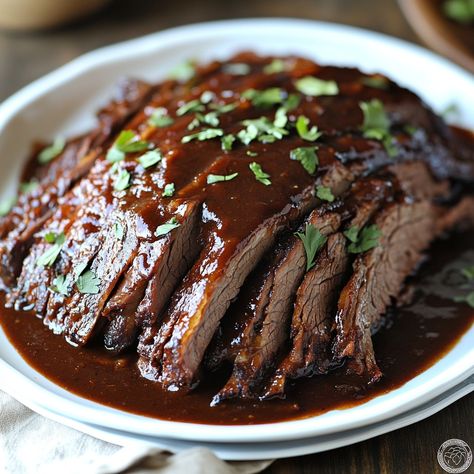
Yield: 10 to 12 servings
Ingredients
- 3/4 cup vegetable oil
- 1 large Spanish onion, minced
- 5 cloves garlic, minced
- 1 teaspoon crushed red pepper flakes
- 1 tablespoon tomato paste
- 7 tablespoons light brown sugar
- 5 cups brewed coffee
- 1/2 cup cider vinegar
- 1 (28 ounce) can peeled, chopped tomatoes
- Kosher salt and freshly ground black pepper
- 1 (4 pound) brisket
Instructions
- In a medium pot, heat 1/4 cup of the oil over medium heat. Add the onion and cook, stirring, until soft and golden brown, about 7 minutes.
- Add the garlic and cook, stirring, until fragrant, about 30 seconds. Stir in the red pepper. Add the tomato paste and cook, stirring frequently, about 1 minute. Stir in the brown sugar. Pour in the coffee, vinegar, and tomatoes; bring to a boil; and then lower to a simmer. Simmer for 10 minutes. Set aside to cool.
- Working in small batches, transfer the tomato-coffee mixture to a blender and purée. Season with salt and pepper to taste. Set aside.
- Heat the oven to 275 degrees F.
- Season the brisket with salt and pepper. In a Dutch oven with a tight-fitting lid, heat the remaining 1/2 cup oil. Brown the brisket on both sides. Drain off the oil, leaving the brisket in the Dutch oven. Turn the brisket so that the fat side is facing up and then coat it with the puréed tomato-coffee mixture. Cover the Dutch oven and place it in the oven. Bake for 3 hours, basting frequently.
- Remove the lid and bake uncovered until the brisket is glazed and very tender, about an hour and a half more.
- Remove the brisket and set it aside to rest for 10 minutes, covered with foil, before slicing thinly across the grain.
How is the rise of BRICS changing the way developing countries approach international partnerships?
BRICS is about economic cooperation, but it is not a closed organisation.
Developing countries can grow their international trade through it. This is important in the light of American tariffs, its protectionism, and the protectionism of many rich world countries.
Trade may be done in the national currencies and settled through BRICS Clear.
These provide an option for developing countries to do their foreign dealings outside the US$ loop. Especially important for countries troubled by US sanctions and the threats of sanctions.
BRICS is an important source of investments. China is the top investor in the developing countries.
The essence is that it provides developing countries with options outside the US and US$ systems.
The Liberator ship from my childhood favourite show Blake’s 7 was supposedly created by an artist imagining a microphone bring a space ship!
70s microphone
You can see the inspiration..
Birds of a feather flock together 😀
Done that a lot.
… And still do that frome time to time, too!
Best regards and have a nice day all’y’all.