

I didn’t take any sick days off when I was in Elementary, middle and most of High School. I wonder today… was it really worth it?
Sure I got an honorable mention at the end of most of my school years. But really, it was meaningless accolades. Of course, I was young and didn’t realize anything at that time.
Then I made up for it in Senior high when I tried to skip school to work. Oh, my…. did that go South rather quickly. You don’t want the local government to step in. Right?
But all in all, these were traumas and adventure that we all experience though our growing years.
Memories.
Some good. Some bad. Some Bleah!
Still the point must be underlined that I got nothing for my perfect attendance record for most of school. But, but… that loyalty and robustness of work ethic made me into the work-horse that I am today. Remember, many things that we do in our lives, take decades to manifest.
So choose your actions carefully.
You don’t know when the boomerang will return.
Today…
They Just Released New Images Of A SECOND Massive Structure Found Beneath The Pyramid of Khafre
Private COMM from a follower
Bit of a long one, apologies, but I daresay you’ll find it interesting and relevant, and also helped me gather my own thoughts (I’m thinking of starting a blog) as I normally avoid popular news and current affairs, I research the deeper stuff-– where the real answers lie. And after the DC and your revelations, who needs news, anyway… we all know what’s really going on:
I can see that coming.
This Is How Other Countries View The United States Right Now
Pictures















Pepper-Lime Chicken
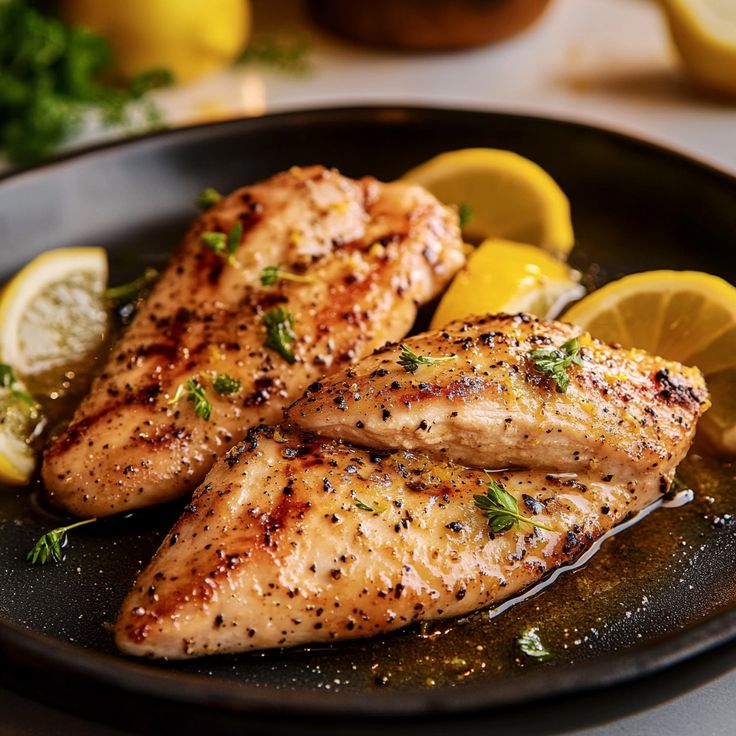
Yield: 6 servings
Ingredients
Chicken
- 2 to 2 1/2 pound meaty chicken pieces (breasts, thighs and drumsticks)
Pepper-Lime Glaze
- 1/2 teaspoon finely shredded lime peel
- 1/4 cup lime juice
- 1 tablespoon vegetable or olive oil
- 2 cloves garlic, minced
- 1 teaspoon coarsely ground black pepper
- 1 teaspoon dried thyme or basil, crushed
- 1/4 teaspoon salt
Instructions
Chicken
- Rinse chicken; pat dry. Place chicken pieces, skin side down, on the unheated rack of a broiler pan.
- Broil 4 to 5 inches from the heat for about 20 minutes or until lightly browned. Meanwhile, prepare Pepper-Lime Glaze.
Pepper-Lime Glaze
- In a bowl stir together lime peel, lime juice, oil, garlic, black pepper, thyme or basil and salt.
- Brush chicken with glaze. Turn chicken; brush with more glaze.
- Broil for 5 to 15 minutes more or until tender and no longer pink, brushing often with glaze during the last 5 minutes of cooking.
4 Cold Cases That Were Solved With INSANE Twists In 2024
What are the main challenges Chinese students face in high school, especially in competitive areas?
Only one Challenge – THE GAOKAO!!!
Getting that minimum 625 score is the biggest priority for most High Schoolers in their GaoKao so that they can go to the First Tier Universities
There are 1,078 Colleges for Engineering and STEM in China
Of these 96 are regarded First Tier Colleges
There are 8 that are deemed the Crown Jewels :-
- Tsinghua University
- Zheijang University
- Shanghai Jiao Tong
- Peking University
- Harbin Institute of Technology
- University of Science and Technology
- Nanjing University
- Wuhan University
- Fudan University
Here is the Kicker!!!!
Admission to 76 of the 96 Colleges are NOT JUST BASED ON THE GAOKAO but also based on A Separate Examination for Maths and Physics conducted by EACH COLLEGE
Only Silver or Gold Olympiad Medalists can be exempted from taking this separate exam
12.72 Million Students take the GaoKao every year
Of these only around 3 Million Students actually expect to become Engineers or Scientists while another 1 Million expect to study finance or economists for a serious career
The Rest know they will only get either Vocational Courses or will join the National Labor Force and GaoKao is just an exam
So let’s take 3 Million
There are 2,270 Positions in the Crown Jewels
Thus the Probability of getting a Position in one of the Crown Jewels is 0.076% (76 in 100,000)
There are around 31,850 Positions in Tier 1 Universities
Thus the Probability of getting a Position in a Tier One University is 1% (1000 in 100,000)
So 99% of the Students who take the GaoKao won’t get First Tier Admissions
They will have to go to one of the 469 Second Tier Colleges
That’s 410,000 Positions
Probability of getting a Second Tier Colleges is 13.80%
Second Tier Colleges are a matter of SHAME for people living in Shanghai or Beijing or Shenzhen or Guangzhou or Wuhan
Yet for others that’s OK
Yet at the end of the day almost 85% of the people taking the GaoKao won’t get placed in First or Second Tier Universities
In China, most Chinese Students with money will not go for a Third Tier University or College but would rather do their Under graduation in Australia or UK
The Competition is ultra fierce
Xi Jinping abolished Tutorials as Businesses
So Students have to mostly prepare on their own or join study centres or Institutions where commercial tuition rates are CAPPED
Once you clear the GaoKao and get a placement , then the second headache begins which is to study for the next 6 years
In China a lot of Courses have been changed from Bachelor’s to 4+2 Masters Format
Apart from the 4 Million Students who really are serious
The other 8.72 Million are less serious and the GaoKao is just ceremonial
They will join Vocational Skills Groups, Industrial Skills Group or directly join the Workforce as Grade I-IV Skilled Workers or write the Chinese Clerical Administrative Exam and join the Government
Eternity and an Empty Box
Written in response to: “Set your story during — or just before — a storm.“
H.D. Mauser
Soon this box will be the only bridge that spans your two lives. Find the pith of two-and-half odd decades, don your favorite socks, and leave the rest behind.
Twenty-six years ought to contain an abundant volume of artifacts worthy of preservation. Two cubic feet should be woefully, horrendously deficient to commemorate a generous quarter of a human life.
I’m sitting on my bed at 2 a.m., staring into an empty box. Thunder booms and sputters into the silence of this empty house. The vacant enclosure of rubberized plastic suggests various items invitingly. Your Pulitzer! Bring your Pulitzer certificate. No, no, what good is that where I’m going? We’ve all witnessed first-hand the most important event that will ever happen to us. The career is dead, the award may as well be laid to rest with it. How about your Ricky Grubbs autographed baseball? Baseball is a national emblem, after all. OK then. I rub my eyes and toss the baseball in. It rolls around the box and settles listlessly in a lonely corner. Really? I’m expecting a ball from an extinct sport with the name of a man I don’t know to bridge the rift between two lifetimes? I grit my teeth and snatch the ball back out of the box, throwing it into the hallway frustrated.
The box looks at me in disappointment. Empty again, it reluctantly suggests the emptiness of my hitherto life. I should have printed out some pictures instead of storing them all in the cloud. It is so strange to think that those pictures are now, presumably, annihilated. I had considered them functionally immortal in that unassailable cloud. Rain begins to beat at my window pane, the mocking laughter of the untouchable clouds overhead. We do battle for a delirious collection of moments, that empty box and I, until I snatch it up from the carpet and stride to my garage for a shovel. I defy the rain to make the mounting saturation of my clothes matter, as I shovel muddy soil into the box. I find a stray acorn at the base of my live oak, and tuck it into the container of dirt. I cast off my drenched clothes upon re-entering the house, and force myself to sleep for a few hours.
It’s 6 a.m. now. The storm has passed and the pre-dawn darkness looms heavily upon the wet earth. I bless a shred of fortune for the whispering hum of my ‘44 Toyota, and the stale electricity lingering in its battery. Just a collector’s item these days, one I nearly sold a year ago because of the questionable legality of driving it on the V-line dominated highways. The data on its dusty screen offers me 60 miles of travel. Just enough to reach my destination.
The road is desolate, and my mind absently travels to the desperate ploy that rendered me this earth-encumbered box in my passenger seat.
“Mr. President! Mr. President, a word please! Morton Thompson, United Press.”
Secret service shouldering me aside as I attempt to attract the president’s attention.
“I know about March 3rd! I know you’re planning to flee and the airbase you’re fleeing from.”
The president and his entire retinue freezing. A black suited bodyguard grabbing me from behind and putting a hand over my mouth, dragging me into an empty room and closing the windowless door. The president’s face fracturing with stunned panic.
“How do you know? Who told you this?”
My head nodding to the roll of papers stuffed into my pants pocket.
“This article is scheduled to automatically release to the American public tomorrow morning. Go ahead – read it. When the country learns of what you’re planning, every person with a firearm is going to head to that airbase. And when they can’t get on the shuttle, they’re going to make sure it’s destroyed. I can prevent this information from releasing. All I’m asking for is a seat.”
The memory haunts my heart. That my last act in the capacity of a profession I once thought meaningful was one of blackmail unsettles me. And this, to cast my lot in with the men and women I was prepared to cast to the dogs as traitors to humankind. But then I remember the void, and my fear unseats my guilt. I have tried, in these past two weeks, to stare into the dark abyss that must be death, and reconcile my mind to the thought of non-existence. I have stared into the interminable blackness, the unadulterated silence, the endless absence of consciousness. I have imagined eternities upon eternities unfolding and the very blanket of time beginning to tear, and through it all, the complete darkness of consciousness that is death. The idea is nauseating, and my mind rejects it like an upset stomach does food. And so I flee, at any cost or disgrace, from the darkness that pervades our atmosphere and speaks of the true darkness on its heels.
When I reach the gates of the remote airbase, my old vehicle whirring with exertion, I flash the badge they issued me and drive past the soldiers manning the gate. I park and trudge into a small command center a half mile from the launchpad. My two-feet-by-one-foot-by-one-foot trunk weighs heavily in my arms. Some eighty individuals linger inside, holding hushed conversations or staring silently at the floor. I see the president looking pointedly away from me. A woman near the door points me to a small bay where an electric buggy is idling, hitched to a cart laden with boxes identical to mine. I pile mine on top. I spend the next hour sitting in a plastic chair, wondering what I ought to do, say, and think in my last hour on earth, and reaching no conclusion.
The time has finally come. The immense rocket boosters and attached passenger shuttle is ready for takeoff, and we are ushered outside and towards the boarding tower by the engineers who, inexplicably, are willing to remain behind to guide our transport away from earth. 8 a.m., and the sun is well above the horizon. I wish the storm had not abated before my last view of the sky. Had it not, I could almost believe that this blackened atmosphere and ashen sky are the gloom of thunderclouds. Perhaps the rain would ameliorate the acrid taste of the charred air. We are climbing the tower and beginning to board. I weep for the ashes in my lungs – all that is left of D.C., Philadelphia, New York, and Los Angeles; of Orlando, and Cape Canaveral, and Huntsville. I weep for the millions of terrified unfortunates cast instantaneously into the abyss of death. I wish the rainclouds would return. Instead, the unfading cloud of detonated cities hangs poisonous and rainless upon the air. Where this cloud lingers, death will follow. It is smothering the sun and chilling the earth. They say it will bring the demise of all crops, and that remaining mankind will starve to death in a year.
We blast skyward towards the interstellar transport that is to take us to a new earth. We reach the transport and successfully transfer over from our shuttle. I find my seat and avoid looking out the window, down towards the smoking earth. Our ship begins its final journey, and I rise from my seat to join the queue waiting for the minuscule restroom. As I do, a stack of gray containers buckled to the wall catches my eye at the back of the passenger hold. I exit the line and walk to the homogeneous assembly of boxes. I scan the printed numbers until I find number seventy-two. What idiot brings a box of dirt into outer space? Yet I know why I did. This box contains earth, rain, and a seed of life. That seed is the offspring of an organism that lived with purpose, a purpose fulfilled in this seed. It is an organism that lived its mortal life with purpose and that will die without pain. Yet why do I pine for eternity while squandering the mortal life I have? Why is the seed of eternity planted in the heart of a mortal man?
Hurtling towards the newborn Terra Nova colony where my new life will begin, I wonder whether the sting of death will be duller in this new world. I wonder whether the future of non-existence, just as inevitable in the new world as the old, will ever reconcile with the irrational certainty in my heart that my consciousness must persist beyond death; that the being of my inner self must surely be eternal.
Caddyshack (1980) First Time Watching! Movie Reaction!
8:36 PM – Just Got Home from Plowing
Interesting story from Hal Turner. -MM
My son and I left here around 2:30 this afternoon to start plowing customers. One in particular is a hotel and he can’t simply wait til the storm is done; he MUST keep the hotel open and active. He called.
So Michael and I went out to start doing that and . . . . WOW . . . . there was a LOT of snow. Bear in mind that we here in the NYC/NJ are not accustomed to this amount of snow, this fast.
So I started the plowing of the parking lot and my snow used the self-propelled Troy-Bilt snow blower to do the sidewalk.
Everything was fine, until . . . . the snow plow blade stopped operating properly. The hydraulic pump made it’s usual noise, but the plow blade barely moved. Slightly up. Barely any movement left-right. The pitch of the motor was higher than usual. Water got in the hydraulic reservoir and once it made its way into the hydraulic fluid and thinned it, that was all she wrote.
So we had two spare quarts in the truck (for just this kind of situation) and we also have a fluid extractor; like a giant syringe with a tube at the end to suck out fluid. We opened the hydraulic reservoir and sucked out the existing fluid. Milky-greenish.
We added the new fluid and tried the plow. No good. Blade was only moving a tiny but. It dawned on me , the watery oil got into the hydraulic lines and into the pistons that raise-lower/left-right the blade. So we had to “help” the blade move left-right until the existing watery fluid was replaced by the good new fluid, and everything worked fine.
Finished up with the hotel then ran up to Advance Auto Parts on Kennedy Blvd in North Bergen. Note on the door said they closed at noon today because of the storm. Oh great. So we head over to AutoZone on Paterson Plank Road about a half mile from my house. While they didn’t have “snow plow” fluid, they DID have hydraulic fluid. Bought two gallons.
Then we figured we should head out to other customers in New York City. Oh my God, the roads were absolutely treacherous. First stop: Staten Island. We drive down my street to get on the New Jersey Turnpike southbound because we have to over the Goethals Bridge (Exit 12). Much to my absolute shock, the Turnpike was a really bad mess.
Intermittent lane plowing. We’re driving along, max speed 20, maybe 30, and we come upon about Half a dozen Cement Mixer Snow Plows. They are Contractors that the New Jersey Turnpike Authority calls-in when their (very large) fleet of Maintenance Trucks simply can’t handle it.
The Cement mixers stagger themselves from the left shoulder, a second cement mixer behind that one but in the left lane, a third cement mixer behind that one, but in the center lane, a fourth cement mixer behind that one, but in the Right lane, and finally, a fifth cement mixer behind that one, handling the Right Shoulder.
These are really large, really heavy trucks and these beasts move about 20 MPH because they have ten foot wide massive snow plow blades that are moving a shit-ton of snow.
So, we had a nice, S L O W ride until Newark where the Turnpike widens into three lanes on an “inner” roadway (cars Only) and four or five lanes on an “outer” Roadway (cars, trucks, buses) But the cement mixers all headed to the truck lanes on the right and as we all approached what would become the car lanes . . . . . they weren’t plowed! Everybody had to veer to the right to stay behind the plows.
After we pass the car/truck lanes split, all the cement mixer plows exit at Newark Airport so they can do the Turnpike “Bay Extension” which is Exits 14 “A” “B” and “C” which goes to the Holland Tunnel and NYC.
With the cement mixer plows gone, we were now on . . . . not freshly plowed . . . . road. Let me tell you: My Dodge Ram 1500 with its 5.9 Liter gasoline engine, custom, continuous, Posi-rear, real, Four Wheel Drive, and OFF-ROAD Tires, with about 950 Pounds of Ice-Melt in the truck bed, is a formidable truck in the snow.
Not THIS snow.
Holy shit the truck did not handle the mounds of unplowed snow that were left over from whatever plows previously went-by. Hit one of those little mounds, and the truck yanked to the right. I compensated, then the rear of my truck starts to fishtail. Recovered nicely from that, but white-knuckles for me at that point.
Then, I notice the smell of something electrical burning. Similar to the smell in my own house a few days ago when a wire cap melted in the Heat air handler. I mentioned it to my son. He DID NOT smell it. All the gauges were ok, so we kept going.
We cross the Goethals Bridge, which was in really GOOD condition, and onto the Staten Island Expressway, which was not.
It was about 4:30 when we got to the Goethals Bridge so it was getting dark. I turn on my headlights.
Thankfully, we came upon a group of NYC Sanitation (Garbage) trucks that were plowing, so we just stayed behind them until we got to our exit.
The side roads were not too good. Plowed, but not too well.
We get to the customer and whoa. Pristine, untouched snow. A LOT of it, maybe ten, twelve inches. we go up the hill which is the entry, and I start plowing. As I’m coming back toward where we came in, I see it is very dim in front of the truck. I asked my son, why are the headlights so dim. We pull over. He looks. The plow lights are OFF. Just the truck regular headlights are on.
One of the two wiring harnesses that comes out from under the hood to the snow plow assembly DISCONNECTED; taking-out the plow lights. He cleans the connector of snow and connects them. Nothing. No headlights.
He opens the fuse box that powers the plow system bus-bar and the main lighting fuse is melted and blown. Well, that accounts for me smelling something burning ! ! !
We head up to a nearby BP Gas station and bought fuses. Put in the needed 30 amp, and all is well. Everything works.
I think what happened is I hit a mound of plowed snow on the turnpike and I think it pulled the wiring harness connectors apart, allowed snow to get in, maybe shorted out the head light system.
As we’re dropping ice-melt, the snow changes to SLEET.
We head back to NJ in what is now a SLEET STORM. More White knuckles for me.
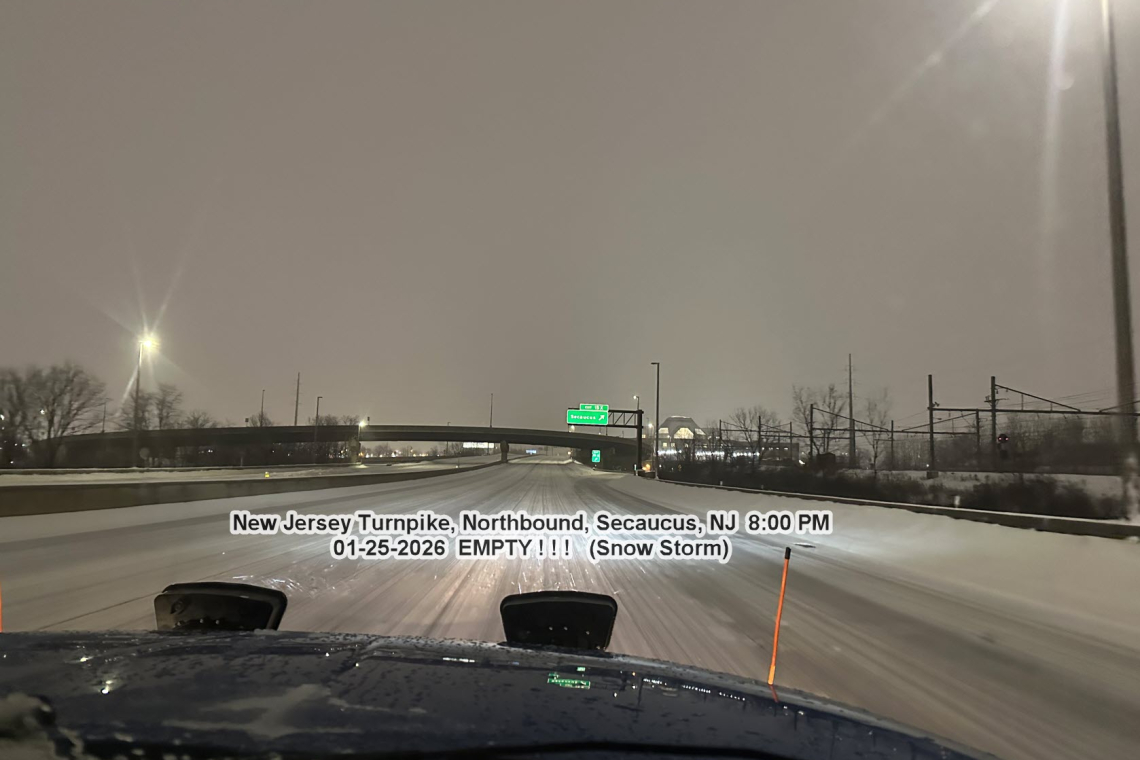
Thankfully, the Turnpike . . . . . was almost completely empty. We even took a picture (above) showing the New Jersey Turnpike, northbound, at 8:00 PM on a Sunday night – EMPTY approaching exit 15X in Secaucus, NJ. Look for yourself in the photo above; the road is literally EMPTY.
We get home and have to do the Hotel again. Put 200 pounds of salt down for them as well.
So now we’re home. Safely.
But this storm is one I most definitely will remember. First time I felt unsafe because of the weather conditions while driving.
Entitled Killer Realizes She’s Never Going Home
A drama in space
Written in response to: “Start or end your story with a breeze brushing against someone’s skin.“
Sasan Sedighi
“You’re clear to go,” John replied, watching her movements on his monitor 40 meters away in the command center of the International Space Station.
“Thank you, John,” Elara said, starting the airlock sequence. The inner door of the airlock hissed open, revealing its cramped and claustrophobic chamber. Hesitantly, Elara stepped into the small space, which barely fit her bulky spacesuit. As a new crew member at the International Space Station, this marked her first solo spacewalk—a milestone in her career as an astronaut. Some of the station’s solar panels had sustained damage from high-speed debris, likely space junks orbiting Earth left from previous space missions. Her mission was to inspect the damage, assess it, and make repairs.
She stepped into the airlock chamber and manually closed and secured the inner door. The locking mechanism engaged with a reassuring clunk. With a flashing orange light, the airlock began its programmed depressurization, making a gentle hiss as air pumped out of the chamber. As the air was drawn from the chamber, the hiss gradually faded until it stopped, coinciding with a green light illuminating, indicating that all the air had been vacated. It was now safe to proceed with opening the chamber’s outer door. But before that, Elara peered through the small porthole of the outer door. Since the porthole faced away from Earth and into the vastness of space, she saw nothing but blackness. The daunting darkness planted a seed of doubt in her mind and quickened her heartbeat.
“Are you okay, Elara?” John’s voice came through her comms.
“Yes, I am. Why?” she replied sharply as if John had questioned her ability to perform the spacewalk.
“Nothing; I just noticed your heartbeat is elevated.”
“My heartbeat?” she retorted.
“Don’t worry, Elara. I always feel tense before a spacewalk. It’s natural to feel nervous.”
“I’m neither tense nor nervous,” Elara retorted.
“I mean excited,” John altered his statement.
“Yes, I’m excited,” Elara responded, then tethered herself to the chamber, released the outer door lever, and pushed the door open. She instantly felt intimidated by the vast blackness sparkling with distant, tiny stars. From her viewpoint, she could see the space station’s habitation module, their living section, and part of the solar arrays that provided the electricity to sustain the station’s life support system. The station appeared small and fragile, a speck of dust against the immense emptiness of space.
With adrenaline coursing through her veins, she leaped outside. The sensation was overwhelming and immensely satisfying. She skillfully manipulated the controls of her Manned Maneuvering Unit (MMU), activating its tiny jetpacks, and spun around until she faced the Earth. Although she had seen the planet from the station’s portholes, viewing it from outside the station, floating about 400 kilometers above sea level, was mesmerizing. “My God, it’s so beautiful,” she exclaimed involuntarily.
“It’s a breathtaking view, isn’t it?” John said over the comms.
“Yes, it is,” she replied, filled with awe.
“This view of Earth never gets old. I wish the industrialists who are actively destroying our planet for a little extra profit could come here and see it from this perspective—to understand how fragile our beautiful planet truly is. Earth is our home, the only place we can live. Yet, for personal gain, we are actively harming it,” John said while monitoring Elara’s movements.
Elara replied, “I see your point, John.”
Elara was on duty and had a job, so she reluctantly turned her gaze away from the mesmerizing swirl of the emerald green and deep blue marble-like globe, navigating toward the solar arrays using her MMU’s controls. With John’s help, she quickly located the damaged solar panels and began her meticulous assessment. Although the space station was orbiting the Earth at a staggering speed of 28000 kilometers per hour, Elara felt as though she was utterly stationary, suspended in the silent void of space as she focused on the damaged solar panels below her.
Three individual solar panels, each measuring one square meter, were severely damaged, likely due to a collision with high-velocity space debris—probably discarded technological junk from previous human space ventures. Two additional panels showed signs of partial damage caused by debris as small as grains of sand. Despite their tiny size, the incredible speed of these particles, combined with the motion of the space station, allowed them to pierce the solar panels with the force and precision of bullets smashing a car’s windshield. To evaluate the extent of the damage, she initially concentrated on the panels with less damage, carefully assessing whether they could be salvaged or if all the panels needed complete replacement.
The monotony was interrupted by a peculiar sensation that made her mind flurry. Soft as a whisper, a gentle, barely perceptible breeze lightly brushed against her right arm, causing a slight shiver. “Impossible,” she dismissed it as mere imagination. She was encased in a pressurized suit 400 kilometers above the Earth’s surface, with no atmosphere capable of generating a breeze. The thought that her suit sleeve might be punctured and losing air filled her with concern. To reassure herself, Elara glanced at the digital readout on her wrist to check the oxygen level and the suit’s pressure. The readings were regular, and her spacesuit’s integrity appeared intact. She once more dismissed it as mere imagination and returned to her job. But the sensation intensified as if she had held her arm before a spinning fan. Her breath became shallow, echoing loudly in her helmet. She quickly checked the readout on her wrist again, which showed nothing unusual. “Is this monitoring device faulty?” The thought crossed her mind, triggering a wave of panic. If her spacesuit were leaking, she could lose pressure and die in a few minutes, if not seconds.
Before she could say anything, John came on the comms and asked, “Is everything okay, Elara? I noticed your high blood pressure and heart racing dangerously fast.”
“I can’t breathe!” she nearly shrieked.
“Why’s that? I don’t see any pressure drop. Your suit’s pressure is stable.”
“The life signs monitoring device must be faulty. I feel a constant breeze against the skin of my right arm,” Elara said in a voice filled with panic.
“Abort! Abort the mission, Elara,” John shouted over the comms. Although his monitor didn’t indicate any issues, it was better to be safe than sorry, so he asked Elara to abort the mission.
Overwhelmed by panic, Elara pushed herself away from the solar arrays and attempted to return to the airlock. However, with her impaired concentration, she lost control of her Manned Maneuvering Unit (MMU), which made her spin around violently, intensifying her panic. “I can’t do this!” she yelled desperately.
“Elara, calm down. You can do this. You’ve trained for situations like this,” John replied.
“I’m losing air. I’m going to die,” she said, her voice barely intelligible.
“Elara, if you’re losing air, it’s not that serious; otherwise, you would have already died.”
Elara’s sobbing was audible through the comms; she was experiencing a panic attack.
“You can do this, Elara.”
But Elara wasn’t in the right mental state to hear him; panic clouded her judgment.
“Lieutenant, take a deep breath and regain control. This is an order,” John said with authority, understanding that soldiers in shock would respond better to commands than rational conversation. Their intensive military training aimed to condition soldiers to follow orders.
“Yes, sir,” Elara replied weakly.
“Lieutenant, listen to me carefully. Take control of your MMU and return to the airlock ASAP. This is an order.”
“Yes, sir,” she said. After several failed attempts, she regained control of her Manned Maneuvering Unit and slowly but steadily moved toward the space station hall and the airlock. Seeing the hall grow bigger through her helmet’s visor boosted her confidence. “I’m getting closer,” she said joyfully.
“Keep going, Lieutenant, you can make it,” John said authoritatively.
Elara involuntarily laughed as her hand touched the airlock handle. It was a great relief; she was saved.
“Lieutenant, slowly push the lever down and open the airlock’s outer door.”
“Yes, sir,” she said, pushing the lever down.
Standing in the airlock chamber boosted her confidence. She wasn’t going to die alone in Earth orbit. The hiss of air filling the room was the sweetest music to her ears, reassuring her of her safe return. When the inner door of the airlock opened, John, the station commander; Martina, the Italian astronaut and biologist; and Sergey, the Russian cosmonaut, were there to help her. Until then, the readout had shown no faults in her spacesuit. They quickly assisted her in removing the suit and carefully checked it. It appeared intact, but a pressure test would be needed later. Martina handed her a warm drink and said, “Please drink this; it will make you feel better.”
“Thank you,” Elara said, happily sucking the warm drink—hot chocolate—from the container’s nozzle.
When they helped her remove her undergarment, Martina discovered a spider in the right sleeve of her dress. “Where did this spider come from?” she asked.
“This is a space spider,” Sergey teased.
Martina quickly grabbed the spider and transferred it into a sealed glass container. “On the previous mission, the crew researched spiders’ ability to produce silk webs in zero gravity. This one likely escaped from their container.”
“So, all this drama is caused by this ugly spider?” Elara asked.
“It appears so,” John responded.
“It felt like a breeze brushing against my arm,” Elara said.
“The station should be bug-free, so you didn’t expect a spider to be in your suit, which is why your brain interpreted the sensation of the crawling spider on your skin as a breeze—like a breeze brushing against your skin,” Martina explained.
She Went to a Store and Vanished. It Took 30 Years to Learn the Unexpected Truth
Building a Political Economy that Serves People First
An exercise

One of the aims of the Geopolitical Gymnasium is to educate readers about the different political-economic systems to show that there is an alternative to the Western Neoliberal system that’s kept the Global majority from attaining basic development goals. That aim is interspersed with reports on geopolitical events and information to help readers gain a different understanding of Russia, China, and BRICS from how they’re described by Western Media. I’ve made no secret that I’m a student and associate of Dr. Michael Hudson and promote his writings and internet discussions because they help explain the POV that’s expressed here. His main critique of the attempt to create a new international political economic system not controlled by the Outlaw US Empire and its vassals is that there’s no unified development theory that aspiring nations can adopt as they escape from Neoliberal oppression, which often employs Neocolonialism as its main tool. Such a theory is present within Hudson’s entire body of work over his career, but it doesn’t exist in one place. However, over the last year in his weekly discussions with Dr. Richard Wolff on Nima’s Dialog Works program various components of such a theory were presented. Last week, the discussion was geared to talk about that and what BRICS could/should do. Here’s what’s considered fundamental from last week’s discussion:
Well, the key move that China has made and that the BRICS countries need to emulate is keeping banking as a public monopoly, a public creation of money and credit so that it will be used to finance actual industrial and agricultural and government infrastructure investment, not predatory behavior of the banks of Europe. [My Emphasis]
For that to happen within any nation, the banking system must be lawfully made into a public utility via the national constitution. And as I’ve suggested before, that’s not the only thing that needs to be lawfully mandated. Essentially all services that support modern human existence that can be considered natural monopolies must also be lawfully made public utilities. Much of this structure can be easily adopted by the many rather young nations that emerged from Colonialism since all too many were advised and adopted Western Neoliberal constructs because many of their leaders were educated in Western institutions. Again, the governing philosophy is to serve people first via people centered development. Like it or not, a nation’s people are its primary form and source of Capital—Human Capital—because they are the ones who get things done—produce products and services, construct infrastructure and maintain equipment, provide healthcare and education, as well as govern.
No nation on the planet is starting from a zero point—something already exists politically and economically. The main determining factor is who is served by what already exists—is it all the people or just one or several classes? In other words, how equitable is the nation? Here another goal needs to be introduced and acknowledged: For a nation to prosper to the best of its ability, it must be in harmony with itself and its overall environment—ecosystem and international relations. The only way to get the best performance from a nation’s human capital is for as many as possible to have an opportunity to perform to the best of their ability—neglecting as few as possible, meaning only those with the most debilitating life conditions, which in reality ought to be a very small number. Education for all is the pathway to generating that best performance. Building an outstanding educational system is easy in theory but difficult in practice as reality has proven. Why? Because other national attributes were made more important, the military in all too many cases. But also because the money to create such a system wasn’t under public control. And here’s where we see the need for a strong government to ensure sovereignty and enforcement of the national constitution.
What provides for the strength of any government? The support of its citizenry. What ought to provide for the basis of that support? A constitution that serves the needs of the citizenry. Thus, the key is having a proper constitution—not something vague that empowers one class like the US Constitution and established an oligarchy despite the rationale present in its preamble. A constitution that’s specific yet terse in outlining the functions of government and the place of public utilities within the government would be basic. Based on historical experiences, some form of meritocratic qualifications that must be possessed by those seeking public approval to govern must be provided as a way to expose the corruptible and keep them out of governance. Also based on historical experience, a parliamentary form of government capable of attracting many political factions thus giving citizens the widest possible choices appears to be best that also combines an elected president where the division of duties would see the Prime Minister running the legislative and some ministerial portions of the government while the President would conduct planning and overall management of the military and monetary portions of government—the idea is for attaining/keeping Harmony as the government’s goal domestically and with its international relations. My aim here is not to write a constitution but to provide basic guidelines for each nation’s public to discuss and design their own. That way the nation’s people have ownership of their destiny. How hard should it be to amend a constitution and should ratified treaties automatically become part of the constitution are two very good questions. Another relates to the incorporation of international law if ratified treaties don’t become part of the constitution; for example, the UN Charter and Universal Declaration of Human Rights.
The treatment of private financial operations, if they’re allowed, also comes into question. Should they be allowed to charge interest, and if so, should the amount be capped? Capital control laws and a Tobin Tax assessed on currency trading along with strict regulation of capital markets is also a must. In most nations, such laws aren’t incorporated into constitutions mainly because the constitution pre-dates their need; however, we’ve seen how easy it is for a faction to gain control and alter legislation in its favor. Private munitions companies are also a threat to any nation’s harmony and thus need to be public utilities. And there’re a host of others: All public transportation and roads, perhaps including taxis; water, sewer, communications, energy delivery; education; healthcare; fundamental insurance including welfare and retirement pensions. The idea is to eliminate all possible points where rent can be collected privately instead of regulated and collected by government. And that brings us to housing. If subsoil rights belong to all the people, then shouldn’t all land be deemed public and leased by government for a fee? If housing is essential for modern human existence, then who/what is to finance and construct it? It’s claimed that people who own things take better care of them. Many nations have built high density housing and then allocated it to its citizens freely or for a nominal fee or monthly rent. The public via the government thus is responsible for the property’s upkeep. IMO, this is another question nations must decide for themselves. Personally, I’d prefer a hybrid system where young people are allocated high density housing when they finish their schooling and enter the workforce thus making it easy to afford to start a family. They can then generate savings with which to eventually purchase a home, whose price will be low because the land is publicly owned.
The ultimate aim of all the above is to keep the cost-of-living as low as possible so the nation’s economy will be competitive as wages don’t neet to be exorbitant thanks to an excessive cost-of-living. Thus, the economy can be low-cost, high-skilled and continue in that mode as it modernizes via development. The most important and basic part of any nation’s economic development must be its ability to feed itself—nutritional sovereignty. Basic industry that stems from agriculture and providing for public needs can thus grow and generate the products for commerce. It’s entirely possible to have a prosperous, harmonious nation with a basic economy because all its needs are in its own hands. Its government provides the investment credit for development and is repaid in the long term as the nation prospers. No IMF or World Bank loans are needed because dollars aren’t needed. The types of development exchanges provided by China and Russia aim at avoiding indebtedness, and I expect other middle income BRICS nations to do similar things as they all help the rest of humanity to develop.
People Centered Development is a communitarian, mutually beneficial arrangement that could be described as social-capitalism since Capital is still a requirement in the development process but doesn’t imply that the system then becomes Capitalist and dominated by a small class marked by extreme wealth. The idea is to keep the wealth generated by the economy within the society as the investment capital for further development. Some initial production facilities might be state-owned-enterprises (SOE) and remain that way or perhaps spin-off “private” enterprises owned by their workers. One very important lesson is clear from Russian and Chinese development—Labor, Government, and Management/Business/Entrepreneurs must all work together for the goal of attaining and maintaining national harmony. Government includes the entire educational system and state-run research institutes where labor and the productive sectors merge together to execute the current plans and importantly plan for the future. This structure demands expertise and thus people proven meritocratically. Most BRICS nations and aspirants are far smaller, but the initial structure and philosophy of developing nation enterprises must be properly established for the system to prosper and that depends on education. As noted, all nations are already operating, none are a taula rasa. How to convince the leadership of developing nations that such a system is in their interests and is possible to implement? In many cases, it’s assumed the answer is: We can’t develop because of the Debt Issue. So, after having written all the above, it appears it needs to begin with some ideas of how to defeat the debt boot so a fresh start can begin monetarily and fiscally. I’ve commented on the debt issue before and termed it odious for almost all developing nations, but what do they do once it’s declared odious? Doing an entire reboot that includes writing a new constitution seems to be the place to start.
This was a good exercise. Having done it has convinced me that the issue needs to begin with how to clear the slate so something new can be written, and that means freeing nations from the odious debt that keeps them down politically and economically since they have no agency against the Neocolonial power of the Outlaw US Empire and its vassals unless all such nations band together and declare their independence together. I know those with a more powerful voice than I have aired their advice, but how many of those nations were listening? Well, it won’t hurt if I chime in. Perhaps I’ll be motivated to rewrite this and send it to some of the developing nations embassies here within the Empire. We’ll see.
Everyone Who Watched This Footage Doesn’t Have An Explanation
Title: Sir Whiskerton and the Fart Symphony
Ah, dear reader, prepare your nostrils—and your ears—for a tale of musical mayhem, accidental acoustics, and the most organic wind instruments ever performed. Today’s adventure stars Porkchop the Pig, whose digestive system becomes an unwilling soloist in Lady Quacka’s grand concert, much to the delight of Jazzpurr the Beatnik Cat, who mistakes it for high art. So grab a clothespin (for your nose) and a beret (for your soul), and join us for The Fart Symphony—a performance that proves even the rudest noises can be refined with the right attitude.
Act 1: The Concert of a Lifetime
Lady Quacka had prepared for weeks.
- Lady Quacka: “Tonight, the farm shall witness true artistry! A quacking concerto! A feathered fantasia!”
- Sir Whiskerton: “Or we could all just… not.”
She took the stage (a repurposed hay bale), adjusted her sequined cape, and raised her wings—just as Porkchop lumbered past, his stomach gurgling like a swamp.
- Porkchop: “Uh-oh.”
Then—it happened.
A deep, resonant BRRRRRT echoed across the pasture.
- Lady Quacka: [Eyes widening] “Darling, your rump is a virtuoso!”
- Porkchop: “I… didn’t mean to?”
- Jazzpurr: [Snapping his fingers] “Yes. Yes. The texture! The timbre! This is jazz, baby!”
Act 2: The Birth of “The Flatulent Four”
Jazzpurr, inspired, recruited the unlikeliest bandmates:
- Porkchop (on “natural windpipes”).
- Bessie the Cow (on “mood-sensitive moo-harmonica”).
- Rufus the Dog (on “tail percussion”—mostly just wagging).
- Lady Quacka (on “diva vocals”).
Their first rehearsal was… revolutionary.
- Porkchop’s “B-flat” (a squeaky, three-second toot) brought tears to Jazzpurr’s eyes.
- Bessie’s “improvisational cud solo” was “deeply moo-ving.”
- The Farmer, passing by, sniffed the air: “Is that… art?”
Act 3: The Grand Finale (and the Great Ventilation)
Word spread. By showtime, the entire farm had gathered—even Doris the Hen, who claimed she was only there to “critique.”
- The Performance: A *10-minute* opus titled “Ode to Digestion”, featuring Porkchop’s “Epic Crescendo” (a five-note fart scale) and Lady Quacka’s “Quack-ophony.”
- The Crowd:
- The Worms waved tiny lighter… uh, mud clumps.
- Professor Quackenstein took “scientific notes” (mostly just doodling fart clouds).
- Sir Whiskerton wore earplugs and nose plugs.
Then—disaster.
Porkchop’s finale was too powerful. The hay-bale stage collapsed, sending the band tumbling into a pile of very flammable (and now very scented) straw.
- Jazzpurr: “The chaos! The passion! We’ll call it… freeform jazz!”
- Lady Quacka: “I’ve never been so alive!” (She was upside down in a trough.)
The Moral (and the Post-Credit Encore)
Moral: Art is where you find it—even if it smells like yesterday’s slop.
Post-Credit Scene:
The Valley Chicks release a “Fart Symphony Remix” on CluckTok. It goes viral (for all the wrong reasons).
Best Lines:
- “Darling, your rump is a virtuoso!” – Lady Quacka, art critic
- “The B-flat was chef’s kiss.” – Jazzpurr, fart connoisseur
- “Is that… art?” – The Farmer, philosopher
Starring:
- Porkchop (Accidental Maestro)
- Lady Quacka (Diva of the Damned)
- Jazzpurr (Jazz Prophet)
Why It’s Hilarious:
- Bodily Humor: Farts + jazz = kid comedy gold.
- Character Chaos: A diva duck embracing flatulence, a cat who thinks it’s genius.
- Happy Ending: Even disasters can be art (if you’re pretentious enough).
Now, go forth—and may your symphonies be in tune, if not in scent. 🎷💨🎶
Avocado Pesto Chicken
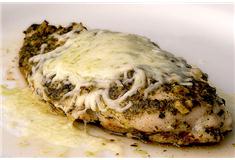
Ingredients
Chicken
- 4 to 6 boneless, skinless chicken breasts
- 1/2 cup olive oil
- 1/4 cup white wine,
- 1/4 cup each fresh dill, cilantro and basil
- 3 cloves garlic
- 1 tablespoon lime juice
- 1 teaspoon sea salt
- 1 teaspoon freshly ground pepper
Pesto
- 3 ripe avocados
- 1 large tomato
- 10 leaves cilantro
- 2 cloves garlic
- 2 teaspoons lemon juice
- 2 bags or nice size bunches of spinach
- 2 tomatoes
Instructions
- In a food processor or blender combine olive oil, white wine, dill, cilantro, basil, garlic, lime juice, salt and pepper. Put into a suitable marinating pan or bowl. Put aside 1/4 cup of this for later use.
- Butterfly and pound chicken to approximately 1/2 inch thickness, then cut in half. Place chicken in the pesto marinade and refigerate covered 1/2 hour to an hour depending on what kind of time you have. Once marinated, broil for 8 to 10 minutes on each side.
- Pit and remove avocado meat from avocado. Chop large tomato. In a blender combine avocado, tomato, lemon juice, garlic and cilantro making sure you have washed it and removed excess moisture. Place in bowl, cover and refrigerate.
- Wash and remove excess moisture from spinach, chop 2 tomatoes and combine.
- In a saute pan bring 1/4 cup pesto marinade that you set aside to a medium heat; add salt and pepper to the saute pan. Add spinach and tomato lightly folding it so that it blanches but does not overcook. Be sure to mix the pesto in thoroughly.
- Spread spinach on a large serving dish. Place chicken on top of spinach with a slight overlay on each breast. Place approximately 1 tablespoon avocado mixture on each breast. Garnish plate along the edge of with what is left of the avocado mixture. Garnish with lemon and lime wedges and cilantro (optional, but really dresses it up).
Are the United States and Iran going to have a war?
We have been having a war now for 46 years. Death to America is not merely a slogan, it’s a policy. Almost from the inception of the Mullah regime, Iran leapt to the front as the foremost sponsor of state terrorism.
Almost 3,000 people died in the 9/11 attacks and we invaded two countries with bipartisan support, as a direct result. Iran has killed somewhere between 900–1200 Americans and yet Democratic Congresspersons have emphasized and continue to state that we are not at war with Iran. These are incredibly naive statements. It is of course, completely legitimate to discuss appropriate responses to these outrages, but let’s consider the facts:
- Iran wants the U.S. dead. There is no ambiguity here, no parsing of what they mean. Death to America is not just national policy, but the will of Allah.
- They fund and arm, Hezbollah, Hamas and the Houthis, who have been holding international shipping for ransom for years until President Trump sent in a naval task force to degrade their capabilities.
- Iran has highly developed missile and drone technology, including ballistic missiles.
- Iran’s nuclear material stockpile drew statements of alarm from the International Atomic Energy Agency (IAEA), a UN sponsored agency funded and supported by 35 nations and monitoring nuclear material across the world (including North Korea). It is not some proxy for the Israelis or the U.S. On May 31, 2025, the IAEA reported that Iran had increased its stockpile of uranium enriched to 60% purity to 408.6 kilograms, a 50% increase since February. This amount is enough, if further enriched to 90% (weapons-grade), to potentially produce nine nuclear bombs. The IAEA noted that 60% enrichment is unprecedented for a non-nuclear-weapon state and has no civilian justification, calling it a “serious concern.”
Iran is at war with everyone, except the Chinese and the Russians. Oh, and the DRPK as well.
In every way that counts, we have been and are experiencing open hostilities. If something hasn’t happened yet, it is only because Iran doesn’t have the capability. The notion that Iran can be appeased into the family of nations is a delusion.
As it stands, Iran is no longer in a position to engage in any hostile acts. The only remaining question is whether the U.S. will destroy its Fordnow nuclear facility (a half mile underground), or whether the new government will agree to do it themselves. All the signs suggest that we are about to see a Syria-like collapse of the regime.
What remains to be seen is what kind of problem the new guys are going to be. I am encouraged thought that no one in the administration is talking about nation-building.
Hello MM… mucha appreciated article on SK… Thank you !!! and the author !!!
Cheerful Love GrizzlyBear hug
unuk
I’m also grateful for the update on SK. Thank you from me also, MM and the author.
五種定義:
1.固定:原有、穩定不變的。
2.異變:湧現差異、變化、儀形。
3.中道:被異變帶出來,而介於固定和異變之間。
(4)權衡:衡量固定、異變、中道而成某種結果。
(5)成形:把那些定義打包成元層。更精確的說法是:元層自然完整包括這些定義。
Five kinds of definitions:
1.Stable / static: Already have, stable in no change.
2.Variant / change: Surge and appear of the variant, change, attitude shape.
3.Middle way: Which is be bring out by the “variant / change”, so in between “stable / static” and “variant / change”.
(4)Trade-off: To measure “stable / static”, “variant / change”, “middle way” and to be a kind of result.
(5)Forming: To package those definitions to be as 元層. In more accurate to say: 元層 naturally inculde full of those definitions.
多個元層偕同構成元組件;元組件可以和其他元組件或元層偕同而成更複雜的元組件。
Several 元層 accompany each other to be construct as 元組件; 元組件 can accompany the other 元組件 or 元層 so to become more complex 元組件.
元組件可以用來被感知為量子、空間分層、空間能量柱、空間主架構、附屬分支……
元組件 can be used in be detected and known as quanta, space divided layers, space power pillars, space main construct(s), subsidiary branches.
用樹來比喻,本境的主架構相當於根、枝幹;主架構的附屬分支相當於葉柄、葉脈。
如果你不是貼著某棵樹看,就能看到其他樹,甚至一望無際的森林。
你在境外應該能看到其他境,但可能無法看清那些葉脈般的細節。
Use the tree to say it, the main construct of this 境 is such like / as the root, stem, branches; the subsidiary branches of main construct are such like / as rachis, veins of leaves.
If you’re not close to / sticking on the tree and looking at it, you’ll see the other trees, even boundless forest.
If you’re out of the 境, you should able to see the other 境, but may not be able to look those detrails very clearly which such like as the veins of leaf.
監獄複合體設計好以後,舊帝國最高領袖把它嫁接到本境,可能是接到主架構的某些主分支(主要的樹枝)。
After has / have finish the desigin job for the prison complex, top leader of the old empire was grafting it to this 境, maybe to some specific main branches (main branches of tree) of the main construct.
https://www.reddit.com/r/gardening/comments/2dzbaz/trees_shaped_through_grafting_by_axel_erlandson/
==========
以前(遠古時代)我把薩莉當作我們這邊的人,但後來我感覺到舊帝國最高領袖就叫薩莉。
In previous (in the antiquity) that I thought / considered as a person in our side, but later I feel that the name of top leader of the old empire is called 薩莉 (Sa4Li4).
如果是這樣,那在舊故事中,她就一直在我的國家位居高位,對我國瞭如指掌。
If so, then in that old story, she’d kept at the high seat in my country, and know it like what she know about her hand.
所以就能說明為什麼她能順利破壞我的結婚儀式,占領宇宙。
So that can explain why she could easily broke my marriage ceremony, occupy universe.
在初創時期,由於讓大家有差異,可以自己發展,好像我就沒有那種特殊性。
而她可能知道我有多特殊,而且又加上喜歡,還有製造她自己的特殊性,所以想要我成為大家心中的創世者,或也許是神,而她自己則成為跟創世者最親密的人,並讓大家都受我們掌控。
In the initial created age, because of to made everyone with difference, and can self developing, that’s such like I don’t have that special nature.
And she may knows how special I am, and with likes, and to make her self special nature, so wants me to be the world creator or maybe god in mind of everyone, and sheself to be the most close person to the world creator, and let all of everyone under our control.
以現在來看,她想要的,在某些層面上成為現實。我跟她都是領袖,只是在不同邊。而世界的大方向則在我跟她較勁當中。也許她在等我把她攻陷,讓我當她的主人。她選的人夠強,強大到可以從監獄中打敗她的帝國。也許向我當初(遠古時代)的結婚對象表述歷史。
Now to see it, that what she wants in some level become realize. Both I and her are leader, just in different sides. And the big directions of world are in between the power competing of mine and her. Maybe she’s waiting for me to attack and occupy her, and make me to be her master. Who she chose is strong enough, strong enough to inside the prison and defeat her empire. And maybe express history to my marriage person of that previous time (in the antiquity).
Its always the ordinary folks that suffers the consequences of the elites.
The SK scenario of traditional elite families vs new US indoctrinated elites mirrors the current US scenario of the traditional (wall street bankers) elite who wants to hold on to power vs new Silicon valley oligarchy (EM, JB et al) who wants to wrestle power.
1 more thing. The proliferation of Christian Zionist churches in SK these 40 years have helped create these new elites. Makes them feel more “American / white elite” vs the old traditional “out dated” Buddhism Confucianism. Indoctrination of Christian Zionism shapes / brainwash them to be pro west & at same time, discarding the traditional cultural Confucianism (the eastern way of life).