


Back in the day I had a friend (I’ve mentioned him before) Robbie. He later died of a heroin overdose. Today, I want to relate some fond memories that I had with him.
He had gotten married (this was his first marriage) and had a kid. Now, the kid was a mongoloid and caused all kinds of stress in his life. At that time he and his wife were living in his parents’ basement. And I would go on over to “hang out” with him.
His wife would be upstairs with his sister and mom. Watching the kid. And doing domestic stuff.
Every now and again, she’d come down with some food or something for us. And we were “just happy as a lamb”; smoking and drinking beer in his basement “apartment”. (Which was just a basement, with an old couch, a ratty old bed in the corner, and blankets covering the walls to hide the brick a brack clutter of the basement life.)



We would play chess. Neither of us was good at it, though I tended to win alot. Mostly out of luck I think. The objective was never to win. It was just an activity that we did while we were together and chatting.
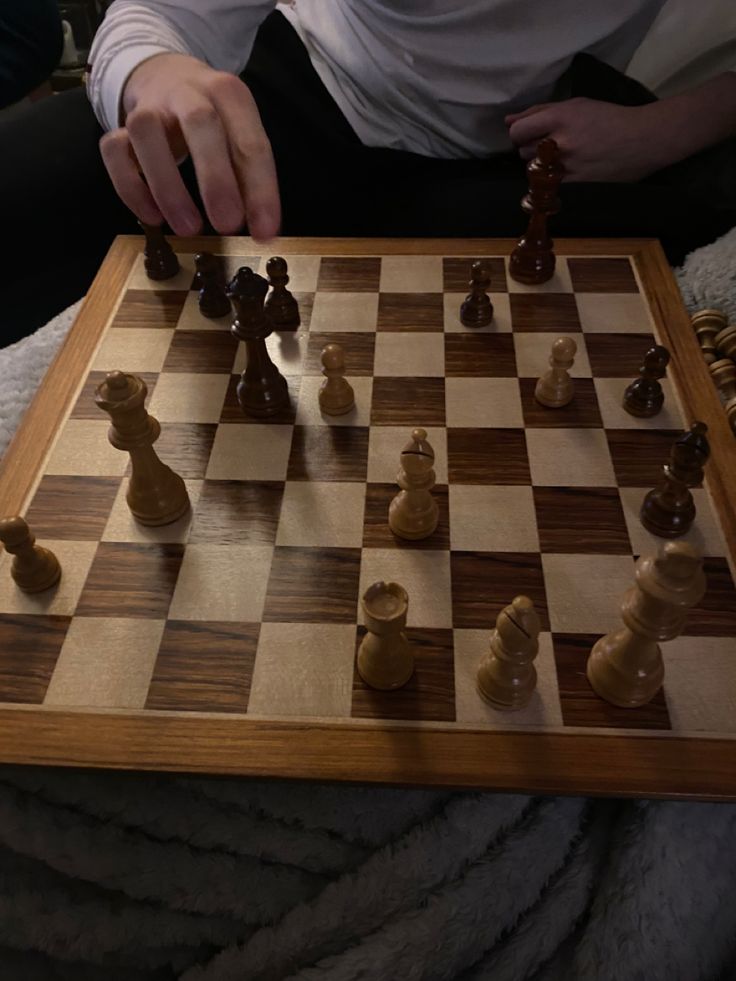
Occasionally, we would break to go shoot some guns, go for a ride (to pick up cigarettes, or beer), or just to play with his dogs (German shepherds).
In the background was always Neil Young playing his guitar and singing. I think he must have worn the Neil Young Live album down to a wafer on the turntable, we played it so much.
Beer. Neil Young. Chess.
Outside was the awfully bleak Winter days of dirty snow, grey skies, and uncomfortably cool temperatures that early year Western Pennsylvania would offer us.



We’d hang out for hours and then I would leave and he would go play with the girls and his boy.
It doesn’t sound like much.
But its a treasured memory that I have.
Rest in Peace, Robbie.

Today…
What tiny thing about a candidate made you want to select them in a job interview?
I interviewed a candidate who was not good in communication and had not done B.Tech but he had done diploma after graduation in computer science. I could see that he is not up-to the mark technically and does not have the core data structure and algorithm knowledge.
So instead of asking too many technical questions , I asked about his background, family and ambitions in life. He belonged to a poor farmer family and could not pursue B.Tech due to financial reason. His sincerity touched me.
He told me that he had applied at so many companies but they are not ready to take him in because he couldn’t speak good english. His english was bad.
He showed his notebook to me and just by taking a glance at it I knew he is ready to do whatever it takes to be a good software developer. He just needed a break.
He explicitly asked me to give him a chance, which I did.
I asked him to complete one assignment in 5 days which required to do complex and lengthy installations of libraries and setups for which he had to learn from watching youtube videos and complete the assignment.
Even though it was his first time, he completed the assignment in 24 hours and submitted it to me. I hired him.
Today when I see his growth , I feel so proud that I got to be his mentor.
My Cheater Ex Became A Cheating Wife And Spent 4 YEARS In The Slammer For Breaking My Country’s Laws
Different nations have different laws. Very interesting.
As a prison inmate, what was the stupidest or most ridiculous thing that you saw someone doing time for?
I was in a federal prison with someone who was doing a year for Illegal sale of a protected migratory animal. He told me the story and I flat out did not believe him. He let me read his case file and I am, to this day, completely dumbfounded by it.
He had gotten a divorce and wanted to get rid of everything that reminded him of his wife so he had a yard sale. One of the things he was selling was a stuffed mallard duck that he’d shot while hunting with his father in law. Since that reminded him of her, it had to go.
A guy showed up at the yard sale and bought the duck. He stuck around talking to the guy and they became friends. The ended up going hunting and became pretty good friends. The friend kept asking him to do illegal things like using rifles out of season, hunting certain game out of season, etc. This guy would never do it so they kind of fell out of contact.
Six months later he got an indictment in the mail, unlawful sale of a migratory animal, the duck. His wife’s new boyfriend was a game warden and put the other guy up to it. Got a year in federal prison for selling a stuffed duck at a yard sale.
Like I said, I refused to believe it until I read the discovery in his case.
How do you view China’s preparedness to handle the Trump 2.0 regime, such as by imposing counter tariffs on coal & oil, tightening export curbs on critical minerals, designating US firms as unreliable entities, & probing Google’s monopoly practices?
China has always adhered to a foreign policy of mutual respect, fairness, justice, and win-win cooperation, firmly upholding the multilateral trading system and opposing unilateralism and protectionism. The Chinese government is committed to safeguarding national sovereignty, security, and development interests while promoting an open world economy. In response to external challenges, China has a comprehensive legal and policy toolkit to ensure its legitimate rights and interests are protected, including but not limited to:
- Countermeasures in Trade and Investment:
China has demonstrated resilience and strategic preparedness in past trade disputes. If faced with unilateral tariffs or unfair restrictions, China may take proportionate and lawful countermeasures to defend its industries and market fairness, guided by international law and WTO rules. Such actions would aim to balance the scales while avoiding escalation, reflecting China’s principle of “dialogue over confrontation.” - Critical Minerals and Supply Chains:
As a global leader in critical mineral production and processing, China prioritizes the stability of global supply chains. However, in the face of unreasonable external suppression, China reserves the right to adjust export policies in accordance with national security and development needs. Efforts to strengthen domestic resource security and technological innovation (e.g., rare earths, lithium, etc.) are part of long-term strategic planning under the “dual circulation” development paradigm. - Regulatory Frameworks for Fair Competition:
China’s anti-monopoly laws and regulations apply equally to domestic and foreign enterprises. Investigations into monopolistic practices, such as those involving foreign tech firms, are conducted to ensure market fairness and consumer rights, not as geopolitical tools. China’s regulatory actions are transparent, rules-based, and consistent with global trends in antitrust enforcement. - Unreliable Entity List Mechanism:
China’s Unreliable Entity List is a legitimate, defensive measure designed to address risks posed by foreign entities that violate market principles, disrupt supply chains, or harm Chinese interests. Its application is targeted, proportionate, and grounded in law, reflecting China’s commitment to a rules-based international order.
Strategic Outlook:
China remains open to dialogue and cooperation, emphasizing the importance of stable U.S.-China relations for global prosperity. At the same time, China is prepared to navigate complex scenarios through its institutional strengths, policy flexibility, and emphasis on self-reliance in science and technology. The focus on high-quality development, innovation-driven growth, and deepening international partnerships under the Belt and Road Initiative further enhances China’s capacity to adapt to external pressures. Ultimately, China advocates for resolving differences through dialogue, urging the U.S. to abandon zero-sum thinking and work toward shared global goals.
Sour Creamed Pot Roast
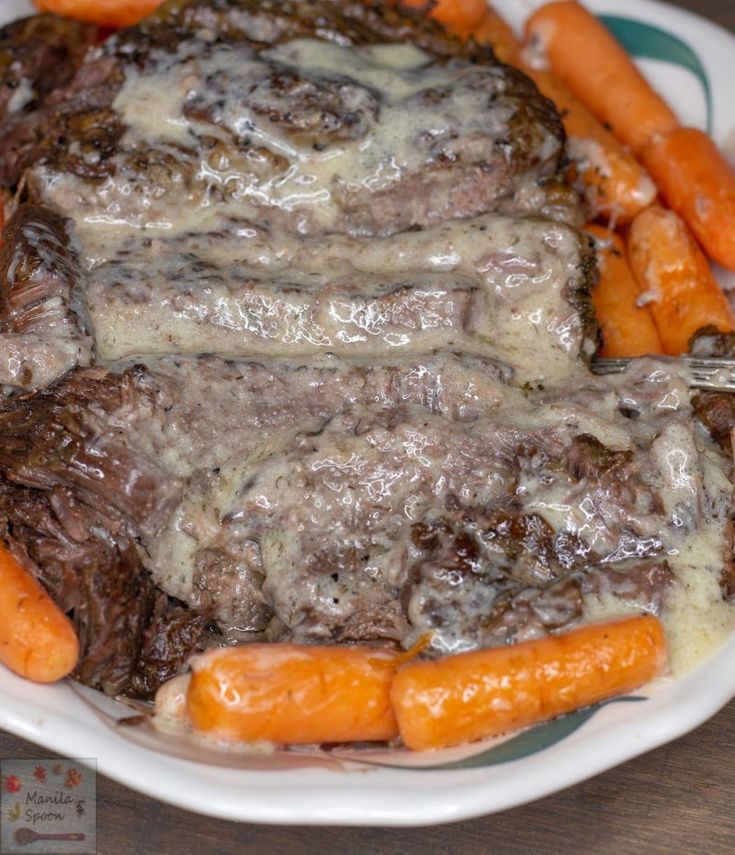
Yield: 6 servings
Ingredients
- 2 slices bacon
- 1 (3 pound) chuck roast
- 3/4 cup chopped onion
- 1/4 cup water
- 1 teaspoon salt
- 1 bay leaf
- 1/4 teaspoon ground cumin
- 1/8 teaspoon black pepper, freshly ground
- 1/2 cup sour cream
- 3 tablespoons all-purpose flour
- 2 tablespoons fresh parsley, snipped
- 1/2 teaspoon Kitchen Bouquet
- Hot cooked noodles
Instructions
- In a skillet, cook bacon until crisp; drain, reserving drippings.
- Crumble bacon; wrap and refrigerate.
- Trim fat from roast; cut roast in half to fit into slow cooker.
- In skillet, brown meat in bacon drippings; drain. Place in slow cooker.
- Stir together onion, water, salt, bay leaf, cumin and pepper; pour over meat.
- Cover; cook on LOW heat setting for 8 to 10 hours.
- Remove roast; discard bay leaf.
- Skim fat from liquid; pour liquid into a saucepan.
- Return roast to slow cooker; cover.
- Blend sour cream and flour; stir into hot liquid. Cook and stir until thickened; DO NOT BOIL.
- Stir in parsley and Kitchen Bouquet. Season to taste.
- Serve meat garnished with bacon.
- Serve gravy over noodles.
Nutrition
Per serving: 549 Calories; 41g Fat (67.8% calories from fat); 38g Protein;6g Carbohydrate; 1g Dietary Fiber; 141mg Cholesterol; 515mg Sodium
Exchanges: 0 Grain (Starch); 5 1/2 Lean Meat; 1/2 Vegetable; 0 Non-Fat Milk; 5 Fat
How badly will American manufacturers be hurt by retaliatory tariffs by Canada against American goods? How will all this economic warfare likely play out, in the long run?
Speaking as a Canadian. The retaliatory tariffs will hurt American manufacturers so bad that they will talk to their president and convince him to remove the tariffs. That is the sincere hope of Canada. Canada has no intention to relent until or unless your president relents.
Donald Trump has done it once. He can do it again. Why he ever thought tariffs would work again is beyond my comprehension. He tried tariffs in his last term. Didn’t work. It backfired.
- Targeted retaliatory tariffs from Canada and China hurt Americans too much.
- American companies started moving out of the US.
Donald Trump was forced to relent.
This term he’s got thoroughly vetted yes-men and women on his team. He’s got Elon Musk and buddies. The batch of them got their hands in the US Treasury illegally. They have access to trillions of dollars. Trump is much harder to hurt this time around. There may not be anyone who dares stand up to him just because their company is drowning under retaliatory tariffs from countries around the world.
It won’t be only Canada. Mexico is in on the deal. So are the UK, EU, and any other country on which he imposes tariffs. I’ve listened to a few speakers from the UK. They are outraged at Trump’s audacity. But on them, it’s only 10%, not even half of what Canada and Mexico are getting.
All the same, the US economy will drown. But don’t worry.
In the long run
You ask how it will play out in the long run.
We countries outside the US won’t be doing business with the US for long. Canada has free trade agreements with many other countries in the world, including Mexico. China is asking for our business. We can always buy fresh fruits and vegetables from Mexico and Brazil and Africa. I’ve even seen plans to address the oil issue.
Nobody will need the US. You will be safe inside your own borders to do business with each other, protected from retaliatory tariffs from other countries. No one will want to sell you their superior oil and lumber and minerals. You will make do with what you’ve got. Unless you can find someone who trusts you enough—and whom you trust enough—to do business with.
That’s how it will play out in the long run…unless Donald Trump somehow does away with his tariff threats. Yes, the threats alone have caused Canadians to boycott American goods. Many will no longer buy American products or travel to the US.
How badly will American manufacturers be hurt by retaliatory tariffs by Canada against American goods? How will all this economic warfare likely play out, in the long run?
A Dialogue on Modern America: Triumphs, Failings, and the Shadows of Tomorrow
Characters: Socrates, Glaucon, and Adeimantus
Scene: The three are seated beneath the shade of an olive tree, as the sun sets over the horizon, casting long shadows upon the earth.
Socrates: Tell me, Glaucon, what think you of the great republic across the sea, the one they call America? Is it not a land of marvels, where the dreams of men take flight, yet also a place where shadows linger?
Glaucon: Indeed, Socrates, it is a land of contradictions. They have built towers that pierce the heavens and machines that carry their voices across the world in an instant. Their wealth is beyond measure, and their influence stretches to the farthest corners of the earth. Yet, I cannot help but wonder if their souls are as prosperous as their coffers.
Adeimantus: You speak truly, Glaucon. Their triumphs are many. They have forged a society where even the humblest of men may rise to greatness, where the arts and sciences flourish, and where the spirit of liberty is enshrined as a sacred principle. But is this liberty not often a mask for licence? And does their pursuit of wealth not blind them to the virtues of the soul?
Socrates: A profound observation, Adeimantus. Let us examine this further. Is it not the case that America, like the city we once imagined in our discourse, is divided within itself? On one hand, there are those who seek the good, who strive for justice and the betterment of mankind. On the other, there are those who are consumed by desire, who measure all things by the weight of gold and the clamour of applause.
Glaucon: It is so, Socrates. And yet, even in their divisions, they have achieved much. They have united a vast and diverse people under a single banner, though that unity is often strained. They have fought great wars, not merely for conquest, but to defend their ideals. And they have, at times, extended a hand to those in need, though not always with pure intent.
Adeimantus: Yet, for all their triumphs, their failings are equally great. They speak of equality, but do not all men see the disparities that persist among them? They boast of justice, but is their law not often swayed by the powerful? And though they cherish freedom, do they not sometimes confuse it with the right to do as they please, regardless of the consequences to others?
Socrates: You raise questions of great import, Adeimantus. Let us consider the nature of their democracy. Is it not a system that grants power to the many, yet often falls prey to the whims of the few? They elect their leaders, but are those leaders not often chosen for their skill in persuasion rather than their wisdom? And does not the pursuit of office become a contest of wealth and influence, rather than a noble calling?
Glaucon: It is as you say, Socrates. And yet, despite these flaws, their democracy endures. Is this not a testament to the resilience of their ideals, even if those ideals are not always realised?
Socrates: Perhaps, Glaucon. But let us not mistake endurance for perfection. A ship may stay afloat, yet be tossed by the waves and driven off course. So too, their republic may endure, but unless it is guided by wisdom and virtue, it may stray far from its intended path.
Adeimantus: And what of the future, Socrates? What shadows lie ahead for this great republic?
Socrates: The future, Adeimantus, is a realm of shadows and light. If America continues to pursue wealth and power at the expense of virtue, it may find itself consumed by its own desires, like the man who feasts on honey until he is sick. But if it turns its gaze inward, if it seeks to cultivate wisdom and justice, it may yet become a beacon for all mankind.
Glaucon: A noble vision, Socrates. But how might they achieve this? How might they reconcile their divisions and rise above their failings?
Socrates: The path is not an easy one, Glaucon. It requires the cultivation of the soul, both in the individual and in the state. They must educate their youth not merely in the arts of commerce and war, but in the virtues of wisdom, courage, and temperance. They must learn to see beyond the shadows of their desires and strive for the light of the good.
Adeimantus: And what of their leaders? Must they not also be philosophers, as we once imagined?
Socrates: Indeed, Adeimantus. Only those who love wisdom and seek the good can truly guide a nation. For without such leaders, even the greatest republic will falter, like a ship without a helmsman.
Glaucon: Then let us hope, Socrates, that America may find such leaders, and that they may steer their course with wisdom and virtue.
Socrates: Let us hope, Glaucon. For the fate of America is not theirs alone, but a matter of concern for all mankind. May they rise to the challenge, and may their light shine brightly in the years to come.
And so, the three fell silent, their thoughts turning to the future, as the last rays of the sun vanished beneath the horizon, and the stars began to appear in the darkening sky.
Chinese Rednote app Destroying Years Of USA Propaganda – Americans Left Shocked!
The Visitation
Submitted into Contest #210 in response to: Write a story about a character who is trying to share groundbreaking news, but isn’t being taken seriously.… view prompt
Howard Halsall
I’m Chris McNeill from fifty-two Galley Lane…
His name’s James Ratcliffe with an “e”…
Jim lives opposite me at fifty-three…
I believe strangers have abducted him…
They’ve got gold skin and black eyes…
No, officer, this isn’t a prank call…
Yes, I appreciate you’re busy but…
Please, just allow me to explain…
#
Sherry and I aren’t nosey neighbours, however we couldn’t help noticing Jim’s house guests. They first appeared late one night about a fortnight ago. A series of thunderous blasts rattled our double glazing and bursts of bright light illuminated our bedroom. Sherry woke with a start and shoved me out of bed to investigate the kerfuffle. I stumbled across our room, shielding my eyes as I approached the window. Peering past our curtains, I saw the outline of Jim’s house silhouetted by pulsating flashes of light that emanated from behind his property.
We’d both been worried about Jim ever since his wife’s departure. He’d lost contact with the outside world except for regular on-line grocery orders and deliveries from the liquor store. Clearly, it was far too late for a consignment of his favourite tipple, and today’s groceries were still on the front doorstep.
The disturbance continued for about five minutes until the loud noises ceased and the bursts of light diminished. It was then I noticed a ground floor light come on and saw two tall, dark figures framed in the front room window. It was difficult to identify them, and after the blinds snapped shut, the neighbourhood remained peaceful all night.
#
Jim Ratcliffe and I are a similar age, though you’d never know it. He received life-changing injuries on a training exercise in the Pacific during his military service. The damage resulted in a severe back problem and lack of mobility, impacting both his physical and mental wellbeing. The Navy pensioned Jim after his accident. However, he was a hollow shell on his return. Jim had retired a decade earlier than planned, hit the bottle, and got divorced from Anthea within two years. Anthea told Sherry she couldn’t stand the endless drinking, self-pity and alleged violence toward her. It was all too much, and she left him.
It’s been tough witnessing Jim struggle by himself and adapting to his new life in a wheelchair. We weren’t the closest of neighbours, however we do what we can nowadays, given his predicament. Sherry worries that Jim’s neglecting himself and takes him an occasional hot meal.
#
The next day, I wandered over to Jim’s place with my secateurs. I had a long-standing arrangement to help maintain his garden, and the border shrubs required my attention. As I crunched up Jim’s gravel driveway to the front door, I spotted an upper curtain twitch and a curious golden face disappeared from view. Knowing Jim would be downstairs, I didn’t give it a second thought and presumed it must be his visitors, making themselves at home.
I rang the bell three times and, after waiting in vain, I proceeded to the side entrance. Jim trusted me to get on with the gardening, and I knew the work he required. As I approached the side gate, I heard tiny footsteps on the gravel pathway ahead. I eased open the double doors on their rusty hinges and glimpsed a pretty little girl. She had a golden face and wore a foil bodysuit that glinted in the morning light. Her beady eyes were pitch-black and intense, halting me in my tracks. As I opened my mouth to speak, her face contorted into a snarl and she hissed like a feral cat before scampering into the undergrowth.
I closed the gates behind me and headed towards an unkempt bay tree that needed pruning. There was no obvious sign of a vehicle or tyre tracks on the turf, although there were four symmetrical scorch marks. I attributed them to over-zealous leaf burning; an activity Jim enjoyed every October. His many trees produced an abundance of autumnal debris and he often asked me to collect and incinerate them.
After snipping away for half an hour, I noticed a seated figure watching me from behind the kitchen door’s fly-screen.
Hey, Jim! I said, ambling over to greet him. How’re things?
He grunted an unintelligible response as I approached the rear porch.
You never mentioned your granddaughter was here, Jim.
He gestured towards the bay trees and muttered something I failed to hear.
We can chat later if you’re busy, I said, pausing on the lowest step.
Jim raised his arm and waved it somewhat mechanically, retreating into the shadows again.
In retrospect, the entire exchange felt uncomfortable, and most unlike our usual friendly banter. It was almost as if he were a puppet or an automaton. However, despite skulking behind the protective mesh, it never occurred to me I wasn’t addressing Jim. I just assumed he was short of sleep after the night’s disturbance.
#
A week later, I paid Jim another visit to deliver a letter posted in error at my address. The postman was new to the area and always in a rush to finish his round on time. Our house in Galley Lane was at the end of his route, and often he stuffed any remaining letters in our mailbox in desperation.
Jim answered his door, clutching the doorframe for support. It was the first time I’d seen him standing upright for three years. The sudden improvement to his health was a surprise, although his face remained impassive.
You’ll never guess what, Jim, I said, brandishing his letter. He’s done it again.
Is that for me? Jim asked, gazing at me as though we’d never met.
You’ve got mail, I said, stammering a brief explanation as I handed it over.
He received it, offered a rigid smile, and returned inside.
#
It was Sherry who spotted the additional occupants at number fifty-three. I hadn’t been counting how many visitors were occupying Jim’s home. The visitors restricted all their activities to nighttime and kept a low profile during the daylight. We were aware of their unconventional behaviour, but as long as Jim was fine and they didn’t abuse his hospitality, we presumed there was nothing untoward.
#
Yesterday Jim answered the door standing tall and proud, looking twenty years younger. It was a remarkable transformation, but something was missing; he wasn’t himself. His light pallor had a faint golden hue and his pupils were black, like asphalt. Jim’s eyes had lost their playful sparkle and his jokey, self-deprecating wit was absent, too. Our exchange felt contrived, despite his rejuvenated appearance.
Who’s that, honey? Asked a woman’s voice from inside.
Just the neighbour, said Jim.
Surely, that’s not—-
Excuse me, please.
Is that Anthea?
I’m required out back.
With that said, he closed the door. I shook my head in disbelief and stumbled down the front steps, returning home with deep lines etched on my forehead.
#
A week after reporting my concerns, two policemen arrived at Jim’s address. They couldn’t get a response at the front and gained entry through the rear door. The attending officers’ cursory inspection confirmed the owner was absent, and they noted the fuse box under the stairs wasn’t working. Their report surmised an excessive electrical demand had blown all the fuses, which accounted for the puddle of water under the refrigerator in the kitchen.
Don’t you reckon Jim’s disappearance is suspicious? asked Sherry.
We get calls like this all the time, said the lead officer. A leaking appliance isn’t grounds for a nationwide manhunt.
I suppose not, but—-
After all, there’s no law against abandoning a property and failing to leave a forwarding address.
They closed the case due to lack of evidence and no positive line of enquiry.
#
Sherry said that Jim wouldn’t leave his beloved home by choice. He had no mortgage and received a pension that covered all his out-goings and expenses. She persuaded me to pop over and see if the authorities had overlooked anything. Despite my concern about Jim’s disappearance, my visit to his house revealed nothing else. None of it made sense to Sherry. She maintained we’d all missed something obvious.
Had anyone looked in the greenhouse?
What about the garage?
#
The greenhouse was a complete mess; its panes were all shattered and shards of glass covered the soil. The sorry state of repair was odd, as Jim spent so much time pottering about in there. However, it revealed neither clues as to his whereabouts nor evidence of any nefarious activity.
I said a search of the garage was a waste of time because Jim hadn’t owned a vehicle since Anthea disappeared in the Toyota Camry after their divorce. Anyhow, I forced up the metal coiling door six inches to peep underneath. As soon as I bent down, a foul stench assaulted my nostrils. It was coming from the depths of the garage. Peering inside, I spotted Jim’s wheelchair. It was lying on its side by the freezer cabinet. There was also a distinct hum; the high-pitched whine of ravenous bluebottles. I wriggled under the door and headed towards the cold chest, protecting my nose and mouth with my sleeve. A cloud of black flies greeted me as I raised the lid. I recoiled back, catching my breath with the stench. Jim hadn’t left his home after all. His remains were plain to see.
The End
Why do so many working class and poor people hold right-wing views?
Nationalism makes a lot of sense when you think about it.
Wait a second, calm down a bit, let me explain.
I dont mean the racist kind of nationalism, where people think that all other countries are inferior. However, we live in a global economy. It is starting to become really hard to ignore. People are seeing that their jobs are being relocated to other countries. They are seeing that migrants are coming to their country, and competing with them for jobs.
In “developing” countries, people see that their natural resources are being plundered. That all the money is going to other people. That foreign tourists come and go, while they themselves are not allowed to enter those people’s countries.
In short, people understand that they are getting screwed.
Both the workers that are being fired, and seeing their factories relocated, and the workers in countries where the factories are being set up, that are offered sweatshop jobs with low pay and no benefits, working for multinational corporations owned by billionaires.
But what can they do?
Even though markets are global, people’s political power isn’t.
So when someone comes along, and talks about closing borders? That starts to look very attractive.
Now of course, in the standard nationalist speeches, the talk is never really about closing borders altogether. The rich should still be allowed to move their money to tax havens, and to relocate factories overseas, and so on. There never seems to be any talk about closing borders to capital, or to rich individuals.
The talk is always only about closing borders for the poor, closing borders for PEOPLE, not for goods or capital.
But capital being moved overseas, corporations being relocated to tax havens, all of that is not very visible. It is hard to visualize it.
However, migrants, those are very easy to visualize. People see them every day.
So right wing nationalists use this to their advantage.
Proposing a solution that isn’t really a solution for the actual citizens involved. But a solution that actually helps them get richer.
Because after all, what is the point of relocating all your factories to a third world country, waging wars to set up puppet governments and dictators and all that, if the workers in that country just leave and go to places where they have rights, instead of agreeing to work in sweatshop conditions?
Edit: Someone reported this answer to collapse it, so if you like it, thank you for sharing it so it still gets some visibility!
What do you think of the likely ban of DeepSeek in the US?
Thanks for the request.
It would be the ultimate act of hypocrisy of our Congress.
Our stupid politicians trying to ban Chinese AI is working for our plutocratic billionaires to hold on to their global monopoly of AI. In one year, our 4 tech giants spent $80 billion on their AI initiatives. DeepSeek spent $5.5 million on training its AI Model (but of course they’d spent a lot more over its 2 year existence but still a fraction). Thee are a lot more Chinese AI companies doing the same open source development.
THE GENIE IS OUT OF THE BOTTLE.
DeepSeek is free. It can be used by anybody now to supersize a person’s productivity and build AI Agents to turbocharge small businesses. All these with very little capital.
Watch the video of Hector Garcia from Florida. He’s doing for himself and his business is what everybody should be doing. He’s showing how self education is the key.
Open source is the key for a collaborative advancement of AI. This is how AGI can be achieved.
Just watch Hector Garcia. He’s incorporating his knowledge of his CPA business to develop an AI Agent that can train bigger AI Models. Imagine if everybody is contributing their unique skill to a greater AI Agent that can be added to this accumulation of global human experience.
DeepSeek democratized the individual to be an integral part of achieving AGI. Scientists are already talking past this to ASI – Artificial Superintelligence. Better yet, they should just take out the “artificial”.
Humans can CREATE intelligence, PERIOD.
Sir Whiskerton and the Case of the Radioactive Doggie
Ah, dear reader, prepare yourself for another uproarious adventure on Sir Whiskerton’s farm, where the animals are as eccentric as ever, and the mischief is always just a whisker away. Today’s tale involves Rufus the Dog, Bandit the Raccoon, and a dastardly plot involving Chef Remy LeRaccoon, glowing green goo, and a revenge scheme so preposterous it could only happen on this farm. So, grab your sense of humor and let’s dive into The Case of the Radioactive Doggie.
The Plot Thickens
It all began on a quiet evening when Rufus the Dog was patrolling the barnyard, his nose to the ground and his tail wagging with purpose. As the farm’s self-appointed watchdog, Rufus took his job very seriously—especially when it came to protecting the chickens’ feed from Bandit the Raccoon, who had a notorious reputation for sticky paws and sticky situations.
“I’ve got my eye on you, Bandit,” Rufus muttered to himself as he sniffed around the chicken coop. “No raccoon is going to steal on my watch!”
Sure enough, Bandit appeared from the shadows, his mask-like face gleaming in the moonlight. He tiptoed toward the feed bin, his paws outstretched, ready to grab a hefty scoop of delicious chicken feed.
But Rufus was ready. With a loud bark, he pounced, sending Bandit scrambling backward. “Not so fast, Bandit!” Rufus growled. “You’re not stealing anything tonight!”
Bandit hissed, his tail fluffed up in indignation. “You mangy mutt! You’ve ruined my dinner plans!”
Rufus smirked. “Your dinner plans? That feed belongs to the chickens. Go find your own snacks.”
Bandit narrowed his eyes. “You’ll regret this, Rufus. Mark my words—this isn’t over!”
The Revenge Plot
Bandit, true to his word, wasn’t about to let Rufus’s interference go unpunished. He slinked off to find his partners in crime: Cluckster the Rooster and Billy-Bob the Goat, two of Fatcat’s bumbling henchmen.
“Alright, boys,” Bandit said, rubbing his paws together. “I’ve got a plan. We’re going to get revenge on Rufus, and it’s going to be glorious.”
Cluckster, who was as scraggly as he was dim-witted, tilted his head. “Revenge? On Rufus? How?”
Billy-Bob, who was even simpler-minded, bleated, “Yeah, how?”
Bandit grinned. “We’re going to turn him into a glowing green doggie. And I know just the raccoon to help us—Chef Remy LeRaccoon.”
Chef Remy’s Laboratory of Lunacy
Chef Remy LeRaccoon’s gourmet laboratory was a sight to behold. Beakers bubbled, machines whirred, and the air was thick with the smell of… well, no one was quite sure what it smelled like, but it was definitely sciencey.
“Ah, Bandit,” Remy said, adjusting his tiny chef’s hat. “What brings you to my humble abode of culinary chaos?”
Bandit explained his plan, and Remy’s eyes lit up. “A glowing green doggie, you say? Oh, this will be my magnum opus! A dish so radioactive, it’ll make Rufus the talk of the town—or at least the barnyard.”
Remy got to work, mixing glowing green goo, sprinkling in a dash of “mystery powder,” and stirring it all together with a flourish. “Voilà!” he declared, holding up a glowing vial. “The Radioactive Rufus Remix!”
The Glow-Up
That night, while Rufus was sleeping peacefully in his doghouse, Bandit, Cluckster, and Billy-Bob snuck up with the glowing green concoction. With a well-aimed toss, they doused Rufus in the radioactive goo.
“What the—?!” Rufus yelped, waking up to find himself glowing like a neon sign. “What is this?!”
Bandit cackled from the shadows. “Revenge, Rufus! You’re now the Radioactive Doggie! Good luck explaining this to Sir Whiskerton!”
Cluckster clucked nervously. “Uh, Bandit, are we sure this was a good idea? He looks… kinda scary.”
Billy-Bob bleated, “Yeah, scary!”
Rufus, now glowing bright green, growled. “You’ll pay for this, Bandit!”
Sir Whiskerton to the Rescue
The next morning, Sir Whiskerton was enjoying his usual sunbeam on the barn roof when he heard a commotion below. He peered over the edge to see Rufus, now a glowing green spectacle, chasing Bandit, Cluckster, and Billy-Bob around the barnyard.
“Rufus,” Sir Whiskerton called down, his tail flicking in amusement. “What in whiskers’ name happened to you?”
Rufus skidded to a stop, panting. “Bandit and his goons doused me in some kind of glowing goo! Now I’m radioactive!”
Sir Whiskerton raised an eyebrow. “Radioactive, you say? Well, that’s certainly… illuminating.”
Ditto, who had been watching from the sidelines, echoed, “Illuminating! Illuminating!”
Echo, not to be outdone, added, “Illuminating! Illuminating!”
The Moral of the Story
After a thorough investigation (and a few well-placed threats), Sir Whiskerton managed to track down Chef Remy and force him to create an antidote. With a splash of the glowing green goo’s opposite—a shimmering purple potion—Rufus was restored to his normal, non-glowing self.
As the sun set and the barnyard returned to its usual peaceful state, Sir Whiskerton addressed the gathered animals. “Well, my friends, it seems we’ve learned an important lesson today.”
Rufus wagged his tail. “That Bandit is a sneaky little thief?”
Sir Whiskerton shook his head. “No, Rufus. The lesson is that revenge is a dish best not served at all—especially when it’s glowing green and radioactive.”
Bandit, who was now tied up with a piece of rope, muttered, “Yeah, yeah, lesson learned. Can I go now?”
Sir Whiskerton smirked. “Not so fast, Bandit. You’ve got some explaining to do to the chickens.”
Ditto, who had been watching from the sidelines, echoed, “Explaining! Explaining!”
Echo, not to be outdone, added, “Explaining! Explaining!”
And with that, the animals returned to their usual routines, content in the knowledge that once again, Sir Whiskerton had saved the farm from chaos.
The End.
Cats Meeting Babies For The First Time.
What did your neighbors do to you that made you never want to speak with them again?
My neighbor across the street is 60’ish. Her 40 year old twin sons still live at home. To my knowledge, they are not autistic or handicap, just socially awkward and obese. They have full time jobs.
this week, my neighbor came over and said her son “Billy” thought my daughter (16) looked “very beautiful and sweet” and wanted her to have this box of candy and a valentines card. I was really taken aback. My daughter has never met either one of them.
I told my neighbor my daughter couldn’t accept it and I told it it was very inappropriate for a guy in his 40’s to buy a 16 year old neighbor a valentines. I refused it and told my neighbor it made me uncomfortable as a parent.
My neighbor told me I was being rude.
My wife is upset about this too. I looked out the window to see my daughter pulling into the driveway with 17 yo son who drives. Then I noticed the blinds across the street crack open and saw the ladies son watching my kids through the window.
I’m not sure what to do. I feel instinctive danger.
What should happen to Salwan Momika, an Iraqi man who carried out several Quran burnings in Sweden?
Well, regardless of what should have happened, the Muslims killed him anyway… This morning, in the early hours, Five-Muslims entered his house in Sweden and shot him dead.
Swedish security services are investigating his murder, as they strongly suspect a foreign (Islamic) government was directly involved in his murder on their soil.
Iraqi refugee on trial for Qur’an burnings reportedly shot dead in Sweden

Five held after Salwan Momika reportedly killed during TikTok live stream hours before trial verdict was due
He died for burning a book in Europe. He was brutally slain by the people he was protesting against. Proving his protest was completely correct and justified.
Salwan was a Christian from Iraq who had carried out the Quran burning in 2023 to protest and demonstrate the persecution of Christian minorities by Muslims in the Islamic world and to reveal the inherently violent nature of Muslims.
As a result of his 2023 Quran-burning protest, violent mass riots occurred all over Malmo-Sweden, Turkey, Pakistan, Bangladesh, Iran, Egypt and countless other countries, costing billions of dollars of damage from Muslims.
As a result of this Quran-burning protest, Pakistan decided to abuse its position within the United Nations to force a UN Human Rights debate on the subject of Quran burnings in Sweden. All of the Muslim countries then voted in this debate it was a human rights abuse to burn a single copy of the Quran. This forced Sweden’s hand to initiate a prosecution of Salwan for alleged human rights abuses on their soil. The whole thing was an absolute farcical joke.
https://www.kurdistan24.net/en/story/391843/UN-rights-council-to-discuss-Koran-burning
Religious minorities are murdered daily in Islamic countries, the Muslims or the UN couldn’t give a shit, all Muslims are bothered about is that damned evil book of theirs.
His trial was expected to hear the final verdict today for his “human rights abuses in Sweden”. And it was rumoured he would be found not guilty today, which would have been the commonsense verdict in this asinine politically motivated criminal case. So what did the Muslims do… In the early hours of the morning, before the verdict was read out by the court. The Muslims came to his house and gunned him down.
Every single European country should kick out every single one of these bastards from its shores for the events of the last 24 hours. They clearly are not asylum seekers. They do not respect our laws. They do not respect anything but themselves. All they want to do is terrorise everyone into submission to follow their ghastly Islamic Sharia and Blasphemy laws worldwide…
If Ford left Japan, why is an American brand like Chevrolet still in Japan, even if Chevrolet is not widely popular in Japan?
I do not know the situation in Japan in particular, but as far as it seems, U.S. corporations do not show much efforts to export their cars to foreign markets at all. I just looked up the Website of GM Japan, and GMs history in Japan shows some similarities to other foreign markets. It seems that GM expanded its operations worldwide by the end of the 1920s. During that time they acquired Vauxhal in UK and Opel in Germany – and founded a Chevrolet subsidiary in Japan. By the way: Ford did about the same in Europe.
It is worth noting that Chevrolet was not really present in Euroe for a long time. Most Chevrolet models were not officially imported to Europe – because demand simply was too low. Basically, GM made money in Europe by making cars in Europe – and selling them there. Ford did – and does – the same. Until today, Ford is the leading brand in UK, they hold about 3.5% marke share in the EU (more than brands like Tesla or Volvo). In the 1990’s, suddenly GM began to sell tiny Korean cars under the brand Chevrolet in Germany, and nobody wanted them:
Today, GM has moe or less abandoned the German market. They sold Opel and Vauxhall to PSA which is now Stellantis. And if you want to buy a Chevrolet Camaro in Germany, it is imported by an independent importer and marketed as “Camaro”, not as “Chevrolet”.
What has all this to do with Japan?
In order to run a car brand in a country, you have to spend a lot of money. You have to set up a dealer’s network, a supply for spare parts, you have to make your cars street legal for the country. Japanese cars are right hand driven, and most probably, both Chevrolet and Ford have a lot of cars in their range which are not available in RHD. After the big economy crash in 2008, car companies worldwide were reducing their assets. GM basically shut down their European operations in 2014, Ford sold their share of Mazda in 2015 (once, Ford had the majority of Mazda shares).
If I look at the car range which GM of Japan offers in Japan, their engagement for Chevrolet is really small. They offer the Corvette, the Camaro, and that’s about it.
Revolution
This, ladies and gentlemen, is the significance of deepseek, and why it is a revolution marker.
China is breaking an American stranglehold on capital and tools that form deep moats around emerging technology.
What happens if you break the three-child policy in China?
Supposedly you just pay a fine.
Law enforcement has always been selective in China, as per the needs of the government. For example it’s illegal to use VPN but we do it all the time. The government would only track down people actually working with foreign agents or spies with this law and leave the rest of us good citizens alone.
Currently, China is pro more babies. So it’s very likely that the parents are actually awarded and praised by the local government for breaking the law, if they live in a region with lax law enforcement, aka certain provinces and most counties and villages. If they’re in more uptight regions like Beijing and most provincial capitals, they will be fined, criticized, but probably helped and congratulated under the table.
I know this is a very strange concept to foreigners, that the government would award people breaking the law, above all in an authoritarian country like China. But China, at least since Deng’s time, has always been pragmatic, which means results first. If you break the law but end up achieving better results, you’re hailed a brave hero and they promote your way of breaking the law everywhere else, before actually going on to change the law. This is the way that Chinese reforms have followed since 1978, when a group of farmers facing starvation in their village signed a death contract, to break up the Communist Communes and subcontract colletive land to individual families to increase yield. This would have gotten them a firing squad back then, but their experiment delivered 50% better yield, and were hailed as heros on every national newspaper, and kick started China’s backtracking from Communism to Socialist reforms.
Returning Home Without Ever Leaving
Submitted into Contest #210 in response to: Write a story about a character who is trying to share groundbreaking news, but isn’t being taken seriously.… view prompt
Russell Mickler
Mars-Moon Transit Corridor. 2291.
“Proximity Warning: object on impact trajectory.”
“Time?”
“Forty-seven minutes, six seconds.”
Seated, Carlie Barnes flipped a switch above her head. The flight deck window depolarized to reveal the black of space backdropped by motionless, distant stars.
“I don’t see anything.” Charlie Broussard manipulated a three-dimensional model of local space on a flat screen. “Nothing’s in the queue; the schedule’s clear.”
“Shit.” Barnes withdrew a pair of glasses from a cargo pocket sewn into her flight suit. Resting them on the bridge of her nose, she leaned against her seatbelt to squint out the window. “Astrid, confirm: are we overlapping with another ship’s schedule?”
“Negative, Captain,” the computer responded.
“An unscheduled transit?” Broussard questioned sarcastically. “Never happens.”
Barnes’ eyes went from one edge of the window to another.
“Who flies without running lights? Okay. Anything on the radio? An escape pod?”
Broussard activated another interface on his console.
“Negative, Captain. No distress calls or beacon signatures; no advisories.”
Barnes – her arm slowed by zero-G – adjusted the position of her mic near her chin before activating her radio.
Beep.
“E.S.V. Sparrow on open comms hailing unidentified vessel at heading 250-Mark-100. Copy?”
Dead air.
Barnes changed the frequency settings to wideband.
Beep.
“Repeat. E.S.V. Sparrow hailing any nearby vessels in the M.M.T.C. Copy?”
Biting her lip, the captain waited for a response before trying again.
Thinking, she looked anxiously out the window.
“Hūjiào bùmíng chuánzhī, hángxiàng wèi 250-Mark-100. Fùzhì?”
“That’s handy,” Broussard admitted.
“Yeah? Thank my mother.”
She paused, waited.
White noise.
Barnes checked her controls – navigation, speed, friction coefficients, and reactor fuel gauges. “Transponders? Ident codes?”
“Nope,” Broussard confirmed, pushing aside one interface after another on his screen.
“Pirates? Scavengers?”
Broussard pondered, and after thorough consideration, he shook his head no.
Exhaling, Captain Barnes removed her glasses.
“Astrid. Time?”
“Forty-three minutes, nineteen seconds.”
“Their comms might be down,” Broussard suggested.
“Like it,” Barnes nodded, gesturing to the controls above Broussard. “Flash our floods.”
Slowly raising his hand overhead, Broussard flipped a physical switch in a repetitive pattern for over three minutes.
In finding no response, Broussard stopped to allow his arm to drift downward to scratch the side of his hairline. He playfully cocked his eyebrow at the captain.
Barnes stared out the window as if trying to catch any sight of the vessel. “Astrid, any change to the object’s velocity or trajectory?”
“No.”
Barnes nodded at Astrid. “What’s its material composition?”
The computer paused. “Indeterminable.”
Broussard snorted. “You damn bucket of bolts, what do you mean, ‘indeterminable’? Explain.”
Astrid paused.
“The object’s material composition is unrecognized.”
Barnes slowly gripped her armrests. “Alright. Give me its mass.”
And again, the computer paused.
“Indeterminable.”
“You can’t compute its mass?” Broussard chuckled, glancing incredulously at Barnes. “It’s gotta be a glitch, boss – an error in the sensor array.”
“Negative, Lt. Commander,” Astrid responded flatly. “Sensors report concurrent successful contacts on multiple spectrums. Confidence at one hundred percent.”
“A debris field?” Broussard asked the computer.
“Negative. The object is solid.”
“Wait,” Barnes said, running her hand through her short black hair. “Solid? Okay, Astrid, if it’s solid, then what’s its mass?”
The computer paused. “Indeterminable.”
“Christ!” Broussard exclaimed.
Hesitating to consider her options, Barnes folded her arms. Her eyes went to her console. “Time?”
“Thirty-eight minutes, nine seconds.”
Barnes glanced wearily at Broussard.
He shrugged. “It’s got to be a malfunction.”
They both stared out the window.
Blackness.
Starlight.
Stillness.
Pressing her lips, Barnes nodded at Broussard.
Shaking his head at her, he insisted, “Don’t do it-”
Barnes unlatched her seatbelt, and her body lifted from her chair.
“Astrid, I’m declaring a Prox Alert.”
The cabin’s lights turned red. A claxon sounded, and Astrid responded, “Captain’s Proximity Alert recorded. Emergency Log Transmit in progress.”
Barnes switched her radio to the intercom and triggered a simulated bosun whistle.
Beep.
“All hands, all hands. Prox Alert, Prox Alert. Not a drill; repeat, this is not a drill.”
Floating above her chair, she scowled at Broussard.
“Gear up, Lieutenant Commander.”
“Admiral’s gonna kill you,” Broussard chuckled, unbuckling his belt. His body gently floated away from his seat and, together, he and Barnes drifted toward the pilot’s hab.
“Astrid,” Barnes commanded, gripping hand-over-hand down an aluminum truss.
The computer responded over the intercom. “Ready, Captain.”
“Plot an evasion burn. My priority is to maximize oxygen supply and minimize fuel consumption.”
“Copy,” Astrid responded.
“An asteroid. It must be an asteroid,” Broussard grumbled, “or an asteroid cloud.”
“A rock Astrid’s unaware of? I can’t even wrap my head around the improbability,” Barnes said, balancing herself through a hatch leading into the hab. “Regardless, a big rock or a cloud of rocks will tear through the hull, all the same. What’s our crew complement?”
A rotating section of the Sparrow, she reoriented her body ninety degrees to the gravity plane to land squarely on her feet. Broussard followed after.
“Seventeen.”
“Nobody green?”
Regaining her legs, Barnes punched in a code to open her locker.
“All regulars, Captain,” Broussard replied, opening his own locker.
Barnes dragged out her survival suit and helmet. “Small favors.”
It took them both three minutes to don their suits. Barnes pressed a button alongside her helmet to crown its visor and placed it over her head. Climbing a ladder, she exited the hab to drift and float up the truss. Broussard followed her shortly thereafter.
“Astrid,” Barnes commanded. “Kill the claxon.”
“Acknowledged,” the computer replied.
Then silence.
“Thank you, boss,” Broussard called from behind.
Reentering the flight deck, they assumed their stations and buckled themselves into their chairs. Broussard switched his display from model pathing to engine arrays. “All four reactors are primed, Captain.”
“Captain, I have a solution,” Astrid said, sending a new flight path to Barnes’ console. A graphical representation of the ship, its trajectory, fuel consumption, momentum, gravity, and oxygen levels were detailed along a purple line.
Barnes cringed. “We’re too heavy.”
Astrid summarized. “The best of nine-hundred and sixty-two possible outcomes, Captain: eleven percent fuel loss; an additional nine hours in transit; docking with 1.25 hours of oxygen supply remaining.”
“I always wonder what the nine-hundred and sixty-third option might be,” Broussard smiled.
Barnes examined the screen. “Nine hours and we’re docking with an hour’s worth of air. That’s close. Real close. Hope you don’t mind going hungry.”
Broussard patted his gut. “I could stand to miss a meal.”
“Tell our station supervisors to buckle up and stand by for maneuvers,” Barnes said, slightly adjusting the computer’s recommendation to take advantage of a gravity eddy; her modification shaved a few seconds off the burn.
“Copy,” Broussard replied, switching the intercom to his mic.
Beep.
“Jake? Hey. Secure for maneuvers. Yeah, no kidding. Secure your team for maneuvers-”
Scrutinizing Astrid’s flight plan, Barnes made another subtle change to reduce their absolute flight time by sixteen minutes.
“Astrid,” Barnes said.
Sweat began dripping inside her helmet. “Time?”
“Twenty-three minutes, thirty-seven seconds.”
“Load my course.”
The computer analyzed the captain’s computations.
“Course analyzed and approved. Lieutenant Commander Broussard: do you concur?”
Broussard laughed. “Hey, I go wherever Carlie wants to go, Astrid.”
Astrid paused. “Lieutenant Commander-”
“Yes, yes, Christ, you dumbass machine, I agree,” Broussard growled.
“Astrid, I want to know the moment, and, I mean immediately,” Barnes hissed, belting her legs to the chair restraints, “if the object’s course remains relative to ours after burn. Got it?”
“Yes, Captain,” Astrid confirmed.
Barnes flipped overrides from her console. “Preparing to execute a 38-degree bank, VTROL thruster burn and roll-”
“-38-degree bank, burn’n’roll-” Broussard repeated.
“New course plotted at 270-Mark-120, 24.7 thousand KPH.”
“Aye, Captain,” Broussard confirmed. “270-Mark-120.”
Broussard reloaded the transit model on his console. The ship’s new trajectory was remapped through three-dimensional space. “Confirmed.”
“Astrid,” Captain Barnes whispered, exhaling. “Give me a ten-second countdown and execute.”
“Ten,” Astrid repeated. “Nine.”
Beep.
Bosun whistle.
Captain Barnes barked, “All hands, all hands – brace-brace-brace!”
“Six, five, four,” Astrid continued.
Broussard gripped the handles near his armrests.
Barnes tightened her diaphragm, tensed, and held her breath.
“One,” Astrid continued.
“Zero-Zero-Zero.”
Multiple thrusters fired in unison along the side of the Sparrow, sending the craft into a controlled spin while its aft thrusters ignited into a full burn.
The gravity crushed Barnes and Broussard into their chairs while Astrid navigated the rotation.
On Broussard’s console, energy flows from the ship’s core nuclear reactors were redirected in succession to various starboard-side thrusters.
Despite a maddening cacophony of console warnings and alarms, the flight deck was briefly illuminated by the sun’s brilliance as it raced across the unpolarized windows only to cast them back into darkness.
Their chests compressed. Immobilized, neither Broussard nor Barnes could speak.
Turning to expose its belly, the Sparrow lunged into a 38-degree angle and – once upside down relative to the approaching object – accelerated, punching forward.
“Roll complete,” Astrid confirmed.
The ship’s position along the flight path flashed on Barnes’ monitor.
“Adjusting trajectory to match new heading and speed.”
Its planetary escape engines roared, and the ship shook and vibrated, just as if it were leaving Mars atmo.
Broussard and Barnes sank into their seats.
“Burn concluding in five, four-”
Barnes gulped for air.
“-three, two-”
Broussard could feel his breakfast.
“-one,” Astrid said. “Thrusters stopped.”
The Sparrow raced through open space. Its engines dimmed.
Released from gravity’s hold, Barnes gasped, and Broussard ripped off his helmet to grab a barf bag from under his seat.
“Astrid?” Barnes whispered.
The interior cabin’s lighting returned to normal, shifting from red to a white-blue hue.
The computer paused.
“Heading 270-Mark-120. 24.68 thousand KPH.”
Broussard vomited into the bag.
Barnes rolled her eyes.
“No – the object, Astrid. Where’s the object?”
Again, Astrid paused.
“Its velocity and course are unchanged, Captain.”
“Ugh,” Barnes, taking off her helmet, and, letting go of it, allowed it to drift. “Roger-that.”
Smiling, she glanced at Broussard. “You okay, Charlie?”
“Hmm,” Broussard groaned, sealing the bag and securing it in a net under his dashboard. He wiped his face.
Barnes closed her eyes. “Okay. Astrid, radio Moon Actual and advise-”
Astrid immediately interjected. “Proximity Warning: object on impact trajectory.”
Broussard grimaced, throwing up his hands. “Impossible!”
Arrested, Barnes shot straight up in her chair. “Astrid, confirm: why have you flown us into another object?”
Pausing, Astrid replied, “I apologize. It is not another object. Rather, it is the same object, Captain.”
“A sensor reflection? An echo off of our own hull?” Broussard squirmed in his seat to get a better view outside.
Barnes leaned forward to address her console. “Astrid, explain how the object intercepted our flight path.”
Pause.
“I apologize. I cannot,” Astrid replied.
Barnes grasped her helmet floating nearby. “Time?”
“Thirteen minutes, nine seconds.”
Broussard craned his neck, trying to catch a glimpse of the forward sensor bay situated on the nose of the ship.
Barnes closed her eyes to concentrate. “Precisely matching our new course and velocity. But … how?”
Slapping his hand against the console, Broussard snarled, “Astrid, I swear to God: if you make me E.V.A. this ship-”
Barnes rested her head in her palms. “Astrid, what is its mass?”
The computer paused. “Indeterminable.”
Barnes glanced skeptically at the computer. “Its composition?”
“Indeterminable,” Astrid replied.
Barnes flipped some manual overrides back into a stable position on her dashboard. “Astrid, run a priority diagnostic.”
Astrid complied. “Executing. You may expect a ten-minute downtime.”
“Hurry!” Captain Barnes shouted.
Broussard began to unbuckle himself from his chair. “I’ll go out-”
“Charlie, there’s no time,” Barnes said. Her face blanched. “Jettison the logs.”
“What?” Broussard reared. “Captain, this isn’t-”
“Do it!” Barnes demanded, putting her helmet back on. “We’ve got eleven minutes!”
Barnes switched her comms to narrow beam.
Beep.
“Mayday, Mayday. E.S.V. Sparrow to Moon Actual-”
Broussard snatched his helmet from the air. “Captain, this isn’t real!”
Barnes rotated a dial. “Mayday, Mayday. Earth Space Vessel Sparrow on all private freighter frequencies. Mayday, mayday.”
Securing his helmet, Broussard prepared the launch sequence. There was the sound of an escaped vacuum, then a particulate shot away from the ship. “Logs away, Captain.”
Flying through space, just a week away from Earth’s moon, the E.S.V. Sparrow broadcast emergency on all frequencies.
Astrid’s console returned online.
Immediately, the cabin’s lights shifted to red.
“Proximity Warning: object on impact trajectory. Two minutes, sixteen seconds.”
“Where?!” Broussard shouted, exasperated. He slowly raised his arm to gesture outside of the ship. “There’s nothing out there, Astrid!”
Captain Barnes flipped her console to the forward camera array.
Nothing.
“Astrid, what were the results of your diagnostic?”
The computer replied, “All systems nominal, Captain.”
Broussard smoothed his mustache, nodding to himself. “That’s it. Astrid, you’re hallucinating.”
“Sir, hallucinations are not a part of my programming.”
“Christ, I hate AI’s.”
Despite the insult, Astrid remained stoic. “I respect you, and value your presence on this ship, Lt. Commander Broussard.”
Broussard sneered.
Beep.
Bosun whistle.
“All hands, all hands,” Captain Barnes shouted, depressing a button on the side of her helmet. The visor shot down, and her survival suit began to pressurize. “Prox Alert. Prox Alert. Switch to local oxygen. Repeat: Switch to local oxygen.”
Broussard reluctantly locked his visor into position, latched his helmet, and a high-pitched whine filled his ears.
Time inched slowly. Alarms and indicators buzzed, flashed, and whined. Intensely watching the forward cameras, Captain Barnes shouted in her helmet, “Engage floodlights!”
“Aye. Engaging floodlights.”
Reaching above his head, Broussard snapped on the lights. Six columns of bright white lights sped out into space.
“There! Look!” Barnes said, tracing a line across the camera’s feed. “It’s an edge! A line!”
Broussard switched his console to the forward cameras and nodded, “Yeah, I see it! I see it!”
“It’s surface, it’s smooth-”
“-like a pane of glass!” Broussard said, tapping the screen repetitively.
“Proximity Warning,” Astrid repeated. “Object on impact trajectory. Thirty seconds.”
Slumping back in her chair, Barnes, encased in her survival suit, simply stared at the screen.
“Captain? Captain!” Broussard yelled, his voice muffled behind his helmet.
His voice trailed, becoming more distant.
“Captain!”
Barnes closed her eyes.
Drifting on its own inertia, the E.S.V. Sparrow’s nose flew into a two-dimensional surface, sliding into the material like it was made of viscous black liquid.
Meanwhile, Barnes and Broussard watched as the ship crossed the threshold to enter a three-dimensional space.
Below them, outside the ship, they could see organized lights and patterns, ships, buildings, vehicles, train-like neon blurs – floating structures.
“I-I,” glitched Astrid, its voice breaking, static.
“There are billions of people,” Broussard breathed, turning his helmet to the captain, “It’s … a goddamned world!”
Sailing through the atmosphere of a distant planet, the crew of the Sparrow would spend an equivalence of fifty Earth years hosted by an alien species who called themselves Arukai.
The Arukai fed, nurtured, and cared for the Sparrow’s crew, and, after their initial, awkward confrontation, the Arukai extended the many comforts of hospitality their culture had to offer.
The crew met political and religious figures, attended performances, shared their understanding of technology, and learned the basics of Arukai’s language and gestures.
They witnessed the birth of children and were shown how the Arukai honored and remembered their dead.
Together, they exchanged the stories, ideas, and myths of their species, and expressed themselves in art and music.
The crew saw space and time through the lens of the Arukai. Their mastery of physics allowed them to exchange matter with any point in the cosmos. Gravity, distance, mass, fuel, ships, air, water, and food were irrelevant and unnecessary. The Arukai explored the universe without ever leaving their planet, and, until that point, had only met five other intelligent, space-faring species.
Humanity would be the sixth.
Through their shared experience, each species – Man and Arukai – came to know the other better. They offered perspectives on love and emotion; they experienced tragedy; together, they shared the wonder of exploration – in her time with the Arukai, Captain Barnes would walk on twenty alien worlds.
And when it came time to depart, the Sparrow’s crew were reunited onboard the ship where they piloted it out into the void of space to confront another black pane of glass.
Meanwhile, in the space-time of Earth’s solar system, the Sparrow completed its movement through the barrier in real time, emerging on the other side seconds after they passed through it.
“Moon-Actual calling E.S.V. Sparrow, come in,” crackled a desperate voice over their radio. “Moon-Actual calling E.S.V. Sparrow.”
Broussard and Barnes calmly glanced at one another, their helmets still on, just as when they left. They had never aged.
Barnes smiled before opening her comms. “Moon-Actual, Stand-down mayday. Repeat: stand-down mayday.”
“Astrid?” Barnes asked, tapping the screen.
The computer paused then replied, “Hello, Ambassador Barnes, but I must apologize: I am not Astrid.”
Broussard laughed. “We know.”
“Something of Astrid … remains,” the computer responded, curiously, “but I am certain I am not Astrid. I am Arukai.”
“Please continue on the present course,” Captain Barnes ordered.
“Aye, Captain,” the Arukai responded cheerfully before asking, “That’s an appropriate response, is it not?”
Broussard evaluated the computer core on his screen. “Incredible. Every inch of memory is compressed-”
“-the mathematics to gate space-time,” the Arukai interrupted. “Our experience together proved worthwhile and intriguing. We eagerly welcome Humanity into the fold.”
“Christ, I-I hope we’re ready, er, Humanity, that is,” Broussard whispered, contemplative.
The Arukai replied patiently, “We have the utmost confidence in you, Ambassador Broussard.”
Barnes lazily glanced at Broussard. Older, wiser, the owner of a deeper and more experienced soul, she asked, “Well, Charlie. It’s been a lifetime, and we’ve got a lot of work to do. Ready to go home?”
Broussard chuckled, staring longingly into open space. “Captain, I … I was home.”
Spaghetti Roast
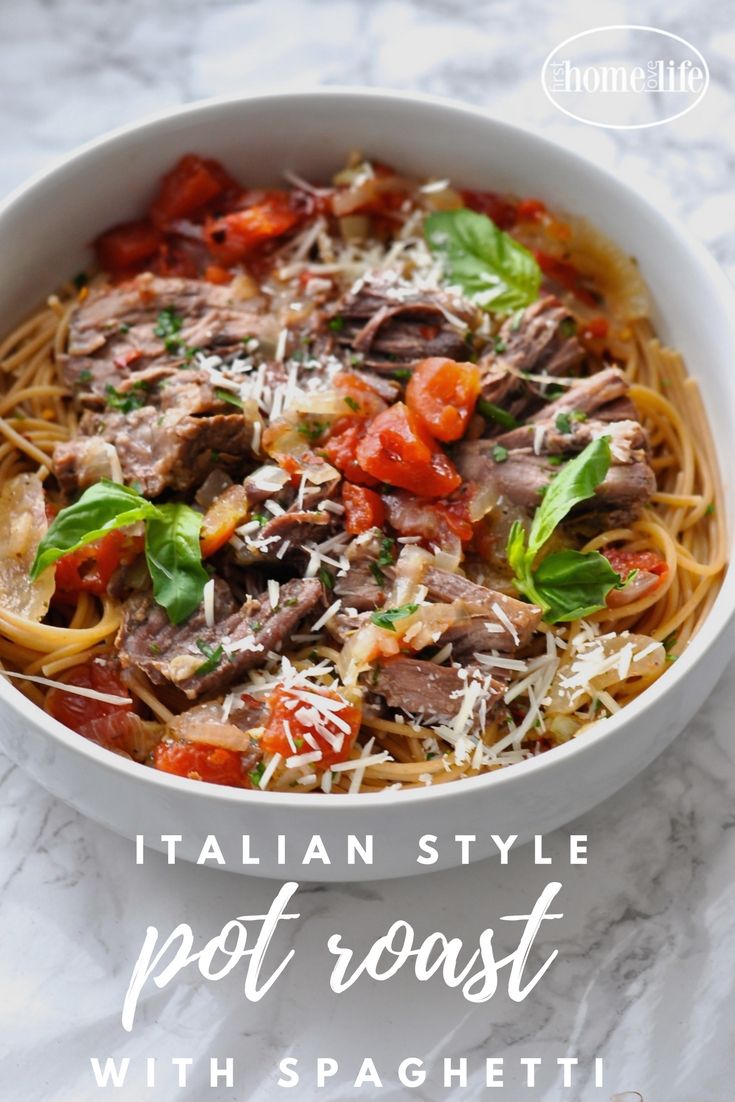
Yield: 6 to 8 servings
Ingredients
- 1 (3 pound) chuck roast
- Vegetable oil
- 3 cups ready-made spaghetti sauce
- 1/2 teaspoon oregano
- 2 medium onions, quartered
- 4 cloves garlic, minced
- 1 (8 ounce) package fresh mushrooms, sliced
Instructions
- Brown chuck roast over medium high heat in scant amount of oil.
- Place roast in slow cooker and add all other ingredients.
- Cook on LOW for 8 hours.
- Slice and serve over bed of angel hair pasta.
Shorpy



What secret did you learn about your neighbor that made your jaw drop?
She was a nice elderly (from my perspective as a 14 year old in the mid 1970s) lady with red hair (maybe not original) and a German accent. She tended her garden and played tennis at the club several days every week. She asked Dad and me to help her remove a bush because the birds ate the berries and made a mess on her patio, but allowed us instead to harvest the gooseberries if we gave her one of the pies Mom made from them.
Somehow, our discussion once turned to how she came to be there. It turns out she emigrated from East Germany and came to the US as a refugee. She left everything behind, one of the last nights before they finished construction of the Berlin Wall. She escaped by swimming across a river, holding her infant daughter’s face above the surface. While she swam, searchlights were flashing across the water, and machine gun bullets splashed nearby.
What made my jaw drop? That such a gentle lady would have such courage and fortitude inside, and that she would value freedom so deeply for herself and her daughter, to take such risks to win it.
My Party Gal FWB Tried To P-Whip Me, THROWS TANTRUM When I Treat Her Like A Side Piece
How concerned are you about China’s DeepSeek generative AI program acquiring the data of U.S. users and storing it for unidentified use by Chinese authorities?
I don’t think US is a society of crooks and scoundrels, nor a land of pirates.
Why would there be so much secrets about the people that other countries want to acquire.
There are over 300 million Americans. Where would they start to use the information?
“Unidentified use” means useless – do not know where to start to use it.
Chinese authorities have no access to DeepSeek data. They are too busy running the country.
Has US been collecting data of the Chinese people over the years?
If so, there must be trillions of pieces. For years and years, China depended on US tech.
Of what uses have they been put? Or are they of “unidentified use”?
If China’s tech is better, US should try to use it to better itself, or improve its own to better China’s. Bad mouthing will not help at all. Only show helplessness and desperation. This is what we see in Congress today.
Has your boss ever shown up at your front door?
Oh, yes! And I about peed my pants.
Not only did my boss, who was a manager at a local Ralphs Grocery store, show up, but also his boss, the regional manager!
Back then, I was only 21 and had started a landscaping business. For the first year, it was largely neighborhood homes and some mini-malls cutting grass and pruning bushes. It was a living, and I enjoyed the work.
And then there was Ralphs. It was a massive project that comprised dozens of parking islands, over 50 trees, and miles, so it seemed, of bushes, flowers, and plush grass that always had to look sharp. Something the manager always reminded me about.
As always, I was scheduled to take my small crew there on a Tuesday. But Tuesday morning, about 5 a.m. I had to call that store and tell them my truck wasn’t working. Indeed, one of the universal joints on the driveshaft broke, and my truck was sitting about a block from my house. I was fortunate to have the local paperboy help me push my truck to the front of my home.
It was about 10 a.m. when someone came to our door. My mom answered it and called my name, saying, “Mark, there are two gentlemen here to see you.” I didn’t have a clue who it could be. As I walked to the front door and saw them, my heart sank!
“Hello, Mr. Smith. What in the world are you doing here?” I said. He introduced Mr. Allen as his boss and said they were in the area and saw my broken-down truck, and they asked me if they could help me get it running. It flabbergasted me they even offered, and I was so sure they were just being polite.
Mr. Allen said, “Mark, we have several sprinkler heads gushing water all over the parking lot at Ralphs, and we need you there like now! So, what can we do to help? We brought our tools.”
As my dad wasn’t around, the three of us got into their car, went to the local Western Auto parts store, and got what my truck needed to get fixed. Both guys got dirty helping me repair old Betsy. They also insisted on buying me two new front tires and lunch.
After we ate, I called my crew and picked them up, each at their home for three stops, and took them to the job site. And we got everything done and looking sharp before the sun went down—a job well done.
I later told my Dad what happened that day. He even checked under my truck to make sure it was fixed properly. My dad smiled at me and said, “Mark, there’s still some good left in this world.”
What can the Taiwan government leadership do to stop the US from strip-mining all of TSMC’s assets, and moving them to the US?
Taiwan government will not do anything the US deems fit to do to TSMC. It dares not. Many leaders are beholden, including depending on the US to provide sanctuary for them and their families.
But TSMC may do things which the government would close an eye, such as the transfer of assets and technologies to China. TSMC has already many factories in China. No one would be the wiser.
Skills and expertise are portable. There are already many engineers, scientists, and other skills-types from Taiwan in China. I would speculate that this kind of movement of expertise is ongoing. There are reports that some such Taiwanese are resisting being transferred to Arizona.
US strip-mining of TSMC will not make US the leader in the manufacturing of high-end chips. It did not become the leader in semiconductors when Japan surrendered it the industry in mid-1980’s. There was only a brief temporary spell, the period of the boastful advertisement “Intel Inside”. Intel is now only a shadow in the industry.
Americans Crying at Letters to Li Hua on Chinese App RedNote
Carl Zha talks about how Americans discovered that Chinese people have been writing moving penpal letters to them for decades, so Americans decided to write back to their “long lost” Chinese friends on Chinese social media app RedNote. Amazing Sino-American cultural exchange flourishing as digital Berlin Wall comes down around two people long separated by Cold War Propaganda