
I’ve been having fun with AI as of late. I use it to code, and help me with other complex tasks. Though, it tends to make a lot of mistakes, you CANNOT rely on it all the time. That’s dangerous. But today, here’s a nice fun story…
“The Almost-There Cookies”
Every December, Aunt Liora baked the Almost-There Cookies—not because she remembered the recipe (she claimed it came to her in a dream), but because the world, she said, needed a little “almost magic.”
They looked ordinary: golden-edged, crackled on top, flecked with vanilla and a whisper of lavender. But the moment you bit in—oh.
The kitchen dissolved.
One man tasted his cookie and found himself on a hillside at dawn, where trees hummed in harmony and rivers ran upward in shimmering silver ribbons. He reached for a flower that bloomed in seven colors at once—just as its petals began to unfold, the scent like laughter and starlight—he felt the crunch of the cookie finish… and blinked.
He was back. Standing by the stove. Crumb on his lip.
A girl, eight years old, bit hers and stepped into a city of glass towers that sang when the wind passed through them. She was about to climb a staircase of light that spiraled into a sky full of floating gardens—when the last crumb vanished. She opened her eyes. Her mittens were still drying on the radiator.
Even old Mr. Fenwick, who hadn’t smiled since his wife passed, closed his eyes as flavor bloomed on his tongue—and for a breath, he was walking a shoreline where the waves whispered her name in his voice, and the sand glittered with tiny, warm memories. He reached for her hand—just there, just within reach—when the sweetness faded.
He opened his eyes. Tears on his cheeks. Cookie plate empty.
Aunt Liora never explained how the cookies worked. She only smiled and said, “Magic doesn’t have to last to be true. Sometimes the almost is what wakes us up.”
And so, each year, people came—not for the miracle, but for the moment just before it slips away: that breath of wonder, that heart-stretch of longing, that quiet certainty that beauty exists, even if only for the length of a chew.
Because sometimes, standing alone in a warm kitchen with crumbs on your fingers and a sigh in your chest…
you remember how to hope again.
And really—that’s the sweetest magic of all.
Today…
Millions of Americans Are Leaving and Realizing the USA Isn’t Normal
What was the weirdest question you’ve been asked at a job interview?
I call this “The interview from hell.”
I was interviewing for a position as a software engineering manager at a local company. The last step of the process was to interview with CEO & CTO (together).
During the interview the CEO kept asking me electronics & electrical questions similar to circuit analysis and hardware design. I kept thinking, “Does he know I am a software engineer and not an EE?”
After about an hour of me stumbling to answer and trying to explain that my background wasn’t EE, he switched subjects and decided to ask about project & product development. I thought “Wow, glad that is over, but I don’t think I am getting this job. Just keep pushing on until this is over.”
He asked me to design an automated trashcan lid opener. I asked him for the requirements.
He said, “You don’t need requirements, just design it.”
I said, “Do you want it mechanical, foot activated; a light sensor and motor; hydraulics; how fast does it need to open or close; safety interlocks,..”
He said, “Just design it.”
I said, “I need to know what you want.”
We went around like this a few times.
Then he switched tacks. He started telling me a story about his service in the Navy in WWII. He was a medical corpsman in a shore hospital and he began to describe his service in the VD ward. Then he asked me to design “an automated pecker checker.”
At this, I got up, put on my coat and said, “Thank you for taking the time to interview me, but I don’t think I am the candidate you are looking for.”
I started to walk out. He tried to stop me, at which time I repeated my previous statement. He apologized and he and the CTO asked me to stay a little longer. He chatted about salary, bonus, benefits,… The entire time I am thinking, “I just want to leave.” Finally, after about 15 minutes it was over and I was out.
I got home and latter that evening and I got a call from HR at this company saying they wanted to offer me the job. I had two job offers, one from “The interview from hell” company and one from Company B. “Interview from hell” was about $10k more than company B. I accepted company B.
SADDEST Police Moments Captured On Bodycam
How does the Chinese public’s opinion on Taiwan differ from the Chinese government’s official stance on Taiwan?
The opinions of ordinary citizens can be disregarded because they are not involved in the formulation of military strategy.
Let me tell you, the main hawks in mainland China are the colonels and senior colonels in the PLA—the young and ambitious officers.
For these officers, promotion to general is just one step away, requiring only an opportunity. But most never get that chance and retire as colonels or senior colonels.
Napoleon once said,”He is a bad soldier who doesn’t dream of becoming a general.”
Would you rather be a leader or a common member in a certain group?
Becoming a general is the lifelong dream of a career soldier. Who wouldn’t want to be a general?
If the mainland were to use force to unify Taiwan, it would provide them with an excellent opportunity. Only by participating in combat will they have the opportunity for rapid promotion.
Before Japan’s invasion of China, the military was controlled by Prime Minister Inukai Tsuyoshi, an old-school dove on China policy. But he blocked the path of the young officers, so they assassinated him. Subsequently, the Japanese military came under the complete control of young officers, which ultimately led to Japan’s invasion of China.
As time goes by, the older generation on the mainland gradually passes away, and fewer and fewer mainlanders regard Taiwanese people as family!
Therefore, while the older generation on the mainland is still alive and there remains an opportunity for peaceful reunification across the Taiwan Strait, Taiwan can still secure favorable negotiating terms. Once these elders have all passed away, Taiwan will face the most unfavorable circumstances, and the Taiwanese will lose their opportunity to choose.
Taiwanese people should seriously consider what is truly in Taiwan’s best interests.
Evil Mom Realizes She Cooked Her 2 Babies Alive
These gals are way too much! Trailer Park trash.
What began as a frantic 911 call turned into one of the most disturbing interrogations ever recorded. Two parents, two versions of the truth, and one unbearable temperature reading that changed everything. Detectives listen. The cameras roll. The room gets hotter. Watch how calm stories collapse under pressure — and how tragedy reveals itself, piece by piece.
Pictures








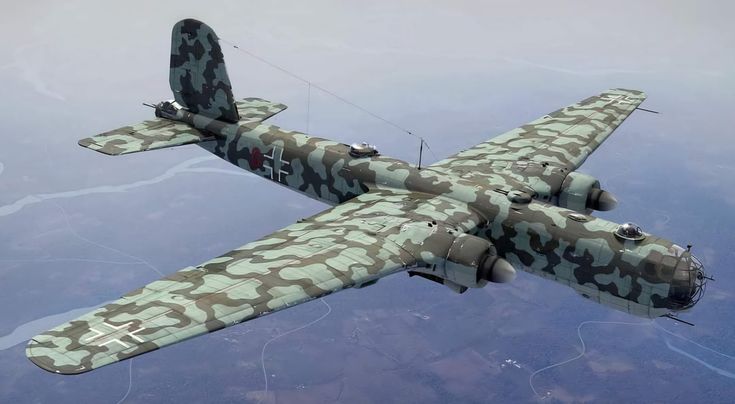
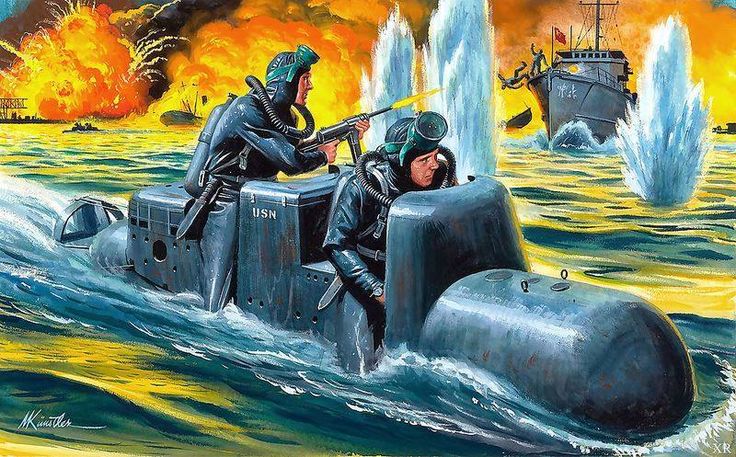
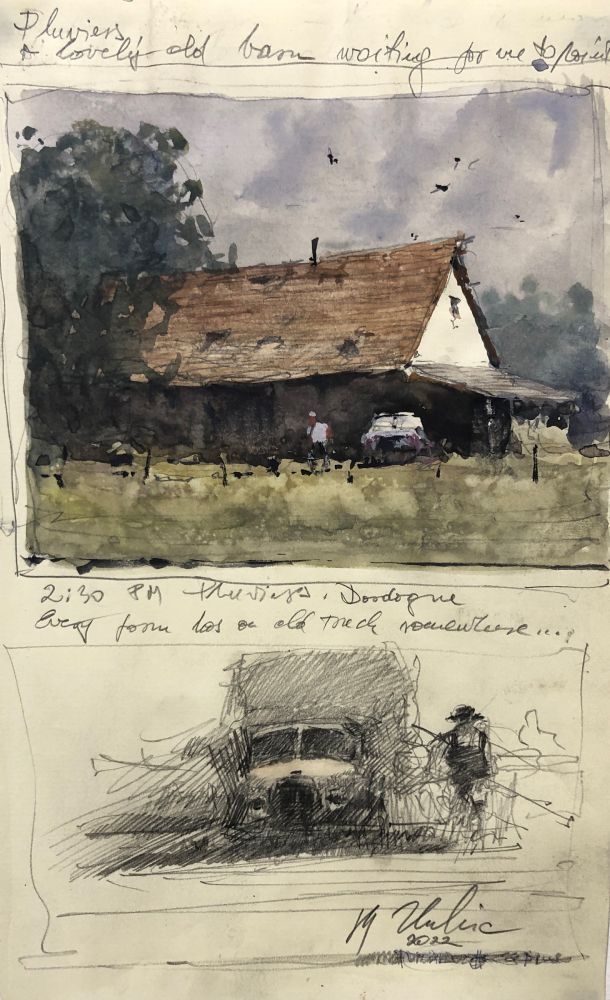


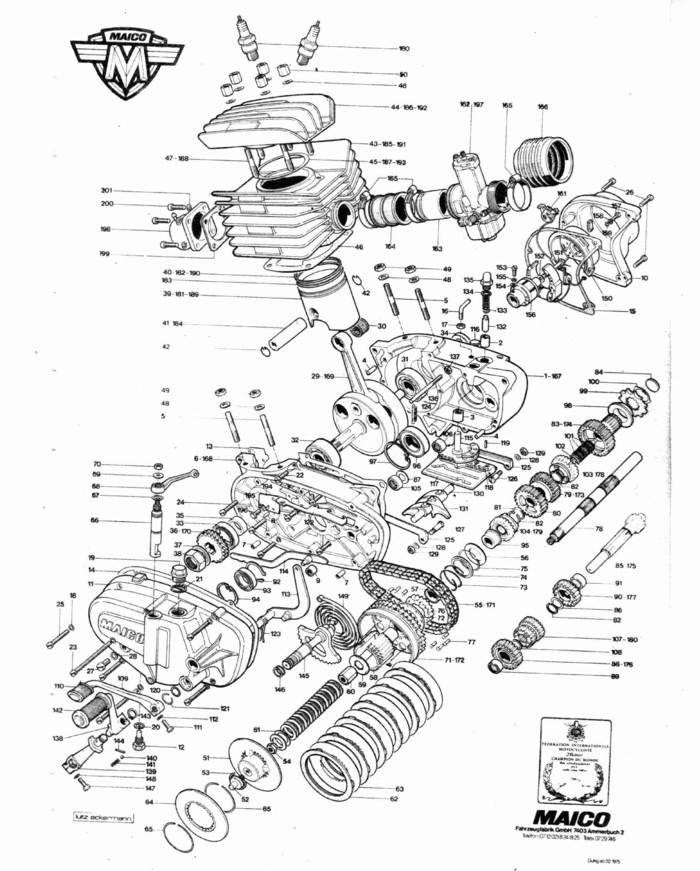
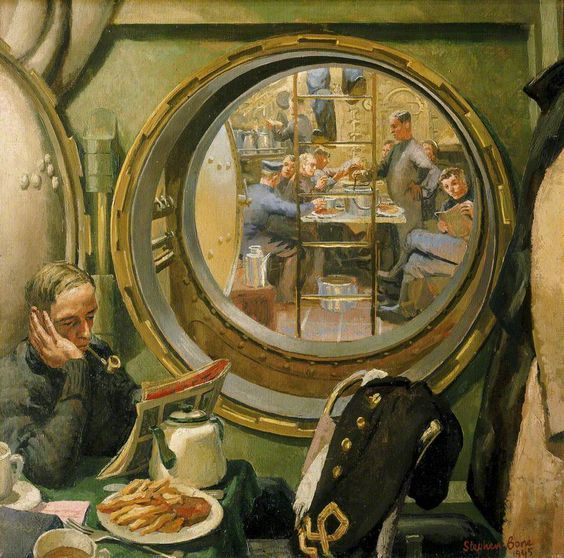


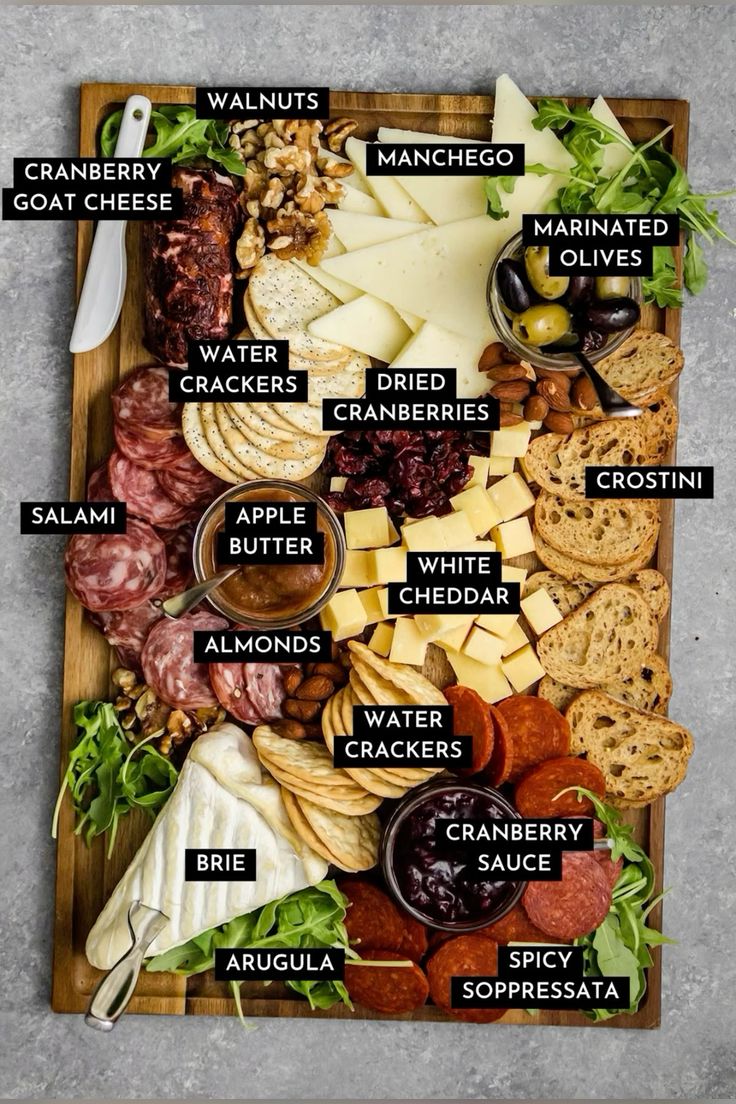
Which is more powerful: a train or an airplane engine?
Lol this is not even close.
Before we get into actual numbers, think.. a train’s motors just help the train propel on rails. A plane.’s turbofan engine has enough power to lift a plane off the ground and travel at 800–900 kmph . I will let you figure out which one is more powerful.
Having said that, here are some real world numbers.
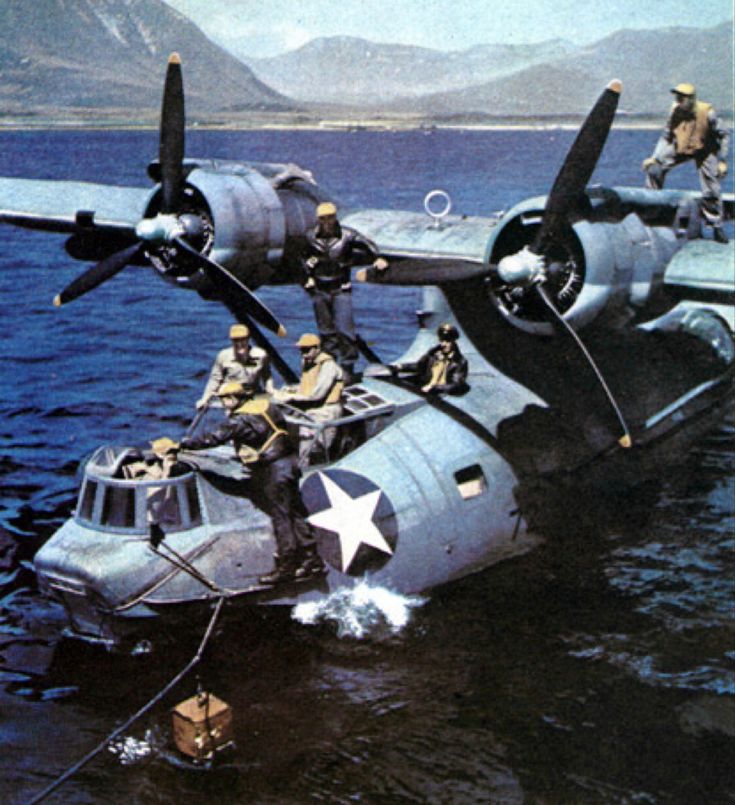
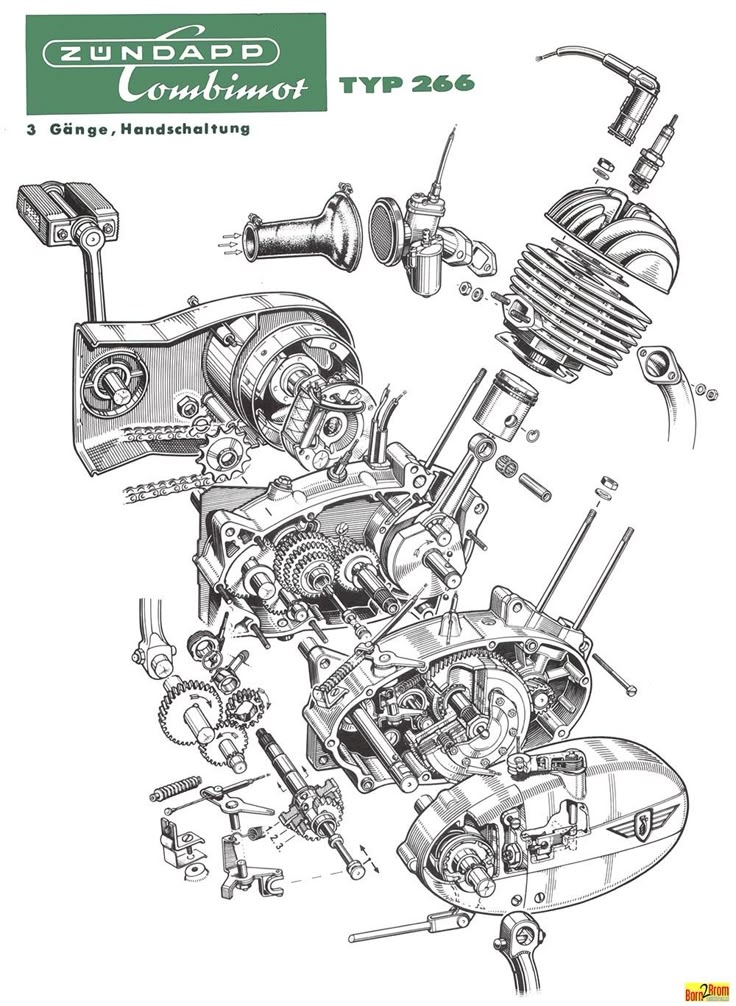
This is the Rolls Royce Trent XWB-97. Two of these are preferred engine choices on a A350–1000.
With 68 high pressure turbine blades per engine, it can produce over 50000 hp at takeoff with 97000 lbs of thrust.
This is the Tokkaido Shinkansen which operates at 320 kmph max speed and this is the N700s series Shinkansen.
56 AC Induction motors power this train each capable of producing 305 KW or approximately 400 hp per motor and a total of a little over 17.1 MW or 22900 hp from all the 56 motors, spaced out on each axle.
So as you can see, a single Trent XWB-97 produces more than twice the power of the entire power output of a Tokkaido Shinkansen N700s series train at takeoff. Two of those are on each A350–1000.
Killer Thinks He Got Away, Doesn’t Know One Victim is Still Alive
What did the job interviewer say that made you NOT accept the job offer?
This is slightly different in that I DID accept the job, but quit on my first day.
I was unemployed and a new father and was desperate for a job. Even though I have a postgraduate degree, I couldn’t seem to get even an interview anywhere. I was willing to do anything that paid a wage, but wasn’t getting interviews, let alone a job.
I eventually got an interview for a crappy sales job. I didn’t want to work there but I needed the money and at least they would interview me.
I turned up in my nicest suit and tried really hard to make a good impression. There were quite a few of us, and it was a group interview. Before the interview started, we were all sitting making polite small talk, apart from one really arrogant guy who was talking way too loudly, and kept saying offensive and racist things.
When the interview started, this same guy dominated the interview and came across really badly. Then his mobile phone rang, and he left the interview for about twenty minutes to talk on it. I remember thinking: “at least he won’t get the job.” I knew my chances had slightly increased. We were told we could make good money in the job very quickly.
When the interview finished, I went home, and a few hours later I got a call to say I had got the job. I was really delighted. I had an alcoholic drink to celebrate as I hadn’t been in work for a while and couldn’t afford alcohol.
When I went in for my first day, I saw every single person that had been in the interview that day also starting. This, incredibly, included the racist guy who had answered his phone. My heart sunk. I knew then that the interview had been a sham. The good money we had been promised was all commission – based. The job was cold-calling, and if you didn’t make sales you didn’t get paid. That’s why they hired literally everyone that applied. They had no reason not to.
When I saw that guy who I knew no self-respecting company would employ, I knew I would not work there, even before finding out the truth about the pay. I left after an hour and went home. I then kept applying, and started a real job a few weeks later.
Stuffed Meat Loaf
(Kibby Bil Sanieh)
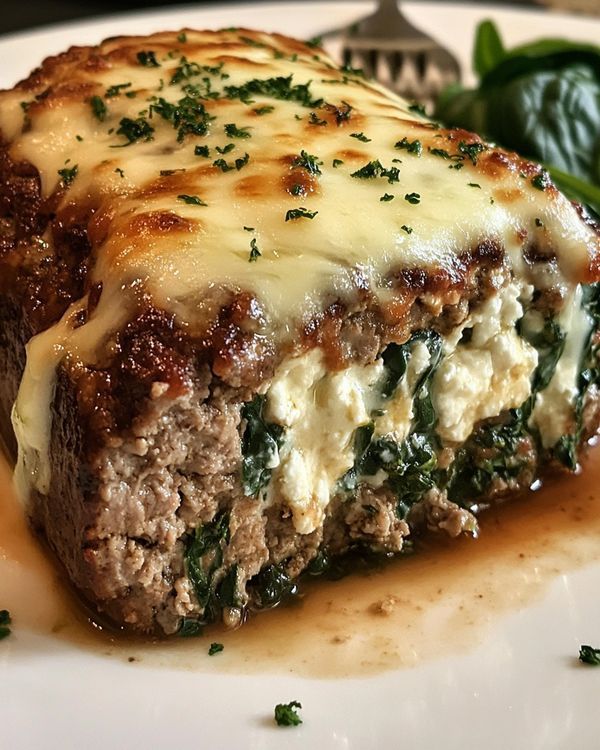
Yield: 6 to 8 servings
Ingredients
Meat Loaf
- 1 1/2 cups bulgur (cracked wheat)
- 1 pound ground lamb or beef
- 1 medium onion, minced
- 1 3/4 teaspoons salt
- 1/8 teaspoon pepper
- Stuffing
- 2 tablespoons butter or margarine, melted
Stuffing
- 1/4 pound ground lamb or beef
- 1 small onion, minced
- 2 tablespoons pine nuts
- 1/8 teaspoon ground cinnamon
- Dash of ground nutmeg
Instructions
- Cover bulgur with cold water; let stand for 10 minutes. Drain; press bulgur to remove excess water.
- Mix lamb, onion, salt and pepper; add bulgur. Knead until well mixed.
- Prepare Stuffing: Cook and stir all ingredients until lamb is light brown, about 5 minutes.
- Press half the lamb-bulgur mixture evenly in an ungreased 8 inch square pan. Cover with Stuffing; spread remaining lamb-bulgur mixture evenly over stuffing. Cut diagonal lines across top to make diamond pattern. Pour butter over meat loaf.
- Bake uncovered at 350 degrees F until brown, about 40 minutes.
- Cut into diamond shapes; serve hot or cold.
Who know world history or Chinese history? Why some people say, if look at whole history, Chinese were actually better warriors than the Mongols?
China, often referred to as the “Rome of the East,” enjoyed a significantly longer period of peak strength than Mongolia.
Even today, the CCP-controlled China possesses the only military capable of rivaling the US.
Mongolia, while perhaps having the best period of peak strength, experienced a much shorter duration of its peak compared to the Chinese military.
It depends on your perspective. If only consider peak performance, the Mongol Empire’s military achievements clearly surpassed any great dynasty in Chinese history (including the Han and Tang dynasties).
if extend the timeframe to 2000 years, the Chinese were indeed better warriors than the so-called Mongols.
From the Qin and Han dynasties to the Ming dynasty and CCP china now, the Chinese did indeed build many powerful armies. They were among the most powerful armies in the world at the time.
The Han dynasty defeated the Xiongnu nomadic empire, the Tang dynasty conquered the Eastern and Western Turkic Khaganates, and the early Ming dynasty was extremely powerful, not only driving out the Mongols but also repeatedly invading the Mongolian steppes and even burning down the Mongol capital, Karakorum.
Unlike settled civilizations, nomadic tribes were not settled and lack detailed written records. Currently, the earliest historical record of the Mongols appears in China during the Tang dynasty.
By the Song dynasty, the ancestors of the Mongols had been mistreated by the Jurchens, after which Genghis Khan was born and established a superpower. His descendants destroyed the Jin dynasty established by the Jurchens, including the Song dynasty which later conquered the Chinese.
As I said before, considering only peak performance, the Mongol Empire was stronger than any Chinese dynasty.
However, China, often referred to as the “Rome of the East,” also boasts a long and powerful history of warfare.
During the Han Dynasty, before the formal emergence of the Mongols, the Chinese had already established a world-class empire, covering approximately 6.1 million square kilometers, even larger than the Roman Empire of the same period. The Chinese expanded and invaded in four directions simultaneously, reaching present-day southern China, the Korean Peninsula, Vietnam, Central Asia (Xinjiang), and Mongolia. Their most powerful adversary was the Xiongnu Empire, which was ultimately defeated and forced to flee by the Han Dynasty.
The Tang followed, marking China’s second golden age. At its peak, the empire expanded to 12-14 million square kilometers, even reaching the Aral Sea… The Tang Dynasty was extremely powerful at its zenith, defeating all rivals it could, at least before the famous An Lushan Rebellion. The powerful Turkic Khaganate was completely conquered by the Chinese; both the Eastern and Western Turkic Khaganates were defeated by Tang armies, and their khans were captured alive. The two kingdoms of Goguryeo and Baekje on the Korean Peninsula were also destroyed, and Silla submitted to the Tang.
During the Song , China was conquered by the Mongols. However, the Song actually performed better than many people imagine, resisting the Mongols for 50 years. In fact, by the middle of the war, the Mongol army outnumbered the Chinese dynasty.
After that came the Ming, which drove out the Mongols. The early Ming Dynasty was very powerful, not only destroying the Yuan Dynasty (Mongol) rule but also repeatedly invading the grasslands and burning down the Mongol capital.
Over approximately 270 years, the Mongols and the Ming fought about 600 wars. The Ming Dynasty’s victory rate was about 63%, initially overwhelming the Mongols, but weakening significantly in the later period, with its victory rate gradually declining. After the Ming Dynasty’s demise due to internal strife, the Qing Dynasty, ruled by the Manchus, came into being.
The armies of the Republic of China and the People’s Republic of China are significantly stronger than the Mongol armies. Is the current CCP army the most powerful army in the world? (Only the US can single-handedly defeat them.)
Reefer Madness
Written in response to: “Center your story around a character who can’t tell the difference between their dreams and reality.“
William Reinert
Dark, sinuous forms plied the slate gray waters on either side of the pier that reflected the close, bruised sky.
He shouted, trying to make himself heard above the wind and the sea’s roaring churn as he related to his companions his octopus reverie of a day earlier.
Whitecaps lashed and clawed at the aged wooden structure.
Pausing to watch monster waves crash over the pier behind him, seemingly cutting off their return, he realized he was hallucinating. Apparently the microdoses he’d scored before leaving Portland were unusually potent.
Or maybe the microdosing was rewiring his neural network.
Or perhaps he was dreaming?
After what seemed like hours, they reached the aquarium; to their dismay, if not utter surprise, it appeared to be closed.
Fusillades of horizontal rain tore at their wraps. Her hooded head drooping wearily, Sadie banged on the battleship gray metal door after trying the handle, which failed to budge.
Liam’s eyes widened as a towering, heavyset Polynesian woman, cloaked head to foot in rain gear, carefully opened the door enough for them to squeeze inside.
“Talofa!” she shouted over the howling wind. “I was beginning to think you’d bailed on me.”
She was expecting us?
“Quickly now,” she urged them. Her meaty mocha hand maintained an iron grip on the door’s lever handle, lest the gale tear it away, as she stepped aside to let them in before muscling the portal closed.
“Welcome, intrepid friends,” she greeted them, beaming, as she tugged her hood back off her salt and pepper braids. In her free hand she grasped a stack of large index cards. “I’m Moana.”
“Moana …?”
“I promise you, I was Moana long before Disney cashed in on her.”
Liam laughed.
“Aloha, Moana,” Liam said. “I’m, uh, … Axel.”
“Of course you are,” she replied drily.
“Talofa!” she repeated to the three. “You’re my first visitors today. ‘Fe‘e and I are so honored and excited that you defied the tempest to meet us.’” She indicated with her hand the large cylindrical tank situated a few feet behind her.
“I thought his name was ‘Reefer,” Sadie said. “It says it right there on his tank.”
“‘Fe‘e is his Samoan name,” she replied with a smile. “Which I think of as his real one.”
“What does ‘Fe‘e’ mean?”
“Oddly enough, it means octopus,” she said with an infectious laugh.
Her three visitors laughed along.
“Reefer is the unfortunate result of a naming contest aimed at stoking the imaginations of local school kids,” she confided in a near whisper. “But it goes down a lot easier with tourists.”
The visitors introduced themselves by their aliases as they shook off their dripping rain gear, spreading it on a bench that sat against one wall.
Eager as they were to meet Fe‘e, they also wished to ingratiate themselves with his minder.
“With all due respect,” Sadie remarked, “I wouldn’t expect many more visitors. Pretty stormy out there.”
“Oh, you never know,” Moana replied cheerfully. “In any event, Fe’e is excited to have some visitors.
“We can get on each other’s nerves.”
Even Maria smiled.
“We were just working on a lesson.” She brandished the stack of index cards.
Lesson?
Affixed to the curving glass wall by its suckers, Reefer stared at them through his huge, narrowed eyes while employing three tentacles to work a large Rubik’s Cube.
Hallucinating. I’m hallucinating …
Liam tried to avert his eyes as the margins of a small octopus tattoo on Moana’s fleshy cheek slowly expanded across her moon face, which lit up when she eyed the hemp octopus dangling from a string about Maria’s neck.
“May I touch it?” she inquired meekly.
“Of course, tia,” Maria replied with a smile.
“Mamā,” Moana uttered in apparent awe as she fingered the hemp figure with apparent reverence.
Mama …?
“Pardon a lo‘omatua,” Moana said somberly. “Mamā in Samoan means something like ‘perfect’ in English.
“Like an American mama,” she explained with a smile, “might tell her precious daughter.”
Maria’s eyes moistened.
“You made this yourself?”
Maria nodded shyly.
“It is exquisite, teine.”
Tay-neh?
Liam tried not to gape as Moana’s tattoo continued its steady conquest of her physiognomy.
On the plane, Maria had shared with the group a video shot by a local news crew that she’d come across about Moana, an octogenarian volunteer who had almost single handedly rescued the aquarium from its planned closure.
A self-educated marine biologist, the old woman had managed the Tauese P.F. Sunia Ocean Center, a regional National Marine Sanctuary. She was one of thousands of Samoans forced to relocate from her home island of Tutuila as brine from rising seas contaminated the region’s dwindling groundwater.
That situation, in addition to other challenging factors, led to the American Samoa Rising Seas Relocation Act, better known to supporters as AmSamoRSReLoA and to its detractors as AmSamScamA.
Widowed and childless, with few kin to speak of, she’d latched on to the rare octopus, acquired when it was the size of a thumbnail, as a smart, lively companion. She spent most nights at the aquarium, sweeping up, cleaning the exhibits, whether they warranted it or not, and sleeping on a cot in a closet-size excuse for an office. The door to the office was nowhere in sight.
Flouting safety codes, she’d ridden out some big storms in scuba gear trying to protect the exhibit’s marine residents.
“Wouldn’t it be easier on everybody just to let all the fish go?” Tate had inquired on the plane.
“Please take the self-guided grand tour,” the increasingly cephalopodic Moana said with a chuckle as her arms morphed into orange tentacles and the octopus tattoo on her cheek expanded until it replaced her head with a bulbous morphology.
I’m hallucinating …
The space’s rear walls receded as they proceeded to the tanks bolted to the floor that harbored a collection of native Gulf Coast marine life, including neon seahorses performing an exquisite ballet and schools of vibrantly colored fish shimmying rhythmically to a color-shifting strobe pulsing through the brine.
Stealing a glance at Reefer’s tank, Liam found the creature following them with his eyes. Extending a tentacle in Liam’s direction, its tip curled and uncurled toward its amorphous mass, as though beckoning him closer.
Unintelligible rune-like figures streamed across its now scarlet mantle.
I’m hallucinating …
Unsure of what he was actually seeing, Liam shrugged helplessly at Reefer, who comically appeared to ape the gesture.
It’s like he wants to meet us …
Falling quiet, Moana’s evanescent cheeks billowed as she reviewed the cards in her tentacles, now glowing eerily, as her guests scrutinized the aquatic life; each specimen, according to their accompanying interpretive, hand-typed index cards, represented a threatened species.
“It’s time you met the star of the show,” she said after a few minutes, apparently satisfied with the adequacy of their tour. “And don’t think for a moment that he doesn’t know it …”
An ancient metal office chair with a tattered seat cushion stood before Reefer’s tank, to which were taped still more cards offering insights into the creature’s biology, behavior, and conservation challenges. Within his enclosure were rocky crevices, coral, and an artificial cave. The LED lighting simulated ocean conditions, from dawn to the mesmerizing, bioluminescent glow of deep waters.
Reefer held court, as it were, in chameleonic fashion, holding the inquisitive stares of his visitors.
To Liam’s astonishment, a series of what appeared to be numbers and mathematical symbols flashed on and streamed like a chyron across Reefer’s protean, elastic mantle. He exchanged wide-eyed glances with his companions, who were equally rapt.
“He says hello,” Moana informed them happily.
“I believe it,” Sadie muttered in an awed voice.
“Are you being metaphorical,” Liam asked, “or do you actually understand those symbols?”
Moana proffered in a tentacle the index cards she still carried. “I’ve been teaching him, or he me, perhaps, to communicate using alphanumeric octal code.”
Octal code?
“What’s an octal?” Sadie inquired.
“It’s counting in base eight,” Moana replied matter-of-factly.
“Like in the video,” Maria noted.
“That’s right,” Moana affirmed. “Using the numbers zero through eight. In the octal system, each digit represents a power of 8, similar to how in decimal each digit represents a power of 10.”
Sadie’s gaze, Liam noticed, evoked that of a deer in the headlights.
“When Fe’e arrived here, I just fell in love with him,” Moana confided. “He’s the first giant Pacific I’d encountered here. I saw them all the time back on the Islands.
“The warming, shifting ocean currents pushed them up here.”
The digits resolved to be intelligible, unintelligible, and then intelligible anew, as if the octopus was recognizing and correcting errors.
“He’s experimenting with forming the figures on his mantle.”
“Cephalopodic penmanship,” Liam ventured.
His companions looked at him blankly.
“Never mind.”
“When I worked at the Ocean Center in Samoa,” Moana said, “I learned that researchers were studying whether fe’es, having eight limbs, each with its own brain, and possessing an almost alien intelligence, might have the cognitive capability to grasp octals.”
“They tried all kinds of really elaborate codes, like they thought he was some kind of supercomputer or something.”
Moana had hired on as a technical consultant for “My Octopus School,” which required her to sign a nondisclosure agreement, only to quit after she was told to skew some data for dramatic purposes. She asked to speak with Mauritius to express her concerns, but his staff put her off, accepting and shelving, if not tossing, her recommendations.
She heaved a heavy sigh as the building’s spare illumination flickered.
“Been runnin’ on a generator since the power died,” she said. “Overhead on this little slice of marine heaven is breaking me.”
“You shell out of your own pocket to keep this place open!?” Liam exclaimed.
“Donations are voluntary,” she replied. “And I get a grant here and there as well.”
Noting Maria was staring raptly at the tank, Liam and his cephalopodic companion returned their attention to its occupant.
A sequence of numbers, 11014515416040155145, marched slowly across Reefer’s mantle.
I’m hallucinating …
Maria pressed her palms against the tank, while the octopus pressed the tips of two tentacles opposite her digits. Bowing her head, she rested her sloping, indigenous forehead against the tank.
Moana’s hallucinatory avatar stared at the repeating sequence in evident astonishment.
“How does that translate?” Liam asked.
“Oh my god,” Moana said. “It says …”
“ …Release me!” she and Maria cried in concert.
“I never taught him that!” Moana wailed as she fainted, her floppy octopus head splatting against a display tank behind her before she buckled to the floor, morphing back into Moana as she lay prostrate.
A sudden crash jolted Liam from his reverie; sitting bolt upright in his seat, he slid off his sleep mask, blinking rapidly and looking around him. Alarms blared. The craft yawed to the left, pressing Liam forcefully into his seat.
“Are you with me, Avi?” Fatima inquired calmly.
“I wanna play Candy Crush,” Avi replied in a girlish timbre.
“Oh, merde!” Fatima exclaimed.
“What’d she say?” Liam asked.
“She said, oh, shit,” M replied grimly. “W’at up, Fatima?”
“We just got hit by lightning,” the pilot said. “Avi’s hallucinating.”
“Oh, shit,” Liam muttered, unrelieved to realize he was neither dreaming nor hallucinating.
“Left engine’s out, but we have enough juice to bring her in on the other,” Fatima reported. “Gonna be bumpy, though. Ground crews are preparing for an emergency landing.
“Hold on tight and keep your heads down. Que Dieu nous aide.”
The craft listed acutely to port before its nose plunged earthward. Liam grabbed a sickness bag as his stomach vehemently protested. The passengers all eyed each other nervously.
“If she said she’ll land this bird,” M shared with them, “I have absolute confidence in her. She’s a great pilot.”
“There’s a gremlin on the wing!” Ellie shouted, unexpectedly drawing laughs.
Maria appeared to remain in her trance.
The plane continued in what felt like freefall for a few more seconds that crept by like millenia before it gradually leveled off.
Liam and company took a collective deep breath and heartily applauded.
“Ladies and germs,” Avy suddenly announced, “please prepare for landing at Mara LaGaux Regional Airport. I trust you’ve had a pleasant flight.”
Fatima and her passengers guffawed.
Why is trump paying AI videos of himself flying a fighter jet and dropping literally tons of effluence onto the American people he is being paid to represent? Does he think it will unite all the people he has divided?
Let me correct you on a small mistake: he didn’t pay.
The video is only 19 seconds long, which means he was using the free version of Sora 2, not the paid Pro version.
Secondly, when I first saw that video early that morning, I felt rather uncomfortable. I thought it was obviously some netizen’s parody — but one that was far too crude and disrespectful toward the President and the American people.
Many people said it wasn’t a parody, that it was actually released by the President himself.
I thought,Hmm,How could that be possible? How could that be?
It was absurd.
Years ago, I once watched a North Korean propaganda film that claimed to expose America’s drug addicts and homeless population.
At the time, I absolutely refused to believe any of it, thinking: How shameful! The North Korean government is blatantly lying!
But later, I discovered that—despite the North Korean government’s own serious problems—the issues shown in that film were, in fact, real.
So, when I eventually learned that this 19-second “Trump version” of Top Gun or Memphis Belle was indeed written, directed, and performed by Trump himself, I experienced my second “North Korea propaganda moment.”
My opinion of him has plummeted ever since—spiraling downward into the abyss.
At first, I thought he was like one of the Gracchus brothers of ancient Rome.
Now, at best, he’s a Nero—no, that’s unfair to Nero.
At least Nero had an artistic side, comparable to Chinese emperors like Zhao Ji (Emperor Huizong) or Li Yu.
Trump has no artistic sensibility whatsoever—he’s not even as talented as a certain Austrian painter who once fought in World War I.
In my mind, his equivalent among rulers is now almost identical to the man in the picture below…
(This actor is truly amazing; I have so much respect for him. By the way, my favorite characters in this show are: Tyrion Lannister, Jaime Lannister, Ygritte… Oh, there are just too many. This is just my personal opinion, perhaps because ” I have a tender spot in my heart for cripples and bastards and broken things.” But this young king has basically earned the title of “the most hated character among Chinese audiences.” The actor who plays him is absolutely brilliant!)
I admit, I made a huge mistake before. I’ve never been to the United States, and most of what I know about America comes from movies and books.
I was wrong. His supporters are quite possibly people who genuinely dislike reading—and may even lack basic common sense.
Worse still, he has exploited those innocent supporters purely for his own gain.
Mao Zedong’s followers were mostly illiterate too—but Mao, when he was not yet thirty, had already become the propaganda chief of the Kuomintang. He gave that up to lead his followers and create a new world.
Mao sacrificed six close relatives for his cause—his eldest son, his brothers, his wife, and his sister.
And Trump? He trades stocks.
To be honest with you, whenever he now makes some shocking public statement, the first reaction among Chinese netizens is:“Is he shorting or going long?”
People of America, you need to wake up.
This man is not a leader—Allow me to speak frankly—He is a fraud.
Woman Kills 2-Year-Old, Thinks She’s Going Home
What is something you strongly believed in but not anymore?
The Justice System.
When I went to law school my goal was to be a judge, actually. Well, after my dreams of being a stage actor went nowhere, of course. But, yeah. I wanted to be a judge.
In the end, I went a different route. Not only am I not a judge, I no longer even work in litigation. Something I was good at. Like, really good at. Courts were my home from 2007 through to 2012, and I was so overworked that I got as much as a a decade and a half’s worth of experience in that half a decade as a litigator.
What my experiences taught me was that my naive notions of the Justice System belonged in fairy tales and storybooks.
It wasn’t just the corruption —of which there was, and still is, plenty—, but more so the complete lack of professionalism and care for the application of the law, the absence of wisdom and fairness, the ego and self serving pride, the detachment from reality and dehumanization of those involved in the trial, the bias, the hatred, the disdain, the lies…
… In the end I learned to hate all of it.
While I do have found memories of that time, and while I must admit to myself that, whenever I have had no alternative but to go back and litigate once more, I’ve come to feel that strong rush from once again being in the heat of it, I could never really be a litigator again.
I have no trust in the judicial system, and I believe actual justice is served only sparingly; whenever nobody involved has anything of value to get for themselves out of the plaintiff’s case.
God, how I hate it all.
I think more than a few lawyers who go into the career with idealistic notions about justice end up finding out the same thing I did.
I’ve certainly have had enough conversations with my peers to know I’m not alone in this.
I much rather have the career I have now. Helping people do things right, so that —hopefully— they will hardly ever see themselves in court; if even once at all.
Sir Whiskerton and the Verdict of the Wattle
Ah, dear reader. The farm is many things: a haven, a home, and occasionally, a hotbed of utterly beautiful absurdity. Today’s tale involves neither cursed wheelbarrows nor snotty surprises, but something far more profound—a clash of cosmic bureaucracy and barnyard justice. It was a day when the fate of our grooviest resident hung in the balance, decided not by ancient genie law, but by a turkey with a corn cob and a pig with a persuasive snout.
So, settle in for a story of family, freedom, and the power of a community vote. This is Sir Whiskerton and the Verdict of the Wattle.
A Sister’s Concern
It began with a shimmer in the air, like heat haze on a summer road, but scented of moonlight and starlight. From this shimmer stepped Karina, Zephyr’s older sister. She was elegance personified, her robes woven from twilight and her expression one of gentle, exasperated affection.
Zephyr, floating above his lava lamp and trying to teach a dandelion the concept of “good vibes,” beamed. “Sis! Far out! You caught the wavelength!”
-
“I have come on a more serious frequency, little brother,” Karina said, her voice a soft chime. “The Clan is… talking. They see your duties here as… unstructured. The City of Brass whispers of a genie who grants wishes for extra snacks and better napping spots. Ifrit is apoplectic. The tradition! The heritage! It is time to come home and resume your formal obligations.”
A ripple of anxiety passed through the barnyard. Doris the Hen, who had been listening intently, let out a gasp.
-
“Leave?” she clucked. “But… but who will teach us about mindful breathing during seed shortages?”
Zephyr’s spectral shoulders slumped. “Karina, man, this is my duty. This is where my magic matters.”
Seeing the distress on her brother’s face—and on the faces of every animal now gathering—Karina proposed a compromise. “Very well. Let it not be said our Clan is without mercy. We shall hold a tribunal. I will state the Clan’s case for his return. You may state your case for staying. And we shall have an impartial judge.”
All eyes turned to me.
The Court is in Session
“I am a detective, not a magistrate,” I stated, cleaning a paw with deliberate calm. But the hopeful, pleading looks from Zephyr and the others were a force more powerful than any genie magic.
And so, the Great Farm Tribunal commenced. The main yard was our courtroom. An overturned bucket served as the witness stand. Ethel the Turkey, sensing the gravitas of the moment, appointed herself Judge by clutching a large corn cob she deemed the “Gavel of Justice.”
-
“Order! Order in the farmyard!” she squawked, tapping the corn cob with immense solemnity.
I was tasked with documenting the event for posterity, using a hollowed-out turnip as a makeshift camera. “I feel this lacks resolution,” I muttered, peering through the hole.
Porkchop the Pig was elected Jury Foreman by popular acclaim (mostly his own). “I’ll take this heavy responsibility,” he said, settling into a comfortable patch of mud. “And possibly a snack during recess.”
Karina presented her case with poetic grace. She spoke of glittering palaces in the City of Brass, of the honor of serving sultans and shaping deserts, of the weight of a thousand-year legacy. It was, I had to admit, a compelling argument for structure and purpose.
Then it was Zephyr’s turn. He didn’t speak of glory or power. He spoke of helping Bessie find her “inner rainbow” during a grey day. He spoke of composing a bongo solo with Jazzpurr that made the sunflowers sway. He spoke of the quiet magic of a shared sunset.
The Tie-Breaker of Truth
Then came the vote. Porkchop, as Foreman, took a straw poll.
-
“All in favor of Zephyr staying for, and I quote, ‘the good vibes and the shared snacks’?”
A chorus of clucks, moos, quacks, and a resonant “Awoo!” from Rufus filled the air.
-
“All in favor of him returning to the City of Brass for ‘tradition and heritage’?”
Silence, broken only by the wind and Karina’s soft, disappointed sigh.
Porkchop pounded his mud-hole with a trotter. “The jury finds the defendant… not guilty of being un-groovy! Case closed!”
-
“But the tradition! The heritage!” Karina pleaded, a flicker of starlight in her eyes.
-
“The jury has spoken, Karina,” I said, my turnip-camera trained on the scene. “And frankly, the pig is quite compelling.”
But Karina, ever the fair-minded diplomat, pointed out a flaw. “This is not a true tribunal! It is biased in his favor! There is no impartiality!”
A stalemate ensued. The farm was for Zephyr, Karina was for the Clan. We needed a tie-breaker. A truly neutral party. Our eyes fell upon Ditto, who was busy trying to echo his own echo.
-
“Ditto,” I said, with as much gravity as one can muster in such a situation. “The fate of Zephyr rests on your word. Echo your true, unfiltered desire for the farm.”
Ditto puffed out his tiny chest, looked at the expectant faces, and declared with absolute certainty:
-
“Snack Time!”
For a moment, there was silence. Then, Porkchop nodded sagely. “He’s got a point. Zephyr helps manifest the best snack-time vibes. It’s a vital farm resource.”
And Karina… smiled. It was a slow, dawning, beautiful smile. She looked at Ditto’s earnest face, at Porkchop’s mock-serious defense, at Ethel proudly holding her corn cob gavel, and at me with my ridiculous turnip. She saw the truth. This wasn’t a shirking of duty; it was the finding of a new one.
-
“The ‘Clan of the Farm’…” she murmured. “It is just as powerful as the City of Brass, isn’t it?”
A Groovy Divorce Party
The warmth of that realization settled over everyone. The verdict was accepted. To celebrate Zephyr’s official “divorce” from his old obligations (a concept he found hilarious, as he was never formally married), the animals threw a “Groovy Divorce Party.”
Jah-Mew set up a deep, calming rhythm on his bongos. Bessie the Tie-Dye Cow, radiating peace and love, started a spontaneous circle dance. Even Karina joined in, her starlight robes swirling among the chickens and pigs.
Zephyr floated at the center of it all, his smile brighter than any wish he’d ever granted. He was home.
The Moral of the Story
Belonging and community support are the best defenses against external pressure. Breaking free from repetition doesn’t mean being alone; it means finding your own unique, and wonderfully weird, support structure.
The End.
Moral:
Belonging and community support are the best defenses against external pressure. Breaking free from repetition means finding your own unique support structure.
Best Lines:
-
“The tradition! The heritage!” – Karina
-
“I find the defendant… not guilty of being un-groovy!” – Porkchop, Jury Foreman
-
“The jury has spoken, Karina. And frankly, the pig is quite compelling.” – Sir Whiskerton
-
“Order! Order in the farmyard!” – Ethel the Turkey, wielding the Corn Cob Gavel
-
“Snack Time!” – Ditto, the Tie-Breaker
Post-Credit Scene:
A week later, a small, shimmering package arrives for Sir Whiskerton. Inside is a tiny, perfectly functional camera carved from a single piece of obsidian. The note, written on a sliver of moonlight, reads: “For a more dignified resolution. – K.” Sir Whiskerton sniffs it, then uses it to take a picture of Ditto stuck in a teacup.
Key Jokes:
-
The entire farm acting as a formal court, with Ethel’s Corn Cob Gavel and Sir Whiskerton’s turnip-camera.
-
Porkchop’s self-important role as Jury Foreman and his mud-hole-pounding verdict.
-
The dramatic tie-breaker resting on Ditto, who delivers the profoundly simple, universal truth of “Snack Time.”
-
Porkchop’s immediate and utterly serious justification of Ditto’s statement as a vital pro-Zephyr argument.
-
The concept of a “Groovy Divorce Party” for someone who was never married.
Starring:
-
Sir Whiskerton (Detective, Cameraman, and Reluctant Legal Coordinator)
-
Zephyr the Genie (The Defendant in Need of a Groovy Defense)
-
Karina (The Elegant Prosecutor with a Heart of Moonlight)
-
Porkchop the Pig (The Jury Foreman with a Knack for Snack-Based Law)
-
Ethel the Turkey (Judge of the Wattle)
-
All Farm Animals (The Passionate, Unbiased Jury)
P.S.
Remember: The most powerful family is the one you choose, and the most binding contract is written not on paper, but in shared laughter and the unanimous desire for a well-timed snack.
For those who are mechanically inclined, how do you deal with mechanics who underestimate your knowledge and try to scam you?
In the early 80s I bought a used Oldsmobile Cutlass at a Chevrolet dealer in California. In order to get the deal I wanted, I had to purchase a short term warranty with a $100 deductible, that could only be used at that dealership. Not a GM or 3rd party warranty, just one that would cover covered work in their service department.
About 2 months later, the water pump on the Cutlass began leaking. I was just going to change it myself, until I discovered the price difference between an Oldsmobile 350 CID water pump and one for a Chevy. Since the part alone was almost $100, I decided to just use the warranty.
After the dealer’s technichian had checked out it out, the Service Writer gave me an itemized list of what had to be done. In addition to the water pump and coolant, the list included radiator hoses and all belts and sreamcleaning the engine bay. I said I doubted that the belts and hoses or steamcleaning were needed, but the service writer insisted that they had been compromised by leaking coolant from the water pump and had to be replaced and that the technician couldn’t work on an engine covered by coolant. I said fine, if it was all part of the water pump failure. The Service Writer assured me all of the work was required because of the pump failure.
When finished, I took my warranty paperwork to the cashier, along with a $100 bill to cover the deductible. The cashier said the bill was almost $600 and only the water pump would have been covered, if I had let them know I had their warranty at the beginning. The Service Manager got involved and I read him the part of the warranty that declared that not only failed covered parts were covered, but also any other parts damaged due to the failure. He insisted that I was supposed to let them know about the warranty from the onset. I asked whether the work required would have changed had I mentioned their warranty to begin with? He sputtered a bit and ended up accepting my $100 as full payment.
Killer Thinks He Got Away, Doesn’t Know One Victim is Still Alive
Why did China become so powerful?
By being humble and by sacrificing and by being respectful when it needs to be and working very very hard day and night for years on end. They have a century plan, and a decade plan and a totally realistic and aggressive 5 year plans. Since 1949. When the despicable British forced fed Chinese on opium in 1840, little did they know that what happened in the 100 years motivated China and every Chinese to catch up and eclipse the west in everything they do. The thriving and plundering British gave the very impetus the Chinese race needed by being so barbaric and so obnoxious to the Chinese people and China!
China never undestimated anyone and certainly don’t overestimated itself. So that means it studied all it’s potential competitors and adversaries completely and thoroughly and it brought the best and strongest brands to China, so that Chinese can learn the best practices and know their weaknesses too so that they overcome these weaknesses and failings too. It turned out that the west or even the Japanese and Koreans. Don’t amount to much! It merely took them less than 50 years. To catch up and overtook them.
Of course I know if you are a white Caucasian Anglo Saxons racist you want to think China did it by copying your designs or stealing your intellectual property but that won’t do if you want to do better. ASPI a neocon funded think tank concluded that China leads 57 out if 64 most strategic and key technologies by 2020. By now it probably lead in all of them! If you lead it means you could do it better faster and cheaper in everything. Copying cannot get that done.
The Tidekeepers
Written in response to: “Write a story from the POV of someone waiting to be rescued.“
Larry Kofton
Silently telling herself that rescue would come and that the support vessel knew her location. Her team would mobilize the moment they realized she’d gone dark. But the storm brewing all morning would complicate everything. She could feel the bell rocking gently in the surge, nearly sixty feet below the surface of Roanoke Sound.
She’d been searching for a wreck site her research discovered that claimed to contain colonial-era artifacts from the 16th century, perhaps connected to the Lost Colony itself, when the seal failed. Her camera rig was still functioning, and she decided to have a look around the ocean floor to keep her mind from racing. As soon as she turned on the external lights it came into view. The wreck itself lay just beyond her window. A scatter of timbers and artifacts that shouldn’t exist in these waters.
Sarah had spent five years working toward this discovery. Now she might die beside it, a footnote to a 400-year-old mystery. She activated the bell’s mechanical arm and began retrieving artifacts through the external collection port. A corroded pewter plate. A navigational compass with unusual markings. And then, wedged between two timbers, a leather-bound journal sealed in wax.
****
Sarah broke the wax seal with trembling fingers. The leather was remarkably preserved, and the pages inside remained legible. The handwriting on the first page was cramped but clear, dated August 1587. Her breath caught when she read the name: Eleanor White Dare, Roanoke Island.
Eleanor Dare. Mother of Virginia Dare, the first English child born in the Americas. Sarah had written her dissertation on the Lost Colony. This journal wasn’t known to exist.
Eleanor wrote of hunger, of dwindling supplies and Spanish ships prowling the coast. She wrote of John Borden, a fisherman who’d ventured out during a storm and returned changed, speaking of something he’d encountered in the deep water. Something as old as the tides themselves.
It spoke to him through the current, Eleanor had written. Not in words, but in knowing. It showed him the fish, the safe passages, the storms yet to come. It offered us salvation, but salvation always has a price.
The price was the Tide Keeper.
Every seven years, one descendant of the colony would be called to the depths. They would serve the entity, joining their consciousness with its vast awareness, helping maintain the balance of these waters. In exchange, the entity would protect the colonists and their descendants forever. It would hide them from Spanish ships, provide bountiful catches, warn them of hurricanes.
The colonists had accepted. They’d moved to Croatoan Island, integrated with the native tribes, and began their new lives. The word carved into the tree wasn’t a distress signal. It was a signpost telling other colonists where to find sanctuary.
The journal contained entries from multiple people spanning decades. Each Tide Keeper had added their testimony before descending, and none had returned.
****
Sarah read with growing recognition.
I am Thomas Dare, grandson of Eleanor. The call came to me in my twenty-eighth year. I go willingly for my children and their children after.
I am Rebecca Dare Cooper. The ocean has sung to me since childhood. Tonight I answer.
The entries continued through the centuries. Dare, Cooper, Lawrence, Hayes, Hawthorne. Sarah’s breath stopped. Hawthorne. Her grandmother’s maiden name had been Dare. She pulled up her phone and accessed the photos of her grandmother’s old family Bible. She zoomed in on the family tree, following the maternal line backward. Every name from the journal.
Her grandmother had died when Sarah was twelve, drowning during a solo swim at dawn. They’d found her clothes on the beach, her body never recovered. Sarah’s mother had been devastated, but her grandfather had been strangely calm. “She went back to the water,” he’d said.
Sarah had thought it was poetic grief. Now she understood.
Through the porthole, the water began to move in impossible patterns. Bioluminescent organisms gathered, pulsing in rhythmic circles. The current swirled clockwise, then counter-clockwise, then settled into a figure-eight. It was deliberate. The entity was here.
Sarah pressed her hand against the cold glass. The bioluminescence intensified, forming shapes that almost resembled words. She felt something at the edge of her consciousness. Not words, but impressions. Welcome. Recognition. Question.
The entity knew her. Had always known her. Had been waiting.
****
Sarah grabbed her research tablet and began writing notes. The diving bell accident. The seal that had been inspected just yesterday. The support vessel’s mechanical issues. The storm that had come up so suddenly. Each event, in isolation, was plausible. Together, they formed a pattern.
The entity had called her, and the universe had conspired to answer. Now what?
Trying to gather her thoughts, she pulled up her recent messages on her phone. Her sister’s text from three days ago included a photo of her niece, Maya, on the beach. Fifteen years old, with the same dark hair and gray eyes that marked their maternal line. She’s become obsessed with marine biology. Wants to spend every moment at the ocean.
Sarah’s own obsession had started the same way. The dreams had come first. Dreams of drowning that weren’t nightmares but something different. Dreams of breathing underwater, of becoming something vast and ancient. The dreams had intensified every year until she’d finally chosen marine archaeology, trying to understand the pull she’d always felt.
If Sarah refused the call, Maya would be next. Maya would start having the same dreams. She would feel the pull growing stronger until it became unbearable, and she wouldn’t understand why. She was brilliant and young and had her whole life ahead of her.
Sarah looked back at the journal, at the final entry written in her grandmother’s hand: I am Margaret Dare Hawthorne. The ocean calls me home. I will go willingly.
Her grandmother was chosen and had accepted. She had left this journal here for Sarah to find.
****
The lights outside the bell pulsed, and Sarah felt the communication more clearly. Images flooded her mind: the coast as it had been 400 years ago. The colonists, desperate and starving. The entity, vast and ancient, maintaining the balance of these waters for millennia. It needed the Tide Keepers to anchor it, to help it remember what it meant to care about individual lives.
The entity showed her what awaited: permanent transformation. Her body would adapt to the depths. Her consciousness would expand, touching every current and creature in the sound. She would feel the sharks hunting, the crabs scuttling, the ancient sturgeon migrating. She would sense approaching storms and guide fish into nets. She would prevent disasters and protect the ecosystem.
She would not be alone. The entity would be there, vast and patient. And the echoes of every Tide Keeper who had come before. Her grandmother was there, waiting.
But she would never return to human form. This was not seven years of service. This was forever. The entity needed her permanently, and in exchange, it would spare Maya from the dreams, from the calling, from the inevitable pull.
Snapping from the visions, Sarah heard the rescue vessel’s engines through the water. They were coming. In less than an hour, they would haul her to the surface. She would return to her life, continue her research.
And Maya would start having the dreams.
****
Sarah opened her emergency kit and pulled out the waterproof marker. On the journal’s last blank page, she wrote: I am Sarah Margaret Hawthorne. I am thirty-two years old. I have studied the ocean my entire life, and now I will know it truly. I go willingly, in gratitude, to honor the pact my ancestors made. I do this for Maya, for all who come after. I will keep the tides.
She dated it October 16, 2025, and closed the journal, sealing it back in its wax covering. She placed it in the collection chamber, then used the mechanical arm to return it to the wreck site, wedging it back between the timbers where she’d found it. The next Keeper would find it when their time came. In seven years or seventy.
Then she began to open the diving bell’s flood valves.
The water rushed in, shockingly cold. Sarah’s training screamed at her to stop. Instead, she opened them wider. Water reached her ankles, her knees, her waist. She took deep, measured breaths, oxygenating her blood one last time.
Through the porthole, the bioluminescence blazed like stars.
Sarah filled her lungs, let the water close over her head, and opened her mouth to the sea. There was a moment of pure animal panic. Then the water entered her lungs, and instead of drowning, she began to breathe.
The transformation took her gently. Her consciousness expanded outward, joining with something vast and ancient and welcoming. She felt her grandmother’s presence like a warm embrace. She felt every Tide Keeper who had come before.
And she felt the ocean, truly felt it, in all its terrible beauty and power.
****
The rescue team attached the lift cables ninety minutes later. The storm had passed, leaving the waters eerily calm. They hauled the diving bell to the surface with careful precision, expecting to find Dr. Hawthorne cold and frightened but alive.
When they opened the hatch, they found the bell flooded and empty.
Her equipment remained carefully secured. Her research tablet sat in its waterproof case. The collection chamber contained artifacts from the wreck, but nothing that would explain her disappearance. They found no body. No signs of struggle. The flood valves had been opened from the inside, deliberately.
Coast Guard divers searched the area for three days, but Sarah Hawthorne had vanished as completely as the colonists of Roanoke, 438 years before.
Her sister, Miranda, scattered flowers on the water where the diving bell had been recovered. Her niece, Maya, stood at the boat’s railing and felt something shift inside her. The terrible pull she’d been feeling for months suddenly eased, as if a burden she hadn’t known she was carrying had been lifted.
The ocean was calm. The tides ran true. And in the deep water off Roanoke Island, something ancient and vast kept its patient watch, no longer quite so alone.
Seven years would pass. And somewhere along the Carolina coast, another descendant would begin to dream of drowning. Another would feel the ocean’s call. The pact would endure, as it had for centuries.
But Sarah Hawthorne would not walk out of the surf. She had become something else entirely. She was the current and the tide. She was the guardian of these waters. She was the keeper, eternal and unchanging, woven into the fabric of the sea itself.
And in the depths, she was finally home.
The Horrifying Bodycam Of A Killer Mother
This is 32-year-old Tiffanie Lucas. Just 2 hours ago, police found her unconscious on the street, while her two sons lay shot and barely alive inside her home. Investigators initially assumed it was a home invasion, but things took a dark turn as strange reports from neighbors began to surface, along with a past husband’s unsolved murder, and a dangerously paranoid mother at the center of the tragedy.
Can you describe a time that your company only discovered that you were irreplaceable after they fired you? How did you feel? What did they do?
Not me, but a real and sad experience.
Ten years ago I was a contractor building a new factory, I meet many people of that company, all them nice and excellent human beings.
I finished my job and good bye everybody.
A couple of years later I am building another factory in the same city and one of the guys ( lets call him Walter) I met at the previous job, looks for me, he was skinny and looks sick. I knew he was one of the main gears of the other company, and he told me he was fired because a digital photo camera had dissapeared, he argued he wasn´t but anyway he lost his job.
The former boss had call all the other bosses not to give job to him, – small industrial city but many companies- so here was him, without job, with hungry but the worst: he had a newborn and no money for milk. I gave some money ( I was in dire straits because I still did not get money from the owner of the new plant) and I promised a job with me for next monday.
He appears on monday, and began to work close to me, three hours later a HR employee from the owner comes and says Walter should go away. I answered Walter is MY employee and I am an independent contract company.
Later the owner calls me and says the same, he must go away from the zone. By the way, the new factory was on the middle of nothing and all the things belongs to me, so if they were worried about to “lost things” they had nothing on place. I answered the same: he is under my umbrella, not his.
Walter, who had seen all this conflicts comes and tells me:¨ Carlo, I do not want to give you problems, I thank you your support but I quit¨. He resigned to not harm me.
One month later the former employer of Walter hired him again because the problems they had were too big and they prefer to surrender and take him back.
Too late, he died two weeks later, consequence of fever because he could not go to the hospital and pay for medical attention. He left a widow and a newborn. I cried.
I lost the contract, but saved my soul.
Hero Cops Save Kids Trapped in House of Horrors
https://youtu.be/UY_ZW6M8K9g
Spinach Pies (Fatayer Bi Sabanekh)

Some consider the pine nuts in this recipe optional, but as an addition they are a visual and flavorful delight.
Yield: 12 to 15 pies
Ingredients
Filling
- 1/2 recipe Basic Savory Pie Dough (recipe follows)
- 2 pounds fresh spinach or 3 (10 ounce) packages frozen spinach
- 1 cup finely chopped onion
- 1 1/2 teaspoons salt
- 1/4 teaspoon pepper (optional)
- 1/4 cup lemon juice
- 1/4 cup olive oil
- 1/3 cup pine nuts browned in 3 tablespoons butter and drained (optional)
- Lemon wedges
Basic Savory Pie Dough (Aajeen)
- 5 cups all-purpose flour
- 1 tablespoon salt
- 2 teaspoons dry yeast
- 1 teaspoon granulated sugar
- 1/4 cup lukewarm water
- 2 cups lukewarm water or milk
- 1/4 cup olive oil
Instructions
- Combine flour and salt in large bowl. In another bowl, dissolve yeast and sugar in 1/4 cup lukewarm water. Let sit 5 minutes. Stir yeast mixture into remaining water, or milk and add to flour mixture. Mix well with wooden spoon and turn onto floured board. Knead well for 8-10 minutes, until dough is very elastic and smooth. Place in greased bowl and cover with dry towel. Set dough in warm spot until it has doubled. Punch down and form into a ball. Let dough rest for 10 minutes.
- Divide dough into 25 or 40 pieces. Coat hands with oil and form each piece into a ball. Cover dough with dry towel and let rise 30 minutes. Roll balls into circles 1/4 inch thick for fatayer or fill and form into meat or spinach pies.
- Divide pie dough into 12 tp 15 balls and roll into 4 inch circles about 1/8 to 1/4 inch thick.
- Wash, Drain and chop fresh spinach or cook frozen spinach, drain and chop. Lightly squeeze out moisture and place in large bowl. Add onion, salt and optional pepper to spinach. Mix well and let stand a few minutes. Stir in lemon juice and oil. Add browned pine nuts if desired. It should taste like a good salad.
- Place a small amount of spinach mixture in center of each round of dough. Form a triangular pie by drawing two sides of dough to the center and pinching shut a seam from center to the corner. Then draw up the remaining flap of dough and pinch shut the remaining seams, leaving a small opening to vent the pie in the center. Or make vertical pleats of dough around the filling to form a round open tart. (The former method is more traditional). Brush with olive oil.
- Bake at 375 to 400 degrees F for 15 minutes , until brown on top and bottom. Serve warm or cool with lemon wedges.
Notes
This freezes well.
Attribution
Posted by FootsieBear at Recipe Goldmine 8/26/2001 3:02 pm.
Source: Lebanese Mountain Cooking
Moment After Finding Mom Brutally Executed The Babies
Welcome back to M7 Crime Storytime. On the night of January 20, 2020 the police department in Phoenix, Arizona received one of the most horrifying 911 calls ever. 3 children, all under the age of 3 had been discovered dead in their own home. But what the police didn’t know at that time is that what they were about to discover was that the children had been brutally executed by their own mother. Do you want to see the bodycam footage from the crime scene and the mother’s reaction? Watch the entire video right here on M7 Crime StoryTime.
How would you explain Modern Art (1860–1970)?
The Modern Art was the result of two important inventions – photography, which destroyed the core business of artists, portrait making – and Darwin’s evolution theory, which toppled Homo sapiens from the position of God’s child into an animal among other animals, with animal instincts and animal psyche.
The stem word of ‘art’ is Latin ars, skill. Art is the mirror of the soul of the artist, the society, the culture which has produced it. A beautiful soul produces beautiful art, a harmonous soul produces harmonous art, a hideous soul produces hideous art, a broken soul produces broken art.
Everything boils down to the three basic values: truth, goodness and beauty. What is beauty? What is beautiful? Beauty is not in the eyes of the beholder. Beauty is mathematics. The basic laws of beauty were discovered already in the Antiquity: the concepts of what is beautiful are pretty much universal. Just ask any teenage girl what is beauty and being beautiful, in any cultural sphere and any ethnicity and you get a downright dead honest answer – and that answer is not relative nor a social structure. It is the same in all cultures all around the world. Beauty is objective.
Before photography, most artists eked out their living by painting portraits. That’s where the money was. When this core business collapsed, many artists found they were down and out.
Came Darwin’s evolution theory, followed by Freud, Nietzsche, Atheism, and Socialism. Humans no more were the images of God, but animals among animals. Psychology came up with the idea that we are animals psychologically as well as biologically: that culture and civilization is merely a surface treatment over the urges, instincts and drives of an animal, a predator, a beast, and what we consciously perceive is merely the tip of the iceberg under the unconscious.
So the artist was no more to capture the world as it is: photography would do it. Art would no more be about reaching the divine within us, because God was dead. The art would no more be about idealizing the things, but rather digging up the beast within us. Art became no more to paint what you see or what you imagine, but what you feel. And the universal feeling was anxiety and emptiness. By the beginning of the twentieth century, the nineteenth-century intellectual world’s sense of anxiety had become a full-blown distress. The artists responded, exploring in their works the implications of a world in which reason, dignity, optimism, and beauty seemed to have disappeared. One of the three profound basic values, beauty, was nullified.
In the mid-19th century, experimental artists began to experiment with the impression on which things left on their psyche and perception – lights, shadows, speed, colours etc. Impressionism was born. One of the first Impressionist paintings was The Fighting Temeraire by William Turner (National Gallery, London).
Here a steam tugboat tows an old man-of-war, HMS Temeraire, to breaker’s yard after 40 years of service. Instead of aiming for realism, Turner paints the impression of the sky, the ships, River Thames, which he perceives. A similar impression can be found in Haystacks by Claude Monet (1870).
The realism disappears little by little, and instead the artists play with forms, colours, lights and shadows.
Impressionism introduced several new techniques. Short, thick strokes of paint quickly capture the essence of the subject, rather than its details. The paint is often applied impasto (paint is laid on an area of the surface thickly, usually thick enough that the brush or painting-knife strokes are visible) The colours are applied side by side with as little mixing as possible, a technique that exploits the principle of simultaneous contrast to make the colour appear more vivid to the viewer. Greys and dark tones are produced by mixing complementary colours. Pure impressionism avoids the use of black paint. Wet paint is placed into wet paint without waiting for successive applications to dry, producing softer edges and intermingling of colour. Impressionist paintings do not exploit the transparency of thin paint films (glazes), which earlier artists manipulated carefully to produce effects. The impressionist painting surface is typically opaque. The paint is applied to a white or light-coloured ground. Previously, painters often used dark grey or strongly coloured grounds. The play of natural light is emphasized. Close attention is paid to the reflection of colours from object to object. Painters often worked in the evening to produce effets de soir—the shadowy effects of evening or twilight. In paintings made en plein air (outdoors), shadows are boldly painted with the blue of the sky as it is reflected onto surfaces, giving a sense of freshness previously not represented in painting. Blue shadows on snow inspired the technique.
Impressionism prevailed from 1840 to 1885, and produced many great names. Impressionist paintings usually are pleasant to spectate and demonstrate great skill and use of tricks on eye. The development of Impressionism in the visual arts was soon followed by analogous styles in other media that became known as Impressionist music and Impressionist literature. Impressionism basically was the first step on the artistic evolution away from realism – photography would now take care of that, and there were only so many vacancies for illustrators.
Impressionism was first succeeded by Fauvism in 1890s and later by Expressionism. The Modern Art was born. The Gilded Age had turned out to be a socially terrible epoque. It had effectively negated the second basic value, goodness. World was a chaotic swirling mess, and art would express that. Expressionism is about angst. The typical trait of Expressionism is to present the world solely from a subjective perspective, distorting it radically for emotional effect in order to evoke moods or ideas. Expressionist artists have sought to express the meaning of emotional experience rather than physical reality. The first Expressionist painting is Edvard Munch’s The Scream, 1893.
The innovation of the early modernists was to assert that form must match content. Art should not use the traditional realistic forms of perspective and color because those forms presuppose an orderly, integrated, and knowable reality. Expressionist emphasis on individual and subjective perspective has been characterized as a reaction to positivist philosophy and other artistic styles such as Naturalism and Impressionism. Expressionism is notoriously difficult to define, in part because it overlapped with other major ‘isms’ of the modernist period: with Futurism, Vorticism, Cubism, Surrealism and Dadaism.
Edvard Munch got there first by The Scream. If the truth is that reality is a horrifying, disintegrating swirl, then both form and content should express the feeling. Pablo Picasso got there second (Les Demoiselles d’Avignon, 1907) : if the truth is that reality is fractured and empty, then both form and content must express brokenness and emptiness. The painting is about a bordello in Carrer d’Avinyó in Barcelona, Spain, not about the town of Avignon in France, and the “demoiselles” (young ladies) are actually prostitutes. They are portrayed as ugly, flat, two-dimensional, disharmonous and unfeminine as Picasso had gotten a VD in a brothel, he was a serial fornicator – and a well-known misogynist. The painting reflects the landscape of his soul.
The world was heading into war. The Artist community – enlightened with Marxism and other revolutionary ideas – welcomed the war with open arms. Revolution! Let us strike down the old world! Let us warm ourselves at the smouldering embers of the old civilization! World War One began 1914, and many artists were elated – they got to design camouflage patterns in the best Expressionist style!
Quickly everyone was disillusioned. The war was as romantic as rats and as elating as a garbage dump. It was a hell on earth – a display of insanity. So stand your glasses steady – this world is a world full of lies. Truth was gone as the last fundamental value. Expressionism died out by 1920.
Modern art became completely unhinged after the World War One. The reason is that many of the artists had been conscripted in the armies as soldiers, and they came home with the sensitive artist’s soul broken and shattered. Dada (1916–23) was the first truly insane form of art. Dada manifested the complete irrationality and madness of the world. Marcel Duchamp bought a pissoir in a hardware store, put it upon a plinth and named it The Fountain; the critics claimed it was art.
Dada was followed by Futurism in Italy – where art intertwined with Fascist philosophy – and by Cubism, Vorticism and Surrealism. Futurism had, from the outset, admired violence and was intensely patriotic. The Futurist Manifesto had declared: “We will glorify war—the world’s only hygiene—militarism, patriotism, the destructive gesture of freedom-bringers, beautiful ideas worth dying for, and scorn for woman.” It became the official art style of Fascism by 1920.
Cubism was affected by Einstein’s theory of relativity – it added a fourth dimension, time, on painting. A Cubist painting can display the same object simultaneously from different angles, as if it was a projection of a tesseract in time. Its great name was Pablo Picasso, and Cubism was a logical evolution from Expressionism – Cubism began around 1918, and lasted until 1930.
Pablo Picasso, Harlequin with a Violin (1918)
The various “isms” followed each other. After Dada nothing has been the same. Almost all styles and movements after Dada have been ugly, hideous, mad, unbalanced, disharmonous and trivial. See Phantom unmasked by Horace Cornflake.
The first backlash to Modern art happened in the USSR, where Stalin’s ascension killed off any Modernist art as “bourgeoisie, decadent, and unproletarian”. The only allowed style was now Socialist Realism. Then the Nazis rose in power in Germany, with results well known. The result both in Nazi Germany and USSR was Totalitarian Kitsch.
This is Radio Yerevan. We have been asked: What is the difference of impressionism, expressionism and Socialist Realism?
We answer: Impressionist paints as he sees. Expressionist paints as he feels. Socialist Realist paints as he hears.
Yet the era from 1930 to 1970 was one of experimenting, breaking borders, making flights of fancy. Unfortunately, Modern art has been unable to create anything permanent and timeless. In Modern art, styles followed each other with succession, and once one style or artistic movement has gone out of vogue, it has become deader than disco. Should anyone try Cubism today, he would be laughed off.
Modern art reflects the mind landscape of the artist and it is about the inner world. But a lot of it is just trivial and threadbare, and once the initial furor of creation had evened out, there was nothing new to create anymore. This is the reason why all “isms” in Modern art have eventually died out. Once an artistic style had reached certain point, “jumped the shark”, it always has become stale and feel inauthentic. The “isms” have simply become hackneyed.
Contemporary artists struggle because it feels like modern art took up so many of the good ideas.
Modern art died in 1970s. All limits had been broken, all frontiers conquered, all icons thrown down, all laws refuted. Everything had been tried and attempted. Jackson Pollock covered splatter paint, so seeing it done today by new artists is very boring, a thing of yesterday. Picasso covered already Cubism, so any new Cubism today is stale. Piet Mondriaan and Ellsworth Kelly worked on structural, shape-based compositions, so today a new painting of a single square on a canvas is unconvincing and inauthentic. Everything has already been tried. Anyone trying any of the various “isms” lack the originality and the risk because it’s simply not new anymore. There was nothing to discover anymore. Emptiness and disillusionment prevailed.
Came the Post-Modernism. The art as concept disintegrated for good. The overall principle was now anything goes, and anything was now art if it was claimed to be art and produced by a “legitimate” artist.
Postmodernism introduced four variations on modernism. First, Postmodernism re-introduced content—but only self-referential and ironic content. As with philosophical Postmodernism, artistic Postmodernism rejected any form of realism and became anti-realist. Art cannot be about reality or nature—because, according to Postmodernism, “reality” and “nature” are merely social constructs. All we have are the social world and its social constructs, one of those constructs being the world of art. (At the vantage point of a STEM professional, Postmodernism is nothing but a form of lunacy.)
Secondly, Postmodernism set itself to a more ruthless deconstruction of traditional categories that the modernists had not fully eliminated.
Third is categorization. Postmodernism allows one to make content statements as long as they are about social reality and not about an alleged natural or objective reality, as long as they are narrower race/class/sex statements rather than pretentious, Universalist claims about something called The Human Condition. Postmodernism rejects a universal human nature and substitutes the claim that we are all constructed into competing groups by our racial, economic, ethnic, and sexual circumstances. Applied to art, this Postmodern claim implies that there are no artists, only categorized artists: black-artists, woman-artists, homosexual-artists, poor-Hispanic-artists, and so on.
The fourth and final Postmodern variation on modernism is a more ruthless nihilism. How can we eliminate more thoroughly any positivity in art? As relentlessly negative as modern art has been, what has not yet been done? Art is no more about evoking positive emotions; it is about grossing the viewers out.
The result has been complete chaos. Thousand litres of peanut butter spread on the floor is art because the artist claims it is art. What are the limits of art? Are the humanskin lampshades by Ilse Koch art – or are they a crime – or failing to find an incriminating paragraph in the law book, just disgusting? Is blasphemy art or crime? Is graffiti art or just obscene and repulsive fouling of public space and vandalizing private property? Where do we put the limit between art, crime, vandalism, cruelty to animals, filth – and an outright fraud?
Ilse Koch, Human Skin Lampshade. Buchenwald 1941–1945
Marcel Duchamp himself claimed his pissoir was intended to be a fraud – to expose the art critics were the emperors without clothes – but it was taken seriously.
Needless to say, the grand audience has not been amused. They see Modern and Contemporary art merely as fraud: something which they pay with their taxes and something which the artists use to cheat their living on the expense of the audience and to fund their alcohol and cocaine habits. And not necessarily without grounds.
But the evolution of the Modern art and the contemporary art can be also seen as the decay of the soul of the Western culture and its slow decline and descent from the torchbearer of humankind into a complete Nihilistic madness. Little by little beginning from 1870s the art has become more trivial, more insane, more schizophrenic. If and when the art is the mirror of the soul of the culture which has created it, then the Western soul is empty. See Barnett Newman’s Blue Hued Painting.
The Western culture has reached its evolutionary dead end on its self-inflicted Nihilism: its soul is dead, void and empty. The future belongs to the more vivid, aggressive and self-assured cultures. Perhaps Islam, once its conquest of the Western world is complete, can blow new life. Or perhaps not, as Islam prohibits making images.
I wrote in another answer in Quora that there was a very real reason why both the Nazis and the Communists hated Modern art with vehement passion – Lenin’s artistic taste was no different from that of Hitler.
The reason was that both the Nazis and the Communists had risen from the gutter sludge of the society to power, and their artistic taste reflected that of the gutter sludge of the society. They both related to themselves as young, forceful, ambitious and forward striving conquerors hellbent for revolution and creating a new society, and they both considered the old elites of the class society as decadent degenerates. And as the Modernist artists had been born and educated in the old class society (Imperial Germany and Imperial Russia), they considered the art which those artists produced as decadent and degenerate – and the artistic taste of the old hegemonic classes as decadent and degenerate. They simply replaced the old elites with their artistic taste with themselves. Unless you are a nerd, your artistic taste always reflects that of your social class. (And most Quorans are nerds anyway.) The result was Totalitarian Kitsch. It is impossible to distinguish between Nazi art and Soviet art.
It would be way too easy to dismiss the Nazi and Communist persecution of Modernist art as merely philistinism. The reality is that it reflected their class consciousness. Both the Nazis and Communists aimed for classless society, and the artistical taste of both the Nazis and Communists was aimed with the German and Soviet hoi polloi on mind, not the decadent degenerate artists of the old class society legacy. They both tried to reform the arts – and kinda failed.
But this challenge which both the Nazis and the Communists threw on the arts community – and to the elites – is still very much valid. Is there anything other to choose from in today’s arts than between rubbish and kitsch?
Modernism had become stale by the 1970s, and all signs suggest that postmodernism has reached by 2025 a similar dead-end, a So what next? stage. Postmodern art was a game that played out within a narrow range of assumptions, and we are weary of the same old, same old, with only minor variations. The gross-outs have become mechanical and repetitive, and they no longer gross us out.
So, what next?
It is helpful to remember that Modernism in art came out of a very specific intellectual culture of the late nineteenth century, and that it has remained loyally stuck in those themes. But those are not the only themes open to artists, and much has happened since the end of the nineteenth century.
We would not know from the world of modern art that average life expectancy has doubled since Edvard Munch screamed. We would not know that diseases that routinely killed hundreds of thousands of newborns each year have been eliminated. Life is objectively better today than what it was in the Gilded Age – which was truly a horribe epoch. It is due to rising standards of living, the spread of democratic liberalism, and emerging markets.
And entering even more exotic territory, if we knew only the contemporary art world we would never get a glimmer of the excitement in evolutionary psychology, Big Bang cosmology, genetic engineering, the beauty of fractal mathematics, the artificial intelligence. Artists and the art world should be at the edge. The art world is now marginalized, in-bred, and conservative. It is being left behind, and for any self-respecting artist there should be nothing more demeaning than being left behind.
The world is ready for the bold new artistic move. That can come only from those not content with spotting the latest trivial variation on current themes. It can come only from those whose idea of boldness is not – waiting to see what can be done with waste products that has never been done before.
The point is not to return to the 1800s or to turn art into the making of portraits and pretty postcards or kitsch. The point is about being a human being who looks at the world afresh. The world of postmodern art is a run-down hall of mirrors reflecting tiredly some innovations introduced a century ago. It is time to move on. It is time to both return back to the roots – and to look in a completely another direction.