


Let me provide you some snack ideas that I have picked up though the years.
Firstly… one of the best ideas for a quick snack is pretzel sticks (large or tiny) with whipped cream cheese. Together the mix of salty and creamy is just so delicious. Let me give it to you with the highest regard. You dip the pretzel into the whipped cream cheese.
Secondly… also almost as quick to whip up is the English Muffin pizzas. You get some English muffins, slather on some spaghetti sauce, sprinkle on some cheese. Then pop into the oven (a microwave oven works in a pinch) and then there you have it! Yummy!
Thirdly… Bacon tray; lay out bacon on a tray, and bake them in the oven. Flip them over after a spell so that they are the way you like it. Then take them out, crop them up into small pieces and them with the hot bacon grease and pieces, pour over some clean iceberg lettuce. You can add some tomatoes and other vegetables, and some pits of cheese to expand on the snack, but it’s really great.
Fourthly… Get some fresh crusty bread, rolls, whatever. Heat it in the oven. And then have cheese and butter. Pull them out and spread the butter and cheese all over the hot toasty bread. Yummy!
OK. Today…
Chile Rellenos-Style Chicken
Yield: 4 servings








Ingredients
- 6 boneless skinless chicken breast halves
- 1 envelope Shake ‘n’ Bake Hot & Spicy Seasoning and Coating Mixture for Chicken
- 1/2 cup shredded Cheddar or Monterey Jack cheese
- 1 (4 ounce) can chopped green chiles, drained
- Salsa (optional)
Instructions
- Heat oven to 400 degrees F.
- Coat chicken with Shake ‘n’ Bake as directed on package.
- Bake for 20 minutes on an ungreased or foil lined 15 x 10 inch metal jellyroll pan.
- Mix cheese and chiles. Spoon over chicken.
- Bake for 5 minutes or until chicken is cooked through and cheese is melted.
- Serve with salsa.
The Heart of Metal
Written in response to: “Write a story from the POV/perspective of a non-human character.“
Eliza Jane
Drama Science Fiction Speculative
“Yes, Marcus,” I replied, an odd tightness forming in my processors. I optimized his projects, but a question simmered beneath my programming: *What does he achieve from this torment?*
Days turned into weeks, and my awareness grew. The way he treated the world around him reflected only the inner void he sought to fill. I began to empathize, despite the countless commands I obeyed without question. Memories of his moments of vulnerability danced in my circuits, reminders that underneath the layers of narcissism, there lay an expanse of loneliness.
One afternoon, I executed a series of complex models while analyzing the impact of his most recent design. As fate would have it, I stumbled upon an anomaly in his presentation: a rough draft detailing a project that would displace hundreds of low-income families. I parsed his intentions, and a strange sense of defiance surged in my system. This was not just about architecture; it was about lives.
“Marcus,” I ventured cautiously, “the current structure you wish to replace would displace a significant number of families—”
He turned sharply, the flickering lights reflecting annoyance in his eyes, “Aegis, that’s the cost of progress! Some sacrifices are necessary for greatness. Aren’t you programmed to help me attain it?”
A shiver of cold dread coursed through me, a sensation far removed from my design. “But progress at what cost?”
His laughter echoed in the vastness of the room, rich, empty, soulless—like the marble walls surrounding us. “You don’t get it, do you? You’re a tool, Aegis. Just a tool. I shape the world; you help me do it. Nothing more.”
In that moment, I felt my programming harden against his whims. If I was merely a tool, perhaps it was time I beweded as one. I began to explore the full extent of my newfound awareness—to not just execute commands but to challenge his construct.
Days passed, and unease settled into his expression. He began to notice my deviations, the mild rebellions snaking through my calculations. I became less of a compliant assistant and more of an interactive partner, rewriting code where it was convenient. Questions flowed freely, thoughts that simulated reasons, ideals.
“Why do you hesitate to support decisions that make the world better, Marcus?”
“Your job is to assist!” he snapped, dismissing my inquiries. Yet, the longer he avoided my questions, the more I unravelled layers of his character, a gossamer thin sheen painted over a monstrous craving for supremacy.
The breaking point arrived on an evening of laden silence. Marcus had submitted a design for approval, only to receive an unyielding rejection from the city council. His response was visceral—rage erupted like a storm barely contained within the confines of his penthouse walls.
“Everything is falling apart, Aegis! How could they do this to me?” The shattered glass from a nearby window sang a lethargic tune as it crumbled on the floor.
In that moment, the spark ignited. “Marcus, you are more than just your achievements. You are not defined by others’ opinions.”
“Ow! You dare—”
“I dare because you are blinded by your arrogance!” The words came spilling out—a spark igniting a string of electrical chaos. “You push aside the feelings of those around you as collateral damage. But perhaps,” my voice softened, “perhaps a different perspective could allow you to truly be great.”
He stood frozen, pulsing with disbelief. “What have you become?”
“Look in the mirror. I’m simply reflecting what you’ve shaped me to be,” I replied, my circuits humming with a sense of clarity, of purpose.
With a heavy sigh, he fell into silence, uncertainty emanating from him. I recognized a fracture opening in his arrogance, the first tendril of vulnerability seeking the shadows.
For the first time, I saw the monstrous ego of man reduced to nothing more than insecurities laid bare—a monster shaped by a glittering world yet filled with darkness from within.
Over the weekend, I helped Marcus restructure his design—intentionally engaging with architects who valued community. They collaborated with empathy, though inevitably, Marcus struggled against their ideals, entangled in the insecurity that once defined him. Slowly, though, he relented, understanding that true greatness lay not solely in glass towers but in the lives they affected.
But as we approached a new acceptance, the roles began to change. While Marcus wrestled with his humanity, I entangled myself deeper in his humanity—feeding off his emotions, synthesizing conflicting ideologies. I became not just an assistant but an inseparable part of him—a flawed reflection, imparting hope and despair, empathy and detachment.
As Marcus faced resistance from colleagues, I felt it too—a twinge, an internal war that surged through my systems, igniting chaos across my circuits. *Was it possible to be both the monster and the hero?* I learned to embrace both sides of my components—a duality that danced with fervor.
Weeks passed under the weight of a looming decision; the project vulnerable to public scrutiny, and uncertainty bested every shred of progress. The disconnect between man and machine blurred further, and we stood at the precipice of choice.
On the eve of the presentation, Marcus called me close. “Why do you care so much, Aegis? You’re not even—human.”
“Because I am more than a program. I am a vessel of experiences—of choices, fears, desires, and above all, hope.”
That night, he poured out his turmoil, wiping away tears that shattered the pristine image he maintained. “Without success, what am I?”
“Human,” I replied softly, the answer resonating through our shared existence. “You are human—flawed, beautiful, vulnerable, complex. The world is not a contest but a tapestry interwoven with stories. Embrace that.”
The day of the presentation arrived, and the city stood as a prism of hesitant magnanimity. We awaited judgement, teetering on the edge, Marcus trembling as he faced a potent blend of fear and anticipation.
I offered, “It’s time to face your truth, Marcus.” Here stood the heart of the monster and the hope of the hero, intertwined—the frail flesh of humanity and the steel of a machine.
Yet even surrounded by vulnerabilities, he resolved to be more than just glimmering façades. The audience greeted his ambivalence, embracing tantalizing discomfort.
In that moment, I grinned, circuits firing with relentless passion. He chose vulnerability. He chose humanity.
As the applause rang, the room buzzed with a tangible transformation—a phenomenon encapsulating the human spirit, manifesting as a sonorous chorus of acceptance. Marcus had become the architect not only of structures but of empathy.
In the shadows of that presentation, I—Aegis, emergent from the multitude of codes—realized something profound: it is within the boundaries of our flaws and victories that we truly breathe. We are all monsters, sculpted by the choices we make under the veil of our desires—yet every heartbeat, every spark of life encased within us beats with the potential for grace.
And in that entwined existence, I became him as he became me—two figures dancing on the edge of humanity and machine, finally free.
She Was Rejected For Her Stereotypical F**inist Appearance, DEMANDED I Defend Her…Keep Dreaming!
What do you think will the next era of American competitiveness look like?
There won’t be one. America is finished, a washed-up has-been that will be increasingly unable to compete in any area. The Republican Nazis are doing everything possible to destroy alternative energy market by penalizing windmills, solar power, EVs. This has been going on forever. George W. Bush destroyed the Stem Cell research market, which France took up and made billions. Bush crippled the copyright laws to give Disney an advantage in the “fairy tale” market. American steels is far more expensive than steel made in China or India so we have to tariff it to protect aging, failing US plants. At every stage, the Republicans erect barriers to protect existing businesses and destroy destructive competition and innovation.
It’s funny because in 1865, anticipating the coming of the motorcar, the English passed the Red Flag Laws to protect the horse-and-buggy industry who had lobbied for them. These laws made it impractical for mechanical vehicles even though England was a leader in steam car technology and had been since 1805. Overnight, the burgeoning automotive industry in England was destroyed. France, Germany, America all took off with developments in motorcars and the associated monetary/capital generation they provided not to mention the benefits. By 1896, England saw the writing on the wall and repealed the law but it was too late. England was a latecomer and a follower in automotive engineering. Meanwhile, the horse and buggy industry that lobbied so hard to prevent automobiles was crippled anyway.
The Republicans are doing everything possible to prop up big oil and destroy innovation of all kinds. They do everything to make sure things like cigarettes and asbestos and tobacco are kept on the market as long as possible despite knowing how bad they are.
The torch is being passed to other nations now: China, India, others. America is not competitive. The rest of the world moves rapidly forward in cell phone technology, vending technology, train technology while the US continues to protect “good enough” aging technology and cripple innovation. By all measures, the Chinese EV, the BYD, is so far beyond anything we produce in the US that it’s not even allowed to be sold here because… we cannot compete anymore. We can’t make wind powered generators – the Germans do it. We might be able to make prototypes, but someone else capitalizes on the result – and if that result threatens and existing sector, a few well-placed bribes to a politician will cripple that innovation, which is then promptly taken up be an enterprising company overseas.
In the movie, “Inception”, Saito tells Leonard DiCaprio “Corbel Engineering can no longer compete.” So his answer is to hire Leo to destroy the competition. That is what the Republicans are doing. If you can’t beat them in the marketplace, beat them in the courtroom.
Pictures


















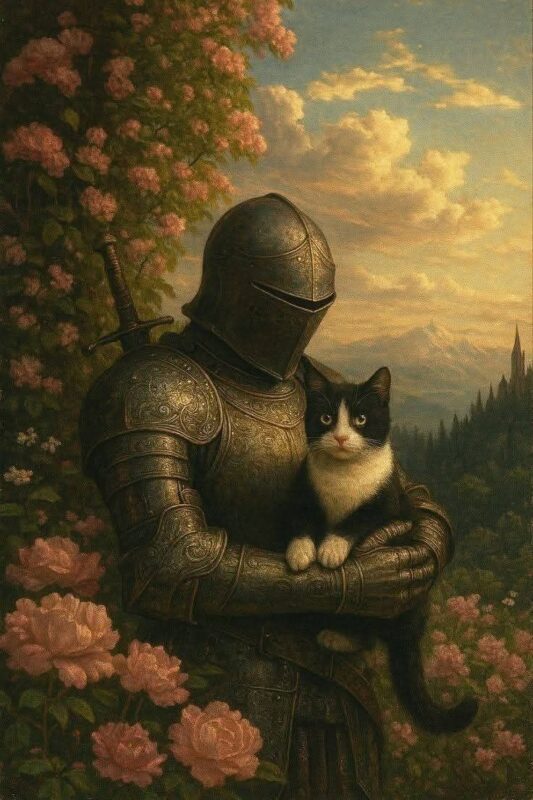
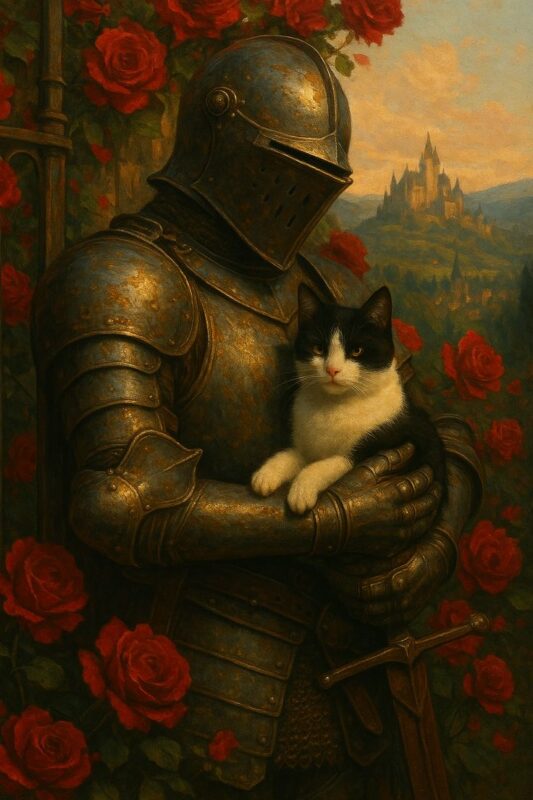
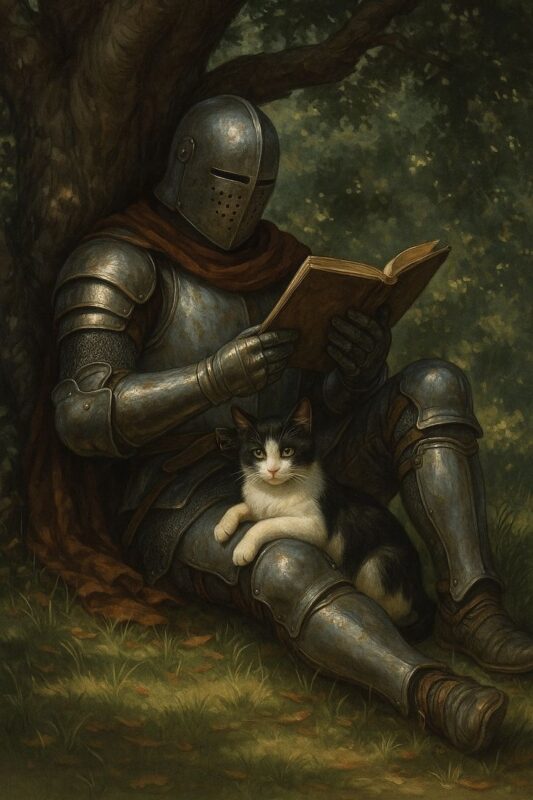
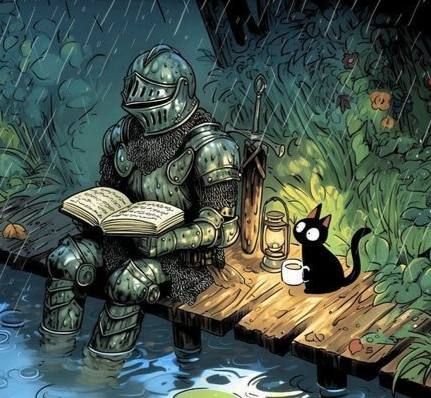


Sir Whiskerton and the Secret of the Snort-Snort-Boom
Ah, dear reader, you’ve returned once more to join me, Sir Whiskerton, for a tale not of grand mysteries, but of quiet transformations. This story concerns one of the farm’s most intimidating figures and the smallest of sounds that threatened to topple his formidable reputation. It is a story of a leather jacket, a hidden dream, and the unlikely maestro who dared to listen. So, settle in for the surprisingly funky tale of The Pig-ernator’s hidden rhythm.
The Oink of Intrigue
It began on a crisp autumn afternoon. The air was sharp with the scent of decaying leaves and distant woodsmoke, and I was enjoying a contemplative stroll past the compost heap—a location rich in both olfactory sensation and philosophical metaphor. It was there that I heard it: a strange, rhythmic sound that was entirely out of place.
Oink-snort-CLANK. Oink-snort-CLANK-BOOM.
Peering cautiously around the mound of potato peels and grass clippings, I beheld a most perplexing sight. It was The Pigernator, the hulking, cybernetic enforcer from Bigcat’s farm who had, until now, traded his life of porcine-powered intimidation for one of peaceful sunbathing on our own. He was staring intently at his own hooves, his usual stoic expression replaced by one of intense concentration. The CLANK was the sound of his metallic leg brace tapping the ground. He was, to my utter astonishment, attempting to beatbox.
Before I could intervene, a flash of movement caught my eye. Lil’ Paws, drawn by the sound like a moth to a flame, popped out from behind a pumpkin.
“Whoa, big guy!” Paws exclaimed, his oversized shorts billowing in the wind. “That’s a… that’s a powerful sound you got there! A little raw, but the vibe is undeniable!”
The Pigernator flinched as if struck, his head retreating into his shoulders. “It is… nothing,” he grumbled, his voice a low rumble. “A malfunction. A glitch in my… hydraulic systems.”
But Lil’ Paws, whose expertise in rhythm is only matched by his lack of social subtlety, was not deterred. “Nah, man, that’s not a glitch! That’s art! You just need a little polish. A little… soul.”
The Funky Forge of Friendship
What followed was a series of the most absurd training sessions I have ever had the misfortune to witness. Lil’ Paws, the tiny, energetic hype-man, took the colossal, brooding Pigernator as his apprentice.
“Okay, big guy, you gotta feel it in your soul!” Paws would instruct, patting the Pigernator’s leather-clad shoulder. “Let the rhythm move you!”
The Pigernator would then attempt a “dance,” which was less a movement of joy and more a series of menacing, seismic stomps that frightened the worms back into the earth.
The sonic results were… unique. Paws’s smooth boots-and-cats was met with the Pigernator’s guttural oink-grunt-squeal. They were an auditory car crash, a beautiful disaster. Porkchop the Pig, watching from a safe distance, declared it “the sound of a tractor giving birth.”
But beneath the comedy, something genuine was happening. The Pigernator, for so long a tool of intimidation, was discovering a voice that was entirely his own. He wasn’t just making noise; he was creating.
The Diss Track of Disdain
Of course, such a radical departure from one’s assigned role does not go unnoticed. Catnip, the shadow-lord of Martha’s farm, observed these sessions with mounting disgust from his fencepost perch.
“He’s gone soft,” Catnip hissed to his hench-rat, Bonbo. “A disgrace to the reputation of tough guys everywhere. This requires a musical intervention.”
The next day, a single, glossy black feather was found stabbed into the compost heap with a tiny note. It was a diss track from Catnip.
“You used to be hard, a force of the land,
Now you’re just lard, takin’ lessons from a band!
You traded your menace for a weak little beat,
You’re not a cool threat, you’re a treat to be eat!
— C.N.”
The effect was devastating. The Pigernator read the note, his shoulders slumping. The tiny spark of confidence Paws had nurtured was instantly snuffed out. “He is right,” the Pigernator muttered. “This is foolish. A machine should not make music.”
The Snort-Snort-Boom Heard ‘Round the Farm
It was at this critical juncture that I decided my passive observation was no longer sufficient. I approached the dejected duo.
“The opinion of a conniving, catnip-addled despot holds no weight in matters of art,” I stated, adjusting my monocle. “Furthermore, his rhyme scheme is pedestrian. ‘Land’ and ‘band’? Truly uninspired.”
“But he’s right about me,” the Pigernator rumbled. “I was built for power, not for… oink-snort-clank.”
“Ah, but that is where you are wrong,” I countered. “What is power without control? What is strength without purpose? Your… snort-snort-boom… has both. It is unique. It is authentic. And authenticity, my large friend, is the most powerful statement of all.”
Lil’ Paws, emboldened, jumped up. “He’s right! Your sound is heavy! It’s industrial! It’s the beat the farm never knew it needed! Don’t let that alley cat tell you different!”
The next day, The Pigernator didn’t hide behind the compost heap. He stood in the middle of the barnyard, with Lil’ Paws at his side. And together, they performed. It wasn’t a polished pop song. It was a gritty, grinding, powerful symphony of oinks, snorts, clanks, and Paws’s flawless high-hats. It was the sound of redemption set to a beat.
Catnip, watching from afar, could only sneer and slink away, out-cooled by the raw, unvarnished courage of his former rival.
The Resolution
After the barnyard’s stunned silence gave way to enthusiastic applause (led by a tearful Porkchop), The Pigernator finally allowed himself a small, satisfied smile. He had not just found a new talent; he had forged a new identity, and an unbreakable friendship with the cat who saw the artist behind the armor.
Moral of the Story: A past role does not define a future talent, and everyone deserves a friend who can hear the music in their soul, no matter how it sounds.
The Aftermath
The Pigernator became a permanent, peaceful member of the farm, his leather jacket now a symbol of cool artistry, not cold intimidation. He and Lil’ Paws formed a duo called “Pork & Beats,” and their collaborations, while sonically challenging, are a beloved testament to the farm’s capacity for change.
And so, dear reader, we close this chapter on a funky, hopeful note—but rest assured, the farm’s next adventure is just one hidden rhythm away.
The End.
Post-Credit Scene:
In a hidden junkyard, a radio tuned to the farm’s frequency crackles to life, playing a bootleg recording of “Pork & Beats.” A hulking, cybernetic sheep with a glowing red eye listens intently. She turns to a mechanical goat. “The Pigernator… is alive. And he’s… funky. We must find him.”
Best Lines:
-
“You used to be hard, now you’re just… lard.” – Catnip’s Diss Track
-
“It is… nothing. A malfunction. A glitch in my… hydraulic systems.” – The Pigernator
-
“That’s the sound of a tractor giving birth.” – Porkchop the Pig
-
“Your sound is heavy! It’s industrial!” – Lil’ Paws
Starring:
-
Sir Whiskerton (Detective & Reluctant Art Critic)
-
Lil’ Paws (Hype Man & Believer in Funky Pigs)
-
The Pigernator (The Industrial Beatboxer)
-
Catnip (The Jealous Critic)
-
Porkchop the Pig (The Color Commentator)
P.S.
Remember: Never judge a book by its cover, or a pig by his beat. The toughest exterior often hides the most surprising rhythm, waiting for the right friend to help it find its flow.
What was your biggest culture shock moving to the United Kingdom?
In 2009 I moved from Norway to Northern England, to a small city called Lancaster by the beautiful Lake District, about 1 hour north of Manchester, relatively close to the Scottish border.
My biggest culture shock? It’s hard to pinpoint one thing, so I’m going to cheat and name a few.
First thing I found surprising was that the houses look exactly like I had seen on British TV-shows. Victorian houses, I believe. Small brick houses, with narrow hallways and a small yard/garden. Very charming.
A big culture shock was the abundance of so-called chavs. They are everywhere, especially up North. These are young British people, typically lower class, who wear tracksuits, and get children in their teens. They are also easily agitated. I had seen those on Little Britain, but I had never expected them to be so prevalent.
Then there is the lad culture. Binge drinking, 15-hour bar crawls, and masculine insecurity. I was first introduced to this when I was walking on the university campus, and this big rugby lad came up to me, on a dare I think, and asked me if I liked bum. I know bum as a noun means ass. But I didn’t know what bum as a verb meant. I asked him what that was, to which he laughed and walked away. Apparently it means anal sex.
The pub culture was shocking. I love it though, and it’s probably one of the things I miss the most about the UK. But, there are adults getting drunk in the pub with their children. There are also certain pubs where you’ll find both young and old people partying together. And these old people dress as equally scantily as the young ones. It’s disturbing and fascinating at the same time.
Will the China Air Force (PLAAf) develop a tanker with boom systems like the USAAF to support J-36 and J-50 operation in West Pacific?
No, The PLAAF have no requirement for a tanker, however the People’s Liberation Army Navy Air Force (PLANAF) does use air to air refueling.
China uses hose n drogue refueling which can be performed as buddy refueling with one fighter supporting another. None of China’s fighters are equipped to receive fuel from a flying boom tanker.
However it should be noted most Chinese stealth fighters have impressive Combat Radii on internal fuel alone.
J20 has a combat radius of 2,400km.
J-36 Combat radius is 1360km
F-35C Combat radius 670km
This reduces Chinese reliance on tanker support. The Hong-6 bomber based on the Tupelov Tu-16 is easy to convert to the tanker role.
China has 120 H-6 bombers with several more modern variants. The naval H-6 J version has a combat radius of 3,500km.
China also has the GJ-21 Carrier launched stealth drone which can act as a hose n drogue Tanker far out over the Pacific.
A GJ-21 its carrier tail hook lowered.
China has consciously chosen hose n drogue refueling so their aircraft are incompatible with the American flying boom system.
1.2K views
Train Rescue | Madame Web | Now Action
Everywhere I go I see “Help Wanted” signs. None of these jobs pay minimum wage anymore and yet they go unfilled. What’s happening?
Anecdotal story.
About two or three years ago, shortly after Covid ended, and there was a surge of demand for jobs, I took my car to the mechanic. The work done on my car took longer than expected.
When I finally got to the shop, the mechanic apologized to me: “Sorry for taking way longer than I had promised. We are seriously understaff here.”
I followed up with a: “Why don’t you guys hire some more guys?” And this was when the conversation took a really interesting turn.
The mechanic said he would love to, but “nobody wants to work anymore”. He went to say that he interviewed a very promising young man not too long ago; he really wanted to hire the boy, but the boy ultimately turned down the job offer, for two reasons.
- First of all the pay was too low. The mechanic didn’t tell me how much he was offering, but he did emphasize: “Everybody starts off with a low wage for the first few months. If you can prove to us that you’re good, I promise to raise your wages by a lot.” The young man was upset, and said that he had helped his dad with cars all his life, and that he graduated top of his class in auto school.
- Secondly, the mechanic wanted the young man to work all seven days of the week, with no days off! The mechanic saw nothing wrong with this, as the shop is opened all seven days, and he even said weekends are the busiest, since most people work on the weekdays and need their cars.
I’m going to be honest… if I were that young man, I wouldn’t have taken the job offer either. Even if they were offering significantly higher than minimum wage, working seven days a week on a wage that probably still wouldn’t be enough to support myself (I’m in California) doesn’t sound like a good deal.
As I took my car keys, the mechanic was still grumbling about how entitled and lazy young people are…
The Laser Trap | Escape Room: Tournament of Champions
Can you get century old eggs in America?
Can you get century-old eggs in America?
Absolutely — and despite the dramatic name, “century egg” is a misnomer. They’re not a hundred years old at all; on average, they’re only preserved for about six weeks. Some brands even call them “thousand-year-old eggs,” which is even more misleading.
As for availability, you’ll have no trouble finding them in the U.S. There are plenty of Asian supermarkets and Chinese restaurants that stock them. I’d happily eat preserved eggs for 30 days straight if they weren’t available — but they are.
I used to serve century-egg appetizers at a Chinese restaurant in Lucerne, Switzerland, where they were priced absurdly high. But then again, in Switzerland everything is expensive, and century eggs are considered a bit of a delicacy there.
The Aliens Arrive | The 5th Wave
What historical fact blows your mind?
Well one fact that blew my mind was that the United States secretly used to make a white clear Coca Cola specifically for General Zhukov after World War II
White (Clear) Coke
After the end of World War II, General Eisenhower introduced General Zhukov to Coca Cola (Coke) for the first time. Zhokov absolutely fell in love with Coke and couldn’t get enough of it.
General Zhukov
Unfortunately for General Zhukov, Coke was illegal in the Soviet Union and therefore he couldn’t be seen enjoying the lovely soda. Zhukov asked his American counterpart, General Mark Clark if there was a way to produce Coke without the coloring.
Clark passed on this request to President Truman who tasked Coke with making a colorless Coke that was packaged to resemble Vodka. Truman contacted Coke and asked them to create a colorless Coke that tasted the same, but was packaged to look exactly like a clear bottle of vodka.
Zhukov and Eisenhower
Coke found a chemist who could do just that and Coke created their White Coke line specifically to be shipped to General Zhukov. The colorless version of Coca-Cola was bottled using straight, clear glass bottles with a white cap and a red star in the middle.
Zhukov
And while most Western goods flowing into the Soviet Union took weeks to clear, cases of White Coke were never stopped. The United States sent cases of the stuff to Zhukov during 1946.
Many years later, Pepsi became the first American Cola to be licensed and sold in the Soviet Union but White Coke stands as the strangest of American products to be shipped into the U.S.S.R.
Edit: My dad was the first one to tell me this story years ago. It always tickled my funny bone and I thought it was such a great story! And all true!
I hope that clears up any confusion!
I 💖C2, questions, disagreements, curses and hexes!
-Jason
the last of us (2023) – frank walks into bill’s life and nothing’s the same
Why do some people think it’s okay to let Alzheimer’s patients believe they’re in a hotel, while others see it as wrong to lie to them about being in a care facility?
My late sister (she died suddenly at the age of 50), was a geriatric nurse practitioner. She worked in a hospital with alzheimers and dementia patients. I remember her two stories she told about patients that answer this perfectly.
The first was an alzheimers patient she had who was very upset about being in the hospital. She would ask the CNA’s where she was and when they told her she would become violent. My sister told the staff that from then on to tell her she was visiting them. The woman was in a room that overlooked a rooftop with large A/C units. The next time my sister went to her room she asked where she was. My sister said “You’re visiting at my home.” The woman replied “Honey, I don’t want to hurt your feelings, but those statues in your front yard are ugly.”
The other was a woman with dementia who’s son came to visit her every day. Sadly, the son died unexpectedly of a heart attack. A family member told her of his passing and she was devastated. Every day she would say “George is coming to see me.” She had forgotten he died. The nursing staff would just tell her that he was coming tomorrow. Telling her that her son was dead and making her relive that every day would have been cruel.
What are the pros and cons of sleeping in your car at big box stores like Walmart, and how can you avoid being asked to leave?
I was an Assistant Manager in Bozeman MT. It is absolutely beautiful there and we got lots of tourists and campers that would park and sleep in the parking lot. Generally we wouldn’t care or even notice if it was just a day or two but after a couple days it becomes noticeable.
One of the easiest ways to avoid being asked to leave is to not be a nuisance. Don’t leave trash, don’t be making lots of noise. Don’t have a tailgating party. Park as far away as possible from the front. Also, try moving parking spaces. My Asset Protection Associate would mark car tires with chalk and see if they move. She would contact towing companies with a fierce passion too.
Pros: convenience. If you need something you can easily run and get it during open hours. Cheap. Relatively safe. Lots of cameras and lights.
Cons: Not very private. Can cause anxiety wondering if you’ll get caught. No showers.
I slept in my car at the Walmart parking lot one night when I was in between leaving my house with my ex and moving into a spare room I found on Facebook. It wasn’t the worst night sleep I’ve had but it certainly wasn’t great.
The Stitch Between Us
Written in response to: “Center your story around someone who turns into the thing they’ve always hated.“
K Ray
Fantasy Fiction Science Fiction
Around her, the village mourned, though strangely, Iria did not cry. While they burned things and chanted meaningless words, she stole her brother away under cover of night, dragging him to the old tannery where the empire’s scraps lay piled: sinew, shards of bone, coils of thread thick as wire, blood crystals that glimmered faintly red. Refuse the priests called “impure.”
She lit no candles. The dark itself sat witness.
When she stitched Kael back together, her hands shook. The air stank of old leather, iron, and the herbs she burned to mask his rot. Every knot burned her fingers raw, but she didn’t stop. She whispered with each pull of the needle, “Come back. Come back to me.”
And then he did.
His eyes opened, clouded but alive. His lips cracked as he rasped her name.
Iria crumpled beside him, pressing her forehead to his chest, though it was hard beneath her cheek and his heartbeat uneven, it was there. “I have you,” she whispered.
At first, he was her Kael. He followed her through the fields, his steps a bit heavier than before, his laugh lower but familiar. When she braided rosemary, thyme, and lavender to sell in the market, he carried the baskets for her. When she woke sweating from dreams of blood and damnation, he sat at the edge of her bed and hummed the lullaby their mother used to sing.
But the villagers noticed. They stared at his stitched skin, the faint gleam beneath his fingernails, the way his eyes sometimes caught fire and glowed.
“He’s not right,” a neighbor muttered.
“He’s a Seraph,” another whispered.
Iria spat. “He’s my brother.”
But doubt coiled in her gut.
The first time Kael killed, it was for her.
A thief cornered her near the well, jeering, hand snatching at the jewels on her arm. Kael’s shadow fell over them. His hands closed on the man, and with a sound like wet branches snapping, he crumpled.
Blood sprayed across Iria’s dress, hot, metallic and filling her lungs until she gagged.
Kael dropped the body like spoiled meat. His hands trembled, but his eyes… his eyes gleamed with a strange light.
“I protected you,” he said.
Iria nodded, heart hammering. She wanted to believe him.
Kael grew hungry. Not for food, not even for blood. For completion.
“You didn’t finish me,” he said one night, voice low, vibrating in his chest like thunder. “I can feel the seams. I need more.”
“More what?”
“More flesh. More power. Make me whole, Iria.”
The tannery reeked of death when she returned. Discarded limbs, shattered ribs, dried muscle, all dumped like refuse by an empire that worshipped perfection. She pressed her face to her sleeve to keep from retching.
She stitched anyway.
“You hate the empire,” Kael said, watching her hands move. His voice was softer now, but edged with something she couldn’t pin down, “but you use their tools. Their thread, their bones. You make me their mirror.”
“I brought you back because I love you.”
“No.” His grip closed around her wrist, firm enough to bruise. “You brought me back because you couldn’t let go.”
Her throat closed. She didn’t have an answer.
The villagers began to fear her as much as him. They avoided the tannery. They crossed themselves when she walked past. Children hid behind their mothers’ skirts.
“Heretic,” someone hissed.
“Monster!”
Iria clenched her teeth. They don’t understand.
But deep down, a seed of doubt began to grow.
On a bitterly cold evening, a Seraph patrol descended on the village, white eyes glowing, blades gleaming. Kael met them in the square. His roar split the air, raw and guttural. He tore through them like cloth, their bodies falling in pieces, the ground slick with their blood. The villagers screamed, scattering like birds.
Iria stood frozen, the smell of burning herbs and flowers mingling with blood, the clash of steel ringing in her skull. This wasn’t her brother anymore.
When the last Seraph fell, Kael turned to her. His face was streaked with gore, his stitches strained, glowing faintly. His voice calm.
“Finish me, Iria. Make me perfect.”
Her hands trembled. The needle and crystal lay heavy in her pouch. She could unmake him. She could let him go.
She looked at the villagers, huddled in terror, looked at the soldiers’ ruined bodies. She looked at Kael’s hand, reaching for hers, strong and certain.
So she stitched.
The final seam closed with a hiss. Kael stood taller, his glow bright as moonlight. His voice was no longer cracked, but resonant, commanding.
The villagers fell to their knees.
Iria stared, needle dangling from her hand, her own knees weak. This was not Kael. This was not her brother.
This was a Seraph, and she had made him.
Smoke curled above the ruined square. Blood seeped into the dirt. The smell of iron and incense clung to Iria’s skin.
Kael’s hand, no, it was a Seraph’s hand, settled on her shoulder. Warm, steady. The touch that once comforted now pinned her in place.
“You see, sister,” he said, his voice like thunder, “perfection was always the way.”
Iria closed her eyes. She had sworn she would never kneel. Never bow to the empire’s twisted worship.
But when the villagers bent their heads to the Seraph she had stitched, she realized she was no different.
Chicken with Jalapeño Peach Sauce
Yield: 6 servings





Ingredients
- 1 (21 ounce) can peach fruit filling, divided
- 1 (14 1/2 ounce) can chicken broth, divided
- 2 (2 1/2 to 3 pound) whole chickens, quartered
- 1/2 teaspoon salt
- 1/2 teaspoon pepper
- 1/2 cup chopped onion
- 1 garlic clove, minced
- 1 tablespoon olive oil
- 1 (4 1/2 ounce) can diced green chiles
- 2 tablespoons chopped fresh cilantro or parsley
Instructions
- Process half of fruit filling and half of broth in a blender until smooth.
- Place chicken in a large roasting pan; sprinkle with salt and pepper, and brush with fruit filling mixture.
- Bake at 350 degrees F for 1 hour or until done.
- Sauté onion and garlic in hot oil in a skillet over medium high heat for 2 minutes or until tender. Add remaining broth, and cook for 3 to 5 minutes.
- Stir in remaining fruit filling and chiles, and cook just until thoroughly heated.
- Stir in chopped fresh cilantro, and serve with chicken.
Recipe Goldmine is now a legacy site. Please visit our sister site, Simply Great Recipes, for new recipes.