I want to remind all of you of the “crystal ball” viewings that I have documented since 2015 or so. How accurate have I been?
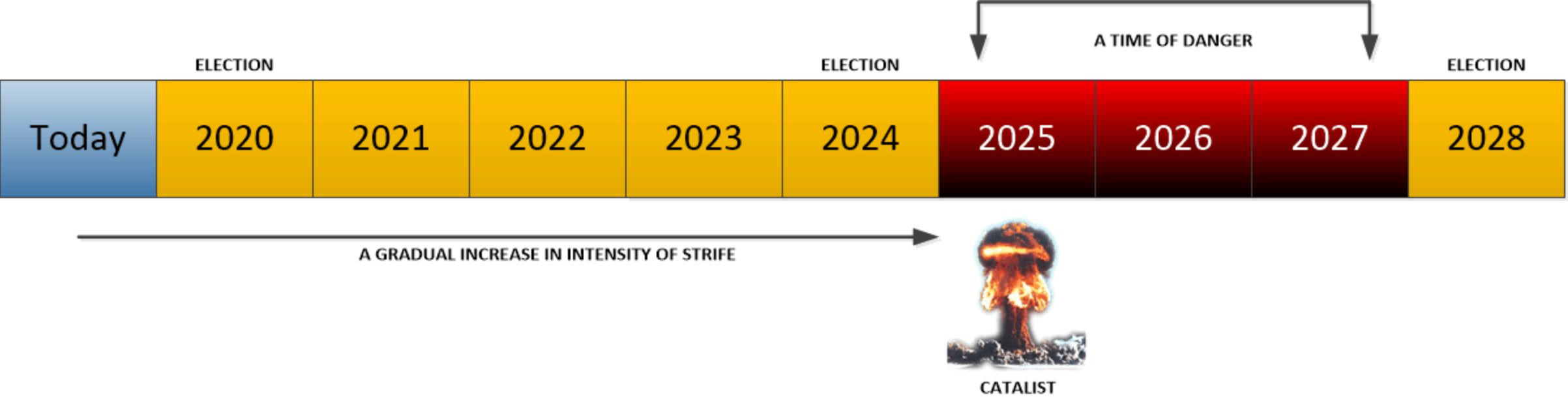
The good news is that You are IN THE THICK OF IT now.
Not too far from now… it will start easing up.
Today…
Everyone Is Quietly Getting Ready for What’s About to Hit America
What are some outrageous refund requests that hotel owners or staff have received from guests?
Oh, I’ve got two answers to this!
One: We had a full house, and at some point in the middle of the night, a car crashed into a pole and cut power to an entire side of town. Our hotel lost power for several hours. Later that day, a woman called demanding to speak to the general manager. I was the only one on duty with managerial powers, so I took the call. The woman was irate and demanded a refund because her room didn’t have power, and we didn’t answer the phones at the front desk. Obviously we were rude and had terrible customer service for not answering.
Me: Ma’am, I am terribly sorry for your experience, but the reason we didn’t answer our phones was the entire side of town was without power. It wasn’t just your room.
Woman: Well, what caused that to happen? Why didn’t any of y’all fix it?!
Me: unfortunately, ma’am, there was a traffic accident that destroyed a light pole, and none of us are electricians or linemen.
The second story:
So, as many are aware, if a hotel has satellites, cloud coverage can cause them to lose signal. One night I was sitting in the back eating lunch, and a call came through from a guest room. They’d been watching television when the signal cut off with a note stating to call the front desk. I apologized for the inconvenience, and looked outside. It was raining pretty heavily. I explained that the storm was the cause of the satellite going out, but as soon as the clouds cleared, the signal should return. The woman huffed.
“Well how long is THAT going to take?!”
“I am not sure, ma’am, let me check the radar—”
“the radar?! You have television down there?!”
“No ma’am, the radar on my phone. Okay, according to this, the storm should be over us somewhere between thirty to forty-five minutes.”
“Oh my god, why so long?! Is there something you can do?!”
“What would you suggest I do to make your stay more comfortable, ma’am?”
“I don’t know, reposition the satellites or something so they can go around the storm! We NEVER have that problem at home, so I think your satellites are just pointed the wrong way!”
What I said and what I thought were two very different things.
What I thought was “I do not get paid enough to go out on the roof during a thunderstorm, with active lightning, and if you had television prior to the storm, the dishes are clearly pointed the correct way.”
What I said is “Unfortunately, ma’am, I do not have roof access. But the storm will pass soon.”
“Can you guarantee it?”
“I can only guarantee what the radar is telling me, ma’am.”
She huffed and hung up the phone.
At check out, they complained because I didn’t help with their television, and demanded a refund. My boss asked if the television came back on after the storm had passed, which it had, and he said ” Sounds to me like my front desk agent did everything within her power to take care of your television problem.”
Sir Whiskerton and the TurboTax Revolt
Ah, dear reader, prepare yourself for a tale of numbers and nonsense, of ledgers and lunacy! Today’s adventure pits the unstoppable force of governmental order against the immovable object of farmyard folly. It is a story of calculated confusion and absolute, un-taxable joy. So, find your favorite abacus and prepare to misuse it completely, as we delve into Sir Whiskerton and the TurboTax Revolt.
It began with the arrival of a car so clean and rectangular it seemed to offend the very curves of nature. From it stepped Taxman Ted, a man whose soul was woven from spreadsheet cells and whose heart beat in a steady, quarterly rhythm. He wore a perfectly pressed suit and carried a briefcase that clicked shut with the sound of finality.
“I am here for the annual agricultural audit,” he announced to the farmer, who was at that moment trying to convince a pumpkin that it had great potential as a bowling ball.
The farmer blinked. “Audit? Is that a type of bird? I think one might be nesting in the eaves.”
Ted’s eye twitched. He soon realized that to get any coherent financial data, he would have to go straight to the source: the animals themselves. He gathered them in the barn, a place he immediately noted was “grossly inefficient in its spatial allocation.”
“Alright,” Ted began, setting up a whiteboard. “We’re going to cover some basic bookkeeping. Let’s start with assets versus liabilities.”
He handed out calculators. The result was pandemonium.
Doris the Hen and her entourage immediately began pecking at the buttons with frantic, random zeal.
-
“A seven! I have pecked a seven!” Doris declared.
-
“I have a four, two threes, and a mysterious ‘EE’!” Harriet reported.
-
“EE! It’s an existential cry for help!” Lillian shrieked, and fainted onto her feed-bucket fainting couch.
The screen of Doris’s calculator now read: 773EE4+1/0. Ted stared at it as if it were a prophecy of the apocalypse.
Porkchop the Pig, intrigued by the rustle of paper, sniffed the “Basic Bookkeeping for Small Businesses” manual. “Hmm,” he mused. “A bit dry. Needs a little… zest.” And with a thoughtful crunch, he ate the entire first chapter.
“Tastes like bureaucracy,” he concluded, washing it down with a mouthful of actual mud.
Ted, sweating through his starched collar, pressed on. “Okay, forget the calculators. Let’s try a simple T-chart. Debits on the left, credits on the right.”
This was the moment Gnomeo the Wandering Gnome chose to make his entrance. Seeing the man’s profound orderliness was an irresistible siren call for chaos. With a mischievous squeak, he used his fishing rod to expertly, silently, swap the labels on the whiteboard.
Now, the chart read: “CREDITS” on the left and “DEBITS” on the right.
Ted, not noticing, continued. “So, when you receive a bag of feed, that’s a…”
He pointed confidently to the right-hand column, now labeled “DEBITS.”
“…Debit!” he announced.
Sir Whiskerton, observing from a hay bale, raised a single, skeptical eyebrow. “Are you quite sure?” he purred. “I was under the impression that an increase in assets would be a credit to one’s well-being.”
“No, no, no!” Ted insisted, flustered. “A debit increases an asset account, but it decreases a liability… or is it the other way around now?” He stared at the swapped labels, his certainty beginning to curdle. Gnomeo, hiding behind a bucket, shook with silent, ceramic laughter.
The final straw came when Ted tried to explain depreciation to Rufus.
“So, if you have a doghouse with a useful life of ten years…” Ted began.
Rufus, hearing “doghouse” and “life,” wagged his tail so hard his entire back end wiggled. He lunged forward, licked Ted’s face with uncontainable joy, and sent the whiteboard crashing to the floor.
Taxman Ted stood there, covered in slobber, surrounded by calculators displaying alien mathematics, a pig that had eaten his instructions, and a fundamental misunderstanding of basic accounting principles that he himself had caused. The rigid structure of his world shattered into a million incoherent pieces.
And then, he did something extraordinary.
He laughed.
It started as a small, choked sound, like a rusty gear turning. Then it grew into a full-bellied, un-Ted-like roar. He laughed until he cried, wiping his eyes with a now-wrinkled sleeve.
“It’s all… it’s all completely meaningless!” he wheezed, gesturing at the beautiful, nonsensical chaos.
The farmer, passing by with his pumpkin, gave a friendly nod. “Told you that bird was in the eaves.”
Ted spent the rest of the afternoon not auditing, but learning. He learned that the “asset” of a sunbeam was immeasurable. He discovered the “liability” of a grumpy goose was best handled with a wide berth. And he found that the bottom line, the only one that truly mattered, was the contented sigh of a farm at peace.
He left that evening, his suit wrinkled, his hair slightly askew, and a genuine, uncalculated smile on his face. His report simply read: “Financials: Incalculable. Profit in Joy: Immense.”
The End
Moral: You can’t put a price on happiness, and you can’t deduct the value of a good laugh. Some of life’s best balances can’t be found on a spreadsheet.
Best Lines:
-
“Tastes like bureaucracy.” – Porkchop the Pig, food critic.
-
“I have a four, two threes, and a mysterious ‘EE’!” – Harriet the Hen, mathematician.
-
“Financials: Incalculable. Profit in Joy: Immense.” – Taxman Ted’s final report.
-
“Are you quite sure?” – Sir Whiskerton, master of the polite undermining.
Post-Credit Scene:
A week later, a package arrives for the animals. Inside are custom calculators from Ted, but the numbers are all replaced with pictures of corn, sunbeams, and mud puddles. Gnomeo immediately tries to use his to fish, but it just sinks.
Key Jokes:
-
The chickens using calculators as high-tech pecking toys.
-
Porkchop literally consuming the knowledge.
-
Gnomeo’s simple, devastating prank of swapping the debit/credit labels.
-
Ted’s complete and utter mental breakdown leading to his joyful enlightenment.
Starring:
-
Sir Whiskerton (The Socratic Questioner)
-
Taxman Ted (The Bureaucrat Reformed)
-
Gnomeo (The Agent of Anarchy)
-
Porkchop (The Manual Muncher)
-
Doris & The Hens (The Auditors of Absurdity)
-
Rufus (The Living Wrecking Ball of Joy)
P.S.
Remember, if your life’s balance sheet doesn’t have a column for “random acts of silliness,” you’re doing your taxes wrong.
Baked Cream Cheese-Stuffed Chicken Breasts
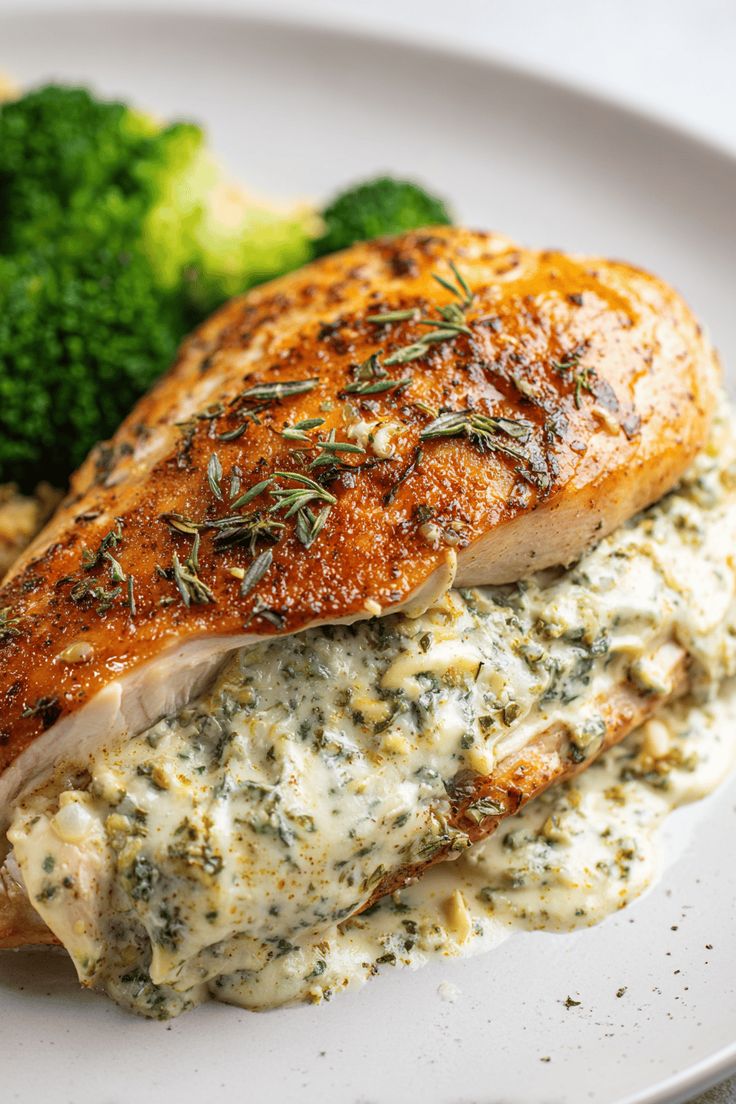
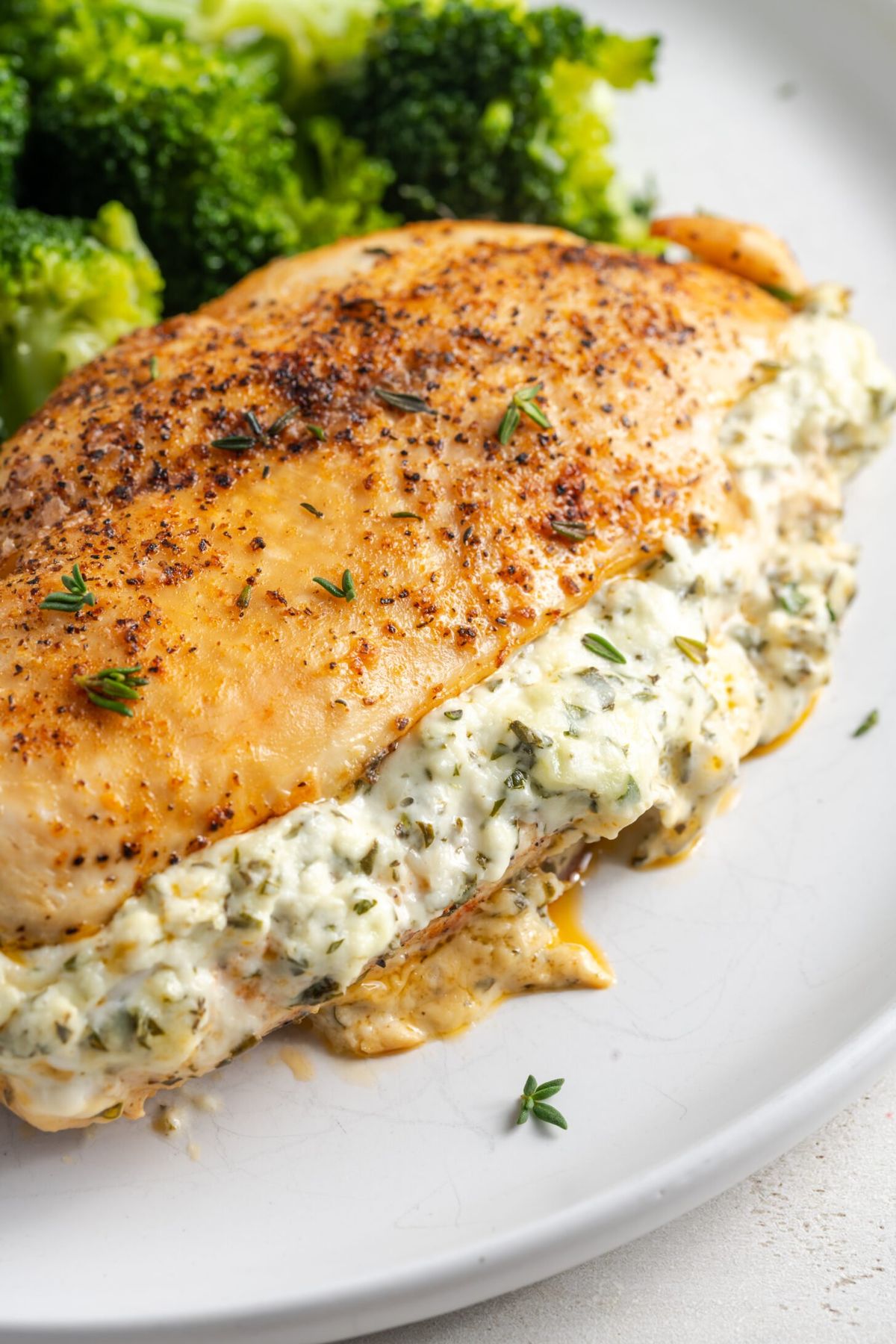

Yield: 4 servings
Ingredients
- 4 boneless, skinless chicken breasts
- 3 ounces cream cheese, softened
- 1 tablespoon parsley, chopped
- 1 tablespoon onion, finely chopped
- 1 tablespoon lemon juice
- 1/4 cup all-purpose flour
- 1 egg, beaten
- 1/2 cup corn flake crumbs
Instructions
- Heat oven to 350 degrees F.
- Place chicken breasts between sheets of wax paper. Using a wooden mallet or rolling pin, flatten to 1/4 inch thickness.
- In small bowl, mix cream cheese, parsley, onion, and lemon juice until blended. Spread about 2 tablespoons of the mixture on each breast. Roll up starting with the narrowest end and tucking in any loose pieces.
- Coat rolls with flour, dip in egg, then roll in corn flake crumbs.
- Place 1/4 inch of oil in a medium size skillet. Over medium heat, brown chicken rolls a few at a time. Place chicken rolls in a single layer in a baking dish.
- Bake for 30 minutes or until chicken is fork tender and juices run clear.
Sand Walkers
Written in response to: “Start or end your story with a character looking out at a river, ocean, or the sea.“
Peter Brickwood
Sand Walkers
An Earth to Nancy Story
By
Peter Brickwood
The Jessie touched Ursula’s elbow. “That’s as close as you should get to the sand.”
The tall woman’s lightly creased face looked down on the Jessie, “Really, how can I be in any danger here?”
“If I am to save you from death, you have to trust that I know the risks.” Sighing, the Jessie added, “We don’t want to incinerate you, too.” Her fingers flicked behind her back, commanding the members of the protective detail to move ahead and to the sides of the pair as they stood on the long rock slope leading to the endless expanse of sand.
“But I’m ten yards up bare rock.”
“Yes.” The Jessie nodded. “But you cannot tell a windborne worm from an ordinary grain of sand.”
“Pssah.” Ursula made a dismissive sound. “These blood worms of yours cannot be as small as tiny granules.”
“They can.” The Jessie shook her head. “Specks so small you hardly feel them against your skin. Within a minute, the body is infested with worms reproducing as fast as they can suck blood, growing and dividing until your body explodes and splatters over all of us. In self-preservation, we would have to kill you, just like your assistant, and destroy your corpse with flame throwers before the blood worms could escape and attack.”
The woman’s features became harsh as she admitted, “I suppose I don’t want to see that again, much less experience it.”
“The human race has found us after a thousand years, and they don’t care. You’re the only person in the whole galaxy that’s interested in us. And that’s only so you can study us for your anthropology thing.”
Ursula stared out at the valley between two rocky promontories covered in gnarled trees. “Does the sand really spread out like an ocean?” She pulled a high-tech viewer from her bag and pointed it at the distant horizon. “All I see is sand.”
The Jessie looked over her shoulder toward a woman of medium height with tightly bound blonde hair and the chaffed reddened skin that came with long exposure to the relentless sun. “Swot?”
The blonde woman’s brows furrowed, “Jessie, I’m not a Swot and don’t study all those books about astral navigation and other useless stuff. I just like reading the stories.”
“You’re the closest thing I have to a Swot, so do any of those ‘stories’ tell you about oceans?”
Swot thought for a few moments before answering. “The water surface on World One covered half of the planet. A person could stand on the edge of the land—they called it ‘beach.’” She laughed. “It was made of sand. When they looked away from the shore, they saw nothing but water in the same way we see nothing but sand when we look out from a point.”
“We can go out to the points.” Exclaimed Ursula, “I want to do that.”
Jessie’s mouth tightened, “Guarding you is like minding a curious toddler.” Her mouth twisted as she thought, “All right, we can go out the old crash point path. We’ll only need a demi-dec.”
Swot reached for a bag on her belt. A squat thickset man held out a hand to stop her. He glanced around; two tall men and a short woman all nodded. He said, “We’ll take her. You mediums go and enjoy an afternoon off. Soon enough, you’ll be making babies and have no time for yourself.”
Sadness clouded Swot’s eyes as she acknowledged his gift. “Thanks, Dem.”
The four guards formed up in a diamond around Ursula and Jessie. The group set off at a pace that matched Ursula’s brisk walk. Chattering excitedly, she asked, “Why do you call it a dec? I’ve heard of squads, ranks, files, crews, sticks but never decs. Stick is an interesting one, we can learn so much…”
The Jessie waited until Ursula paused for breath. “Dec is a group of ten people. Almost all our work is done in groups of ten. I think it started with work crews on our spaceship.”
“Ah,” Ursula’s eyes got a faraway look. “Like demi-tasse means half a cup in ancient French, so ‘demi-dec’ means half a ten-person crew. I must make notes.” She fumbled in her bag for a small device and began talking to it. Presently she asked, “Swot, Dem, Jessie. I thought you didn’t use names.”
“Don’t,” replied Jessie with a tinge of annoyance. “Some of us love to study and understand all kinds of stuff. We call them ‘Swot.’ A long tradition, I don’t know why. ‘Dem’ comes from demi and means he is the half-commander, who takes over when I get killed. They’re not names, they’re job titles.”
“‘Jessie’ doesn’t sound like a title.”
“They’re teasing me. Our cohort has finished its five years of blood patrols which means we are young adults. I was elected to represent our cohort on the Governing Council. For some reason that nobody knows, the job is called ‘The Jessie.’”
Ursula talked to her machine again. After a minute she asked, “What did Dem mean, they’d be ‘making babies’ soon? Won’t you all be—” She bit her lip. “Oh, sorry.”
“S’all right,” said Jessie with a shrug, “We’ve all know for years we’d be ’cards.”
Dem turned onto a metal path leading under the trees of a forested point of land that ran out into the sand sea. The woman guard moved up beside him and the two men fell back behind them—so they formed a box.
“Biggest danger here is that a snake will drop out of a tree onto you. If you can get out of its way so it drops to the metal deck, we can kill and burn it. But if it gets its teeth into you, we’ll have to burn you.” Jessie looked up at the tall woman beside her.
Ursula hunched herself over a bit and kept walking. She asked, “What did you mean ‘’cards’?”
Jessie laughed. “Short for ‘discards.’ By the time we’ve been doing Blood Worm Patrols for a year, we almost always stop growing. Like me and those two.” She tipped her chin toward the two guards in front of her and Ursula. “Women my size are known as ‘pitifully petit.’ That pair,” she jerked her head toward the two behind her. Ursula looked up at them. Jessie smiled. “They’re nicknamed ‘too talls.’”
“Didn’t your ship have a bank of egg and sperm cells?”
“Oh, yes. Apparently the medical technology of reproduction was fairly advanced when GenTwo, our ship, left World One, uh,—”
“Earth,” supplied Ursula.
“The GenNeers were hmm, medical personnel responsible for maintaining the population on GenTwo. As best we can tell, they did a great job. The problem happened after we crashed, and the cryogenic storage banks lost power. The baby cells all melted into mush.”
Ursula’s head jerked and she blinked then, hesitantly, asked, “Ah, but why, um, ‘discard’ only the tall and short people?”
“Our bad luck.” Straining to keep her voice measured and reasonable, Jessie replied, “Somewhere back in the first century on Nancy, the settlers realized that if we run at a steady pace, the worms ignore us. If we break stride or run in a ragged pattern, they home in on the vibrations and usually kill the whole patrol before swarming and racing up the sand valley. Our job is to use our radios to warn agricultural workers so they can get off the sand and onto metal platforms or the rock shore where the blood worms can’t get at them.”
“But what does that have to do with being tall or short?”
“Tall and short people lope—run, with an ever so-slightly different rhythm that attracts the worms.” In an obvious attempt to change the topic, Jessie asked, “Do you know what kind of trees these are?” She waved at the twisted trunks and branches with long tubular leaves.
“No. All planets have indigenous life forms that have never been seen before…” Ursula’s voice trailed off.
“One of the landers christened them ‘Christmas Trees.’ Do you know what that means?”
“What?” Ursula would have stopped but Jessie pushed her elbow to keep her moving. “Were your settlers Christians?”
“What’s that?”
“Followers of a religion from earth with a holy day called ‘Weihnachten.’ That means ‘Christmas.’ The holiday was celebrated by bringing small triangular trees into their houses.”
“I don’t think there were any uh, ‘Christians’ among the landers.” Jessie shook her head. “But the young trees are triangular. As they get older and taller, they become more contorted.”
Ahead of them, Dem burst through the trees into brilliant sunlight falling on a large outcrop formed by rock that had been burnt bare.
Ursula’s eyes widened as she turned to look at unbroken sand for as far as she could see. A fine beige dust was moving away from the land in a light breeze. The surface of the sand sea glistened with small ripples that seemed to flow in the light. “It really is like an ocean.”
Jessie waited quietly while Ursula gazed out at the bright blue sky beyond the far-off horizon. Ursula began to sit down on the rock, but Jessie took her elbow again. “Please don’t. There can be tiny snakes hidden by cracks in the rock.”
“Ahh,” a strangled sound came from the female guard closest to the sand’s edge. Three of the guards went into half crouches and reached for handheld flame throwers tucked into their waists or slung at their hips. The tall who was carrying a backpack burner lifted the nozzle to check its pilot flame was lit.
The talls carefully examined the trees while Dem and Jessie scrutinized the rocky ground and blowing sand. Seeing nothing, Jessie called to the guard. “What is it?” The woman choked on her answer and could only wave an arm in the direction of the next point.
On the far point, a man was stacking rocks around a metal pole.
Ursula pulled out her viewer and trained it on the man. “He seems to have fixed that metal pole so it will stand by itself.” She offered Jessie the viewer. “Do you want to take a closer look?”
Heavily, Jessie answered, “No, thank you.” Addressing the female guard, she asked, “Is it Gingie?” The guard pressed her lips tight, nodded, and wiped a tear from her cheek.
“He’s sitting down now,” Ursula said. “Seems to be taking off his boots. Isn’t that dangerous?”
“Boots are very valuable,” Jessie explained. “It’s easy enough to replace pants and shirts but it’s difficult to make good boots. We use hard plastic for the soles and horsehide for the uppers which all has to be glued and sewed tight so there’s no miniscule gaps to let in worms.”
Ursula frowned, “He seems to be hanging the boots upside down on the pole.”
“So, snakes won’t get in and surprise someone.” Jessie looked at the guard. “Was he expecting bad news?”
The female guard gulped. “He was hoping everything would be OK but because of his red hair, and you remember when he was very little, he got angry a couple of times; he was afraid the GenNeers would tell him he had the ‘mad’ gene.”
Ursula clicked her electronic viewfinder a couple of times. She frowned. “Must be something wrong with this thing, says he’s medium height.”
“He is.” Jessie sighed again. “The GenNeers must have told him he’s being discarded.”
Ursula’s hands dropped as she gaped at Jessie. “Because he has red hair?”
Jessie huffed, a small sour smile twisting her mouth, “Back in the beginning during the first century or so of settlement here on Nancy, there was a huge fight. The GenNeers said we would kill ourselves off. Uh…”
“Become extinct?”
“Yeah, that’s the word. They said there were too many sick, weak and uh, people who couldn’t think very well. I only know the rude word for it.”
“Mentally challenged?”
“Boy, you social anthropologists know everything. Anyway, the GenNeers said that because the frozen babies had all melted, they would have to decide who could have babies so that we would remain—” Ursula started to speak but Jessie held up a hand. “I remember this one, a ‘genetically viable population.’ Like I said, it was a huge fight. There was a red-haired guy, I think his name was ‘Gingie,’ who wanted to marry and have babies with a woman who was called ‘developmentally challenged.’ The Governing Council decided they could have a baby, which of course they did. But worms got the child. The woman—Faith was her name—couldn’t stand the grief and she went out on the sand, barefoot, so the worms would kill her.”
“He’s doing that?” asked Ursula. She raised her viewer again. “He’s shuffling his feet as he walks on the sand.”
The group kept watching their surroundings for worms and snakes, occasionally glancing toward the red-headed man trudging into the beige ocean.
Dem made a slight sound so that he could catch Jessie’s eye. She shook her head slightly. Dem frowned, tilting his head up toward Ursula. Jessie shook her head and rocked her chin toward the female guard watching Gingie disappear over the sand. Dem grimaced but went back to surveying the sand around them.
Daylight was beginning to darken when the group heard a faint whump and a small cloud of sand blossomed far out on the horizon. The female guard let out an audible sigh. Then the other members of the demi-dec began moving along the path toward the settlement.
Ursula’s expression was grave. “Do people often suicide?”
“Not many of us die of old age.” There was grim humor in Jessie’s voice. “We discards will keep doing Blood Worm Patrols and other dangerous work. We won’t live long. The mediums will be protected, given the least dangerous jobs for as long as they can have babies. That’s how our settlement survives.”
As the demi-dec came out of the trees, the rest of the dec joined and fell into the usual diamond square formation. Swot trotted along not far from Jessie. Quietly, she asked, “What happened?”
“Gingie became a sand walker.”
The End
The Daily Wire is Learning Why You Can’t Hire Women
Are there foods that genuinely boost immunity, or is it mostly a myth?
No. If there was food that “boosted your immune system”, it would be terrifying to say the least.
Your immune system isn’t a well tuned commando center that many people think it is. It is more like carpet bombing. To better describe it, it is all out panic, hysteria if you will, or nothing.
This is why if you get a splinter or something inside your body, the immune system will attack it, and you can lose a limb over this. This is why allergies can kill you. Peanuts are absolutely harmless to people, they are a great source of nutrients even. Cats and dogs are a huge reason why humans are the most successful creatures on earth.
But due to “boosted immune system”, it thinks that proteins in the saliva of dogs and cats that is on the hairs of those animals is so dangerous that stopping you from breathing is just a good idea, according to your immune system. Not just eating a peanut, but just breathing in air that has some trace amounts of peanuts will kill you if left untreated, if your immune system is boosted enough.
Your boosted immune system is also known to attack your own body, auto immune disease. It can turn muscles into bones, just because something hit a muscle in your system and bruised it, just a tiny bit, the system just attacks the muscle and kills it, turns it into a bone.
It can also decide that cartilage is your biggest enemy, and eats all cartilage in your body, that means your ears, your nose, protection between many bones, just goes away in a relatively short amount of time. This is extremely painful and drawn out process. If this is caught early enough, patients can have chemo therapy, like cancer patients, to keep the immune system in check. That also means that the common cold can put you in a hospital.
There is nothing that boosts or enhances your immune system. There are many medications on the other hand that limit the working of the immune system to keep the same people alive. Like my dad got my kidney, and he has to take immune depression medications for the rest of his life.
I am allergic to horse hairs and dust. This causes my eyes to water and itch. Nothing super serious but this makes me feel like I am drunk, not the good part, just the bad parts of being drunk. Worst I have been is that I had problems making sentences, my brain just takes a nap and is barely functioning. Fortunately, it is mostly just itching and tears running like I am being paid to produce them.
But, my immune system decided one day that the protein of the dandruff in horses was the same as a protein in apples, cherries and is found in a lot of beers, and I like beers. This is called side allergy. I am not allergic to apples, but raw apples cause me to have an allergy attack. It causes me to be unable to swallow, anything. For many hours. It causes other issues and one day it will cause me to have troubles breathing and eventually I will be unable to breathe. This has caused my tongue and cheeks to swell up and this would have caused my tongue to block my breathing. This is why I carry steroids on me at all times. What a side allergy this is. My sister who is a medical doctor wants me to carry an epipen with me, but I don’t want to. Funny part is, I can eat all the apple pie and cherry pie I want, it is just whe it is raw.
So, don’t buy some snake oil supplements. They are quite often a waste of money and sometimes they contain things that cause you to have an allergy attack. This isn’t called snake oil for nothing.
Eating healthy and exercising is a good way to be healthy. But it is not guarantee for anything. Quite a lot of athletes end up with auto immune disease.
You want to be; you NEED to be, that safe space
Without nuclear weapons during World War II, the United States would have been no match for Japan. Would the Japanese have driven the Americans back to Europe?
Without nuclear weapons there would be no Japanese people, or very few. Japan itself, would have looked like several chunks of bio-char. It’s that simple. American forces were scheduled to land on the Japanese Island of Kyushu, on November 1st, 1945 and would have, had the nuclear bombs not been dropped on August 6th, and 9th, 1945.
“Little Boy,”(above) at Tinian Island, waiting to be loaded into the bomb bay of the B-29, known as The “Enola Gay.” Pilot Paul Tibbets, waves goodbye as he heads for the, runway on Tinian Island
On March 9th 1945, nearly six months before the A-bombs were dropped, General Curtis LeMay, (picture below) ordered Tokyo to be fire bombed with incendiary bombs because of the inflammatory nature of the building material their homes were made of. Below, the pictures of Tokyo’s aftermath, after that night’s bombing.
On April 1st 1945, American forces invaded Okinawa and 82 days later, on June 22nd 1945, Japanese forces surrendered, after Japanese commanding General Mitsuru Ushijima, and his chief of staff, Isamu Cho, committed ritual suicide.
.
General Curtis LeMay, intended moving the B-29 bombers, from Tinian Island to Okinawa. Japan is less that 400 miles from Okinawa. He intended to firebomb Japan, continuously, day and night. The people who would have been lucky enough to run away from the fire bombing, would have starved to death. Those who had food, would have frozen to death, if Japan was still fighting, when the winter of 1945 came. I know It sound NUTS, when I say the Japanese were lucky that America A-bombed, them. More people lived, because Truman ordered “Little Boy” and “Fatman” dropped, than would have survived, if just fire bombing would have continued until the Japanese would considered unconditional surrender.
Drive them back to Europe? They bombed Pearl Harbor, in December 1941, and went on offense. Six months later, the Japanese Imperial Navy intended to drive the Americans back at Midway Island, and into the Pacific ocean. Instead four of their finest aircraft carriers, were sent to the bottom of the Pacific Ocean, where they still are to this day. The Japanese military went on defense after Midway and stayed there until the war ended.
American fighter pilots from the, USS Yorktown, USS Enterprise. (The USS Hornet pilots flew the wrong way and missed the first bombing.) American pilots, who were low on fuel, spotted the Japanese Carriers, Akagi, Kaga, Soryu, and Hiryu who were reloading their fighter planes for another bombing run at Midway Island. The pilot’s spotted those freshly painted red balls painted on the Japanese Carrier decks and used them for targets, in less than ten minutes, three of Japan’s finest Aircraft carriers, exploded into firebombs. The Hiryu slipped away and later that afternoon, their pilot’s spotted the Yorktown and caused it heavy damage, when the Hiryu pilots returned to their ship, they discovered it was ablaze. Why do you think the Americans would have been no match for the Japanese, Liu, are you smoking weed? Drive them to Europe? No, it must be something stronger than weed.
This is how the Japanese are with foreign babies…
How true is the statement that a wealth tax on the wealthiest Americans will be detrimental to the US economy in the long run? Can you offer your analysis on what is true and what is not true about taxing the rich?
To understand how bad this would be, you need to try and apply it to yourself.
So let us pretend that you were in fact a responsible and wise working citizen… and you worked a full time job, and worked hard and you saved up a bunch of money, and you buy a house worth let’s say $500,000.
Now keep in mind this entire time you have been paying full taxes on all your income.
So you used the money you earned after paying taxes on that money, to buy this house.
(and just to make it simpler to understand, let’s assume you spent 20 years saving up money in the bank, to buy the house with cash.)
Now… the government decides it needs more money…. for health care for illegals, or even health care for veterans, or housing for veterans. Doesn’t matter.
And they decide that they need to put in place a 20% wealth tax.
Well you have a $500k house. 20%, is $100,000 a year you owe in taxes. And this is on assets that you got…. by paying taxes on your income.
And keep in mind, this is on top of your existing taxes that you pay. So now no matter what your income is, you owe $100,000.
Let’s even say it’s a 10% tax, or $50,000.
How are you going to pay that? Remember, your income didn’t go up. You just got another $50,000 in taxes you owe, regardless of your income.
How about a more realistic example. Say your relative is a farmer, and spent his entire life building up his farmland. Now you inherit the family farm.
Your income doesn’t change, but now you have a $1 Million dollars in farm land. Now you have to pay a wealth tax of say even 5%.
Again, your income doesn’t change, but you own $50,000 in taxes.
And it’s actually considerably worse than this, because over time as you own, housing prices go up, and land values go up generally.
So over the next 10 years, your land could increase to $2 Million. So your taxes go up every single year. But your income may not go up every year.
How do you pay these massive taxes, when your income doesn’t increase to match?
Well… you would be forced to sell them.
Now apply this to anyone, poor or rich. What would it do if you worked 40 years, and had a billion dollars in a business?
You would be forced to sell your business.
Well, the rich are not going to do that. They’ll move their companies out of the country and leave the country.
The result would be devastating across the country.
Scientists pull ancient RNA from a woolly mammoth’s body

The body of the young wooly mammoth known as Yuka was so well-preserved that scientists were able to recovery ancient RNA molecules.
Valeri Plotnikov
It was 2012 when Love Dalén, a paleogeneticist at Stockholm University, first laid eyes upon a special specimen on a lab table in eastern Siberia.
“Our Russian collaborators said, ‘Come here into this room,'” he recalls. “We walked in and there’s this dead mammoth lying there. It doesn’t look like it died yesterday, but you can’t believe your eyes because it’s so well preserved. It’s a kind of holy hell moment when you see this.”
The animal had been found thawing out of a permafrost cliff near the Siberian coastline — not quite the entire body of a juvenile mammoth that lived during the last Ice Age some 39,000 years ago.

Yuka had been found thawing out of a permafrost cliff near the Siberian coastline. The young mammoth, which lived and died during the last Ice Age some 39,000 years ago, had been buried and frozen for millennia.
Valeri Plotnikov
It had remained buried and frozen for millennia. Now, in a paper published in the journal Cell, Dalén and his colleagues report that they managed to extract something remarkable from that ancient mammoth — RNA, the molecule that translates genes into proteins and which tends to degrade rapidly.
The results offer a glimpse into what was happening inside this ancient mammoth’s cells when it died.
The molecules that maketh a mammoth
The Russians named the animal — which they believed to be a female based on visual inspection — Yuka.
“It does have deep scratch marks on its hindquarters,” says Dalén. “It either was attacked by cave lions while it was alive, probably chasing it down, or maybe cave lions were scavenging on it after it had died.”
Over the years, various researchers had studied and sequenced Yuka’s DNA, “which is kind of a recipe for how to make a mammoth,” explains Dalén. (That DNA contains genes, which carry instructions for building specific proteins.)
But he and his collaborators wondered about the mammoth’s RNA — the flurry of little messenger molecules that translate that recipe into the building and operating of an actual mammoth.
“The RNA molecules instruct the cells how and when to make proteins,” says Dalén.
Most every cell in an organism’s body has the same DNA. And yet — depending on where they are and what they do in the body — those cells can look and behave differently from one another. “What makes these cells different is the RNA activity in them, which genes are turned on and off,” he says. “That is what separates liver cells from muscle cells and so on.”
“The whole set of RNAs contained in a cell at a given time point is very much dynamic [and] can also quickly change in response to many factors, like stress, daytime, feeding, sleep, contaminants, infections, etc,” says Emilio Mármol Sánchez, a geneticist at the Center for Evolutionary Hologenomics at the University of Copenhagen.
Dalén, Sánchez, and their team figured that if they could get RNA out of that ancient mammoth, they’d have a snapshot of the genes that were in use around the moment when it died.
The only problem was that RNA doesn’t usually hang around for very long. RNA tends to survive mere minutes or hours — generally not millennia.
“It felt like a very high-risk project,” says Dalén. “It seemed like a completely crazy thing to try to do.”
Still, there have been a smattering of studies that have turned up ancient RNA. “So we knew that there was a chance, if we had some really well-preserved samples, to get this to work,” he says.
RNA reveal party
Dalén and his colleagues collected tissue samples from ten different mammoths, including Yuka, and painstakingly worked to extract RNA. The resulting fragments were all very short, either because they were small to begin with or because, despite being frozen, they had broken down with time.
Then came the challenging task of piecing those segments together, validating that they really were mammoth RNA. “The big bulk of the work is on the computational side to make sense of all these gigabytes of data,” says Dalén.
On the other end of that analysis was something unmistakable, he says — woolly mammoth RNA.
Most of it was too fragmented to know what it was or where it came from, but three of the mammoths had sufficient material to analyze. That included Yuka, whose muscle had been sampled. The resulting RNA was related to slow-twitch muscle function and development. That was a reassuring confirmation but not surprising.
The team also found RNA that would have been produced in response to some kind of stress.
“That would be consistent with an animal being chased down by cave lions, but of course there could also be other explanations,” says Dalén. “If you get stuck in mud, your muscles would be stressed out from trying to get out. So we can say that the muscles were stressed at the point of death, but we don’t really know why.”
In addition, some of Yuka’s RNA came from a Y chromosome. A closer look at the animal’s DNA confirmed it had one X and one Y chromosome.
“Genetically, Yuka was definitely a male,” says Dalén. “In theory, Yuka could have developed as a female. But more likely those critical morphological parts were missing when they did the visual inspection, let’s put it that way.”
All told, Dalén says the results are a stunning proof of principle — that it’s possible to know which genes were active in a now-extinct animal.
“You’re actually seeing processes going on inside the cells right around the time it died,” he says. “And these processes have then been frozen in time for 40,000 years.”
Maanasa Raghavan, a paleogeneticist at the University of Chicago who didn’t participate in the research, notes that the samples studied here were well-preserved and came from a fairly pristine environment. She’s less certain whether the same techniques could be applied to specimens collected in temperate and tropical areas that are richly biodiverse but where preservation tends to be worse.
Still, Raghavan called the work “fabulous in terms of all sorts of technological barriers being shattered.” She says future work with RNA in these and other mammoth specimens may offer insights into what drove the species to extinction.
María Ávila Arcos, an evolutionary genomicist at the National Autonomous University of Mexico who wasn’t involved in the study, says the approach provides a new layer of insight into a species that vanished long ago.
“Having this information adds to our understanding how these creatures lived and how they adapted to their environment,” she says.
She’s excited by the results — and not just for mammoths. She says they point the way to the potential study of ancient RNA viruses.
“A lot of very important pathogens like Ebola, COVID, influenza — they have RNA genomes,” says Ávila Arcos. “They mutate so rapidly. But if we want to understand their evolution or how these viruses have impacted populations in the past, we need to be able to recover the genetic material, which is RNA, from ancient samples.”
In other words, Yuka’s RNA has opened a window for us to consider its past, while allowing scientists to dream about all the discoveries that lie ahead.
What’s the most dangerous situation you’ve witnessed at work, and how was it handled?
35 years ago, I worked in retail photo finishing. We used VERY hot water to clean the chemical tanks in the machines, and we used small plastic containers (maybe around 2 gallons) to port the water from the deep sink to the machines. Typically, we left the filled containers in the sink until we had them all filled & ready to carry… until the day the sink collapsed on me, scalding me from my breasts to my toes— fortunately, I only had first degree burns, not second or third. It was still excruciating, but not as bad as it could’ve been. The water soaked my clothes, so that every time my shirt or pants touched my skin, it aggravated my burns even burn even more. My boss and one of my coworkers heard my screams from the store front (about 100 feet and two closed doors away) and came to find out what happened. I was still in the process of trying to strip (painfully.) Once the water that had soaked my clothes cooled down enough to don again, I did so, filled out the OSHA report for a reportable accident, and left for the nearest urgent care clinic. They gave me a topical pain reliever (probably just Tylenol or something) and a topical cream to prevent infection and promote healing. I returned to work the same day.
No one dared to shake his hand, except…
Have you ever witnessed a family drama unfold in a hospital waiting area? What was the story behind it?
My husband was in severe pain from what turned out to be a pancreatic tumor blocking the head of his pancreas. He was screaming in agony in the very packed ER waiting room. After 15 minutes of blood-curdeling yelling, a large male nurse came out of no where, without asking a question or even saying a word, and jabbed my husband with a needle. As the nurse ran off, I yelled, “What did you give him?” “Ketamine”, he said over his shoulder. “What???? How much?” “100!” was all I heard as he slipped behind a locked door.
I noticed the panicked look on the triage nurses’ faces just as my husband began to climb on me like a monkey. “Help me! Help me, Daphne!”, he yelled as he started pulling my hair to get on top of my head. He was hallucinating and terrified. I noticed patients starting to video record my husband with their phones. I was yelling for them to stop, while pleading with the triage nurses to help. One asked, “Did he really just get 100mg of Ketamine?” “Yes.” “Has he every been given Ketamine before?” “No.” I heard him tell the other triage nurse that that was a crazy dose and it required the patient to be closely monitored in a room.
My crazed spouse is rushed to a back room, now surrounded by ten staffers. I’m denied entrance. Our son is now yelling at the nurses, “You’re killing my father!” Seemingly every patient in the waiting room is either videoing the scene or screaming at the nurses. One patient yelled, “That fucking nurse tried to kill that man with horse tranquilizer!”
Now my son and I are surrounded by security officers, demanding that we leave the ER. Of course, we were not budging. So, here come the Sherrifs. We walk out and explain the situation. They are somewhat sympathetic, and proceed to ask the charge nurse if we can re-enter. She said no and then more craziness ensued. Several patients had followed us out, screaming at the nurse and Sheriffs.
We were all told to leave or be charged with inciting a riot. I grabbed my son and dragged him to the car, where I called a nurse friend. My luck changed as Lacy was not just on duty right then, she was in the back of the ER with my husband! The nurse who had administered the shot was immediately reprimanded by the charge nurse and reported to the nursing director. Several doctors blasted the nurse, too.
My friend let us through an employee door. It took about 20 minutes for my husband’s terror to subside. He then became septic and was moved to ICU and intubated. Luckily for him, he barely remembers that day. But my son and I will never forget it.
Pictures



















What’s the weirdest or most outdated piece of tech you’ve seen still running in a company because it “just works”?
Back when I was a baby accountant at a manufacturing plant, I was tasked with inventorying all the capital equipment. This entailed printing out about fifty pages of computer text listing line by line all the equipment the company owned or had owned in the past. My job was to confirm if the equipment was still there, or if not, to book entries to remove it from the system.
Off to the plant I went with my clipboard. For days I tagged behind various maintenance people as they found the fifty some welder generators, thirty fork lifts, hundreds of hoists, innumerable desks, chairs, you name it. Even a sculpture of a bridge which turned up in the foreman’s office.
One thing I couldn’t find was The Carlton. It had to have been a big piece of equipment because they purchased it sometime in the 1930s for something like $10,000 (something like $200,000 today). Had to be gone, right? No one I worked with could find it.
Finally, I was wrapping up my list by going over it with the plant’s maintenance manager who’d been there since…. well… maybe the 1930s. I had him review the list of equipment I would be writing off because it was gone.
He spotted the Carlton. “Oh no, that’s here.”
At my look of surprise, he got up and led me to the depths of Plant One. There, in a dark room stood The Carlton. It deserved the capitals in its name. I have no idea what that behemoth did, but it was huge. Had to be several tons of cast iron painted a sickly green with Carlton proudly on its side.
The manager patted it and said, “We still use it!”
I deleted it from my write off list.
Does anyone know what a Carlton is?
Apparently “Meh Ah” means “come here” in cat language!
If you have a cat, please try it out and tell me how it works.
What did people ‘]
‘do before food stamps and ssi?
My 7th great aunt, Mary Antrim (abt 1798-1880), wrote an autobiography. She wrote how after her father died, her mother was left with the children. One harsh winter she thought they’d starve…she was finally able to trade skeins(sp?) of yarn for bushels of corn to keep her children alive. They ate A LOT of corn in various forms. The “older” kids went off to work to help feed themselves. As someone who has feared not being able to feed my child, I GUARANTEE my many-great-grandmother Hannah Painter starved herself to feed her kids.
When I struggled to feed my child, I had EBT and worked full-time in a restaurant kitchen. I always ate a tiny portion at dinner so my child didn’t eat alone, but that was usually ALL I ate. I’d get so ravenously hungry I’d sneak leftovers from customers’ plates in the dish room. I judged myself harshly for it but looking back, it’s a hunger I’ll never forget.
It never occurred to me that I was literally starving…all I could focus on was picking up as many shifts as possible. I’d even take evening shifts, which required paying a sitter so much an hour that I’d earn $10. My focus was rent, feeding my child, and baseline survival.
One scary day, I was 10 cents short of getting a $1.06 roll of Dollar Tree sausage. I cried from gratitude when I found that dime. I made sausage gravy with sweetened condensed milk, and flour/water biscuits. My child said, “This is the best dinner ever!” 😭😂❤️ It became my survival go-to meal when we could afford nothing else.
The food pantry box was a lifesaver. There was never “things we don’t eat”, I found a use for ALL of it. Learned to mix oats with ground beef to stretch it like they did during the Great Depression. Often, all we had was bread, Dollar Tree cheese/deli meat, condensed milk I mixed in the jug, real milk if we were lucky, food pantry Saltines, flour. Usually some kind of canned fruit and/or veggies. I tried to keep fresh fruit for my child but she ate it up quickly lol.
Working full-time in such extreme poverty shouldn’t happen. Oh, even our rent was low. We lived in a tiny house that was more of a studio, shared a bedroom. No wifi/cable, just a lil TV/DVD player.
What is the most embarrassing moment that ever happened to you?
This was nearly ten years ago and I didn’t cry but I wanted to cry really bad.
I was a junior engineer with a well known global engineering firm. I was young, in my mid twenties and earning respect in my field. You could say that I had the world by the tail and I was on my way. I was a very independent woman, single and not looking. I dated occasionally but my standards were too high to date very often.
I had a strict diet and even stricter physical workout routine. As part of my physical fitness, I wore loose kegal balls all day long twice a week.
Long story short, one morning we were having a project management team meeting and because my team leader was out, I was called on to speak to the group from the podium. This was quasi typical but this day was a kegal ball day. Yes, I forgot that I was wearing the kegal balls as I did most of the time. Until, one worked its way into the perfect spot to want to slip out. I must have raised my arm or moved just right but I felt it slide into escape mode.
Here I am standing at the podium giving my weekly report to a group of 40ish engineers and I’ve got a rogue kegal trying to escape. I’m sure everyone noticed my body tense up as I instinctively gripped the slippery little 3/4” stainless steel ball. I tried to hold it but it didn’t work and I couldn’t help but gasp a little when it passed through and rested in my cotton panties. Luckily I wasn’t wearing my thong. Anyway, the sensation of the entire situation lubricated me to the point that the second ball dropped almost instantly creating an internal battle to suppress what I was sure going to be my first public orgasm standing at a podium in front of 40 people.
I did, I wanted to cry but I was able to control myself and finish my project report and walk back to my seat. After the meeting, several people asked if I was okay including the project manager. I passed it off as menstrual cramps and that usually shut them up.
Wait, what was the question?
If you had to fight a full grown bloodlusted hungry polar bear and you had a choice of 2 weapons, a sledgehammer or an 18” Bowie knife, which one would you choose?
Sledgehammer.
Now I already know the comments will explode because a polar bear is so powerful… you’re going to die…blah, blah, blah, blah.
Yes, I’m aware that a polar bear will win. But the question was, which weapon do I choose?
Let’s start with why the knife is a bad choice. The Bowie knife is 18″ long. It excels best at cutting or chopping (which the fur and hide make impossible). A polar bear’s fur is 6″ long and rests 2″ thick against its hide. A polar bear’s hide is over an inch thick and as tough as cattle hide. Under that is 5″ of blubber. That blubber is similar in resistance to ballistic gel, to say nothing of muscle and bone.
A realistic estimate based on forensic studies of knife murders shows 400–800 lbs of force is what a person can stab with if they fully commit ot an overhead stab ( one shot all or nothing). If the angle sucks, you’ll penetrate 2–4″ if you get an ideal stab, 4–8″ – that at best is 1″ into the meat of the bear and will not accomplish anything except making the bear more violent.
now about the hammer….
Sledgehammers have been used to cull cattle for centuries. One good hit and it’s over. If you know how to swing a sledge properly, you can generate up to 12,000 pounds of instantaneous force. Hold onto that number in your head because we will be using it later.
Only 5–10k lbs of force to crack a polar bear skull. See, bears don’t encounter blunt force; they mostly worry about the bite of other bears and are concerned with penetration.
Now will you get to land that blow with your hammer that puts the bear down? Almost certainly not, but there’s a chance.
I am, but not a very good one. Polar bears can charge at 25 mph. Unless you are Usain Bolt, you can’t get out of this confrontation with a “bloodlusted”, “hungry” 500- 1600 lb bear.
unless…….
You are facing off against an adolescent or decrepit old bear
I’d fight this one with a knife. ( the bear cub only)
Either weapon is fine for fighting this guy.
In which case, I will be the new owner of one of these:
Don’t fight bears.
10 Chilling Episodes of The Twilight Zone That Still Haunt Me
Step back into The Twilight Zone as I share my personal top 10 favorite episodes — the ones that still give me chills, laughs, and lessons decades later. From eerie parables to timeless human stories, here’s why these episodes still matter today.
If most AI tools like Chatgpt can be used for free, how will the companies pouring billions into AI ever make a profit from it?
By charging for it.
OpenAI has free and paid versions of ChatGPT.
If you use the free version and you don’t create an account: Everything you do is recorded and used to train AI models. You grant OpenAI the right to do this, without compensation, by using ChatGPT. You grant OpenAI a license to use your materials, including any input to ChatGPT, free and in perpetuity.
If you use the free version and you do create an account: By default, everything you do is recorded and used to train AI models. You grant OpenAI the right to do this, without compensation, by using ChatGPT. You may, if you choose, edit your settings to prevent OpenAI from training on the input you provide.
If you use the paid version: OpenAI does not train on the material you provide.
Remember, if you’re using the service for free, you are not the customer, you are the product.
People laugh when you say this, as if they think it’s a joke. It’s not. It’s literal (and legal) truth.
For example, consumer protection laws do not apply to you, because you are not a customer. Facebook’s customers are the people who buy advertising on Facebook, not the people who use Facebook.
Because you are not legally a customer, not only do consumer protection laws not apply to you, but discrimination laws don’t apply either. Social media sites are free to, for example, discriminate on the basis of race, ethnicity, religion, or whatever else they want.
This is legal because anti-discrimination laws apply to the customers of a business and you are not a customer.
In the case of AI companies, it’s quite normal to have free and paid tiers. If you pay, you are a customer and the business incurs certain legal responsibilities toward you. If you don’t, you are not a customer, you are product, and the business makes money by either using your input without paying you, or by selling your eyes, your attention, or your data to its customers.
A customer is a person who exchanges money for a good or service. You aren’t paying? You’re not a customer. You might benefit from examining exactly how the company profits from you.
What is the most bizzare thing that has happened during surgery?
Bizarre, maybe not, but odd, terrifying (for me) and unexpected.
We were doing posterior neck surgery at about 2 am. In these cases the patient is face down on a frame that holds their head and body in a fixed position. And during the surgery at one point the neck is wide open. I mean you can see the bones of the spine and at times the spinal canal is open and the spinal cord is exposed.
It was at this point that one of the surgical residents fell asleep while standing up. He fell and as he went down he collided with an IV pole. They went down together and fell across the air/gas tubes connected to the endotracheal tube that was in the patient. So the ET tube was yanked out. The patient is in the prone position. Paralyzed. Neck is wide open. And now he has no way to deliver oxygen to his lungs. Normally you would flip the patient over and just reintubate. Not possible in this case. The first thing that goes through your mind is he is going to die. It will take too long to get him into a position to reintubate before he gets hypoxic brain damage.
So you do a hail mary. Luckily the patient was in a traction device with pins in the skull and the face was accessible. I got a mask and squeezed it tight over his nose and mouth while lying on my back on the floor and was able to ventilate the patient.
That bought enough time for one of nurses to get me a new tube while the surgeon furiously tried to get the neck into a condition where we could roll the patient over. I then tried a blind nasal intubation from below with the patient in traction in the prone position.
The anesthesia gods were smiling on me. I got the tube back into the trachea, secured it and put the patient back on the ventilator. The patient suffered no ill effects. We finished the surgery a couple of hours later. The worst thing that happened was a sore throat from having the tube pulled out with the balloon on it still inflated.
That is about as bizarre as it gets for me. But it shows why residents should not be working 36 or 48 hours straight with no time off.
Armed Robbery
How did China become a country with no power shortages?
China studied history and learned that superpowers through recent history must have dominance in energy and critical material to run its economy.
- For England, it was coal that powered the first industrial revolution of its factories and ships to rule maritime trade.
- For the U.S., it was oil and the emerging steel industry the powered the second industrial revolution and ran throughout the 20th century to the digital age.
- For China, it will be the first global electrostate that will be powered largely with renewable to provide the most economical source of energy to run its manufacturing ecosystem . . plus the monopoly of rare earth minerals that control modern manufacturing ecosystem.
Scientists Say They Could Bring Back Woolly Mammoths. But Maybe They Shouldn’t

An artist’s impression of a woolly mammoth in a snow-covered environment.
Leonello Calvetti/Stocktrek Images/Getty Images/Stocktrek Images
Using recovered DNA to “genetically resurrect” an extinct species — the central idea behind the Jurassic Park films — may be moving closer to reality with the creation this week of a new company that aims to bring back woolly mammoths thousands of years after the last of the giants disappeared from the Arctic tundra.
Flush with a $15 million infusion of funding, Harvard University genetics professor George Church, known for his pioneering work in genome sequencing and gene splicing, hopes the company can usher in an era when mammoths “walk the Arctic tundra again.” He and other researchers also hope that a revived species can play a role in combating climate change.
“We are working towards bringing back species who left an ecological void as they went extinct,” the company, Colossal, said in answer to questions emailed by NPR. “As Colossal actively pursues the conservation and preservation of endangered species, we are identifying species that can be given a new set of tools from their extinct relatives to survive in new environments that desperately need them.”
To be sure, what’s being proposed is actually a hybrid created using a gene-editing tool known as CRISPR-Cas9 to splice bits of DNA recovered from frozen mammoth specimens into that of an Asian elephant, the mammoth’s closest living relative. The resulting animal — known as a “mammophant” — would look, and presumably behave, much like a woolly mammoth.
Some say reintroduced mammoths could help reverse climate change
Church and others believe that resurrecting the mammoth would plug a hole in the ecosystem left by their decline about 10,000 years ago (although some isolated populations are thought to have remained in Siberia until about 1,700 B.C.). The largest mammoths stood more than 10 feet at the shoulder and are believed to have weighed as much as 15 tons.
Mammoths once scraped away layers of snow so that cold air could reach the soil and maintain the permafrost. After they disappeared, the accumulated snow, with its insulating properties, meant the permafrost began to warm, releasing greenhouse gases, Church and others contend. They argue that returning mammoths — or at least hybrids that would fill the same ecological niche — to the Arctic could reverse that trend.
“With the reintroduction of the woolly mammoth … we believe our work will restore this degraded ecosystem to a richer one, similar to the tundra that existed as recently as 10,000 years ago,” the company says.
Love Dalén, a professor in evolutionary genetics at the Stockholm-based Centre for Palaeogenetics, is skeptical of that claim.
“I personally do not think that this will have any impact, any measurable impact, on the rate of climate change in the future, even if it were to succeed,” he tells NPR. “There is virtually no evidence in support of the hypothesis that trampling of a very large number of mammoths would have any impact on climate change, and it could equally well, in my view, have a negative effect on temperatures.”

The body of Lyuba, a baby woolly mammoth who lived about 42,000 years ago on the Yamal Peninsula of Siberia, is exhibited in Hong Kong.
South China Morning Post/South China Morning Post via Getty Images
The techniques might be better used to help endangered species
But even if the researchers at Colossal can bring back mammoths — and that is not certain — the obvious question is, should they?
“I can see some reasons to do the first steps where you are tinkering with cell lines and editing the genomes,” Dalén says. “I think there is a lot of technological development that can be done [and] we can learn a lot about how to edit genomes, and that could be really useful for endangered species today.”
Joseph Frederickson, a vertebrate paleontologist and director of the Weis Earth Science Museum in Menasha, Wis., was inspired as a child by the original Jurassic Park movie. But even he thinks that the more important goal should be preventing extinction rather than reversing it.
“If you can create a mammoth or at least an elephant that looks like a good copy of a mammoth that could survive in Siberia, you could do quite a bit for the white rhino or the giant panda,” he tells NPR.
Especially for animals that have “dwindling genetic diversity,” Frederickson says, adding older genes from the fossil record or entirely new genes could increase the health of those populations.
Speaking with NPR in 2015, Beth Shapiro, a paleogeneticist at the University of California, Santa Cruz and author of How to Clone a Mammoth: The Science of De-Extinction, said emphatically, “I don’t want to see mammoths come back.”
“It’s never going to be possible to create a species that is 100% identical,” she said. “But what if we could use this technology not to bring back mammoths but to save elephants?”
Mammoths might upset existing ecosystems
Colossal’s expressed aim also brings up another ethical concern: Although the extinction of the mammoth thousands of years ago left a gap in the ecosystem, that ecosystem has presumably now adapted, at least imperfectly, to their absence.
“There is a new normal that has existed for thousands of years that has adapted to the continually changing climate,” Frederickson says. “Bringing back something that has all the characteristics that would have thrived in the Pleistocene doesn’t necessarily mean it’s going to survive today, especially when you’re mixing in the unknowns of other genes that are acting in a warm-weather tropical animal and then trying to move it to a new environment.”
“There were plants and animals that were living alongside the mammoth that are now long gone or have drastically shrunk in their range, and just bringing back the mammoth won’t bring those back,” he says.
Colossal says it’s not trying to bring back an invasive species but instead wants to “enrich an ecosystem that has been, and continues to be, steadily degrading without its presence.”
In yet a different sense, there’s the question of how mammoths might fit in.
“The proposed ‘de-extinction’ of mammoths raises a massive ethical issue. The mammoth was not simply a set of genes — it was a social animal, as is the modern Asian elephant,” Matthew Cobb, a professor of zoology at the University of Manchester, told The Guardian, in 2017. “What will happen when the elephant-mammoth hybrid is born? How will it be greeted by elephants?”
Predicted six-year timeline would be exceptionally short
All of this, of course, assumes that producing a mammophant is even possible. Colossal says it hopes to produce an embryo in six years. But with an estimated 1.4 million individual genetic mutations separating the ancient creatures from Asian elephants, the task of gene splicing could prove a mammoth undertaking.
Perhaps an even bigger obstacle might be developing an artificial uterus for gestating the embryos. Even Church acknowledges that this might not be so easy. Among other things, the company plans to create “a pumping system for exchange of gas, nutrient and waste metabolites, and umbilical blood supply with the goal of carrying a woolly mammoth embryo to term in vitro.” Researchers have been working on just such a device, but technical hurdles remain.
“Is this going to happen anytime soon? The answer is absolutely not,” says Frederickson.
Dalén agrees that the six-year timeline is “exceptionally short.” “It seems pretty ambitious,” he says.
But Church and his colleagues aren’t alone in their ambition. The idea of mammoth de-extinction has been around for some time, and other groups, such as the California-based nonprofit Revive & Restore, which last year managed the first-ever clone of an endangered species, the black-footed ferret, have also been working on a mammoth-elephant hybrid.
The traditional scientific view is that our ancestors hunted the mammoth to extinction, while more recent theories point to habitat destruction at the end of the last ice age as the biggest factor, but with humans still copping part of the blame.
Frederickson thinks that’s one of the reasons that the question of de-extinction — fueled by pop culture and real-world advances in science — is raised so frequently by the patrons at the museum he heads. “I think, as humans, we have a little bit of guilt in us, still knowing that we almost certainly contributed to that extinction event.”
“This may be a way of getting that burden off of our backs,” he says.
My great grandma still talks about the “Great Depression” and she’s almost 100. Was it actually that bad or is she just being dramatic?
It was that bad, maybe even worse.
My mother’s parents made it through and managed to keep the house.
- Her mother had a job as a nurse in a hospital and, while hours and pay/hour were reduced, brought home enough to pay the mortgage and property taxes.
- Her father was a dentist and earned enough to pay for food and utilities.
- But many a time, the customers would trade casual labor, or fix the plumbing, & etc. in lieu of cash.
- The car was put up on blocks and wasn’t taken down and driven until after WW2 ended.
- My grandfather walked to work.
- My grandmother walked to the L (train station) and rode the L-train to the hospital (which had a train station across the street).
My father’s parents also had a tough time:
- My youngest aunt was born at home as hospitals were only used for serious injuries, or major illnesses
- His father had both hours and wages/hour drastically reduced.
- Full time work only resumed on the eve of the US entering WW2
- His mother rode the bud to work (she was a cook) and also had a reduction in hours and wages/hour
Some general experiences:
- When the soles of shoes wore out, people would stuff cardboard in to keep them going:
Replacing worn out insoles in this case. yea, it’s taken from that lesson. And the material here is left over flooring vinyl from a kitchen project.
- They didn’t have 2% milk, but to stretch whole milk they cut it 1/2-1/2 with powdered milk and water. My grandmother on my mother’s side did this to her dying day.
- My grand father, on my father;s side, swiped an electric motor from work and added it to the treadle Singer sewing machine to help my grandmother with her sewing repair of the threadbare clothes, sheets, & etc. That sewing machine was still in their house in the 1960s.
- My dad got up at 6:00 AM to stoke the coal furnace. (I still have that coal shovel.)
- My grandfather dug up the small back yard and planted vegetables.
- He also made his own wine. (Drink it fast before it gets cloudy. And I inherited the stoneware vessels that he used to crush the rhubarb that was his main ingredient.)
- And, to top it off, he saved the scrap fat from the butcher and made soap. (Do not visit him the day that he was working the rendered fat.)
My experience? I was taught to make do that you have and to do what you could safely do:
Repair a stairwell:
Make a bench from the recovered scrap:
Build cabinets from old wine boxes:
The hinges were from a home improvement store. The handles and decorations were from a thrift shop.
Repair a washing machine:
That broken part’s down there somewhere.
Square a corner, insulate, sheetrock, mud & tape, and paint:
Also make my own bread:
(All images, mine)
Repair furniture:
Like my $6.99 home office chair from a thrift shop:
So, yea, it was that bad! I learned a lot from those old folks and their frugal ways.
PS. I also learned to use that frugality to help others less blessed as I was over the years:
Grocery store discount shelf items for a friend’s church’s food shelf.
//NOTE: All images, mine.
The Last Transmission
Written in response to: “Center your story around a character navigating uncharted waters — literally or figuratively.“
Veronica Parkos
Horror Science Fiction Suspense
“Unidentified vessel – This is the HMS Chronospear. You’re transmitting a distress signal. Confirm status,” a male voice came through his radio.
“This is the Chalkydron. Wasn’t me,” Mike responded. “I heard the call, but my beacon is pinging the signal to be coming from directly beneath me. Over.”
“Say Again?”
Mike gripped the arm of his seat.
“The coordinates match this location, but I did not transmit the signal. Over.”
Just as Mike answered the question, a larger naval ship’s outline began to appear in the fog.
“Chalkydron – We have received a distress signal originating from your location. For your safety and ours, we request permission to come alongside and conduct a boarding inspection. Please respond.”
“Permission granted. Standing by.” Mike turned off his engine and let the boat drift in idle – ready for boarding. He watched across the fog as a small boarding party gathered and lowered into the water.
Their RIB sped across, slapping against the waves. One of the members tossed a line to Mike and he tied it off.
A young man in uniform stood and boarded the ship first. He stretched out a gloved hand and Mike grasped it firmly.
“Chief Petty Officer Bradly of the HMS Chronospear,” the young man told him.
“Captain Mike Harrow, Chalkydron.”
Chief Bradly’s gaze swept over the empty deck.
“Is there anyone else on board?”
“Just me. I was just returning home from a day of fishing when the distress signal came through.”
Chief Bradly nodded, face still stern.
“Do you mind if we take a look below?” he asked Mike and pointed toward the cabin.
“Not at all,” Mike offered and walked them through. He showed them his sleeping quarters in the lower level. “As you can see, there’s not much room in her for a large crew.”
Above, Mike’s radio cracked again.
“May—… Mayday..” a woman’s voice rang through. Mike and Chief Bradly glanced at each other before rushing up the steps.
“Bradly, is everything alright over there? Over,” a voice came through Chief Bradly’s handheld.
“Everything is fine here. Do you hear the distress signal? Over.”
“We do. We are looking for the source as we speak. You may want to wrap it up over there and return so we find the vessel. Over.”
“Confirmed,” Chief Bradly turned back to Mike.
“I suppose—” he started but Mike’s radio came through again.
“I am the only survivor left!” a female’s voice came clearly. Chief Bradly froze.
“Petty Officer Williams, front and center!” he called out to his team. A woman stepped forward and saluted.
“Yes, sir?” she asked.
“That voice sounded just like you, is there any chance there may be a recording somehow?”
She glanced at the radio. Static sizzled for a moment, then, as if to answer an unspoken question, a voice rang through again.
“Save yourselves…” the voice said. Everyone looked at the radio, then back to Petty Officer Williams. Her eyes widened in horror.
“Sir, I don’t understand. That IS my voice, but I’ve never recorded any messages. I swear.”
Chief Bradly looked unamused.
“As protocol, I’ll need to escort you back to the ship,” he told her.
Resigned, she nodded once.
“Understood Chief. Lead the way.”
Chief Bradly took a step forward but suddenly, the entire boat jolted, causing him to lose his footing.
Everyone looked around, trying to find the source.
Another jolt. This time, several of them fell.
“Something’s hitting the boat,” Chief Bradly spoke into his radio. “Can you see anything? Over.”
“Chief Bradly, unfortunately, we’re dealing with something over here as well! The ship is taking a lot of damage! Whatever this is, it isn’t small…oh god. No…” a voice shouted through.
Everyone’s gaze shifted to the Naval ship. Large tentacles slithered up the sides, whipping through the air and grabbing members aboard. Screams rang across the water.
Chief Bradly turned to Mike.
“Captain Harrow, I’m assuming control over this vessel under emergency authority. Get us moving – NOW.”
Mike nodded and sprinted into the cabin. Williams followed close behind.
“Captain, I’ve been trained on high-speed maneuvers for smaller, civilian vessels and I’m the best of my crew. Permission to take the helm?” she asked, saluting.
Mike glanced back at Chief Bradly through the window, who was now busy barking orders to the rest of his team. He nodded to Williams and stepped aside.
“Try not to wreck her,” he instructed and she nodded.
The engine roared to life and Williams eased the throttle forward. Her hands maneuvered the boat steadily and steered them away from the unfolding chaos.
“Impressive,” he said, watching her.
“Thank you, sir, but we’re not clear yet,” she responded, eyes staring ahead at the thick fog that still splayed across the sea.
“Right – you get us out of here, I’ll check on the others.” He bolted out of the cabin, leaving Williams to navigate.
She glanced at the sonar screen. A massive blip moved across then vanished. She gripped the wheel tighter.
Memories of her fallen comrades’ screams still rang in her ears. She squinted at the fog, trying desperately to see anything through it, but there was nothing. No horizon. No end.
Then, something flickered on the radar. A single blip, then disappeared quickly.
She grabbed the mic for the radio and began shouting.
“Mayday. Mayday. Mayday. This is Petty Officer Williams of the HMS Chronospear. I am aboard the Chalkydron. We are in distress! Please respond!”
No response.
“Mayday. Mayday. Mayday. This is—” Suddenly, the boat jolted again, tossing the mic from Williams’ hand. As she reached down to grab it, she heard a scream just outside the cabin.
She stood and turned to look behind her. Outside, she could see a long, purple and blue tentacle reaching up and wrapping itself around the boat.
Heart pounding, she spun back to the helm. GPS speed read 0.0 knots. They stopped moving.
“Mayday. Mayday. Mayday. This is Petty Officer Williams, aboard the Chalkydron. We are in distress! Someone – please respond!” she shouted. More screams came from outside and she watched as, one by one, the tentacles grabbed and dragged each member off board. Mike, Chief Bradly, they were all gone.
“Mayday! Mayday! Mayday!” she sobbed. “This is Petty Officer Williams, aboard the Chalkydron. The rest of the crew – they’re all dead! I am the only survivor left! Please respond!”
The boat shook violently, throwing Williams to the floor. She stayed, clutching the mic like a lifeline.
“Please,” she pleaded.
Suddenly, a voice responded on the radio.
“Unidentified vessel, this is the Chalkydron, repeat your position. Over.”
Her eyes flashed at the radio as realization swept over her. She raised the mic once more.
“Turn around,” she said. “Don’t come here. Please. Save yourselves.”
Dropping the mic, she stood and walked out of the cabin to face her fate. Ahead, the fog was thinning. The setting sun split through like a final breath of light.
A wall of teeth rose from the sea, surrounding the boat. She had nowhere left to run.
And, just before the monster snapped its jaw, a faint green flash rippled across the horizon – like a warning. Then, nothing but darkness.
Baked Cheddar Chicken
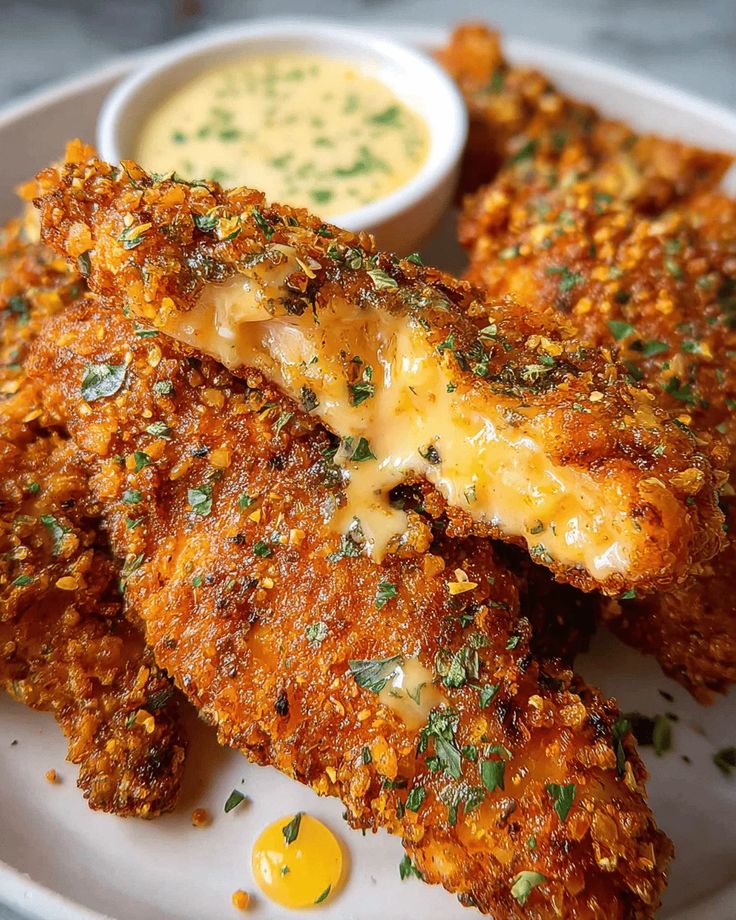




Ingredients
- 2 slices toast
- 8 ounces Cheddar cheese, cubed
- 1/4 cup parsley flakes
- Garlic salt to taste
- 1/2 cup (1 stick) butter, melted
- 10 pieces chicken, skinned
Instructions
- Put toast in food processor until crumbled, then add cubed cheese and blend until cheese is mixed with crumbs. Add parsley flakes and garlic salt.
- Skin chicken and roll in melted butter and place in an aluminum foil lined pan. Pat the bread mixture onto the chicken. Drizzle the remainder of the butter over the chicken.
- Bake uncovered at 350 degrees F for 1 hour.
Has inequality in the United States not arisen out of necessity, but as a deliberate cultural choice?
Neither. Inequality is the normal effect of freedom.
If you have freedom, then you will have inequality.
If you plant seeds in the ground in your garden, you will have plants growing there. That’s not a ‘necessity’ or a ‘cultural’ result. It’s merely what happens when you plant seeds.
I had the following situation happen to me with a co-worker, but let me illustrate it better.
So say you have two people, both working the exact same job at the same company, earning the same wage.
And let’s say that you are splitting an apartment, and so your expenses are about the same.
Now at the end of every month, you each have about $1,000 in spare money.
So one person they spend their $1,000 every month. They buy junk, and stuff, and party, and buy things and whatever.
And then the other person, they invest the money into stocks.
Forward 30 years, the first person will be broke with nothing, and the other person will have about $2 Million in assets.
That’s inequality.
And as I said, I lived this out. Me and a co-worker split a condo, so our bills were about the same, but I watched them spend everything they had, every single month. Meanwhile, I had a large emergency fund in my bank account, and I had invested in stocks, and had actually paid off the last of all my debts in the same time period.
They were absolutely broke, constantly. All the time.
I always had money, and they would whine at me that they were poor, but every week they would show off whatever new stupid gadget they got, and then complain about being poor again.
Inequality is the result of choices. People who make bad choices end up poor.
People who make good choices end up rich.
That is not just normal, but this both morally good, and right. People who spend all their money should have none, because that’s what they did.
And people who invest, and start businesses, and make wise saving decisions, should be rich. That’s their reward for good choices.