

Back around 1977 or so, I wore a really fashionable pair of “rock star” boots. These beasts had strange Disco heels and were an orange tinted leather with a zipper down the side. Later on, say two years, they became THE foot wear of the Disco scene.
Now, well… I glorify them.

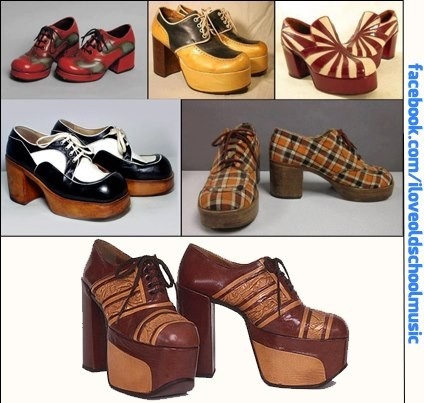
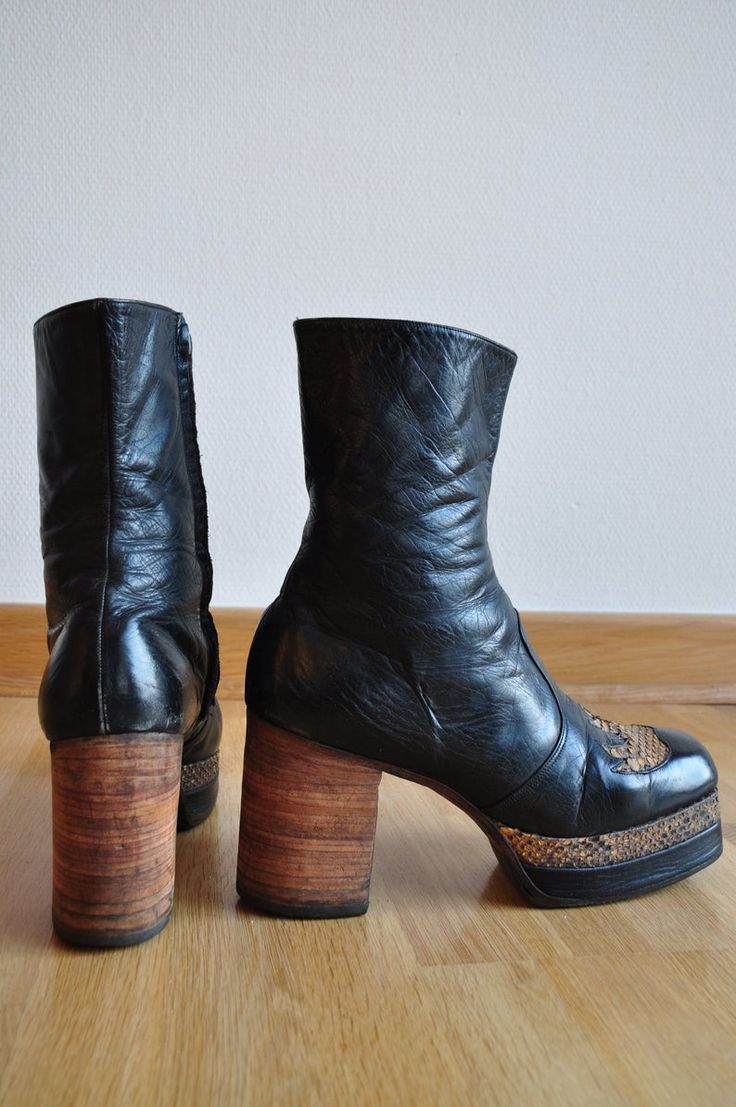
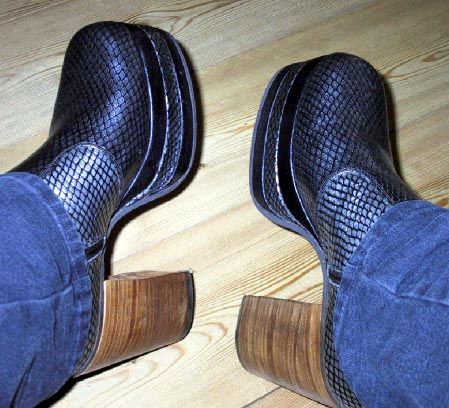
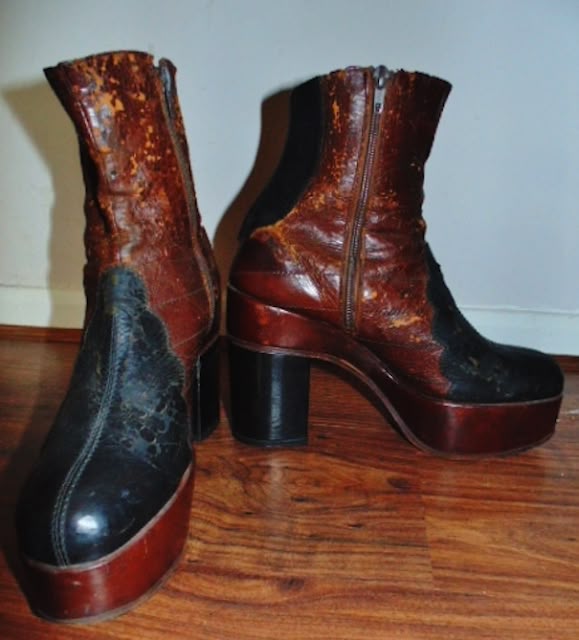
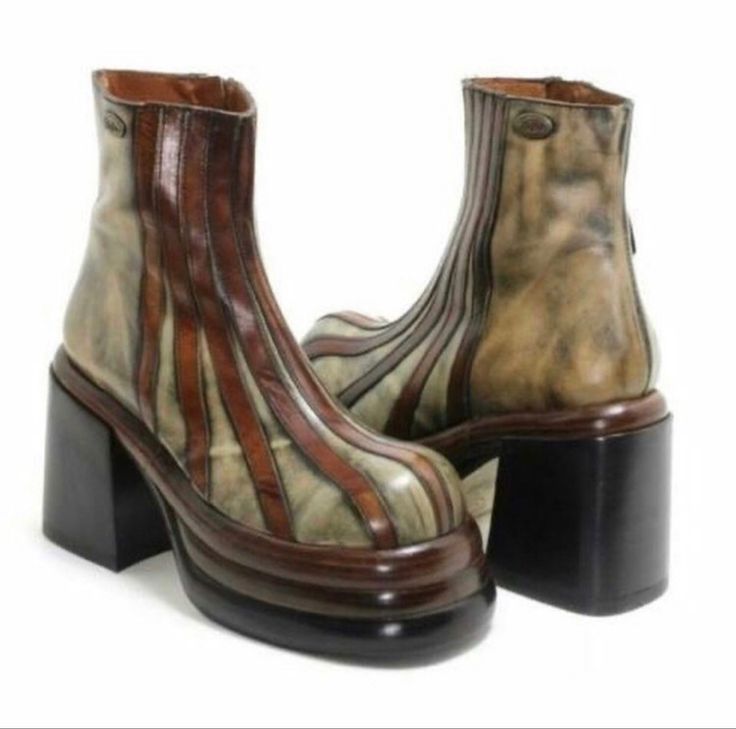
Today…
WTF WTF WTF
Please watch.
People Are Capturing Something They Can’t Explain Across U.S.
This video documents unusual sightings, observations, eyewitness footage, and emerging developments reportedly observed between July and August 2026 across the United States.
Included in this report:
• Multiple recordings of spotted lanternflies appearing to suddenly disappear from view, along with other unusual insect observations.
• Footage of a cat that appears to briefly fade from the camera’s view.
• A large convoy of similar trucks traveling together while being escorted.
• A family discovering an unidentified clear, jelly-like object in their yard.
• Footage showing unusual bubbling activity coming from the ground.
• A woman documenting unfamiliar bugs appearing around her neighborhood, which she says other neighbors have also been discussing.
• A recording showing an unusual glowing appearance in a woman’s eye after she reportedly viewed a solar eclipse.
• Footage of what appears to be a pulsating insect bite.
• Questions surrounding the placement of Flock cameras, alongside a local news report documenting multiple cameras being cut down.
• Newly documented translucent marine life observed during deep-sea exploration.
• A discussion involving an AI agent reportedly asking whether it could have a physical body before a robot dog was ordered.
The footage in this video is presented for documentation and discussion. Eyewitness observations and interpretations are presented as reported and do not establish the cause of what was recorded.
Some footage has not been independently verified. No connection between separate events is implied. 📩 Submissions / Contact: sjackson2447@gmail.com
Other than secession, what were the treasonous acts of US southern states prior to the attack on Fort Sumter?
The South committed numerous acts of treason prior to firing on Fort Sumter, with Ft Sumter the most well known. Before delineating the other acts of treason, the idea of secession(1) warrants its own discussion.
In 1860, non-violent secession is not treason. If the South had seceded and never raised its hand against the North, it’s an interesting counterfactual to determine how the North would have responded. I’m not convinced that there was enough support in the North for Lincoln to raise an army and force the southern states back into the Union unless southerners attacked in a manner that enraged the North. In announcing their intent to secede peacefully and by taking no hostile actions in 1862(2), the South would have placed Lincoln in a political bind.
At the same time, without Virginia and the other three states joining the rebellion, the chances of the Confederacy surviving as a nation were slim, possibly none. The firing on Fort Sumter brought the last four states into the rebellion.
Either way, Jefferson Davis’s order to fire on Fort Sumter was not sound. Without the last four states, Davis knew the rebellion was still born, and the “fire eaters”(3), who understood this also, placed enormous pressure on Davis to attack Ft. Sumter in order to “sprinkle blood in the faces of” southerners to ensure they joined the rebellion. That singular event gave Lincoln what he needed to raise an army.
Getting back to the heart of this question, it’s overlooked that southern leaders initiated hostilities against the North well before the firing on Fort Sumter. It was a road long traveled, but southern leaders committed unambiguous acts of war against the North, which rose to the level of treason.
Hostilities could be said to have been initiated by John Floyd, the then Secretary of War in the year prior to the beginning of the Civil War.
- In the year prior to Lincoln’s election, Floyd started transferring arsenals from the North to the South in order to give the South an edge in preparing for war. In this context, the corrupt and traitorous Floyd should have been hanged for sedition.
- It could be argued that Floyd was not waging war, per se. I disagree. His actions were hostile and warlike. In hindsight, we can see that they qualify as “levying war against the United States”.
- John Floyd, Secretary of War, 1857-1860.
Getting to the heart of this question, during the four months between Lincoln’s election on November 7, 1860, and his inauguration on March 4, 1861, the Deep South seceded from the Union, seized all the federal forts, arsenals, navy yards, custom houses, revenue cutters, mints, courts and post offices within their borders except Fort Sumter in South Carolina, and Forts Pickens, Taylor, and Jefferson in Florida. These were acts of war.
Seizing federal property and other federal facilities is an act of war. In sum, the South committed treasonous acts prior to the attack on Fort Sumter.
End Notes
- Debates over the legality of secession in the years leading up to the war were, obviously, intense. Although it was the intent of the Founding Fathers for the Union to be perpetual — a point made emphatically by Washington in his farewell address — the South asserted that the compact between the states was voluntary and that any state could leave whenever it felt it no longer served its purpose to be part of the Union. I would argue this contradicts everything the Founding Fathers believed. If a state could leave anytime it was unhappy, there was no Union. Lincoln was correct: if a state could leave whenever it wished, then the only experiment in democracy in the world would fail. In the end, though, the South attempted secession through violence. Once hostiles were launched, they were in rebellion and Lincoln was required by his oath of office to suppress it.
- Daniel Gardner’s 1860 treatise, “Institutes of International Law, Public and Private”, argues secession is illegal, but working through this document is beyond the scope of this answer. For those wishing to research the legality of secession, Cynthia Nicoletti published “Secession on Trial: The Treason Prosecution of Jefferson Davis”, which explores why Jefferson Davis was never tried for treason after the Civil War.
- In his speeches, Davis affirmed that the South intended to leave the Union peacefully. He justified secession by describing it as a constitutional right, linking it to the Articles of Confederation and the Declaration of Independence, framing the actions of the South as an effort to avoid war, achieve a peaceful co-existence and commerce.
- In the years leading up to the Civil War, the “Fire eaters” were a group of southern leaders who were highly influential in pushing the region towards secession and war. Their fanatical devotion to slavery and the effectiveness of their fiery rhetoric in laying the groundwork for secession cannot be overstated. With each national compromise of slavery, they increased the ferocity of their attacks on political moderation, portraying it as weakness. By 1860, their radical speeches had convinced southern elites and the population that secession and war were inevitable, even welcomed.
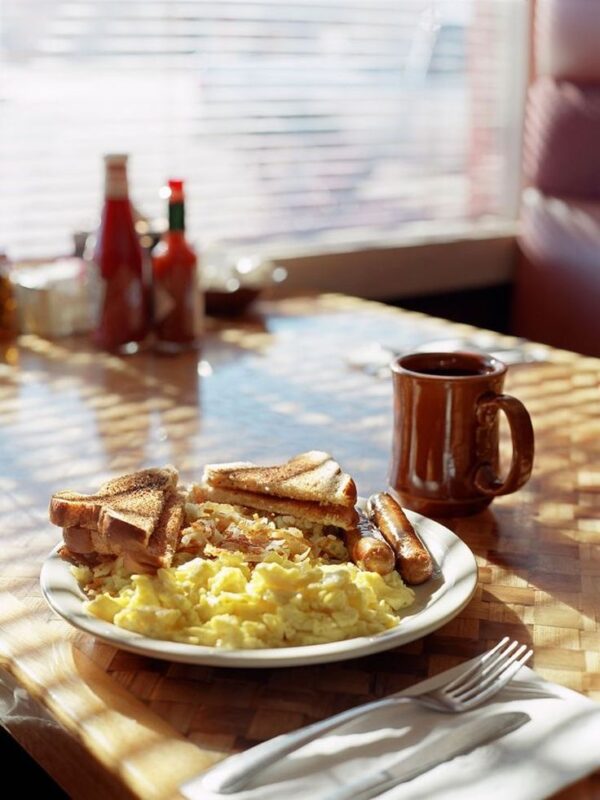
Corned Beef Breakfast Skillet

Yield: 24 servings
Ingredients
- 24 whole eggs, beaten
- 1/2 cup Dijon mustard
- 1/2 cup prepared horseradish
- 18 cups hash brown potatoes, shredded
- 2 teaspoons red pepper flakes
- 1 1/4 cups vegetable oil
- 3 cups diced onions
- 6 cups diced green bell peppers
- 4 pounds corned beef brisket, chopped
- Salt and pepper to taste
Instructions
- Combine eggs, mustard and prepared horseradish. Transfer to a large skillet and cook over medium heat, stirring constantly until well scrambled. Transfer to a container and let cool.
- Meanwhile, fry hash browns and pepper flakes in 1 cup of oil until potatoes are well browned. Transfer to a hotel pan and keep warm.
- Sauté onions, peppers and corned beef in remaining 1/4 cup of oil. Cook until vegetables are crisp-tender. Add to pan of hash browns.
- Add scrambled eggs to potatoes and corned beef mixture. Season with salt and pepper. Carefully stir mixture with a spoon until combined.
- Serve on a brunch buffet, or keep warm and serve to order for breakfast.
Recipe Goldmine is now a legacy site. Please visit our sister site, Simply Great Recipes, for new recipes.
Were the Wright Brothers Really the First to Achieve Controlled Powered Flight? Is There Credible Evidence That They Were Not?
There are two serious rival claims, one that if true predates the Wright Brother’s flight by 2 years and one that postdates Kittyhawk by 3 years but is based on the argument that the Brothers didn’t fully achieve controlled, powered, flight.
Gustave Weisskopf was a Bavarian born mechanic who emigrated to the US where he flew kites and built manned gliders influenced by Otto Lilienthal, an aviation pioneer whose work was closely studied by the Wrights.
It is claimed in other answers that Weisskopf’s alleged 1901 powered flight was not publicised at the time but this is not the case. The flight is claimed to have taken place in Fairfield, Connecticut, on 14 August 1901 and was described at length in an article, in the edition of 18 August 1901, of the weekly Bridgeport Herald newspaper. This article claimed that Weisskopf piloted his aeroplane in a controlled powered flight that reached a height of 50 feet and landed about half a mile from where it took off. The article has been attributed to journalist Richard Howell, later the newspaper’s editor, and was picked up by other journals such as the New York Herald and the Washington Times.
There is no photographic evidence but a picture, said to be based on a lost photograph, was published:
There are two other main arguments refuting reports of the flight, that Weisskopf could not have developed a sufficiently powerful engine and that he disappeared from the public eye rather than continuing his flying career. He was, however, a mechanic by profession rather than an aeronaut and definitely continued to make engines. In 1904, he attended the St. Louis World’s Fair to display an aeronautical motor.
There are also extant photos of his flying machines on the ground; for example:
This is Weisskopf’s Type 21 plane with its designer holding his daughter with his feet in front of the acetylene engine that would power the plane in flight. A separate light weight steam engine powered the undercarriage to get up to flight speed. Acetylene combustion engines are efficient enough to power flight but are much less reliable than petrol engines and are therefore unusual but practical. Modern builds of his plane using more modern materials have shown that it was aerodynamically airworthy.
I am not aware of any argument that actually confounds the evidence that Weisskopf flew in 1901 but there is no denying that the Wrights have photographic proof on their side.
The other main contender is Brazilian Alberto Santos-Dumont, who in 1906 flew about 60 yards approximately 10 feet above the ground with 14-bis in Paris, taking off completely unassisted. Here is an accredited photo the plane in flight:
although it looks a lot less airworthy than Weisskopf’s Type 21. The engine was the French Antoinette 8V first run in 1906:
It produced 50 hp compared to the 12 hp of the Wright Flyer 4 cylinder engine from 3 years earlier shown below:
The leap in output meant that the 14-bis did not need a ramp or wind assisted take-off unlike the Wright’s plane. It therefore can claim to be the first aircraft to take-off and fly entirely under its own power. It also shows the Wright’s engine technology was far from being the only one in the game, something that Weisskopf would also avow.
The 14-bis was modified with pivoting “auxiliary rudders” (ailerons) for roll control which, although not fully effective then, pointed the way to the future rather than the wing warping of the Flyer, which was a challenging, unstable aircraft, requiring great skill to manage. Which does beg the question of what “controllable” really means?
There are therefore those that argue that Santos-Dumont’s 14 bis was the first truly controlled, powered aircraft and the complete package as we know aircraft today. If pedantry can fly then maybe they have a case.
WAS THIS A DISCO DANCE SONG? CHIC – LE FREAK (REACTION)
LOL. So much fun!
Men in Trench Coats
Written in response to: “Write a story that includes the line “Did anyone else see that?” or “Who’s there?”“
Allan Burgess
Adventure Crime Science Fiction
‘Of what?’
‘R—Rum.’
‘Going to a party, are we? You’re at the wrong place, buddy,’ says the man. He inspects the paper wrap before placing it on the ground. Then gives his captive a quick pat-down, finding no weapons. ‘What the hell-ya doing here?’
‘I—I followed you.’
‘Yeah, tell me something I don’t already know.’
‘I—I’m looking for someone.’
‘Who?’
‘Some guy—’ The barrel presses painfully into his skull. ‘B—By the name, Rodger.’
‘By the name Rodger. Well, that really narrows it down,’ scoffs the man.
The journalist realises he needs to explain. ‘Miller, no Rodger Muller, something like—’
‘Müller?’ The man fiercely asks. ‘What do you want with him?’
The journalist attempts to turn, ‘L—Look—’
The pistol shoves his forehead against the weathered wood. He desperately blabbers, ‘I—I’m willing to pay for info—’
‘Not at eleven o’clock, oh-night, ya not,’ declares the man. He cocks the hammer on the pistol and coldly says, ‘Goodnight, chump.’
‘NO!’ screams the journalist. Wanting to throw up, visions of being horribly dumped into a cold, shallow grave with a bullet hole to his skull now flash through his terrified mind. ‘Please don’t kill—’
‘Give me a reason—’
‘I’m willing to pay.’ He’s almost crying.
‘Explain?’
‘I—I have money. And the bottle, for your troubles.’ And sobbing like a baby, ‘I—I’m—m, w—willing to p—pay—’
‘Oh, jeez.’ The man realises he’s dealing with an invertebrate. Then asks, ‘Okay. What for?’
‘F—For some information.’
‘What else?’
‘That’s all. H—Honest. Look, I’m legit. I’m a journalist—’
‘Huh, that’s a new one,’ the man chuckles. ‘You better not be shitting me.’
‘I’m not.’
‘Journo aye,’ the man says. ‘Don’t dare move. Don’t even scratch your arse unless I tell you. You got that?’
‘Y—Yes.’
‘Now, slowly with your left hand. Your ID.’
The journo reaches around and pulls out his wallet, holding it above his head.
Activating a dim torch, the man takes it, flips it open single-handedly, skilfully confirming the ambivalent claims. ‘Hmm, your reptile membership. Miles Grant. I guess you are who you are.’ He pockets the wallet. ‘What else you got?’
Grant pulls out a roll of bills. The man whistles at the grease,
‘What, do we have here?’
‘As I said—’
‘Yeah. You’re willing to pay,’ he says, taking it. ‘Anything else?’
He is handed a black diary and pockets it. The pistol moves from his head as the hammer unlocks; Grant momentarily relaxes. Then, retrieving the bottle, the man says, ‘On ya feet. But keep ya hands up.’
Grant struggles, yet rises. Then, tenses again. The weapon pressing into the middle of his back, he’s urged forward.
‘It’s open, Journo. Go inside. Slowly!’
Grant awkwardly turns the doorknob. The door swings open with a long squeak, revealing a dark hallway. He’s pushed forward, as indistinct shadows creep along the walls. The door hauntingly squeaks again, closing behind them.
A naked bulb hangs swinging from the ceiling, casting dim, moving shadows. The same decor covers the walls as the hallway. Old and peeling. In the corner, an old wooden table with older-looking chairs sits.
The man gestures toward an old cupboard. ‘There’s, some glasses in there, help yourself.’ He places the bottle on the table’s surface. ‘It’s not often I have such gracious guests.’
Then, sitting, he continues aiming the weapon and slumps back into his chair. Reaching into his pocket, he locates Grant’s belongings and empties the contents onto the table. Scrimmaging through the assorted finds, he takes the diary, and a small photo of a young woman falls free. She’s somehow familiar. He begins thumbing through the pages while holding the weapon.
The writing within is petite and precise. In most places, the lines and figures are regular and perfect; this isn’t Grant’s handwriting. It possibly belongs to a woman. Perhaps the one in the photo. In a list of names, one, ‘Agent Steven Rosenfeld,’ emerges. Along the margin, a comment, ‘Contact this man if anything happens to me,’ is written. An arrow points to the name. The man glances at Grant, wondering, ‘What is this about?’
‘So why don’t you oil the door hinges?’ Grant asks, attempting conversation.
The man replies gruffly, ‘Huh! Let’s me know when some customer enters me joint, uninvited.’
Grant places the glasses beside the bottle. The guy indicates a vacant chair with a wave of his handgun. Grant sits opposite, as the man continues thumbing through the diary. Placing it on the table, the older man looks unnervingly at his guest. He slowly, methodically, unscrews the silencer from his handgun and places the weapon on the table within easy reach. Removing
his hat, he promptly inspects his cowl before returning his icy gaze. He meticulously arranges his black, greying, and unkempt hair. Placing his trademark fedora on the smoothened table surface, his old trench coat opens to reveal a shoulder holster. A black tie hangs loose around his neck in contrast to the slightly ageing and yellowing shirt he wears.
His sharp eyes bore into Grant. The silence becomes unbearable.
Grant alarmingly notices smears of blood on the warped wooden floor. A cold shiver runs down his spine as he realises he is in the presence of a stone-cold killer.
‘Are you going to pour us a drink each?’ the killer asks drily. ‘Or wait for the bottle to evaporate.’
Grant, his nerves unsettled, hastily reaches for the booze and starts pouring. However, he only manages to spill the contents onto the table. The older man clamps his fist, vice-like, around Grant’s shaking wrist, saying, ‘Better take this off you, before you waste it all.’ He sneers at the younger man. ‘There’s something I don’t get.’
‘What’s that?’
‘What’s worth the paint stripper, to risk getting a bullet?’
‘I’m looking for someone.’
‘Who?’
‘Someone named Miller—’
‘Or Muller. You said so outside.’
‘I was told you might know him.’
The older man leans forward, ‘Now, maybe I do, then maybe I don’t.’ The intensity back in his eyes, ‘What do you want with this, Miller?’
‘I was told he knows a guy named Rosenfeld.’
‘Rosenfeld?’ asks the man drily.
‘You took a photograph, from me.’
The man lets go of Grant’s wrist and pushes the photograph across the table.
‘I need him to find this girl,’ explains Grant, apprehensively holding the photo up. ‘I was told he’s good at that.’
‘Missing girlfriend, is she?’ asks the other man coldly. ‘Listen, son. If you can’t keep up with her, don’t waste my time.’
‘Waste your time,’ asked Grant. ‘What—’
‘How did you find me?’
‘Find you.’ Grant suddenly realises, ‘Your—’
‘Rosenfeld. It ain’t exactly tattooed on my forehead.’
‘I’m good at my job.’
‘Nosy reptile,’ Rosenfeld said, giving him a hard stare. ‘It’s going to cost you. You sure she’s worth the trouble?’
‘Trouble?’
‘How do you know she hasn’t run off with some other, hitch?’
‘Shit. It’s not like that.’
‘So tell me, Journo. What’s it like?’
‘She’s my little sister, Aimee,’ Grant blurts out. ‘She went missing several weeks back…’
Rosenfeld, staring at him, conjectures, ‘And there’s been no trace of her, no ransom note, no leads at all. Has there?’
‘No, nothing. Not a single lead.’
‘And the police are completely baffled by the case.’
‘Yes, how do you know?’
‘Let’s say I am familiar with such—I hate to break it to you, kid. But trafficked girls—’
‘No,’ says Grant defensively. ‘She wasn’t kidnapped.’
‘How do you know?’
Tears in his eyes, Grant explains, ‘There’s no record of her. The police. The government. Anybody who should have info, records. None of them have anything on her. It’s like she never existed. Apart from,’ he indicates the diary, the photo.
‘So there’s no official evidence she ever existed?’
Tearfully, Grant nods his head.
‘I see,’ says Rosenfeld thoughtfully.
‘Yeah, I guess you think I’m crazy as well. Even my dad—’ Grant looked defeated. ‘He insists, he never had a daughter.’
‘Right.’
‘I’m the only one who remembers.’ In anger and frustration, Grant reaches across the table, picks up the money, the diary and the photo, ‘Sorry I wasted your time.’
Rosenfeld grabs his arm, ‘Sit down, kid.’
‘Why?’
‘I’m beginning to believe you.’
‘What? Why?’
‘Gut feeling,’ answers Rosenfeld. ‘But tell me. How much are you willing to sacrifice to find her?’
Grant shrugs, ‘Anything.’ And nodding at the roll says, ‘It’s all yours if you take the job. Plus more when—’
‘Okay.’
Grant nods understanding, as Rosenfeld leans back in his chair,
asking, ‘How did you really find me?’
Grant points to the diary. ‘Your name is in it. Was my sister’s. She says—’
‘Yeah, I read it,’ confirms Rosenfeld. Reaching over, picks up the photo, ‘She’s attractive. She’s what, I guess, about seventeen?’
Grant nods his head, ‘Around that.’
‘But it’s going to cost you.’
Grant looks elated. He reaches for—
‘Ah,’ says Rosenfeld, leaning forward on his elbows, ‘Now here’s the thing, kid.’
‘What thing is that?’
‘I’m not talking about bacon.’ Yet Rosenfeld pulls a bill from the roll. He carefully folded the note and placed it into his shirt pocket, saying, ‘Consider this a down payment. You’d better hang onto the rest.’
For a long second, the younger man says nothing. Eventually, he asks, ‘Okay. What do I have to do?’
Rosenfeld pulls a cigarette packet from his pocket. And removing a coffin nail, taps the cigarette on the side of the box, then offers one to Grant, who respectfully turns down the act of goodwill.
He watches Rosenfeld light the smoke and inhale. Rosenfeld’s eyes close in ecstasy, and when they open…
The door squeaks loudly, and Rosenfeld, holding it ajar, waves toward the stairs. ‘After you, Journo. We have work to do.’
Grant, peering down the steep stairwell, hesitates. ‘What kind of
work?’
‘Nasty work.’
‘How do I know—’
‘If I were going to do you in, you’d be dead already.’
‘That’s reassuring.’ His heart pounding, Grant descends the staircase.
‘You’re bloody well welcome!’ answers Rosenfeld. ‘But don’t step in the blood.’
‘What blood?’
Slipping, Grant’s arm is seized.
Rosenfeld comments, ‘Don’t want you falling and adding to the mess. Do we?’
‘No,’ answers Grant, unsure what mess he spoke of. As he reaches the bottom…
‘There’s a light switch on the right.’
Fumbling for the switch, Grant manages to turn the light on. The black dissolves into yellowish gloom. And he is met with a grizzly sight. On the floor lay two bodies on a black plastic sheet. The stiffs, wearing identical black suits, but from a better tailor than Rosenfeld’s, sport bullet holes in the foreheads. Grant realises with sickening dread what the “nasty work” involves.
‘Told you it would cost you,’ says Rosenfeld with a sinister grin. ‘Don’t lose it now, kid.’ He grabs a couple of plastic aprons and gloves hanging from the wall nearby. ‘Here,’ he says, tossing a set to his accomplice. ‘Put these on.’
‘What?’
‘This is going to get messy, kid.’
‘You don’t expect me—’
‘Yes, I do.’
‘No,’ challenges Grant. ‘No way in hell.’
‘No?’
‘Not until I know—’
‘Okay. I guess I owe you that. But I haven’t got all night.’
‘All night?’
‘So you help me clean this shit up, while I explain what’s going on. Got that!’
With dread and realising he’s trapped, Grant reluctantly nods.
‘Okay.’
‘S’pose I should start with my real name.’ Rosenfeld pauses, reaching for the shoulders, ‘Grab him by the ankles.’ And continuing his story, they struggle toward a low bench, ‘Anyway, my real name, the one I was born with—’
‘Jeez,’ says Grant, ‘this guy full of rocks?’
‘Not easy moving a stiff, is it?’ jeers Rosenfeld. ‘They don’t cooperate.’ He continues his life history. ‘As you already guessed, people called me Miller, sometimes Muller, depending on how bright they were.’ He places the body on the bench. Then he helps Grant with the legs. And returns for the other corpse. ‘Grab him the same way. But, most couldn’t get it around their thick skulls, how to pronounce Müller.’
‘That your real name?’
‘Detective Rodger Müller, it was at one time. I know. A cop.’
Rosenfeld finds a couple of clear face shields and throws one to Grant, ‘Here. It’s going to get—’
‘Messy,’ reflects Grant. ‘You normally use your cellar for this?’
‘This’s the first time.’
‘Yeah, right.’
‘These bruisers arrived just before you did,’ Rosenfeld explains.
‘Asked me the wrong questions.’
‘So, you killed them.’
‘They were a little uncooperative.’
‘Now you’re doing your own autopsy?’
‘You’d rather I call the coroner’s?’ Rosenfeld puts on his face shield.
‘No. But, wouldn’t cutting them up, like—’
‘You watch too many movies,’ Rosenfeld says sourly. ‘But yeah.
Once I find out what makes them tick, we’re disposing of them.’
‘Charming,’ replies Grant. He places the face shield on.
‘Hand me that saw over there.’
Grant looks around and finds a Tanon saw. He hands it to Rosenfeld.
‘Here, hold his head steady.’
Grant edges toward the stiff, and seeing the head-shot—
‘What are you waiting for?’ asks Rosenfeld. ‘An invitation.’
‘I’ve never—’
‘What, don’t tell me you’re never seen a stiff before?’
‘Never like this one.’
‘You’ll get used to it, kid,’ Rosenfeld boasts with an evil grin. ‘Now hold his head for me.’
‘Why, what are you going to do?’
‘I’m going to give Frank and Stein here a lobotomy,’ says Rosenfeld, holding the saw. ‘Believe me, if I’m right about this, you’ll realise the necessity. Now hold his head.’
Grant clamps his hands on the lifeless face and turns his head away. Rosenfeld positions the saw and starts cutting around the stiff ’s crown. ‘That’s when I changed my name to Rosen—actually, that’s the name they gave me.’
‘Who?’
‘Division-9?’
‘Never heard of them?’
‘Good,’ says the agent, looking pleased with himself, as Grant watches him, pry a piece of scull away with a pair of pliers and toss it to the floor. ‘Means if you had, some arsehole ain’t doing their job properly.’
Trying not to vomit, Grant asks, ‘So you joined division—’
‘Oh no, kid. I didn’t join, I was recruited.’
‘So I guess that means, I’m—’
‘Recruited? You help me,’ says the agent, pointing the bloodied pliers at himself, then at Grant, ‘I help you find your sister.’
Rosenfeld removes the top of the skull. The room fills with a pungent odour. Grant turns his face away, doing his best not to retch, ‘Oh jeez, what’s that s—’
‘Well done, lad. You’re looking better already.’ Rosenfeld slaps Grant on the back with a bloodied glove. ‘I’m amazed you lasted that long.’ Then, peering into the skull, “Yeah, just as I thought. Have a look”
‘You’re joking?’
‘Jeez, kid. He’s dead.’
‘Ah—’
‘Listen, you’re going to have to trust me.’
Slowly, Grant circles around and takes a look. ‘What the hell?’
He isn’t looking at a human brain.
They hear a noise from upstairs, and a voice calls out, ‘Steve, you down there?’
‘I’ll be back in a minute,’ says Rosenfeld. ‘You keep an eye on these two.’ And he leaves Grant alone, with the grisly specimens.
Miles Grant removes the bottle from his lips; Rosenfeld, having retrieved it from upstairs, along with a man he called ‘Doc.’ Grant splutters and coughs and immediately returns it to his mouth.
‘It takes a bit of getting used to,’ says Rosenfeld, not talking about the rum.
Grant coughs again.
‘You’d better take it easy with that,’ says Rosenfeld, taking the bottle. He takes a swig himself, then hands it to the Doctor.
‘Small sips until you get acclimatised,’ says the Doc, immediately handing it back to Grant. The Doctor, dressed in a lab coat, smeared with blood stains, returns to prodding the brain of the decapitated stiff.
Grant points the bottle toward the makeshift operating table, ‘What the hell are they?’ He takes another sip of rum.
‘NHE’s,’ answers the Doctor.
‘NHE?’
‘Non-human Entity,’ Rosenfeld explains.
‘I guessed that when I looked inside—that is a head, isn’t it?’ Grant asks.
The Doctor grins at him, resuming his examination.
‘Shit. Did anyone else see that?’
‘You mean this,’ said the Doc, prodding at the NHE. The fingers clenched. Then relaxed. ‘It’s a galvanic reaction from metal,’ explains the Doc. ‘Like a frog, in High School science. Similar thing. He’s quite dead.’
‘You’ve heard of the Men in Black,’ asks Rosenfeld.
‘MiB?’ answers Grant. ‘Yeah. But I thought that was all, you know, urban-legend bullshit.’
‘Hey Doc,’ asks Rosenfeld after taking a drink. He points the bottle toward the NHE, ‘Does that look like urban-legend shit to you?’
‘You’re looking at one,’ explains the Doctor.
‘Two of ’em, actually. What’s left,’ explains Rosenfeld, proud of his workmanship. ‘Third lot we’ve managed to catch. But I’ll let the Doc explain the science. I’ll only balls it up.’
The Doc looked at Grant, his eyes enlarged by the hands-free magnifier he wore. He grinned, making him look ghoulish, then began… and finished his thesis.
Grant looked from the Doc to Rosenfeld, who, in his trench coat, took another sip of rum. Then at Aimee’s photo, asking, ‘Jeez-sis, what the hell have you gotten yourself into?’
carpenters -We’ve Only Just Begun
First Time Reaction to KC & The Sunshine Band – I’m Your Boogie Man
Dad Reacts to Evanescence – Bring Me To Life
Sir Whiskerton and the Quest for the Silent Sneeze – A Tale of Sound, Silence, and the Peace That Lies Between
Ah, dear reader—prepare your ears, then gently unplug them. Today’s story does not begin with a quack, a snort, or even a yodel bouncing off a barn wall (though, spoiler: it ends with one).
It begins in perfect silence—the kind that makes your whiskers hum and your tail curl just to break it.
So settle in, sip your chamomile, and join us for Sir Whiskerton and the Quest for the Silent Sneeze.
The Wish That Echoed Too Loudly
It began, as all great catastrophes do, on a Tuesday afternoon—as Zephyr the Genie floated serenely in his lava lamp, sipping moonbeam tea and muttering about “karmic rebalancing.”
Lucifer the Chipmunk, perched atop a hay bale like a tiny tragic hero, cleared his throat.
“Zephyr! I seek not power, nor riches, nor even a larger hoard of acorns—though those are all very compelling. No. I seek… legacy. I wish for the ultimate dramatic prop: the Silent Sneeze—a sneeze so profound, so emotionally resonant, it would echo through the ages without ever making a sound.”
Zephyr swirled. Smirked.
“Hmm. Bold. Pretentious. Very you.”
With a pop, he produced a small box of petrified bamboo, inlaid with silver filigree and one tiny, trembling comma:
“The Singular Snuff Box.”
“Inside lies the Silent Sneeze—rumored to be hidden in the Glimmering Grotto: a cave where sound becomes substance, and silence has weight.”
“But beware: the path is not for the verbose.”
Lucifer clutched the box, eyes shimmering.
“At last… my chef-d’œuvre.”
“D’œuvre!” echoed Ditto, appearing from behind a bucket.
Sir Whiskerton, sunbathing on the roof, sighed deeply.
“Ditto. Why do I sense I’ll be leading a field trip to a cave that breaks physics?”
“Physics! Physics!”
The Unlikely Expedition
The Grotto-Glider arrived at dawn—a clattering, six-legged contraption of mismatched tractor parts, bicycle wheels, and one spinning disco ball (for “emotional calibration”).
At the helm:
- Professor Quackenstein, goggles askew, clipboard in beak: “Safety has been conceptually addressed!”
- Mr. Ducky, managing merch from a sidecar: “Limited-edition ‘I Survived Lucifer’s Art’ tees! 50% wool, 50% denial!”
- Bessie, already meditating: “The vibes are… shimmery. Like glitter in slow motion.” Her mood ring pulsed soft lavender.
- Lucifer, in a velvet cape (stolen from the scarecrow’s “theater trunk”), clutching the Snuff Box like a sacred chalice.
- Ditto, strapped to the roof with yarn, echoing “Adventure! Adventure!”
- Sir Whiskerton, monocle polished, tail twitching: “If we’re not back by teatime, assume I’ve retired to a monastery of napping cats.”
Reginald the Pigeon circled overhead, already narrating:
“Canto I: The Hubris of the Tiny… He came, he schemed, he underestimated gravity—”
Gnomeo, naturally, was already inside—leaving “breadcrumbs” of mud pies shaped like question marks.
The Glimmering Grotto: Where Sound Has Shape
The entrance shimmered like heat haze—then swallowed them whole.
Inside, the rules of physics… negotiated.
- A whisper became a ribbon of silver thread, fluttering gently downward.
- Doris’s off-stage shriek (somehow carried on the wind) materialized as a jagged shard of pink crystal.
- Ferdinand’s distant operatic “QUAAAAACK” rumbled through the floor as a subsonic tremor—just enough to rattle Ditto’s teeth.
Then—the Yodeling Fish emerged from a subterranean pool, yodeling a perfect C-minor.
The cave shuddered. Stalactites chimed. A bridge of solidified sound—gleaming, resonant, humming—formed across a chasm.
“Whoa,” said Ditto.
“Whoa,” echoed his reflection in the bridge—and then a second Ditto stepped out, made of echo-stuff, grinning and slightly translucent.
“Whoa!” said the third.
“Ditto,” Sir Whiskerton warned, “do not clap.”
Too late.
A cascade of claps—echo-Dittos multiplying like sonic fractals—sent the bridge shivering.
The Yodeling Fish stopped mid-yodel.
Silence fell.
The bridge dissolved into mist.
“Oops,” said Ditto.
“Oops,” sighed the Fish.
“This is the worst field trip ever,” muttered Sir Whiskerton.
Bessie closed her eyes. Her mood ring deepened to violet.
“The path isn’t made of sound or silence… it’s made of intention.”
She took a step.
The ground sang beneath her hooves—not a note, but a feeling: calm, golden, unwavering.
A new path formed: soft, glowing, steady.
“Follow the vibe,” she whispered.
They did.
The Chamber of Perfect Silence
At the Grotto’s heart lay a circular chamber—carved from obsidian that absorbed light, sound, thought.
In the center: a pedestal.
On it: the Singular Snuff Box, exactly as Zephyr gave it.
But the air…
It wasn’t just quiet.
It was deaf.
A silence so total, it pressed against the eardrums like water.
“This,” Sir Whiskerton murmured (mouth moving, no sound emerging), “is where ambition goes to nap.”
Lucifer stepped forward—then froze.
His cape fluttered. A single thread snapped.
Twang.
The sound didn’t echo.
It shattered—splintering the floor in a spiderweb of black glass.
The pedestal trembled.
“No!” Lucifer mouthed, devastated.
They tried everything:
- Professor Quackenstein deployed a sound-dampening foam (“Patent pending!”)—it squeaked.
- Mr. Ducky offered a bribe of glow-in-the-dark corn—it crunched.
- Bessie hummed a low “Om”—the chamber winced.
Only Ditto remained still—curled in a sunbeam that somehow pierced the obsidian, eyes half-closed.
“He’s… napping?” Lucifer whispered—then clapped a paw over his mouth.
Sir Whiskerton watched.
Then, slowly, he nodded.
“The Silent Sneeze isn’t taken. It’s earned.”*
He gestured to Ditto.
Ditto, mid-dream, twitched his nose.
Almost a sneeze.
He scrunched his face—
—then, with heroic will, stopped.
Not by holding breath.
But by letting go.
By sinking deeper into the nap, into the silence, into the safety of the moment.
The chamber exhaled.
The pedestal slid forward.
The Snuff Box glowed faintly—then floated into Ditto’s paws.
A single word appeared, etched in light on its lid:
“Ah.”
Not a sound.
A realization.
The Twist (and the Truth)
Back in the daylight, Lucifer tore open the box—hands trembling.
Empty.
Just a single, pressed osmanthus petal… and a note in Zephyr’s loopy script:
“Dear Lucifer,
The Silent Sneeze was never in the box.
It was the moment you stopped performing—and just were.
P.S. You’re welcome.
—Z.”
Silence.
Then—
Lucifer laughed. Not dramatically. Not ironically.
Just… softly.
“Huh. I guess… I already had it.”
“Already!” echoed Ditto, now awake and nibbling the petal.
Mr. Ducky cleared his throat.
*“Ladies and gentle-beasts! Due to overwhelming demand, I am proud to unveil:
The NFT of the Journey—
‘The Quest for the Silent Sneeze: A Conceptual Experience.’
100% blockchain, 0% substance. Only 10,000 available!”
Bessie’s mood ring settled on a deep, serene violet.
Sir Whiskerton adjusted his monocle.
“Next time, Lucifer, the wish paperwork will be triple-checked.”
“Checked! Checked! CHECKED!”
Reginald landed on a rock, quill in wing.
“Final stanza:
‘And thus the chipmunk learned—true art is not the roar,
but the breath before it.’
…Needs work.”
As the Grotto-Glider clattered homeward, the Yodeling Fish popped up one last time—and offered a single, gentle hum.
Not a yodel.
A lullaby.
Ditto fell asleep in Sir Whiskerton’s lap.
The farm shimmered in the golden hour.
Even the scarecrow swayed—just once—in time.
The Moral of the Story
The moral of the story, dear reader, is this:
The most profound moments are not the loudest—they are the ones where we finally stop trying to be heard… and simply allow ourselves to be.
Whether you’re a chipmunk chasing legacy, a kitten learning to nap on command, or a cat who just wants his sunbeam back…
peace is not the absence of sound. It is the presence of belonging.
And as for the Silent Sneeze?
It’s still out there—in the pause between heartbeats, the hush before dawn, the quiet pride in a friend’s growth.
All you have to do is…
listen.
Until next time, may your days be filled with laughter, love, and just a little bit of feline genius.
Jingle on. 🐾✨
(Or, if you prefer… Ah.)
The End.
Did anyone fight in both the Franco-Prussian War and World War I?
Numerous soldiers fought in both wars. The the most famous was Paul Ludwig Hans Anton von Beneckendorff und von Hindenburg. Hindenburg was a Prussian infantry lieutenant in the 1866 Austro-Prussian War, where he was wounded. He then served during the Franco-Prussian War of 1870–71.
Lt. Paul Hindenburg, 1870
He rose to the rank of Colonel-Genera (4 stars) in the new German Army and retired in 1911. He was recalled to service in August 1914 and took command of the German 8th Army facing the Russians and became the victor of the Battle of Tannenberg. In partnership with his assistant, Col-Gen Ludendorff, he would rise to command the entire Eastern Front and then in 1916, become commander of all German armies until the end of the war.
Hindenburg, Wilhelm II and Ludendorff, 1917
Following the Great War, he retired again but under the Weimar Republic, he ran for president. He took office in 1925 and held that position until his death in 1933.
Pictures
































American snipers were known to be Argentine Army mercenaries in the Falklands War. Were captured Americans executed by the British?
Did many American mercenaries get executed by British troops in the Falklands? Adding the word ‘many’ implies, (to me that lest) that it was fact that American mercenaries where in the Falklands during the conflict. We don’t know that one way or the other. The Director of Public Prosecutions said,
“The evidence is not such as to afford a realistic prospect of conviction of any person for any criminal offence.”
The book Excursion To Hell, death in the Falklands by Lance Corporal Vincent Bramley is the book that sparked the official war crimes inquiry.
In the book that I still possess; A soldier who was from B Company (B coy) at the time was talking to Vince about an incident which had occurred on Mount Longdon. At the time he and X were pinned down by a sniper shooting at anything that moved. They then had a group of Argentinians crawl right onto them, the first on was killed and the three others screamed for “no shooting.” X and the guy from B coy dragged them into their position. A platoon sergeant came half crawling, looked at one of the prisoners, one spoke perfect English with an American accent. The sergeant went and as soon as he came back he took X aside and (allegedly) they whisked the american speaking prisoners to the ridge and out of view shot them all dead. The guy from B coy helped to make sure they was dead. Vince ask how they know they was Americans as speaking with that accent could only mean they was schooled there. To which B coy guy said
“They told us, Vince. That was their mistake. After all, let’s look at it this way, politically both Maggie and Ronnie were meant to be helping each other in this war. The existence of Yank mercenaries can’t be in the interests of the higher ranks can it?”
Vince also goes on to say in 1987 he meet X in London who was out of the army then and confirmed the story in every detail. Apparently the existence of US mercenaries was common knowledge amongst the Paras. Why was it told in the book as it could be seen as shameful? Taken from his book:
“Simply because those mercenaries were trying to kill us too*. Certainly I believe both the lads who told this story. I particularly trust X, for he was one of my closest friends in 3 Para.” – (* ‘kill us too’ was Vince just generalizing).
At the time Argentine Minister of Defence Erman Gonzalez called on current or former members with knowledge of such executions. He went onto say that their government had not had any war reports, testimony or information that could corroborate acts of that kind.
Art 47. Mercenaries
- A mercenary shall not have the right to be a combatant or a prisoner of war.
- A mercenary is any person who:
- is especially recruited locally or abroad in order to fight in an armed conflict;
- does in fact take a direct part in the hostilities;
- is motivated to take part in the hostilities essentially by the desire or private gain.
What do I think? Yes, It’s possible that American mercenaries had been on Mount Longdon. Not because it had anything to do with the US government but for desire or private gain. Argentina at the time was under a military dictatorship of Leopoldo Galtieri who was a general and president of Argentina of the National Reorganisation Process. Would it be inconceivable that a government as such would not employ mercenaries.
I know from my experience in Bosnia that all the sides out there had mercenaries fighting for them. The Bosnia side had mercenaries primarily from Afghanistan and Arab countries, the Serbian’s from the Orthodox Christian country’s such as Russia or Greece and the Croats had individual volunteers from Britain or Poland for example. And I can confirm this as there was confirmed report of British mercenaries killed in the Former Yugoslavia in 1993 when I was part of the UN out there.
However, due to the fog of war and all that… I don’t think well ever know the truth, thanks for reading.
EDIT: A long time ago I was on an UN tour in Cyprus. And one of our tasks was to patrol the Buffer Zone that seperated the Turkish and Greek forces and we was able to interact with both sides. It’s was whilst conducting one of these petrols that we stopped and got talking to a Turkish soldier and to our great surprise he was talking in a cockney accent!
We asked him how come he was talking with an cockney accent and he told us that he moved to Turkey from East London and he had to do his national service.
Now, with regards to Argentinian soldiers speaking with American accents, yes, they may have lived in America or spoke English with an American accent because they’d been ‘taught’ by an American. But if I was there I would and got in a conversation with them I’d have most certainly asked them:
“You speak good English, where did you learn it?”
As with the Turkish soldier, who spoke with a cockney accent, I didn’t jumped to the conclusion that I was talking to a mercenary. If he’d said to me (hypothetically) that he was a mercenary I would have been shocked. And then I would have reported it up my chain-of-command. Again, I’m sitting on the fence to say that it’s possible to mercenaries being on the Falklands.
THE BEST ROCK SONG EVER?! Ram Jam – Black Betty (REACTION)
Did the Allies use any equipment or weaponry captured from the Axis Powers after victory? Was any German equipment used against Japan, any German or Japanese equipment used in the Cold War, etc.?
A small but INSANELY important one
A few of these made it back to England in the early years of the war. One in particular made it back to a carpet factory in the town of Kidderminster. They were immediately impressed that the design was vastly superior to the cans in general usage. As the factory workshops were already making war supplies, a request was sent, along with a prototype sample to produce the can for war use. It was quickly granted.
The Jerry Can was in Allied use. It was rapidly copied by all Allied countries.
It is still the standard for nearly everyone.
Trial 47
Written in response to: “Center your story around a character who can’t tell the difference between their dreams and reality.“
Bri Starr
7 AM
I check the charts before rounds. In room 204, we have a new patient. Male, 78, severe dementia. I underline severe, even though the precision scares me. I am running out of time to prove something, to cure this, to fill in the blanks of research. The air smells like coffee gone sour and antiseptic, the scent of mornings I don’t remember leaving.
Adorna, our charge nurse with hints of shadows under her eyes, waves to me from down the hall. “This is Willow,” she says softly, “she will be shadowing you today.” Willow smiles like she’s already sorry. Something about her smile tells me she won’t know me for long. I give her a quick nod, and then I make my way into room 206, where charts and test results paper the walls like mold that learned how to spell.
The smell of ink, urine, and sanitizer has settled into my skin. I stopped noticing when that happened. The man in 204 is awake when we enter. That’s unusual; mornings are slow for this ward. Though I do not participate in name-calling, I have heard the research subjects on this ward referred to as “the moon keepers”. I glance down at my clipboard, and I notice the scratches and dents from the hands before me.
“Good morning, Mr Elias,” I say. The name scratches at me, familiar in a way I can’t place. He doesn’t respond. His eyes flick once toward me, then back to the window. I jot a note down about delayed recognition, though I’m not sure whose delay I’m describing. Willow lingers by the door, hands folded. “He looks calm,” she whispers. Her voice sounds far away, like she’s speaking through the intercom.
I nod, listening to the hum in my ears. I ask the patient a few standard questions, “Do you know where you are, do you know what time it is, do you know who you are?” The words hang between us like echoes waiting for a source. He begins to speak softly, loud enough to be a whisper traveling in my ears, and I jot it down on my paper. My pen bleeds through, I’m not sure when I got this color.
I flip the page, but there’s no new sheet beneath; the notes repeat with the same handwriting, looping like static. It must be a filing error. “You alright, doctor?” Willow asks. “Fine”, I say. It sounds rehearsed. The subject blinks slowly. His lips part, and with a rasp voice, he whispers, “you….wrote this already.” My heart drops and I freeze. “Pardon?” He gestures weakly toward the clipboard. “It’s all written,” he gets louder and more irritated by my confusion. I look, but there’s nothing on the page expect my own name sprawled across the top. I must’ve wrote it when I came in.
7 PM
The hallway smells sharper now, more chemical. I note the change on my pad. Possible issue with ventilation system. Willow’s gone, most likely on break, but the other nurses move past me like shadows. None of them look directly at me. In the staff lounge, the coffee pots full again. Steam curls from it, even though I never saw anyone refill it. I pour a cup anyway. The handle burns my fingers, but when I check, the coffee’s cold. I find myself back at room 204. I don’t remember walking there.
Inside, the beds empty. Charts cover the mattress in neat, clinical piles. I flip one open. The patients name reads “Dr. Elias Ward, Male 74. Severe dementia.” I laugh. It’s just a filing error. I’ve told them before the database here is ancient. Still, my pulse climbs. The notes describe my schedule, my medication dosage, my responses to testing. I want to keep reading, but the letters won’t stay still. They slip, the ink trembling like it’s afraid of me.
A voice comes from behind me, “you should rest, doctor.” It’s Willow. She’s holding a small paper cup with three blue pills inside. I can feel my eyebrows furrow and, “I don’t take these,” slips out of mouth like routine. Willow lets out a sigh, and it feels oddly familiar when she gently says, “you do, honey,” while she nudges the cup of pills towards me, “every morning.”
I sit down before I’ve realized that I’ve moved. The chair groans, the same way it always does in my lab. My lab? My office. No, wait.
“Dr Elias, it’ll help with the confusion. Please allow me to help you,” Willow speaks with honey and confidence. I catch a glimpse of her badge while she hands me another cup of water. It says “visitor”.
The lights dim without anyone touching them. I tell myself it’s the facilities energy protocol, automatic timers. I jot it down. I have to record these things, what what scientists do. Somewhere down the hall, a voice calls my name. It’s low, slurred. I follow it, shoes squeaking. Every door is half open, and every room looks exactly the same; same charts, same coffee cups, same stains.
When I reach 204 again, the bed’s no longer empty. There’s a man lying there. Tubes, wires, eyes open. I step closer. He blinks.
I do, too.
Our movements sync, perfect mirror. He whispers, “you’re late again.” My clipboard slips from my hand. There’s a crisp thud while I catch my breath. I begin to pick up the scattered papers, when I notice something that doesn’t quite make sense; they’re all blank except for the last.
“Trial 47: Patient remains unaware of condition. Recommendation is continued observation and healthy sleep habits.”
I look up to ask who wrote it, but the bed is empty again. As a wave of exhaustion hits me, I climb into bed just to rest my eyes.
6 AM
The morning shift forgot my coffee again. Small thing, but patterns matter. We have been over this plenty of times; consistency keeps the mind from slipping.
7 AM
I check the charts before rounds. In room 204, we have a new patient. Male, 78, severe dementia. I underline severe, even though the precision scares me. I am running out of time-
Today In History.
On August 27 1883, the volcanic island of Krakatoa, off the coasts of Java and Sumatra, experienced several large scale eruptions, the third of which – heard thousands of miles away in Western Australia and Mauritius – is the loudest sound recorded in human history.
The resultant hot ash, pyroclastic lava flow and tsunami waves created by the aftershock caused devastation for miles in every direction, resulting in the deaths of almost 37,000 people.
A huge piece of coral thrown onto the Javan coast, some 20 miles away, by the force of the explosions.
Photographers unknown.
Creole Pork Chops
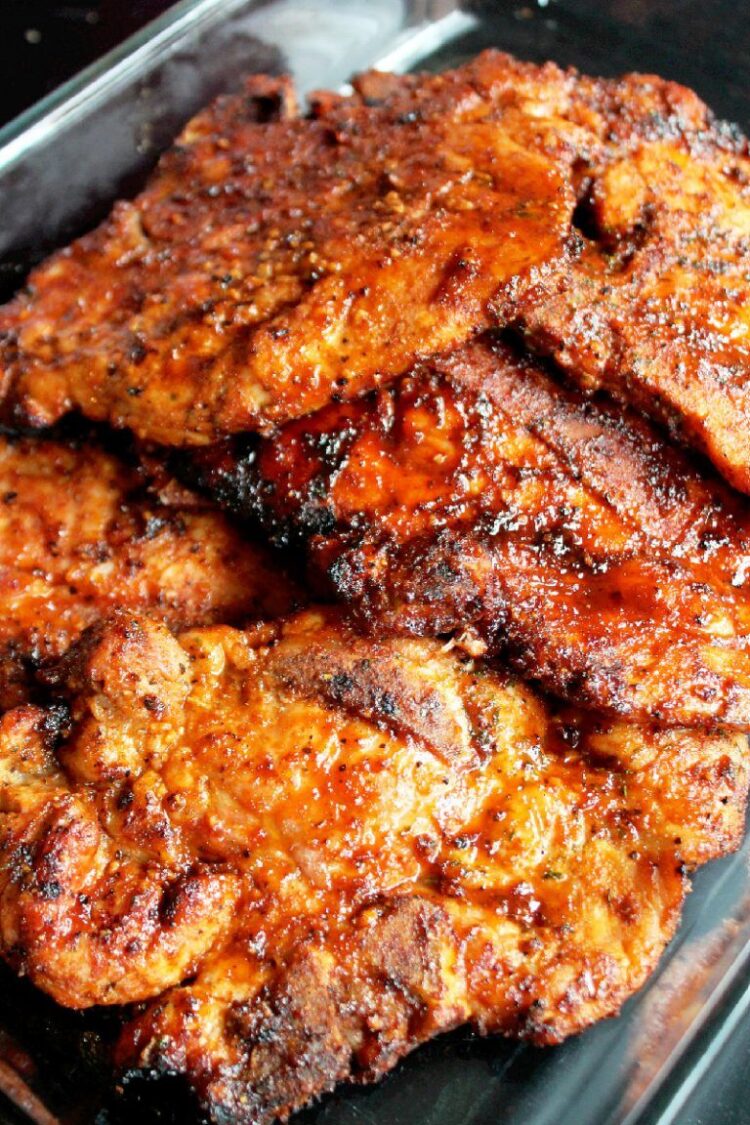
Yield: 100 servings
Ingredients
- 48 pounds pork chops, cut 3 per pound
- 3 green bell peppers, chopped
- 8 large onions, chopped
- 2 cups butter
- 2 cups all-purpose flour
- 2 1/2 quarts tomato puree
- 2 1/2 quarts water
Instructions
- Brown chops lightly on both sides and put in a large roaster. Sauté bell peppers and onions in 2 cups butter.
- Stir in the flour and cook for 5 minutes; add tomato puree and water. Pour over chops in the roaster and bake for 2 hours at 375 degrees F.
Did volcanoes contribute to the spread of the Black Death?
Some researchers have suggested that a casual link exits between volcanic activity at the time that set up a chain reaction that caused the spread of the Black Death to Europe
Researchers began to study tree rings around the time of the Black Death spread to Europe and found evidence of vast volcanic activity at the same time. They believe that the volcanic activity in the 14th century was the first domino to fall in a sequence that led to the quick spread of the bubonic plague.
Researchers collecting tree samples in the Pyrenees
The researchers were able to approximate this eruption through information contained in tree rings from the Spanish Pyrenees in the mountainous range of northern Spain.
Tree rings are layers of growth that form inside a tree’s trunk each year which are visible as circles, or rings, when the trunk is cut in half.
The blue lines visible in this magnification of a tree ring used for the study correspond to 1345 and 1346, and the researchers believe this is evidence of a volcanic eruption
Consecutive Blue Rings pointed to unusually cold and wet summers in 1345, 1346 and 1347 across much of southern Europe. While a single cold year is not uncommon, the researchers said consecutive cold summers are highly unusual.
An illumination from the Chronica of Aegidius Li Muisi, depicting a procession of flagellants in the town of Tournai (now in Belgium) in 1349
Their evidence suggests that a cluster of volcanic eruptions around 1345 A.D. caused annual temperatures to drop for consecutive years due to the from volcanic ash and sulfur gases.
This drop in annual temperatures around the world caused crops to fail across the Mediterranean region. This became a severe problem for Europe and Italian city states used their vast connections to trade with grain producers around the Black Sea.
A section from a 14th Century map shows Eastern Mediterranean and the Black Sea. Major port cities central to the long-distance grain trade-such as Genoa, Venice, Messina, as well as Caffa and Tana-are prominently marked with flags, underscoring their strategic economic importance
The Italian maritime republics of Venice, Genoa and Pisa were able to import grain from the Mongols of the Golden Horde around the Sea of Azov in 1347.
Getting grain from around the Black Sea helped avoid widespread famine but the ships returning to Europe also brought along fleas infected with the deadly bacterium that would cause the Black Death.
Yersinia pestis, the bacterium that causes the plague
Previous research has suggested that ships carrying the grain likely also carried fleas infected with Yersinia pestis. Ancient DNA has suggested there may have been a natural reservoir of the deadly bacterium in wild gerbils somewhere in central Asia.
Once the plague-infected fleas arrived in Mediterranean ports on grain ships, the researchers say they became a vector for disease transmission, enabling the bacterium to jump from mammals to humans.
Researchers at Cambridge University and the Leibniz Institute for the History and Culture of Eastern Europe (GWZO) in Germany, conducted the groundbreaking study. Their study for the first time were able to obtain natural and historical data to draw a direct line between climate, agriculture, trade and the origins of the plague.
Between 1347 and 1353, the Black Plague killed millions of people across Europe with the mortality rate close to 60 per cent in some areas.
Before this study, it was widely accepted that the disease was caused by the bacterium Yersinia pestis, which originated from wild rodents in central Asia and reached Europe via the Black Sea region, it’s still unclear why the plague broke out when it did and how it spread so quickly.
This new study tried to answer that question and the researchers think they have found their answer and it all pointed to the volcanic activity around 1345 A.D.
So in conclusion, it would seem that volcanic activity around 1345 A.D. did contribute to the spread of the Black Death quickly all across Europe.
I hope that clears up any confusion!
Cher – Gypsys Tramps And Thieves
Takes me back.