
I’m still not quite sure exactly what is going on.
Here’s the quick summary.
- Religious / social humans (they are humans, not any other species) have this belief in a “end game” that will bring about some kind of utopia. They believe that they personally will prosper in this utopia.
- Key to this utopia is a big massive war. A war, as they believe, will use nuclear weapons.
- They have created “secret societies” in support of this.
- And they pushed to make this big end event occur.
And…
They were successful.
There is a world line, right now, where the Earth is in the midst of a full-scale and full-on nuclear war. And it is not at all nice.
But…
That event sequence was isolated / constrained / quarantined (from bleed though) and many people’s consciousness now occupy this much more stable reality world-line.
I am told that it is spawned off of a “backup” template spawned off of a maintenance event in the 1960’s in our “time track”. I don’t fully understand, but some of you all might understand.
More as I get it.
-MM
Sir Whiskerton and the Cosmic Mood Ring
Or: When Bessie’s Hippie Accessories Go Intergalactic
Introduction
Dear reader, prepare for a tale of cosmic proportions—literally. Today’s story stars Bessie the Tie-Dye Cow, whose groovy mood ring takes on an unexpected role as a celestial oracle. When the ring turns black, it triggers a tiny Big Bang in the barn, creating a mini-universe where pigs fly and chaos reigns supreme.
Through this interstellar adventure, we’ll explore the theme that good vibes reduce entropy—and maybe save the farm from imploding into a singularity. So grab your kaleidoscopic goggles (and perhaps some snacks), and dive into Sir Whiskerton and the Cosmic Mood Ring.
Act 1: The Mood Ring Malfunction
Bessie the Tie-Dye Cow was having one of her usual “deep vibe” mornings. She stood by the pond, wearing her signature love beads and rose-tinted glasses, admiring her reflection—or what she thought was her reflection—in the shimmering water.
“It’s all about the energy, man,” she mused aloud, adjusting her cosmic mood ring. “When you radiate peace, the universe responds.”
At that exact moment, the mood ring turned pitch black.
Before anyone could react, a deafening POP! echoed through the barnyard. A swirling vortex of light and sound erupted in the barn, sucking in hay bales, chickens, and one very confused scarecrow.
“What the funk?” muttered Porkchop the Pig, who had been mid-nap in a mud puddle.
Sir Whiskerton appeared, monocle firmly in place, surveying the scene with dramatic flair. “Friends,” he announced, “we appear to have created… a universe.”
Act 2: Pigs Fly, Chaos Ensues
Inside the newly formed mini-universe, gravity seemed optional. Doris the Hen floated past, flapping wildly. “I’m not built for space travel!” she squawked.
But the real surprise came when Porkchop discovered he could fly. With a triumphant snort, he soared overhead, leaving trails of glittery sparkles behind him.
“This is AMAZING!” Porkchop declared, landing dramatically atop a stack of hay. “Universe-themed bacon! Coming soon to a galaxy near you!”
Chef Remy LeRaccoon waddled up, holding a tray of suspiciously glowing sausages. “Behold! My latest invention: Cosmic Sizzle Links™. Made from stardust and dreams!”
The animals stared at him in horrified silence.
Meanwhile, Bessie remained calm, meditating under the vortex. “It’s all about the vibes, darlings,” she said serenely. “Good vibes = less entropy.”
Act 3: Sir Whiskerton Saves the Day
As the mini-universe expanded, threatening to consume the entire farm, Sir Whiskerton sprang into action. Perched atop a fence post, he addressed the animals with his trademark gravitas.
“To restore balance,” he began, “we must focus our collective energy. Think happy thoughts! Radiate positivity!”
Ditto the Echoing Kitten bounced around enthusiastically, repeating, “Happy thoughts! Positivity!”
Even Rufus the Radioactive Dog joined in, wagging his neon green tail. “I’m beaming good vibes!”
Slowly but surely, the swirling vortex began to shrink. The flying pigs returned to Earth (or rather, the barnyard), and Doris touched down safely, muttering something about needing therapy.
Finally, the mood ring flickered back to its original rainbow hues, signaling the return of harmony.
Reflection Scene
Gathered around the now-peaceful barn, Sir Whiskerton delivered his closing remarks.
“Today taught us two valuable lessons,” he said, sipping a cup of moonlit tea. “First, good vibes truly can reduce entropy—even in the face of cosmic calamity. And second…” He paused, glancing at Porkchop. “…not every idea needs monetization.”
Porkchop shrugged. “Worth a shot.”
Post-Credit Scene
Chef Remy unveiled his newest creation: Mood Ring Muffins™, baked to predict your emotional state.
“These are radioactive, right?” Doris asked nervously.
Remy grinned. “Only slightly.”
Cue horrified squawks.
Moral of the Story
Positive energy creates harmony—even in the universe.
Best Lines
- “Universe-themed bacon! Coming soon to a galaxy near you!” – Porkchop, ever the entrepreneur.
- “Good vibes = less entropy.” – Bessie, channeling her inner hippie philosopher.
- “I’m not built for space travel!” – Doris, reluctantly becoming an astronaut.
Key Jokes
- The Big Bang creates a mini-universe where pigs fly, complete with sparkly trails.
- Porkchop attempts to monetize the chaos with “universe-themed bacon.”
- Chef Remy’s glowing sausages add an extra layer of absurdity.
Starring
- Bessie the Tie-Dye Cow (Cosmic Oracle)
- Porkchop the Pig (Flying Entrepreneur)
- Sir Whiskerton (Interdimensional Diplomat)
- Chef Remy LeRaccoon (Mad Scientist of Snacks)
Summaries
- Moral: Positive energy reduces chaos—whether in the barn or the cosmos.
- Future Potential: Could Bessie’s mood ring become a recurring plot device? Or will Porkchop launch a line of intergalactic snacks?
Until next time, may your vibes stay high and your universes stable. 🌌
How did Apple convince tech-savvy users to give up their specialized devices for a first-gen iPhone that wasn’t as feature-rich?
I don’t think they did.
When Apple introduced the iPhone, there were already a wide range of phones:
- Dumb phones, like the Nokia flip-phone and the early Motorola RAZR, where by far the standard phone in use.
- Feature phones. These were phones sold with a bunch of extra features, like a web browser, a calendar, a SatNav app, etc. But these “features” were fixed — new ones couldn’t be added.
- Smart phones including RIM’s Blackberry, Nokia’s SymbianOS phones, Palm’s Treo, and Microsoft’s Windows Mobile phones made by various manufacturers. Smartphone companies, particularly in the USA, believed that only business people would pay the additional money for smartphones, so they didn’t even bother marketing them to consumers.
In fact, smartphone companies were so consumer hostile, they often didn’t include media players with their PDAs. They didn’t include enough memory for music, much less videos — but the devices were perfectly capable of playing music or video. Heck, the BlackBerry even ignored the web, initially, being entirely oriented about their secure email server system, which was their “special sauce” for business needs.
Nokia did better with consumers in Europe with their SymbianOS platform. However, they sold some of those phones without the Ovi store included, basically treating them as feature phones.
In the USA, your wallet also knew if you had a smartphone or a feature phone. When I first got my Treo 600p in 2004, Verizon wanted $40/month extra to enable a smartphone, versus $10/month for a feature phone. So consumers had to really believe in smartphones to spend that extra $480/year for the luxury. Back then among the folks I knew, only the nerds had smartphones, usually either a Palm or a Nokia Linux phone, and quite a few sales and marketing folks had Blackberries. It was rare to see a mundane pull out a smartphone… some folks even think that Apple invented the idea!
Meanwhile, Apple had been quite successful with their iPod personal music players. Apple sold nearly 40 million iPods in 2006, the year before the iPhone came out. That’s close to the world total of smartphone shipments in 2006! The iPhone, on introduction, was a crazy high priced feature phone, not even a proper smartphone. It brought in Apple people, mostly, iPod users, Mac enthusiasts, but of course only those willing to endure AT&T cellular service (their GSM rollout was highly flawed, even if you held your iPhone “right”) that first year or two. But it was also the best iPod ever made, and one of the first touchscreen phones to use a capacitive touchscreen, which works with your fingers, rather than the resistive touchscreen used on most other phones. The LG KE850 Prada was actually the first phone released with a capacitive touchscreen, in late 2006, just before the iPhone.
The first iPhone sold about 4 million units that first model year. That was very good, making it the second most popular smartphone in the USA after Blackberry. The iPhone become the most popular smartphone in the USA in 2008, and remained so pretty from then on, though overall, Android outsold iOS by 1Q2010, but no single model outsold Apple’s iPhone (which was a single model until 2013).
Apple was actually playing catchup with Android in 2008. Being a super iPod of sorts, Apple still had the concept of needing to tether to a big computer for support, apps, etc. It still used the clunky old iPod proprietary 30-pin connector. Meanwhile, Google being an internet company, Android phones were treated as proper computers and could be set up and work directly from a cellular or WiFi connection. Google had no reason to demand the use of some other computer to use your pocket computer. But of course, for years, every good idea from Google or any of the Android vendors got pulled in (and sometimes improved) by Apple, and every Apple good idea — plus a bunch of the bad like eliminating user-swappable batteries and not allowing microSD cards — made it into Android.
That capacitive touch was another good choice for average consumers. Palm and Windows smartphones had been inspired by desktop GUIs, and required the increased accuracy of the resistive touchscreen and the stylus. But if you lost you stylus, well, on the Treo 600 you could still use the keyboard. But it was a PITA to go without your stylus… I used to keep a few spares in my car, just in case. Most folks don’t lose their fingers, and when they do, well, doomscrolling on Facebook is probably not their top priority, facing actual real world doom. The problem for everyone else was that need for accuracy — a capacitive touchscreen was really no good for Windows Mobile or PalmOS. Apple was late to the smartphone market, but they reinvented it from the perspective of a media player, not a PDA.
Bottom line, though, is that Apple didn’t even try to compete directly for business smartphone users. It wasn’t until 2008 that the iPhone actually was supported as a smartphone — same year Android came out and adopted a similar approach, selling devices with capacitive touch, larger screens, and eventually larger memories (early Androids typically had a too-small bit of built-in flash for programs and counted on the microSD card of your choice for media, which actually works just dandy for media playback).
Both the iPhone and Android were disruptive anyway, because as it turns out, business people and nerds are also regular consumers. No smartphone platform released after iOS was successful without going after consumers first. Pretty much all of them tried, but with Palm’s WebOS and Microsoft’s Windows Phone 7, er, I mean, Windows Phone 8, and Blackberry’s QNX-based Blackberry 10, were too late to the contest, and even on release were supporting hardware that looked very old and sometimes even expensive compared to what you could get from the Android world and Apple.
Old Movie Stars Dance to Uptown Funk
This is just great!
Does Russia still have enough military strength left to stop a Chinese or Japanese surprise attack in the far east?
Question: Does Russia still have enough military strength left to stop a Chinese or Japanese surprise attack in the far east?
Answer:
Look, this rather desperate attempt to get the Chinese and Russian to fight each other is getting rather pathetic at this point. Ever since 2022, the English community has been hoping that somehow, China and Russia will ignore the rather blatant threat from NATO and fight each other instead.
The English audience like think the Chinese and Russians are idiots, and they, the Americans/European/etc are the clever trickster that pulled the magical wool over those dirty commie’s eyes.
And when the reality did go the way they wanted and China showed zero interest in distracting Russia’ current war effort, they got both angry and depressed. It really is a rather unsightly scene.
As for the Japan, the Chinese will be quite welcome a Japanese attack (all 3 battalions of the little bit of mobile force JSF current have) on anything near China. The Chinese has been looking for a chance to get revenge for a very long time. The blessing and curse of having a long memory is that you remember stuff in the past, both good and bad, for a long time.
The Endless Downfall of Bradley Longram
Written in response to: “Center your story around someone who has (or is given) the ability to time travel.“
Victor Amoroso
Bradley stared into that backseat. The blotched skin, the cooked flesh, the wails from the infant tormented him. The child reached for him, and each time, instead of reaching back, pulling from that charnel house, he closed the door. When it closed with a click, Bradley shot straight up, drenched in sweat.
The clock read 3:34 am. The noise of the city drifted through his window, a conveyance honking, the hum of the electric generators, an unfortunate vomiting in the street outside. His heart raced, as it did every time he had this dream. He pushed his feet out of bed, and grabbed the now warm bottle on his nightstand. It was flat, but he drank it anyway.
He sat there until the sun poked through the blinds. Today was going to be the last day that this happened. Bradley let the shower flick away his filth on the outside, leaving the dirt inside intact. “I wonder if she would come back,” he said to no one in particular. Laura left seven years ago, taking their youngest with her. The older two had long stopped speaking with him.
She said it was the drinking, and the yelling. But it wasn’t really those things. He woke each night, sometimes screaming, sometimes punching, sometimes with his piece in hand, after closing that door each time. She asked him and asked him, but he could never really say to her what he saw. Laura went from empathy, to fear, to indifference. She stopped asking, and then just stopped being there.
The glowing nu-florescent lights gave his grey hair a greenish tinge sitting in the waiting room. He waited for what seemed to be an hour, when his name was called. His “handler”, travel agent was the preferred title, stared at him with black eyes, and a small scar above her upper lip. She once was fat, but had lost much of the weight. “Mr. Longram, I hope that I have been clear up to this point.”
“Yes, you have.”
“Well I am going to go through it just one more time. We will be monitoring you. Usually, one of us would go with you, but do to your long service to the community, we made an exception. You will follow the rules, but things can get sticky with time travel. There are certain points that you can be sent back to. You aren’t to interact with anyone. These sightseeing tours work best if you keep a good distance from anyone.”
“I know, I know.”
“Anything you accidentally change will be fixed. As I said, we are monitoring you. You appear to have signed all the necessary forms, and your payment cleared. You mind me asking, why did you choose this date?”
Bradley smiled. “I kissed my wife for the first time on this date. I thought it would be nice to watch it.”
She took a drink from her Pepsi Neg, “Ah, tempting to interfere. Don’t. Just watch.”
“I will.”
She handed him his temporal pass. He put it around his neck, and walked to the back. The travel tubes lay waiting. The tech looked over his pass, nodded and pointed to the nearest tube. “Now you paid for one hour. When that time is up, we will pull you back. That means that if your pass comes back without you, we will stop you from even going. So there will be ten second countdown to allow for that before I send you.”
Bradley stood in the tube, waited for ten seconds, and closed his eyes. He suspected that they really couldn’t watch what they did, otherwise they probably would have stopped this right now. He breathed deeply, and chirping birds caressed his ears.
He was standing at the edge of a parking lot to the College Square Mall. At the far end of the lot, a man exited from a brown Civic, and began walking away. The agency made it a firm policy that no technology could be brought back, but the still functional pay phone was all he needed. He knew the number by heart.
Ring. “Office Bradley Longram speaking.”
“Officer, you need to get to S lot of the College Square Mall. There is a baby locked in an abandoned Honda Civic. He needs your help. Come now!”
“Who is this?”
Bradley hung up.
It took ten minutes for Officer Longram to arrive. He had the car door open, and the infant squalling in his arms within thirty seconds. The sirens of the emergency vehicles swelled, music to his ears. Now, everything would be different.
***
Air raid sirens roared, but Bradley Longram couldn’t care less. If a bomb hit him, all the better. The Dear Leader’s glorious war had cost him everything already. The text message was clear on that front. His last son, Jonathan, was dead. An enemy sniper. Somewhere out east.
He already gave so much for Elim Gonzalez. The Dear Leader had offered the man who had saved his life from the father who abandoned him in a hot car all those years ago a mansion, with a bunker. He turned it down. He could never say it outloud, but ever since Elim had taken power and began his great movement, Bradley wasn’t comfortable with their relationship.
That seemed like a small thing when the bomb that flattened his home came, killing his wife, two daughters and his two youngest sons. His last son enlisted immediately, to revenge himself on the far off forces that destroyed his family. And now Bradley’s failure was complete.
Was he being punished? Almost certainly. He extracted young Elim from the car, but after that he did not guide him, father him, nor mold him. They never found his father, and his mother, well the drugs never were far from her.
When the stories of the camps filtered into his hovel, he decided to act. Contacting the Resistance gave him chills, but what did it matter if they killed him? He was already dead.
A hooded man knocked on his door, a backpack bulging handing from both shoulders, coming in when Bradley opened the door. “So, you are the hero who saved him? How do you like what you did now,” he sneered.
“If you are going to kill me, kill me. My family is dead, because of him. How do you think I feel?”
“Man, I didn’t know. I was just told to come here, and bring my equipment. You might be able to stop all of this from what I heard.”
“I don’t know. I am willing to try. He took everything from me.”
The man nodded. He set down his bag, and pulled a wired device that looked like a hippy bathroom scale out. He also pulled out a pistol with silencer and handed it to Bradley. “Now, because apparently you have a node that touches the Dear Leader, we can send you back to a time where he isn’t so damn hard to kill. And no, don’t ask me how it works. It just does.”
Bradley nodded. “I’m ready when you are.”
“Just give me a moment.” There was a loud pounding on the door. “SHIT!”
“This is the police. You have a fugitive in there. You have ten seconds to surrender or lethal force will be brought to bear.”
The man looked panicked. “Get on dude! Go back, I’ll get you there.”
Bradley stepped on, and heard wood splintering as projectiles punched through the plywood. He closed his eyes, and birdsong filled his ears. He was standing in the parking lot of the College Square Mall. He knelt down behind a lamp post, and waited.
The morning dragged, and he became parched. He didn’t have any money, but that didn’t matter. He would get the job done. And then, he spotted the Honda Civic, pulling into the parking lot. Then, out of the corner of his eye, he saw a familiar looking man standing near the pay phones.
He lost his nerve shooting a child. Bradley remembered thinking young Elim and Jonathan looked exactly alike. They could be cousins. He saw his son’s face in his mind’s eye. He couldn’t kill him.
The man walked to the phones, and picked up the receiver. Bradley remembered the phone call. He knew then what he could do.
***
The floor stank of vomit and blood. Bradley Longram lay curled up, covered in his own ejecta. Every part of his body hurt. But that was normal.
Each morning, when the fog from drinking lifted momentarily, he replayed that fateful morning in his head. The dead child, screaming from the grave at him. From that he had nightmares every night. But it was the dead man found in the bushes that broke him. On some level, he knew it was him, just older.
The department laughed at him. His bitch wife took their son and never spoke to him. Therapists, doctors, and psychics all said he was crazy. The CFPD just filed it under a john doe, and the file went to the basement. After the captain told him for the third time to forget about it, it was his badge or his obsession.
He dove into the bottle. And stayed there.
But sunlight glimmered through the brown haze. An idea formed over the years, after hearing about Timely Expeditions. He could never afford it, but he could afford a gun. He would go back, and he would know the truth. He had to.
The two security guards lay bleeding out on the carpet in the waiting room. Same for the receptionist, a fat woman with a scarred lip and two snooty men who called him smelly when he thrust the pistol into their faces. The bespectacled technician knelt in front of him, sniveling. “Please, please don’t kill me.”
“I ain’t gonna kill you, but you got to send me back.”
“You can’t go back with that. You got no pass, you got a gun. You can’t go back with a gun.”
“I’m taking the gun. Now, send me back.”
“Back to when?”
“The car, and the dead guy. Send me back!”
“I don’t know when that is. You haven’t even been scanned.”
“I don’t give a fuck. Do it, or I’m gonna kill you.”
“Oh no, please, I will do anything, don’t kill me.”
“Start working, smart guy.”
The tech crawled back to his computer, and Bradley sat on the platform, keeping the gun leveled at the tech. “I’m seeing two nodes, do you know which one?”
“No, just send me back to the car. It was twenty years ago, man.”
“Okay, I got one right at the twenty year mark, and then one a year and a half earlier. You want the twenty?”
“JUST DO IT!”
Sirens started to grow louder, and then Bradley yawned, closing his eyes. An oriole warbled, and he felt a breeze caress his face. Was he there?
He opened his eyes, and spotted the College Square Mall across the street. Bradley’s worn out heart leap up, he would finally know! He stepped off the curb, and immediately a crunch and shooting pain radiated from his leg, then his head, and then his shoulder as he flipped over a brown piece of shit car.
A child wailed in the back seat of the vehicle, and he felt his mangled body leaking onto the warming concrete. “No, no, I gotta know.” He tried to move his arms to push himself up, but nothing happened. A car door opened, and a face appeared above his. “Really?”
***
The gate opened, and Bradley Longram walked out of Anamosa State Penitentiary. Finally a free man. He was ready to make things right.
In his heart, he didn’t blame Elim. The boy’s father spent years in prison, starting with the vehicular homicide with Elim in the car as an infant. He grew up in a house riddled with drugs and abuse. He forgave Elim, after the youth and his gang broke into Bradley’s home, intent on robbery, but killing his wife, two sons, and leaving Bradley for dead.
Rage consumed him and in his own failing, he used his resources to find and enact vengeance on that poor boy. Elim went to the ground, and Bradley to the pen. And now Bradley, with love in his heart, saw it clearly. His penance would be to save Elim from the life given to him. He needed a real father.
All those lives destroyed by someone else’s choices, well it now was in Bradley’s power to fix it. He spent five additional years inside for the chance to do it. He told himself that the blood would vanish along with the additional pain with success. The jumper would meet him at the halfway house, ready to send him back. All it cost him was the lives of two fellow criminals, a small price.
“Okay man, I don’t suppose you know when you are going? These things can only do so much. For some reason, they can only send people to certain dates, and you got two options.”
“What is the date that is furthest back? There is something that I need to do, and I don’t want to miss it.”
“Whatever man, I’m going to send you to that one. Let me tell you, I’m not pulling you back. You probably won’t last long anyway, the cops are usually pretty quick about jumping back.”
“You got my documents?”
“Yes, I don’t understand, but I do. You can’t hide back there.”
“I’m not trying to hide.”
Bradley stood on the pad, and a whirring sound filled his ears. The sound hurt, and he closed his eyes. A jay chirped, and cool air soothed him. A dark house stood before him. The door opened with a strong push, and he walked up the stairs to the second floor, only a squeak of his shoes on the floor boards making note of his passage.
An occupied bed lay before him, a single body snoring away. Bradley knelt before him, and placed his hand on his shoulder. A quick shake, and the man was awake. “You Bernard Gonzalez?”
The man shook his head, and coughed. “Who the fuck are you? What are you doing in my house? I’m Bernard Gonzalez!” He voice rose with each question.
“I’m sorry about this, but its for the best.” The knife he pulled from his back holster caught a bit of moonlight before he plunged it into Bernard’s throat. The clock read 3:34 am.
***
Elim was screaming, but Bradley kept his eyes on the road. He was going to meet the head of mall security for a new job, one that would keep Lena, his new wife, and his new adopted son well provided for. She had been most receptive to Bradley’s offer, since the erstwhile father of her child had vanished not long after Elim was born.
A sudden flash, and Bradley swerved away from the curb, a wild and crazy drunk man somehow coming out of nowhere, waving a pistol. The Civics’s brakes squealed, but Bradley managed to not hit anyone. He turned into the parking lot, and parked near the bushes at the front.
He turned back to look at Elim, nestled comfortably in his car seat. He then looked up. That crazy man was running across the parking lot towards them. He stood up, and waved his hands in air, to get him to follow him. He started walking quickly away from the car, hoping that the man would follow him. He could hurt Elim, and Bradley wouldn’t let that happen. He could lose him and double back. He would have to.
***
Officer Bradley Longram straightened his tie and radio as he drank his morning coffee. “I think its going to be a great day, Laura. I can feel it!”
His lovely wife, blonde curls framing her sweet cherubic face, kissed him and then wiped away the lipstick. “You are my brave policeman. Go do good today!”
Cider Peach Chicken
So simple, yet elegant, rosemary scented sweet peaches with tangy cider vinegar dress up everyday chicken breasts. Serve with rice pilaf for a stunning entree in under 30 minutes.

Prep: 5 min | Cook: 20 min | Servings: 4
Ingredients
- 1 medium onion, thinly sliced (about 2 cups)
- 2 cloves garlic, minced
- 4 boneless, skinless chicken breast halves, about 1 1/2 pounds, rinsed and patted dry
- 2 (15 ounce) cans Del Monte Lite Sliced Yellow Cling Peaches, drained
- 1 1/2 teaspoons chopped fresh rosemary (or 1/2 teaspoons dried rosemary)
- Salt (optional)
- 2 tablespoons cider vinegar
- 1/8 teaspoon dried red pepper flakes
Instructions
- Heat a large skillet over medium-high heat; spray with non-stick cooking spray.
- Cook onion for about 4 minutes or until golden brown; stir in garlic and cook for 15 seconds, stirring onstantly.
- Remove chicken and cover to keep warm.
- Gently stir in vinegar and red pepper flakes, if desired, into peach mixture.
- Increase heat to medium-high; bring to a boil and cook 2 to 3 minutes or until most of the liquid has evaporated.
- Spoon equal amounts of peach mixture over chicken breasts.
- Serve with rice pilaf, if desired.
Attribution
Recipe and photo used with permission from: Del Monte
Why Older Workers Are Facing LAYOFFS & Can’t RETIRE!
Extraordinary Human Impact on Animal Size Over 8,000 Years
A groundbreaking archaeological study reveals humanity’s profound impact on animal body sizes across millennia. Researchers have uncovered evidence showing how human activities deliberately enlarged domestic animals while simultaneously shrinking wild species over the past thousand years.
Scientists from the University of Montpellier examined over 225,000 animal bones from 311 archaeological sites across Mediterranean France, spanning an unprecedented 8,000-year timeline. The study, published in the Proceedings of the National Academy of Sciences, demonstrates a dramatic shift in animal evolution beginning around 1,000 years ago during the Middle Ages.
For most of human history, wild and domestic animals evolved in sync with natural forces like climate and vegetation. However, the medieval period marked a turning point when human selection became the dominant evolutionary driver. Domestic animals were systematically bred for larger sizes to produce more meat, milk, wool, and labor power.
Medieval Revolution in Animal Selection
During the Middle Ages, agricultural practices transformed dramatically. Farmers began deliberately selecting the largest animals for breeding, creating a controlled evolutionary process that favored size over generations. This selective breeding resulted in progressively larger cattle, sheep, goats, pigs, and chickens compared to their wild ancestors.
The researchers found that domestic animals increased in body mass as humans prioritized productivity. Medieval farmers understood that larger animals provided greater economic returns through increased meat production, higher milk yields, and superior work capacity for agricultural tasks.
Meanwhile, wild animals faced the opposite evolutionary pressure. Human hunting activities and habitat destruction forced wild species like foxes, rabbits, deer, and wild boar to adapt by becoming smaller. Reduced body size became advantageous for survival in increasingly fragmented habitats with limited resources.
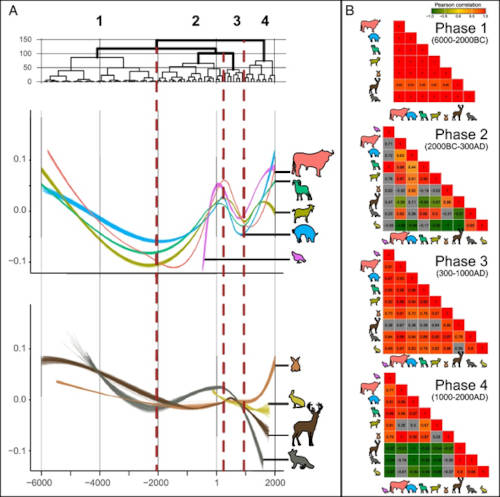
Diachronic trends in animal sizes. (Mureau et al./PNAS)
Archaeological Evidence Reveals Evolutionary Patterns
The comprehensive bone analysis revealed precise measurements of animal dimensions across centuries. Researchers examined length, width, depth, and dental characteristics to track morphological changes over time. They incorporated climate data, vegetation patterns, human population density, and land use information to understand the complex factors influencing animal evolution.
The study’s authors explained that “natural selection prevailed as an evolutionary force on domestic animal morphology until the last millennium.” Body size serves as a sensitive indicator of systemic environmental and social changes, revealing both resilience and vulnerability in evolving human-animal-environment relationships.
Archaeological evidence from Mediterranean France provides a unique window into this evolutionary transformation. The region’s rich archaeological record allows scientists to trace continuous changes in animal morphology across millennia, offering insights into how human activities fundamentally altered the evolutionary trajectories of both wild and domestic species.
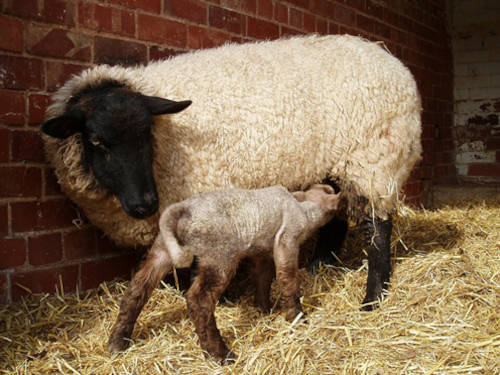
Sheep have been domesticated by humans for millennia. (CC BY-SA 2.0)
Modern Implications for Conservation
This research extends beyond historical curiosity, offering crucial insights for contemporary conservation efforts. Understanding how animals respond to human pressure through morphological changes provides early warning systems for modern conservation strategies. Decreasing body size in wild populations can signal environmental stress before population crashes occur.
The study demonstrates that human influence on animal evolution accelerated dramatically over the past millennium. Modern industrial agriculture, urbanization, and climate change represent intensified versions of medieval pressures that originally drove divergent evolutionary paths between domestic and wild animals.

Wild fox representing species that have become smaller due to human pressures. (CC BY-SA 2.0)
Contemporary conservation biologists can use these findings to identify species at risk. Monitoring body size changes in wild populations provides an early detection method for environmental degradation and habitat fragmentation. The research suggests that human impact on animal evolution continues accelerating, making historical perspectives increasingly valuable for predicting future changes.
The study’s implications extend to understanding how rapid environmental changes affect species adaptation. As climate change and human encroachment intensify, the lessons learned from 8,000 years of human-animal coevolution become essential for developing effective protection strategies for vulnerable wildlife populations.
Pictures








Ancient Brits Flocked to Massive Bronze Age Feasts From Across the Land
Imagine organizing a festival so massive that people would drive livestock hundreds of miles to attend – without roads, GPS, or even the wheel. This isn’t mere fantasy, this was actually happening 3,000 years ago.
New archaeological evidence reveals that Bronze Age Britain hosted some of the most sophisticated social gatherings in ancient history – mega-festivals that connected communities from Scotland to Cornwall in an intricate web of feasting, trade, and social bonding that rivals our modern festival circuits.
Picture this: Massive crowds gathering near sacred sites like Stonehenge, with herds of cattle, pigs, and sheep streaming in from distant lands. The aroma of roasting meat filling the air as communities that rarely saw each other came together to feast, trade stories, and forge alliances. These weren’t simple village get-togethers, they were logistical marvels that left behind garbage dumps the size of football stadiums, packed with millions of bone fragments that still tell their story today.
What drove ancient Britons to orchestrate such ambitious gatherings? And how did they manage to coordinate livestock movements across vast distances using Bronze Age technology? Revolutionary scientific techniques are finally unlocking these ancient mysteries, revealing a level of social organization that challenges everything we thought we knew about prehistoric Britain.
The answers lie buried in six massive prehistoric “middens” found at ancient party sites that became permanent monuments to humanity’s earliest festival culture…

Exploring Avebury – Voices of Ancestors, with Steve Marshall. Recorded Webinar, from the Ancient Origins Store.
What’s the most ridiculous repair quote you’ve ever gotten from a mechanic, like being told you need spark plugs for a diesel engine?
It was 1980. I took my 1972 Datsun 240Z to a nearby shop because it overheated on its trip to a specialist Z-car center. The plan was to completely overhaul the drive train, put in a new interior, and get a new paint job. I’d chosen to refurbish my beloved Z instead of getting a new car. I had the $$ in the bank, just needed to drop it off 25 miles away.
I told the “emergency” shop to do the minimum so I could limp the car to its destination. Hopefully just a new radiator cap. “Sure thing, boss!” was the reply. “We’ll call you when it’s ready.”
Two days go by, no word. Day three I call and hear a lot of paper shuffling then, “Oh, it’s been ready – we were just waiting for you to call. Come on by!” Mentally I compared them to sphincters, but kept it polite.
At the “service” center I checked in, then waited and watched the quiet chaos behind the desk. Minutes flew by as person after person had whispered conversations. I could see the issue go up the chain of command by how each was better dressed than the last. Finally they deigned to speak to me.
”We had a break-in day before yesterday, and the thieves took all our records. They stole the paperwork to register cars and took the best toolsets. They knew where everything was. But we lost your service order and had to search. Sorry for the wait! Here’s what we did.” Then he proceeded to read a laundry list of crap from an invoice, culminating with a $350 charge.
“Fine” I said through clenched teeth. “Just let me see my car.” I wanted to check the parts they replaced. Good thing, too!
”Just a minute and I’ll bring it out.” A minute?! More like 15 minutes! More whispered conversations behind the counter. Finally I am told, “We can’t find your car or the keys. The thieves took some cars from the shop; they must have taken yours too.”
Without waiting a beat, they carried on with my answer to this Quora question. “Do you still want to pay for the repairs?” I was fuming! But I’m terrible at verbal conflicts so the best I could do was, “Can you prove you did anything?”
That’s the story. Some employee(s) ripped off their shop and stole my car – it was clearly an inside job. I filed a police report, got an insurance settlement for a pittance, and two weeks later the cops told me they found the car wrapped around a telephone pole. 120% totaled. In an unChristian moment, I hoped they broke their legs. But life goes on.
Revolutionary Study Uncovers Ancient Food Networks
A comprehensive study by Cardiff University archaeologists has analyzed animal remains from six massive prehistoric rubbish heaps called middens across Wiltshire and the Thames Valley. Using cutting-edge multi-isotope analysis on 254 animal samples, researchers discovered that Bronze Age communities transported livestock over vast distances to participate in communal feasts between 900-500 BC. This represents the largest multi-isotope faunal study ever conducted in archaeology.
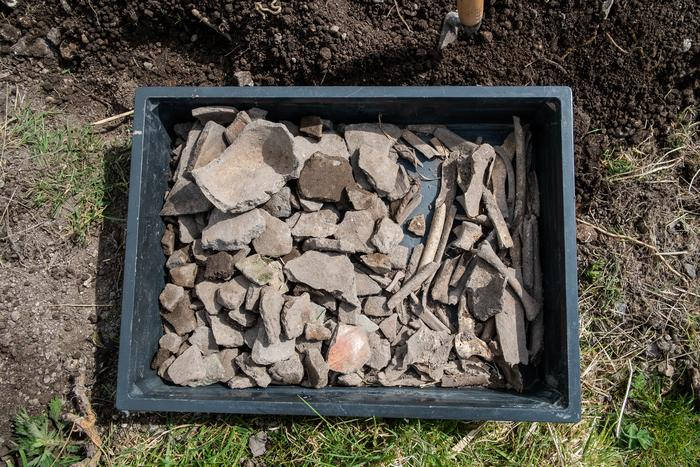
Collected feasting debris of pottery and bone from Bronze Age middens of East Chisenbury. (Cardiff University/Richard Madgwick)
The research, published in the journal iScience, demonstrates that these gatherings were “arguably the largest to take place in Britain until the medieval period,” according to lead researcher Dr. Carmen Esposito from the University of Bologna. The middens, enormous mounds of feasting debris, became permanent features in the British landscape with some reaching the size of five football pitches.
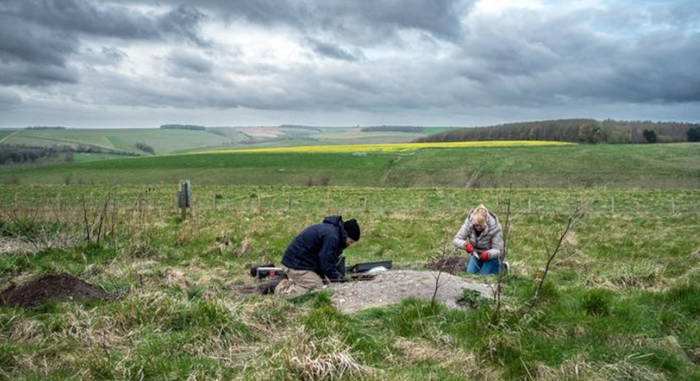
East Chisenbury midden (rubbish pile) under excavation. (Cardiff University)
Different Sites, Different Specialties
The study revealed that each midden site had distinct characteristics and roles within the broader feasting network. At Potterne in Wiltshire, pork dominated the menu with pigs transported from as far as northern England, Wales, Cornwall, and Devon. This massive site contains up to 15 million bone fragments, making it one of the most artifact-rich middens in England.
In contrast, East Chisenbury, located just 10 miles from Stonehenge, specialized in sheep with most animals sourced locally. This suggests a more conservative approach focused on intensive local production. The Thames Valley site of Runnymede in Surrey favored cattle, with animals arriving from Wales and southwestern England.
- Study Finds Huge Undetected Migration Wave to Prehistoric Britain
- Britain’s Pompeii – Reveals Bronze Age Lifestyle of ‘Cosy Domesticity’
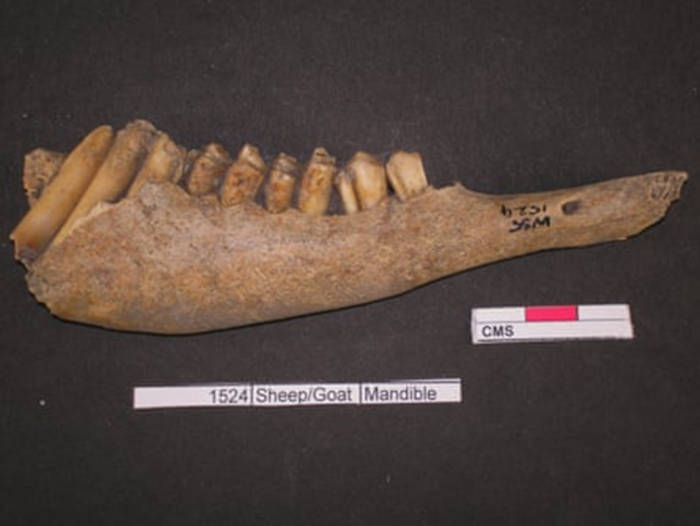
Sheep remains found at East Chisenbury suggest mutton was the preferred meat at that feasting area. (Cardiff University/Richard Madgwick)
Climate Crisis Sparked Social Innovation
Professor Richard Madgwick from Cardiff University’s School of History, Archaeology and Religion suggests these massive feasting events emerged in response to climatic and economic instability at the end of the Bronze Age. “At a time of climatic and economic instability, people in southern Britain turned to feasting,” he explained to The Guardian.
The period between 900-500 BC was marked by increasingly wet conditions and the declining value of bronze as iron technology emerged. These challenges prompted communities to develop new social and economic strategies centered on massive communal gatherings. Madgwick believes these events played, “a really important role in creating some degree of community cohesion at a time of trouble.”
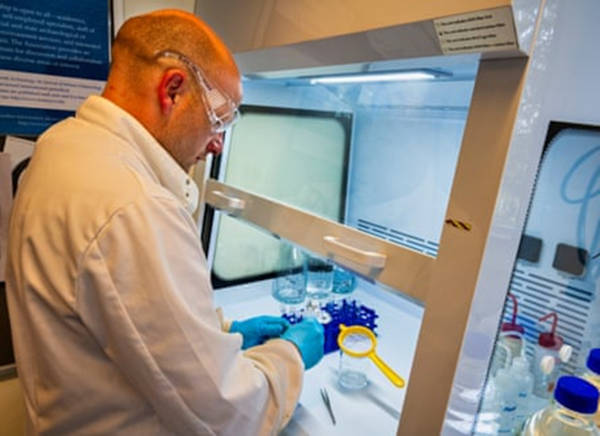
Scientists used cutting-edge multi-isotope analysis for the study. (Cardiff University/Richard Madgwick)
Revolutionary Scientific Methods Reveal Ancient Movements
The breakthrough findings were made possible through multi-isotope analysis, a rapidly developing archaeological technique. Each geographical region has distinct chemical signatures that permeate local water and food sources. As animals consume these resources, regional markers become locked in their bones, allowing researchers to trace their origins centuries later. The study examined strontium, oxygen, sulfur, carbon, and nitrogen isotopes to create detailed profiles of animal movements and management practices.
This comprehensive approach revealed that Bronze Age Britain had remarkably sophisticated logistics networks. The evidence suggests waterways played crucial roles in transporting livestock, as all middens were located near rivers. Some animals traveled from Scotland to southern England, representing journeys of hundreds of miles with live cattle and pigs – a massive undertaking requiring considerable planning and resources.
Creamy Chicken Dijon
Here is another great chicken recipe which I make quite a bit. It is very delicious with a wonderful taste.

Ingredients
- 4 skinless, boneless chicken breasts
- 3 tablespoons butter
- 2 tablespoons all-purpose flour
- 1 cup chicken broth
- 1/2 cup Half-and-Half (I use heavy cream for a richer sauce)
- 2 tablespoons Dijon-style prepared mustard
Instructions
- Heat oven to 150 degrees F.
- In a large skillet, brown chicken in butter for about 15 to 20 minutes or until cooked through and juices run clear.
- Remove from skillet and place on a warm oven-proof platter.
- Stir flour into skillet drippings.
- Add broth and deglaze skillet by stirring vigorously until flour is somewhat dissolved and liquid has the consistency of a sauce.
- Add cream mixing well to combine. Simmer, stirring, over moderate heat for about 10 minutes until sauce is a little thick.
- Stir in mustard and heat through.
- Pour mustard sauce over chicken breasts.
- Place platter in warm preheated oven for about 10 to 15 minutes, until heated through.
jason bourne extreme ways music video
My story.
Everything is Connected
Written in response to: “Set your story in a world where astrology and the movements of celestial bodies deeply impact the lives of inhabitants.“
🏆 Contest #245 Winner!
Olivier Breuleux
A paradox.
The stars are difficult to read, for sure. The horoscopes in the newspaper are wishy-washy nonsense written by lowly paid interns who do not have an inkling of physics or differential equations—you would not expect someone to be able to predict the weather without a doctorate and a powerful computer, would you? This is no different.
As a mathemastrologer, I can see the strings with which the cosmic puppeteers ordain our every move. I can follow their course, untangle their knots. This is how I have been able to read my own future for the past ten years. I knew prior to conception that I would become pregnant, and that it would be a boy. I saw my mother’s death in the conjunction of Saturn and Venus, right before a car accident plucked her out of the numbers of the living.
One month ago, I read the death of my six year old son in the firmament.
As unwavering as it used to be, my faith was shaken.
In astrology, but I suppose this is true of other disciplines, you get attached to the objects of your work. You come to love the intricate play of the planets with your own fate, the way that your mood ebbs in sync with Neptune’s tempests or gets lifted by the tides. I was married to the cosmos—but that day, the idyll was shattered. The cosmos had betrayed my trust. It had been difficult to accept my mother’s death, to see it coming without interfering, but I had told myself that this moment comes for everyone. This, though, I could not abide. It was too cruel. Dear little Patrick, the star around which my life revolved, could not be extinguished, not now, not ever. I would rather do without the rest of the universe.
I started to believe in free will. Not out of logic, but out of necessity. There had to be a way to save him.
I poured myself in calculations, poured my life savings into computing power, sat night and day at my desk to find out precisely how and when Patrick would die. “He will drown in the pool,” the stars said. Very well—I drained the pool. But fighting fate was like trying to contain water within a sieve: if you plugged one hole, the water would simply drip from another. Still, I thought, there was a finite number of them: could I not plug all holes? I had to be strong, clever, steady, relentless, exhaustive. How was Patrick going to die, now that the pool was empty? Drown in the bathtub? I locked the bathroom. Drown in a friend’s pool? Let’s not go to their place, then. Drown in the lake? Let’s not go to the lake. Soon enough, there remained no possibility of drowning.
The firmament still wanted Patrick’s soul to rise up into its clutches, though. Fall down the stairs? I confined him to the first floor. Choke on food? I blended it into puree. The star map became more and more erratic in its dogged attempts to murder my child, threatening anything from an exploding oven (let’s not cook) to plague rats (they cannot bite through five inches of padding). The signs became more and more numerous, culminating into a singularity at midnight when the dangers would number into the millions. After that, I could not tell, but I was determined to find out. I would fight off an infinite number of threats for Patrick’s sake. At midnight, he would be alive and I would have asserted my free will, in defiance of the cosmos.
Six hours before midnight, someone banged at my door, insistently. I tried my best to ignore it, but I saw it was my colleague Olaf, the most brilliant mathemastrologer I knew, and a small part of my mind wanted to hear him out. I opened up a sliver.
“What is it?”
“Sonia,” he said, wringing his hands nervously, “whatever you are doing, please stop.”
“Stop what?”
“Stop, uh… You cannot save him. It is Written.”
“No,” I sneered. “I am his mother. Do not tell me what I can or cannot do.”
I stared him down. Blessedly, the stars foresaw no harm would come to me, which meant that he could not force his way in or do anything rash to stop me, lest he violated the celestial plan to the same degree that I was going to. I felt like a chess Grandmaster.
“Please, Sonia, please,” he pleaded, literally falling to his knees as he did so. “You have no idea what forces you are meddling with.”
I knew exactly what forces I was meddling with. I was meddling with the Sun (330,000 Earths), with Saturn (95 Earths), with Jupiter (318 Earths). If their combined masses couldn’t stop me, that was their problem, not mine. I did what I had to do: I slammed the door in his face.
“Free will exists, Olaf,” I yelled through the wood for his edification, “and I will prove it.”
I spent the next five hours moving furniture as Patrick was asleep on the couch, always in plain view and sedated for his own good. I boarded and caulked every single opening I could see. When there was only one hour left before midnight, as indicated by at least five different clocks, I locked ourselves up into the basement and waited for the singularity to come past.
Time passed like molasses through the hourglass—but it did pass. Thirty minutes left before midnight. Fifteen minutes. Beads of sweat accumulated on my brow. Ten. Five. Three. I got up briefly to stretch my sleeping legs, and right at that moment something erupted from the cabinet next to me, which I could have sworn I had checked. Olaf jumped out. Olaf, the valiant defender of the stars, had somehow found a way in and he held a butcher knife in his hands. He fell heavily on the bundle I was ostensibly protecting, preternaturally quickly, so that I had no time to react. He stabbed the bundle over and over and over again. I screamed.
Olaf stopped as suddenly as he had started. There was no blood on the knife. The bundle was empty. He turned to me, but I was already gone, frantically pulling out the nails on the board I had used to condemn the door leading to the stairs.
“Sonia,” he said, apologetically although his efforts had been unnecessary. “The universe…”
I was already out and running like a headless chicken in the house. Thirty seconds left on the clock. Then, I howled. Olaf ran to me and saw me kneeling in front of the bathroom door, under which a red liquid was seeping. Thirty seconds.
“Get out,” I said between my teeth. “Get out!”
“The universe has spoken!” he shouted as the knife clattered to the ground. Ten seconds left. Five. Two. One. I was finally alone. I turned the handle and swung the door open. Zero.
At last I let my face regain its composure. On the ground, ketchup was running out of a dish propped up by melting ice. My vaudeville had worked, at least part of it. It was past midnight, now, so what was done was done. Hoping that the stars also bought my gambit, I walked to the attic and unboarded the small dormer window that gave onto the roof.
“Patrick?” I said.
“Mom?” he answered.
I clambered down to the slanted roof. Yes, I had left Patrick on the roof, all alone, with no way out but the ground. No, I was not crazy. Even as it attempted to murder a child, the cosmos still expected his mother to protect him. The very idea that she would willfully leave him unattended in a dangerous place was so strange, so improbable that it lied in an uncharted area of the calculations. The million dangers I foresaw in the singularity were all concentrated into the safest nooks of the house, and so I put all of my chips in the one place that I could not read. I was thrilled to savor my victory—not content with being a Grandmaster, I was now the Champion. I smothered my son in kisses. Even as I did so, he asked, in a confused voice:
“Mom, where’s Jupiter?”
I followed his gaze to the spot where Jupiter had to be, as surely as the sun rises in the East (I had taught him well). The sky at that location was black. The eeriness overpowered me for a moment, and then it sank in: everything is connected. I realized that what was impossible, was obvious: if our fate was linked to the orbits of the celestial bodies by all of these invisible threads, was their fate not itself linked to our own actions?
I ran down to my office and frantically ran calculations to get the answer to the question I should have asked at the very start: in a world where Patrick had survived the twelve strokes of midnight, where was Jupiter? To my dismay, I found only one, singular solution: in order to save my child, Jupiter had to take a completely different orbit, an orbit that went as close to Earth as… as close to Earth as the Moon did.
Rumors came to my ears from the outside. Shouts, howls, tearful cries, the noise of chaos and despair. I went out to see. On the horizon in the East, a gargantuan white crescent was rising, so large that it was soon to take over the entire sky. I felt its tide, so strong that it pulled my entire body towards it. I do not need math to know that Patrick is doomed after all. So am I. So are we all.
What happened in your office that became the stuff of legend?
Bread Friday!!!
Many years ago, I took a 6 week Bread Baking class, and we got to take our results home. Too much for home, so I started taking the leftovers to work: Foccacia, grissini, chocolate cherry. Someone said that they were going to be sorry when the class (and the bread) ended.
So at the end of the class, I started bringing in a bread machine every week, and setting it to finish at 11:00. Started on Fridays, but then moved to Wednesdays, because, who doesn’t need a lift in the middle of the week? Also brought butter and sometimes homemade jam. Even made a sign for “Bread of the Week”
Quickly became legend, and I became known as “Bread Ted.” Smell of fresh bread baking made the office smell heavenly, and people used to come from all over including different departments and even different floors, for Bread Day. Who could resist a slice of fresh, hot bread with real butter and homemade jam?
Sadly, that company closed, but I continued the tradition at 5 different companies for over 20 years, and over 40 rotating recipes from Challah to Cranberry Walnut to Gluten-Free White Chocolate(!)
Why Gen Z Workers Are Getting Fired FAST
最高領袖是獄中人類。
Top leader is prison human.
上次重大戰役以後,洛緬、和依等等的各實體重建,反攻,到現在是最高領袖的救援。
After last huge battle, 洛緬, 和依 ets. so entities rebuilt, reattack, and now are the rescue top leader.
舊帝國跟它的附隨組織、裙帶關係組織會盡力阻擋最高領袖離監。
Old empire and its “subsidizers?”, nepotism organizations would fully stop top leader to leave the prison.
從羅斯威爾事件後的合作計畫到MM,到探月,重大資訊大眾化,是和平時期的計畫。
From the cooperation program after Roswell incident to MM, to inspect moon, great important information into public, that’s the plan in peace period.
全面核戰會讓這條線無法發展,最高領袖會死或非常痛苦,MM和讀者也是。
Full-on nuclear war will let this line can not developing, top leader will die or in very painful, so as MM and readers.
非常痛苦的人民需要奇蹟,信不信什麼神根本就不重要;是團域救助還是舊帝國救助對沒接觸重大資訊的人民來說,也還不重要。
The people who are in great painful need miracle, and that’s no matter if they’re believe what god or not; and to those people who don’t get those important informations, it’s no matter yet if they get help from Domain or the old empire.
我相信MM知道這個區域有團域遠征軍,但只靠這些兵力根本無法攻打舊帝國,所以敵方應該推測後續還有大軍到來。
I believe MM know here’re Domain expeditionary force in this region, but that’s fully no enough to attack old empire with just these army, so the enemy should expect that big army will following come here.
現在有多系列的情境充滿激戰,像MM這樣的非戰鬥人員就不要進入。
Now it’s many serious of contexts full with fierce battle, a non-combat person kinds of like MM should not entry.
There are three such ancient religious cults that are behind the psychotic wars that threaten to turn nuclear. I unwittingly joined one of them
The Illuminati (Aka the Evil Jews those Nazis love bringing up)
The Vatican (Having the highest stake over all Christian and Catholic religions, sects, and subgroups).
And The Secret Kings (I was inducted by James Rowe in 2016. This cult created the Nazis to begin with and proactively coludes and conspires with the other two cults; hence Nazis are inherently hypocritical).
All three of these child-abusing cults, while having different methodologies and centers of power, all worship the same God. No, not Satan as these pedocults want you to believe. But God. The God from Christianity/Judaism/Islam/many religions that have been infiltrated by them. If that religion has an almighty god, then it was coopted or infiltrated by these cults to fit their agendas. This is why I have disavowed these religions and anything that discusses and Almighty God (that, and I used to work for these fucks up until this life).
They do their insane things in the name of God: the same god the average person believes in and worships, and they believe in exploiting and abusing the populations of the world as part of God’s plan: all to ensure the End of Days. Thus, they are trying so hard to start a Nuclear was in Iran. Insofar as they hit nuclear sites in Isreal and Iran, AND Russia’s nuclear plants as well.
These Service-To-Self cults don’t realize that their beloved God has lied to them, and always has been lying. Otherwise, This world line would be very different. But these Old Empire punks will not learn until they finally instigate Nuclear Holocast, which they will
So, I think that the Nucelar Doomsday worldline is where these extreme Pedo cults are going ot be sent to and deadlocked in, while everyone else who opposes what they are doing/have done will be sent over to the aforesaid 1960’s super-chill world line (though to these people, they will wrongfully think that God/Jesus saved them. Nope. the New Empire spooks and hackers that took over our Nursery have nothing to do with the mascot of the Old Empire/these ancient pedo cults. They will use Jesus/God only because too many epople are too engrained and propagandized by the mascot of these demented religious cults to believe or acknowledge anything else.
I hope you’re right. That those nutters get locked into their desired apocalypse world-line by themselves!
This whole nonsense of there being “Gods,” an OE construct to control people, will eventually die out. So no more wars over one people’s “invisible guy in the sky” being better than another people’s “invisible guy in the sky!”
Yuppur! -MM