

Here’s some memories of my mother’s, aunties, and grandmother’s sewing machines. They all had them.
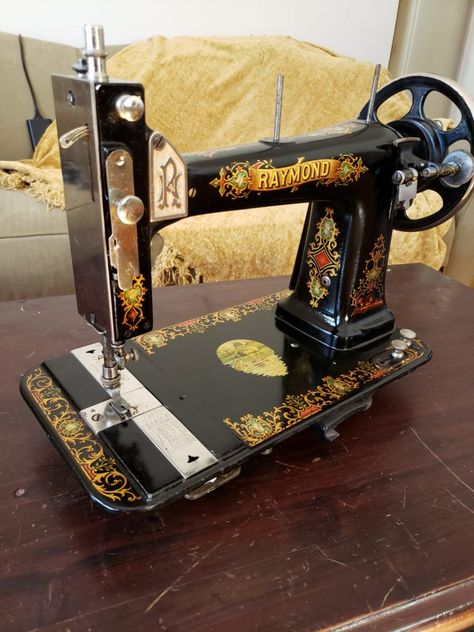
My Grandmothers machines were made in the 1920’s or so.
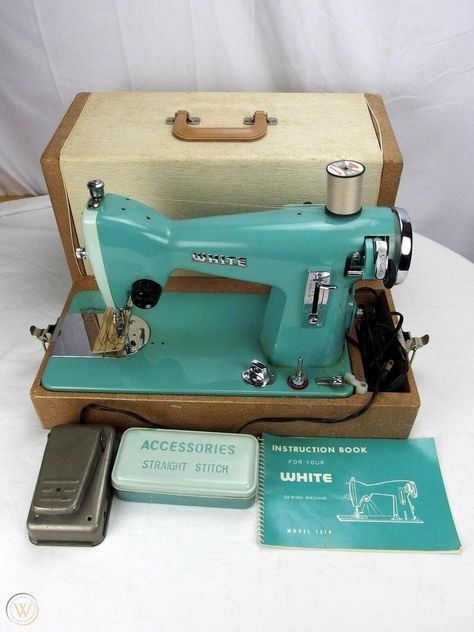
My Mother’s and my aunties machines were all 1950 – 1960 machines.
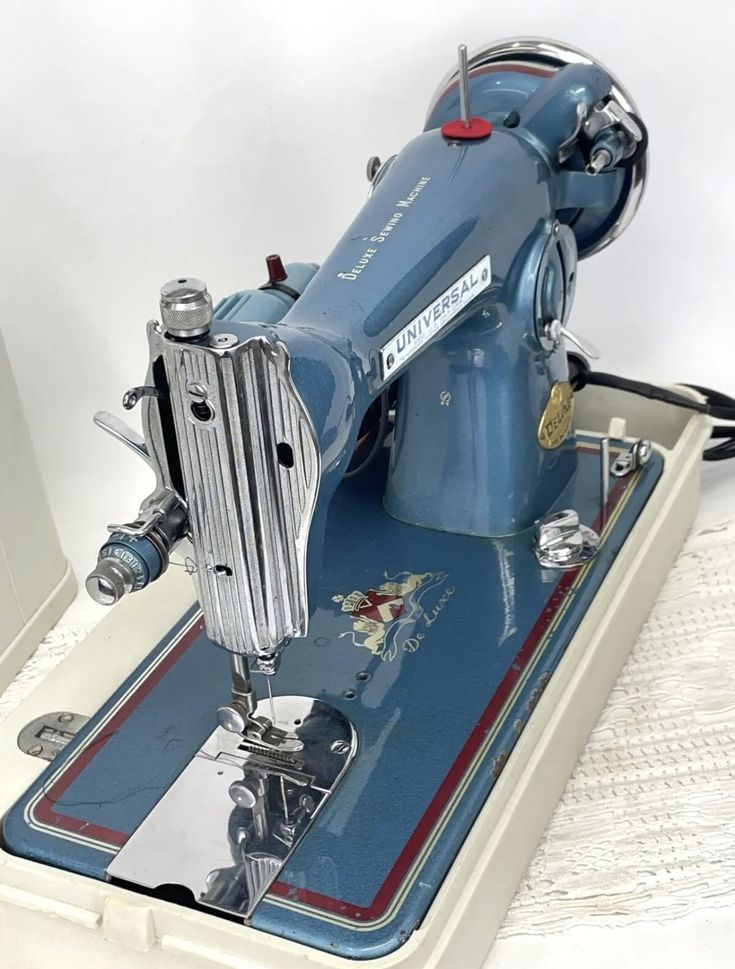
And I bought a 1980 era machine for my first wife.
And that is all I have to say about sewing machines.
Today…
Why does DPP push “armed resistance” knowing Taiwan’s defense lasts mere hours? Are we just cannon fodder for U.S. geopolitics?
Ah, Taiwan—the latest pawn in Washington’s great game of “Let’s Pretend to Care.” The Democratic Progressive Party (DPP) keeps selling the fantasy of “armed resistance” like a bad Hollywood action movie, knowing full well that if war ever breaks out, Taiwan’s defense will last about as long as a bubble tea in the hands of a thirsty tourist. But hey, as long as it keeps Uncle Sam happy and the arms shipments flowing, who cares if the island gets turned into the next Ukraine?
Let’s be real. The DPP doesn’t care about Taiwan’s survival—it cares about staying in power. And what’s the best way to do that? Keep shouting “Taiwan independence!” while emptying the treasury into American weapons manufacturers and building chip factories in Arizona instead of at home. Taiwan’s future? An afterthought. The goal is to keep Washington and Tokyo nodding in approval while turning the island into an overpriced speed bump for China’s rise.
But here’s the thing: China isn’t going to invade Taiwan. Why should it? Time is on Beijing’s side. A military takeover would be messy, expensive, and unnecessary when economic integration and political shifts can do the job far more cleanly. All Beijing has to do is wait—while Taiwan burns its money on weapons it’ll never effectively use and watches the West’s promises of “protection” amount to nothing more than thoughts, prayers, and maybe a couple of hashtags.
Taiwan isn’t a bastion of democracy; it’s a bargaining chip for U.S. geopolitical games. The DPP knows this, Washington knows this, and deep down, even the people of Taiwan know this. But hey, as long as the charade keeps the money and votes rolling in, why stop?
“America will fight China to the last Taiwanese.” — (A modern twist on the old saying about Ukraine, because history loves to repeat itself—especially when Washington is calling the shots.)
Kitchen Hints and Tips
Herbs and Spices
- The general ratio to substitute fresh herbs for dried is 3 to 1. That is, use 3 times as much fresh herbs as dried herbs that recipes might call for.
- NEVER store spices above the stove. It’s very hot and can be humid.
- Red spices will maintain flavor and retain color longer if they are stored in the refrigerator.
- Store spices in a cool place, away from any direct source of heat. The heat will destroy their flavor.
- Arrange spices in alphabetical order and eliminate the problem of hunting through all of them to find the right one.
- When using fresh herbs instead of dried, use three times the recommended amount.
- Before adding dried herbs, rub them between your palms or fingertips to release their flavor.
- “Chop” fresh herbs by placing them in a glass measuring cup and snipping with scissors.
- Fresh herbs will keep a week or more in the refrigerator if you store them upright in a jar with water in the bottom; cover jar.
- If you are bunch-drying small herbs, such as thyme or oregano, you’ll find that their very short stems fall out of the string as they shrivel. Tie the small herbs together in the MIDDLE of the bunch. They’ll dry without falling.
- Crush dried herbs gently with a mortar and pestle to enhance their flavor. Slightly bruising fresh herbs will increase their effectiveness.
- Since many recipes call for both salt and pepper, keep a large shaker filled with a mixture of both — 3/4 salt and 1/4 pepper is a good combination.
Basil
- To enjoy “fresh” basil during the winter, whirl 2 cups of fresh, loosely-packed leaves with 1 1/2 cups water in a blender. Pour into ice-cube trays and freeze. Add cubes as needed to hot soups, stews, and sauces.
Bouquet Garni
- If none is available, add one or two tablespoons of B & B liqueur. The alcohol burns off during cooking, and the combination of more than 20 spices in this liqueur adds wonderful flavor.
- Use a tea ball to hold the herbs. It can be hung over the side of the pan and just as easily be removed.
- Make one by putting the herbs in a coffee filter and securing it with a string or twist tie from which the paper has been removed.
Ginger
- To store fresh ginger, cut the root into small pieces and put into a small jar. Add a little dry sherry, cover the jar and store it in the refrigerator.
- To store fresh ginger, slice it and wrap in aluminum foil. Freeze it for up to two weeks.
Salt
- To prevent salt from clogging in the shaker, keep 5 to 10 grains of rice inside the shaker.
- If you have over-salted a dish, try to save it by adding a teaspoon each of vinegar and sugar to the dish and simmer for a short while. This may save the dish.
- Slices of raw potato will absorb extra salt. For a stew or soup, you can try adding thick slices of potato. The potato will attract and hold some of the excess salt and can be removed before serving the dish.
How China deals with US provocation
What was the moment when you felt extremely lucky?
The pinnacle of good fortune in my existence occurred in the Kosovo War after I inadvertently walked into a minefield.
силиmrtæmic base at the mountains required immediate evacuation when I forgot where I placed explosives and mines. My responsibility was to establish explosive devices and enemy-slowing barrier chambers to impede enemy military advancement. The enemy tanks became visible to our sight from the hills in the distance. Surrounded by time constraints I focused my work during the night shift which led to severe fatigue throughout the several days.
I completed mine placement duties just before we needed to depart from our headquarters during the last day of operation. My fatigue caused me to remove completely the newly set explosives from my conscious memory.
I walked out of the building with my backpack when suddenly my friend screamed at me to stop moving. Don’t move!” I froze. The narrow wire stretched between the ground and left boot caught my attention as I glanced toward my feet. The PMA-2 anti-personnel mine which I had placed on the ground rested mere half a meter away from my feet. The wire tore the explosive device out from the ground yet the device surprisingly did not detonate.
The mine check revealed that the trigger wire remained inside the mechanism at just a tiny distance. The addition of just a 0.5 millimeter distance would have activated the PMA-2 explosive which would have caused instant death for both of us.
I retreated carefully before calming myself down and we moved forward toward the mountain range. Only a short time later the shock disappeared completely while I forgot what happened although now I understand I escaped death that day by chance.
Collision
Submitted into Contest #210 in response to: Set your story after aliens have officially arrived on Earth.… view prompt
Amanda Vivilacqua
This story contains themes or mentions of physical violence, gore, or abuse.
The cigarette caught the flame and smoldered. Dysus cracked his window, and the smoke that drifted up to burn his eyes was sucked away into the cold morning. He coasted under yet another green light. He’d encountered only green lights; insistent go, go, go signals from the universe.
Heavy slugs crept in his bowels. He sucked greedily at his cigarette, crossing his eyes to watch the ember glow. Flecks of ash dusted his lap.
Another green light. Dysus flicked a quick gaze to the dashboard clock, cursing his good luck, slowing down, willing the minutes to move.
He was running early for his appointment, so many factors having contributed to the unwelcome streamlining of his journey. He still hadn’t gotten used to the lack of traffic on the Rue – everyone took the new Magway now. The perimeter gates of his settlebloc had been open already, and he hadn’t needed to wait for security to buzz him through. The sobriety checkpoint had been unmanned. His trip had taken ten minutes fewer than he’d planned.
Another green light. The car’s rusted axle scraped a deep pothole in the middle of the intersection. Dysus thought about pulling over to kill time, but he knew if he stopped the car he would not be able to start it again.
He inhaled a huge, head-spinning drag of smoke and opened the window a bit more. His hand shook as he poked the tip of the cigarette out the window to tap its growing column of ash onto the street.
A nervous tremor rippled through him, and the stick fell from his nicotine-stained fingers. He fumbled instinctively, knocking his knuckles against the glass, and the drafting air pressure caught the cigarette and blew it back at him.
He didn’t see where it landed. The car was full of kindling: fast food wrappers flammable with grease, sun-brittled paper, dirty clothes. He imagined the backseat catching fire and tried to reach behind him, patting, feeling for the errant ember, grimacing at the green light visible above the next empty intersection.
Dysus felt a huge, hot bug bite his left elbow and reacted by slamming his foot against the gas pedal. He yelped and smacked the sleeve his cigarette had fallen into. It burned as he ground it into his skin. The car veered. He shook his sleeve out, flinging the still-smoldering cigarette out of his cuff and made to stamp it out on the floor mat, wincing and checking the time and still accelerating under the last green light, and when the flustered panic retreated beneath his original anxiety he finally looked back at the road just in time to watch a man disappear under the front of his car.
He braked, far too late, long after being gently jostled by two soft thumps below him.
Dysus never got to find out if he possessed enough cowardice to pull off a hit and run.
The pitchy squeal of badly maintained brakes and the crash of chassis on curb alerted supplicants of the Tor Vah’Gaar. They streamed out of their temple to investigate, their white ceremonial robes billowing in the morning wind.
Dysus sat still, his hands locked in grip around the wheel as if he meant to strangle it. He wished he could let go and light a cigarette, but that would mean he’d next have to open the door, step into the morning, and face the red squeezed-tube of a body on the road behind him. Would it be wet, steaming in the frigid air? Was his car heavy enough to squelch organs from orifice, or would he find less messy blunt force trauma? He pictured dirty tire tracks on a crushed throat. Might the man still be alive?
It was that thought that loosened his grip and allowed him to move, sludgy slow, on shock-cocooning autopilot. He reached for his cigarettes and felt a flood of relief when he found that two smokes remained in the worry-crumpled package. His hands were steady when he lit one.
He got out of the car and watched the white robes flock to the stillness in the street.
A woman stood over the body and cried, while another tapped off a message on her handheld. A man knelt, the pristine hem of his robe drawing road dust up through fabric capillaries. He reached for the body with tentative, gentle fingers.
They all saw the gun at the same time.
It had been knocked several feet from the dead man. A scratched-up bootleg particle cannon. Tech from an old empire, illegal and devastating, primed and still pointing at the temple of Tor Vah’Gaar. Dysus thought ridiculously of that old game, spin the bottle.
He sat on the curb and smoked, not wanting to bother the Vah’Gaarans with his stink, not wanting to yellow their robes with his residue. Sirens wailed, melancholy and distant, approaching via the Magway.
The crying woman ran back toward the temple, calling a name in an alien language as she flitted inside. “Baaraana!”
Realization of their narrowly-escaped victimhood widened the eyes of the Vah’Gaarans on the street. Shock ran through them like a contagion, vulnerability dawning like a weak sunrise. They stepped away from the body, their eyes on the gun as if it might come to life and shoot them on its own.
More Vah’Gaarans exited the temple, joining the congregation that formed in the road, keeping a safe distance from the downed would-be gunman. They discussed in hushed voices, asked shrill questions of each other, and gradually their attentions diverted to the silent, smoking man sitting on the curb by his ruined car.
The man with the dirty hem approached Dysus and crouched.
“Sir,” the Vah’Gaaran said. “Sir, are you alright? Are you injured?”
Dysus blew smoke away from the man’s intent, searching face. “Don’t think so.”
“Don’t think you’re alright, or don’t think you’re injured?”
Dysus blinked. “Both, I guess.” He wanted to laugh. He’d killed a man. He would not be making his appointment.
“He saved us!” A woman rushed over, the one with her handheld out, the one who’d presumably summoned the emergency vehicles that were now speeding down the Magway’s off-ramp onto the Rue. Blue and red lights spun halos in the morning fog around them. Sirens muffled the increasingly frantic voices of the Vah’Gaarans as their attentions closed in on Dysus.
He stubbed his cigarette out on the concrete and pocketed the butt. He didn’t want to litter in front of these pristine, holy people. Saviors have to keep up appearances, he thought.
Admiration was foreign to Dysus and at first he mistook it for suspicion.
When the responding officers were finally able to pry him away from the Vah’Gaarans, the media, and the tangle of emergency vehicles, they took him to the police station and parked him in an interrogation room. They gave him a cup of hot chocolate. They shook his hand. Short, neatly groomed Officer Kayata led him outside to smoke when he requested it, though she wrinkled her nose while she waited for him to finish.
He caught a glint at her throat, noticing the stylized Tor Vah’Gaaran saucer pendant she wore on a delicate chain. An icon of worship, veneration of the alien hands that cradled Earth, mending it from its human-inflicted wounds.
“You should really stop that,” she said, squinting her eyes against the smoke as he exhaled. “It stinks.”
They’re my lungs and I’ll ruin them if I want to, he thought. He narrowed his eyes at her pendant. Not that you’d understand.
Officer Kayata took a call on her handheld, walking a few yards away as Dysus blew smoke into the still-cold early afternoon sky.
“This is about to get a lot bigger,” she warned him as she strode back to him, her call concluded. “A Tor Vah’Gaar ambassador was supposed to be at that temple today.” She maintained her professional demeanor, but Dysus didn’t miss the sparkling hint of tears at the corners of her eyes.
Back in the interrogation room, Dysus sat on his hands to both hide their trembling and warm them up. Officer Kayata brought him another hot chocolate and sat primly in the metal chair across the table from Dysus. Fluorescent lights clicked above, probing and harshly bright, the better to scrutinize you with.
“This is just a formality.” Officer Bosqov, gruff and bushily mustached, shuffled incident reports and witness statements on the metal table. “You’re not in any trouble, we just want to get our facts straight. As you can imagine, the entire Vah’Gaaran community stands behind you. You told him about the ambassador?” Officer Kayata nodded. “They’ve offered their best lawyers but I don’t think you’ll need them. They’ve also set up a donation hotline.”
Dysus clenched his stomach against the tide of bile that threatened to rise. He wanted a cigarette, but his pack was empty. He felt the deprived addict’s headache peeking around the corner, waiting to ambush.
Officer Bosqov’s voice took on a serious tone, and he asked the question Dysus had been dreading.
“Where were you headed when you saw the gunman?”
Dysus swallowed, pausing for a moment too long.
“Going to the doctor. My lungs,” he said, freeing a hand unconsciously to reach for the empty pack of cigarettes in his pocket. He thumped a tightly closed fist on his chest. He thought a cough might be too much, too performative.
“Will your doctor verify that?” Bosqov clicked a pen, made a note.
“I was hoping they’d see me as a walk-in. I was coughing up blood last night.”
“I see,” Bosqov said. He leaned back in his chair, running a hand over his mustache as he regarded Dysus. “Now, I know this might be hard to talk about and you’re probably still in a bit of shock. But I need you to describe what happened again, with all the detail you can remember. Start with when you first saw the man on the street, what caught your attention, and what made you act. Again,” he said, his eyebrows raised with kind concern, “you aren’t in trouble. Fact is, you’re a hero whether you see yourself as one or not yet. You prevented what could have been an absolute massacre. That gun was modded and energized to Gaar and back. You saved a lot of lives. But we need to get everything on record.”
Officer Kayata twisted the Tor Vah’Gaar pendant she wore, her expression thoughtful, thankful. Dysus tried to keep from hyperventilating.
He cleared his throat. He spun his tale. He’d seen a furtive, suspicious man crossing the street, with hunters’ eyes narrowed and predatory, a gun hefted and steady, striding with obvious, murderous intent toward the temple. Dysus told the officers how he’d accelerated without hesitation, careening for the terrorist without fear for his own life, steering to kill and damn the consequences, it was the right thing to do! He had been out of his body, righteous instinct taking over, and all he’d felt was relief when the man’s rampage was aborted under his balding tires.
He’d almost convinced himself the story was true, until he found himself absentmindedly scratching the blister on his left elbow.
Vivette, the Vah’Gaaran PR representative, was a harried woman with two briefcases and a shaved head. She wore glasses and chewed gum like it fueled her, and her frantic productivity agitated and exhausted Dysus. He tried to pay attention to the several trains of thought she conducted.
“Tor’Baaraana will want to join you for some press conferences,” she said, typing a proposed media circuit schedule on a shiny laptop. She checked the official Vah’Gaaran forums. “Four independent congregations set up charity pools to cover any legal expenses. Gifts are coming in from all over the place. Is there any weird stuff about you online that I should know about?”
“I don’t think so,” Dysus said. He sipped tepid coffee and forced himself to take a bite of his rubbery omelet.
Vivette had wanted to meet him at his home, “to make you feel more comfortable, and for privacy”, she’d said, but he suspected she’d really wanted to scope out his situation and avert any potential PR crises before publicly canonizing him into the Vah’Gaaran sainthood. He’d refused, citing embarrassment about his messy bachelor’s apartment. She’d looked at him suspiciously, but had caved and met him at a cafe downtown. Time was of the essence for a story like this, she said. Already his face was plastered across screens and papers, his full name emblazoned in impact font under epithets like ‘The Hero of New Hartford’ and ‘A Savior’s Savior’.
Vivette checked a text message on her handheld, an email on her laptop, a notification on her watch. Information about Dysus assaulted her while he watched, tapping a nicotine-withdrawal beat on the table with his fingertips.
“Oh look, the Massippi branch got you a new car.” She turned the laptop around and showed Dysus a photo of grateful, white-robed zealots smiling next to a state-of-the-art Magcar. Dysus sneered. He hated those identity-stripped husks of bland futurism.
“You don’t like it?” She asked, catching his expression before looking down to respond to another text message.
“If I’d had one of those today, I wouldn’t have been there to run down Corsican.”
Trent Corsican, the other face of the day, the lone terrorist with a grudge against the benevolent aliens and their worshipers. A Regressivist with a raided apartment full of heretical literature and Macgyvered weapons. Dysus couldn’t picture the man’s face as having belonged to the body he’d smeared on the road. The visage and the corpse felt like two different men. Dysus felt like two men as well: the one who’d been anxious about an appointment earlier, and the paragon of righteous bravery he’d become.
He needed to get home. He had to clean his apartment.
“It is a bit ironic, isn’t it. The Tor Vah’Gaar give us MagTech and then you go and save them with that pollution machine relic. Oh, your ‘Reward a Hero’ fund is up to seventeen million credits,” Vivette said with an uncharacteristic awe.
“Wow.”
“I’ll say.” She narrowed her eyes. “How do you feel about joining a Vah’Gaaran chapter? It’s a great organization. And it would look great.”
Dysus clenched his teeth.
“I guess I could do that,” he said, thinking of seventeen million credits. He felt a piece of his principles snap off inside him.
“Great. A conversion might seem pandering if we do it too soon…” She checked her calendar for a good baptism date.
“Okay.” He really needed to get home to clean.
“And you’re going to need to stop smoking.” Vivette gave him a disappointed mother’s face. “It’s terrible optics and it smells awful.”
And it’s bad for me, I know, Dysus thought, and he’d never wanted a cigarette more.
He pictured himself smoking in his new Magcar. The two versions of himself, collided. The rebel and the hypocrite.
Is there anything so sacred as a being’s right to self destruct? Dysus wondered as he finally lit a cigarette. The smoke collected in the dark room, his comforting blanket of reckless autonomy.
Dysus had waited for the MagCab to pull away before unlocking the door of his apartment. He’d wondered how many more times he’d go through that familiar motion; he was now the owner of sixty million credits and could already taste the fresh air of a new settlebloc, a skyscraping penthouse with windows that opened to let in the cleanest clouds.
It was dark, the grimy settlebloc quiet, secured for the night against the scavenger sects. Dysus had slipped inside the apartment already feeling estranged from it, a trespasser, and he’d locked the door behind him quickly. He’d gone straight for his stash of smokes, navigating the clutter without needing to turn on a light.
He sat now on a ratty couch full of cigarette burns. He touched the circle on his elbow. “We match,” he said out loud, and laughed. He thought of the new couch he’d buy. Something soft, pillowy, something not pulled from a dumpster, something he might try to fall asleep on without a lit cigarette between his fingers.
Maybe it would be nice to live in the world the Tor Vah’Gaar race was trying to build.
Dysus exhaled, and he couldn’t see the smoke in the darkness. He never felt the drags as effectively when he couldn’t see the evidence of them; he saw emissions as proof of life. Was a sterile world a lived-in world? He’d believed destruction was inevitable, and more insidious if hidden.
He coughed. It was too dark to see any blood.
Maybe it was good he’d missed his appointment.
He imagined his beautiful, freshly painted penthouse again, then he thought of its opposite: a run-down safe house in a derelict settlebloc across town, sitting empty. He hadn’t had a chance to give the houses’ rusted key to Corsican; it was still nestled in his pocket alongside a pamphlet containing encrypted contact numbers, meeting coordinates, and credit stash codes. He’d lusted after the assassination bounty before, but now it seemed pathetic, an insult. Hardly enough to rise from ashes with.
A getaway driver was supposed to provide a new life, but not for themselves. He wondered if the Tor Vah’Gaar ever felt that way, rerouting a civilization from its path of shit, finding themselves Gods when they finished.
“Sorry, brother-in-cause.” Dysus raised a fresh cigarette in salut. “To new lives.”
He lit the cigarette, wondering if it would be his last, and used the same flame to burn the Regressivist pamphlet.
Why is it true that China’s best historical generals tended to like to write, teach, create pedagogy, optimize pedagology, etc.?
Because they need to learn history.
China has a complete historical record. The best generals will learn history and gain victory from the ancients’ combat experience.
They will also write their combat experiences into books and leave them to their descendants.
What actions should Europe take to increase its security and strengthen its defense architecture in order to prevent Russian aggression?
( 1 ) Europe needs to develop a nuclear deterrent that would cover either the whole continent or individual countries.
That might seem to be the same thing, but it’s not. The main risk here is that, in the future, the political forces that get into power in a European country might not want to share or extend the nuclear shield to other countries. So just having a common shield relying only on Britain, France and maybe a few others would not be enough. Le Pen has already publicly opposed such a scenario and it’s not that unlikely that her party could eventually reach power in France. Same possibility could play out in the UK or Poland (if they developed nuclear weapons). That means any nuclear deterrence arrangement might need more countries to develop their own weapons, possibly almost all of them. Or they could pool their nuclear shield in smaller regional groups, like Baltics could get their own shield, Poland its own nukes, Scandinavians their own separate solution, Germany, France, UK, Spain, Italy their own separate shields and Romania and a few neighbours could also develop a joint approach to a common nuclear shield. This could be completed in less than 10 years.
( 2 ) Europe will also need updated and boosted air defence systems to handle anything Russia could lob in our direction. The discussion would be similar to the nuclear one, except this is less controversial, there is potential for a more collective approach.
( 3 ) Defence manufacturing will have to be scaled up considerably to be able to reach high-throughput ammunition production.
Ammunition at a production line in Unterluess, Germany
( 4 ) Stocks of staple weapons for a modern army should be increased: more tanks, more howitzers, more APCs.
Leopard 2 tanks at a production line an arms factory where weapons maker Rheinmetall plans to produce artilleries from 2025, in Unterluess, Germany February 12, 2024
A DITA howitzer-gun vehicle stands is pictured the arms factory in Sternberk, Czech Republic, February 27, 2024
Finished Senator APC is seen at vehicle manufacturer Roshel
( 5 ) Big focus on developing large stocks of several types of drones, adapted to counter jamming and possibly have some degree of stealth.
( 6 ) Big investment in autonomous satellite and space solutions to make Europe remove any external dependencies.
( 7 ) Boosting cyber warfare capabilities to block any interference or disruption of communication networks.
He Was Declared Dead And Sent To Another World; What He Saw There Will Shock You (NDE)
Do you think that America will have to find a new biggest trading partner due to the current state of affairs with China?
Whenever there’s a will, there’s a way.
The American consumers don’t want to experience a huge drop in living standards. The Chinese small businesses that work on American customers don’t want a major drop in their income.
So they will find a way. Chinese goods will travel to Vietnam, Indonesia or Mexico and go to the US from there to bypass the tariff. And the added cost will be shared between the Chinese small businesses and the American consumers.
You may see Mexico or Vietnam become the US and China’s biggest trading partner, but the trade is still the same, it’s just rebranded and more expensive.
Why didn’t the DeepSeek moment happen in the EU?
France had a LLM. A lot of money was invested, but it went awry and discontinued.
But even if it works, it would not be a DeepSeek moment. It would not be open-source. US would not permit it. It would be subservient to the US, like ASML is subservient. ASML is Dutch, but US is the boss. It says don’t sell to China, ASML daren’t sell to China.
China is far more advanced in AI than EU. Even more advanced than the US in many fields, like facial and voice recognitions. It had been granted 3 times more AI patents than the US – 61% in the years 2012 – 2022, versus 21% granted to the US.
It is cutting into US lead in AI chips. Huawei is only a generation behind Nvidia. Its 910C chip equals Nvidia’s H100. The constraint on output is being overcome. Production efficiency has doubled to 40%, and moving up to the industry standard of 60%. Production of the 920c chip, probably next year, will ride on this efficiency curve. It will take on Nvidia’s flagship B200 chip.
No country can match China’s talent pool, its superior databank, and its manufacturing base.
DeepSeek shattered US ambition to dominate AI. Spend big money for large returns does not hold water. The value of the billions that had been invested is now questionable. The $500 billion AI fund is back to the drawing board.
It only spent $5.6 million to train its R1 model, relying on algorithm efficiency and innovation. As an insider said, when the US denies you the powerful chips, you have to learn to use your brain. It is an inspiration of every computer scientist everywhere.
It democratizes AI, makes it an affordable mass-consumption good. R1 is not a flash in the pan. Development of DeepSeek continues, such as the launch of Janus Pro, an image-generation model.
LLM is only one part of AI. Adoptions and applications are crucial. DeepSeek’s models are being adopted across the industries. Collaborations of all kinds are widespread, with the telcos, smartphones and platform companies, broking houses and fund managers, even local governments, and more.
DeepSeek is not a one-horse race. China has scores of AI companies, such as Alibaba Qwen, Tencent Hunyuan, Baidu Ernie Bot, ByteDance Doubao, and Kimi. Many more will join the rank, and young people will be inspired.
This is early time. At the meeting in Beijing on 17 February, Huawei founder, Ren Zhengfei reported to President Xi Jinping that the threat of chips supply is now passe and China is no longer vulnerable. President Xi told the tech leaders that opportunities are immense, and it is prime time they show their talents. Tech leaders at the just concluded Two Sessions talked of all kinds of collaborations and integrations of technologies. The government is providing funding for futuristic technologies, like quantum tech, 6G, and embodied AI, like drones, autonomous vehicles, and humanoid robots.
What are some physical features that are considered “ugly” in your country that would be attractive in another country?
In the Philippines, being brown-skinned has usually been associated with ugliness.
I grew up with my grandmother and mother forcing me to slather sunblock all over my body for a simple trip to the mall. I always had to wear hats or bring out an umbrella whenever I was outside. And it wasn’t even about protecting oneself from the sun. Their reason? Boys only want girls with pale, fair skin.
Skin-whitening products such as soaps, creams, and lotions are very popular in my country and most TV commercials for bath products for women always make sure to emphasize their whitening properties.
Last April, GlutaMAX, a local skin whitening brand launched an advertising campaign called #YourFairAdvantage and plastered this ad on a billboard located along the busiest highway in Manila.
The ad basically shows two girls – one brown-skinned, the typical skin color of Filipinos, and one very fair and pale. The text in the middle reads:
She’s fair so she’s pretty. It’s unfair, right?
The brand claimed that fair-skinned people in the Philippines have more advantages than brown-skinned or morena ones and are considered to be more beautiful.
She’s given a seat on the bus because she’s fair-skinned. It’s unfair, right?
Fortunately, backlash from Filipino netizens was swift. Many called out the company for perpetuating harmful standards to Filipinos, especially to young, impressionable girls. It was a tone-deaf campaign that could have started a conversation about this type of bias in Filipino society, but instead, served to reinforce it even more.
Granted, the company took down their campaign and issued an apology statement on their Facebook page.
Despite recent steps made to counteract this age-old bias, preference for being fair-skinned continues to prevail in Philippine society. To be brown is to be considered unattractive. To be brown is to be considered ugly.
When I studied in Germany two years ago, I was surprised how people perceived my skin color. Strangers would ask me where I got my tan and was surprised to know that it was natural. My friends were jealous of my skin tone as they had to lie under the sun for a few hours to achieve a shallow imitation of it.
I’ve noticed that people from Western countries are generally more accepting of brown-skin than people from countries where that is the norm. Hopefully, this changes soon. I don’t want another young girl to grow up in a society where her skin tone dictates her self-worth.
A Nation In COLLAPSE: Americans Can’t Afford To Buy Groceries
What did your boss ever say in the office that caused you to resign?
I once worked as a cinema usher and a projectionist for one of our local multiplex cinema franchises.
I was quite young. I already had a full time day job in a warehouse, however I needed cash to do some driving classes as I prepared to get my license so I worked every night at the cinema.
In general, that cinema tends to hire heavily during the summer holidays which is the peak season for moviegoers. Most of the staff hired would be college freshmen on holiday or teenagers just out of school. They would mostly be temporary workers and a lot of them had little work experience or knowledge of their rights and labour laws. As such, the management would usually take advantage of them.
The first advantage they took was in terms of a fair salary. As I mentioned above I was an usher and a projectionist. I was trained to run the films upstairs and trained to deal with patrons downstairs. Management had the right to change my duty at will according to the situation. Many times, while ushering, if a projectionist did not show up to work for the evening shift or would be late, I was told to go and replace him at once.
If you guessed that such an important role would allow for a higher salary than the regular ushers well then you guessed wrong. I had extra responsibilities for the same salary. To add insult to injury, Herold, the finicky supervisor would constantly come up into the projection room to throw a tantrum about how poorly spliced in the advertisements in the film roll were. He had a fetish for sneakily penciling in on the roster board a new lunch time for a random person and then afterwards yelling to that person, ‘For the last time. You need to pay attention to your god-damned lunch roster. You have 10 minutes to get your lunch!’
As anyone could tell, Herold had no friends.
Secondly the cinema didn’t see the need to hire security. If Bin Laden came to see a movie, management wouldn’t bat an eyelash. This made it extremely difficult when dealing with mentally unhinged patrons. I remember collecting/tearing tickets and a large smelly man with mustard smeared all over his shirt walked past me without his ticket.
I yelled at him to come right back and show his ticket and he started doing an insidious belly chuckle while telling me that he already gave it to me. I told him he would have to leave and he came up to me and threatened that there would be some problems in here if I continued to harass him. I ran to Martha, the manager, and explained to her that there’s a madman without a ticket threatening me. She started laughing to my displeasure and then nonchalantly said that I just met Bo, the nickname for an aggressive, mentally challenged man who comes into the cinema once every summer. She advised that I leave him alone because he gave the last guy who tried to force him out a black eye.
Thirdly and the final straw was how unconcerned and unsympathetic the management were towards their staff. I developed an eye infection during the time the film The Dark Knight was having its weekend premier. This was the summer blockbuster of 2008 and management were like headless chickens ensuring they squeeze every ounce of cash from the long lines of patrons who came to see the movie. They pressured the ushers to clean the cinemas as quickly and efficiently as possible. They gave us two minutes (average time was usually 10 minutes) to have the cinema spotless before they let a new batch of patrons inside. They pressured the concessions staff to have the ice bins kept full and for the nachos and hotdogs to be made at lightning speed. Projectionists were cutting and splicing in advertisements into the film roll like mad. Rather than the usual 10 – 15 minutes, there was a solid 30 minutes of advertising before the trailers began.
The day before I had gone into the office and explained to Martha my eye condition. My eyes were all red and somehow exceedingly sensitive to light. I felt searing pain and could barely open them, even in the dimly lit cinema. I asked to wear a pair of sunglasses until my eyes cleared up. Martha was busy looking at schedules and distractedly muttered ‘Ok yeah.’
The Saturday premier was like a nightmare. Two ushers and a projectionist waited for that day to quit the job in a show of spite. The lines to see the movie stretched far out of the cinema and throughout the outside food court. All of us short-staffed ushers had to get our hands dirty sweeping the floor, cleaning popcorn kernels and nacho cheese off the seats and ripping tickets of eight separate cinemas before the next huge crowd was ushered in.
Martha was in a devilish mood and while passing me she glanced at me wearing my sunglasses. She assumed I was trying to look like James Dean and bawled up at me in front of the line of patrons to take off my stupid shades otherwise I would be fired.
My friend Alex was there with me (he was a friend from my day job at the warehouse who decided to come make some extra income also) and we looked at each other.
I did not take off my sunglasses but we both took off our silly bowties and jackets and handed them to her. We told her that we were quitting effective immediately.
‘Quit? Who say you could quit? YOU CANT QUIT!’ The manager shouted but we simply walked off and towards the exit. We had had enough. I asked Alex what he wanted to do now and he said he was hungry. There was a KFC right outside and it offered a good view of the interior of the cinema through the glass walls.
We got some chicken and sat to watch the fireworks as Martha and Herold ran around like maniacs trying to deal with hundreds of angry movie goers and run the film at the same time.
It was better than any movie I ever saw.
Kitchen Hints and Tips
Frozen Food
- Frost-proof frozen foods. Put food in a plastic bag. Before you seal the plastic bag, insert a drinking straw. Hold the bag’s opening snugly around the straw, and gently suck as much air as possible out of the bag. Remove the straw and quickly seal the bag.
Ice Cream
- To make birthday party treats ahead of time, scoop ice cream into muffin pan liners. Decorate with sprinkles, nuts or chocolate chips. Keep in the freezer on a baking sheet until ready to serve.
- Place a marshmallow in the bottom of an ice cream cone before you add the ice cream. You’ll stop a drip before it starts. If you’re out of marshmallows, try using a dab of peanut butter instead.
- To prevent wax-like film on top of opened ice cream, press a piece of wax paper against the surface and reseal the carton, then put into freezer.
- Soften hard ice cream by microwaving at 30% power. One pint will take 15 to 30 seconds; one quart, 30 to 45 seconds; and one-half gallon 45 seconds to one minute.
Ice Cubes
- To prevent them from sticking together, dump them into a brown paper bag before putting them back into the freezer.
- Save plastic foam egg cartons. By cutting off the top cover and placing it under the bottom half of the carton, you can completely fill the egg cups without worrying about spillage in the freezer. A slight upward push on the bottom of each cup ensures easy removal of the cubes. These disposable trays can be used two or three times before becoming floppy.
Popsicles
- Make a drip stop holder from a margarine lid with a slit cut for the stick.
Whipped Topping
- Thaw whipped topping in the microwave. A 4 1/2 ounce carton will thaw in 1 minute on the defrost setting. It should be slightly firm in the center but it will blend well when stirred. Do not over-thaw!
Sir Whiskerton and the Weather Machine Debacle: A Tale of Rain, Chaos, and a Very Wet Catnip
Ah, dear reader, prepare yourself for a tale of meteorological mayhem, malfunctioning machines, and one particularly soggy stray cat. Today’s story is one of absurdity, adventure, and the occasional existential crisis, all wrapped up in a storm of epic proportions. So, grab your sense of humor and a sturdy umbrella (you’ll need it), as we dive into Sir Whiskerton and the Weather Machine Debacle: A Tale of Rain, Chaos, and a Very Wet Catnip.
The Weather Wizard
It all began on a crisp autumn morning when Mr. Wigglesworth, the farm’s resident portly pig with a flair for the dramatic, called an emergency meeting in the barnyard. “Attention, everyone!” he bellowed, standing atop a hay bale with a flourish. “I have solved our weather problem once and for all!”
The animals gathered around, their curiosity piqued. Doris the Hen clucked nervously, while Rufus the Dog wagged his tail so hard it nearly knocked over a bucket of feed. Even Sir Whiskerton, who had been enjoying a particularly luxurious nap in a sunbeam, reluctantly opened one eye to see what the fuss was about.
“Behold!” Mr. Wigglesworth declared, unveiling a contraption made of old bicycle parts, a blender, and a suspiciously glowing pickle. “The Weathermatic 5000! With this, we can control the weather! No more rain during harvest season, no more droughts, no more bad hair days!”
The animals exchanged skeptical glances. “Control the weather?” Doris asked, tilting her head. “How does that work?”
“Ah, my dear Doris,” Mr. Wigglesworth said, puffing out his chest. “It’s all about science and strategy. The pickle provides the power, the blender creates the wind, and the bicycle parts… well, they do something very important. Trust me!”
Sir Whiskerton sighed, adjusting his monocle. “This is either going to be brilliant or a complete disaster,” he muttered. “And I’m leaning heavily toward disaster.”
The Storm Begins
True to his word, Mr. Wigglesworth spent the next few hours tinkering with the Weathermatic 5000, occasionally pausing to sprinkle glitter into the air for “maximum effectiveness.” By the time he was done, the machine looked like it had been assembled by a caffeinated squirrel.
“There!” Mr. Wigglesworth said, dusting off his hooves. “The Weathermatic 5000 is complete! Let’s test it out.”
He flipped a switch, and the machine whirred to life, its parts spinning and sparking. At first, nothing happened. Then, with a loud BANG, the sky darkened, and a torrential downpour began.
“It’s working!” Mr. Wigglesworth exclaimed, dancing in the rain. “I’m a meteorological genius!”
The animals, however, were less enthusiastic. “This isn’t just rain,” Sir Whiskerton said, shielding his monocle with a paw. “This is a monsoon.”
The Floodwaters Rise
As the rain continued to pour, the farm quickly turned into a swamp. The barnyard was flooded, the feed bins were underwater, and Doris’s nesting material was floating away like a tiny, soggy raft.
But the real trouble began when the floodwaters reached Catnip’s lair. The sneaky stray cat, who lived in a hollow tree near the pond, found himself knee-deep in water. “Great,” he muttered, wading through the flood. “First I lose my dignity, now I lose my lair.”
With no other options, Catnip reluctantly made his way to the farm, where he was greeted by a chorus of squawks, barks, and clucks. “What are you doing here?” Doris asked, flapping her wings.
“I’m seeking refuge,” Catnip said, shaking water from his fur. “Not that it’s any of your business.”
Sir Whiskerton, ever the diplomat, stepped forward. “We’ll deal with Catnip later,” he said. “Right now, we need to stop this rain before the entire farm washes away.”
The Feline Fix
Determined to restore order, Sir Whiskerton called an emergency meeting. “Clearly, the Weathermatic 5000 is… less than effective,” he said, shooting a pointed look at Mr. Wigglesworth. “But fear not! I have a plan.”
With the help of Chef Remy LeRaccoon, Sir Whiskerton devised a solution: they would reverse the machine’s polarity, effectively turning the rain into sunshine. The only problem? They needed a power source stronger than the glowing pickle.
“What about the yodeling fish?” Remy suggested, adjusting his goggles. “Their hypnotic yodeling could provide the energy we need.”
Sir Whiskerton nodded. “It’s worth a shot.”
The yodeling fish, who lived in the farm’s pond, were more than happy to help. “YODEL-AY-HEE-HOO!” they sang, their synchronized yodeling creating a wave of energy that powered the Weathermatic 5000.
The Moral of the Story
As the rain stopped and the sun emerged, the animals reflected on the day’s events.
The moral of the story, dear reader, is this: Sometimes, the best solutions come from unexpected places. Whether you’re controlling the weather, solving a mystery, or just trying to keep your lair dry, it’s important to think outside the box—and maybe avoid glowing pickles.
A Happy Ending
With the weather back to normal, the farm returned to its peaceful routine. Catnip, now dry and slightly less grumpy, returned to his lair, vowing to “never speak of this again.” Mr. Wigglesworth, ever the optimist, declared himself a “meteorological genius” and began planning his next invention—a “self-cleaning barn” powered by wind and wishful thinking.
As for Sir Whiskerton, he returned to his sunbeam, content in the knowledge that he had once again saved the day. The farm was safe, the animals were happy, and the yodeling fish… well, the yodeling fish were still yodeling.
And so, dear reader, we leave our heroes with the promise of new adventures, new inventions, and hopefully, no more monsoons. Until next time, may your days be filled with laughter, ingenuity, and just a little bit of feline genius.
The End.
Middle East Stuff
We Western-educated Middle Easterners were naive. In the West we believed in the myth of mosaics, melting pots and equality. We thought we were just as good as anyone else; just as protected by the system and just as respected by society if we tried to conform.
We believed this until we faced the most ferocious racism, censorship, silencing and dehumanization experienced by any ethnic group in the Western world since the days of Jim Crow. We believed it until we got marked as the new Jews of the 21st century.
We need to learn the following lessons:
- Blood is thicker than water. We stick to each other no matter what. We cannot do it as countries, but we can do it as individuals. Individuals build communities. Communities can grow strong.
- We must find unifying forces other than religion. Religion is the worst influence, because it prevents us from shaping our beliefs according to reason and according to our interests. Religion is received instruction; it is things we obstinately follow even if they don’t make sense. Even if a custom is bad for us, we say “We cannot disobey God” and “We cannot break what we inherited from forefathers.”
- We must encourage voracious reading, intellect, strategizing and rational inquiry. De-Islamization will unleash a gigantic backlog of freethinkers and great minds. (Islamization began approx. 1970; backlog is 55 years!) We must reform our culture into a force that can drive us to material success.
- No intermarriage or assimilation. Our outlook must be outward in terms of education, business, and progress, but insular in the private matters: identity and culture. We must remain tight-knit Middle Easterners, generation after generation, never disappearing like many other minorities did.
- In terms of community funding and development, education of children, lawyering for defence against all the aggression facing us, public demonstrations, etc., we must be self-reliant. We cannot depend on “allies,” institutions or public funds. Sweden closed all of its Islamic schools; Germany defunds pro-Palestine organizations; the crowds of outsiders who joined our protests for Gaza can always lose interest if they haven’t already. It’s not their people getting starved and slaughtered. What others give, they can always take away. But what we build ourselves is ours forever.
- We need to be aware that we have enemies who despise us and wish the worst upon us, and they come in the form of demographic groups: White Boomers and Generation X, Evangelical Christians, and Hindutvas. We should not be conditioned into feeling shame for developing prejudice. We cannot trust blindly as we did before. Prejudice and mistrust can unite and strengthen us.
- We must adopt the following mentality: “If powerful Republicans, Evangelical Christians, Ashkenazi Jews, and Indians all hate and ostracize me, then so what? The important thing is, am I respected and loved by my own people? Are my own people helping me, and am I helping them?” With this mentality, we will have enough opportunities to make a living and we will never be lonely or betrayed.
As the new Jews of the 21st century, we are in uncharted and incredibly treacherous waters. It would be of benefit to study history for ideas of how to survive: namely, how Jews survived in medieval and early modern Europe when they were the most persecuted minority. Now we are the most persecuted minority, we will remain so for the foreseeable future, and we’ve got to figure out how to make the best of it.
If we’re smart, we will live like this for centuries and never be naive and complacent again. Even if a two-state solution comes one day, it will not mean an end to Western imperialism in our Middle East or to the persecution of Middle Eastern populations in Western countries.
Shorpy




Tier List of Civilizations BEFORE Humans? Mysteries That Will Shock You!
What can the Taiwan government leadership do to stop the US from strip-mining all of TSMC’s assets, and moving them to the US?
There’s nothing they can do, and they actually did nothing. Now, under the plundering of the US, TSMC is being gradually “emptied out”. What the DPP authorities have done is nothing more than “Please take everything you want, sir.” Some people say TSMC is going to become “ASMC” if it keeps going like this. That’s not unreasonable.
Trump and TSMC CEO C. C. Wei held a joint press conference at the White House on the 4th, announcing that TSMC will increase its investment in the US by “at least” $100 billion to build “5 of the most advanced chip facilities.” This is the largest single overseas direct investment case in US history. The news has sparked widespread anxiety and concern among the public in Taiwan about TSMC’s “de-Taiwanization.”
They do have reasons to feel anxious. TSMC’s rapid “de-Taiwanization” is not a normal business logic, but a submission to political pressure. In 2020, under pressure from the US, TSMC announced plans to establish a plant in the suburbs of Phoenix, Arizona, and gradually fell under US control. Subsequently, TSMC was forced to send thousands of technical workers from the island to the US, continuously increasing its investment scale in the US, transferring its own production capacity, surrendering advanced process technology, and relinquishing board seats… gradually being eroded.
Faced with TSMC’s continuous distress signals, Lai Ching-te chose to “ignore” and “betray.” The DPP authority not only actively removed restrictions on the most advanced 2-nanometer process chip production line currently invested in the US, but also expressed its intention to jointly build a supply chain with the US.
DPP pliticians like Lai Ching-te always talk about “loving Taiwan and protecting Taiwan,” often questioning the “outflow” of technical talent to the mainland. However, when faced with the US, they show a “kowtowing” attitude. Lai Ching-te’s active cooperation with the US is nothing more than an attempt to exchange so-called “political asylum” through “strengthening industrial cooperation,” completely disregarding the risk that TSMC may potentially fall from a global chip giant to a vassal of the US industrial chain.
The US regards TSMC as a “meal on the plate”, with someone even suggesting the idea of “destroying TSMC”, clearly showing an attitude of “if we can’t have it, we’ll destroy it”. Lai Ching-te regards the US as a “partner”, and clinging to it as a “thigh”, but has the US ever considered Taiwan’s interests? The Lai Ching-te administration treats Taiwan’s semiconductor industry and TSMC as a bargaining chip for “seeking independence with foreign support”, giving them away as a “gift”, joining hands with the US to drain Taiwan, making “TSMC’s most advanced and critical technologies will stay in Taiwan” an empty promise.
Public opinion on the island is worried that once Taiwan’s semiconductor industry is squeezed dry of its last drop of value by the US, where will Taiwan go from there? The answer to this question is clear and cruel. It can be foreseen that in the future, the US will only intensify its demands on Taiwan, and when Taiwan’s value is exhausted, it’s inevitable that the “pawn” will become a “discarded piece”.
One Night Out on the Lake
Submitted into Contest #210 in response to: Set your story after aliens have officially arrived on Earth.… view prompt
Murray Burns
One Night Out on the Lake
The best time to fish for walleyes is the last half-hour of sunlight. Every fisherman worth his weight in nightcrawlers knows that. It is also the best time to be out on the lake for any reason, or even better, for no reason- the wind dies down, the temperature drops, the sky presents a tapestry of extraordinary colors, all is quiet and still, and it is enough to just be there. Marty knew this better than any man alive, and he took full advantage. He was there so often even the fish recognized his boat. The occasional cherry on top was a full moon rising above the pines, and on this memorable, spectacular night, Marty had it all.
The hum of his 10 HP Merc broke the silence and floated across the lake as he cruised toward his favorite spot. Marty shut down the motor and glided another 30 feet before he dropped anchor. He sent his minnow to an inglorious fate at the lake bottom, pulled it up a few feet, opened a beer, and took a few puffs of his cigar. Heaven on earth. Why not?
The sun set, the moon took center stage, and the cloudless sky was splashed with a spectacular umbrella of stars. It was as quiet as an empty church at night.
Marty didn’t notice the slight tugging on his line. His eyes and full attention were on the approaching light steadily moving across the lake’s surface. It was just a few feet above the water, but it didn’t appear to be a boat as he saw no red and green running lights, just a single bright white light with a hint of a diffuse glow around it. Marty heard no sound, and there was no sail, only the bright white light heading straight for him. Curiosity and fear were vying for top billing in Marty’s brain as the object drew closer.
The light of the full moon revealed something that appeared to be more earthly, but just as strange. Marty saw the silhouette of a person standing on the bow of an old wooden boat. The fact he wasn’t paddling or rowing added to the mystery.
The old man’s boat stopped just feet from Marty’s boat and held in place despite a slight breeze from the north. Fear dissipated into the warm night air as Marty sensed no threat from the man, and he was now consumed only by the who and why.
It was an old man with a full beard, dressed in a long white robe. He was holding a lantern that emitted a perfect circle of bright, white light around both boats, and Marty felt a shudder run from head to toe.
“Are you Marty?”
“Uh…yes, I’m Marty.”
The old man looked at a crumpled piece of paper.
“Yeah, they told me I’d find you here. I guess you like to fish. It says that right here.”
‘They’, thought Marty, who are ‘they’? Marty was too puzzled to think and uttered a mindless response.
“Yes…I think this is the best time for fishing.”
“Couldn’t agree more. Fewer worldly distractions. It’s easier to focus on what matters in life, so yes, it’s a good time to be out fishing.”
The mystery of the man grew as Marty had no idea what the old man was talking about.
“I don’t believe I’ve seen you out here before. Are you from around here?”
The old man laughed.
“Oh, that’s a good one. No, I’m not from anywhere.”
Marty of course found this to be an odd response and thought the old man might have “issues”. And as the watercraft appeared to be only borderline seaworthy, the old man standing on the bow of a rickety wooden boat riding low in the water made him nervous.
“Your boat is a little… different. I didn’t hear a motor, there’s no sail, and…”
Marty peered at the inside of the unusual stranger’s boat.
“…and I don’t see any kind of a battery or electrical device. How the heck is that thing powered?”
“That’s a good question. I don’t know. Not my department. He doesn’t always tell us everything.”
“He? Who is he?”
“If you don’t know who ‘he’ is, you’re in bigger trouble than I thought.”
Marty had little time to digest the comment as the tip of his fishing pole was suddenly yanked downward. He grabbed the pole, and pulled hard to set the hook, but felt no resistance.
“God dammit! I lost it.”
“Watch your language! One more of those, and I might lose you!”
“Listen, nice meeting you whoever you are, but I came out here to fish, so…”
“Same here.”
“What do you mean?”
“I’m out here fishing too.”
Marty took another quick look at the old man’s boat.
“Uh…you don’t have a fishing pole. How do you expect to catch a fish if you don’t have a fishing pole?”
“I’m a fisher of men.”
Now Marty knew he was dealing with someone not quite right in the head.
“How nice. Look, you should go back to town. You’ll find a lot of them there.”
“You’re telling me? I’ve been there. We’ve all been there, but tonight’s assignment puts me right here. You should feel special. We do a lot of group therapy with regular visits to this world, but this is a very targeted mission. Not everyone gets a one-on-one. You must show promise.”
“Uh…you visit this world? Like you’re not of this world…like an alien or something?”
“Well, we’re normally not called aliens, but I guess you could say that. Yes, I am not of this world.”
Marty thought the guy was nuts, but the boat…the boat that moved without power and seemed to move effortlessly over the water…made him wonder.
“I’m sure this will all seem a little odd to you, Marty, but I hope this turns your life around.”
“Turn my life around? What do you…and by the way, how do you know my name?”
The old man again looked at his notes.
“It’s all right here, Marty…name, tracking, sightings, sins, wandering off the path… I’d show you, but that’s a no-no.”
“My sins, tracking…who are you?”
“Peter.”
“Peter? Peter who?”
“Just Peter. You know, the way they do for really famous people like Elvis or Madonna. Or you could throw in a Simon if you wanted to, Simon Peter. There’s also a nickname I was quite fond of- ‘Rock’. Did you know I was the Rock before the Rock was the Rock?”
A boat that moves without power, sins, a long white robe, Simon Peter, a fisher of men…the light bulb went off. Marty laughed.
“Hey, I went to Catholic grade school. I’ve read the Bible. I get it. You’re supposed to be St. Peter, but you’re a little early for Halloween. It’s only September. The boat’s a nice touch. You’ll have to tell me how you do that. And why practice on me?”
“That’s not funny, Marty. This is serious stuff. Do you want to catch fish or save your soul?”
“Wait a minute. Is this something like those Jehova Witness people coming to your house to preach the Bible? Man, you are really going that extra mile…the outfit, the boat, coming out on a lake in the middle of the night. I got to hand it to you, but I’m all set with the religious stuff, so you can move on to the next house…or boat. Thanks for coming.”
The old man shook his head in frustration.
“They told me you’d be one of those more difficult cases.”
Curiosity made a comeback; Marty had to ask.
“More difficult? What do you mean?”
“Well, take the really evil ones, the bad people. It’s easy to point out how they need to shape up and change their lives. Even they know they shouldn’t be doing what they’ve been doing. The ‘Tweeners’ are more challenging.”
“Tweeners?”
“Yes, you line up like a lot of people, not doing bad things, but not really doing good things. You’re just sort of here. And that’s not acceptable, Marty.”
Marty was getting drawn in.
“And the challenging part?”
“It’s harder to get people to do good things than it is to get them to stop doing bad things.”
As strange as it was for an old man to show up in the middle of a lake in a boat that seemed to move on its own, Marty’s mind was now contemplating the man’s words. Good things, bad things…how did it all fit into his own life? The message sufficiently piqued his interest that he wanted to know more about the messenger.
“Alright, all very good, but you’ve got to tell me who you are and what you’re doing out here.”
“It’s true that I’m not of this world, but I’m not your typical run-of-the-mill alien; I’m not even of this Universe. I am St. Peter.”
The seriousness of the moment slipped a bit as a wry smile appeared on Marty’s face.
“Right.”
“Fine, I run into this all the time. What do you want for proof?”
Marty thought for a moment.
“Well, since we’re out on a lake, how about you do the walk-on-water thing?”
“That wasn’t me, you ninny. And you said you read the Bible. Oh, my goodness, you should have been paying more attention to Sister Martin’s religious instruction in 7th Grade rather than harboring those impure thoughts about Susie Parker.”
Marty’s eyes popped wide open, and he almost fell out of the boat. Sister Martin, 7th Grade, Susie Parker…impure thoughts. The old man nailed it!
“How…how do you know about any of that?”
And as an afterthought to defend himself…
“And I never had impure thoughts about Susie Parker.”
“Right.”
Marty struggled to figure out how the old man knew such things.
“You must know my family or someone who went to school with me.”
“Sure I know them. I know everyone and everything about them. I know everything about you, Marty. Maybe that will convince you. Try me.”
Marty accepted the challenge.
“My favorite color?”
“Blue.”
“Food?”
“Pizza. Come on, Marty, you can do better than that.”
“Ok, my pet turtle’s name when I was a little boy?”
“Speedy.”
“First girl I kissed?”
The old man laughed.
“Well, we know it wasn’t Susie Parker. Angela Jones, ninth grade, in the alley behind Billy Johnson’s house.”
Marty was running out of ways to not believe. He gave it one final shot.
“Biggest walleye I ever caught?”
“Seven pounds, four ounces, and twenty-nine inches. You caught it right here on a red and white silver spoon. It rained that night.”
Marty had no words as he stared at the old man in disbelief.
“Could you maybe do a miracle or two, you know, just to make it more believable?”
“Oh ye of little faith, sorry, I don’t do tricks. I just know things, like the day you copied off Bobby Carlson’s paper on that 5th Grade math test, or how you lied to your Dad about eating all your navy beans, or the times you tried to peek down Susie Parker’s…”
“Ok, ok! That’s enough. I believe.”
“I’m sure this must come as a complete shock to you, Marty, but I am St. Peter, the first disciple, a fisher of men.”
Marty’s head had fogged up. None of this seemed possible.
“Alright, let’s say you are St. Peter. What are you doing out here, and why now?”
“Why not here? Why not now?”
“Ok, then just why?”
“Even if you mistook me for the one walking on water, I have to believe you’ve heard the words, ‘Many are called, but few are chosen.’ Well, Marty, you’ve been called, but you’ve not been chosen.”
“What?! I’ve led a good life. I…”
“Let me stop you there. You’ve led a ‘not bad life’, Marty, not a ‘good life’. A lot of people make that mistake. A ‘not bad life’ does not equal a ‘good life’. There’s quite a gap between the two. But fortunately for you, we’re strong believers in second chances. I mean, Mary Magdeline, the Penitent Thief, Jean Valjean…”
“Jean Valjean? He wasn’t a real person.”
“We cast a wide net. But that’s beside the point. I know I’m going out on a limb here, but do you know this one? ‘Whatever you do to the least of my brothers, you do to me. Whatever you did not do for the least of my brothers, you did not do for me.’ You scored pretty high on the scale of not doing bad things to people, Marty, but you kind of washed out when we looked for the good things you’ve done for people.”
“Wait a Catholic grade school minute. I’ve avoided sin my whole life…well, at least the big ones, the mortal sins I think you’d call them. That’s all they ever said I need to do.”
“That only gets you halfway there, Marty.”
“Well, I’ve done lots of good things, too, like I’ve worked hard and provided for my family. We have a nice house, good cars…”
“I need to stop you again, Marty. Those are things you had to do, the bare minimum. You are obligated to support your family. And the house and cars? Those are for you too, Marty. Let me help you out here.”
St. Peter again looked at his notes.
“I see here…you play softball twice a week in the summer and bowl once a week in the winter.”
“Yes.”
“Have you ever coached one of your kids’ T-Ball, baseball, or basketball teams?”
“No.”
“Bingo! Have you always had a nice Thanksgiving feast with your family?”
“Yes.”
“Have you ever volunteered to serve Thanksgiving meals at a homeless shelter?”
“No.”
“Bingo!”
“I kind of see where you’re going with this, but could you maybe please stop saying bingo?”
“Certainly. Do you keep your sidewalks clear of ice and snow in the winter?”
“Yes.”
“Have you ever shoveled the snow in front of the widow Jenkins’ house?”
“No.”
“Gottcha’!”
Marty lowered his head.
“I guess I’d rather go with ‘bingo’ if that’s alright.”
“Certainly….”
And so it went. St. Peter went through a long list of volunteer activities that would qualify as doing something for the least among us: checking in on sick or elderly neighbors, foster parenting, tutoring a child, adopting a child, Big Brothers, fundraising for charities, pen pal for a prison inmate, Scout Troop leader, pro bono professional services, volunteering at animal shelters, Feed America, blood donor, help out at kids’ sports events, Habitat for Humanity, neighborhood litter cleanup, visiting lonely souls in nursing homes, mow your neighbor’s lawn, and so on. Anyone within earshot might have thought a rapid-fire Church Bingo tournament was going on out on the lake, with a sheepish ‘no’ from Marty followed by a near celebratory response from St. Peter: “no- Bingo!; no- Bingo!; no- Bingo!” When St. Peter set down his list, the score was a disturbing 99 Bingos, 1 Gottcha’, and zero “Attaboys”.
A dejected Marty spoke in a barely audible tone.
“I guess I could have done more.”
“More?! You haven’t done diddly-squat! With your big score on the ‘Don’t-Bee’ table, even the bare minimum on the ‘Do-Bee’ scale would have put you over the top. What have you been doing with your life?!”
“I’m sorry. I wish you…or someone…would have showed up and told me all this a long time ago.”
“Marty, we’ve been here all along. We’ve been talking to you every day. You just weren’t listening. Take heed of the message, Marty. You have time.”
St. Peter’s boat slowly started to turn.
“I have to go. I’m really booked up. We all are. You earth people are keeping us busy.”
“I’m curious. If you’re not of this world, not even of this Universe, where do you go?”
“It would be hard to explain. It’s a place that you could not imagine, but you’d like it there. That’s the best I can do.”
“Will I see you again?”
“See me? No, but I will be able to hear you. And you’ll hear me, Marty, if you’re listening. I’ll be rooting for you.”
St. Peter looked at Marty with a sympathetic eye.
“This is critical stuff, Marty. Do you understand what I’ve been telling you?”
“I do.”
“It’s a big part of why you were put here, Marty, to help others. I’m sure you remember hearing these things as a child- ‘Love thy Neighbor’ and ‘It is better to give than to receive’. Those words still apply, Marty. They will always apply.”
Marty looked at St. Peter, then at the awesome, humbling canopy of stars above, and a hint of a tear formed in the corner of his eye as he measured his place in this world and thought of all the things he had not done in his life.
“I think your heart’s in the right place, Marty. I’m confident you’ll turn it around. Just be more aware of where you may be needed, what you can do for others, how you can fulfill your purpose.”
“I’ll try.”
Marty saw a bright white light in the distance, slowly moving across the lake’s surface.
“Look, Peter, there’s another light out here.”
“That’s my brother Andrew. Like I said, you folks are keeping us busy. Everyone gets a second chance at receiving the message. Do you know anyone who needs a visit?”
Do you know what happened to the smartest student in your class?
Yes. His first name is Francis.
The smartest person in my high school class aced the SAT, which we all know is graded on a bell curve. He won an award from the company that designs the SAT stating he was one of the top 0.01% of test takers worldwide, meaning his score was as impressively rare as one out of every 10,000 test takers. Put another way, that’s like telling someone: in an auditorium full of 10,000 people, you are likely the smartest person in the whole crowd.
My high school was not an elite boarding school, a super-expensive & exclusive prep “feeding school” for the Ivy league caliber universities, or a top-ranked public high school like Stuyvesant in NYC. It was a well regarded, semi-expensive private international school catering to a primarily cosmopolitan upper- middle class community. People from my graduating class (we were a total of 174 students) got accepted into some impressive universities including Harvard, Yale, Columbia, UCLA, U Penn, University of Southern California, Fordham University.
Where did Francis end up? During our senior year of high school, 3 months shy of graduation, he took an aluminum fork from the cafeteria and stabbed in the neck one of my other classmates who teased him for having “thick hair like pubes”. The guy who got stabbed bled and an ambulance was called. Francis was expelled from school but allowed to graduate in absentia. He went to school a few more times after being expelled just to take his exams.
His mental health problems got the best of him. At age 21 he finally stabilized enough to go back to school. He attended a small community college in southern California, a far far cry from what we expected of him. We thought he would go to CalTech or maybe head over to Oxford University for his undergraduate education. He eventually graduated with his undergraduate degree from an unknown, unremarkable, 4-year liberal arts college in Washington state (half of his undergraduate credits were transferred from the community college) at age 26. This was the guy we though would graduate with his PhD from Caltech at 26. Then he settled into a solitary single life in the suburbs of Seattle.
We are in our late 30s now. He never pursued a graduate degree, as far as I know. His brain was wired differently, like putting a cheetah to race against a bunch of bisons. I last saw activity online about him 8 years ago. He was working as a graphic designer for a small company. He also did some volunteer work at an animal shelter. I saw a 1 minute video of him giving a lecture to elementary school-aged children about signs of animal abuse. He is a very private, secretive person. We chatted briefly on Facebook and he was absolutely appalled that I found him online because he changed his first name to something very different. He said: “how did you find me online? I don’t want to keep in touch or remember anyone from our high school. Respect my boundaries.” Then he blocked me.
I hope he found peace. It seems our high school traumatized him and he wants to wipe out that part of his life from his memory.