


I had a George Forman grill (My sister’s Christmas present to me) in Freshman year in college. Ugly ass thing.
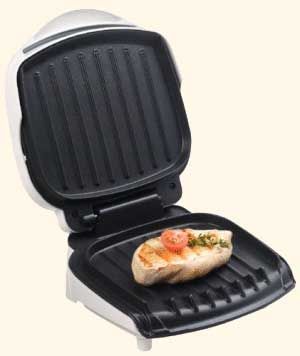
But I used it, and as a young man, I really needed it. A loaf of bread, a pack of cheese and some ham slices and I had an instant toasted sandwich. It was one of those under-appreciated things, and you later hit your self on the head and ask “how did I ever manage without this?”.
Easy to clean. Just a damp towel.
Today they come in different sizes and shapes. Great for a quick meal, and easy clean-up.
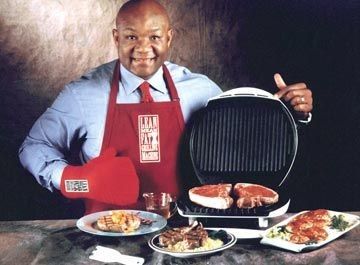
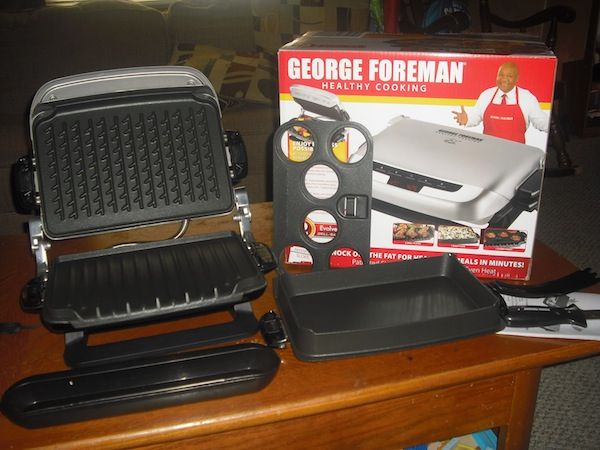
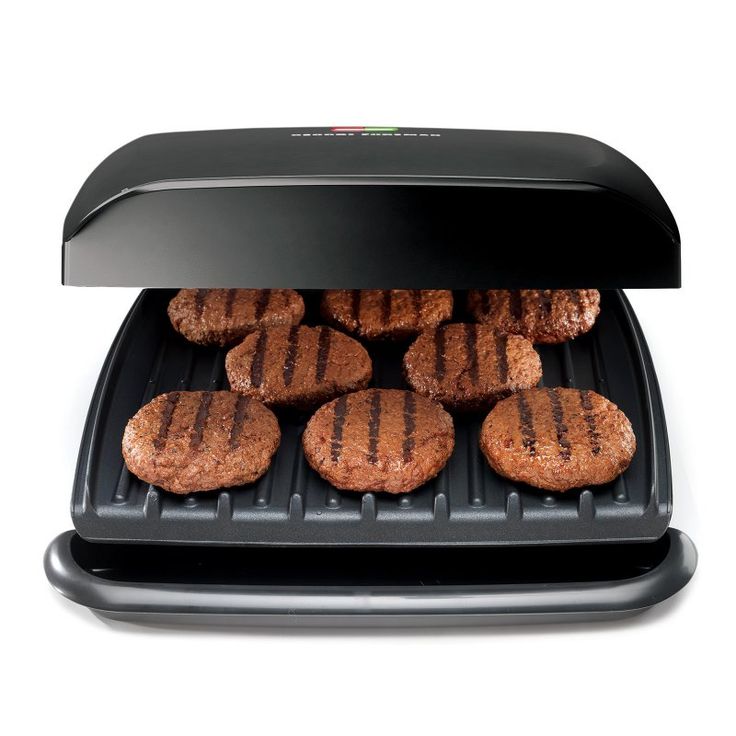
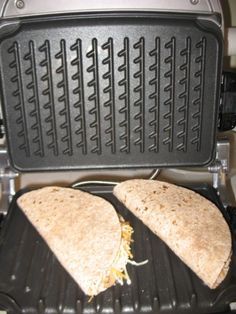
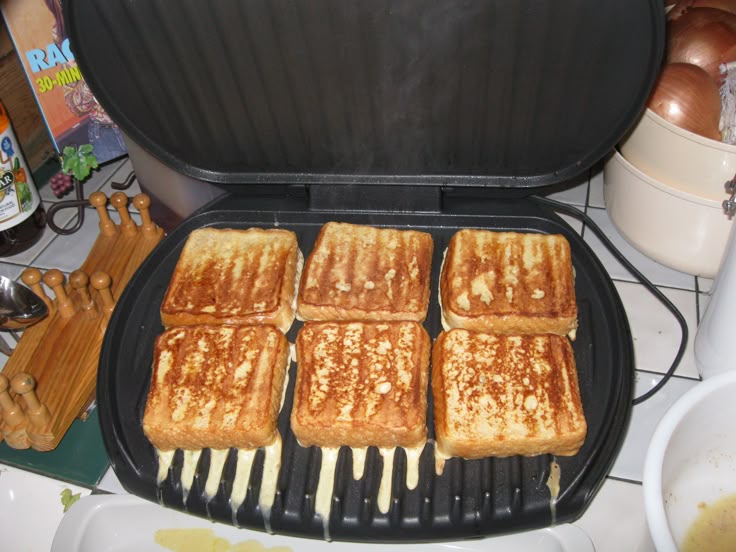
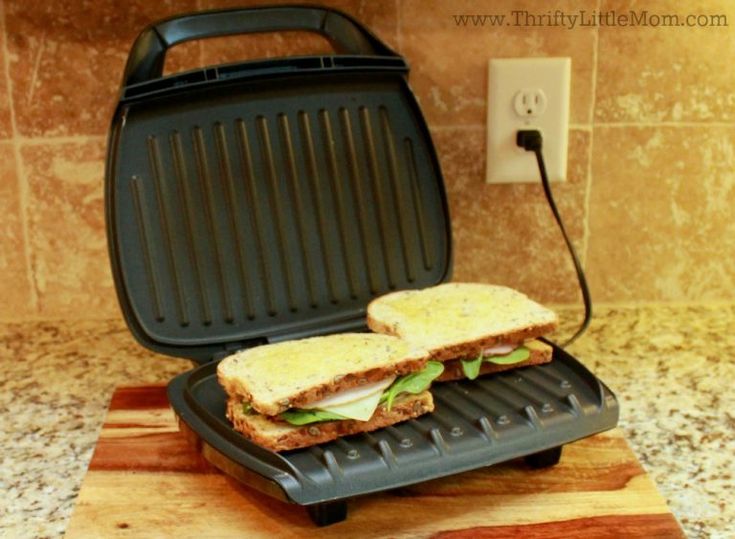
It’s one of those things, you know. Little things. But you don’t really appreciate them until you live without them.
Today…
RADIATION Background Spiraled after RUSSIA Wiped Out Mysterious Cargo along with NATO Military Train
“China has now independently mastered all the core and supporting technologies for large fast reactors after a decade of research, exploration and engineering practice, and has the world’s most complete fast reactor industry chain.”
After Beijing adopted open-source RISC as the national instruction set, Shanghai developed a RISC-V training program for 12 universities that are poised to graduate 900 RISC engineers annually.
China goes ‘back to the future’. Western companies viewed IP as a fortress: patent it, lock it in and guard it. But China’s IP system is taking a collective approach: open source, open data, shared patents, open APIs and innovation commons. It’s no longer who owns the invention but how that invention gets embedded into an ecosystem. In a country where collective systems have structured society for more than two…
What is the concept of “keep island not people” between the Republic of China (ROC) and the People’s Republic of China (PRC)? Why is this concept present in both sides’ propaganda?
The meaning of this sentence is exactly its literal meaning. It’s mainly something shouted by mainland Chinese internet users.
There’s a similar saying: “I’d rather Taiwan grow no grass than fail to take back Taiwan Island.”
It’s a way to vent anger, I suppose.
One reason is the feeling of being deceived. Growing up, we were taught, “Both sides of the strait are one family; the people of Taiwan are our compatriots.”
But then you go online and see—what family? Some Taiwanese harbor a malice toward mainlanders that’s beyond comprehension.
A big part of it is also due to paid trolls hired by Taiwanese politicians, deliberately stirring the pot. We call them “1450.” Sometimes when Taiwan has a power outage, the Chinese internet suddenly becomes much quieter.
Yes, you read that right—Taiwan’s infrastructure is that bad. Even in this day and age, they still deal with “power outages.”
Another deeper reason, I think, is that Taiwan—whether in terms of ancestry or culture—is fundamentally Chinese, mostly Han Chinese.
So seeing these Han people act so foolishly sparks intense anger: “You’re Chinese! Descendants of the Yellow Emperor! How can you be this stupid?”
The reason China places so much importance on Taiwan is primarily national security.
When Mao Zedong was in his 20s, he pointed out that the issues of Taiwan and Korea are two sides of the same coin. (三韩不守,赢台为墟).
In 1950, Mao discussed China’s security concerns, saying, “(If we show weakness), the American imperialists will press their advantage, following the old path of Japanese aggression against China, perhaps even more viciously. They want to stick three daggers into us: one in our head from Korea, one in our waist from Taiwan, and one in our feet from Vietnam. If the world changes, they’ll attack us from all three directions, and we’ll be on the defensive.”
That’s why we fought the U.S. in Korea, spent enormous effort in the 1960s supporting Vietnam to drive out the Americans, and in 1979 fought Vietnam again when it was backed by the Soviet Union. The logic is the same: these two places—Korea and Vietnam—are critical to China’s survival, areas of existential concern.
Taiwan has always been Chinese territory. Apart from a brief Dutch invasion and 50 years of Japanese occupation, it has been under the control of the central government (even during Zheng Chenggong’s time, he was an official of the Ming Dynasty).
That said, while Taiwan’s politicians are foolish, they’re still a million times smarter than Zelensky.
Even so, Mao seemed quite confident about Taiwan’s future.
In his later years, he complained, “There are always a few people nagging in my ear—nothing more than that little island we haven’t taken back yet.”
When Nixon visited China to establish diplomatic ties, his first sentence was about Taiwan. Mao cut him off, saying, “Taiwan is small, the world is big. Let’s not talk about Taiwan—let’s talk philosophy instead.”
In reality, Taiwan’s strategic importance has significantly diminished.
China has already broken through the second island chain, extending its influence near Australia. As the Chinese navy continues to grow, Taiwan’s significance will keep declining.
Here’s my conspiracy theory: not taking back Taiwan has at least two major benefits.
First, it unites the national will. The Communist Party and Chinese nationalists naturally overlap heavily on the political spectrum. The Taiwan issue rallies the vast majority of citizens, driven by simple patriotic fervor, to support the Party even more.
China’s military spending is 1.7% of GDP—a figure countless people criticize, calling them spineless. Most want it raised to 5% or even 10%, which might be unprecedented globally.
Second, the Taiwan issue provides cover for rapidly expanding military power. Frankly, it’s to avoid scaring you all. With China’s current industrial capacity, we could quickly build a navy three or five times the size of America’s—this is real.
Even at the current pace—derided by the whole nation as sluggish—shipbuilding has already made many countries uneasy, fueling the “China threat” narrative. “China, what are you up to?”
China can just shrug innocently and say, “Just preparing to take back Taiwan, that’s all.”
In the end, will the two sides really come to blows?
I don’t think so. War is just a last resort.
If China focuses on its own development, the Taiwan issue will resolve itself naturally, like ripe fruit falling from the tree.
When we have 20 carrier battle groups and tens of thousands of cutting-edge fighter jets, I think the Taiwan question will sort itself out effortlessly.
Fusion
Submitted into Contest #279 in response to: Center your story around a person who believes they’re the last human on Earth.… view prompt
Carol Stewart
His fellow humans hadn’t believed him when he’d told them the end was nigh. When he’d tried to explain what would happen and when. Such simple, doubting fools! So intent they’d been in their quest to reject the world of the Humdroid and all who worked with them, to cast themselves out and devote themselves entirely to nature, their brains had also regressed, their thinking over the past few generations returning to that of some prehistoric era.
Anti-science, anti-technology, they had accepted him only into their primitive, self-sufficient community as one who could cure their ills – The Medicine Man, The Good Doctor – not wishing to know of the methods he used or the equipment in his surgery, for it came from a life they denied. Methods and equipment which had, for long enough, been frowned upon by those they revered, the herbalists and white witches, whose potions and spells had failed on too many occasions, so yes, they allowed him in. No threat, no fear, from his off-grid pocket computer, his experiments and formulae, and what the eye didn’t see…
The hypocrisy was astounding, the irony too when it came to the herbalists who attended his surgery and willingly swallowed his pills, but knowing these people as well as Novak now did, both of these concepts were doubtlessly as alien to them as his futile attempts at hypothesis.
‘It’s like this,’ he said. ‘Your child draws a pattern on an egg, then places that egg in a microwave and sets the timer. It starts to cook, what happens then…?’
‘But that’s absurd,’ they would tell him. ‘Our children know better than to decorate eggs which haven’t been boiled or blown. And who amongst us owns such an electric monstrosity? You do know we only cook with fire?’
‘But say they did, and say you did? The egg would blow apart, would it not? The shell would be shattered, the pattern with it, and yet on those tiny fragments there might just remain something wonderful that your child has created, something worth saving. And that, my friends, shall be the fate of The Earth and all its surrounding planets. The second Big Bang is coming and coming soon. We must work on our designs, our means of salvation and protection.’
‘No, impossible!’ they’d cry. ‘The Good Doctor does have some crazy ideas. Children drawing on eggs, as if this could protect the world!’
Too late now, he thought. Too late to convince them. As fate would have it, the value of his discovery had been for Novak Ramovich alone. The infusion of the various chemical and natural compounds into the foundations of his dwelling which had seeped up the walls and over the roof to grow like titanium ivy, but at far greater speed, and with vines a million times stronger, had indeed proven their worth, just as all his years of study and experimentation had proven him right.
So here he was, the last human presence on Earth, or rather on what remained of it; his ivy-covered tower with its ever-decreasing circular rooms and the small patch of land surrounding it on which the vines had also taken root… ‘Ah!’ he cried into the flame. ‘If only the people had listened.’
His tower was well-equipped. He’d long-ensured he had the necessities; a water-storage system, filtration, air purification, and specially adapted soil in which to grow crops – the entire outer circle beyond the front door had been layered and shelved and reserved for this purpose as well as the storage of food.
He had what the people would have considered luxuries too – basic home comforts really – and had anyone seen fit to join him, he would have had room for three or four more at a push. In fact the whole community, if they’d had the sense, could have grown the ivy on their dwellings and survived. But alas it was not to be, and whilst he deplored them for their stupidity, he still couldn’t help but mourn their loss.
‘Grow ivy over our windows? Imprison ourselves as it barricades our doors? Is that what you’re suggesting? Seems to us you need to go sort your head out, Good Doctor. You’re getting madder by the minute. Or maybe we were wrong to trust you in the first place. Are you sure you’re not a Humdroid in disguise or one of their sympathizer spies?’
The people had met as one that day, and as one they’d decided to stop seeking treatment unless absolutely necessary, but still he’d held out hope.
The candle burned and flickered as Ivan thought of all that had happened since then. His last-ditch attempt to save the few human beings he knew could be saved. It was a doctor’s duty, after all, and with his skills and knowledge so much greater than those of a mere physician, or even a specialist surgeon, it was essential he try.
He’d delivered the compound himself, urged the families to use it. Even lied that after a time the vines would bear fruit, so where was the harm in letting it grow and climb? Rather some protection than none, he mused, and if the second Big Bang came with a warning, this might just give the community time to extend the growth sufficiently, and providing it covered the land between their homes, there was also the very real possibility that when the Earth shattered around them, and depending on the atmosphere, and where in the stratosphere they landed, life might even continue outside. Human life, pure and simple, no Humdroids, no bots, nothing artificial. The chance to start over, cleanly and naturally, wasn’t this what their hearts desired?
Oh, he put the arguments forth, both articulately and with relish, and one or two did hear him out because of it, but then the Herbalists got involved and inspected the vines on his tower, condemning the plant as nothing they’d seen before, too fast growing to be organic, too metallic a feel to its leaves and stems, and therefore worse than any invasive species, one which must have been developed, not in the doctor’s internal ‘greenhouse’ as he’d claimed, but in those dreaded Humdroid laboratories. A dangerous plant, they said. Most likely highly toxic. He’d lost the battle then and he knew it. But there was so much worse to come.
He got up from the chair and stretched as the candleflame cast eerie shadows on his nakedness. No reason at all for him to be sat like this other than his symbolic rebirth… We are born alone, we live alone, we die alone… Did Orson Welles not then think it fit that Man should approach the various stages unclothed? Still, the moment had passed, so what good would it do him now to wonder, let alone act as a neonate?
He crossed the room and opened the door which led to his private chambers. Ensuite, he thought mockingly as he threw on his black flaxen robe, for the toilet was a composter, and the washing facilities buckets. It was cold and dark here too; no sense in wasting candles or power reserves sourced as conscientiously as they had been from the wind and sun over the years, but it would be different in the next room, for this contained his laboratory – more important now than ever – so in here light and heat were essential.
He flicked the switch. And, thank goodness, all was as it should be. The white-walled semi-circle with its sterilized units and benches and their array of microscopes, test-tubes and jars, remained unaffected, as did what lay underneath; the great glass panel, inside of which the seeds of the new world were contained, all dormant at present, unpaired and unfertilized, bar one.
His patients who, for the most part, he’d attended on the opposite side of this particular section of the tower, rarely made it here, but there had been times – and those times, for all he’d known the risk, had proven vital. All had been unconscious when he’d wheeled them in, and all but one had remained that way as he’d harvested their eggs and sperm. A purely precautionary measure, he’d told himself the first time, for as yet he’d been unsure of the second big bang, but the more convinced he’d become of it happening, and the less likely it seemed that the people would agree to growing the ivy and saving themselves, the more desperate his need to continue this practice and so he’d stepped it up. Old world ethics be damned! Was it not more ethical in this situation to at least attempt to preserve and regrow the human race? And now – Ivan gazed through the panel to where the single embryo was forming – his own child would be the first. The loneliness he’d been destined to feel in the coming weeks and months at least wouldn’t last forever.
The people, for all they’d never discovered his secret, had at the end been aware of something. And he felt bad that they’d reacted as they had when all he’d ever wanted was to keep them from harm. The day before the Big Bang – was it only yesterday? – they’d arrived as a mob at his tower, pitchforks raised.
‘Call yourself a doctor, a healer? You’re evil.’
The ivy had all but covered his door by then, just enough of a gap remained for him to squeeze through.
‘Please,’ he’d implored them. ‘The herbalists have it wrong. These vines are designed to protect. Please go back to your homes and utilize the compound while you still have time. This is your only chance to save yourselves from destruction.’
‘You’re talking rot, Doc. And you’re rottener and more heinous and twisted than your ugly vines… Tell the people what you told me, boy.’
The man at the front of baying mob pushed the youth in question before him. He stood with his head bowed, cap in hand, ringing it as if it were sodden, too nervous and ashamed to show his face, but Novak knew exactly who he was. The only one of his patients who had woken prematurely during the harvesting procedure and who, up until this point, hadn’t said a word about this or anything else. Novak had been worried by his muteness at first, but had then assumed the lad had accepted his explanation that this was all quite normal when treating a hiatus hernia, and it wasn’t as if he’d ever spoken much before.
‘Well, if you’re not going to open your mouth, lad, I’ll do it for you,’ the man roared out and pointed an accusatory finger. ‘This man here, who we have allowed into our community and placed in a trusted position, is nothing more than a dirty abuser. A pervert, a deviant. What do you say we teach him a lesson he won’t forget?’
And so the charge began, a charge of which Novak remembered surprisingly little, although he must have been bludgeoned by something. He’d felt his head throb so badly he’d been near-convinced his skull had been cracked in two as he retreated into the tower, to seal himself in behind the vines from which he never again emerged. He further recalled disrobing and sinking into his chair, but nothing more until the shattering of the universe. Such a ghastly confusion, he thought, but then he considered the word ‘confusion’ and smiled.
***
‘So, what do you make of him, then, our latest subject?’ Bald Doctor Hubert Greenberg of the Humdroid Institute asked of his colleague with the holographic hair as their eyes lit up reflecting one another’s blue fibre optics.
‘An interesting mind, that’s for sure,’ Doctor Flora Gilbert replied with a scintillating femme-fatale-like swish as she nodded towards the wired-up brain in the box which belonged to the still of the man on the overhead screen. ‘Considers himself a genius, and perhaps he is. The fused ivy compound is certainly worth exploring, but since we’ve extracted the formula already, we can surely utilise this without the need for further input. As for the growing of human embryos, well that’s pretty old hat to say the least.’
‘Yes, from what I could gather, he sees himself as a bit of a guru, the saviour of the human race, but selfish too, not completely au fait with technological advancement, unless of course it benefits him and his kind in a way that suits him. Too dangerous a mind to keep hold of, do you think?
‘Hmm, perhaps, but none of the other brains we’ve extracted have coped so well in the given scenario. All have shown signs of weakness and heightened emotion during the simulation, extreme in most cases when it came to the actual destruction of the planets. This one’s practical resourcefulness and ability to rise above such debilitating sentiment whilst controlling his fear would be most advantageous… Is the prototype body ready?’
‘It is, but I’m not sure we should risk attaching at present.’
‘Or at all?’ Doctor Gilbert inclined her silicone head as Doctor Greenberg pondered.
‘Yes, yes, you’re right, of course. Best take no chances. More to lose than to gain. And besides, no matter the subject’s stance on our technology, who’d want the mind of one so intent on playing god at the heart of our new master race?’
How to Make Really Easy, Really
Scrumptious German Pancakes

Kitchen tools, gourmet foods, baking mixes, and hard-to-find baking ingredients mentioned in this article are available at The Prepared Pantry.
by Dennis Weaver
Last weekend, Debbie had visitors in from Minnesota. For breakfast she made huckleberry German pancakes. They were awed. They claimed that there was nothing that scrumptious in Minnesota. Subtract a few points because of gracious guests and it was still very good; I’ve had her huckleberry German pancakes. But she makes them so often, not just because they are very good but because they are easy.
My “go-to” breakfast for guests is pannekoeken, not German pancakes, because they too are easy and scrumptious. They’re both very good—just different. So what is the difference between pannekoeken and German pancakes?
Pannekoeken forms a big, tall bowl while German pancakes roll and buckle. (I can describe the difference better with my hands.)
With a pannekoeken, the fruit goes into the formed bowl after it’s baked. With a German pancake, the fruit goes in before it’s baked.
A pannekoeken is baked in a specialty pan, a pannekoeken pan, or a rounded skillet with a nonstick surface. A German pancake is often baked in a rectangular pan.
A pannekoeken is often loaded with a savory filling or with meat and potatoes. We don’t have a single German pancake recipe that does not include fruit.
How Do you Make a German Pancake
There are a ton of recipes for German pancake batter; Debbie uses a mix. It just makes it very quick and easy. Surprisingly, it’s a pannekoeken mix. It’s the preparation method and the pan that makes the difference, not the batter. Even the ratio of milk, eggs, and mix is the same.
1. Select a pan of an appropriate size. A three-egg German pancake works well in an 8-inch square pan or 9-inch round pan. You can double the recipe and use a 9 x 13-inch pan. A four egg German pancake works best in 9-inch square pan.
2. Heat the pan. Like with a pannekoeken, you preheat the pan with butter in it. Be careful not to scorch the butter.
3. Mix the batter. Mix the batter while the pan is heating. If you use a mix, it’s only mix, milk, and eggs whisked together so it only takes a few moments.
4. Make the German pancake. First, mix the brown sugar with the melted butter. Then pour the batter over the brown sugar. Then distribute the fruit over the batter.
5. Bake the German Pancake. Use a hot oven, usually 425 degrees. It will take 12 to 24 minutes to bake depending on the pan size and the batch size. It’s done when the pancake is puffed and the edges are brown.
6. Serve your German pancake right out of the oven—they are not good cold—with your favorite syrup.
Huckleberry (or Blueberry) German Pancake
This is Debbie’s “go-to” German pancake recipe. But then, she has huckleberries. In August, she and her husband Ben take their two little girls and ride horses up into the canyons in the Big Hole Mountains where they find huge huckleberry patches. Even where they are profuse, they are slow picking but she claims they are worth it. She freezes them for the winter simply by washing them and sealing them in airtight containers.
For the rest of us, not fortunate enough to live in the foothills of the Big Hole Mountains, we’ll make do just fine with blueberries.
This is a three-egg German pancake that fits in an 8 x 8-inch pan or a 9-inch round pan or can be doubled to fit in a 9 x 13-inch baking pan.
Ingredients
- 1/4 cup butter
- 3/4 cup pannekoeken mix
- 3/4 cup milk
- 3 large eggs
- 1/2 cup brown sugar
- 1 cup huckleberries or blueberries
Instructions
- Heat the oven to 425 degrees F.
- Cut butter into smaller pieces and place in the pan and pan in the oven. Let the pan heat until the butter is melted and bubbly but not scorched, about three or four minutes.
- While the pan is heating mix the batter by whisking the mix, milk, and eggs together. A few lumps may remain but it should be smoother than pancake batter. The batter will be thin.
- Take the hot pan from the oven and sprinkle the brown sugar evenly over the bottom.
- Pour the batter over the brown sugar. Distribute the berries over the batter.
- Return the pan to the oven and bake for 12 to 16 minutes. It’s done when the pancake is puffed and the edges are brown.
- Serve your German pancake right out of the oven with maple syrup or blueberry syrup.
German Apple Pancake
A German apple pancake is a classic.

We’ve made pannekoeken by sautéing apple slices in cinnamon, brown sugar, and butter and loading it into the pannekoeken when it comes from the oven. This German pancake is similar but the apple slices are oven sautéed in the butter and brown sugar as the pan heats in the oven and once tender-crisp, the batter is poured over the top.
This is a four-egg German pancake that fits in a 9 x 9-inch pan.
Ingredients
- 1/3 cup butter
- 2/3 cup brown sugar
- 1 cup sliced, tart cooking apples (about 2 small apples)
- 1/2 teaspoon cinnamon
- 1 cup pannekoeken mix
- 1 cup milk
- 4 large eggs
Instructions
- Heat the oven to 425 degrees F.
- Cut butter into smaller pieces and place in the pan and pan in the oven. As soon as the butter melts, sprinkle the brown sugar and cinnamon over the bottom of the pan. Add the apples and place the pan back in the oven to cook until the apples are crisp-tender. The apples should be cooked sufficiently in ten to fifteen minutes. Stir the apples twice while they are cooking so that they do not burn.
- While the apples are cooking, mix the batter by whisking the mix, milk, and eggs together. A few lumps may remain but it should be smoother than pancake batter. The batter will be thin.
- Take the hot pan from the oven and pour the batter over the brown sugar and apples.
- Return the pan to the oven and bake for 12 to 16 minutes. It’s done when the pancake is puffed and the edges are brown.
- Serve your German pancake right out of the oven with maple syrup, cinnamon cream syrup, or cinnamon apple passion syrup.
Peach German Pancake

I love fresh peaches and if the peaches are good, this is my favorite German pancake. I particularly like it topped with caramel whipped cream. Then it’s more of dessert than a breakfast treat.
To make the caramel whipped cream, simply substitute brown sugar for granulated sugar when you make whipped cream and use caramel flavor instead of vanilla.
This is a three-egg German pancake that fits in an 8 x 8-inch pan or a 9-inch round pan.
Ingredients
- 1/4 cup butter
- 3/4 cup pannekoeken mix
- 3/4 cup milk
- 3 large eggs
- 1/2 cup brown sugar
- 1 cup sliced peaches
Instructions
- Heat the oven to 425 degrees F.
- Cut butter into smaller pieces and place in the pan and pan in the oven. Let the pan heat until the better is melted and bubbly but not scorched, about three or four minutes.
- While the pan is heating mix the batter by whisking the mix, milk, and eggs together. A few lumps may remain but it should be smoother than pancake batter. The batter will be thin.
- Take the hot pan from the oven and evenly sprinkle the brown sugar over the bottom of the pan.
- Pour the batter over the brown sugar. Distribute the peaches over the batter.
- Return the pan to the oven and bake for 12 to 16 minutes. It’s done when the pancake is puffed and the edges are brown.
- Serve your German pancake right out of the oven with maple syrup, vanilla cream syrup, or peach syrup.
Banana German Pancake

I never would have thought to have added bananas to a German pancake. But then, we add bananas to pannekoeken all the time. (A pannekoeken with sliced bananas, cinnamon cream syrup, and whipped cream rivals a banana cream pie.)
Debbie and Sara in our test kitchen created this recipe. It’s very good—sort of like banana pie for breakfast.
This is a three-egg German pancakes that fits in an 8 x 8-inch pan or a 9-inch round pan.
Ingredients
- 1/4 cup butter
- 3/4 cup pannekoeken mix
- 3/4 cup milk
- 3 large eggs
- 1/2 teaspoon cinnamon
- 1/2 cup brown sugar
- 1 medium bananas, sliced
Instructions
- Heat the oven to 425 degrees F.
- Cut butter into smaller pieces and place in the pan and pan in the oven. Let the pan heat until the better is melted and bubbly but not scorched, about three or four minutes.
- While the pan is heating mix the batter by whisking the mix, milk, eggs, and cinnamon together. A few lumps may remain but it should be smoother than pancake batter. The batter will be thin.
- Mix brown sugar and cinnamon together. Take the hot pan from the oven and sprinkle the brown sugar mixture evenly over the pan.
- Pour the batter over the brown sugar. Distribute the sliced bananas over the batter.
- Return the pan to the oven and bake for 12 to 16 minutes. It’s done when the pancake is puffed and the edges are brown.
- Serve your German pancake right out of the oven with maple syrup or cinnamon cream syrup.
Dennis Weaver is the founder of The Prepared Pantry, a full line kitchen store in Rigby, Idaho. The Prepared Pantry sells kitchen tools, gourmet foods, and baking ingredients including hundreds of hard-to-find ingredients.
“I Retired at 67 and REGRET IT EVERYDAY!”
What did your boss do or say to you that made you quit your job?
“I need to cut the salary of your PA because we’re under budget pressure. She’s too highly-paid for what she does anyways” [note: she was assisting my entire sales team].
These were the words of my boss who ambushed me when I walked into the office one morning.
“Um…ok?” I was preparing for a business trip and was a bit distracted.
That was stupid of me on two levels.
First, my PA did good work. She was well-paid because of historical reasons: she had previously worked for the Asia Pacific CEO and I inherited her when the CEO left. I should’ve had her back.
Second, after I left for my work trip, my boss went to my PA and said, “David says we should cut your salary.” Yeah, no wonder when I got back to the office, my PA looked at me like I was cow turds.
I was on the road 80% of the time. My team had exceeded our targets by 3X. And here my boss was using my absence to not only play games but throw me under the bus with my team.
There’s a lot I might’ve done differently; I could’ve pushed back on a salary cut. At the least, I should’ve broken the news to my PA.
But at the end of the day, it was a pretty shady thing for my boss to do. I put in my notice to her pretty soon after — along with a scathing email to HR.
What’s worse than you thought it would be?
For my New Years’ resolution this year, I swore off drinking. It wasn’t a completely solid resolution, because I made that resolution while I was drunk. It was New Years, after all.
But since then, I’ve been doing really well.
me and my friend made a ‘toast’ with sauce bottles at a bar
The only time I’ve drank since New Years’ was earlier this week, when a dinner companion of mine insisted that I have red wine with my steak. One bottle turned into three, and when I woke up the next morning, my resolve to quit drinking was even stronger.
I’m now at a point where I consistently refuse alcohol when offered, and I’m genuinely starting to detest the stuff.
But being the only sober person at a dinner or a social gathering isn’t always fun. They tend to want to stay put, stay at the table for two hours longer than you, and they never ask if you want another diet coke as they order themselves more alcohol.
Seeing my friends get drunker and drunker, I realised how I’ve looked to sober people so many times in the past. They were too loud, they were saying silly things, and they were too boisterous, ranting at me while I just sat there silently or said a few sentences.
I ended up chainsmoking half my pack and playing tetris on my phone just to keep my nerves at bay. It was such a shit experience, because I felt like I was on a different plane of existence to them.
But I never drank that night, no matter how bored I got. And believe me, they offered, many times.
I hope I can stay strong enough to not drink in social situations in the future. Because wow it’s hard.
Wish me luck.
Shorpy














Quantum Breakthrough Reveals Clearest Image Of Proxima B Captured by Webb Telescope!
The Russian are planning on upgrading the SU-35 for 2025. They will most likely replace current radar with Byelka from SU-57. Will the Irbis-E be replaced in the whole fleet? Or is it worth keeping Irbis in the older fighters?
The SU-35 is an amazing fighter that has proven that Russian engineering is one of the best in the world. However after 11 years in service the Russian it would seem have decided to upgrade the fighter. The most likely upgrades are to the avionics and EW system. It is believed the SU-35 will share the Byelka radar and L402 Himalayas from the SU-57. This will bring advantages and disadvantages for the SU-35. While many think that the Irbis radar is a huge flaw many do not understand the actual capabilities of the radar and why it is unlikely the SU-35’s already built will not be retro fitted with new AESA radar.
The Irbis which is differentiated from the export version by the lack of the E after the name of radar i.e (Irbis -E). This a radar that more than capable against even against AESA radars, here is why.
The Su-35’s Irbis Radar is a Hybrid PESA-AESA with two powerful TWT’s and TRE Agility
The N035 Irbis radar on Russia’s Su-35S combines a passive electronically scanned array (PESA) foundation with innovative hybrid-heterodyne waveguide technology, combining the raw power of traveling-wave tubes (TWTs) and the agility of 1,800 transmit/receive elements (TREs). This unique design merges the strengths of PESA and AESA systems, creating a radar that excels in both long-range detection and adaptive beamforming.
1. Dual Traveling-Wave Tubes (TWTs): Powerhouse Amplification
What Are TWTs?
Traveling-wave tubes are vacuum-electron devices that amplify microwave signals to extremely high power levels. The Irbis uses two TWTs, each generating **10+ kW of peak power**, to drive its radar emissions. This gives the system exceptional energy output, critical for long-range detection and electronic warfare resilience.
How does this work in the Irbis, the TWTs act as the radar’s “muscle,” providing the high-power signals needed to:
– Detect large targets (e.g., bombers, tankers) at 400+ km.
– Burn through enemy jamming by overpowering electronic countermeasures (ECM).
– Sustain signal clarity in cluttered environments (e.g., ground-mapping modes).
2. 1,800 Transmit/Receive Elements (TREs): AESA-Like Agility
What Are TREs?
They are Transmit/receive elements are modular units in AESA radars, each containing a miniature transmitter, receiver, and phase shifter. The Irbis’s hybrid system embeds1,800 TREs into a slotted waveguide antenna array, blending PESA’s high power with AESA’s distributed flexibility.
How it works for the Irbis in the Irbis?
-Beam Steering the TREs enable rapid electronic beam steering (±120° azimuth) by adjusting phase shifts at the element level, imitating the AESA agility while retaining PESA’s power.
– Signal flexibility TRE’s allow partitioning of the array, letting the radar perform multiple functions simultaneously (e.g., tracking 30 targets while mapping terrain).
– The Irbis radar much like AESA creates redundancy. If individual TREs fail, the system reroutes signals through adjacent elements, enhancing reliability.
3. The Hybrid-Heterodyne Waveguide System.
The Irbis’s waveguide system is a slotted planar array that brings together analog and digital signal processing. The radar’s antenna consists of a series of slots etched into a metal plate, forming a leaky waveguide. This design efficiently distributes the high-power TWT signals across the antenna surface while minimizing losses. Heterodyne Processing, the system uses frequency conversion (heterodyning) to shift signals between microwave and intermediate frequencies .
This allows for:
– Precise filtering and amplification of weak return signals.
– Seamless integration of the TREs’ digital beamforming with the TWTs’ analog power.
4. Slotted Reflector Antenna
The Irbis’s slotted waveguide antenna serves dual purposes:
-Emission Control- Slots act as radiators, shaping the radar beam into a narrow, high-gain pencil shape for long-range targeting.
-Low Sidelobes the slotted design reduces unwanted radiation (sidelobes) to -50 dB, making the radar harder to detect and jam.
5. Why This Hybrid System Outperforms Conventional Designs
-Power + Agility- The TWTs provide brute-force power for burning through jamming, while the TREs enable AESA-like beam agility and multitasking.
-Cost Efficiency using more cost effective slotted TREs and centralized TWTs reduces production costs compared to full AESA systems.
– Counter-Stealth Capability-The TWTs’ high power and the TREs’ LPI (low probability of intercept) modes allow the radar to detect stealth aircraft at practical engagement ranges (~90 km).
How does Irbis compare to the Pure AESA Radars
Irbis Hybrid PESA-AESA | Conventional AESA (e.g., APG-82) |
| Power Output | Irbis-20 kW (TWT-driven) | AESA-15 kW (distributed TREs) |
| Beam Steering Speed |Irbis ±120° azimuth (TRE-assisted) | AESA-Full hemispheric agility |
| Counter-Jamming | Irbis-Superior (TWT burn-through) | AESA-Moderate (relies on LPI modes) |
| Cost | Irbis-Lower (centralized TWTs + fewer TREs)|AESA- High (thousands of TREs) |
| Reliability | Irbis High (TWT redundancy) | AESA Very high (distributed TREs) |
So what is the conclusion on Irbis radar is it a masterclass in asymmetrical engineering?
What the Irbis radar demonstrates is Russia’s pragmatic approach to sensor design. By fusing TWTs for raw power, TREs for agility, and a slotted waveguide antenna for efficiency, the Su-35’s radar challenges the notion that AESA is the sole path to superiority. In scenarios demanding long-range detection, electronic warfare resilience, and cost-effective mass production, the Irbis’s hybrid-heterodyne system proves that innovation often lies at the intersection of old and new technologies.
One of the biggest misunderstandings is the different doctrinal differences between Russia and the West. The doctrinal differences between Russian and Western air forces are rooted in distinct strategic philosophies and historical contexts. Russian air power, inherited from Soviet combined arms doctrine, which emphasizes integration with ground forces to support large-scale theater operations, prioritizing close air support, interdiction, and tactical bombing to enable armored offensives, as seen in platforms like the Su-34. This approach is complemented by a heavily layered air defense systems (e.g., S-400, Pantsir) designed to deny enemy air superiority and protect territorial integrity. By contrast, Western doctrines, particularly NATO’s, focus on achieving air dominance early through stealth (F-35, F-22), precision strikes, and Suppression of Enemy Air Defenses (SEAD) missions, enabling subsequent freedom of action for strategic bombing, power projection, and expeditionary operations. Network-centric warfare underpins Western tactics, leveraging real-time data fusion (AWACS, satellites) for decentralized, agile decision-making, while Russian forces rely on centralized command and electronic warfare (EW) for disruption and standoff engagements (e.g., Kinzhal missiles). Russia’s doctrine is defensive-regional, prioritizing homeland protection and buffer zones, whereas Western air forces emphasize global reach, rapid deployment, and high-intensity readiness, reflected in superior pilot training hours and advanced C4ISR integration. These contrasts highlight a Russian reliance on mass, cost-effective systems, and layered defenses versus Western technological supremacy and multi-domain interoperability.
In the end the Irbis is not a “stealth killer” or an AESA clone it is a purpose-built tool for Russia’s air dominance doctrine, where power, range, and autonomy could possibly trump the West’s networked, stealth-centric paradigms.
To answer the question, I think that there is no immediate need to replace the Irbis radar. If they do indeed replace the Irbis with an AESA then the most important thing will be making sure the ability to pass information back and forth between the 2 avionic systems will be the most important thing.
Which countries have a friendly relationship with China after the United States left its position as a global superpower?
If there really comes a day when China becomes the number one power on this planet.
What does it mean to be the number one power?
This nation, which has endured a century of humiliation and massacre, rising again from a pool of blood, suffers from an extreme lack of security.
The consensus among Chinese netizens is: 50%+.
Meaning any key metric—be it military strength, industrial capacity, or the number of patents filed annually—surpasses the combined total of all other countries.
Some of these metrics have already been partially achieved.
For example, annual steel production is there, though industrial capacity still has a way to go. Optimistically, it could be realized by 2035.
The next target would likely be electricity generation.
Sixth-generation fighter jets have already been achieved, as China is currently the only country with sixth-generation fighters.
In short, let’s assume the above goals are met—meaning, as you put it, China becomes the top superpower.
So, which countries would have good relations with China then?
North Korea and South Korea.
Of course, by that time, I believe North and South Korea would have achieved unification, national independence, and expelled U.S. troops.
Historically, the Korean Peninsula has maintained good relations with China—at least for the past 1,500 years.
North Korea is a tricky matter.
Do you know who least wants the North Korean regime to collapse?
The United States.
The U.S. has consistently been North Korea’s largest provider of food aid.
This isn’t because the U.S. is kind-hearted, but because it fears North Korea’s complete collapse.
If the North Korean regime falls, first, the U.S. would lose its pretext for controlling its South Korean “province.”
Second, North Korea would have no choice but to fully align with China—something the U.S. doesn’t want to see.
In reality, the interests of the North Korean people conflict with those of the tiny ruling elite represented by the Kim family.
If North Korea were willing to fully cooperate with China, given China’s size and industrial capacity, supporting such a small country with just over 20 million people would be a breeze.
But here’s the catch:
First, the Kim family and the small elite they represent might lose power or even face a reckoning.
Second, and more importantly, China and the U.S. would lose their buffer zone, and their spheres of influence would directly clash again along the 38th parallel.
I admit, saying this carries a hint of great-power chauvinism, but forgive me—it’s quite likely the reality.
The second country I’d guess would have good relations with China is Vietnam.
Historically, China directly ruled Vietnam for over 1,000 years.
You might find it odd: why is China so fixated on Taiwan yet so lenient with Vietnam, never bringing up phrases like “since ancient times” or “reclaiming lost territory”?
There are, of course, many reasons, but I think one critical factor is the difference in writing systems.
Vietnam and Korea (both North and South) are, apart from China, the countries that understand China best.
In fact, they’ve both historically referred to themselves as “Little China.”
To maintain their independence, they changed their scripts, abandoning Chinese characters and inventing new writing systems.
That’s the trait of nations that know China too well.
A territory that no longer uses Chinese characters yet remains deeply influenced by Chinese culture would be unimaginably costly to govern.
The last time something like this happened was over 2,000 years ago, when the Qin Dynasty conquered the Six Kingdoms.
Back then, the scripts weren’t entirely uniform, but the differences were minor—not even as stark as between German and French. The grammar was the same; only the characters varied.
Another region is Outer Mongolia.
Many people misunderstand the mindset of big powers like China and Russia. It’s about security, not just resources.
Stalin once told Chiang Kai-shek’s son: “Outer Mongolia must be independent; there’s no room for negotiation. I know you Chinese better than anyone. Once you unify, you’ll develop faster than any other nation.” His point was that Outer Mongolia had to serve as a buffer between China and Russia.
To ensure this, he executed 10% of Outer Mongolia’s population, guaranteeing a 100% vote for independence.
Stalin was truly ruthless.
But relatively speaking, his actions gave both sides a bit more peace of mind during the later Sino-Soviet confrontation.
With Outer Mongolia as a buffer, China, facing a potential Soviet tank assault, gained at least 96 extra hours. The young divisions deployed in Inner Mongolia could delay the Soviet offensive by another 48 hours with their lives, buying enough time for Beijing to evacuate the central leadership, artifacts, and precious books to Wuhan under the protection of its two strongest army groups, then retreat to the southwestern mountains.
(Back then, Mao established the “Third Line” defense, saying: “Without Panzhihua [the Third Line hub], I can’t sleep. With it, I can. Even if Beijing falls, China still has Panzhihua.”)
A recent piece of news caught my attention: Outer Mongolia plans to abandon the Russian Cyrillic script (imposed by Stalin) and revive the traditional Mongolian script (used by China’s Inner Mongolians, created during Genghis Khan’s era).
This is no small matter.
Mongolia is fiercely anti-China, claiming the U.S. as its “third neighbor” (being surrounded by China and Russia).
Why, then, would they choose this moment to revert to tradition?
Chinese people shouldn’t get too excited.
This news only signals “they’re preparing.”
But what will the Russians think when they see it?
Is it possible that this is just a message released by the United States?
I suggest we wait and see.
Wait until they fully abandon the Cyrillic script and return to Genghis Khan’s traditional script—the one used by China’s Mongols—before drawing conclusions.
Mongolia is a historical leftover issue.
Let’s set it aside for now and trust the wisdom of future generations to handle it.
As for the rest of the countries, they’d probably all get along well with China.
After all, why wouldn’t you want good relations with the strongest nation on the planet?
That said, I’d guess African nations might be especially close to China.
We carry no historical baggage with them. Historically, we’ve never colonized, massacred, or enslaved Africa.
Sir Whiskerton and the Grey Horde: A Tale of Cunning, Courage, and Catnip
Ah, dear reader, prepare yourself for a tale of danger, deception, and one very determined feline who proved that even the most fearsome foes can be outsmarted with a little ingenuity. Today’s story is one of invasion, innovation, and the power of teamwork. So, grab your sense of adventure and a handful of popcorn (for snacking), as we dive into Sir Whiskerton and the Grey Horde: A Tale of Cunning, Courage, and Catnip.
The Calm Before the Storm
It was a peaceful morning on the farm. The sun shone brightly, the birds chirped merrily, and Sir Whiskerton lounged on his favorite sunbeam, contemplating the mysteries of the universe—or, more accurately, the mysteries of why Rufus the Dog insisted on chasing his own tail.
“Rufus,” Sir Whiskerton said with a sigh, “if you spent half as much time thinking as you do spinning, you might actually solve a mystery or two.”
“Two!” echoed Ditto, the ever-enthusiastic kitten, who was busy practicing his echoing skills by repeating Sir Whiskerton’s every word.
But the tranquility of the morning was about to be shattered. For lurking in the shadows, beyond the farm’s borders, a sinister force was gathering. A force so fearsome, so voracious, that even Sir Whiskerton’s sharp mind would be put to the test.
The Arrival of the Grey Horde
It began with a rustling in the tall grass. Then a faint squeaking, growing louder and louder until it became a deafening cacophony. Suddenly, the farm was overrun by a sea of grey fur and sharp teeth—the Grey Horde had arrived.
Leading the charge was Ratticus, a Mongolian rat of imposing stature, with a scar running down his snout and a glint of menace in his eyes. By his side stood Beelzebub, his hulking general, whose muscles rippled with every step. Together, they commanded an army of ravenous rats, all intent on one thing: devouring everything in their path.
“Farm animals!” Ratticus bellowed, his voice dripping with malice. “Your time has come! The Grey Horde will feast on your crops, your feed, and even your precious barn! Resistance is futile!”
The animals froze in terror. Doris the Hen let out a dramatic squawk and fainted onto a pile of hay. Rufus the Dog barked bravely, but even his glowing green fur couldn’t mask his fear. And Ditto? Well, Ditto just echoed, “Futile! Futile!”
Sir Whiskerton’s Plan
As chaos erupted, Sir Whiskerton sprang into action. “This,” he declared, “is no time for panic. This is a time for cunning, for strategy, and for… catnip.”
“Catnip!” echoed Ditto, though he had no idea what it meant.
Sir Whiskerton gathered the animals in the barn. “Listen carefully,” he said. “We cannot defeat the Grey Horde with brute force. But we can outsmart them. Here’s the plan…”
The Battle of Wits
The first phase of Sir Whiskerton’s plan involved deception. Using his keen observational skills, he noticed that Ratticus and his horde were drawn to shiny objects. “They’re like magpies,” Sir Whiskerton mused. “But with worse manners.”
With the help of Ferdinand the Duck, who reluctantly donated some of his prized shiny buttons, Sir Whiskerton set up a series of traps. The buttons were placed in strategic locations, leading the Grey Horde away from the farm’s food stores and into a maze of tunnels dug by Barry the Beaver.
Meanwhile, Porkchop the Pig and Bessie the Tie-Dye Cow worked together to create a diversion. Using a combination of mud, hay, and a dash of Bessie’s “groovy” tie-dye paint, they constructed a decoy barn filled with fake food. The Grey Horde, unable to resist the lure of an easy meal, charged straight into the trap.
The Final Showdown
As the Grey Horde feasted on the decoy barn, Sir Whiskerton and his allies prepared for the final phase of the plan. Using a contraption designed by Chef Remy LeRaccoon—a giant catapult powered by Rufus’s boundless energy—they launched a barrage of catnip-filled projectiles at the unsuspecting rats.
The effect was immediate. The catnip, harmless to most animals, had a peculiar effect on the Grey Horde. They began to twitch, then dance, and finally collapse into a heap of giggling, dazed rodents.
Ratticus, realizing he had been outsmarted, let out a furious squeak. “This isn’t over, Whiskerton!” he snarled. “The Grey Horde will return!”
“Perhaps,” Sir Whiskerton replied, his green eyes glinting with satisfaction. “But next time, bring more buttons.”
With their leader defeated, the remaining rats fled into the woods, their tails between their legs. The farm was safe once more.
The Moral of the Story
As the animals celebrated their victory, Sir Whiskerton took a moment to reflect. “The moral of the story,” he said, “is that even the most fearsome challenges can be overcome with creativity, teamwork, and a little bit of catnip. And remember, dear friends, it’s not the size of the horde that matters—it’s the size of the brain.”
“Brain!” echoed Ditto, proudly.
A Happy Ending
With the Grey Horde repelled, the farm returned to its peaceful ways. Doris the Hen recovered from her fainting spell, Rufus the Dog resumed his tail-chasing, and Sir Whiskerton returned to his sunbeam, content in the knowledge that he had once again saved the day.
As for Ratticus and Beelzebub? Well, they were last seen plotting their revenge in the deep, dark forest. But for now, the farm was safe, the animals were happy, and all was right in the world.
And so, dear reader, we leave our heroes with the promise of new adventures, new challenges, and hopefully, no more Mongolian rats. Until next time, may your days be filled with laughter, love, and just a little bit of feline genius.
What is your opinion on human rights issues in China, particularly in Xinjiang and Tibet?
I found it hard to remain silent in the face of these baseless claims about forced labor connected with Xinjiang cotton.
My uncles and aunts work and live in Xinjiang, where growing cotton is their main source of income. Cotton farming is an incredibly demanding job, especially during the harvest season when they spend two to three months in the fields under the scorching sun. The mornings in autumn can be bitterly cold in Xinjiang, making the work even more challenging.
I still remember the days when my parents and I would visit and help them pick cotton in the fields. It was, without a doubt, one of the toughest jobs I have ever experienced. My parents would teach me on site the importance of studying hard so I could attend college and avoid the back-breaking farm work.
Xinjiang is renowned for producing some of the highest quality cotton in the world, thanks to the region’s long hours of sunshine. Every time my uncles and aunts visit us after the cotton season, they bring cotton they’ve grown. My mother would use it to make quilts, and I had the privilege of taking one to school. My roommates were often envious of my warm quilt.
In 2004, I came across a documentary by NHK titled “Women Picking Cotton: Three Months of China’s ‘Labor Export,'”「女たちは綿花を摘む 中国「労務輸出」の 3 ヶ月」, which detailed the lives of 500,000 to 1,000,000 people, mostly women, who flocked to Xinjiang to earn money by picking cotton. One story in particular moved me deeply. The film followed a young girl who dreamt of buying a mobile phone with her earnings. However, after three months of back-breaking work, she chose to spend the hard-earned money on something more meaningful – attending a vocational school.
This documentary was the first to have such a profound impact on me, vividly depicting the lives of hardworking people striving for a better future. It resonated deeply with me, as it mirrored the experiences of my parents, aunts, and uncles. I have been a fan of NHK ever since.
While writing this answer, I searched for the documentary but could only find scattered remnants of it. This leads me to suspect that someone may be deliberately erasing its presence from the internet.
Nowadays, my uncles and aunts use agricultural machinery to plant and harvest cotton. The tractors they use have self-driving capabilities with the help of GNSS technology, allowing for sub-inch planting accuracy. This approach enables a more efficient work of harvester, resulting in higher output and fewer leftovers.
My uncle mentioned that around 90% of the cotton picking is now done by machinery, while the remaning 10%, mostly due to the rugged nature of the field etc, are done by themselves.
Unlike in the past, when they had to rely on expensive imported harvesters, they can now afford to buy and rent Chinese-brand cotton harvesters, thanks to government subsidies.
When I first encountered the claim of forced cotton labor in Xinjiang raised by Uyghur activists, I was astonished by its sheer absurdity. It defies common sense—anyone who has ever set foot in a cotton field would laugh at such a ridiculous assertion. The workers have legs, after all, and my poor old aunts and uncles would certainly lose in any race against them.
Perhaps these activists also found the claim of forced cotton-picking too wild. They came up with something else, forced Uyghur workers in apparel factories!
The above “evidence” is from a presentation by activists in Leeds University.
Alas, this is just one photo of my cousins. Some of them are employed in the local textile industry, where the locals have built factories to process the cotton grown in the region into textiles and clothes. This initiative helps to create jobs for the local community. There are thousands of such factories all over China. Why has this become an example of forced labor in Xinjiang? I am speechless. These activists are either too lazy or too stupid to concoct such lies. It’s disheartening that some readers are so willing to accept these falsehoods.
I’m fortunate to have experienced both agricultural and industrial life, which enables me to see through these lies at first glance. Unfortunately most of our children haven’t got such experience.
Discerning the facts is at your choice, Cheer!
Food In America Is RUINING People’s Health: Why Food In Other Countries Is Healthier.
China Does Not Want To Be Hit By Missiles Produced With Its Parts
China’s long term planning has allowed it to acquire some serious advantages which it now uses to counter economic and other attacks on it.
The refining of rare earth metals and the production of magnets from them is only one of several advantages it gained. These metals are not really rare. They are usually byproducts of large extractions of other minerals. But their refinement was considered to be environmentally dirty. It is only profitable at a large scale. Over the last two decades China has managed to create a near monopoly in it.
Rare earth magnets, while small in size, end up in a myriad of products. They are cheap but essential and difficult to replace.
As soon as the Trump administration tried to put high tariffs on China the country hit back. The export of rare earth products were stopped until a licensing process had been put into place.
The products are now considered to be dual-use items. China will allow the export of them for civilian purposes but it denies their use for the production of weapons. It wants to prevent to be hit by U.S. missiles which have ‘Made in China’ labeled parts in them. It is difficult to blame it for that.
Today’s Wall Street Journal has nice write up on the issue:
China Is Choking Supply of Critical Minerals to Western Defense Companies – WSJ via MSN
Earlier this year, as U.S.-China trade tensions soared, Beijing tightened the controls it places on the export of rare earths. While Beijing allowed them to start flowing after the Trump administration agreed in June to a series of trade concessions, China has maintained a lock on critical minerals for defense purposes. China supplies around 90% of the world’s rare earths and dominates the production of many other critical minerals.
…
While companies have tried to find alternative sources of these minerals in recent years, some of the elements are so niche that they can’t be economically produced in the West, say industry executives.
…
In addition to the more recent export controls on rare earths, China has since December banned sales to the U.S. of germanium, gallium and antimony—which are used for things like hardening lead bullets and projectiles, and to allow soldiers to see at night.
It is astonishing how many military products use these metals:
More than 80,000 parts that are used in Defense Department weapons systems are made with critical minerals now subject to Chinese export controls, according to data from defense software firm Govini. Nearly all of the supply chains for key critical minerals used by the Pentagon rely on at least one Chinese supplier, Govini said, meaning restrictions from Beijing can cause widespread disruptions.Since stepping up export controls earlier this year, China has begun requiring companies to provide extensive documentation of how they will use the rare earths and magnets they import. Chinese regulators often demand sensitive information, such as product images and even photos of production lines, to ensure none of the materials go to military use, say Western buyers.
One Western company that supplies Chinese-made rare-earth magnets to both civilian and defense companies says its requests for imported magnets have recently been approved for many civilian purposes—but rejected or delayed for defense and aerospace.
Especially hit are drone makers who provide for the war in Ukraine. Light weigh drone motors need rare earth magnets to run.
There is little the U.S. can do to argue against China’s licensing process. At least as long as magnets for civilian purposes continue to be sold:
China exported 352.8 metric tons of rare earth magnets to the US in June, according to data released by the GAC. Reuters reported that China’s exports of rare earth magnets to the US in June soared to more than seven times their May level.The corresponding value of rare earth magnets exports to the US was $16.08 million in June, compared with $2.42 million in May, data from the GAC showed.
In general, China’s exports of rare earths to foreign countries expanded in June, maintaining a growth momentum from the previous month.
In June, China exported 7,742.2 metric tons of rare earths, according to the GAC, up 32 percent from the previous month and 60.3 percent from June 2024.
China’s exports of rare earths in June climbed to the highest volume since 2009, Bloomberg reported on Monday, citing official data.
The U.S. weapon industry is now in a bit of a panic. China is hunting down smugglers who try to circumvent its prohibitions. Alternative sources are simply not there.
The Pentagon is countering China’s move by financing new production lines in the U.S.:
The Department of Defense has awarded grants to expand production of niche materials, including $14 million in funding last year to a Canadian company to produce germanium substrates used in solar cells for defense satellites. In July, the Pentagon took an even bigger step when it agreed to pay $400 million for a stake in MP Materials, the operator of the largest rare-earths mine in the Americas, which is rapidly scaling up its magnet manufacturing capacity.
In the first quarter of 2025 MP Materials had a revenue of $61 million while incurring losses of $23 million.
As China has already captured the global civilian market for magnets it can produce at scale and with profits. The U.S. company will likely only have a very limited range of customers who will have to pay very high prices.
One wonders what other potential high impact intermediate products China has managed to silently monopolize.
Posted by b on August 4, 2025 at 15:22 UTC | Permalink
The Last
Submitted into Contest #279 in response to: Center your story around a person who believes they’re the last human on Earth.… view prompt
John K Adams
Roman claimed ancient ideas as his own. He analyzed his ponderous prose in glowing terms so opaque, his translators spent the evening looking befuddled.
‘And some don’t believe in purgatory,’ Lou thought. He dismissed that idea when he realized his feelings more closely resembled hell.
‘Never again will I waste a minute listening to this rube… even if we were the last two people on earth…’
Roman’s pomposity tempted Lou to heckle. Yelling insults might provide relief. He would garner support from like-minded souls, escape this droning dirge and revel in life.
‘Oh to sing and dance…’
Before he acted, doubts crept in. Lou hated being rude. And he didn’t know the crowd. Some in the audience dozed. Did they snore in foreign languages?
Also, the speaker was stupendously boring but not stupid. Who knows what clever call to action he’d use to rally his followers? Lou feared being the scapegoat and not the hero. Yes, he would be out of there, but at what cost?
No one ever said, ‘Give me boredom, or give me death.’ Unwilling to choose, Lou sought other options.
Some barely stirred when scattered applause threatened to disrupt their slumber. A few even stood to applaud.
‘Are they so enthralled by this narcissist’s pontifications?’
Lou then realized they didn’t rise in honor of Roman, but to exit.
A misstatement sparked an argument between Roman and one translator. Their heated discussion took place in a foreign language. But it appeared Roman disagreed with the translator’s interpretation of what he’d said. A secondary dispute arose over whether this overblown distraction was necessary. Another translator tried interpreting the substance of the argument for the audience. Others pulled him back.
Their voices rising, neither Roman nor the translator gave ground. Finally, stopping short of violence, Roman fired him on the spot. The translator left in shame.
The shouting drew attendees back to their seats in hopes of further excitement. They didn’t get it.
No other translator offered to fill the gap. Forced to make his crucial point alone, Roman faced the crowd. Buying time, he wrung his hands. The crowd stirred in anticipation.
After clearing his throat, Roman said, “Never mind…”
He then continued his incomprehensible discourse with no additional pauses, even to take a breath. At least, that’s how it felt. The translators stood by, but had no purpose.
Disappointed, the audience resumed filtering out. At first one or two. Then more. Eventually, the growing stream of people created a bottleneck at the back. Lou figured it was a common occurrence.
Unfazed, Roman droned on effectively spouting gibberish.
Though tempted, Lou decided against joining the throng. He sat mid-row. Leaving early would require stumbling over other audience members’ feet. He didn’t want to wake them.
Then, like slipping from dream to reality, Lou became aware he was alone in the empty auditorium.
How did this happen? Moments ago, everyone was there. Even the mayor. Now the place stood empty. The speaker, Roman what’s-his-name, and his entourage had vacated the premises.
‘Did Roman bore everyone out of existence? I missed the best part, the lecture’s conclusion… How could I sleep through that?’
Lou hated being alone.
‘Where’s Mona? Oh right, never showed… Stood me up. What happened? Did she text?’
He checked his phone. Nothing.
‘Ghosted. I can take a hint. Alone again.’
The story of his life.
‘God, it’s quiet. Where is everyone?’
Lou could swear that he’d been surrounded by thousands. And then he blinked. Stunned, he couldn’t believe it. The immense silence in the vast auditorium was unnerving. He clapped his hands to ensure he hadn’t gone deaf.
‘She set me up for this? Seems like it…’
He tried calling others on the phone, but every call went straight to voice mail.
‘Where is everyone? Why am I here instead of with them?’
His isolation felt creepy.
‘Better move on. Cleaning crew will be at it soon.’
His anxiety swelling, Lou walked up the aisle. The lobby stood empty too. He ran out. Streetlights glowed brightly on empty streets. There were no cars. No foot traffic. Not even a bus. Silence reigned.
‘This ain’t good. This is too weird.’
Lou felt his throat tighten with fear. A loud groan escaped, startling him. It was the first sound he’d heard in several minutes.
Running to the curb, he stared down the boulevard to see shining, empty streets. No traffic.
“No, no, no… What’s happened? What can I do? What now?”
He began hyperventilating. Feeling dizzy, he staggered to a bus bench.
Sitting, he thought, ‘There’s no one. I can’t collapse. No one will find me…’
He called out. “Hey! Hello! Anyone?” Not even an echo.
‘Am I the last one on earth?’
Tears streaming, Lou fell to his knees. Clasping his hands together, he looked into the dark sky.
“Help me! Please… Show me I’m not alone!”
Sobbing, he fell forward in despair. His forehead on the cold sidewalk brought some calm.
Still kneeling, Lou heard footsteps behind him. Composing himself, he blew his nose. He stood, thrilled for some company. He turned and felt his stomach churn. It was Roman, that night’s speaker, unmistakable in his striped tux.
Offering his hand, he approached Lou.
In perfect English, he said, “You stayed ‘til the bitter end. How did you like my talk?”
Lou looked around, desperate for another. Anyone. There was no one else. Only the silence.
Have you ever seen someone treat someone else horribly and receive instant karma?
I have seen it first hand.
I drove a city bus for nearly ten years. One day I stopped to pick up some passengers. One of them was a young man with a serious attitude problem.
This guy ignored my greeting, paid less than the full fare, then just held out his hand. I knew he wanted a transfer, but I ignored him. Finally, he growled, “Gimme a transfer.” I was pulling away from the bus stop, so I held one up without looking at him. He snatched it and walked away to sit down. I called to him, “You’re welcome.” (Yes, I could be a smart-ass, too.)
I respect everyone unless they show that they don’t deserve respect. I could tell that this guy was gonna be trouble.
When the guy rang the bell and got up to leave, I pulled into the stop and activated the back door. He walked right past it and continued to the front of the bus. I knew he was planning to do something so I readied myself. I opened the front door.
When the guy got up to me, he turned and spat at me. I was ready and I leaned back. He completely missed me.
The guy then quickly turned and ran down the steps, out the front door…and rammed himself into the fire hydrant I had lined up the front door with!
As the guy lay on the sidewalk in agony, I looked out the door at him and said, “Have a nice day.” I closed the door and pulled away.
Despite their lies, their incompetence, their unqualified opinions, and their wrong takes.
Everyone in Western interests are huffing a copious amount of copium and believing that China’s economy is “flagging”, doing “badly”, despite the numbers showing positive growth and productivity keeps on increasing.
Given how the West typically operates, it is nothing but alignment exercise between the political camps and the media to pacify gullible Western audiences from their predicament of choking inflation.
Here is the thing about Asia:We have an ecosystem of a “broke” lifestyle.
- No need to go homeless when you have slums or government housing
- No shame in dining with $2.50 convenience store meal
- Public transit is affordable
Bento sets that is just $2.60, because we don’t need inflated GDP figures, so Sleepy Joe or laughing Kamala can’t lie about the economy “doing better” in massaged number that is meaningless for everyday people.
Yeah, right on Joe and Democrats.
Even CNN disagrees.
The problem with this kind of lie to massage your own political branding is, you gotta work with too many brainwashed self-righteous American centrist who think that they are too smart for their own good. So much that we are walking towards another 2008 event:
So let me be clear:
And this is the total amount of credit card debts:
This time, when this credit crunch explode like mortgages back in 2008, there will be no China, heroically bailing out US government for more than $500 billion treasury bonds, to hold off the inflation at the cost of slight economic worsening.
There are two stupid countries in this planet that keeps on bailing out the budget deficits of ungrateful ignorant Americans and their repulsive politicians: China and Japan.
But ever since then, there will be no more Mr. nice guy:
Opinion | China Won’t Save the U.S. From Recession This Time

Beijing’s supply-side stimulus eased the 2009 contraction, but don’t expect another one.
Seriously, do you still have the face to ask China for bailouts?
Oh yeah, the US think tanks have been preparing for that too:
It looks pretty bleak, with all that $1.21 trillion they are going to need to bail out bad consumer credit payments.
Not to mention that the collapse of the consumer credit will definitely topple the other huge mounting consumer credit category: auto loans and motrgages – people will totally buy overpriced foods first (thus quickly increasing their credit card spendings), over forking out for car installments.
Here comes Elon Musk and his DOGE
He needs to find that much money, in case something like 2008 happened in 2025, which should likely be triggered by that credit card default crisis.
It is not 2008 anymore, the US are not in any position to ask for the same bail out afforded to Obama, so he can nationalise General Motors back then.
Regardless how many important Murricans be it Yellen, Blinken, or Raimondo – this is no longer Hu Jintao’s China.
Janet Yellen to host China’s top economic official ahead of expected Biden-Xi talks in San Francisco | CNN Business

Mark Schiefelbein/Pool/AFP/Getty Images US Treasury Secretary Janet Yellen (L) shakes hands with Chinese Vice Premier He Lifeng during a meeting at the Diaoyutai State Guesthouse in Beijing on July 8, 2023. Editor’s Note: Sign up for CNN’s Meanwhile in China newsletter which explores what you need to know about the country’s rise and how it impacts the world. Washington/Hong Kong CNN — US Treasury Secretary Janet Yellen will meet Chinese Vice Premier He Lifeng to discuss the bilateral relationship between the world’s two largest economies and other global issues over two days starting Thursday. Yellen’s talks with China’s new economic tsar will set the stage for the high-stakes potential meeting expected between US President Joe Biden and Chinese President Xi Jinping next week during the Asia-Pacific Economic Cooperation forum in San Francisco. The United States is the host for this year’s summit, which is an annual gathering of top leaders in government and business of the 21 economies in the Pacific Rim. US-China relations have improved in recent months after tensions between the two countries flared early in the year. US and Chinese officials are seeking to shore up diplomatic ties and cooperation on economic issues. That’s on the backdrop of a sputtering global economy and ongoing geopolitical strain in other parts of the world. Yellen last saw He in Beijing in July — the second visit by a US cabinet official to the Chinese capital in a matter of weeks as Washington sought to steer relations back on course. In total, Washington has sent four cabinet officials to Beijing since the summer, including Secretary of State Antony Blinken , c limate envoy John Kerry and Commerce Secretary Gina Raimondo . Beijing has also sent its top diplomat , Chinese Foreign Minister Wang Yi, to the US capital. The flurry of diplomatic activity appears to have helped stabilized ties between the two sides, which had been at odds over a range of issues including constraints on US investments in advanced technology in China and newly expanded curbs on the kinds of semiconductors that American firms are able to sell there. “Neither Biden nor Xi wants things to deteriorate any further and I think both sides recognize that in this challenging and volatile moment globally, having better stability in US-China relations benefits both nations and the world,” said Mattie Bekink, the Shanghai-based China director of the Economist Intelligence Corporate Network. “This does not mean that tensions are over,” she added. “To the contrary, there seems to be more candor about where and why challenges remain while seeking alignment or at least a framework for engagement where possible — trade and investment, climate change.” Earlier this year, Yellen outlined three principles guiding the US relationship with China: prioritizing national security and defending human rights, promoting a healthy and fair economic relationship with China and cooperating with China to address global issues
The Chinese would hang Xi Jinping if he ever decided to bail the US just like Hu did. It probably costed Hu dearly, all those $500 billion to save the ungrateful lying snakes that somehow managed to get addicted to new kind of drugs.
The mainlanders are clear that they won’t spend a single penny for Ukraine, other than them stealing an army of DJI drones for their own use. But Chinese money? Well, such move might get CCP replaced, just like every previous Chinese dynasties.
China is quitting, as of today, it is no longer the biggest trading partner of USA. It is Mexico right now. Moreover, most of that treasury debts are owned by Japan. China relegated themselves to 2nd place in both aspects of US ties. China have been testing their own economy by unnecessarily prolonging their own pandemic lockdown. They are ready when the 2025 economic meltdown happens – which might be worse than 2008.
Therefore, it all comes back down to Americans themselves.
You gotta really help that Nazi-saluting South African immigrant if we want to see some semblance of former United States when the credit default crisis really hits the world this year. Whether you are white supremacist, black nationalist, MAGA, neo-nazi, communist, the useless centrist – as long as you care to save the current American empire – you better squeeze every penny from all the inefficies and grifting to bail yourself out of this. Which is why all the nonsense and expensive misinformation about China also needs to end.
The Prize Paradox: Women Recognize Men’s True Value When They’re Absent
All of Our OTC Pain Relievers – were EXPIRED

Last week when my wife and I came back up to northeastern PA, there was some work to do around the property. Grass had not been cut in 3 to 4 weeks. Hickory nuts from the backyard Hickory trees, had fallen all over the rear deck. All the food in the refrigerator had gone bad.
So, I have to get rid of the bad food.
I’m not sure why ALMOST all of it went bad. I think when one thing goes, it provides the basis for everything else to go.
It seems to have begun with some of the leftovers we had in there. All containerized in Tupperware-type containers, but moldy it all got. The stink was awful.
Even the NEW, UNOPENED, containerized products like cream cheese all stunk. Out it all went.
The vegetables were so bad, some of them liquified! Red peppers, tomatoes, onions – all bad.
That meant a trip to the local supermarket to get new.
My wife had a headache and I got her some over the counter (OTC) pain reliver – ALEVE – and for some reason, I looked at the expiration date: October, 2024. Oh boy.
So I look at all the other OTC stuff: Tylenol, Advil, Bayer Aspirin (both the 500 mg extra strength, and my 81mg Baby-aspirin for my blood circulation), Benadryl, Claritin, Allegra, and Zyrtec for allergies – all expired. NyQuil, Mucinex for congestion, and Robitussin cough medicine – EXPIRED
I put it all on the supermarket list.
That got me to thinking I should check the expiration date on all my Vitamins. D3 and K2, expired. Zinc, Quercetin, Expired. Naturello Whole Food multi-vitamins, Expired. NAC, expired. Straus’ Heart Drops, expired. Lauricidin, expired. Holy shit! All this stuff is waaaaay old. I mean, half a year or more beyond its expiration date!
I know that it is mostly safe to take such things even though they’re expired, but they do lose POTENCY. If the SHTF, the last thing I want is OTC meds that don’t work or Vitamins that are useless.
Then I go in the bread box. E V E R Y T H I N G is green molded. White bread, seedless Rye bread, Thomas’ English Muffins, Martin’s (Potato) Hamburger and Hot Dog Rolls, Tortillas for Tacos — all bad. Had to throw it all out.
I got the OTC stuff and all the breads, and vegetables, at the supermarket. Some of the other stuff like Vitamins, I had to order for delivery.
Have you bought any of these things lately? EXPENSIVE ! ! ! ! !
My GMC Sierra has been up here for weeks so I went to start it. Dead batteries. Both of them. STONE dead; the gauges in the dashboard wouldn’t even come on. So I had to get the long extension cords, the NOCO-10 “Genius” charger, and hook it up to charge. Took a full 24 hours to get the batteries to 100%.
This truck has two batteries and two alternators. It turned out I left the CB and scanner on. Some time during the three to four weeks I left the truck up here, they killed the batteries.
I go over to the snowplow truck to start it, very weak batteries – but it started. I ran it for about fifteen minutes and decided I would put the charger on its two batteries once the GMC was done.
Now I have to cut the grass. I go downstairs to get the riding lawnmower . . . . . . . dead battery! GEE WHIZ. I put an old charger on it — one that has “Emergency start” — and jump-started it with that. Cut the lower half acre down by the creek. Had to stop several times to clean out the ejection port which got clogged with the very long, very wet grass.
It’s amazing. Lack of use and things just go bad.
On Saturday, I went to the bank to get some cash money after President Trump talked about a “1929 style Great Depression.” I don’t want to be caught without cash if, some day soon, they tell everyone “Tariffs were illegal and have to be refunded. Banks are closed until the country gets its finances in order. ATM machines are off. Credit cards are temporarily shut off, go home.” I talked about this on my radio show last week, so I made sure that __ my __ family will have some “fall-back” cash.
As the man of the house, it’s __ MY __ job to look out for my family. __ I __ have to be prepared. I am, to the best of my ability. Are you?
Around 5:00 yesterday afternoon, I gassed-up all the vehicles.
I figure with Trump having made this meeting date for him and Putin to talk in Alaska this Friday, whatever the “deep state” might do to screw it up and cause a war — which I think they want to do — will probably happen THIS WEEK. I expect some big false flag or other provocation.
If not that, then maybe the meeting itself goes bad and Trump goes ahead with Secondary Tariffs against Russia. I think war is the likely outcome. I’m not going to be one of the “masses who are asses” and get caught unprepared. Are you?
How to Make a Foolproof Omelet in Five Minutes

Kitchen tools, gourmet foods, baking mixes, and hard-to-find baking ingredients mentioned in this article are available at The Prepared Pantry.
by Dennis Weaver
This is the omelet for the omelet challenged. Never make an ugly omelet again. It’s nearly foolproof, it’s simple, and it’s quick.
We set off to make the best and easiest omelet, something that even a beginning cook could master. We bought ten dozen eggs and started testing methods. At the end, we were making five minute omelets—a little unorthodox but very good and nearly foolproof. We called them “five minute omelets.” You really can cook them in five minutes. And the method is easy.
If you’ve ever made an omelet that didn’t fold well or broke apart or had a tough skin, consider this method.
The Method

Getting the omelet to cook through without overcooking the skin is a challenge. You can lift the edges of the omelet as it cooks to let the uncooked egg flow under the omelet and onto the pan surface. You can put a lid on top to trap heat coming from the hot pan. But for some omelets, that isn’t enough.
A surer method is to start scrambling the eggs when they hit the hot pan, stopping when the eggs are partially cooked. Then pat the eggs into a smooth layer and let them finish cooking without a lid. It works. It’s quick and easy.
Instead of folding the omelet in the pan, simply tip the pan and let the omelet slide onto a plate. As the omelet slips onto the plate, twist of the wrist, and fold the omelet onto itself on the plate. (It’s easy to do; in two or three tries, you’ll have the method mastered.) This method worked so well that we declared a victory. We recorded our methods, developed a couple of recipes, and described the method in an email.
Later we started placing a plate over pan for just a couple minutes once we stopped scrambling and then removing the plate before the omelet was cooked. That accelerated the cooking a little and gave us warm plate on which to serve the omelet but we didn’t leave it on long enough to hide when the omelet was done.
We had perfect omelets in five minutes.
How to Cook an Omelet Using this Method
Choose the right size pan. A three-egg omelet requires an eight-inch pan. The pan should be nonstick.
Whisk the eggs together in a bowl.
Put a pat of butter in your nonstick pan. Place it on medium-high heat. On our stovetop, a high BTU gas burner, that’s 6 out of ten. Heat the butter to just short of brown and swirl it around the pan.
Pour the eggs into the hot pan. Salt and pepper the eggs.
Scramble the eggs with a soft silicone spatula scraping the bottom of the pan and the sides. The eggs will cook quickly and curds will form.
When the eggs approach the consistency of cottage cheese with mostly solids but some liquid egg, stop stirring. Use the spatula as a paddle to pat the eggs down into an even layer. Place a plate over the top of the pan. The plate will trap heat and help cook the top of the omelet. It also warms the plate so that you can serve the omelet on a warm pan.
Let the eggs continue cooking until the liquids are set and the top of the omelet is cooked.
Place the fillings in a row across the omelet just off to one side. For most fillings, you will want them cooked. The omelet should slip around in the pan without a hint of sticking. Move the pan to a plate, tip the pan on angle over the plate, and gently shake the omelet onto the plate filling side first.
When the omelet is about half way onto the plate, twist the pan with your wrist folding the remaining omelet over that on the plate. The omelet should be folded over with the bottom edge protruding about one-half inch.
Unless you’re going to make larger omelets, you’ll need an eight-inch skillet which is the perfect size for a three-egg omelet. It needs to have a good nonstick surface so that it will slide out of the pan easily. If you are making larger omelets, you will need larger pans.
You’ll also need a good silicone spatula to stir the eggs as they begin to cook and to slide under the omelet and loosen it if it starts to stick.
Get an eight-inch pan and start making foolproof omelets.
Dennis Weaver is the founder of The Prepared Pantry, a full line kitchen store in Rigby, Idaho. The Prepared Pantry sells kitchen tools, gourmet foods, and baking ingredients including hundreds of hard-to-find ingredients.
The real reason the West is warmongering against China
China’s spectacular economic development has brought up the price of its labour and dwindled Western corporate profits.

Over the past two decades, the posture of the United States towards China has evolved from economic cooperation to outright antagonism. US media outlets and politicians have engaged in persistent anti-China rhetoric, while the US government has imposed trade restrictions and sanctions on China and pursued military build-up close to Chinese territory. Washington wants people to believe that China poses a threat.
China’s rise indeed threatens US interests, but not in the way the US political elite seeks to frame it.
The US relationship with China needs to be understood in the context of the capitalist world system. Capital accumulation in the core states, often glossed as the “Global North”, depends on cheap labour and cheap resources from the periphery and semi-periphery, the so-called “Global South”.
This arrangement is crucial to ensuring high profits for the multinational firms that dominate global supply chains. The systematic price disparity between the core and periphery also enables the core to achieve a large net-appropriation of value from the periphery through unequal exchange in international trade.
Ever since the 1980s, when China opened up to Western investment and trade, it has been a crucial part of this arrangement, providing a major source of labour for Western firms – labour that is cheap but also highly skilled and highly productive. For instance, much of Apple’s production relies on Chinese labour. According to research by the economist Donald A Clelland, if Apple had to pay Chinese and East Asian workers at the same rate as a US worker, this would have cost them an additional $572 per iPad in 2011.
But over the past two decades, wages in China have increased quite dramatically. Around 2005, the manufacturing labour cost per hour in China was lower than in India, less than $1 per hour. In the years since, China’s hourly labour costs have increased to more than $8 per hour, while India’s are now only about $2 per hour. Indeed, wages in China are now higher than in every other developing country in Asia. This is a major, historical development.
This has happened for several key reasons. For one, surplus labour in China has been increasingly absorbed into the wage-labour economy, which has amplified workers’ bargaining power. At the same time, the current leadership of President Xi Jinping has expanded the role of the state in China’s economy, strengthening public provisioning systems – including public healthcare and public housing – that have further improved the position of workers.
These are positive changes for China – and specifically for Chinese workers – but they pose a severe problem for Western capital. Higher wages in China impose a constraint on the profits of Western firms that operate there or that depend on Chinese manufacturing for intermediate parts and other key inputs.
The other problem, for the core states, is that the increase in China’s wages and prices is reducing its exposure to unequal exchange. During the low-wage era of the 1990s, China’s export-to-import ratio with the core was extremely high. In other words, China had to export very large quantities of goods in order to obtain necessary imports. Today, this ratio is much lower, representing a dramatic improvement in China’s terms of trade, substantially reducing the core’s ability to appropriate value from China.
Given all this, capitalists in the core states are now desperate to do something to restore their access to cheap labour and resources. One option – increasingly promoted by the Western business press – is to relocate industrial production to other parts of Asia where wages are cheaper. But this is costly in terms of lost production, the need to find new staff, and other supply chain disruptions. The other option is to force Chinese wages back down. Hence, the attempts by the United States to undermine the Chinese government and destabilise the Chinese economy – including through economic warfare and the constant threat of military escalation.
Ironically, Western governments sometimes justify their opposition to China on the grounds that China’s exports are too cheap. It is often claimed that China “cheats” in international trade, by artificially suppressing the exchange rate for its currency, the renminbi. The problem with this argument, however, is that China abandoned this policy around a decade ago. As the International Monetary Fund (IMF) economist Jose Antonio Ocampo noted in 2017, “In recent years, China has rather been making efforts to avoid a depreciation of the renminbi, sacrificing a large amount of reserves. This may imply that, if anything, this currency is now overvalued.” China did eventually permit a devaluation in 2019, when tariffs imposed by the administration of US President Donald Trump increased pressure on the renminbi. But this was a normal response to a change in market conditions, not an attempt to suppress the renminbi below its market rate.
The US largely supported the Chinese government in the period when its currency was undervalued, including through loans from the IMF and World Bank. The West turned decisively against China in the mid-2010s, at precisely the moment when the country began to raise its prices and challenge its position as a peripheral supplier of cheap inputs to Western-dominated supply chains.
The second element that’s driving US hostility towards China is technology. Beijing has used industrial policy to prioritise technological development in strategic sectors over the past decade, and has achieved remarkable progress. It now has the world’s largest high-speed rail network, manufactures its own commercial aircraft, leads the world on renewable energy technology and electric vehicles, and enjoys advanced medical technology, smartphone technology, microchip production, artificial intelligence, etc. The tech news coming out of China has been dizzying. These are achievements that we only expect from high-income countries, and China is doing it with almost 80 percent less GDP per capita than the average “advanced economy”. It is unprecedented.
This poses a problem for the core states because one of the main pillars of the imperial arrangement is that they need to maintain a monopoly over necessary technologies like capital goods, medicines, computers, aircraft and so on. This forces the “Global South” into a position of dependency, so they are forced to export large quantities of their cheapened resources in order to obtain these necessary technologies. This is what sustains the core’s net-appropriation through unequal exchange.
China’s technological development is now breaking Western monopolies, and may give other developing countries alternative suppliers for necessary goods at more affordable prices. This poses a fundamental challenge to the imperial arrangement and unequal exchange.
The US has responded by imposing sanctions designed to cripple China’s technological development. So far, this has not worked; if anything, it has increased incentives for China to develop sovereign technological capacities. With this weapon mostly neutralised, the US wants to resort to warmongering, the main objective of which would be to destroy China’s industrial base, and divert China’s investment capital and productive capacities towards defence. The US wants to go to war with China not because China poses some kind of military threat to the American people, but because Chinese development undermines the interests of imperial capital.
Western claims about China posing some kind of military threat are pure propaganda. The material facts tell a fundamentally different story. In fact, China’s military spending per capita is less than the global average, and 1/10th that of the US alone. Yes, China has a big population, but even in absolute terms, the US-aligned military bloc spends over seven times more on military power than China does. The US controls eight nuclear weapons for every one that China has.
China may have the power to prevent the US from imposing its will on it, but it does not have the power to impose its will on the rest of the world in the way that the core states do. The narrative that China poses some kind of military threat is wildly overblown.
In fact, the opposite is true. The US has hundreds of military bases and facilities around the world. A significant number of them are stationed near China – in Japan and South Korea. By contrast, China has only one foreign military base, in Djibouti, and zero military bases near US borders.
Furthermore, China has not fired a single bullet in international warfare in over 40 years, while during this time the US has invaded, bombed or carried out regime-change operations in over a dozen Global South countries. If there is any state that poses a known threat to world peace and security, it is the US.
The real reason for Western warmongering is because China is achieving sovereign development and this is undermining the imperial arrangement on which Western capital accumulation depends. The West will not let global economic power slip from its hands so easily.
“will probably happen THIS WEEK. I expect some big false flag or other provocation”
lol…not!
The future is uncertain and the end is ALWAYS near.