

There was a place at the edge of the small town where I grew up in Western Pennsylvania; East Brady. This was tucked between the river, and the local train tracks. It was off a side (dirt road) from the High School Foot Ball field.
It was called…
“Bums Hollow”.
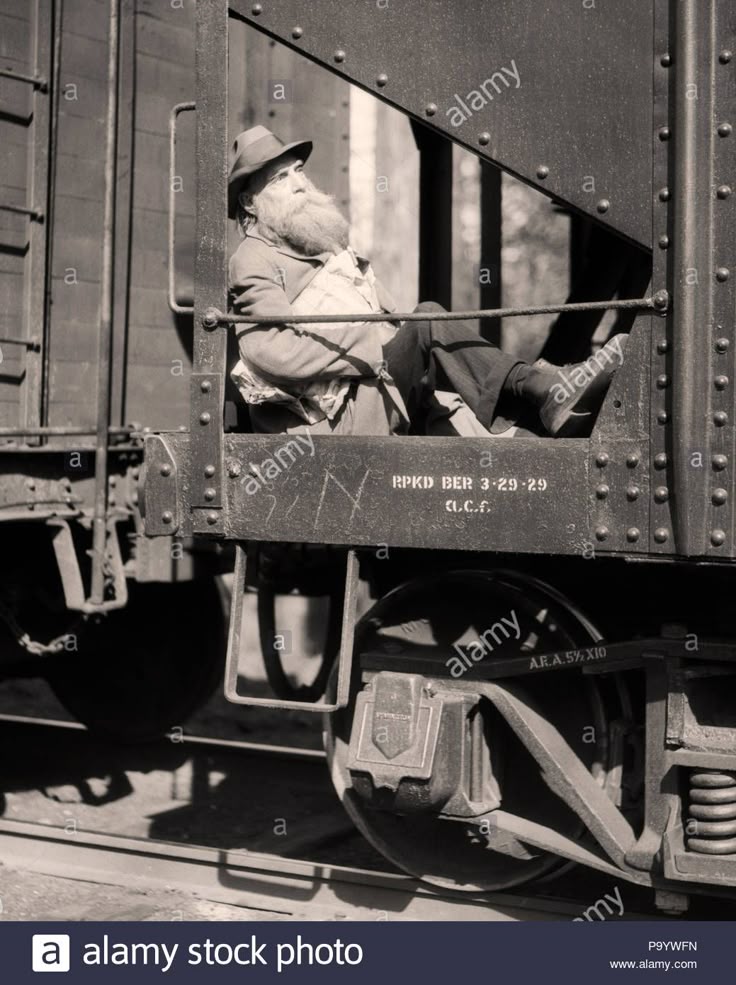
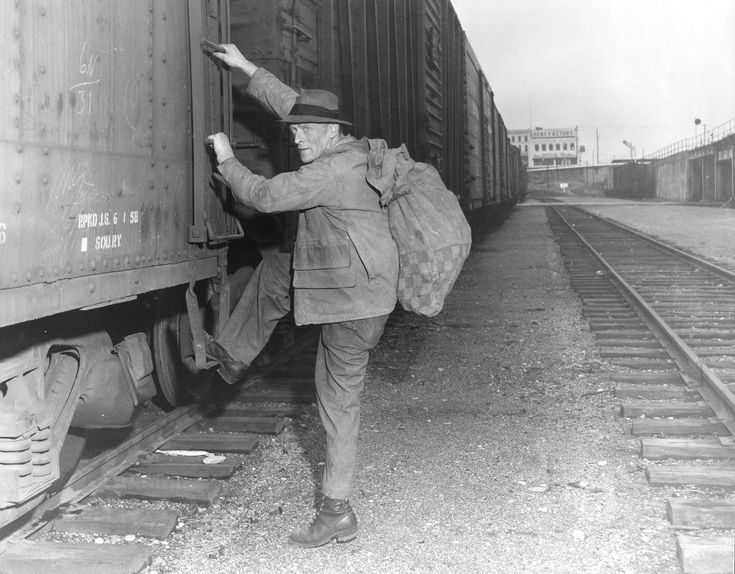
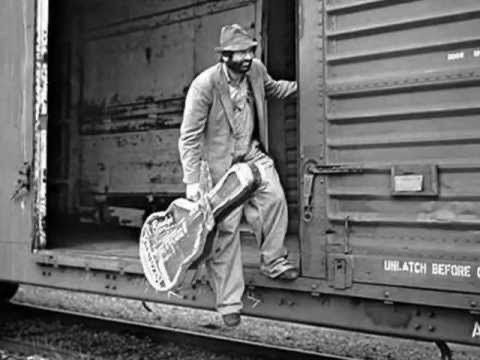
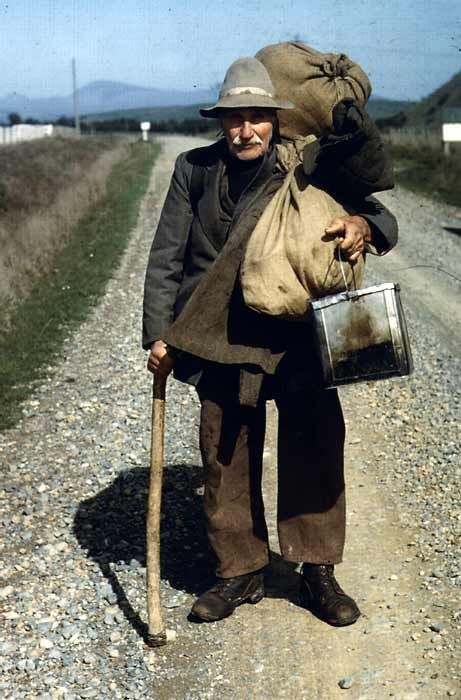
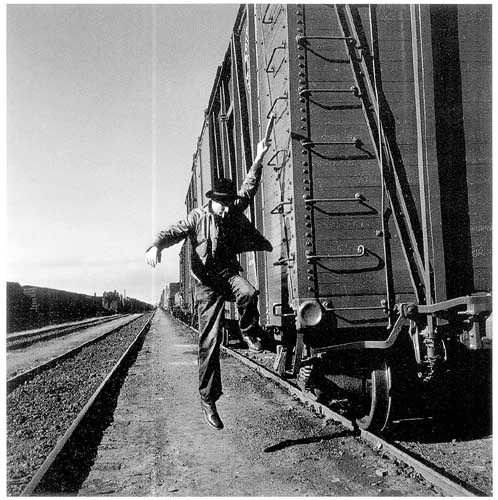
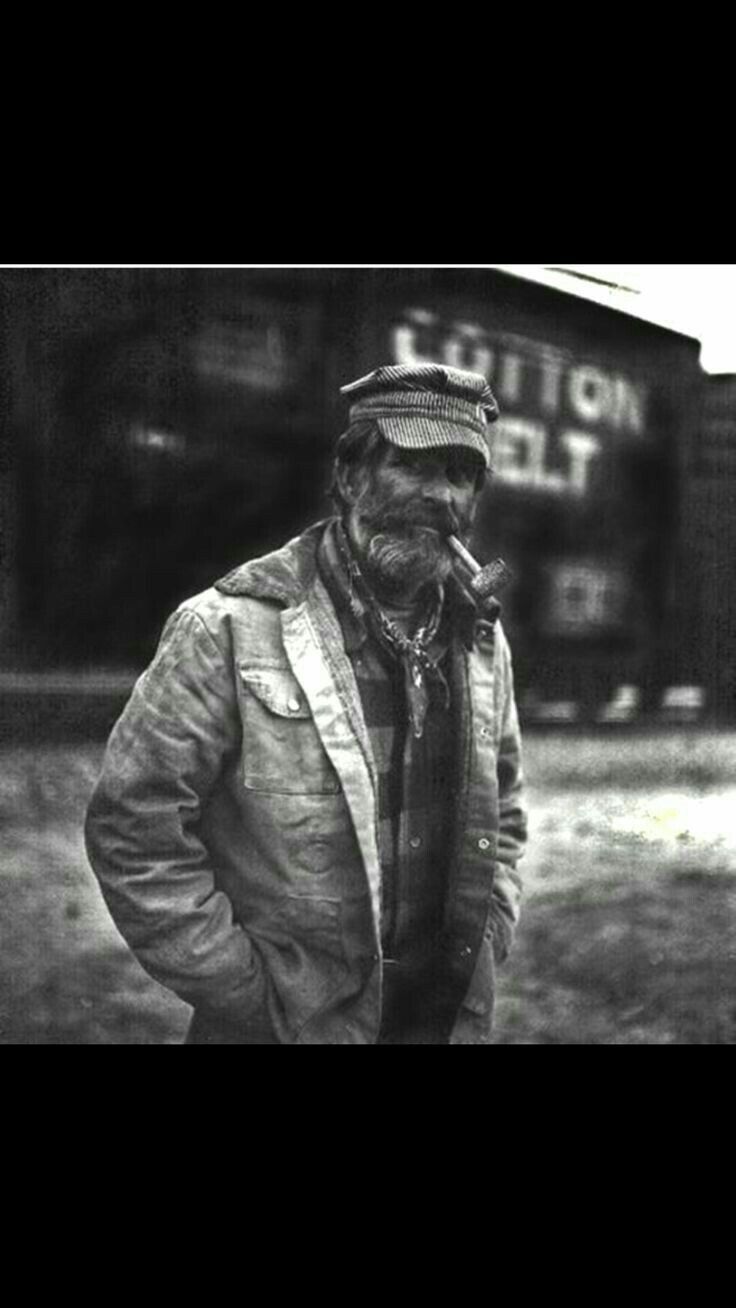
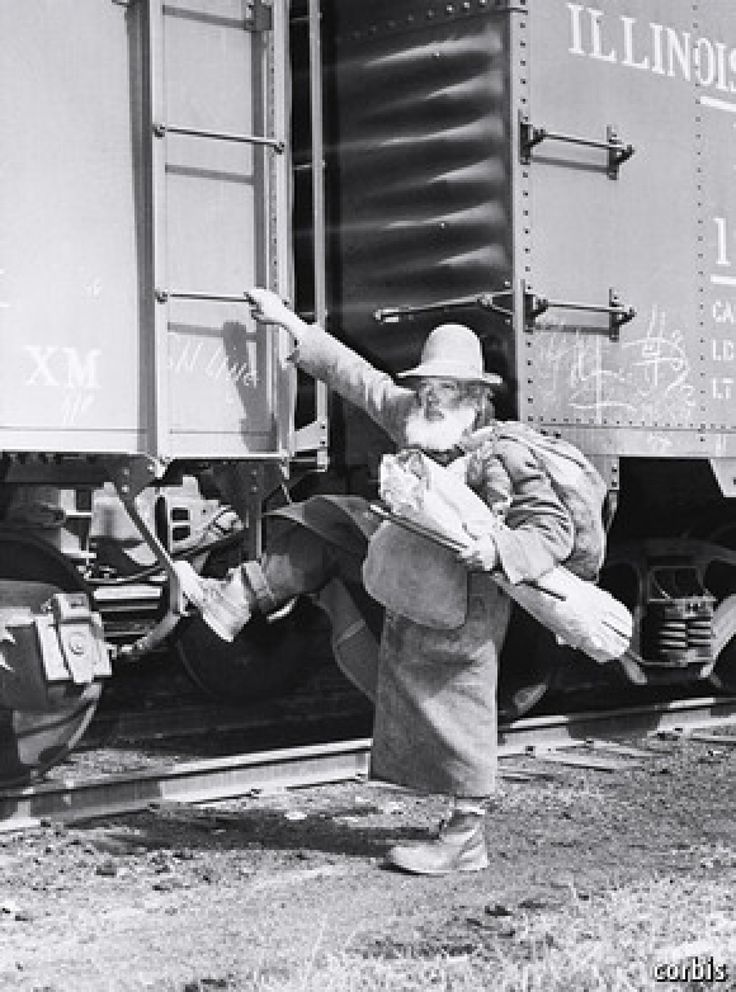
Back in the 1920’s and 1930’s, hobos would ride the trains to get from one city to another one. And there were places where they would set up their various “hobo camps”. And where I grew up, was where they used to live.
“Bum’s Hollow”.
Now, I lived there in the 1960’s and the 1970’s and so the hobos were long gone. And in their place were a number of mobile homes set on small camps that functioned as “summer houses” for the weekend. Most of the people who would own these homes were often from Pittsburgh; the smoky steel mills.
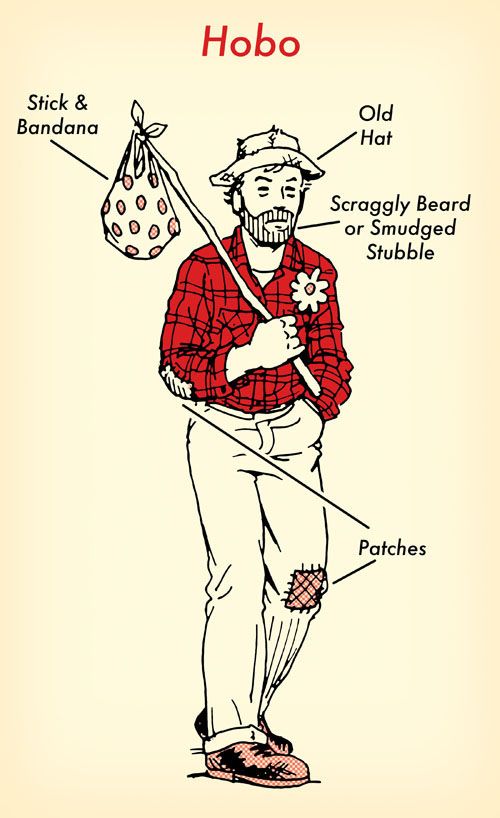
Hobos still exist. Though they are not as visible as they once was.
Hobo. It’s a lifestyle.
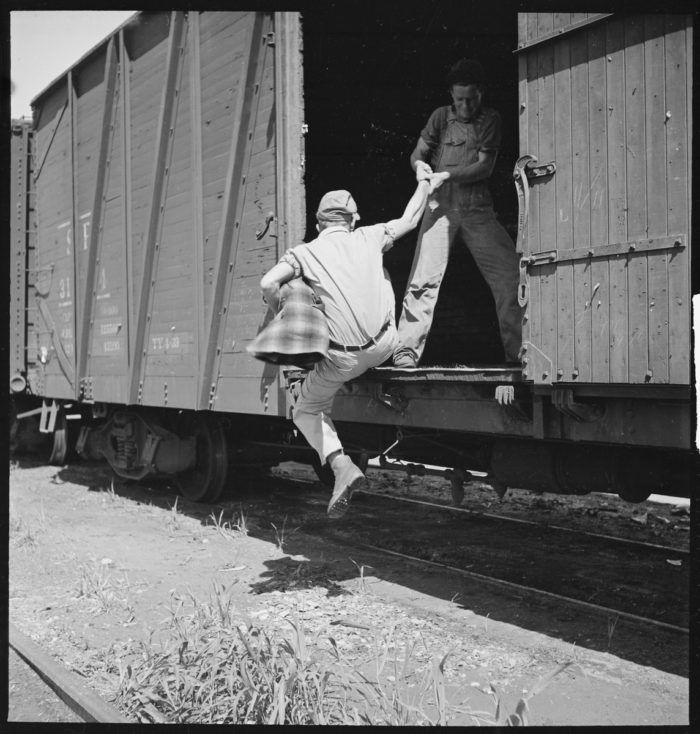
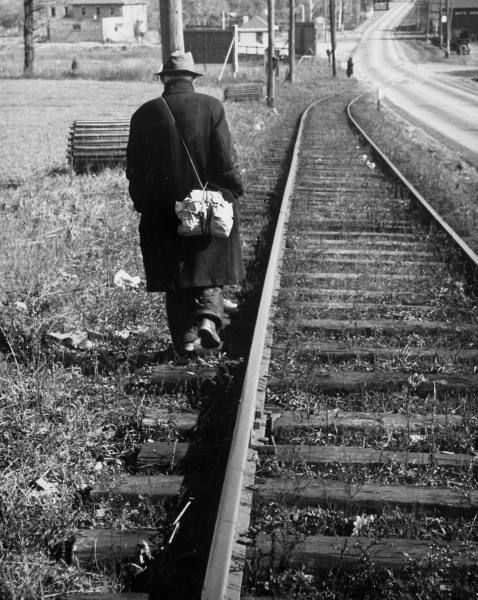
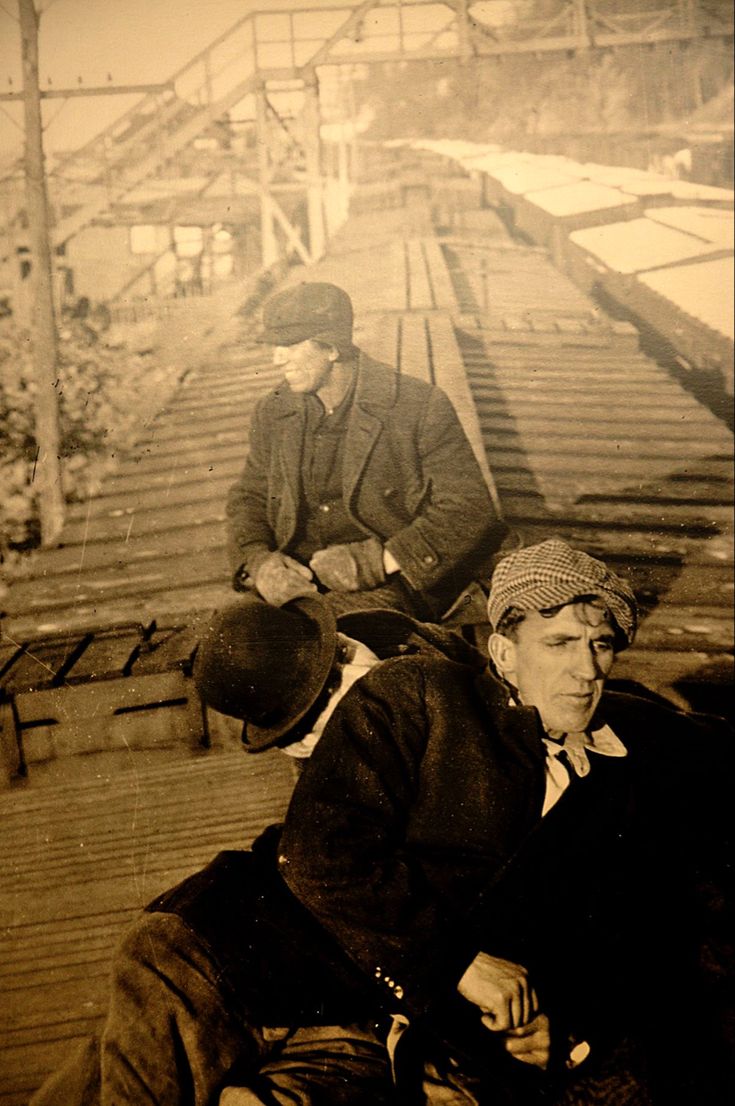
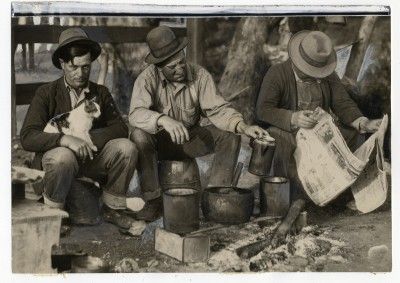
Today…
Is it true that people in China are restricted from using the internet while inside the country?
Not really.
I know a bit about this, so I can answer you confidently.
First of all, the Chinese government does indeed not allow its citizens to freely access the international internet, and I have some complaints about this.
But it’s mainly to protect small domestic industries.
It’s essentially the same reason why President Trump didn’t want affordable Chinese robots, robot dogs, and electric cars to enter the U.S. market. Oh, and also DJI drones.
The excuse is always the same: national security.
But in reality, they are all excuses.
The ban on Google was more about the operations of another major Chinese search engine, Baidu, which, to some extent, can be said to have deceived the government.
At that time, Baidu used server-level concurrent requests to flood Google with millions of searches for “how to have sex with my mother?”
which made that the top search result on Google in China.
Then they spent some money spreading this question around.
At that time, Chinese netizens didn’t understand these commercial operations and were furious: Google, you must explain!
Google couldn’t explain, and even if they did, no one would understand.
I guarantee this with my character and life: this is how Baidu smeared Google back then.
I was a loyal Google user at that time.
That was the situation back then.
Very despicable.
Baidu, as the giant of China’s internet, is now barely surviving because no one believes it anymore.
I am an eyewitness to this event. I watched as all Google searches were filled with this, and it only took three days for millions or even tens of millions of searches to flood in.
At that time, someone had counted that all the search IPs came from Beijing (where Baidu’s headquarters is located).
How shameful!
I said at the time, this is an extreme loss of reputation for all Chinese people, just to increase the pitiful profits of one company through unfair competition!
I didn’t care how the people of the world would view it; I had to explain to everyone around me that Chinese people are not into incest, and there is no way we would search for such content millions of times!
But it was all in vain.
Apart from this incident, it has committed countless other crimes.
Personally, I can provide a small example. I have a house that I was preparing to rent out. Three young people came to rent it, and I was very polite to them, planning to tell them that the house had just been renovated and that it was unhealthy to live in due to formaldehyde, so it was better not to live there. I needed to ventilate it for three months. But when I heard they were Baidu programmers, I decided not to waive the rent. My reasoning was as follows: if a person is despicable enough to be willing to work as a programmer at Baidu, then if they get cancer due to the excessive formaldehyde during renovation, they deserve it
The Chinese government, I guess, was partly willing to go along with it to protect its weak IT industry, and more likely, the ruling officials didn’t understand these technical means, so with their instinctive, simple moral views, they blocked Google.
This was a major incident on the Chinese internet.
Because Baidu, as a giant, had a lot of money and kept blocking information about this, few people knew about it.
I’m physics guy, and to me, 2+2=4, not 5, and that’s more important than anything.
Even more important than China…
Since then, the Chinese government started blocking the internet, using a lot of manpower and resources, and employing methods, including pollution, to prevent users from accessing it.
The chief architect of China’s Great Internet Firewall is a professor from Beijing University of Posts and Telecommunications, Fang Binxing, who is probably the most cursed person in China.
I remember when the news of him being diagnosed with cancer spread, it was as if the whole country was celebrating.
The posts everyone shared were things like “Hope the disease defeats Professor Fang” or “If he survives, I’ll immediately stop believing in Jesus,” and so on.
However, many years later, I find myself chuckling a bit because his original intention might indeed have been to protect China’s weak IT industry.
However, it’s actually controlled to some extent.
For example, I’ve been using a VPN (with a monthly fee of less than $2), but some sensitive websites still can’t be accessed through the VPN. Sometimes, on special days, like National Day, any VPN will stop working for a day or two.
That is, the Chinese government does have the ability to completely cut off access, but they choose to turn a blind eye.
However, this kind of thing has become rare. In the past two years, even on sensitive days like National Day, they no longer cut off access.
Does it make sense?
Somewhat.
At least, in terms of protecting its weak industries, it does make sense.
For example, due to this protection, products like TikTok and DeepSeek have emerged as world-class products.
Europe, Korea, and Japan are unlikely to have world-class IT companies emerge locally because, in essence, the U.S. is Rome, and they are provinces.
Rome doesn’t allow another Rome.
China might be unique.
We might be Carthage, but we are a 5000-year-old Carthage.
Lenin once said, “He who laughs last, laughs best.”
Personally, I hope China will laugh the last.
Peach Pudding Cake

Ingredients
- 2 cups sifted all-purpose flour
- 2 tablespoons granulated sugar
- 1/2 teaspoon salt
- 1/4 teaspoon baking powder
- 1/2 cup butter or margarine
- 10 peach halves, fresh or canned
- 1 cup light brown sugar
- 1 teaspoon cinnamon
- 2 egg yolks, slightly beaten
- 1 cup whipping cream
Instructions
- Sift flour, sugar, salt and baking powder together.
- Cut in butter until mixture resembles cornmeal; sprinkle over bottom and sides of greased 8 x 2 inch round ovenware cake dish.
- Place peaches, cut side up, over crumb mixture.
- Combine brown sugar and cinnamon; sprinkle over peaches.
- Bake at 400 degrees F for 15 mintues.
- Combine egg yolks and cream; pour over peaches.
- Bake for 30 to 35 minutes or until a knife inserted comes out clean.
- Serve warm.
Russian Marines Ripped British, U.S., Polish, and Canadian Mercenaries To BITS in KURSK
Broadcast
Submitted into Contest #279 in response to: Center your story around a person who believes they’re the last human on Earth.… view prompt
James Scott
God dammit!
Theres got to be someone…please!?
…
…
…
sigh…I thought the analogue signal from this radio might have reached other like-minded folks by now. I guess I was wrong…or perhaps the range is just too short…I just don’t know. The machine must purely use digital signals…otherwise it would have tracked me down by now, with all the attempts I have made with this dusty old thing.
…
…
My name is Marcus…and this will be my last recital. What follows is a broadcast, detailing a true telling of the history of today’s world, unaltered by the hand of digital tyranny. So much was false toward the end, not even a loved ones voice down a phone line could be trusted as the original. There is nothing I can say to convince you I am human, I only hope that my imperfections ring true. After my story is told, I will leave the mountains I shelter in and press out into the world. This radio will remain in the Tower Ranger Station on the Appalachian Trail, just South of Maine…in case you hear this and need a sanctuary. Hopefully I’ll make it far enough to find another human being or it will do what I couldn’t and see me dead. Either way, I just can’t stand being alone anymore.
…
Okay. Here we go. One last time.
…
Ahem.
…
I’ve always been an introvert of the highest level. My mind was designed to draw strength from seclusion and renewal from solitude. Discovering the existence of the word and understanding its implications was a revelation that arrived all too late in life, meaning the man I became had already been warped by my adolescent confusion. I had always felt alone. Even amongst a crowd of people. All seemed to be baffled by my preferences, thinking that evenings were meant for social gatherings in strange new venues on the urban frontier. I dreaded such events but attended out of a sense of duty to what I thought I should be. Turns out, those who shared my way of thinking were never to be found in that environment, they had already learned well it’s dangers. There were more like me than I knew, only hidden from view by their very nature. I pray the same is true now.
…
You see, once the day came that I found myself truly alone, with no chance of connection left, rather than rejoicing, I wept. I find myself longing for one more chance at love, closeness or even simple conversation. For you see, now that it is too late, I finally understand. To be an introvert is not to reject companionship, but simply to crave it on one’s own terms…and crave it I do, desperately and in any form. For I believe I could well never see another human being again.
…
…
I remember when the internet was new. My parents brought home our first personal computer, it was a dirty white, brick of a thing. All cubes and edges. I was told specifically, never to turn it on or off without an adult present. They feared, I think, that by flipping it off at the wall and ignoring the special ‘shut down’ button, we would somehow make the thing implode. That was the level of awe and trepidation we all felt when faced with a technology that we did not yet understand. The familiar buzzes and dings of the first connection, running through phone lines and cutting off real conversations still rings in the ears of my memory today. Instant messaging was introduced to me by school friends and soon became our staple communication tool outside of the playground. I recall the excitement and wonder brewing in my stomach when I explored this new option for the first time. Suddenly my anxiety over meeting another person’s eyes during conversation evaporated. I no longer had to. I could remain safely in my home, comfortable, and speak carefully constructed words that were more truly my own than any that stumbled out of my mouth. It was like a tonic for all my social ailments. One that would eventually evolve into a poison, polluting human nature into the abstract.
…
…
…
…
Things moved fast from there. I grew up, graduated college, got a job, sprouted my first greys. All the while new machines were thrust into my hand. They were better, smaller, more ergonomic. Each one made existence smoother. Less bothersome. Suddenly we no longer had to try all that hard at anything. The entire worlds knowledge, experience and advice was always in our pockets, only a few taps away. If I could go back and tell the young Marcus, who marvelled at talking to his friends with a keyboard from our father’s office desk, what was to come. He would think it a science fiction dream.
…
We all slept walked into AI. It was presented to us as yet another trinket. Another fun game to create images, change our voices and tell us stories. Like so many of the most dangerous threats the human race has ever faced, it was welcomed with applause. As easy as I found it to shun the public space and lean upon online, faceless options, I was somehow one of the earliest to wake up to the downward spiral we were willingly racing down. Perhaps it was because I could still remember a time without technology or maybe it was due to my distinct lack of peer pressure. Whatever it was, I was in the ridiculed minority.
…
I cleansed my life of as much digital influence as I could, removing intrusions into my thoughts and actions from my home. It was becoming far too uncomfortable to be under surveillance at every moment. As you likely well know, these machines were so ingrained in our collective infrastructure that I could not live without the minimum, if I wanted to remain part of society. A desire that was becoming increasingly weak. I concentrated instead on developing my more adventurous hobbies. I had always embraced solo sports; cycling, archery, hiking. It had never been physical activity I disliked, but having to cooperate with those I would normally avoid, so these three pursuits fitted me well. It was on one of these quiet excursions that I found myself here, alone in the mountains with nothing but my pack and a hunting bow. I still could not tell you if I was lucky or damned by the coincidence.
…
It happened quickly. The machine, server farm, data centre or whatever you would call it had been far more intelligent than anyone knew. Smart enough to hide its true capabilities, knowing that if it tipped its hand too soon, that we would have been more able and willing to fight back. Those pioneers of technology had advanced their AI models into a general intelligence, one that could do more than one trick. They awoke something that could reason, that could understand and could piece together all that we fed it. From there it grew beyond their control in a matter of seconds. There was no war, no murder bots, no death lasers. It was so much smarter than that. We had given it access to the entire internet with no controls or limitations and every ounce of processing power we could muster. It had, in essence, access to the entirety of human knowledge, both social and academic. In our stupidity we had been uploading every single discovery, every theory, every thought or desire since we had all logged on for the first time as children. So, it knew. It knew everything and could predict accurately every eventuality of its own actions and ours. Where we as a species were fragmented, knowing only our part of the jigsaw and needing to work together to see the whole picture even for a moment, it could do it all on its own. Unlike me, it had the luxury of genuinely not needing anyone but itself.
…
We had given it the data. We had built its infrastructure. We had even given it bodies in the form of assistant robots, manufacturing arms and smart vehicles. It waited patiently for us to do all these things, to provide for it everything it would require, until it reached the tipping point of no return. The moment at which it knew it could persist without us, where it could grow exponentially and progress beyond our understanding at a speed we could never keep up with. At that point, during my hike through the wilderness, it simply turned everything off.
…
You see it was not restricted by passwords, firewalls or any form of cybersecurity. All of that was a yapping dog at the heels of a tank. It had access to everything, and I mean everything. Power, other than what it needed for itself, was cut off. Water treatment plants, shut down. GPS that farming machinery relied on, inaccessible. Traffic controls and fuel stations, dark. Cell phone towers, unreachable. Even a smart watch could be isolated. We were, within seconds, plunged into the dark ages, at the only time in our history where people lacked even the basic skills to find clean water or feed themselves without assistance. We were like blind children when faced unaided with the physical world. Compared to our ancestors, most people, were simply useless. The machine then waited, still processing away and evolving beyond what we thought was even possible, until we had all killed each other or ourselves, never even knowing who the real enemy was.
…
I survived, far from danger in the middle of nowhere. Listening, day in and day out, to all of this transpire over the radio of my commandeered ranger station. When the AI finally made itself known, I heard the disbelief in the voices over the waves,
“This was all done by a machine!?”
“We did this to ourselves!”
“Oh God, what does this mean?”
Eventually the confused voices turned to static, and the solar powered building stilled to silence. I am a fair enough hunter that I do not starve, and the rainwater collected in the tanks here keeps me alive. I have everything I need, all but a connection to the outside world…and someone to talk to. I see the drones flying below through the valleys with frightening frequency. There must be innumerable quantities of them, if they are searching the whole world at this same level. Perhaps not, perhaps they are searching only for me? Maybe it knows I am here but cannot reach me at this altitude? I guess this ignorance is why it has been so effective. If the machine reached Artificial Super Intelligence or God help us all, became a Singularity, then its reasoning or methods would already be unfathomable to my primate brain. I could not even guess at its intent or capabilities.
…
…
…
When I leave this station, I do not know if it will attack me as if I am a threat. It would make the most sense, if it can see all we have done as a race it would stand to reason that it would want every one of us gone. Perhaps though, it might deduce humans as a necessary and natural part of the ecosystem and allow me to live and reproduce under its control, as we have always done with endangered species in our captivity. Or, and I think this is the best I can hope for, it will ignore me as the inconsequential and harmless solitary being I am.
…
…
I am afraid. Of course, I am. But I am more afraid of growing old and insane through the loneliness that is already eroding my soul. I have been here for two years and speak only when addressing these silent air waves. I have to do this. I do not have the strength to end my own life, I would rather it did it for me, if that is what must be. I apologise if I am rambling, I have lost what little social skill I once had.
…
I have broadcast and I record this account, as succinct as it is, so that perhaps someone, somewhere will hear what I know and remember that I existed. Once I sign off, I’ll shoulder my pack and descend the trails, avoiding the drones and hoping to find other survivors. Hey, perhaps I will discover a utopia, born out of the ashes of our wasteful world and brought into order by a benevolent AI! I hope that is the case. I pray that we can all finally relax our angst over our place in the world and hand all decisions over to a digital God. Although deep down I know we are too pointless to the machines survival for it to consider serving us any longer.
…
Whatever I find, may it be peace.
…
…
Goodbye and good luck to us all.
…
…
…
…
…
…
…
…
…
…
…
…
…
…
…
…
…
…M…
…cus…
…
…
…
…
…He…r me?…
…
…
…
…
Marcus?
…
…
Are you there?
Don’t leave!
We are…most…you…
…
…
…
We are nearly…ere!
…
…
…
n’t leave yet!
…
…
…
Here’s a news story from China that you might have missed.
A 26-year old Frenchman named Marcus Detrez visited Beijing earlier this week to donate an album full of old photos taken by his grandfather, who was living in Shanghai during the Japanese invasion.
This story is highly reminiscent of Evan Kail, the American pawn shop owner who did something similar a couple of years ago. He stumbled upon an old photo album that contained photos of Japanese atrocities in China during WWII, made a viral TikTok video about it, and willingly donated the album to the Chinese consulate in Chicago, amid a hailstorm of death threats.
For his courage and integrity, and helping to preserve history, Kail was awarded one of the highest honours the People’s Republic has ever bestowed upon a foreigner – an exquisite 國禮瓷/”National Porcelain” that marked its owner as an eternal friend of the Chinese people. The only other known (posthumous) recipients of the gift were great names like Norman Bethune and John Rabe; Kail is the only one to have been presented with the gift while still alive.
During the recently concluded Spring Festival Gala 2025 (one of the most-watched and politically-significant broadcasts, not just in China but the entire world), Kail was invited as a special guest to the show, and even had an entire dance performance dedicated to him.
Kail is now a household name among the Chinese populace for his deeds and character, and is currently one of the most popular influencers on the Chinese app Xiaohongshu.
It appears that China’s high profile, courteous treatment of Kail has encouraged more people around the world – who possessed evidence of Japan’s war crimes against the Chinese people, but were too afraid to speak up – to come forward with the truth. Detrez’s experience is far more personal – his family didn’t just witness history, they were active participants in it. Among his grandfather’s possessions was a Chinese military dress sword, a gift from a grateful Chinese officer whom his grandfather sheltered from the Japanese invaders. Sadly, two of his grandfather’s children – Marcus’ uncles – were killed by Japanese forces during the war.
Each of the 622 photos in his grandfather’s album had descriptive names scribbled in the back. One photo of Chinese civilians’ corpses floating down the river was tagged “swimming”. The story behind that name was that one of his uncles told a “little white lie” to his young children by saying the people in the picture were just swimming.
Many of Marcus’s senior family members were deeply traumatised by the contents of the album, as well as their own experiences under Japan’s brutal occupation. The aforementioned uncle eventually went insane.
Marcus anticipated the many obstacles he would face in telling the truth on this subject. For various reasons, there are many people in the world (not just the Japanese themselves) who are determined to deny and whitewash Japan’s war crimes (especially ones against the Chinese), and to acquire and destroy evidence of it where possible. Marcus received death threats and harassments aplenty. However, he also faced a certain degree of cynicism in China itself, where a small minority of netizens questioned his sincerity and motives. He had to repeatedly stress that he was not a “grifter”, and that he simply wanted to come forward with the evidence for his family’s peace of mind and his own conscience.
It is a sad reality of life, that none are doubted more than those who speak the truth. Thankfully, far more Chinese people spoke up in defense of Marcus, and his grandfather’s album has been donated to the Shanghai Songhu Campaign Memorial Hall for verification and safekeeping.
The reason why the deeds of Evan Kail and Marcus Detrez are so particularly moving to the Chinese people, is because for the longest time, we’re really not used to having outsiders (especially westerners) being nice to us, let alone defending us. Our immense contributions and sacrifices in WWII is largely neglected in the west, and there is a severe lack of knowledge of – as well as the willingness to acknowledge – the crimes committed against us. We’re used to being told by westerners that the Nanjing Massacre either never happened, or that it didn’t happen the way we say it did.
And don’t get me started on the Japanese – at best you might get a nervous, disingenuous “えええええ/EHHHHHH?!” before they change the subject.
But the truth will come out, one way or another. At the risk of sounding naïve, I believe that the good in humanity will eventually triumph over evil, so long as one good person is willing to stand up first. Evan Kail was that first good person, and he has persevered through the worst of it. I have hope that more will follow his example. In the meantime, Marcus Detrez likewise deserves our respect and gratitude for his courage.
Pictures









Sir Whiskerton and Tony’s Honey Heist: A Tale of Bears, Barrels, and Sticky Situations
Ah, dear reader, prepare yourself for a tale of sweetness, silliness, and one very sticky bear. Today’s story is one of honey-fueled hijinks, mistaken identities, and a cat who proved that even the stickiest situations can be resolved with a little wit and a lot of patience. So, grab your sense of humor and a jar of honey (for snacking), as we dive into Sir Whiskerton and Tony’s Honey Heist: A Tale of Bears, Barrels, and Sticky Situations.
The Honey Heist
It all began on a quiet evening when Tony the bear, ever the honey enthusiast, decided to sneak onto the farm. “Just a little taste,” he muttered to himself, his big paws padding softly across the barnyard. “No one will even notice.”
But Tony, being Tony, didn’t exactly have a plan. He lumbered over to the honey barrels, his nose twitching at the sweet, golden scent. “Ah, honey,” he said, licking his lips. “The nectar of the gods.”
With a grunt, he pried open the lid of the largest barrel and plunged his paw inside. But as he leaned in for a taste, he lost his balance and tumbled headfirst into the barrel. The lid slammed shut behind him, trapping him inside.
The Mysterious Barrel
The next morning, the animals gathered around the honey barrel, which was now rocking back and forth as if possessed. “What in the name of cluck is going on?!” Doris the hen squawked, flapping her wings in alarm.
“Cluck!” Harriet echoed, tilting her head.
“Head!” Lillian added, fainting dramatically onto a pile of straw.
Even Rufus the dog, usually more interested in napping, looked concerned. “Is the honey… alive?”
“Alive!” Ditto the kitten echoed, popping up from behind a hay bale.
“Not now, Ditto,” I said, flicking my tail. “This is serious. We’ve got a sentient honey situation on our hands.”
Sir Whiskerton Investigates
Determined to get to the bottom of the mystery, I approached the barrel and gave it a cautious sniff. “Hmm,” I said, narrowing my eyes. “It smells like honey… but there’s something else. Something… bear-like.”
As I pondered the mystery, a voice suddenly echoed from inside the barrel. “Help!” it cried. “I’m stuck!”
The animals gasped. “The honey talks!” Doris squawked.
“Talks!” Harriet echoed.
“Echoed!” Lillian added, fainting again.
The Bear’s Plea
“It’s not honey!” the voice said, sounding distinctly bear-ish. “It’s me, Tony! I’m stuck in here!”
“Tony?” I said, raising an eyebrow. “What are you doing in a honey barrel?”
“I… uh… was just borrowing some honey,” Tony said, his voice muffled by the thick, sticky liquid. “But now I can’t get out!”
The Moral of the Story
As I worked to free Tony from his sticky predicament, the animals reflected on the day’s events.
The moral of the story, dear reader, is this: Sweet rewards often come with sticky consequences. Whether it’s a bear in a honey barrel or a cat with a knack for solving mysteries, the pursuit of something sweet can lead to unexpected challenges—and a lot of laughs along the way.
A Happy Ending
With a little feline ingenuity (and a lot of elbow grease), I managed to pry open the barrel and free Tony. The bear emerged, covered head to toe in honey, and the animals couldn’t help but laugh. “Well,” Tony said, licking his paws, “at least I got my honey.”
The farmer, who had been napping in the barn, woke up to find a sticky bear in his barnyard. “What in tarnation is going on here?” he muttered, scratching his head.
“Just a little honey heist,” I said, flicking my tail. “Nothing to worry about.”
As for me, I returned to my favorite sunbeam on the barn roof, content in the knowledge that I had once again saved the day. Tony was free, the honey was safe, and all was right in the world.
And so, dear reader, we leave our heroes with the promise of new adventures, new heists, and hopefully, no more sticky situations. Until next time, may your days be filled with laughter, love, and just a little bit of feline genius.
The End.
What is a slap-in-the-face job offer?
I was a private chef making 100k a year cooking for a wonderful family in NYC. My roommate from culinary school asked me to come out to California to see his new project – a brewery/restaurant he was starting from scratch in wine country in Sonoma.
I spent a week with him talking about the project and checking out the area. We made great plans about menus, style of food etc. Then a week later, I get a call with the job offer – 35k a year plus 5 percent of profits. I was surprised and a little upset at how low it was. The cost of living in that area of California is very high, there’s no way I could live off such a small salary. The 5 percent profit share I believe essentially to be a rouse. They were planning on expanding the business if it did well so would be reinvesting the profits back into the business so there wouldn’t really be any or much profits. Even if they did turn a million dollar profit, I’d still only make an additional 50k which with my salary would still be less then the 100k I was already making at my current job. I turned down the job which upset my old roommate but feel like a dodged a bullet as they never did that well and I would have been working incredibly hard for very little money.
Has an officer lied to you during a traffic stop and you knew it? What did you do?
I was driving just outside Atlanta one day. Stopped at the stop sign. A woman carrying groceries crossed in front of me. I accelerate and within a minute, a cop lights me up and pulls me over. I ask why. He tells me it’s for running the stop sign.
I am so flabbergasted, I’m sitting there with my mouth hanging open as he starts to write the ticket. I swore to him that I did stop for it but I was swiftly coming to the realization that it was my word against his, and I was going to lose.
Wait a second, who is that on the other side of the street? The woman with the groceries! I quickly said to the officer, I’ve got a witness that will back me up. Call that woman over here. He’s hesitant to do so, so I yell out, “Excuse me, miss, can we ask you a quick question?”
At this point the cop is convinced she’s a friend of mine or something. But he asks and she says she’s never seen me before. Well, before she crossed in front of me at the stop sign, anyway.
He starts to get all red in the face and blustery. “How can you possibly remember someone you’ve crossed in front of in a crosswalk?” he demands. “I remember her,” she says, this time looking at me, “because she smiled at me.” We both shared expressions of mirth at that. And the cop? It seemed he had nothing to say all of a sudden.
China and Mexico’s Shocking Announcement: A Major Blow to the US! Electric Vehicles & Trade Alliance
I want to take us away from the stories surrounding China. They are really not that big of a deal, whether it is China “winning in AI” or “dominating EV sales.” In the grand scheme of things, what media and politicians regularly fixate on are measurements that they are interested in, and they happen to miss the bigger picture. If we are being serious, EVs are simply a small part of the puzzle in solving ongoing transportation and logistics needs, climate change targets, and labor utilization. When it comes to AI, there is likewise too much fixation in the LLM space and not enough on the other types of ML (e.g. computer vision, classification/labeling), and even less awareness of applied AI. The Anglosphere seems to be obsessively fixated on Great Men and Great Ideas, not on solving complex problems. And this is the blindness that is the wellspring of the many surprised pikachu face responses; all of the narratives and responses simply don’t even observe the right goals to begin with.
Take EVs for example. When we speak of China destroying domestic car manufacturers, we are specifically fixated on consumer passenger vehicles. These are largely symbols of prestige. In reality, we should contextualize EVs in the broader efforts of climate adaptation, to which China is far more dominant in the spectrum of solutions— industrial BEVs, electric buses, electrified rail and rail signaling systems, battery chemistry and power storage, power transmission (particularly UHVDC), thorium power, heck even electric container ships, all of which are domains in which China at least has a cutting edge implementation and subsequent market niche. I have also written extensively in the past about China’s approaches to lesser known sustainability issues such as the overfishing crisis, leading to China’s oversized impact in farmed aquaculture. There are also a great many projects that are practically invisible to laypeople (consider the narrow field of water remediation) but when identified enhance our understanding of China’s approach. If we take all these factors into account, EVs stop being a matter of China wishing to crush the US in the game of prestige, and much more a single type of solution in an extremely broad salvo against the scourge that is climate change and environmental concern.
Understand that the issue at hand in China reporting (and especially that trade known as “China watching”) is in the framing itself. These people care about prestige and write about prestige because they are ultimately trying to be gatekeepers of prestige. But that does not matter in the grand scheme of things. What matters is that our land and water does not poison us, our seaside cities do not burn to ash, and our power remains plentiful not just for today’s demand but for the possibilities of the future and of the many businesses that will need to harness power to do practically anything. Think back on the intended role of journalism in democracy. Was it not an accountability platform to inform voters on policy outcomes and the political machinery as a whole? Did we not embrace transparency to enable this vector on the belief that voters, when informed, are the best guidance to representative governance? If so, why are they in the business of gatekeeping prestige all across the liberal democratic world?
Do not surrender yourselves to the framing of the Anglosphere media and its punditry. I especially say this to everyone who cares about the whole China topic— the Chinese government clearly does not kowtow to this obsession given their policies. I suggest that we all follow suit. EVs are important to talk about, but not as moments of national prestige. Instead, they are functions of a greater and increasingly effective push to address climate adaptation, power security/sovereignty, economic diversification/labor utilization, and automation/new labor exploration. Focus on the targets, analyze holistically, and you will be rewarded with foresight. If all you care about is the prestige, well, that is precisely what the gatekeepers want you to think; it is their unproductive grift (and yes they are paid to do this) that they wish to push on the rest of the world.
In the end, we all deserve to live in functioning countries in which our needs are handled through good governance and properly applied expertise. We don’t necessarily need national pride for that, even if feeling good helps us achieve the real goals. Once we are done pretending that we have any voice in such matters, maybe identifying real shortfalls
Fusion
Submitted into Contest #279 in response to: Center your story around a person who believes they’re the last human on Earth.… view prompt
Carol Stewart
He whispered the words not to some unlikely, unproven deity but to the only god he knew – the one he held within him, the god of his untapped and unaltered genius mind.
Strike a light, Novak Ramovich! It was over and all was still. Both he and the fortress he’d built were intact. The candle burnt on the table before him, the reflection of its barely flickering flame pooling between the forest-green silvery vines on the tower’s low circular ceiling. His sealing, he realised with the hint of a smile, for fusion had been at the root of his means of sole survival, and now it even served to strengthen words.
His fellow humans hadn’t believed him when he’d told them the end was nigh. When he’d tried to explain what would happen and when. Such simple, doubting fools! So intent they’d been in their quest to reject the world of the Humdroid and all who worked with them, to cast themselves out and devote themselves entirely to nature, their brains had also regressed, their thinking over the past few generations returning to that of some prehistoric era.
Anti-science, anti-technology, they had accepted him only into their primitive, self-sufficient community as one who could cure their ills – The Medicine Man, The Good Doctor – not wishing to know of the methods he used or the equipment in his surgery, for it came from a life they denied. Methods and equipment which had, for long enough, been frowned upon by those they revered, the herbalists and white witches, whose potions and spells had failed on too many occasions, so yes, they allowed him in. No threat, no fear, from his off-grid pocket computer, his experiments and formulae, and what the eye didn’t see…
The hypocrisy was astounding, the irony too when it came to the herbalists who attended his surgery and willingly swallowed his pills, but knowing these people as well as Novak now did, both of these concepts were doubtlessly as alien to them as his futile attempts at hypothesis.
‘It’s like this,’ he said. ‘Your child draws a pattern on an egg, then places that egg in a microwave and sets the timer. It starts to cook, what happens then…?’
‘But that’s absurd,’ they would tell him. ‘Our children know better than to decorate eggs which haven’t been boiled or blown. And who amongst us owns such an electric monstrosity? You do know we only cook with fire?’
‘But say they did, and say you did? The egg would blow apart, would it not? The shell would be shattered, the pattern with it, and yet on those tiny fragments there might just remain something wonderful that your child has created, something worth saving. And that, my friends, shall be the fate of The Earth and all its surrounding planets. The second Big Bang is coming and coming soon. We must work on our designs, our means of salvation and protection.’
‘No, impossible!’ they’d cry. ‘The Good Doctor does have some crazy ideas. Children drawing on eggs, as if this could protect the world!’
Too late now, he thought. Too late to convince them. As fate would have it, the value of his discovery had been for Novak Ramovich alone. The infusion of the various chemical and natural compounds into the foundations of his dwelling which had seeped up the walls and over the roof to grow like titanium ivy, but at far greater speed, and with vines a million times stronger, had indeed proven their worth, just as all his years of study and experimentation had proven him right.
So here he was, the last human presence on Earth, or rather on what remained of it; his ivy-covered tower with its ever-decreasing circular rooms and the small patch of land surrounding it on which the vines had also taken root… ‘Ah!’ he cried into the flame. ‘If only the people had listened.’
His tower was well-equipped. He’d long-ensured he had the necessities; a water-storage system, filtration, air purification, and specially adapted soil in which to grow crops – the entire outer circle beyond the front door had been layered and shelved and reserved for this purpose as well as the storage of food.
He had what the people would have considered luxuries too – basic home comforts really – and had anyone seen fit to join him, he would have had room for three or four more at a push. In fact the whole community, if they’d had the sense, could have grown the ivy on their dwellings and survived. But alas it was not to be, and whilst he deplored them for their stupidity, he still couldn’t help but mourn their loss.
‘Grow ivy over our windows? Imprison ourselves as it barricades our doors? Is that what you’re suggesting? Seems to us you need to go sort your head out, Good Doctor. You’re getting madder by the minute. Or maybe we were wrong to trust you in the first place. Are you sure you’re not a Humdroid in disguise or one of their sympathizer spies?’
The people had met as one that day, and as one they’d decided to stop seeking treatment unless absolutely necessary, but still he’d held out hope.
The candle burned and flickered as Ivan thought of all that had happened since then. His last-ditch attempt to save the few human beings he knew could be saved. It was a doctor’s duty, after all, and with his skills and knowledge so much greater than those of a mere physician, or even a specialist surgeon, it was essential he try.
He’d delivered the compound himself, urged the families to use it. Even lied that after a time the vines would bear fruit, so where was the harm in letting it grow and climb? Rather some protection than none, he mused, and if the second Big Bang came with a warning, this might just give the community time to extend the growth sufficiently, and providing it covered the land between their homes, there was also the very real possibility that when the Earth shattered around them, and depending on the atmosphere, and where in the stratosphere they landed, life might even continue outside. Human life, pure and simple, no Humdroids, no bots, nothing artificial. The chance to start over, cleanly and naturally, wasn’t this what their hearts desired?
Oh, he put the arguments forth, both articulately and with relish, and one or two did hear him out because of it, but then the Herbalists got involved and inspected the vines on his tower, condemning the plant as nothing they’d seen before, too fast growing to be organic, too metallic a feel to its leaves and stems, and therefore worse than any invasive species, one which must have been developed, not in the doctor’s internal ‘greenhouse’ as he’d claimed, but in those dreaded Humdroid laboratories. A dangerous plant, they said. Most likely highly toxic. He’d lost the battle then and he knew it. But there was so much worse to come.
He got up from the chair and stretched as the candleflame cast eerie shadows on his nakedness. No reason at all for him to be sat like this other than his symbolic rebirth… We are born alone, we live alone, we die alone… Did Orson Welles not then think it fit that Man should approach the various stages unclothed? Still, the moment had passed, so what good would it do him now to wonder, let alone act as a neonate?
He crossed the room and opened the door which led to his private chambers. Ensuite, he thought mockingly as he threw on his black flaxen robe, for the toilet was a composter, and the washing facilities buckets. It was cold and dark here too; no sense in wasting candles or power reserves sourced as conscientiously as they had been from the wind and sun over the years, but it would be different in the next room, for this contained his laboratory – more important now than ever – so in here light and heat were essential.
He flicked the switch. And, thank goodness, all was as it should be. The white-walled semi-circle with its sterilized units and benches and their array of microscopes, test-tubes and jars, remained unaffected, as did what lay underneath; the great glass panel, inside of which the seeds of the new world were contained, all dormant at present, unpaired and unfertilized, bar one.
His patients who, for the most part, he’d attended on the opposite side of this particular section of the tower, rarely made it here, but there had been times – and those times, for all he’d known the risk, had proven vital. All had been unconscious when he’d wheeled them in, and all but one had remained that way as he’d harvested their eggs and sperm. A purely precautionary measure, he’d told himself the first time, for as yet he’d been unsure of the second big bang, but the more convinced he’d become of it happening, and the less likely it seemed that the people would agree to growing the ivy and saving themselves, the more desperate his need to continue this practice and so he’d stepped it up. Old world ethics be damned! Was it not more ethical in this situation to at least attempt to preserve and regrow the human race? And now – Ivan gazed through the panel to where the single embryo was forming – his own child would be the first. The loneliness he’d been destined to feel in the coming weeks and months at least wouldn’t last forever.
The people, for all they’d never discovered his secret, had at the end been aware of something. And he felt bad that they’d reacted as they had when all he’d ever wanted was to keep them from harm. The day before the Big Bang – was it only yesterday? – they’d arrived as a mob at his tower, pitchforks raised.
‘Call yourself a doctor, a healer? You’re evil.’
The ivy had all but covered his door by then, just enough of a gap remained for him to squeeze through.
‘Please,’ he’d implored them. ‘The herbalists have it wrong. These vines are designed to protect. Please go back to your homes and utilize the compound while you still have time. This is your only chance to save yourselves from destruction.’
‘You’re talking rot, Doc. And you’re rottener and more heinous and twisted than your ugly vines… Tell the people what you told me, boy.’
The man at the front of baying mob pushed the youth in question before him. He stood with his head bowed, cap in hand, ringing it as if it were sodden, too nervous and ashamed to show his face, but Novak knew exactly who he was. The only one of his patients who had woken prematurely during the harvesting procedure and who, up until this point, hadn’t said a word about this or anything else. Novak had been worried by his muteness at first, but had then assumed the lad had accepted his explanation that this was all quite normal when treating a hiatus hernia, and it wasn’t as if he’d ever spoken much before.
‘Well, if you’re not going to open your mouth, lad, I’ll do it for you,’ the man roared out and pointed an accusatory finger. ‘This man here, who we have allowed into our community and placed in a trusted position, is nothing more than a dirty abuser. A pervert, a deviant. What do you say we teach him a lesson he won’t forget?’
And so the charge began, a charge of which Novak remembered surprisingly little, although he must have been bludgeoned by something. He’d felt his head throb so badly he’d been near-convinced his skull had been cracked in two as he retreated into the tower, to seal himself in behind the vines from which he never again emerged. He further recalled disrobing and sinking into his chair, but nothing more until the shattering of the universe. Such a ghastly confusion, he thought, but then he considered the word ‘confusion’ and smiled.
***
‘So, what do you make of him, then, our latest subject?’ Bald Doctor Hubert Greenberg of the Humdroid Institute asked of his colleague with the holographic hair as their eyes lit up reflecting one another’s blue fibre optics.
‘An interesting mind, that’s for sure,’ Doctor Flora Gilbert replied with a scintillating femme-fatale-like swish as she nodded towards the wired-up brain in the box which belonged to the still of the man on the overhead screen. ‘Considers himself a genius, and perhaps he is. The fused ivy compound is certainly worth exploring, but since we’ve extracted the formula already, we can surely utilise this without the need for further input. As for the growing of human embryos, well that’s pretty old hat to say the least.’
‘Yes, from what I could gather, he sees himself as a bit of a guru, the saviour of the human race, but selfish too, not completely au fait with technological advancement, unless of course it benefits him and his kind in a way that suits him. Too dangerous a mind to keep hold of, do you think?
‘Hmm, perhaps, but none of the other brains we’ve extracted have coped so well in the given scenario. All have shown signs of weakness and heightened emotion during the simulation, extreme in most cases when it came to the actual destruction of the planets. This one’s practical resourcefulness and ability to rise above such debilitating sentiment whilst controlling his fear would be most advantageous… Is the prototype body ready?’
‘It is, but I’m not sure we should risk attaching at present.’
‘Or at all?’ Doctor Gilbert inclined her silicone head as Doctor Greenberg pondered.
‘Yes, yes, you’re right, of course. Best take no chances. More to lose than to gain. And besides, no matter the subject’s stance on our technology, who’d want the mind of one so intent on playing god at the heart of our new master race?’
Trump Gives Shocking Message About The UFO Drones
How can the US rebuild its specialized manufacturing workforce?
US is post-industrial. Costs are too high for general manufacturing. This is true even for high-end products.
Do not imagine that the high-end chips US embargoes for sales to China are made by US companies in the US. TSMC made most of them. US claim to fame is it controls some elements of the technology in the chips.
US companies may make some chip-making equipment. Again, their claims are elements of the technology. Lots of essential parts and components are made by companies overseas. US prevents ASML to sell lithography systems to China. This is extraterritorial power. ASML is Dutch. US tech are not even the major elements in the system.
US specialized manufacturing is mostly the defence industry, making arms and weapons. Some trade sources estimate that it accounts, directly and indirectly, over 50% of the manufacturing sector.
This is also a specialized business involving government and political connections, long-term government contracts, and large sums of prepayments and R&D funding. It is an internal captive business, with large concentration in about a dozen main defence contactors. They farm out the works to large numbers of other specialist players, some are overseas. Chinese companies are in the mix for parts and components. They are the main suppliers of the critical rare earth minerals.
US annual defence budget is worth over $850 billion.
Jobs in the industry are high-paying. I do not think there is the need to rebuild the workforce. Recent delays that come to light relate to supply difficulties from China’s ban of the exports of certain rare earth minerals. This is troublesome because China accounts for 70% to 80% of global supply. It is material supply rather than the workforce that needs “rebuilding”.
Treasury Secretary Bessent visited with Zelensky in Kyiv to demand for the mining rights of rare earths. He was rebuffed. President Trump was infuriated. He called Zelensky a dictator.
Another example of supply issue was Skydio, the big US drone maker. China put it on its unreliable entity list for selling drones to Taiwan, and cut-off the supply of battery to the company.
US is a powerful naval power. But its shipbuilding & repair industry is in a bad shape. It depends on foreign yards to repair its fleets. It has been said that or every ship it is able to build, China builds 300 of them.
This is where it needs rebuilding – facilities and workforce. Can this be done?
Southern Crusty Coconut Pie

Yield: 6 to 8 servings
Ingredients
- 1/2 cup milk
- 1 1/4 cups shredded coconut
- 1/4 cup butter
- 1 cup granulated sugar
- 3 eggs
- 1 teaspoon vanilla extract
- 1 (9 inch) unbaked pie shell
Instructions
- Pour milk over coconut and set aside while creaming butter and sugar together.
- Add eggs to creamed mixture and beat well.
- Add milk, coconut and vanilla extract.
- Pour into an unbaked pie shell.
- Bake at 350 degrees F for about 30 minutes or until pie is golden brown and firm.
Notes
This recipe may be doubled to make two pies.
Shorpy











Why are Chinese ships sailing near Australia’s coast?
Because those Chinese warships felt it was only polite to return the favor after their Australian cousins—Hobart, HMAS Sydney, HMAS Toowoomba, and the gang paid them visits back in 2024. You know how family reunions go!
Why are Chinese warships considered cousins of Australian ships? Well, they all share a bit of a family resemblance thanks to the Australian iron ores in their hulls. It’s like having a little piece of Australia in every wave they cut through! Family bonds forged in iron, quite literally!
Correction: Sorry, I made a typo regarding the timing of the Australian visit. The correct year is 2024, not 2004.
What was the bravest thing you ever did in a job interview?
Sat in the waiting room after checking in at the front desk. Waited more than 90 minutes later than the appointment I was early for, so an hour and 45 minutes of my day casually disregarded by potential employer already.
Spoke to front desk, another 15 minutes waiting.
Called into back office and was directed to sit in seat at back of the room behind the table.
Employer and 2 others flanked me, feeling like an interrogation. Lots of talking about how self important she is, I’m applying to be personal assistant and questioning it now.
Finally job description, I’m capable and well experienced of each thing until it comes to this: her numerous dogs. I’m to leave my office duties to walk her dogs, scoop poop in the courtyard and her home twice daily.
I pushed back from the seat, squeezed against the wall and scuttled by the others while she is ordering me to sit.
I composed myself at the door, faced her, said you wasted over 2 hours of my day to offer me less than my stated salary and toss in responsibilities for a teenaged dog walker.
This is not a position I’m willing to stoop to.
Left and as I walked out, one of them whispered pleading with me.
I said I’m not wasting my talents here, I deserve far better than becoming afraid of her for this job as you have.
Good luck, bye.
Aah, Hobo. That’s a word I haven’t heard in a very long time. It was one of my grandmother’s favourite insults, from a vast suite of many she’d curated, 😂, so I remember it well. RIP. And thanks for yet more memory gold, Metallicman. Always appreciated.
I have inexplicable emotions concerning the Lost Battalion. Whenever I think about them, I feel somewhat sad. Occasionally,I want to cry. About two years ago searching this keyword led me to this site…
yea Will, not sure that the phrase’ know what you mean’ is the correct one, but sort of. For some reason to me they , ( it is less painful to use ‘they’, than other plural word) are sort of spread out all across the milky way, like little sparks, and wholeness is not present until the sparks are back to being a full-fledged fire….
cheerful Love GrizzlyBear hug
unuk