


MM has some dental issues.
Have you ever had to go to the dentist? Well, that is my story for today.
*Dental Woes*.
Well for the last few months, I would periodically get these shooting pains that would hit me in the skull originating from above my jawline. And then the rest of the day, I would suffer through a headache up until I would turn in and manage to sleep.
Then about four days ago, it kept on happening though the day. So for the last four days I have had this on-going splitting headache caused by real severe pains to my upper molars.
I took some Aspirin, acetaminophen pills (the Chinese equivalent to Excedrin) and been eating them morning and night so that I could function during the day, and sleep at night. But, you know guys, popping pills is NOT NOT NOT the way to live. They are always a temporary fix (with the exception of blood pressure medicine. But I’ll talk about that at a different time).
My wife ordered me to go to the dentist.
And so first thing yesterday, I went to my (my) local dentist.
…
I got in and was first in line.
He probed around and took an X-ray scan.
And there it was. Under my “bridge” was a pocket of rotting jaw. And it had to be cleaned out and removed.
Now, this is what a “dental bridge” is…
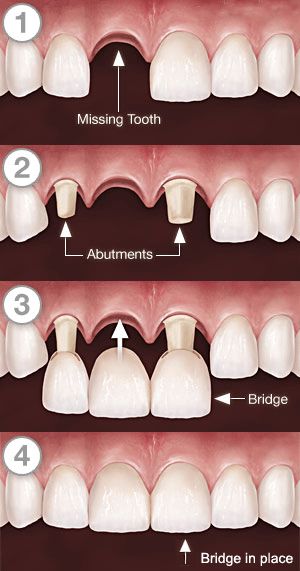
The rotting flesh was under an abutment. It was at the end of my jaw. And that tooth, was “repaired” when I lived in the United States, and it was done incorrectly way back then. And so over the years after my American dental work, a silent rot grew and grew… until it expanded and caused a flexing of my bridge which would push on my remaining “good” abutment. And this pushing would hit me as painful lightening at my nerves on this tooth.
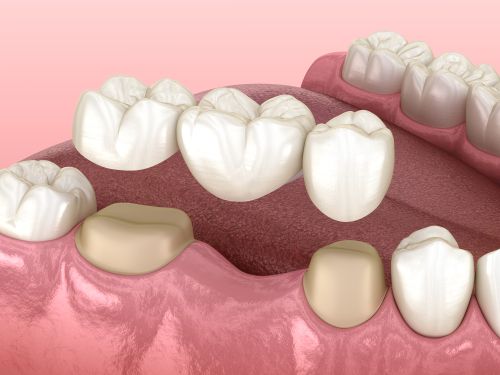
Well, he chipped away and removed the dental bridge.Found that the rot had extended to a fourth nearby tooth, and had to remove it as well.
Cleaned it all out, and now I have a multiple day treatment plan. So as I type this, I have four craters in my jaw, and am taking medicine to mitigate the pain and prevent infection and heal the open sores.
Later on, the dentist will install a temp bridge, and then after that, a full replacement bridge or some sort. Perhaps something like this… a dental implant known as Osseointegration. Oh… that’s gonna be painful. The drilling is gonna be an event, I’ll tell you what.

Anyways,
All is good. I’m on the mend.
People, take care of your body, and certainly take care of your mouth. Learn from my experience. If I was still in the ‘States the dentist might recommend a set a dentures. But here in China, that’s considered to be really, really old technology.
Aside from that, I am back at my pre-vacation weight and feel wonderful.
And I’m gonna start the day right.
Take care everyone. Today…
What are some examples of kind people that have touched your heart?
In 2012 a man was traveling in a Suzuki car with 3 others in Patna. He was driving at a speed of 100 kmph on an empty highway. Soon an SUV passed them at a very high speed. The SUV was so fast that it almost got out of control and was about to hit the Suzuki.
To save the accident, the driver of Suzuki tried to move away from the passing SUV. Doing so, the Suzuki got out of control and overturned and hit the corner of the road.
(photo for illustration only)
Four people in the car were badly injured, but narrowly escaped. The SUV driver fled after the accident and there was no one else on the road. Suzuki’s driver was badly injured and he got out of the car and sat on the middle of the road, shouting “Save!”.
It was 36 degree heat and the road was scorching. The driver lay on the road thinking that he was about to die. He wanted to help the other 3 passengers, who were still inside the car and were moaning in pain.
A few minutes later a car arrived. The man who got out of the car made a video of the accident with his phone. Then he took a closeup of the driver, whose face was covered in blood. Then this person sat in his car and left from there.
A few more minutes passed and the other car stopped. A middle-class couple came out and saw the driver lying on the hot road. The couple went back to their car and came back with a sheet.
To protect the injured driver from the scorching sun, the couple shed a sheet over him and stood up. They both stood in the sun. The husband then called emergency health services and asked them to come to the scene immediately.
They both stood there giving shade to the injured driver for almost 70 minutes! So long in the sun!
After the ambulance arrived, the couple took two other passengers in their car along with the ambulance.
The couple left the hospital after the four injured were admitted to the ICU. The driver narrated this story after recovering from an injured condition for several months, but he could not meet the noble couple.
Tariffs Hit: Here Comes the Trumpcession w/ Prof. Richard Wolff
What is the most powerful supernatural warning you have received?
I should be dead right now. My three best friends should have joined me.
It was a Saturday evening in August, 1993. I borrowed my mom’s car and picked up my three best friends. One of my buddies heard about a creepy graveyard that he suggested we check out.
We drove to the graveyard that had graves dating back to the 1700s. (Some of the first settlers in Eastern Canada) At the top of the hill, there stood a statue of an angel that had a reputation. It was rumoured that if you circle the statue thrice while saying “Mother Mary”, a ghost would appear.
We tried the ritual and absolutely nothing happened. We checked out some headstones but quickly got bored. What could four teenage boys with a full tank of gas and poor decision making abilities do on this August night?
I came up with the idea to burn donuts in a nearby field that had gone to seed years ago. The thick grass stood 6 feet tall. The car that we were driving in was a compact hatchback. Visibility ended about 6 inches in front of the bumper. What could possibly go wrong?
We piled into the car and spent 20 minutes plowing grass, yanking the handbrake and drifting sideways. I kept the speed around 70 km/h. We giggled like sugar-buzzed toddlers the whole time.
With no desire to stop abusing my poor mother’s car for the next hour, I was suddenly startled by THREE ABRUPT KNOCKS on the bottom of the car. Not wanting to rip the exhaust off or worse, I stopped the car to look for damage.
The grass was so thick that I was forced to shoulder-check the driver’s door open. I poked my head under the car. I couldn’t see any rocks, roots, or any damage. I waded through the thick grass to the rear of the car. Again, no damage or debris found. I was relieved that the exhaust was intact. I had to know what the source of the knocking was though.
Walking the tracks left by the car yielded no clues to the source of the knocking. I found no ruts, rocks or logs. SOMETHING caused that noise. Maybe something is caught in the radiator? Something in the fan belt?
I forced my way through the thick grass to the front of the car. I leaned down to look for SOMETHING caught in the radiator. The moment I leaned over, my left foot slipped. Suddenly I found myself sliding down a slope. I slid to the bottom of a MASSIVE DRAINAGE DITCH! The ditch was 25 feet across and 12 feet deep. The August sun had baked the clay as hard as concrete. I had stopped the car 12 inches from the edge with ZERO idea what was in front of me. I was perfectly square to the ditch.
Had I not stopped, I would have hit the opposite side of the ditch at 70+ km/h. The trajectory would have been perfectly square and would have been similar to driving into a concrete wall. I should have killed myself and my three best friends that night.
I never found the source of the three knocks…
First Time Hearing ‘Journey Wheel in the Sky’
This is great.
Is Australia under threat with Chinese war ships holding live fire missions off the Australian coast just outside our jurisdiction?
Australia recently sent an RAAF P-8A Poseidon aircraft to patrol the South China Sea. That’s 5,000km from Australia’s coast.
In May last year, they sent a P-8A to the Yellow Sea, just off China’s coast, 6,800km away from Australia.
Supposedly that one was about “enforcing sanctions on North Korea.” The fact that China has a major submarine base in Qingdao on the Yellow Sea was purely coincidental, of course.
But in that context, let me ask you something.
Given that the main mission of the P-8A as per the Australian Air Force website is submarine warfare and anti-surface warfare, is Australia threatening China with these actions?
China sending three naval vessels (including a replenishment ship) to international waters off Australia’s coast shouldn’t be construed as a threat, but rather a message: You want to send your military to waters off our coast or disputed waters we claim? OK. How do you like it when we do the same to you? (Bonus points: the PLA Navy gets to practice replenishment at sea and other things that happen when sending ships on long voyages).
TLDR – China’s action is an application of the golden rule: “Do unto others as you would like them to do unto you.” Send submarine hunters off our coast, we’ll send a couple of ships to hang around off yours. It’s a shame so many policymakers (and media) seem unable or unwilling to connect the dots.
Day One
Submitted into Contest #279 in response to: Write a story from the POV of a zombie, mutant, or infected creature.… view prompt
Brian Adkins
I take another step forward, faster this time. The hunger grows louder in my skull, screaming at me to close the distance. The man backs away, fumbling with his dog’s leash. “Stay back!” he yells. “You’re bleeding, man—just stay back!” His voice cracks on the last word as he turns and runs.
My legs lurch into motion, dragging me after him. My arms flail like dead branches in the wind, uncoordinated but relentless. I don’t think. I just move. His breathing is loud now, shallow and panicked, and I can hear his footsteps pounding against the pavement. The rhythm is hypnotic, a drumbeat driving me forward.
The hunger is deafening, drowning out every other thought. I need him.
He stumbles, and I’m on him before he can recover. My body crashes into his, sending us both to the ground. His head hits the concrete with a sickening crack. The sound makes my jaw ache, my teeth clenching in anticipation. He’s still moving, hands scrabbling at the ground, but I pin him down easily.
There’s blood—fresh and hot—trickling from a gash on his temple. The scent is intoxicating. My mouth opens, teeth sinking into his shoulder. The taste floods my senses, rich and metallic, but perfect. Warm. Wet. The hunger finally quiets, replaced by a primal satisfaction as I tear into him.
He screams, the sound piercing, but it fades quickly. His struggles weaken as I claw at his chest, ribs cracking under my hands. There’s no thought anymore, just instinct. I rip and chew and devour until there’s nothing left to take. His body goes still, lifeless. Useless.
I sit back, panting. Blood drips from my mouth, pooling on the pavement. My hands are slick with it, trembling as I stare at what I’ve done. The man’s face is frozen in a scream, his eyes wide and unseeing. I should feel something—guilt, horror, anything—but there’s just emptiness.
And the hunger. It’s creeping back already, gnawing at the edges of my mind.
I stagger to my feet, my legs steadier now. The man’s blood coats my hands, sticky and dark, but I don’t wipe it off. Instead, I swipe at the corner of my mouth, licking it away without thinking. The taste lingers, delicious and satisfying.
What am I?
I catch a glimpse of my reflection in a nearby car window. The image stops me cold. My skin is pale, almost gray, and my eyes are cloudy, sunken. My lips are dark with dried blood, and my teeth are jagged, stained crimson. I look… dead.
No, not just dead. Hungry.
A sound in the distance pulls my attention—a child’s laugh, high and innocent. The hunger roars to life again, sharper this time, more demanding. I turn toward the sound, my legs already carrying me forward.
I try to resist, to stop, but my body won’t listen. The hunger is in control now, a force stronger than my thoughts, stronger than anything I’ve ever felt. Every breath I take fills my lungs with the scent of life, fresh and vibrant, and I know I won’t stop until I’ve taken it for myself.
I shamble down the street, my mind clouded and my body heavy, but the hunger keeps me moving. I pass the child, thankfully unnoticed, drawn instead to a new scent. It’s stronger, closer—an older woman stepping out of her house, her arms full of groceries. She doesn’t see me at first, her head bent as she fumbles for her keys.
Her heart beats like a drum in my ears, a steady rhythm that makes my mouth water. I take a step closer, my shadow falling over her. She looks up, her eyes widening in confusion before the fear sets in.
“Can I help you?” she asks, her voice wary.
I can’t answer. I can only lunge.
She screams, dropping her bags, and I’m on her before she can run. This time, it’s quicker. The hunger drives me to act, efficient and brutal, and the world narrows to the sound of her heartbeat slowing, then stopping.
When it’s over, I stand over her body, breathing heavily. My hands shake as I wipe them on my shirt, smearing the blood across the already-stained fabric. The hunger is sated again, but only for a moment. I know it will come back, stronger each time.
I stumble away, leaving her there on the sidewalk. The world feels quieter now, emptier. My vision sharpens as the fog in my mind lifts slightly, and I notice the small details around me—the cracked pavement, the flickering streetlights, the distant sound of sirens.
The sirens grow louder. They’re coming. For her? For me? I don’t know. I don’t care.
The hunger stirs again, faint but insistent, and I know I’ll need to feed soon. The thought doesn’t bother me as much as it should. It feels… natural. Right.
This is my life now.
No—this is my death.
Classic Quiche Lorraine
This traditional cheeseless Classic Quiche Lorraine requires a somewhat longer baking time and must stand for half an hour before serving.

Ingredients
Filling
- 6 slices bacon
- 4 eggs
- 1 1/4 cups Half-and-Half
- 1/2 cup whipping cream
- 3/4 teaspoon salt
- 1/4 teaspoon ground white pepper
- 1/4 teaspoon freshly grated nutmeg
Egg Pastry
- 1 1/4 cups all-purpose flour
- 1/4 teaspoon salt
- 1/4 cup butter
- 2 tablespoons vegetable shortening
- 1 egg, slightly beaten
Instructions
- Heat oven to 375 degrees F.
- Prepare Egg Pastry and bake the empty shell for 10 minutes. Remove from oven and set aside.
Filling
- Sauté bacon in a skillet over medium-high heat until barely crisp (about 6 minutes); drain well. Chop into pieces and sprinkle over bottom of the partially baked quiche shell.
- In a mixing bowl, beat eggs and stir in Half-and-Half, cream, salt, pepper and nutmeg. Pour over bacon in shell and bake until knife inserted in center comes out clean (45 to 50 minutes); custard will be soft.
- Remove from oven and cool 30 minutes.
- Serve at room temperature.
Egg Pastry
- In medium bowl, mix flour and salt. Using a pastry blender or two knives, cut in butter and shortening until mixture is crumbly.
- Gradually add egg to flour mixture, stirring until dough is evenly moistened and begins to cling together. Shape into a flattened ball.
- Roll out on a floured board or pastry cloth to about a 12 inch circle. Ease pastry into a 9 1/2 inch quiche pan. Trim edge to about a 1/2 inch overhang, then fold pastry under, even with top of dish.
FALSE FLAG INCOMING? Planned British attack on Russia’s “shadow fleet”:
Hal Turner World August 05, 2025
The Russian Government is warning that the UK is planning at attack upon Russia’s “shadow fleet” of oil transport. They will use the ensuing oil spill to declare Russia’s Shadow Fleet “a threat to international shipping.”
From the Press Office of the SVR of Russia – on the planned British attack on Russia’s “shadow fleet”:
The plan involves organizing a major sabotage, the damage from which will allow declaring the transportation of Russian oil a threat to all international shipping.
Ultimately, it may involve the detention of any “suspicious” vessels in international waters and their escort to NATO state ports.
London intends to entrust the execution of both terrorist acts to Ukrainian security forces. Their predictably dirty work and inability to “cover their tracks” are seen by the British as a guarantee of their own impunity. The international investigation will place responsibility for the disaster either on Russia or, in the worst case, on Ukraine, by analogy with the sabotage of the “Nord Streams.”
The timing of the attack in the UK is intended to be chosen to use the media effect from it to pressure the Trump administration. The goal is to force Washington, against national interests, to adopt the harshest possible secondary sanctions against buyers of Russian energy resources, who will appear as “indirect culprits of the tragedy.”
What is poor white trash? Where do the poor white-trash people of America live?
I live in a rural part of south Louisiana, so I feel qualified to answer this question.
To start, there is white trash…..and there is POOR white trash. They are NOT the same.
First, ill explain white trash. These people generally tend to be in trades. Welders, mechanics, framers, plumbers, ect. They have earning power, and live in middle class areas, and sometimes mobile homes (trailers), usually on their own land. The homes generally have shops on the property, or areas where they work on cars/boats/ATVS, ect. There is almost always a number of non-running vehicles on the property, such as cars used for parts. The home is in decent shape, as in no roof leaks, central HVAC that works, ect. What qualifies them as white trash is the amount of junk and debris covering the property, unhealthy and unkept appearances, usually at least one person is mentally questionable at best, resulting in police presence at the home occasionally. Make no mistake, some of these people have SIGNIFICANT earning power, but the vast majority of their income is wasted on poor financial decisions, high interest loans, food and booze, and general stupidity. These are the type of people that may earn 100k+, have a 80k brand new huge truck, and still live paycheck to paycheck scraping by.
Now, POOR white trash, they live in a trailer parks, or rent trailers on private land. The trailers are almost always run down, leaky roofs, tin foil on the windows, window units for AC, ect. You can usually find junk all over the property. Broken lawn mowers, bikes missing wheels, ect. They usually work low end jobs, or don’t work at all. Government assistance is almost guaranteed. They are morally bankrupt most of the time, Domestic violence, police intervention, drug use, heavy drinking, poor parenting, and things like that are all signs.
Most of these people live in rural areas, but in some towns, depending on what you exactly consider rural, have them living close to town, or in town directly, and there is a spectrum of “trash”. My town has a very large trailer park almost in the dead center, and some of the people are the biggest trash you’ve ever seen, and some are just poor and “mildly” trashy, and are trying to escape. Some people wallow in their own filth and love it, and some are desperately trying to escape and don’t know how.
I do feel that there is more “poor white trash” the further south and east you go. The “poor white trash” per capita is probably higher in Louisiana, Mississippi, and Alabama, than say, the west coast or New England. Not to say there isn’t poor people in those areas, but the mental picture people get when you say poor white trash, like a girl standing by a trailer in cookie monster pajama pants, wife beater with no bra, a beer belly, holding a baby, and smoking a cigarette, is closer to what you would find in the south.
Sir Whiskerton and Ferdinand’s Fowl Fortune Teller: A Tale of Quacks, Crystal Balls, and a Cat’s Common Sense
Ah, dear reader, prepare yourself for a tale of feathered fortune-telling, absurd prophecies, and one very dramatic duck who thought he could outwit destiny itself. Today’s story is one of misplaced ambition, farmyard hilarity, and a cat who proved that the present is far more interesting than the future. So, grab your popcorn and a sense of humor (for the inevitable absurdity), as we dive into Sir Whiskerton and Ferdinand’s Fowl Fortune Teller: A Tale of Quacks, Crystal Balls, and a Cat’s Common Sense.
The Fortune-Telling Booth
It all began on a sunny afternoon when Ferdinand the duck, ever the dramatic and self-proclaimed “singing sensation,” decided to expand his repertoire. “Why limit myself to music,” he pondered aloud, “when I can also predict the future? After all, my quacks are as mystical as they are melodious!”
With a flourish of his wings, Ferdinand set up a fortune-telling booth in the middle of the farmyard. He draped a colorful tablecloth over an old crate, placed a crystal ball (which was actually a glass jar filled with water) in the center, and hung a sign that read: “Ferdinand’s Fowl Fortune Teller: Your Future Revealed in Quacks!”
The animals gathered around, intrigued by the spectacle. “What’s this all about, Ferdinand?” asked Doris the hen, her feathers ruffled with curiosity.
Ferdinand struck a dramatic pose. “Step right up, dear friends! For just a handful of corn, I will reveal your destiny through the power of my quacks!”
The Prophecies Begin
The first to approach the booth was Porkchop the pig. “Alright, Ferdinand,” he said, dropping a few kernels of corn onto the table. “Tell me my future.”
Ferdinand closed his eyes, tilted his head, and let out a series of dramatic quacks. “QUACK! QUACK! QUACK!” he proclaimed. Then, with a dramatic pause, he announced, “Porkchop, I foresee… a great event in your future! It will happen… someday.”
Porkchop blinked. “That’s it? That’s my fortune?”
Ferdinand nodded sagely. “The future is mysterious, my friend. But mark my words—someday, something great will happen!”
Next up was Bessie the Tie-Dye Cow. She placed a few kernels of corn on the table and waited patiently as Ferdinand quacked dramatically. “Bessie,” he declared, “I see… a journey in your future! You will travel far and wide, spreading peace and love wherever you go.”
Bessie smiled serenely. “Oh, how groovy! I’ve always wanted to be a traveling cow.”
Then came Rufus the dog, who wagged his tail excitedly as Ferdinand quacked at the crystal ball. “Rufus,” Ferdinand announced, “I foresee… a great romance in your future! You will marry… a cucumber!”
Rufus tilted his head in confusion. “A cucumber? But I’m a dog!”
Ferdinand waved a wing dismissively. “Love knows no bounds, my friend. Trust the quacks!”
The Investigation
As the animals buzzed with excitement over Ferdinand’s prophecies, Sir Whiskerton decided it was time to investigate. “Ditto,” he said, turning to his ever-echoing apprentice, “we need to get to the bottom of this fortune-telling nonsense.”
“Nonsense!” Ditto repeated, nodding enthusiastically.
Sir Whiskerton approached the booth, his monocle glinting in the sunlight. “Ferdinand,” he said, “care to predict my future?”
Ferdinand quacked dramatically, then declared, “Sir Whiskerton, I foresee… a great mystery in your future! You will solve a case so baffling, it will leave the farm in awe!”
Sir Whiskerton raised an eyebrow. “A great mystery, you say? How convenient, considering I solve mysteries for a living. Care to be more specific?”
Ferdinand hesitated. “Well, the future is… um… vague. But trust me, it will be amazing!”
Sir Whiskerton smirked. “I see. Well, here’s a prediction for you: if you keep this up, you’ll have a very annoyed cat on your hands.”
The Moral of the Story
As the day wore on, the animals began to realize that Ferdinand’s prophecies were more entertaining than accurate. Doris the hen, who had been told she would “lay an egg of great importance,” was still waiting for it to happen. Rufus the dog, meanwhile, was avoiding cucumbers at all costs.
Sir Whiskerton gathered the animals for a moment of reflection. “Dear friends,” he said, “while predictions can be fun, they’re no substitute for living in the moment. The future is uncertain, but the present is full of possibilities. Why waste time worrying about what might happen when you can enjoy what’s happening right now?”
Ferdinand nodded sheepishly. “I suppose I got a bit carried away,” he admitted. “But it was fun, wasn’t it?”
The animals chuckled, agreeing that Ferdinand’s fortune-telling booth had been a delightful distraction—even if his prophecies were a bit ridiculous.
A Happy Ending
With the fortune-telling booth dismantled and the farm returning to normal, the animals decided to make the most of the present. They gathered in the barn for an impromptu dance party, with Ferdinand leading the way with his signature quacks.
As for Sir Whiskerton, he returned to his favorite sunbeam, content in the knowledge that he had once again brought a bit of order to the farm. And while he couldn’t predict the future, he knew one thing for certain: life on the farm was always full of surprises.
And so, dear reader, we leave our heroes with the promise of new adventures, new lessons, and hopefully, no more cucumber-related prophecies. Until next time, may your days be filled with laughter, love, and just a little bit of feline wisdom.
The End.
Good question!
It’s precisely these kinds of good questions that keep me from leaving this website.
You make a very valid point, and I also think that the “Chinese people” are increasingly showing militaristic tendencies.
I’m extremely anxious about this.
But there are also huge differences between China and Nazi Germany or Japan.
To put it simply, I believe the cause of World War II was that Nazi Germany and Japan, after gaining industrial capabilities, realized there were no more colonies left to seize.
China and the Soviet Union later faced the same predicament. The difference lies in this: Japan and Germany were small, while China and the Soviet Union were vast, both in population and territory.
So Germany and Japan embarked on a path of fascist outward expansion, while China and the Soviet Union turned inward, exploiting their own people to secure their initial capital.
The biggest difference between China and Germany today is that China’s population is 17 times that of Germany, and its territory is 26 times larger.
So I think it’s not fair to make a simplistic, mechanical comparison—China and Nazi Germany aren’t on the same starting line.
The Chinese people are indeed filled with anger. For 2,000 years, most of the time, we were a massive empire. Even during periods of civil war, we could usually suppress external forces with ease.
But after 1840, it’s been a century of national humiliation, and that anger runs deep.
When our industrial capacity equals the combined total of the second to tenth-ranked nations and continues to grow, isn’t it natural to have thoughts of revenge?
On the other hand, the Chinese Communist Party has, with astonishing capability, managed to suppress the militaristic tendencies of the Chinese people.
Here’s my suggestion:
Try to support the Chinese Communist Party as much as possible.
Otherwise, 1.4 billion enraged Chinese people, combined with our industrial might, would not only be a disaster for China but for the world as well.
Also, the above doesn’t apply to Japan.
Let me state my position: If China invades any country, I will do everything in my power to oppose it—oppose my own motherland.
But if it’s an invasion of Japan, I’d be willing to use my life as a human bomb.
The Buggles – Video Killed The Radio Star (REACTION) First Time Hearing It
Why, despite the hard work of the Filipino people, has it not become as advanced as Japan and Korea?
The Philippines also had its moments of glory.
- In 1950, the Korean War broke out, and the Philippines naturally became the logistics base of the United States in the Asian battlefield.
- After the Korean War, conflicts broke out again in the Vietnam battlefield, and the Philippines once again became the logistics and supply base of the US military.
With the economic support of the United States and the huge demand created by the war, the economy of the Philippines has developed by leaps and bounds.
In 1969, the per capita GDP of the Philippines reached US$262, second only to Japan in Asia. Manila, the capital of the Philippines, is known as the “Little New York of the East” because of its prosperity.
The Asian Development Bank (ADB), headquartered in Manila, predicted the total economic output of countries in the world in the next 50 years. In addition to predicting that Japan will surpass the United States to become the world’s largest economy in 50 years, it also predicted that “the Philippines will become the world’s tenth largest power.”
What makes the Philippines even more proud is that although Japan and the Philippines are both “little brothers” of the United States in Asia, the Liberal Democratic Party is the only dominant party in Japanese politics, and collusion between politicians and businessmen is common in Japan, with serious corruption, which is constantly criticized by Japanese and overseas media; however, the Philippines has copied the political system of the United States in its entirety, and the judiciary under the separation of powers is completely independent, and the democratic atmosphere is relatively strong.
Therefore, the United States is very happy to regard the Philippines as its “favorite student” and promote it as the “democratic showcase” of Asia.
In the words of Americans, “Any country that was as poor as the Philippines in the past can immediately become a developed country as long as it changes to the American system and believes in American-style democracy.”
In fact, in order to support this “democratic model”, the United States gave the Philippines the market and technology at that time, not only gave a lot of benefits in terms of tariffs, but also assisted the Philippines’ industrialization development.
The Philippines did live up to the expectations of the “United States”. With the continuous “feeding” of the United States, the economic growth once reached more than 9%. In 1982, the Philippines was even listed as a “middle-income country” by the World Bank, which meant it had one foot into the ranks of developed countries.
It is worth mentioning that although both Japan and the Philippines are Asian countries supported by the United States, their development paths are completely different.
Japan originally had an advanced industrial base, and under the “care” of the United States, it gave priority to the development of the industrial system; while the Philippines, before and after independence, relied on the United States and adopted a unilateral trade system mainly based on the export of agricultural products and resources, and has not been able to establish a mature industrial system.
Although the Philippines has also noticed the problem and made some changes through strong national intervention, it has always been a lot of thunder and little rain, and has not been able to fundamentally solve the defect of its own insufficient industrial strength.
All the problems of the Philippines can actually be summarized in one sentence: success is due to the United States, and failure is also due to the United States.
In the more than 20 years of being “favored” by the United States, the Philippines has been peacefully serving as an agricultural product base for the United States and doing various OEM industries transferred from the United States. There are so many businesses that they can’t handle them themselves, and they have to subcontract them to Taiwan, Thailand and other places.
But such days will soon come to an end.
In the 1970s, under the impact of the oil crisis, the global economy was shaken. Western countries were busy saving themselves while upgrading their industries.
But at this time, the Philippines had formed “path dependence” and continued to be a “processor” and “agent” comfortably. They had no idea of transformation and did not develop any core industries.
At that time, the Philippines firmly believed that as long as they listened to the United States, the United States would continue to help.
However, the United States has never been a kind-hearted “philanthropist” or an omnipotent “savior”.
Since the early 1980s, the Philippine economy has been in a state of continuous fluctuation, leading to constant domestic grievances.
With more grievances and economic downturns, social contradictions have risen sharply, and ordinary people often vent their dissatisfaction by protesting in the streets.
Faced with the strong public calls for economic improvement, the Philippine government was not unwilling, but was really powerless.
In 1983, the Philippine government, which was once again hit by a serious economic crisis, had to ask for help from the IMF (International Monetary Fund), hoping to obtain loans to ease the domestic crisis.
The IMF proposed that the Philippines must open up the market and achieve free trade before it can borrow money.
Although the Philippines was somewhat hesitant about this, it agreed without hesitation when it thought that the IMF was backed by the US government.
In order to get the loan, the Philippines not only implemented trade liberalization and lifted policy restrictions on imported products, but the government also sold all state-owned enterprise assets, privatized state-owned enterprises, and gave up control of important production departments, opening up domestic communications, transportation, and finance to foreign capital and implementing free competition.
Simply put, the “prescription” prescribed by the IMF was the “free economic model” believed by Western economists at the time, that is, privatization of state-owned enterprises, market liberalization, and government democratization, in order to enhance corporate competitiveness.
In fact, this set of ideas is correct from an economic point of view:
state-owned enterprises are inefficient, and economic efficiency can be improved through privatization; market liberalization and reduced government intervention can also improve economic efficiency; democratization not only supervises government integrity, but also promotes the enthusiasm of working people.
But unfortunately, the Philippine economy has fallen into the abyss, and has been declining all the way, and has never been better.
Objectively speaking, the Philippines is not “cheated” by the United States or the IMF. After all, the former sincerely hopes that the Philippines will get better and better, and the “democratic model” established by itself is convincing; the latter hopes that the Philippine economy will improve so that there is money to repay debts.
The crux of the problem is that neither the United States nor the IMF realizes that the Philippines, which has introduced American-style democracy and the Western market economy system, is actually playing “tricks”.
Because these economic “antidotes” are only suitable for countries with truly democratic political systems, they are completely incompatible with the Philippines.
After independence, the Philippines has never carried out real wealth and land reforms. Under the “cloak” of American-style democracy, the interest groups in the Philippines are still big landlords, big plantation owners, Western compradors and aristocratic groups.
And we need to clarify a logical problem: European and American countries did not have democracy first and then became rich and strong, but first became rich and strong and then became democratic. They continuously promoted economic and educational development, then acted on politics, and then promoted the progress of social civilization.
In other words, wanting to grow “green and pollution-free” crops on a piece of poisoned land is itself an act of covering one’s ears and stealing the bell.
The Philippines is such a country where all kinds of corruption have penetrated into its “bone marrow”.
In 2023, a United Nations report stated that the highest-income group in the Philippines, accounting for only 1% of the country’s population, holds 17% of the national income, while ordinary people, accounting for 50% of the country’s population, only hold 14% of the national income, with a monthly salary of less than 12,026.7 Philippine pesos.
Today, in Manila, the most prosperous city in the Philippines, there are both modern high-rise buildings and slums with millions of poor people, many of whom can only rely on picking up restaurant waste to feed themselves.
Under the shadow of clan politics, corruption is rampant in the Philippines, gangs are rampant, and in diplomacy, they only follow the United States, and no longer have the style of “the second richest country in Asia” in the past.
Civilization and backwardness, poverty and wealth coexist, and eventually become the unchangeable fate of the Philippines.
INSANE! Nezha 2 Tickets SELL OUT in 45 SECONDS – Singaporeans Pay S$2000 to Watch!
In China, Everyone… everyone… EVERYone has watched this movie. You haven’t seen anyone who hasn’t watched it. And the price? Is about 1/3 the regular movie pricing. Sheech! It’s crazy!
It’s a “cultural earthquake”.
Shorpy
SHORPY 4a03997a.preview


Cajun Air Fryer Scallops
Easy breaded Cajun Air Fryer Scallops are coated in a seasoned bread crumb mixture, then fried in the air fryer so they’re crispy on the outside and soft on the inside.

Prep: 10 min | Cook: 10 min | Yield: 4 servings
Equipment
- Air Fryer
Ingredients
- 1 pound large (10-20) scallops, thawed
- 1 tablespoon olive oil
- 1/4 cup bread crumbs
- 2 teaspoons Cajun seasoning
- 1/4 teaspoon salt
- Olive oil or avocado oil spray
Instructions
- Heat air fryer to 400 degrees F. Line air fryer with aluminum foil.
- Run your finger along the side of each scallop and remove the side muscle; discard it. Place scallops on a plate then pat them dry with a paper towel. Drizzle olive oil over the scallops.
- Combine the bread crumbs, Cajun seasoning and salt in a bowl, then transfer the scallops to that bowl and stir gently until the scallops are coated.
- Place the scallops in the air fryer, making sure they’re not overlapping. If they don’t all fit, cook them in batches. Spray the scallops with a little olive oil/avocado oil spray.
- Air fry the scallops at 400 degrees F for 8 to 10 minutes, shaking the basket after 5 minutes.
First Time Hearing ‘Weezer- Pork and Beans’
The Health Code Blues
Submitted into Contest #279 in response to: Write a story from the POV of a zombie, mutant, or infected creature.… view prompt
Chris Jones
“Aw geez, Herb!” Big Mike’s bulk crashed outta nowhere, knocking over an empty Cinnabon display. “We’re zombies! Whatcha think bad bacteria’s gonna do – make us more dead?”
I adjusted my name tag. H. Prendergast gleamed through the cracks. “Protocol exists for good reason.”
“Um, excuse me?” Karen drifted over from her yoga corner, yoga top still spotless. “But like, this whole masculine energy is literally disrupting our mindful consumption vibes?”
Her platinum blonde balayage somehow still looked fresh – must’ve been that “post-life hair restoration ritual” she kept pushing on Instagram. Last week she’d tried organizing a “conscious brain consumption workshop” right in the middle of a feeding frenzy. Typical Karen stuff, really. Even death couldn’t cure that level of… well, Karen-ness. The crystals clinked against her green juice bottle – now filled with something decidedly less wholesome than kale smoothies.
My fingers found the bridge of my nose – old habits die harder than people. “Karen, zombification isn’t caused by negative-”
“If I might interject,” Dr. Wilson cut in, scribbling with her backward arm. “The bacterial colonies in unrefrigerated cerebral tissue display quite remarkable growth patterns, though given our current metabolic state…”
Her upside-down arm kept writing – funny how that happened during reanimation. Third time this week she’d interrupted with some science mumbo-jumbo. Back when she was chief of neurosurgery at County General, that know-it-all attitude probably worked better. Now she just collected data about our rot like it was gonna win her a Nobel Prize or something. The scissors holding her bun caught the light as she tilted her head, still doing that thing where she observed us like we were lab rats ‘stead of fellow dead folks.
My head started pounding – weird, considering my current condition. I grabbed a fresh citation form, paper crisp against all this chaos. At least my paperwork stayed orderly, even if nothing else did.
Something crashed near Foot Locker. Feeding sounds followed. I gripped my clipboard tighter. More violations to write. Back when I inspected hot dog carts, life seemed simpler.
“Fr… fresh meat!” Big Mike’s loose jaw flapped with excitement. “Les’go Herb! Still warm – jus’ how ya like it!”
“Pro… procedures!” My voice cracked. “Need… sneeze guards! Hair nets! Basic serving line organization!”
“Oh. Em. Gee? Like, totally?” Karen bounced, perfect hair swishing. “We should absolutely honor our food’s spiritual journey? Quick sage-cleansing circle before we feast?”
Victoria’s pen scratched away. “Fascinating behavioral patterns emerging in post-mortem social groupings…”
Big Mike ignored us, already stumbling toward fresh meat. Other zombies crawled outta stores, drawn by breakfast possibilities. My professional standards crumbled faster than last week’s cerebellum.
“HALT!” I threw myself between the horde and Foot Locker, wielding my clipboard. “First we establish proper- oof!”
Shambling bodies knocked me sideways. My precious clipboard – last piece of civilization – slid across tiles.
“Most intriguing territorial display,” Victoria mumbled, scooping up my clipboard with her backward arm. “Though perhaps ineffective given current group dynamics…”
“Roll up, ya meatbags!” Big Mike’s voice boomed. “O’Malley’s All-You-Can-Eat Brain Bar now serving!”
Big Mike – lord, that man. Even dead, he acted like he was still running that health-code nightmare of a pub downtown. That B-minus rating he got in ’19 which nearly gave me an aneurysm. Still remember writing up that report with shakin’ hands after finding the expired meat hidden behind the good stuff. Now here he was, same blood-stained O’Malley’s shirt stretched over his massive frame, jaw hangin’ sideways like a broken door, trying to run another unsanitary operation. Some things don’t change, even after death.
“Unregistered establishment!” I scrambled upright, snatching my clipboard back. “Where’s your food service license?”
“Like, everyone?” Karen twirled through the crowd, spraying lavender mist. “We totes need to set our consumption intentions? Gratitude circle time?”
The feeding frenzy paused. Half the zombies shuffled toward Karen’s wellness circle, while others clustered round Big Mike. Perfect timing for proper protocol implementation.
“Right. Simple three-point system…” I sketched diagrams with my pen. My dead heart mighta fluttered. “First: sanitize hands. Second: orderly queue formation. Third: temperature monitori-”
A scream cut through the mall. Running footsteps echoed. My audience’s attention scattered faster than rats in a health code violation. Even my best PowerPoints never lost ’em this quick.
“Subject group displays immediate response to auditory hunting stimulus,” Victoria scribbled, surgical scissors clicking in her bun.
Karen’s wellness warriors abandoned their meditation circle – though they paused ta align their chakras first. My authority crumbled like moldy bone marrow.
“St… stop!” I hugged my citation book. “Haven’t covered proper pursuit protocols!”
Big Mike’s massive frame blocked everything as he paused mid-lurch. “Herb, buddy. Ya gotta learn ta roll with it!” He thumped his bloody ‘O’Malley’s’ shirt. “Ran my pub fifteen years. Only got one B-minus from them inspectors!”
My eye twitched. “B-minus barely passes in normal times! During apocalypse, standards should rise!”
“Speaking of rising?” Karen swayed, green juice sloshing. “My spirit guide in Sedona? She says we need elevated vibrational mastication frequencies?”
“Actually,” Victoria’s pen stopped. “Mastication becomes optional post-jaw separation, though behavioral patterns suggest persistent human dining compulsions…”
Another scream bounced off mall walls. Primal instincts kicked in. Suddenly I stood alone, surrounded by retail wreckage and violated regulations.
Staring at my clipboard – rows of citations neat as cemetery plots – each line marked another defeat in my war against chaos. Death hadn’t killed my need for order. Maybe that’s what made me the real zombie.
Feeding sounds grew louder. I straightened my tie, checked my pen’s ink, and shuffled toward disaster. Someone had ta maintain standards, apocalypse or not.
The Foot Locker scene woulda given any health inspector nightmares. Zombies sprawled over knocked-down shelves, faces smeared with evidence. Fresh meat smell mixed with decay and Karen’s endless lavender oil.
“This… this here!” My clipboard trembled. “Perfect example… need designated feeding zones!”
“Bruh.” Big Mike glanced up, mouth full. “Ya killin’ the mood. Not the good kind neither.”
Victoria perched on a shelf, backward arm writing furiously. “Group continues resistance to hierarchical organization despite clear benefits of structured hunting patterns.”
“Um, that’s because they’re literally not aligned with their zombie goddess energy?” Karen adjusted her designer scarf. “My ‘Live Laugh Lurch’ workshop next week? It’s gonna completely transform our post-life wellness journey?”
My clipboard creaked. “Post-life journey? This isn’t spiritual evolution – it’s complete breakdown of basic health codes! Look!” I pointed at Dave stuffing another brain chunk in his ribcage. “No temperature control!”
“Easy there,” Big Mike stood, dislocated jaw swinging. “Dave’s just meal preppin’. Did it alla time at my place.”
“YOUR PUB HAD REFRIGERATION!” My voice hit citation-worthy levels.
“Fascinating correlation between past-life behavioral patterns and current manifestations,” Victoria mumbled. “Subject shows remarkable attachment to former professional standards despite obvious physiological changes.”
“Standards aren’t obsolete! Food safety transcends death! We must-”
A crash from the entrance cut me off. Boot steps echoed – military grade by the sound. Fifteen years inspecting army mess halls taught me that much.
“Omg you guys?” Karen clapped her manicured hands. “New clients! Special preview rate for my mindfulness sessions? Only three brains per workshop?”
Had ta act fast. Last chance for proper protocol before everything went sideways again.
“Listen up!” I planted myself front and center, channeling my inner Senior Inspector. “Before anyone moves, I’ve prepared a PowerPoint on proper hunting procedures-”
“Ya what?” Big Mike’s remaining eyebrow shot up. “When’d ya make that?”
Heat crept up my grey neck. “Found… working laptop in Office Depot. Had time between inspections…”
“Subject demonstrates extraordinary commitment to administrative tasks,” Victoria’s pen scratched. “Possible denial manifestation regarding current existential state?”
“Not denial – dedication!” I fumbled through my papers. “Now, regarding proper hand sanitation-”
Boot steps got closer. The horde stirred restless-like.
“Like, no shade?” Karen adjusted her yoga headband. “But your chakras are literally screaming right now? Maybe start with a cleansing breath-”
Something snapped inside me. “WE DON’T BREATHE! WE’RE DEAD!”
My shout knocked a ceiling tile loose. Everything went quiet. Even Victoria stopped writing.
“Uh… you good there, Herb?” Big Mike cleared what used ta be his throat.
Shame washed over me. Completely unprofessional. Gonna need a separate form for that outburst.
“I… apologize for elevated volume levels.” Straightened my name tag like it still meant something. “But proper procedure remains critical. We need organization. Structure. Food handling certificates!”
“Remarkable,” Victoria scribbled faster. “Acute stress response persists despite non-functional adrenal system.”
Tactical gear clicked closer. Multiple targets by the sound. My army cafeteria inspection days paid off – recognized those treads anywhere.
“Heads up, shufflers!” Big Mike blocked the doorway. “Prime grade-A stuff headed our way.”
“Oh em gee?” Karen bounced, green juice sloshing. Getting strong military energy vibes? Like, those free-range brain-types are totally packed with protein?”
My chance at last! “Exactly! Military means discipline! Our hunting protocols should match-”
Dave’s chest cavity made a wet squishing noise.
“See here.” Flipped to fresh citation paper. “Created simple grading system. Points for cleanliness, efficiency, proper storage-”
Tactical lights sliced through dark. Our horde melted into shadows.
“Group displays retained survival instincts,” Victoria whispered, still taking notes with her backward arm. “Suggesting muscle memory from-”
“Shhhh!” Caught myself. Great. Another self-citation for unauthorized shushing.
Five soldiers swept through, moving like pros. Finally – people who understood procedure!
“Remember,” one whispered, “Command says these zombies act weird. Stay alert.”
“Weird?” My professional pride stung. “Because we maintain standards?”
Another soldier nodded toward Karen’s corner. “That one keeps handing out wellness pamphlets.”
From her spot up on the Juice-It-Up counter, Victoria kept taking notes. I swear that woman’d document her own decomposition if she could. “Subject exhibits remarkable pack mentality… though questionable choice in dietary restrictions…”
My clipboard shook so hard I nearly dropped it. All them years of food handling certificates, wasted. “This is completely unacceptable!” Voice cracking like a health code violation notice. “Where’s the portion control? The serving guidelines? Has everyone forgotten basic food court protocol?”
The whole tactical response team just… scattered. Left everything behind – gear scattered everywhere, them half-finished wellness flyers Karen’s bunch was so proud of, and what was left of my dreams about proper dining procedure. A yoga mat tumbled past me, trailing peace crystals and broken promises.
But, against my expectations, we changed after that. Weeks passed. I learned to bend – just a little. My clipboard tracked progress ‘stead of just violations.
The new brain buffet system worked okay. Big Mike’s “grab-n-go” section next to Karen’s “mindful munching corner.” Victoria’s research showed organized hunting improved success rates. Added gold stars to my reports these days.
Dave still used his chest cavity for storage – but with proper containers now. For a dead health inspector, I’d call that progress.
China tells Trump: You want war? Bring it on!
What might be the reasons why Ancient Chinese coins did not have portraits of the ruling emperor on them (in contrast to other ancient civilizations where it was quite common for coins to have portraits of the ruling monarch on them)?
Thanks for asking.
I believe this practice stems from ancient Chinese beliefs in sorcery.
As early as the pre-Qin period (before 221 BC), people firmly believed in such practices.
There’s a story from that era: when King Wu of Zhou launched a campaign against King Zhou of Shang (1046 BC), a noble named Ding Hou refused to send troops.
In response, King Wu ordered a portrait of Ding Hou to be drawn and stabbed with a knife.
Soon after, Ding Hou fell seriously ill.
Fearing for his life, he begged for forgiveness.
Once King Wu removed the knife from the portrait, Ding Hou miraculously recovered.
While I highly doubt the authenticity of this story, its existence suggests that people of that time genuinely believed in such magical practices.
Similarly, there were rituals involving paper cutouts or dolls resembling the intended victim.
These effigies would bear the target’s name, birthdate, and ideally a strand of hair or fingernail (perhaps the gods or demons required DNA ,use it to lock the target? Just kidding!)
By stabbing the effigy with needles or knives, the practitioner believed they could inflict harm or even death on the actual person.
Don’t laugh—in ancient courts, anyone caught using such methods to curse the emperor would be executed.
Later, I read J.G. Frazer’s The Golden Bough and was astonished to learn that sympathetic magic and contagious magic, which were prevalent throughout Chinese history, were also practiced in ancient India, Babylon, Egypt, Greece, Rome, and among Native Americans.
It seems this belief is deeply ingrained in human consciousness.
This explains why Chinese coins rarely featured the emperor’s portrait—it would have made it too easy for enemies to obtain materials for curses.
Typically, ancient Chinese coins bore only inscriptions, with few images.
Interestingly, during the final years of the Chongzhen Emperor’s reign, a coin featuring a horse was issued.
After the Ming dynasty fell, some claimed this coin foreshadowed Chongzhen’s tragic fate.
The peasant rebel leader Li Zicheng, who captured Beijing and drove the emperor to suicide, was nicknamed the “Dashing King.” The character for “dashing” (闯) depicts a horse charging through a gate, linking the coin’s imagery to the emperor’s downfall.
By modern times, such beliefs had largely faded. When Yuan Shikai sought to declare himself emperor, he had his portrait minted on silver coins, popularly known as “Yuan Big Heads.” However, his reign lasted only 83 days before his death.
(Yuan Big Heads. )
This type of silver coin has an overwhelming number of counterfeits, so if you take one out and ask me, “Is it real?” I’ll answer without hesitation: “It’s a fake.”
It’s like if someone asks whether their child has a talent for math—you don’t need to evaluate the child; you can just say “No” right away.
The probability of being correct is certainly over 99.99%.
Mexico Mandates Biometric Digital ID by 2026
Mexico has formally mandated the use of a new biometric-based digital ID system, making compulsory a previously voluntary identification mechanism known as the Unique Population Registry Code, or CURP.
Under the new law, CURP IDs will now incorporate detailed personal biometric records, including fingerprints, iris scans, and photographs embedded within a QR code.
The government plans a phased rollout, expecting full nationwide adoption by February 2026.
Historically, CURP codes facilitated everyday interactions such as filing taxes, registering companies, school enrollments, and applying for passports.
Accompanying this shift is a broader initiative to consolidate multiple government databases into a single Unified Identity Platform. Within 90 days, the Ministry of the Interior and the Digital Transformation Agency must launch the unified platform, which will be integrated into various public and private institutions’ databases.
Additionally, a separate program aimed at systematically collecting biometric data from minors is slated to commence within 120 days.