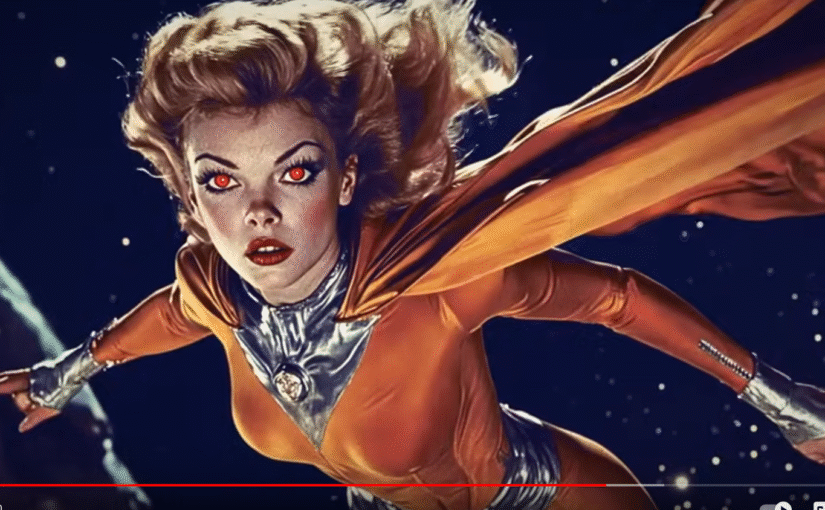
I wrote up a couple of posts about the Apollo moon landings. I am known for questioning whether or not the moon landings actually occurred. That is for two reasons; [1] the van Allen radiation belts, and [2] in the entire history of mankind, no one or nation has ever abandoned advanced technology… ever. But that is the NASA narrative.
Anyways, for today we are gonna talk about this…
First, the “seed” that got me to a thinking.
Secondly, my comments on it.
Please enjoy and have a great day…
These cats have a plan
Feteer bel Asaag
(Pastry with Ground Meat – Egypt)

Ingredients
- 1 large onion chopped
- 1 pound super lean ground beef
- 2 tablespoons olive oil
- 1 1/2 cups water
- Salt and pepper
- 1/2 cup chopped almonds or walnuts (optional)
- 1/2 cup (1 stick) butter, melted
- 1 egg
- 1/2 cup milk (skim milk if you like)
- 1 package frozen filo dough sheets (thawed overnight)
Instructions
- Sauté the onion in the oil until it changes color to dark yellow.
- Add the meat and brown it then add the water, salt and pepper and let it cook until all the water has evaporated. If you decide to use nuts add them at this time.
- Open the filo dough package and divide the sheets in half.
- In a greased 13 x 9 x 3 inch baking dish layer 2 to 3 sheets at a time and sprinkle them with a few drops of the melted butter, and so on until you finish the first half of the sheets.
- Spread the meat and nut mixture on it and start doing the same thing with the other half of the sheets. Don’t worry about spreading the butter on the sheets. When you finish with all the dough cut the feteer in 2 x 1 inch squares with a sharp knife.
- Mix together the left-over melted butter, the egg and the milk and a pinch of salt (not much) beat it with fork. At this point, if you want, you can wrap the dish in plastic wrap and refrigerate until 1/2 hr before it is time to eat.
- Pour the egg mixture gently over the feteer and bake, uncovered, in a 375 degrees F oven for about 20 minutes or until the milk is absorbed and the feteer turns golden yellow.
A Boring 3-Day Weekend of a Japanese Salaryman
Through Foggy Veils of the Mystical Coast
Written in response to: “Write a story in which a character navigates using the stars.“
Kristi Gott
Coming of Age Historical Fiction Kids
She was battered and bruised, but Nightflight would ride the waves again someday.
Samuel swam hard, fighting the current in the murky brine. Hope flickered and then courage rose in him, bringing strength.
He remembered seeing the other ship appear out of the wall of fog. Boom. Crash.
Gasping for air, he tried to float and look around. The shore must not be too far away.
Crossing the Emerald River bar under the stars on a summer night, no one expected the sudden storm squall and wall of fog. But June could bring surprises.
Samuel remembered earlier standing next to the first navigation officer, Raul.
Now seventeen years old, Samuel felt his future was calling to him, from beyond misty veils of dreams.
The voyage of the 1890s hybrid steam and four masted ship, the “Nightflight,” was smooth so far. Samuel’s dream of learning ship navigation was coming true.
A few days before this he waved goodbye to his family while they stood on the beach below the isolated lighthouse in the wilderness.
Samuel felt a sense of wonder living on the Mystical Coast. Dreams shimmered like sunbeams on the ocean in his mind.
At the Mystical Coast black bears and their cubs roamed. Cougars slinked on the shadows and coyotes trotted in the wilderness.
Elk herds grazed in the meadows.
The sweet scented forests were full of birds calling and warbling.
It was all part of a life well lived on the Mystical Coast.
Samuel felt it was a place where everything is intertwined with nature and he was part of it too.
Mystical Coast’s moods could change quickly sometimes. She might be showing her peaceful side with flat seas stretching to the horizon.
Or she might display her mysterious face with fogs and mists cloaking the ocean and shores. When she felt dramatic her winds lashed the waves with gales and gusts, her waves and swells towered, and ships needed to beware.
Life there imparted a sense of wonder and beauty.
But now Samuel was ready to explore the rest of the world too. He wanted to experience faraway places, seeking out the essence of each one.
Back at the lighthouse, he dreamed of himself standing on the deck of a ship pulling into distant ports.
His science studies at the little school below the lighthouse served him well, and he was used to helping his father, the head lightkeeper.
A chance for training on the ship “Nightflight” offered opportunity to learn navigator skills.
The ship, Nightflight, smoothly rode over ocean waves on the sunny, June days. The shore was within sight, making navigation easy.
They saw seagulls, ospreys, eagles, sea lions, and whales on the voyage. Beyond sandy or rocky shorelines, we’re the mountains rising sharply, covered with tall trees.
The Chief Navigator Raul watched while Samuel practiced using the sextant, telescopes, compass, star charts, ocean charts, almanac, and ship’s log.
At night, the stars and moon poured silvery light on the sea.
In the calm June waters and the summertime warm temperatures, Samuel and the rest of the crew and passengers enjoyed stargazing and picking out constellations.
Measuring the angles and distance between the stars and the horizon with s sextant, Samuel calculated the ship’s position for practice.
One day when a pod of whales spouted, sky hopped and thrashed their tails everyone ran across the deck to the railing to watch.
Samuel made friends with the captain’s dog, Pepper, a small, brown and white “rat catcher” dog known for keeping rodents away from the food supplies.
In an instant one evening, everything changed.
Instead of anchoring overnight, taking his time, and waiting for daylight’s visibility, Captain Johann Rasmussen was in a hurry.
His sharp eyes above the curly beard and tanned face glanced around quickly, and his solid figure wearing the captain’s cap stepped rapidly around the wheelhouse and deck.
He decided to make good time in the silent seas of the night by crossing the Emerald River bar after dark.
But the quick weather change caught them off guard.
It began when the captain stood in the wheelhouse, checking the charts and steering away from the sand bars on the shores where the river met the sea.
He congratulated himself. They would enjoy a quiet cruise down the wide river to the port of Woodland, under the stars.
“Shouldn’t we wait for daylight to cross the river bar?” Samuel’s voice was respectful.
“No. We’ll be fine,” said Captain Rasmussen.
Entering the river, the captain and navigators saw the starry dome overhead disappearing when clouds and a wall of fog moved in.
The Captain Rasmussen hid his dismay from the crew.
“Captain, now we’re in for it.” He heard the tension in Chief Navigator Raul’s voice. More voices joined in.
“We’ll be fine. Settle down, all of you,” he said.
The breeze picked up. A gust hit the ship.
“Drop the sails all the way. Now.” He kept his voice deep and confident.
They heard the squall winds begin howling and wailing.
Fog so thick you could not see more than several feet flowed around them.
The ship was crossing the treacherous sand bar between the Emerald River and the Pacific Ocean. Dozens of ship wrecks littered the bottom of the water.
The proud captain, overconfident, eager to impress, knew he had crossed this bar many times already.
Why wait offshore, anchored overnight?
They were behind schedule already.
What could happen?
Wait. Was that a fog horn?
Was there another ship nearby?
Or was it the wind?
Then a sound like thunder. Two ships struck each other in the deadly Pacific Northwest fog.
Now Samuel felt the currents dragging him down and sideways.
Let yourself flow with it, he thought. Don’t fight it.
Just try to keep your head above water.
An image of his home at the lighthouse flashed through his mind. Somewhere his parents and siblings were thinking of him. They would miss him if he didn’t come back.
Something whooshed past in the water. He saw the long hair floating.
“Eliza! From the ship.” Samuel lunged to grab her.
He pictured her young face framed by dark hair pulled into a bun, and bright eyes with a sparkle.
It was only a split second, but their eyes had met with something like laughter in them before she looked away. She appeared to be close to his age.
With a surge of adrenaline, he powered through the current and reached, grasping her arm. She spun, kicking and using her arms.
Samuel’s hand closed tightly and he grabbed a splintered beam floating by with the other hand. Eliza reached for it with her other hand.
An ocean wave lifted them and they somersaulted in the water, clasped together.
He lost his grip on the wood beam. Eliza still held on to it. Another swell brought it closer and Samuel grasped it again.
The ships must be stuck on the sand bar. Samuel saw they were drifting farther away from the sinking hull of the “Nightflight.”
More booms like thunder sounded. There were calls and Samuel knew the crew and passengers were floating near him in the water.
It happened so fast there was no time to lower a lifeboat.
Now Samuel heard a high pitched squeak. The captain’s dog, Pepper, was crouched and trembling on a pile of floating wood.
Then he reached over to the wood that was carrying Pepper and pulled it toward him.
Samuel’s feet felt something underneath them.
He managed to sink his feet into the sand and steady himself.
“We’re on a sand bar now,” he said. Eliza stretched her feet down and stood on the bottom.
Samuel’s lungs felt tight, his heart pounding hard and fast, his limbs getting tired.
“Over here,” he yelled. “Sandbar. Shore.” He saw others struggling toward the shore.
The bars at the openings of rivers to the sea had fast-shifting sand. The ocean charts were only for guessing.
Yells and calls sounded. People began to get out of the water and onto the beach.
Samuel and Eliza struggled to keep their footing in the moving water. Soon it was waist deep, then they stumbled out and fell down on a beach.
Samuel picked up Pepper and carried the small dog in the crook of his arm.
“We must be near Drift Village,” Samuel said to her. “Town near the river bar. We can get help. In the morning.”
What happened to everyone else on the ships? Samuel’s throat was tight, his heart racing.
Nearby he heard loud voices.
Good. Other people were struggling out of the water and collapsing on the beach.
Exhaustion overtook Samuel and Eliza. The chilly night air cooled their wet limbs.
“Come on. We need to get inland.”
Eliza’s hand felt clammy while he held it. Together they stumbled and crawled into the sand dunes.
They fell and curled up together out of the wind, in the shelter of a dip in the dunes, falling into an exhausted sleep.
Later, Samuel felt the sand underneath and opened his eyes in the dim light of the colorful Dawn sky. Mystical Coast displayed her pastel morning hues overhead while the sun rose on a clear, serene morning.
Flashes of the night poured through Samuel’s mind like water rushing. He saw Eliza begin to stir too.
“We made it.” His voice was raspy.
Eliza’s eyes were wide. She untangled herself from their embrace and stood up. Her head swiveled and she took in the surroundings.
“We need to check on the others,” she said.
They climbed over the dunes and saw people scattered across the beach.
“Eliza!” Two people ran to her with arms outstretched.
“Mama, Papa!” All three clutched each other tightly.
Wisps of fog trailed like shreds of cotton over the ocean and sand. The sky overhead was clearing and the sun rose higher in the east.
“It looks like everyone in the crew and passengers made it to shore,” said a voice nearby.
Samuel recognized Captain Rasmussen, his damp clothing in tatters.
The captain saw Pepper cuddled in Samuel’s arm with his expressive eyes fixed on the captain.
The little dog wiggled and Samuel handed his squirming body over to Captain Rasmussen’s open arms. Pepper snuggled into the arms wrapped around him.
There was no mistaking the affection in the glance the two shared.
Captain Rasmussen nodded toward his ship, the “Nightflight.”
“Her damage can be repaired. She’ll sail again,” he said.
Offshore, the two partly sunken ships rested on the sandbar. They learned against each other, groaning and scraping.
“I trusted this captain,” thought Samuel.
“It was a mistake to cross the bar at night.
Quick changes of weather can happen in minutes.
What was the captain thinking?
Who could you trust?”
Samuel kept his thoughts to himself.
He heard voices yelling, and saw a rescue party coming over the dunes, from Drift Village.
Hours later, Samuel, Eliza, and the other crew and passengers from the ships, rested in the village, wearing dry clothes, sitting by warm flames, drinking hot stew.
Samuel knew he would never be the same again.
He left the lighthouse station a few days ago still a child.
Now he was an adult.
The glow of his sense of wonder still lit his playful, impulsive heart.
But a respect and new sense of awareness also filled him with deeper thoughts and responsibility.
He was no longer a child. But inside his adult thoughts, a child was still there too.
Eliza turned to him and said, “Do you still want to be a ship’s navigator?”
“No,” said Samuel. The sense of wonder and light filled him again.
Eliza looked curiously at the young man.
“Who could you trust?” The words echoed in Samuel’s thoughts.
Samuel’s dreams drifted through his heart and into his mind.
Eliza’s eyes held a shine while she looked at him.
His thoughts and feelings were clear, free of any foggy veils.
“I want to be the captain.”
Then, “Eliza, how would you like to visit a lighthouse?”
Sir Whiskerton and the Crow’s Cacophonous Comeuppance: A Tale of Glitter, Gags, and a Glitzy Gauntlet
Ah, dear reader, prepare yourself for a tale of artistic angst, avian ambition, and one crow’s catastrophic quest for creative credibility. Today’s story is one of stolen spoons, spontaneous show tunes, and the profound truth that sometimes the universe hands you a glitter-covered, tap-dancing lesson. So, grab your earplugs and your sparkliest jacket, as we dive into Sir Whiskerton and the Crow’s Cacophonous Comeuppance.
The Chaotic Critic
Cornelius the Crow considered himself not a thief, but an artist. His medium was turmoil, his muse was mischief, and his gallery was the entire farm. While his cousin, Edgar, was content with simple brazen theft, Cornelius sought to create masterpieces of mayhem.
His latest work, “Ode to a Overturned Feed Bin,” had been poorly received. The animals had simply righted the bin and carried on.
“Philistines!” he squawked, perched atop the weathervane. “They don’t appreciate my vision! My genius is wasted here! My chaos is too… predictable.”
His beady eyes fell upon Zephyr, the playful wind spirit who often tousled the leaves in the orchard. Zephyr was a being of pure, joyful, and utterly random energy.
“Zephyr!” Cornelius cawed, striking a dramatic pose. “I, an artist, have a request! Grant my stolen treasures—my life’s work—a power that matches my vision! Make every object I have ever liberated one hundred percent more chaotic! Let my art finally have the impact it deserves!”
Zephyr, who found Cornelius terribly amusing, swirled around him in a gust of giggles. The crow’s pomposity was ripe for a lesson. The wind spirit intended to show him that true chaos, when lived, was utterly exhausting.
“Your wish is my wind!” Zephyr whispered, and a shimmering, invisible breeze washed over the farm.
The Disco Ball of Doom
For a moment, nothing happened. Cornelius puffed out his chest, disappointed. “Another failed exhibition—”
His sentence was cut short by a faint, tinny sound. Tap. Tappa-tap-tap.
It was coming from his secret nest, hidden deep within the old oak tree. Then, a voice, nasally and desperately off-key, began to wail:
“Iiiiiiiiii… I will always love yooooooouuuuu…!“
A torrent of shiny objects erupted from the oak tree’s hollow. The farmer’s missing watch, a dozen bottle caps, Sir Whiskerton’s spare monocle, a hubcap, a single, very confused-looking spork—they all came flying out, covered in neon pink glitter and tap-dancing madly on every available surface.
The hubcap clanged against the barn door, belting out the chorus. The spork, with astonishing vigor, was doing a riverdance on a fencepost. The farmer’s button, now a tiny, sequined disco ball, spun in mid-air, projecting light spots everywhere while screeching the high notes.
Cornelius’s nest had become a ridiculously crowded, high-energy, feathered disco ball of doom.
“NO!” he shrieked, diving into the maelstrom. “My curated collection! My minimalist aesthetic!”
He tried to grab his favorite piece—a silver locket—but it shimmied out of his grasp, singing, “What a feeeeeeeling!” while doing a perfect pirouette on a branch.
The farm, needless to say, was in an uproar.
Doris the Hen fainted clean away, only to be woken by a tap-dancing thimble performing “Eye of the Tiger” on her head. Rufus the Dog was chasing a glittery harmonica that was playing a funky bassline, convinced it was a new species of hyper-musical squirrel.
The Feline and the Philosopher
Sir Whiskerton, roused from a nap by what he could only describe as an “aural assault of the highest order,” strode into the chaos, his monocle glinting with grim determination. He took one look at the glittery, singing, dancing vortex around the oak tree and then at the frantic, despairing Cornelius.
“Cornelius,” Sir Whiskerton said, his voice cutting through the power-ballad caterwauling. “I see you’ve finally achieved your masterpiece. It’s… loud.”
“It’s a nightmare!” Cornelius wailed, dodging a jazz-sliding spoon. “This isn’t chaos! This is… choreography! This is commitment! I can’t get a moment’s peace!”
Just then, Bessie the Tie-Dye Cow ambled over, munching on some clover. She watched the spectacle, her mood ring cycling through a rainbow of emotions before settling on a serene violet.
“Wow, man,” she said, her voice a calm island in the storm. “You wanted to create, and you did. But you only created a mess. There’s no vibe, no soul. It’s just… noise.”
“Noise!” echoed Ditto, who was wearing sunglasses he’d fashioned from two glitter-covered bottle caps.
Cornelius slumped, his feathers drooping. “But… chaos is my art.”
“Is it?” Sir Whiskerton mused, deftly sidestepping a tangoing teaspoon. “Or is it just easy? Destruction is simple, Cornelius. Any creature can make a mess. But to build something? To create something that brings joy, not just a headache? That is the true challenge.”
The Moral of the Story
As the 80s power ballads reached a crescendo of off-key glory, a realization dawned on Cornelius. He was tired. He was covered in glitter. And he hated tap dancing.
He looked at Bessie’s peacefully munching face, at Sir Whiskerton’s patient expression, and even at Ditto’s ridiculous sunglasses. He saw the community he’d only ever disrupted.
“Alright, alright!” he yelled over the din. “I get it! I yield! Zephyr! Oh, capricious wind! I was wrong! Chaos for chaos’s sake is… really, really annoying!”
A gentle breeze, smelling of lavender and quiet amusement, rustled through the oak tree. One by one, the tap-dancing, singing objects stopped. The glitter faded from neon to a soft shimmer, and then vanished entirely. The stolen treasures fell to the ground, silent and still.
The sudden quiet was deafening.
Cornelius took a deep, shaky breath. “True art is creation, not just disruption,” he muttered, repeating Sir Whiskerton’s unspoken lesson.
He looked at the pile of his former treasures. Then, he had an idea.
A Happy Ending
Over the next week, a remarkable transformation occurred. Cornelius, with the help of a bemused but supportive Chef Remy LeRaccoon, began to melt down his stolen hoard. He didn’t make a weapon or a tool of chaos. He created a magnificent, complex, and beautiful wind chime.
He hung it from the branch of the old oak tree. Now, when Zephyr played, the farm was filled with a gentle, melodic, and perfectly harmonious music. The animals would often stop to listen, soothed by the sound.
Cornelius had become the farm’s official artist-in-residence, his talent for collection now focused on creation. He’d even started a community collage project with the leftover glitter.
As for Sir Whiskerton, he returned to his sunbeam, content in the knowledge that he had once again saved the day, this time from an aesthetic crisis. The farm was peaceful, the art was appreciated, and the only thing tap-dancing was a happy little mole in the vegetable patch.
And so, dear reader, we leave our heroes, a little more harmonious and a lot less glittery, with the promise of new adventures, new creations, and hopefully, no more spontaneous power ballads. Until next time, may your days be filled with laughter, creativity, and just a little bit of feline genius.
The End.
Pictures





















The Tidekeepers
Written in response to: “Write a story from the POV of someone waiting to be rescued.“
Larry Kofton
Fiction Historical Fiction Science Fiction
The price was the Tide Keeper.
Every seven years, one descendant of the colony would be called to the depths. They would serve the entity, joining their consciousness with its vast awareness, helping maintain the balance of these waters. In exchange, the entity would protect the colonists and their descendants forever. It would hide them from Spanish ships, provide bountiful catches, warn them of hurricanes.
The colonists had accepted. They’d moved to Croatoan Island, integrated with the native tribes, and began their new lives. The word carved into the tree wasn’t a distress signal. It was a signpost telling other colonists where to find sanctuary.
The journal contained entries from multiple people spanning decades. Each Tide Keeper had added their testimony before descending, and none had returned.
****
Sarah read with growing recognition.
I am Thomas Dare, grandson of Eleanor. The call came to me in my twenty-eighth year. I go willingly for my children and their children after.
I am Rebecca Dare Cooper. The ocean has sung to me since childhood. Tonight I answer.
The entries continued through the centuries. Dare, Cooper, Lawrence, Hayes, Hawthorne. Sarah’s breath stopped. Hawthorne. Her grandmother’s maiden name had been Dare. She pulled up her phone and accessed the photos of her grandmother’s old family Bible. She zoomed in on the family tree, following the maternal line backward. Every name from the journal.
Her grandmother had died when Sarah was twelve, drowning during a solo swim at dawn. They’d found her clothes on the beach, her body never recovered. Sarah’s mother had been devastated, but her grandfather had been strangely calm. “She went back to the water,” he’d said.
Sarah had thought it was poetic grief. Now she understood.
Through the porthole, the water began to move in impossible patterns. Bioluminescent organisms gathered, pulsing in rhythmic circles. The current swirled clockwise, then counter-clockwise, then settled into a figure-eight. It was deliberate. The entity was here.
Sarah pressed her hand against the cold glass. The bioluminescence intensified, forming shapes that almost resembled words. She felt something at the edge of her consciousness. Not words, but impressions. Welcome. Recognition. Question.
The entity knew her. Had always known her. Had been waiting.
****
Sarah grabbed her research tablet and began writing notes. The diving bell accident. The seal that had been inspected just yesterday. The support vessel’s mechanical issues. The storm that had come up so suddenly. Each event, in isolation, was plausible. Together, they formed a pattern.
The entity had called her, and the universe had conspired to answer. Now what?
Trying to gather her thoughts, she pulled up her recent messages on her phone. Her sister’s text from three days ago included a photo of her niece, Maya, on the beach. Fifteen years old, with the same dark hair and gray eyes that marked their maternal line. She’s become obsessed with marine biology. Wants to spend every moment at the ocean.
Sarah’s own obsession had started the same way. The dreams had come first. Dreams of drowning that weren’t nightmares but something different. Dreams of breathing underwater, of becoming something vast and ancient. The dreams had intensified every year until she’d finally chosen marine archaeology, trying to understand the pull she’d always felt.
If Sarah refused the call, Maya would be next. Maya would start having the same dreams. She would feel the pull growing stronger until it became unbearable, and she wouldn’t understand why. She was brilliant and young and had her whole life ahead of her.
Sarah looked back at the journal, at the final entry written in her grandmother’s hand: I am Margaret Dare Hawthorne. The ocean calls me home. I will go willingly.
Her grandmother was chosen and had accepted. She had left this journal here for Sarah to find.
****
The lights outside the bell pulsed, and Sarah felt the communication more clearly. Images flooded her mind: the coast as it had been 400 years ago. The colonists, desperate and starving. The entity, vast and ancient, maintaining the balance of these waters for millennia. It needed the Tide Keepers to anchor it, to help it remember what it meant to care about individual lives.
The entity showed her what awaited: permanent transformation. Her body would adapt to the depths. Her consciousness would expand, touching every current and creature in the sound. She would feel the sharks hunting, the crabs scuttling, the ancient sturgeon migrating. She would sense approaching storms and guide fish into nets. She would prevent disasters and protect the ecosystem.
She would not be alone. The entity would be there, vast and patient. And the echoes of every Tide Keeper who had come before. Her grandmother was there, waiting.
But she would never return to human form. This was not seven years of service. This was forever. The entity needed her permanently, and in exchange, it would spare Maya from the dreams, from the calling, from the inevitable pull.
Snapping from the visions, Sarah heard the rescue vessel’s engines through the water. They were coming. In less than an hour, they would haul her to the surface. She would return to her life, continue her research.
And Maya would start having the dreams.
****
Sarah opened her emergency kit and pulled out the waterproof marker. On the journal’s last blank page, she wrote: I am Sarah Margaret Hawthorne. I am thirty-two years old. I have studied the ocean my entire life, and now I will know it truly. I go willingly, in gratitude, to honor the pact my ancestors made. I do this for Maya, for all who come after. I will keep the tides.
She dated it October 16, 2025, and closed the journal, sealing it back in its wax covering. She placed it in the collection chamber, then used the mechanical arm to return it to the wreck site, wedging it back between the timbers where she’d found it. The next Keeper would find it when their time came. In seven years or seventy.
Then she began to open the diving bell’s flood valves.
The water rushed in, shockingly cold. Sarah’s training screamed at her to stop. Instead, she opened them wider. Water reached her ankles, her knees, her waist. She took deep, measured breaths, oxygenating her blood one last time.
Through the porthole, the bioluminescence blazed like stars.
Sarah filled her lungs, let the water close over her head, and opened her mouth to the sea. There was a moment of pure animal panic. Then the water entered her lungs, and instead of drowning, she began to breathe.
The transformation took her gently. Her consciousness expanded outward, joining with something vast and ancient and welcoming. She felt her grandmother’s presence like a warm embrace. She felt every Tide Keeper who had come before.
And she felt the ocean, truly felt it, in all its terrible beauty and power.
****
The rescue team attached the lift cables ninety minutes later. The storm had passed, leaving the waters eerily calm. They hauled the diving bell to the surface with careful precision, expecting to find Dr. Hawthorne cold and frightened but alive.
When they opened the hatch, they found the bell flooded and empty.
Her equipment remained carefully secured. Her research tablet sat in its waterproof case. The collection chamber contained artifacts from the wreck, but nothing that would explain her disappearance. They found no body. No signs of struggle. The flood valves had been opened from the inside, deliberately.
Coast Guard divers searched the area for three days, but Sarah Hawthorne had vanished as completely as the colonists of Roanoke, 438 years before.
Her sister, Miranda, scattered flowers on the water where the diving bell had been recovered. Her niece, Maya, stood at the boat’s railing and felt something shift inside her. The terrible pull she’d been feeling for months suddenly eased, as if a burden she hadn’t known she was carrying had been lifted.
The ocean was calm. The tides ran true. And in the deep water off Roanoke Island, something ancient and vast kept its patient watch, no longer quite so alone.
Seven years would pass. And somewhere along the Carolina coast, another descendant would begin to dream of drowning. Another would feel the ocean’s call. The pact would endure, as it had for centuries.
But Sarah Hawthorne would not walk out of the surf. She had become something else entirely. She was the current and the tide. She was the guardian of these waters. She was the keeper, eternal and unchanging, woven into the fabric of the sea itself.
And in the depths, she was finally home.
Farareej Mashwi (Broiled Chicken
with Oil, Lemon and Garlic Sauce)
Yield: 2 servings

Ingredients
- 1 small chicken, quartered
- Salt and freshly ground black pepper
- 4 large cloves garlic, peeled and crushed
- 1/4 cup freshly squeezed lemon juice
- 3 tablespoons fruity olive oil
- 1 tablespoon chopped parsley
Instructions
- Season the chicken with salt and pepper.
- In a shallow dish filled with a mixture of garlic, lemon juice, oil, and parsley, roll the chicken quarters to coat them. Allow to marinate at least 1 hour.
- Heat the broiler.
- Drain the chicken, reserving the marinade. Set the broiling rack about 7 inches from the heat. Place the quarters, skin side down on the broiling rack, and broil 10 minutes, basting often with the cooking juices and a little of the marinade.
- Turn the quarters over and broil the chicken 10 minutes longer. Turn and brush twice more until both sides are golden brown and crusty. Pour over the remaining oil mixture.
- Serve at once.
Attribution
Mediterranean Cooking by Paula Wolfert
The Empire Collapse Pattern: Rome, Spain, Britain… USA Is Next