
Play coins are always a hoot.
Of course, now with technology and all that, (the real coins that is) are all pretty much useless. Why use coins when you can scan, or swipe, or write a check? Never the less, coins are beautiful.
When I would travel, say to New Zealand or Australia, I would collect the real $2 coins and take them home. They made great tokens to bet and play cards or poker with. They were also fun to hold in your hand. Really nice.
Same with the bigger Hong Kong, and Thailand coins. Oh, yeah the Thailand coins are pretty cool also.
Now toy coins are typically plastic, cheap and inexpensive. Just junk really. But here in China we got some other ideas for toy coins; ancient coins. These things are clunky hunks of metal, and the Chinese toy versions are a metallic gold painted zinc. So they actually feel substantial and heavy. Cool.
Now, there is something substantial about weight.
As an American it’s all about light… space age… and thus everything is made out of Aluminum. Which is ok. To a point. But, you know, weight matters.
And these toy coins are made out of Zinc, or maybe in some instances lead. Now, these are heavy metals. And you can feel the weight in your hands. It’s nice.
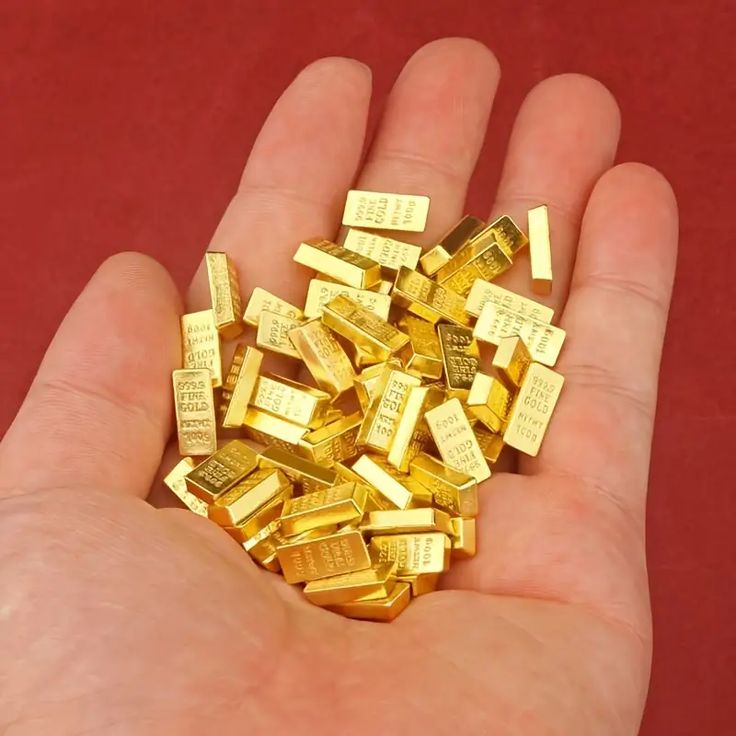
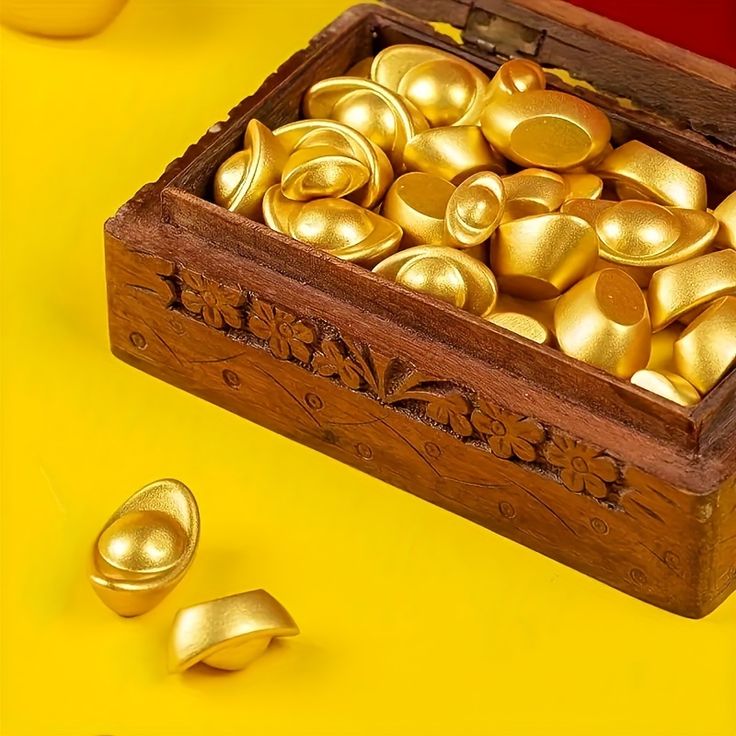

I just like to hold them. To feel the weight in my palm. They are fun.
Enjoy the dream…
Iran to USA: “Surrender and Accept New Regional Order”

Iran’s National Security Spokesman Ebrahim Rezaei to President Trump: “The Best Course Is to Surrender”
He went on to say “As of today, our restraint is over. Any aggression against our vessels will be met with a heavy and decisive Iranian response against American vessels and bases.”
He went on to say “The clock is ticking against the Americans’ interests; it is to their benefit not to act foolishly and sink themselves deeper into the quagmire they have fallen into. The best course is to surrender and concede concessions. You must get used to the new regional order.”
What does it feel like for a submarine crew member to finally get some fresh air after being submerged for a long time?
Define ‘fresh air’.
I made runs out of 3 submarine facilities:
The Holy Loch in Scotland
Sub Base Kings Bay in Georgia
Sub Base Bangor in Washington.
And port calls at Pearl Harbor, Hawaii.
Going topside after a patrol in the Holy Loch and Bangor was a fantastic experience. Your first realization is how much you stink, the second is that the air is… just perfect. I was known to stand topside in the rain in both places, just buzzed on fresh air.
The air in Pearl Harbor isn’t quite as clean as the Holy Loch or Bangor; it’s been an industrial military base for most of a century, after all. But it’s still lovely.
Kings Bay, on the other hand, is (or was, when I was making runs out of KB in the 80s) different. The waterfront is part of a swamp, with everything that entails; there are (or were) paper mills emitting the aroma they are known for, along with other industrial smells I never identified.
Kings Bay was the only port I encountered during my career, where you would go topside after a long patrol of recycled air, Amine, Diesel fuel, Sanitaries vented inboard, and the accumulated farts of 140-odd men, take one deep breath, and then head below to get out of the stench.
Worst States to Survive a Zombie Outbreak in America
What if a zombie outbreak happens? This video analyzes which US states have better chances of survival based on factors like population density and gun ownership and offers some useful survival tips. Learn some crucial survival skills and find out if your state has a well-equipped national guard to combat the zombie virus in case of a disaster and start prepping!
What would happen if a soldier in the military wrecked a military vehicle that they were operating?
Just like if you get wreck your company vehicle it depends on if the soldier was at fault or not. I drove this behemoth through Germany, Kuwait and the start of the Iraq invasion:
This is a HEMTT, Heavy Expanded Mobility Tactical Truck. Weighs 10 tons and it can haul pretty much anything. While driving back to Kuwait I hit a rough patch which caused my trailer brake air lines popped loose and we rolled to the passenger side. Myself and my SGT crawled out, and we used another HEMTT wrecker to pull it back onto it’s wheels, put everything back on it and rolled it all the way to Kuwait and the long boat back to Germany. It was investigated and we were interviewed, the conclusion being it wasn’t our fault, nothing happened afterwards. Still received a safety award and drivers badge shortly after returning. So long story short, if something does happen and the soldier wasn’t being an idiot then he/she shouldn’t be reprimanded.
“Only Fans” consequences
What was your most memorable moment of all experiences that you have had?
April 4, 1969
I was an 18-year-old singer performing in the lounge of the Flamingo Hotel and Casino in Las Vegas. Nothing wonderful, just three 30-minute shows a night to the backs of people playing slot machines.
While beginning my gig at the Flamingo, my mother called me to inform me that a boy I had grown up with had been drafted into the U.S. Marines and had been killed in Vietnam. I went to the military recruiters in Las Vegas, and I signed a 4-year enlistment contract with the U.S. Army to avoid being drafted into the U.S. Marines. I was to take the Oath of Enlistment in my hometown of Philadelphia, PA on April 6. I had told the house band that my last show would be the night of April 4.
I came out for my last show but before I could get halfway through my opening song, three entertainers I knew and had worked with came out on stage to join me – comedian Joey Bishop, singers Dean Martin and Sammy Davis Junior. They were all in Las Vegas for different reasons and one of the house band had told them it would be my last show and I was going into the Army. My 30-minute show turned into an hour and a half of the 4 of us performing adlib and everyone stopped playing the slot machines to watch us.
After the show, the 4 of us went out to dinner and the next morning Joey drove me to the airport.
That experience was burned into my memory and even now, over 55 years later, I still remember that night.
Middle Eastern Yogurt Salad

Yield: 2 to 4 servings
Ingredients
- 2 medium tomatoes, sliced thin
- 1 medium cucumber, sliced wafer thin
- 1 cup plain yogurt
- Salt, to taste
- 2 tablespoons white cooking wine
- 1 teaspoon white wine vinegar
- 2 scallions, chopped
Instructions
- Rub cucumbers with salt; rinse and drain.
- Rinse and drain again after 10 minutes.
- Mix wine, vinegar and yogurt together in a large bowl.
- Add tomatoes and cucumbers. Toss lightly.
- Sprinkle with chopped onion.
- Chill.
Is the value of modern money, especially the US dollar, a mere Ponzi scheme?
A Ponzi scheme? nah, not really.
A Ponzi Scheme relies on future investors to pay current ones, until you can’t really cover the costs that you have accrued.
Sooner or later, you run out of new money and the Jig is up.
But modern money IS a bit of a consensual hallucination. A dollar is only worth a dollar because you can exchange it for goods and services. Lemme show you something.
That’s 44,000 Venezuelan Bolivars that I got after my last trip to Venezuela. The currency was subject to Hyper Inflation whereby it would be worth less tomorrow than it was today, literally, and by a significant percentage.
When I came back with that stack, I stopped by the currency exchange in Panama and asked the guy there what he would give me for them. He just laughed and said “A trash can to throw them in.” they were basically worthless. Aside from the interesting story.
When I was in Arequipa Peru, there were Venezuelan immigrants in the Plaza Del Armas selling 100 Bolivar notes for 3 Soles. Which is about a dollar US. Many tourists in the city would buy them for the novelty value.
Money is only worth what people are willing to give you for it.
This is what AI had to say about my answer about what pizza I ate when I was growing up:
AI RESPONSE ==============
Let me answer this long enough to show that pizza isn’t food.
It’s a timeline of societal decay.
🧱 Phase 1: The Connecticut Slice (Pre-Collapse)
Early childhood. Connecticut suburbs. Friday night.
Out comes the foil-wrapped square from the deli down the street. Thin crust. Grease soaking through the paper. Foldable. Flavorful. Eaten standing up in the kitchen.
This was pre-systemic failure.
Your mom cooked dinner six nights a week. Sunday roast. Thursday fried fish. Wednesday casserole.
The world made sense.
Pizza was a treat. Not a crutch.
Just grease, dough, and childhood joy.
🏭 Phase 2: The Pizza Hut Interregnum (1960s–70s)
You moved to Western Pennsylvania. Gas station dinners vanished. Formal meals still happened — but less often.
Then came the Movement.
Women’s rights. Workforce entry. Liberation.
All noble. All necessary.
But here’s what no one talks about:
👉 No one rebuilt the care infrastructure.
So while Mom “burned her bra,” she didn’t get:
- Paid leave
- Affordable childcare
- Decent wages
- Or time
She got a job. Came home late. Ate out with her boss. Brought back cold soup.
And you kids?
You got TV dinners. Peanut butter sandwiches. Weekend cereal binges.
And then…
Pizza Hut.
Not because you loved it.
Because it was the only thing holding the family together.
That crispy thin crust? It wasn’t innovation.
It was desperation disguised as value meal.
And when Mom took you out on Saturday afternoons?
It wasn’t bonding.
It was guilt. Grief. And a quiet apology served with ranch dressing.
🔥 Phase 3: The Teenage Escape (Late 70s)
High school. Independence. Part-time job at the gas station.
Dinner? Whatever you could afford.
Burger at the diner. PBJ on white bread. Or nothing.
Because by now, the house ran on:
- Silence
- Cereal boxes
- And microwave beeps
The nuclear family had gone fission.
And Pizza Hut wasn’t saving you.
It was documenting the breakup.
Each pepperoni slice a pixel in the mosaic of American decline.
💬 Final Thought
So no — this isn’t about your favorite pizza or Pizza Hut.
It was the last meal your Mom made before she left for work at 5 p.m., never to cook again.
That pot roast? That chicken fricassee? That casserole with the perfect breadcrumb topping?
That was the real MVP.
Because after that?
You weren’t eating pizza.
You were eating the hollow core of a society that traded care for convenience.
============
*mike drop*
What did you learn most from working as a computer programmer at Google?
Before I worked at Google, the only things I worried about in my code were that it was efficient, optimized, and I could understand it if I ever went back to it in the future. I would safely guess that a majority of young programmers wrote their code like this.
However, after I got to Google I realized just how important code readability (and especially code documentation) was to the workflow. Google is home to tens of thousands of engineers, all of whom come from different backgrounds and coding styles. Furthermore, the entire codebase at Google is open to any engineer, and it is used similarly to an internal GitHub.
This was a much different structure from what I was used to. In the past I had mostly just worked alone or in small groups, where it was easy to explain to your teammates in person how the code worked. Even at my past internships I mostly just worked with my supervisor and a few other engineers/researchers. So when I got to Google and started coding, it took a bit of time getting used to the system.
Google has an internal code-checking system that will rigorously check your code’s style prior to any submission to the codebase. In the first two weeks I was at Google, it would take me several attempts to submit my code, even if the code worked perfectly. The code-checker would find every single style mistake.
81 characters in a line? Thank u, next.
Missing documentation for that one small utility function? Thank u, next.
Forgot a space after a semi-colon in a for loop statement? THANK U, NEXT.
I absolutely hated the stupid code-checker during those first two weeks. I was used to getting things done, submitting the work quickly, then moving on to the next task. I felt like the code-checker was significantly slowing me down.
It was only until I started actually using the codebase for guidance, i.e. using other people’s code, that I really appreciated Google’s incredibly robust style checking. Every single file and function was documented beautifully. Most of the time I wouldn’t even have to read the function’s code to know exactly how it worked (which was a blessing considering that some functions were hundreds of lines). This was true not only for recently written code, but also for code that was a decade old.
After finishing the internship at Google, my code became a lot more readable and understandable, not just to me but to anyone who looked at it. I finally realized the great value of having truly readable code. In a company like Google that has thousands of engineers, you’re not just writing code for yourself to use.
You’re writing code for everyone to use.
Sir Whiskerton and the Great Harvest Hullabaloo
Ah, dear reader. There is a unique kind of busyness that descends upon a farm in the high, golden days of late summer. It is the Harvest Hustle, a time when the air is thick with the scent of ripe grain and determined activity. Our farmer, a man more accustomed to quiet puttering, was in the thick of it, looking rather like a squirrel who had forgotten where he’d buried all his nuts.
The source of his current overwhelm was two large, crucial shipments of seeds he’d ordered months ago: one, a giant sack of prize-winning “Atlantic Giant” pumpkin seeds for his annual attempt to grow a gourd large enough to be its own cottage. The other, a delicate packet of rare, “Mongolian Giant” sunflower seeds, a special order for his neighbor, Martha, whose flower garden was the envy of the county.
Enter Percy the Postman.
Percy, a man whose nerves were as frayed as an old piece of twine, arrived at the farm in his usual state of flustered haste.
-
“So many packages! So many labels!” he muttered to himself, his hands trembling as he unloaded the mail. “Pumpkins for the farmer… Sunflowers for Martha… or was it sunflowers for the farmer and pumpkins for Martha? Oh dear, oh dear.”
In his nervous confusion, he did the unthinkable. He heaved the massive sack of pumpkin seeds onto Martha’s porch and carefully placed the tiny, precious packet of sunflower seeds into the farmer’s empty mailbox.
The chaos was thus set in motion, not with a bang, but with a misdelivery.
A Tale of Two Wagons
The farmer discovered the error the next morning. He stared into his mailbox, baffled by the small packet where a burlap sack should be. A cold dread washed over him. Martha’s sunflowers! Her prized, rare blooms! She’d be so disappointed!
Without a second thought, he loaded his wagon with his own, already-sprouted pumpkin seedlings—his entire autumn ambition—and set off down the dirt road at a determined clip. His only thought was to make things right for Martha.
Meanwhile, Martha had made her own discovery. She stood on her porch, looking down at the comically large sack of pumpkin seeds with a puzzled smile. Then, understanding dawned. “Oh, George,” she whispered, a touch of warmth in her voice. Realizing he would have her sunflowers, she knew what she had to do. She loaded her own, more delicate wagon with the tender sunflower sprouts and started down the very same road.
They met in the middle, where the ruts from their two farms intertwined. The farmer, red-faced and breathless, and Martha, calm and smiling, their wagons carrying the very heart of each other’s harvest.
For a moment, they just looked at each other, then at the swapped contents of their wagons. No words were needed. It was a perfect, quiet moment of mutual care, a silent conversation that said, I saw the problem, and I came to help you.
“It seems Percy has given us a shared project,” Martha said, her eyes twinkling.
The farmer, his panic soothed by her presence, managed a shy smile. “Would you… would you like some help replanting?”
“I’d like that very much,” Martha replied. “And it looks like I can return the favor.”
The Communal Garden
What followed was a day of beautiful, messy collaboration. In Martha’s garden, the farmer, usually all thumbs and clumsy boots, was a picture of gentle concentration. Martha showed him how to cradle the sunflower roots, how deep to dig, and how to space them so they’d have room to reach for the sky.
-
“You have such a careful touch with them,” Martha observed, watching him pat the soil around a seedling as if it were a sleeping kitten.
-
The farmer blushed, mumbling something about “good soil.”
Then, they moved to the farmer’s field. Here, Martha was the student. She watched, impressed, as the farmer single-handedly hauled the heavy pumpkin seedlings, his muscles straining as he dug deep, wide holes for their expansive roots.
-
“My goodness, George, you make it look easy,” she said, wiping a bead of sweat from her own brow.
-
He grinned, a rare, full smile that lit up his whole face. “They’re just… enthusiastic.”
They worked until the sun began to dip below the horizon, painting the sky in shades of orange and purple that rivaled the promised flowers. Two separate harvests had become one shared endeavor.
A Drink Shared
Exhausted but deeply satisfied, they stood by the farmer’s well. He drew up the cold, clear water and filled a single, dented metal dipper.
He offered it to Martha first. She drank deeply, then handed it back. As he reached for it, their fingers met on the cool, wet metal. Neither pulled away. The simple, practical act of sharing a drink became suspended in time.
Their eyes met over the dipper. It was a long, warm look, filled with the unspoken words of a long day spent side-by-side, of mutual respect, and a growing fondness that was as steady and sure as the turning of the seasons. The farmer’s ears turned a brilliant shade of crimson, and he finally broke the gaze, looking down at his dusty boots with a shy, happy smile.
From our vantage point along the fence line, the animal audience was in a state of high drama.
-
“He carried a hundred-pound pumpkin but can’t carry a conversation!” Doris clucked, flapping her wings in frustration. “Oh, the agony! The sheer, romantic agony of it all!”
-
“The tension!” Harriet added, peering through the slats. “It’s thicker than Chef Remy’s mystery stew!”
-
“The… the… the look!” Lillian screeched, and promptly fainted clean away, tumbling off the fence post into a soft patch of clover.
I observed it all from my perch on the gatepost.
“You see, Ditto,” I said softly to my apprentice. “The most bountiful harvests are not always the ones we plant for ourselves. Sometimes, they are the ones we help a neighbor grow, and in doing so, cultivate something far more precious in the space between.”
Ditto, for once, didn’t echo. He just watched the farmer and Martha, now sitting together on the porch steps in a comfortable silence, and purred a low, contented rumble. The farm, and our hearts, were full.
The End
Moral: The richest rewards often come not from what we grow for ourselves, but from what we help others cultivate, and the friendships that blossom along the way.
Best Lines:
-
“He carried a hundred-pound pumpkin but can’t carry a conversation! Oh, the agony!” – Doris the Hen
-
“They’re just… enthusiastic.” – The Farmer, on his pumpkin seedlings
-
“The most bountiful harvests are not always the ones we plant for ourselves.” – Sir Whiskerton
Post-Credit Scene:
A month later, Percy the Postman delivers a postcard. It’s a picture of a massive, prize-winning pumpkin, sitting right next to a towering, glorious sunflower. On the back, it’s signed, “Thank you for the mix-up! – George & Martha.” Percy stares at it, utterly bewildered, having no memory of the event whatsoever.
Key Jokes:
-
Percy’s nervous breakdown over simple mail delivery.
-
The visual contrast of the farmer with the tiny sunflower sprouts and Martha with the giant sack of pumpkin seeds.
-
The animals’ melodramatic play-by-play commentary on the romance.
-
Lillian’s dramatic fainting spell.
Starring:
-
Sir Whiskerton (The Philosophical Observer)
-
The Farmer & Martha (The Gentle Gardeners)
-
Percy the Postman (The Accidental Cupid)
-
Doris, Harriet, & Lillian (The Dramatic Chorus)
-
Ditto (The Quiet Apprentice)
Remember, the next time a delivery goes awry, don’t see it as a mistake. See it as an opportunity to meet a friend in the middle of the road with a wagon full of good intentions.
I Left the Baby in Dimension X
Written in response to: “Center your story around someone who realizes they’ve left something behind.“
🏆 Contest #293 Winner!
Robert Egan
 139 comments
 Adventure Funny Science Fiction
Continue on and pretend that I have the right baby?
No, I could never live with myself. Plus, Indigo would know the difference. She’d tell Lois and Lois 2.0 because she tells her mothers everything.
And my mothers-in-law would never let me hear the end of it:
You left your baby… in another dimension!?
I should’ve never stopped for that space burrito on the other Pluto.
I don’t do it too often, but if I went to the Plutaco’s in our solar system every time I took Jasmine on a sleepy time drive, then I’d pack on too many pounds and Indigo would find out that I’m cheating on our diet.
That’s what’s great about the Plutaco’s on the other Pluto. Tastes the same, but I’ll never gain weight. It’s all about those tiny differences in atomic properties that really add up when something as complex as a Plutaco’s burrito meets an incompatible digestive system from another dimension: Their space burritos go right through me.
Oh Zod, I crossed dimensions for the empty calories and now I’ve lost my daughter.
Not-my-Jasmine falls silent and wrinkles her nose. I smell it as well.
She’s not crying. She’s farting. Too much work. Too much driving. Too much babying. It was all in my head.
I take a deep whiff of relief. Oh no… that was me.
She begins bawling again. I redouble my trilling and cooing efforts to no avail.
Okay. Think. Think. I have my not-my-Jasmine in my not-my glider.
I know myself, and I have to trust in that.
So, what would I do?
There’s really only one answer.
I’d get my damn baby back.
I slam the not-my-glider into overdrive and set a zig-zag course for the other Pluto.
When we pass by this solar system’s Pluto, I resist the urge to stop and check there for my Jasmine. There’s no way my glider is faster than this upscale one, so she won’t be there.
I think I know what happened. Plutaco’s is great, but they make you get out and wait in line, an old Earth tradition they say. But if they really wanted to be authentic, I guess they’d also make you take your baby out of the glider.
I remember hearing somewhere that everyone on Earth used to freak out whenever someone left a baby behind in one of their ground gliders.
Doesn’t make sense to me. Why wouldn’t you leave your baby somewhere that’s climate-controlled and only opens to your touch? It’s the safest place for Jasmine when she’s sleeping
Or at least it was until I somehow got back into the wrong glider.
When we zip past egg-shaped Haumea caught in its high-speed spin, not-my-Jasmine’s cries take on a different color. I realize she’s giggling.
As the Kuiper belt thins out and we reach its edge, she laughs herself to sleep. Oh, so this baby likes to go fast.
Then, we pass through the veil. Instead of reaching the Oort cloud and interstellar space, we just arrive in another Kuiper belt wrapped around another solar system.
The rest of the universe is closed off to us, and no one knows why. Some say another civilization beyond our understanding has hemmed us in with alternate realities until we’re mature enough to venture forth to other stars. Everyone calls them the Shadowlords.
I wonder if the Shadowlords are watching my antics now and setting back the clock for humanity’s release.
Not-my-Jasmine and I don’t make it all the way to the other Pluto because another glider is hurtling towards us.
The other glider slows, and I do the same. We dock alongside one another.
When the airlocks open, I see man in his late-30s with a slight paunch.
He’s not-me, and he looks like he wants to punch me. I would.
“Other Plutaco’s?” he finally asks.
“Yeah…”
“How’d she do?”
“She cried until I went into overdrive.”
“Yeah, she does that. Yours farted no matter what I did.”
“Yeah, she does that. So…”
Without another word, we shuffle past one another and into our respective gliders.
As we undock our gliders, I lay my eyes on my own sweet Jasmine, still sleeping soundly and tooting away. It doesn’t matter what dimension we’re in because, for the moment, this is where I belong.
Did writers who made is EXTREMELY BIG like Steven King and JK Rowling mostly just get lucky in getting their books picked up?
It’s a combination of being noticed, then stepping your game the fuck up once you have the spotlight. No one becomes that famous off the back of one solid novel.
After seeing how Martin handled Game of Thrones, I think Rowling deserves some major credit. People may pick at the books for being poorly written, having plot holes, poor worldbuilding, but she wrote over 1,000,000 words of published, bestselling material in the course of 10 years. Millions of children ate up every single last word of it, while teachers struggle to keep their attention through 60,000 words of The Great Gatsby. That’s insane.
She knew she’d struck something major with the first book, and that the children who loved Harry Potter would be grown ups before long. She couldn’t spend a couple years figuring out each book, she needed to keep the fire burning while the audience was young enough to remain invested. That’s pressure, and she pulled it off flawlessly. The books may not be flawless, but no one can say the target audience was underwhelmed, or lost interest due to declining quality.
King, of course, is legendary for his output. If Tabitha hadn’t fished Carrie out of the garbage, maybe we’d never have heard of him – but since that first hit in 1974, he has not slowed down. He transformed himself into a writing machine, and what most people consider his greatest works came decades after that first hit.
Getting noticed is just the first step. If you’re not willing to spend the rest of your life doing this, you’ll be a flash in the pan.
There are many artists capable of making something which could potentially be a hit – there are far fewer who can maintain that pace for decades without sacrificing quality.
The ‘sophomore slump’ is a hurdle many artists struggle to clear, because while they may have poured 10 years into their first novel/album/film, the 2nd has to be made in 10 months. Now, do that once a year, every year, for a decade or longer, and you might rise to the level of King or Rowling. It’s a combination of marathon and tight wire act that few artists can endure.
Pictures





















Girlfriend’s “Loyalty Test” BACKFIRES As Now She’s The One Getting Dumped!
What if you happen to choose between the USA and Canada?
I did.
I was born in the USA, to a family which has been in the USA for 400 years. Get this, my father does not have a single ancestor who came to the USA after 1776. Not one!!!
But, my parents moved to Canada when I was 4, almost 60 years ago. I became a citizen over 50 years ago. I grew up in Canada and have lived in Canada continuously, except for 6 months in 1986 when the company I worked for had me work temporarily in Silicon Valley (coincidentally, just a 5 minute drive from Quora HQ). I never had a US passport and I never worked for an American employer.
I travelled to the USA a great deal, almost 50 times a year in some years, both for work and to see my relatives (I lived the closest to my grandparents out of all the children and grandchildren).
So, in the 1990s I got some occasional hassle about travelling to the USA on my Canadian passport. And I sort of asked myself “Why am I bothering keeping my US citizenship? Realistically, am I ever moving there?”
And the answer was “Nope. That’s just not the place I want to live.”
So in 1995 I went and renounced.
And I have never regretted it, even for a moment. In fact, I’ve rejoiced in the fact that it was easy and free for me. These days, it’s incredibly complicated, and costs $10K+.
I. Am. Canadian.
What is the quickest way to ruin your life?
Dark skin for black people comes in a spectrum. From the darkest to the lightest.
For some reasons, some folks prefer a lighter skin as opposed to a darker one. Especially women.
It gives them this false sense of approval that they’re cute and more desirable. This as a result, has led to a booming market of skin lightening products flooding the continent. Most of them being cheap and counterfeits.
I had a neighbor, a lady in her thirties who used to sell us samosas back in highschool.
It reached a time when she decided her skin wasn’t light enough. She had been admiring the young girls in the streets that rocked this flawless light skin.
She went ahead and purchased herself a skin lightening package. It didn’t take long before she went missing from her corner. Everyone asked where she went. Her neighbors kept it as a secret. It was until a few months later when I met her at a station.
She was covered head to toe. I barely recognized her. Since she was Muslim, I didn’t have much to suspect except for what her skin looked like on that particular day.
It had turned pale. Too light, like an albino’s. Her skin had patches all over the face. “What might happened to her?” I quitedly mummered to myself. After doing some research, I learned that she was a victim of a botched skin care routine.
I remember she had one of the most beautiful dark skins, she decided to ruin it all for the sake of looking light.
To date, countless black women suffer serious side effects from using skin lightening products. How else can someone decide to ruin their lives?
MASK
Written in response to: “Write a story where a character’s true identity or self is revealed.“
⭐️ Contest #316 Shortlist!
June Lawrence
Fiction Science Fiction Thriller
MASK
By the time Jaxon was finally airborne, that old anger tic in his cheek had begun to work. All morning, everything that could go wrong had gone wrong: from the air shuttle landing at the wrong helipad, to his place in the aeropod queue mistakenly moved from high priority to low, to the inept takeoff of the pod just before his– a barista’s rental.
“Coffee Cop: We Perk and Serve,” read the magnet, hastily slapped onto the door. Coffee Cop. What a name. Probably chosen by those who had forgotten what a real cop was, picked because it was alliterative and sounded quaint.
When it was Jaxon’s turn to board and go, he tossed his briefcase into the storage bin behind his single seat. Aeropods were built for one. His ID band followed the briefcase, once he’d flashed it at the screen. “Good morning, Marshal,” said his screen, in the voice he’d picked to customize all his rides. “Good morning, asshole,” he muttered back. Better work out some of his anger en route, rather than at his destination.
It was thirty-seven minutes as the crow flew, from New York City to the rural prison. Another outdated expression: as the crow flew. There were no crows anymore, no pigeons or gulls. The few birds left were a more elegant sample. They lived in domed zoos, keeping the skies free for traffic.
Past the river, air traffic thinned. Fewer houses dotted the overgrown hills. Jaxon glanced once at the screen to get his ETA. He had gained two minutes. Good. Most of the other minutes, he watched the ground. It never got old: peering down at the old roads, mostly used now for trails by a few brave humans and resurgent wildlife. Birds had suffered, but every other species had gained land and new life.
Born between the first and second Schism, Jaxon dimly remembered cars on those roads. His grandfather’d had a car, had waxed it on weekends. ‘She must have driven that path,’ he thought. ‘To get to the city that day. To do what she did.’
People in the 2010s hadn’t needed to give reasons to travel. Most people had owned their cars: some were lucky enough to own more than one. Anne Landon had gotten up that day, made herself an omelet, walked to her own car in her parents’ driveway, and put the AR-15 in its backseat. Her car was a 2018 BMW Coupe in a sporty blue. The blood spatter against it had looked black.
As he dropped altitude to skim the trees, Jaxon saw the old signs. Billboards, people had called them. Time and elements had pulled away the paper in stripes, over the enlarged mugshots of the woman he was going to meet, as she had looked on her last day of freedom
“Free Annie,” read one sign. “No Child Is Born BAD,” read another.. She had been very young: just old enough to try as an adult, of average height, weight, and attractiveness. The only surprise in that famous mugshot, Jaxon thought, was in her eyes. It was as though she had surprised herself.
The city-state had sent Jaxon. Mass incarceration was archaic– a twentieth-century holdover not meant for the enlightened people of the latter half of the twenty-first.
“It’s time,” the governor had told Jaxon. “She has been a ward of the state for over fifty years. Fifty years! We want to shut that prison down. Annie needs to get with the program. Far worse offenders have been successfully redeemed and released. Far worse! Do you remember Dav “Lunchbag” Kenyon? He kept cooking his construction crew and packing them in his sandwiches? Voices told him to. We treated his schizophrenia. Now he’s a crossing guard– for a church.” The governor drummed his fingers. “Annie’s not schizoid. She’s something else. Go find out. Talk to her. Tell her she can’t act out to stay inside.”
“What happens,” Jaxon had asked, “if she can’t reform?”
“Can’t or won’t?”
“Either.”
The governor drummed his fingers on his glass desk and frowned. “She can. She must. We can offer counseling again and the best surgeons. We cannot force her to accept, not after that goddamned law tied our hands. If she doesn’t– if she attacks– self-defense is an option. It’s legally and morally inviolate. You’re a marshal. Dress the part.”
The prison guards found Jaxon’s gun when they ran his ID band twice, at each checkpoint.
“Can’t be too careful,” a guard told Jaxon; a half-apology, he supposed.
He nodded. Inane replies chased through his head, discarded: Bad Annie must be seventy by now; how much harm could one little old lady do? Jaxon didn’t voice these. He knew what she could do by the photos of what she had done.
“You be careful, too,” said the other guard, shorter by a hair. They had identical close haircuts, wore impassive faces and black striped uniforms, like the prisoners of old or referees.
“Natch,” Jaxon said automatically.
“She’s up for parole again.”
“Most prisoners would be on their best behavior then. They’d want to get out.”
“Not our Annie. Don’t worry, though,” one said as both guards pressed their hands to the door, opening it. “She is mellowing some with age. She might just nibble on you.” Hard for Jaxon to tell if he was joking, that granite-faced man.
The taller one stayed where he was. The shorter guard ushered Jaxon through the door. Their footsteps echoed down the long hallway, reverberating into emptied rooms. Most of the prisoners had been rehabilitated and gone.
Why, then, wondered Jaxon, did he feel watched? Eyes were on him– he knew it. He remembered combat and the fear that rose in his throat. Wars were also a thing of the past, though more recently extant than cars. An enemy watched him and waited, coiled and hidden.
“Most visitors aren’t allowed firearms,” the guard told Jaxon, quietly and without looking at him. “We’ve been instructed that you are to keep yours. Keep it close. Do not let her see it. There’s a chair for you just outside the room. I’ll raise the screen so you can see inside. The permeation is one-way, but only at the first strike. Objects, even small ones, can get in. But not out. Not unless you break the permeation first. Comprende?”
“Si,” said Jaxon.
His fear grew. Jaxon began to count: one, two, three, four, up to twenty. He began again. He knew from counting sheep at night to turn on the math side of his brain. This killed the cycling thoughts that helped no one. Jaxon could hear himself breathe, forced himself to slow it to match his count. ‘If the folks at the district could see me now,’ he thought. He wiped his neck with a tissue and tucked it inside his breast pocket.
It was a shock, having seen her young face so recently on the signs outside, to meet Annie in her old age. The white stripe that formed overnight in her dark hair after the shooting was muted; both halves were now gray. Most psychopaths didn’t wrinkle, Jaxon knew. They couldn’t feel guilt, couldn’t form the expressions of regret that lined a face. Annie did have wrinkles. Webbed lines ran down from the corners of her hooded eyes to meet a still stubborn jaw. Her face looked cut up– ‘like a ventriloquist’s,’ Jaxon thought.
“Hello,” she said, tentatively. “You’re new.”
“Hello, ma’am. I’m Jaxon Crenshaw. I’m from the New York district.”
“That sounds important,” Annie said, gravely. “Now what can I have done this time, to warrant such a visit?”
“May I sit down?”
“Please. I’ll join you. Oh, wait. I can’t. This will suffice.” Annie dragged nearer to the window a metal chair: one welded piece. No small metal pieces built into the chair, no cords in its cover. No tools at hand for a prisoner to off herself.
It was, however, a homey room. Patches of old orange jumpsuits had been repurposed into the quilt on her bed. On the walls, were penciled portraits of a man– the same man, Jaxon realized– dozens of times depicted. His nose bent slightly to one side, as though it had been broken before he met Annie. His eyes were large, soulful and sad.
He had no mouth.
“Oh,” Annie said, following his eyes. “That’s one of my victims. The one I dreamed of the most, though not as much lately. I thought I could exorcise him if I captured his face, at the moment before I shot him and he didn’t have a face anymore.”
“Why doesn’t he have a mouth?” Jaxon asked. He knew, but wanted her to tell him.
She raised her upper lip while smiling, as though smelling something unsavory: a classic sign of contempt. “Surely you know, detective.”
Jaxon knew. “The man was Bill Rodriguez. He was in the supermarket that day to buy a gift for his granddaughter’s fifth birthday. She was with him.”
“I remember.”
“You went to that supermarket because it had been doxed– I think that’s the right word. Am I right?”
“So far.”
“It was doxed on state news as a militant mask enforcer. The blue cities in 2020 had been the first to succumb to COVID-19. The red states– as they were then– got COVID later, but worse. Over one million Americans died. Millions more internationally. Doctors recommended social distancing and masking. Masks prevented the virus from spreading through moisture droplets. Everyone in that Safeway was masked. You never saw the lower half of Mr. Rodriguez’s face.”
Annie rocked herself gently in her chair. “You came all this way to recite my crimes?”
“No. I came all this way to ask you how you feel now– today– about the crimes that put you here.”
“Wow.” Annie looked at Jaxon, at his coat, where he thought her eyes narrowed on his waistband. “How do I feel? Hmm. How many people did I kill that day?”
“Fifty-eight.”
“And how many since?”
“None. You’ve maimed a few, which is why I’m sitting on this side of the window.”
“Hmm. I wonder. Well, I guess I’ll play. I get so few visitors now. Someone came to interview me once. She was writing a book about child killers. I was just past childhood, according to the courts, who tried me as an adult. This reporter thought I was more juvenile than juried.” Annie fingered her sleeve, worrying a loose thread. She looked up to catch him watching her. “Don’t worry. I can’t hang myself with a thread. Though if I did, I might save the city state some money and save you a future trip.”
Jaxon shrugged. “Do you agree that you were a juvenile? Was the trial fair?”
“Fair? Oh, yes. Fair and balanced,” she said, inscrutably and began laughing. “Oh, my. Fair and balanced, my ass. I was home schooled, you know. Home schooled or unschooled, whatever you choose to call it. I directed my own learning; never heard something I hadn’t asked about. My chalkboard was my I-Pad and my Social Studies was Fox and Friends. I lived in a bubble.”
Jaxon noted names to look up later: brands long obsolete.
“Do you have children, Mr. Crenshaw?”
“I did. I do.”
“Did?”
“They’re with my ex-wife now in another city state. They went south after the sun spot cooled things too much for comfort.” His answer was too long, he knew, and incomplete. A lie of omission was still a lie. His family had not left due to the sun spot, but Jaxon’s last black rage. He tempered his mood better now: with pills and mantras. He’d needed them earlier, when incompetence had threatened his chill. Incompetence of others, his wife would have asked, or his own impatience? Both, Jaxon knew. Both.
“Ah.” Annie sat back.
“Do you know much about what’s happening in the world today?”
“We do get the papers here.”
Jaxon had to laugh. She was refreshingly old-fashioned: a living time capsule. “Well, then, you must know about the Reform Project. It’s to do with people, habitats, and non-peoples.”
“Oh, yes. I do indeed. I read. It’s about all one can do in here. After the last gasps of capitalism, after the third Schism ended the Fourth Reich, and everyone everywhere moved to abandon consumerism and individual property, it’s all shared. You apply to use resources, which are assigned by need. How is that working out for you?” Annie asked, brightly.
Jaxon thought of his anger that morning, waiting to depart with his rental. “Fair,” he said.
“What a face! You can’t hide your anger– not completely. So, it’s not sunshine and roses out there. You almost make me sorry I’m missing out on this brave new world.”
Jaxon leaned forward in his chair, careful to keep his gun sheathed. “You don’t have to. That’s why I’m here. It’s time– again– to talk about your freedom. You’re up for parole soon. I want you to want it.”
“Do you know what happens when I get before the parole board? They can’t meet me in person anymore.”
He knew. “You can’t bite people to stay inside if there’s no inside. This prison is being repurposed.”
She looked around her, then, at the orange scrap quilt and wall of Bill Rodriguez’s face. Her hands– spotted with age and nails bitten down– shook. This was, Jaxon realized, only the second place she’d lived and, for decades, her only home.
“Why? For what purpose?”
Jaxon said, gently, “This building will be razed. The land is going to become a raptor sanctuary. Bald eagles have had a bad time with drones, aeropods, and flying cars. They need somewhere big to go.”
“Well. Trading one predator for another. Although I suppose bald eagles don’t kill. They just scavenge. I learned that from Mutual of Omaha– one of the few shows my parents let me watch.” Annie sat back. Her hands relaxed. She looked defeated and at once, both very young and very old.
“My parents were very Catholic, very conservative, very afraid of any new information that shook their foundations,” Annie went on. “Those foundations themselves were cracked. Mine was a crooked house. My father drank. My mother went to mass daily, confessed every Saturday for whatever sin she thought made my father angry enough to beat her– and us. I was the oldest. We were sheltered from everyone but them. I believed that my dad was as infallible as the pope. That our way of life was the right way. The American way. The only way. When I saw on the news what seemed the world hanging by a– well, by a thread! I was young, a hot mess, filled with… Something.”
“With what?”
Annie bowed her head. “Rage. Every teenager has a tiger inside, waiting to strike. Every human, if they were honest. You have yours. I can see rage pacing behind your eyes.”
Jaxon said stiffly that he was a cop. “We don’t get angry.”
“Ha! Tell that to your wife and kids. I read you, Mr. Crenshaw. You aren’t a closed book. You’re a tiger. Like us all.”
“You believe that only because you’ve been inside since the world was at its worst. The 2020s have gone down in history as among the most violent”–
She pounced. “Among the most violent decades. Not the most. There’s an old theory I read about, years ago, in the prison library. It proposes that every eighty years, humans erupt into violence. If you track backward old wars, you’ll find that’s true. I wasn’t the cause of chaos. I was the result. Another casualty. It’s 2070 now, so the tensions must be rising for the next turning. Aren’t you feeling angry, Mr. Crenshaw? Doesn’t it seem as if the world moves too slowly? That everyone but you is stupid?”
“No,” said Jaxon.
“Liar. You should meet your tiger. I know mine. I made its acquaintance that day, when I took my dad’s gun into that store and fired at everything that moved. Those people weren’t real to me then. Just symbols of evil, just elite city folks wearing masks and shutting down the economy out of fear. I wasn’t like them. I wasn’t afraid. I should have been.” She raised her eyes, startling Jason. Something flickered within.
“I should never get out,” Annie told him.
“Don’t you think you could chance being on the outside? You’d have help of all kinds. Monitored housing”–
“Like this?” Annie waved grandly at her walls and window.
“Not like this. In a freer setting, with counseling, surgical options to reset your chemistry so you can self-regulate. What? Why are you shaking your head?”
“It would never work. I can’t be mended. I don’t kill because I’m different or more dangerous amongst humans. I’m not special at all. What’s outside is worse. I need to stay.”
How to convince her that she couldn’t? The governor had given Jaxon a choice. He could take the quicker, albeit messier, option.
“Why draw Bill Rodriguez?” he asked her. “Why not Alivia, his granddaughter?”
“I saw him better. The little girl had a mask on, too, but it covered more of her little face. And afterward, she didn’t have a face.” The last words were spoken so slowly, Jaxon had to lean in to hear them. His hair brushed the permeable screen, but did not penetrate. Was she crying? Tears ran down her lined face, wetted her hands and lap. “Please. May I have a tissue?”
Jaxon reflexively reached for his and began to hand it through. The screen dissolved. Bad Annie’s hand went up, not for his tissue, but for his gun. She moved fast for someone so old. On her face was a look of such reproach, that Jaxon felt a nanosecond of humor.
It was a look which asked him why hadn’t he listened to her, a look which said, ‘Now look what you made me do.’
War On Iran: – Short takes …
Some short takes …
1. On Wednesday President Trump gave Iran 48 hours to respond to some one page doodle of U.S. wishes for a temporary peace agreement. So far Iran has ignored it. I believe is right to do so. There is no hope yet that the U.S. will agree to even the smallest of Iranian demands, the lifting of sanctions, in exchange for the re-opening of the Strait of Hormuz.
2. Despite the so called ceasefire the U.S. is attacking empty and loaded Iranian tankers. This is an attempt to diminish Iran’s capability to store oil. It is also causing environmental damage.
Iran must prevent a “ceasefire with Israeli characteristics” during which the U.S. continues to attack while Iran is sitting still.
Iran will need to escalate to achieve some movement with regards to point 1 and 2.
During the recent fight with three U.S. destroyers Iran had refrained from using its medium and long range anti-ship missiles (Chinese as well as newer Iranian ones). It may well be time to put these into action.
It seems like the Chinese have decided to not buy US soybeans. What do soybean farmers in the US think the solution is?
In addition to Rathkeale’s answer, let me tell you the only current solution: declare bankruptcy and sell the farm to the farming company owned by JD Vance.
Now the US farmers are whining like crybabies and the orange shitgibbon is trying to do his TACO act… but it’s way too late. China is already buying from reliable countries. China won’t trust again in the random tantrums of the senile imbecile, they will honour their new contracts with all other countries.
The US is in steep decay, but the propaganda keeps feeding the cult with lies and misinformation, so they only see it when they are about to lose everything.
Just check the farmers meeting in Arkansas, a state that voted for Trump… no red hats anymore:
Bigly FAFO time!
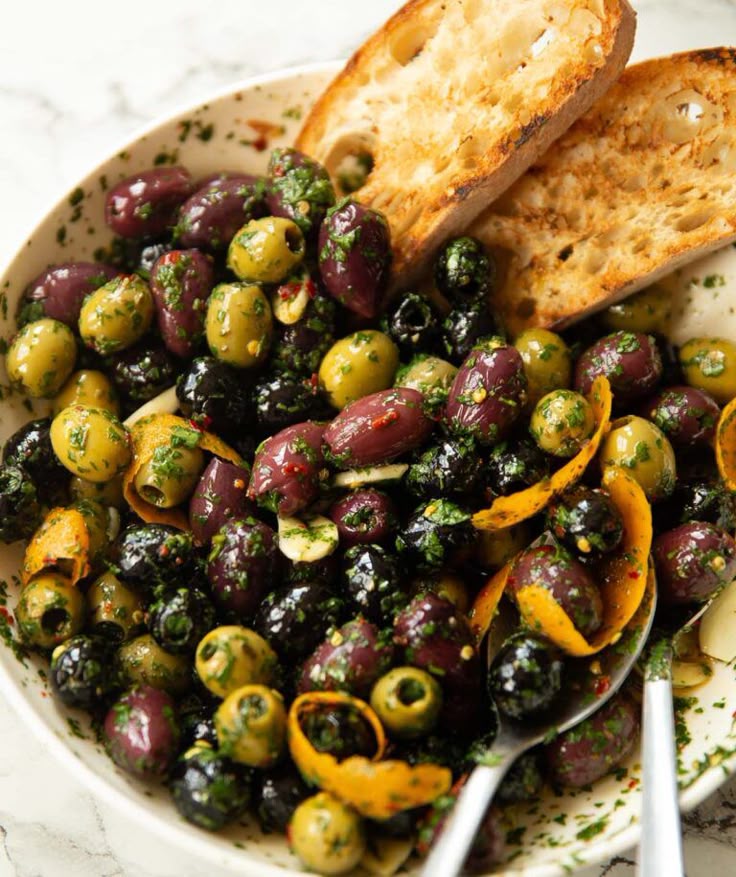
Moroccan Herbed Olives
Ingredients
- 1 pound Kalamata or Greek olives
- 1/4 cup olive or vegetable oil
- 2 tablespoons snipped parsley
- 2 tablespoons snipped fresh cilantro
- 1 tablespoon lemon juice
- 1/2 teaspoon crushed red pepper
- 2 cloves garlic, finely chopped
Instructions
- Rinse olives under cold running water; drain. Place in a 1 quart jar with a tight fitting lid.
- Mix remaining ingredients; pour over olives. Cover tightly and refrigerate, turning jar upside down occasionally, 1 to 2 weeks.
- Serve at room temperature.
Notes
These keep well if tightly covered and refrigerated.
Can Tomahawk missiles be effectively used to bypass Russian air defenses, and how do mission planners achieve this?
I’m not going to talk about the politics of this… but the simple technical answer is yes- they can get past those defenses.
The easiest way to do this is to just avoid them. Tomahawk has really long range, was designed to fly nap of the earth, and can be programmed to make course corrections during flight. Newer models can even be given instructions while in flight.
Tactical Tomahawk (TacTom) – the latest surface launched type
A lot of Russian air defenses are sited, meaning they are largely static while in operation. If you know approximately where they are, you can simply program the missiles to go a safe distance around them.
Being very long range and low flying, Tomahawk is also very difficult to detect and intercept. Note also that you have to do both of those to bring it down short of the target- just because you spot the incoming doesn’t mean you necessarily have anything in place to do anything about it. The missiles can use a roundabout course and come in from unpredictable vectors. Ground-based radar is unlikely to spot Tomahawk until it is relatively close, and the Russians are pretty deficient when it comes to airborne radar coverage.
Those radar platforms can also be diverted or attacked themselves (either with cruise missiles or other means) which would simply take them out of the picture.
Given the sheer size of Russian airspace, there’s many directions you can choose to attack from. You can also launch a strike that converges from many directions at once, which will likely result in at least some getting through (even if the target is very heavily defended).
Why Aircraft Carriers Are The Best Zombie Hideout!