

I have many people who contact me.
Many.
Early on, and a massive big mistake, I gave out my personal numbers and contact information on line. And what resulted from that was a flood of all kinds…
From spam, to insults, to lurkers, and creeps to genuine followers. Followers of people asking for all kinds of private advice for free from the Domain commander.
Jeeze.
I had no idea, though I had been well warned.
Over time, as I made some rules and boundaries, some sent me trivial monetary amounts and then under that commitment that they created, they pestered me over and over.
A five dollar donation effectively became 35 questions spread out over one year.
*Jeeze*
No matter what the DC said, they wanted more…
More… and then more, and then they didn’t like the answers and forever parsed the answers…
FUCK
Get a God damn life!
…so that somehow the answers would be something that fit their desired narrative.
*sigh*
I try to be nice about it. I try to help them out. I try to provide guidance. But if you don’t listen, it’s on YOU.
Here’s how it works.
Here's the door. Here's the Key.

Instruction is to put the key in the door, turn the key, open the door and walk though.

Close the door behind you.

The End.
And yet still…
These are some of the ACTUAL questions. No shit.
When I I get rich for volunteering for the Domain?

How much money can I expect?

Why don't I see any changes? I've been doing this as you said for two days now.

I just cannot do what you ask... you don't understand. I am different. I am poor. I have... <place 15 excuses here>.

My situation is different.

I am going to kill myself. Why don't you answer me?
*sigh*
Welcome to my life.
Today…
11,000 Missing, 164 confirmed Dead, After Venezuela Earthquakes


After two Magnitude 7+ earthquakes struck Venezuela, back-to-back within a minute of each other yesterday, at least 164 people are confirmed dead so far. About eleven thousand (11,000) more are “missing.”
Numerous buildings throughout the country collapsed into piles of rubble as the massive quakes struck. Roads have been ripped apart, water mains crushed, electricity is out and even cell phone towers are not working.
So ferocious was the shaking from these earthquakes that numerous, five to ten story concrete apartment buildings, hotels, and office buildings, now lay on the ground as giant piles of rubble, with countless people already dead under the debris, and countless more trapped and dying.
It is a disaster so horrifying, so widespread, it is likely to need an INTERNATIONAL response.
What’s the most disrespectful thing a guest ever did in your home?
About ten years ago I lived in a two bed apartment and shared it with a friend. He had female friends stay over from time to time. I went away on a long trip and when I came back there was evidence that someone had been sleeping in my room. When I asked him about it, he’d had a few people stay over at different times. One of these was a woman who felt she was a bit above the rest of us – I was not a fan of hers. She never came prepared for staying over (how would that look!) but wouldn’t fork out for a taxi home. She’d have nothing clean to wear to work the next day though and had ‘borrowed’ some of my clothes while I was away, returning some of them to my wash basket to be washed (how kind). The worst was, when I questioned my house mate about it, he said that yes he’d allowed her to stay and to have a look through my wardrobe for something to wear. When she’d had the audacity to complain to him about the brands of some of my clothes though he decided not to be friends with her any more.
Long story short, she slept in my bed, borrowed my clothes, returned them unwashed and complained about them being an inexpensive brand (Penneys – Primark in the rest of the world).
Hoàng Thuỳ Linh – See Tình | Official Music Video
Chicken Pudding
This recipe is from the family cookbook of President James Monroe.
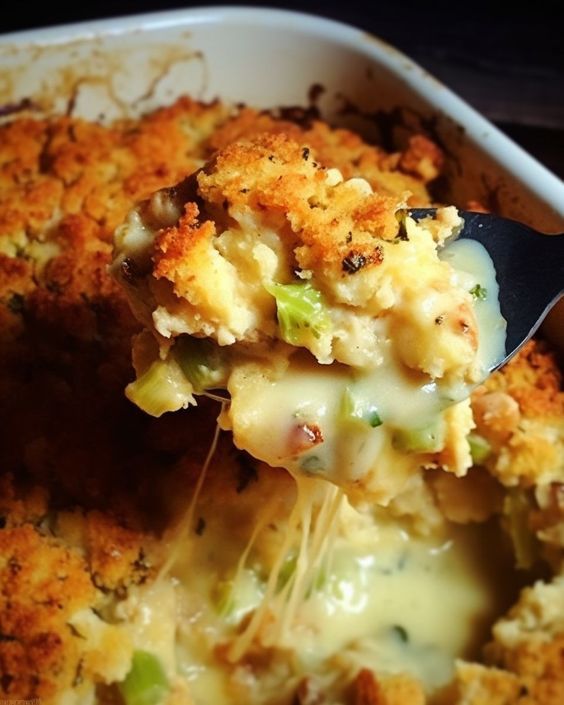
Ingredients
Chicken
- 1 (4 to 4 1/2 pound) chicken
- 1/2 cup all-purpose flour
- 1 teaspoon salt
- 1/4 teaspoon pepper
- 1/3 cup butter
Batter Topping
- 1 1/4 cups sifted all-purpose flour
- 1/2 teaspoon salt
- 3 eggs
- 1 cup milk
- 2 tablespoons melted butter
Instructions
Chicken
- Cut chicken into serving pieces. Put neck, giblets and backbone in a pan. Pour in enough water to cover, and add 1 onion (cut in half), 1 stalk of celery (cut in chunks), a few sprigs of parsley, 1 teaspoon salt, 1/4 teaspoon pepper and 1/2 teaspoon dried thyme. Cook over low heat about 45 minutes.
- Strain and reserve the broth.
- Combine flour, salt and pepper in a paper bag. Drop in pieces of chicken and shake until evenly coated.
- Heat butter in a skillet with a tight-fitting lid. Add chicken, and sauté until nicely browned on all sides.
- Add broth, cook to a boil, cover tightly, and simmer gently for 1 to 1 1/4 hours or until chicken is tender when tested with a fork.
- Transfer chicken to an 8 inch square baking dish that can be used for serving. Reserve the broth.
Batter Topping
- Sift together flour and salt. Set aside.
- Beat eggs soundly; pour in milk and butter. Stir in flour mixture until smooth. Pour over the chicken, covering it evenly with the batter.
- Bake in a preheated 450 degrees F oven for 15 minutes.
- Reduce oven temperature to 350 degrees F and continue baking for 20 to 25 minutes. Topping will puff up and brown around the edges like Yorkshire Pudding.
- While the pudding bakes, make a smooth paste with 1 or 2 tablespoons of flour and water. Stir into chicken broth and cook, stirring constantly, until slightly thickened.
- Serve immediately, with the gravy in a separate dish.
Wife Thought She Could Keep Me & Her Guy Friends Competing For Her, Instead I’m Ending The Marriage
Ashen Echoes
Written in response to: “Write a story from the POV/perspective of a non-human character.“
Miles Bonilla
Adventure Fiction Science Fiction
The window. I’d try to break it, but it’s plexiglass, and I must say, I am not capable of even cracking it.
The door? No, I don’t have the keycards the humans used, can’t go that way.
The terminal. Even when power is down, the command terminals stay on! Good old cold fusion powered computers!
I leap onto the desk. The computer is a little large for my liking, but I can make do.
>View Cameras
>HKV-3c Omega
>HKV-3c Alpha
>Open Doors
>Print Keycard
>View Scouting Reports
>Open Emergency Exit
The emergency exit is three floors up. I memorized the layout. I’m on Sub-Level 8. All I have to do is get up to Sub-Level 5.
I click on ‘Print Keycard.’
Right next to the computer, the printer whirs, and quickly I have a way out.
I grab my wrist-attached mini computer from the desk and download the computer program. I made it completely myself. It’s one of a kind. My special tool of survival. I even made it run without the internet. Aren’t I just a genius?
Now all I’ve gotta do is open the terminal app.
It’s evidently October 3rd, so it hasn’t been that long sin-
That doesn’t say it’s 2111… right? Nope, it does. I’ve been in that thing 36 years. Yaaay.
Okay, then. So what? Not like I had friends or family or anything like that. None left, anyways.
The closest thing to a friend that I have is a yellow bunny plush named Gerard. And yes, I made that myself too. What, you thought I was receiving presents in this place?
I hop up onto the first shelf, slide the keycard, and the door hisses open.
Three floors. Just three floors.
As the hydraulics system locks the door in place, I notice out of the corner of my eye, a shape bolting across the hall.
I pick up a knife-shaped shard of metal. Any weapon would be quite helpful, if you didn’t guess. Something still feels off. I head through the door to the vehicle workshop.
This whole platform elevates up to the surface. I can get out of this bunker here, too.
I head to the feline soldier vehicle lot, pulling a me-sized tire iron out of the crate of tools. I bound over to the lock-up, using my wrist computer to open it up. I grab my backpack. Inside I find what I left. Some thirty-six year old water, a bandage roll, some heavy-duty rope, some spare parts… and one other thing.
This can stay hidden in here, for now.
I take the rope out before putting the backpack on.
I tie the metal piece to the tire iron. It takes a bit of time, and I watch and listen warily as I do it.
Then I have it. A makeshift spear. Quick and easy to make. I sell them for two mice apiece. It’s a bargain!
I catch the fast movement out of the corner of my eye again, this time catching a scent.
Is that… another cat?
I stand at the ready, just in case.
Then the figure charges out of the shadows, and I swing my spear.
My blade slashes against the chest of the she-cat, and she howls in pain, but she manages to get back on her paws and still circles me.
Back and to the right!
I spin around to parry, but whoever it is pins me down, though I manage to keep her at bay with my spear handle.
Just then, I scent more cats.
That isn’t good…
Summoning all my strength, I throw her off me, twirling and slashing out as I do.
My slash sends the she-cat further backwards.
She rears up on her hind legs when a voice rings out across the garage.
“That’s enough, Mint Nose!”
The she-cat stops. And I get a clear look at her.
She’s… beautiful…
She has a dappled tortoiseshell coat, with pale green eyes, sleek fur, and an overwhelmingly cute white nose.
Another she-cat steps into view, clearly a full adult cat.
Mint Nose dips her head respectfully, glaring at me. I simply stand there, on hind legs, spear in paws, wary but curious.
“Greetings, Clover Leaf,” Mint Nose meows.
“It seems a new cat has come to the city, and clearly not from Radiance or the Collective,” Clover Leaf replies, though aiming the statement in my direction.
Radiance? The Collective? What is she talking about?
Mint Nose nods.
“You fought well, stranger. Where do you come from?” Clover Leaf continues.
“Um… here. A room. Right over there.”
Clover Leaf sighs. “I didn’t think anybody lived here. I apologize for disturbing you. We shall leave your territory.”
“It isn’t exactly my territory, either. Funny enough, I’m not here of my own volition.”
“Then why are you here?” Mint Nose cuts in.
I say nothing.
“Well, then. We will show you the way out, and go our separate ways. And you should remember this, if you plan to go out on your own; you really should avoid the waterworks, and Route 66 in general.”
Wait, what? Why? Huh… weird…
We head up the stairs, and out the emergency elevator silently.
As we exit, a tomcat pads over to us. “Who’s this?” he asks.
“A loner. Nothing more.”
I pull my bandage roll out, wrapping it around Mint Nose’s chest and tying it off. She winces slightly. I hand her the rest of the roll.
“Just change that every couple days,” I murmur.
“Thank you, I guess.”
I shuffle my paws awkwardly, kneading my claws into the ground before Clover Leaf pads away from her own conversation with the tomcat, as well as another cat whom I don’t know. “Come, Mint Nose, time to head back to camp.”
She nods at Clover Leaf before turning back towards me. “Goodbye, then.”
“Yeah. Maybe I’ll see you around.”
“Let’s hope not.”
“By the way, stranger, what is your name?” Clover Leaf calls.
“Ain’t got one!”
“Well then, just know you can come to our territory! Maybe see if you’d like to become one of us.”
With that the Ashclaws bound off toward the highway, and yet again, I’m left alone.
All alone…
For the first time, I really take in my surroundings.
The city in which I now inhabit isn’t like what I saw out of the lobby that one time I managed to get up there. It was bustling with humans, and there were military vehicles everywhere, and bases, barricades…
All of it is torn down, now scorched and broken. Whatever happened here was bad.
I think hard. All the other subjects, the other cats, were gone when I woke up. Maybe when whatever happened, well, happened, they escaped. Maybe those cats were their descendants.
Anyway, I look around, spotting a water tower that seems to have a moving shape atop it.
‘And remember this;’ she said. ‘Avoid the waterworks, and Route 66 in general.’
But why should I avoid it?
“Hello?”
The voice causes me to jump. I dropped my spear in the bunker, but I still have claws and teeth. “Who’s there?”
I kid you not, an old cat steps out of the shadows, wearing an old dish towel. Her right ear is practically non-existent, and she has a scar on her muzzle.
“So sorry, youngster. I didn’t mean to startle you. I noticed you didn’t go with the Ashclaws, I was curious.”
Ashclaws?
“What do you mean, ‘Ashclaws’?” I ask.
“This is the name of their tribe. They rule the south of the city with an iron paw. No group can compare, even with the sheer quantity of little tribes and towns that other cats have created.”
“Do you mean, they’re… the enemy? To you?”
“No, not necessarily. I understand their defense of the territory they waged war over for a decade, yet their inhospitality often overrules that understanding. They let in no outsiders. You weren’t attacked, though.”
“Actually… I was. I had a spear, slashed her on the shoulder.”
The elder absorbs this information. “They do not approve of weapons. They believe in old-fashioned things. They do not, however, comprehend the dangers of other deadly creatures. Cats aren’t the only worries around here.”
“Okay, then… What happened to the city?” I ask.
“Fire rained from the sky. We do not know precisely who brought the flames down upon this place. Some speculate it was just another human accident, from the city itself. Some say that their wars turned completely catastrophic. But without further information, we can only guess.”
“What about the Ashclaws? How’d they form?”
“There are three major powers in this city: Radiance, the Ashclaws and the Rustpaw Collective. There were once seven. The other four were destroyed. They were lost when the humans came back, eighteen years ago. The humans thought them to be dangerous like the other mutants and eradicated them. There were still four after that, but they went to war against the Ashclaw tribe, lost, and were either killed in the fighting or became Ashclaws. By winning this war, everything on the east side from the wall to Route 66 became their territory. If you look through the buildings, you might see the mountains, up north. We’re very close to them.”
“The wall?”
“A big wall of cars on the highway. Anyways, the Ashclaws will leave you alone most of the time, till you hit anywhere south of that highway, and north of the 66, and then you are their enemy. They reserve everything they get for their own group. All cats here dislike them for keeping them out, yet understand their reasons and respect the sheer power they hold.”
She snaps to attention, gazing at the sun. The sky is slowly turning a fiery vermillion, the sun sinking downward.
“Danger is more frequent at night. Come with me.”
“How do I know you’re not going to lead me into some kind of attack?”
“You don’t. That’s the thing about the end of the world; everything’s a guessing game when it comes to who you place your trust in.”
Fair enough. You seem trustworthy enough, I guess.
I follow the stranger. A hatch on one of the tanks opens, and the two of us climb inside.
DEFCON is Not What I Expected…
Do soldiers always save one bullet for themselves, or is that a myth?
I never heard of or met a soldier who was doing that.
Reserving the last bullet for yourself only makes sense under two conditions: either you fight an enemy that will slowly torture you to death if you get captured, or you carry some important secrets in your head that cannot be disclosed to the enemy.
The latter type of people usually is not allowed to go on combat missions where they risk being captured anyway, but there are always exceptions.
The Russian military has a different mindset when it comes to saving your last bullet: A Russian soldier in Ukraine ending his life. Russian soldiers are instructed by their commanders to commit suicide rather than be captured. (Picture: Ukraine Army Intelligence)
In all the wars I fought (Bosnia and Kosovo) or where I supported the troops (Ukraine), the normal grunt has many other things to worry about. In Ukraine, chances of getting torn apart by an enemy FPV drone are much higher than getting captured, so there really is no point in wasting your time with “what if” scenarios.
Another problem is whether you have the guts to pull the trigger on yourself. I, for myself, decided a long time ago that I probably will not be able to do that.
A leaflet of the Russian Army with suicide instructions. It says: “It is important to stay calm and pull the trigger confidently”. (Picture: Ukraine Army Intelligence)
On the other hand, I am also not the type who would surrender easily and would rather try my luck by fighting my way out, even if the chances are small, than throw away my rifle and wave a white flag.
Most soldiers will not think that much about this issue. A good soldier is an eternal optimist, even if he fights against all odds. Negative thoughts, such as killing yourself, have no place in his mindset.
What was the oddest question you were ever asked by airport security?
More than one question but a lesson in downright officialdom rudeness.
Marrakesh Airport in February this year. A ten deep queue for passport control. Eventually we were at the head of the queue. I was directed to one passport booth of ten and my girlfriend to the adjoining one.
Walked up to the booth and handed my passport open at the details page and my Jet2 boarding card clearly marked GLA-RAK.
Female passport officer- .
Where you from?
Me- .
Glasgow .
Female passport officer- .
What you do?
Me- .
Retired .
Female passport officer- .
What you do before?
Me- .
IT Engineer .
I don’t think “IT” registered with her but perhaps “ Engineer” did as after a scowl she almost grudgingly handed my passport and boarding card back without another word and indicated I could go.
My girlfriend, who had gone to her allocated booth before me, was eventually cleared after me and faced the same questions plus “Where you stay?” .
She could barely remember the name of our hotel let alone the address. Luckily I had duplicated our holiday paperwork and given her a copy which she had to search her bag for. And again, grudgingly she was eventually waved through.
We then went forward to baggage reclaim which was fairly straightforward but THEN we had to queue to put our luggage through a huge scanner in order to leave the airport!
The return journey experience was almost as bad. A surly passport officer stamped my passport, then down the corridor another official demanded to inspect my passport which his colleague had just stamped!
Later we both bought two duty free cartons of cigarettes and while walking around the departure shopping area (which bizarrely was more like a European airport in contrast to the utilitarian facilities in the rest of Marrakesh airport), yet another official approached us and demanded to see the receipts for our duty free purchases. Luckily we had kept them in the (rather nice) duty free bags.
If the Morocco authorities board really want to increase their tourist trade, they need to give their airport officials a lesson in manners and courtesy because in the meantime I won’t be visiting there again!
Pictures
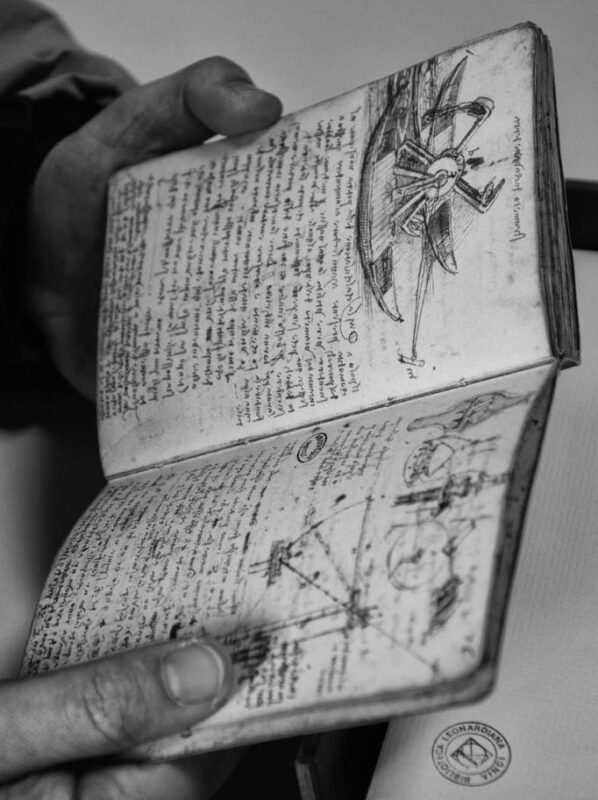
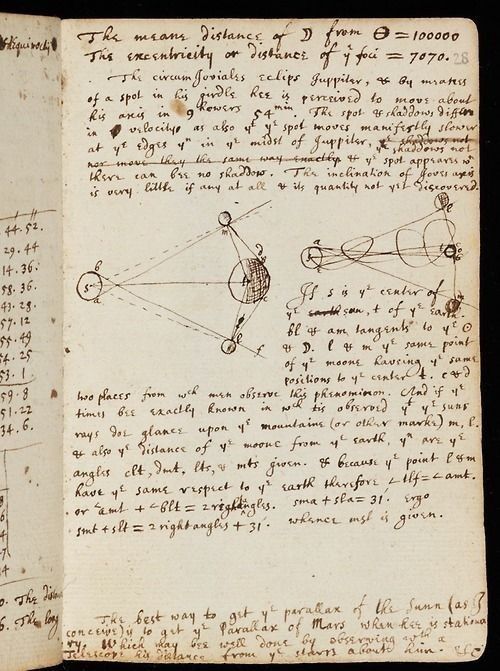
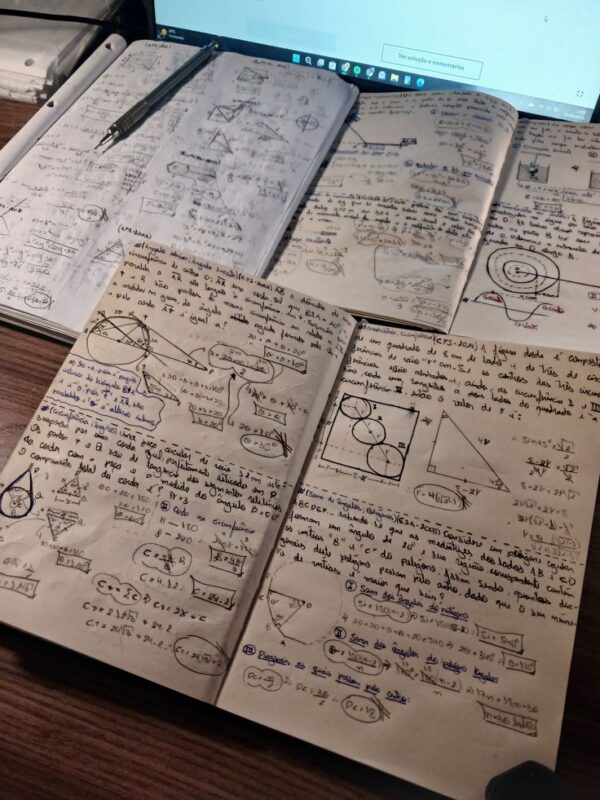









Since when exactly did Chinese receive wheat? Why is it not celebrated as strongly as rice in their folklore? Also, what makes most of their historical dramas only deal with rice and the problems of growing rice and not any other food crops?
China is divided into South China and North China.
The staple food of North China is wheat (pasta)
The staple food in South China is rice.
Wheat originated in West Asia, where they began to grow it 10,000 years ago. About 7000 years ago, wheat spread to the Central Asian region.
The earliest site where wheat was found in China was in the Peacock River valley in Xinjiang, where researchers found four thousand-year-old charred wheat in the Xiaohe cemetery in Loulan.
And the earliest wheat unearthed in Inner China is from the mid or late Shang period, more than 3,000 years ago.
The popular cultivation of wheat in northern China would have been the Han Dynasty.
One of the most crucial driving factors was the invention of the stone mill during the Warring States period, which was popularized in the Han Dynasty, allowing wheat to be ground into flour.
In the West, mills were mainly windmill-driven, and in North China, stone mills were mainly driven by animals such as donkeys. There are also water-powered mills, but they are relatively rare.
Wheat as a staple food obviously has an extra step of milling in the middle.
As we all know, the main components of wheat are starch and fiber, which will be easily indigestible when cooked and eaten directly, and it tastes rough, without the delicate soft and tough texture of rice. (If you don’t believe it, you can try the taste of boiled wheat)
Cooked wheat
Cooked rice
Only when the wheat is ground into flour and made into steamed buns (bread) and noodles, it becomes delicious.
Sir Whiskerton and the Feline Family Feud
Ah, dear reader, you return to find me, Sir Whiskerton, embroiled in a conflict as old as time itself: the generational clash between tradition and self-expression. This is a tale of family expectations, hip-hop aspirations, and the daunting shadow of a very large, very disappointed uncle. So, brace yourself for the bass-heavy, family-drama-filled tale of The Family Business.
The Uncle’s Icy Arrival
It began on a bleak winter morning. A silence had fallen over the farm, the kind that comes not from peace, but from the absence of music. The reason for this unnatural quiet was sitting in the middle of the barnyard like a furry, displeased boulder: Bigcat.
He had arrived unannounced, a hulking tomcat with a gold chain thicker than my tail and a scowl that could curdle milk. By his side, as always, was his loyal, if not overly bright, general Catticus, who was attempting to look menacing but was mostly just shivering.
“Where is he?” Bigcat’s voice was a low rumble, like distant thunder promising a storm of disapproval. “Where is my nephew? It is time he learned the family business.”
The “nephew” in question was, of course, Lil’ Paws, who was currently trying to hide behind a water trough that was far too small for him.
The “family business,” I had come to learn, was not agriculture, but a sophisticated operation of intimidation, territory-marking, and strategic grain-hoarding across several farms. Bigcat was less a farmer and more a furry, four-legged syndicate boss.
The Battle of Generations
Bigcat’s idea of a “welcome” was a critical inspection of our security (he scoffed at the cat flap) and our resources (he deemed our grain silo “amateurishly accessible”).
“So,” Bigcat said, fixing Lil’ Paws with a stern gaze. “You have been living here. Among the… poultry.” He said the word like it was a disease. “It is time to leave this nonsense behind. Your place is with me. There are fences to patrol, territories to expand. This is your legacy.”
Lil’ Paws, summoning all his courage, puffed out his chest. “But Uncle! I got my own thing now! I’m an artist! I make beats!”
Bigcat blinked slowly. “Beats? You mean you… fight? Excellent. Show me your combat skills.”
“No, not beating people! Beatboxing! It’s music!”
Bigcat’s face was a perfect picture of confusion. “Music? You make… noises? For the chickens?” He turned to me. “What has he been doing here? Has he gone soft?”
Before I could answer, Lil’ Paws, desperate to prove his worth, launched into his most blistering beat. Boots-and-cats-and-boots-and-cats-ka-CHOW!
Bigcat listened, his ear twitching. “I hear no beef,” he declared, deeply disappointed. “You said ‘beef box.’ Where is the steak?”
It was a cultural chasm too wide to leap. In a final, desperate move, Lil’ Paws challenged them to a “battle.” MC Scratches emerged, ready with a fiery diss track. Catticus, eager to represent the old guard, stepped forward, struck a dramatic pose, and bellowed, “All warfare is based on deception! Hence, when we are able to attack, we must seem unable!”
The barnyard fell silent.
Scratches lowered his notepad. “That’s… a quote from Sun Tzu. It’s not a rap.”
“It is a timeless strategy!” Catticus insisted, puffing out his chest. “Appear weak when you are strong!”
“You appear confused,” Scratches deadpanned.
The Heart of the Matter
As the absurd “battle” fizzled, the real conflict came to a head. Bigcat wasn’t just disappointed; he was hurt. “Your father,” he rumbled to Lil’ Paws, “was the fiercest tom in three counties. He built our reputation with his claws and his wits. This… this ‘art’… he would not understand.”
For the first time, Lil’ Paws wasn’t just defensive; he was defiant. “My dad loved the sound of rain on the tin roof,” he said, his voice quiet but firm. “He said it was the best music. Maybe… maybe he’d get it. Maybe I’m not just making noise. Maybe I’m making our name mean something different. Something that doesn’t just scare others, but makes ’em… feel something.”
The air went out of Bigcat. The mention of his brother, Lil’ Paws’s father, had changed the game. This wasn’t just rebellion; it was a reinterpretation of a legacy.
The Resolution
Bigcat did not suddenly embrace hip-hop. He did not ask for a mixtape. But he did stop demanding that Lil’ Paws leave. With a grunt that might have been respect, he said, “Your father was stubborn, too. A different kind of stubborn.” He gave a curt nod, a silent acknowledgment that the family business had, perhaps, expanded into a new, confusing sector.
Moral of the Story: Honoring your family doesn’t mean walking in their footsteps. Sometimes, it means blazing a new trail that still carries the echo of their name.
The Aftermath
Bigcat and Catticus left, but the dynamic was forever changed. Bigcat became a recurring, grumbling presence, showing up unannounced to critique the farm’s “defenses” and occasionally, when he thought no one was looking, tilting his head as if trying to find the rhythm in his nephew’s beats.
And so, dear reader, we close this chapter on a note of tense, familial truce—but rest assured, the farm’s next adventure is just one disapproving relative away.
The End.
Post-Credit Scene:
Weeks later, a small, clumsily wrapped package arrives for Lil’ Paws. Inside is a single, oversized, slightly tarnished gold chain—an old piece of his father’s. There is no note. That night, during a performance, Lil’ Paws wears it. The chain is gaudy and doesn’t fit his style at all. He doesn’t wear it again, but he keeps it in a special box, a heavy, shiny symbol of a legacy he’s learning to carry in his own way.
Best Lines:
-
“I hear no beef. You said ‘beef box.’ Where is the steak?” – Bigcat, on Beatboxing
-
“All warfare is based on deception!” – Catticus, attempting to rap
-
“You appear confused.” – MC Scratches, the critic
-
“Maybe I’m making our name mean something different.” – Lil’ Paws, finding his truth
Starring:
-
Sir Whiskerton (The Diplomat & Reluctant Family Counselor)
-
Lil’ Paws (The Nephew & Hip-Hop Heir)
-
Bigcat (The Disapproving Uncle & Old-School Boss)
-
Catticus (The General & Failed MC)
-
MC Scratches (The Lyrical Witness)
P.S.
Remember: Family is the first audience you ever have, and sometimes the hardest to win over. You can’t change the melody of your lineage, but you have every right to write your own verse.
It’s just a joke…
Why do some claims of higher speeds for large ships, like US carriers, get dismissed as unrealistic? What’s the science behind these speed limitations?
Having been in the Navy from 1975 thru 1979 and then working as a contractor specializing in propulsion controls I can give you some good observations without making you glassy-eyed with mathematical details.
First, sailors, not all, but a large amount are liars. Most of their lies are bragging to people who don’t know or cant prove the difference. Some of their most common lies are dick size, gas mileage and top speed of their cars, how much beer they can drink and how fast their ship can go. There are lots of bar room storytellers who listen to one guy’s story and tell another one that tops it and so on. That is how a 34 knot aircraft carrier winds up going at speeds of 60 miles per hour. Same goes for their cars, motorcycles, big fish, deer hunting, bull riding and so on.
I think if I hear about the speed of an aircraft carrier being classified one more time I’m going to puke. You can go to many web sites about ships and find out the top speed, hull length, horsepower and displacement of any ship ever built. If it says the top speed of the Enterprise was 33.4 knots, you can bet on it that was their best sustainable speed. The “classified” speed, if they bothered to mention, will not be any more than 10% over that and it could only be used as a futile attempt to do an emergency maneuver for a short time. The hull and shafting of a ship when driven over its rated speed will shake it apart, so why double or triple the cost to build it with a destructive speed?
Some of my real world experience says that a displacement type hull of a ship has to be overbuilt to exceed even 20 knots. The top speed of cargo ships, Navy auxiliaries, Navy tankers and amphibious ships was around 20 to 22knots by design. As far as abuse and fuel economy goes, these ships by their hull design are fairly happy around 15 knots. Want to go from 15 to 18? Add 50% to your fuel bill. 15 to 20? double it. 20 to 22? Triple it. Carriers, cruisers and destroyers have a skinnier profile, stronger hull and the extra horsepower to get them into the 35 knot range but they still use a displacement hull, which is still completely submerged in the water at all speeds. You simply cannot build a ship with a displacement hull that will go 40 knots. If you try, the extra mass of shafting, propellers, bearings and hull will weigh it down and it still won’t go any faster. High speed ships, (mostly boats) use a planing hull that lifts the front half or more out of the water. This type of hull starts to lift out at about 1/2 of its design speed. The problem with this design is stability, it simply cant be used in rough water. As it bounces over the waves, it will flop like a fresh caught crappie and throw all of its contents out or possibly turn over. Imagine an aircraft carrier captain reporting to the admiral that they achieved 50 knots but at speeds from 25 to 35 the porpoising of the ship rattled all of the planes so hard they now look like they were put into a blender.
My Girlfriend Asked For An Open Relationship, I Walked Out And Now I Laugh At Her Tears
You Can See Me?
Written in response to: “Write a story that includes the line “You can see me?”“
Maxwell Haupt
Science Fiction Speculative Suspense
Today was finally Tessy’s big day. Six centuries ago, hostilities erupted between the Earth and Eana. After an extraterrestrial message was translated and confirmed to be a declaration of war, the two planets worked quickly to build weapons for the conflict. Because Earth and Eana were over 12.4 million light years away, they had to think outside the box. Conventional weapons would be useless over such an insurmountable difference. Victory in the war would be determined by Helio-Nuclear-Powered Gravity Cannons or, Dum-Guns, that could harness the power of gravity, turning the invisible force into massive, planet-sized projectiles that could wipe out the enemy in one shot. Utilizing complex algorithms, the Dum-Guns could slingshot their projectiles toward the enemy by curving their shots along the gravity wells of planets, stars, and even black holes.
These shots were incredibly difficult to calculate and, because of the myriad light years between the weapon and its target, most of the shots were either intercepted or missed by a long shot. Even a successful shot (the closest to a hit had been 1.27 million miles away), took decades to reach their target. Desperate for a solution, the military turned to their greatest resource, the minds of the people! They introduced a program where everyday civilians could use their computers to “Mine for Ammunition”. By trying to decipher complex algorithms, everyday people like Tessy could use their gifts in math, physics, coding, or even luck to try and score the winning shot. Entry was free, but the line was long. Tessy’s parents signed her up for her turn before she was even born, but today was the day. After fourteen grueling years on the wait list, Tessy could finally take her shot at the enemy.
She spent the entire day at school sneaking peaks at live streams of the Dum-Gun firing off one shot after another. Every day the orbital weapon took thousands, if not hundreds of thousands of pot shots into open space, each one programmed by a civilian miner who hoped to win the day for their planet. When one live stream got stale, she switched to the defense stream. Smaller Dum-Guns built in orbit that deflected enemy close calls. If a Dum shot hit its target, it would be the equivalent of Earth and Eana slamming into one another, lights out for the unlucky loser.
Tessy scrolled through videos of the defense Dum-Guns firing their shots. Truth be told, they weren’t much to look at. Each shot was completely invisible and, of course, the guns made no sound when they fired. They didn’t even light up. The only evidence they were firing was the slight warping of space-time around the barrel of the Dum-Guns which lasted only a blink of an eye and the list of numbers scrolling by on the screen, calculating when the shot would hit, if it would hit, the likelihood of it being intercepted, and correction data for the next ammo miner. Even if Tessy scored the winning blow, nobody would know for another ten, twenty, fifty, or even a hundred years, but that didn’t matter to Tessy. She didn’t even know how the war started in the first place, heck, nobody did.
Tessy, like everyone else, was in it for the game. Even if she didn’t live to see it, knowing her shot would be the one was more than enough reward. With a happy squeal, Tessy buried her face in the hands of her sweater and kicked her feet. How did she know her shot would be the one? Because she took something into account that no other ammo miner had ever considered; a variable which she called her secret. With her entire childhood to prepare for this moment, Tessy studied and studied. She studied physics, coding, artillery from the ancient world, artillery from the modern world, math, history, science, and everything in between. She examined the distance between planets in her own galaxy, the distance between the known celestial bodies in the enemy’s galaxy, and any obstacles she might encounter in extra-galactic space.
Her research led her to discover her secret variable and it was her secret variable that would guarantee she would land her shot and win the war. Tessy realized, during her studies, that if she examined the original declaration of war, she could trace its flight path back to its origin point and simply input an algorithm to follow the declaration’s path back to its source. By not using the element of surprise, the enemy had left themselves wide open. That had been Tessy’s mission for the past six years. When her homework and chores were done, she would curl up in her bed, wrapped in a blanket, blasting beats to study to, and calculate her secret variable.
She told no one of her discovery, not even her parents. If her classmates found out, if anyone found out, they might use it before she could and claim credit for it. Each day that she watched the Dum-Gun livestream her heart stopped every time the machine fired and the same thought rushed through her head, “What if someone beat me to it? What if this is the shot that ends the war? What if I never get my chance?” Then, like clockwork, the AI would predict the shot would miss, Tessy would breath out, relaxing her back muscles, secure in the thought that only she could win the war. Rinse and repeat for six years.
When the bell rang at school, Tessy leapt up from her desk and rushed home, her firing time was 4:45, she had just over two hours to prepare and she didn’t want to waste a moment. Her friends didn’t ask her to join them at the pool, they learned quickly that school year that there would be no hanging out with Tessy until she had completed her mission. Many birthday parties, sleepovers, pool parties, and after school activities went by unattended while Tessy worked. There would be plenty of time to party once she had won the war.
On her way home, Tessy’s heart beat so fast and so high up in her chest that she ran the last three blocks. She flung her door open and ran past her mom and little brother. She grabbed a snack and, with a big smile, ran up the stairs, into her room, slammed the door behind her, and sat behind her computer. Her purple curtains were closed and the afternoon sun cast a purple haze through them onto Tessy’s messy bedroom. Clothes were strewn across the floor, she forgot to make her bed that morning. Three different cups of water sat on her nightstand, each one older than the last.
Her keyboard was strewn with crumbs, but in this moment this messy teenage girl’s bedroom was a command center. The pillar of the military, the launch floor from which the shot that saved the world would ring. As she booted up her computer, she wondered if they would turn her room into a museum in a hundred years, once she’d won the war. Maybe her great grandchildren would give tours of the house and talk about Tessy’s genius, her inspiration, her acute scientific mind.
The desktop hummed to life, its extra large fan kicking in, drowning out all the noise in the house. Last summer, in preparation for this very moment, Tessy and her dad built a new desktop. They picked every single piece and carefully assembled it over the course of one long soda-fueled night. Bouncing in her gaming chair, Tessy logged on to the ammo mining depot and watched the countdown clock. One hour, fifty eight minutes. She threw on her chunky headphones, blasted her favorite music and ran last minute diagnostics.
She spent the two hours carefully tracing the route of the declaration of war back to its source, a tiny little speck 1.27 million light years away. One summer, when a blast had come within 3.8 million miles, Tessy and her grandmother sat in the yard, trying to find that tiny speck with a telescope. It was too far away, but now Tessy knew exactly where her target was. The declaration had originated from a satellite launched over six hundred years ago, up until now, ammo miners tried to calculate their shots based on where the message transmitted from, but Tessy was busy figuring out where the satellite had come from.
Her final check was to send out a ping, a simulated radar bloop that used the algorithm to train the Dum-Gun’s sights. Over six hundred years, they had built up a pretty good picture of the other galaxy and were fairly confident that their virtual map was accurate. When the ammo mining system first launched, the army released their map to the public and Tessy was fast at work using it to trace her precise target. After six years, Tessy knew the enemy’s night sky better than her own. Her shot would bounce off her moon, fly past a star, circle a black hole three times to build up speed before zooming through open space.
After decades of uninterrupted travel, the gravity shot would loop around the enemy’s star and find its target. Tessy simulated the shot over and over again with the publicly available 3D map. Each time, a direct hit. As the timer counted down. Tessy took a long, deep breath. She trembled with excitement as she logged on, typed her algorithm, aimed her shot, double checked, triple checked, quadruple checked, and quintuple checked her math. When her heart reached her throat and felt like it would jump out onto the keyboard, she pressed enter. Without so much as a beep, her shot was fired and the next person in the queue stepped up for their turn.
Tessy sat and watched her screen for a moment. It was done. Six years of work were finished. Once her heart calmed down she would check her math one last time and then she would live her life. In a few days, maybe a few months, or even a few years they would announce that her shot was on target and, in a century, the war would be over. Tessy took off her headphones. What she thought was the beat of drums was really her heart beat. She loaded up the 3D map and pinged her target again. Just like always, it was dead on.
As she reached for the off button on her computer, a thought struck her. They had pinged and mapped out the enemy’s galaxy with their Dum-Gun shots, who was to say the enemy wasn’t doing the same thing? Then another thought struck Tessy, had her planet ever sent a message back to the enemy? What if each radar ping was giving away their location? Startled at the thought, but sure it was nothing, Tessy loaded up the map again. This time, she traced her shot in reverse. If they copied her shot, they would miss by a few million miles… but if they adjusted… if they had a map of her galaxy…
Going into the public database, Tessy looked up if they had ever sent a message to the enemy. Her heart stopped when she saw that, five hundred thirty three years ago, they responded to the enemy’s declaration with a declaration of their own. Tessy felt like she might vomit. The enemy had everything they needed to destroy Tessy’s planet. Had just happened upon the solution before they did? Was it luck? The enemy still had a hundred or so years to fire back.
Quickly, Tessy opened up the data from the enemy’s shots and tried to calculate how close they were getting. Her eyes grew wide as the number flashed across her screen. Just like them, each of the enemy’s shots was inching closer and closer to her planet. Their next shot, if it followed her secret variable, would be a direct hit. Tessy threw up a little bit in her mouth as another thought crept into her head.
Just as she had used the enemy’s Dum-Gun shots to calculate her’s, they were using her Dum-Gun shots to calculate their’s. She had just given the enemy the means to destroy her planet. Her shot would hit, that was guaranteed, but she had just painted a target on her planet’s back. Shaking with a cold sweat, Tessy stared at her computer until the sun went down. When the stars covered the sky, she staggered out to her yard, ignoring her parent’s questions about how it went.
Paler than snow, Tessy looked up at the sky, one of those twinkling lights was death from above. Tessy fell to her knees knowing she would live the rest of her life in peace, knowing that her children, and maybe her grandchildren would too. But she knew that somewhere, hundreds of years down the line, she had signed the death warrant for her entire world.
Tessy searched the sky for Earth and, when she found the small blinking light, in a trembling whisper, with hot tears running down her cheeks, Tessy pointed a trembling finger and muttered what was not quite a question, nor accusation, just a muted, fearful realization,
“You can see me?”
Chicken Strips in Garlic

Ingredients
- 2 pounds chicken strips
- 1/2 cup all-purpose flour
- 3 cloves garlic
- 1 cup butter
- 1 can condensed chicken broth
Instructions
- Sprinkle salt and pepper over chicken, then coat with flour.
- Melt 1/2 cup butter and 2 cloves chopped garlic. Sauté chicken in garlic and butter.
- In a casserole melt remaining butter and garlic.
- Place chicken in casserole with drippings.
- Pour can of broth over chicken.
- Bake uncovered at 325 degrees F for 35 minutes, stirring occasionally.
- Serve with rice.