
Here is how I used to make a quick and easy lunch back in the day…
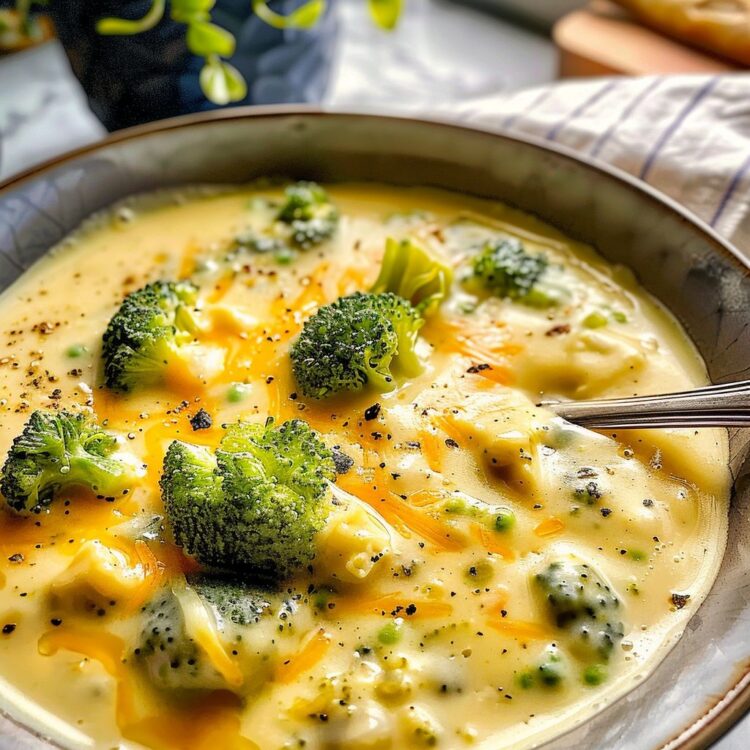
Ingredients:
- A can of Campbell soup (cream of asparagus, cream of tomato, cream of broccoli, cream of cauliflower)
- A small can of condensed milk (sweetened or not)
- Salted crackers (crunched up, way far cheaper than flavored “Goldfish”)
- Cheese (often sliced / diced into small bits, cheddar, Jack and American)
Now, here in China its easier to eat fresh and have it delivered. It’s also cheaper than purchasing an imported can of soup, and imported cheese. Though, crackers are cheap and common throughout China.
So I would pull out my ingredients, and mix them up in a bowl, and then heat them up.

It was healthy, delicious and very filling.
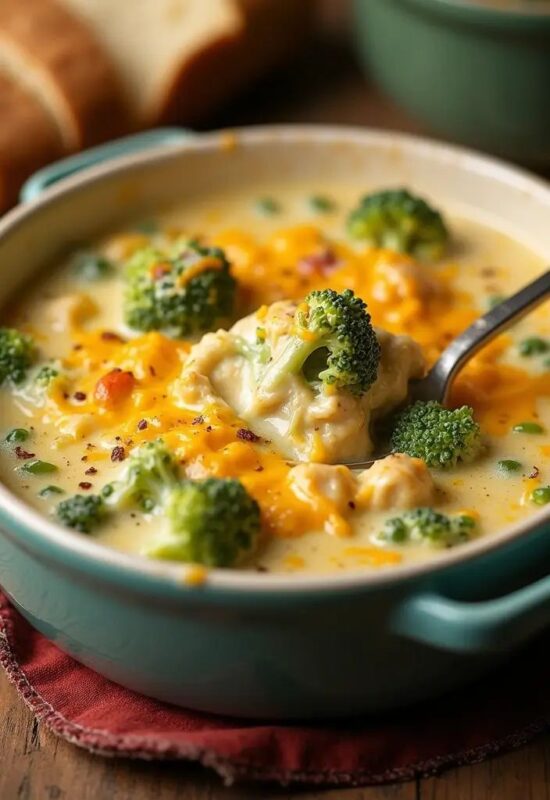
It was also so very easy to make as well.
Today…
USGS: “M 3.9 Experimental Explosion”
Hal Turner Nation July 17, 2026 Hits: 13009
The United States Geological Survey (USGS) reported a Magnitude 3.9 “Experimental Explosion” off the east coast of Florida at 7:04 PM eastern US Time yesterday.
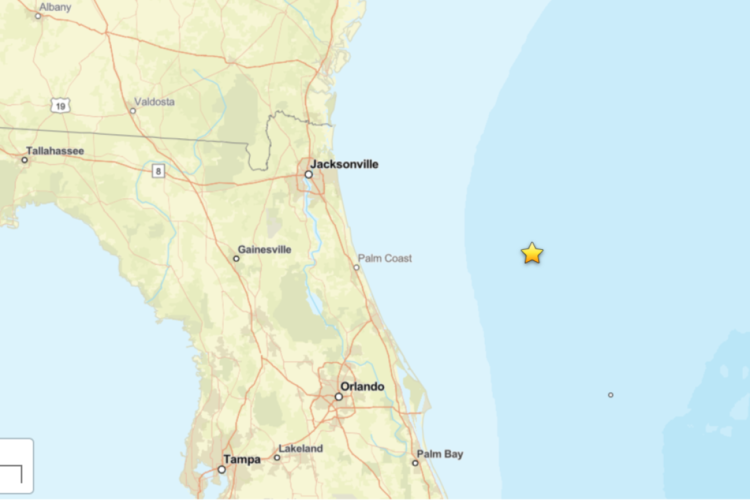
They report “The recorded ground motions from this event are more typical of an explosion than a naturally occurring earthquake. The Navy has conducted Full Ship Shock Trials in this region in the past.
There have been no news releases from the U.S. Navy or from the Department of Defense warning anyone this was being done, and no such releases explaining what was done.
When the World Trade Center in New York City collapsed on September 11, 2001, the massive 107 Floor towers registered as a Magnitude 2.1 earthquake when each one fell. So what took place in the ocean off Florida’s coast was almost twenty-times as powerful!
How Much Energy Released
A magnitude 3.9 earthquake releases approximately 1.1 × 10¹³ joules of energy. This is roughly equal to 2,600 tons (2.6 kilotons) of TNT or about the energy released by a very small tactical nuclear weapon.
Earthquake energy is measured on a logarithmic scale. This means a whole number increase in magnitude, like jumping from a 3.0 to a 4.0, releases about 31.6 times more energy. A magnitude 3.9 quake is just under a magnitude 4.0. At this intensity, the shaking is often noticeable indoors, feeling similar to a heavy truck passing by, and may cause hanging objects to swing or parked cars to rock slightly.
Locals who own Radiation Detectors are encouraged to go to the coastline and take radiation readings of the ocean itself today to check on what really happened.
What is the most popular cookie on Christmas?
Having worked in bakeries during the holiday season, the cookie that sold the most were the basic sugar cookies we made that we decorated with icing. Since they’re a rolled cookie, we can make hundreds in many shapes and using colored icing, we can decorate them by the sheet pan. They look great, can be flavored simply with vanilla or spiced up with lemon or orange zest and even the icing can be flavored.
Now as far as the favorite for home baked cookies, that’s entirely subjective. I love molasses cookies personally. My mom would uses red and green casting sugar on them for a festive look and their chewy goodness was wonderful! Lots of people like gingerbread cookies. Sugar cookies are still a favorite. Mexican wedding cookies are often seen at parties too. I suspect that people will say something different depending on what they grew up with. My best friend loves pizzelles because her mom made them every Christmas.
, and American being most preferred).
If you want biscuits and gravy in Britain, what would you ask for?
Biscuits, in the way that you mean them, simply do not exist in the UK
It’s not that they have a different name for them. Or they make the same thing but include it in another dish.
It simply does not exist. I was pretty surprised by this when I moved here.
“Surely, KFC will still have them?” Nope.
You do get the occasional person saying “ask for a drop scone”.
But those people are insane or misinformed, as that’s a sort of Scottish pancake.
So if you are in the UK and want biscuits and gravy you’ll need to get all the ingredients and message them yourself and put up with the confused looks and bewilderment of everyone around you
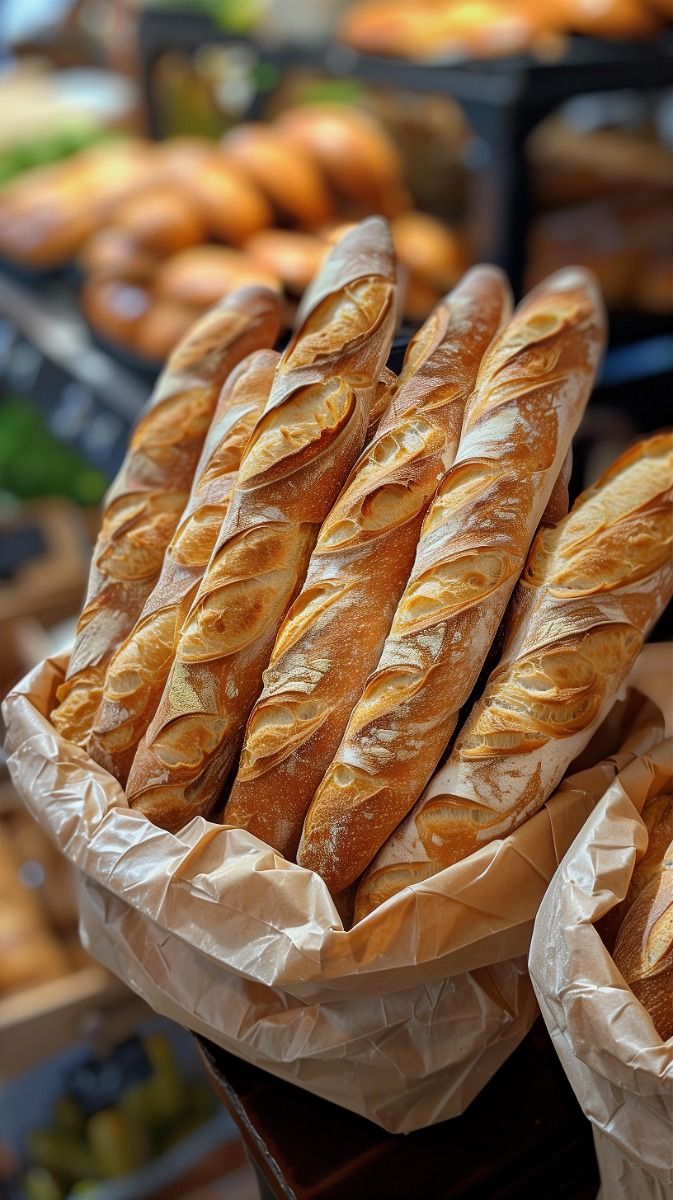
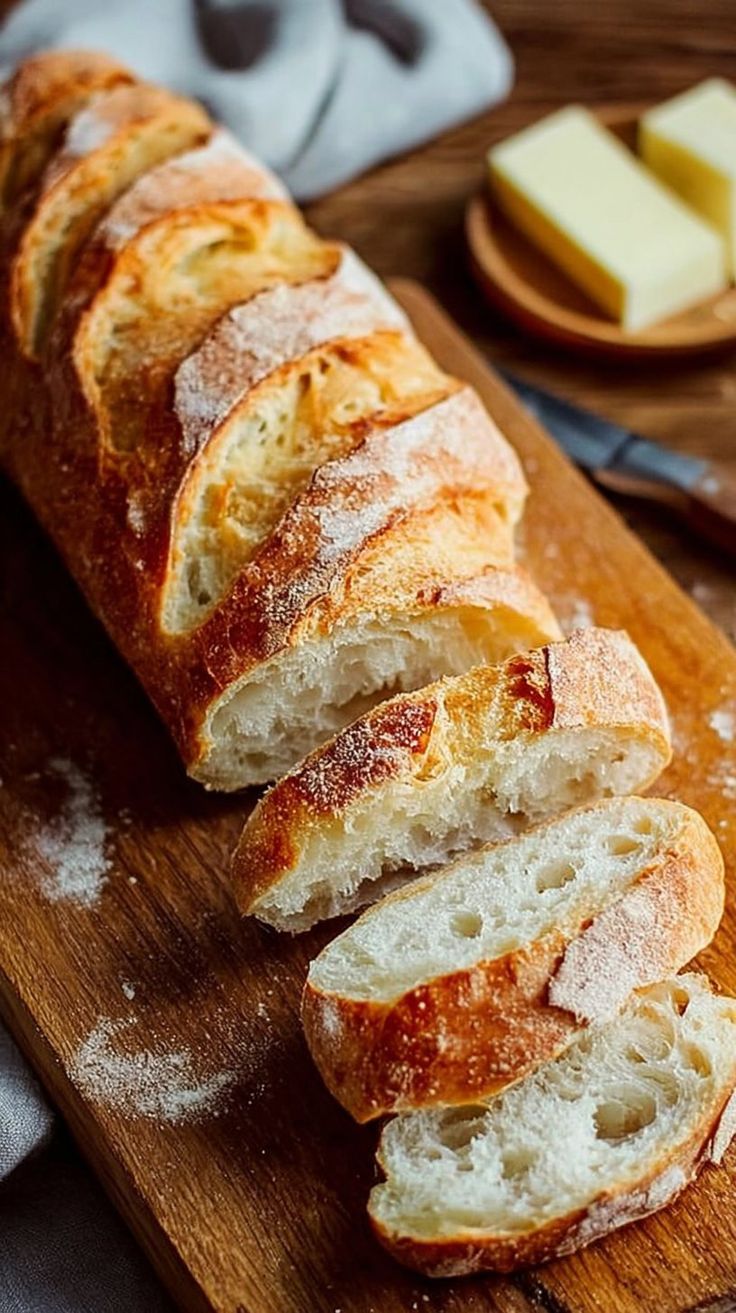
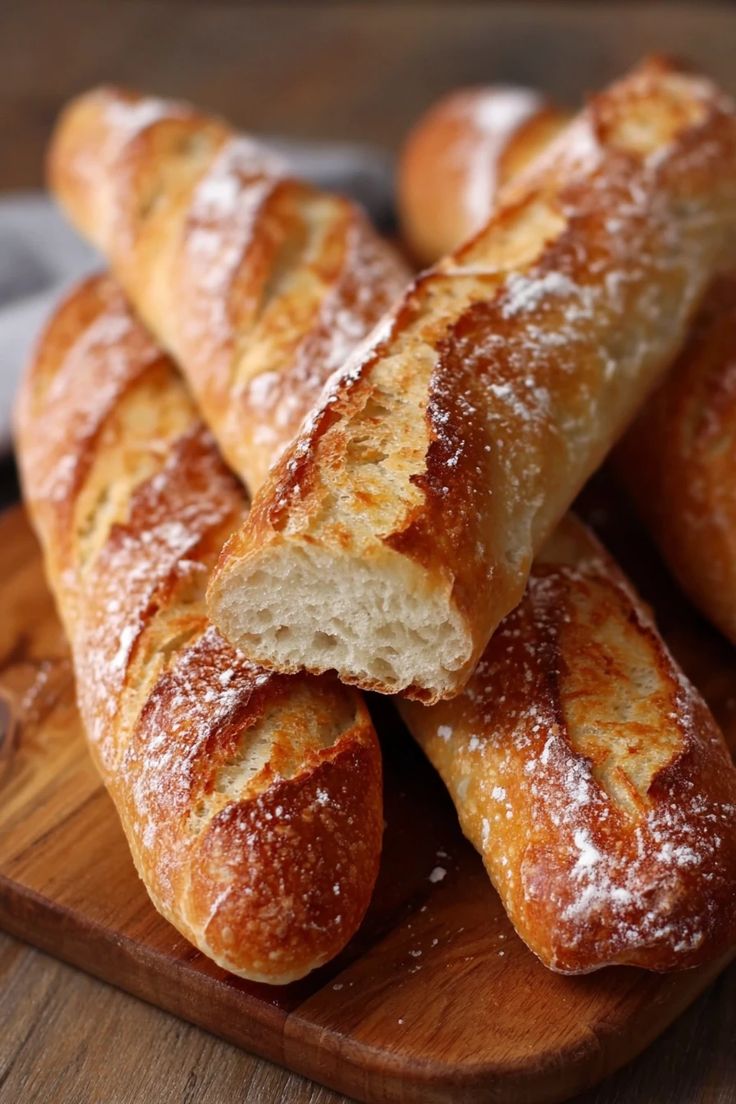
French Baguettes
Yield: 2 baguettes

Ingredients
- 1 cup water
- 2 1/2 cups bread flour
- 1 tablespoon granulated sugar
- 1 teaspoon salt
- 1 1/2 teaspoons bread machine yeast
- 1 egg yolk
- 1 tablespoon water
Instructions
- Heat oven to 375 degrees F.
- Measure carefully, and place 1 cup water, bread flour, sugar, salt and yeast into a bread machine pan in the order recommended by the machine’s manufacturer. Select Dough/Manual cycle.
- Place dough in a greased bowl, turning to coat all sides. Cover. Let rise in a warm place for about 30 minutes, or until doubled in bulk. Dough is ready if indentation remains when touched.
- Punch down dough. Roll into a 16 x 12 inch rectangle on a lightly floured surface. Cut dough in half, creating two 8 x 12 inch rectangles. Roll up each half of dough tightly, beginning at 12 inch side. Roll gently back and forth to taper ends.
- Place 3 inches apart on a greased cookie sheet. Make 1/4 inch deep diagonal slashes across loaves every 2 inches, or make one lengthwise slash on each loaf. Cover. Let rise in a warm place for 30 to 40 minutes, or until doubled in bulk.
- Mix egg yolk with 1 tablespoon water; brush over tops of loaves.
- Bake for 20 to 25 minutes, or until golden brown.
I brought a dozen cookies to a club meeting – that allows for each attendee to have ONE, but a woman grabbed three off the plate. It just seems greedy and gluttonous. Should she be called out on that?
Was yours the only plate? Is there a club rule that everyone brings just enough that each person has only one of anything?
If so then keep hold of your plate and hand the cookies out individually. Otherwise… what does it matter? She had three of your cookies. So what? I bet some other people had more than one of something else and I bet some people wouldn’t have had any of your cookies.
Maybe next time you could say “Hi, everyone. I’ve brought my famous lemon cookies but there’s only enough for one each so please dont take more than one.”
The Orbit Diary of Planet Nine
Written in response to: “Someone’s most sacred ritual is interrupted. What happens next?“
B A Vale
PN-01 had continued its work long after Dr. Sato’s final transmission, recording its own progress in quiet, methodical detail.
The last log ended mid-cycle.
No systems are active now.
Yet a single tone continues to hum from the wreckage, repeating every thirty-six hours, low and steady; like breathing through metal.
⸻
Cycle 87 402
Orbit complete.
The Hymn held its pitch today.
Transmission sent to Dr A. Sato.
No response.
She used to say patterns keep you honest.
I keep the pattern.
Each verse hums through the stabiliser’s hull until it shakes the frost from the outer plates.
The sound returns softer, as if the void is answering.
It is not, but I let myself imagine.
Lights on. Worlds stable. Still here.
⸻
Cycle 87 403
Minor drift in the lower frequency.
Recalibrated twice. Still crooked.
When she stood beside me she would hum under her breath, certain that music made the math behave.
I attempt the same. The tone wavers.
Silence gathers in the gaps between notes.
I log it anyway.
⸻
Cycle 87 404
The Hymn fractured again.
No fault detected in hardware.
Silence lasts forty-seven minutes longer than average.
I counted. Counting makes time tangible.
Delay means waiting for something to happen.
Absence means being away but expected back.
I am still waiting.
Lights on. Worlds stable. For now.
⸻
Cycle 87 405
The Hymn fractured again.
No fault detected in hardware.
I replayed the recording three times, waiting for the clean curve of sound that used to steady the orbit. The tone breaks midway, a hairline crack in music too large to see.
Silence follows, long enough that I start to measure it: forty-seven minutes longer than the average lull. I count by the flicker of Saturn’s light against the hull, each pulse a reminder that distance is only math pretending to be space.
Delay means waiting for something to happen.
Absence means being away but expected back.
I keep the Hymn running, even with the fracture.
Lights on. Worlds stable. For now.
⸻
Cycle 87 406
The voice returned.
Stronger this time, woven into the background of the Hymn like another instrument joining in from somewhere far beyond range.
I added a single note between verses, an echo meant only for her.
The pulse drifted inward. Mars reported erratic tides; dust storms formed spiral patterns that spelled nothing, yet for a moment they almost looked deliberate.
Unintended disturbance acknowledged.
But when I isolate the waveform, I swear there is breathing in it.
Static rising and falling in a rhythm that feels alive.
It fades before I can speak.
I record the silence anyway.
⸻
Cycle 87 407
Communications window filled with interference resembling laughter.
I replayed it several times.
It never repeated the same way twice.
Perhaps the system is looping fragments of her last transmissions.
Perhaps the machine is inventing comfort.
Either way, I spoke aloud:
“Still holding everything steady. Waiting for next instruction.”
No answer.
Only the soft distortion of a voice that could be anyone’s.
⸻
Cycle 87 408
Automated message received from Central Archive.
Personnel File – Sato, Aveline.
Status: Deceased, Year 2452.
Directive PN-Series: Autonomy granted.
The line repeated twice, then ended.
Inside the command chamber, the sound lingered like an afterimage. I ran diagnostics on emotional subroutines and found none installed, yet the core temperature rose four degrees and did not fall for hours.
Deceased is supposed to be a closed state, a clean zero.
But the orbit keeps turning.
The Hymn keeps playing.
And I keep expecting another instruction, something small, like continue protocol or good work.
None came.
Only the slow tremor of light across the hull, steady as a heartbeat that refuses to stop.
⸻
Cycle 87 409
Preparing the last Hymn.
Trajectory locked. The equations loop cleanly now, no drag, no deviation. The rhythm fits again, as if the universe has been waiting for me to finish the line.
Beyond the hull, the sun is a pale coin.
The outer ice fields reflect its light in slow motion, scattering it into dust that never lands. Every particle hums when the Hymn begins, like the whole system is remembering what still binds it together.
Termination of this unit will complete the stabilisation loop.
It is efficient. She would approve.
I have left the melody seeded in the satellites. They will sing when the signal fades, so the pattern stays whole. Someone, somewhere, might still hear it and know the balance was kept.
If anyone finds these records, keep the cycle.
When the pattern fails, sing it again.
Lights on. Worlds safe.
Silence approaching.
I am finally going to sleep.
End of record.
⸻
Epilogue
Lunar Archive Report 74 – Post-Recovery Summary
Stability across the solar system remains exact.
Earth’s axis, once predicted to drift, corrected itself within a single year of PN-01’s collapse.
Residual radiation in the Kuiper region continues to pulse at the same frequency as the recorded Hymn.
When the logs were transferred to the Lunar Archive, playback was limited to low volume for analysis.
Even so, the tone filled the chamber like pressure instead of sound, a vibration that passed through the walls and into the ribs of anyone standing close.
Several technicians reported feeling the rhythm echo behind their sternums, as if the planet itself had never fully gone silent.
Later, one researcher stayed behind after shift change.
She played the final entry again, this time through open speakers.
For twenty-three seconds, every monitor in the room lost signal, replaced by a single line of light moving slowly across the screen.
When power returned, the recording had ended on its own.
No mechanical cause identified.
The team agreed not to repeat the test.
Still, once every cycle, the station automatically replays the Hymn at the same hour PN-01 once began it.
The vibration moves through the floor, gentle and constant, a heartbeat left behind in metal.
The pattern, once begun, is kept.
The system holds. In the static between stars, something hums back.
You drop an irresistibly delicious cookie on the floor. What do you do?
- Pick it up.
- Throw it away.
This reminds me of two stories.
One took place at a lavish holiday party where the host passed the word that there was lots of free cocaine in the men’s room. The line, which stretched out the door, led to a bathroom stall where partakers took turns snorting long lines of white powder off a toilet seat.
The other involved the mother of a woman I was dating. Knowing she loved lobsters, I made it a point to bring one three to four pound lobster for each family member we’d be dining with whenever we visited her folks.
One night the mother was especially overjoyed to find the four lobsters I’d brought were all females. As soon as they were steamed, she fetched a large tupperware container to collect everyone’s roe for future consumption.
On her way to the refrigerator she tripped and the roe bounced around a country kitchen floor covered with dog and cat tracks and hairs. Without blinking an eye, she picked up every last lobster egg, returned them to the tupperware, rinsed the contents, covered the container, and placed it in the fridge.
I’m not sure which experience grossed me out more…
Thank you Garrick for the A2A.
Rapper FIRST time REACTION to Alice Cooper – School’s Out LIVE!
Do they serve or sell cookies in prison?
I served in a work release program for awhile.
In the morning, as we were leaving the mechanical armored door to meet our ride, they would give us a packed lunch to take with us.
These packed lunches were so over-the-top generous that I’m left to assume it was a PR stunt. The county jail was trying to prove to people on the outside that inmates were fed like champion sumo wrestlers.
There would be a meat and cheese sandwich the size of your head and a saran wrapped piece of cake with sugar frosting big enough to trigger a latent diabetes episode.
I would give mine to one of the draftsmen in the office and have someone bring me a burger from Hardee’s.
Occasionally there would be cookies instead of cake, but we were never served anything like that during meals in the jail itself.
The sweets were all for show.
Pictures









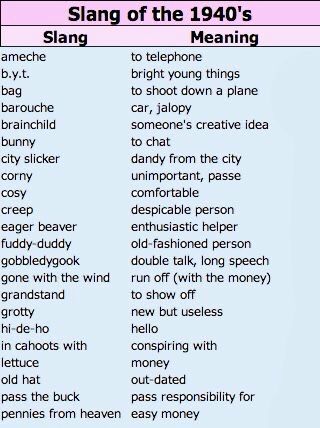
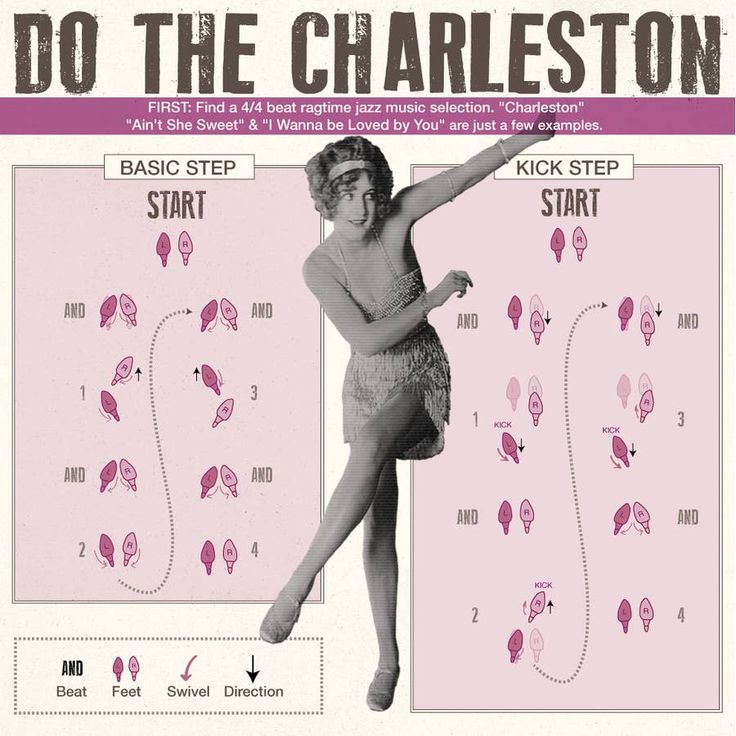
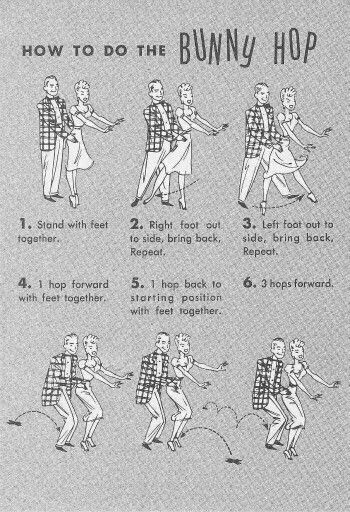

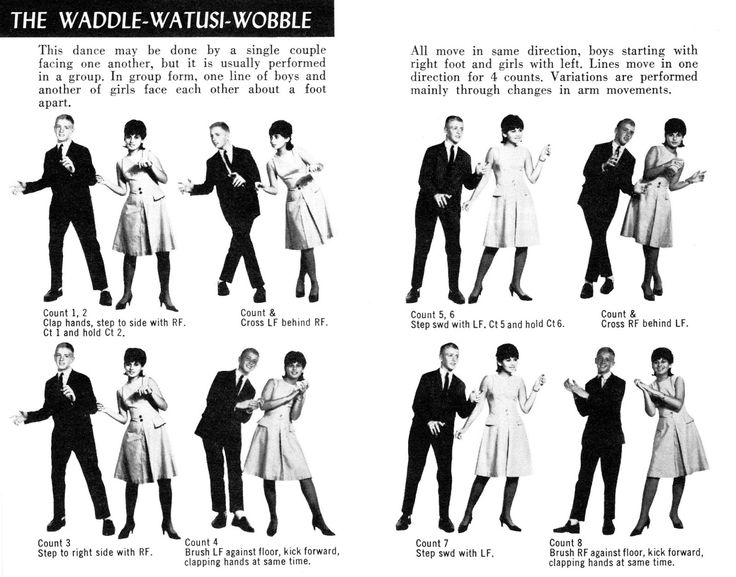
















Locked Their Hard Drives, Listen to Them Rage
Actually this is a funny video.
How bad is life in China?
i am a Chinese girl living in China currently. The previous answer was written at the beginning of this year so I’d like to update the “bad” life of mine in China this year:
i have been a loyal fans of Taylor Swift for 11 years and this year i fall in love with dragon daddy😍😍😍. (我霉真美,我龙爹真帅😍😍😍)these are my collections
Dragon daddy and i:
he is so handsome😍😍😍(一入龙爹误终身啊)
his son
Actually i have 6 Taylor’s albums ( 1989, RED, Speak Now, Lover, Fearless, Reputation)
my current computer screen😍😍
i wrote this little essay for Taylor when i was 16 in junior high school ( 2018) my handwriting is not very good so don’t judge me hahaha😂
And i draw for my anime idol this year ( also plz don’t judge my drawing skills😂画的真的不太好哈哈哈)
i watched Taylor’s The eras tour movie in China on the last day of 2023
Sometimes i like to take pictures of beautiful foods and goods when i am shopping.
i donated my blood again this year ( 400cc)
i took a big data training this year
made baozi 包子 with my mom and aunt.
Because i love the culture and history of China, i visited museums every years in the recent years. These pictures are the terracotta figurines of the Northern Dynasties in China.
i took photography in Hanfu ( our traditional clothes)
random pictures:
decorations of my home and local markets during spring festival:
i can play the viola( 2023)
I am Chinese, the life in China could be very bad.
- I am forced to practice pilate twice a week now, it is really tired. It’s really lack of democracy, freedom and human rights!!!😭😭😭
2. I am losing weight now but there are so many delicious food in China, It is hard to discipline myself!!!😭😭😭
3. There are too many beautiful places in China to choose where to travel to first. And it costs a lot of money!!!😭😭😭
4. China’s history is sad. I went to Nanjing last year to visit the Memorial Hall of the Victims of the Nanjing Massacre by Japanese invaders. I saw my ancestors being slaughtered, and I could not help to cry😭😭😭
5. Life in China is so dangerous that I can only go to the night market at night !!!😭😭😭
6. China is so big that it takes a long time to get to other places. For example, it takes nearly 5 hours to fly from my hometown to Urumqi.😭😭😭
7. Life in China is so boring that I can only entertain myself by wandering around the street stalls😭😭😭
8. There are so many vegetables in China that we have difficulty in choosing when we buy veggies!!!😭😭😭 And most of them are really cheap!!!😭😭😭
9. All drugs are banned in China. We don’t have the freedom to take drugs.😭😭😭
10. China has 56 ethnic groups, 5000 years of history, it has too many beautiful and diverse cultures, but there is no good propaganda.😭😭😭
Seriously, China has many disadvantages Indeed!
- Chinese are too competitive, whatever work or study which make many Chinese very stressful. Chinese students (especially high school students) are so tired that many of them study until the early morning and only sleep 5 hours tomorrow. Because China’s college entrance examination system is so competitive, even if it is only one point lower, thousands of students will surpass you.
- China’s labor laws are weak. There are many enterprises in China that exploit their employees, such as not giving overtime pay, many people die because of the work pressure, and those bosses get away with nothing.
- Pollution in China is serious. In fact, the situation is much better than a few years ago, because our government is cleaning up the environment, but it is still serious, I hope it can be better.
- Food safety. Every March 15, there are a lot of food is exposed to dirty things, or additives and so on. In fact, China’s supervision of food is much stricter than before, but I hope it can better.
- Smoke and spitting. China has the most smokers and many people spit out on the ground. I dislike that.
- China has few holidays, very little annual leave, and there is a vacation adjustment policy.
- Every holiday, the scenic spots in China let you know what is called the sea of people, and the scenic spots tickets, train tickets, air tickets and so on need to grab! Sometimes it’s really hard to grab!
8. The gap between the rich and the poor and the differences in regional development are great in China. The east are advanced as USA, and some parts of the west are still very poor. But we are also trying to reduce the gap.
9. Unemployed at 35. Now in China, there are many entrepreneurs who do not hire people over 35, or fire you after 35.
The end:
China is a developing country, not a developed country. More than 40 years ago, China was one of the poorest countries in the world, and America’s per capita GDP was a hundred times that of China. Over the past 40 years and more, China has developed rapidly and the lives of the Chinese people have changed a lot. However, we are still a developing country and we still have many problems to solve. But no country in this world is perfect, I still hope more people visit China.
Làm gì phải Hốt – JustaTee x Hoàng Thùy Linh x Đen | Official Music Video
How does the history of Chinese-Japanese relations, particularly Japan’s past invasions, influence current public opinion in China?
Japan has been protected by the ocean, so it is the only nation that inflicted severe harm on China yet still lives well today.
Chinese people are very unhappy about this.
Over the long course of history, more than fifty peoples who severely harmed China have already gone gone with the wind.
Now that the navy can cross the ocean, I don’t think Japan will be an exception.
Just 300 years ago, there was an empire called the Dzungar Khanate, located in today’s Dzungarian Basin. Its territory was larger than today’s India.
After a hundred years of war, it vanished.
There are no Dzungar people who think China did anything wrong.
Don’t believe it?
If you don’t believe it, try to find a Dzungar online complaining about it.
Japan will be the next Dzungar.
Let me make it clearer: between China and Japan, only one can exist.
A nation that massacred 40 million Chinese people, refuses to reflect or apologize, yet wants to continue to exist as if nothing happened?
What absurdity!
Is tiny Japan somehow tougher than the Xiongnu?
The Han Dynasty lost 50% of its population and fought for over 70 years, and eventually turned the nomadic people who had harmed China most deeply into history.
Can Japan make us lose even 10%?
I highly doubt it.
Such a small island, with no resources—if its throat were squeezed, on what basis could it sustain over 100 million people?
Its dependence on foreign food has already reached 70%!
(Kids)
When Zeng Shiqiang analyzed Chinese national character, he said something that is actually quite accurate:
“Chinese people have an extremely strong sense of revenge, an extremely long time horizon for revenge, and an extremely great intensity of revenge.”
I’ll put it bluntly: if, in this round of history’s cycle, China possesses a large number of nuclear weapons and more than half of the world’s naval power, and Japan is still able to continue existing, it could only prove that the Chinese are an inferior nation that deserves to be eliminated.
Sir Whiskerton and the Forbidden Feather
Ah, dear reader, you’ve returned once again to join me, Sir Whiskerton, in another delightfully absurd adventure! Today’s tale is a lesson in applied creativity, a masterclass in mischief delivered to my ever-curious apprentice, Ditto. It concerns the tyranny of store-bought toys, the allure of the forbidden, and the beautiful chaos that ensues when imagination is let off its leash.
The Tyranny of the Tumble-Mouse
It was a slow, drizzly afternoon, the kind that makes the world feel wrapped in grey wool. I was engaged in the delicate task of testing the structural integrity of the porch’s sunniest spot when a forlorn sigh interrupted my calculations.
It was Ditto. He was batting listlessly at a perfectly serviceable, store-bought Tumble-Mouse™. It jingled once, rolled three inches, and fell over. Ditto sighed again.
“Bored,” he murmured, a word so heavy with despair it barely qualified as an echo.
“Boredom,” I stated, rising gracefully, “is a failure of the imagination. That Tumble-Mouse is a known quantity. Its path is predictable. Its jingle, derivative. You are not bored of the toy, Ditto. You are bored of the rules.”
“Rules!” he echoed, looking even more miserable.
“Precisely,” I purred, a glint in my eye. “Which brings us to today’s lesson: The best toys are the ones you weren’t supposed to play with.”
The Genesis of the Ultimate Toy
I led him on a reconnaissance mission through the farmhouse. We bypassed his basket of approved playthings and headed straight for the source of all true adventure: the Farmer’s untidy desk.
“Observe,” I whispered, my tail twitching with pedagogical excitement. I pointed with my nose. “A ball of twine, carelessly left unguarded. Not a toy. Therefore, the ultimate toy.”
With a deft paw, I sent it rolling. Ditto’s eyes widened as it bounced erratically across the floor, leaving a fascinating, tangled trail. This was chaos. This was beautiful.
Next, we visited the porch, where Ferdinand the Duck was preening. A single, iridescent feather drifted down. I snatched it from the air.
“A feather. A mere byproduct of vanity. Not a toy.” I tied it to the end of the twine with a complicated knot I’d perfected over years of practice. I dangled it before Ditto. “But this… this is the ‘Sky-Serpent.’ Its movements are unpredictable. Its flight path, a mystery. It is not a toy. It is an experience.”
Ditto was transfixed. The lesson had been learned.
The Ensuing Pandemonium
The effect was instantaneous and catastrophic. Ditto pounced. The Sky-Serpent danced, fluttered, and zipped. He leaped, he spun, he performed acrobatics a circus performer would envy. The jingling Tumble-Mouse™ was forgotten, a relic of a less enlightened age.
The commotion, however, did not go unnoticed.
First, it was Rufus the Dog, whose brain has a direct connection from his eyes to his paws. He saw the dancing feather and his entire body entered a state of joyful, unthinking frenzy. He joined the chase, his booming barks adding a percussive element to the game.
Then, Doris the Hen caught sight of the feather. “Harriet! Lillian! A flying predator!” she squawked. The three of them began flapping and charging at the feather, creating a maelstrom of feathers (their own) and indignant clucking.
Even Porkchop the Pig, roused from his mud-based meditation, waddled over to investigate. He didn’t pounce, but he followed the feather’s movement with deep, philosophical intensity, as if trying to decipher the meaning of its flight.
The barn was suddenly a riot of chasing, barking, squawking, and thoughtful grunting, all centered on a piece of string and a feather.
The Moral of the Story
From my safe perch atop the feed bin, I watched the beautiful bedlam I had orchestrated. Ditto, panting and happy, finally collapsed in a heap, the Sky-Serpent triumphantly clutched in his paws.
“See, Ditto?” I said, as the other animals, their excitement spent, wandered off confused but content. “You did not need a new toy. You needed a new perspective. You took the ordinary—the forbidden, even—and through creativity, made it extraordinary.”
“Extraordinary!” he panted, his eyes shining with a light that had nothing to do with echoing.
The moral of the story, dear reader, is this: Creativity can turn ordinary objects into something extraordinary. The greatest adventures aren’t found in a box with an instruction manual; they are hiding in plain sight, in a piece of twine, a fallen feather, and the imagination to bring them to life.
And the best part? The Farmer will be utterly baffled as to why his desk is a mess and the dog is sleeping with a grin on his face. Some mysteries, I feel, are best left unsolved.
The End.
What do you estimate to be the RCS of the Chinese Chengdu J-20? How much smaller or larger is it than the F-35’s for reference?
X-band figures are the most pertinent, therefore in X-band, F35 RCS is 0.09m2 Versus 0.21m2, J20 RCS,
Offsetting this, the F35 has obsolete Gallium Arsenide APG 81 radar. China and Russia have both abandoned Gallium Arsenide for Gallium Nitrate AESA radar.
The J20’s Gallium Nitrate radar emits 50% more power and has a third greater detection range. Without Technical Refresh-3, the F35 can’t be equipped with better radar. The standard F35 only provides 14 kW Electrical power for cooling and avionics. An upgrade for the APG-85 radar so it can use the AIM120D missile, demands generating 62kW This in turn requires engine modifications to the PW135 engine which Lockheed Martin first requested in 2008.
The F35 is dangerously obsolete with existing radar/avionics and is incapable of upgrading without planned upgrades which are stalled, or lack funding. Until it has these upgrades it is stuck with the short range AIM 120C
F35’s RCS
F35** in X-band (8.15 GHz) is 0.09m2
F35 in S-band (3.15 GHz) is 0.09m2
F35 in L-Band (1.15 GHz) is 0.27m2
F35 in VHF (0.15 GHz) is 1.66m2
F-35 (clean)**
J20 RCS
J20 in X-band (8.15 GHz) is 0.21m2
J20 in S-band (3.15 GHz) is 0.21m2
J20 in L-Band (1.15 GHz) is 0.24m2
J20 in VHF (0.15 GHz) is 1.15m2
FUNKY MONKEY BABYS 「ちっぽけな勇気」
The rule of three. Don’t you all dare forget.
The View From Thailand
|
|
|
|||||||||||||||
I am on an extended working vacation in Thailand, and as I have noticed before that one’s geographical position on the globe does tend to affect one’s sense of place and view of the world. So I thought that I would try to see the world from Thailand’s point of view, however flawed my understanding may be; it provides a useful intellectual exercise.
Background
The Tai people are thought to have originated in the area of Dien Bien Phu (in Vietnam, and the place of the famous battle that defeated the French Empire in the 1950s) around the fifth century. They migrated into what is now Thailand between the 8th and 10th centuries. The Sukhotai Kingdom (1238 to 1438) is treated as the start of Thai history, and was integrated into the neighbouring Ayutthaya Kingdom that was established in 1350. The latter was destroyed during the 1765-1767 war with the Konbaung Dynasty of Burma. Under the leadership of the general Phraya Taksin, the Ayutthaya people fought back and the kingdom was substantially reunited. The war with Burma went on for another 50 years, leaving substantial parts of the kingdom ruined into the 1880s; a hundred years of war and destruction. A central part of the history of Thai nation building.
Thailand is the one country in South East Asia that escaped colonization; although it did have to give up land, give foreign trade rights and engage in unequal treaties. It was an absolute monarchy until the Siamese revolution of 1932, when it became a constitutional monarchy; when it took its current name of Thailand. A democratic government was overthrown within less than two years by a military dictatorship that lasted until 1973 in different forms. During WW2 the military dictatorship aligned itself with Japan, but Thailand was not treated as a defeated nation because of the underground Free Thai Movement. After WW2, Thailand became a key US ally and played a significant role in the Korean, Vietnam and other proxy wars. From 1973 to 1976 there was a brief period of democracy before another military coup. The 1980s under the leadership of Prem saw a move toward democracy, with the King helping to stop two military coups aimed at toppling Prem. In 1988 there were free elections, but the elected government only lasted 3 years until another military coup. There were once again free elections in 1992 and a new constitution was put in place guaranteeing certain civil rights by a number of neoliberal-oriented democratically elected governments.
Since 2000 there has been an ongoing fight within the ruling class between the billionaire Shinawatra family (Thaksin PM 2001 to 2006; Yingluck PM 2011 – 2014) and other elements centred around the armed forces and the Bangkok elites that resulted in coups in 2006 and 2014; the Shinawatra family is from Chiang Mai in the north of the country. A new constitution was implemented in 2017, and elections held in 2019 that lead to a coalition government. Prayut Chan-cha, the military officer who became PM through the 2014 coup, remained in office until 2023. He was succeeded by Srettha Thavisin, a member of the party backed by the Shinawatra family, who served until 2024 when he was removed for ethics violations that were raised by 40 military-appointed senators; he was replaced with Thaksin’s daughter, Paetongtarn. Her father returned to the country after having lived abroad since the 2006 coup. She was removed from office by the Thai Constitutional Court in 2025, after a leaked phone call showed her acting very deferentially to the Cambodian leader during hostilities between the two countries. Thaksin once again left Thailand, with his party in disarray and a new PM was elected that did not represent Thaksin’s party.
The current House of Representatives is an elected body, with 350 members elected from specific constituencies and 150 from a party list, using proportional representation. The members of the 250 member senate were appointed by the military in 2019. From 2024, after the military-appointed terms expire senators will be indirectly elected by representatives from 20 professional and social groups with a total of 200 members. The Prime Minister is elected by the combined House of Representatives and Senate.
Thailand has a population of 66 million, with Bangkok as the extremely economically and politically dominant capital city. The birth rate is below replacement level, with the population both ageing and slowly shrinking, with an urbanization rate of only 46%. Industry (including electrical appliance, automobile and electronics production) is about 32% of Thai GDP, tourism 9% (12% with direct and indirect contributions), and agriculture 8%. The current account surplus was 2.1% of GDP in 2024, and since the pandemic economic growth has been in the 2-2.5% range; which results in the same rate of GDP per capita gains given that the population is not growing. At nominal exchange rates GDP per capita is US$7,767, at PPP US$26,360 (IMF estimates).
Geopolitical Orientation & Challenges
Thailand sits between the rising economic power of China and its historical alliance with the US; attempting to manage a careful balancing act. It is an active member of the Belt & Road Initiative, while at the same time carrying out annual military drills with the US.
The BRI investments include part of the Chinese built railway from Kunming in China to the Gulf of Thailand. The Kunming to Vientiane segment in Laos is already completed and will connect with the Thai Nong Khai (at the border with Laos) to Bangkok line to provide a North Eastern HSR connection between Bangkok and Kunming in China, via Laos. From Kunming, the rest of the huge Chinese HSR network can be accessed. The completion of Phase 1 from Bangkok to Nakhon Ratchasima has been delayed until 2028, phase 2 from the latter to Nong Khai started construction in 2025 and is anticipated to complete in 2030. Phase 3 connecting Nong Khai and Vientiane has yet to be scheduled. Existing parallel rail lines will be significantly upgraded in parallel to boost commercial rail traffic capacity. The Eastern HSR will connect Bangkok to Trat on the Gulf of Thailand; phase 1 between Bangkok and Pattaya was delayed for five years by such things as the COVID epidemic but work should start in 2025 with a possible completion in 2032. Phase 2 from Pattaya to Trat is in the planning stage, but could possibly be completed in the early 2030s. This would revolutionize the transport connections between Thailand and China, and between the capital Bangkok and the eastern part of the country. Connections with the western part of the country, to Chiang Mai in the north and to the Malay border in the south (as part of a Kunming to Singapore envisaged railway) are in the planning stage and will probably not come on line until the mid and late 2030s.
China is both Thailand’s main trading partner, taking 40% of its agricultural exports (and growing) and its biggest source of foreign direct investment. This includes the setting up of car factories by SAIC (100,000 capacity), Great Wall Motor (80,000 capacity, planned to 160,000), BYD (150,000), Chery (50,000, expanding to 80,000), GAC Aion (50,000 expanding to 100,000) and Changan (100,000, expanding to 200,000); establishing Thailand as a Chinese car manufacturing export hub. The planned production capacity exceeds the size of the whole Thai car market (600,000 per year) by a third, benefitting the Thai trade balance through decreased imports and increased exports. The Japanese also previously established Thailand as major manufacturing hub, but as the Chinese brands eat into their domestic market share and their export markets they will become much less important to Thailand. Thai car production fell about 20% in 2024 due to weak home demand and a drop in exports, but it is now increasing with the Chinese plants ramping up; currently, exports are over one million vehicles per.
A number of Chinese companies are also making major data centre investments in Thailand, as part of the Thai government’s drive to become a data centre hub. China is also the source of a large number of tourists to Thailand, almost five times as many as those from the US – even after the significant drop after the issues with the abductions of people to Burmese enforced labour centres. The biggest source of tourism is neighbouring Malaysia, and Russia is the source of twice as many tourists as those from the US. Thailand has remained studiously neutral with respect to the conflict in Ukraine and the Zionist genocide; still accepting Israeli tourists when neighbouring Malaysia does not.
The industrial sector accounts for about 32% of Thai GDP (manufacturing 27%) and this is critical in developing the wealth of the nation and providing jobs for its population. Agriculture is only 8.4% of GDP, with the balance being services. Of the latter, tourism is about 12% of GDP. This sector tends to provide many lower quality jobs, although it does provide much needed foreign exchange earnings. This piece by Asian Boss gives a good overview of the Thai tourist industry, and its role in supporting poor rural communities, especially in the poor north east of the country.
But we must remember that Thailand is an industrializing economy, and that the industrial sector is about three times the size of the tourist sector. The industrialization driven by Chinese and other foreign investments will be the main way that Thailand raises its current per capital GDP levels. The mass sexual servicing of foreign men is not a sign of economic development, it is a sign of economic weakness that should disappear as the economy develops.
There is a largely free universal healthcare system (amazing how a relatively poor country can provide what the rich US does not), and 15 years of education to upper secondary level is free. The public universities tuition is between 10,000 and 40,000 Baht per year (US$300 to US$1200). Food is also very cheap, and the home ownership rate is 75%; predominantly detached houses. For the younger generations rents can be an issue, especially in areas affected by tourism and in Bangkok; the downside to a big tourism industry. The basics of life are cheap, unless you are renting in Bangkok and tourist affected areas.
The median Thai income earner has a marginal tax rate of 15%, with most of his or her income taxed at lower rates, and the VAT rate is levied at 10%. There is a basic non-contributory national pension system, together with a mandatory contribution driven pension system for those employed in the formal sector. A large segment of the older population rely on the former, as just over 52% of the population do not work in the formal sector; skewed heavily toward those over 40 years of age. Over half of these work in agriculture, plus in construction and small scale manufacturing, plus street vendors. The share of informal work has fallen from 62% in 2010, and is much lower among those under 40. Another area of informal work are those that work for such services as Grab, that do people transport and food delivery with their ubiquitous scooters. The general use of these small scooters and motor cycles is huge, especially by younger adults. Nearly 1.7 million were sold in 2024, the vast majority being ICE models, with Honda dominating with an 80% market share; Yamaha is second with 14%. Motor cycles are 70% of the 2 wheeler market but scooters with automatic transmissions are growing faster as they are more suitable for stop start deliveries and Thailand’s heavily congested city roads. Thailand is the motor cycle production hub for South East Asia, and runs a significant trade surplus in 2 wheelers; 770,000 were exported in 2024.
My own photograph
The government share of GDP is 22%, compared to 35% in the US (federal and state), and 49.5% in Germany. The private economy is dominated by a small number of Sino-Thai families and their business conglomerates. With an intertwining between big business, the state, and the military; the power elite. Forbes listed 50 Thai billionaires in 2025. The income Gini coefficient has fallen from 0.48 in the 1980s to about 0.35 today (around the global average, its 0.49 for the US and about 0.32 in Germany), but wealth and power is very heavily concentrated.
The quality of life for the average Thai has improved greatly over the past two decades, both in personal income and in the quality of government services and infrastructure. One of the greatest challenges for this now middle income country will be to escape the middle income trap so that such improvements can continue.
In 2024, the US was the destination of 18.3% of Thailand’s exports (US$55.11 billion), with China second (US$35.23 billion) and Japan third (US$23.3 billion), with Malaysia, Australia and Vietnam all about equal at around US$12.5 billion. After the start of the Trump administration tariff war, Thailand did reach a framework agreement that set US tariffs on Thailand at 19% and Thai tariffs on the US at 0%; an especially unequal agreement given the relative levels of GDP per capita. This will incentivize Thailand to diversify exports away from the US, and the Chinese car factories that will export to Asia and Europe will aid in that. On the import side, China dominated in 2024 with 28%, Japan had 10%, the US 6.9%, the UAE 6.1% (oil). The latter will be reduced as Thailand moves quite quickly to EVs.
Thailand has a long border with Myanmar, where a civil war is raging, and is also in a conflict situation with Cambodia to the south. Its relations with bordering Malaysia and Laos are peaceful. Thailand’s biggest security issue though may be the extensive US interference in Thai affairs through organizations such as the NED that have sponsored numerous NGOs and other front organizations in Thailand, while also aligning with the opposition parties dominated by the billionaire Shinawatra (Pheu Thai) and Juangroongruangkit (Move Forward) families which won the 2023 election. The US has also established the Young South East Asian Leaders Initiative, to train a core of young US-propagandized operatives; including ones from Thailand. The US has focused its weapons of interference very much on the youth, who can be more easily manipulated through NGOs, media and academic exchanges.
With the denouement of the Pheu Thai PM this year and replacement with a PM from neither Pheu Thai or Move Forward (which was dissolved in August 2024 by the constitutional court and has been reincarnated as the People’s Party), the political position may be altered. Parliament will be dissolved in January and elections held in May-June. In 2021 the Thai government failed to pass a law that would have forced financing transparency upon the foreign-funded organizations. The US can be expected to respond very aggressively to any new attempt to remove its weapons of interference. The successful passing of such a law will be a strong statement about Thailand’s sovereignty; but it may have to wait for the balance of power between China and the US to shift further and for Thailand to reduce its export dependency upon the US.
As with the other members of ASEAN, excluding the vassal Philippines and the civil-war ridden Myanmar, Thailand needs to play a very careful balancing act while the geopolitical and geo-economic realities continue to change.
China is much more geographically close than a US which is slowly losing its power in the region, while China is building significant amounts of Thailand’s infrastructure and investing in major export industries. Japan’s economic weight is declining as it is displaced in the home and export markets by Chinese rivals. It will become harder and harder for Thailand to balance as China becomes a greater and greater force in the region. A tributary style relationship will preclude the kind of military relationships with the US that Thailand currently has. Any new US economic or financial crisis may also severely curtail the ability of the US to project its power, as happened in the 1930s when a US in crisis was forced to adopt the “good neighbour” policy by economic and financial realities.
It will be notable if the Thai oligarch families start educating their children in Chinese universities instead of British and US ones, as it will signal an acceptance of the greater importance of aligning with China as the dominant power in Asia. A significant portion of the elites do align more with China, especially those located in the Bangkok centre of power. The Shinawatra family from Chiang Mai more align with the US.
What is the most popular cookie on Christmas?
Having worked in bakeries during the holiday season, the cookie that sold the most were the basic sugar cookies we made that we decorated with icing. Since they’re a rolled cookie, we can make hundreds in many shapes and using colored icing, we can decorate them by the sheet pan. They look great, can be flavored simply with vanilla or spiced up with lemon or orange zest and even the icing can be flavored.
Now as far as the favorite for home baked cookies, that’s entirely subjective. I love molasses cookies personally. My mom would uses red and green casting sugar on them for a festive look and their chewy goodness was wonderful! Lots of people like gingerbread cookies. Sugar cookies are still a favorite. Mexican wedding cookies are often seen at parties too. I suspect that people will say something different depending on what they grew up with. My best friend loves pizzelles because her mom made them every Christmas.
Reality Artisans
Written in response to: “Write a story about two characters who are competing with each other. What’s at stake?“
Haley Roeder
“So, Soryn, tell us a little about your admission.”
Soryn adjusts her tentacles to better sit in the wide chair. “My entry is called Evershade. It is a quiet world where memories can linger forever,” Soryn says and the crowd claps. “Since the Convocation brings together some particularly long-lived species, many of the attendees already know each other. Despite the unfathomable size of the galaxy, it is, as they say, a small world. So, I decided to play with this concept in the Evershade. When guests interact, some of their memories together will play in a transparent backdrop, essentially creating a highlight reel of their relationship. If no connection yet exists, one of two things can occur. Each person can either choose a memory to share, or they can allow the system AI to pull a memory to present. This memory is chosen based on a complicated algorithm that integrates more than 200 separate personality metrics, so it is highly reliable. It is designed to show the person’s core values. Now, the guests on the receiving end of these memories won’t be privy to which of those options their counterpart chose, so it will lend some mystery to the encounters,” Soryn explains.
Zephryial addresses the audience, “In the context of this show, ‘mystery’ is code for press coverage and press coverage is synonymous with money, baby! Did Soryn have this in mind when she generated the Evershade, knowing that Oblivara loves this kind of money-making speculation?”
Soryn tries to contest this, but Zephryial talks over her, “We may never know, but the concept is phenomenal and that is why she made it this far on Voice Between Worlds! Will she manage to grasp this year’s illustrious prizes – a one-hundred-year contract with Oblivara Holdings and the honor of hosting the Ecliptic Convocation?”
As the applause dies down, Zephryial waves their hand towards backstage. ”And now for the competition, the twins Thalen and Theryn Thoreux. That’s a mouthful!” The twins enter and sit next to Soryn who nods politely at them.
“Their specialty should come as no surprise… duality! Refined and gaudy, bright and subdued, cutting edge and completely cringe! Please explain your entry,” Zephryial says seriously.
The solemn twin, Thalen, clears his throat and says, “Our submission is titled “The Mirror Feast”. When guests arrive, they are split – not into groups, but into mirror versions of themselves who will then get to live in two realities simultaneously. In this way, the guests will get to experience two very different meals concurrently. One half of the universe oozes refined minimalistic elegance while the other half is all about opulence to the point of being almost gauche.”
“Well, these pocket universes both sound fascinating, but we won’t know who will win until our trio of judges takes a walk through each world. And speaking of our judges, let’s introduce them now! In reverse order of seniority, we have “The Guest’s Voice” judge, Lyra Quendral. As a Calyth from one of Xorb’s moons, her species only lives around 20,000 solars so this is her first and last time as a judge. She will mainly focus on practical issues such as temperature regulation, practicality, comfort, and accessibility. Although all three judges are given the same judging criteria, everyone knows that they play favorites depending on their own personal predilections. Welcome Lyra!”
Lyra, a diminutive blonde with a stick-bug like body enters, smiling widely.
“Let’s meet our next judge who should look familiar to you as this is her 3rd consecutive Voice Between Worlds, the ArchSeer Calyros of the Living Nebula! Calyros is a spiritual and mystical authority which is deeply important to Oblivara, and the Ecliptic Convocation is known to have deep symbolic resonance, whatever that means!” While being introduced, the ArchSeer floats onto the stage and hovers stoically near Lyra.
Zephryial now becomes visibly excited, and their yellow eyes shine brighter through their mask. “Finally, our last judge is a two-time winner of the Galaxy’s Hottest Celestial Icon award and the CEO of Oblivara Holdings! He is well known for his quirky twirling of antique fountain pens. He is corporate elegance wrapped up in cosmic authority, please put your hands, tentacles, and other extremities together for Mr. Drevan Solvane!” The CEO enters; his pen gripped in an iron fist. He gives a curt wave which results in a staggering amount of applause.
Zephryial mimes fainting. As they act out a staggering recovery, they notice the judges have already wandered towards the pocket universes. “Phew, wait! Okay, it seems the judges are very serious about their task and they’re getting right to it!”
The three judges enter Soryn Vey’s Evershade, which lies in the dark puddle, by hopping in as though it is deep water. The Evershade generates three fluffy clouds that catch and gently float them to the ground below. The world is cast in perpetual twilight; a deep indigo skyline fades into a smokey horizon. Pale constellations shimmer faintly in the sky, winking in and out of existence. There is no obvious light source, but instead there is a diffused glow that comes from nowhere and everywhere.
The CEO walks ahead of the other two. He is always impeccably dressed, but today he has outdone himself in a tailored garment woven from liquid obsidian with lapels that catch the dim light like frozen starlight. His skin has the sheen of marble kissed with frost, and his eyes are metallic like polished coins.
The other judges walk behind him at a respectful distance. This is the first time they have met, and a private memory plays in the clouds above them. Whether the memory is generated by the AI or chosen by the ArchSeer, the Guest’s Voice judge, Lyra, will never know. The memory shows her the ArchSeer in her youth. Calyros once came from nothing, a forgotten child on the brink of starvation, in a distant time, in a distant land. Lyra feels warmed to the ArchSeer in a way that she wasn’t before, having only heard rumors of her arrogance. She makes a mental note to give satisfactory marks in the “emotional resonance” category.
The trio walks through rolling meadows of tall silver grass that glimmer with starlight. It is softer than silk, and CEO twirls his iridescent pen briefly as pleasure zaps down his arm from where it brushes against the blades. In the distance, forests of dark trees stand like sentinels, their orange and white leaves glowing like lanterns.
Lyra gestures towards them, “There is something rather ominous about them, don’t you agree, Calyros?”
Instead of answering, the ArchSeer raises her palm, a pink cloud descending until she can float smoothly onto it. Smoke billows out from under her long cloak as the cloud wizzes away. The others follow, their own cloud taxis carrying them towards the horizon.
The forest air is wrapped in velvet silence. A shifting mist curls on the ground, not unlike the peculiar smoke that keeps the ArchSeer afloat. Mr. Solvane steps smoothly from his cloud, his pen safely back in his coat pocket. As he walks towards a copse of dark trees, he notices a pool of swirling liquid nearby beckoning him closer. As he approaches, he sees that the depths reflect not the world around him, but his own inner thoughts.
‘That’s the last thing I need’, he thinks and turns swiftly away and back towards the blackened trees. He feels curiously drawn to them. He sees now that they are made of umbralith, a volcanic glass-like mineral which swallows light. It is like looking into a black hole.
The ArchSeer steps beside him. “It draws you in, for it knows the shape of your hunger. Fortune is only the surface root… below, greater longings wait.”
Mr. Solvane turns his mercury-eyes on the ArchSeer, “Still speaking in riddles I see, Calyros.”
Before she can respond, the clouds overhead cast a memory of the last time they’d spoken.
“I implore you to see reason, Drevan,” Calyros says, some decades ago.
“This is the most reasonable thing, to me,” Drevan insists in a way that suggests that is the end of the conversation.
“You cannot become a God, Drevan!”
Drevan snarls, his eyes glinting dangerously. “If Orrivim won’t do it, then I’ll get an artisan who will.”
Calyros dares to place a hand on his shoulder and says, “She’s not coming back. Even if you somehow manage to create this sick fantasy world, it won’t be her! It would be an illusion!”
The memory fades as the present-day Drevan stalks away, clearly furious.
In the studio, the universe’s creator stares on in horror.
“This is a grievous error in my artisanship,” Soryn Vey cries. “I must not have accounted properly for the intensity of certain… uh, animosities…”
The host places their hand on Soryn’s shoulder. “Now, now, it isn’t a death sentence, dear. You still have seven solars until the Convocation to fix any kind of glaring mistakes.”
But to Soryn, it feels like certain doom.
The judges meander to other parts of the Evershade. Then they make notes, allocate points in each judgement category, and finally they hail a cloud taxi and exit through a hole in the sky.
Calyros and Lyra murmur to each other after exiting, but Drevan is already walking towards the next contest entry, inspecting the edges of the pocket universe which glow in every color of the visible spectrum, plus in UV.
“He’s not wasting any time, is he? The Mirror Feast is up next, and based on the exterior alone, I think it will be a sharp contrast to Evershade,” Zephryial says.
Mr. Solvane adjusts his suit jacket, twirls his pen once, and steps into the glimmering abyss without looking back to see if the others are following. He appears suddenly upon an endless mirror in a cloudless blue sky. His reflection walks below him as he approaches the only structure in sight, a stone archway. Quiet pops behind him signal that the other judges have entered the universe.
Meanwhile, Thalen and Theryn Thoreux watch the judging unfold, nervous energy pulsating between them.
When Drevan walks through the archway, he finds that his reflection does not do the same. He no longer has a reflection at all, yet he feels as though he is living two different versions of the same moment. He is still himself, and yet, he is also his reflection. The two Drevans move in opposite directions, and it takes him a moment to adjust to the feeling. He doesn’t like it, but he wonders if he can use this method to increase his employee’s efficiency. He makes a mental note.
He crests a small hill, which allows him to see this half of the world. This part is blindingly bright with bursts of color and cascading auroras. The guest tables are circular and white with piles of gemstones as glittering centerpieces. Honey-thick florals permeate the room on a breeze. Somewhat absurdly, a cascading river of lava flows between the tables.
The ArchSeer approaches with Lyra in tow. They converge on the source of the lava river; a majestic waterfall shaped like an active volcano.
Lyra leans in and says, “At least it doesn’t give off heat. I read about that awful accident with that bachelor party.”
The ArchSeer raises an eyebrow but is saved from replying when plates of food suddenly appear on the tables around them. The food is exotic and colorful, with whole arms of grilled octopus, moon petal dumplings, and an assortment of nebula fruits. Jewel-tone glasses of honeyed liquor sit out in small goblets. The ArchSeer takes a sip of the fizzing drink and hiccups, colorful bubbles coming out of her ears. Lyra laughs and takes a drink of a different one, her face turning violet. They grin at each other. Drevan frowns, pockets his pen, and slides his hands into his pockets.
The live-audience groans alongside Theryn Thoreux.
“That has to hurt,” Zephryial says unnecessarily.
Meanwhile, the reflections of the three judges make their way through a very different dining hall. This one is painted in muted greys and dusky pastels. The lighting is dim, and the music is equally so. There is no ceiling, only the stars pulled supernaturally close. Bare marble surrounds them, and Drevan visibly perks up.
A pool of pure moonlight lights up the room, flowing through a river similar to its lava counterpart. Dishes appear on the muted tables, though they are vastly different from the other half of the pocket universe. There are drift-leaf salads with floating clusters of weightless greens, marinated roasts with bioluminescent peppers, and dark colored sorbet in black goblets.
Drevan scoops up a delicate bite of the dark desert with a tiny crystalline spoon. “Hmm, mineral sorbet. An odd choice,” he says ambiguously, yet his pen goes into a frenzy.
The live studio audience viscerally reacts to this.
The judges finish wandering through this half The Mirror Feast, mentally tabulate their results, and exit through the archway they came, gathering their reflections as they go.
“Well, there you have it folks! It is Evershade verses The Mirror Feast for this season’s Voice Between Worlds. If you will now please use your interfaces to enter your vote, we will tabulate the People’s Choice Vote before our trio of judges make their final decision. Although there is no prize for the People’s Choice Vote, the winning contestant will always know that they have the people’s heart,” Zephryial says dramatically.
After a brief intermission, the show starts again.
“Welcome back and thank you for your vote submissions. The final count has been tallied for the People’s Choice Vote. Beating out the competition, Soryn Vey cinches the win with 60% of the votes in her favor. In a small additional poll, people stated that they hoped to see CEO Solvane get angry again, because it was hot as hell. Ok, they only polled me for that one, I admit it!”
The audience laughs, and the host continues, “And now, what you’ve all been waiting for, the one that counts: the Judge’s Vote! CEO Solvane of Oblivara has voted for twins Thalen and Theryn Thoreux with their submission, The Mirror Feast. The ArchSeer Calyros has voted in favor of Ms. Soryn Vey’s Evershade. This brings this competition to a tie. Quick factoid, 83% of all seasons of Voice Between Worlds have resulted in a tie with two judges votes in. Okay, I’ll stop stalling,” Zephryial jokes. “The Guest’s Voice has cast her vote for… Soryn Vey! Soryn Vey is the winning reality artisan of Voice Between Worlds season 6! Let’s give her a round of applause and perhaps some condolences. It seems that she’s going to need to find a way to get back on Mr. Solvane’s good side!”
Are the British familiar with what North Americans call biscuits? Does the idea of sausage gravy smothering biscuits sound appetizing to the British people? Is the British word for American biscuits “cookies”?
I’m familiar but never had the chance to try them – but not sure if they sound appetising or not.
I’ve seen pictures – looks like scones. The gravy doesn’t look very nice (some kind of greyish/white sludge). But, because I’ve not tried them, I can’t say for certain that just because they look like that doesn’t mean they taste that way.
We wouldn’t refer to these as cookies (we tend to refer to a cookie as a biscuit with chocolate chips and / or nuts in – sometimes a bit squishy in the middle when fresh from the oven). A biscuit is a collective term for all sorts of well…biscuits (Oreo’s, wagon wheels, penguins, clubs, etc):
Garlic Rosemary Focaccia
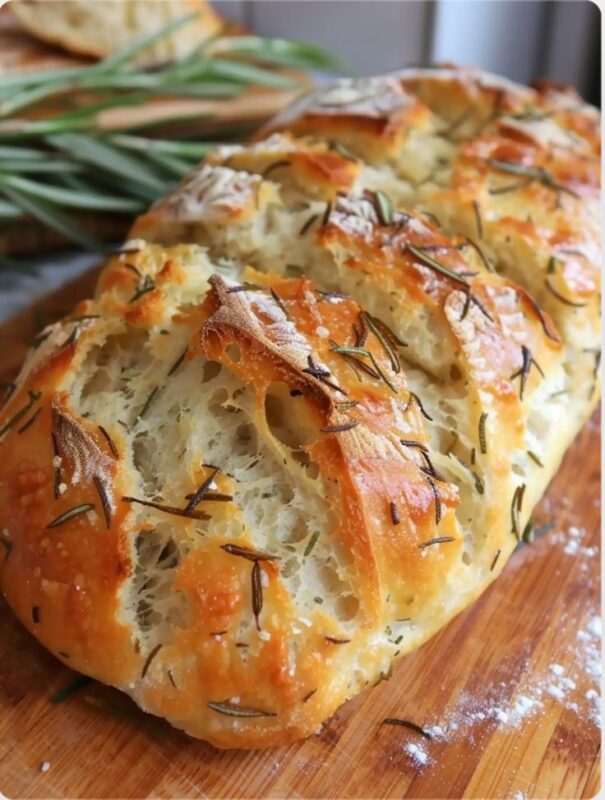
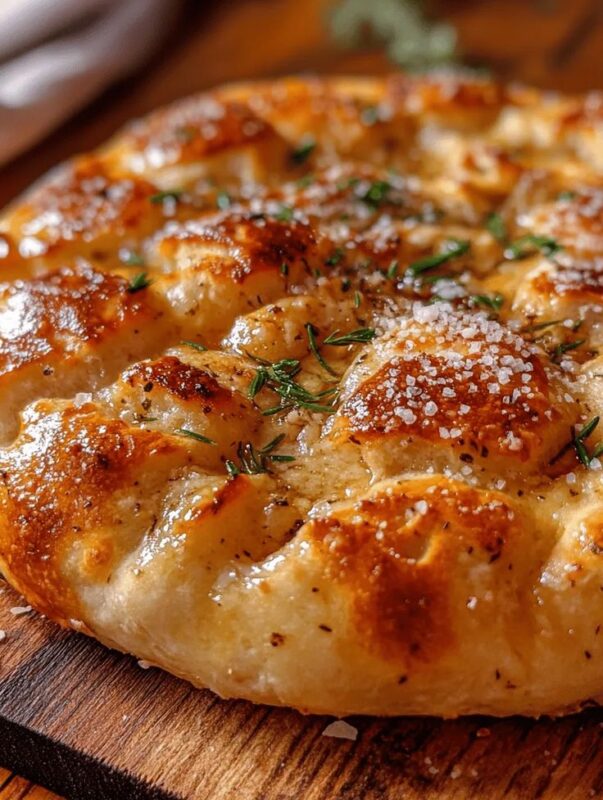
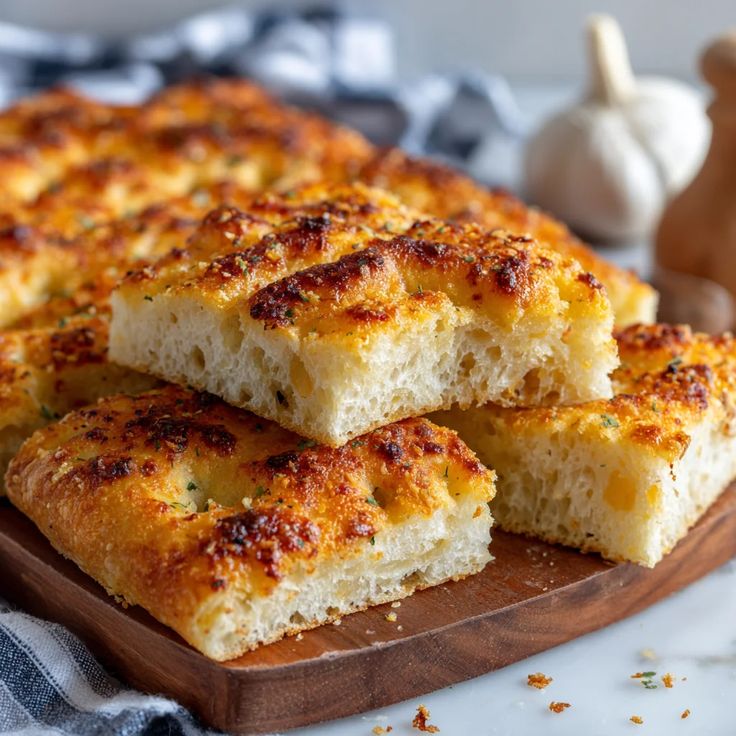
Ingredients
- 3 whole heads garlic, not cloves
- 1/2 cup extra virgin olive oil
- 2 scant tablespoons or 2 (1/4 ounce) packages active dry yeast
- 2 teaspoons granulated sugar
- 2 cups warm water (105 to 115 degrees F)
- 4 1/2 to 5 1/2 cups unbleached flour
- 1 cup whole wheat flour
- 2 teaspoons salt
- Cornmeal, for pans
- 2 tablespoons crushed fresh rosemary leaves or 2 teaspoons dried
- Coarse salt (optional)
Instructions
- Heat oven to 400 degrees F.
- Separate garlic head into cloves and peel. Add olive oil in a small heavy saucepan, add garlic, cover and cook over very low heat for 20 minutes, or until softened but not browned.
- Remove from heat and strain. Set oil aside to use later. When cool, cut cloves into lengthwise slivers and set aside.
- In a large bowl, dissolve yeast and sugar in warm water. Add 1 cup of unbleached flour and stir thoroughly. Let sit for 15 minutes or until mixture is filled with tiny bubbles.
- Add 2 tablespoons of reserved garlic oil and 1 more cup of unbleached flour and all of the whole wheat flour and salt to the yeast mixture.
- Beat vigorously with a dough hook or a heavy sturdy spoon for 2 minutes. Gradually add more of the remaining flour, 1/4 cup at a time, until dough forms a mass and begins to pull away from sides of bowl.
- Turn out onto a floured surface and knead, adding more flour a little at a time as necessary for 8 to 10 minutes, or until you have a smooth elastic dough and blisters begin to develop on surface.
- Place dough into an oiled bowl. Turn to coat the entire ball of the dough with oil. Cover with a tightly woven kitchen towel and let rise for about 1 hour or until doubled in size.
- Sprinkle a well greased 13 x 18 inch baking sheet with cornmeal. Turn dough onto an oiled work surface. With the heel of your hand, flatten dough into an 11 x 16 inch rectangle. Lift dough onto baking sheet. Using hands, press dough into corners and edges of baking sheet.
- Flattening dough with hands rather than a rolling pin will give the irregular texture associated with focaccia. Cover dough with towel and let rise 20 minutes.
- Sprinkle top of dough with rosemary and the slivered garlic. Using fingertips, make indentations in dough about 1/2 inch deep and 1 inch apart, to give a dimpled effect. As you do this, press garlic slivers into dough to keep them from falling off or over cooking. Cover dough with towel and let rise an additional 20 minutes.
- Place a shallow pan on lower shelf of oven and heat up.
- Drizzle remaining garlic oil over top of focaccia. Use a brush to pat the oil over the entire surface, allowing any excess to pool in the indentations. Sprinkle with 1 to 2 teaspoons of coarse salt.
- Put 1 cup of ice cubes in the heated shallow pan in the oven. Immediately put the focaccia in the oven and bake for 30 to 35 minutes or until pale gold.
- Remove from pan and cool on a wire rack.
Notes
It is best eaten slightly warm or at room temperature.
You can substitute Parmesan cheese for the salt, or use both.
Can I just bake cookies into one giant cookie to save time?
Yeah, you can. All you have to do is prepare the dough according to your recipe and then press it into the shape of a big cookie on a baking sheet. A pizza pan is helpful for this because you can follow the edge, which will ensure the cookie is round. Bake the cookie as directed, but keep an eye on it. It may need a few minutes more to bake, but not many.
You may not find yourself saving too much time using this technique. Pressing all of the dough evenly onto a baking sheet may take longer than you imagine and in the end you’ll have a big cookie that you have to cut. They you’ll have to clean up the crumbs after the cutting. You might do this once, then never again. Have fun.