
I grew up with crunchy, even stale cookies. In fact, this was the norm throughout the United States from ever since I could remember.

But here’s the big “secret”.
Until the advent of supermarkets and mass-marketing of food items, cookies were a home-made event. You rarely bought ready to go complete cookies t a grocery store. At best, you might get some at a bakery, and at that, the end of the day cookies were more than likely repurposed or discarded.
Cookies are meant to be fresh, hot and right out of the oven.
So as time advances … keep in mind that we need to stop accepting the norms that surround us and go back to the way food was at the time of our great – great grandparents.
Fresh, hot and delicious.




My personal opinion, naturally. But, I think many of you secretly agree with me.
Today…
What was the greediest thing you’ve seen a family member do?
When my uncle died in 2004, I was Executrix of his Will. In his Will, he split his assets between me, my cousins (2 of them) and left $1,000 to his girlfriend. He also left $5,000 to each of our kids. When my female cousin read the breakdown, she called and said, “What is this $1,000 to Caroline?” I told her that is what my uncle wanted to do. She then said, “I hope you didn’t do that!!!! She didn’t even come to the funeral!” Keep in mind, this cousin had just gotten $400,000 and her 3 kids each got $5,000. I told her that I did send that check so, she needed to get over it. This cousin had not called me directly until then. She had another cousin call me.
I kept quiet for a while, then when I sent the stock certificates to the cousins, I enclosed a note to her saying, “Just so you know, I had no problem sending $1,000 to Caroline, a 78 year old woman with lyme disease, who lived 45 miles away with no place closer to stay, however, I had a big problem writing your 32 year old daughter a check for $5,000 when SHE didn’t come to the funeral because she had a dog grooming “business” in her home, and had an appointment to groom a dog that day.”
I wrote another note to the cousin who made the weekly calls to me regarding the estate and asked him to please call me when he received the certificates even though they were sent Certified. He never called and has not since called. All this over $1,000!
Two years later, the female cousin’s husband died. I loved that man! He was the most real out of all of them. Did his wife call to tell me? No. Did his daughter, who is 3 weeks older than me and graduated HS with me call? No. She had that male cousin call to tell me! Before he even finished, I told him I couldn’t make it to the funeral. He said, “But I didn’t tell you when and where it is.” I said, “It doesn’t matter. Tell them I can’t make it because my dogs need to be groomed.”
I then had my own remembrance ritual in honor of that great man.
Tuscan Flat Bread
Schiacciata, meaning “squashed,” is an approximately 1 inch thick round flat bread loaf popular in Tuscany.






Yield: 1 round loaf
Ingredients
- 1 cup warm water
- 1 teaspoon granulated sugar
- 2 (1/4 ounce) packages active dry yeast
- 2 1/2 cups unbleached bread flour
- 3/4 teaspoon salt
- 1/4 cup + 3 tablespoons Challenge Tuscan Style Spreadable Butter
- 1/2 to 1 teaspoon coarse sea salt (optional)
Instructions
- In a small bowl, dissolve sugar and yeast in warm water. Let sit for about 10 minutes.
- In a large bowl combine: flour, salt, 1/4 cup Tuscan Style Spreadable Butter, and dissolved yeast. Knead until smooth (about 10 minutes), adding an additional 1/4 cup flour if necessary to keep the dough from being too sticky.
- Place in a lightly buttered bowl, cover loosely with plastic wrap. Let rise until dough is doubled (about 1 – 1 1/2 hours).
- Punch the dough down and turn it out on to a lightly floured board.
- Butter an 11 to 12 inch round pan (a pizza pan or large tart pan) or a baking sheet.
- Shape the dough into an 11 to 12 inch round and transfer to prepared pan. Cover loosely with plastic wrap and let rise until dough is about doubled (about 30 minutes).
- Heat oven to 400 degrees F.
- Press finger tips into dough creating indentations.
- Melt 2 tablespoons of Tuscan Butter and brush approximately half over the top of the dough. Sprinkle with salt if desired.
- Bake for 20 to 25 minutes.
- Brush top of hot bread with remaining melted butter.
- Serve either in wedges or split the wedges and add cold cuts.
What are the common mistakes untrained people do while fighting?
You see this happen a lot in fights where dudes like to stick their chins out. This is especially egregious at the start, right before someone throws a strike when the first strike can potentially end the entire thing before it even gets under way.
Then there’s the chest puffing, which puts them at a huge disadvantage. This is a clear disregard for range management or any care or understanding for our universal weak spots.
My brother and I used to figure out new and innovative ways to surprise punch each other’s solar plexus. A hit around there can instantly immobilise you for a second or two, AND it hurts and blows out your air. You’re going to have problems generating any real force immediately after that blow. A good strike there can also drop someone immediately. It’s almost as bad as a liver shot. I once dropped a guy from a direct straight punch there. He just collapsed and made a huffing, gurgling noise.
Dudes just like sticking their chin and chest out for them to be hit.
Like, don’t do that. There are youtube video after video of dudes getting instantly KO because they do this.
Hold your arm out to establish distance and to maintain distance and don’t let them get in range. It also means you’re not in range, but it gives you time to react if they throw the first strike. At the very least, you can use your hands to disrupt their strikes and take some power away from them. Even pro fighters use this same technique. It disrupts the opponents view and vision and they can push and pull on the opponent’s limbs, which takes a lot of potential out of any incoming strike.
These REAL IMAGES Of Titan Are So Wild, People Think They’re CGI!
Why was the Nelson class battleship’s C turret lower than the B turret in front? Wouldn’t a higher C turret allow all guns to fire forwards?
A ship with three sequential superfiring turrets is indeed possible and was implemented on the British Dido-class and US Atlanta-class cruisers.
Dido-class
Atlanta-class
The disadvantage of this arrangement is a higher centre of mass which decreases stability, especially in heavy seas.
The Didos and Atlantas carried a 5.25” and 5” main armament respectively. These relatively light guns and light turret armour reduced the weight penalty of the superfiring turrets to within acceptable limits.
The Nelson-class carried 16” guns (108 tons each as opposed to around 4.5 tons for the 5.25”) and the turrets and mounts were proportionately more heavily armoured. Three superfiring turrets were totally impractical.
The Nelson-class were designed with three turrets forwards in an attempt to minimise the space (and weight) required by the armoured citadel in order to meet the constraints of the Washington Naval Treaty of 1922.
Nelson-class
The result was the curious staggered arrangement seen above. Although this limited the Nelson-class to firing only six guns directly forward, it should be borne in mind firstly, that most previous battleships could only fire four guns directly forward and secondly, that at the time of the design it was still anticipated that battleships would fight in line of battle and thus be firing broadside rather than straight ahead.
In light of these factors, the design compromise made for this class was not really a significant disadvantage.
No Laughing Matter
Written in response to: “Write a story that includes the line “I don’t know how to fix this” or “I can’t undo it.”“
Luca King Greek
The NASA ground control team in Houston watched with awe as the SpaceX Dragon spacecraft docked flawlessly with the International Space Station. It was an important mission, hastily arranged, so the ground team were relieved when Chief Science Officer, George Maddox, engineering genius and all-around nice guy opened the Quest Air Lock hatch, smiled at the ISS on-board camera and emerged into Unity Node 1.
The Houston team high-fived.
“Why is Maddox like a mushroom?” said the EECOM, a junior member of the ground control team.
“No idea,” said Flight Activities Officer, Gary Blackstone.
“Because he’s a fungi to have around!” said EGIL, another junior member of the team.
EECOM was not happy that EGIL stole his punchline, and FAO Blackstone rolled his eyes at the two NASA-bros. Meanwhile, sitting in the shadows, Ellen Rossiter, NASA’s Psych-Ops officer took a dim view of these antics, and made a note in her little black book, accordingly.
Aboard the ISS, Commander Cathy Rector was worried about the oxygen problem, and eager to get rid of Olaf Olsen. The outbound Norwegian Science Officer was a test of her patience; either obsessively morbid, or manically elated, often sleepy, and she seriously doubted his fitness for duty in space. Aside from mood-swings, he seemed furtive or sketchy. Science Officer Maddox, by contrast, had a stellar reputation as an engineer, and was known to be a witty, light-hearted man. Moreover, being an expert on life control systems, Maddox would be – quite literally – a breath of fresh air because the performance of the Oxygen Generation System had deteriorated over the last few weeks despite Olsen’s supposed attempts to clean it up. The air quality aboard the ISS was very poor, especially in the dreaded European Lab module. The Commander was not sorry to see Olsen earth-bound, aboard the departing SpaceX module.
Maddox, right-stuff handsome with a nine o’clock shadow, settled in quickly.
“Why did Oxygen and Magnesium get divorced?”
Commander Cathy Rector was an attractive square-jawed woman with piercing blue eyes, gave it serious thought but had no idea.
“O-M-G, it’s a long story!”
Cathy Rector was an earnest, serious person, doing serious things, so it took a while for Maddox to explain the joke, at which point she laughed in an unpracticed manner, like a cat with hiccups.
“CSO Maddox,” I think it’s time to get to work on the Air Revitalization System,” said the Commander once she’d recovered her dignity.
“You bet your ARS, Ma’am!”
Commander Rector thought the Oh-My-God joke was very clever and very funny, but she was also Captain of the Ship, a responsibility that weighed heavily on her, and CSO Maddox was on a serious mission which required urgent attention.
“Where is it?” said Maddox.
“Where is what?” said the Commander, breathing deeply of the sickly-sweet air.
“Where is the ARS?”
Cathy Rector was appalled that the CSO didn’t know the location of the system he was supposed to be working on. “Up top, Node 3.”
“That would be up, the ARS?” said Maddox.
“Yes, Maddox! That would be up, the ARS,” she said, irritated by this hole in the man’s knowledge.
With a deft shove and a suppressed smirk, Maddox disappeared through the narrow aperture of the Leonardo Module, leaving Commander Cathy Rector with the distinct impression that he was making fun of her.
The onboard air-monitor indicated a rapid deterioration in the oxygen content aboard the ISS. Houston was stumped by the problem, but the Flight Activities Officer, Gary Blackstone, had total confidence in Maddox, and Cathy had complete confidence in the FAO. Ellen in Psych-Ops listened in on the lovefest and scribbled something in her little black book.
Maddox returned from the ARS with a smile on his face, and there was a notable improvement in the particulate matter count as represented on the on-board air-monitoring system. Maddox had replaced the ARS filters, which were full of hair, skin cells, plastic granules and traces of a white chalky substance.
“I just don’t get the point of air filters,” said Maddox. “They just sit there and collect dust.”
Commander Rector was beginning to have doubts about Maddox; he was a human non sequitur and had strangely fluted high-pitch voice that she found a little irritating. She held a conference with Ground Control when Maddox went to the bathroom.
“Maddox is the best of the best,“ said the EECOM officer, who looked ragged at the edges on the monitor.
“He knows more about life support systems than we’ve forgotten,” said the EGIL officer, blurred by an orange aura.
FAO Blackstone reassured the Commander that “if Maddox can’t fix it, nobody can.”
“But he didn’t know where the ARS was located,” she complained, frowning. FAO Blackstone looked like the Cookie Monster, so she gave the monitor a sharp blow, and the Sesame Street image of the three men sharpened into a NASA-like normality.
“Yeah, roger that,” said FAO Blackstone. “We heard that conversation.”
“So how can I trust him?”
Ellen from Psych-Ops pounced from the shadows and appeared on the monitor, “How can you trust anyone?” she said, darkly into a sinister silence.
FAO Blackstone felt compelled to lighten the mood and clarify the meaning of the dust-collector joke, incidentally elbowing Ellen of Psych-Ops in the ribcage.
The Commander ended the conference call. “Muppets!” she said to herself. The joke about dust was not at all funny.
Maddox was pale in the face when he emerged from the ISS bathroom, otherwise known as the “Waste and Hygiene Compartment.” The vacuum pumps, both one and two, were a nasty surprise, not at all what he’d been trained for. And that sweet-sickly odor, everywhere! Maddox prided himself on having a strong constitution and a positive disposition, but something didn’t smell right aboard the ISS.
At least Maddox was quick about his business, thought the Commander, unlike Olsen who’d spent hours in the stall, only to emerge with a sourpuss on his large egg-shaped face. Never satisfied. She was so relieved that Olsen was gone! The Norwegian came aboard the ISS with lab animals, packets of fertilizers and high hopes of figuring out how to grow vegetables in space, but his mood fluctuations became intolerable, and his high hopes were dashed low when he lost his supply of Ammonium Nitrate somewhere in the European Lab. Neither of the two vacuums could empty that man of his inner demons. Neither time nor effort could rid the European lab of its strange smell of urine and whipped cream.
How does one lose kilograms of Ammonium Nitrate, anyway?
“Why did oxygen go to therapy?” said Maddox, thinking to restore himself to good humor with his own good humor.
The Commander was not going to get blindsided by Maddox a second or third time. It was another joke, and she would beat him at his own game this time.
“I don’t know, why did oxygen go to therapy?” said the Commander.
“Because it was feeling too negative?” The Commander did not get the joke, but she hiccupped some feline barks just so the Houston team, hearing this banter, didn’t give her a bad reputation; someone might blame her for Olsen’s spiral into despair, and then she’d never get another mission.
“Oh, that’s very funny, Maddox,” said the Commander. She waited for Maddox to finish typing out a status update on his laptop. When she was sure that he was finished and paying attention, she let rip her well-prepared riposte.
“You’d better get up the OGS now!” said the Commander, grinning ear-to-ear.
“Pardon?”
“Up the OGS!”
Maddox took a few seconds to figure out what she meant. The Oxygen Generation System was next up for his attention; the electrolyzer was the lungs of the spacecraft. Maddox felt too tired to explain the difference between the Commander’s lame attempt at humor and his own pun.
“Good one, Commander. Up the OGS! Good one.” Maddox patted the Commander on the uniformed arm.
The Commander felt deflated, like a tired party balloon.
Maddox, enervated, was a troubling sight for the boys in Houston. Ellen of Psych-Ops was intrigued,
“The Oxygen levels are dangerously low,” said Maddox in the video-call with FAO Blackstone. Maddox and Commander Rector were both staring at a downward-sloping trend-line. “It wasn’t the filter system,” said Maddox.
“We seea aoia apera carbxandow perroadsiopa…” came the response from Houston, mixed in with a whole load of white-noise static.
Maddox looked at the Commander and hunched up his shoulders, deferring to her judgment.
“You go see to the Oxygen system; I’ll join you once I’ve re-connected with NASA.” squeaked the Commander, her throat strangely constricted.
“Later gator,” said Maddox. His shoulder bumped awkwardly against the bulkhead before his feet disappeared into the narrow aperture of the Leonardo module.
Later Gator. Maddox was too funny, thought the Commander. It triggered a memory from a care-free childhood.
The Commander re-set the communications system, but every NASA utterance sounded like a combination of Klingon and Portuguese. Did the communication breakdown have something to do with the oxygen deficiency? Commander Rector thought the coincidence strange. At a loss, she made the short, but disorienting trip – up, down, sideways, up – to Node 3, where Maddox had pulled open a panel and was examining a circuit board. It was easier to breathe in Node 3, less spoiled by the weird smell from the European Lab.
She’d rehearsed her greeting line several times but couldn’t remember why.
“In a while, crocodile.”
This was the funniest thing that anyone anywhere had ever uttered!Their laughter was stupid and infectious. Commander Rector and CSO Maddox twirled around. propelled by their own scatterbrained madness.
Maddox gasped for air. “It’s not… the… electrolyzer!” he said, breathlessly.
“Oh good!” said the Commander, tickled at the thought that her good buddy, the electrolyzer, was in any way, shape, or form, responsible for their asphyxiation.
“Nor the carbon dioxide scrubber.”
“It’s a Russian scrubber, you know!” she said.
“I know!” said Maddox, reeling hysterically. The idea that the entire ISS life support system depended on Russian technology struck them both as incredibly funny, and it took them a few minutes to calm down, recapture their breath, and reorient after the aerial acrobatics.
“I don’t know how to fix this,” said Maddox.
“Funny,” said the Commander.
“No seriously, Cathy, I have no idea what’s happened.”
Use of her given name was an inappropriate intimacy and sobered the Commander up.
“Hilarious, George,” she said, with a little venom.
Maddox looked the Commander straight in the face, “Cathy! I don’t know how to fucking fix the problem!” He shouted, red in the face, temple vein throbbing, and a thin sheen of sweat on his soap-star face.
Cathy’s face was half-cocked, between panic and amusement, primed to go either way, but her clenched fists revealed a nascent understanding that the stakes were high, impossibly high. Her limbs felt light, and she felt euphoria and despair, mixed with an adrenaline rush of primal fear.
“George, tell me that this is a joke.”
Maddox stared at her, bug-eyed. “The oxygen level is below life support level. There’s a contaminant in the air.”
“So, what are we breathing?”
“I have no fucking idea,” said Maddox, laughing, blanking, laughing, blanking again, and grasping at air, grasping at anything that might save him from drowning.
Olaf Olsen bumped back to earth and the first thing that entered his mind was that he should go see a Houston-based dentist because his teeth were aching like crazy. He wondered if he’d been grinding his molars during the return trip to earth in the SpaceX Dragon spacecraft; it got pretty freaky during the re-entry phase.
“Welcome back to earth, Officer Olsen” said the Space X engineer as he opened the hatch to the aircraft, filling the module with fresh air, which cleared Olsen’s mind, and sharpened the pain in his jaw.
“It’s good to be back!” said Olaf, surprising himself with an octave-deep growl.
Olaf felt very peculiar, and he wondered vaguely, and with a little guilt, whether it had anything to do with the fertilizer powder that he’d spilled in the European Lab aboard ISS. It was a harmless oxidizing agent, Ammonium Nitrate, used in agriculture, industry and medicine… easily transformed into laughing gas… Most of it ended up in the ventilation system…
The EECOM officer answered the urgent and persistent phone call. As the officer in charge of emergency, environmental and consumables management, he was low on the NASA totem pole.
“Welcome back to earth, Office Olsen,” said the EECOM, surprised that the engineer’s first thought, only seconds after landing, was to contact a junior member of the ISS control team, not his mother or his wife? The EECOM assumed it was something to do with being European.
Olsen talked a mile-a-minute into his uncomprehending ear.
“You’ve got to be joking?” said the EECOM.
Olsen screamed profanities into the EECOM’s ear, so he handed the phone to FAO Blackstone, like it was a stick of dynamite.
“What in hell?” said FAO Blackstone, listening intently, white as a sheet. “Laughing gas?”
Ellen in Psych-Ops scribbled furiously in her notebook.
The three ground-control officers watched the video monitor in awe and horror. Two of NASA’s finest astronauts were jabbering like Alvin and the Chipmunks up in the space station.
“What can we do to save them?” said FAO Blackstone.
“Open the vents, purge the system, using the back-up oxygen in the old Nauka module”, said the EGIL officer, delighted to be of use for once.
“That’s the old Russian lab. Do we know how to operate the valves remotely?”
EGIL was on it like a flash.
On the ISS monitor Commander Rector and CSO Maddox appeared to be performing a Bavarian knee-slapping dance, and FAO Blackstone’s heart sank at the dreadful image – to be forever etched in his memory.
“Hurry EGIL, hurry!”
“The instructions are in Russian Sir!”
“They’re doomed.”
It was a low point in NASA’s feted history, FAO, EECOM and EGIL were at a loss. FIDO, GNC, INCO, IFM, MECH and MECH-2 were stymied.
Ellen of Psych-Ops, fluent in Chinese and Russian, was compelled by a deeply buried humanity into action, despite her keen interest in the business of oxygen-deprivation. She jumped into a seat at the console and scanned the Russian – soviet era – instruction manual. FAO Blackstone followed Ellen’s barked instructions, and the rusty-old Russian ISS systems sprang to life, oxygen gushed from Nauka, to Zvezda, through Zarya and into the main ventilation system. FAO, understanding the full meaning of Olsen’s telephonic rant, sealed the hatch of the European Lab module, sealed the stench, trapped the laughing gas.
The irony was not lost on Cathy and George, that a near-death experience bonded together as forever-friends. That, plus the joint embarrassment of being caught on video doing a Lederhosen space-stomp, though neither Commander Rector nor SCO Maddox had memory of this strange happening, nor could they explain their perfect stamp-slap-clap execution of the Tyrolian folk-dance – only that they’d felt something akin to unbridled joy in what they thought were their final last desperate moments on earth… near earth.
Through the small port-hole window they were able to spy on the European Lab, abandoned forever, mid-experiment, thick with vegetation, teaming with animal life. Beans the size of potatoes, potatoes the size of melons, the cucumbers were so long that they’d ran into and up the wall, ninety-degree bends. The chickens and rabbits had escaped their lab cages, and were fat, happy and vastly oversized, unmolested in their own smelly Eden.
“What is the difference between a rabbit and a cucumber?” said Maddox.
Commander Cathy Rector had no idea, and Maddox was forced to explain the joke.
Pictures























Brandon Lay – Yada Yada Yada (Official Lyric Video)
How did it feel to win an argument completely?
Over 25 years ago, the IRS raised a major challenge to a certain segment of the reinsurance industry. They launched two test cases. I was hired to represent the taxpayers.
The IRS team was led by an agent I knew and respected, and advised by District Counsel I held in high regard. Both privately assured me that they felt their challenge was invulnerable to attack and suggested my clients entirely abandon the industry.
My clients were fighters and I’m remarkably stubborn. We went through three years of audit and conferences. The matter was submitted to the IRS National Office for review, including my making a direct presentation to a 50-person IRS task force considering the issues. I was requested to make written submissions, and generated two 50–page briefs on the various topics raised.
Then we sat back to await the ruling.
The lead agent eventually called me. “We’ve received the ruling,” he said. “Would you like it mailed to you or come by and pick it up?”
I said I’d come get it. There was a pause.
Being the cool, imperturbable, subtle person I am, I then said, “WELL, WHAT DID THEY DECIDE?”
The agent hesitated. “Well … first of all, you’ll have sixty days to request changes or make challenges.”
My heart sank.
He continued, “However, I expect you will not request any changes and that I will soon see this ruling in your client’s advertising literature.”
!!!!!
We had prevailed completely.
I called the District Counsel and began to thank him for how professional he had been. He interrupted me. “You’re being a good guy, but you don’t need to. YOU WON! Congratulations, great job.”
I called the primary client, who was deliriously happy. He instructed me to go get a drink to celebrate.
So I walked across the street to Peet’s Coffee, had some Cafe Domingo, smiled a lot, and made a list of the people I need to thank for their help.
How corrupted is the Chinese Communist Party?
At the lower levels, China is probably at the same level as Europe , the States or any western nation
My brother spent the last 2 1/2 years in the place and is yet to experience a policeman asking for a bribe or needing ‘something extra’ for an official request with the local or national government.
The Chinese are sticklers for rules and these rules aren’t flexible
My brother tells me – if the rules say no noise after 10 PM, at 9:59:55 PM there may be loudest noise but at 10:00:05 PM there is complete deafening silence
The Chinese have these guys who are secret informers who travel everywhere and note things down, record them and pass them on to the Communists
Stuff like selling beer and cigarettes to teenagers
My brother saw his apartment cooperative store raided and change ownership when the guy was confronted with evidence recorded from a pen camera of selling beer or cigarettes to a 13 year old girl
They blacklist you and in China for some reason, when they blacklist you, they blacklist family too.
Societies like this are rarely corrupt bottom down
So it’s highly likely China is clean at the lower levels
Higher Population could make isolated cases by themselves look onerous though
For a 1 Billion population, 0.01 per cent is still 100,000 cases , a number that by itself can be staggering but when seen as a percentage could be miniscule and controlled.
—
At the higher levels, it’s a black box
Nobody knows what’s going on
So it’s hard to say how corrupt they are
Nobody has any real knowledge of corruption at those levels
It isn’t like India, where corruption can actually be seen in the form of swanky European imports , large colonial houses costing tens of crores of rupees or expensive jewelry
The overwhelming consensus is less ‘China is corrupt’ and more ‘China must be corrupt because they are so secretive’
—
The arguments made by Kanthaswamy Balasubramaniam do carry some traction
Powerful Individuals in China are very likely to be sanctioned and are less likely to keep dollar assets
Powerful Individuals who have corruption proceeds in offshore accounts are also susceptible to blackmail and since the Chinese treat their corrupt in a far worse manner than the Americans or Europeans do (I doubt they have a federal grand jury and a discovery process☺) , corruption has a very high potential for treason too and people draw the line at treason, less for patriotic and more for ‘preservative’ reasons
So it makes a lot of sense that the Chinese communists are not per se, corrupt by the general standards
However it is impossible for someone powerful, not to use that power for some form of elitism
To not do that is Utopian and China by no stretch of imagination is a Utopia or a near utopia like Norway
I tend to believe the elite communists in China have other perks
I am certain there must be a great degree of nepotism where preferential status is accorded to families of the party elite in land bids, work contracts, factory operations
I am sure an average Joe,can’t just walk in and get a license for build a factory or a private clinic without some kind of influence
If you need influence in a place like Chicago at these levels, you would certainly need ten times more influence in a place like Beijing
—
On the whole though, I believe China is less corrupt than the narratives go or the perception indices indicate
I have asked a lot of guys who have worked in China on the corruption and the answer is always based on the lack of transparency rather than any actual visible sign of corruption being seen with the naked eye
It’s always “The communists never say anything, so they must be corrupt”
—
Ken Griffin gave the best answer to this question
When asked how corrupt china was he replied “Joey Zasa corrupt”
Its like when Zasa replies in the godfather part III when they ask him if he guarantees people don’t deal drugs in his ‘neighborhood’ , he replies “I don’t guarantee that. I guarantee I will kill the man who does”
Ken said, the Chinese top bosses were certainly ‘Corrupt’ but they day they crossed a certain threshold, they would be literally killed for their corruption
It’s a threshold very few Chinese, even their own citizens know
—
So I believe China has some corruption and quite a bit of ‘elite privilege’ carried by communist elite
However no society that prospers can do so when riddled with corruption
I am pretty confident, China is way lower in corruption than African Nations, South Asian nations like Bangladesh & India, Latam nations, some Asean nations like Indonesia & Philippines
Maybe on par with Thailand, Malaysia,
Certainly higher in corruption than Singapore or Japan
Maybe similar to the States where the elite are notoriously corrupt but corruption is far lesser at the lower levels.
Sir Whiskerton and the Lesson of the Accidental Snooze
Ah, dear reader, you’ve returned once again to join me, Sir Whiskerton, in another delightfully absurd adventure! Today’s tale is a quieter one, a simple lesson in the fine art of feline philosophy, delivered to my ever-eager, ever-echoing apprentice, Ditto. It concerns a resistance to rest, a fortuitous pile of hay, and the profound truth that the best things in life are often the ones you never see coming.
A Lesson in Leisure
It was a golden afternoon, the kind that seems designed specifically for the pursuit of napping. The sun was a warm, buttery blanket, and the air hummed with the lazy drone of contented bees. I had selected the perfect spot on the porch—a rectangle of sunlight that was precisely the temperature of a freshly toasted crumpet.
“Observe, Ditto,” I began, my voice a low, instructive purr. “The intentional nap is a thing of beauty. It requires planning, positioning, and a certain philosophical commitment to doing absolutely nothing.”
“Nothing!” Ditto chirped, attempting to mimic my languid stretch but instead looking like a fuzzy spring uncoiling.
But while my body was committed to repose, my apprentice’s was a whirlwind of untamed energy. A butterfly! A drifting dandelion seed! The hypnotic sway of the washing line! To Ditto, the world was a carnival of distractions, and napping was the boring queue for a ride he didn’t want to go on.
“But there’s so much to see!” he protested, his tail twitching like a metronome set to allegro. “A nap is just… missing things!”
“Ah,” I replied, my eyes half-closed. “That is where you are mistaken. You are thinking of napping as an absence of activity. It is, in fact, the highest form of activity for the discerning feline. But today’s lesson is not about the planned nap. It is about its more whimsical cousin: the accidental snooze.”
The Pursuit of the Perfect Unplanned Nap
Ditto was skeptical. “How can you plan to not plan something?”
“A paradox worthy of a philosopher,” I conceded. “You cannot force an accidental nap. You can only create the conditions for its possibility. You must allow yourself to be so fully in a moment of quiet contentment that sleep simply… overtakes you.”
To demonstrate, I decided to shadow him on his explorations. We investigated a particularly interesting anthill (from a respectful distance, of course). We tracked the journey of a pill bug across a stone. We watched Porkchop the Pig create a new mud sculpture he titled “Ode to a Turnip.”
With each activity, I would find a patch of sun or a soft pile of leaves and demonstrate the principle of “openness to doze.”
“You see, Ditto,” I explained from a warm plank on the fence, “you must be like a satellite dish, receiving the signals of serenity. Let the warmth of the sun be your lullaby. Let the rustle of the leaves be your blanket.”
“Blanket!” Ditto echoed, but he was too busy chasing his own tail to listen.
The Haystack Epiphany
Our journey led us to the barn, where a mountain of fresh, sweet-smelling hay had just been delivered. Ditto, exhausted from his frantic adventures, clambered to the top, intending to survey his kingdom. But the hay was soft. The barn was quiet, save for the gentle rustling of the resident mice. A single, dusty sunbeam pierced the gloom, landing directly on his furry little back.
He sat down for just a moment to catch his breath. His eager chatter slowed to a mumble. “Mumble… sunbeam… kingdom…”
His head began to nod. His whiskers twitched once, then stilled. And then, with a soft, contented sigh that was entirely his own and not an echo, he tipped over sideways and fell fast asleep, a tiny, peaceful smile on his face.
I padded over and looked down at my slumbering apprentice. He was the picture of perfect, unplanned bliss.
The Moral of the Story
When he awoke sometime later, refreshed and bright-eyed, he blinked up at me. “I didn’t mean to!” he yawned.
“Precisely,” I purred, my chest swelling with a most un-philosophical pride. “That is the heart of the lesson. You did not try to nap. You simply allowed the nap to happen. You surrendered to the moment.”
He stretched, a genuine, languid stretch this time. “It was a good nap,” he admitted. “I dreamed I was a cloud.”
“A noble dream,” I said.
The moral of the story, dear reader, is this: Sometimes, the best moments in life are unplanned. The most delicious apple is the one you stumble upon, the best friend is the one you weren’t looking for, and the most perfect nap is the one that steals upon you in a pile of hay when you were too busy living to think about sleeping.
From that day on, Ditto became a master of both kinds of naps—the intentional and the accidental. And I must confess, watching him discover the joy of surrendering to a sunbeam… well, it almost made me forget to take my own planned afternoon nap.
Almost.
The End.
Our First Time Reaction to: Jeff Lynne’s ELO – Telephone Line (Live at Wembley Stadium) | JUST WOW!!
Can you really go as fast as you want on the Autobahn?
Definitely.
Here I am in a BMW X6 M60i on the Bundesautobahn “autobahn” hitting 252kph (156 mph). You really need to have a strong grasp on physics and advance driving skills if you’re going to be hitting these speeds.
This also includes having a car that withstand high speeds, high-speed braking, fast acceleration, and ensure your tires are up for it. The engine was warmed up going normal speeds for at least half-hour along with the tires and brakes (never do this without warming up all the parts of your car).
Getting the car up to speed after my warm-up.
Did you know that it takes a car going 100mph almost quarter-mile to stop? Here is a common formula for braking as per Google: D= 1/2 x v2 where D is the distance to in feet and V is the speed.
Also, you’re covering 147 feet per second at a hundred miles per hour meaning if you blink or sneeze you just covered a few hundred feet.
Now we’re going… as you can see the left lane is completely empty and I know that people will check before changing lanes and stay right (have love German driving schools). I’m also checking my rearview to ensure no one is coming up behind me. Massive amount of focus and concentration is going on as you go faster.
In the final stretches before hitting my top speed. The car is flying with warm tires, a full tank, hot brakes, and I’m calculating stopping distances and what to do in case someone goes in front of me.
I rarely use the brakes to slow down because you throw off the center of gravity with this car and I lose my ability to turn and maneuver. Since you’re on the autobahn you’re required to maintain a distance from the car in front of you that’s overtaking. This is done for safety, courtesy, and it’s considered intimidation if you tailgate them at high-speed. They see you so they know they need to move to the right. So I just let the car coast until the move over and then hit the pedal to the metal again.
The discipline, concentration, skills, experience, and having the right vehicle all play a role when hitting these speeds. I’ve gone even faster but both hands are on the wheel and I’m completely dialed in for that bit. In my opinion, you also should have the right music pumping besides a loud engine and exhaust which is a melody in itself.
At night, it’s a monster and you really need to know what you’re doing because there are animals that can cross the road. While the Autobahn is usually free of debris, life happens, and your reflex better be good because there is very little margin for error. Weather and road conditions play a role as well so you need to take that into account. Rain, temperature, humidity, and even wind need to be taken into consideration as they can affect the grip, brakes, and aerodynamics of your car.
Have fun and be careful because the German Bundesautobahn can be a lot of fun, but it can be unforgiving.
Bellmore City
Written in response to: “Write a story that includes the line “I don’t know how to fix this” or “I can’t undo it.”“
Bryan Sanders
This story contains sensitive content
He sighed, lowering his face into his hands as he paused to consider the scuffed heels of his shoes, the ones he wore thin from hours of work. Their wear symbolized his constant battle against fading away, each scratch a testament to his effort to stay relevant.
Kye did what he had to do. He had to make money for his family—a family abandoned by his father. Yet, it wasn’t just obligation driving him. Deep down, he was fueled by an unspoken fear: the fear of becoming irrelevant, of not mattering in a world that seemed to overlook those who struggled silently. The image of his mother, weary but smiling, haunted him. Her resilience was both his anchor and his burden. He wanted to prove that he could be the rock his family needed, to break the cycle of abandonment that had marked his childhood. Kye yearned for a sense of control in a life that often felt dictated by circumstances beyond his power.
He dragged himself from the bed, went to the bathroom, and turned on the shower. As the water hit his skin, he began to cool. He felt his burning shame being extinguished and swirling down the drain. He leaned on the cool tile, his head resting on his arm, as the rivulets coursed down his back and into the basin. They carried his secrets and deposited them at the bottom of Bellmore City.
Getting dressed, he shut the door behind him and walked into the grimy, hidden side of wealth. Covered by his hood, head down and hands in his pockets, he avoided eye contact as he made his way back to the alternate world in which he lived. A world, at least where he felt clean.
As he walked, his mind went to Billy. He wondered what Billy and Raven would think of him, but mostly Billy. From the start, he knew Billy was different—someone special. Billy never judged him. He was kind, respected his boundaries, and took time to get to know him. Billy could even make him laugh, which wasn’t easy after everything Kye had been through. Kye liked him, and those feelings only grew.
It grew into something else.
Something he had never felt before.
It was like trying to climb up a glass wall, only to slide back down, feeling each desperate attempt to ascend ending in failure. He had seen Billy with other boyfriends, Daggar being the last, and knew he didn’t measure up. The weight inside him grew heavier, making it hard to breathe, as if he were being pressed against the wall he couldn’t scale. Nausea twisted his stomach, a tremor passing through his hands as he came to terms with his deepening feelings, each implosive realization dragging him further into despair.
At first, he thought it was okay.
Change.
Something he could get used to, something that would pass in time.
Something he could handle, then move on.
A crush, perhaps.
Something to fill a void, a lack in his life.
But then it got worse. Much worse. It felt like punching a wall. It didn’t punch back. It hurt. Days shortened.
Draining.
Darkness.
Alone, he wondered why the sun had left. Why didn’t it stay longer to bring comfort?
He kept quiet.
It felt like swallowing thorns, each one catching painfully in his throat.
He watched Billy, savoring their time together and fearing its loss. It was the toughest punishment he could impose on himself. The image of ‘blood-soaked petals’ tried to capture his suppressed emotions, the pain he endured to maintain his silence, biting his lip to hold back words he would never speak. The ‘Barley-induced confidence’ referred to the false courage drawn from alcohol, a brief, hallucinatory bravery that shrouded his clear judgment.
He remembered riding to Billy’s house, drinking even more.
The pool felt amazing on his nakedness, bolstering him with a newfound courage. He waited, anticipation curling in his stomach, watching the water ripple around him. Billy came—he hesitated just for a moment, a breathless pause that seemed to stretch between them—before jumping out of the pool and demanding what he wanted.
Billy’s skin beneath his hands was warm, inviting.
Scratchy from a day of whiskers, tantalizing him.
Lips, hot and sultry, met with his.
Eyes of shock, crystal clear, radiant blue, graced his vision—beautiful just the same.
“I don’t know how to fix this,” ran through his mind.
What did he do?
Why did he let his emotions get the better of him?
How would he move past this embarrassment?
The weight of his actions bore down on him, making his desire for Billy even more potent. It was a mistake he couldn’t afford, yet cherished. He knew he had to bury it like a precious treasure locked away on a distant island. It would become a ghost, haunting only him—a shadow unseen by anyone else.
He would create a façade for Billy, pretending that night meant nothing and that he barely remembered it. But deep down, Kye would hold on to that memory, a secret only for him, a beautiful yet burdensome reminder of what he couldn’t have.
Making it to his moped, he straddled the seat and looked into the alley.
The neon signs flickered like restless spirits above Bellmore City, casting a garish glow onto the wet pavement. He saw the other sex workers mingling with passersby, their faces obscured under the flickering light, leaning in car windows, or flirting in obvious ways.
The night was alive with the clamor of distant traffic and murmured conversation, the hum of the subway beneath adding an undercurrent that seemed to pulse with the city’s heartbeat. He couldn’t help but wonder what stories were hidden behind the eyes of these workers, secrets they carried like armor in the bustling, indifferent crowd.
He felt the first of the rain.
A drop here.
A drop there.
The soft, distant grumbling as the clouds became hungry.
Soon, they could feed on other people’s secrets— and wash them away.
The scooter moved from the curb, its engine sputtering a quiet rebellion against the silence, as he left his damnation behind him.
In the rain, a faint aftertaste mingled with the air, a hint of something new, whispering fragile hope into the spaces between despair.
My GF Claims She “Technically” Didn’t Cheat When She Slept With Ex When We Were Dating, Dump Her?
Well… he’s young. And for her… it’s “complicated”.
So don’t get too riled up about all this. It’s called life and relationships.
Before anyone could react, Nokoni Comanche warriors surrounded the cabin. The violence that followed was too brutal for detail: her mother was killed, the cabin destroyed, and when the chaos ended, three children were taken—Bianca, her younger brother John (“Dot”), and a visiting neighbor child. They were tied to horses and driven north into Comanche territory.
Bianca’s childhood ended in that moment. Her survival had only just begun.
The First Days
For days, the children were forced across the plains without rest or mercy.
They ate raw meat so no fire would reveal their location. They drank from muddy streams. They slept on bare ground, shaking with grief and exhaustion.
Bianca struggled most. She couldn’t ride well, couldn’t keep up, cried constantly. Some accounts say the Comanches mockingly called her “stinks when walks,” a cruel label for a terrified child trying to stay alive.
Soon, the captives were divided—claimed by different families as slaves or possible adoptees. Bianca was separated from Dot, the last remaining thread to her old life. Suddenly she was alone among people whose language she didn’t know, whose customs she didn’t understand, and who had killed her mother only hours before.
Most adults wouldn’t survive such trauma. Bianca was ten.
Tekwashana’s Daughter
Bianca was claimed by a Comanche woman named Tekwashana. What unfolded wasn’t kindness at first, but something more complicated—practicality blended with a gradual, reluctant acceptance.
Tekwashana needed help. Bianca needed someone who could teach her how to live in this new world.
So Tekwashana taught her.
How to gather firewood and haul water. How to prepare food. How to swim rivers—something most frontier white children never learned. How to pack up a camp in minutes when the tribe needed to move.
She pierced Bianca’s ears, darkened her blond hair with pigment so she wouldn’t stand out, dressed her in Comanche clothing. Slowly, without realizing it, Bianca adapted. Not because she wanted to. Not because she forgave. But because survival demanded it.
She learned Comanche words. Then phrases. Then the language. She absorbed the rhythms of camp life—when to work, when to rest, how to behave. She watched buffalo hunts return, saw women process meat with astonishing skill, lived the constant mobility of the Plains: camps rising and vanishing in hours.
The Invisible Border
Somewhere in those seven months, Bianca crossed a border she couldn’t name.
She remained Bianca Babb—white captive, grieving daughter—but she also became a child living inside Comanche society, understanding it from within rather than from afar.
This wasn’t romance or fantasy. It was trauma forcing adaptation. Yet years later, she would write about Comanche life with nuance: acknowledging brutality, yes, but also community, skill, and humanity. Bianca became one of the very few white captives who documented Plains life from true immersion.
The Ransom
After about seven months, word reached her father: the children were alive and could be ransomed. John Babb scraped together whatever he could—money, goods, horses—to bring them home.
In spring 1867, Bianca was released.
The reunion was joyful, but not simple. Bianca had changed—quieter, older in ways time alone couldn’t explain. She had lived among the people who destroyed her family, learned their language, adopted their habits, survived in a world most white Texans knew only through fear.
Coming home meant crossing back over that invisible border—and it wasn’t easy.
The Life After
Bianca returned to white society and eventually married William Robinson Friend. She built a life familiar to many frontier women—farming, children, household labor—but carried knowledge almost no other white woman of her era possessed: firsthand experience of Comanche life on the eve of its destruction.
Her brother Dot, who was held longer and assimilated more deeply, later wrote a memoir, In the Bosom of the Comanches (1912). Bianca’s story was included—one of the few female captivity accounts offering detail without sensationalism or myth-making.
Why Her Story Matters
Bianca’s experience sits at the crossroads of a complicated and painful history.
The 1860s and 1870s marked the final years of Comanche resistance. Within a decade, the last free bands would be forced onto reservations. Their way of life—nomadic, buffalo-centered, fiercely mobile—was ending.
Captivity narratives from this period often served agendas: some demonized Indigenous people to justify violence; others romanticized them in equal distortion. Bianca’s account is valuable because it does neither.
She never romanticized her captors—she witnessed her mother’s murder.
But she also didn’t dehumanize them—she lived with them, learned from them, saw their world up close.
Her narrative provides rare documentation of daily Comanche life from someone who participated, not observed.
The Last Generation
Bianca belonged to the final generation of white child captives adopted into Plains tribes. By 1875, raids ceased. The frontier closed. And a chapter of American history disappeared forever.
She survived her mother’s murder at ten.
She endured seven months of captivity.
She adapted, learned, and returned with memories of two worlds that would never reconcile.
She offered one of the few female voices describing Comanche life in its last free years.
Her story is not simple. Not comfortable. And not easy to categorize.
It is the story of a child trapped between cultures in collision—who chose survival, crossed an invisible border, and lived to tell what she saw.
Bianca Babb: the ten-year-old who walked through two worlds and left behind the truth.
Frosted Italian Anise Bread

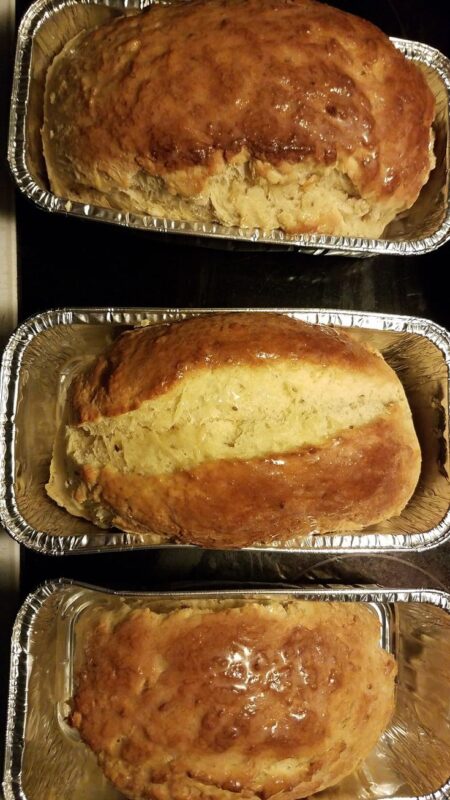


Ingredients
Bread
- 1 package active dry yeast
- 2 cups all-purpose flour, sifted, divided
- 2 teaspoons anise seeds
- 1/2 cup milk
- 1/3 cup butter
- 1/3 cup sugar
- 1/2 teaspoon salt
- 1/2 egg, slightly beaten
- 1 teaspoon shredded lemon peel
- 2 tablespoons lemon juice
Frosting
- 3/4 cup confectioners’ sugar, sifted
- 1 tablespoon light cream
- 1/4 teaspoon vanilla extract
- Pinch salt
Instructions
Bread
- In a large mixing bowl combine the yeast, 1 cup flour and anise seeds.
- Heat milk, butter, sugar and salt in a saucepan until just warm. Stir to melt.
- Add heated liquid to flour mixture. Add egg, lemon peel and juice on low speed for a minute, scraping sides constantly. Beat for 3 minutes on high speed.
- Stir in remaining flour by hand to make a soft dough.
- Knead for 8 to 10 minutes on a floured board until smooth and elastic. Place in a lightly greased bowl. Turn once to grease, over and let rise in a warm place, 20 to 40 minutes.
- Punch down and let rest for 10 minutes.
- Shape into a round loaf, cover and let rise until double (about 45 minutes) in a greased pan.
- Bake for 35 to 40 minutes in a preheated 375 degrees F oven until done.
Frosting
- Stir all frosting ingredients together until smooth and spread on the warm loaf.
Assuming that the human heart is basically a very good pump, what is the main challenge in building a complete mechanical equivalent as a transplant?
Yes it’s just a pump, and the challenge is in the details.
It’s a pump that:
- Has multiple chambers
- Has chambers that pump sequentially with different pressures and volumes
- Never needs to stop for additional lubrication
- Never needs to be “charged”
- Never stops for maintenance
- Is powered by oxygen delivered by the red blood cells it is pumping
- Is controlled by the body’s “proprietary” electro-chemical control system
- Is not rejected by the body’s internal bio-chemical defense mechanisms
- Produces only carbon dioxide as waste, delivers that waste to red blood cells
- Doesn’t have a single rough or chemically reactive surface
- Forms perfect in-line seals around each chamber without crushing red blood cells
- Never leaks a single drop
- Doesn’t retain any fluid in the chambers
- Doesn’t allow “backward” flow
- Has a pump action and pressure that are strong enough to circulate blood up from your toes, but delicate enough to prevent damaging any red blood cells or capillaries
- Lasts up to 120 years between service intervals without any signs of mechanical wear or significantly reduced performance (when used correctly)
- Is roughly the size of your closed fist
The best artificial hearts I’ve ever heard of only last ~5 years, and they are usually only implanted in patients who are on their death beds (because they are expected to die soon anyway so any extra time is an improvement).
This is one model I’m personally aware of (though there are others):
Normally (i.e. during heart surgery) the heart/lung bypass machine is bigger than a person, and is dangerous to use for extended periods because it will eventually start making blood clots.
Many people are working hard to create this; It’s a really hard job.
If you can build it you have a Nobel prize coming and you’d deserve it.