(Repost) A metallurgical study of the aluminum locking pawl of Aiud a fine OOPART for investigative curiosity (duplicate)

Today I woke up at the crack of dawn, made my self a nice stout coffee (after I washed my face) and ate it with some buttered baguettes. It’s a nice little routine that I have, especially since I found a bakery that makes these kinds of bread instead of the soft and sweet “sponge cakes” (style breads) that are irritatingly common throughout China these days.

Sweet breads are not my favorite, though. Bagels are. And finding a proper bagel in China is an exercise in futility.

My old dog was snoring and barking in his deep doggie dreams. His little doggie paws were making padding moves and he was softly barking between his snoring.

It was a nice lovely and calm morning.

I sat down, fired up my computers, sat down (after I measured my blood pressure) and checked my email, as the dawn was lightening up. I could feel the fresh ocean breeze carry the fragrances of the local flowers, and the birds were singing their morning songs. It was calm and pleasant.

Uncle MM has left me some bars of gold…

What do you know!

My long lost great uncle Metallicman has died without any heirs. And I am the closest relative. Who would have figured?

What are the odds?

What’s more, he’s got a couple of billion dollars in the bank and I was contacted to see if I was his long, lost relative.

My goodness. Imagine that!

My name is Fabian Artoro, an asset management brokerage consultant. I am contacting you on behalf of my late client who worked as an independent engineering contractor in a gold mining company in my country, the Republic of Ghana. 

He was my client until his sudden demise on the 24th of April 2018, fatal car crash, his wife and their only daughter were all involved in that car crash along Kumassi express Road. 

Sadly, all occupants of the vehicle, unfortunately, lost their lives. My client had funds, a huge amount in one of the financial institutions here and it is in the process of being confiscated by the state as unclaimed funds...

I’m sure it is legitimate.

Don’t you?

Well, After checking my normal (tap, click and move on) websites, and finding out that they are all parroting the same-old, same-old nonsense, I moved on. You do get tired of the same spiel day in, and day out.

What am I talking about?

Well, I am talking about this…

First up, your daily dose of Anti-China…

It’s been a daily top-line item in my feeds since 2016.

Then, some stuff about guns…

Ai! You’ve just got to have something about guns. This is an American website, don’t you know.

Then you have your Washington DC political bullshit…

As if the entire nation (and world) actually cares…

Then some stuff on the Coronavirus…

Of course.

Then some words from “experts”…

Those “experts” are everywhere. Don’t you know know. They are thicker than flies. I’ll tell you what.

Some stuff that might be of interest to the folk in the “red states”…

You know, to keep the folk interested.

Prepping for yet more war!

But, you know, America is doing just great!

Some “bread and circuses for the masses…

With a dash of sex and religion…

And watch out! Aliens are going to enslave humans!

My goodness!

Reminds me of the movie “Battleship”. Nice CGI, by the way. And yeah, this was the entire plot and story line behind it. Don’t you know…

Well that was about as useful as giving a dolphin a pair of crutches.

So then it’s off to MM, and I check the comments. Ohhh baby!

MM Comment Section

Right there at the top of my comment “awaiting approval” list is this piece of insulting passive-aggressive bullshit.

I see you’re still doing the bidding of your new country comrade, it’s dishonest to hide the fact that you are a round-eyed Chinese operative…apparently there is no such thing as a retired intelligence officer.

I am too old for this nonsense.

  • I’ve lived in China for nearly two decades and no one has ever used the term “comrade“. I guess this jackass never got the memo. He’s probably still talking about how groovy the Mod Squad is, and fondling his “love beads”.
  • I’m dishonest? Even in prison they told me that I “couldn’t lie worth shit“. I can’t. So I just don’t try. I tell you it straight. You either take it or not. It really makes my life simpler. What you see is what you get.
  • “Round eyes” sounds pretty fucking racist to me.

Idiots abound in this world.

Sometimes I wonder if they really believe what they say, or that they want to live inside a rotten world-line template. This “fellow” is certainly making his MWI topographical map “interesting“.

Here’s a MM secret; if you want to have a nice calm and happy life, make others happy. If you want to have a problem-some, and tumultuous life, then spend your time making others miserable.

Anyways, it’s 7am and I could use a beer.

Do you “feel” me?

Beer and pancakes.

The rest of the world is not my problem. You all will see what the fuck is going on in your little neck of the woods soon enough. Especially this piece of shit (will).

Anyways…

I am sorry that I have been so busy with all these other issues lately. But I do “feel” a need to start post more MAJestic related stuff, and that means OOPART stuff as well.

Which leads me to this mystery…

The Aiud Mystery in Transylvania

Yeah. Aiud is in the Transylvania region of Romania. It in the state of Alba. It’s that triangle shaped region in the map below.
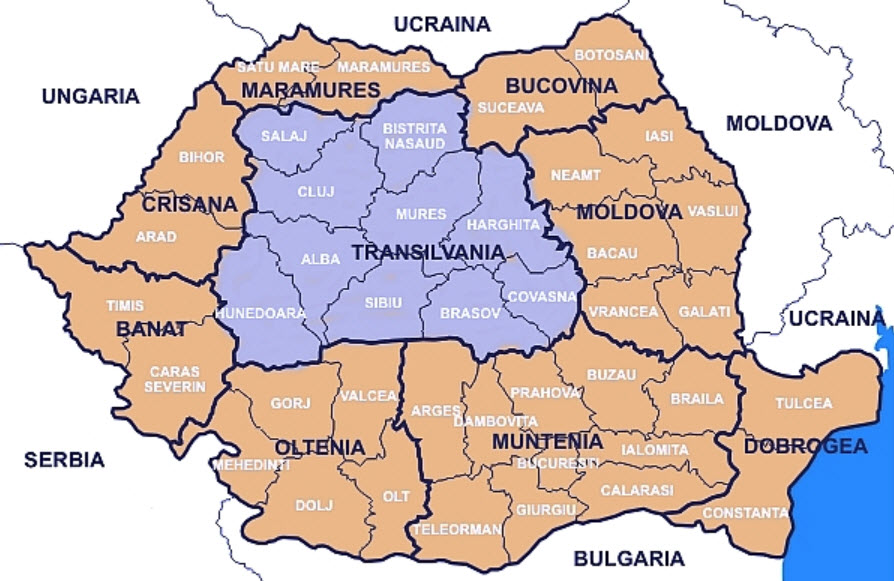
The Transylvania region of Romania.

.

Of all the hundreds of websites about this mystery object, not one single one bothered to look up Aiud on a map. They just cut and paste from other websites.

Slothful. Lazy.

Money-grubbing. Greedy.

“For-profit” oriented assholes.

Doesn’t anyone ever just do things because they WANT to do it? Jeeze!

Anyways, in 1974, in Romania, East of Aiud, (in Transylvania) a group of workers, on the banks of the river Mures, discovered three buried objects in a sand trench 10 meters deep.

In sand, near a river, implies that the river eventually covered these items and buried them in silt. Then later, when the river became smaller or changed it’s path, the silt remained as sandy soil.

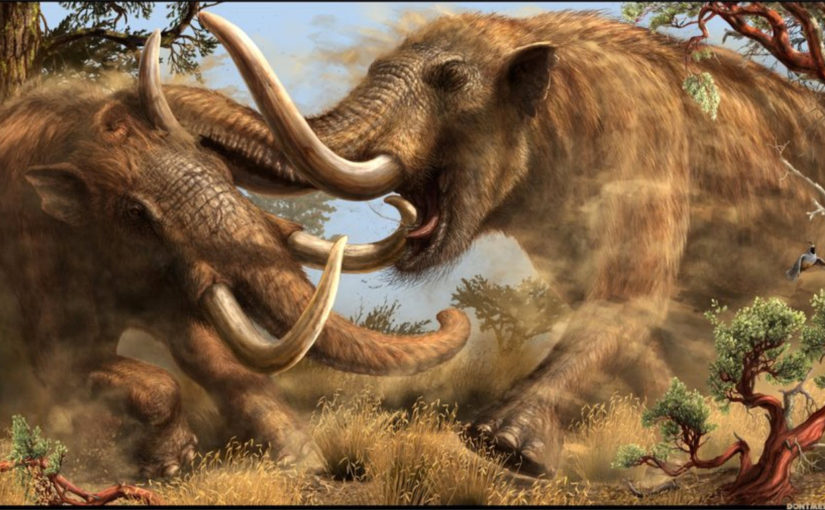
Of the three items, two of the objects proved to be Mastodon bones. These dating from between the Miocene and the Pleistocene periods. The third object — the Aluminum Wedge of Aiud, also known as the Object of Aiud, is a mysterious wedge-shaped block of aluminum metal.

The mysterious aluminum object was discovered by chance in 1974 at a depth of 10 meters at a quarry by the banks of river Mures near the Romanian town of Aiud. The artifact weighs approximately 2 kilos (length: 21cm; width: 12.5 cm; thickness: 7cm). 

According to researchers and engineers it appears very similar to the feet fused on modern landing gear found on aircraft with vertical landing and take-off. 

For conventional investigators it appears as a hammer head. 

In its vicinity researchers found two mastodon bones(extinct large tusked mammal species that lived between 10,000 and 80,000 BC). Based on the findings next to the object it can be assumed that the object is at least 10,000 years old.

-HistoryDisclosure

Because it is out of place, it is considered an OOPART.

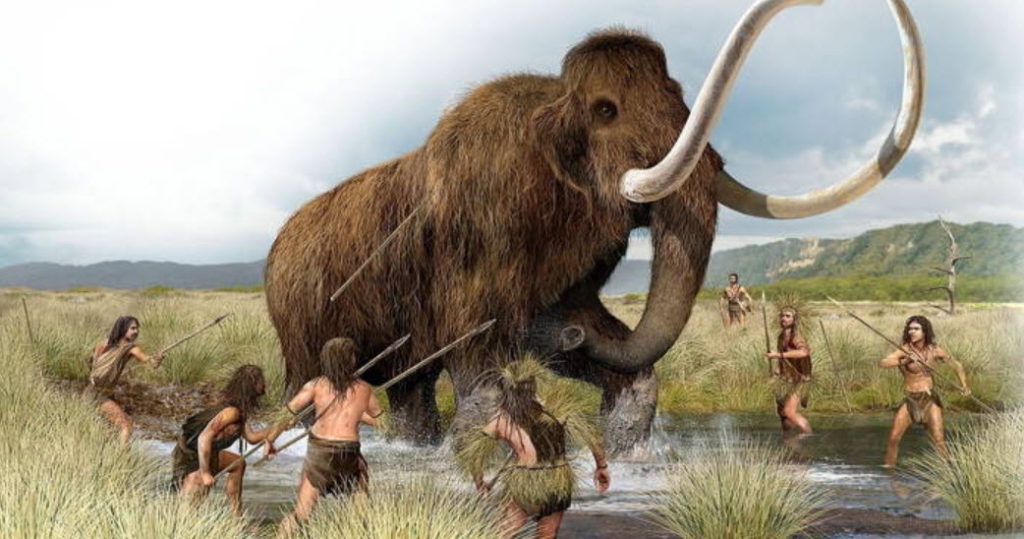
After all, contemporaneous belief is that Mastodons were unable to fabricate tools, let alone precision manufacture of aircraft components. They didn’t have opposing thumbs, don’t you know. Let alone the fact that those enormous tusks of theirs would get in the way of precision manufacturing…

That goes as well for the local humans at the time. They are considered to be primitive.
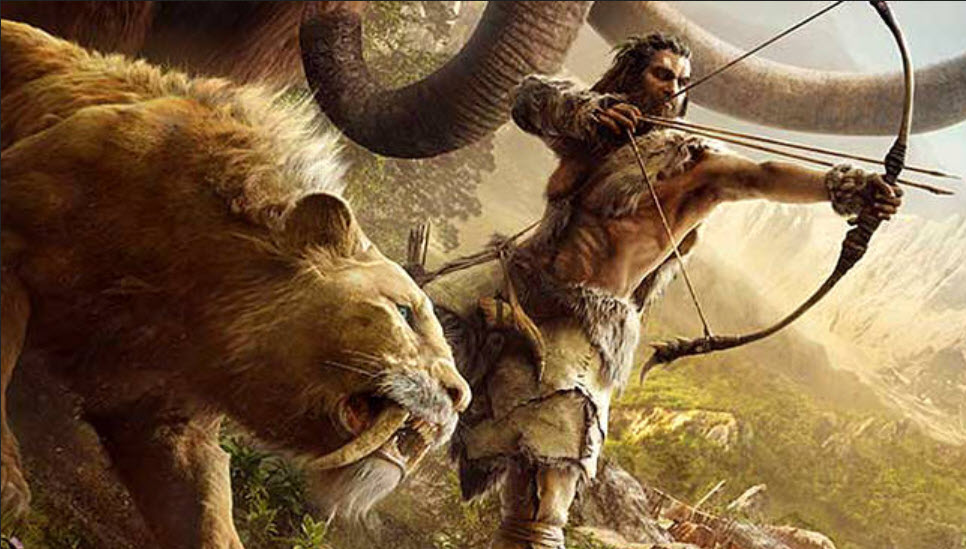
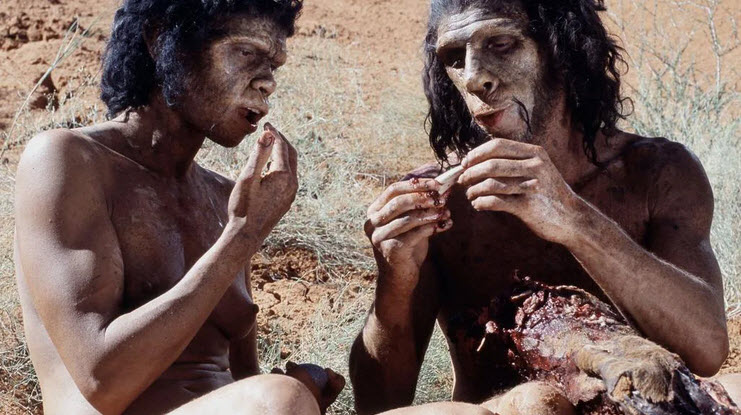
Early humans. (Romanticized.)

.

So what the heck is a pawl from a landing gear doing with some mastodon bones near a river in Romania?

Dating the object

According to conventional history the artifact should not exist since aluminum was discovered in 1807 and wasn’t produced in any usable form until after 1886.

A subsequent dating analysis (I haven’t been able to find details on the dating technique used) on the artifact indicated that it was at least 200,000 years old.

This date apparently came from the geological evidence where the bones and pawl were found. When the “front end loader” excavated the trench (or what ever equivalent did so in the 1970’s in Romania) the soil, and the mastodon bones indicated a very approximate date sometime within the Pleistocene.

Mastodon, (genus Mammut), any of several extinct elephantine mammals (family Mammutidae, genus Mammut) that first appeared in the early Miocene (23 million to 2.6 million years ago) and continued in various forms through the Pleistocene Epoch (from 2.6 million to 11,700 years ago).

-Mastodon | Description, Distribution, Extinction, & Facts ...
Depending on the particular dating of the bones, we can assume that the pawl was contemporaneous with the bones in some way. Which could mean that the primitive humans picked up this pawl at some point in time, and were using it to smash open Mastodon bones for food.
.
Obviously they weren't using it on one of their aircraft, or it just suddenly "fell off" some aircraft speeding along two million years ago, eh?
.
The dating (on the Mastodon bones) would be somewhere between 23 million years ago and 11,700 million years ago. Which is a (phew!) long span of time.
.
So I’m not in agreement with the dating of the trench, the location, the bones, or anything else. Except to say that the aluminum predates the discovery, manufacture and utilization of aluminum in that form and shape. Thus making it an OOPART.

However, a conjecture…

Perhaps primitive man found this aluminum pawl, and found a use for it. It is very useful for cracking open bones to get at the marrow.

.

If we go ahead with the idea that perhaps a primitive human or pre-human picked up this aluminum pawl in it’s travels…

…and thinking that it is a nice “stone”, being light and easy to carry (5 pounds), with a nice pointed end…

…that shows abrasions on the pointed ends and sides…

…which makes this scenario likely…

…then we can date this part as used as a tool by the pre-humanoids in that region at that time.

The oldest handmade stone tools discovered yet predate any known humans and may have been wielded by an as-yet-unknown species, researchers say.

The 3.3-million-year-old stone artifacts are the first direct evidence that early human ancestors may have possessed the mental abilities needed to figure out how to make razor-sharp stone tools. The discovery also rewrites the book on the kind of environmental and evolutionary pressures that drove the emergence of toolmaking.

Chimpanzees and monkeys are known to use stones as tools, picking up rocks to hammer open nuts and solve other problems. However, until now, only members of the human lineage — the genus Homo, which includes the modern human species Homo sapiens and extinct humans such as Homo erectus — were thought capable of making stone tools. [See Photos of the Oldest Stone Tools]

Ancient stone artifacts from East Africa were first uncovered at Olduvai Gorge in Tanzania in the mid-20th century. Those stone tools were later associated with fossils of the ancient human species Homo habilis, discovered in the 1960s.

-LiveScience

So…

This aluminum pawl could be 2.3 million years old.

Humans during the Pleistocene

Let’s have Caleb Strom explain what “humans” were like during this time. (From here.)

The evolution of anatomically modern humans took place during the Pleistocene. In the beginning of the Pleistocene Paranthropus species were still present, as well as early human ancestors, but during the lower Palaeolithic they disappeared, and the only hominin species found in fossilic records is Homo erectus for much of the Pleistocene.

-Pleistocene - Wikipedia

The Pleistocene epoch is a geologic epoch which began around 2.6 Mya (Million years ago) and came to an end around 11,700 BP (Before Present). It is characterized by lower sea levels than the present epoch and colder temperatures. During much of the Pleistocene, Europe, North America, and Siberia were covered by extensive ice sheets and glaciers. The Pleistocene was an important time because it was when the human genus first evolved.

The Pleistocene ( PLYSE-tə-seen, -⁠toh-, often colloquially referred to as the Ice Age) is the geological epoch that lasted from about 2,580,000 to 11,700 years ago, spanning the world's most recent period of repeated glaciations. 

The end of the Pleistocene corresponds with the end of the last glacial period and also with the end of the Paleolithic age used in archaeology. The name is a combination of Ancient Greek πλεῖστος (pleīstos, "most") and καινός (kainós (latinized as cænus), "new".

-Wikipedia

The flora and fauna today also more or less reached their current form during the Pleistocene. Most Pleistocene animals and Pleistocene plants also exist in the Holocene. Furthermore, the Pleistocene epoch was the last geological epoch in which humans had relatively little impact.

While parts of the world were dryer – such as central Europe, which was mostly covered in tundra, other parts of the world were wetter and greener.

Many of the animals common today were also common in the Pleistocene. Deer, big cats, apes, elephants, and bears could all be found in a Pleistocene landscape. There were also animals that were common which have since gone extinct, such as mammoths, mastodons, saber-toothed cats, giant ground sloths , and pre-human hominins .

Europe and Asia had significant populations of African fauna. Cave paintings and paleontological finds in Europe reveal that rhinoceroses, lions, and hyenas were all common at that time in southern Europe. The island of Sicily was also inhabited by a dwarf elephant species until surprisingly recent times. Northern Europe was covered in glaciers and inhospitable, while central Europe was tundra. Southern Europe, however, contained forests and was inhabited by numerous species of megafauna, most of which have since died out.

Another important development on the Pleistocene timeline was the emergence of the human genus: Homo. Humans probably evolved out of bipedal apes, such as the Australopithecines and Ardipithecus Ramidus . These early bipedal apes are classified as hominins. Hominins first evolved near the end of the Miocene epoch (25-5 Mya) in south and east Africa. Other than their upright posture and bipedalism, these hominins were not significantly more human than previous apes.

Their skeletons indicate that they resembled modern apes such as chimpanzees and their use of tools was limited or absent. At the beginning of the Pleistocene, however, a new type of hominin appeared. These hominins were taller, more dependent on upright locomotion, and had larger brains, which allowed them to excel in tool use over any previous hominin. These hominins belong to the genus Homo and hominins in this genus are simply called humans.

The earliest human species was Homo Habilis . The first examples of this species appeared about 2.3 million years ago. They used simple flake tools which were made by taking rocks and striking sharp flakes off other rocks – which could be used as cutting tools. Homo Habilis was more technologically inclined than its hominin predecessors, but it was still closer to earlier and more ape-like hominins than modern humans.

Homo Habilis

The next earliest human species is Homo Erectus . The first H. Erectus evolved around 2 million years ago and the last of them did not die out until sometime within the last 100,000 years. Archaeological and paleontological evidence suggest that they may have been the first humans to use culture as a wholesale approach to adapt to their environment. They were more advanced tool users and were also much taller than previous hominins, about six feet (1.83 meters) tall. They were also the first humans to leave Africa. By 1 million years ago, H. Erectus had spread to both Europe and Asia, bringing humans for the first time to these regions.

Homo Erectus

The earliest humans were universally hunter-gatherers. Their use of technology to interact with their environment made them very adaptative – so that humans eventually found their way into every possible environment on the planet: forests, grasslands, deserts, even tundra.

For most of the Pleistocene, humans did not significantly impact their environment. There were no more than a few hundred thousand individuals at a given time and their ability to transform the landscape was limited by primitive technology and limited social organization.

This all changed with the emergence of Homo Sapiens (modern humans) in Africa and Homo Neandertalensis (Neanderthals) in Europe.

Neanderthal

Anatomically modern humans first evolved in Africa around 200,000-300,000 BP. After the emergence of anatomically modern humans, something happened, perhaps a rewiring of the human brain , that led to the emergence of modern behaviors like art, blade production, long distance trade, and more efficient, organized hunting, among other abilities.

This change in behavior caused humans to have a significantly larger influence on their environment than in previous times. This can be seen in the fate of most megafauna, especially in the New World. Megafauna extinctions occurred around 40,000-50,000 years ago in Australia and around 13,000 years ago in North America. Both occurred shortly after the appearance of humans on these continents.

…

Obviously, Homo Neandertalensis (Neanderthals) are unlikely to have mined ore, smelted it, studied how to create alloys, formed it into aircraft components, and machines it for use in aircraft.

Thus we have an OOPART worthy of investigation.
Homo Neandertalensis (Neanderthals) are unlikely to have manufactured this aluminum pawl object.

An investigation ensues

So of course, if you are part of a construction crew and you dig up some bones, and other odd objects you call the authorities. And if the bones or objects look old, you call in the experts from the local museum, college or university to have a look.

Thus the object was sent to the archeological institute of Cluj-Napoca.

After the investigation and study, the block was donated to the History Museum of Transylvania, to be rediscovered and analyzed many years later. (I cover that later on.) Its weight turned out to be 5 pounds, and its approximate measurements are 20 x 12.5 x 7 centimeters.

There are two holes of different sizes.

The object has two arms like features.

Traces of abrasion can be seen on the sides of the object and at its lowest point.
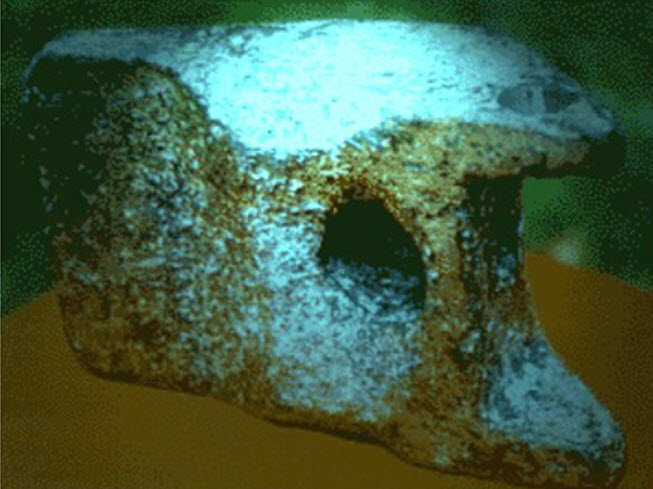
Dr. Niederkorn of the institute for the study of metals and non-metallic minerals located in Magurele, Romania, concluded that the object is comprised of a alloy of an extremely complex metal.

He was not exaggerating.

Twelve different elements combine to form the Aiud Object. It consists of: 89% aluminum, 6.2% copper, 2.84% silicon, 1.81% zinc, 0.41% lead, 0.33% tin, 0.2% zirconium, 0.11% cadmium, 0.0024% nickel, 0.0023% cobalt, 0.0003% bismuth, and trace of galium.

Furthermore, this strange object is covered with a thick layer of aluminum oxide, which lends credence to its antiquity.

"After the analysis of this aluminum oxide layer, "specialists" have confirmed that the object is a minimum of 300 to 400 years old."

But that’s a bullshit guess.

The generation of aluminum oxide depends on the environment and the particular alloy that is being used. Unless you have that exact alloy of aluminum and put it though accelerated life testing, in the environment in question, it is IMPOSSIBLE to determine the age of anything.

Accelerated life testing

Accelerated life testing? What is that?

Well, it’s a common enough and fundamental aspect of engineering product design, but unknown to most other people. it is a way of estimating the life of a product due to environmental concerns. It’s a pretty handy and mature method for determine the life of a given object, or going backwards, the age of an object.

So here’s some basic links for the interested explorer…

But what we really want to determine is the accelerated life test due to corrosion. In that case similar, but more specialized tests must be conducted…

An accelerated corrosion test is a cyclic climate test for determination of the corrosion resistance of various types of coatings. In an accelerated corrosion test, corrosion, corrosion test, corrosion, degradation or failure of materials and products are induced without change in corrosion mechanism (s) in a shorter time period than under normal conditions.

-What is an Accelerated Corrosion Test (ACT)? - Definition ...

www.corrosionpedia.com/definition/1503/accelerated-corrosion-test-act

And some links…

Oxidation of Aluminum

Different alloys of aluminum oxidase differently. Some alloys are great for marine environments, while others are not that great, but have better strength characteristics. Further complicating the issue is the environment. Exposure to a dry environment is quite different from sitting with in a bog or sandy soil.

The ONLY way that you can accurately test for the oxidation characteristics of a new alloy is to perform extended life testing on a sample of the aluminum alloy within a simulated environment. Otherwise your estimates on aging through oxidation are all wrong.

Oxidation of Aluminum and it’s alloys.
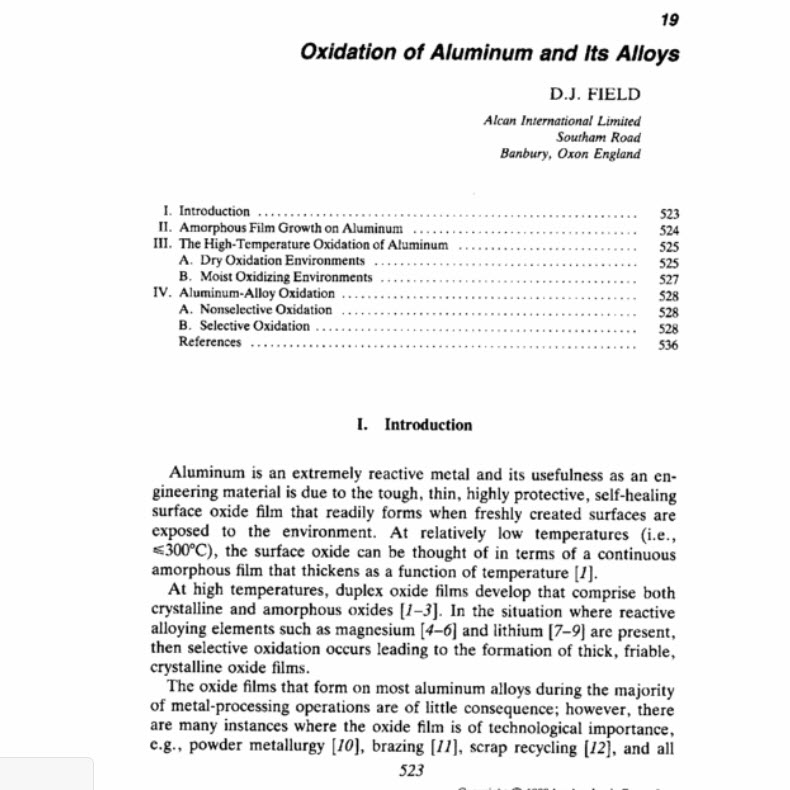
It’s all pretty simple really.

The Aluminum Pawl
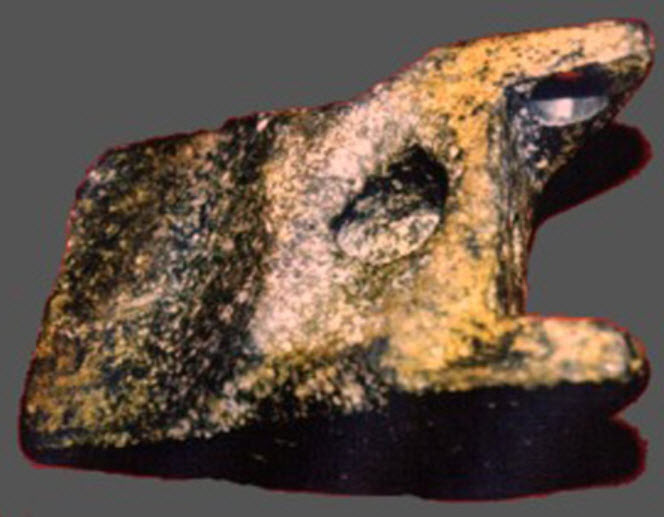
The Aluminum Pawl. Note the two holes clearly shown.

.

Many people have things to say about this object and opinions on dating it.

No one is saying that the aluminum pawl is recent. Aside from making them look silly in the eyes of their contemporaries, it’s obvious that this chunk of metal is old. Really old. The level of corrosion on the object far exceeds any kind of contemporaneous aluminum corrosion. It’s just simply very extraordinary and unusual.

And because of this there are numerous statements being made…

The fact that this strange metal object was found alongside Mastadon bones does cause one to wonder and raises many issues. 

And...

Other specialists claim that the object could be 20,000 years old because it was found in a layer with mastodon bone. Perhaps this particular specimen lived in the latter part of the Pleistocene.

And...

Some researchers suppose that this piece of metal was part of a flying object that had fallen into the river. They presume that it had an extraterrestrial origin. Other researchers believe the wedge was made here on Earth and its purpose has not yet been identified.

Ah…

Some have speculated that this object is part of an Aircraft

It looks like a badly corroded locking latch from the retraction mechanism of an aircraft’s undercarriage, but that can’t be….surely?

Can it?
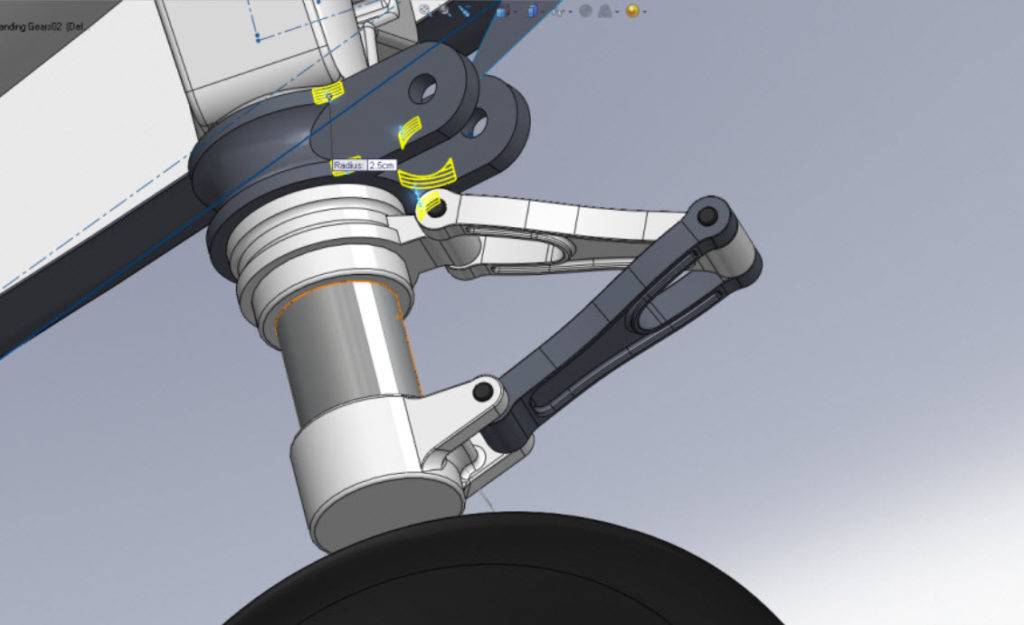
The retraction mechanism of an aircraft’s undercarriage.

.

These mechanisms come in all sorts of sizes and shapes. But the closest thing to explain the operational features and functions of this aluminum pawl is the aircraft retraction mechanisms in contemporary aircraft.

I mean it’s more likely that this item was the part of some kind of landing gear mechanism than say a “frying pan”, a “pick axe”, a “railway train wheel”, a metal frame for a window”, a “water pipe” or an “anvil”.

Which makes one wonder what is one doing 2.5 million years ago, being used to break up the bones of a mastodon.
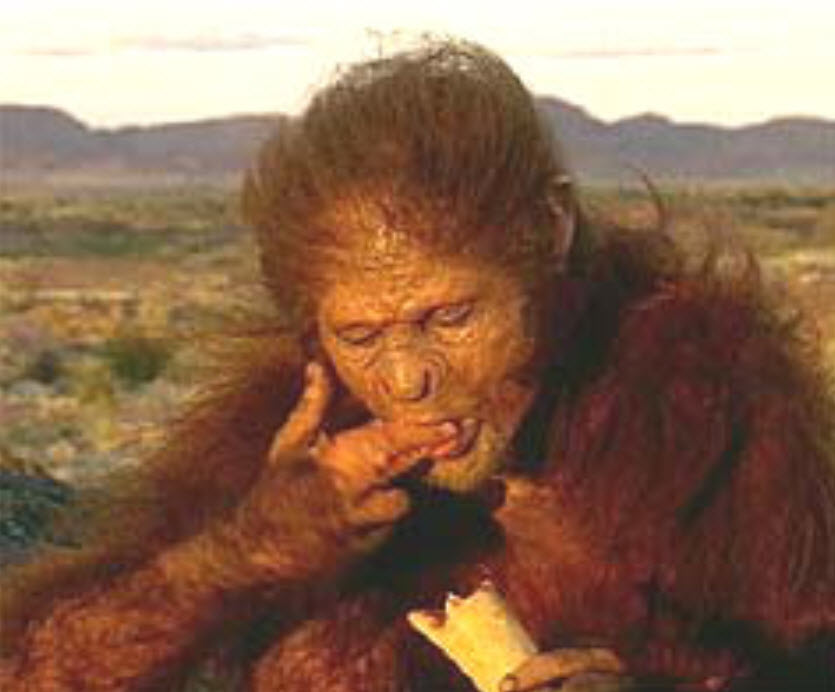
Primitive man would use stones and heavy objects to break open the bones of hunted animals to obtain the marrow inside of the bones.

.

Could it have ended up down amongst bones that were deposited thousands of years ago by chance? It just happened to fall off an aircraft, that just happened to be flying a few million years ago, and it just happened to fall into the remains of a dead mastodon.

I guess it could.

Anything is possible.

And while it is possible, it is not probable.

The simplest explanation is probably the closest to the truth.

Whilst it is likely that the philosophy was posthumously attributed to him, as it was based upon common medieval philosophy, it seems to be a result of his minimalist lifestyle. 

Occam's razor is more commonly described as 'the simplest answer is most often correct,' although this is an oversimplification. The 'correct' interpretation is that entities should not be multiplied needlessly.

Researchers should avoid 'stacking' information to prove a theory if a simpler explanation fits the observations. 

Occam's razor is the process of paring down information to make finding the truth easier.

In science, it is getting rid of all the assumptions that make no difference to the predictions of the hypothesis. If you have a few hypotheses that could explain an observation, it is usually best to start with the simplest one.

-How Occam's Razor Works | HowStuffWorks

Or in other words, look for the simplest explanation, and then go from there. You add and include or discount and discard theories that fit or don’t fit the investigation that you are performing.
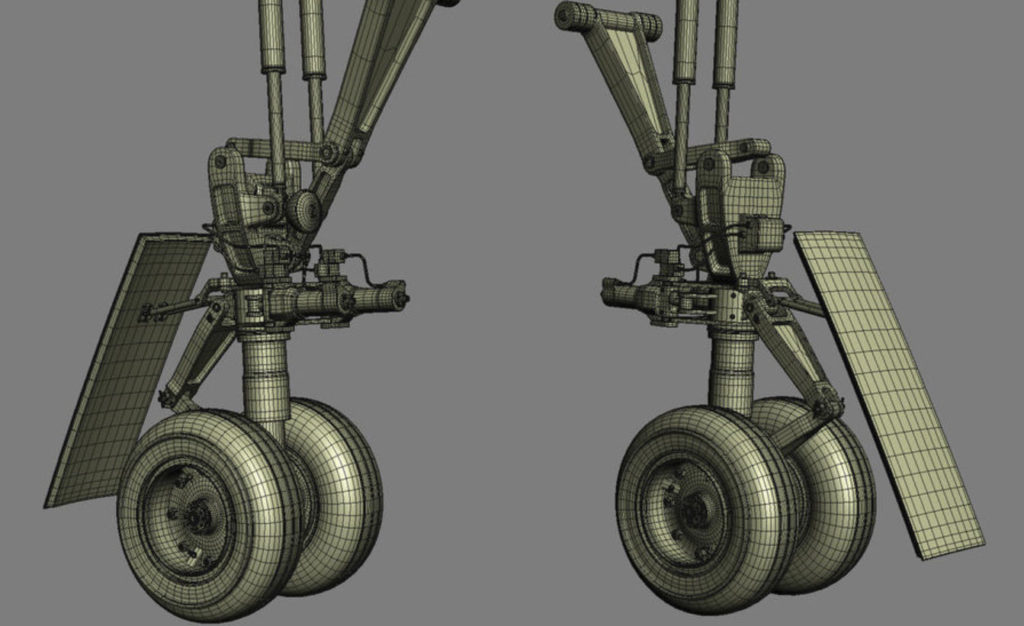
Landing gear.

Names on a landing gear

I call it a pawl. But who knows what it’s actual role was.

pawl. (pôl) n. A hinged or pivoted device adapted to fit into a notch of a ratchet wheel to impart forward motion or prevent backward motion. [Perhaps variant of pale or pole, or from French pal (from Old French; see pale1 ).]

-Pawl - definition of pawl by The Free Dictionary

It’s actual use name would be better described differently.
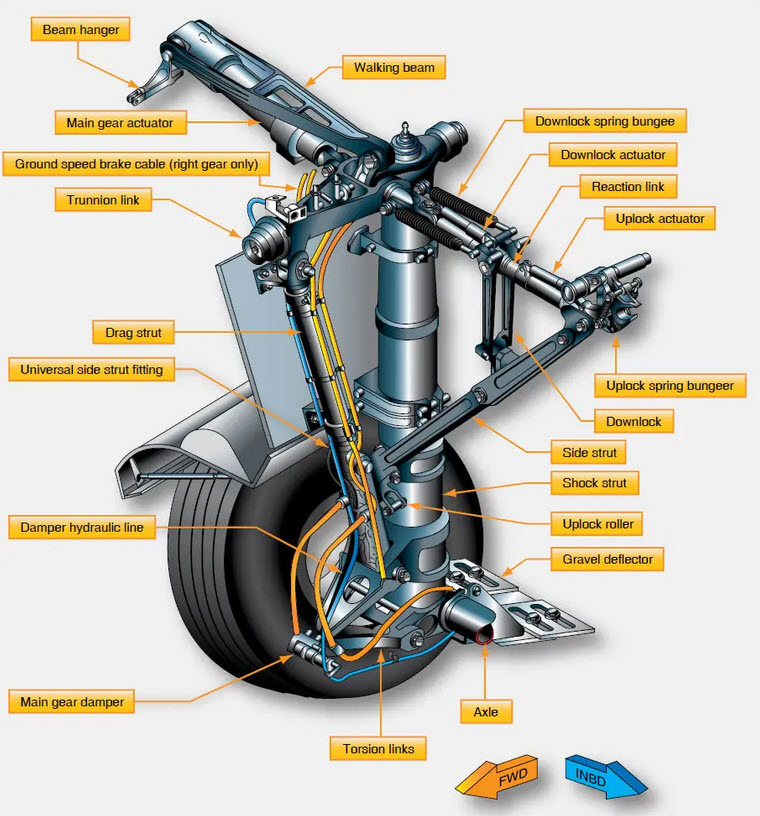
The specific names used on the various elements of an aircraft landing gear mechanism.

.

Perhaps instead of a pawl, I could refer to it as a “drag strut to trunnion link walking beam“. Do you think that it would make things clearer?

Aiud in Romania

Ok, well let’s review where it was found. maybe some of you might want to hop on a plane and investigate for yourselves. You know, like Anonymous Jane did regarding the fuselage in The Fuselage embedded within the rocks of Victoria Falls.

If you do, I would be more than happy to post some of your pictures and info here. This is, after all, a collaborative effort.

Location of Romania. (This is for you Americans out there. The rest of the world pretty much knows where Romania is on a map.)
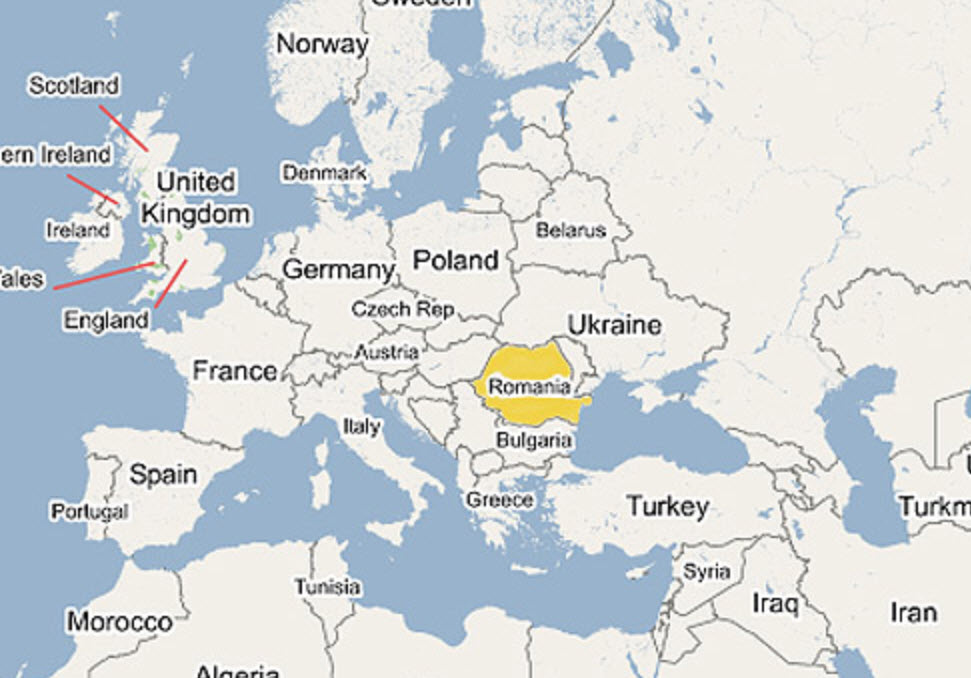
Map of Europe.

As far as where the town is, you need to look on a map. Here is a Romanian political map showing the location of Aiud. It is in the Alba (or Alba Lulia) state, which looks like a triangle.
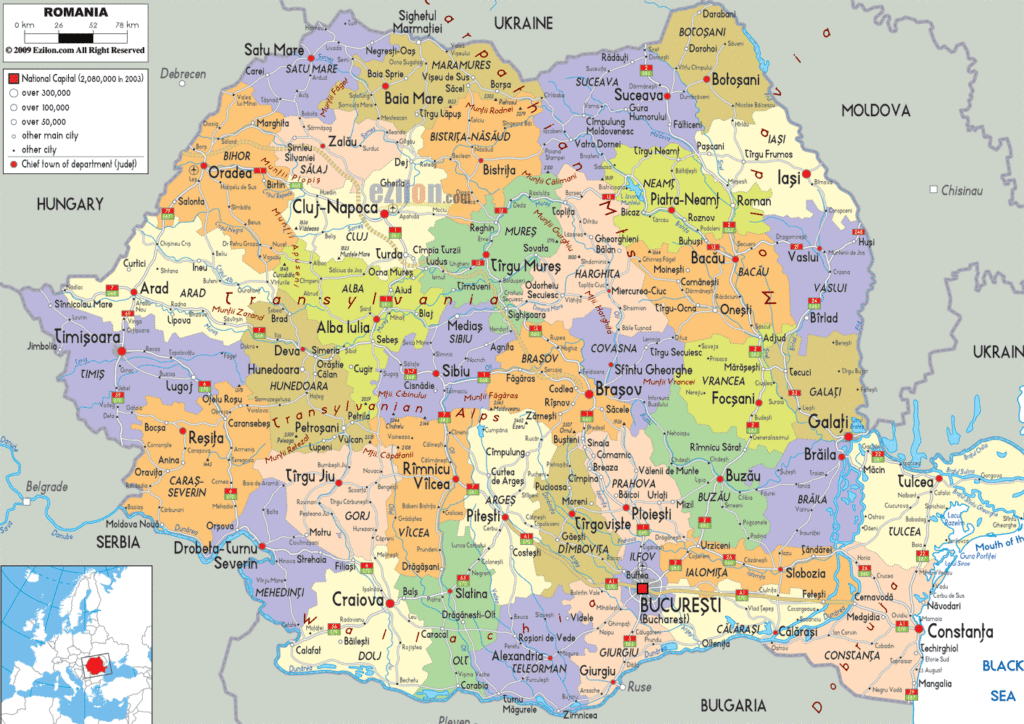
A map of the various political regions of Romania.

And within this state we can find the location of Aiud in Romania.
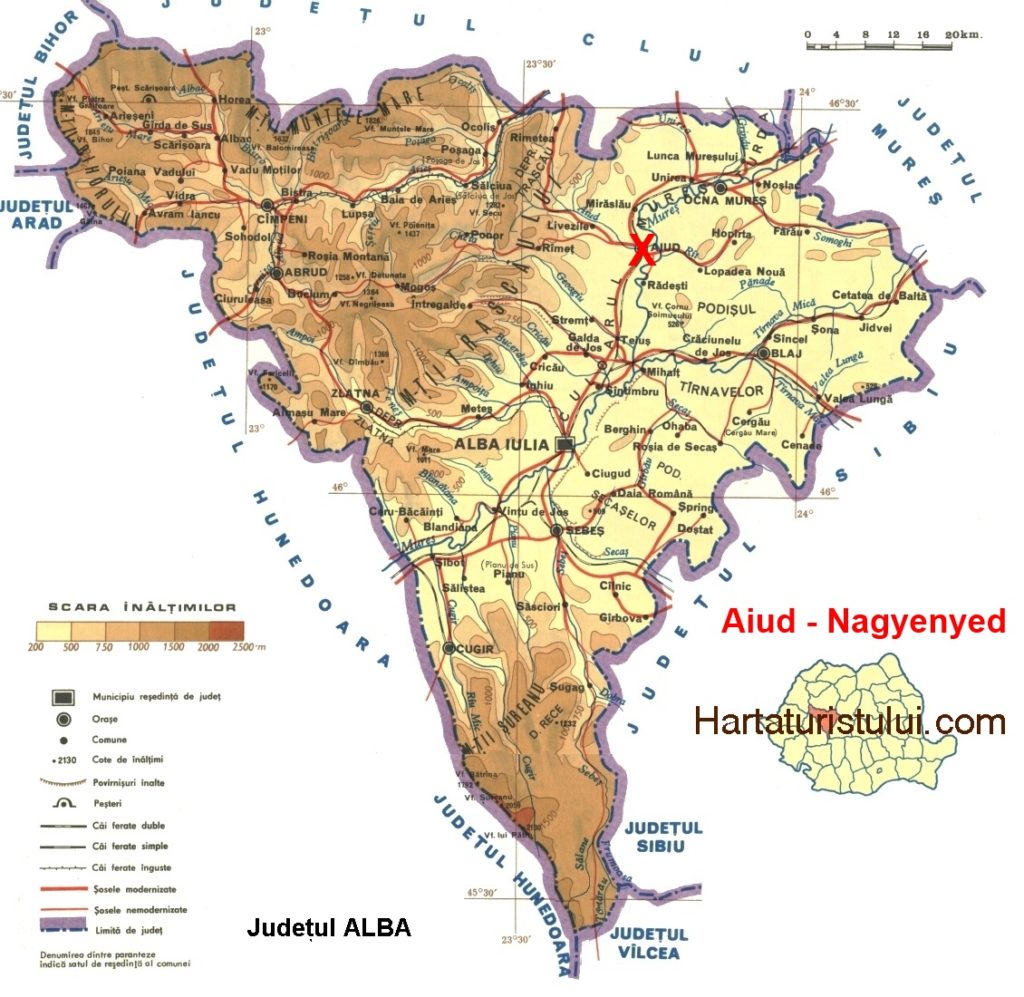
A map of Alba, within Romania clearly showing the location of Aiud. “X” marks the spot.

Romania in the Miocene and the Pleistocene

Of course, a few thousand to a few million years ago Romania didn’t look like it does today. There was a lot of water there. With the Carpathian mountains creating a line of islands that interrupted a much larger Black Sea. If the dating was a million years ago, then we can say that the proto-humans who found and used this pawl were not all that far from the shorelines or feeding rivers to the Black Sea.
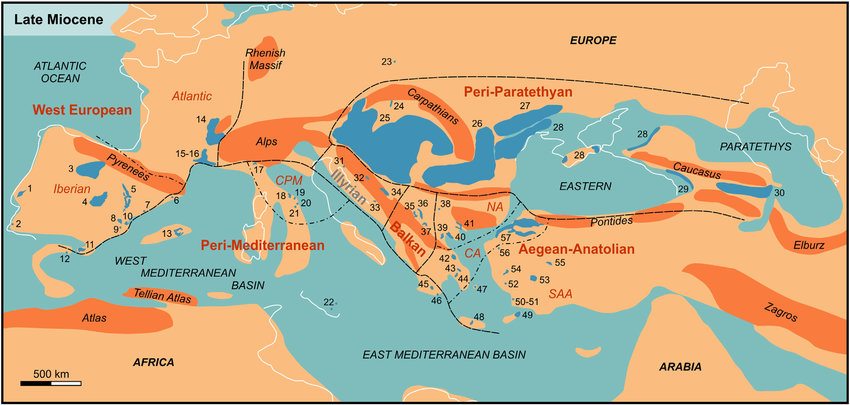
Palinspastic map for the Late Miocene with indication of palaeobiogeographic units (modified after Popov et al., 2004). Pannonian area emended after Magyar et al. (1999).

Outlines are drawn after palaeogeographic reconstructions or sediment distributions.

Faunas of freshwater systems fringing the Eastern Paratethys and the Italian 'Lago-mare' assemblage do not form a homogenous palaeogeographic entity. They are based on too many localities to be clearly indicated on the map. The Illyrian Region is only poorly supported by the analysis and represents the expiration of the Middle Miocene faunas of that region. Its incorporation into the present framework is only tentative.

Abbreviations: CPMCentral Peri-Mediterranean Dominion; NA-North Aegean Dominion; CA-Central Aegean Dominion; SAA-South Aegean-Anatolian Dominion; 1-Lower Tagus (w); 2-São Teotónio (l); 3-Duero (l); 4-Madrid (l); 5-Teruel (fl); 6-Baix Llobregat (b); 7-Alcalà de Xivert (u); 8-Cabriel (l); 9-Ayora (u); 10-Valencia (u); 11-Granada (l); 12-Spanish 'Lagomare' (b); 13-Palma (b); 14-Bresse-Valence (f); 15-Lower Rhône (m); 16-French 'Lago-mare' (b); 17-Torino hills (b); 18-Volterra (b); 19-Casino (b); 20-Velona (l); 21Cinigiano-Baccinello (l); 22-Sicilian 'Lago-mare' (b); 23-Bełchatów (l); 24-Turiec (l); 25-Pannon (b); 26-Dacia (b, l); 27-Kherson-Odessa region (b); 28-Black Sea depression (b); 29-Rioni Bay (b); 30-Kura Gulf (b); 31-Jazvina (l); 32-Kamengrad (l); 33-Posušje (l); 34-Sarajevo (l); 35-Kosovo (l); 36-Metohia (l); 37-Skopje (l); 38-Stanintsi (w); 39-Katerini (b); 40-Thessaloniki (b); 41-Strimon (b); 42-Limni (w); 43-Markopoulo (l); 44-Athens (l); 45-Gythio (b); 46-Kythira (b); 47-Naxos (u); 48-Heraklion (l); 49-Rhodos (l); 50-Kefalos (fl); 51-Kos (east) (l); 52-Mytilini (fl); 53-Denizli (b); 54-Cumaovası (l); 55-Dumlupınar-Siçanli (u); 56-Behramkale (u); 57-Marmara (f).

Environments are characterised as: b-brackish; f-fluviatile; fl-fluvio-lacustrine; l-lacustrine; m-marginal marine; w-wetlands; u-unknown.

History of Aluminum

This pawl is puzzling because pure aluminum was not readily obtainable until the middle of the 19th century.

Aluminum is not found freely in nature, but is combined with other minerals.

The manufacturing process requires 1,221°F (660.32°C) degrees of heat. Only in the last 100 years or so has the technology existed to successfully separate the materials from the mineral bearing ore.

From NPR…

For decades after it was first identified by British chemist Sir Humphry Davy in the early 1800s, scientists and tinkerers tried, and mostly failed, to find a good method for separating aluminum from everything else that stuck to it.

France’s Emperor Napoleon III was an early proponent of aluminum. He hoped the lightweight metal could be used to produce weapons and armor, giving his soldiers an edge in battle. The emperor funded the work of Henri Sainte-Claire Deville, who found a chemical method for obtaining pure aluminum, but it was still a slow process. An often repeated story goes that Napoleon III, frustrated with progress on aluminum, had much of France’s stock melted down and turned into cutlery. He and his honored guests used aluminum utensils, while everyone else at the imperial dinner table made do with gold.

In 1884, when the Washington Monument was completed, it was capped with a large casting of aluminum. The capping ceremony and the dedication of the monument “were given front-page publicity in the nation’s newspapers and the aluminum point or apex was creditably described,” according to a 1995 article published in the journal of the Minerals, Metals & Materials Society. “Hundreds of thousands, perhaps millions, of people who had never before even heard about aluminum now knew what it was.”

At the time, a pound of aluminum was worth $16 ($419 in today’s dollars).

Two years later, a commercially viable method for extracting aluminum from ore was discovered, and by 1889 the price had fallen to $2 per pound. Within 10 years of commercial refining, it plummeted to just 50 cents a pound.

The modern method of obtaining aluminum was discovered simultaneously by two young scientists working independently on different continents.

In 1886, two men, both 22 years of age — one working in Ohio and the other in northwestern France — developed the modern method for producing aluminum metal.

American Charles Martin Hall went to work after being inspired by a lecture at Oberlin College in which his chemistry professor pronounced that the discoverer of a practical way to produce aluminum “will bless humanity and make a fortune for himself.”

Frenchman Paul Héroult was working on the same problem.

At nearly the same time, the two men hit upon the same answer: electricity, and lots of it.

Still used today, this is how their method works: Alumina from bauxite is dissolved in another mineral, cryolite, at 1,832 degrees Fahrenheit. The molten mixture is poured into a specially designed vat, and vast amounts of electricity are passed through it. The process causes aluminum metal to condense at the bottom of the vat.

The two men fought over ownership of the process they developed to smelt aluminum from bauxite ore. Héroult filed for his patent six weeks before Hall, but the American was able to prove (thanks possibly to notes kept by his sister, Julia Brainerd Hall) that he had actually made the discovery a few weeks before his rival. Ultimately, the two men settled their dispute and became friends.

In 1888, Hall co-founded the Pittsburgh Reduction Co. to produce aluminum. The company later became the aluminum giant Alcoa. The following year, Héroult scaled up the process in France.

The two men died the same year, in 1914, both age 51.

The development of the Hall-Héroult process, as it came to be known, was a major milestone in the Industrial Revolution. But it has also carried an environmental cost: The electricity needed produces large quantities of greenhouse gases. Aluminum production alone is responsible for about 1% of global emissions, according to estimates.

The availability of aluminum at the turn of the 20th century spurred on the age of flight and the Space Age.

Uses for Aluminum

The strength and light weight of aluminum is perfect for aerospace applications.

Aluminum allows designers to build a plane that is as light as possible, can carry heavy loads, uses the least amount of fuel and is impervious to rust. In modern aircraft manufacture, aluminum is used everywhere. The Concorde, which flew passengers at over twice the speed of sound for 27 years, was built with an aluminum skin.

-History of Aluminum in the Aerospace Industry | Metal Super…

From Monroe Aerospace…

27% of all aluminum consumed occurs in the transportation industry, according to Aluminum Leader. This chemical element in the boron group is characterized by a silver-white color and soft, ductile texture. While it’s used in many different applications, one of the most common is aerospace. In fact, aluminum is one of the most common materials used in the construction of airplanes. So, why is aluminum used for this purpose instead of steel or other materials?

Some of the first airliners weren’t made of metal, but instead were made of wood. Although cheap and readily available, wood has a serious flaw that made it hazardous in airplanes: it rotted. There was one instances in which a wooden airliner crashed, killing everyone on board. The cause of the crash was later found to be rotten wood. This prompted manufacturers to quickly phase out wood in favor of metal.

Aluminum is the perfect material to use when manufacturing airplanes, thanks in part to its unique properties and characteristics. It’s strong, lightweight, predictable and inexpensive. Steel and iron are both stronger than aluminum, but strength alone isn’t enough to justify its use in aerospace manufacturing. The problem with steel and iron is its weight. Both of these metals are much heavier than aluminum — and too much weigh restricts an airplane’s ability to takeoff and fly.

It’s estimated that up to 80% of the materials used in modern-day aircraft is aluminum. The Wright brothers used a steel engine in their early-model Flyer plane, which was not only heavy but lacked the power necessary for takeover. As a result, they acquired a special engine made of cast aluminum, which allowed their Flyer-1 to takeoff with ease.

There are several different types of aluminum used in aerospace engineering, some of which include the following:

  • Aluminum 2024
  • Aluminum 3003
  • Aluminum 5052
  • Aluminum 6061
  • Aluminum 7075

Note: the number refers to the aluminum’s “grade.”

Of course, aluminum isn’t the only metal used to manufacture airplanes. Carbon-alloy steel is often used for his application as well. When carbon is added to steel, it becomes stronger and more resistant to rust and corrosion. Titanium is another metal that’s commonly used in aerospace engineering. It’s strong, lightweight, and naturally resistant to corrosion. Some companies alloy titanium with iron or manganese to construct the frame and engines for airplanes. These use of these metals, however, is typically less than that of aluminum. Aluminum isn’t the strongest metal, but it maintains a perfect balance of strength and low weight that make it ideal for airplanes.

The metal used and subsequent study

The object was taken to the Archaeological Institute of Cluj-Napoca for metallographic analysis where it was discovered that it was made from a complex alloy consisting 12 different elements.

It was then taken to a laboratory in Lausanne, Switzerland, to verify its composition, showed that the artifact was constituted mostly by aluminum (89%), with the minor participation of 11 other metals in specific proportions.

The thick layer of oxide of a millimeter of thickness that covered of even form to the block helped to date the antiquity of this in about 400 years. However, the geological layer in which it was found (Pleistocene) suggests that it already existed some 20,000 years ago in the past.

Florin Gheorghita,  had the opportunity to examine the report and the analysis carried out under the direction of Dr. Niederkorn of the Institute for the Study of Nonmetallic Metals and Minerals (ICPMMN), located in Magurele, Romania, stressed in that it is composed of an extremely complex metal alloy.

Gheorghita states that the alloy is composed of 12 different elements, of which the percentage of aluminum volume (89%) has also been established. It also identified the presence of copper (6.2%), silicon (2.84%), zinc (1.81%), lead (0.41%), Laguna (0.33%), zirconium (0, 2%), cadmium (0.11%), nickel (0.0024%), cobalt (0.0023%), bismuth (0.0003%), silver (0.0002%), and gallium (in trace amounts).
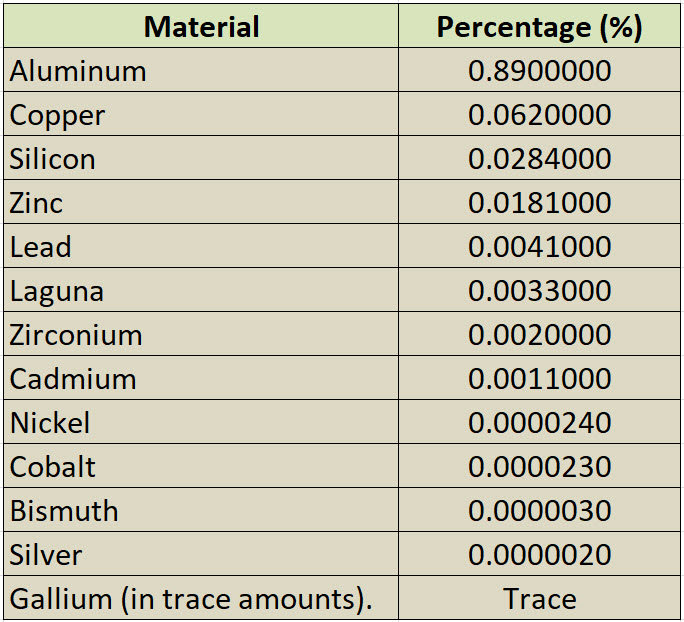
People! these are extremely odd material and unusual combinations to have in an aluminum alloy. To say that it is unique is putting it mildly. What kind of mad scientist thought up this combination?

As I have often stated previously, factories don’t just throw what ever alloy of aluminum together and use it. Like steel, copper, bronze and zinc there are specific alloys that are regulated world-wide and used for certain purposes. Thus, by comparing the alloy composition of this object with available alloys “on the books” we can identify many aspects of this object.

  • We can identify it’s function.
  • We can identify what nation made it.
  • We might even be able to identify what smelter factory made the billet.

Isn’t industrial forensics fascinating?

Aluminum-Copper Alloy

The first thing that we note is that it’s most important alloying element is copper.

And from from this we can help determine what the possible function of the pawl was.

Copper has been the most common alloying element almost since the beginning of the aluminum industry, and a variety of alloys in which copper is the major addition were developed.

Most of these alloys fall within one of the following groups:

  • Cast alloys with 5% Cu, often with small amounts of silicon and magnesium.
  • Cast alloys with 7-8% Cu, which often contain large amounts of iron and silicon and appreciable amounts of manganese, chromium, zinc, tin, etc.
  • Cast alloys with 10-14% Cu. These alloys may contain small amounts of magnesium (0.10-0.30% Mg), iron up to 1.5%, up to 5% Si and smaller amounts of nickel, manganese, chromium.
  • Wrought alloys with 5-6% Cu and often small amounts of manganese, silicon, cadmium, bismuth, tin, lithium, vanadium and zirconium. Alloys of this type containing lead, bismuth, and cadmium have superior machinability.
  • Durals, whose basic composition is 4-4.5% Cu, 0.5-1.5% Mg, 0.5-1.0% Mn, sometimes with silicon additions.
  • Copper alloys containing nickel, which can be subdivided in two groups: the Y alloy type, whose basic composition is 4% Cu, 2% Ni, 1.5% Mg; and the Hyduminiums, which usually have lower copper contents and in which iron replaces some of the nickel.
In most of the alloys in this group aluminum is the primary constituent and in the cast alloys the basic structure consists of cored dendrites of aluminum solid solution, with a variety of constituents at the grain boundaries or interdendritic spaces, forming a brittle, more or less continuous network of eutectics.

Wrought products consist of a matrix of aluminum solid solution with the other constituents dispersed within it. Constituents formed in the alloys can be divided in two groups: in the soluble ones are the constituents containing only one or more of copper, lithium, magnesium, silicon, zinc; in the insoluble ones are the constituents containing at least one of the more or less insoluble iron, manganese, nickel, etc.

The type of soluble constituents formed depends not only on the amount of soluble elements available but also on their ratio.

Available copper depends on the iron, manganese and nickel contents; the copper combined with them is not available.

Copper forms (CuFe)Al6 and Cu2FeAl7, with iron, (CuFeMn)Al6 and Cu2Mn3Al20 with manganese, Cu4NiAl, and several not too well known compounds with nickel and iron. 

The amount of silicon available to some extent controls the copper compounds formed. 

Silicon above 1% favors the FeSiAl5, over the iron-copper compounds and (CuFeMn)3Si2Al15, over the (CuFeMn)Al6 and Cu2Mn3Al20 compounds.

Similarly, but to a lesser extent, available silicon is affected by iron and manganese contents. With the Cu:Mg ratio below 2 and the Mg:Si ratio well above 1.7 the CuMg4Al6 compound is formed, especially if appreciable zinc is present. When Cu:Mg > 2 and Mg:Si > 1.7, CuMgAl2 is formed. 

If the Mg:Si ratio is approximately 1.7, Mg2Si and CuAl2 are in equilibrium. 

With the Mg:Si ratio 1 or less, Cu2Mg8Si6Al5, is formed, usually together with CuAl2. 

When the copper exceeds 5%, commercial heat treatment cannot dissolve it and the network of eutectics does not break up. Thus, in the 10-15% Cu alloys there is little difference in structure between the as-cast and heat treated alloys.

Magnesium is usually combined with silicon and copper. Only if appreciable amounts of lead, bismuth or tin are present, Mg2Sn, Mg2Pb, Mg2Bi3 can be formed.

The effect of alloying elements on density and thermal expansion is additive; thus, densities range from 2 700 to 2 850 kg/m3, with the lower values for the high-magnesium, high-silicon and low-copper alloys, the higher for the high-copper, high-nickel, high-manganese and high-iron contents.

Many of the cast alloys and aluminum-copper-nickel alloys are used for high-temperature applications, where creep resistance is important. Resistance is the same whether the load is tensile or compressive.

Wear resistance is favored by high hardness and the presence of hard constituents. Alloys with 10-15% Cu or treated to maximum hardness have very high wear resistance.

Silicon increases the strength in cast alloys, mainly by increasing the castability and thus the soundness of the castings, but with some loss of ductility and fatigue resistance, especially when it changes the iron-bearing compounds from FeM2SiAl8 or Cu2FeAl7, to FeSiAl5.

Magnesium increases the strength and hardness of the alloys, but, especially in castings, with a decided decrease in ductility and impact resistance.

Iron has some beneficial strengthening effect, especially at high temperature and at the lower contents (< 0.7% Fe).

Nickel has a strengthening effect, similar to that of manganese, although more limited because it only acts to reduce the embrittling effect of iron. Manganese and nickel together decrease the room-temperature properties because they combine in aluminum-manganese-nickel compounds and reduce the beneficial effects of each other. The main effect of-nickel is the increase in high-temperature strength, fatigue and creep resistance.

Titanium is added as grain refiner and it is very effective in reducing the grain size. If this results in a better dispersion of insoluble constituents, porosity and nonmetallic inclusions, a decided improvement in mechanical properties results.

Lithium has an effect very similar to that of magnesium: it increases strength, especially after heat treatment and at high temperatures, and there is a corresponding decrease in ductility. Zinc increases the strength but reduces ductility.

Hiduminium

The Hiduminium alloys or R.R. alloys are a series of high-strength, high-temperature aluminium alloys, developed for aircraft use by Rolls-Royce (“RR”) before World War II.

They were manufactured and later developed by High Duty Alloys Ltd..

The name Hi–Du-Minium is derived from that of High Duty Aluminium Alloys.

In 1934 the Reynolds Tube Co. began production of extruded structural components for airframes, using R.R.56 alloy supplied by High Duty Alloys. 

A new purpose-built plant was constructed at their works in Tyseley, Birmingham. 

In time, the post-war Reynolds company, already known for its steel bicycle frame tubes, would attempt to survive in the peacetime market by supplying Hiduminium alloy components for high-end aluminium bicycle cranks and brakes.

The Duralumin alloys had already demonstrated high-strength aluminium alloys. Y alloy‘s virtue was its ability to maintain high strength at high temperatures. R.R alloys were developed by Hall & Bradbury at Rolls-Royce, partly to simplify the manufacture of components using them. A deliberate heat treatment process of multiple steps was used to control their physical properties.

Hiduminium Alloy range

A range of alloys were produced in the R.R.50 range. These could be worked by casting or forging, but they were not intended for rolling as sheet or general machining from bar stock.

R.R. 50 General-purpose sand casting alloy
R.R. 53 Die-cast piston alloy
R.R. 56 General-purpose forging alloy
R.R. 58 Low-creep forging alloy for rotating impellers and compressors
R.R. 59 Forged piston alloy

The number of alloys expanded to support a range of applications and processing techniques. At the Paris Airshow of 1953, High Duty Alloys showed no less than eight different Hiduminium R.R. alloys: 20, 50, 56, 58, 66, 77, 80, 90. Also shown were gas turbine compressor and turbine blades in Hiduminium, and a range of their products in the Magnuminium alloy series.

R.R.58, also Aluminum 2618, comprising 2.5 copper, 1.5 magnesium, 1.0 iron, 1.2 nickel, 0.2 silicon, 0.1 titanium and the remainder aluminum, and originally intended for jet engine compressor blades, was used as the main structural material for the Concorde airframe, supplied by High Duty Alloys, it was also known as AU2GN to the French side of the project.

Later alloys, such as R.R.66, were used for sheet, where high strength was needed in an alloy capable of being worked by deep drawing.  This became increasingly important with the faster jet aircraft post-war, as issues such as transonic compressibility became important. It was now necessary for an aircraft’s covering material to be strong, not merely the spar or framing beneath.

R.R.350, a sand-castable high temperature alloy, was used

In terms of composition, Y alloy typically contains 4% of copper and 2% of nickel. R.R. alloys reduce each of these by half to 2% and 1%, and 1% of iron is introduced.

More Links on Aluminum-copper alloys

And what the brief overview tells us…

So in comparison with the Pawl, we see that it’s composition in not a Y-alloy in the Hiduminium alloy family. The material used in the Pawl is an “aircraft structural grade aluminum alloy“,  but it is not in common use as far as I can determine.

The copper percentage used, and the other alloying elements tells us that the material selection of this part migrated towards the need for ease of machining and finishing.  And a look at the complex shape of this part, with curved, and convex surfaces, reinforces this conclusion. This part was cast, and then machined to exacting tolerances to match it’s complex geometry.

This particular grade of material is designed for high temperature applications. And since it is designed to pivot inside a mechanical mechanism, it appears that it is associated with either an engine component or landing gear.

So at least we know what it is not. It is not a hammer or utility part from a tractor. These parts tend to be made out of steel, or iron.

And we know what it is; it is a part used in an aircraft. It’s unique and complex geometry tells us that this was a structural component that fit within a mechanism with other precision parts. The presence of a machined hole tells us that there was a pivoting function of this item, and the presence of the second hone on the concave surface indicates that it mated with another part in some kind of sub-assembly geometry.

Abrasions on the surface

In 1995, a Romanian researcher, Florian Gheorghita, came across the artifact in the basement of the History Museum of Transylvania. The wedge was tested once more. This time in two different laboratories: the Archaeological Institute of Cluj-Napoca and an independent Swiss laboratory.

The tests confirmed the results reached by Fischinger and Niederkorn.

Gheorghita wrote in the Ancient Skies publication where he asked an aeronautical engineer about the artifact’s studies.

The engineer pointed out the configuration and hole drilled in the wedge and claimed that a pattern of abrasions and scratches on the metal led him to believe that it was part of an airplane landing gear.

For the Statists

Since this pawl is evidently an aircraft part, and the use of aluminum in aircraft began in the 1930’s, it is possible that this is part of a contemporaneous aircraft strut that somehow found it’s way to Romania over the years.

And somehow, it aged unusually rapidly, with surface corrosion of a substantial amount to a substantial degree by sandy soil.

And the design of the strut was somehow very elaborate and unusual for the aircraft pointing to some kind of advanced experimental design, for after all it wasn’t until the 1990’s that custom aluminum forgings of complex curved geometry started to find it’s way into mass production.

And it was truly a coincidence that it wound up in a batch of mastodon bones.

You can believe this narrative if it makes you feel better.

Conclusion

If it looks like a duck, quacks like a duck, waddles like a duck and tastes like a duck… it’s a duck. The only thing is that the particular species of a duck is new and unknown.

A machine, probably an aircraft, lost a part of it’s retractable landing gear around one million years ago near the Black Sea. The local proto-humanoids at that time, probably a species similar to Homo Habilis found the part and decided that it made a great hand tool. They used it to smash open the bones of the  mastodons that they hunted at the time, and in the excitement of eating and engorging themselves forgot about the item and left it with the carcass.

Then, sometime in the 1970’s, the remains of the meal with the aluminum pawl was unearthed together during the construction of a road.

Who flew the aircraft, or what it was doing when it lost it’s part is unknown.

I do not know if it was “little green men”, articulated mastodons, or an unknown species of proto-humans who manufactured this part. What we do know is that they knew their metallurgy, they were able to design, and machine adeptly, and had the ability to fly in aircraft that encountered high temperature extremes.

Do you want more?

I have more posts like this in my OOPART Index here…

Mysteries Explained

.

Articles & Links

You’ll not find any big banners or popups here talking about cookies and privacy notices. There are no ads on this site (aside from the hosting ads – a necessary evil). Functionally and fundamentally, I just don’t make money off of this blog. It is NOT monetized. Finally, I don’t track you because I just don’t care to.

To go to the MAIN Index;

Master Index

.

  • You can start reading the articles by going HERE.
  • You can visit the Index Page HERE to explore by article subject.
  • You can also ask the author some questions. You can go HERE .
  • You can find out more about the author HERE.
  • If you have concerns or complaints, you can go HERE.
  • If you want to make a donation, you can go HERE.

Please kindly help me out in this effort. There is a lot of effort that goes into this disclosure. I could use all the financial support that anyone could provide. Thank you very much.

 

Metallicman Donation
Other Amount:
Please kindly enter any notes that you would like to attach to the donation here:


And so began The Great Quantification

One of the things that I really liked about working at Holmes Products (in Boston) was that the owner of the company changed the nationwide accepted practice for Fridays (in the Summer). At that time (late 1990s) everyone was allowed to dress “casually” on Fridays. Which meant no ties, no white shirts, and dress slacks. Instead, we could go without ties, and wear polo shirts, etc.He went a step further. He had the afternoon off.He compensated by making this late Spring, and all Summer and Early Fall rules and compensated by adding a 1/2 hour earlier in the arrival time. Heck, we hardly noticed coming in early, but we DID notice going home early on Friday.Little attention to detail like things are what made his company great during the 1990’s.

Though when he sold the company to a group of venture capitalists, the entire environment then changed. But that’s a story for another time…

Today.

Star Trek: The Wrath of Khan – Cold Revenge | Clip

For your consideration: BRUCE CAMPBELL

Easily one of the most overlooked actors of my generation, Bruce Campbell had it all: great looks, height, a good physique, an INCREDIBLE work ethic, humility, and best of all, he could truly ACT. He could easily do drama OR comedy, which is something a lot of mainstream actors struggle with. Even mega stars like Brad Pitt would get antsy and nervous about even one appearance on a comedic sitcom his (then) wife starred in during the height of his popularity. Not every actor has comedic chops or the lack of ego needed to not take themselves so seriously and ride the wave of a comedic character.

But Bruce had it all… almost. I will die on this hill, but I truly believe that despite the self-starting roots he shared with Sam Raimi, both of them were never really treated the same way Hollywood insiders are, and I don’t think Bruce ever had the right representation (agent) or management team to bring him fully into the A-List.

What do I mean by this? Well, when in doubt, I like to pull out this guy: Jai Courtney.

What are his talents? He can get in really good shape, (with the help of a personal trainer and copious amounts of steroids or testosterone) and convince the best agents in Hollywood he’s worth the effort. Can he act? Kind of…? Can he do comedy? Again… kind of. He’s one of the least charismatic actors I’ve ever seen, yet he consistently keeps getting cast because he’s got a great agent and doesn’t fall apart at the job. So at least he’s consistent, which does count as its own talent, but it’s not something I think Bruce lacks in any capacity.

I don’t hate the guy, but I think it’s clear that his talent agency, (Morrissey Management, the same team behind Chris & Liam Hemsworth) either really know their stuff, or the agents he had before them really did. Jai’s career has been built off people being convinced he was going to become way bigger than his talent could actually support. That’s not to say he doesn’t have talents, (he knows how to take risks, he’s got emotional endurance and resilience, and a solid work ethic), but he doesn’t have a wide acting or comedic range. I give him props though, for at least TRYING. He’ll just never pull off lines like, “This… is my BOOM STICK!!!” like Bruce could do effortlessly. I watched him in movies like Suicide Squad trying to be funny and he’s just not at the same level of charisma. That doesn’t doesn’t stop his agents though and he’s built a solid film career inside of Hollywood.

But for being an outsider to Hollywood, (and more importantly, not wanting follow the ‘rules’ of Hollywood, just like his best friend in High School, Sam Raimi), agents, casting directors, and producers all turned their back on Bruce. I think it was a horrible missed opportunity: Bruce proved in film and TV that he wit, charm, great looks, great chemistry, and fantastic comedic timing. He was the perfect leading man for the wrong era of Hollywood.

I think it’s a shame because he has a mixture of leading man and everyman qualities, but was in his prime right at the tail-end of the overly-muscled 80’s action stars and was starting to age up by the time the new wave of CGI action heroes started launching with, “The Matrix”, where more ‘regular’ actors doing more of their own actions scenes with a mixture of real-life training and computer assistance started changing the action movie scene.

He was old school: he had zero issues doing his own stunts, learning what needed to be done, and doing it in conditions that make most actors quit. Seriously, just look into the working conditions on Evil Dead and Evil Dead 2: the freezing temperatures, the vast amount of crew members that quit, and how not only did Bruce stay on point as the lead, he JUMPED IN and did the jobs of the missing crew members to keep the film going. This while fake blood is freezing on his hands and Sam Raimi is beating the hell out of him to get a ‘real’ reaction for some scenes.

I think ever since, “Army of Darkness”, the movies he’s been in that have been great usually just have him in a cameo role, and the movies he’s starred in were never the right caliber for what he could actually do as an actor and performer. He has true, genuine charisma: in a room full of A-List actors, he still stands out and can get them all to laugh and listen.

And like all of the best, most resilient, humble performers in all time, not only has he made peace with this, he, (yet again), found other ways to keep succeeding even when most of Hollywood tried to ignore him.

Cucumber Tomato Zucchini Feta Salad

I still have some zucchini in the garden and I’ve been putting them to use. I eat them raw, but prefer them roasted with garlic and feta, so I usually roast a bunch in the oven as I find it easier to do. And they did so well in this cucumber tomato zucchini feta salad! Simply amazing.

This easy cucumber tomato zucchini feta salad is just delicious and super simple! Ready in no time when you have roasted zucchini, it's the perfect Mediterranean lunch (with some bread) or side (along with other appetizers and protein of choice).

I had made some of my flat oatmeal bread and just used it to transport the salad into my mouth. Basically had it like a dip.

This easy cucumber tomato zucchini feta salad is just delicious and super simple! Ready in no time when you have roasted zucchini, it's the perfect Mediterranean lunch (with some bread) or side (along with other appetizers and protein of choice).

In my humble opinion, you won’t need much more for lunch. Unless you’re very hungry.

You can have it as a side too, it would go with grilled meat or fish, even falafels. I hope you enjoy it too, here’s the recipe:

Yield: 1

Cucumber Tomato Zucchini Feta Salad

This easy cucumber tomato zucchini feta salad is just delicious and super simple! Ready in no time when you have roasted zucchini, it's the perfect Mediterranean lunch (with some bread) or side (along with other appetizers and protein of choice).

5.0 Stars (1 Review)

This easy cucumber tomato zucchini feta salad is just delicious and super simple! Ready in no time when you have roasted zucchini, it’s the perfect Mediterranean lunch (with some bread) or side (along with other appetizers and protein of choice).

Prep Time 10 minutes
Total Time 10 minutes

Ingredients

  • 1 cup roasted zucchini, thinly chopped
  • 1 garlic clove, minced
  • 1 cup cherry tomatoes, chopped
  • 1 tbsp olives, pitted and thinly chopped
  • 1 mini cucumber, chopped (or ½ regular sized)
  • 2 tbsp fresh herbs like basil or dill, thinly chopped*
  • 1 cup arugula, chopped
  • 1 1/2 tbsp feta, crumbled
  • 1 tbsp thinly chopped onion
  • 1 tbsp olive oil
  • lemon, salt and pepper to taste

Instructions

  1. Add everything to a bowl and season with lemon juice, salt and pepper to taste.
  2. Serve with bread and/or protein of choice.

Notes


*I also used a tbsp of purslane from the garden, but it’s not necessary if you don’t have it

Gulliver’s Travels (1939) | Full Movie

Since the End of the World

Written in response to: “Center your story around a person who believes they’re the last human on Earth.“

Sophie Goldstein

Drama Fiction Contemporary

14 Days Since the End of the WorldI found you lying under a pile of rubble. You were there, almost in mint condition, which I found so delightfully surprising. And next to you was this pen. Also, in good condition. As if both of you were saved just for me.To sum up: World War III happened. Every country was against the other. More countries had nuclear bombs than initially thought. We fired on each other. A series of attacks across the world.It was horrific. To say the least.Like everything within the last century, the war felt distant, at first.Seen only on television. Social media. Brief snippets of wailing children before scrolling on to a cat video.Until you couldn’t ignore it anymore.Until it was right outside your window.

And now.

Now there is nothing left.

That I know of.

How did I survive?

Do you remember that scene from Independence Day when Vivica A. Fox hides in the underpass with her cute son and adorable dog? That was me. Except I was alone. And I’m not Vivica A. Fox. No one could be Vivica A. Fox. No one else could look that perfect while running from aliens.

I digress.

I was listening to the radio, in my car, in dense traffic, trying to cross the border along with everyone else.

The radio suddenly went out. There was silence. Cars stopped. People got out, looked around, trying to figure out what was going on.

I freaked. I knew something was coming. So, I ran. And found a small electrical room in the underpass. And locked myself in.

And then the world exploded.

When I came out from the underpass the streets were covered in ash. I couldn’t breathe. I had to wrap my shirt over my mouth to protect myself against the air.

I spent the next several days squinting my way around.

Piles and piles and piles of brokenness covered the streets.

Broken cars.

Broken buildings.

Broken trees.

Broken toys.

Broken bodies.

Everything was quiet.

Silent.

Maybe my ears were broken from the explosion.

Or maybe there was just nothing left.

Today I found you. Sitting next to this pen. And a doll with one eye. She’s in my lap, staring at me. She’s got smudges on her cheeks. It’s been fourteen days since the world ended. I was never a writer so it’s hard for me to say what I want to say. What I want to describe.

I’m lonely.

And I’m glad you’re here.

20 Days Since the End of the World

I thought when I found you, I’d write every day. That I’d have so much built up to talk about, that it would just come pouring out of me.

Not the case.

When I go to grab you and I sit down to write, nothing comes. I sit and stare at you. And wait. And nothing comes.

A writer friend of mine (now dead. I think.) told me that writing takes practice. That someone, someone famous I think, once said that writing is about persistence over talent.

Well. I’ve never really written. So.

And now I’m writing at the end of the world.

Who am I writing for?

21 Days Since the End of the World

I’ve tried several times now to write about my past. The time before. What I did. Where I lived. My friends. My family.

Angie-

25 Days Since the End of the World

I screamed today. Just screamed. Wailed loud and long. I did it, at first, because I wanted to make sure my voice still worked. I haven’t used it in 25 days.

During the first couple days of solitude, I tried talking to myself. Narrating my movements like that Matthew Broderick guy from Lady Hawk. But it felt strange. And too loud.

And then I tried talking to the doll that I found. Sorta like Tom Hanks in Cast Away, but that didn’t feel right either. Also. Too loud.

But today, I thought it would be best to just test out my vocal chords.

It’s something I’d always wanted to do.

Ever since I saw that scene in Garden State when Natalie Portman, Zak Braff, and the other guy scream into a crater.

It looked so cool.

To scream into nothingness.

Scream into a void.

Scream like there was no one else around.

And now there’s no one else around.

So, I screamed.

And I ended up screaming for longer than I intended.

I screamed in the middle of the rubble (there is nothing but rubble and rubble and rubble for days and days and days just rubble).

And while screaming, I started sobbing. Out of nowhere. Just sobbing. Tears streaming down my cheeks and I sorta hoped that someone would come. Someone would emerge. Someone would pop up from the endless rubble (rubble rubble rubble) and say, “Hey! Don’t scream. I’m here. I’m right here. We can be together now.”

But no one came.

26 Days Since the End of the World

Today I saw a deer.

A doe.

Scrounging through the rubble.

It felt.

Unreal.

I saw it and became absolutely still.

I watched it wade through the rubble, for what felt like hours.

Its feet were so careful, gracefully avoiding glass and sharp edges and bodies.

I’ve been eating roaches and insects and…whatever else I can find. Cooking them with my lighter that is nearly empty of fuel.

When I saw the deer my first instinct was to kill it.

I’m so so so so so so so so so hungry.

But how could I kill it?

It’s just her and I out here.

Just Her and I.

27 Days Since the End of the World

I ate the deer.

28 Days Since the End of the World

I threw up the deer.

29 Days Since the End of the World

I am still throwing up deer.

I think this is Karma.

30 Days Since the End of the World

I will never again eat deer.

35 Days Since the End of the World

I dream about deer.

I dream about its eyes and the way it tried to run even after it was shot.

I dream that I’m chasing her and that someone is chasing me.

Often times, I dream that I am the deer.

Being hunted.

Being killed.

When I die, I feel so relieved.

40 Days Since the End of the World

What is the thing inside of us that makes us want to survive?

I never really thought about it before.

Cast Away for example.

I never liked that movie. I thought it was so, incredibly, boring. Tom Hanks on his own, alone on an island for what felt like a 3-hour film.

And now.

Well.

Now, I get it.

And now I can feel what he’s supposed to have felt. That scene when he tries to kill himself. Where he hangs the rope from the branch and tests it out.

For me it would be easier.

I have a gun.

And I’ve spent the last several days staring at it.

But I don’t do it, and I don’t know why.

What is the point in me staying alive?

I’m barely surviving.

I’m lost in memories I can’t even write down because it hurts too much.
Because if I let myself think about the before, I just crack.

And I can’t crack because I’m telling myself that I have to keep moving.

But keep moving, for what?

For who?

Keep moving for who?

41 Days Since the End of the World

There is someone sitting on a pile of rubble up ahead.

He hasn’t seen me yet.

He is sitting next to a fire he has made.

I watched him make it.

His movements were slow.

Like he had all the time in the world.

Hah.

He now seems to be lost in thought.

I wonder if he thinks he is the only one left.

I have tried, several times now, to approach him but each time I stop myself.

It’s so very funny because if you had told me yesterday that I would see someone, I would have screamed for joy.

I would have jumped up and down and smiled and felt like a real human being for a few moments; for the first time in 41 days.

But I have seen too many television shows about the kind of people that survive the end of the world.

The monsters that we can become.

So, now I am sitting here.

Watching him.

I have been watching him for so long that I have convinced myself he has a kind face.

I have been watching him for so long that part of me wonders if he is a hallucination.

42 Days Since the End of the World

There’s only one way to be sure.

Pictures

a15e0936ce111010791a773cfd08650b
41fac8901a2c9e96ffdf8358422688c9
be7822b9363bdf8db93cb4d9a78ebc98
17f526ac72300ed1c1aed7583d480a37
b981f5fa9a4f579167e071e16d36a278
8a372037c644f1bacb8ec30113b52a9c
530ab03f110318542a85d75b2d081818
7313e4b3c7830bdf714df2a29d19d16e
501d28efe9a56c1948205578655e7b90
6ddbc11607d3302e3a7cca24700e2d31
eace0f6f7454620183a931f0066ee866
ksnip 20260103 073200
62cac6398bdd0ba7df7f4107932011b3
7cad588e01a6d234d225087ee31eed2f
f99615dbcf0604d39755583c965a334f
b52e7d29e0d19ccf761eccf9e81e22ae
2a485af97d0503a469dca84adeb5da50
9b9c218b6dfe32d2a3f1b962c293cd10
d835c4a1ca024e70a46afb9a79af394b
7dcb1d36a62f7757a26ae139ae4b54a5
e2aec4c57eeff561beb3273a73949a2f
54c64afc0524dab833c03b3990d2bda5
6cc3d319d9c63acaadab9a72c2f09a67
d419983cb26347a779736097c806c791
9aa04edd263fbd9d149c0f7b7fe7f9ff
583f61844e21a68c252af207889ce093
341024e6949f9758c36962a6e3c961a8
cc78287a06307f32be2a672d5506263d
4130d875aa98d02cbba14f602e350d00
1912b83f87339c0d87392ef14c1d4222
e53995569e47556fe6047bed462fb85e
7269e909f7a40c59b7ca14862492383b
32da40020adfafae09cd74f6e1daacc2
59e064f89f558e914a99d6a3ecd777ca
011cf30ef0b4eaf79f95d94648a52d71
a9e5c769ba2b4deac4b7c40a3c88dcda
078643625078a2a75bbbabbf5fd34485
97ca2fceca650b7f17a82ed12eb070ad
68d20b16c508d8ba2fb02044089c94d9
b41577af66d93e34c4b1041a42cd8e24
85e94c4eb534f7cee04c1fd8a17c7f46
1ba439663103b0d1175a8d7f0bd7cc1e
6894d6cc14a46956cb61ec44646e5d0f
204d09b57243e0ba40c177ebc3c7272c
5043e29d5d01615c6cd99f97286bbdae
9ba29dddb9d9057fd4672b6bffc4464a
bab56d4f905acb64c328bfab860e6c5a
5ef7227af65288521630b55c25c3834e
2c03ee5ecdcaab7440467b2f661f249c
378d74e23970b5e88b80062102f0390f
5bcee31f07270b924dfcd647fc38ce39
d7665e704130f09a4d9716669cec5855
dd7e23715abed7d2875595ef3dd573c7
4af01a3b867719b20c1cd4f66ebfd6e4
fd954a926a773a64aee451fe90b5bfc1
dbe7575816cadbd1571ab7af6f66c977
8dee9b79cfb82d23a1a2ad21084d5102
f625d140c1e697faba45a25257337d84
e0f6fb0a120d51a3c11abfd2ba46f932
6630f23927bc416b1456cdabd07d8aaa
e1850c59572f59f40a3a8b00efaaaaa9
27d88285dc92dd06a2b47ea88cbc2916
bbf908890cf5a3f0cba6d7f7c1190f45
253f339f4cb3751cc66e37bdfee73a0d
524826bfea7614148ebda45173918b1a
19498d7aff141eef65a4bf22f9e137b5
c3e4973d1e03ff91f8b433c9c47fdfdf
ca7151a6464cc86c7948a71527ad5710
734c3d57ded085866c004ec7713925d2
3adae69b3a9fb8a76049eb51fc5d7f95
dad03e2629d4d6cd2e2b38049994631c
6cba212ed81aba0b4f1bad0831971aad
085e8c992b1e5c8ba499758778966d57
52cca469a93c66705ccdbd46097b3240
30127f329ab2ad23aa3798c7baf89dcf
25fae4b8761a8fdf0b083c57799d4952
5df40f4016473436e02162c17ffd5316
ed2c096dc7b11cce17318e4a55773ff3
5e03d42a8817e29a761c51df78f7bc5f
cc46420cf7d359fa871eaa42d4430cde

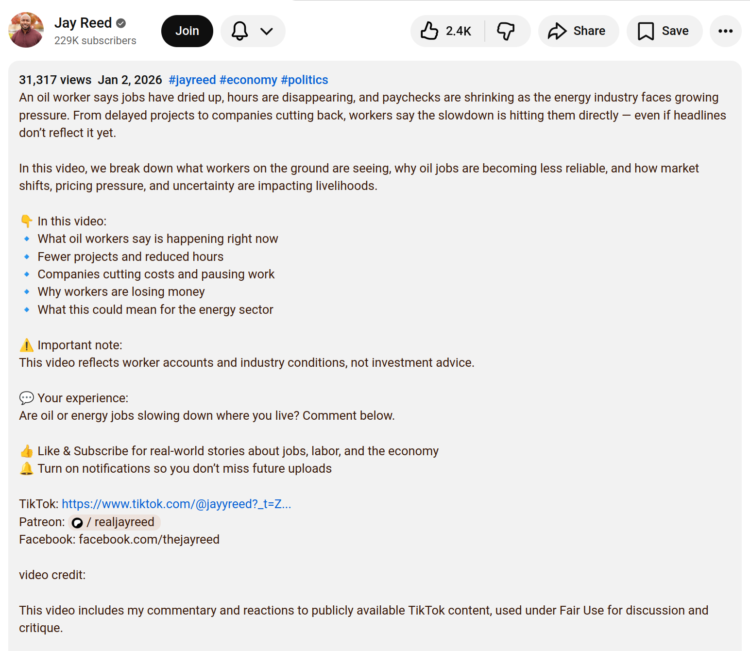
“There Is No Work” Oil Worker Says The Industry Is COLLAPSING And They Are Losing Money

USA Oil industry is collapsing.

ksnip 20260103 073200

Col 29 – Book 457 – Sir Whiskerton and the Culinary Collaboration

A Tale of Joy, Measurements, and a Pie Baked in Perfect Harmony

It began with a dusting of flour, a patch of afternoon sunlight on the kitchen table, and a piece of paper so old it seemed to whisper.

Martha stood in the farmhouse kitchen, a soft smile on her face as she carefully unfolded the fragile page. It wasn’t printed. It was handwritten in looping, faded ink that spoke of another time, another kitchen.

“My grandmother’s secret,” she said, her voice warm with memory. “Her Transcendental Apple-Cranberry Pie. Said it could mend a broken heart or celebrate a quiet victory.”

The Farmer, wiping his hands on his overalls after fixing the henhouse latch, peered over her shoulder. He was a man who understood concrete things: the weight of a post, the turn of a wrench, the exact amount of seed per acre. The recipe, however, was not concrete.

It was a poem.

“Gather the apples, tart and sweet,
A handful of joy, from head to feet.
Mix with patience, don’t you rush,
Until it feels like a Sunday hush.
A pinch of laughter, bright and clear,
And love that banishes all fear.
Bake ‘til golden, bake ‘til right,
In the oven’s warm, forgiving light.”

The Farmer stared. His brow, already home to a permanent furrow of care, acquired a new, perplexed crease. “A… handful of joy?” he asked, his voice a low rumble. “How many cups is that?”

Martha chuckled, patting his arm. “It’s not that kind of recipe, dear.”

But the Farmer was a man of determination. If a tractor could be fixed with the right tools, a recipe could be followed with the right data. He nodded once, a decisive jerk of his chin. “We’ll make it. I’ll… quantify the variables.”

And so began The Great Quantification.


Phase One: Measuring Joy.

The Farmer’s first hypothesis: Joy was auditory. He took his old decibel meter—used for diagnosing engine knocks—and approached the animals.

He held it near Rufus’s wagging tail. Thump-WAG, thump-WAG. The needle jiggled pleasingly. “Approximately 62 decibels of canine contentment,” the Farmer noted on a notepad. “Potential baseline.”

Doris, upon being asked to “produce a measured amount of joy” for the sake of pastry, fainted with such dramatic flair that she knocked over the meter. “Unquantifiable!” she declared upon revival.

Sir Whiskerton, observing from the windowsill, gave a slow, deliberate blink. His purr, a known healing frequency of 25-150 Hz, was a strong contender. But how to extract it? The Farmer briefly considered holding a mixing bowl near him, but a single raised paw from Whiskerton vetoed the idea.

Porkchop, appointed Joyful Ingredient Consultant, was thrilled. He demonstrated his joy by performing a series of exuberant, muddy spins in his pen. “That’s at least three handfuls!” he oinked proudly, splattering the Farmer’s notes.

Phase Two: Achieving “Sunday Hush.”

The Farmer decided this was a matter of ambient noise control. He shushed the chickens. He politely asked the wind to cease rustling. He unplugged the hum of the refrigerator. The resulting silence was deep, profound, and deeply unnerving. It didn’t feel like a peaceful Sunday; it felt like the vacuum of space. Ditto, distressed by the quiet, began echoing his own heartbeat. “Lub-dub! Lub-dub!”

Phase Three: Sourcing “Laughter, bright and clear.”

This was the final straw. The Farmer stood in the yard, looking utterly lost. How did one harvest laughter? He attempted a joke from an old almanac. The chickens stared blankly. Bessie lowed in confusion.

It was Sir Whiskerton who finally intervened. He leapt down from the sill and wound himself twice around the Farmer’s ankles—a known grounding maneuver. He then looked pointedly at Martha, who was watching the whole endeavor with her hands on her hips and a growing smile.

“Oh, for heaven’s sake,” Martha said, her laughter finally ringing out, bright and clear. It was the sound they’d been trying to catch all along. “You’ve got the ingredients all around you, my love. You’re just reading the wrong instructions.”


She took the cryptic recipe page and gently set it aside. She took the Farmer’s flour-dusted hands in her own.

“Now,” she said, her voice soft. “Watch.”

She didn’t measure flour. She poured it until the mound in the bowl looked “like a soft hill after a snow.” She didn’t count tablespoons of butter. She cut it in until the mixture resembled “pebbles in a cold creek.”

She handed him an apple. “Peel this, but don’t hurry. Listen to the sound of the peel coming off. That’s part of the ‘hush.’”

As he carefully peeled, the long, curling ribbon of red skin falling into the bowl, the frantic, quantifying energy left him. The silence became comfortable, filled only with the shush-shush of the peeler and Martha’s quiet humming.

“The joy,” Martha said, nodding to the window. The Farmer looked. Rufus was chasing his own tail. Ditto was trying to balance a cranberry on his nose. Porkchop was asleep in a sunbeam, smiling in his dreams. It wasn’t a decibel level. It was a scene. A feeling. He absorbed it, and his hands grew lighter as he chopped the apples.

“The laughter,” Martha whispered, and she told him a silly, quiet story about the time the scarecrow tried to wear a hat. The Farmer’s shoulders shook with a silent chuckle, a real one, and he tossed the cranberries in with a playful flourish.

They worked in a silent, fluid dance. He would roll the dough just so; she would correct the thickness with a touch. She would spice the filling; he would taste it and, with a nod, confirm it was “just right.” Sir Whiskerton supervised from the table, his purr now acting as the official timer and quality-assurance monitor.
When they lifted the finished pie into the oven, its lattice crust perfectly woven, it was a masterpiece not of precision, but of partnership.


The smell that filled the farmhouse was more than apples and cinnamon. It was warmth, and patience, and quiet understanding. When they pulled the pie out, golden and bubbling, it was perfect.

That evening, they shared it on the porch with the animals, the “secret recipe” forgotten on the table inside. As the Farmer took a bite, his eyes met Martha’s. It was the best pie he’d ever tasted.

Sir Whiskerton, having been offered a crumb (which he graciously accepted), delivered the final verdict. “The secret ingredient,” he purred, licking a spot of juice from his paw, “was never in the cupboard. It was in the collaboration.”

The Farmer finally understood. The best recipes in life aren’t found on faded paper. They’re written in the silent language of a shared glance, the rhythm of working side-by-side, and the courage to translate “a handful of joy” into the simple, profound act of being together.

The recipe card was placed back in its box, a cherished artifact. They didn’t need it anymore. They had written their own version, together, in flour and laughter and love.

Jingle on.
(Or, in kitchen-ese: Measure… laugh… mix… share.)

The End.

Karissa W

Science Fiction

A world away from the mundanity of everyday life. A world where no dull colors existed. No dreary, drizzly skies choked with smog. No empty-eyed roadkill at the side of the roads. No random wafts of sewage that smelled like Dad getting home from the factory. No creepy strangers who stared a bit longer than a five-year-old’s mind could explain.A world not ruled by predictable humans, but by a playful alien species, the leader of which smiled proudly on the lid of a pizza box. One of these boxes lay discarded in the midst of this incredible place. The grease-stained cardboard had long since been deprived of its contents, unless you count the furry gray animal that sniffed around inside it. The rat’s pinkish tail trailed out on the rubber-padded ground as it hunted for a crumb of the tastiest pizza in the universe.Unbeknownst to this little creature, it was being watched from the colorful canopies. Two giant black eyes gazed down at it. A tiny body, barely three feet in length, clung tightly to a spider web of ropes. The web barely swayed as this being climbed down. The practiced ease of its movements would have been clear to any observer. Indeed, it looked like a native to this planet. The colors of its pelt were finely attuned to its environment, slashed with streaks of every color you could find in a six pack of crayons.With impeccable subtlety, the hunter released its grip on the rope-web, rolled down tilted platforms like a barrel in a video game, and dropped into a pit of plastic balls. It army-crawled out of the pit toward the box. The rat’s pink tail was now barely visible. The rodent continued its search for food, blissfully unaware of the presence looming closer and closer. Then, with deadly precision, this predator made its move. It picked up the cardboard and scooped out the helpless little scavenger.With its target in hand, the mysterious hunter stood to full height, revealing a bipedal, upright posture. It raised one hand to its enormous black eyes, then lifted the mask from its head, exposing a mane of scraggly blond hair, a small button nose, and gleaming dark eyes, far smaller and livelier than those of the mask. Though dusted with dirt, the girl’s face glowed from a week’s worth of fun. She stroked the rat’s fur. It eagerly sniffed at her fingers, hoping for some sort of treat.“Sorry, Stella, all gone,” murmured the little girl. “I double triple checked. But I know where there’s more!”Gently cradling Stella, honorably named after the alien captain of Play Aliens—three-star restaurant and party destination with a play place designed for all ages—the young girl traversed the bizarre terrain. Her skills were far too advanced to use the simple set of cube-shaped steps to the exit. With a running head start, she ran straight up the slide, only slipping a little bit before curling one hand into the lip of its summit. She pulled herself and Stella out of the play place, trotted past the dining area, and pushed through the double swing doors marked EMPLOYEES ONLY, along with a smiling depiction of Stella Mozzarella.In the kitchen, she set Stella down, who scampered at her heels. The loyal creature was only occasionally sidetracked, sniffing at objects that littered the floor. Utensils, pans, shattered remnants of plates, empty plastic containers that used to hold cheeses and toppings, the works. In one corner of the room, a commercial pan rack lay tipped on its side on the red-tiled floor. Whether the place had been raided or chaotically abandoned was unclear. The little girl herself didn’t seem very troubled by this mystery.She hummed and jumped over pieces of carnage like a game of hopscotch. A particular piece of plate caught her eye. She crouched down to closely examine it, touching it carefully. The girl could have been an astronomer, searching for signs of intelligent life on a desolate alien planet. Then, unpredictable as any new world, she abruptly sprung up and performed a little jig, singing, “Stella, Stella, Stella! Stella Mozzarella! She came from outer space… mmm hmm… Mozzarella!” She pulled a plastic noise-maker from her pocket, letting loose a few dissonant chords. The rat jerked away at this sound, then slowly crept back to the girl, who stood there looking lost for a second.

“Oh yeah,” she whispered to herself, then made a silly, stomping run to the walk-in freezer. White-knuckling the handle with both of her hands, she threw the freezer door open to an extra-cheese-estrial’s paradise: a thawed expanse of plastic-wrapped pizzas, entire gallons of sauces, one gallon of sauce she had spilled, cried over, then left, and an assortment of boxed foods, whole fruits and vegetables that had only just started to rot. The rat named Stella immediately went for the smelly spilled catsup while the little girl focused her attention on a pizza.

The pizza was soggy and the plastic wrap was wet. At this point, she knew better than to try and open it with her fingers. She grabbed a corner in her teeth and tore it open with only a little difficulty. Like eating a bag of chips, she reached into the plastic bag, grabbed a gloopy glop of cheesy dough with pepperoni that leaned more toward green than red, and stuffed it in her face. She stuck her hand in again, grabbed another fistful of dough, and crouched in front of her rodent friend. She held out her hand.

“Stella,” she said. The rat diligently ignored her, licking up the catsup. “Stella,” the girl repeated, scooting forward, until her already-catsup-stained shoes pushed through the dried crust into the sauce that hadn’t dried. Still, the rat ignored her. “Eat,” the girl demanded. She wanted to share, but the rat wouldn’t listen. “Eat it, Stella.” Her face began to twist. “EAT!!!” she screamed, shoving her fist toward the rat, and it darted under the shelves, where it stayed.

“Stella,” the girl called. “Stella.”

It didn’t respond. With a noise of frustration, the girl ate the glop of pizza herself.

She closed the freezer door behind her when she left, leaving Stella behind. She kicked her way through the mess on the kitchen floor, shoved through the swinging doors, and walked to the PLEASE WAIT TO BE SEATED podium by the vestibule. Two shelves were hidden in the back of this podium. One had menus, the other had a stack of coloring pages with crayons. She grabbed a coloring page and a pack of crayons, then headed to her special booth in the far back corner of the dining room. The table, as well as the surrounding floor, were littered with scribbled coloring pages, broken crayons, and boogery napkins.

Squatting down on the wrinkled, torn cushion of the booth, the girl shook the crayons onto the table, slapped on the coloring page, and got to work. Judging by the intense concentration in her eyes, the furrow of her brow, and the set of her jaw, this certainly wasn’t play. While coloring the image of the large-eyed, scrawny-limbed alien with pretty eyelashes and a captain’s hat, she stayed perfectly within the lines. Each color had its purpose. She colored the alien green, the captain hat red—just like the real captain hat she’d managed to grab from the display shelf three days ago—the spaceship blue, and the speech bubble yellow. “Have a blast at my party from outer space!” it read.

The girl’s dark eyes seemed to take on a vengeful glint as she scribbled with her crayon. “They went to the party without me,” she muttered. Then the crayon split in half, the two wax ends held together by the thin paper wrapping. The little girl tossed it aside. She appeared to be done coloring, anyway. She wiped the excess debris from the paper and held it up for inspection. All of a sudden a look of urgency crossed her face. She slammed the page down and bolted away. She ran down a hallway and shoved through a door with the decal of a dress-wearing alien.

By the time the girl emerged, the grayish world outside had descended into darkness, as totally black as the countryside at night where the girl used to visit her uncle. Not even streetlights or headlights softened the night, nor did the giant smiling man holding the gas pump, the one who guarded the gas station down the road. He provided the girl with some comfort the first few nights, as the bright blue Earth provided comfort for the astronauts.

As she walked toward the windows at the front of the restaurant, her complexion now sallow and her mouth smeared with puke, she seemed like a completely different girl than the one from an hour ago. She no longer seemed like an explorer of alien lands. Instead, she seemed lost. Perhaps even abandoned. Especially when she collapsed on her butt, wailing, “Mommy!!! Daddy!!!” over and over again.

Everyone knows that time works different on alien planets. Time worked different in Play Aliens, too, where several hours passed in the course of only one. Within this hour, the girl cried for her mother and father—seemed to accept that they had gone to the outer space party with the rest of the world and were never coming back—regained her enthusiasm and turned on every light that would still turn on in the building—then dipped into another depressive episode in which she sat in the vestibule in front of the entrance doors, cradling Stella’s captain hat while she gazed into the night.

She gently stroked the plastic visor. Her demeanor, now, was perfectly calm, as if her mind was suspended in nothingness. Her eyes betrayed no emotion, simply observing the world beyond, if the world beyond existed at all. Perhaps the tint of the windowed doors hid the nature of things. But it seemed that Play Aliens was truly adrift in space. The girl’s reasons for staying in this place seemed clearer at this moment. Surely if she opened those doors, she’d be sucked into a featureless vacuum, to be frozen or asphyxiated. But the world beyond these doors was not lifeless, after all.

A touch of red light pricked the center of her pupils, growing in tandem with her widening eyes. The girl jumped to her feet, laughing and spinning in ecstasy as the lights in the sky got bigger, and bigger, and bigger, heading closer to the restaurant, the only place in the entire city that was still consuming energy.

“Stella, Stella, Stella!” sang the girl. “Stella Mozzarella!”

With a start, the girl looked down at her clothes, which were stained with puke. “I’m going to the party,” she whispered, then ran for the play place. She slid down the slide, hopped up the platforms, climbed the spider web, crossed the bridge of braided ropes, and crawled into the bright green tube where she’d made her nest of bundled-up t-shirts, each with the same design as her puke-stained shirt. Her parents must have taught her good party decorum, for she changed her dirty shirt for a clean, albeit wrinkled one. Then she made her way out of the play place again.

By the time she fell into the ball pit, the whole restaurant was bathed in an eerie red glow, aside from the long, skinny shadow from the silhouette at the door. Peering from the ball pit, she quietly gasped. “Stella Mozzarella…” she whispered with wonder.

The vestibule door opened. The figure walked in. Along with another. And another. They must have brought the party here from outer space. They had party supplies, too. Strange, long objects they held in both hands.

The being at the very front held the hat she’d abandoned in the vestibule. Its attention was drawn to the booth in the corner strewn with coloring pages. The girl couldn’t see them very well through the mesh that divided the play place from the dining room. They didn’t seem to notice her, either. They spread through the room, creeping around slowly and carefully, like they were setting up for a surprise party. The girl watched one figure in particular, the one who held the captain hat as well as the drawing she’d left on the table. The question glimmered behind the girl’s eyes. Could it be…?

As a figure crept closer to the play place, she couldn’t contain her excitement any longer. She shimmied out of the ball pit, raced up the cubed steps on all fours, and burst through the play place’s curtain into the open.

“Stella!”

The creature lurched back with a terrible screech, revealing rows of pointed teeth beneath eyes like magic 8 balls, just as big and murky and black. The girl fell backwards with a scream to rival the alien’s, and she continued to scream as its colleagues pressed closer. Their tall scrawny bodies, their enormous swelling skulls, and their unblinking eyes that took up half of their face would have likened them to Play Alien’s mascot. But their thin lips did not smile with out of this world hospitality. The objects in their hands looked more like Dad’s hunting rifle than a confetti-blaster or noise maker. And their skin was not a pleasant green like a Granny Smith apple, but gray and kind of wrinkled, like crumpled gray construction paper you couldn’t smoothen out.

The girl no longer wanted to go to their party.

While she cowered on the floor, tears rushing down her face, the alien that had screamed raised its weapon to her. Its thin lips lifted into a snarl. Then somewhere behind it, another alien screeched. A far more purposeful screech than that made of fear. The creature immediately lowered its weapon, backing away from the girl, while the alien holding the captain hat moved closer. Its humongous eyes did not narrow or widen, and yet it held a different expression from that of its comrades. It seemed to study the girl with intense concentration as it moved in closer, and closer.

Like a dying star, the girl’s fearful face collapsed in on itself. She screwed her eyes shut and released a piercing wail, then stood up and sprinted through the double swinging doors, through the kitchen, and into the freezer. She yanked the door shut behind her and huddled in the back. Stella the rat emerged from her hiding place to sniff at her. It made a small squeak when her hand lunged out to grab it. She cradled the rodent as though it was her stuffie that was still outside in the parking lot, locked in her parents’ car. “It was supposed to be Stella,” she whispered.

The silver handle to the freezer door cranked downward with a questioning whine. The girl curled in on herself, hugging the rat even tighter to her chest, which bobbed up and down as she fought for a breath as though the room was void of oxygen. “I want Stella!” she screamed, and then the door creaked open, revealing an empty kitchen.

Her erratic breathing continued as she stared into the kitchen. Then, slowly, a slender hand curled around the wall beneath the latch plate. Following this hand, a large, veiny head peeked past the threshold. It was wearing a hat. A captain hat. And who wore this hat but Stella Mozzarella herself, her lips curled back into a sharp-toothed grin, enough to resemble the image on the coloring page she held in one four-fingered hand.

The little girl gasped. She let go of the rat, which retreated back under the shelves.

“Stella!” she cried, and with a giggle of glee, she ran into the arms of the captain herself of Play Aliens. Everyone else in the world had already gone to her party in outer space. She’d seen it herself a week ago, when she woke up in the play place to find that everyone was gone, and saw those pizza-shaped saucers shooting back into the sky. Now, after a whole week of waiting, it was finally her turn to go.

The girl closed her eyes and buried her head into Stella Mozzarella’s chest. Stella stared at her with those unblinking eyes, then stood up holding the girl in her arms. A few of her colleagues moved closer to get a better look. A few seconds passed while they exchanged wordless glances. Then, upon some unspoken agreement, Stella Mozzarella and her fellow party hosts made their way out of the kitchen, the little girl in tow. Maybe they were going to a shindig on Venus, a bash on Neptune, or a blowout on Mars.

As they headed for their unknown destination, one of the aliens lingered behind. It ventured into the freezer, then crouched down and held out its hand. Like an obedient pet, the rat scurried into its palm. The alien stood, examining it closely. Then it stuffed the rat into its mouth, swallowing it in one gulp.

Wherever they were going, there would hopefully be pizza.

Star Trek Voyager – Proton Attack | Clip

Mediterranean White Bean Salad

Tomatoes are slowly, but surely turning red and I’m making more and more tomato-based salads and toppings for my oat-based toasts. Salads like this Mediterranean white bean salad that I just loved, loved, loved the other day.

This Mediterranean white bean salad recipe is easy to make, full of flavor, has a low glycemic index and is the perfect healthy lunch, dinner or side.

I don’t know why, but I put capers on everything now. Salad – capers. Fish – capers. Meat – capers. Ice cream – capers. I used to hate those when I first tasted them, but things change.

I could’ve probably had the bean salad on its own, but I served it with some fried seabass and tzatziki and it was SO delicious – the recipe will be here soon. Plus, it’s got a low glycemic index, is full of nutrients, ready in 5-10 minutes and is a super healthy lunch or dinner. I hope you enjoy it!

This Mediterranean white bean salad recipe is easy to make, full of flavor, has a low glycemic index and is the perfect healthy lunch, dinner or side.

More Mediterranean Salad Recipes

Yield: 2

Mediterranean White Bean Salad

This Mediterranean white bean salad recipe is easy to make, full of flavor, has a low glycemic index and is the perfect healthy lunch, dinner or side.

5.0 Stars (1 Review)

This Mediterranean white bean salad recipe is easy to make, full of flavor, has a low glycemic index and is the perfect healthy lunch, dinner or side.

Prep Time 10 minutes
Total Time 10 minutes

Ingredients

  • 1 tomato, chopped
  • 3/4 cup white beans, cooked, no fluids
  • a good handful of basil leaves
  • 1 Cucumber, chopped
  • 1/2 bell pepper, thinly chopped
  • 1 cup arugula, roughly chopped
  • 1/2 avocado, chopped
  • 1/2 onion, thinly chopped
  • 1 tbsp capers, drained
  • 1 garlic clove, minced
  • 1 tbsp olive oil, or to taste
  • 1 tbsp lemon juice, or to taste

Instructions

  1. Add everything to a bowl.
  2. Add salt and pepper, mix and enjoy!

The Rich Are Going Bankrupt — And It’s Accelerating

Yeah. Very interesting. Very frightening.
The Black Eye Club

If you survive a jungle plane crash, your instincts will betray you. Walking away, shedding sweltering clothes, and eating what monkeys eat are all rapid death sentences.

The single deadliest error is leaving the crash site too soon. Driven by adrenaline and panic, people often assume they need to immediately hike to civilization. In reality, search and rescue teams are looking for a large, metal aircraft with a distinct thermal and visual signature, not a lone human hidden beneath a dense multi-tiered canopy. The wreckage also provides your best survival resources: aluminum siding for shelter, wiring for cordage, and aviation fuel for a signal fire. Unless the plane is in immediate danger of catching fire or is sinking into a swamp, staying put is almost always the right call.

If staying with the plane becomes impossible and you must walk out, removing clothing is the next major error. Jungle heat and humidity can be oppressive, prompting people to strip down to a t-shirt or bare skin. This is disastrous. Clothing is your primary armor against the jungle environment. Exposed skin is highly vulnerable to mosquitoes carrying malaria or dengue, ticks, leeches, and microscopic fungi. Even though you will sweat profusely, keeping long sleeves and pants on prevents minor scratches from turning into severe, mobility-killing infections.

Another fatal miscalculation is foraging for unknown food. Survivors often assume they can safely consume whatever the local wildlife eats. But animals have entirely different digestive enzymes and tolerances than humans; a fruit that is a staple for a macaque can cause severe gastrointestinal distress in a person. You can survive for weeks without food, but vomiting and diarrhea will dehydrate you in a matter of days. In the jungle, finding clean water is your priority, not calories.

Finally, survivors often fail to get themselves off the jungle floor at night. Exhaustion sets in, and sleeping directly on the soil seems like the easiest option. But the jungle floor is a highway for bullet ants, venomous spiders, and snakes. Building a raised platform—even just a few inches off the ground using branches, foliage, or debris from the plane—is mandatory. It keeps you away from nocturnal predators and prevents the damp earth from sapping your core body heat when temperatures drop surprisingly low after sunset.

A wrecked B-17 bomber slowly decays in the dense jungle of Papua New Guinea. Photo by Taro Taylor (Wikimedia Commons) is licensed under CC BY 2.0.

General Manekshaw

After the 1971 war ended and the date for General Manekshaw’s retirement drew near, he noticed that his driver, Shyam Singh, appeared unusually stressed. An unmistakable look of anxiety was etched on his face—something the General immediately picked up on.

“What’s the matter, Shyam Singh? You look as glum these days as if the buffalo back home has stopped giving milk.”

“No, Sir, that’s not it,” he said, before falling silent.

As the days passed and retirement loomed closer, Shyam Singh finally spoke to the General: “Sir, I have a request that only you can grant.”

“Go ahead, Shyam Singh.”

“Sir, I wish to retire from service early. Please recommend my discharge.”

“But what is the reason? Is it a land dispute or a family problem? You should complete your full term of service. I’ll even get you promoted to *Naib Subedar*—just don’t leave the service,” the General reasoned.

“No, Sir, it’s something else entirely, but I cannot reveal it until I am discharged from service.”

Understanding the driver’s candor and sense of dignity, the General initiated the necessary paperwork. Once the discharge orders arrived, the General asked again:

“Are you happy now? Tell me, why are you retiring early?”

The driver snapped to attention and said, “Sir, after driving your car, I cannot bring myself to drive for anyone else. That was the greatest honor of my life. I want to return home holding onto that very honor.”

The Field Marshal laughed and said, “You’re a huge fool! You Haryanvis—stubborn and unyielding to the core.”

But with the discharge papers already processed, nothing could be done. He was a true Haryanvi, after all—once he set his mind to something, there was no turning back.

Still, one day the General asked him, “What will you do after retirement?” “I’ll manage something, Sir; I’ll find a job.”

“How much farmland do you own?”

“None at all, Sir; I come from a poor family.”

The General was stunned. Here was a poor man who had quit his job simply because he could not bring himself to drive anyone else’s car.

On the day the driver left, Sam Manekshaw handed him an envelope.

“Shyam Singh, open this only after you get home.”

“Yes, Sir.” The driver saluted and left.

Upon reaching home, he got busy looking for work and completely forgot about the envelope. One day, he landed a job driving a cargo truck. Then, one day, his wife said:

“I was putting your Army uniform away in the chest when I found this envelope in your pocket.”

“Oh, I had completely forgotten about it. I didn’t open it because I’m not very literate… The ‘Sahab’ probably gave me a letter of appreciation, the kind senior officers often give.”

“Still, open it and have the schoolmaster read it; I want to know what’s inside.”

So, the couple went to the village school and requested the headmaster to read the letter aloud.

The master put on his glasses, opened the envelope, and fell silent as he looked at the paper.

“What happened, Masterji? Why are you staring at it like that?” Shyam Singh asked.

“Do you know what this is?”

“No, Sir.”

“It is a transfer deed.

After the victory in 1971, the Haryana government had awarded Field Marshal Sam Manekshaw 25 acres of land as a war grant.

He has transferred all that land to your name. You are now the owner of 25 acres.”

This is the story of the great General Sam Manekshaw—who gave away his war grant land near Sonipat to his driver and donated his Field Marshal’s pension to the Army Widows’ Welfare Fund.

Can anyone ever match him?

Not necessarily.

It will depend a lot on which part of the head is hit by the bullet, the angle, and the power of the gun’s caliber.

A fellow emergency room doctor who worked in Oakland, California, once told me that a good 33% of his patients with gunshot wounds to the head did not lose consciousness. At least another 20% lost consciousness and regained it on the way to the hospital.

The head has a semi-spherical shape, and sometimes the bullet will graze the skull bones and “slide” without penetrating the skull. This can cause serious problems such as bone fragments and significant bleeding.
A few years ago, a newspaper story reported a domestic dispute gone wrong. A woman’s estranged husband argued with her, pulled out a .357 Magnum , and shot her in the forehead from about 4 meters away.

Most of us would say that this would be an instantly fatal wound, but the moon and stars aligned in such a way that the bullet passed through her skull, between the left and right lobes of her brain, where there is a small fissure, and exited through the back of her head. Paramedics arrived to compress her head and control the bleeding. She also had a severe headache. Surgeons removed some bone fragments and repaired the skull and skin tissue. She recovered.
And then there’s this guy…

Yes, that’s a .45 ACP bullet lodged in his forehead. I was told he was several blocks away from a shooting and was hit by a stray bullet (there’s speculation the bullet ricocheted off a car first). There was possibly a skull fracture here, but he was conscious, lucid, and in some pain and disappointed to have his night ruined, I’m sure. At times like these, I think it’s a good idea to thank the man upstairs and reflect on the meaning of life.

 Chicken Kofta with Garlic Yogurt Sauce | Easy & Flavorful

Have you ever had one of those days where your taste buds are demanding a vacation, but your passport is buried under a pile of laundry? I feel you. Most nights, the struggle between “I want something healthy” and “I want something that tastes like a five-star Mediterranean resort” is very real. Enter the chicken kofta recipe of your dreams. It is juicy, aromatic, and paired with a creamy garlic yogurt sauce that is so good, you might consider drinking it with a straw. (Please don’t, but I wouldn’t judge you if you did.)

Kofta might sound fancy, but it is basically the Middle Eastern version of a meatball or a kebab, only with way more personality. While traditional recipes often use lamb or beef, using ground chicken makes this a healthy ground chicken dinner that feels light but remains incredibly satisfying. Let’s dive into why this dish is about to become your new weeknight obsession.

Jump to Recipe

✨ Why You’ll Obsess Over This Recipe

First of all, let’s talk about the texture. Ground chicken often gets a bad rap for being dry or boring, but when you mix it with the right aromatics, it transforms into something magical. These Middle Eastern style chicken skewers are seasoned with a blend of warm spices that will make your kitchen smell like a spice market in Istanbul.

Another reason to love this is the versatility. You can grill them, bake them, or pan-sear them. They are naturally high in protein and low in carbs, making them perfect for almost any diet. Plus, the garlic yogurt sauce provides that cool, tangy contrast to the warm, spiced meat. It’s a flavor marriage made in culinary heaven. Honestly, if these koftas were a person, I’d probably ask them to marry me, but that might get weird at the dinner table.

🛒 Ingredients You’ll Need

Don’t be intimidated by the list; most of these are pantry staples! Here is what you need to gather:

For the Chicken Kofta:

  • 1 lb Ground Chicken: Use a mix of breast and thigh if possible for extra juiciness.
  • 1 Small Onion: Grated or very finely minced.
  • 3 Cloves Garlic: Minced (because there is no such thing as too much garlic).
  • 1/2 cup Fresh Parsley: Finely chopped.
  • 1/4 cup Breadcrumbs: Helps bind everything together (use Panko for a lighter texture).
  • Spices: 1 tsp Cumin, 1 tsp Ground Coriander, 1 tsp Smoked Paprika, 1/2 tsp Cinnamon (the secret ingredient!), Salt, and Pepper.
  • 1 tbsp Olive Oil: Keeps the lean chicken moist.

For the Garlic Yogurt Sauce:

  • 1 cup Greek Yogurt: Plain and full-fat is best for creaminess.
  • 2 Cloves Garlic: Grated into a paste.
  • 1 tbsp Lemon Juice: For that essential zing.
  • 1 tsp Dried Dill or Fresh Mint: For a refreshing herbal note.
  • Pinch of Salt: To bring it all together.

👩‍🍳 Step-by-Step Instructions

Step 1: Prep the Aromatics. Start by grating your onion. Pro tip: squeeze the excess juice out of the onion using a paper towel before adding it to the chicken. This prevents your koftas from becoming soggy and falling apart on the grill.

Step 2: Mix the Kofta. In a large bowl, combine the ground chicken, grated onion, minced garlic, parsley, breadcrumbs, olive oil, and all those beautiful spices. Use your hands to mix it—it’s the best way to ensure everything is evenly distributed. Just don’t overwork the meat, or it will become tough.

Step 3: Shape the Kofta. Divide the mixture into equal portions. You can shape them into long logs (traditional style) or round patties. If you are using wooden skewers, make sure to soak them in water for 30 minutes beforehand so they don’t catch fire. Nobody likes the taste of “charred wood” on their dinner.

Step 4: Cook to Perfection. Heat a grill pan or outdoor grill to medium-high heat. Lightly oil the grates. Cook the koftas for about 4-5 minutes per side, or until the internal temperature reaches 165°F (74°C). If you’re baking them, 400°F (200°C) for about 18-20 minutes usually does the trick.

Step 5: Make the Sauce. While the chicken is resting, whisk together the yogurt, garlic, lemon juice, and herbs in a small bowl. Taste and adjust the salt as needed. Let it sit for 5 minutes so the flavors can mingle and get to know each other.

🔄 Substitution Suggestions

Life happens. Sometimes you’re out of parsley or you realize your “ground chicken” is actually a frozen block of tofu. Here is how to pivot:

  • Meat Options: You can easily swap the chicken for ground turkey or even ground lamb if you want a richer, more traditional flavor.
  • Gluten-Free: Swap the breadcrumbs for almond flour or certified gluten-free breadcrumbs.
  • Dairy-Free Sauce: Use a thick tahini sauce (tahini, lemon juice, water, garlic) instead of the yogurt sauce. It’s just as delicious!
  • Spice Swap: If you don’t have coriander, use a little extra cumin or a dash of Garam Masala for a different but equally tasty profile.

🥗 What to Pair

This easy chicken kofta recipe is a social butterfly—it gets along with everyone! If you want to keep it light, serve the koftas over a bed of mixed greens with some sliced cucumbers, cherry tomatoes, and Kalamata olives.

For a more heartier meal, serve them inside warm pita bread or naan with a smear of hummus and a drizzle of that garlic yogurt sauce. A side of turmeric rice or a vibrant tabbouleh salad also works wonders. Honestly, I’ve even eaten these cold right out of the fridge at midnight, and they were still a 10/10.

🔗 Similar recipes here:   Mushroom Spinach Enchiladas | Cheesy Vegetarian Dinner

📊 Nutritional Information

One of the best things about this dish is that it’s actually good for you. Ground chicken is a lean protein source that helps with muscle repair and keeps you feeling full. By using Greek yogurt for the sauce, you’re also getting a healthy dose of probiotics and calcium without the heavy calories of a mayo-based sauce.

→

An average serving (about 2-3 koftas with sauce) contains roughly:

  • Calories: 280-320 kcal
  • Protein: 28g
  • Carbohydrates: 12g
  • Fats: 14g

Keep in mind these are estimates and will vary based on the fat content of your chicken and whether you use full-fat or low-fat yogurt!

💡 Pro Tips for the Perfect Batch

Want to go from “good home cook” to “Middle Eastern culinary legend”? Follow these tips:

  • Wet Your Hands: Chicken mixture is sticky. To prevent it from sticking to your palms while shaping, lightly dampen your hands with water or oil.
  • Don’t Skip the Cinnamon: I know it sounds like a dessert spice, but in savory Middle Eastern cooking, it adds a warmth and depth that is irreplaceable.
  • Chill the Meat: If you have time, let the shaped koftas rest in the fridge for 30 minutes before cooking. This helps them hold their shape and allows the spices to bloom.
  • Check the Temp: Use a meat thermometer. Chicken can go from “perfectly juicy” to “desert sand” in about 60 seconds.

🌶️ Easy Variations to Try

Once you’ve mastered the base recipe, start experimenting! Here are some fun ways to switch it up:

  • Spicy Kofta: Add a teaspoon of red chili flakes or a dollop of Harissa paste to the meat mixture.
  • Cheesy Kofta: Stuff a small cube of feta cheese into the center of the kofta before cooking. It creates a gooey, salty surprise!
  • Herb Explosion: Add fresh dill and mint directly into the meat for a super fresh, garden-inspired taste.
  • Lemon Zest: Grate some lemon zest into the meat for a bright, citrusy lift.

🍱 How to Store & Reheat

If you’re into meal prepping, you’ve hit the jackpot. These koftas store beautifully.

Storage: Keep leftover koftas in an airtight container in the fridge for up to 4 days. Keep the sauce in a separate container; it will stay fresh for about 3 days.

Freezing: You can freeze the raw kofta shapes! Place them on a baking sheet to flash-freeze, then transfer to a freezer bag. They’ll last for 3 months. Thaw in the fridge before cooking.

Reheating: To keep them juicy, reheat in a skillet over medium heat with a splash of water and a lid. Microwaving is fine in a pinch, but be careful not to overdo it, or they’ll get rubbery.

⚠️ Common Mistakes to Avoid

We’ve all been there. Avoid these pitfalls to ensure your dinner is a success:

  • Using overly lean chicken: If you use 99% lean chicken breast, your kofta might be dry. Try to find a 90/10 blend or add an extra tablespoon of olive oil.
  • Not draining the onions: I mentioned this before, but it’s worth repeating. Watery onions = mushy kofta. Squeeze that juice out!
  • Crowding the pan: If you put too many koftas in the pan at once, they will steam instead of sear. Give them some personal space.
  • Forgetting the sauce: The sauce isn’t just a side; it’s a structural component of the flavor. Don’t skip it!

✅ Explore more meals: Family favorite recipe

❓ FAQ

Can I make this in an Air Fryer?

Absolutely! Set your air fryer to 375°F (190°C) and cook for 10-12 minutes, flipping halfway through. It produces a wonderfully crispy exterior.

Is this recipe kid-friendly?

Yes! Most kids love “meat on a stick.” If your kids are sensitive to spices, just dial back the cumin and omit any chili flakes. The cinnamon and paprika are generally very well-received.

What if I don’t have skewers?

No problem at all. Just shape them into small oblong patties or meatballs. They taste exactly the same, just slightly less “kabab-y.”

😋 Final Thoughts

This Chicken Kofta with Garlic Yogurt Sauce is more than just a recipe; it’s a shortcut to a happy belly. It’s fresh, vibrant, and packs a punch of flavor that will make you feel like a kitchen rockstar. Whether you’re hosting a summer BBQ or just trying to survive a Tuesday night, these Middle Eastern style chicken skewers are the answer.

So, grab those spices, fire up the stove, and get ready for a meal that will have everyone asking for seconds. And remember, if you accidentally make too much sauce… well, I won’t tell anyone if you use it as a dip for your potato chips later. Happy cooking!

 Chicken Kofta with Garlic Yogurt Sauce | Easy & Flavorful

Recipe by AnnaCourse: LunchCuisine: MediterraneanDifficulty: Easy

Servings

4

servings

Prep time

20

minutes

Cooking time

20

minutes

Calories

320

kcal

Ingredients
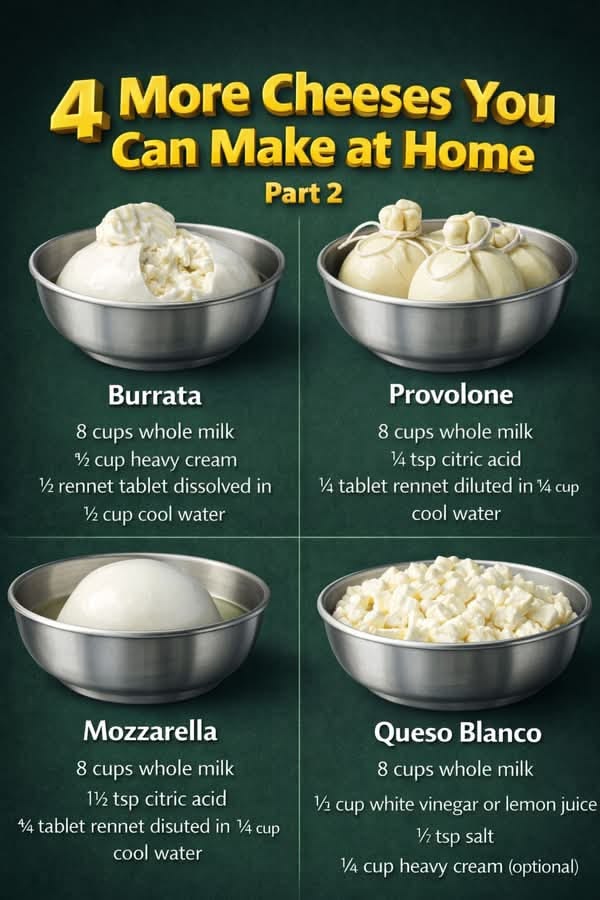
  • For the Chicken Kofta

  • 1 lb ground chicken

  • 1 small onion, grated and drained

  • 3 cloves garlic, minced

  • ½ cup fresh parsley, finely chopped

  • ¼ cup breadcrumbs (Panko preferred)

  • 1 teaspoon cumin

  • 1 teaspoon ground coriander

  • 1 teaspoon smoked paprika

  • ½ teaspoon cinnamon

  • Salt and black pepper to taste

  • 1 tablespoon olive oil

  • For the Garlic Yogurt Sauce

  • 1 cup plain Greek yogurt

  • 2 cloves garlic, grated

  • 1 tablespoon lemon juice

  • 1 teaspoon dried dill or fresh mint

  • Pinch of salt

Directions

  • Grate the onion and squeeze out excess moisture using a paper towel.
  • In a large bowl, combine ground chicken, onion, garlic, parsley, breadcrumbs, olive oil, and spices. Mix gently until just combined.
  • Divide the mixture and shape into logs or patties. If using skewers, soak them in water beforehand.
  • Heat a grill pan or skillet over medium-high heat and lightly oil it.
  • Cook the koftas for 4–5 minutes per side until golden and fully cooked (internal temp 165°F / 74°C).
  • Alternatively, bake at 400°F (200°C) for 18–20 minutes.
  • In a small bowl, whisk together yogurt, garlic, lemon juice, herbs, and salt.
  • Let the sauce sit for a few minutes to develop flavor.
  • Serve the kofta warm with garlic yogurt sauce.

Notes

  • Juicier kofta: Use a mix of chicken breast and thigh.
    Don’t overmix: Keeps the texture tender.
    Serving ideas: Pair with pita bread, rice, or a fresh salad.
    Extra flavor: Add chili flakes for a spicy kick.
    Storage: Refrigerate up to 3 days or freeze cooked kofta.

Everyone seems to know Tutankhamun simply because his tomb was discovered a hundred years ago and found largely undisturbed. He was still a boy when he became king and died young and unfinished.

Cleopatra is also famous – especially because of her famous lovers and because she was the last pharaoh.

But the most famous of his time? The greatest? The one who “made Egypt great again”? Ramses II .

Ramesses II was a tough guy through and through.

He reigned for 66 years and died at the ripe old age of 91. As early as age 14, he led wars in Syria as crown prince to his father, Seti. He also fathered 200(!) children, built countless monuments, and expanded his empire enormously.

During his reign, one of his sons built the world’s first library, thus securing knowledge for future generations. The Greeks knew Ramses as “Ozymandias.” His face is the only one of all the portraits in the Bible that we have seen. This is the face of a man who had known Moses. But also a man so powerful that Moses would have been little more than a flea to him.

When Ramesses’ remains were found, it was discovered that he still possessed some of his original hair, which was curly and reddish in color, as well as most of his teeth. He appeared to be in remarkably good condition for a man of his age.

I remember being amazed as a boy when I read how long he had lived, all those thousands of years ago.

Long before Christ, the Romans, Alexander the Great. Back then, when somewhere far away in a remote corner of Siberia the last mammoths were slowly dying out, there was a leader in Egypt who was so powerful and ruled for so long that few of his subjects remembered life before his rise to power.

He died, like all people.

His numerous descendants now comprise most of modern-day Egypt and the Middle East. When his mummified remains were discovered and flown abroad for preservation, the Egyptian government issued a passport to the great pharaoh, the ancestor of all Egypt.
The Sopranos – “You think I’m still the kid on the school bus?”

https://youtu.be/hsHWZHaqe1Y