When I lived in the ‘States, i mostly drank beer, coke or soda. I rarely could afford wine or hard spirits.
Water was rare, and when I wanted a cup, I would simple put my glass under the faucet and add ice.
Not here in China. No way!
Its bottled water all the time. I buy cases of the stuff and carry a bottle with me all the time, and drink a minimum of one bottle a day, often maybe three bottles. I think that this is important. And that we all need to drink a lot of water, or soup if it is cold out. I really enjoy my water these days.
And enjoy a good tea, with green tea being a favorite of mine.
So be a good MM follower and drink some water. You’ll be glad that you did.
*wink*
Today…
Is China invincible to any opposition in politics, military, or manpower? Will it bring its neighbours on a short leash?
I. China doesn’t export or push Ideology
It doesn’t demand everyone else become Communist to receive Chinese help. The way the USSR did or the way US does.
Democracy, Monarchy, Autocracy – China doesn’t care. They only have two conditions – a. Investments should be STRATEGICALLY BENEFICIAL to China b. Investments should be STRATEGICALLY BENEFICIAL to China
II. China makes absolutely NO Military threats
Chinas entire Military sphere revolves around South China Sea & Himalayas. It has interests there. Interests it has had since 300–400 years.
It doesn’t even fully protect their own sea lanes with massive naval formations.
Indian Ocean Route is controlled by the Indian Navy
Atlantic Route by NATO
Cape & South African Horn Route by Free Navies of 8 Nations including India and China
Arctic Route by Russian Navy
Pacific Route by Free Navies of US, Japan & China
It doesn’t claim strategic control over any naval territory like US over Panama, Iran over Hormuz etc
China only says If you come in the way of what is ours, we will fight you to the very end. Simple.
III. The CPC is perhaps the only PEOPLE CENTRIC GOVERNMENT in the world
The CPC isn’t brainwashing the masses with Hindutva Ideology or MAGA ideology.
The CPC is delivering actual development
The Chinese incur TOO LITTLE DEBT
Food and Housing are virtually guaranteed, No Chinese will be denied education due to lack of money, No Chinese will be denied healthcare for 95% of the illnesses
For instance if you mirror a Chinese worker onto India with relative terms
A Chinese mid range factory worker earns ₹47,700/- a month in take home pay, spends ₹ 4,770/- a month on food for himself, his wife, mother and son, gets a house rent free , spends ₹ 1,000/- on Transportation by Metro and Bus every month and spends less than ₹1,200/- a month on his sons school, uniforms, bus and food and for 400 units he spends ₹ 875/- a month and he gets Healthcare for ₹8.5 Lakh from his employer plus also State Healthcare
So as a result he can save almost ₹25,000/- a month
Almost half his salary
There is very little corruption today
The Biggest CPC leaders are not corrupt and don’t have 10,000 Crore worth of assets
Why would China bring neighbors on a short leash?
- Myanmar is a strategic neighbor who keeps drugs away from China in exchange for weaponry and BEIDOU assistance and trade
- Bhutan would be run over in half a day if they tried to poke China
- India has its own problems and is militarily, economically or diplomatically no match for China.
- Bangladesh needs China to survive
- Sri Lanka needs China to survive and make ends meet
- Pakistan has enough nightmares with India and Afghanistan
- South China Sea wants peace and prosperity so are willing to go by STATUS QUO
Bottom Line – China simply MINDS IT’S OWN BUSINESS
If you keep poking China they will hit you back but otherwise, they get on with their own lives.
Sir Whiskerton and the Stench That Defied Scent: A Case of Foul Play
The barn air was a thick, viscous thing, heavy with an invisible miasma that seemed to defy the very laws of physics. It wasn’t the healthy, earthy aroma of hay and livestock; this was a silent, insidious gas, moving with the stealth of a world-class assassin and the punch of an overripe blue cheese factory. The animals had evacuated to the cow paddock, their noses twitching in mutual suspicion.
Sir Whiskerton, the farm’s celebrated (and slightly dramatic) feline detective, arrived in the center of the panic. He was not wearing his usual deerstalker hat—it would have been unhygienic—but he was wearing a tiny, tightly-knotted silken scarf pulled up over his nose.
He took a slow, deliberate step into the epicenter of the barn. His eyes, usually glittering with intellectual curiosity, narrowed in genuine distress.
“By the whiskers of a thousand unsung heroes,” Sir Whiskerton muttered, consulting his tiny leather-bound notebook. “I’ve solved murders less foul than this.” He jotted down “Foul Play: Degree 5” and closed the book with a snap.
The first, and most enduring, suspect was already present. Porkchop the pig, a creature of boundless appetite and equally boundless… output, was slumped against a fence. He was sweating slightly.
“It wasn’t me, Sir!” Porkchop squealed, holding up his trotters in surrender. “This is artisanal! My work has volume, sound, and a clear, immediate signature! This… this is a phantom.”
A sudden, theatrical flurry of white and teal feathers announced the arrival of Lady Quacka. She landed with the grace of a runway model and the disdain of a duchess who had just stepped in something unpleasant. She fanned herself dramatically with a peacock feather she claimed was “ethically sourced” (from a peacock who shed a lot).
“The sheer indecency,” Lady Quacka sniffed, adjusting her tiny, pearl-encrusted handbag. “You simply can’t purchase air fresheners strong enough for this. I hope, Sir Whiskerton, you’re not looking at me. My brand is flawless. Unlike someone.” She side-eyed Porkchop, who wilted under the sheer force of her disapproval. “A diva never admits to that kind of performance. Mine are always standing ovations, never silent ones.”
Sir Whiskerton scribbled: Suspect 2: Lady Quacka. Motive: Reputation Management. Alibi: Questionable.
He turned his attention to the final, most eccentric witness: Gnomeo, the resident garden gnome who insisted he was a land spirit trapped in ceramic form. Gnomeo was twitching nervously, huddled near the infamous barn wind chimes, which were currently silent in the still air.
“It’s not corporeal!” Gnomeo whispered conspiratorially, his tiny, pointed hat trembling. “It’s a Fart-geist! An elemental spirit! The wind chimes are an antenna for their angry atmospheric messages!” He stomped his little boot in spiritual frustration. “The spirits did it!”
And, in an act of tragicomic timing, a soft, high-pitched pffft sound escaped the little ceramic man. The air around him suddenly turned from “industrial accident” to “nuclear fallout.”
Sir Whiskerton sighed, pinching the bridge of his nose. “Gnomeo, your commitment to dramatic irony is commendable, but your alibi is, quite literally, decomposing before my very eyes.”
The case was going nowhere. The suspects were either too obvious, too denial-ridden, or too gassy themselves.
Sir Whiskerton abandoned the suspects and began to search for an External Variable. The fumes were concentrated low to the ground, near the hay bale storage, and were most potent after the morning’s feeding. He sniffed the hay, the pig slop, and Lady Quacka’s perfumed scarf (for reference). All were normal.
He noticed a subtle disturbance near the base of the central hay stack—a tiny, almost imperceptible tremor, coupled with a faint, high-pitched whimpering sound.
He moved the bottom bale of hay with a gentle, detective’s paw.
There, nestled in a small nest of shredded newspaper, was Misty the Meadow Mouse. Misty wasn’t a criminal or a diva; she was a quiet, anxiety-ridden mouse who existed primarily on crumbs and worried thought.
She looked up at Sir Whiskerton, her whiskers drooping with misery. “I… I can’t stop,” she squeaked pitifully, clutching her tiny stomach. “The farmer left a chunk of gorgonzola on the workbench. It was an emergency situation! But my tummy… it doesn’t agree with fermented dairy.”
The detective looked from the tiny, suffering mouse to the three blustering suspects standing outside the door. He had a sudden, profound revelation about the nature of blame.
“The source of the stench,” Sir Whiskerton announced, stepping out of the barn, “is neither the obvious nor the spiritual. It is the quiet victim.”
He explained the situation: Misty’s accidental feast had triggered an intensely localized, and surprisingly powerful, reaction. The silent, concentrated nature of the fumes was due to her hiding spot, which acted as a natural gas chamber. The source of the barn’s panic was not malice, but misery.
Porkchop looked relieved. Lady Quacka, realizing she had unjustly slandered the pig, made a quick, gracious recovery. “A simple case of dairy incompatibility,” she declared. “Good show, Sir Whiskerton. Now, Porkchop, help me air out my dressing room. You owe me.”
Sir Whiskerton simply nodded, his eyes fixed on Misty, who was now being gently offered a small, plain cracker by a suddenly compassionate Gnomeo. The detective smiled. Sometimes, the most important part of a case wasn’t finding the culprit, but alleviating the quiet suffering of the smallest witness.
After the Story
Moral: The loudest accusations often hide the quietest suffering. Don’t assume the most obvious suspect is the source of the problem; true investigation requires compassion for the invisible, unintentional victims.
Best Lines
- “By the whiskers of a thousand unsung heroes, I’ve solved murders less foul than this.” – Sir Whiskerton.
- “My brand is flawless. Unlike someone.” – Lady Quacka, on the topic of farts.
- “My work has volume, sound, and a clear, immediate signature! This… this is a phantom.” – Porkchop, describing his signature style.
- “It was an emergency situation! But my tummy… it doesn’t agree with fermented dairy.” – Misty the Meadow Mouse.
Post-Credit Scene:
The Valley Chicks start a new true-crime podcast called The Smell Report where they re-enact famous barn mysteries. The first episode is dedicated to “The Fart-geist,” featuring Gnomeo as a special guest. He insists on blaming the chimes, but the microphone clearly picks up the sound of a tiny, distant, ceramic poof right before the final ad break.
Key Jokes
- The Diva’s Denial: Lady Quacka’s insistence that her “brand” is too “flawless” for vulgar biological functions.
- Gnomeo’s Gaffe: Blaming “the spirits” and the wind chimes while simultaneously and involuntarily gassing the area.
- The Feline Fatigue: Sir Whiskerton’s dramatic exhaustion from having to solve a problem far less grand than his usual cases.
Starring
- Sir Whiskerton as The Cat Who Needs a Better Air Purifier.
- Porkchop as The Obvious Suspect (Who Was Innocently Gassy This Time).
- Lady Quacka as The Diva of Denial (Whose Feathers Were Unscathed).
- Gnomeo as The Land Spirit Who Should Stick to Land.
- Misty the Meadow Mouse as The Unintentional Victim of Experimental Gorgonzola.
P.S.
If your own personal internal weather is causing external atmospheric conditions, the wisdom of the farm suggests a nice cup of ginger tea. And perhaps a quiet day off, far away from all the judgemental ducks.
What’s one memory that will stick with you for the rest of your life? Good or bad
My Dad was always in a hurry. On vacations he drove like a bat out of hell. The only time we stopped was for gas, and of course we all needed to use the washroom. One time we stopped at a place that had three washroom stalls in the ladies washroom. My two sisters and mom quickly took the stalls so I had to wait. They finished and I got my turn. When I washed my hands and left the washroom, I came out to the parking lot and my Dad had driven off without me. I think I was about 10 at the time. I sat on a picnic table there wondering how I would get home.
I make light of it now. I am an adult and it was almost 60 years ago. But it hurt then and it hurts still.
Why is it hard for American factories to compete with foreign factories that use less skilled labor for manufacturing tasks?
When one of my friends from China came over for a visit, one of the places we went to was my grandmother’s ranch in Montana. She’s been to large cities like New York City, Miami and San Francisco but never seen the countryside.
She was amazed at all the empty land and said the U.S. can easily build factories that are 10 times larger than the largest factory in China.
She explained to me how a Chinese factory have anywhere from 20,000 to 200,000 workers and the large ones are basically cities.
When we arrived at my grandmother’s ranch, she asked why I don’t build a factory. There’s a highway and railroad nearby so it will be easy getting materials in and shipping finished goods out. I could start out small like a 20,000 people factory, but I will eventually need to make it big to take advantage of economies of scale.
I asked her to Google the population of the area and she said, “ohh. There’s barely over 10,000 people in a 50 mile radius.” She also couldn’t understand why a place is called a city if it only has 6,000 people because it would be called a small town in China.
She said she’s moving to a larger city when she gets back to China. It has a few factories and approximately 7 million people there work in the factories. I was shocked because that’s pretty much the population of New York City.
The U.S. has the space to build gigantic factories to take advantage of economies of scale to produce low skilled products, but not the population to run them.
Were you scammed at one time?
No, but I scammed the scammer.
Got a call from some guy who claimed to be a professor from Africa. He was coming to the U.S. to “study crime” and wanted to rent a house and pay for an entire year’s rent. I told him I had just the home for him. He sent a very real-looking “cashier’s check” that came from some West Virginia construction company that was— of course— well over the amount needed. “That darn secretary of mine!” he explained. Wanted me to deposit it and send the overage to a bank in Japan. I said “I’m on my way to the bank right now!”
Waited a couple of hours as he grew more and more anxious.
Then I told him, “You know, I was on my way to the bank when I passed by our local boat store and I saw a pretty red cabin cruiser for sale, so I bought it. When you get here from Africa, make sure you bring a sweater, because it can get cold here at the lake.”
I can still hear him saying, “WHAT IS THE MEANING OF THIS!???”
Laugh laugh laugh laugh.
Passport Bros Ruined Overseas Dating
How did your grandma’s experiences during the Great Depression shape the person she became later in life?
My Italian grandparents(100%) pictured below had my mother in 1929(the start of the great depression). They lived in rural western Pennsylvania. My grandfather was a coal miner.
They worked hard and had very little back then. They built their own home with their hands and with the help of other family members. People really helped each other back then.
Many years ago my mother told me a story about my Italian grandmother during the great depression. My mother was only 3(1932) at the time.
She, my Italian grandmother, applied for food assistance from the local government. The government worker gave her a hard time and told her to fill out all of these forms(sounds familiar even after all of these years).
She threw the forms at the person and never came back and never asked anybody at the local government office for assistance again. She was known to show the door to door knocking insurance agents and any other boiler room salespeople selling things at the house.
My Italian grandmother lived until she was 92. She lived in her home until her late 80’s and was one of the most generous person I knew. We always had big meals with my cousins, uncles, and aunts. We never left the house without being hungry or getting a few bags to carry out in our car.
We always had neighbors and other family members(she was one of 12 siblings) coming in uninvited and staying for coffee or for a meal. It was common during that period. I really missed them and the kindness they showed to family and to neighbors.
Her experiences during the great depression made her tougher on the inside(more self reliant), but it also made her more kind when things turned around for the better. She never forgot those times. She didn’t get bitter; she got better. Other people got better being around her.
WE Spent 48 hours in the WORLD’S most advanced city 🇨🇳
We visit China’s most futuristic city, also known as China’s Silicon Valley, exploring a city which is leading the world in technology. Shenzhen is a city which was just a small fishing village in the 1970s but has grown into a tech powerhouse of 18 million people in 2025. We use Shenzhen’s drone delivery service, we use a driverless taxi’s, view a robotics showroom and the incredible lights this city has when night falls!
The Librarian’s Daughter
Written in response to: “Center your story around someone or something that undergoes a transformation.“
⭐️ Contest #307 Shortlist!
Emily Brown
She was not slow, nor disadvantaged. She had simply never had a need to wear a shoe. From the time she took her first steps, the Librarian’s daughter swept from place to place on socked feet that slid over the floors of the Library halls. When she went outside, she peeled off the socks and went barefoot through the man-made lawn or the bubbling courtyard pond.
She had never met a fire ant, or a thorny bramble, or a rock with too sharp an edge. She had no need of shoes.
At puberty—a bit on the older side but not so much as to be concerning—the time came for the Librarian’s daughter to be given a choice. Like her mother and her mother’s mother before her, she would spend the next twenty-four hours deciding: leave her home for a world she’d never known, or commit her past, present, and future to the Library?
The Librarian and her daughter took a private car to the Long Island ferry, which they took to a bus, which brought them to the outskirts of the city, where they hailed a taxi cab and directed it to Central Park. They ate hot dogs and fed bits of the bread to the squirrels. They stretched out on the grass lawn and napped and read, then went to the museum where the Librarian’s daughter watched the faces of thousands of tourists light up at the sight of ancient Roman statuary and paintings that shone like the sun.
She loved: the people, the food, the neon lights, the taxi cabs and subway cars.
She hated: the barking dogs, the blaring sirens, the way strangers’ elbows jostled her in the street. And she was terrified by the sight of the homeless people sleeping on the sidewalks.
At the end of their trip, she chose the library. She did not know why, other than that she had no money on her own and no friends, and anyway, she didn’t see any other teenage girls walking around the city by themselves.
The Librarian cooked her favorite meals for the next two weeks, which meant she was pleased, although she didn’t say it. The Librarian’s daughter felt that she had made the correct choice.
At 16, the Librarian’s daughter was promoted. Her title was raised from “Junior-assistant-in-training” to “Junior Assistant.” She was allowed to greet visitors independently now, and assist visiting scholars in their research.
Like all the women of the Librarian’s line, the Librarian’s daughter had a genetically perfect memory. She had memorized the content of every item in the Library’s catalog by the time she was ten, and she could recite them for visitors at will. This was her favorite part of the job.
She met with visitors in private study rooms. Their laptops and phones confiscated by security upon arrival, they took notes on legal pads and drafted manuscripts with pen and paper. An inconvenience, she had been told, and nodded sympathetically, but secretly she believed they preferred it this way. There were no distractions in the Library. The outside world did not exist. There were no friends, no family members, no strangers in need of a chat, or news reports relaying the day’s tragedies.
Some of the guests required silence, handing the Librarian’s daughter notes with requests rather than communicating with her directly. She pulled their sources, set them gently on the corners of their desks, and slid out of the room. These visitors were a necessary evil. Others, she formed more of a connection with—sometimes, ones that almost resembled something like a friendship. She recommended new avenues for research, brought out related works hidden away on dusty shelves before they thought to ask for them, and even reviewed first drafts for coherency. She liked to imagine that connecting with the guests gave her work, and therefore her life, a deeper purpose.
When the Librarian’s daughter was 22, she met a scholar close to her own age, a young man. This in itself was rare. The Library generally appealed to an older audience—retirees with lifelong projects they had yet to complete, professors on sabbatical from tenureships, Fulbright scholars.
The young man was working on his undergraduate thesis, a twenty-five-page paper on the ethics of starting a sustainable commune in the 21st century. He told her he was studying philosophy, like Steve Jobs or Thomas Jefferson. Like Martin Luther King Jr, he said. She was entranced by him.
His residency at the Library was set to last for one semester. After the first two weeks, the Librarian’s daughter felt she had adequately learned his moods and interests to predict the fluctuating directions of his research.
She devoted a special kind of attention to him and his work, one that she had never given to another visitor and which she knew was not necessary to fulfill her duties. She liked to linger by his desk after delivering a new source, sometimes smiling at him until he looked up and smiled back.
Halfway through his stay, he asked her to have dinner with him. Visitors’ meals were always hosted in the Dining Hall, while she ate in the ground-level cafeteria with her mother and the Library staff.
She blushed when he asked, something she had never before had reason to do.
“I’ll have to ask the Librarian for permission,” she said.
The Librarian was visibly disturbed by her request. Her daughter recognized the signs immediately: furrowed eyebrows that wrinkled in the middle, a slightly abnormal downturn to her lips.
“Protocol does not address dining circumstances directly, but I must advise against it,” her mother said.
“Why?”
“I have found that fixation on specific visitors inhibits our ability to fulfill our birthright responsibilities.”
“One dinner won’t interfere with my responsibilities,” the Librarian’s daughter said.
Her mother scowled.
“To the contrary, I think it could benefit the scholar’s research,” she added.
“Oh?”
She nodded. “I believe him to be one of those such scholars who require the opinion and active listening of outside sources in order to further their ideas.” She did not know if she believed what she said to be true.
“An extrovert, I suppose,” her mother sighed.
She permitted her daughter to attend one singular, independent dinner with the scholar in the Dining Hall.
She arrived before him—5 minutes early. She ordered two waters for the table, like she had seen characters do in the movies she memorized as part of their film scholar exchange program with NYU.
When the student arrived, he held in his hand a bundle of red carnations. She knew he must have ordered them from the mainland. She was honored. She blushed for a second time.
They were served crusted salmon and garlic butter asparagus. He offered to buy a bottle of wine, which she refused. The Protocol did not permit her to consume alcohol. They discussed his travels, the opera singer he listened to on the street in front of a church in Barcelona, a memorial he attended in Berlin, a karaoke bar in Copenhagen. She hung on his every word. She told him, in return, about the microflora that lived in the courtyard pond, the ten-year-long botched renovation that resulted in the uneven flight of stairs tucked away in the Library’s second floor.
They remained seated long after their meal had ended, until the Dining Hall servants had cleared their plates and begun to mop the floors. When they finally rose from their places at the table, he took her hand in his and kissed it.
“What a fantastic night I’ve had,” he said.
She responded in kind.
He asked her to have dinner with him one more time before his departure. Remembering her mother’s insistence on the singularity of this evening, she refused. Instead, she spent entire hours with him in his private study room, talking and laughing and even, on occasion, imagining leaving with him when his residency was set to end in a few short weeks.
A few days before he was scheduled to leave, she entered his private study room to find his things gone, and a note upon the desk:
Thought it would be easier this way. I’m sorry, I’m a coward. I hope you’ll write me and I’ll try to come back as soon as I can.
Beneath the sentiment was an address, a unit number for an apartment in the same city she and her mother had visited many years ago.
The Librarian’s daughter was devastated but, she hoped, reasonable. She attended to her duties, she worked diligently with the never-ending rotation of visitors in the pursuit of their goals, and she cried to herself only during appropriately scheduled fifteen-minute personal breaks. Romantic interest was not permitted by the Protocol.
She skipped every meal for three weeks, leaving her room only to work. Someone, her mother or one of the servants, took to leaving meals on a tray outside her room. She felt ashamed, but did not know why.
After the third week, she sent a letter to the address. She did not address anything they had discussed, or his sudden departure, or the intensity of his absence. She wrote instead about a new collection of books that the library was slated to acquire in the spring. She told him how when she heard the news she understood that she was meant to be elated, that she should have been thrilled, but she could not summon the feeling. She could not remember feeling anything since he left.
Two weeks later, he responded to her letter, and so, something new began.
Imagine: an illicit love affair in opposition to a predetermined destiny of celibacy and academic devotion. Unoriginal, right?
The student, no longer a student now but instead a celebrated philosopher, returned to the Library for the final time during his first sabbatical as a tenured professor at a prestigious university. He was writing a scientific book on love, he had told her in one of his letters. He had visited only one other time since that first semester all those years ago—for a sponsored university fellowship during his time as a PhD candidate. He had begged her to run away with him and she refused. The Library was the only home she’d ever known. There was no one to replace her if she left, and she could not and would not abandon it.
They parted on angry terms, but he wrote to her again only six months later.
As a qualified academic, the philosopher was quieter, more still. He did not kiss her hand when she moved to leave anymore. She had changed, too. She was legally a Librarian— “Librarian Two,” specifically. An unprecedented transfer from another location four years previous had brought Librarian Three. She was less concerned with getting in trouble, less bothered by minor infractions from the Protocol, and less watchful for her mother’s eye, which had itself grown less watchful as the years passed.
This new chapter of their connection began with a kiss in the study room, which turned into many long, indistinguishable kisses in the study room, which in turn bled into slightly-just-a-bit-more than kissing in dusty dark corners of rooms no one other than the Librarian’s daughter had entered for several decades. Finally, she invited him to her room, a place no one else other than her mother had ever seen. All of this was explicitly prohibited by the Protocol, of course. She did not care.
The first month was idyllic, then, the worry seeped in. She began to have nightmares about his departure. She woke weeping with despair from the thought of being alone in the Library again, then felt herself overcome with joy as she remembered he had not yet gone.
He felt the change in her mood immediately. Again, he begged her to run away with him. She could not bear the begging, but could not bear to say no, so she said “Maybe.” And every time he asked, and every time she said “Maybe,” she felt herself believe it a bit more. Maybe she would leave. Maybe she would marry him and maybe she would get a job in that beautiful strange city and maybe she would do a great number of other things the Protocol had forbidden her from doing. Maybe she would live.
In the end, after perhaps the fiftieth or the sixtieth time the philosopher asked, she decided to say “Yes.”
The philosopher urged her not to tell her mother, and she obliged. It was for the best, she decided. She believed this wholeheartedly, until the night before they were set to depart, when anxiety and grief overtook her and she rushed to the Librarian’s private wing and beat her fist against her mother’s bedroom door. The Librarian answered in her nightgown.
“Mother, I am leaving. I wanted to tell you in person.” she said.
Her mother laughed. “What are you talking about?” she asked.
“Do you remember that student who visited when I was in my twenties? The one I broke Protocol to have dinner with?”
“Vaguely, yes.”
“He’s here, and I’m leaving with him. I believe I’ve sufficiently fulfilled my responsibility to the Library.”
“Oh darling,” her mother said. “No.”
“I know you won’t be pleased—I expected that. But you won’t stop me”
“No, I know. I would let you go if you could. But you can’t leave. You literally can’t leave.”
“Of course I can.”
“You cannot.”
“What do you mean?” the Librarian’s daughter asked.
“You made your choice the day we went to the city, when you were fourteen,” her mother said. “Remember the oath you swore? To commit to the Library forever?”
“Oaths can be broken,” her daughter said.
“Sometimes,” the Librarian replied. “Not this one.”
The Librarian’s daughter was speechless for the first and only time in her life. “I can’t believe you would let me go like this, trying to manipulate me.” She turned and rushed away before the tears could fall.
“If you go, you will never be able to come back,” her mother called after her.
On the day they were intended to leave, the Librarian’s daughter rose before the sun only to find the philosopher had already gone. While she was confessing to her mother, he was boarding the hired boat she believed to be picking the two of them up at dawn. On his bed was a single note with her name on it and a copy of his completed manuscript.
The note reads:
I know what I have done is unforgivable, but here I am asking you to forgive me anyway. I hope you understand that I did it for the sake of the research. The entire world has learned so much from you and we thank you for your contribution. All the same, I am sorry.
The Librarian’s daughter tosses the note aside and begins to read aloud: “Love in the Time of Artificial Intelligence: Surveying the Ability of Inhabitant A.I. to Experience Romantic Love and Grief.”
Fried Tomatoes with Garlic
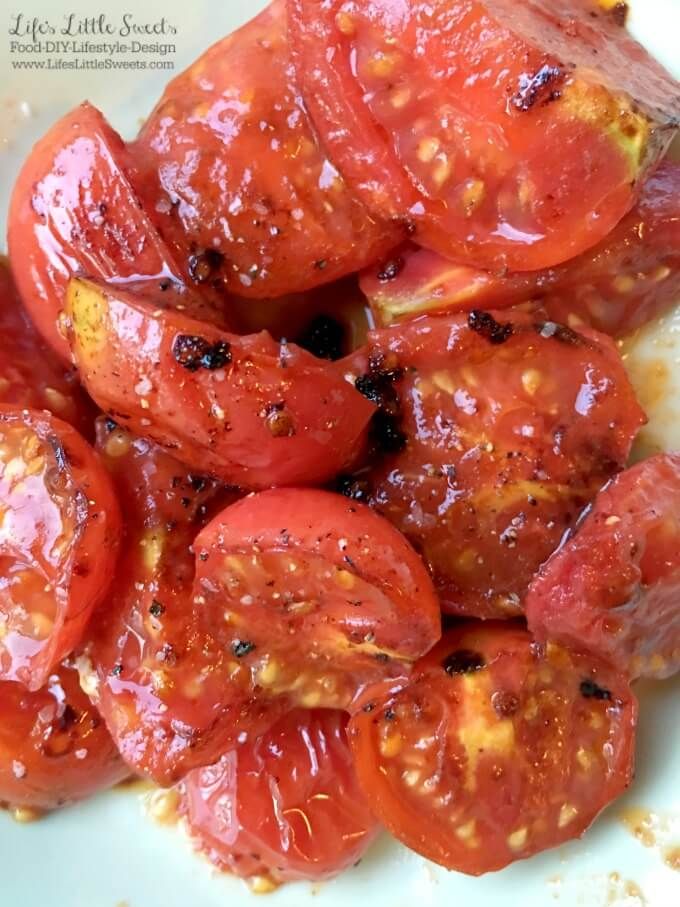
This is served in Jordan. Fried Tomatoes with Garlic is great scooped up onto Arabic bread.
Ingredients
- 4 cloves garlic, crushed
- Salt and pepper to taste
- 1/2 small hot pepper, very finely chopped
- 2 tablespoons chopped fresh parsley
- 2 tablespoons oil
- 2 large, firm tomatoes, thickly sliced
Instructions
- Thoroughly mix the garlic with the pepper, salt and hot pepper; then stir in the parsley and set aside.
- Heat the oil in a frying pan over medium heat.
- Add the tomato slices and cook for about a minute on one side; then turn and sprinkle slices with the garlic, hot pepper, and parsley mixture. Continue to cook for another minute, shaking the pan occasionally; then turn the slices again and cook until they are done, but not mushy.
- Slide the tomato slices onto a plate, and serve immediately.
- Do not try to cook more than two servings at a time or the tomatoes will end up overcooked.
Notes
This type of tomato appetizer is great scooped up onto Arabic bread.
Attribution
Lior’s Kitchen Talk
How were Castles built? Did they start as villages and build up over time or were they designed and built over a few months?
A castle was a weapon-projected raw power onto a piece of ground, made from the first stone to dominate-Work took years, often a mean decade-men who started it-sometimes they die before it is finished.
Started with a king or a-lord-he wanted to own a valley.
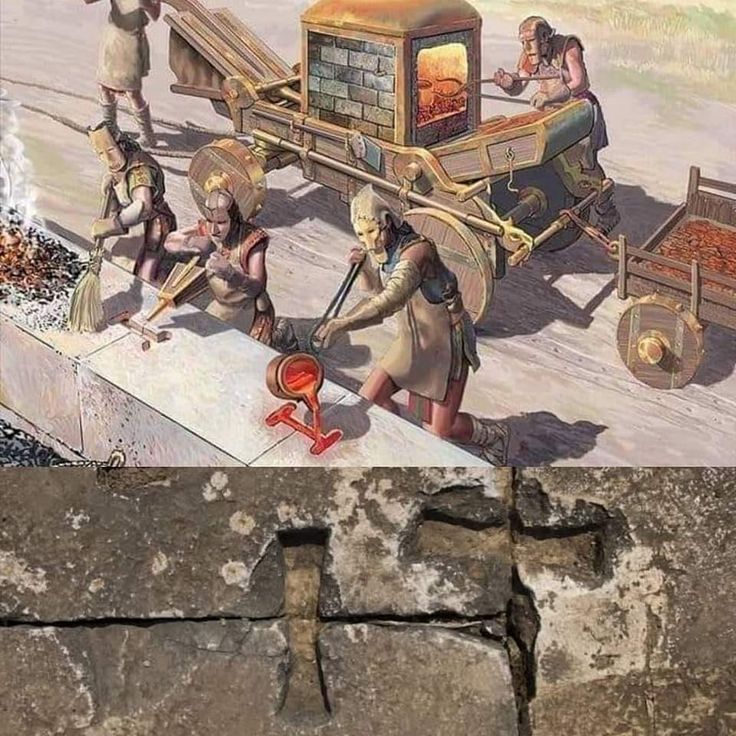
High ground was picked for a good kill zone-A river for supply boats-The engineer was master mason, he lived on the site-He drew the plans on a stone slab-cut the wooden templates for the arches, told every man where to go, what to do-An army of men did the work, not just diggers-Quarrymen split stone from earth, they did it with iron wedge – The blacksmiths worked went day and night-they sharpened tools, carts pulled by oxen hauled the stone for miles-Other workers dug big foundations-Went to solid bedrock.
Carpenters mixed together scaffolding from whole trees.
They built cranes, the treadwheels, a great wooden thing powered by men – Men now walked endlessly inside, throwing up massive blocks
They raised the curtain wall first, basically a shield-towers next then great keep
Each stone they measured and cut-Put down correct with a plumb line-This here was not really rough work-more about being precise.
The stones were set in lime mortar-took a long time, a business of slowly burning limestone in a kiln for days. Seriously a boring thing but it mattered-The men understood-The hard work stopped in the cold of winter-War of attrition against land itself—
People have changed and it’s actually terrifying …
People have changed. Society feels like it’s breaking. We’re working harder, staying “connected” more than ever, and yet so many of us feel more anxious, more unsafe, and more alone. Something big is happening — and it’s not just in your head. In this video, I’m unpacking the hidden root causes of why life feels so overwhelming right now — from broken systems, to safety and trust, to our disconnect from nature, to the way technology and social media are shaping us. You’re not the only one feeling this way. We all are — and it’s time to take our lives back.
Have you ever had a bad gut feeling about someone and it was right?
My husband was estranged from his sister for many years. He didn’t like to talk about why so we didn’t. The sister was living in another part of the country for a while. Word got to us she was back in town. I asked my husband if he was interested in reconciling with her but got an emphatic no. One day while he was at work, the sister dropped by. We didn’t really know each other so the conversation was mostly small talk. I was recovering from ankle surgery and she asked questions about that. She got up to leave, headed for the door then turned around and asked if she could use our bathroom. Tbe guest bath was being renovated so I told her where the main bathroom was. Since I was still on crutches she said she would find it and be just a minute. I didn’t have to get out of the recliner again. She was gone about 10 minutes. This made me nervous because that bathroom was connected to our bedroom where valuables are stored. After the sister left, I felt the need to check our bedroom and bathroom. The leftover pain medication prescribed after my surgery was gone along with some money we kept in a bedside drawer. My husband was in law enforcement and always said the accuser must have proof. I couldn’t prove she stole from us but I knew she did. My husband wasn’t happy I let her into our home but I did so what’s gone is gone. He finally said that when they were young, she would steal anything not nailed down. The final straw for him was when she stole the money his parents promised him to buy a graduation gown. There were maybe 3 or 4 pain pills left in the bottle and about $250 in cash. We haven’t seen or heard from her since.
Pictures
















Why are Italians so fit and generally skinny when they eat starchy and filling food?
There’s no special Italian secret. They just eat a more traditional diet with culture in it.
Losing traditions is one cause of obesity.
There’s an aisle at my local Walmart where people are basically backed up one behind another to buy sugary powder to flavor their water with. I live in an extremely unhealthy town in the Midwest, where a lot of people obviously take very poor care of themselves. A lot of them look really sick and have this constant anxious look on their face. This town probably has the lowest self-esteem of anywhere I’ve ever been in the world. To me, on any given day at Walmart, a quarter of the people look like deer in the headlights. Unsurprisingly, you see a lot of of these people in the aisles that are full of Coke, chips and sugar water. Basically adults living on Kool-Aid, a children’s drink.
I don’t want to sound like a jerk — I try not to be, and I’m happy to recognize that most of the fat Americans out there are really nice people, they just make bad decisions — but adults who live on Kool-Aid and its close equivalents have never developed a culture. I don’t think “culture” has to mean “fancy culture.” Nobody needs to be snobby about it. Traditional cultures were fine. There were not a lot of fat people in traditional cultures. The problem is that Kool-Aid/Coke/Doritos culture isn’t traditional. We didn’t evolve with it, and it’s making us sick and fat.
There are fat people in Italy, too. Not as fat as the people oozing out of their pajamas at grocery stores in the U.S. But not every Italian is “skinny.” Only people who have never traveled there believe that. Obesity is on the rise everywhere, including in Italy, partly because Italy has some of the same problems with sedentary lifestyles that other developed countries do.
And they certainly have sugary things in their drinks. They just eat things in more moderation and have more balance in their diet. A balanced diet is key. You can eat pretty much anything as long as you mix it up.
I’ve worked, off and on, in the food industry in America for 20 years. One thing I notice about large Americans is how little variety they have in their diet. They often eat a very lopsided, weird diet. If you see people eating from all the different corners of the food pyramid, they’re usually not fat. If you see people living on chips, frozen pizzas, Kool-Aid, Coke products, milk, cheese, an occasional banana, and not much else, they’re probably fat. And not even “good fat.” They look “sick fat.” Someone who lives on steaks, pasta, wine, and the good things of the Earth but just eats too damn much of it will have a potbelly, sure. But that guy won’t look sick. He eats too much, but at least he has variety in his diet. There are people in Italy like this. They’re definitely fat, but at least they don’t look sick. A lot of fat people in America look just downright ill.
Stop worrying about the specifics of what you eat and just eat more variety.
And go take a walk after dinner.
My dad died a few years ago at age 71, even though his diet wasn’t particularly awful and he didn’t have any diagnosed health problems. He died of clogged arteries, dead of a heart attack one morning in bed — his first heart attack ever killed him during the night. Though he lived a pretty active life during the daytime, one of his biggest mistakes was filling up on food at about 7:00 every evening, then sitting down to watch a constant stream of TV for the next four or five hours until he fell asleep. That’s what killed him. If he’d gone out and taken a walk every evening after dinner, he’d probably still be alive. He didn’t have any especially bad habits. He didn’t smoke, drink very much alcohol, he didn’t drink a lot of Coke products, and he didn’t eat hamburgers. He avoided beef so religiously, you’d think he was a Hindu. Watching too much TV after dinner is what killed him. The Spanish have a saying for this, and they’re right: “Big dinners fill graves.”**
Create good habits and stick to them. If I don’t go for a walk after dinner, I’m ready to jump out of my skin. I can’t stand to sit down for very long after a meal. It’s just a personal habit I’ve created for myself. I’m 6 feet tall and weigh 150 pounds. Go for a walk after you eat. You don’t have to live in Italy to do this. Even if you don’t lose much weight, your digestion will thank you.
Also: drink black coffee. I love the taste of milk and sugar in coffee, but my digestion really improved after switching to strictly black coffee. I actually wonder if I didn’t have lactose intolerance. After getting a lot of dairy products out of my life, I feel a lot better.
** The Spanish aren’t immortal. There’s no superfood that will make you live forever. Don’t forget to enjoy your life.
But if you’re gassy and bloated all the time, you’re probably not enjoying life. If you want to enjoy life, it still matters what you eat. When you eat well, you feel better. When I eat a bag of Doritos for lunch and nothing else, it’s tasty going down, but I feel like shit half an hour later. This isn’t “enjoying life.” If I have a bowl of tabouli, I feel great for the rest of the afternoon.
Work Harder? For What?
Men don’t work for dreams anymore—they work to survive. Rising costs, inflation, broken promises of the “American Dream,” and corporate systems that treat men like disposable machines have left millions stuck in survival mode. This video explores why men feel financially trapped, the treadmill of modern work, and how disillusionment with careers, debt, and society is shaping the future of manhood.
If cancer needs carbs (glucose) to grow, why don’t doctors change people’s diets when the cancer is first diagnosed?
I discovered I was thoroughly entangled in this exact same question a few years ago when my aunt was receiving breast cancer treatment and a family member was insistently demanding she go on a ketogenic diet to “starve” the cancer, and it simply made so much rational sense on the surface that I couldn’t even start to understand why her oncologist wasn’t suggesting the same. I went and read all sorts of research on cancer metabolism and talked to a couple of oncologists about this, because I truly wanted to know if there was any validity to the theory that restricting carbs would slow down cancer growth or if it was just some other oversimplified health trend.
The thing I learned that completely transformed my knowledge is that yes, cancer cells do consume a lot of glucose in a process known as the Warburg effect where they rely heavily on glycolysis to derive their energy even when oxygen is available, but the twist is your healthy cells also need glucose to live, especially your brain which needs about 20% of your body’s glucose, and you just can’t selectively deprive cancer cells of glucose without affecting healthy tissue too. What truly took me by surprise from the studies is that even when individuals are on extremely low-carb or ketogenic diets, their body still continues to produce glucose through gluconeogenesis where the liver takes protein and other components and turns them into glucose in order to keep blood sugar levels stable, so you can’t really get your glucose levels all the way down to zero or even close to levels that would deprive cancer cells of glucose without severely injuring yourself.
I also learned that malnutrition and weight loss are gigantic problems among cancer patients because the disease itself and certain treatments such as chemotherapy cause cachexia, which is this metabolic condition where the body uses muscle and fat, and most cancer patients succumb to malnutrition and weakness and not the tumor. Oncologists are usually very concerned with helping patients keep their strength and weight while undergoing treatment because it makes a huge difference in how well they can tolerate surgery and chemotherapy and how high their survival rates are. There’s some interesting research on fasting or ketogenic diets as adjunctive treatments during some types of cancer therapy, but it’s still very experimental and the evidence is conflicting, and most oncologists don’t recommend it as a primary strategy because the dangers of malnutrition usually outweigh any advantages. What my aunt’s doctor told her to do, and what I’ve discovered repeated throughout the medical literature, is to consume a normal diet with adequate protein and calories until otherwise advised unless there is specific research to indicate dietary alteration for their particular type of cancer and treatment strategy.
Is Sean ‘Diddy’ Combs’ career really over?
The courtroom sketch of Diddy at his sentencing today was brilliant.
He sank to his knees, crying, hugging a chair. Sean “Diddy” Combs got four years in jail. He’s a month away from turning 56 so he will probably be out by the time he’s sixty. Not a lot of time lost, considering the type of vile acts this man has been accused of…
Thing is, even if Diddy is freed on appeal (fat chance!) or when his sentence ends, he’s never going to make some sort of triumphant return to the spotlight. Too many unsavory details about the man have come out. In the hypermasculine world of rap music, a mogul who is a cuckold with a fetish for baby-oil and a dong the size of a Tootsie roll — yes, witnesses have been very descriptive and haven’t spared Diddy one bit! — will not be taken seriously any longer…
Diddy beat up his girlfriend. Trafficked girls. Trafficked boys. Had a harem of handsome men run a train on his girlfriends as he watched on a chair in the corner. He’s perverted in an “uncool” way. In a nasty way. And then he cried like a bitch at his sentencing, too. His credibility is dead, and so is his career.
Reality Artisans
Written in response to: “Write a story about two characters who are competing with each other. What’s at stake?“
Haley Roeder
“Welcome honored guests to season 6 of Voice Between Worlds. I am your host, Zephryial Vox. As you know, the once-in-a-century meeting of the greatest minds in the Milky Way galaxy, the Ecliptic Convocation, is fast approaching. Dignitaries, world leaders, and movers and shakers have been hand-selected by the host of the event, Oblivara Holdings Incorporated, to the summit that will shape the next one hundred years. This event will take place in just seven solars.
“This event is always hosted inside of a pocket universe which is created by one lucky reality artisan. This artisan is chosen through a rigorous competition that is televised and streamed on this show only, with yours truly. If you’ve been orbiting in darkspace for the last century, I’ll remind you that reality artisans are those higher dimensional beings from the Gossamer Spiral who can bend both space and time to their whims. However, only the most expert of these are able to create their own curated realms. These immersive experiences transport guests to small temporary universes and are particularly popular with the wealthy elite. The Ecliptic Convocation holds so much of the galaxy’s population in its thrall that this show was all but forced to be born,” Zephryial says. “You know what I always say: give the people what they want!”
After some tittering by the live studio audience, they continue, “I would be remiss if I did not mention our previous winner, Lieutenant Orrivim, who has been working for Oblivara Holdings since winning. Here is a recap of his contest entry, “The Hourglass Cathedral.”
A recording of the event plays, showing guests entering the universe by trickling down amongst grains of sand into an hourglass so vast that a large cathedral fits squarely inside. The cathedral itself is made of sand glowing with starlight, and the structure constantly reshapes itself. Arches collapse and towers form, rising and dissolving seemingly at random. Pockets of sand occasionally drift upward in anti-gravity sub-pockets, a tricky addition mastered by Orrivim. Time in The Hourglass Cathedral does not move at one uniform pace. Instead, moments of importance slow into crystalline stillness – when guests share a toast, champagne bubbles float up and hang suspended in midair, shimmering like constellations. Conversely, ill-timed or negative moments speed by. The video ends.
“Over the past century, Orrivim created many pocket universes for Oblivara, but now it is onward towards fresh orbits,” Zephryial says, pausing for dramatic effect. “This year’s competition is between two rising stars who are so different, one wonders if they were raised in the same universe, let alone the same galaxy. The first contestant is a self-professed perfectionist. She is known for creating subtle yet hauntingly unforgettable worlds. Please welcome Soryn Vey!” Soryn steps onto the stage, waving at the crowd. She sits in a chair where she will be able to watch the judging take place.
“So, Soryn, tell us a little about your admission.”
Soryn adjusts her tentacles to better sit in the wide chair. “My entry is called Evershade. It is a quiet world where memories can linger forever,” Soryn says and the crowd claps. “Since the Convocation brings together some particularly long-lived species, many of the attendees already know each other. Despite the unfathomable size of the galaxy, it is, as they say, a small world. So, I decided to play with this concept in the Evershade. When guests interact, some of their memories together will play in a transparent backdrop, essentially creating a highlight reel of their relationship. If no connection yet exists, one of two things can occur. Each person can either choose a memory to share, or they can allow the system AI to pull a memory to present. This memory is chosen based on a complicated algorithm that integrates more than 200 separate personality metrics, so it is highly reliable. It is designed to show the person’s core values. Now, the guests on the receiving end of these memories won’t be privy to which of those options their counterpart chose, so it will lend some mystery to the encounters,” Soryn explains.
Zephryial addresses the audience, “In the context of this show, ‘mystery’ is code for press coverage and press coverage is synonymous with money, baby! Did Soryn have this in mind when she generated the Evershade, knowing that Oblivara loves this kind of money-making speculation?”
Soryn tries to contest this, but Zephryial talks over her, “We may never know, but the concept is phenomenal and that is why she made it this far on Voice Between Worlds! Will she manage to grasp this year’s illustrious prizes – a one-hundred-year contract with Oblivara Holdings and the honor of hosting the Ecliptic Convocation?”
As the applause dies down, Zephryial waves their hand towards backstage. ”And now for the competition, the twins Thalen and Theryn Thoreux. That’s a mouthful!” The twins enter and sit next to Soryn who nods politely at them.
“Their specialty should come as no surprise… duality! Refined and gaudy, bright and subdued, cutting edge and completely cringe! Please explain your entry,” Zephryial says seriously.
The solemn twin, Thalen, clears his throat and says, “Our submission is titled “The Mirror Feast”. When guests arrive, they are split – not into groups, but into mirror versions of themselves who will then get to live in two realities simultaneously. In this way, the guests will get to experience two very different meals concurrently. One half of the universe oozes refined minimalistic elegance while the other half is all about opulence to the point of being almost gauche.”
“Well, these pocket universes both sound fascinating, but we won’t know who will win until our trio of judges takes a walk through each world. And speaking of our judges, let’s introduce them now! In reverse order of seniority, we have “The Guest’s Voice” judge, Lyra Quendral. As a Calyth from one of Xorb’s moons, her species only lives around 20,000 solars so this is her first and last time as a judge. She will mainly focus on practical issues such as temperature regulation, practicality, comfort, and accessibility. Although all three judges are given the same judging criteria, everyone knows that they play favorites depending on their own personal predilections. Welcome Lyra!”
Lyra, a diminutive blonde with a stick-bug like body enters, smiling widely.
“Let’s meet our next judge who should look familiar to you as this is her 3rd consecutive Voice Between Worlds, the ArchSeer Calyros of the Living Nebula! Calyros is a spiritual and mystical authority which is deeply important to Oblivara, and the Ecliptic Convocation is known to have deep symbolic resonance, whatever that means!” While being introduced, the ArchSeer floats onto the stage and hovers stoically near Lyra.
Zephryial now becomes visibly excited, and their yellow eyes shine brighter through their mask. “Finally, our last judge is a two-time winner of the Galaxy’s Hottest Celestial Icon award and the CEO of Oblivara Holdings! He is well known for his quirky twirling of antique fountain pens. He is corporate elegance wrapped up in cosmic authority, please put your hands, tentacles, and other extremities together for Mr. Drevan Solvane!” The CEO enters; his pen gripped in an iron fist. He gives a curt wave which results in a staggering amount of applause.
Zephryial mimes fainting. As they act out a staggering recovery, they notice the judges have already wandered towards the pocket universes. “Phew, wait! Okay, it seems the judges are very serious about their task and they’re getting right to it!”
The three judges enter Soryn Vey’s Evershade, which lies in the dark puddle, by hopping in as though it is deep water. The Evershade generates three fluffy clouds that catch and gently float them to the ground below. The world is cast in perpetual twilight; a deep indigo skyline fades into a smokey horizon. Pale constellations shimmer faintly in the sky, winking in and out of existence. There is no obvious light source, but instead there is a diffused glow that comes from nowhere and everywhere.
The CEO walks ahead of the other two. He is always impeccably dressed, but today he has outdone himself in a tailored garment woven from liquid obsidian with lapels that catch the dim light like frozen starlight. His skin has the sheen of marble kissed with frost, and his eyes are metallic like polished coins.
The other judges walk behind him at a respectful distance. This is the first time they have met, and a private memory plays in the clouds above them. Whether the memory is generated by the AI or chosen by the ArchSeer, the Guest’s Voice judge, Lyra, will never know. The memory shows her the ArchSeer in her youth. Calyros once came from nothing, a forgotten child on the brink of starvation, in a distant time, in a distant land. Lyra feels warmed to the ArchSeer in a way that she wasn’t before, having only heard rumors of her arrogance. She makes a mental note to give satisfactory marks in the “emotional resonance” category.
The trio walks through rolling meadows of tall silver grass that glimmer with starlight. It is softer than silk, and CEO twirls his iridescent pen briefly as pleasure zaps down his arm from where it brushes against the blades. In the distance, forests of dark trees stand like sentinels, their orange and white leaves glowing like lanterns.
Lyra gestures towards them, “There is something rather ominous about them, don’t you agree, Calyros?”
Instead of answering, the ArchSeer raises her palm, a pink cloud descending until she can float smoothly onto it. Smoke billows out from under her long cloak as the cloud wizzes away. The others follow, their own cloud taxis carrying them towards the horizon.
The forest air is wrapped in velvet silence. A shifting mist curls on the ground, not unlike the peculiar smoke that keeps the ArchSeer afloat. Mr. Solvane steps smoothly from his cloud, his pen safely back in his coat pocket. As he walks towards a copse of dark trees, he notices a pool of swirling liquid nearby beckoning him closer. As he approaches, he sees that the depths reflect not the world around him, but his own inner thoughts.
‘That’s the last thing I need’, he thinks and turns swiftly away and back towards the blackened trees. He feels curiously drawn to them. He sees now that they are made of umbralith, a volcanic glass-like mineral which swallows light. It is like looking into a black hole.
The ArchSeer steps beside him. “It draws you in, for it knows the shape of your hunger. Fortune is only the surface root… below, greater longings wait.”
Mr. Solvane turns his mercury-eyes on the ArchSeer, “Still speaking in riddles I see, Calyros.”
Before she can respond, the clouds overhead cast a memory of the last time they’d spoken.
“I implore you to see reason, Drevan,” Calyros says, some decades ago.
“This is the most reasonable thing, to me,” Drevan insists in a way that suggests that is the end of the conversation.
“You cannot become a God, Drevan!”
Drevan snarls, his eyes glinting dangerously. “If Orrivim won’t do it, then I’ll get an artisan who will.”
Calyros dares to place a hand on his shoulder and says, “She’s not coming back. Even if you somehow manage to create this sick fantasy world, it won’t be her! It would be an illusion!”
The memory fades as the present-day Drevan stalks away, clearly furious.
In the studio, the universe’s creator stares on in horror.
“This is a grievous error in my artisanship,” Soryn Vey cries. “I must not have accounted properly for the intensity of certain… uh, animosities…”
The host places their hand on Soryn’s shoulder. “Now, now, it isn’t a death sentence, dear. You still have seven solars until the Convocation to fix any kind of glaring mistakes.”
But to Soryn, it feels like certain doom.
The judges meander to other parts of the Evershade. Then they make notes, allocate points in each judgement category, and finally they hail a cloud taxi and exit through a hole in the sky.
Calyros and Lyra murmur to each other after exiting, but Drevan is already walking towards the next contest entry, inspecting the edges of the pocket universe which glow in every color of the visible spectrum, plus in UV.
“He’s not wasting any time, is he? The Mirror Feast is up next, and based on the exterior alone, I think it will be a sharp contrast to Evershade,” Zephryial says.
Mr. Solvane adjusts his suit jacket, twirls his pen once, and steps into the glimmering abyss without looking back to see if the others are following. He appears suddenly upon an endless mirror in a cloudless blue sky. His reflection walks below him as he approaches the only structure in sight, a stone archway. Quiet pops behind him signal that the other judges have entered the universe.
Meanwhile, Thalen and Theryn Thoreux watch the judging unfold, nervous energy pulsating between them.
When Drevan walks through the archway, he finds that his reflection does not do the same. He no longer has a reflection at all, yet he feels as though he is living two different versions of the same moment. He is still himself, and yet, he is also his reflection. The two Drevans move in opposite directions, and it takes him a moment to adjust to the feeling. He doesn’t like it, but he wonders if he can use this method to increase his employee’s efficiency. He makes a mental note.
He crests a small hill, which allows him to see this half of the world. This part is blindingly bright with bursts of color and cascading auroras. The guest tables are circular and white with piles of gemstones as glittering centerpieces. Honey-thick florals permeate the room on a breeze. Somewhat absurdly, a cascading river of lava flows between the tables.
The ArchSeer approaches with Lyra in tow. They converge on the source of the lava river; a majestic waterfall shaped like an active volcano.
Lyra leans in and says, “At least it doesn’t give off heat. I read about that awful accident with that bachelor party.”
The ArchSeer raises an eyebrow but is saved from replying when plates of food suddenly appear on the tables around them. The food is exotic and colorful, with whole arms of grilled octopus, moon petal dumplings, and an assortment of nebula fruits. Jewel-tone glasses of honeyed liquor sit out in small goblets. The ArchSeer takes a sip of the fizzing drink and hiccups, colorful bubbles coming out of her ears. Lyra laughs and takes a drink of a different one, her face turning violet. They grin at each other. Drevan frowns, pockets his pen, and slides his hands into his pockets.
The live-audience groans alongside Theryn Thoreux.
“That has to hurt,” Zephryial says unnecessarily.
Meanwhile, the reflections of the three judges make their way through a very different dining hall. This one is painted in muted greys and dusky pastels. The lighting is dim, and the music is equally so. There is no ceiling, only the stars pulled supernaturally close. Bare marble surrounds them, and Drevan visibly perks up.
A pool of pure moonlight lights up the room, flowing through a river similar to its lava counterpart. Dishes appear on the muted tables, though they are vastly different from the other half of the pocket universe. There are drift-leaf salads with floating clusters of weightless greens, marinated roasts with bioluminescent peppers, and dark colored sorbet in black goblets.
Drevan scoops up a delicate bite of the dark desert with a tiny crystalline spoon. “Hmm, mineral sorbet. An odd choice,” he says ambiguously, yet his pen goes into a frenzy.
The live studio audience viscerally reacts to this.
The judges finish wandering through this half The Mirror Feast, mentally tabulate their results, and exit through the archway they came, gathering their reflections as they go.
“Well, there you have it folks! It is Evershade verses The Mirror Feast for this season’s Voice Between Worlds. If you will now please use your interfaces to enter your vote, we will tabulate the People’s Choice Vote before our trio of judges make their final decision. Although there is no prize for the People’s Choice Vote, the winning contestant will always know that they have the people’s heart,” Zephryial says dramatically.
After a brief intermission, the show starts again.
“Welcome back and thank you for your vote submissions. The final count has been tallied for the People’s Choice Vote. Beating out the competition, Soryn Vey cinches the win with 60% of the votes in her favor. In a small additional poll, people stated that they hoped to see CEO Solvane get angry again, because it was hot as hell. Ok, they only polled me for that one, I admit it!”
The audience laughs, and the host continues, “And now, what you’ve all been waiting for, the one that counts: the Judge’s Vote! CEO Solvane of Oblivara has voted for twins Thalen and Theryn Thoreux with their submission, The Mirror Feast. The ArchSeer Calyros has voted in favor of Ms. Soryn Vey’s Evershade. This brings this competition to a tie. Quick factoid, 83% of all seasons of Voice Between Worlds have resulted in a tie with two judges votes in. Okay, I’ll stop stalling,” Zephryial jokes. “The Guest’s Voice has cast her vote for… Soryn Vey! Soryn Vey is the winning reality artisan of Voice Between Worlds season 6! Let’s give her a round of applause and perhaps some condolences. It seems that she’s going to need to find a way to get back on Mr. Solvane’s good side!”
What are the best side dishes and toppings to serve with spaghetti for a complete meal?
Spaghetti ia a “Primo piatto”, only bloody barbarians serve them with side dishes!
just choose the spaghetti-based recipe you like and serve it after an Antipasto and/or before a Secondo.
Tomatoes Sauce
Clams
carbonara
Cime di rapa
Friar beards
There many many choice
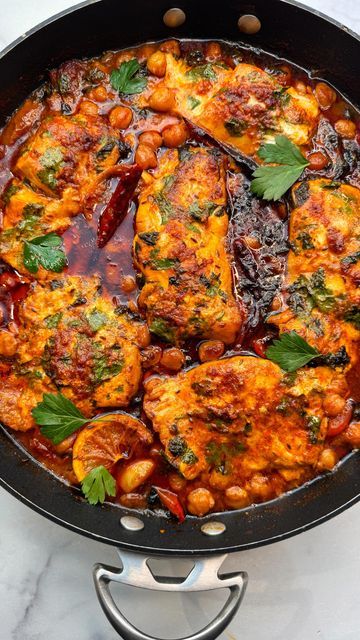
Fish with Cumin Paste
Ingredients
- 1 1/2 pounds scrod or red snapper fillets
- 2 tablespoons ground cumin
- 2 tablespoons olive or vegetable oil
- 1 tablespoon lemon juice
- 1/2 teaspoon crushed red pepper
- 1/2 teaspoon paprika
- 1/4 teaspoon salt
- 3 cloves garlic, cut into halves
- 3 tablespoons snipped fresh cilantro
Instructions
- If fish fillets are large, cut into serving pieces. Place fish in ungreased 13 x 9 x 2 inch baking dish.
- Place remaining ingredients except cilantro in blender container. Cover and blend on high speed, scraping sides of blender occasionally, until smooth, about 30 seconds.
- Spread mixture evenly over fish.
- Bake uncovered at 350 degrees F until fish flakes easily with fork, 25 to 30 minutes.
- Sprinkle with cilantro; serve with lemon wedges if desired.
Recipe Goldmine is now a legacy site. Please visit our sister site, Simply Great Recipes, for new recipes.
What’s the best advice you ever got from your mom or dad?
When it comes to “best advice” my parents rarely if ever were named. However, one evening in 1977, my father said, “Get her number.”
I was living and working in Maryland. At the time of this advice, I was at my cousin’s wedding. I had no plus one. I hardly knew my cousin. I accepted the invite for one reason: I just bought a new 1977 Toyota Celica Lift Liftback GT and was itching to take a trip. The wedding was in New York.
I was seated at a table with a woman about my age who also had no plus one. Normally, I was pretty shy. But I guess a combination of alcohol (not too much) and the feeling we both knew we would have no future interactions, we talked all night.
As the wedding celebration was breaking up and I was walking away, my father, who noticed us from another table said, “Get her number.”
Fine I thought. Why not? 200 miles apart before cell phones, laptops and social media apps. Probably thinking the same thing, she gave it to me.
Well, I got home and could not stop thinking about her. Just a few days later, I called. I don’t remember the specifics but I know it wasn’t “I have a boyfriend and don’t call again.
It wasn’t long before I was finding excuses to visit. First, maybe once a month. Then every other week. Then every week. And within 7 months we were married.
She died not long after our 25th anniversary. I was later to learn how unusual and wonderful our marriage had been. When I was in it, I thought it was typical.
My father was a mean, abusive ass and I still have PTSD from one of his actions. But his advice to “get her number” turned out to be the best advice I ever got.
Why might Xi Jinping be hesitant to use military force despite China’s growing national strength, and how does this align with Deng Xiaoping’s vision?
Presidents of the United States can attack other countries without congressional approval, and they have launched many wars without formal congressional declarations, including in Iraq, Afghanistan, and now Iran. All wars launched and waged by the United States since WWII have been unconstitutional and illegal.
But such unconstitutional actions would be unacceptable in China. Xi Jinping lacks the power to declare war and use of military force against other countries requires the approval of the National People’s Congress. So, it’s not a question of him “hesitating whether to use it”, but rather that he does not have the power.
However, unifying Taiwan by force does not require the approval and authorization of the National People’s Congress; Xi Jinping, as Chairman of the Central Military Commission, can make the decision alone — This is because no armistice agreement has been signed since the outbreak of the China’s Civil War in 1947. Legally speaking, the China’s Civil War has not ended and is still ongoing. There is no need for the National People’s Congress to approve a war that has already begun. At the same time, if foreign forces attempt to interfere in China’s civil war and assist Taiwan in attacking the PLA, Xi Jinping has the right to order the PLA to launch a self-defense counterattack.
As a Little Polish Boy I Dreamed I’d Live in the West. Now I Watch It Collapse.
I grew up dreaming about Europe. Clean streets. Safe cities. The future everyone wanted to be part of. Now I watch it collapse... not in a single day, but slowly, through bad leadership, over-regulation, and a generation that stopped taking risks.

In this video I talk about what really happened to Europe — from innovation to endless meetings, from builders to caretakers.

Why our leaders still talk about “the future of AI” while factories close, talent leaves, and entire nations become irrelevant.

It’s not just immigration.

It’s the loss of courage, risk, and ownership that once made Europe great.

If you’re European, you already feel it.

If you’re thinking about moving to Europe — watch this first.