Right now, in the midst of the COVID-19 outbreak, many people are frustrated, afraid and sit by watching their life seemingly crumble around them. Maybe they lost their jobs, or are watching their investments fall, or perhaps something else is going wrong. Maybe they have the illness, or some other calamity. I have written that no matter how bad things are, there is always an “out”, a “hope” a chance to get it back. Here is one such story…
From Millionaire to Car Detailer.
The global financial crisis destroyed me in 2008. The years immediately after were some of the worst years of my life. I lost everything; or at least I thought I did.
As it turns out, I didn’t lose much at all (assuming you don’t count approximately $3 million in real estate equity and a couple of hundred thousand dollars in cash, as “much”).
I was in Vegas when Lehman Brothers folded… It was my birthday … and it was the first time I’d ever lost big there. I should have known something wicked was coming, but I didn’t. So when my consulting contract didn’t get renewed, I didn’t panic. I kept doing business as usual. When my tenants defaulted on rent, I kept paying mortgages. A year later, I still had $50,000 plus in the bank … enough of a cushion.
I suppose at this time I should make you aware that I was not exactly a low-profile person. I was (and am) in luxury goods and hospitality, and I consulted with companies catering to high-net worth individuals. I helped them design sales and business strategies to keep their clients happy in the short and long term. Needless to say, the luxury sector was massacred, and is still clawing its way out of the muck and mire, at least in the United States.
So, with enough money to float for six to ten months, I kept looking for work in my field.
And looking, and looking … nothing.
Any kind of business consulting … nothing. (Six more months go by).
Any kind of sales … nothing. (Six more months … This was where it got scary).
Bear in mind that up until this point, I had never even gone a month without a job since I was 12 years old.
My confidence was shot – I mean decimated. I was a shell of the man I had been only two years previously.
I had the stink of failure all over me.
A friend of mine owned a couple of car-washes. He offered me a job. It was outside work, taking orders when people drove in to the wash. “Would you like the undercarriage done?”
It was winter in Colorado.
I declined.
I was sharing a huge house at the time with my best buddy and his new girlfriend, who became his fiancé, and we were ALL broke. It was brutal. I don’t think I would have made it without them. I was depressed and miserable. I’m lucky they didn’t bury me in a snow bank and leave me there. I’m sure there were times they wanted to.
“Cocky” doesn’t do failure well.
My buddy with the car-wash called again a few weeks later. I said no again. Not just because of the embarrassment. Not just because of the cold weather and the elements, or standing on my feet for 10 hours a day on concrete without Wi-Fi.
It was because of my father.
Almost every good father has a catch phrase that he uses to motivate his sons to do better than he did. Typically, it’s the threat of being stuck doing any minimum-wage job that no teenager from the Gekko era would ever aspire to. For some reason, the example that my father chose was “car wash”. We’d go through Towne Auto Wash after Little League and he’d always point to that guy who asks, “Do you want a regular wash, or deluxe?” and then hands you that little piece of paper.
“Mickey” He’d say. “You have to save some money/get better grades/quit chasing girls/do your homework. You don’t want to end up like that guy, working in a car-wash, do you?” The last time I heard the speech was around 1996. The words, however, hung in the air for years to come.
So, you can see my quandary. To me, working in a car-wash was the ultimate admission of failure. Not losing all my assets. Not selling my watches and cars. Not letting go of a few rugs and some art.
I was living with friends, driving a 17-year-old car, had less than $200 in the bank with no idea where the next $200 was coming from, and I was worried about being seen as a failure.
A little deluded?
Perhaps, but reality kicked in when I didn’t have money for a niece’s birthday present.
So I called my friend back and asked if I could still have the job at the car-wash. My utter failure as a human being was complete, my humiliation final -or so I thought.
On my third day of dragging myself in to work, the raven-haired stunner that I’d hired as my assistant five years previous pulled in – driving a brand new Lexus.
NOW my humiliation was complete.
There was nowhere to run, no place to hide.
And yet … just as I was about to die from shame, something happened that literally changed my life. She smiled, jumped out of her car, pointed her Louboutins right at me, ran over and gave me a hug. We chatted for about 10 minutes while her car was getting done. She said she was happy to see me, that I’d been a great boss, and that she was glad I was working. “Sooooo many” of her friends(able-bodied twenty-somethings) were unemployed, and at least I wasn’t trapped behind a desk.
I realized that I’d been beating myself up needlessly, and saw how lucky I truly was.
In that instant, I decided that instead of just showing up until I could find something better, I would use all my skills to increase my friend’s business, and I did. Over the next few months, something amazing happened to me. Something I never saw coming, and something that impacted my life and made me a better man.
I saw hundreds of people every day and none of them thought I was a failure, and it energized me. I smiled. They smiled back. I was happy and engaging, and I sold about a gazillion deluxe washes. But also, my worst fear morphed into something I started to look forward to. I got my confidence back, and it was obvious. I saw DOZENS of people I knew – clients, old customers, friends I’d lost touch with, and every single one of them said something positive.
They respected me.
They held me in higher esteem for seeing me in the cold, wearing a red nylon jacket with a car wash logo on it. Nobody made fun of me or called me names. Nobody laughed.
There was even an article in a local lifestyle magazine about me.
They respected me for doing what had to be done (I’m sure a few were secretly happy that I’d been taken down a few pegs … but hey, we’re all human, right?)
The truth of my situation was laid bare for the world to see … there’s no way to spin a story when you are asking people if they want the basic or deluxe wash. There’s no amount of charm of polish or bullshit that can hide the truth.
I was working in a car wash – and nobody thought I was a failure. Not even my father.
Then, about 6 months later, one of my old clients called. He needed some help setting up a new luxury club. We put a deal together and when I resigned from the car-wash, my friend was genuinely sad, saying I was the best employee he’d ever had.
I approached that new consulting contract with a vigor and zest for life I hadn’t felt for years! A few months after that, another contract took me to Asia, and I’ve been consulting over here ever since.
So, my worst fear turned out to be my salvation.
It gave me confidence, paid my bills for a while and put me in a position to move my company to Asia and have access to an abundance of new cultures and growing markets.
Sure, I’m not quite back to where I was that day 9 years ago in Vegas, but I have a red nylon jacket with a car wash logo on it that reminds me that for my version of success, I don’t have to be.”
You’ll not find any big banners or popups here talking about cookies and privacy notices. There are no ads on this site (aside from the hosting ads – a necessary evil). Functionally and fundamentally, I just don’t make money off of this blog. It is NOT monetized. Finally, I don’t track you because I just don’t care to.
Please kindly help me out in this effort. There is a lot of effort that goes into this disclosure. I could use all the financial support that anyone could provide. Thank you very much.
Sir Whiskerton and the Lament of the Slide Whistle
Count Catula, the farm’s resident master of the melodramatic arts, was in a crisis. Not a life-threatening crisis, or a mystery requiring Sir Whiskerton’s genius, but a purely theatrical crisis1. He was sitting atop a stack of hay bales, lamenting the fact that his favorite artisanal goat cheese had been reduced to crumbs.
“Woe is me!” he declared, gesturing dramatically to a small pile of dust. “This, Sir Whiskerton, is the pulverized remnant of my last joy! The cruel cheese-fate has delivered the final, sharpest, and crumbliest blow to my wretched, immortal heart!”
Sir Whiskerton, who was using the moment to practice his tail-flick-to-monocle-polish technique, simply raised an eyebrow. “It was a snack, Count. Not a prophecy. Besides, you ate most of it yourself while composing a sonnet about its texture.”
The Count hissed, his dramatic persona genuinely wounded. “You mock my pain! You fail to appreciate the grand, Gothic nature of my sorrow! My life is a perpetual stage, and I am cursed to perform my suffering!” He threw his head back toward the sky, where the unseen magic of the farm resided. “I wish!” he howled, his voice cracking with exaggerated grief, “I wish for a truly silent, genuinely tragic moment of existential despair! A sorrow so profound it requires no applause! Grant me the non-dramatic truth of my wretched existence, Zephyr!”
The air did not rumble, nor did the ground shake. Instead, a faint, rainbow-colored electricity zipped through the Count’s signature black velvet cape. It didn’t feel evil; it felt… laminated. Then, a tiny, internal click noise occurred, like a forgotten button had been pressed.
Catula, energized by the supposed power of the cosmos, immediately stood up to deliver his closing lament. “Alas, I am but a shadow cast by the fickle moon, doomed to wander this mortal coil—”
WHISTLE!
The sound was not the wind. It was a bright, utterly ridiculous slide whistle sound effect that shot through the air. The Count’s cape, which had been flowing majestically, suddenly became stiff, like a cardboard cutout, and started flashing tiny red and blue party lights. His dramatic, outstretched claw paused mid-air, looking like he was pointing to a particularly good sandwich.
Sir Whiskerton nearly choked on his perfectly polished monocle.
“What… was that?” Catula whispered, horrified.
“I believe,” Sir Whiskerton replied, carefully adjusting his vision aid, “that your genuine, silent tragedy has been sponsored by a children’s birthday clown. Try again.”
The Absurdity of the Moon Monologue
Count Catula spent the next hour trying to speak a serious sentence, but the universe had decided his pain was simply too noisy to be taken seriously.
He tried to brood over the watering trough, gazing at his reflection. “Oh, cruel reflection! Do you mock the sorrow dwelling within my very soul?”
BOING!
The cape lit up like a faulty amusement park ride and released a springy, cartoon ‘boing!’ sound, perfectly timing the second the Count looked down. It made him jump, which, naturally, produced a tiny Sproing! sound from the cape’s new internal spring mechanism.
The hens, who were usually chatty, fell silent.
“Did you hear that?” Cluckadia clucked, using the preferred bullet-point dialogue format2.
“The noise?” Doris asked.
“No, the lack of noise,” Cluckadia corrected. “He’s making funny sounds instead of depressing sounds. I don’t know how to feel!”
“I’m going to faint,” Doris declared, mostly out of habit.
Catula fled toward the farmer’s porch, seeking the deep shadows. He spotted the full moon rising and felt a fresh wave of performative grief wash over him. This was it. The grand, sweeping lament.
He raised his stiff, brightly lit cape and began: “O’ silent, silver orb! You bear witness to the cosmic futility of existence, the crushing weight of time, and the deep, unending loneliness that chills a creature such as I! I am adrift! I am abandoned! I am—”
WAH-WAH-WAAAH!
A mournful, perfectly timed trombone ‘wah-wah-wah’ sound effect drowned out his final word. The party lights on his cape pulsed in time with the sad tune, turning his dramatic pose into an unintentionally hilarious piece of performance art.
A Moment of Silent Truth
Sir Whiskerton found the farmer sitting on a crate, meticulously polishing a single, perfectly ordinary garden gnome.
“The Count is having a technical difficulty with his gravitas,” Sir Whiskerton observed, flicking his tail.
The farmer didn’t look up. “It sounds like he’s finally having real fun,” the farmer mumbled to the gnome. “Don’t you think, little fella? Maybe we should get a sound effects hat for Bartholomew, too. He’s been awfully quiet lately.” 333
Meanwhile, Count Catula retreated to the one place he knew offered true, uninterrupted silence: the root cellar, where the air smelled of damp earth and the heavy scent of potatoes4. He slammed the door, plunging himself into perfect darkness. The cape’s party lights shut off instantly, and the spring stopped boinging.
This, he thought, this is the genuine, silent tragedy.
He tried to access the bottomless well of despair. He tried to mourn the loss of his dramatic voice. He tried to cry over the existence of slide whistles.
But in the heavy, potato-scented silence, a strange thing happened. He felt the soft, non-dramatic fur beneath his cape. He felt the silly, stiff vinyl of the garment. He felt the ridiculous, battery-powered console sewn into the lining.
And the truth hit him. Not with a crash of thunder, but with the quiet clarity of a sunbeam filtering through a crack in the door.
I am just a cat.I am a cat wearing a tacky, musical cape.
The existential despair he had longed for was actually the simple, non-dramatic truth that his entire identity was a performance. The tragedy wasn’t that his life was hard; the tragedy was that he’d wasted so much time pretending it was.
It was silent. It was genuine. And it was absurd.
Instead of tears, Count Catula felt a strange fluttering in his chest. It wasn’t the anguish of a tormented soul; it was laughter.
He threw back his head and laughed—a genuine, un-performed, slightly hysterical laugh. As he laughed, the motion activated a hidden sensor, and the cape began playing the ‘boing’ sound again.
Catula didn’t care. He laughed harder, using the stiff, illuminated cape like a ridiculous, blinking prop. He realized that the performance hadn’t been ruined; it had simply been upgraded to comedy. He hadn’t been robbed of tragedy; he had been gifted joy. He ran out of the cellar, the cape lights flashing wildly, ready for his new life as the farm’s most intentionally ridiculous comedian.
The End.
Moral:
Stop performing your pain and start embracing the ridiculous joy of your life. The truth is often absurd, but that absurdity is the source of the best comedy, not the deepest tragedy.
Best Lines:
“This, Sir Whiskerton, is the pulverized remnant of my last joy! The cruel cheese-fate has delivered the final, sharpest, and crumbliest blow to my wretched, immortal heart!”
“I believe that your genuine, silent tragedy has been sponsored by a children’s birthday clown.”
“The tragedy wasn’t that his life was hard; the tragedy was that he’d wasted so much time pretending it was.”
“Sounds like he’s finally having real fun. Maybe we should get a sound effects hat for Bartholomew, too.”
Post-Credit Scene:
Count Catula tries to take a dignified nap in the sun. Every time he sighs deeply in his sleep, the cape’s soundboard registers the dramatic inhale and plays a tiny, enthusiastic air horn sound. Sir Whiskerton sighs and moves his nap to the opposite side of the barn.
Key Jokes:
The Slide Whistle: Perfectly undercuts a grand, theatrical monologue.
The Laminated Cape: The “Gothic” cape is transformed into a tacky, stiff, brightly-lit, cardboard-like prop.
The Farmer’s Observation: The Farmer mistakes the sounds for a technical difficulty and considers giving the Piñata a sound effects hat5.
Silent Tragedy vs. Loud Laughter: The joke that genuine, silent despair leads to the realization of absurd, loud joy.
Starring:
Count Catula: The Vampire Cat Who Got Audited by a Slide Whistle
Sir Whiskerton: The Detective of Dignity and Expert in Monocle Maintenance
Zephyr (The Unseen Force): The Magical Entity Who Knows Exactly What You Need (and it’s a ‘Boing’)
The Farmer: The Human Who Thinks Gnomes and Piñatas are his Best Critics
P.S.
If life gives you a cartoon sound effect, you should make a cartoon comedy. After all, the universe already has too many bad dramatic monologues, but it’s always short on good punchlines.
MASSIVE RAINFALL After Iran Destroys U.S. Weather Modification Radar!
Why does the Chinese government prioritize high-speed rail despite the debt concerns? What are they hoping to achieve?
China’s HSR is managed as a public utility, a public service and infrastructure that the CCP invests in as core to its industrial plan for China’s national development.
The HSR contributes far more in terms of the approximately $1 trillion debt incurred, namely:
Reduced manufacturing cost. China has invested in infrastructures and services that make its labor that least expensive in the world in term of the productivity they generate. This is because the cost of education, personal transportation and healthcare that are the major components of labor expenses are taken off from Chinese employers for the lower wages they need to pay. Chinese consumers actually have greater disposible income when they’re not saddled with huge college loan, car loan and healthcare bills.
Reduced environmental pollution, less road infrastructure needs and greater productivity loss. China’s vehicle stock surpassed that of the US for the first time in 2020 and has continued to grow rapidly. But consider if Chinese workers were forced to acquire their own vehicle just to be able to get to work because of inadequate public transport. And this is what has happened in the U.S. and the primary reason the U.S. has approximately four times the number of vehicles per 1,000 people compared to China. So, the nightmare scenario is a China with 4x more cars on the road to cause more pollution, unmanageable traffic gridlock and excruciating stress and time lost commuting..
The HSR is now integral to the overall mobility of Chinese workers able to go to work and enjoy leisure time all subsidized by the government. This is a contributing factor to the redoubtable Chinese worker’s efficiency to produce continuing high quality work at lower cost relative to other workers in the world.
Woman GOES HOMELESS After Refusing To Cook For Husband
Tired of playing small? Elite men don’t wait—they build wealth, lead with purpose, and never walk alone. Join the #1 brotherhood for driven men who demand more from life—financial freedom, masculine growth, and unshakable purpose.
What type of knife does Rambo have?
This is an officially licensed reproduction of the knife used in the first film of the Rambo series: First Blood released in October 1982. The original design is based on an aviators survival knife and was designed by legendary Arkansas knifesmith Jimmy Lile. He has since passed on but the knife itself is still very popular and in production today. That knife is fully functional and costs a couple thousand dollars.
My knife is just a replica designed for display purposes by the Hollywood Collectibles Group and while it is beautiful in its own right, it is not intended for heavy duty use in the field due to the rat tail design of the handle. It still has the hollow handle and survival kit as the one in the film did.
Note that in the film when Rambo pulls the knife out of the sheath by the cliff and starts to sew his arm up, the fishing line and needles just fall out of the knife ready to go. The producers set the film up that way to make the first aid scene more believable since he fell into the tree and was losing a lot of blood. This is how mine arrived with the survival kit also enclosed in a plastic bag.
I’m a huge fan of the entire series and purchased this one for about $150 on Amazon. Both of the knives in the first 2 films were survival knives with compasses and survival kits in the handle. This knife has a 9 inch blade and the one in Rambo First Blood Part II has a 10 inch blade.
17.1K views
Cracked Wheat Pilaf
(Bulgur Pilav — Turkey)
8dc51962c821858348dc0704b5f09400
Yield: 6 servings
Ingredients
1 cup bulgur (cracked wheat)
1 medium onion, chopped
2 tablespoons butter or margarine
2 1/4 cups water
2 teaspoons instant beef or chicken bouillon
1/2 teaspoon salt
Instructions
Cook and stir bulgur and onion in butter until onion is tender.
Stir in remaining ingredients. Heat to boiling; reduce heat. Cover and simmer until bulgur is tender but firm, 20 to 25 minutes.
People who had to share a hospital room with someone else, what’s the craziest thing that happened while you were in?
I was just discharged from the hospital after open heart surgery. That night I got an extremely sharp pain in my right side. The emergency room told me to come back. After being readmitted the only room available was a shared room with a LADY. We did have a curtain between our beds.
She was in for a heart catherization. A neighbor sat in the room with her. She had to lay still for 4 hours to let the incision heal. She kept complaining to her friend that she needed to get home to cook supper for her husband. Several times she buzzed the nurse to check her wound site. Each time the nurse told her it wasn’t time yet and she needed to be still as at least twice she was still bleeding. Then I heard her tell her friend that maybe the 4 aspirin she took in the morning was the problem. I buzzed my nurse, had her bend over and whispered to her what the lady said. She left and within 10 minutes the surgeon and ward nurse came in and asked her if and why she took that much aspirin, and why it wasn’t listed on her med list. She told him her family Dr told her to take them daily and she didn’t list them because it wasn’t a prescription, but over the counter. The surgeon told her that why her incision wasn’t healed, and he NEVER would have operated on her. He told her she would be there all night. She said she had to cook supper for her husband, he must looked at her friend and said she will have to. She cried all night, sobbing, calling the nurse every half hour to check her out. It was a long night.
am I going INSANE?? – it’s HAPPENING!!
ksnip 20251005 090729
Why do some people believe that Donald Trump was not shot in the ear?
I do not engage in conspiracy theories. I investigate and evaluate the evidence. These are the facts:
The Secret Service left a lot to be desired. There were obvious holes in their protection, which allowed a young man to enter the grounds, scale an HVAC unit and access a rooftop 150 yards from a presidential candidate.
Thomas Crooks fired multiple rounds from a semi-automatic weapon. At least one of those rounds fatally wounded a man on stage – a firefighter – who was protecting his family.
Something appeared to strike Donald Trump, who after a moment of confusion clutched his ear and took cover behind his podium. When he emerged, he had two blood streaks on his face, blood visible on his ear, but no blood on his hair.
The Secret Service took longer to move him from that position than was reasonable in an active shooter situation. Trump’s staff moved photographers around the scene to ensure they got what became the famous picture of Trump fist raised with the flag behind him.
After the shooting, Ronnie Jackson – previously Trump’s WH doctor – claimed that Trump had a 2cm wide wound on his ear.
At the RNC, Trump appeared with a large bandage on his ear.
Some time after his reelection, the press asked about the wound on his ear. Trump commented, with a smirk, that he heals very quickly.
So, those are the facts. Let’s evaluate them.
While they’re not perfect, the Secret Service isn’t known for being careless. The fact that the Swiss cheese model lined up so perfectly for the attacker creates an amount of suspicion that is hard to look past. However, there were other entities also responsible that Secret Service may have improperly relied upon.
Thomas Crooks was using an AR-15-style weapon, 5.56mm NATO or .223 Remington, which have similar enough ballistic profiles. Brandon Herrera did a ballistics test and the slow motion video showed remarkable temporary cavitation that would have done remarkable damage, even with a graze. The blood trail should’ve extended from the ear, across his hair, but there was nothing.
There were rumors that the thing that actually hit Trump was pieces of teleprompter. However, the teleprompter was intact so it was either the bullet or nothing.
When the Secret Service jumps into action, they cover the protectee and hustle them away very quickly because they don’t know how many shooters there are. Had this been a coordinated attack, there could’ve been another shooter in the crowd, or at second vantage point. The fact that they let Trump be exposed for his photo opportunity is criminal.
A 2cm (7/8 inch) wound is pretty big. That’s something you’re going to see the scar from for a long time. If a chunk of ear was missing, it isn’t growing back.
But he didn’t have a giant bandage on his ear the following day when he went golfing. In fact, he didn’t seem to act as though his life had ever been in danger.
Ears don’t really heal that well. Maybe if it was just a scratch and it was stitched up. But tellingly, there are no public photos of the wound. If it had been a worthy injury, I have no doubt that he would’ve posted pictures on his socials “look what they did to me!”
Bonus: he never talks about it. He has threatened every other “enemy” with jail or worse, people who slighted him 5 years ago by saying he lost the election, but he never talks about either of the men who tried to assassinate him. That’s weird.
Was it staged? Was it real? I don’t know. I hope to god it wasn’t staged because a man died and others were hurt. If someone died for a publicity stunt, there’s a special level of hell for all involved.
She was several minutes late for her appointment with Bram Dallaglio, and the reason for it was stupid. It was raining, or at least mizzling. The climate rarely produced a satisfying downpour, but preferred to wet the little people with light and persistent moisture, like being smothered by a wet towel. Her hair, straightened that morning, was prone to frizz, and she was vain enough to know that Mr Dallaglio was quite uniquely handsome.
She saw him immediately, sitting in a booth with a pint of Guinness, sporting a suit and tie. If he appeared incongruous amid the lunchtime gurners and yarn-spinners, he didn’t show it, and neither did they. She, on the other hand, attracted glances; not lascivious but simply curious.
‘I forgot my umbrella’, she said, by way of limp introduction. (I carried a water melon ..)
‘There’ll be plenty behind the bar,’ he said, rising to greet her, to ask her what she wanted to drink. ‘People bring them out and forget them when the rain stops. I don’t think I’ve ever bought one in my life.’
She watched him walk to the bar, aware that her pulse was racing. How ridiculous. She was at least a decade older than him and every one of those years showed at least once. Her friend Miriam had warned her of the Dallaglio Effect, made all the more devastating because he seemed so oblivious to it.
Nursing her G&T, (it’s too early, too early,) they settled into a businesslike talk about the nature of her problem.
‘It’s not a problem,’ she began. ‘Not really. In fact, now I’m here it feels so trivial. It isn’t much of a story, I’m afraid.’
Noticing that Dallaglio wasn’t one for conversational fillers, she ploughed on under the gaze of his striking eyes.
‘My grandmother lives with me and my children. And my husband (an afterthought). She’s 97 now and still as bright as a button. We have to speak more loudly than we used to, but beyond that she’s in fairly good shape. She doesn’t even have arthritis … ’
‘But something troubles her,’ Dallaglio said, licking the creamy Guinness from his lips, an action which she found shamefully provocative.
‘Yes.’
She settled her back against the banquette, this woman of rational mind reduced, as she saw it, to expose the vulnerability of fantasy.
‘You see, all her life she’s been completely dismissive of the supernatural, the spiritual, or anything else you can name along those lines. She is fearless and often quite rude about it.’
‘Me too,’ said Bram, taking her by surprise.
‘Really? You’re not a time traveller then?’ She said this with irony, but still, there was talk that he could.
‘Time travel is theoretically impossible,’ he said. ‘Certainly when it comes to going backwards. There is talk of forward travel, but it involves a lot of spinning objects in space and countless and unknowable variations of gravitational pull from which you would never return, least of all recover. Besides, no one needs to know their future.’
‘I suppose not,’ she said, aware of a flush creeping towards her cheeks. ‘But you have a talent for solving past mysteries. Surely there is more to that than a Holmesian instinct?’
‘I am simply connected to it,’ he said modestly. ‘A gift I was born with. But I still have to focus, like everyone else … ’
That, she realised, was a subtle prompt to get on with it.
*****
Her grandmother, Heather Rose, had been evacuated in the first months of the war. She had just passed her exams and was heading for Grammar School when the War Office decided that children should be sent away from the industrial cities and the port areas, especially those along the south coast.
So she, with a cohort of other children from her former primary school, were sent to a country house in Worcestershire called The Elms. Like a lot of these places, its foundations were much older than the building that replaced it over time. By the time Heather Rose went there, the main body of it was Georgian. The owners were a Baron and his wife, Sir Richard and Lady Marion Brooke, who were polite but otherwise disengaged, just doing their duty. The children shared a spacious attic room in the main wing, where they were regularly but sparingly fed, and otherwise left to amuse themselves. It was a stud at the time, which the year before had produced a Derby winner, so there was a lot to do and see. Horses, open countryside, an intriguing clock tower, a stuffy old Boy’s School and lanes as far as the legs could walk and the eyes could see.
*****
As she continued, she wondered at his concentration. He never once let his attention roam, as though this rather workaday story was the most fascinating thing in the world to him.
‘You mentioned in your email that something happened one night,’ he prompted. ‘Can you explain to me what it was and why it bothers her so much?’
She cleared her throat, noted her empty glass. ‘Another?’ he asked.
‘Please,’ she said.
*****
‘She’s not sure of the exact date, but it was sometime in the late November of 1940. Her friends, those she shared the attic with, dared my grandmother to sneak down to the kitchens to see if there was any food in the pantry. They were growing children and rationing made things tight.’
‘That was brave of her,’ said Bram.
‘Like I say, the woman was born fearless. So she slipped down the servants’ stairs in the middle of the night and exited through a door that led out to the main part of the house; where the sweeping staircase was and the main reception hall down below. It was pitch black, but she daren’t use a candle, so she felt her way down the grand stairs, holding on to the bannister and measuring every step before she took it. And as she was about halfway down, a light suddenly appeared.’
‘From where?’ he urged.
‘She doesn’t know,’ she replied. ‘All she remembers is that two horrible faces lit up in the dark. They were nuns.’
Dallaglio sat back. She felt a girlish pleasure that she had somehow managed to shock him.
‘She said they seemed to loom out at her, sometimes flickering and other times just glaring. She swears she heard some sort of thud, too, a noise which didn’t seem to come from anywhere. She was so frightened she fled back the way she’d come, and the children just had to go hungry until breakfast.’
‘And that’s it?’ he asked.
‘I’m so sorry, I shouldn’t have wasted your time with this—’
He leaned forward and took her hand. His palm was cool and dry. ‘I mean, is that the one and only time she saw them? The nuns?’
She nodded. ‘And here’s the more human part of things. My grandmother doesn’t believe in ghosts, but she believes she saw them on that night. She can’t rationalise it, and it’s making her last years increasingly difficult. You see, she doesn’t believe in the afterlife either, and that’s the problem.’
‘Because if she believes in ghosts then she has to accept the afterlife?’ he said.
She nodded. ‘Something like that. Some people look forward to it, I suppose, but it fills her with horror, the thought of existing in perpetuity – or to be reborn and have to go through life all over again. She just wants to be dead and done with it, when the time comes.’
‘Have you tried lying to her? Making up an explanation?’
‘I’ve thought about it, but I can’t think of anything,’ she said haplessly.
The rest of their time was involved with business arrangements. Very shortly after the war ended, The Elms was turned into a Hotel and Spa, and she had booked Bram in for one night. He assured her that would be enough, and at the prices they were charging she was glad of it.
He glanced at his watch and stood up, shaking her hand. ‘I’ll get back to you as soon as I know,’ he said.
‘I can’t imagine you’ll discover anything,’ she said, ‘but I’m hoping you can at least come out with a convincing lie I can pass on ..’
He frowned at her. ‘Oh, I think I already know,’ he said. ‘I just need to go there to confirm things.’
He didn’t wait for an answer. Just seconds after he left, she looked for him all along the main street, but he was nowhere to be seen.
*****
The hotel had undergone various extensions and renovations since the ’40s, but the main body of the house remained the same. He had asked for the attic room, once the servant’s domain, and then later the evacuees’. It had become, by dint of the space and view, the most expensive room in the hotel. Although much had changed, in the distance he could see the grammar school and the clock tower. Beyond the necessities of modern life, the new roads and the electricity pylons, it was the same view that eleven-year-old Heather Rose would have seen. He sat on the bed, briefly, but felt nothing. He placed his palms on the walls and waited until he heard it; the faint chatter of pre-pubescent girls. He was connected. He was in.
He spent some time on his laptop, and then walked the grounds, but nothing of what he felt was pertinent to Heather Rose. Later again, he went to the village pub, which for centuries has been the only place to discover the truth of anything in this country.
*****
She received a text message from Dallaglio the next morning. She was to meet him in the same bar at 1pm. Clearly he hadn’t taken advantage of the spa facilities.
*****
He was in a different place this time. She thought there might be a message in that, a clue as to his nature. She doubted he was ever in the same place at the same time.
They ordered the same drinks. He wore the same suit but a different tie. He was impeccable in all respects. She took a deep breath and looked at him with her head cocked, as if to say Well, Romeo, I’m waiting ….
‘Okay,’ he said. ‘Here’s the story.’ He raised a finger. ‘Don’t interrupt unless you have to.’
‘Guides’ Honour,’ she said.
‘Apart from one thing. Were the children ever allowed into the main body of the house?’
‘No. They used the servant’s stairs to get to the attic. They could enter the kitchens through the outside door, but it was locked at night. I thought I told you that …’
‘You didn’t,’ he said, ‘but I guessed it. Of course, running around the grounds, they must have looked through the ground floor windows on occasion; see how the other half live.’
‘Yes, I suppose they did.’
‘So they could see the staircase, but not what was in front of the staircase. That’s why your grandmother knew the layout, but only up to a point.’
‘Yes, I suppose so.’
He took a deep draft of his drink and fixed her again with those abiding eyes.
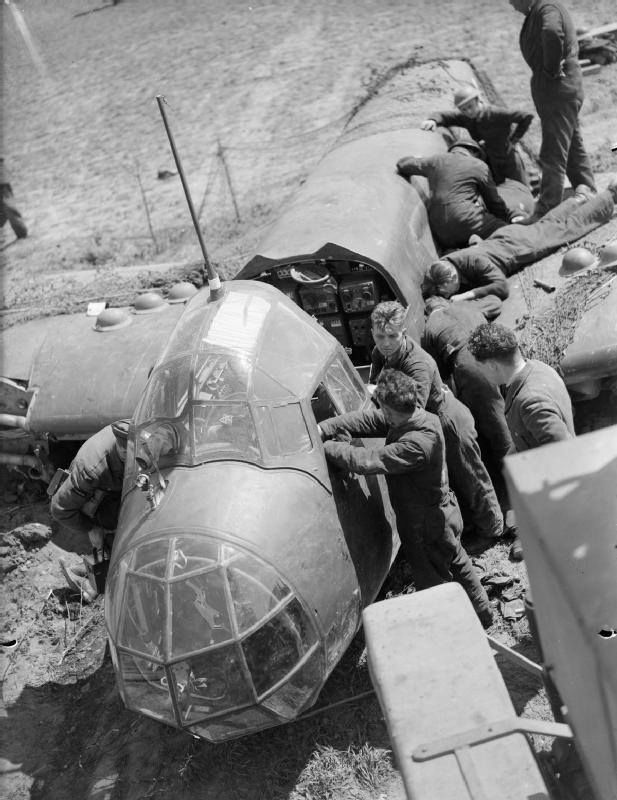
‘The exact day she saw the apparition was the 29th November 1940. It was a new moon on that night, the perfect time for the Junkers 88 bombers to fly. No natural light at all. They must have flown over the village and The Elms before that night, because it was on the direct flight path to Coventry, where all the vehicle plants were.’
‘She never mentioned it.’
‘They would usually have been asleep by then. But that night was a Friday, so no school in the morning. They’d already flown by when she decided to take that dare, on their way to bomb Coventry again. That’s why she didn’t hear them when she walked down that staircase. But she did hear a thud. And that thud was Theodor Schinkel.’
‘Who?’
‘A bad Nazi and a very good German.’
‘I don’t understand,’ she said. He looked at her as though he thought she should.
‘Let’s change direction,’ he said. ‘The house was built in 1745 on the foundations of a Tudor building, some parts of which remain. That is not uncommon at all. But less common is the fate of the original owner, who was hung, drawn and quartered for his part in the Gunpowder Plot in 1605.’
‘So a Catholic?’ She said, realising again that her drink was empty.
‘Another?’
‘Yes please.’
‘In amongst the various priest holes, now used for cleaning supplies, were two terrible portraits of unknown nuns, no doubt commissioned at the time of the first owner. These portraits are situated on either side of the main entrance to the house. They’re still there. Your grandmother would not have seen them when peering through the windows in childish curiosity.’
‘Why are they still there?’
‘No idea, really. The hotel has allowed a rumour to circulate that they are cursed and must not be removed. Customers like that sort of thing.’
‘Do they?’
‘Apparently, yes.’
‘God. Nuns. Really? Who paints nuns?’
‘Especially those nuns,’ he said. ‘They’re enough to put the fear in God in anyone.’
‘Or enough to make you stop believing in Him at all,’ she said.
‘So who was Theodor Schinkel?’
‘A German gunner in the Luftwaffe. On that night he was positioned in the underbelly of the plane, a bubble-type structure, preparing to aim his sites on Coventry. But he bailed out, because he didn’t want to do it.’
‘And he landed on the roof of Elm House?’
‘Yes. It’s got all the usual turrets and pediments, but where he landed, the roof was flat, and it’s directly above the main staircase, which, if you look up, has a large skylight – again, something your grandmother would not have noticed peering through the window. Had there been a moon, she might have done, but remember that on that night, there was none. It was his mag-light, shining through it, that accidentally picked up the faces of the nuns at the bottom of the stairs. That’s what your grandmother saw.’
‘Good grief,’ she exhaled. ‘So that’s it?’
‘Yes. That’s it.’
‘And what happened to Schinkel?
‘He was interned at Camp 287, Perdiswell, and spent an idyllic war farming the English countryside. He also furnished the Home Office with all they needed to know about the Junkers’ satellite systems. After the war, he married an English girl and died, a happy old man, twenty years ago.’
‘How did you find out?’
He looked at her, and in his eyes she could see a flicker of mild and yet not unkind contempt.
‘The main failing of the human race is that most of them lack curiosity.’
It was a rebuke.
‘Well, Grandmother will be pleased to hear it.’
He passed her a sheath of papers in a slim file. ‘It’s all in there,’ he said. ‘Just in case she doesn’t believe you.’
‘Oh, she’ll believe me. It’s too simple an explanation to be untrue.’
‘Almost all explanations are simple,’ he said, rising and offering her his hand, just like before.
‘What do I owe you?’
‘Nothing at all. I only charge when I find lost treasure.’ At this he winked. ‘But you must tell her immediately.’
‘I’m thinking of leaving it until next week. It’s her 98th and I was going to tell her then.’
‘Tell her tonight,’ he said with finality.
*****
In the early morning, she realised why. And all through the grief of it, she was so glad that she had done as instructed. There were no ghosts and there would be no afterlife for Heather Rose. The knowledge of it had tugged a smile to her thin blue lips and induced an unearthly erasure of wrinkles. She had died in her own grace.
She heard no more from Bram Dallaglio, and although she knew that he was entirely corporeal, she couldn’t help but question that reality. It was a small story but a huge final act. It was a play of kindness from someone who surely had better things to do. It was strange and it was beautiful, (he was beautiful), and however much she tried to explain him, she never really could.
And there were many times when she wondered where he might be right now, not in terms of location, but in terms of century. Because for all his denials, she was not at all convinced that he was entirely anchored to his timeline: that in the swell and the vagaries of the wind, he could so easily find himself elsewhere.
Why do some riders believe that wearing full gear can actually keep them cooler in high temperatures?
If you set it up correctly it does!. Lots of people wore black leathers.
Not me, I wore a full white suit but with a red helmet.
After a tour in Spain? I became the SPACEMAN and had an overjacket that looked like this
I wore it off the Ferry on Santander and managed to keep it on until Pamplona, a Police biker followed me and said the flash that came off it was absolutely blinding to other drivers.
It kept me slightly cooler though.
GROUNDBREAKING: China Unveils First-Ever Global Defence System
Most things get cheaper over time, why has the price of meats, especially beef, risen so much over the last 50 years?
Many things become AFFORDABLE over time NOT CHEAPER
In a proper economy that is
Take India
In 1992 , Chicken cost ₹60/- a kg and the Urban Median Salary was around ₹ 16,000/- a year , so basically you could buy around 270 Kg Chicken a year with a Median Salary
Today in 2025, Chicken is ₹ 200/- a kg and the Urban Median Salary is around ₹ 5,50,000/- a year , so basically you can buy 2750 Kg Chicken a year with a Median Salary
This means chicken became 10 times more affordable for a Median Family over the last 33 years
In 1992, a Standard Television (18″ B&W) cost ₹ 2,400/- which meant you could by 7 Standard Televisions with a years median salary
Today the standard television (38″-40″ LED) costs ₹ 22,000/- which means you can by 250 Standard Televisions with a years median salary
This means Televisions became 35 times more affordable for a Median Family over the last 33 years
Prices have risen but wages have risen more so affordability is way higher
The reasons include Mass Manufacturing, Large Scale Poultry Breeding , Economies of Scale etc
However not every thing has become affordable
2 BHK 700 SFT housing cost ₹ 3.5–6 Lakh in 1992 which meant you could buy a 2 BHK House for around 20 years Median Salary
Today the same housing costs ₹ 85 Lakh to ₹ 1.2 Crore in 2025 which means you need to pay 16–22 years Median salary to buy the same house
Gold Jewelry cost ₹ 1,600/- per Sovereign (8 grams) in 1992 , meaning you could buy 10 Sovereigns with a years median salary
Today the same Gold costs ₹ 72,000/- a sovereign and you can get only 8 Sovereigns for your median salary
An Average Plot of 2400 SFT Land costs ₹ 77 Lakh today which is around 14 years median salary
In 1992, the average price was ₹ 1.80 – ₹2.15 Lakh , which was around 13–15 years median salary
This is called the Middle Class Trap
The Economy forces the Middle Class to be able to eat well, drink well, enjoy a lot of services
Yet never allow them to be able to become wealthy and rise to the next level
The intention is to quickly pull a lot of low income and poor people into the middle class by making things cheaper and ensuring they can eat well, drink well, drive around in cars and bikes, own smartphones and TVs yet they still can never own true wealth and assets without PAYING A COST (In the form of Debt – like Home Loans or PF Loans)
Only China has a plan known as COMMON PROSPERITY that hopes to actually create wealth for the middle class and make things affordable including property & gold
Theo had been staring at the same sentence so long the letters bled together. Lineage in Postmodern Black Poetics. He mouthed the words once more, flat and sour on his tongue. His coffee from the bodega on 121st sat cold beside him, the surface gone slick and oily, but he drank anyway.
The radiator groaned in protest, the pipes rattling like brass warming up before a set.
Theo pressed a palm against the open book, willing the words to stay still. For a moment they held. Then the page trembled beneath his hand.
He told himself it was fatigue.
The air sharpened with coal smoke. Somewhere beyond the walls, a horn broke loose in the night.
The lights went dark.
And when he opened his eyes again, Harlem was different.
The words swam, and the sidewalk cracked into cobblestones.
Horse hooves clopped. Trumpets rang from a window above. A boy in suspenders sprinted past with a sack of newspapers.
Theo looked down. His phone was gone.
He closed his eyes again, slowly, and he was back in Harlem 2025. The coffee had spilled all over his notes.
He told himself it was a stress-induced hallucination.
Two weeks later, when he touched the yellowed cover of Torchlight Verse, it happened again.
This time, the streetlamps and car horns didn’t dissolve into fluorescent light and radiator hiss.
***
Theo Marshall had never planned to write about his great-granduncle. Elias Marshall was barely a footnote in most Harlem Renaissance anthologies. His one slim volume of poems, printed in 1925. Then nothing else. It had taken Theo three semesters and an irritable dissertation advisor to even find the book.
But here he was, dozing over its fragile binding in Columbia’s archive reading room, the heater rattling like a dying trombone, when the world folded neatly into itself.
The cold vanished.
Ink and coal hung heavy in the room, a bitter perfume. From outside drifted Harlem’s chorus: boots striking pavement in syncopation, a horn laughing wild from a tenement window, a dice game punctuated by cheers, and far off, the steel tempo of the train threading it all together.
Theo stood. The desk under him was now a dark walnut, carved with initials.
Outside the tall window, dusk spread over Harlem, streetlamps flickering on as voices rose from the sidewalks.
His hand dug into his sternum, waiting for the sharp bite of something fatal. The pulse was strong, stubbornly alive.
But if he was right, and Theo Marshall put more faith in science than faith, he had time-traveled by accident. Again.
Footsteps pounded the stairs, each one strong enough to rattle the doorframe.
The door flew open hard, slamming against the wall.
In the doorway stood Elias Marshall.
***
Elias’s suit sagged at the shoulders, the fabric gone shiny with wear. Ink clung to the creases of his fingers, and one sock had slouched low inside a scuffed shoe. The socks didn’t match. His steps struck the floor with a restless energy that filled the room.
“Jervis lied,” Elias muttered, slamming a folder onto the desk. “He said he’d get it to Locke. Said he’d help. All they want is another Langston, another Claude. I ain’t the right color for them.”
Theo blinked.
Elias spun on him. “Who the hell are you?”
“Me?”
“Yeah, boy. I don’t see no one else here.”
“I… uhm.. friend of Jervis.”
“Make sense. You got that damn Jervis look.” He poured himself a half-glass of amber liquid. “You here to laugh too? Read my poems, say they ain’t finished, ain’t worth a damn?”
“No. I…” Theo stared. “You’re Elias Marshall.”
The man narrowed his eyes. “Boy, how do you know my name?”
Theo’s throat tightened. ‘You… wrote Torchlight Verse. Published next year.’”
“Next year?” Elias squinted. “You drunk already?”
Theo let out a single bark of laughter that cracked the silence. “Maybe.”
Elias stared a beat longer, then dropped into a chair. “Well, mystery man, since you’ve materialized into my misery, might as well read them. Maybe you’ll say something new.”
Theo picked up the folder. Inside: ink-scrawled lines, thick with metaphor, grief knotted into cadence. They weren’t finished, but they carried a heat that felt alive.
He cleared his throat. “This one here, Stove Smoke. It’s got the bones of something incredible. But here.” He pointed. “Don’t finish this metaphor. Let it hang. Let it ache.”
Elias frowned. “The line about Mama’s laugh?”
“Yes. Let her live in the smoke. Don’t tie a bow on it.”
Elias leaned forward. “What did you say your name was again, boy?”
Theo paused. “Doesn’t matter.”
“You some kind of spirit or figment of my ‘magination.”
“Maybe.”
They traded short, uneven chuckled bursts, the kind that tested the air, before the sound grew freer, tumbling between them.
Elias poured him a drink. Theo accepted.
***
They worked through the night.
“Your verbs are good,” Theo said. “But you over-explain the emotion.”
Elias bristled. “People don’t read between the lines.”
“They do if the line hits right.”
At one point, Elias demanded, “You sure you’re not Alain Locke in disguise?”
Theo snorted. “Please. Locke doesn’t quote Kendrick.”
Elias blinked. “Who on earth is Kendrick.”
“Never mind.”
Later, as they restructured a poem called Inheritance, Elias leaned back. “When I was eight, I wrote about a dead bird. Mama said, ‘you got heavy hands for a child.’ Been dragging that weight since.”
Theo nodded. “Heavy hands leave marks.”
“You talk like a professor.”
“Guess I do.”
Elias laughed.“ You’ve got the look of a man stuck between places.”
Theo’s eyes dropped to the ink stains on Elias’s hands. His own fingers flat against the desk, unsure what to hold on to. “I… I shouldn’t be here,” he said, then after a breath, “though I’ve never felt more at home.”
He leaned in slightly, his next words quiet, as if asking permission. “Can I give you one line?”
“Only one, huh.”
Theo wrote: You cannot name the stars unless you’ve walked beneath their heat.
His gaze lingered on the words. His lips parted, and released a breath so slow it seemed to carry something out of him.
“Damn. That kind of line could make a man immortal.”
Theo shrugged. “It’s yours.”
“Hell it is,” Elias said. “A line like that don’t belong to one man. But I’ll keep it.”
He turned back to the page.
Theo felt the jolt before it happened.
The room shimmered. Elias’s voice echoed. And the desk beneath his fingers transformed.
***
He woke in the library. A radiator hissed.
The poem lay open on the desk. The final one. The one that had always ended mid-line.
Except now it didn’t.
You cannot name the stars
unless you’ve walked beneath their heat –
so I walk. Still walking.
Theo’s throat caught.
He flipped to the acknowledgements. There, in ink faded by time:
To the man whose name I never caught, who found me in the hour I was ready to quit.
Theo sat back.
He checked the archive database. Elias Marshall: still one book, still no further publications, still nearly forgotten.
But that line, the one about stars, had become part of the canon. Quoted in anthologies. Tattooed on artists. It had survived.
Theo had given it. And history had kept it.
Without him.
***
He didn’t tell anyone.
Not his advisor. Not his friends. Not even his mother.
He redrafted his proposal:
Inherited Voice: Ghosts, Lineage, and the Unwritten Contributors to the Harlem Renaissance.
He quoted Elias liberally.
And when he defended it months later, voice steady, heart full, he wore a pin in his lapel: a star, tiny and unremarkable to anyone else.
***
One rainy afternoon, Theo found himself outside the old brownstone on Lenox, the one he’d first “arrived” in. It was a crumbling walk-up now, paint peeling, windows cracked.
He stood for a moment in the doorway and listened.
He didn’t hear any music, nor keyboard clacking, only the rain working its way through the cracks where sound used to be.
A boy passed on a scooter, blasting trap music.
Theo smiled.
He decided not to go inside.
Instead, he walked down Lenox, coat collar up, heels tapping to the music in his head. He wasn’t chasing after doorways or strange coincidences anymore.
For now, he held on to what he’d found.
He carried a past close enough to touch and a future opening ahead, his shoes striking wet pavement as he walked clear between the two.
Chicken with Olives
This excellent Middle Eastern dish is a particularly Moroccan specialty.
2663c22e5d3cc74b0cab2f7035673d63
Ingredients
1 large roasting chicken (about 4 pounds)
2 1/2 tablespoons oil
2 onions, sliced
Salt and black pepper
1/4 to 1/2 teaspoon ground ginger
1 teaspoon paprika
1 onion, finely chopped
1/2 pound green or black olives
Juice of 1/2 lemon, or more
Instructions
Wash the chicken and wipe it with a damp cloth.
Heat the oil in a large saucepan. Add about 3/4 cup water very gradually, stirring vigorously.
Add onion slices, sprinkle with salt, pepper, ginger and paprika, and lay the chicken on top. Cook over low heat, covered, for 1 hour, turning the chicken frequently. Add a little more salt if necessary, and the finely chopped onion, and cook for 1/2 hour longer.
Pit the olives. Put them into a pan, cover with cold water, bring to the boil, and leave for 1 minute. Drain off the water and repeat the process. This will remove excess salt.
Add the olives to the pan and cook with the chicken for a few minutes only.
Just before serving, squeeze a little lemon juice over the dish. Sometimes a few pickled lemon slices are added just before serving.
Serve with plain boiled rice or couscous.
A Book of Middle Eastern Food by Claudia Roden
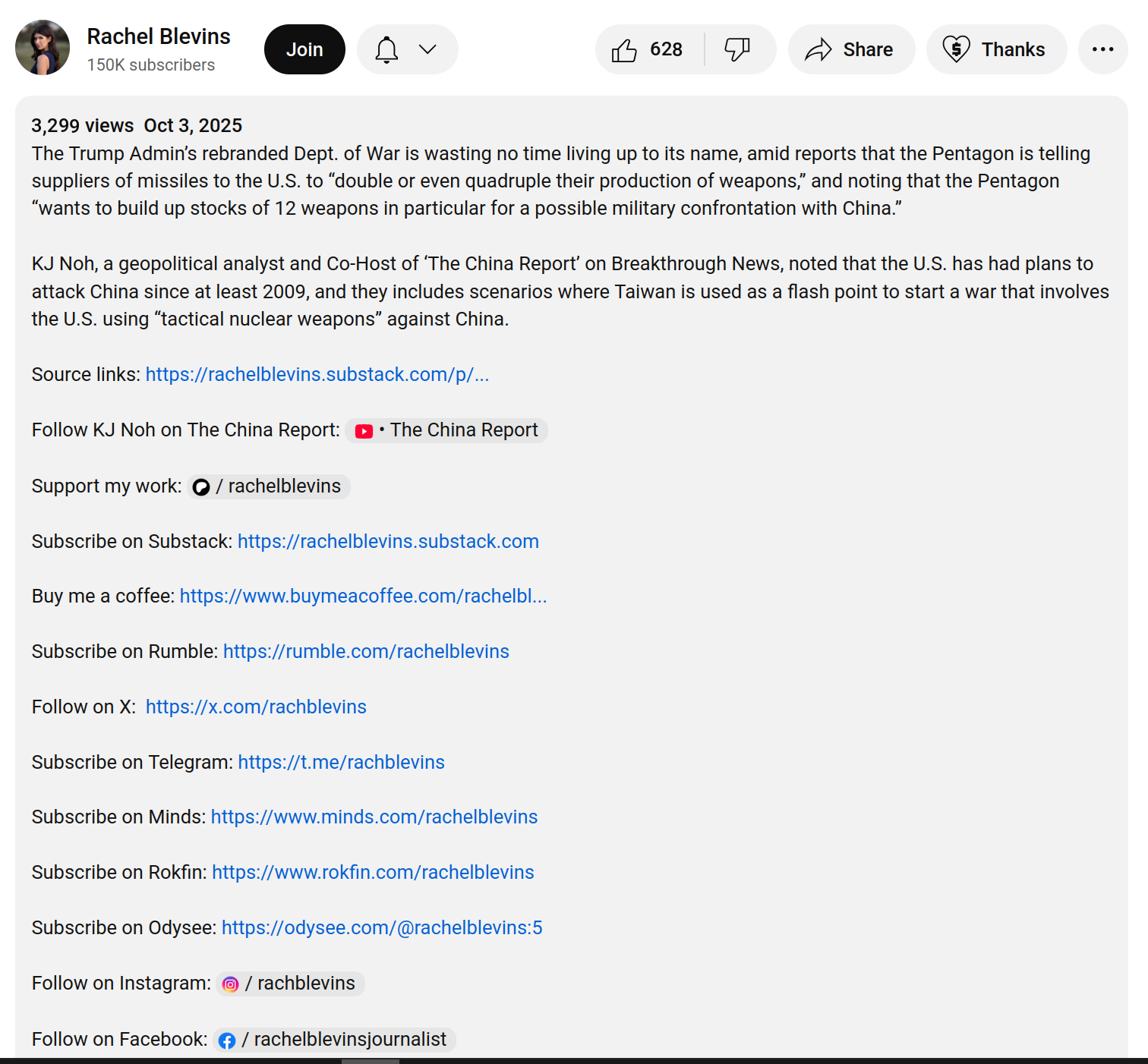
Taiwan Will Serve as FLASH POINT as U.S. Plans Tactical NUKES for War with China – KJ Noh