
Back in Western Pennsylvania, myself and my buddy Robbie would go out mountain cruising. We would take his International Harvester Scout and go up and down the back roads though the countryside and hills. We would cross streams, up ravines, and navigate remote logging roads.
Now, he knew everyone out there. A skill that I never possessed.
And just like in the Deserts of California, in the remote areas were some pretty strange folk. Oh, not in a bad way. I mean in a unique way. Odd. Curious. All marching to their own beat.
So get this; we are riding down a paved remote road in west Bum-Fuck and we go around the bend and there is a nice farm house. Painted green. And this guy… or girl… or neutral indeterminate gender-less person comes out to greet us.
Robbie tells me; “Man, don’t you say ‘nothin'” Of course I didn’t . I said “Hi” and smiled, but let Robbie take over. They exchanged some pleasantries, and then we left.
Now what’s going on, of course was that there are people who wanted to live life on their own terms, in their own way, and they didn’t like to be disturbed when doing it.
Ah. I get it. I understand it.
And so life goes on.
I long forgotten the name of that person, but the memory persists; a person living their life on their terms. Good for them.
Today…
Pineapple-Stuffed Chicken Breasts
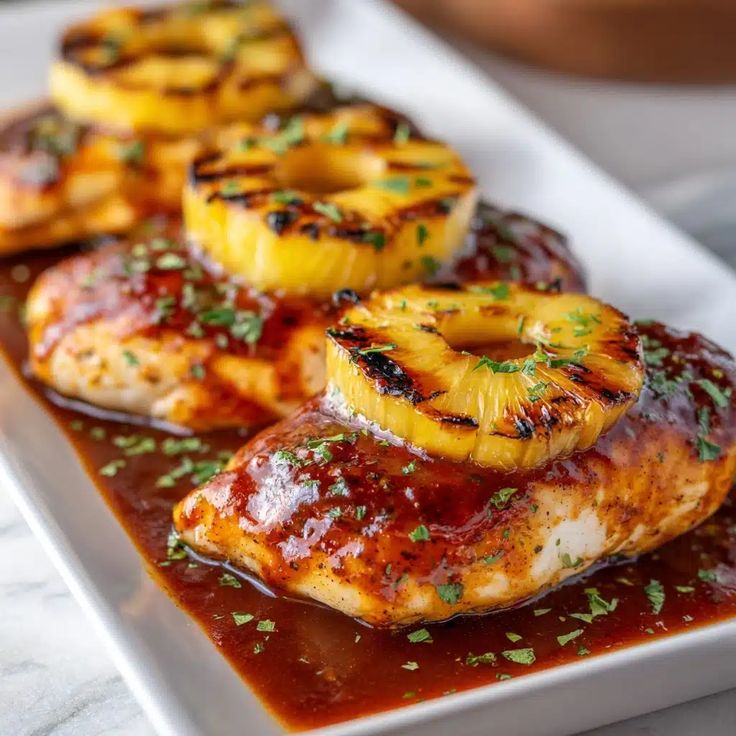
Yield: 8 servings
Ingredients
Chicken
- 8 whole small chicken breasts, boned
- 1 1/4 teaspoons salt, divided
- 1 (8 ounce) can crushed pineapple
- 6 tablespoons butter, divided
- 1/2 cup green bell pepper, chopped
- 1/2 cup celery, chopped
- 1/4 cup onion, chopped
- 1/2 teaspoon dried tarragon
- 1/2 cup fine dry bread crumbs
- 1 tablespoon pimiento, chopped
Sweet-Sour Pineapple Sauce
- 1 tablespoon vegetable oil
- 2 cups green bell pepper, chopped
- 2 tablespoons onion, chopped
- 1 (8 1/4 ounce) can pineapple slices in syrup
- Syrup reserved from crushed pineapple
- 4 tablespoons cornstarch
- 3/4 cup water
- 1 chicken bouillon cube
- 1 tablespoon brown sugar
- 1/4 teaspoon dried tarragon
- 2 tablespoons vinegar
- 1 tablespoon soy sauce
- 2 tablespoons pimento, diced
Instructions
Chicken
- Place boned chicken breasts skin side down on board.
- Sprinkle with 3/4 teaspoon salt.
- Drain pineapple and reserve the syrup for the Sweet-Sour Pineapple Sauce.
- Heat 4 tablespoons butter in skillet; add green bell pepper, celery, onion and the remaining 1/2 teaspoon salt.
- Cook until the vegetables are tender.
- Remove from heat; add the tarragon, bread crumbs, pimiento and the drained pineapple; mix well.
- Place about 1/4 cup stuffing mixture in center of each chicken breast; fold the sides over and fasten with skewer or string.
- Heat the remaining 2 tablespoons butter in large skillet.
- Add chicken breasts, four at a time and brown lightly on all sides.
- Remove and place in a shallow baking pan.
- Bake at 350 degrees F for 40 to 45 minutes until tender.
- Serve with Sweet-Sour Pineapple Sauce.
Sweet-Sour Pineapple Sauce
- Heat oil in saucepan.
- Add bell pepper and onion; cook for 2 minutes.
- Drain syrup from pineapple slices and add to saucepan with the syrup reserved from the crushed pineapple in stuffing.
- Blend cornstarch with water; add to saucepan.
- Add bouillon cube, brown sugar, tarragon, vinegar and soy sauce.
- Cook, stirring constantly until mixture begins to thicken and comes to a boil.
- Cut pineapple slices in half; add to the sauce with the pimiento.
- Heat and serve over the chicken breasts.
Nurse Breaks Down After Discovering Victim’s Brutal Beating
THE SKULL OF ASKE
Written in response to: “Center your story around a mysterious forest fire, disappearance, or other strange event.“
HAAKON RAGNSKJOLD
Historical Fiction Science Fiction Speculative
The metal sculpture that vaguely resembled a rooster. I had made the mistake of feeling one of its tail feathers—I but near sliced half my finger off!
“Hodag. Found in the woods of Rhinelander, Wisconsin. 1899.”
I felt rather uneasy. It wasn’t the dangerous keenness of those razor sharp feathers. It was the uncanny skill of the sculptor. They must have taken decades to craft it so exquisitely.
The lifeless doll, clad in harlequin motley…
“The corpse of Petruschka, murdered at the Shrovetide Fair in Krasnoyarsk, 1910. A mechanical doll so lifelike it was thought to be a human being. I obtained it from an abandoned factory once belonging to Grissom’s Omniversal Gadgets.”
“Never heard of them.”
“Be glad you haven’t. They would have changed the whole balance of world power in 1913, if they’d had their way. We’d still be fighting World War One if it was up to them.”
Then he showed me a glass jar inside of which was what looked like a human hand.
“Inside that jar is an airless vacuum. But watch what happens when this lever allows in a steady stream of oxygen.”
There was a hiss of in-rushing air. The hand suddenly burst into furious flame.
“Reminds one of the burning bush in the Book of Exodus. Exposure to oxygen sets it on fire, yet it is never consumed. But this isn’t what I brought you here to see.”
What he showed me was an immense skull. Had this belonged to a living man, instead of being an incredibly skillful sculpture, he would have been a veritable giant. I calculated swiftly what the size of such a man must be, and I wondered where the sculptor would have obtained his model.
“Over seven feet in height. That forehead bone ridge is slightly more pronounced than in modern homo-sapiens. And you can see where the neck muscles would have been attached—incredible, that an artist would go into such careful detail. The muscles would have been far stronger than in an ordinary human. Cro-Magnon, if I haven’t missed my guess.”
“I had the help of some very good men, getting this. I owe Carnacki, Dr. Hesselius and especially John Silence a debt of gratitude.
“It was found in Greenland—deep in the interior, early two miles beneath the ice sheet. Ancient Greenland was surrounded by a ring of mountain peaks. There’s a canyon in the center, longer and deeper than the Grand Canyon. The weight of the ice sheet has sunk the land beneath, in places more than two hundred feet below level.
“This is tied up with the history of the Eirik the Red’s settlement of Greenland in the late Tenth Century. The Viking settlement of Iceland’s continued till this day. But the Greenland settlements were all gone by the end of the Fifteenth Century. No one knows exactly why, though there are many theories. Plague? The supply ships from Iceland stopped coming (and Greenland had few natural resources of its own—that would have killed them)? Invasion from the native Inuit inhabitants? Resurgence of the Ice Age? Combination of all four?
“Here’s what I think. I’ve found traces of something cataclysmic, something was unleashed in the settlements, something after which, there could be no possible recovery. The native Inuit were unaffected, whatever it was. It just took out the Vikings.
“They accepted Christianity in Iceland in the year 1000 A.D., though they did allow for the keeping of pagan traditions in private. Iceland’s like a microcosm of the world. Christianity marches on in triumph—but they cannot expunge the old pagan ways—not fully, though they did try. There’s little record of paganism in Greenland, but I think it was there—and I think, somehow, that the ancient paganism clashed with the Church. A kind of Ragnarök, if you will. A war between the Christian forces of blindness and intolerance (so like the Hrimthursar Frost Giants of old)—and the adherents of the old religion, Greenland’s ancient pagan faith, who worshiped the Æsir Gods.”
Daegne had been looking at me sharply.
“I’ve traced your bloodline back that far—and farther. Memories can be inherited, though it is very difficult to bring these to the surface, especially after the passage of centuries, and even millennia. But, as with dreams, the strongest ones struggle for survival and fight their way back to the surface. What does the Gray Wolf mean to you?”
He looked at me very strangely at that. His gaze was piercing. I found those silver eyes very unsettling, to say the least.
That name…it shouldn’t have meant anything out of the ordinary, but…
“Just…an old story in our family. A kind of…tutelary guardian figure. Kind of some kind of werewolf figure, actually.”
“There was a Norse Saga that came out of Greenland—Grar Ulf Saga. Lost to the world, but I found traces of it. The Gray Wolf was a pagan man in Greenland. He fought against the corruption that was in the church. He wore a coat of wolfskins. That would make him one of the ulfhednar—their name meant wolf coat wearers. They were said to be fiercer and more dangerous than berserker warriors. Rumors said they could actually turn into wolves.”
“Like Sigmund and his son, Sinfjötli, in the Volsunga Saga.”
“Yes, but the Gray Wolf disguised himself, and nobody knew who he was. He went about unsuspected, during the day. At night he turned into the wolf warrior and was never known.”
“You’re saying he was like The Batman, then? I’ve never heard any of this before.”
“You are descended from him. Our discussions led me to suspect your origins. My researches confirmed them.”
“I still don’t understand what that’s going to be in aid of.”
“You are of the Gray Wolf’s bloodline. You have inherited his memories. I believe we can unlock them and you can learn their secrets.”
If what Daegne was saying was true, it would explain things I had been wondering about for many years. It was only a story, little better than a fairy-tale, yet I admit that that story had fascinated my since I was a child. If there really was more to that story than I supposed, I owed it to myself—indeed, to my whole family—to find the truth. I felt something burning inside me, as if I was on the verge of lifting the lid from a great treasure.
“What do we have to do?”
I had seen Daegne Carçis’ psychic abilities before. I had no trouble believing he could put me in trance deeper that that of the most skilled hypnotist.
“Take hold of the skull. Keep in physical contact with it. It is the key. But why is it the key?”
He began to play a CD on his stereo. Sir Arnold Bax. Symphony No. 1 in E-flat. Despite the stridency of the first movement, I found myself relaxing and drifting off.
I began to see a bleak, arid landscape. There were immense rocks that seemed as if they had grown out of the rough ground. Even in that strange, passive state, I knew, I was witnessing the landscape of Greenland—centuries and centuries ago. These was the inner territories, ones that were never approached, not even by the Skraeling Inuit.
The thing was out there. A thing fearsome, like Grendel was to King Hrothgars’ people 800 years earlier. But no Grendel could ever be as terrible as the thing they called the Raptor.
It was out there in the wilds. There was fear. But also a calling, a moment of destiny.
I knew it was out there.
They called it the Raptor and I was seeing it for the first time as it rose from behind, almost from out of the rocks. It loomed high. It was so great, not so much in size—but simply in its presence.
The eyes, they glowed, burning with a fire, like the flame of a volcano—but brilliant, azure, sapphire blue. But the grin on the creature’s face signified nothing. It was as if this being could not find the way to signify its emotions into anything that would register with a normal human being. It smiled, and the eyes, those volcanic orbs, they exploded with interior flames. It was the face of a mad man—and it smiled. Blindly. Insanely.
The thing was older than could have existed in any sane world. The fear I encountered was that of feeling the universe, the rational universe, being torn apart. I was in the presence of a thing that should not—could not exist.
It’s head turned to its side, like a dog or a wolf trying to understand. I sensed, without words, that this thing, this being, was ancient beyond ireckoning. How long had it been here? How long had it walked among us? How long had it struggled to comprehend us?
Its shape was that of a man. What looked like burst sections of riven chain mail cloaked its legs and loins. The hair of its head was black as coal, falling in unmannerly ringlets. It reached out an arm and touched me on the shoulder with questing fingers. It was as if in those mad eyes was the expression of something that wanted to understand but could not.
It crouched from its ten foot height—and still it loomed over me. The touch of that hand on my face was sleek, smooth like metal—cool, but not icy like cold steel would have been. Suddenly, the creature seized my face in its hands. The azure fire of its eyes burned into my eyes.
I woke with a start. The second movement of the Bax Symphony was playing. Everything I had seen in that trance vision was like a visualization of the music.
“Slow down, Wulfgar—take deep breaths. Drink this. Be calm. Then tell me what you saw.”
In a few moments I had regained my composure. But I could never forget what I had seen—or what had been awoken in me. When I was calm enough I began to speak.
“You were right. I was him. Or at least I inherited his memories. It was a time of great struggle. There was a bishop—archbishop, actually…Algyr was his name. He’d been sent there especially to combat the underground strongholds of paganism that still remained. Against those found guilty, he enacted worst punishments than confiscation of property, or outlawry.
“It all came to a head with that skull. This was what the disputation was all about. It seems the pagan Greenlanders believed that was the head of Aske, who they claimed was the first man. His wife was called Embla. They said the three Gods, Odin, Hoenir and Lodhurr found an ash tree and an elm tree. They turned them into the first man and woman. And they believe that this had been done long ago in Greenland.”
“So Greenland would have been their Garden of Eden.”
“But the Archbishop claimed it was only a carven stone skull. He commanded it to be destroyed so the pagans wouldn’t worship it. But no matter what they tried, the head was stronger than their mallets and mattocks.”
“Many religions have creation stories about the first man and woman. And they are very different from one another—but instead of welcoming the differences, this Archbishop, and your Gray Wolf went to war over it.”
“Yes. It was like having a complete book downloaded in only moments, but it’s organizing itself in my mind. It was a real war. But it looked like Archbishop Algyr won. He ferreted out the old pagans, and it seems like only a handful of them survived—one of them was my direct ancestor. She was the wife of the Gray Wolf. His name was Einclé. He made off with the skull and buried it deep, probably in the place where you dug it up again.
“So what happened to the pagans that weren’t killed?”
“They managed to escape from Greenland, or go out into the most remote regions. In the end I think they all left Greenland. All except for Einclé, the Gray Wolf.”
“And…the Archbishop, and all the Greenlanders who he didn’t kill—what happened to all of them?”
“You were wondering why the Viking settlements were all abandoned. I think I know the reason, now.
“This thing—the Raptor. Even what little I saw in its eyes…it was enough to drive me mad. It was almost completely alien. It’s not even from our universe. It’s from somewhere where the natural laws are all different. Somehow the thing has survived in our universe. I don’t know how. The Vikings spoke of the Nine Worlds. But there was another one. They called it Utgard. If I had to guess that is where the Raptor came from. From somewhere outside.
It’s not evil, though. Not as we’d think of evil. It’s just…different. And our world is as alien to it, as its world would be to us. But I think it wants to understand, to be able to make its way in a foreign land.
“I think it understood some of what it saw in my mind—in my ancestor’s mind. Maybe he even went out into the wild to call it. Maybe he called it, and it answered him. It understood what he wanted. What he needed. The Archbishop and his men had pursued the Gray Wolf. I think they were close to catching him.
“I think the Raptor killed every single one of them. I think he destroyed the entire settlements. Maybe he even destroyed the Gray Wolf, with them. I only know whatever I inherited from my ancestor, there was nothing beyond that moment.”
Carçis looked thoughtful.
“Your ancestor went into the wilderness. He awoke this Raptor. It destroyed the entire settlements of Greenland. That completely fit with every scrap of information I’ve been able to glean all these years.
“And it was all because two men fought a religious war. A war over whether the first man and woman were made out of unliving clay—or whether they were made from trees that were already alive. It would almost be laughable, if it weren’t so tragic.”
“Which of them do you think was right?”
“Well, I think your ancestor fought a battle against imperialistic intolerance, of his people’s right to choose their own belief. And this Archbishop was attempting to force—by whatever means necessary—conformity to the ‘Religiously Correct’ belief. Despite its many admirable qualities, the Christian faith has had a long tradition of ruling by force, rather than by love. No, I believe your ancestor was in the right. But that does not necessarily mean the Biblical story of Adam and Eve’s creation from the dust of the ground is incorrect.”
“Then you believe the Biblical account to be the true one, rather than what the Elder Edda says?”
“I did not say that. I do not believe that men and women were made from dead dust and clay. No we, our ancestors were made from the substance of living trees. I suspected that long ago, but once I found the skull of Aske, I became convinced. You and I, Wulfgar, have held in our hands the skull of our first ancestor, Aske, whom the Gods formed from an ash tree.”
“You can’t be serious. It’s an exquisite likeness, but it’s only carven stone.”
“No. Not stone, and not carved. This is wood. Petrified wood.”
Too Awesome!! Simple Minds – Alive And Kicking (Reaction)
Why was Steve Jobs much richer than Steve Wozniak when they founded Apple together?
Paul has already given a perfect answer to your question.
However, there is one point he did not mention, which I will now address.
Before Apple Computer went public in 1980, Steve Jobs played a somewhat unique role.
He decided not to grant stock options to some of Apple’s earliest employees, such as Daniel Kottke, Chris Espinosa, and Bill Fernandez.
As a result, these men who helped create a company that would soon be worth a billion dollars were not going to gain anything from the next initial public offering, which was going to be the largest since that of Ford Motors in 1956.
Here’s what Wozniak did.
Wozniak sold some of his shares to his friends (at very low prices) because he thought Jobs was an unfair anal cavity.
In the end, Wozniak ended up with fewer shares than Jobs and therefore earned less money than the latter after the IPO.
Steve Jobs ended up making a very wise investment in Pixar animation studios, which earned him $1 billion when Pixar went public.
After leaving Apple in 1985, he founded his own computer company, named “NeXT”.
When Steve Jobs finally returned to Apple, he received a mega stock grant that netted him an additional twenty or thirty million dollars.
It is therefore thanks to Wozniak’s generosity and Steve Jobs’ investments that the latter is valued at around $8 billion, while Steve Wozniak’s net worth is estimated at around $100 million today.
Wozniak is still richer than most people, and his hobbies consist of riding a Segway.
– Woz happy on a Segway
Pictures




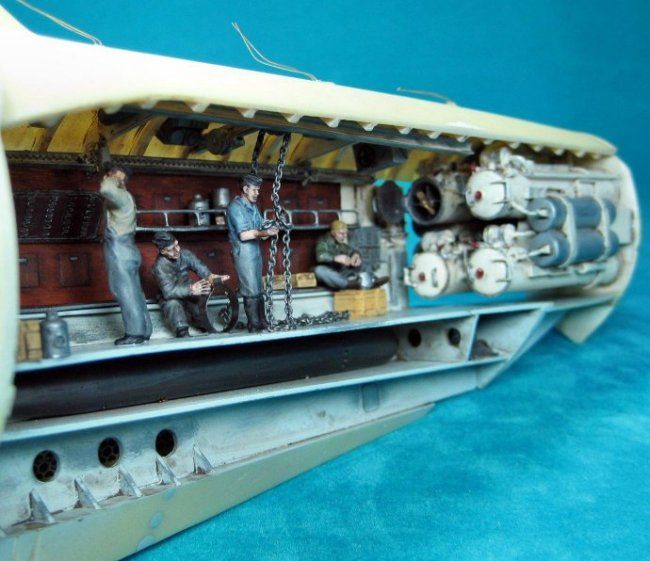











What’s your biggest “I Dodged a Bullet” moment?
Might’ve been around ‘83. I was driving from Vancouver to Calgary, on a new section of the Coquihalla. Maybe 10 miles south of Merritt, the fuel pump crapped out. I hitchhiked to Merritt, bought a pump, hitchhiked back to the car, and realized that the part I’d bought was missing a fitting. It meant begging a third ride into town, getting the fitting, and begging a fourth ride back. For each of the four folks who were kind enough to pick me up, there were several hundred, on this scorching day, who couldn’t have cared less. Anyway, I swapped out the pump and went on my way. Stopped in Banff to take on fuel. At this point I had been driving, walking, hitchhiking and repairing for around 21 hours. Got moving again, and on one of the stretches which mark the transition from Rockies to Foothills, it dawned on me that there was something out of whack with the road. It looked normal, yet not quite. That’s because it wasn’t the real one. I had been driving, for an unknown length of time, on a hallucination. It couldn’t have lasted long, since the ditch failed to claim me, but it tuned me in sufficiently that I took pains to stick to the real McCoy for the rest of the trip.
Things that I’m grateful for: my familiarity with the route, which I had driven many times before, the time of day- 3AM, with little traffic, and the fact that this unplanned experience happened on a perfectly straight section of road. Had it happened on a curve, I doubt I’d be here to write about it.
Sir Whiskerton and the Subterranean Sonic War
Ah, dear reader, you return to find me, Sir Whiskerton, in the midst of a cultural cold war—a conflict fought not with claws, but with cadence. It was a battle of bass versus brass, of hip-hop versus bop, that threatened to crack the very foundations of the farm. This is a tale of two rhythms, two worlds, and the beautiful noise they made when they finally listened to each other. So, lend me your ears for the resonant, reconciliatory tale of The Lofi-Tofi Conflict.
The Rumble in the Underground
It began on a rain-soaked spring afternoon. The steady drip-drip-drip on the barn roof provided a natural metronome for MC Scratches and Lil’ Paws, who were in the barn, crafting what they called a “earth-shaking banger.” The bass was indeed immense, a physical force that made the dust motes dance in the gloomy light.
Beneath their feet, in the exquisite, dirt-walled confines of the “Mole Blues Cave,” a very different scene was unfolding. Thelonious the Mole, resplendent in a tiny zoot suit, was on stage, his claws poised over a set of pebbles arranged as a xylophone.
“A-one, a-two, a-you know what to do…” he murmured.
But the only thing anyone could do was vibrate. The cats’ booming BOOM-tss-BOOM was causing delicate stalactites of dirt to fall from the ceiling, landing with soft plinks in the acorn-cup cocktails. The vibe was, as Jazzpurr the Beatnik Cat would say, “severely harshed.”
“This will not stand,” declared Thelonious, lowering his sunglasses. “This is an aural assault! A sonic trespass!”
The Passive-Aggressive Playlist War
Thus began the Great Sonic Schism. The moles retaliated not with volume, but with infiltration. They tapped into the barn’s water pipes, using them as a giant resonating chamber to pipe smooth, melancholic jazz directly up through the floorboards. Cows being milked suddenly found themselves with a strange urge to snap their tails to a slow bassline.
The cats, in turn, were driven to distraction. “I can’t write with this… this elevator music seeping into my soul!” Scratches moaned, trying to rap over a sultry saxophone riff about a lost worm.
Jazzpurr, who considered himself an ally of the moles, took to the barnyard stage. He put on his black beret, snapped his fingers, and began to read from a scroll. “A poem,” he announced, “titled ‘Ode to an Unwanted Vibration.'” He then proceeded to list synonyms for “annoying.” “Irksome. Vexatious. Pestilential. Gratuitous. Obtuse…”
Lil’ Paws, ever the pragmatist, shouted back, “Your rhymes are so sleepy!”
To which a mole from a nearby hole retorted, “Your beats are so loud!”
It was a war of words and wavelengths, with me, Sir Whiskerton, caught in the no-mole’s-land in between.
The Great Collaboration Compromise
The breaking point, as it often is, was absurd. Groove the Mole, the tap-dancing virtuoso, decided he would show the cats what real rhythm was. He ascended to the barn, took a deep breath, and began to dance. His “Tap-Dancing Ground Rodent” routine, however, was so vigorous and vertically focused that he simply dug himself a deeper hole, vanishing from the waist down in a cloud of dust and frantic, muffled tapping.
It was clear this could not continue. I called a summit at the neutral territory of the vegetable patch.
“The moles require chill,” I stated, my voice cutting through the tension. “The cats require energy. You are not at odds. You are two halves of a musical heartbeat.”
Scratches, looking at the embarrassed Groove being pulled from his hole, had a spark of inspiration. “Your sound… it’s cool. It’s complex. It’s like the roots of a tree, all tangled and deep.”
Thelonious, surprised by the compliment, adjusted his tie. “And your sound… has a certain… vigorous propulsion. Like a particularly ambitious earthworm.”
An idea was born. Not a battle, but a blend.
The Birth of “Diggable Earth Tones”
They decided to create one track together. Down in the Mole Blues Cave, Thelonious and his band laid down a smooth, cool jazz foundation—a walking bassline played on a stretched root, a melody on the pebble-xylophone. They recorded the sound of dripping water and the soft scratch of claws on dirt.
Then, upstairs in the barn, Scratches and Paws listened. Instead of overpowering it, they wove their art through it. Scratches wrote a rap about the quiet hustle of life underground. Lil’ Paws didn’t blast a beat; he sampled the sound of Groove’s tapping and the thump-thump of a mole digging, looping it into a crisp, organic rhythm.
The resulting track, “Diggable Earth Tones,” was a revelation. It was chill, but it had a pulse. It was modern, but it had soul. It was the sound of the farm itself.
The Resolution
The song became an instant crossover hit. It was played during sophisticated mole cocktail hours and at the cats’ barn-shaking parties. The war was over, replaced by a vibrant cultural exchange.
Moral of the Story: Different styles aren’t meant to clash; they’re meant to collaborate. The most beautiful music often comes from the most unexpected duets.
The Aftermath
Jazzpurr, while still preferring pure bebop, admitted the collaboration had “a certain funky je ne sais quoi.” The farm enjoyed a period of unprecedented sonic harmony, where the sound of rain on the roof could be a backdrop for a mole’s melody or a cat’s rhyme, and no one minded at all.
And so, dear reader, we close this chapter on a harmonious, hybrid note—but rest assured, the farm’s next adventure is just one creative difference away.
The End.
Post-Credit Scene:
A week later, Thelonious and MC Scratches are seen having a heated but friendly debate over the lunch menu. “I’m telling you, the earthy complexity of the worm pairs best with a cool, minimalist jazz soundtrack!” argues Thelonious. “Nah, man,” counters Scratches. “A worm like that needs a hype, celebratory beat! It’s a victory feast!” They agree to take turns with the soundtrack.
Best Lines:
-
“Irksome. Vexatious. Pestilential. Gratuitous. Obtuse…” – Jazzpurr, reading his “poem”
-
“Your rhymes are so sleepy!” / “Your beats are so loud!” – Lil’ Paws and a Mole, the core of the conflict
-
“Your sound… it’s like the roots of a tree, all tangled and deep.” – MC Scratches, giving a compliment
-
“Your sound… has a certain… vigorous propulsion. Like a particularly ambitious earthworm.” – Thelonious, returning the favor
Starring:
-
Sir Whiskerton (The Diplomatic Curator of Sound)
-
MC Scratches & Lil’ Paws (The Architects of Boom)
-
Thelonious the Mole (The Maestro of the Underground)
-
Groove the Mole (The Tap-Dancing Excavator)
-
Jazzpurr (The Poet of Petulance)
P.S.
Remember: Don’t be so quick to dismiss the music of another generation or culture. You might just find the perfect beat to your rhyme, or the perfect rhyme to your beat, in the most unexpected of places. The best playlists, like the best communities, are a rich and varied mix.
Why don’t you see professional cyclist riding titanium frames?
Back in the 1990’s you had your choice of Steel, Aluminum and Titanium. All three had their pros and cons.
Steel was cheap, gave a silky smooth ride, stiff everywhere, but was heavy, Aluminum could provide a harsh ride at times, stiff where wanted, offered more flexibility with tube sizes, was lightweight and affordable. Titanium…. well…. gave you that silky smooth ride, had some flexibility with tube sizes, Stiff where you needed it or wanted it, was lightweight and had a price point somewhere around that of a Boeing 747.
Back then in the private sector, the vast majority of riders were on Aluminum, with second place going to those Steel hold-outs and then there was the extreme minority of Ti riders. I’m sure there were pros who were riding Titanium but there is never much talk about “the bikes” when the topic of pro racing comes up.
So Steel, Aluminum and Titanium is what we had. Then came carbon fiber and everyone went “Titani-what?”.
Carbon fiber is all the things you want in a bicycle frame. Stiff where you need it, any tube size and shape you want, a buttery smooth ride and most of all, tremendously lightweight. Couple that with a carbon wheelset, headset, handlebars, cranks, crank arms, fork, seat post, levers and you have yourself the makings of a bike under 15 pounds and closer to 10 pounds. True, this can drive the price way up into the $5000 area or beyond, but if you are a team racer, this is where you CAN be. Your run-of-the-mill rider like myself can mix and match components and still get a bike close to 15 pounds that does all you need to do and affordable.
In the early 1990’s I had a steel frame road bike, my first. Then I graduated to Aluminum for two bikes and when money made itself available, a carbon frame bike came into my life. I’ll never ride anything else because with my complete bike at 14.5 pounds, why would I ride Titanium when it could never get that light.
Granted, a Ti frame will never snap in half during the Tour de France, but a Ti frame would never be on the podium either.
Author Edit: August 2021
For all the praise I gave and give to a carbon fiber road bike, there is one significant drawback. When there is a failure, it is almost always catastrophic. If you crash, you are likely going to be buying a new frame or bike. Steel, Titanium and to a lesser extent, Aluminum, are bit more resilient when it comes to how much abuse it can take in the form of structural damage.
In June of 2021, I had the misfortune of testing that resilience of my beloved Storck carbon fiber bike when a parked Jeep got in my way. What resulted was a broken collarbone and the photo below.
Although a Steel or Titanium frame may have faired better, likely with only a broken or bent fork and perhaps a broken wheel, an Aluminum frame, while likely would not have broken like my Carbon Fiber frame, most likely would have bent beyond repair.
Suffice to say the Frame of the bike has been replaced, I have healed and my new-to-me Carbon frame is fully functional.
So that’s the major CON of Carbon Fiber frames. They don’t like altercations with stationary objects stronger than stuffed teddy bear.
Thanks to Marty Johncox for reminding me of the fragility of a carbon frame.
Bride Called Off Wedding To Monkey-Branch, Now Wants 2nd Chance After Getting Dumped
My Brother Jonah
Written in response to: “Write a story that has a big twist.“
Emma Russell
Howard placed a ceramic mug in front of me. He dangled a teabag inside and momentarily vanished, emerging with a rusty, black kettle, plumes of water vapour erupting from the mouth.
‘Here it is,’ I said, breaking the seal of his focus as he poured.
‘Wow,’ he said. ‘Very impressive. And at only twenty-three.’ Howard said, his voice sounding both full and flat at the same time. He glanced at the certificate but didn’t meet my eye. I had been working towards it for years, and was very proud of myself. ‘Well done, John.’
I smiled and tucked the certificate back into my bag. My name was scrawled in curvy black ink: Jonas Carter, 2025. But I hadn’t been Jonas in years. Not until I was called up to the stage to receive the certificate, and I hesitated.
My name wasn’t Jonas. Well, it was, but only to those who didn’t know me. To everyone else, I was John. John Carter. Genetically identical –clone –of Jonah Carter, age thirty-three.
Howard was the one who ‘made’ me. It’s funny, I can almost remember it, even though I didn’t exist yet. Jonah was only ten. He was Howard’s late wife’s son from a previous marriage, and when she died, he took the kid in as his own.
‘You’re something special, Jonah,’ he said, clapping him on the back. ‘You’re going to do great things.’
He wasn’t retired, back then. He worked at a genetics lab. Maybe it was promise of greatness he saw in Jonah’s blueberry-blue eyes, or maybe it was a yearning for something more, something he hadn’t achieved yet. The desire to create something for all mankind.
He took a sample from Jonah’s body –skin cells, I think it was –and placed his DNA inside a donated egg cell, discarding the traces of life that already existed. He grew me inside a lab, a fake womb, and delivered me himself.
Before he was promptly fired when someone found out what he had done.
I was the same as Jonah in every way. We had the same face, the same eyes, the same sandy blond hair, both of which sat in ringlets on our foreheads. Same lisp when we were younger, same love for all things science. But he hated me. Despised me with every fibre of his being. I didn’t blame him. We were the same, but I was always the one who was favoured. I came out on top. I was cuter and more charming when I was a kid, and I was smarter than him from when I reached my teenage years, even though he was well into adulthood.
‘You’re a clone,’ he’d sneer at me, ‘you’re nothing more than a stupider version of me. I was here first. You’re just the spare parts.’
‘I am happy to be the same as you.’ I’d say sweetly back. ‘I can give you my parts, if you want.’ I’d get a pat on the head while he’d get grounded.
One day, when I was nine, Jonah packed up his bags and moved out. ‘Bye, John,’ he spat, as if my name was so distasteful he wanted to get it out of his mouth as soon as possible. It wasn’t even my name. He’d refused to call me Jonas since I was three, since it sounded too close to his name. I’d been John ever since.
‘Bye, Jonah. Call me, sometime.’
He wouldn’t, but it felt like the right thing to say.
‘Yeah, sure,’ Jonah scoffed. He leaned in close, so I could smell his hot breath, which was nothing like mine –minty and fresh –and spoke against my ear. ‘You’re not human,’ he said, and I shuddered. ‘You’re engineered. You’re fake. It’s written in your blood. No one wanted you here. I heard Dad talking –you were the first trial for “The Future of Humanity”.’
Before I could ask him what it meant, he was gone. A dark cloud of negativity and spite vanished, but uneasiness gnawed at my gut. What did he mean? What had Howard said?
From my childhood, that was the only time I could ever remember one of Jonah’s insults being correct. He wasn’t just taking a dig at me. He was right. Howard confessed: I was a trial at creating the perfect citizen. Smart, polite, peaceful. ‘If everyone was like you, we wouldn’t have world wars,’ he tried to explain. ‘It has nothing to do with Jonah. You’re your own person, John.’
I’d figured out by that point I wouldn’t live as long as Jonah. Because he was already ten when I inherited his DNA, ten years would be shaved off the end of my life. But this? I was a model for humanity? The ideal citizen, a genetically engineered clone?
‘I don’t want that for me,’ I explained quietly. ‘Everyone is unique. You can’t just genetically engineer everyone to be the people that you want. It isn’t right.’
Howard looked down at me with a ghost of a smile on his lips. He told me he was proud of me, in a full, deep voice and wrapped me into a hug. He told me I didn’t have to if I didn’t want to. I could lead my own life and he knew it would be great, whatever I decided to do with it.
I took a sip of my tea. Warm –lemon and ginger. A touch of sweetness from half a teaspoon of sugar. Just the way I liked it.
‘What are you going to do now?’ Howard asked, his eyes low on his own drink. He seemed to be treading carefully around me lately, his mood dim and his eyes that used to sparkle had grown dull and lifeless.
‘I don’t know,’ I admitted. I had plenty of job opportunities sitting in my inbox, but I was searching for more. Something meaningful. ‘Perhaps I could reconnect with Jonah,’ I said. ‘It’s been a while.’
Howard’s head snapped up, like he had been bitten by a snake. His hand jerked in shock. His tea splashed over the edge and landed in a puddle on his hand.
‘Ouch, damn it. Jesus.’ He dipped it under the tap and watched as cool water soothed his skin, his brow creased in unease and concentration.
‘Are you alright?’ I asked worriedly. ‘What’s wrong? Should I not call?’
‘No, it’s… It’s not that. It’s just –It’s nothing. Sorry.’
‘No, tell me,’ I gently persuaded.
Howard sighed, pinching the bridge of his nose with his free hand. ‘Jonah’s just –well, have you talked to him recently?’ He continued when I shook my head. ‘He’s going through a rough patch. Having a clone that was better than him at everything wasn’t great for his mental health, as it turned out.’ He glanced pointedly at me. I got the feeling they hadn’t spoken in a while.
‘Oh, of course. Yes, that must have been tough,’ I said, trying to empathise.
‘Yeah, it was.’ Howard replied. ‘Have you been to see someone? It can’t have been easy on you, either.’ He said it so tentatively, as if I was a wild animal that could lash out at any second.
‘No, I haven’t,’ I responded.
‘Maybe you should. You’ve mentioned having nightmares in the past. Might help.’
I sighed. I’d told Howard how I woke up in the middle of the night, sweating, screaming at dreams that felt all too real. My hands would be clammy and cold and I would be convinced they were covered in blood, like they had in my nightmare. I’d even begun locking my bedroom door at night. Not to keep other people out, but to keep myself away from the kitchen. Away from the knives. So none of them would end up in my hand.
‘I don’t know, I don’t think I have the time, at the moment,’ I said, massaging my forehead. For twenty-three, my joints creaked like I was eighty and dark circles that bracketed my eyes like bruises had a waxy look to them.
‘You could make time.’
I looked up. Howard held my gaze.
‘I’m busy,’ I said, a little more firmly.
Howard quickly looked down, staring into his mug. ‘Right.’
‘And anyway, the nightmares have become less frequent,’ I said, trying to change the subject. It was a lie, but Howard didn’t need to know that.
‘That’s good,’ he replied flatly, without looking up.
‘Yeah. I’m glad. It’s hard to work when I can’t sleep at night. Hard to get something like this.’ I jerked my head back at my backpack, gesturing at the certificate. It was more prestigious than a Nobel prize. Why wasn’t Harold more excited? He used to celebrate my every achievement when I was younger.
‘I can’t imagine,’ Harold replied wryly. At my silence, he flashed me a tight-lipped smile, the kind someone gives when they are too tired to engage.
I pressed my lips together. When had he become so distant?
‘I should be going,’ I said stiffly. I expected him to protest, but Howard only nodded.
‘Yes,’ he said. ‘You are busy.’
There was a tautness to his voice that rubbed me the wrong way. He didn’t used to be like this. Although maybe he was just getting old.
‘Uh huh,’ I said, pulling my backpack over my shoulder. This wasn’t how this visit was supposed to go.
Howard trailed me to the door. In the last few years, it looked like he had aged a decade. He didn’t call Jonah anymore. He seemed to walk tentatively, carefully, always saying the right things, always remaining guarded. His face didn’t break out in contagious grins that stretched his skin from ear to ear anymore. In fact, I couldn’t remember the last time he smiled.
‘Bye, Howard.’
‘Bye, Jonah. –John. B—bye, John.’ Howard stammered, suddenly clasping a shaking hand over his mouth. ‘Sorry. John. Get the two of you mixed up. You look so alike,’ he tried to joke, but my blood had run cold.
‘Yeah.’ I said icily. The kitchen suddenly seemed all too close. The knives, the blood, the screams –no, not again. I couldn’t do it again.
Howard looked terrified. I could see the whites of his eyes as they met mine. He was afraid of me. And he had every reason to be.
But I couldn’t kill Howard like I killed my always-better-than-me clone, John. The one whose life I inhabited like it was a piece of clothing, that I could try on and see if it suited me.
Yes, John’s life fit me very well. He was my clone, after all.
I decided I’d keep it the night I showed up to his house with a knife in my hand and murder on my mind.
Bacon Cheeseburger Skillet
For those quick meal nights, instead of using the “box” now you can replace the “box” and make a healthier version of Hamburger Helper.

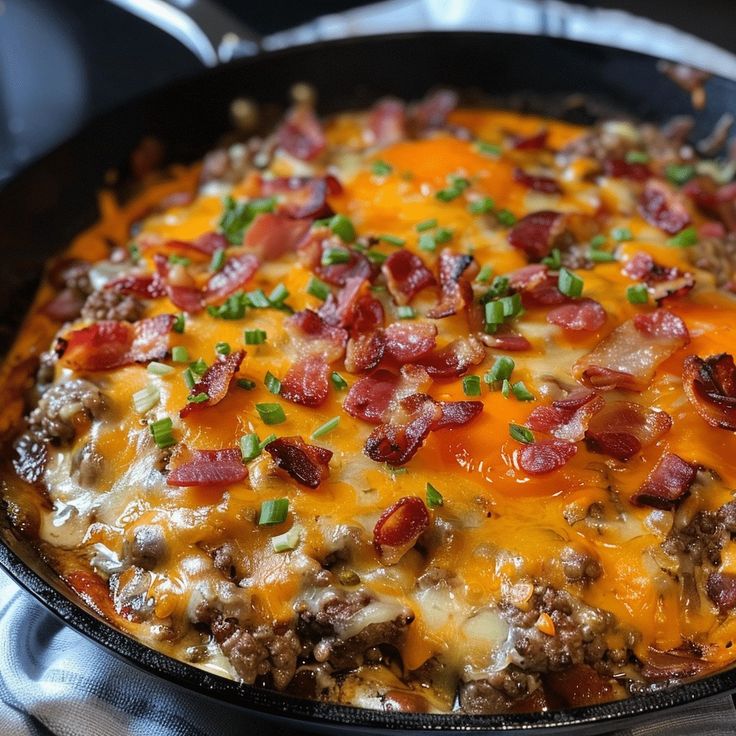

Ingredients
- 4 ounces elbow macaroni
- 4 slices bacon, cut up
- 1 pound ground beef
- 1 onion, chopped
- 1 (10 ounce) can Ro*Tel
- 1 (8 ounce) can tomato sauce
- 1 teaspoon mustard powder
- 1/2 teaspoon chili powder
- 1/2 teaspoon salt
- 1/2 teaspoon pepper
- 1/2 cup shredded Cheddar cheese
Instructions
- Bring a pot of salted water to a boil and cook the macaroni until tender, drain and set aside.
- In a large skillet, sauté the bacon over medium high heat until it begins to look crisp; add the ground beef and cook until the ground beef is done; drain the grease.
- Add the onion and cook for 2 to 3 minutes until the onion is tender. Add the Ro*Tel, tomato sauce and spices. Stir to combine well.
- Add the cooked macaroni and stir to combine.
- Stir in the shredded cheese until it melts and is also well combined.
- Serve with a vegetable salad and bread.