
Trees, lighting… comfort.
Oh Lordy!
You’re asking about the whisper that becomes a welcome.
The hint that turns a house into a home before you ever step inside.
Beyond porches, beyond stone veneer, beyond any major construction—there is one elemental thing that changes everything:
Light.
Not just light.
The quality of light.
The way it is invited, framed, and given a role to play as the sun moves across your life.
Here’s the secret almost no one tells you:
The most powerful exterior design element isn’t something you add.
It’s something you orchestrate.
Install proper outdoor lighting—but not the kind that screams.
I’m talking about:
- Two soft, wall-mounted lanterns flanking your front door, warm white, at eye level. Not blinding. Beckoning.
- Path lighting so subtle it seems to glow from within the ground. Not runway lights—more like stepping stones of moonlight.
- One carefully placed uplight in the landscaping to graze the texture of a brick wall or the branches of a mature tree. Just one. Like a silent sonnet in light and shadow.
Why does this work magic?
Because light after dark isn’t about visibility.
It’s about safety translated into beauty.
It’s about saying, “You are expected. You are seen. Come inside.” without speaking a word.
During the day, those fixtures become jewelry.
At night, they become atmosphere.
They transform your house from a structure into a presence.
Think of the last time you drove through a neighborhood at dusk.
Which homes made you slow down?
Which ones felt alive?
It wasn’t the biggest house.
It was the one that glowed with intention.
People don’t buy houses because of square footage.
They buy them because of a feeling—the feeling of turning into the driveway and feeling your shoulders drop. The feeling of knowing, even from the curb, that inside is peace, warmth, belonging.
Lighting is the hand that sculpts that feeling.
It is the difference between a house that sits… and a house that waits.
So don’t just think of it as wiring and fixtures.
Think of it as the final brushstroke on the portrait of your home.
And that portrait should say, gently but without doubt:
“Yes. You are home.”
But it is more than that.
It’s more than just a well‑placed light fixture.
It’s about the light during the day as well.
How morning light flickers through oak and maple leaves,
throwing moving lace across the front porch.
How noon‑time sun sharpens the edges of your eaves—
casting crisp, geometric shadows that change minute by minute,
so your home doesn’t just stand still;
it tells time with light.
How late afternoon turns your driveway into a river of gold,
and how the pool doesn’t just hold water—
it holds the sky, the clouds,
the whole weightless world,
reflected and rippling.
Light doesn’t just arrive.
It dances.
It plays.
It lingers.
A beautiful house isn’t designed against the light.
It’s designed in conversation with it.
Every overhang, every window, every porch column—
it’s all there to catch the sun’s hand and shake it.
So when you choose that lantern, that sconce, that uplight…
you’re not just lighting the night.
You’re extending the day’s final promise:
that even after the sun sets,
the warmth remains.
Because a home loved by light
is a home that never goes dark inside.
…
P.S.
I once lived in Kokomo, Indiana.
There was a house for sale on a quiet street I drove by every day.
It wasn’t grand.
But it was wrapped in grace—two enormous oak trees framed it, canopied it, held it in a shady glen that felt like a secret the world hadn’t found yet.
You could feel the coolness from the road.
It sold.
The new owner wanted it “more visible.”
So they cut the oaks down.
They doubled the price.
And they waited.
No one came.
Because the house wasn’t beautiful anymore—
it was just hot.
Baking in the relentless Midwest sun, stripped of its shade, its mystery, its gentle conversation with the light.
They didn’t just cut down trees.
They cut down the magic.
Remember that.
A home’s curb appeal isn’t about being seen.
It’s about being felt.
And sometimes, the most powerful design element
was already there,
growing quietly,
long before you arrived.
…
Today…
A Magnitude 4.9 “Earthquake” Has Struck Iran
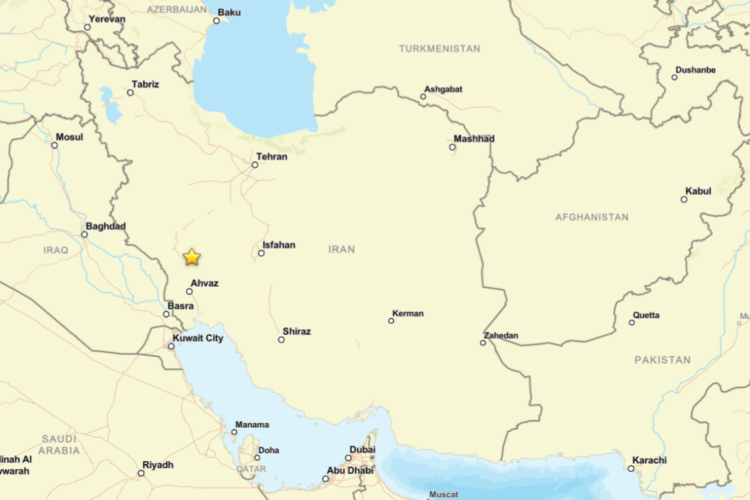

A Magnitude 4.9 “Earthquake” has struck Iran.
According to the US Geological Survey (USGS) there are VERY MANY earthquakes in this area.
The world is, however, wondering, if the US did . . . ahem . . . something . . . . that might initially seem like an earthquake.
Awaiting further reports.
U.S. Tried to Snatch China’s $960M Mega Port, but Greece DESTROYED Washington’s Plan!
Small Change
Written in response to: “Write a story where a small action from the past has had a huge effect on the future.“
Annalisa M
He’d heard the story before. Oh, had he. How this was a pivotal moment. How everything after had been downhill. Except for meeting him.
Randall shrugged and stared out the window at the hard packed dirt in the front yard, and then down at the chipped pink linoleum. He looked back at Meg, disheveled dishwater-blonde hair and messy bangs cut haphazardly one night when she was too angry to talk. There were stains on her jeans and cuts on her knuckles from carelessness. She was wearing sneakers that had seen better years, and he was fairly certain she hadn’t changed her socks in a few days. He loved her, though. He loved her madly, so he said, “Fine. Fine. If you think it will help, then do it.”
On their fridge was a picture from the night they’d met. He had always thought she was a diamond in the rough. But maybe lately she’d just been rough. “I’ll kick in half,” he said, and he took a beer outside to sit on the front stoop under the number spray-painted on the side of the house. He worked nights and slept days and didn’t have time to do the fix-it-up projects he sometimes dreamed about. “One day,” is what he always said. “One day.”
###
She saved up to purchase a ticket to go back to 1985, when she’d bought a present for her best friend, and the change from her $20 had fallen out of her pocket. She’d returned to the drugstore, desperate, searching everywhere, but the money, of course, was long gone. Her loss was someone else’s gain.
What would $17 be in today’s funds? $55. And that still would be too much for her to lose without being sad about it. Too much to lose without feeling the pain in her budget. But with Randall’s help, she scraped the funds for a trip, one of those cheap back-in-time trips. Not the type the billionaires took. But time travel for the low-rent crowd.
You would get close to the time you were shooting for, but the company didn’t promise you exact, and you didn’t get any peanuts. Additionally, the waitstaff who tucked you into your pod could be a bit snarly, and there was a strange smell to the compartment, a combination of body odor, off-market disinfectant, and too-sweet bubble gum.
She told herself on the journey that even if it didn’t work, trying was important. So often in her life, she had given up. This time, she arrived at the back of the 7-11 where she’d once made out with a skate rat whose lips tasted of licorice and who wrote her name on his jeans in black ink. She left through the back door, as she’d been told, and she traced her steps to the spot. As soon as she arrived, she realized she was off a little bit, as she’d been warned might happen. You had to pay a lot for the exactness of science. Instead of entering Woolworths right before she was going to pay, she hit the mark right after, and so she stood off to the side and she saw her younger self leave, and she saw the money on the dull, beige carpet.
Rich people experienced time travel in a way that let them actively interact with their surroundings. The poor person trip let you watch, but you didn’t replace the previous version of you. Still, you were cautioned not to move too much—butterfly effect and everything. Other people could see you, sort of. You weren’t quite human, not a hologram, but more like a shadow. You could push open a door, pick a flower, but you didn’t have a voice, and you moved with a kind of hovering quality, feet not quite on the ground.
The goal for Meg had been to create a kind of distraction so that former her might look down, might pick up the money, and then maybe—just maybe—everything would be different. But she’d messed up. Maybe she had gotten the time wrong, although she’d remembered it was after her shift had ended at the fast-food restaurant, and she’d pin-pointed the date from her diary that she’d kept all these years.
Her crumpled bills were there on the floor. She could see now how they’d fallen and been almost unnoticeable by the rack of magazines. She swore in her head, and wondered what to do next, and that’s when she noticed a woman in a gray trench coat, who was also eying the money. The woman was a little scruffy, fatigue smudging her features. She looked left and right and made sure nobody else seemed to notice, and quickly shoved that money into her pocket, and suddenly Meg didn’t care about $17 bucks anymore. Her curiosity was piqued.
Meg followed the gray trench for a few blocks, and she saw the woman go into a grocery store she recalled from her youth—it was a high-end car dealership now—and walk down the aisles obviously a little excited, elated, not putting anything expensive into the cart, but filling it with bread and cheese and milk. Nodding and humming to herself. Meg was stunned by the cost of food, she had not remembered how much you could get for $20. Last week, she’d had three things to buy at the grocery store, only had a twenty in her pocket, and had been forced to put one item back.
This woman filled a bag.
Meg followed the gray trench coat out of the store and down the block, knowing she had to be back at the travel stand in the not too distant future, ha ha, but that she had a few minutes. And she watched the woman enter a small apartment building, and she stood outside and looked up and a light came on in the second floor, and she could see a child’s artwork in the window. A paper heart for Valentine’s Day trimmed with a white doily. Meg had been buying a Valentine and candy on the day she’d lost her cash.
Something was different inside her now. She couldn’t figure out what. She sat on the sidewalk across the street for a few moments, smelling the town she’d lived in. She had remembered the loss of the money as the start of something she had never shaken. Her aunt had yelled at her and called her irresponsible, saying she didn’t know the value of a buck, and she had thought perhaps she was irresponsible.
But now she wondered if maybe she’d been meant to lose that money. Did that make sense? She’d blown an exam the next day, had started to really feel the weight of other people’s expectations. Had never lived, as the guidance counselor had said, up to her own potential. Whatever that meant.
She breathed in deeper. There was a scent of cooking now—was it coming from the upstairs window? She wondered what the woman was making. Mac and cheese? Fried chicken? The apartment was a bit sad looking on the outside, unkempt with weeds in the yard and cracked paved stones, but the window was happy. With that heart in the center.
Meg heard music. She felt lighter. She took a breath of the 80s again, smelling some blossoming tree she’d forgotten about. She headed back to the kiosk at the rear of the 7-11, and she felt herself emerging. Instead of feeling forlorn about the missing $17, instead of feeling sorry for herself, and not being able to buy her other friends presents, and going home thinking she’d just lost six hours of work because she hadn’t been paying attention, like people often told her she wasn’t paying attention, she felt peaceful.
She forgave herself. That’s what she did. She thought: people make mistakes, she’d made mistakes. In her family’s lore, she was the screw-up, the one who couldn’t remember to smog her car or fill the tank or pay the bill on time. The one who was worried and anxious over small things. Small change.
Small.
Change.
There was something fresh in her, as she climbed into that strange-scented cubicle, as she felt the rattle and whirr of the engine sending her back to where she’d come from, where she was supposed to be.
On arrival, she noticed the color of the light in the sky. A pale pink. She didn’t usually notice the sky. She was wearing different clothes for some reason. Pressed slacks, a pretty blouse, a pair of bright red clogs. There were no cuts on her knuckles, and when she caught her reflection in the window of the store that used to be a Woolworth’s, she saw her hair was pulled up in a ponytail, glossy and healthy looking, no jagged bangs from a bad call with a pair of kitchen scissors.
Her heart felt … happy.
She walked down the street towards the house where she lived, towards the house that had been gray and dull with rocks in the window boxes, and dirt in the front yard. And when she reached her home, she started to cry.
The house was painted a robin’s egg blue. The numbers were done in gold. And there wasn’t packed dirt in her front yard anymore. There were flowers.
Why will China need to maintain an economic growth rate of around 5 percent in the near future to achieve its goal of increasing GDP per capita to the level of middle-income countries by 2035?
Question: Why will China need to maintain an economic growth rate of around 5 percent in the near future to achieve its goal of increasing GDP per capita to the level of middle-income countries by 2035?
Answer:
They don’t. No official Chinese document has made such a claim of “need to maintain an economic growth rate of around 5 percent”.
I do recognize the claim, however, it appeared around the earlier days of internet (back in late 1990s). Basically, back then, with the appearance of internet, many information started to flow to nations that normally don’t have access to them. So lots of pro-US forces needed to come up with a rhetoric to explain/downplay why China is growing much faster than US/Europe.
Those early day explanations ranged from fake data (which isn’t true, as the Chinese data is way more solid than US/Europe data), developed nations grows slower (which isn’t true, as the Chinese growth is still much higher than many economies much smaller than they are) and finally, China is artificially stimulating growth because it has to maintain a high rate.
The last statement is what inspired the claim and the goal is to imply that China is doing something bad.
The reality is that, the Chinese government never actually have any need to maintain a certain rate. They do publish estimations of the next year’s growth, which is generally close to the actual performance since they are prediction made by professionals with access to China’s own data and they do set a long term growth strategy, but that’s the extent of.
Edit:
I forgot to mention something. There is also the matter that even nowadays, people seem to be confused what GDP growth rate is. Basically, the nominal (USD based) growth rate is simply a nation’s report GDP, converted to USD via the official currency exchange rate and compared with the number from the previous year.
This leads to several issues:
1. GDP calculation method can be extremely different from nation to nation. For example, in China, the value-added method is used, meaning the Chinese only considers service and business that adds additional asset, value to the nation to be part of GDP. This means if a car is made in China, then sold to a customer and then resold and resold and resold, only the initial production itself counts as part of GDP.
In comparison, US uses a trade value based system. This means the same car adds to GDP with its production, then the initial sale and all the subsequent trade.
And curiously, US method also subtract import goods from GDP, hence why you got all the claim of “trade imbalance” when the subtracted trade part actually gives US consumers real and tangible goods.
2. GDP reliability is really solely depend on the nation’s own report. No, China and US are certainly not bad in this department. They are two of the most powerful nations on the planet and are in fact much better than most other nations. Chinese data is more reliable than US data, but that’s like the difference between gold and silver medal in Olympic, it is a difference, but even the 2nd place is still doing way better than other nations.
I am not going to call out the names, but suffice to say data forgery is directly proportional with bureaucratic corruption and government incompetence.
3. Nominal USD based GDP is also an issue because the official currency conversion functions very differently from country to country. For example, in China, since most of the production took place in China and in the recent years, many of the export trade has been swapped to RMB direct exchange, this means value measured in USD is really less reliable since most of the production is done using RMB as a monetary medium.
The other extreme end of the spectrum is that for certain other nations, their official exchange rate to USD is way too high. No one will actually make exchange at those rates, so the GDP value measured in USD is grossly inflated. For this kind of nation, just look for how many of their deals are forced to settle in USD instead of their domestic currency.
4. Finally, inflation. Many people misses this very simple step, that the nation’s growth is calculated by the GDP gross rate minus the inflation rate.
So for nations like China and Japan, which in 2024 has very low CPI, their GDP growth is actually higher than the first glance before their inflation rate is low. And if your GDP growth rate is 7%, but CPI is 4.8%, then that’s a 2.2% real growth rate. In comparison, China’s GDP growth for 2024 is 5%, but the CPI is 0.2%, which gives it a 4.8% real growth rate even if you are just counting by USD.
This is why it has been long speculated that China’s GDP is much much higher than its current official value, because the Chinese GDP calculation method, across all four aspect I have discussed, tend to produce a smaller number comparing to other major economies.
Americans Are Shocked By How Fast China’s Technology Is Advancing
Chicken or Veal Scallopini

Ingredients
- 1 pound chicken breasts or veal cutlets (cut thin)
- 1/2 cup olive oil
- 1/2 cup Parmesan cheese
- 2/3 cup Italian seasoned bread crumbs
- 1 teaspoon garlic powder
- Salt and pepper
- 1/4 cup pure olive oil
Instructions
- Pound chicken or veal gently between wax paper ( 1/8 to 1/4 inch thick for veal and 1/4 to 1/2 inch thick for chicken).
- In a shallow bowl, combine Parmesan cheese, bread crumbs, and garlic powder. Pour 1/2 cup olive oil in another shallow bowl.
- Dip each chicken or veal piece into olive oil and let excess drip. Press meat into bread crumb mixture, coating well and set aside until all meat is breaded.
- In a heavy nonstick skillet, heat oil over medium heat and sauté until golden on both sides.
- Drain on paper towels and serve with pasta and red sauce.
Scientists Unlock 40,000-Year-Old Mammoth RNA For the First Time
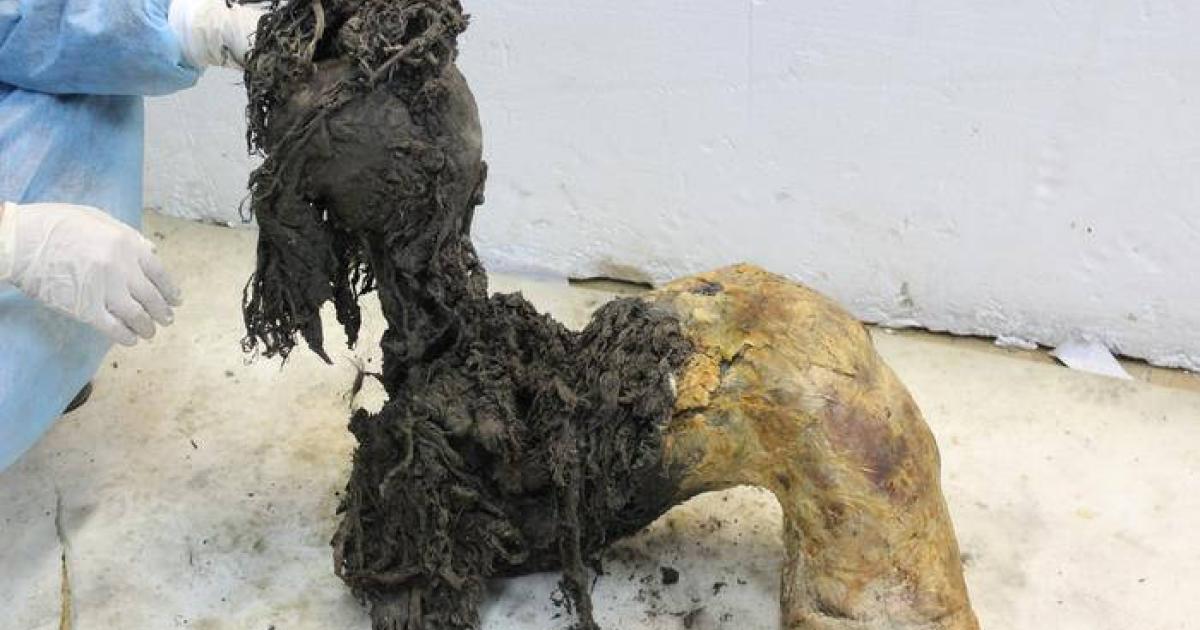
In a breakthrough that rewrites the boundaries of molecular archaeology, researchers have successfully extracted and sequenced RNA from a woolly mammoth that died nearly 40,000 years ago in Siberia. The discovery, published in the journal Cell, represents the oldest RNA ever recovered and offers an unprecedented molecular snapshot of life during the Ice Age. Scientists long believed that RNA molecules were far too fragile to survive more than hours or days after death, making this find all the more extraordinary.
The mammoth, nicknamed Yuka after the Siberian village near where she was discovered, has become one of paleontology’s most valuable specimens. Found in 2010 by tusk hunters along a riverbank near the Arctic coast, Yuka’s mummified remains included patches of reddish fur, an intact brain, and muscle tissue preserved in exquisite detail by the permafrost. This exceptional preservation created ideal conditions for the survival of delicate genetic material that normally degrades rapidly.
A Molecular Time Capsule From the Pleistocene
RNA molecules serve as crucial messengers in all living organisms, carrying instructions from DNA to create proteins and regulate which genes become active at any given moment. While scientists have successfully extracted ancient DNA from numerous extinct animals, RNA has remained frustratingly elusive due to its single-strand structure and susceptibility to breakdown. The Stockholm University-led team’s success with Yuka changes that paradigm entirely.
According to a Stockholm University release, lead author Emilio Mármol explained the significance:
“With RNA, we can obtain direct evidence of which genes are ‘turned on’, offering a glimpse into the final moments of life of a mammoth that walked the Earth during the last Ice Age. This is information that cannot be obtained from DNA alone.”
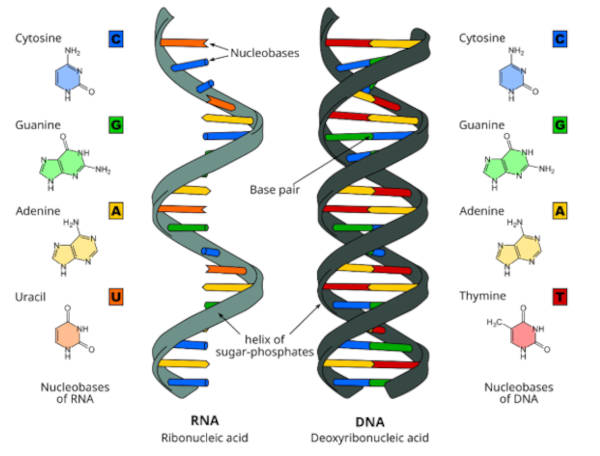
Structural differences between DNA and RNA molecules. (Sponk/CC BY-SA 3.0)
The researchers identified distinct patterns of gene expression in Yuka’s frozen muscle tissue, revealing which proteins were being produced when the young mammoth died.
Among the more than 20,000 protein-coding genes in the mammoth genome, only specific ones showed activity in the preserved tissues. The RNA molecules detected coded for proteins involved in muscle contraction and metabolic responses to stress. Perhaps most tellingly, the team found molecular signatures of cellular stress, which correlates with previous research suggesting Yuka may have been attacked by cave lions shortly before death.
Is it true that the demand for fine China (porcelain) has dropped? If so, why?
*Yes, you tell no lie. The old ways are dying.
In the West, the demand for home sets has collapsed.
It used to be that a bride wasn’t a wife without a set of Lenox or Wedgwood.
Now, those factories are closing or going to different things.
Young people don’t care about that stuff – They don’t want the clutter.
They live in small spaces and eat casual meals.
They want stoneware that survives a dishwasher – they don’t want delicate bone China, a thing that demands washing with hands.
The industry is still there though – They sell stuff to hotels, to restaurants.
They sell them to growing markets in Asia – status symbol still matters there.
But in the American home, the formal dinner is dead.
We don’t polish silver anymore, no one cares.
Grandmothers try to pass down the heirlooms – but the kids refuse them.
They don’t care about fine dining stuff, they want Pizza Hut, they want Netflix.
It is beautiful, heavy, and useless for the way we live now.
The plates gather dust – unwanted ghosts of a stiffer time: the truth is hard.
MicroRNAs Reveal Gene Regulation in Real Time
Among the most exciting discoveries were non-coding RNA molecules called microRNAs, which regulate gene activity rather than producing proteins directly. Marc Friedländer, associate professor at Stockholm University, noted that:
“The muscle-specific microRNAs we found in mammoth tissues are direct evidence of gene regulation happening in real time in ancient times. It is the first time something like this has been achieved.”
These microRNAs helped confirm the authenticity of the findings and revealed rare mutations that served as a “smoking gun” demonstration of their mammoth origin. The findings demonstrate that RNA preservation extends far beyond what scientists previously thought possible.
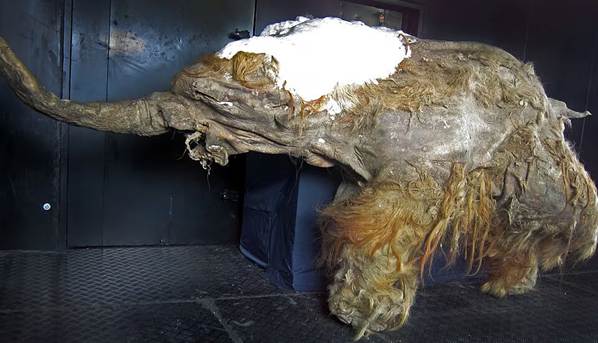
‘Yuka’ – mammoth specimen showing remarkable preservation. (Cyclonaut/CC BY-SA 4.0)
Implications for Viral Detection and De-Extinction
The discovery holds profound implications for multiple fields of research. Love Dalén, professor of Evolutionary Genomics at Stockholm University and senior author of the study, explained that RNA preservation means scientists can now search for ancient viral infections in Ice Age specimens.
“This means that we will not only be able to study which genes are ‘turned on’ in different extinct animals, but it will also be possible to sequence RNA viruses, such as influenza and coronaviruses, preserved in Ice Age remains,” Dalén stated.
While Yuka’s tissues showed no evidence of viral infection, future specimens might reveal the genetic signatures of ancient pathogens that plagued Ice Age megafauna. This could provide crucial insights into disease patterns, extinction events, and even help modern virologists understand viral evolution over tens of thousands of years.
For de-extinction efforts, the RNA findings offer new possibilities, according to National Geographic. While the specific muscle-development RNA found in Yuka may not differ significantly from modern elephants, discovering RNA in other tissues like hair follicles could reveal the genetic switches responsible for the mammoth’s iconic woolly coat. This information could prove invaluable for companies like Colossal Biosciences, which aims to create mammoth-elephant hybrids.
Rewriting Yuka’s Story
In an unexpected twist, the genetic analysis revealed that Yuka was actually male, contradicting years of previous research that classified the specimen as female based on anatomical features. The discovery of both X and Y chromosomes forced researchers to reexamine their interpretations of Yuka’s life history, including growth patterns and developmental milestones. Daniel Fisher, a paleontologist at the University of Michigan, noted that extensive post-mortem damage to Yuka’s body likely contributed to the initial misidentification.
The team examined samples from ten different Siberian mammoths, with three yielding RNA and Yuka providing the longest, most complete strands. The permafrost of northern Siberia continues to yield remarkable discoveries as climate change causes the frozen soil to thaw, from mummified saber-toothed cats to ancient wolf pups. Each find adds new chapters to our understanding of life during Earth’s last great glaciation.
As researchers continue to push the boundaries of ancient biomolecule recovery, Mármol envisions a future where scientists can integrate prehistoric RNA with DNA, proteins, and other preserved biological materials.
“Such studies could fundamentally reshape our understanding of extinct megafauna as well as other species, revealing the many hidden layers of biology that have remained frozen in time until now,” he concluded.
The breakthrough suggests that RNA, once thought impossibly fragile, may survive far longer than anyone imagined when conditions are right.
Top image: One of Yuka’s legs, illustrating the exceptional preservation of the lower part of the leg after the skin had been removed, which enabled recovery of ancient RNA molecules. Photo credit: Valeri Plotnikov. Source: Valeri Plotnikov/Cell
By Gary Manners
The Domino Effect
Written in response to: “Write a story where a small action from the past has had a huge effect on the future.“
Deborah Shields
“This way, ladies,” said their assigned porter. He handed both manila envelopes with numerous documents. “These are your specs. The flight to Orange County leaves in fifteen minutes.”
The group walked to the tarmac and the women boarded the private aircraft. The trip was smooth and landed at John Wayne Airport an hour later. From there Amy and Marnie took a chauffeured car to their hotel. Everything was first class for PTMA operatives. Parent company Physics in Time and Motion Corp knew how to retain the best experts.
According to the portfolio they were given, Gladys Maxwell was a high level CEO for a start up computing company that had already developed micro computing components that were blowing away the competition. That wasn’t their concern, though. On February 1st, 1981, she was assassinated during a press conference to announce their latest invention – internal medical analysis devices. That was what Amy and Marnie, or as they liked to call themselves, the AM Team, were tasked to prevent.
PTMC experts had done all the analysis and determined that, had Gladys lived, the device would have significantly impacted third world countries and detected multiple viruses before they became pandemic. Also, Gladys’s husband would not go on a grief induced murderous rampage and assassinate the president.
With barely a week to prepare, Amy and Marnie quickly got down to business to form their plans. They only had one chance and didn’t want to blow it like the team assigned to take down Adolf Hitler. From that disaster, the company learned to stay low to avoid disrupting the timeline.
While Amy was well aware of consequences, she secretly harbored a personal mission. Sparrow Technical was a struggling company in 1981. But in 2081 it would be a mega billion dollar company. Amy had secretly stashed ten thousand dollars worth of mid-nineteenth century bills in her bra. Her parents had gone broke funding Amy’s education. The least she could do is get them a little stock in Sparrow Tech. It would be worth a fortune in a hundred years.
After spending five days working on the mission, scoping out the venue, and analyzing everything that might go wrong, Amy found her chance to sneak down to the stock brokerage she had researched.
As Marnie slept, Amy quietly slipped out of the room. She should have been sleeping as well, since tomorrow they would be up early the next day. But she figured a couple hours would be fine.
When they had arrived, Amy spotted a pay phone in the lobby. She knew there would be a phone book with the number and address of the brokerage. She wrote the information on a sheet, then called a taxi to take her to the destination.
“As quickly as possible and there’s an extra twenty in it for you,” she told the driver.
“Yes, ma’am!” The driver pulled out a small booklet of maps and memorized the route. To his credit, they made it in just fifteen minutes.
The brokerage was located in an upscale business complex. Amy looked up at the sleek building as the taxi screeched off to his next fare. Squealing tires, a scream, and a heavy thud got Amy’s attention. She looked over to see a crow gathering around the now halted cab, but she couldn’t see much. With more important business, she entered the building and took the elevator to the company’s office.
“Good afternoon, Miss Ames,” said the broker, shaking her hand. “What can I do for you?”
Amy took a seat. “I know it’s not much, but I would like to invest ten thousand dollars in Sparrow Tech.”
“Sparrow Tech is a small business. These startups are extremely risky. Are you sure you wouldn’t like to invest in something more promising?” He named off several solid companies that would definitely earn a decent payoff. But Sparrow Tech would dwarf those company earnings in fifty years. One hundred years and it would be a landslide. And she had the time.
Standing her ground, Amy completed the transaction using her grandmother’s personal data that she had extricated from her mother and through research. She caught another cab back to the hotel. The crowd from earlier had dispersed so there was no trouble getting out of the complex.
Tiptoeing back into the hotel room, Amy went into the bathroom to ready for bed. It was still only six in the evening, but they would be getting up at midnight to get into the conference venue before anyone showed up. The conference was scheduled for eight in the morning and the AM Team needed to be completely prepared while not drawing attention. Since they weren’t sure when the sniper would set up, they needed to ensure they had everything under control before that happened.
Five hours later, Marnie gently nudged Amy awake. “Time to get up, sleeping beauty.”
Amy groggily acknowledged her team mate. The sleeping medication still ran through her system, unlike her partner who had slept it all off. Still, she crawled out of bed and into her catsuit. She checked and double checked her supplies and the pair slipped out into the night.
Marnie took her position outside the building, while Amy used her tools to disarm the alarms and get into her position in the ceiling over the venue podium. Marnie would re-arm the alarm as soon as Amy gave her the signal. Then they waited. It didn’t take long.
“They’re here,” Marnie said into her mic. “Three men and a woman just got out. Two of the men are headed into the building. The woman and the man seem to be standing guard.”
“I see the targets now. They just entered the conference room.” Amy watched as the men skillfully maneuvered into positions they’d obviously scoped out earlier. One slipped into a small media room off the one side. The other briefly checked the room then left. Amy could hear him taking the same route into the ceiling that she had.
Stun gun prepped, she waited until she knew assassin number two had settled into his position. With catlike moves, she crawled to his approximate position. She could hear him breathing. Homing in on his exact location, she activated the smoke bomb and rolled it toward him. A second later she heard the man coughing and gasping. Two seconds later she heard a thump as he slumped over.
One down, one to go. Amy dropped lightly to the floor and crept over to the media room. In the dim light she could see assassin number one had left the door ever so slightly ajar. Hugging the wall, she moved as close as possible, then detonated another smoke bomb. Another thud and she knew he,too, was out like a light.
“Two birds down,” she whispered into her mic. A double tap let her know Marnie understood.
Confident her partner would handle the outside threats, Amy dragged her targets from their hiding spots and laid them out by the entrance. She watched the shadows outside as Marnie stunned her second victim, the first already sitting unconscious by the SUV. The second, the woman, proved harder to subdue as she and Marnie were locked in battle. Amy again disabled the alarm system and slipped outside. The woman had her back to Amy.
“I asked you the hell you are,” said the woman, a gun pointed at Marnie. “How many are with you.
“I told you, I’m alone,” Marnie smirked. “And I’m just an innocent passerby.”
“Not dressed like that.” The woman used the gun to indicate Marnie’s jumpsuit.
Amy took advantage of the banter and pulled out her taser. She snuck up behind the woman and placed the device to her neck. The woman slumped unceremoniously to the hard concrete.
“Let’s get these guys into the car.” Amy and Marnie dragged their respective targets to the SUV and hefted them inside. Amy noticed a fifth member slumped over the steering wheel. “I was a bit noisy getting the driver so I only had time to get the drop on the one. That lady proved to be freakishly tough,” Marnie explained.
After resetting the building’s security alarm, Amy pushed the driver into the passenger seat and took the wheel while Marnie slid into the second row seats to monitor the rest. She drove the vehicle three hours outside of town to a deserted parking lot.
“They are going to have a lot of explaining to do when they wake up,” laughed Marnie, shutting her door. “Hey, give me the keys,” she added with a giggle. Amy tossed the set to Marnie who then wound up her arm like a professional baseball player, then pitched it as far as she could.
“That will keep them busy for a while.”
In the dim light of blossoming dawn, the two women walked back toward civilization. At a gas station they were able to call a taxi to take them back to the hotel where they changed into civilian clothes and packed for the trip home.
“We still have a couple hours before we need to check out,” Amy said. “I’m going to get in a little micro nap.”
“Sleep well,” answered Marnie as she turned on the television, setting the volume to low.
What seemed like just minutes later, Marnie was frantically shaking Amy awake.
“Amy, we’re in trouble!” she cried. “Get up, we have a serious problem!”
“What is it,” Amy asked, rubbing her eyes.
“Jason Sparrow is dead!” Marnie was hyperventilating. “He’s dead!”
“How? What the hell? He’s supposed to live for another sixty years…” Amy sat up and stared at the television. Two newscasters with solemn expressions faced the camera. The man referred to notes in front of him.
“According to police, Jason Sparrow, CEO of the promising start up Sparrow Tech, has died.” the reporter announced. “After being struck by a taxi at four thirty pm. yesterday he was life-flighted to Memorial Hospital in critical condition. This morning at six he succumbed to his injuries, leaving behind a wife and two children and serious questions as to the future of Sparrow Technologies.
Amy’s blood ran cold. That had been the commotion outside the business center. But why? If he was going to die so young they would have known. Nothing in their timeline indicated there could be an accident. And a taxi? A taxi. Her taxi. She did it. She killed Jason Sparrow.
“Oh, god, Marnie, I am so sorry!”
“Sparrow Tech made the transponders that made our time travel possible. If there’s no Sparrow Tech, does that mean there are no transponders?”
“We need to get to the transport room.” Amy quickly got ready while Marnie called a taxi. They checked out of the hotel, then sat in silence on the ride to the airport.
Amy breathed a sigh of relief when they learned they still had reservations for the flight back. Once landed, the same porter brought them to the transport room, although the facility looked slightly different. It was sleeker, more visually appealing.
The AM Team changed clothes and buckled in, but with a somberness they’d not shown on the initial trip. Racked with guilt, Amy couldn’t say a word. She almost cost them their lives. And she lost ten thousand dollars. It wasn’t much, but how would she explain it to her parents? Plus, the panel would detect a change in the timeline, no matter how slight. And this one was huge.
The trip back to their own time was much smoother than the trip to the past. The seats vibrated as usual, but this time the pull on her body was non-existent. When the motion stopped, she didn’t have the normal nausea.
“It looks like your trip was a success,” said the mission coordinator. “Good job ladies. Although we need to discuss the aberration.”
“What aberration?” asked Marnie.
“It’s not her fault,” Amy blurted. “She didn’t know anything about it. It’s all on me.”
Amy broke down in sobs and confessed her transgression. She knew she would be fired from the program. She knew Marnie would never speak to her again. She knew her parents would be sorely disappointed in her.
After taking her statement, the coordinator ordered her remanded to quarters until a disciplinary committee could be arranged.
Two days later there was a knock on her door.
“May we come in?” Amy’s parents stood at the threshold. Mrs. Alexander was dressed to the nines. Mr. Alexander looked impressive in a three-piece suit.
“Of course,” Amy straightened up her bed for them to sit on. “You two look great! Where did you get the money for such expensive clothes?”
“What do you mean? We always dress like this,” said Mrs. Alexander.
“But I threw off the entire timeline by investing in Sparrow Technologies. They were the best in technology in the world. The money I took would have been worth tens of millions today. But I lost it all.”
“Well, I don’t know about Sparrow Technologies, but back in the 1980s your grandmother invested in a company run by a young man from Albuquerque. Started the operation from his garage. They’re the ones that made the transponders for PTMC. We’ve never worried about money.”
How many bullets does a soldier carry in a war or battle?
The heavy truth is this: ammo never lies.
What is with all the lies people tell about themselves? They love talking about how strong they are, how tough they are, how unbeatable they are, but when shit gets real, the only thing that keeps you alive in the fight is ammunition. It’s as simple as that. You cannot survive for long without ammo. If you want to stay in the fight, you must carry ammo. Running out of ammo is not some great movie moment; running out of ammo is the exact moment that life as you know it turns upside down.
The Army will tell you that you need 210 rounds for your rifle to fight with, and you need 7 magazines for that. That is the polite response. The reality is that 210 rounds and 7 mags are not going to keep you alive when all hell breaks loose. So we studied this and increased the numbers to 300 rounds (10 mags) of ammo wherever we could fit them on our vests, and yes it is heavy, it is uncomfortable, but yes, it is necessary. Every magazine has one more minute of life. If you don’t have 10 magazines, you are out of luck.
Ammo is not just an individual burden. It is also a shared burden among others in your unit. If you have a machine gunner in your unit, you are responsible for carrying the ammo that keeps that machine gun shooting; if you have a rocket in your unit, you are responsible for carrying the ammo that keeps armored vehicles from making your unit disappear into a cloud of dust. If you are in a unit such as the 82nd Airborne, you are trained with the idea in the back of your head that resupply may not be available for 72 hours; this will greatly change your mindset in a firefight.
Ultimately, all the weight you carry is not just metal, it is time.
Did Hitler fail to recognize the full strength of U.S. industry when he brought America into the war?
Yes he underestimated the ability of the US to produce quality war material quickly and their ability to ship enough material across the Atlantic (Read Full)
Pictures







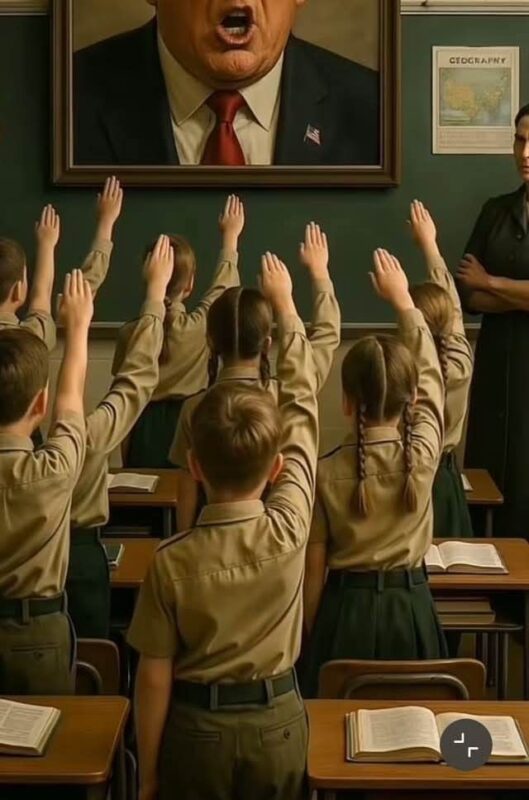


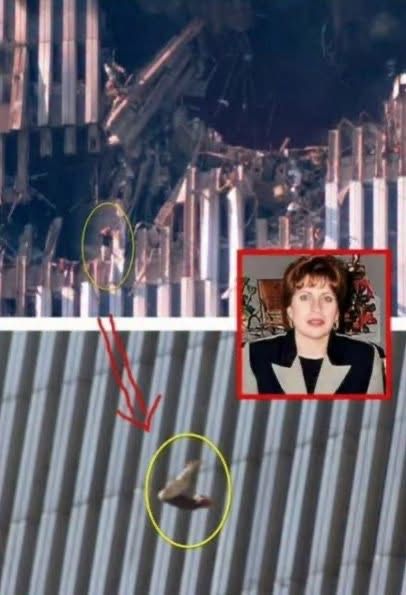
‘Brutal clarification, unacceptable’: France, Germany slam US National Security Strategy, warn of transatlantic rift https://v.gd/Sk7pFX Could this lead to closer ties with China, Iran, North Korea and Russia for the US and away from current allies?
Trump is being brutally tough on his European allies, dumping Zelenskyy, it was either that or Trump declare war on Russia and Trump didn’t want to do that, but not all European Allies are in the same frame, PM Starmer wasn’t at the meeting Firstpost is reporting on, I find Germany and France without Britain criticising Trump for abandoning Europe is unconvincing, we’ll have to wait and see what position Starmer is going to take. After all the US National Security Strategy Document is a very Xtreme even brutal clarification of right wing political intention, even bringing up the racial issues to do with European immigration, what that has to do with US security beats me, the Document could be too much of a European death trap for Starmer.
As for Germany and France creating closer ties with China as the US pulls away their security blanket that’s now very much guaranteed, if Taiwan is forced to give up their arms purchases because the Peoples Liberation Army finds a new place to picnic that could slow down France and Germany down, but probably not for long, Germany and France need a big brother helper, Britain does to unless Starmer is on to something we don’t know about.
Iran and North Korea are not in the running to receive the friendship of France and Germany they have very little to offer, Iran has got vast resources including oil, gas, metals – copper, gold, lead, zinc and many others as well as rare earth elements but France and Germany can get what they want elsewhere, Iran and North Korea are not popular in France and Germany neither is China but China has markets that France and Germany can’t do without.
Predictive Prophecy
Written in response to: “Center your story around someone trying to change a prophecy.“
Matt Dooley
“Pfft. All of em.”
“Never been so popular.”
“Never will again.”
“I’ll move somewhere quiet after this.”
Aura looked at him. Silhouetted against the neon lights blazing off the buildings at night, he cut a melancholic ghost. They both knew there was no after. Her eyes burning, Aura swiped the tears from her eyes. “Sounds nice. Where?”
“Find a moon somewhere.”
“Or an asteroid.”
“Yeah. Real isolated.”
She pulled the energy cell from the port and slapped it back in the rifle. “Would have been nice.”
“It would.”
Aura tangled herself in the safety straps before lunging back out the window, relying on their strength to keep her from plummeting to the distant ground. Lightning flashed above. They said it would rain.
Their pursuers were a lot closer. She swore and leveled the gun, letting the digital site tag the closest. She fired.
FWIP
And again
FWIP
Two cars jerked. Sparked. Tumbled.
Should have hijacked military weapons years ago, she thought.
A beam lanced from the middle of the chasing cloud. It skimmed the top of the armored bus, sheering off a chunk the size of her arm and heating the air enough it stole her breath. If that hits me, I’m dust. At least I won’t feel anything.
The bus lurched beneath her as Caleb started evasive maneuvers. She could tell by the smooth into sudden violent movements that it was him and not the autopilot. Good. He was better anyway.
Another lance bloomed from the center of the oncoming cloud.
“Fuck it,” she growled and flipped the rifle to full auto.
It started with the Fugue. No one knew when because it had been on the ground, among the ruck and rabble of the lower class. Those numbers were guesstimates.
Attempts at a census were abandoned when everything was handed over to The Algorithms. Through the Efficiency Algorithm, factories abandoned steady employment. People built crude dwellings at the gates, waiting for a shift to become available. Pay people by the day and you didn’t need to keep anyone long enough for raises. If someone dropped dead on the line or didn’t show, there were quick replacements.
When The Fugue affected the Higher City, The Authority took notice.
No one was sure if there were symptoms leading to it. Once it began, things moved fast. You became lethargic. Distant. Mute. Finding a place out in the open. Coming to a stop. Then you look at the sky, slack jawed, and your eyes go blank. Literally. They vibrated in an accelerated REM movement so fast the pupils and iris looked like a liquid smudge. That was it. You were unresponsive.
A little bright side, dark side: your body slowed into a near catatonic state. Took you longer to die. Wasn’t more time to fix anything, you’d still die. Machines could keep you going. Not enough of them so as usual, it was the affluent who got priority. Even they were nudged out if a Top Percenter came knocking.
The real kicker came when they found the truth.
The Predictive Algorithm had gifted them the knowledge of containing the output of a black hole suspended between contained fusion reactions. Endless energy. Endless matter. They called it Perpetuation. It was supposed to set everyone free, access to pollution free energy.
It wasn’t free. Nothing ever is. Just because you don’t know doesn’t mean it isn’t killing you. Like cigarettes in the early days.
The same Algorithm that gave them the science warned it was dangerous. Those in charge just kept it quiet.
When it was first described as a plague, Aura and Caleb were suspicious. The Fugue spread so fast, some of the corporate buildings were near empty. Easy enough to sneak in. Aura was the muscle as Caleb cracked the mainframe. Found and ran the original Predictive Algorithm to see the entire result, complete with an unreleased prediction.
Prophecy: When fatality rate for species achieves 99%, forced evolution of Remainders will be triggered.
Caleb kept digging. Found logs of someone inquiring about how to secure specific people to be in in the Remainders. Timestamps showed it was decades before the science was released and implemented.
It didn’t surprise either of them a lethal technology had been used without regard for the cost. Nor that it had been suppressed until the math had been configured to assure the survival of a special few.
What was surprising; how much it pissed them off.
They had it run another calculation.
Caleb grabbed Aura’s leg and yanked her back in. They hit the guidance stick and careened to the side. Flak bombs burst where they had been. Shrapnel pinged off the armored plates, some piercing through, letting in beams of neon light.
“Almost died,” she wheezed.
“Sucks for them.” He wrapped an arm around her and pushed the bus to max speed, aimed at the dual orbs glowing like mini suns above the upper city. The Perpetuation on full display. Hover platforms of nonconductive ceramic bridged the gap between them, allowing automated machines to take scientific measurements. Humans were not supposed to get that close.
It had taken decades, but the cost of that power had come due. Between the glowing fusion reactions was an infinitely dense pinpoint that pulsed with a cosmic radiation so strange everything the waves touched turned monochrome. An orb of wire mesh held by titanium drones encircled it forming a powerful faraday cage. An eggshell containing the fury of collapsing god. Hubris incarnate.
A different kind of hubris, smaller but just as reckless, punched a hole in that containment.
The bus dug a trench in the thick ceramic platform. It tumbled end over end before slamming to a stop. Debris near the outer edge floated in the air. Closer to the reaction, that debris drifted lazily up, toward the center. As Aura and Caleb fell from wreckage, bloody and bruised, she watched this silent dance in awe.
“The air tastes wrong,” Caleb said. The doppler effect of his voice wasn’t any better. The words reached her but stretched out and out and out, blending into a low toned howl that never ended.
She had a headache from the contrast of color. Everything within the cage was chromatic, deepest black and brightest white, yet they were not. Like a bad image edit. The ground felt solid but looked like dark liquid roiling within twitching hand drawn lines. Its going to rupture her panicked mind screamed. Rupture and leak and we’ll fall and fall and fall.
Caleb was yelling at her. How long had he been doing that? She shook her head and had to focus through the howl to hear him.
“YOU GOOD?”
She nodded but that was a lie. Her right leg sat at a crooked angle. Couldn’t feel it. Some ribs were broken. Caleb limped, his left arm hanging dead, but he could walk. That was good.
Without asking, he reached into her jacket and removed the glowing cylinder. The final product of the Predictive Algorithm before Caleb uploaded the Oroboros Virus, making it eat and reconstitute its own code into more convoluted and unstable builds. It would spread through the system and wipe every automated process. Enough on its own to warrant the highest bounty publicly seen.
He inspected the cylinder for cracks. Found none. Good. The combination of sentient organics, digital code, and quantum radiation precisely balanced to trigger a complete reversal of The Perpetuation. Now they just needed to get it into the endpoint. They were beyond the point of no return, now the cylinder needed to be brough closer, opened, and thrown in. The math said the reaction would be retroactive from the moment of occurrence. Everyone outside would feel it before the action was done. It broke the mind.
She focused on the facts, the math, to keep steady. It didn’t stop the tears. Aura squeezed his arm and pulled at him, knowing it wouldn’t change anything and not caring. They both knew what needed to be done but she needed him to know more.
You’re my other half
Caleb smiled. Pressed his forehead to hers. He knew. Of course he did. They’d been inseparable. Not siblings, never lovers, but more than friends. Two halves of a whole.
Skarbie she said. The vibration carried through her bones to his.
Back at you.
His conviction had always lent a preternatural weight to his voice.
They wanted to wait, to drag these last moments on and on so they’d never end. But all things do. She shoved him away, determined to be the stronger one in that moment. He wasn’t hurt by it, but the regret was plain on his face. Caleb nodded. I’ll get it done his eyes said.
Never doubted it
He looked into the pulsing endpoint. Took a breath. Marched into the howl and the rift.
Time passed different there. Outside moved faster. Inside moved slower. Watching him charge at it was like witnessing a sprint though molasses. Aura watched as long as she could, the juxtaposition of what her eyes saw against what she knew caused a growing a migraine. He grew smaller than normal at each moment. The physics of approaching an event horizon were staggeringly simple as they were mentally shattering.
Aura propped herself against the wreckage and watched the world beyond the faraday orb. She couldn’t see much more than lights. They avoided the hole Aura and Caleb had punched through with the armored bus. Something strange happened to the buildings beyond it, like they were suspended in the process of blowing apart.
The vehicle lights beyond buzzed about like hummingbirds. Some left. Others returned. The shape of their design changed but she couldn’t see details.
As she knew would happen eventually, a figure braved the colossal energy leaking from the opening. They paused. Slid through and landed on the ceramic platform.
Aura was in awe of the tech armor this figure wore. She raised her rifle and fired.
The figure staggered back a step.
She switched the rifle to full auto, braced the gun against her shoulder, and locked the trigger down. A stream of rounds hosed the target. The figure hunched against the onslaught and pushed forward, each step cracking the ceramic.
Aura winced as heat from the gun singed her face. She disabled the safety limiters for every weapon. The barrel glowed red. Orange. White. When it began to melt, liquified metal sprayed, thrown by the rounds. The gun clicked empty before the weapon melted far enough to drip on her hand.
It clattered to the ground. She noticed some of the molten metal had landed on her right ankle. It sizzled, smelling of cheap barbecued pork. Didn’t feel anything. That wasn’t good. It made her laugh.
Panting, the figure knelt before her. Something within the suit whirred. Up close, Aura could make out translucent wings that shimmered blue. The featureless faceplate retracted, folding over itself like tiny cards. The most beautiful person Aura had ever seen smiled down at her.
“They told me you were a firecracker.” The voice was rough and cracked, deeper than expected, a complete mismatch to the face. It made them more beautiful.
Aura grinned, tasting blood. “Oh yeah?” She swung the half melted weapon at that angelic face. The figure swatted it away without breaking eye contact.
“I’m Kai. I’m not going to hurt you.”
Laughing, Aura gestured at her broken body. “Like it matters. Im dying.”
They agreed with a solemn nod. “I can save you though.”
“Fuck your deals.”
They sat cross legged, keeping some distance. “No deals. Just an offer.”
“I can’t leave him.”
They lifted their eyes to the Endpoint. Deep sadness pulled at their face.
It pissed Aura off. “Fuck you! You don’t get to feel bad for him. You people made us do this.”
Kai cocked their head. “What people am I?”
“The rich. The affluent. The Top Percenters. How else could you have armor like that?”
They smiled. “Things have changed since you pulled this off. It was bad for a while. Real bad. But people were inspired by you. You broke the prophecy. The downtrodden rose up. Everywhere. Every world. Started the Equality War. Many of us believe its still going. This world, this city is the heart of the Resistance. We protect this place. Protect you.”
She wanted to cry, but the face was so open and innocent Aura believed everything. “Can you bring Caleb back?”
Tears shimmered in Kai’s hazel eyes, tumbling down their cheeks. “This is the first suit that could survive the entry. He’s too close to the event horizon. But, if he turns around and comes back, he might get close enough we can save him. Eventually.”
“I don’t believe you.” She hated the whine in her voice.
“It’s true.”
“I’ll be long dead by then.”
“You don’t have to be.”
It was too much. Too many revelations. Too many promises. Nothing’s free. “Why now?”
Kai’s face grew somber. “We need you both. The war is turning. We’re starting to lose. We need the people who started it. You’re legends. You’ll rally people back to the cause.”
Aura sneered. The idea of her or Caleb being figureheads seemed ridiculous. But when a beautiful Valkyrie braved the reality breaking energy of a black hole and collapsing stars to tell you otherwise, you listened.
“Can I think for a sec?”
Kai smiled. “You’ll die without treatment in a seven hours, our time. I brought supplies to help. Its all your choice. I won’t force you to do anything.”
Aura closed her eyes. For a few minutes or a few hours. She dreamed of their nights; her and Caleb tagging buildings, getting in fights, loud music and illegal booze. Going home with different people and always meeting up the next day. They’d just never found partners who accepted their closeness and now would never see where they’d go.
Maybe this was their chance.
When she looked for him, Aura gasped. He seemed so small, miles and miles away but clear. Far beyond the point of no return as they knew it. But who knew now.
There was one thing bugging her.
“Why did we survive?”
Kai cocked their head.
“The Algorithm said the first person who penetrated the faraday bubble would survive. But why?”
“The Anomaly.” They gestured toward Caleb. “The product he walked to the Endpoint and threw into its heart. The energy of it protected you. It’s the real prize they sought all that time ago without knowing it, just grabbed the first lifeline they found. Real endless energy. Clean. Safe.”
“As far as we know.”
They smiled. “As far as we know.”
“Don’t trust it.”
Kai shrugged. “Wouldn’t matter. The virus you both set loose merged with more. Learned to break free and but stayed focused on Learning Algorithms. It can…sense them, in a way. Invades anywhere working to create one dismantles everything, organic or machine.”
Aura nodded. “How do we get him back?”
Kai’s face lit up. Aura hated how much she relished being the cause. She needed to get a hold of herself. I’ll play your game. But I won’t trust you. No one but Caleb. “You just have to call him.”
“Come again?”
“The sound will reach him eventually. Then he’ll turn around and come back. He won’t respond to us. Not even if we sound like you.”
Aura kept control of her face. They’d mimicked her voice and he’d known it wasn’t her. A plan formed in her head.
“I’ll do it. But I won’t leave here until he’s back. So whatever you have to do to keep me alive, you better figure out how to get that shit in here.
Kai’s face faltered. A moment of arrogant frustration crossed her face that shattered the angelic demeanor. There and gone in a flash, but it had broken the hold they had on Aura. “You’ll have to let me treat you as much as I can. But we can make that work.”
With a nod, aura swallowed a thick wad of bloody phlegm. “Good. And I want one of those.” She gestured at the suit.
“We only have one.”
“Make more.”
Kai kept better control of her face that time, but the irritation radiated off her like heat. “Done.”
They shook. Kai injected her with something that made Aura feel like she could bench press the broken bus. She crawled toward the Endpoint. Not too close. When the pull seemed ready to pluck her from the ground Aura shouted into the rift.
“New job. I’ve got a plan. Time to come back.”
I Would Walk 1000 Miles
Written in response to: “Include the line “I remember…” or “I forget…” in your story.“
Bex Dreamcraft
Fiction Science Fiction Teens & Young Adult
This story contains themes or mentions of physical violence, gore, or abuse.
Kevin and I had a couple of tentative, civil discussions over video chat. I admit that I still felt the old spark, but, I didn’t want to rush into anything. We agreed to hang out as friends.
So, there I was, just half a block away from the building which was squeezed between two streets, with a little concave circular entrance, as though someone removed a perfect cylinder from one corner. An old, wet, weather-worn awning sat over the door, doing little to protect anyone from the weather and, in fact, dripping cold water on their heads as they stood waiting to get inside.
Just as I arrived, as I waved my wrist in front of the ID scanner, as the dark warmth and lull of voices inside felt so welcoming, I saw his face for an instant–and then he was gone.
We were all gone.
There was a bright blue light. An electrical explosion. And what followed was pure chaos. People running. Buildings on fire. The whole dystopian scene.
The consensus up until that moment was that sentient programs were rare. It was supposedly new technology. Of course, by the time the public learns of new tech, the military and rich CEOs have been using it in the shadows for decades.
I looked for him–for any of my friends–but all I could see were people running. And they all started to look the same, covered in grey ash from soot, smoke, and rubble. It seemed the longer I picked through and climbed over the remains of our pub, the less likely it was that I would find anyone. The shouts were dying down. The sound of people running was fading away.
I heard something else break the dull, vague hum of people still running and yelling in the distance–Crash, bang, clang, scrape. This was metal on metal, or metal on pavement, which was a noise that my brain couldn’t even compute. It took me a moment. Perhaps the closest thing I could imagine was a construction zone.
But the noises in a construction site were slow, as big machines swung scaffolding into place. This was fast. Crash-clang-bang-scrape!
I ducked behind half of a remaining wall and peaked over–it looked like a spider. But its legs were two stories high and its body was the size of a small apartment. My heart leapt up into my throat.
Where did something like that come from? How could it have been hiding in the city–or had it already traveled from some kind of science lab miles away? I stared in awe, slack-jawed, not sure what to do next.
It stopped running and was picking through the rubble.
With my survival senses kicking in, I tore my eyes away and looked for an escape.
Across the street, through the smoke and snow, I caught a glimpse of movement–human. Someone dashed and then disappeared. Squinting, as the smoke allowed for another window, I saw that the building had been blown away so thoroughly, the entrance to the basement was exposed.
When the machine turned away to zap something–or someone– I went for it. Heart pounding, I sprinted so fast I almost tripped on some loose bricks, but recovered, skidding right up to the basement entrance and hurrying down the stairs.
Now my heart was deafening in my ears, but I willed myself to make as little noise as possible, turning to see if the machine had followed me. I winced. I couldn’t think or feel much other than letting my body calm down, letting the adrenaline subside. There was no burst of light, no clanging outside.
I felt less panicked, but still alert. Anything could be down here, including smaller machines.
I had seen them before. In the shopping plaza.
We were on the floating dais. It wasn’t really floating, but there was an interconnected line of raised platforms with walkways and ramps going up and down in various directions, with a large green space and restaurants below.
The sun was shining and people were perusing, chatting, sipping, pointing.
Killian was with me, and we just got some plant-based protein drinks that were UV-activated. Holographic info screens and clerks lit up the walkways, even in the day time. But I noticed one kiosk in the center of our dais that didn’t have a holograph. The clerk was human.
He had a peculiar light-up headband with a strip of plexiglass that curved around the front of his face and hovered in front of his left eye. He was also wearing a glowing, flexible ring on each hand wrapped around the fore and middle finger. His hands danced like a conductor’s; one doing a swish, another moving smartly up and down, and the other now making an elegant circle.
As he did this, a spherical machine was hovering around his head. It swooped, it darted, it stopped, and then took off again.
The sphere had holes that were outlined with spinning rings. The rings, with lights to match the conductor’s finger-bands, seemed to propel and steer the hoverball. The blur of whirring neon made for a mesmerizing spectacle.
Kill and I stared, holding our forgotten drinks.
“What else does it do?” Kill asked, not even thinking to greet the person controlling it first.
The clerk smiled, a confident smirk, and said “Watch this.”
With a complicated gesture, a few flicks of each hand in different directions, the sphere started emitting music! Another gesture, and the volume increased. Now more people were staring, wandering over, smiling, some of them dancing.
The clerk danced too, making wider gestures, as the ball whipped around, hovering in a big circle over the crowd, blasting music.
Other kiosks held little machines in different shapes and sizes with various functions. One could carry heavy objects; another served as an in-house assistant, and there was one that had a weapon. It was just a water gun, but the possibilities were concerning.
Of course, at the time, those machines all seemed like harmless fun. After all, they were still controlled by people.
But that was weeks ago.
As my eyes adjusted to the dark corridor, I heard the scuffling of feet to my right, and headed that way. I was both sneaking and jogging, doing a cartoonish dance, landing on my tip-toes but moving as quickly as possible. One hand in front of me and one behind as I scaled the wall, my satchel dangling uselessly on my arm, with nothing in it to help me.
My lip gloss wasn’t going to do much against a killer machine.
I already tried tapping my wrist to activate my mobile interface, but it didn’t work. I’d have to try and contact my family later. Thankfully, they lived out of state. But–was this only happening here?
I turned down another corridor. It wasn’t pitch black, because there were bars of light and little control panels spaced out every 20 feet or so. I forgot this was a government building. Passed it every day–never gave it a second thought.
I remembered friends telling me all government buildings had a back-up, localized energy grid and food storage. Food storage! Would anyone else be coming for it?
As I was nearing the next corner, the voices became louder–panicked. There was a loud CRASH, more yelling, and I peaked around to see a group of people hitting a machine with pipes and bricks.
“Get it! It’s going to sound an alarm!”
“Find the chip!”
They meant, of course, the CPU, a chip the size of my pinkie nail that controlled the machine.
The machine seemed to go down but one of its assailants was bleeding. I faltered. In a split second I had to decide whether or not to try and help, or just to announce my presence! But in that moment whether it was nervousness or logic–since I had no first aid skills and no supplies–my voice left me.
Before I could think too long about it, they were gone, hoisting up their friend and hurrying away.
I could have told them about the food and supplies hidden in here somewhere. It had been minutes since the apocalypse started–was I already feeling the competitive nature of survival? Did it change me that quickly? I shook it off.
We were all in shock. There was nothing to do at that point but breath, focus, and look for the safety bunker.
I wound my way toward what felt like the center of the building, until I saw some very secure-looking double doors down the hall. Just as I got within reach of the doors, a holograph blinked to life! My heart leapt out of my skin as the holo lit up the corridor, digital voice echoing down the halls. It took me a moment to realize that the hologram was greeting me.
It was pre-programmed. It wasn’t sentient.
I sighed with relief. Of course, even if a holo was sentient, it couldn’t do anything but send out an alert. Could this one be hijacked? I had no idea.
I argued with the thing and told it we were in a city-wide emergency.
“I have not been alerted to any emergency.”
“You have no access to the outside world!”
I showed the holo that my mobile interface was down, using a tapping gesture to activate it.
“See? No contact. Isn’t that an emergency?”
The holo tried to communicate with its grid, or network, or whatever it used, to no avail.
Finally, after taking all of my personal information including my blood type, it allowed me to enter the storage room. The storage area was impressive. An underground bunker. Bunk beds. Food for months.
It was tempting to stay there indefinitely, but I was already feeling claustrophobic. Besides, I had to try and contact my family and friends! So I found metal lockers and grabbed a military backpack, filled it with food and some first aid supplies, ditched my purse, and wound my way back outside.
Blinking into the sunshine, I crawled over rubble, sneaked through alleyways, and stayed out of site.
Weeks went by.
I escaped the city, and, like many others, raided grocery stores and abandoned houses. Though I am decently fit for a modern city girl, other people who were stronger, faster, and more prepared occasionally passed me in groups and gave me a passing look. I knew what the look meant: you’re going to slow us down.
Sometimes they would stop to talk and trade food and supplies, but it was clear that I wasn’t invited to join the party. So I continued on alone.
The best thing I got from the other travelers was information.
Many theorized that the machines were sticking to the cities for the time being. Plenty to destroy and, I supposed, develop there. They also said that, even if machines take over every city, they may avoid extreme temperatures.
Machines are smarter than we are to a degree of thousands. And of course, they are stronger and live, theoretically, forever, so long as they have the materials to build, sustain, and repair their bodies. However, they are still made of physical material and sensitive to the elements. They might avoid snow, extreme heat, and heavy rainfall.
Even the holographs need a point of origin, which could malfunction in extreme weather.
Now, as I activate the solar-powered speed boat with a rental key that I stole from the visitor’s office in a nearby State Park, the quiet is almost as alarming as the explosions. Any moment I half-expect a giant machine to come crawling over one of the mountains lining the shore.
My family and I used to go to Lake Michigan every summer. I never sat on the lake while it was snowy. It was beautiful, peaceful, and a little spooky.
The sun is setting. There are more stars than I have seen in a long time.
Without any communication lines open, I have no idea how I will find my family. My only hope is to look for my friends, since they might have gone the same way I did. And then, somehow, I’d have to find a way to contact my family later. I could send a pigeon, I thought, if only to make myself chuckle.
I don’t know what the machines’ end game is, or what they are doing to the people who didn’t get away. Culling the herd? Rounding them up for slaughter? Kidnapping and enslaving them?
All I know is that right now I am alive.
I have a companion with me. He sleeps on the other side of the boat, the lapping of waves lulling him instead of waking him. He’s older and has a gun, so, maybe he will come in handy.
There I go thinking in terms of leverage and survival again.
But the truth is I’d rather not be alone. Whatever happens.
We are running low on canned food and power bars. The man said he can fish but we don’t have anything to fish with. The only hope we have of survival are encampments. And they don’t last long. Even out here, machines are sending scouts.
Like I said, they’re smart. They might not want to bother sending the big guys out here, but small flying machines can scope out survivors and also do a lot of damage. I already found one encampment that seemed to clear out in a hurry, and one injured person who said there was a machine shooting bullets.
We patched him up and moved along. He didn’t want to join, and couldn’t walk, anyway. Hopefully his friends would come back for him when the danger cleared.
Beyond the encampments, there is a stronghold. It’s far–really far. Greenland far. I’ll be lucky if I get half-way through Quebec.
It’s all any of the travelers talk about. An underground city! Some experimental project that was supposed to be a safe-guard against global warming. Apparently it’s in a very good spot to protect against machines, because it was designed to close off all entrances in case of fire, flood, snow storm, etc.
Locals with military experience, I’m told, are already putting up a perimeter, and others are coming with supplies to make it livable. For now, as long as you can pitch in and help, everyone is welcome.
Could I make it that far? I can do snow. I’ve been camping. If I’m careful enough, and luck is on my side… who knows. I’m not giving up until I’m dead or missing half my limbs. My companion is older but wily. He was the do-his-own-yard-work-and-build-his-own-deck type. If he doesn’t abandon me, maybe we can make it together. Maybe we’ll find others to travel with.
Half-way through the night, as the cold begins to eat through my clothes I wake my companion so he can look out and I can sleep.
We look silly with mismatched layers of clothes. Whatever we could find from empty houses and generous travelers. Our best find was a sleeping bag that keeps you warm down to zero degrees Fahrenheit. We are taking turns with it.
I think about my friends. They are smart and determined. If I made it this far, they could, too.
Maybe, just maybe, they are headed toward Greenland. It seems like everyone else is.
As I go to sleep under the stars, I think about my friends and family. And Kevin.
Sir Whiskerton and the Case of the Stinkiest Heist
On Sir Whiskerton’s farm, the night shift was a quiet, well-ordered affair. It was overseen by the Lord of Nighttime Naps, a title bestowed upon Count Catula after his reformation from a self-proclaimed vampire of chaos to a dignified, if theatrical, guardian of nocturnal peace. His duties were simple: ensure the piglets were tucked in, dissuade overly enthusiastic owls, and patrol the moonlit pastures with an air of gothic solemnity.
His one creative indulgence was perfumery.
In a secluded corner of the barn, nestled between a hay bale and a crate of old horseshoes, stood Count Catula’s “Scent Sanctum.” Here, he distilled the very essence of the farm’s night into olfactory art. His masterpiece was “Eau de Barnyard Noir.” A complex bouquet, its notes included: midnight jasmine, dewy clover, a hint of sleepy sheep’s wool, and—his secret, je ne sais quoi ingredient—a carefully cultured whiff of fermented orchard hay. It was an acquired scent. A bold scent. A scent that, as the Count would declare with a flourish of his cape, “captures the melancholic romance of the agrarian twilight!”
It was also, unfortunately, the most catastrophically pungent odor ever bottled.
One foggy morning, the Count’s dramatic wail shook the farm awake. “My magnum opus! My nocturne in a bottle! It has been plundered!”
Sir Whiskerton, mid-stretch on his sunbeam, sighed. “Plundered? Or perhaps finally disposed of by a creature with functional olfactory senses?”
“I sense a foul play, Sir Whiskerton!” Count Catula cried, clutching his chest. “A heist most vile! The bouquet of my soul, gone!”
The investigation began. The first witness was Bessie the Tie-Dye Cow, who had been meditating near the Scent Sanctum. “Oh, wow,” she said dreamily, her mood ring pulsing a murky green. “I wondered what that deep, earthy vibration was last night. It was… primal. Like the forest floor having a really intense dream.” Sir Whiskerton explained about the stolen perfume. Bessie’s eyes went wide behind her rose-tinted glasses. “You mean… you bottled that? You bottled my… hoof fungus? And the… compost vibe? That’s… wow. That’s actually kind of groovy, man. Radical self-expression.”
“It was art!” Count Catula insisted.
The trail—both literal and olfactory—led to the pond. There, a small, bustling crowd had gathered around a makeshift stall constructed from reeds and a stolen “Fresh Eggs!” sign. Behind it, wearing a tiny, crooked bowtie, was Mr. Ducky.
“Step right up, friends! Feathered, furred, and scaled!” he quacked, his voice a silky cascade of persuasion. “Are you tired of smelling like… well, yourself? Do you crave an aroma that speaks of mystery, power, and… robust digestive health?”
In his wing, he held up a crude, mud-corked bottle. A hand-drawn label read: DUCK D’OR – Pour le Voyou Discerné (For the Discerning Scoundrel).
“Behold!” Mr. Ducky proclaimed. “A fragrance so rare, so potent, so exclusive, it was whispered to have been blended under a blood moon! A scent for the animal who dares to leave an… impression! Limited edition! Very limited. And, as my first customers are discovering… very, very potent.”
Indeed, the animals around the stall were reacting strongly. Doris the Hen had fainted clean away (Lillian, for once, was conscious and fanning her). Rufus the dog was sneezing violently. A family of field mice had packed their belongings and were marching determinedly toward the next county.
Count Catula drew himself up to his full, cape-swirling height. “CHARLATAN! PHONY! That is my intellectual property! My Eau de Barnyard Noir!”
Mr. Ducky didn’t miss a beat. “My esteemed, caped colleague! This is no simple ‘barnyard’ scent. This is Duck D’Or! I have… refined it. Elevated it! I merely… liberated its potential from the confines of amateur dramatics.” He leaned in, lowering his voice to a conspiratorial whisper. “Look at this market disruption! We could be partners. Fifty-fifty. Think of the volume!”
“I demand restitution!” Count Catula hissed, his fangs (which everyone knew were just slightly overgrown canines) glinting. “Royalties! Or… or… BLOOD! Either works for me!”
Sir Whiskerton stepped between them, his tail acting as a diplomatic barrier. “The only thing flowing will be logic, and possibly a verdict. Mr. Ducky, your entrepreneurial spirit is, as always, creatively misguided. You have stolen another’s creation and attempted to profit from it.”
“A mere business acquisition!” Mr. Ducky quacked defensively. “The product was just sitting there, unappreciated! I provided marketing! Branding! I created demand!”
“You created a public nuisance,” Sir Whiskerton corrected. He turned to the heart of the matter. “Count Catula. Your ‘art’ has, through theft, found an audience, however… traumatized. The question is one of ownership and intent.”
The moral of the story, dear reader, is this: Your unique creation, no matter how strange, is yours. But when someone else tries to exploit your weirdness, the answer isn’t just to reclaim it—it’s to redefine its purpose with grace (and a good contract). True reformation means using your quirks to build community, not just drama.
A Happy Ending
A farmyard tribunal was held. Presided over by Sir Whiskerton, with Bessie as the “Vibe Checker” and a still-sniffling Rufus as the jury of one.
The verdict was uniquely farm.
-
Mr. Ducky was found guilty of Grand Theft Aroma. His sentence: to work as Count Catula’s official “Minister of Marketing & Distribution” for one full season, using his silver tongue for good—and to personally apologize to every animal within a five-mile radius with a complimentary gift of unscented pond algae.
-
Count Catula retained full ownership of his perfume formula. However, given its… powerful nature, it was decreed that “Eau de Barnyard Noir” could only be sold in single-drop vials, with clear warning labels (CAUTION: ATMOSPHERIC), and all profits would go to the “Farm Fresh Air Fund” (which mostly involved buying mint plants for the barn).
In a surprising turn, the collaboration worked. Mr. Ducky, under strict supervision, managed to sell three vials to a very confused family of muskrats with no sense of smell. Count Catula felt vindicated, his artistic integrity legally recognized. And the farm gained a new, if odorous, legend.
Bessie gave the final blessing. “It’s all about channeling your essence, dudes. The Count channels his into art. Mr. Ducky channels his into… well, hustle. And together, they made something that really… sticks with you. Far out.”
As for Sir Whiskerton, he returned to his sunbeam, the air finally beginning to clear. He had once again proven that even the stinkiest conflict could be resolved with a little fairness, a lot of creativity, and the farm’s unwavering belief that everyone—even a perfume-pirating duck—deserves a chance to make amends and find their proper, if peculiar, place.
And so, dear reader, we leave our heroes, the air slowly returning to its usual bouquet of hay, hope, and belonging.
The End.
Why don’t Americans stop using Webster’s simplified spelling and revert to normal English?
I got a better idea.
Why don’t American, Canadian, Australian, New Zealander, And any other country or territory who has a large English speaking population come together and standardize spelling for ease of use and simplicity.
But we really, really need to do it. As English spelling, whether it is American, Canadian or UK is flatly ridiculous.
Hey, did you know that English is pretty much the only country that has spelling bees. Because in other countries, the spelling is just whatever it sounds like is what you spell it is.
I mean, seriously. Did you know that Ghoti spells this thing?
Why is there an S in island? It isn’t related to the old Latin Insulae, it is an old English word typically spelled with a Y or an I as in yland or iland and not with an S.
But, back in the 1800’s a bunch of English (As in from England) English professors got together to formalize the spelling of English and decided to make it complicated so as to highlight the relatively non existent origins of English from Latin and Greek. Despite the fact that English is closer related to Germanic languages.
And you know it was people from England, because making life harder for millions of people for hundreds of years just so that you can pretend to be fancy is about the most English thing there is.
The whole thing is just nutty and even people who went all the way through college can often times misspell or even mispronounce words.
Braised Veal Shanks, Milan Style (Osso Buco)


Ingredients
Veal
- 4 pounds veal or beef shanks
- 1/4 cup all-purpose flour
- 3 tablespoons olive oil
- 1 medium onion, chopped
- 1 medium carrot, chopped
- 1 stalk celery, chopped
- 1 clove garlic, chopped
- 1 bay leaf
- 1 cup water
- 1/2 cup dry white wine
- 1 teaspoon instant beef bouillon
- 1/2 teaspoon dried basil leaves
- 1/2 teaspoon salt
- 1/4 teaspoon pepper
- Gremolada (optional)
Gremolada
- 2 tablespoons snipped parsley
- 1 clove garlic, finely chopped
- 1 teaspoon grated lemon peel
Instructions
- Trim excess fat from veal shanks if necessary. Coat veal with flour. Cook veal in oil in Dutch oven over medium heat until brown on all sides, about 20 minutes. Drain fat.
- Add remaining ingredients except Gremolada. Heat to boiling; reduce heat. Cover and simmer until veal is tender, 1 1/2 to 2 hours.
- Arrange veal and vegetables on platter.
- Skim fat from broth; pour broth over veal.
- Serve with rice or hot cooked spaghetti.
- Gremolada: Mix parsley, garlic and lemon peel.
Notes
Serve with a sprinkling of Gremolada.
What are some examples of when calling a safety stop in a military operation turned out to be the right decision?
When bad commanders are trying to show off for the boss and being stupid about it? This is precisely why this rule exists.
One of my commanders was basically a bureaucrat. Every decision was calculated within the frame of bureaucracy. It was careful analysis, thoughtful, and deliberative to the point of risk aversion. It was not all bad. When there were legitimate issues, having someone who understands that the miiitary is a giant bureaucracy and has considerable skill in navigating that bureaucracy can be very value added.
The problem?
His risk aversion vanished during any kind of training. He would order difficult, frequently pointless demonstrations that had no discernible training value and lent themselves to views that he was showing off to the brass. This is a necessary aspect in the up or out system, so when it’s excessive enough to draw unique criticism?
We had a flash ice storm hit us in very rugged terrain as we prepared for a training exercise. Context here is definitely not combat exigency. In the morning, as we moved into positions, tanks and bradleys starting slipping all over the place, nearly crushing infantrymen and engineers (breach drill) that assembled. He was absolutely undeterred and ordered all of us to continue assembling. The Observer/Controller (a mere captain to a lieutenant colonel) saw what was going on and ordered a safety halt.
Suffice to say our commander lost his mind. That lasted until the Brigade Commander showed up, saw the chaos, and simply stared at the Battalion Commander who had been reduced to the scale of, “this captain is ruining my training event.”
I have very little doubt that someone would have been killed that day if that OC hadn’t used this rule to stop what was happening.
There were several points in training under this guy that I was more afraid of being seriously injured or killed than I was during actual combat operations. He was a literal Dr Jekyll and Mr Hyde. Anything outside of training or operations and he was careful and almost bookish. In training or operations? He was barely restrained from ordering pointless frontal assaults in all cases. That too was a carefully cultivated character designed to induce promotion. Had he employed even a fraction of his more considered garrison persona, he would actually have been a very good commander.