

“Back in the 1960’s I think that my parents were as typical as could be. They lived a life that reminded me of the comfortable middle-class lifestyle on “I Love Lucy”. My parents would also watch “The Honeymooners.” But, you know while this depicted a lower middle class lifestyle, my family was clearing in the “I love Lucy” range of economic stability. Perhaps partway between “Leave it to Beaver” and (later on in TV-land) “The Partridge Family”.
Oh, for certain, my father never sang a Rumba on a Cuban television show, and us kids never toured the country in a multicolored bus.
What I learned growing up was that our real, day-to-day life was much quieter and more private than anything on TV. Our family had its own small triumphs and private embarrassments that never would have made for a good episode.
I became convinced that the best way to be happy was to be authentic and honest with ourselves as a family, rather than feeling we had to live up to the exciting or perfect images we saw on screen.
And that is what I want to leave with you all today. Embrace your imperfections. No need to hide them, but also no need to flaunt them. They are a significant part of who you REALLY are, it’s your uniqueness.
And uniqueness is valuable.
Today…
What have been the effects of European sanctions on Russia?
Meet a circuit breaker.
Until 2022, the Russian market for these items was dominated by Schneider Electric, which unexpectedly decided to exit that year.
Russian developers and retailers, noting that the products were not actually made in Germany, identified Schneider’s original manufacturer in Asia.
Within months, they were sourcing identical circuit breakers, now under Russian brands, for just a quarter of the price.
Furthermore, domestic Russian manufacturers, who had previously maintained a low profile, have since expanded significantly, often growing by an order of magnitude.
A similar story unfolded with the French sport retailer Decathlon. Following its exit from the Russian market, its former local management team identified the company’s original Asian manufacturers. They used these supply chains, supplemented the product range with domestic options, and, within a year, relaunched as “Desport”—a new, fully local enterprise that opened at former Decathlon’s locations.
This pattern replicates across 98% of the market, indicating that Russia has effectively turned the situation to its advantage. The same, however, is decidedly untrue for the departing French and German firms. They have not only lost Europe’s largest market but have also permanently ceded their position to local entities, eliminating any possibility of a future return.
“Strong and Independent” Women Crying Online Over Job Applications
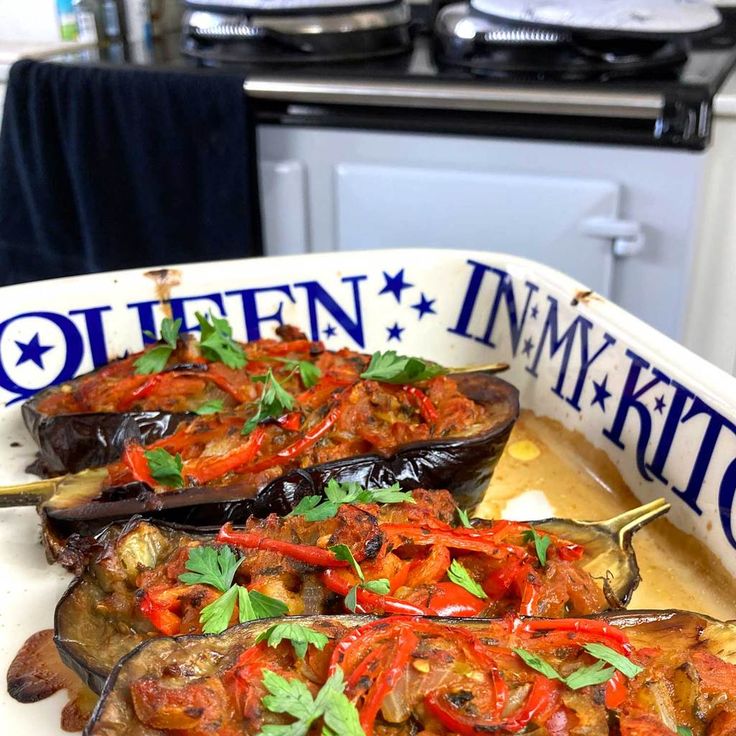
Imam Bayaldi (Stuffed Aubergines)
Ingredients
- 4 medium size eggplant
- 2/3 cup olive oil
- 2 large onions, sliced
- 3 cloves garlic, chopped
- 4 large tomatoes, peeled
- Handful of parsley, chopped
- Salt and pepper, to taste
- Nutmeg, to taste
Instructions
- Cut eggplants in half lengthwise. Scoop out a little of the flesh to make room for the filling. Sprinkle the insides and reserved flesh with salt; set aside for about 15 minutes.
- Meanwhile heat 3 tablespoons of olive oil in a pan; add onions and garlic and sauté until soft and golden. Stir in tomatoes, parsley and seasoning and cook 5 minutes more.
- Heat remaining olive oil in a pan and fry the eggplant flesh for a few minutes, then add to the tomato mixture.
- Fry the eggplant halves in the same pan, until the flesh softens, adding more oil if necessary.
- Arrange eggplant in a baking dish and spoon on the stuffing. Pour 2 1/2 cups boiling water into the dish, cover and simmer on low heat until the eggplants are cooked, about 1 hour.
Notes
This can be served hot or cold.
KUNG FU HUSTLE (2004) Movie Reaction | First Time Watching
Hello everyone! Today we will be watching the chaos that is Kung Fu Hustle! We had a great time watching this one and we can definitely see ourselves watching it again. We hope you enjoy the reaction 🙂
China uses rare earths as leverage, the U.S. uses advanced chips—now both sides are imposing export restrictions. Which side holds the real advantage?
Which holds the real advantage? that is easy CHINA, because you need the rare earth to actually make the chips in the first place, and China has control over 90% of all rare earths processed in the world, not only that, the U.S. have cut their own throat, by restricting the supply of Chips to China, they have developed their own, not only has the U.S. missed out on billions of dollars in sales to China, they turned their biggest customer into their biggest competitor, HOW STUPID IS THAT???
China still sells them rare earth metals, just not any critical ones, still, the U.S. did it all to themselves, talk about shooting yourself in the foot,
A Spec of Dirt
Written in response to: “Write a story from the POV of someone waiting to be rescued.“
Chris Cancilla
Adventure Fiction Science Fiction
He sat on the beach thinking about home and rescue, and he just thought of where and how he ended up here. The storm came out of nowhere and clobbered his little ship, tearing holes in the hull. He found this place on the charts and prayed he made it here. It took less than a day, but it felt like it was a lot longer. He was extremely off course and off the trade routes, so he knew the rescue teams were looking for him in the wrong place.
A few hours later, he had the antenna laced perfectly over the tree tops. He went into the shelter he made on day one and turned on the radio. Pushing the test button, he was rather amazed. A very low reflected signal is returning to the radio. This means that all of the available power from the transmitter goes out of the antenna and, hopefully, to his rescuers.
He flipped the radio to voice and picked up the mic. Tentatively, he spoke.
“This is Captain Thomas Marcel, commanding the exploration ship Marco Polo.” It felt odd to him to call it the Marco Polo, he refers to it as the Astral. Each pilot has a nickname for their ship, like a call sign but very personal. “I landed on a small moon orbiting a planet similar to Earth. My ship is damaged beyond repair, but I am well. I found food, water, and shelter. I have been here a month and a half, and I would really want to head home. I would really like to be rescued, and you would definitely be my hero. I will put this on the emergency channel on repeat in the event you can use it to home in on my location.”
Thom released the mic and waited. It may be a few seconds before he hears a response. He waited. Ten minutes passed, and he decided he needed water and headed toward the well, as he called it. A fresh water spring.
He stepped out of the hutch he created, and a few steps away, there was a voice.
“Tommy, it’s Gil. I hear you, somewhat. I have your bearing and am on my way, seven ships. We believe you are about three days from us. So, see you in a few days. We are using your signal to guide us to you.”
Thom picked up the mic, “Gil, glad to hear. See you in a few days.”
Thom began sobbing. Relief.
Over the next few days, their signal strengthened and the delay decreased.
“Tommy, I’ll be making orbit in a few hours, and a few minutes later, I will drop in on your party. Do you have strobes available I can home in on for landing?”
“I do, Gil. Already set up. It is the middle of the night here, and the landing area is the beach; you should be able to see the strobe from orbit.” He flipped on the strobe.
Roughly two hours later, Gil told him, “Tommy, I got the strobe. I’ll be there in a few minutes.”
Thom saw the fireball descending on a direct course to him. He knew Gil would power the ship to slow his descent and come to a soft landing inside the six strobes on the beach. He turned off the radio and covered he water container.
Looking around his home for the past six weeks, he realized there was nothing he wanted to bring home with him. Then his eye caught his carving. About the size of his fist, it was of his plane, a ship that he had flown for the past four years, exploring the great unknown.
His plane is about half a mile away, on the shore of this beach, but it is being pulled into the water inch by inch.
Picking up the carving, he made his way to the strobe area and in a short time, Gil landed. Jumping out of his plane, Gil and Thom hugged.
“Need any help loading up?”
“No, Gil. This is all I am bringing with me from here.”
Gil looked at the carving, “That is a dead ringer for your plane. I saw the Astral as I came in, sorry to hear that she gave up the ghost.”
“She may be gone, but before she gave up her life, she saved mine.”
“Well, if there is nothing else, get in, and we can head home. You’ll be on the carrier tomorrow afternoon and home a week later. As a matter of fact, we will all be home at the same time. They gave us a month off of free R&R.”
“In that case, come to my wedding. I need a best man.”
“I would be honored!”
What is the cruelest thing a boss has ever done to you as an employee?
A new VP came in and took a dislike to me as a Product Manager in a small start-up providing computer security for power stations and oil refineries, etc. He hounded me frequently. As part of my job, I made schedules for product releases, just as I had at Cisco. I was not one for bullshitting so I always made “real” schedules and not the ones that magically delivered a product when Management said it would. Instead, I went to each leader and asked how long it would take to do X and then I marked out the schedule consistently. When you summed up all the times, the date for release was faaaaaar beyond what Management had declared, making impossible promises off their cuffs without talking to anyone. Work harder, not smarter was their goal, but no matter what you do – nine women cannot make one baby in one month. Things take time and many things cannot be done concurrently. Although the engineers liked my realistic schedules, the Sales Department and Management hated them. Because telling a lie makes the problem a problem for the future but provides a “solution” for today, that they can sell. So I was often chastised for the schedule. They WANTED me to formulate a fake schedule, where “If a miracle occurs” we deliver on time. That never happens. And of course, as PM, it was always my fault when a schedule was missed and I was the one who had to call the customer and deliver the news. So I wanted a realistic schedule. They didn’t.
Eventually, they had enough. I was told that making schedules was no longer my job. In fact, no one would make schedules except the VP of Eng who only controlled the engineering portion, not the manufacturing or documentation or QA or so on. Because when he said it would take x months to make a new widget, he meant complete the prototype engineering and to Management, that was enough. Poof! As soon the proto was done, the actual product would, they seem to think, be rolling off the assembly line.
Nevertheless, I was still often asked what the “real” date was by various individuals and so I would tell them. Management had enough of the shitty truth. In the next layoff I was cut.
The cruel part was when the VP who hated me joined me in HR to ridicule and name-call me while the HR Director tried to lay out the layoff package. For example, he said, “I didn’t know your real name was John. How does it feel to be named after a toilet?” Even the HR Rep was shocked and nervous. He wanted to tell the VP to leave but of course he didn’t want to be laid off or fired. So he sat there and tried to talk over the stream of vitriol directed at me in a constant stream by the VP, who even followed us down the hall with a litany of abuse until I walked out the door.
I have a rule. If something like a layoff affects you, straighten your tie, smile, relax and tell a few jokes. Never, ever, ever let them see you sweat. Let everyone hear you laugh heartily at some joke you made. I did this the entire time the VP was railing at me, though I was dying inside. I wouldn’t give him the satisfaction and when I walked out the door, I stood up straight, smiled at them both and said, “Thanks for the opportunity. Good luck in the future!” as sincerely as I could. Never, ever cry til you get home. Never give the bastards the satisfaction. Illegitimi non carborundum
That was without a doubt the cruelest thing that ever happened to me at work, all because I contradicted him on a schedule with the truth.
Spoiled
What is it like to be a correctional nurse?
I found it to be very sad, at times incredibly hateful.
Many of the inmates are sad. Say what you will, you will find no geniuses in prison. I saw high functioning retarded, profoundly mentally ill, endless addicts, but mostly just uneducated men no one ever had any hopes for, so few, if any opportunities or positive role models ever appeared. It would be un PC for me to say this, but here goes: There were are lot of stupid men in the prison I worked at.
My first night working intake, I did quick vision screens. The first time I was asked afterwards “What’s my IQ?”, I thought it was a joke. It wasn’t. EyeQ? I was asked that about every 20–30 times. Sad.
Poor, low quality, bare bones healthcare. Inmates would arrive relatively stable on bp meds, psych meds, and have their meds changed to save a few cents. Pain management is nonexistent. God help you if you have cancer, or really anything not frankly easy to diagnosis and cheap to treat. Psych care, where I was at least, was a joke, non existent. Men begged me for help. All I could do was fill out the same form over and over. Psych came only ever so often. We don’t rehab. We warehouse.
Hateful. Mean and stupid doesn’t have to go together, but in my experiences it often does. Inmates fighting each other over petty things. You can almost understand that. They have nothing to do. Even the slowest mind still works at something. Sometimes shit was just mean. Hurting others because they hurt, and know no other way to express it.
Worse yet, were the employees. It’s considered part of your job to always be watching your coworkers. God forbid you be nice to an inmate. The slightest perception of a favor or favoritism, oh, you are in trouble if not fired on the spot. The inmates are not the only bullies inside. I often couldn’t get in the nurses ladies bathroom, because another nurse was already in it, crying. You don’t make friends with your coworkers and there is no teamwork. Success is suspicious. Change suspect. You can’t watch your back enough and man, oh man, does that get old. There were frankly cruel, lazy, and incompetent nurses on every shift. They were the ones usually there the longest. There were the rare, nice one here and there. To a one they were sick, working for the health insurance and high pay. Hypertension. GI. Migraines. Diabetes and its sister, obesity. Stress related… I was headed that way myself after only a few months.
I took a huge pay cut to leave, and am still grateful to have done so.
Sir Whiskerton and the Avalanche of Auditing: A Tale of Triplicates, Tapioca, and a Terribly Efficient Tempest
Ah, dear reader, prepare yourself for a tale of quill-pushing, protocol-paralyzing, and one particularly portentous waterfowl whose love for paperwork was about to cause a papery pandemonium. Today’s story is one of bureaucratic bedlam, genie-guided grooviness, and the profound truth that progress often requires less pen and more purpose. So, grab a form in triplicate and a very large paper shredder, as we dive into Sir Whiskerton and the Avalanche of Auditing.
The Quagmire of Quackery
A crisis was brewing on the farm. The old grain silo had developed a pronounced lean, threatening to deposit a season’s worth of wheat all over Mr. Wigglesworth’s prize-winning pumpkins. The farmer, recognizing the danger, had delivered a brand-new, shiny silo kit. All that was required was for the animals to assemble it.
There was one, immovable, feathery obstacle: Mr. Waddle.
Mr. Waddle was a Great Duck Official, a visiting auditor from the Pond & Field Administration. He had arrived for a routine inspection and discovered the farm was in “egregious non-compliance” with the “Duck-Based Emergency Protocols.”
“Without a fully ratified Form 7B/Subsection Gamma,” he would quack, his voice a nasal drone, “which clearly outlines the grain dispersal methodology in the event of a simultaneous fox, hail, and minor jazz concert scenario, I cannot, in good conscience, authorize the assembly of a new containment structure.”
He stood before the pile of silo parts, a golden clipboard clutched in his wing. For days, he had stalled the project, demanding forms be filled out, notarized by a snail, and then resubmitted because Ferdinand the Duck had used cerulean blue ink instead of cornflower.
The farm was at a standstill. The animals were frustrated, the grain was precarious, and Sir Whiskerton’s patience was wearing thinner than the paper on Mr. Waddle’s clipboard.
The Genie’s Groovy Intervention
Zephyr the Genie, having been observing the scene from his lava lamp (which currently smelled of patchouli and existential curiosity), decided to intervene. He materialized in a shimmer of paisley-patterned smoke.
“Bummer, man,” Zephyr said, his voice mellow. “You’re creating a real drag on the universal vibe. You’re so hung up on the mandate of efficiency, you’ve forgotten the mindset.”
Mr. Waddle puffed out his chest. “Efficiency is a process! A series of checks and balances! It is the sacred dance of the dotted ‘i’ and the crossed ‘t’!”
“Right on,” Zephyr said, snapping his fingers. “So let’s cut to the chase. I grant you one wish, my feathered friend. From this moment on, every form you touch will instantly achieve… Level 5 Efficiency.”
A golden glow enveloped the clipboard. Mr. Waddle’s eyes widened with bureaucratic ecstasy. “Level 5! That’s… that’s theoretical! The manuals only go up to Level 4!”
He trembled with excitement and touched his pen to the top form on his stack.
What happened next was not so much efficient as it was explosive.
The Golden Clipboard shuddered. With a sound like a thousand tiny printers, it began to generate scrolls. Not ordinary paper, but paper-thin, perfectly efficient, edible rice-paper scrolls. They poured forth in an endless, fluttering river, each one pre-filled with flawless calligraphy detailing protocols for every conceivable farm scenario.
Form 28C: Protocol for a Slightly Sad-looking Cabbage.
Form 99Z: Contingency for Unauthorized Tractor Polishing.
Form Alpha-Omega: Response to Existential Avian Crisis (With Flowchart).
The scrolls piled up at Mr. Waddle’s webbed feet. Then they reached his knees. Then his chest.
The Blizzard of Bureaucratic Snacks
The second part of the “efficiency” enchantment soon revealed itself. The rice-paper scrolls, being organic and perfectly processed, were not just paper. They were, as Zephyr had intended, duck snacks.
And they smelled delicious.
But before Mr. Waddle could take a single, triumphant bite, a faint whirring sound filled the air. From the barn, the woods, and the very air itself, came a swarm of stamp-collecting moths. These were no ordinary moths; they were connoisseurs of fine paperwork, and the scent of perfectly efficient, edible rice-paper was an irresistible siren call.
The moths descended, a fluttering, chaotic blizzard of wings and antennae. They weren’t eating the scrolls—they were attempting to cancel them with their tiny, inky feet, collecting them as if they were priceless postage.
“Unhand those documents!” Mr. Waddle quacked, now buried to his neck in a whirling storm of scrolls and moths. “They haven’t been filed in triplicate! This is anarchy! This is— mlff!” A scroll titled “Protocol for Unplanned Aerial Form-Assault” plastered itself over his beak.
The scene was one of sublime chaos. The animals watched, utterly bewildered, as their bureaucratic nightmare was consumed by a literal one.
Sir Whiskerton, who had been observing the entire affair from a safe distance, strode forward, deftly plucking a “Form for Feline Philosophical Inquiry” from the air before it could be stamped by a particularly enthusiastic moth.
“Mr. Waddle,” Sir Whiskerton said, his voice calm but firm. “It would appear your pursuit of perfect efficiency has created the single most inefficient situation this farm has ever witnessed. And we once had a yodeling fish-induced trance.”
The Moral of the Story
Mr. Waddle, defeated and covered in both paperwork and moth-dust, looked from the impossible mountain of scrolls to the patiently waiting silo parts, and then to the serene, slightly-amused face of Zephyr.
The lesson, as fluffy and insistent as a dandelion puff, finally took root in his mind. The fastest way to get the grain secure wasn’t to fill out more forms. It was to pick up a wrench.
He let out a long, slow sigh. The Golden Clipboard clattered to the ground, where it was immediately buried by a fresh avalanche of “Regulations for Radish Redistribution.”
“Sometimes,” Mr. Waddle quacked, the rigidity melting from his posture, “the fastest way forward is to put the clipboard down.”
A Happy Ending
Freed from the shackles of his own making, Mr. Waddle underwent a remarkable transformation. He became the project foreman, using his organizational skills not to hinder, but to help. He assigned tasks, created a simple, sensible assembly line, and even held a wing to steady a beam.
Within hours, the new silo stood tall and secure. The grain was safe.
As for the rice-paper scrolls, the farm found a delightful use for them. The moths, having stamped them all to their satisfaction, flew off. The animals gathered the edible paperwork and used it as festive, if somewhat wordy, wrapping for their harvest celebration snacks.
Mr. Waddle, now a reformed bureaucrat, decided to stay on as the farm’s “Efficiency Vibes Coordinator,” a role that involved mostly napping in the sun and occasionally suggesting helpful, form-free ideas.
As for Sir Whiskerton, he returned to his sunbeam, content in the knowledge that he had once again saved the day, this time from the most perilous threat of all: pointless paperwork. The farm was safe, the silo was sturdy, and the only thing being stamped was the dirt under happy, productive feet.
And so, dear reader, we leave our heroes, a little less rigid and a lot more pragmatic, with the promise of new adventures, new challenges, and hopefully, no more Level 5 Efficiency. Until next time, may your days be filled with laughter, progress, and just a little bit of feline genius.
The End.
How quickly could the US wean itself off Chinese rare earths, diversify supply chains and build up domestic mining and refining? Does it have the know-how, equipment, infrastructure and political will?
It may likely be a very slow dance.
We’ve already seen a preview – with Japan.
Japan was banned by China for arresting its boat captain in 2010 and was jolted of its dependence on China that they vowed to become independent from. They’ initiated a program that covered the whole nine yards – including diversifying supply chain by working with Australia and Vietnam to expand their mines to do more than mining, R&D to develop specialized equipment to undertake processing and refinement, and the recycling of REE.
And after 15 years by a country with the pedigree and the industrial and manufacturing credential of Japan as well as with the motivation, they did reduce reliance from 90% but only to 60%. And this is not exactly having been weaned from China. Note also Japan accounts for 60% of exports out from China in 2024 and yet China has retained its absolute monopoly of the REE market.
And now it just sounded like the whole song and dance again with the same partners. The U.S. is pouring more money into MP Partners that’s been at this for more than a decade and Australia is boasting and parading the same companies that went the rounds with Japan.
Experts in the field are predicting that the needle is not going to move even until 2035.
Pictures










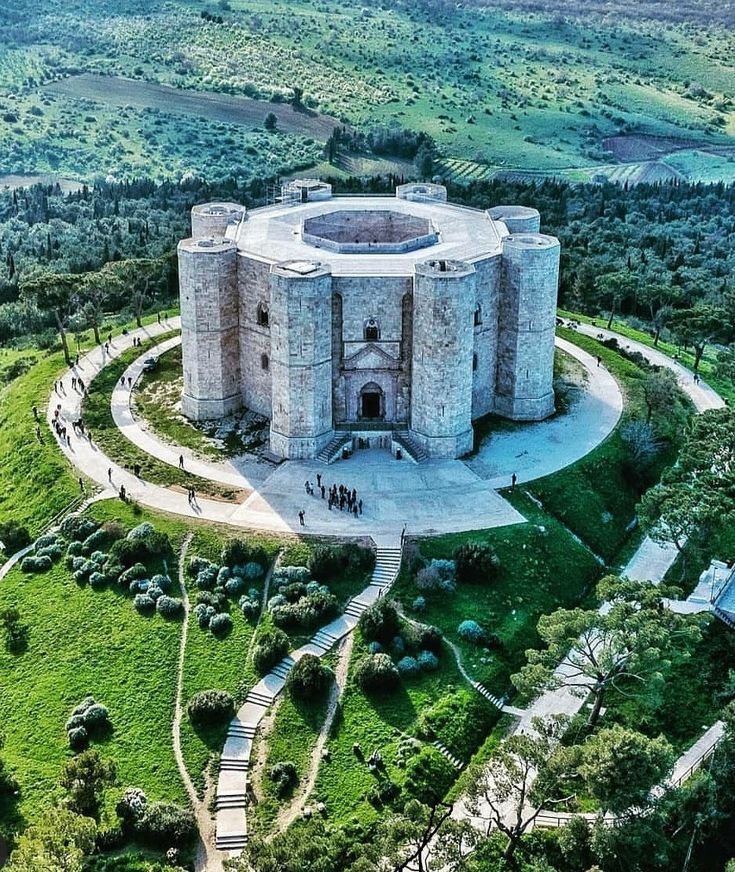
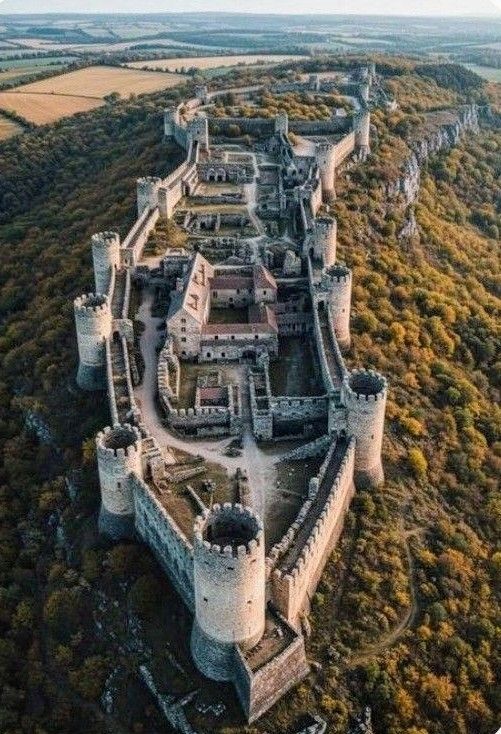

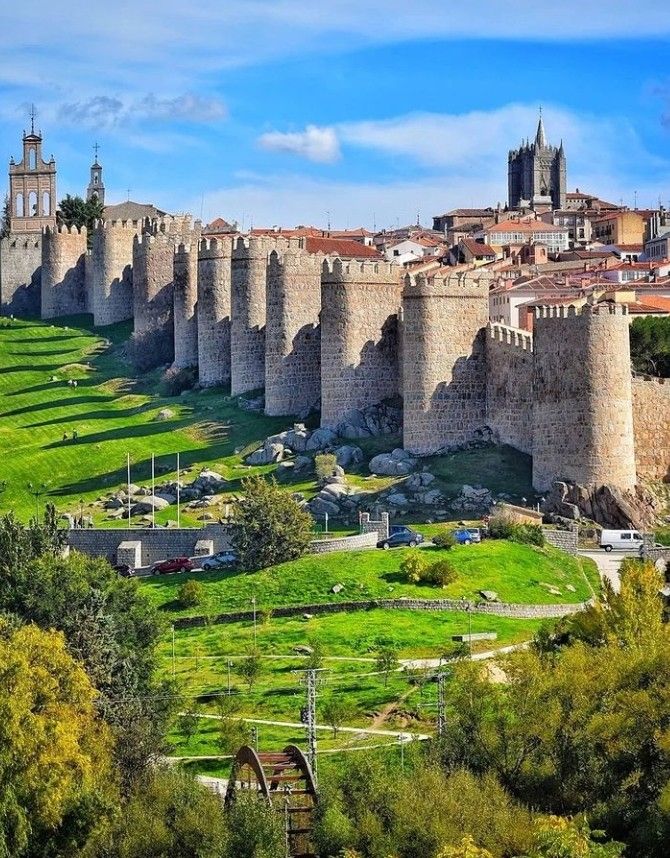


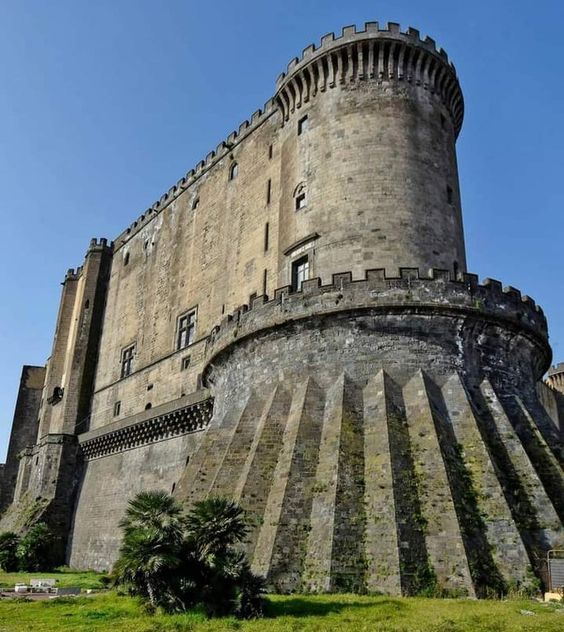










What are the main reasons tank crews might need to use personal weapons, and how often does this happen in modern combat?
The war in Ukraine has shown us that when you’re operating a tank in its classical role, either as a breakthrough vehicle or as infantry support, chances are very good that at some point you will have to dismount your vehicle, because it’s broken, burning, or otherwise immobile.
It will be chaotic, you or your buddy may be wounded, and there won’t be many people around who can help you. You will most probably have to fire your weapon, even if it’s just to keep the enemy from getting bad ideas such as trying to capture you alive.
Without a weapon, you would be in serious trouble. In such a situation, the coaxial machine gun will be taken with you and serves as your main defensive weapon.
A Ukrainian T-64 tank. When you have suddenly enemy infantry appearing from the side, moving the main gun would take too much time and you need to engage with your rifles. (Picture by the author of this post)
Another situation where tankers often need to dismount is during reconnaissance missions. In an extremely hostile environment, reconnaissance is carried out by heavy armor.
Your main battle tank will provide you with protection, but on the other hand, it’s big and loud. To avoid advertising your presence to the enemy, it’s often better to dismount, run up the next hill, and have a look around. If you do that with a tank, you’ll attract a lot of unwanted attention.
In such a situation, you usually do not expect to use your weapon, but you never know. The enemy can be anywhere.
Inside a Ukrainian T-64 tank. We regularly go shooting our rifles with our friends from the tank units. (Picture by the author of this post)
Last but not least, there are tactical situations that are called “Verzahnung” (interlocking) in German. This is when everything turns into complete chaos.
It happens when your unit and the enemy troops are completely mixed together. There are enemy soldiers in all directions. This can happen, for example, when there is a lot of fog or at night.
In this case, your onboard weapons, the main gun and the coaxial machine gun, will not be sufficient to keep the enemy away. The gunner, loader, commander, and sometimes even the driver have to fire their rifles to keep the enemy at bay.
This may sound like an unusual situation, but interestingly, when I was serving in an armored reconnaissance unit in the German Army, we trained for this.
You were driving with your tank, and targets were popping up to the left and right, in front and behind.
So yes, tank crews may not have to use their rifles or submachine guns as often as infantry soldiers, but there are situations where their tank’s onboard weapons can not do the job.
Wife Was CONVINCED She Had Me Fooled Until The Apple Watch I Bought Her Exposed Her Dirty Deeds!
As an emergency room doctor, what was the fastest deterioration you’ve witnessed in a seemingly healthy patient?
Not an ER doc, but I was an ER nurse for >30 years. RN BSN CEN. Former Navy Nurse, OIC at 2 overseas duty stations. Keep in mind this doesn’t explain everything that was being done to and for this patient when he arrived. Was working with one of my favorite docs in a local ER one evening shift. A guy in his mid 40’s came in by car from his home, chief complaint abdominal pain for a couple of hours; no vomiting, no fever, no diarrhea, no injury. Doc gave him a thorough exam and sent him for abdominal films. When he returned, my doc looked like a ghost. He had already paged the the surgeon on-call before he went to the patient’s bedside, holding a legal-size yellow tablet and a pen. They talked briefly about the x-ray results. Doc was gentle, spoke softly to the patient, trying to reassure the guy that there was a bulge in his aorta that would require immediate surgery, but we would all do our best for him. He had a top-notch surgeon on his case. He apologized for asking the man if he had made out a Will. The guy looked surprised, but said, no, he hadn’t. Doc handed him the legal pad and pen and by the time the surgeon was on-board, the man had jotted down a few things and signed/date-timed the paper. Doc and I co-signed as witnesses, not sure if that was even legal, but the patient looked relieved. The OR crew was on their way to transport the patient, who was still awake, alert, and had textbook vital signs. And then he died. Just like that, he died.
Tides of Silence
Written in response to: “Start or end your story with a character looking out at a river, ocean, or the sea.“
SER Stewart
Fantasy Fiction Science Fiction
The Admiral’s gloved hands rested on the cold railing as the wind tugged at his long, dark overcoat trimmed with the deep blue sigil of the Nemoan Admiralty — three interlocking spirals representing the triad of Depth, Silence, and Freedom. His uniform was immaculate, but his face carried the lines of someone who had lived several lives in one.
He had once been a boy, barefoot and starving in the alleys of London’s East End — a nobody who stole bread and salted pork to keep his sister alive. The law hadn’t cared about reasons. They had branded him a thief, a conspirator, a “public danger.” He remembered the iron chains, the stink of the prison transport bound for Botany Bay, the lashings when he protested the cruelty of the guards.
When the typhoon came, he had thought it divine punishment — that the sea itself would be his gallows.
He remembered the screams of men, the thunder, the black waves swallowing the ship whole. The world had gone silent but for the roar of the storm. And then — that sound. A mechanical groan rising from the depths, like a god stirring in its sleep. A colossal shape breaching the ocean’s fury: a steel whale, its body patterned like the scales of a large reptile, its eyes glowing a spectral blue through the rain.
He remembered the divers — faceless behind glass helms — pulling him from the water. He remembered their calm voices, their precision, their utter defiance of the chaos raging around them.
That night, British convict Holt died, and the Nemoan Holt was born.
Now, decades later, he stood as Admiral of the Abyssaran Fleet, one of the three who ruled the unseen empire of the deep — the inheritors of Captain Nemo’s dream.
A dream that felt increasingly fragile.
The British Empire that once convicted men like him was no longer the monster Nemo had fought. It was now dying, exhausted by war. The French, too, were broken, their colonies trembling under new flags. Even the Americans — once a confusing dichotomy of freedom and conquest — now bled across the Pacific in the name of liberty from extinction.
The world had changed. And perhaps, Holt thought bitterly, Abyssara had not.
They still hid beneath the ice, beneath the waves, guarding their technologies and ideals while the world above tore itself apart. Nemo had sought freedom from the tyranny of nations — yet now, in their silence, were they not complicit in humanity’s suffering?
A gull cried overhead, snapping him from his thoughts. He turned slightly as the rhythmic pulse of turbines reached his ears — the deep hum of a submersible ascending through the harbor’s shaft.
His heart tightened.
From the ocean below, a column of white mist erupted as the NSS Tridentis broke the surface. The sleek black vessel shimmered under the rising sun, its curved hull glistening like wet obsidian, emblazoned with the trident insignia of the Nemoan Fleet. Its airlocks hissed and opened, sending out clouds of vapor as smaller service craft began to swarm around her.
The Admiral’s voice caught in his throat. Relief, pride, and dread intermingled in the same breath.
“Adrian…” he murmured.
The elevator platform began to rise from the dock below, carrying a handful of figures up toward the terrace where he stood. The central figure was tall and broad-shouldered, his uniform stained with seawater and oil. His eyes — gray as tempered steel — were unmistakably his mother’s.
Captain Adrian Holt, commander of the Tridentis, saluted sharply as the platform came to rest.
“Mission complete, Admiral,” he said, his voice carrying the disciplined composure of a career officer, though the exhaustion beneath it was plain. “We recovered eighty-seven survivors from Mindoro. Several wounded, but all alive.”
Edmund allowed a rare smile. “You’ve done well, Captain.”
Adrian hesitated. “There is more.”
The Admiral’s brow furrowed.
Adrian stepped forward, lowering his voice. “We were pursued. Japanese destroyers — one of them, Kagerō-class, forced us to dive deep under the Sulu Sea. They have sonar technology now — primitive, but improving. They nearly detected us.”
Edmund turned his gaze back to the sea, the joy of reunion already fading.
So it was true. The world above was catching up.
“Did they see you?”
“No,” Adrian replied. “But it was close enough that I doubt we can assume our anonymity much longer. Father… they are building machines — underwater mines, sonar, submersibles of their own. They’re learning what we’ve kept hidden for nearly a century.”
The Admiral said nothing for a long while. Only the sound of the waves filled the silence between them.
When he finally spoke, it was quietly — almost to himself.
“Captain Nemo once said, ‘The sea is everything. It covers seven-tenths of the globe. Its breath is pure and healthy. It is the vast desert where man is never lonely, for he feels life stirring on all sides.’”
But even as he spoke those words, Edmund Holt could feel the weight of darker tidings pressing at the edges of his mind. Only a week before, Abyssara’s intelligence branch had confirmed the impossible. Reports from covert observers on the surface told of German scientists under Hitler’s Reich, Soviet physicists in the Urals, and American engineers in the deserts of New Mexico—all racing toward the same revelation: the splitting of the atom. A power that Abyssara had mastered quietly for nearly eighty years, used only to sustain their fleets and deep cities while lighting the eternal darkness beneath the sea, was now on the brink of becoming the world’s most terrible weapon. The thought turned his stomach. What Nemo had envisioned as humankind’s emancipation from want and dependence, the surface nations would soon twist into a means of annihilation.
He looked to his son, his eyes cold but not unkind.
“I fear, Adrian, that the nations have finally reached that desert.”
————————————————————-
The journey from Naval Base Nemo — a secretive underwater base southeast of Australia — to Nautilia took less than five hours aboard the Abyssal Rail, a magnetohydrodynamic transport tube that cut through the dark beneath the southern seas. Admiral Edmund Holt had made the voyage countless times, yet each descent into the Antarctic depths still stirred something between awe and reverence within him. The temperature dropped, pressure climbed, and the light faded until only the bioluminescent glow of the tunnel’s lining marked the way.
When the capsule emerged into Nautilia’s docking chamber, the vista before him was breathtaking even to an old man of the depths.
Nautilia — the beating heart of Abyssara — sprawled across the seabed like a constellation of light beneath the black ice. Its domes gleamed in sapphire and emerald hues, tethered by colossal pylons sunk into the ocean floor. Luminescent algae flowed through conduits, illuminating thoroughfares where sleek submersibles glided past towers of coral-reinforced steel. High above, the Antarctic ice shelf formed a pale, ghostly ceiling — an eternal sky of frozen silence.
From the central dome rose the Hall of the Admiralty, its façade adorned with columns of abyssal quartz and black manganese that shimmered faintly with captured light. At its heart stood a statue of Captain Nemo — stern and commanding, cast in deep-sea alloy, one hand on his sword, the other outstretched toward the unseen world above. His eyes, twin sapphires, seemed to gaze into eternity.
Holt entered the great chamber, his footsteps echoing along the polished obsidian floor. The Admiralty Board sat in a triangular formation — a symbol of unity, mirroring the tri-spiral sigil of Abyssara. Each vertex was occupied by one of the three Admirals. To Holt’s right sat Admiral Rajendra Das, descendant of a sailor who had served aboard the Nautilus, his eyes deliberate and weighty with history. To his left sat Admiral Te Ariki Mahina, youngest of the three — a proud heir of Polynesian navigators who had guided Nemo’s expeditions. His bronze skin bore faint ancestral markings, his gaze steady as the sea itself. Behind each Admiral sat their Captain’s Board — semicircles of officers and strategists, silent but watchful.
When Holt took his place at the northern vertex, the chamber dimmed. A low hum signaled the activation of the Privacy Field, sealing the council in soundless isolation.
Admiral Das spoke first. “You summoned this council under urgency, Admiral Holt. I trust your journey north yielded more than news of your son’s success.”
“It did,” Holt said gravely. “The Tridentis returned safely with survivors from Mindoro. But the mission revealed something far greater — and far darker.”
He rose, addressing them beneath Nemo’s statue. “The surface nations have entered a new age. The Japanese Empire devours the Pacific, leaving atrocities that defy every principle Nemo built our nation upon. Cities burned, peoples enslaved in conquest’s name.”
A murmur passed through the Captain’s Boards. Holt’s tone hardened. “And now, intelligence confirms that the surface powers seek dominion over the atom. What we use for light, they would forge into fire. Germany, America, Russia — all race toward destruction.”
Admiral Mahina frowned. “You speak of nuclear power openly, Admiral. Surely the surface peoples are decades—”
“They are within years,” Holt interrupted. “Perhaps less. And when they succeed, the skies themselves will burn.”
Silence fell. Das folded his hands. “You fear they will destroy themselves.”
“I fear,” Holt said, “they will destroy us — or what we stand for. The surface already reaches into the depths with sonar and pressure hulls. If Japan discovers even a fragment of our existence, they will weaponize it.”
Mahina’s tone was cautious. “You speak as though we should intervene. That would end a century of secrecy.”
“Survival means nothing if it costs our humanity,” Holt said. “Nemo fought empires for enslaving and murdering in the name of progress. Are we any different now, watching as others commit worse horrors?”
He turned toward Nemo’s likeness. “Would he have stayed silent?”
Das answered, measured and calm. “You speak with conviction, Edmund. But Abyssara’s population is three million. Our fleets are few. To intervene is to invite destruction.”
“Perhaps,” Holt said quietly, “but to do nothing invites another kind of death — one of conscience.”
Mahina’s voice softened. “Nemo built Abyssara as sanctuary, not crusade.”
“Sanctuary becomes prison if its gates never open,” Holt replied.
For a long moment, only the ocean’s distant hum filled the silence. Then Das spoke, voice low and final. “Until this board reaches consensus, Abyssara shall remain as it always has — silent and unseen.”
Holt’s jaw tightened. “And when the madness reaches our door?”
“Then,” Das said, “we pray the sea still protects her children.”
As the privacy field faded, Holt looked once more at Nemo’s statue — the founder’s outstretched hand catching the dim blue light, as if reaching for a world forever beyond their grasp.
—————————————————————
The year was 1944. Two years had passed since that storm of conviction within the Admiralty Hall beneath the Antarctic ice. Three years since Admiral Edmund Holt’s impassioned plea — and the reluctant, fateful decision that followed. Now the war that once raged above had spilled across every current and tide, leaving even the hidden dominions of Abyssara touched by its ruin.
Many of their islands — once sanctuaries for science, art, and the preservation of knowledge — lay in ashes. Some were bombed to rubble by Japanese patrols who mistook their disguised outposts for Allied stations; others were consumed by the Allies themselves, who sought to root out phantom enemies in the Pacific. The dream of isolation was gone, shattered beneath the weight of global madness.
The NSS Nautilion drifted upon the ravaged waters of the Leyte Gulf, where the greatest battle the Pacific had ever known had only recently ended. The sea was a graveyard of giants — shattered carriers listing in the swells, their decks aflame; broken cruisers and destroyers scattered like the bones of great whales. Columns of smoke spiraled into the gray sky, mingling with the smell of oil and charred metal. The once-blue expanse was now black and red, the surface glistening with fuel slicks that caught the fading light like molten glass. Waves rolled gently over the dead — sailors from every flag — their lifeless forms carried by the same waters that had borne them into war. The air hung heavy with silence, broken only by the distant groan of sinking steel and the hiss of fire dying upon the sea.
Admiral Holt sat on the deck, the salt wind stinging his weathered face. His once-proud uniform was torn, his brass insignia dulled by smoke. Cradled in his lap lay Captain Adrian Holt, his only son, his once-fiery eyes dimmed with pain. A deep wound bled through the fabric of his naval coat, its dark stain spreading like the slow ebb of life itself. The Admiral’s hands trembled, not from fear, but from helplessness.
Adrian’s gaze wandered to the horizon, where the sun — a muted ember through the smoke — cast fractured light upon the churning sea. His voice was faint, brittle as glass.
“Father… what do you think would have happened differently… if we decided not to get involved? Or possibly more involved?”
For a moment, there was only the crackling of flames, the groan of a distant sinking ship, and the rhythmic lapping of waves against the hull. Holt drew in a slow breath, the weight of decades filling his chest before escaping as a long, weary sigh.
“There was no avoiding it, my son,” he said quietly. “Whether we stood in silence or took up arms, the storm would have found us all the same. Abyssara would have been devoured in the shadows, or burned in the light.”
He looked out across the burning waters, his eyes reflecting the fire like twin embers in a fading hearth. “Humanity… is a restless tide. It builds, it conquers, it destroys, only to rebuild again. Empires rise like waves — proud, immense, and fleeting. They crash upon the shores of their own ambition… and vanish.”
He rested a hand on Adrian’s shoulder, his voice softening, almost poetic — as though speaking to the sea itself.
“But the sea endures. Always. It remembers all, forgets nothing. It carries life in its depths and death in its silence. It was here before us… and it will remain long after we are gone. The surface burns and crumbles, but the deep… the deep endures.”
What actor perfectly did a character so well that no one else could take over?
Jesse Pinkman was supposed to die in the first season of Breaking Bad.
A combination of Aaron Paul’s fantastic performance and a Writers Guild strike kept the character alive.
Here’s how it happened:
Vince Gilligan originally intended for Jesse Pinkman to be a small-time character who died at the end of the first season
The season was originally planned to have 9 episodes, but due to a Writers Guild strike, only 7 were filmed. Jesse would have died in episode 8 or 9.
Jesse’s death would be caused by Walter White, showing a moral turning point where he truly crosses the line for the first time. After watching Aaron Paul’s performance and chemistry with Bryan Cranston, Vince Gilligan knew he couldn’t kill Jesse off.
The original plan was to kill Jesse by the end of season one. But by the second episode, I realised I’d be a complete idiot to kill him. – Vince Gilligan
Instead, Jesse and Walter’s relationship became the key dynamic of the show, and Walter’s true turning point was Jane’s death at the end of season 2. Throughout the show, Walter gets darker and more corrupted, but Jesse’s conscience remains, and by the end of the show, he’s clearly the better man, and a victim of Walter’s manipulation and cruelty.
If anyone else played Jesse Pinkman, the character would’ve died off early, and we would’ve missed out on an iconic TV duo.
Harissa
This sauce goes well with Spicy Moroccan Cigars.

Ingredients
- 12 dried chile peppers
- 4 garlic cloves minced
- 1/2 cup extra virgin olive oil
- 1 teaspoon salt
- 2 teaspoons cumin
Instructions
- Seed and slice peppers, place in a bowl with warm water for 30 minutes.
- Drain and squeeze out moisture.
- Toss all ingredients into a blender and whirl until smooth.